Archive for December 3rd, 2009

h1

Jugglers With a Message

December 3, 2009

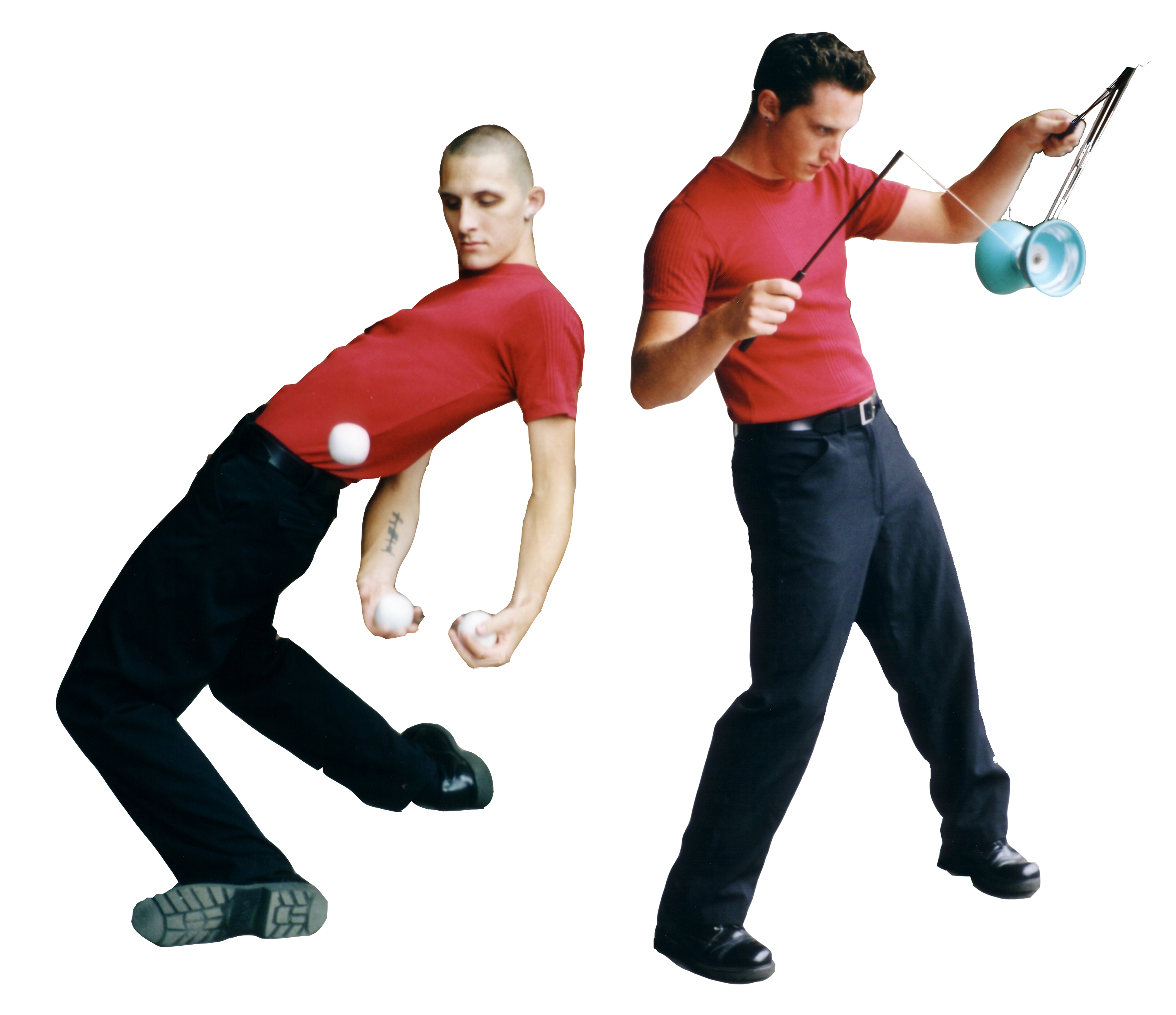
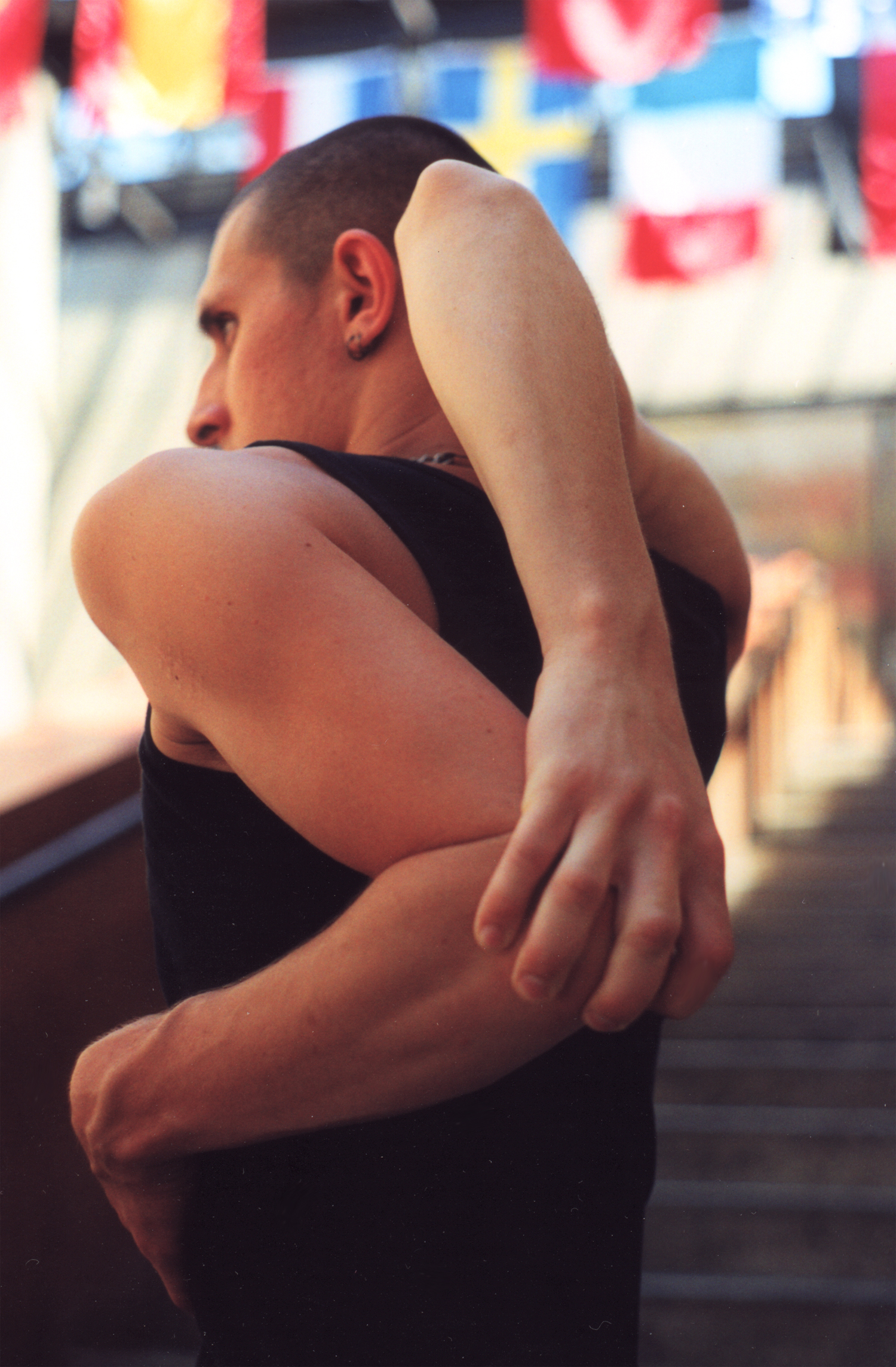
The Tardy Brothers, Two: High Energy Juggling

Matthew and Jason Tardy from Buckfield are not just your ordinary jugglers but their performance is directly related to character education. Their message includes the topics of: teamwork, creativity, drug and alcohol awareness, goal setting, perseverance, patience and others. The performance can be adjusted to focus on specific topics such as health, bullying, drugs, careers or goal-setting.

They are funny and full of energy, they’ve apprenticed with some of the best in the world including Tony Montanaro at Celebration Barn. Along with their performances they also teach juggling and have to thousands of people across the country.

They offer their performance at NO COST to school groups during the school day in exchange for an evening performance that costs $5 per person and is promoted by the school. On top of that the sponsoring organization receive a portion of the profit. Sounds like a win-win situation to me.

They also have a tech show that is pretty interesting. You can learn more about these funny and talented guys but clicking here. See segments of their tech show by clicking here.

Contact Jason and Matthew at (866) 584-4532 or email info@atypicalentertainment.com. I am sure they’d be glad to send you detailed information on the opportunities they have for students.

h1

New Book: Art Really Teaches by Ruth Velasquez

December 3, 2009

Geared Towards Early Elementary

In the information I received about the text it says the book is recommended for primary school teachers but I read further and saw that the foreword is written by Professor of Education and Art, Stanford University, Dr. Elliot Eisner.

The Foreword

Reading Art Really Teaches reminded me once again how important the early years are for the intellectual, social, and emotional development of the child. It also reminded me how important are that cadre of teachers who work with young children. At a time in our nation’s educational history when pressures upon children and teachers for meeting standards formulated by those who know neither the children or the teachers, Art Really Teaches provides a wonderfully generous counterpoint. Implicit in the words and pictures on its pages are several major ideas that I hope would inform both educational policy and practice. First among these is that the use of materials and activities that stimulate the senses is of fundamental importance in the educational development of the young. There is nothing in the head that was not first in the hand.

The senses in western culture have rarely been seen as avenues that afford the mind with something to think about. The truth of the matter is that sensory experience is itself a mindful activity and that exploring the subtleties of color and texture, for example, require an active and alert mind. The result of such exploration is the growth of mind.

A second theme that emerges within the pages of Art Really Teaches is that imagination is not a marginal educational value but a requirement for tasks as simple as forming a purpose or as complex as creating a theory, a symphony, or a painting.

We do not speak much in our national educational agenda about the imagination and the conditions that foster its development. We do not speak much of the position it ought to hold among our educational priorities. Kindergarten teachers have long recognized the importance of the imagination and have provided for its use and development in so many of the activities in which their students engage. Such attention, in my view, could serve as a model for the rest of education.

A third idea that emerges in this publication is that meaning is not exhaustible in literal language or in number. Poetry, music, art, dance are also means through which humans encounter, represent, and share their experience. Our schools are largely egocentric and too often literal. The visual image has the capacity to convey images and feelings that will not take the impress of language. The provision of opportunities in the classroom for children to explore the possibilities of the visual image is a needed balance to our often unbalanced view of what really matters in our schools.

There is now and has been for the past couple of decades a strong pressure exerted by policy makers and some parents to push down the academic curriculum from the third grade to the second, from the second to the first, from the first to the kindergarten, from the kindergarten to the preschool. In my view it would be far better if policy makers “pushed up” the features of the well run kindergarten into the first grade, the first grade into the second grade and even into the third than the reverse. The really good kindergarten is, as I’ve suggested earlier, a model that both elementary and secondary schools would do well to emulate. Both the spirit and the images of Art Really Teaches not only serve as a reminder of what really counts educationally speaking, but affords teachers some practical tools and advice on how to achieve what counts.

This book is available from California Kindergarten Association, 4775 Stirling Street, Granite Bay, California 95746. You can email cka@ckanet.org for more information. Order form is available by clicking here.  Cost: $40.

h1

Another Music and Science Connection

December 3, 2009

Using iphones to Make Music

At the University of Michigan there is a new course being taught by a computer scientist and musician called Building a Mobile Phone Ensemble. Students are learning to design, build and play instruments on their smartphones. They will be performing for the public on December 9th. Sounds like fun to me! You can read more at this link. Please read the article and let us know what you think.

h1

Safe Passages

December 3, 2009

Over Thanksgiving

Emailed to me by Manon Lewis, art teacher, Boothbay Region High School

On Thursday morning one week before Thanksgiving six high school students (from Boothbay Region High School), the Boothbay Harbor Congregational minister (Sarah Folger) and I depart for Guatemala City and Safe Passage as Camino Seguro volunteers.
(The program requires one adult chaperone per three students.)

We will have opportunities to help in the classrooms of preschoolers, elementary children and high school age students.  We have prepared lessons and are bringing down tools and materials to create kites, crowns and hats, masks and cloth murals.  Additionally, we have raised substantial donations to financially support this worthwhile program.

Safe Passage/Camino Seguro is an organization that offers educational programs to the children of people who pick the huge garbage dump in Guatemala City.  Education is not a free commodity in Guatemala and these children would not have the opportunity for an education if it were not for this program. The organization offers over 550 children (tuition,
uniforms and supplies) for a half a day (each day) of education at a public school and then gives them educational reinforcement in arts, sports, recreational activities, computer instruction and English language—–as well as social services.

The Safe Passage program was started by a graduate of Bowdoin College, Hanley Denning, in 1999.  Sadly, Denning was killed in 2007 in a tragic automobile accident while traveling between Safe Passage sites in Antigua and Guatemala City.

My eighteen pages of sub. plans are turned into the office—-bottles of paint, bamboo, glue guns, brushes, tissue paper, feathers, glitter and much more….are packed in my suitcase—-and, since we are donating all of the clothes that we packed and we wear while we are there—we will have some room in our bags for “Guatemalan treasures”!

h1

A Gift From Portland Ovations

December 3, 2009

Great Opportunity: Funding for Destination Portland

PORTLAND OVATIONS ANNOUNCES FUNDING FOR DESTINATION PORTLAND:  FIELD TRIPS IN THE ARTS, CULTURE, AND HUMANITIES

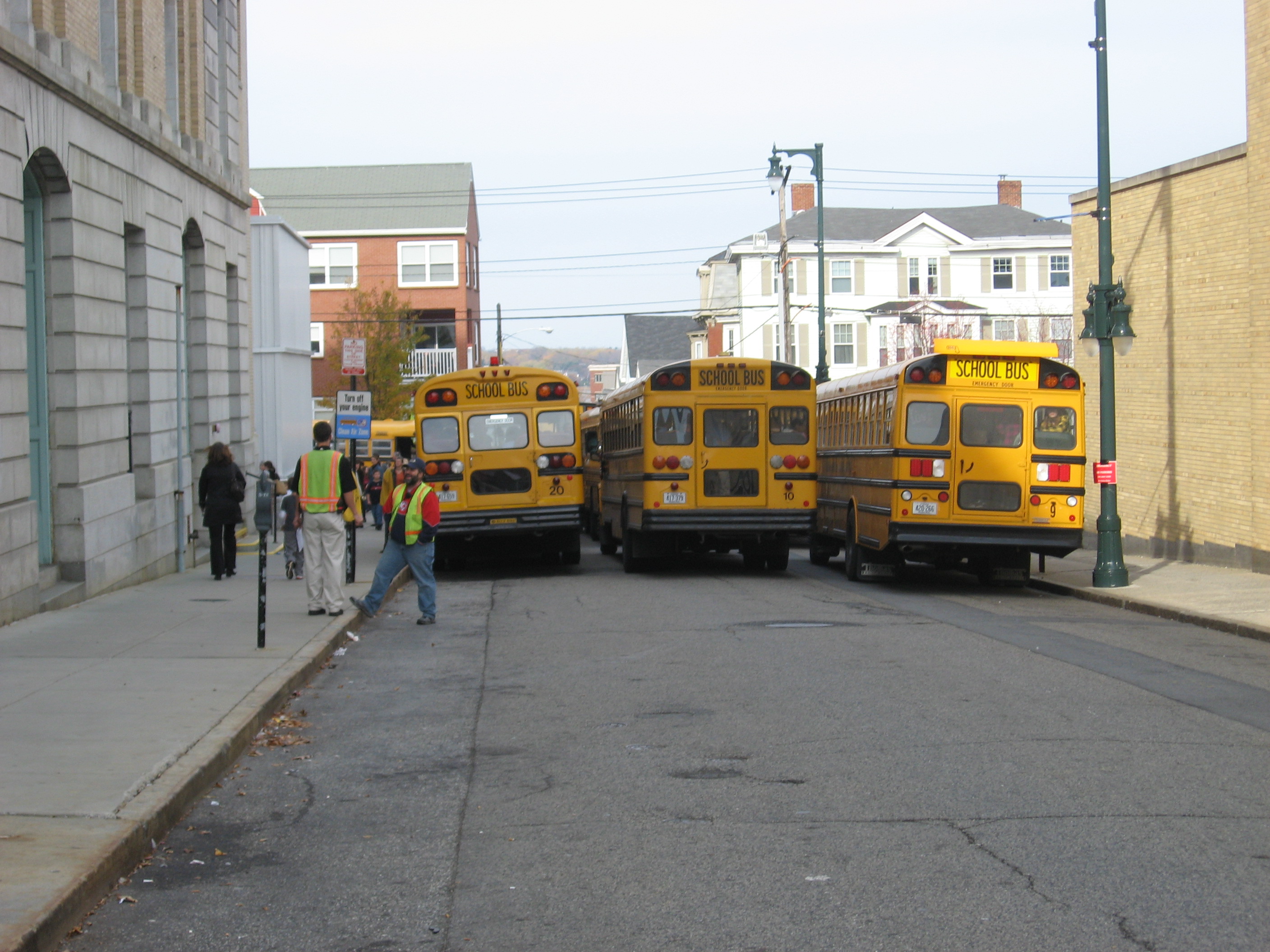
Photo by Patrick Krulik

Portland Ovations is offering to assist public schools with transportation costs to come to Portland for field trips combining arts and humanities.  First priority will be given to schools in Lewiston/Auburn and York County.  Schools can request up to $500 to defray the cost of bus transportation into Portland to attend one of Portland Ovations’ School-Time Performances or evening performances and visit one or more of its collaborating partners:  Portland Museum of Arts, Museum of African Arts & Culture, Portland Harbor Museum, The Telling Room, Maine Historical Society, Children’s Museum of Maine, or the Portland Public Library.  Destination Portland has been designed to engage students and teachers, to deepen their understanding of art forms, and make interdisciplinary connections to support learning within Maine’s Parameters for Essential Instruction. Funding for Destination Portland has been made possible by the Sam L. Cohen Foundation.

Schools throughout Maine with student populations of 51% or more free/reduced lunch are encouraged to apply.   Funds will be made available on a first-come, first-served basis and are to be used for bus transportation for field trips into Portland between January 1, 2010 and May 30, 2010.  Fees for performances or admission to arts/cultural institutions are separate.

To apply for a transportation subsidy or to receive more information, contact Barri Lynn Moreau, director of education and community outreach for the non-profit arts organization, at 207.773.3150 x3, blmoreau@portlandovations.org.  For information about school-time performances in February and April, go to our website http://portlandovations.org/offstage/events/type/school-time_performances/

h1

Follow up on Venezuela Post

December 3, 2009

El Simstema

After the post called Venuzuela and Music I received an email from Michael Cushman, Music/Education Tech Coordinator at Mountain View Youth Development Center in Charleston. He sent me a link to a YouTube, created in June 2009. Three directors from the New Brunswick Youth Orchestra in Canada travelled to Venezuela to learn more about “El Sistema so they can establish a similar program in Canada. The YouTube tells the story.

Michael asks the question: “Can we create this in Maine?” Please check it out and post your comments below.

h1

Art and German Collaboration

December 3, 2009

Skowhegan High School

Submitted by Art Teacher and Department Chair Frank Chin

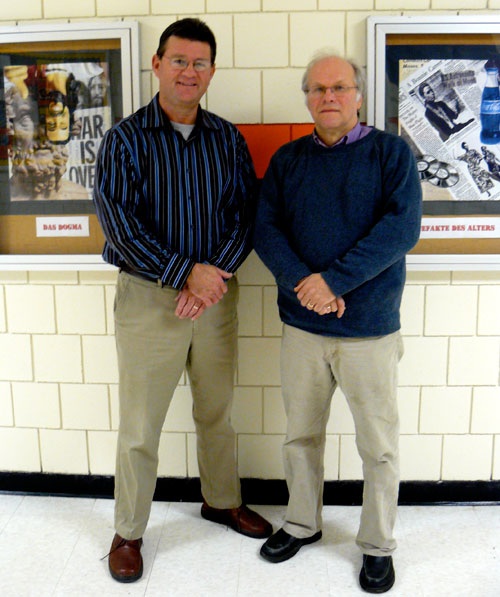
Mike Walker and Paul LeBrun


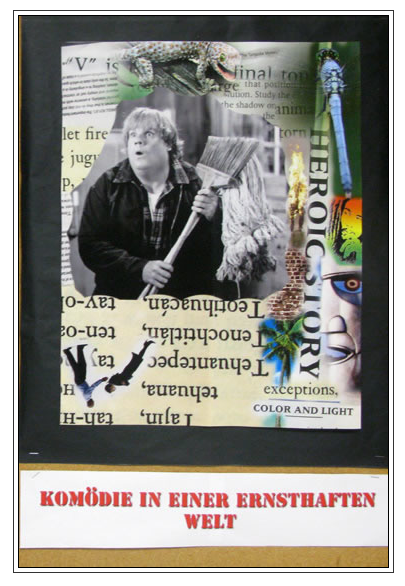
Mike Walker, German foreign language teacher recently collaborated with Art technology teacher, Paul LeBrun. Their work included integrating technology, art and German language.

Mike Walker, German language teacher said: ….”our roles as teachers is teaching them to think creatively……. by doing this project, my students learned about surrealism and saw what their fellow classmates were doing in a class at the other end of the building.  Paul’s students got to see what my German students came up with for titles on their creations.”

Paul  LeBrun, technology visual art teacher said: I put up a “word wall” of German words in my computer art room and overheard a student passing by the pictures and exclaim, “Hey, that’s the title I suggested!”  To me, that is what learning and education is all about: collaboration, and the more, the better.”

In sharing the disciplines teachers crossed the barrier of departmentalization and enriched the curricula and further experiences demonstrating everything is connected.  I am thrilled to see this type of cross curricula with foreign language, technology and the visual arts.  It is one of many ways to a holistic approach to education.

You can see examples of the work by clicking here. On the home page of RSU 54 you can see how student art work is featured.

Congratulations to Mike and Paul for taking the time to make curriculum connections. Collaborating is more time consuming and difficult for educators but those who engage in it understand the benefits for students. Thanks to Frank for submitting this blog post. Tell us about the curriculum connections you make with the arts and other content by commenting on this post.