Archive for February, 2010

h1

STEM Message

February 28, 2010

Some STEAMY Thoughts on Creativity submitted by Pete Mickelson

Pete Mickelson taught Pre-Engineering for a year at the Fiddlehead Art and Science Center in Gray

Last month a bunch of us attended the STEM Summit in Augusta, where the focus was on the NSF’s new acronym for “Science, Technology, Engineering and Math.”  The day was spent discussing how important these are to Maine’s economy, and how we need folks with these skills to attract firms from away to come settle here.

It was a great event, and the word “creative” was heard a lot.  Argy Nestor was there, too, and we shared a few thoughts on the “A” (arts) word during a moment’s break.  For fun, I built her a car out of a handout on the table, a couple of free pencils and some give-away Life Savers.

You see, I’m an engineer — whatever that means.  My Dad was, too, so I sort of grew up knowing I was. In fact, I grew up thinking all kids were engineers. I’ve always been curious, thrill at using my ingenuity, delight in showing off my inventions, keep trying when they don’t work right . . .

Do you know anyone like that?

Okay . . . do you know the meaning of the word “art?”  It literally means “one’s ability to make things.”  And things that are made are “artifacts.”  In fact, “fact” means “to make.”

So where is “art” in all this discussion of STEM? Argy suggested it was right in the middle, and I couldn’t argue with her.  “STEAM”  How appropriate!  It was — after all — the steam ‘engine’ that brought about the revolution in our way of living.  And “engine” is from the Latin word for ingenuity.

h1

Artist Residency w/Henry Wolyniec

February 28, 2010

The Telling Room

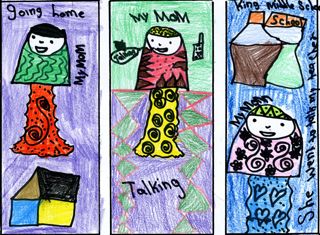
With the help of a SMART Grant from the Maine Arts Commission, Portland artist Henry Wolyniec is working in conjunction with The Telling Room teaching comics to groups of ELL (English language learners) students in Portland middle schools.

The schools involved are King, Lincoln and Lyman Moore. The classes are a series of 8 sessions per student group that take place during class hours in their classrooms. The focus is on storytelling through the visual medium of drawing comics, using a combination of pictures and words to relate ideas, stories and personal histories.

If you have questions or would like to learn more please contact Henry Wolyniec.

h1

Teacher in a Strange Land blog

February 26, 2010

Nancy Flanagan taught music for 30 years, K-12 in Hartland, MI

Recently I stumbled onto Nancy’s blog Teacher in a Strange Land and read this interesting entry called “Rebel Music” from February 17th. If you’d like to go to Nancy’s blog please click here.

Take piano lessons as a kid? Remember your first lesson–when the teacher placed the red book in front of you and said “this is a whole note?” And from there, it was week after week of whole notes and dotted quarter rests and every good boy does fine? And eventually you either got proficient enough to enjoy actually playing the piano–or quit, because the lessons were so boring?

That’s the way we teach music in secondary schools, too. We give kids shiny new instruments, and they think–Yes! Drumline! School of Rock! And then we open the book, and there’s the whole note and the quarter note. In the most auditory of all disciplines–music–traditional pedagogy focuses first on decoding symbols: visual learning.

We continue to privilege accurate symbolic interpretation in all traditional music instruction–giving highest contest and festival awards to students who are good sight-readers and technicians. Being able to reproduce notated music correctly is an important skill, of course–nobody gets a job with the symphony unless they’re a great sight-reader.

Somewhere along the line, however, other capacities–improvisation, beauty, expression, collaboration, creativity, even pleasure–are submerged in the desire to become what music majors call “a demon reader.” (Music majors amuse themselves by thinking of new mnemonic phrases for every good boy, too–it’s lonely in those practice rooms.)

Classically trained musicians look down on people who “play by ear.” Most secondary music teachers will refuse to teach a complex rhythm or phrase by modeling it, disparaging auditory and kinesthetic means of learning musical skills as “rote.”

That’s how I was trained; the best performance was the one closest to perfect the first time. As a new teacher, selecting beginners, I looked for students reading at grade level or above. When their eyes drifted toward the fingers of the player next to them, I barked “Look at your music!” It was all about the whole notes, quarter notes and not making mistakes. And then–I started playing with Freeman Jones.

Freeman Jones was a rock band–really, a bunch of friends from my college days who played guitars and sang together, on Thursday nights. They were looking for a flute player to do Van Morrison’s Moondance. I could also sing, play congas and tambourine–so I was in.

When I showed up, they were jamming on the blues, key of A, and invited me to join in–but I didn’t know how. I knew the theoretical underpinnings of a blues chord progression, but I’d never created a blues melody on my flute. I felt unmoored and self-conscious. When I asked them how many beats to hold the D chord, they said “until it feels right to change.” The bass player was new, too–and he was learning their song repertoire by watching the lead guitar player’s hands.

Nobody in the band could read music. They found the fact that I could write down a melodic line after hearing it interesting–but not particularly useful. Nobody counted, either–they simply felt the rhythmic patterns and flow.

Here’s the thing: Freeman Jones was a good, solid bar band. We played regular gigs, had a loyal following, and over time, I learned as much about making music in those Thursday basement sessions as I did in fifteen years of formal lessons and music school. And I started experimenting with other ways to teach my students how to play–and enjoy–music.

I discovered that students who heard and copied passages–before deciphering the counting– played with as much confidence and accuracy as those who could place the “ee-and-ah” beat divisions correctly on their music. I figured out that teaching “Let’s Go Blue” by rote (my school is just north of Ann Arbor) was a better instructional strategy for the first week than any method book. And when I saw Mr. Holland hitting that kid on his (helmeted) head with a bass drum mallet–I could totally relate.

There are many ways to learn–muscle memory, imitation, repetition, feeling the power of the content in your soul. The chief advantage of learning to read music well is efficiently reproducing musical conventions, but plenty of fabulously creative performing musicians have very limited reading skills and knowledge of theory. In interviews, they talk about soaking up influences, being blown away by recordings, working with other great musicians–not scoring a 99 on the highest level state performance proficiency exam (one of my personal claims to fame).

For most of history, music–like language acquisition–was transmitted by listening, practice and memory. The Suzuki musical training method begins with the idea that music is a universal “mother tongue” which children will absorb quite naturally. While Suzuki students eventually learn to read and play classical literature, they begin by simply playing–easy call and response exercises, little performances enhanced by adult accompaniments.

Many nations approach reading and mathematics pedagogy in the same way. Students learn by being immersed in books, blocks and dramatic play, using tools of the disciplines. Abstract symbolic learning involving phonics and numbers comes later, and rests on a solid base of experiential practice. Other nations skip competitive testing, and rigid, age-leveled expectations for learning, as well.

In the ongoing discourse about personal learning styles, constructivist approaches, and scientifically vetted instructional models that yield the best “results,” I think we can learn a lot from Suzuki. And Freeman Jones.

h1

In the News

February 24, 2010

Drama program at The Troy Howard Middle School in Belfast growing!

Logo Design by Kayla Davis, grade 8

This article appeared in the Republican Journal on Feb. 18th. Read about the collaboration of music teacher Justin Bari and English Theater Director Jason Bannister.

There are 40 students involved in “Girl Power”, a play written by the two teachers. Sounds like it has been a great deal of fun for the teachers and students! Check it out and travel to Belfast for the upcoming event!

h1

“4X4” Schedules

February 24, 2010

Needing your assistance – posted by Rob Westerberg

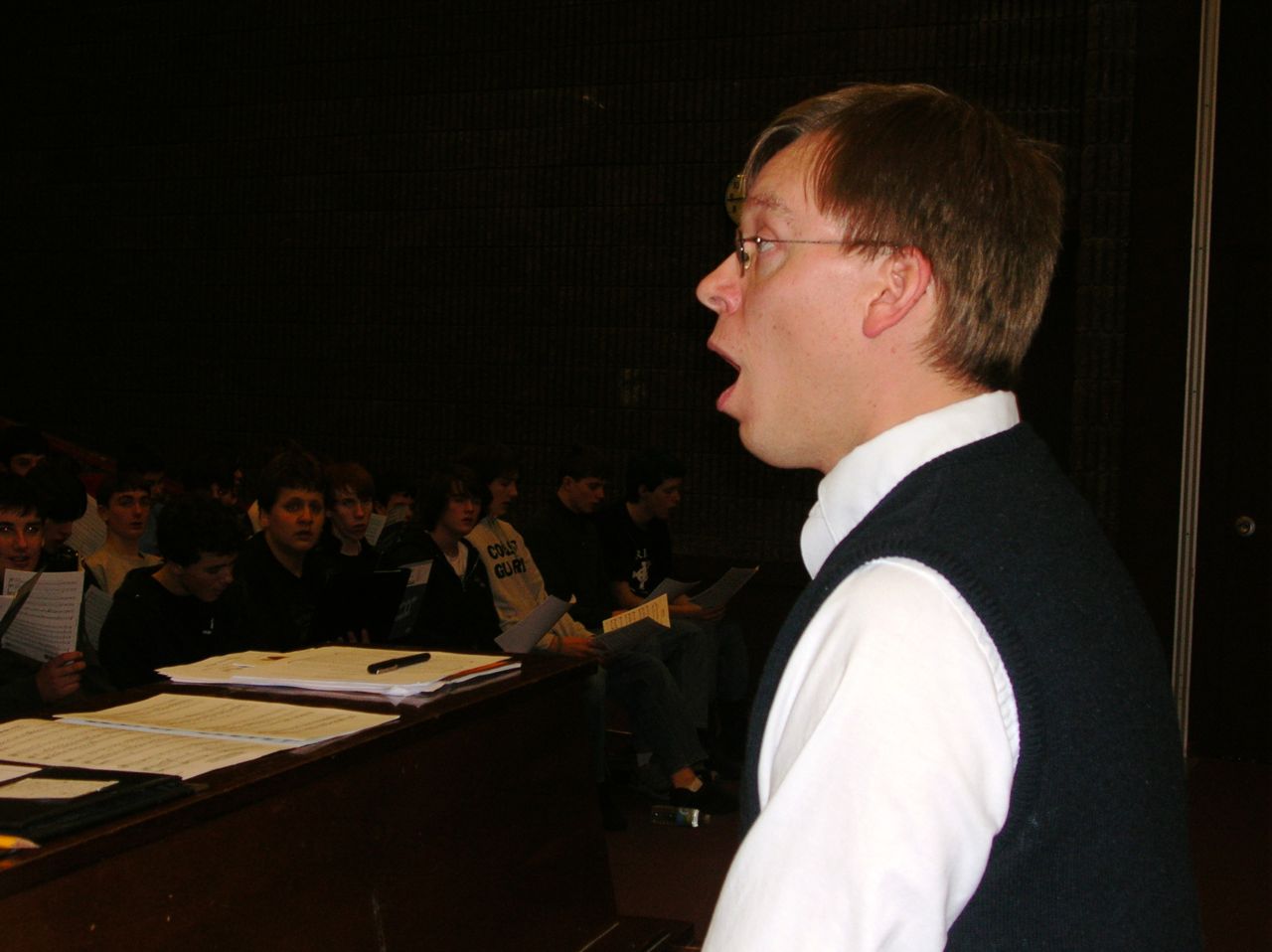
Rob Westerberg conducting chorus, York High School

Rob Westerberg conducting chorus, York High School

As school districts begin to prepare for the 2010-2011 school year, some High Schools are considering a change to a “4×4” schedule (block scheduling, same classes every day for a semester at a time).

The potential ramifications with regard to music education are significant; I
know of very few small to medium sized High Schools (under 2,000 students) in the US that went to a 4×4 without decimating their music programs, and I don’t know of any in northern New England.

To get some hard data on the subject, Jenn Witherell-Stebbins, Band Director at Thornton Academy, has put together a very cool, very brief
survey we would like all Maine Music Teachers to check out.

The music folks at Thornton Academy need the immediate data to state their case for their concerns – there’s a sense of urgency here – but we as a state also need this data for long term advocacy. It will only take a minute to
complete and we would really appreciate the feedback! Thanks in advance and have fun filling it out!

Clicking here will take you to the survey and if you need it, this is the link:
http://www.surveymonkey.com/s/L9V5X9P

h1

Being a Learner

February 24, 2010

Feeling like a student!


I had many outstanding opportunities during my 30 years in the classroom to attend professional development workshops and conferences, courses and hands on learning experiences. Sometimes these learning opportunities put me in my students positions. I experienced the frustrations, challenges and joys of learning something new which often helped me to understand what my students felt.

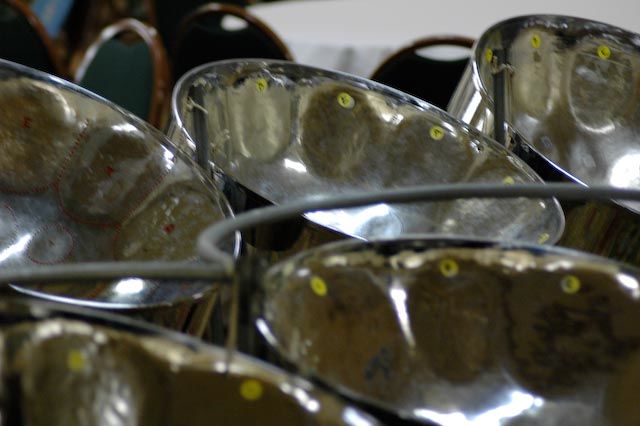
For some time I have been interested in playing the steel drums and this past Monday I finally had the chance to play. At Medomak Middle School (RSU 40) music educator, Julie Sanborn, has opened her classroom on Monday evenings to community members to learn and play together. Attending this past Monday were elementary music teachers from the district Sybil Wentworth and Jarrod Bishop, parents, a 7th grader and a 2008 graduate from the district.

I immediately felt like what I was: “a beginner”. I had to use very different skills than I use day to day. And skills that haven’t been used in some time and some that I have to develop. I was learning something very different in a very different way than what was familiar to me. The other participants had been there before, some many times.

Julie’s teaching skills are superb and  Sybil’s one on one assistance got me through the session. Yes, I was the one in the class that “just wasn’t getting it”, “slower than the others”, “messing up the group”, “not doing my part”. How did I feel? Challenged and frustrated but I was having fun as well. Will I go back… YES!

When was the last time you felt like a student in your class who was just like me… playing steel drums for the first time?

h1

Congressional Art Competition: 2010

February 22, 2010

Call for Entries!

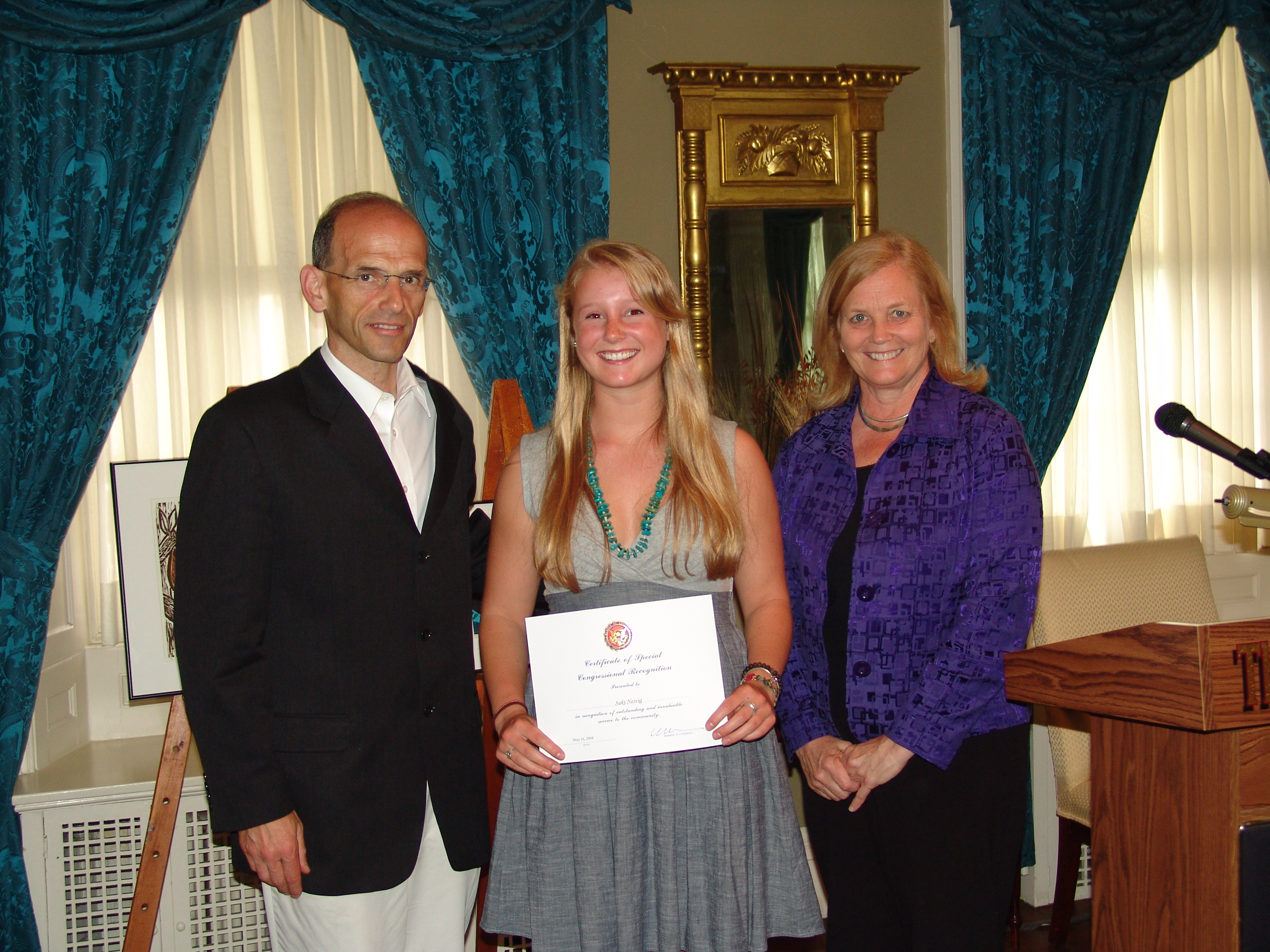
Suki Nesvig, 2009 Congressional awardee with Governor Baldacci and Congresswoman Pingree

Congresswoman Chellie Pingree, Congressman Michael Michaud and the Maine Arts Commission invite high school students to participate in this year’s Congressional Art Competition. The selected students will have the opportunity to have their work displayed in the Cannon Tunnel of the U.S. Capitol for the entire year, beginning in June. In addition, winners will be eligible for a scholarship to the Savannah College of Art and Design. This competition requires digital submission.

Deadline: March 19, 2010. For further information and guidelines, please contact Lindsay Rowe at the Maine Arts Commission at 207/287-6720 or lindsay.rowe@maine.gov. FMI please click here.

h1

Two Art Teachers Stories

February 22, 2010

Emails and updates sharing

Eagle photo taken by Chuck Hamm

After the posting on how much I love winter I received two emails from art teachers sharing winter stories. Chuck Hamm from Belfast High School and Shanna Wheelock from Lubec.

Take a few minutes and go to Shanna’s blog. It is a great combination of her art work, family work, and student art work. If you’re thinking of starting a blog for yourself and for your students, Shanna has cleverly combined the many aspects of her life. The blog is called The Eastern Most Potter in the United States.  It is also listed under the blogroll found on the right side of the front page of the meartsed blog as Shanna Wheelock blog.

Chuck Hamm teaches high school art in Belfast. He is an avid photographer and has a set up a bald eagles of Maine blog with his recent eagle photographs. Chuck has become a blogging fanatic (that is stated in the most positive light). You can see how he is documenting his student work at the Belfast High School Fine Arts blog that is also located on the blogroll under Fine Arts Department.

I am sure Shanna and Chuck would love to have your feedback so please comment below.

h1

Partnership: Words and Music

February 22, 2010

Research finds brain link for words, music ability

Article from AP written by Randolph E. Schmid, AP Science Writer, Feb. 20, 2010

h1

Looking for 10-20 Maine High Schools for Pilot

February 21, 2010

World Class Learning Systems Initiative (Board Examination Systems)

Maine has an opportunity to participate with seven other states in piloting some of the world’s best instructional systems and examinations with the intent of dramatically increasing the number of students who leave high school ready to succeed in college.

The National Center on Education and the Economy introduced the Board Examination idea in its groundbreaking report, Tough Choices or Tough Times, in late 2006.  The report received wide acclaim, and was the cover feature of TIME magazine and praised broadly by educators and the media.

As Maine strives to insure our students are prepared for post-secondary education without remediation and to be globally competitive this is an opportunity for 10 to 20 high schools in Maine to pilot one of the Board Examination Systems.  NCEE has recently received funding from the Gates Foundation to support this work and anticipates additional funding for the next three to four years through a combination of federal and private foundation support.  The five Board Examination Systems programs already identified by NCEE include: ACT’s QualityCore; the Cambridge International Examination’s General Certificate of Secondary Education (IGCSE) and their AICE program; the College Board’s Advanced Placement program; the International Baccalaureate Diploma program; and Pearson/Edexcel’s IGCSE and A-level programs.

Students from the pilot high schools who volunteer to participate will take the exams at the end of the 10th grade, and should they pass, be given a high school diploma and opportunity to enroll the next fall as a full-time student at any two-or-four year open admission post-secondary institution in the state without having to take remedial courses, if they choose to do so.

It is important to understand that the early graduation option is not our major focus, and we anticipate that only a handful of students would take that option each year. Rather the focus is on allowing high schools that choose to participate to adopt some of the best (and proven) instructional practices in the world, to provide a powerful system of support to our struggling students, our most able students, and everyone in between, and to motivate our high school students to take tough courses and study hard in school.

Marc Tucker of the NCEE will be in Augusta on Feb. 25 to conduct three briefings, along with Commissioner Gendron: one for higher education officials, legislators and various friends of education such as the MCEE and the Maine State Chamber of Commerce; one for school personnel; and one for DOE staff.