North Haven
Written by Catherine Ring, former School Principal and Arts Educator
American Institute for Creative Education and member of the planning committee for the IIC’s
 Imagine for a moment, that your community has been chosen as one of six sites in the entire state of Maine for its exemplary investment in the imaginative development of children and youth. North Haven should be proud. Their school and community recently hosted a team of arts and education leaders, sent there to observe, interview and document what they do so well, so that it can be shared with other communities in Maine.

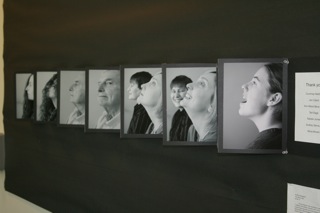
Photography exhibit at school by foreign exchange student
The Imagination Intensive Communities project was the brainchild of the Maine Alliance for Arts Education and the Maine Department of Education. After doing a statewide census and an application process, six finalist communities where schools and a range of partnering organizations made such an investment were identified. Funding from the Kennedy Center, the Betterment Fund, the Maine Arts Commission and the Maine Department of Education made the search possible. The six finalist communities are: Arundel, Blue-Hill, Camden-Rockport, Deer Isle-Stonington, York and North Haven. (Three semi-finalist communities are: Brunwick, Denmark, and Portland (Reiche School).
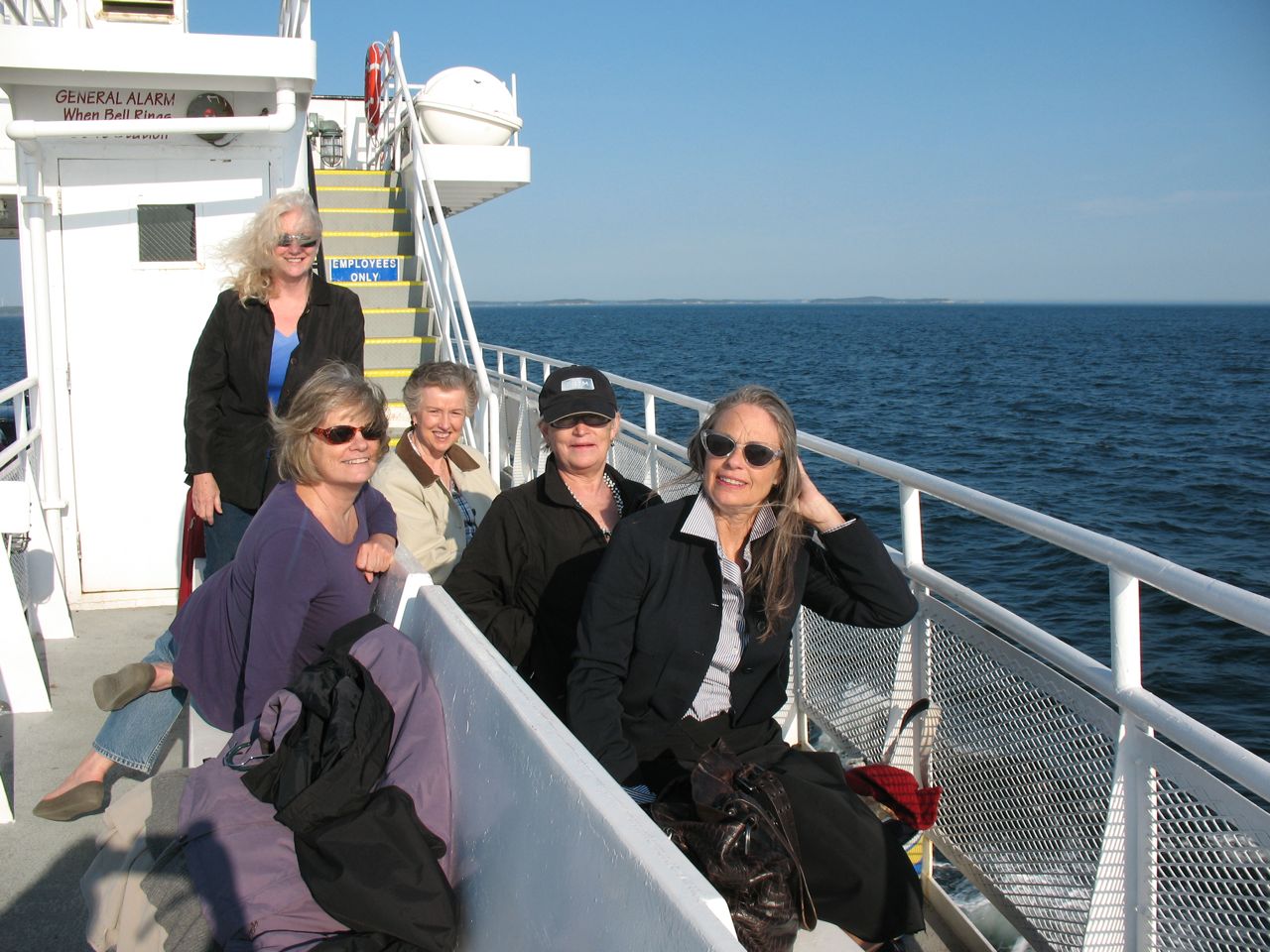
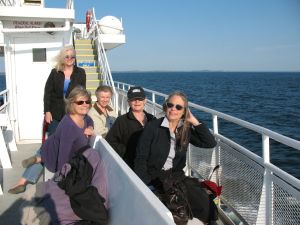 So I meet our visiting team in Rockland and get on the 5 o’clock ferry to North Haven. Our team (Argy Nestor, Donna McNeil, Dennie Wolf, Joan Staffiere, Jennifer Trowbridge and me) is charged with trying to figure out what works in this community where the arts and hands-on education and school/community partnering work for kids. Why is it, that even in hard economic times, the arts still thrive in some communities? What pathways to success have they created for their students from pre-kindergarten to adulthood? What are their resources, and unique features? What key programs and opportunities do they provide? What are their challenges and key issues? We mulled these questions over on our glorious trip over, in anticipation of what we would find.

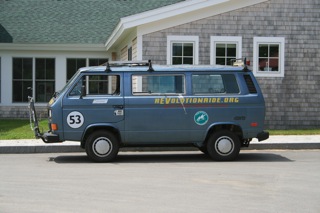
Electric car made by students and math/science teacher John Dietter
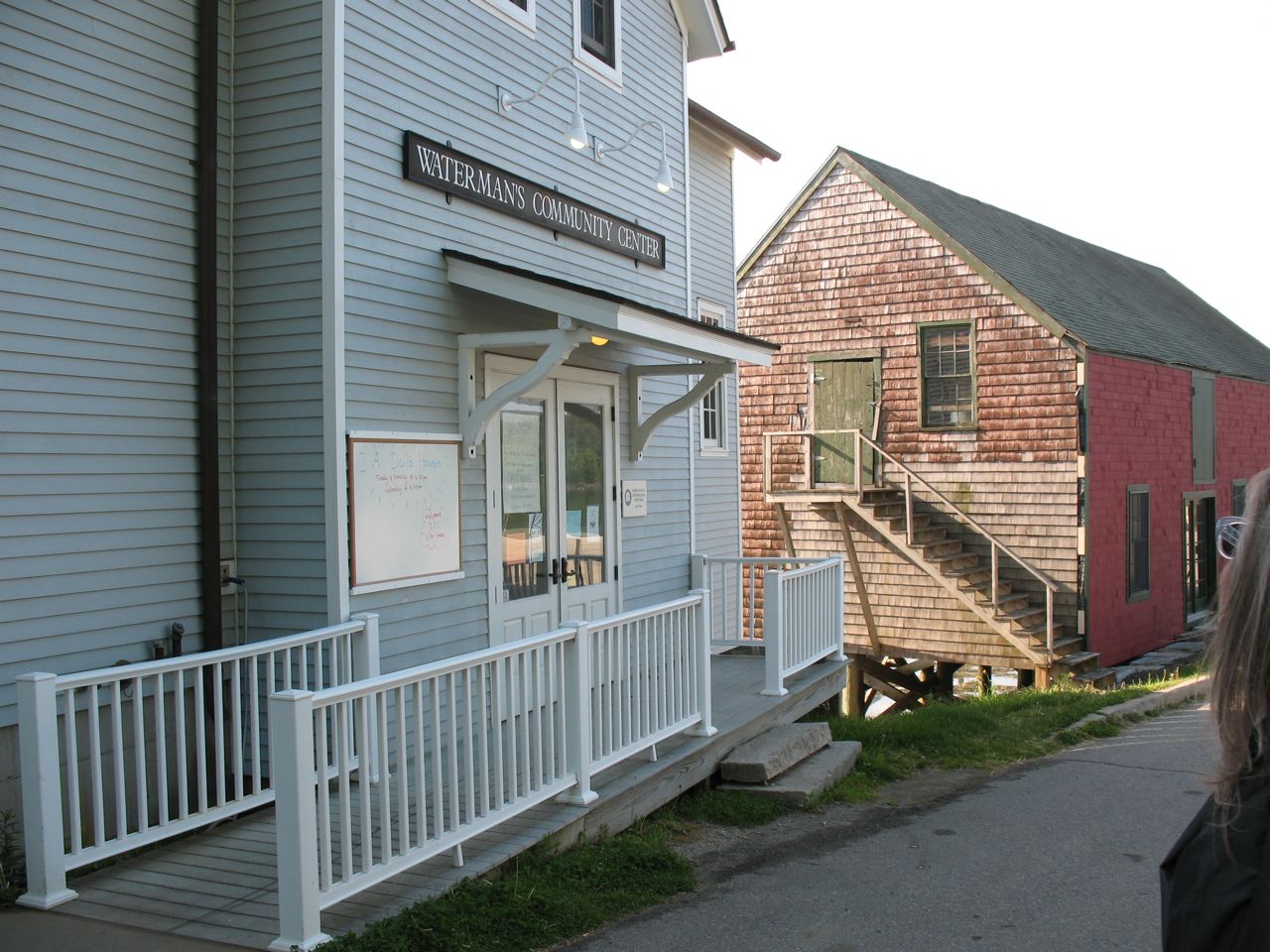
North Haven rolled out the red carpet. Our team was hosted by Christie Hallowell (Director of the North Haven Arts and Enrichment program) and Barney Hallowell (Principal of the pre-k-12 school), as well as many other school and community people. We were forewarned to bring a snack on the ferry, because there would be no time to eat once we landed – as we were immediately brought to the 7pm production of “A Doll’s House” at the Waterman Center. Ibsen’s play, directed by the island’s music/English/drama teacher, Courtney Nabiloff, featured students and community members and was set in the more contemporary 1960s. I was able to meet some of the actors and the director later, and couldn’t refrain from calling the leading actors Nora and Torvald despite the fact that their real names are Amilia (Campbell) and Rico (Rattina). What does that tell you about the impression those characters made on my brain? During the discussion after the play, we also met with other community members, including Hannah Pingree, our state representative who lives on North Haven. We heard a little about the history of the island, asked some questions, then were ready to retire to our beautiful accommodations (thanks to Christie and Barney Hallowell). We needed a good sleep to prepare for our next day’s adventure.

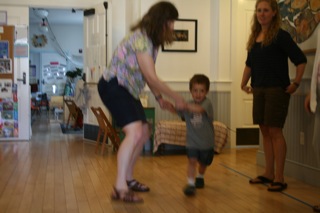
Pre-schoolers learn to contra dance at Watermans with Christie
The next day’s schedule was tight, as there was so much to share with us. We began at the Waterman building, where I had coffee with Mina Bartovics, an alumna of North Haven Community School (and Bowdoin College – 2007). She came to North Haven at 16 years old, after spending summers there. She participated in the Ocean Classroom where she learned to sail and had many positive experiences in North Haven. Her current plans are to become a midwife in Portland. Wow!

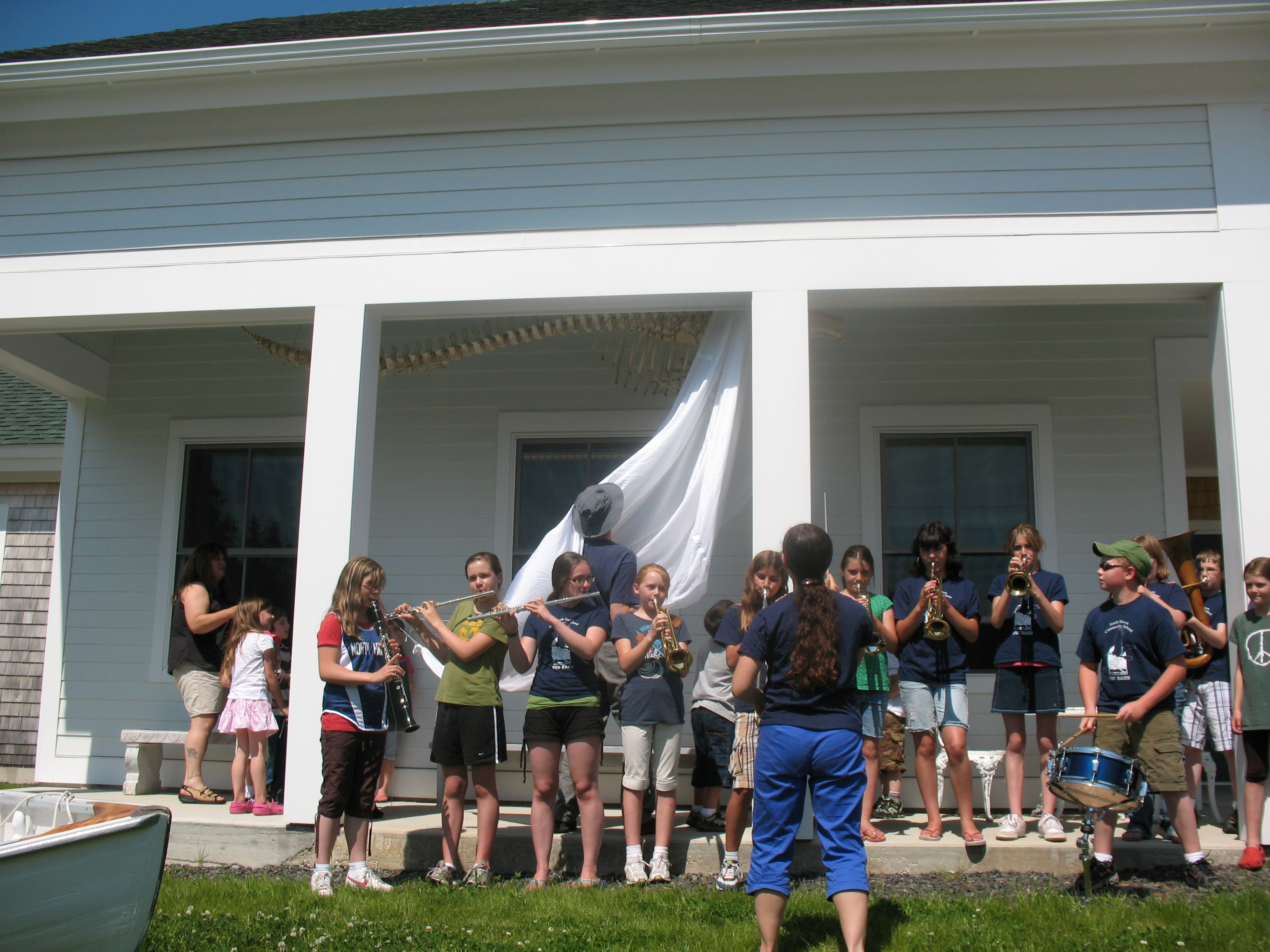
The band played at the unveiling of the Pilot Whale skeleton
Christie Hallowell described how the North Haven Arts and Enrichment program came about: it was after the school cut its art and music programs from the budget. People who valued art and music would not allow island children to go without them, so they created an independent non-profit organization that supported art, music and drama in the school. Ten years later, another group of individuals established Waterman’s Community Center on the site of the old Waterman’s Store. This became the central community center for plays and pre-school and eventually, when the two organizations merged, the home of North Haven Arts & Enrichment. The partnership with the school and community was central to the opportunities it offered. Pre-school and after school programs, summer camps, artist residencies, plays, performances, coffee house, teen night, senior programs and concerts are just a few of the exhaustive list of events available year round. I love the name of the Pre-School: Laugh and Learn. There’s a philosophy I wish we could transpose on all public schools. Rachel Garbowski (graduate of Bates College) is the Program Director at NHA&E and Lisa Shield is the Arts Coordinator. This community center is clearly a happening place! Did I say there are only 350 people on the island year round? The population increases, of course, during the summer season.
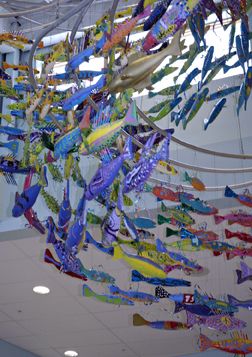
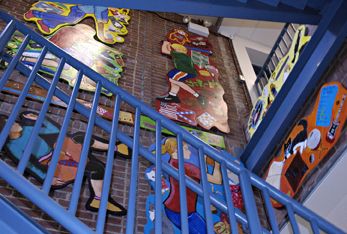
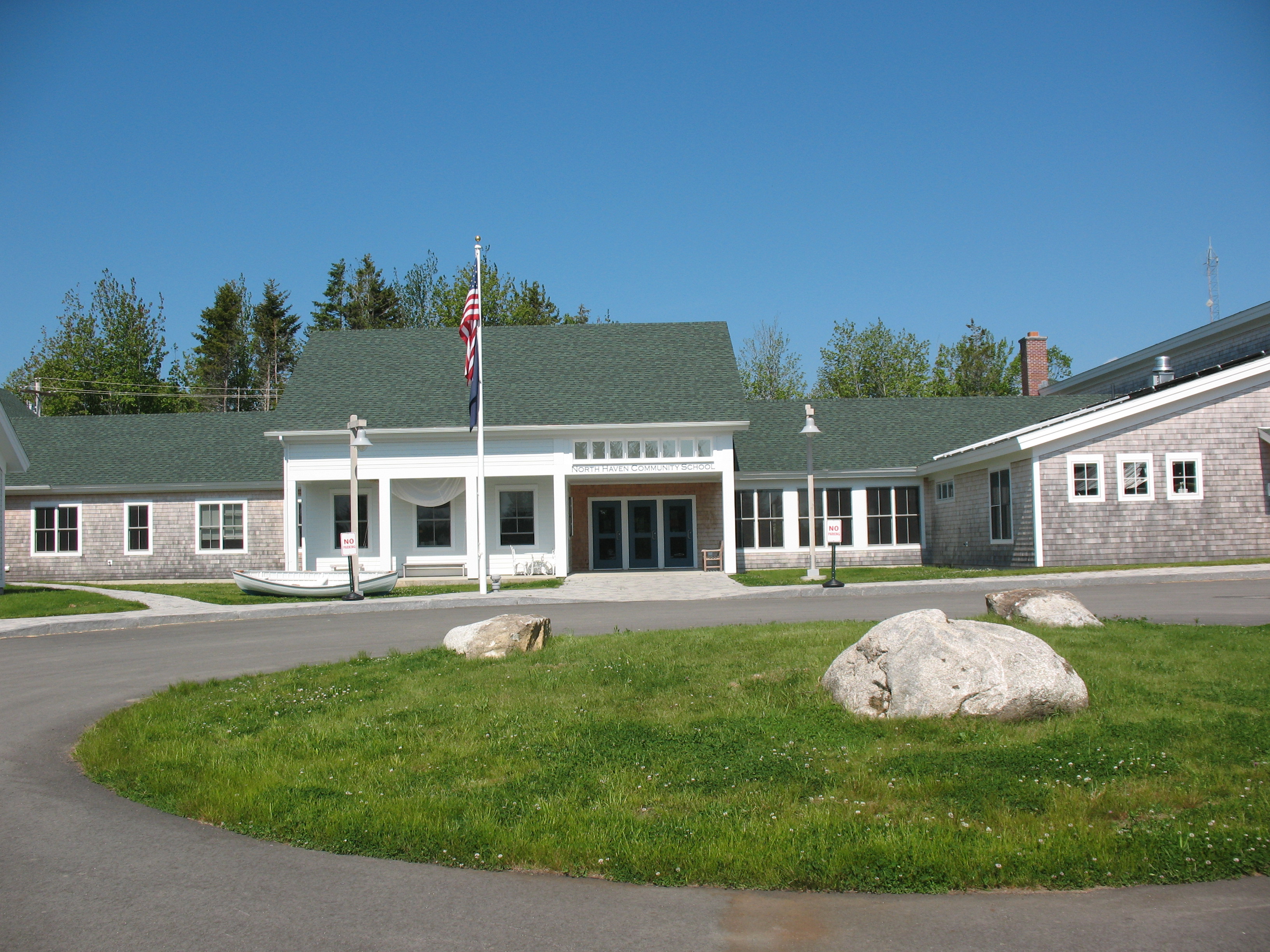
 Now we’re off to visit the school. The K-12 school has less than 70 students, and small class sizes. The mission of the school is clearly emblazoned over the entry walkway: Compassion, Challenge, Community. In fact, I noticed these words repeated inside classrooms. Student art was everywhere – dangling from corridor ceilings, mounted on walls, and braille signs made of clay designated each room. Mallory Brown, a senior, escorted my group around the school. Highlights included: meeting the high school boys and their math/science teacher (John Dietter) who designed an electric van (yes, we got to ride it around campus), visiting the Circus Arts class in session where 5th and 6th graders were practicing juggling, spinning dishes, unicycling, etc. with their teacher (Ken Jones) who teaches PE and Art (and also is a dancer). Ken explained that the staff has a strong background in the arts – photography, graphic design, dance – and that while they might not teach it, those skills are all used – it all comes together. Next, a meeting with a high school drama class and their teacher (Courtney Nabiloff). Returning alumna, Adam Alexander, is now a playwright and he created a one-act play just for this high school group: For the Love of Zooey. Every student in the high school had a part written for them, and the play sold out. A school-wide assembly, led by principal, Barney Hallowell, featured the school band and the unveiling of the Pilot Whale skeleton, assembled by students and the science teacher.
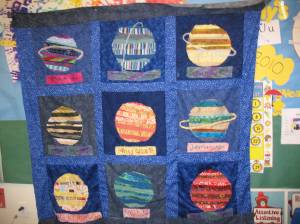
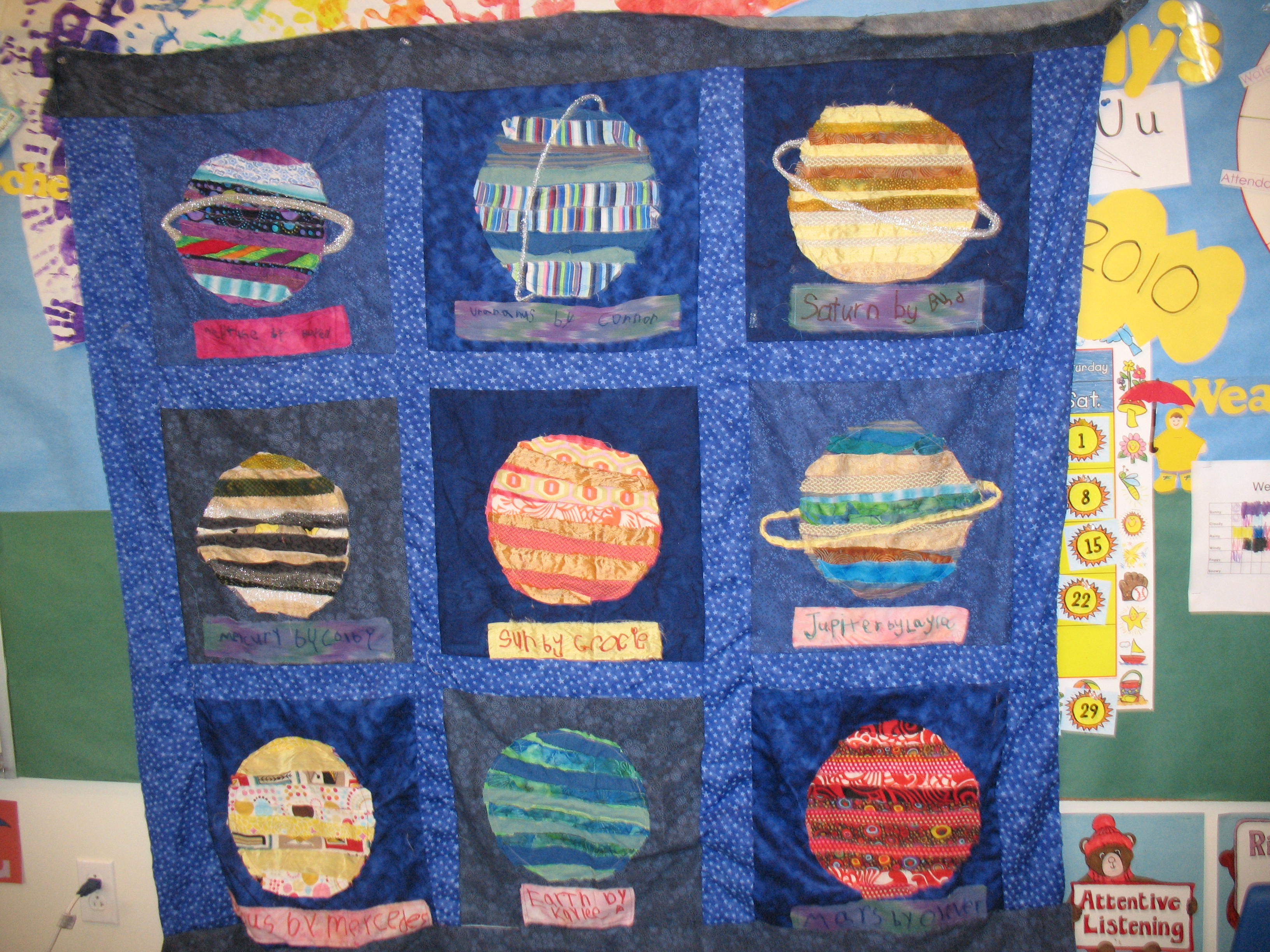
Quilt sewn by kindergarteners
Our lunchtime gave us an opportunity to meet with other important notables in the community: artists, the superintendent, and school board members. All contributed to our growing sense of this unique community.
On our way out for a tour of Crabtree Point (Argy and I were driven by Lisa Shields and David Macy), we noticed a French class in session. The class immediately sang us a song in French, then we continued out the door. A glance into the Kindergarten revealed eight little bodies with headsets at laptops. They are learning to read. Following our tour of this beautiful island, we headed for Brown’s Boatyard. Here, we witnessed Foster who showed us the beautiful boat he is building. A de-briefing back at Waterman completed our day. Time to head back on the ferry.

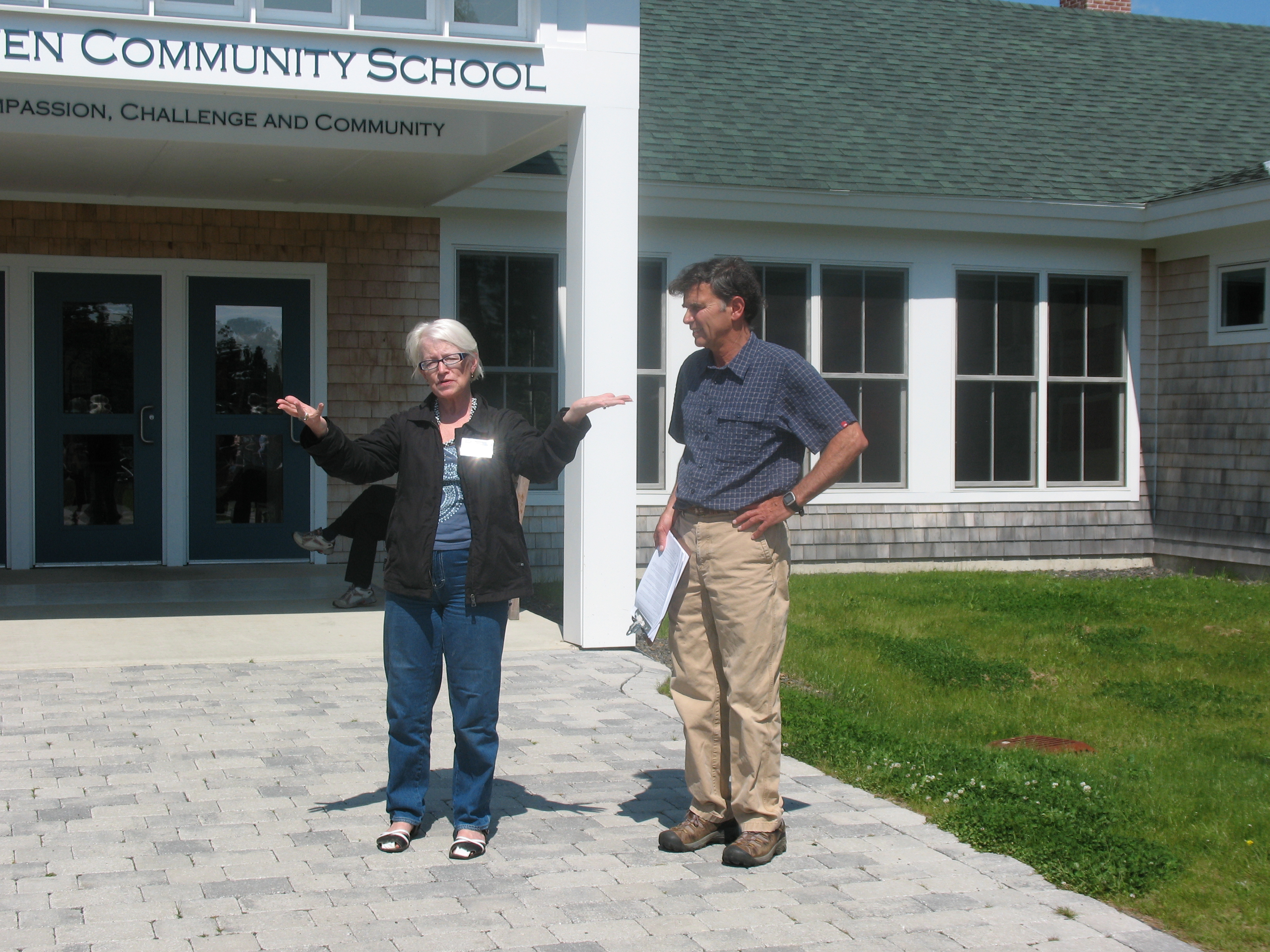
Visiting team member Dennie Wolf who started her teaching career 40 years ago on North Haven and Principal Barney Hallowell
I came away with thoughts about how so many in this community played multiple roles. The PE teacher teaches dance and art, too. The English teacher teaches music and drama. The tour guide was the minister and was in the play last night. Hmmn. Multiple talents, used very efficiently.
Our team has a lot to think about, to discuss with each other, reports to write, and things to extrapolate about this unique community. That is our work in the next few weeks and months. A celebration of this work, along with the other noted sites in Maine, will take place this fall. And just before our glorious ride back on the ferry to Rockland, I noticed the ticket taker looked familiar. Are you Patricia Lannon, who was in the play last night, I asked? “Yep. We do everything around here.” Amen!

Watermans Community Center
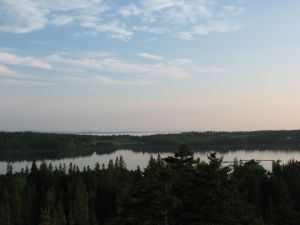
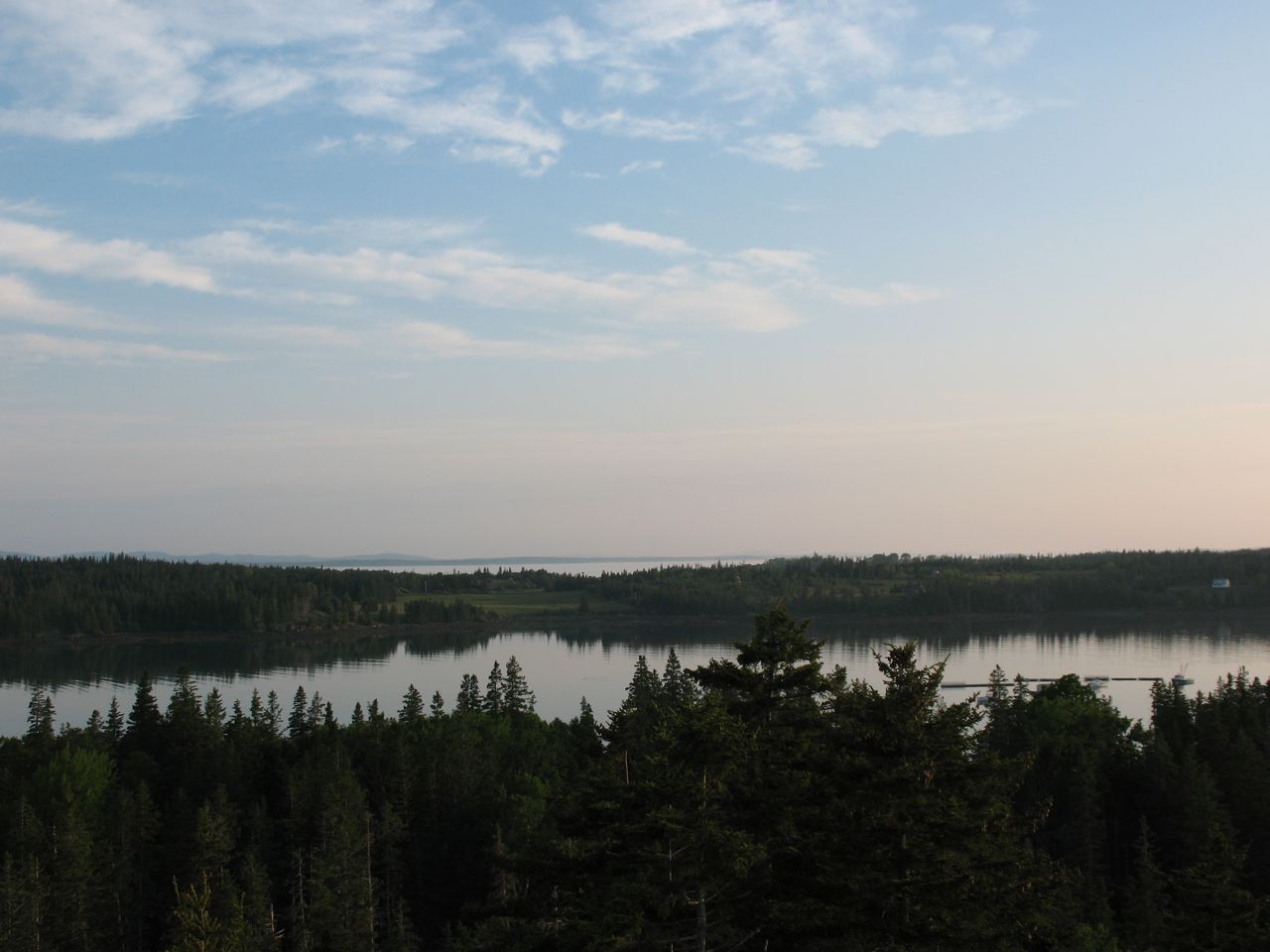
First light over North Haven
The project is being conducted by the Maine Alliance for Arts Education and the Maine Department of Education. The project is supported in part by a grant from the John F. Kennedy Center for the Performing Arts, The Betterment Foundation and the Maine Arts Commission supported by the National Endowment for the Arts.




 me arts ed