Archive for August, 2010

h1

My Summer Vacation!

August 31, 2010

What a great week I had…

It was wonderful to have an entire week off at one time. As promised, I didn’t check my email, which felt a bit strange but refreshing. I had a chance to catch up on projects at home, make art, sit on the deck and read the newspaper from one end to the other, paddle my kayak, spend time with friends and family, and go to the beach. Ahhhhh, yes, it was great!

As I sat at the beach watching the tide roll in, listening to kids laughter, feeling the sand between my toes, smelling the salt air and suntan lotion, I had the chance to reflect on my roles and responsibilities at the Department. I thought about my routine and about how my time is spent each day and during a week and over each month. I know the importance of communication to arts teachers. My goal with the list-serv and blog is to provide a connection to each of you, informing you of what is happening at the Department, but also with colleagues and education on a variety of issues and levels, in and out of state. I think communication is “key” as education evolves to meet the needs of our 21st century learners.

One of the books I am reading is “The Global Achievement Gap” by Tony Wagner. Mr. Wagner’s list of seven survival skills for teens today includes what many of us know and incorporate into our teaching as arts educators. The book takes Daniel Pink’s ideas to the next level of how to provide an education for today’s world. Wagner reminds me of the importance of always being mindful of what and why we teach the material and how we are teaching it. We are at an important, rapidly changing time in education and it is crucial to continuously ask the difficult questions to meet of 21st century learners.
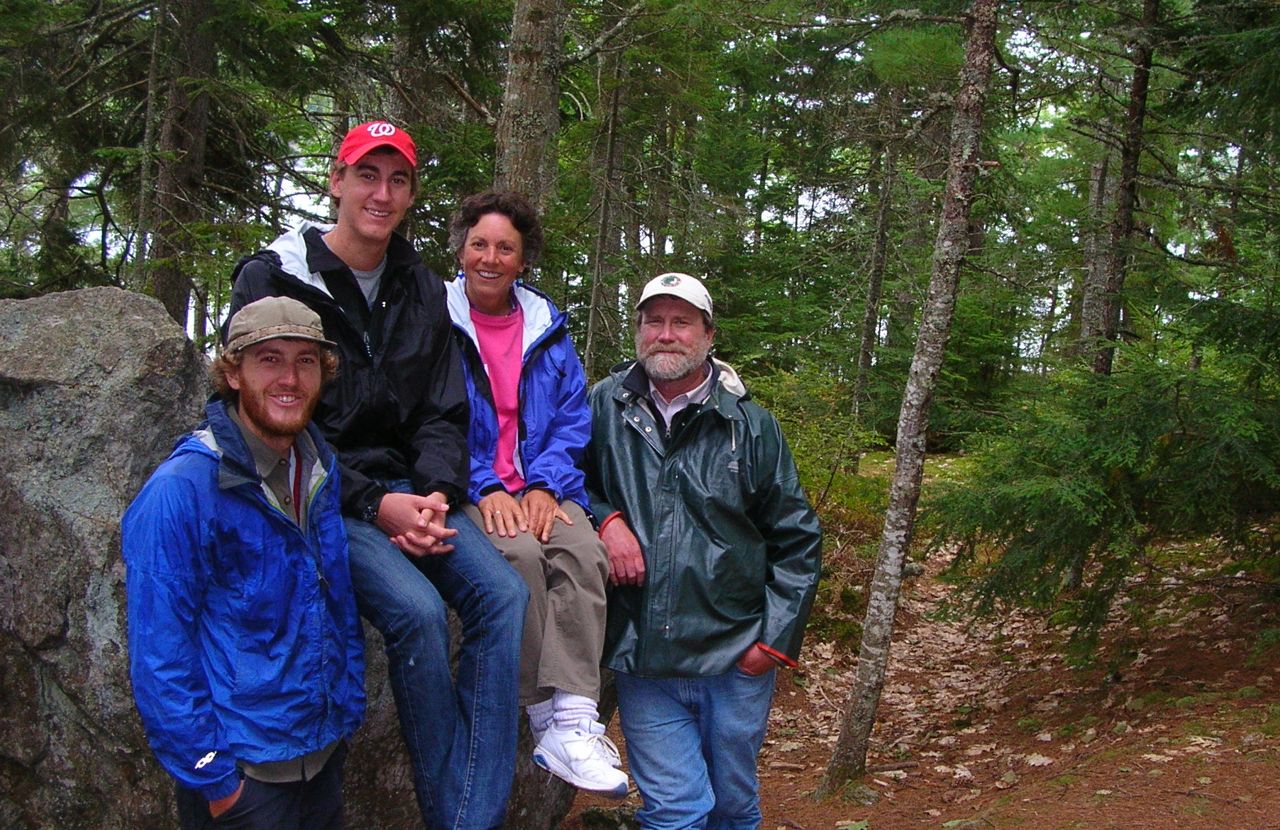
A fun day out with my family!

My favorite part of vacation was spending a day with my husband and two sons. It has been a busy summer with all of us coming and going in different directions so we haven’t had much time together. We went on the boat on one of the rainy days and explored a part of a local lake that has a trail along one section with a really amazing rock! On another part of the lake we saw 2 doe and their 2 fawn and got a good glimpse of an eagle. We made plenty of time to talk, laugh and catch up. I realize that even on a personal level life changes rapidly and unless we take time to really communicate we will lose the connections that are most important to us. It was a perfect day!

I hope all of you had some quality time this summer doing what you love to do! I am grateful for my time.
h1

Don’t Make Me Dance by Tom Chapin

August 29, 2010

No Explanation Needed – But DON’T Miss This…

h1

Art and An Ipad

August 27, 2010

The Pied Piper of Hamlin: A Revisionist Tale

Thinking about the use of iPads and student artwork opportunities? Take a look at this artwork created on an iPad. This is just one example found on the web.

h1

Arts and 21st Century Tools

August 25, 2010

Boosting skills

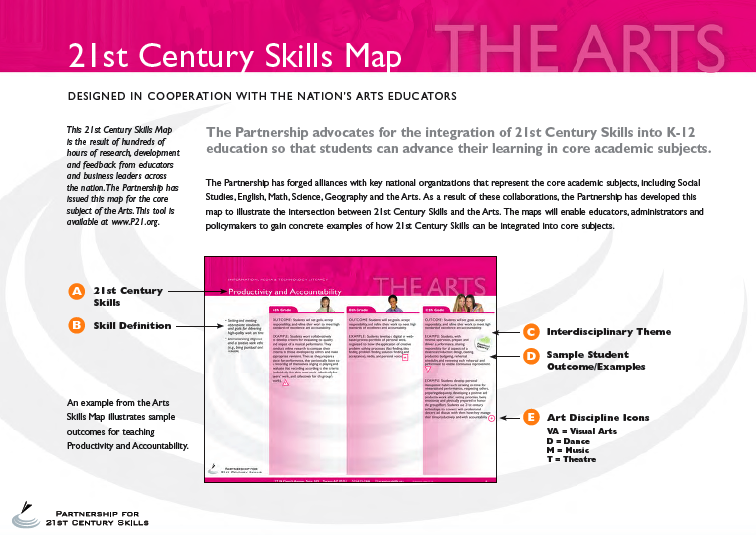
The Partnership for 21st Century Skills (P21) has developed an Arts skills map that defines how arts education promotes key 21st century skills. You can access this article by clicking here. You can download the map on the Partnerships site by clicking here.

h1

Call for Papers

August 23, 2010

Visual Inquiry: Learning & Teaching Art

The mission of Visual Inquiry: Learning & Teaching Art is to provide a forum for engaging the complex, rich and multifaceted process of learning and teaching art. Published three times a year and peer reviewed, the print-based journal will launch its first publication in 2011. The journal highlights the process of creating art, teaching as an art form, engaging art submissions, scholarship in teaching artistry, and the rich traditions of art making and teaching. The call for papers is open to anyone concerned with issues related to learning and teaching art.

The journal seeks a serious yet experimental approach to publication that values the myriad of visual art processes in contemporary culture. Readable to the outsider yet encouraging and challenging to the experienced artist-teacher, the journal will fill a niche in art and art education with a breadth and enthusiasm missing in contemporary art and art education journals.

The journal seeks articles, reflections on artwork, interviews, original artwork and book/exhibition reviews that address one or more of the following themes:

  • Art appreciation
  • Learning and teaching in museums
  • Teaching artistry
  • The role of creativity in learning and teaching
  • History of art education
  • Art-based research
  • Teaching art in primary school to higher education and beyond
  • The relationship between art making and teaching
  • Art addressing teaching and learning
  • Philosophy of teaching and learning art
  • Aesthetic education
  • Design education
  • Learning from art
  • The voice of artist-teachers
  • Teaching art outside school walls
  • Analysis of teaching and learning art experiences


Contribution Details:

Full articles should be between 3,000 to 5,000 words long. Interviews, reflections on art works and engaging art submissions are expected to be between 1,000 and 3,000 words and do not have to be extensively referenced. Reviews of exhibitions, books, and conferences are to be up to 1,000 words and should include a brief description of the event/text.  All submissions will be blind refereed.

Submissions should be sent via email in Word format and include an author biography (including affiliation/position/not to exceed 80 words), an abstract (concentrating on the significant findings/not to exceed 150 words) and contact information (email/mailing address). All submissions should be in English and adhere to the Intellect Style Guide (http://www.intellectbooks.co.uk/journals/page/index,name=journalstyleguide/). Correspondence should be directed to the editor, G. James Daichendt at gdaichendt@apu.edu

Thanks to John Holdridge, Maine Arts Commission Arts in Education Associate, for sharing this information.

h1

Visual Thinking Strategies

August 22, 2010

Portland Museum of Art hosted VTS meeting

Stacy Rodenberger

Last week a group of educators and docents met at the Portland Museum of Art (PMA) to discuss Visual Thinking Strategies (VTS). In the past three years several people have been trained to use VTS in Maine classrooms and museums. Interest continues in different parts of the state for using the technique. Starting this the Tides Institute and Museum in Eastport is sponsoring a training for Washington county art and classroom teachers.

We viewed a short clip of the Gardner Museum’s Thinking Through Art program. Afterwards we worked in groups to brainstorm ideas and possible next steps for future VTS trainings. A long list of ideas was generated by the participants.

The planning committee made up of Dana Baldwin, Director of Education-PMA, Stacy Rodenberger, Coordinator of School Programs, PMA, Cathy Melio, Program & Outreach Program, Penobscot Marine Museum and myself will take the ideas and make a plan for the next steps in Maine using VTS.

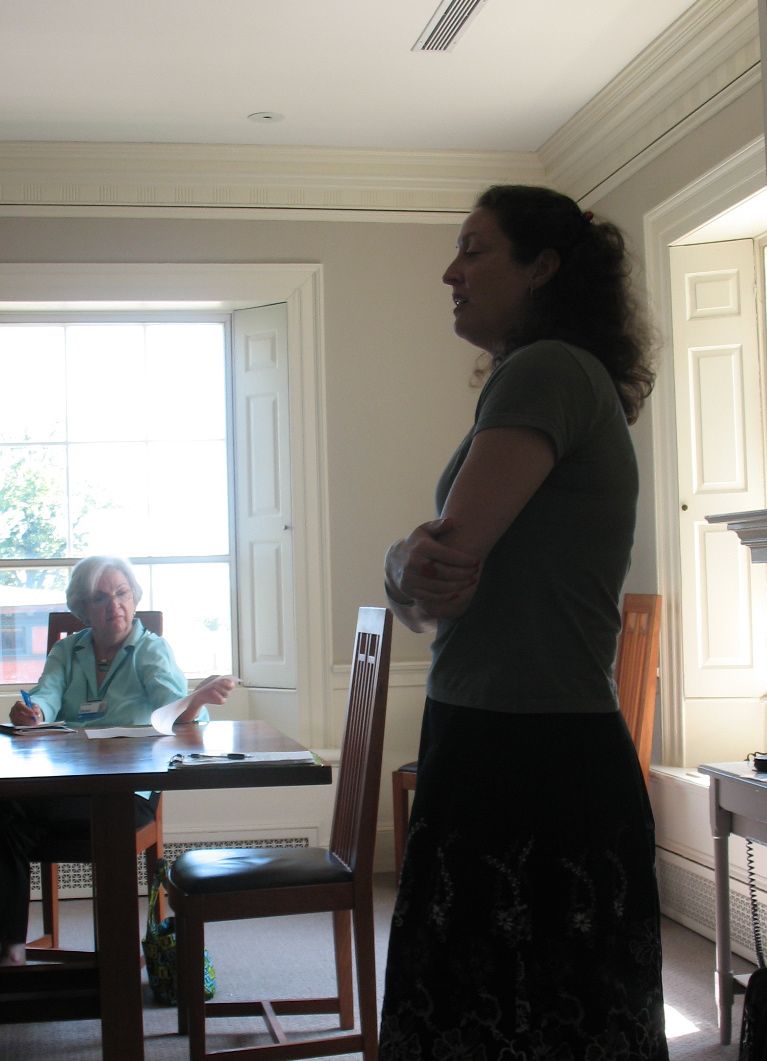
Participants at PMA

h1

MAC Survey

August 21, 2010

You’re invited to participate

In an effort to evaluate the programs and services at the Maine Arts Commission, you are invited to participate in an online survey. They are gathering critical  critical information about the cultural sector in Maine. Your input will allow the agency to provide services and programs that best suit your needs. You need not be intimately familiar with the Maine Arts Commission to provide helpful information.

They estimate that it will take you no more than 15 minutes to complete the survey that you can access by clicking here.

h1

Maine Art Ed Association Summer Retreat

August 20, 2010

August 3rd on Peak’s Island

The Maine Art Education Association (MAEA) summer retreat was held on August 3rd at Peak’s Island. After a short ferry trip to the island, most of the morning was spent on the agenda which included Team East update, MAEA Policy Handbook, Regional Groups, budgeting for 2010-2011, and advocacy.

President Sandy Brennan shared some ideas from other Eastern State Art Associations which she learned about at the “Team East” conference in Newport, RI held in June. The MAEA board is working on a Policy Handbook with a draft coming out at the fall conference at Haystack on September 17-19. It will also be posted on the member wiki at http://mainearted.wikispaces.com/

MAEA is working on establishing regional groups and at this time there are four.
Members have volunteered to help set up the regional groups. If you are interested in learning more please contact Sandy Brennan at sbrennan@wocsd.org.

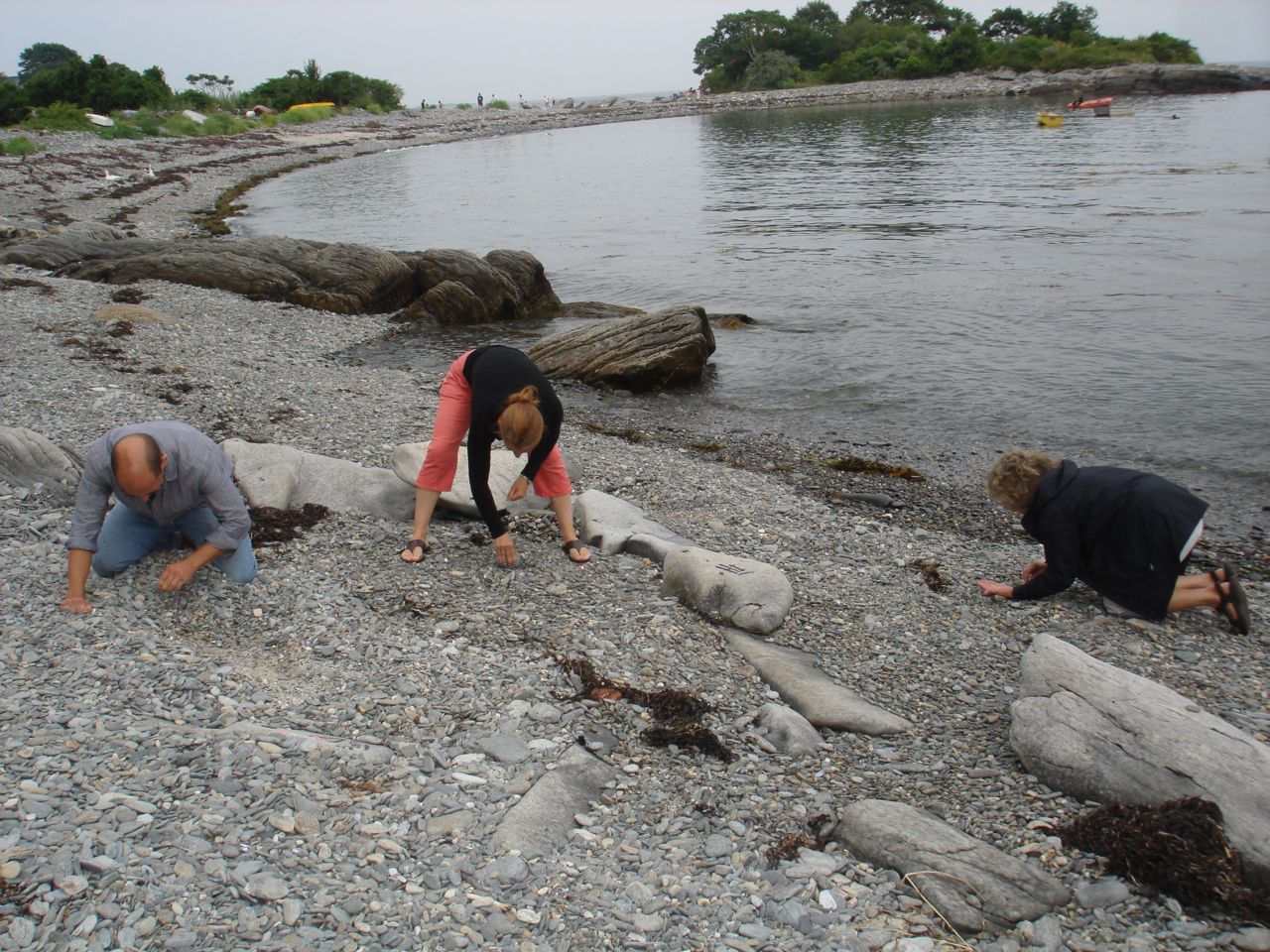
The retreat members had a delicious pot luck lunch, searched for sea glass, checked out the 5th Maine Regiment Museum, and took a delightful walk to explore beautiful gardens, houses, and a public rock sculpture area all along beautiful Seashore Ave.

Thanks to Tory Tyler-Millar, Chris Milliken, Molly Mains, Constance Panetski, and Becky Christie for the work they did at the retreat to accomplish important MAEA topics.

Sandy announced to new visual art educators in Maine. WELCOME to Jane Dalton at Maine College of Art and joining the University of Southern Maine, Kelly Hrenko.

The first board meeting of the year will be on September 2nd at Jameson Tavern in Freeport. The monthly board meetings will be the first Thursday of every month. All members are welcome.
Sandy Brennan
President, Maine Art Education Association

h1

The Huffington Post

August 19, 2010

The Heart of Teaching and Learning – Aug. 2nd

Read “The Heart of Teaching and Learning: Dropping Knowledge on Capitol Hill by Kate Quarfordt. Kate is an educator, artist, theater maker, writer and mother who had the chance to testify with ASCD on Capitol Hill on policy recommendations on for Consensus Policy Recommendations for Well-Rounded Education in ESEA (Elementary and Secondary Education Act).

The consensus statement was signed by 22 partnering organizations with 5 policy recommendations. Read the entire article by clicking here.

h1

Maine Arts Assessment Series: 3

August 17, 2010

Plymouth State University, Plymouth, NH, August 3-5

Catherine Ring, AICE Faculty

This is the third post in a series to keep you updated on where we are with Maine arts assessment and where we are headed. This post was written by Catherine Ring who attended the New England Arts Assessment Institute with Rob Westerberg and myself at Plymouth State University in NH. I value Catherine’s experience as an art teacher, administrator and now instructor of teachers!

I spent three days in the White Mountains at Plymouth State University, attending the New England Arts Assessment Institute with Argy Nestor (no introduction needed) and Rob Westerberg (Music Teacher at York High School). We spent the time soaking up the keynote presentations and workshops, communing with art and music educators from New England, and working in strands to learn about and understand the important work of assessing arts learning in schools. Gail Kilkelly, my friend and colleague, (Vermont Dept. of Education) and Marcia McCaffrey (New Hampshire Dept. of Education) have spearheaded this project for four years and are leading the effort to put the arts on the map in public education. Great food, great music, great conversations and the gracious hospitality of Plymouth State University all combined to make a terrific learning environment for all of us.

As someone who spent years pondering the big questions about Arts Education, Assessment, Standards and, yes, Accountability, I must admit that my mind has changed dramatically since my initial reluctance to “put the Arts in a box”, back in the mid-1990s in Vermont. Having students assess their work became really exciting as I watched them become more articulate and thoughtful about their work. Teacher assessments of student art work became a launching point for discussions with students, and learning in the arts was deepened. In my mind, there was no doubt about it. Assessment in the arts really helped students to reflect and learn more deeply.

Since then, I became a school principal and now teach graduate level courses to teachers on integrating the arts in their classrooms. So when I was invited to join Argy and Rob to attend the New England Arts Assessment Institute, it felt a bit like homecoming. I met old friends from Vermont and I was delighted to participate in and learn about Arts Assessment at the regional and national level once again.

Rich Wells’ strand on Understanding By Design asked us to first consider the big ideas, the enduring understandings, the heart of what we teach. If you’ve got that defined, the skills and knowledge that are necessary to attain those understandings becomes clear. Assessing whether students meet the competencies then follows this logical path.

Arts assessment can help drive curriculum, staffing and budget decisions. The arts are already, by law, deemed to be “core academic subjects” in the No Child Left Behind Act, on an equal footing with math, reading, science and social studies. Yet the arts are still not given the time and resources that are necessary in order for students to learn what they need to know for the 21st Century. Assessing the arts will help ensure that they are given equal attention.

Do I still have questions about how all this can work?  You bet. Here are a few of them:

  • How can we create uniformly high standards in the arts without resorting to standardization?
  • Should we concentrate on developing formative assessments or do we give common summative assessments?
  • Is it fair to do common assessments in the arts when there is such variation in class loads, schedules, time with students in class, budgets for supplies and equipment and facilities?
  • How do we get all students to attain proficiency in the arts standards?
  • If the questions seem daunting, they do not detract me from knowing that we can find answers in Maine.

That is why I am looking forward to a larger conversation with arts educators throughout our state.  There’s a lot on the line here, and now is the time. As someone at the institute said, “Art…  is not just about making a living… it’s about making life worth living.”

I invite you to comment on this post and to continue reading about assessment in arts education!