Archive for August, 2010

h1

Maine Arts Assessment Series: 2

August 17, 2010

Plymouth State University, Plymouth, NH, August 3-5

Rob Westerberg, York High School Music Educator

I stated in a blog post dated August 3rd and called New England Arts Assessment Institute that music educator Rob Westerberg and art educator Catherine Ring and I would be attending the assessment institute. Rob returned and wrote this overview below. This is the second post in a series to keep you updated on where we are with arts assessment and where we are headed. Read how Rob’s learning is transforming and reaffirming his commitment to excellence in education!

Attending the New England Arts Assessment Institute from August 3rd through the 5th was a revelation for me. Authentic, valid, comprehensive assessment in the arts has long seemed to me to be an oxymoron with regard to content and measurement. Even without this hurdle, the mere practical logistics of doing so, especially in the large group ensemble or the elementary classroom that sees hundreds of students incredibly infrequently have seemed to make this an impossibility.

My eyes were opened!

The assessment strategies and goals we discussed at Plymouth State have transforming qualities for the students, teachers and arts programs of Maine. Standards based assessment CAN become a valued and essential component of Arts Education. The Arts ARE worthy of it, and I am convinced that it’s time to take seriously our calling to be “core”. The Institute shed light for all of us on how to make that happen.

The linchpins for me are the work that has been done at Campbell High School in New Hampshire via Phil Martin (a long time hero of mine in Music Ed) and the Common Arts Assessments Initiative implemented in 64 public schools in Connecticut through the efforts of Richard Wells and Scott Schuler, our current MENC national President. At Campbell, the entire school was created about 10 years ago with the purpose of implementing competency (standards) based assessment and reporting. Phil’s approach to this has been an extraordinary example of applying a common sense goal in an efficient and meaningful way. Iím looking forward to diving into more of the work he has done there. As for the Connecticut work, I am finally now able to see how dozens of standards may be assessed in any music class, especially the large ensemble setting. Connecticut has created a treasure trove of resources for us to begin examining and implementing.

If we are truly to be considered as “core” as the other disciplines in our public schools, we need to demonstrate not only why, but how. We’ve had the “why” part down for decades and garnering more reasons all the time. The “how”, in a measurable way that parallels those in the other disciplines, has been the holy grail for us in arts education and the time is clearly at hand to implement this work in Maine. This is not a new initiative, but rather a logical (and monumental) next step in establishing best practices for Maine’s teachers and students. Ironically, the greatest impact of this work may be the peripheral benefit of advocacy in a way that resonates with the voting public like never before. I think this is going to be an exciting time for us as we move forward!

The Arts ARE worthy of it! It’s time to take seriously our calling to be “core”, and it’s time to start finding out how.

I invite you to comment on this post and to continue reading about assessment in arts education!
h1

Maine Theater Fund Seeks Grant Proposals

August 14, 2010

Maine Community Foundation

The Maine Theater Fund of the Maine Community Foundation seeks grant proposals to support professional and community theaters in the production and presentation of live theater in Maine.

Proposals for funding will be accepted from local, regional, and statewide community and professional nonprofit theaters for programmatic, capacity building, operating and capital support.

Last year, the Maine Theater Fund distributed a total of $50,000. The 13 grants ranged in size from $1,000 to the maximum award amount of $5,000.

The application deadline is September 15, 2010. Grant applications, guidelines, and a list of last year’s grants can be found by clicking here. For more information, contact Pam Cleghorn at pcleghorn@mainecf.org or by calling (877) 700-6800.
A statewide foundation with offices in Portland and Ellsworth, MaineCF partners with donors and nonprofits to strengthen Maine communities through philanthropy and leadership.

h1

The Arts and Summer School

August 13, 2010

9th Graders: Creative Outlet for Social Issues

Of the nearly 370 ninth-graders in summer school, 125 were involved in a new arts-centric curriculum that is being piloted in Boston. It is designed for students to grapple with social issues through creative outlets. On Friday’s for five weeks the students were at the Boston Arts Academy working with recent graduates of the program using art, dance, music and theater to express themselves.

You can read more about this program in an article written by June Q. Wu and published in the Boston Globe on August 4th by clicking here.

h1

FAQs: National Expectations for Learning in Arts Ed

August 12, 2010

Update on the standards work at the national level

What are National Expectations for Learning in Arts Education?
National Expectations for Learning in Arts Education is a project conceived during a SCASS-Arts meeting (State Collaborative on Assessment and Student Standards) in the winter of 2008.  The State Education Agency Directors of Arts Education (SEADAE) assumed the role of project facilitator in October of 2009 with content, community, and cultural partners.  The first convening of the national Task Force was May 2010.  The anticipated, collective work includes, but is not limited to:
•    Data collection
•    Student learning: standards, curriculum, and assessment
•    Professional development: pre-service and in-service
•    Development of educational leadership
•    National standards
•    Policy development at all levels
•    Community partnerships

Who are the partners involved in the work?
The National Task Force includes the following partners:

  • State Education Agency Directors of Arts Education (SEADAE)
  • American Alliance for Theatre and Education
  • Americans for the Arts
  • Arts Education Partnership
  • The College Board
  • Council of Chief State School Officers
  • Educational Theatre Association
  • Independent Arts Education Consultants
  • The John F. Kennedy Center for the Performing Arts
  • League of American Orchestras
  • MENC: The National Association for Music Education
  • National Art Education Association
  • National Assembly of State Arts Agencies
  • National Dance Education Organization
  • National Endowment for the Arts
  • Quadrant Arts Education Research
  • Young Audiences Inc.

What work has been done?
•    In December 2009 The Council of Chief State School Officers (CCSSO) endorsed the collection of key data in all core subjects as defined by the Elementary and Secondary Education Act (ESEA). This recommendation, approved by CCSSO’s Board of Directors, provided guidance to states for the development of the Statewide Longitudinal Data Systems (SLDS).
•    A data taskforce of SEADAE in consultation with the National Center for Educational Statistics completed a comprehensive review of the Secondary School Course Classification System: School Codes for the Exchange of Data in the subject areas covered by the category Fine and Performing Arts (dance, music, theater, and visual arts). This review was initiated to provide NCES with the most up to date information regarding the range of courses in the visual and performing arts and to suggest recommendations that would aid the organization’s effort to revise the course code and descriptors to better reflect current practice in the field. Elementary School Course Codes are under development.
•    In agreement with SEADAE’s April endorsement, the National Task Force determined in May 2010 that the re-conceptualization of National Content Standards for the Arts was the next facet of arts education that needs attention.  The work is currently known as National Arts Standards 2.0 and will parallel development of national standards in other content areas.  The updated standards will use extant technology (including embedded links to important support information, be user-friendly, and address the needs of diverse student populations in our public schools.  During the summer of 2010, the Task Force will develop a governance structure; identify a flexible, tech-supported infrastructure; determine a timeline; create a budget; seek funding; solidify partnerships (pending board approvals); and explore potential structural elements for educator-generated National Standards in the Arts.

What is the timeline for future work?

National Standards are slated to be released for review by December 2011.  Through the use of teleconferencing and social networking, the work will be inclusive, transparent, and designed to include a large population of thought partners.

How can I support these efforts?
There are many ways to help ensure the success of National Arts Standards 2.0.  Organizations, corporations, and foundations are being approached for financial backing.  Cultural, community, and content partners will continue to serve as Task Force members.  Most importantly, practitioners in arts classrooms across the nation will have the opportunity to provide input and feedback to the National Task Force and, ultimately, will put into practice the learning targets that are developed.

The time, knowledge, expertise, and other critical resources of the nation’s arts education stakeholders will be required in the development of the National Standards 2.0.

If you have questions please contact me at argy.nestor@maine.gov

h1

Jason Ohler: Part V

August 10, 2010

Thanks to Sarah Sutter for creating the series of 5 Youtubes of Jason speaking at the MLTI Technology Institute at Castine.

h1

Music Educators Assistance

August 9, 2010

Request from Music Educator

Dear Music Educators:
Hello! I am conducting a national study of music educators’ perceptions relating to students with special needs in their music classroom/rehearsal room.  Specifically, I would like to know about the supports available to music educators and their perceptions of the teaching and learning environment when working with students with special needs in their music classroom/rehearsal room.

The study is split into two surveys though teachers would only need to complete one.  The first survey contains questions regarding available supports and the second survey contains questions regarding perceptions of the teaching and learning environment.

If you are interested in participating in this study, please click the link at the bottom of the message to access the survey.  Participation is voluntary and will take approximately 7 minutes.  Thank you for your assistance.

Sincerely,
Kimberly VanWeelden, PhD

educational supports available
http://www.surveymonkey.com/Students_w_Special_Needs_Available_Supports

perceptions of the teaching and learning environment
http://www.surveymonkey.com/Students_w_Special_Needs_Perceptions

Kimberly VanWeelden, PhD
Associate Professor of Music Education
Florida State University
College of Music
Tallahassee, FL 32306-1180

h1

Jason Ohler: Part IV

August 8, 2010

Thanks to Sarah Sutter for creating the series of 5 Youtubes of Jason speaking at the MLTI Technology Institute at Castine.

h1

MSAD #15 Teachers Travel to DC

August 7, 2010

SAD 15 teachers attend the Smithsonian Mobile Learning Lab in Washington, D.C.

Four SAD 15 teachers spent the third week of July at the Smithsonian
Mobile Learning Lab in Washington, D.C. learning about the use of mobile
digital media in the classroom. Kristi Fecteau (6th grade math and science), Barbie Weed (middle school art), Michaela Lyons (high school art), and Nikki Huntington (fourth grade) worked with other teachers from around the country to create curriculum that utilized augmented reality applications on mobile phones created by Nokia.

The unit that the SAD 15 teachers created will integrate multiple subjects and will connect the Gray-New Gloucester High School, Middle School, and Dunn Elementary. This exceptional development opportunity was provided by the Pearson Foundation through SAD 15’s affiliation with the Partnership for Next Generation Learning. For more information please click here. And to learn more about the funding source please click here.

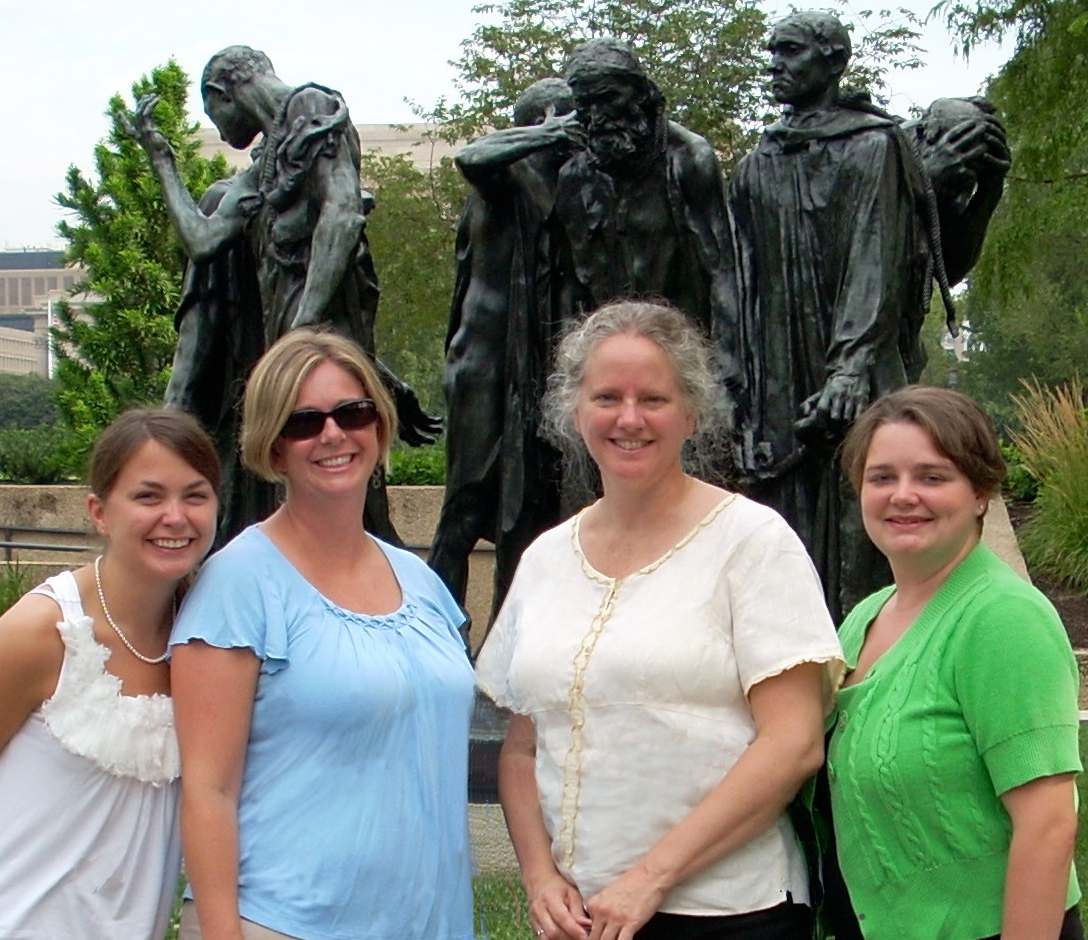
Michaela Lyons, Kristi Fecteau, Barbie Weed, Nikki Huntington

h1

Jason Ohler: Part III

August 6, 2010

Thanks to Sarah Sutter for creating the series of 5 Youtubes of Jason speaking at the MLTI Technology Institute at Castine.

h1

Paper/Book Intensive 2010

August 5, 2010

Submitted by Christine Higgins

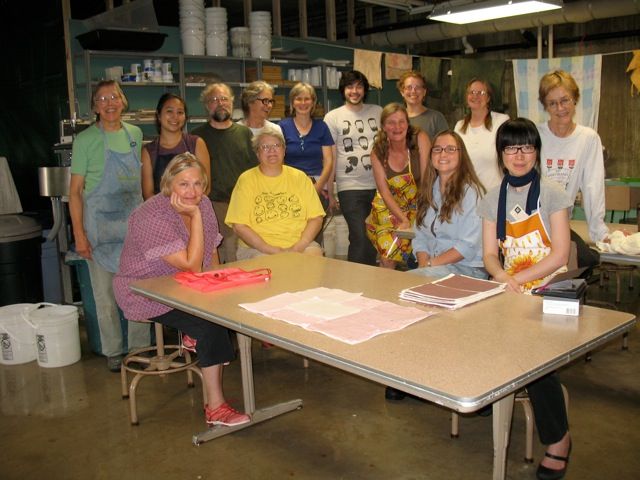
Christine Higgins, front row left

I recently attended the annual Paper/Book Intensive (PBI) 2010. Meeting throughout the country, this summer it was held at the University of Maine, Machias because of the paper/book arts program facilities developed by Bernie Vinzani. We saw examples of the University collection of Eastern and Western papers and exhibitions of beautiful book arts. What a great resource this is for our state.

Originating more than 25 years ago at Ox-bow, Michigan; PBI is run by dedicated book and paper arts volunteers. Participants come from all over and half the attendees each year are new. One must apply to be accepted. As a first-time participant, I took three classes which focused on my interest in artist made paper as a medium. The workshop was a total of 12 days. The instructors are highly qualified professionals.

The schedule consists of 4 half day classes, and 4 days of focused studio.  Presenters and guest artists discuss their work each evening. Events are planned on the weekend to visit area artist studios and learn about the culture of the geographic location. I visited the Machias petroglyphs, which were described by Passamaquoddy tribal member Donald Sockabasin.

Tatiana Ginsberg, a Fulbright scholar who has studied at some of the oldest dye studios in Kyoto, Japan, taught us kusakizome-gami – natural dye techniques.  Tatiana’s presentations included dip dyeing and brushing using mordants and dyes from soy bean, lotus leaf and bark. We learned that the most fugitive colors were socially reserved for the highest ranks and forbidden to be worn by others.  Tatiana’s extensive cultural references of the history of dye techniques were fascinating.

My equally enjoyable afternoon class was in the paper studio with Frank Brannon of Speakeasy Press in North Carolina. Emphasis was on sculptural armature techniques using a variety of fibers including Alabama kozo and spruce hemlock, personally gathered by Frank. He emphasized environmental awareness in the use of natural materials for creative expression.

For the next four days, I studied coloring techniques with Katie MacGregor.  A professional papermaker, Katie daily produces 100 sheets a day of the finest handmade papers which are purchased by professional artists and conservators. Our class tested many recipes and made samples for each other as well as 2 books for the last-day auction. I now have a wonderful resource of color recipes for my own use.

PBI, for me, was an opportunity to experience a supportive learning environment with professionals in the book and paper arts fields.  Instructors take classes with participants and there is a genuine sharing of skills and resources. The camaraderie was infectious, integration of disciplines educational, and atmosphere very welcoming.

Resources for further information:

Thank you to Christine Higgins, retired art teacher from Cony High School who wrote this overview of her experience.