Archive for September, 2010

h1

Haystack

September 18, 2010

Popping in at Haystack

Due to a family commitment I wasn’t able to attend the Maine Art Educators conference this weekend at Haystack Mountain School of Crafts but I was able to visit on Friday for a few hours. There is nothing like a good Haystack lunch and seeing old friends. I tried to arrive early enough so I could see veteran teachers and meet teachers that I didn’t know. It was fun to see old friends Chris, Shalimar, Beth, Kathy, Sandy, Frank, Diane, Jeff, Russell, Manon, Leone, Natasha, Bob, Lisa, Beth, Eva, Steph, Charlie and so many, many others. I was glad to have a chance to chat.

I did hear many war stories of what is happening in districts across the state. We are at a difficult time due to the economy and more then ever I am committed to the importance of being pro-active about promoting arts education! But, it is time to think differently. We can no longer do “business as usual” as we look closely at our practice. We must continue to learn, find a place at the table, and communicate. The connection with arts education and to 21st century skills is clear for me and may be for you, but I am learning it is not evident to other educators. SOOOOOOO… what to do about that? Here are some suggestions:

What suggestions do you have? Please add them in the comments below.

It would be great to hear from visual art teachers who attended Haystack, send comments or write a blog post and send it to me, be sure and include pictures.


h1

Watch Me Create

September 16, 2010

ACTEM and MLTI collaboration

Do you believe that students do their best work when they take on challenges that truly matter in the real world? Have you ever looked for Maine-based projects you could point middle and high school students towards that would make a real difference?  Projects where they could use their technical and communication skills in support of something that really matters? Projects where they could work independently, in teams with their friends and have the chance to be rewarded for the quality of their work with something more than good grades?

WatchMECreate (http://www.WatchMECreate.org) is a collaborative effort between ACTEM & the MLTI. It will consist of a series of serious challenges put out to Maine’s grade 7-12 schools, asking students (and perhaps teachers) to collaboratively develop and submit video responses.  While posed as a “student challenge,” it is assumed that some students may come to it independently while others will be directed towards it by their teacher.

The first challenge is called WatchMEGraduate and asks students to create a 2-minute video response to, “What one thing should be done in your school community to increase the number of kids who make it to graduation?” This challenge is made real by the following documents:

Gov. Baldacci’s Economic Strategy (http://www.econdevmaine.com/about/Gov.aspx): “The most important measure of economic development in Maine is the educational attainment of its people and the opportunities that arise from our people’s participation in the economy of tomorrow.”

From Maine Dept. of Education Website (http://mainelegislature.org/legis/bills/bills_124th/billpdfs/SP062301.pdf): “An Act To Increase Maine’s High School Graduation Rates (Sec. 1. 20-A MRSA c. 211, sub-c. 1-B) …The bill also requires the Commissioner of Education and the State Board of Education to establish a stakeholder group to develop recommendations relating to increasing secondary school graduation rates in the State and to report its findings to the joint standing committee of the Legislature having jurisdiction over education matters by January 10, 2011.”

Dates: WatchMECreate.org went live on 9/1/10; First challenge, WatchMEGraduate, went live on 9/7/10; Uploads will begin to be accepted on 9/14/10; September 14 – October 10 – Video uploading window; October 11 – 14: Judging of entries; October 15, 2010: Winners Announced at MainEducation Conference

Here’s the process:
1) A team of up to four student members (grades 7-12) will produce a video response to the current challenge
2) Videos must put forward positive solutions that are process-focused
3) The video will be no longer than 2 minutes
4) Teams are responsible for obtaining appropriate permissions for any materials used
5) All videos must carry, in the credits, a Creative Commons license
6) The video will be uploaded (see web site for details), along with contact information, but will not be publicly displayed until all appropriate releases have been received by ACTEM & MLTI
7) That’s it. Now get to work. Oh, and because this is professional grade work, please do be sure to cite your sources…

Judging process: Pains are being taken to make this not “feel like school.” A rubric has been created and posted on the web site.  Judges will be drawn from ACTEM & MLTI as well as other community sources.

Rewards: All teams whose entry is accepted as complete and placed on the WatchMECreate site will be entered into a drawing for team sets of four high quality, limited edition ACTEM / MLTI WatchMECreate T-shirts. Five middle school teams and five high school teams will be chosen at random. The top Middle School and High School teams will each be awarded $500 to be used by the team to help move their solution forward, as well as an iPod nano for each student team member.

Questions or comments: Please send e-mail to watchmecreate@me.com

h1

On My Way Home

September 14, 2010

RAINBOW!

Lately I have received a handful of emails that describe the difficult situations happening with arts education programs across the state. Some jobs have been changed to include teaching assignments other than art, music, dance or theater. Some have been eliminated and some reduced from full time. I know this is a stressful time but feel confident that the tide will change and situations will improve. When I was leaving Augusta today, heading for home, the sun was shining and there were a few, very large drops of rain falling. I was approaching the bridge that takes me over the Kennebec River and one of the largest rainbows I have ever seen appeared. It was so large I felt like I was sitting in the front row of the movie theater watching it on the big screen. I could see the entire rainbow, both ends. This is a site that I have only had the opportunity to see a few times in my life. For me it was a sign… things will improve! I am taking this opportunity to ask questions and I hope you will as well. Here are some suggestions:

  • Is what I am teaching necessary for students to be successful in this century?
  • Is my curriculum challenging and lessons meaningful?
  • Do I encourage students to ask questions, explore ideas, analyze their artwork and the work of others?
  • Have I moved from “deliverer of information” to facilitator in the learning environment?
  • Is my classroom student centered?

I wish I had my camera when I was driving home to take a photograph of the rainbow. When I arrived there was another rainbow across the road from my home, or was it the same one?! We were headed for a walk and my husband pulled out his cell phone and captured the picture in this blog post. The rainbow was not as large but none the less, beautiful! I had to wonder if it was a reminder that the days ahead could be difficult but we need to work together to continue to do what we believe in. Teaching the arts is truly a gift and one that all of you, who do, can be proud of!

h1

Arts in Education Week – Happening NOW!

September 13, 2010

SEPTEMBER 12-18, 2010

In honor of this initiative arts educators are encouraged to promote the good work that is done in arts education across the state each and every day in Maine schools, PreK-grade 12. Communicate to your communities and beyond by posting an announcement in your school newsletter, websites, school board members, parents, students, school staff members.

We are well aware of the benefits of arts education to prepare young people with skills they need to be successful in this century. Here are 10 lessons the arts teach by Elliot Eisner:

  1. The arts teach children to make good judgments about qualitative relationships. Unlike much of the curriculum in which correct answers and rules prevail, in the arts, it is judgment rather than rules that prevail.
  2. The arts teach children that problems can have more than one solution and that questions can have more than one answer.
  3. The arts celebrate multiple perspectives. One of their large lessons is that there are many ways to see and interpret the world.
  4. The arts teach children that in complex forms of problem solving purposes are seldom fixed, but change with circumstance and opportunity. Learning in the arts requires the ability and a willingness to surrender to the unanticipated possibilities of the work as it unfolds.
  5. The arts make vivid the fact that neither words in their literal form nor numbers exhaust what we can know. The limits of our language do not define the limits of our cognition.
  6. The arts teach students that small differences can have large effects. The arts traffic in subtleties.
  7. The arts teach students to think through and within a material. All art forms employ some means through which images become real.
  8. The arts help children learn to say what cannot be said. When children are invited to disclose what a work of art helps them feel, they must reach into their poetic capacities to find the words that will do the job.
  9. The arts enable us to have experience we can have from no other source and through such experience to discover the range and variety of what we are capable of feeling.
  10. The arts’ position in the school curriculum symbolizes to the young what adults believe is important.

So much of what arts educators do each contributes to students development and future….

  • The arts provide jobs. 1.25 million Americans currently work in the visual arts.
    Jobs for artists and designers are predicted to increase by 43% by 2016.
  • Art education equips students to form mental images, which can be used to
    solve problems—an ability that chemists, engineers, and architects use to
    create models and that inventors use to think up new ideas.
  • Arts education requires students to use their eyes and hands to give form to
    ideas generated in the brain—a discipline that Nobel Prize winner Eric Kandel
    proved boosts brain power.
  • Research also indicates that high school art programs engage students and
    keep in school those at-risk of dropping out.

Available on the National Association for Music Educators website and at the National Art Educators Association website are downloadable resources to help you celebrate this week!

h1

Music in Harmony, Maine

September 12, 2010

Music program reinstated after 41 years This post is written by Iris Fields who is the mother of music educator, Loren Fields, from Lawrence High School

Iris Fields

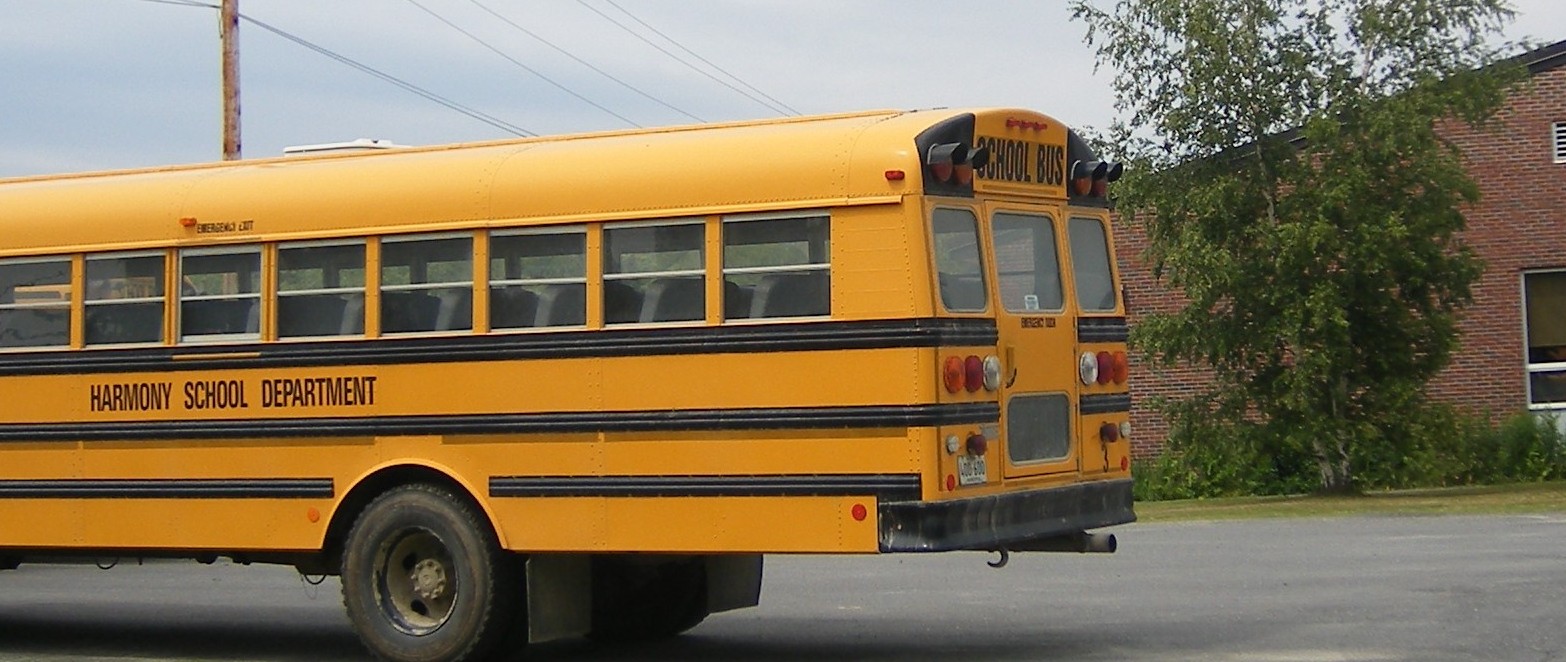
“Music in Harmony” has taken on new meaning for the Maine town that was named for the harmonious relationships of its people. Our little town of Harmony is displaying its independence again  by supporting a totally new music component for its school!

Thanks to the harmonious workings of the Patriarchs Club (Harmony, ME), the Vh1 Save the Music Foundation (N.Y.) and the Oak Grove/Coburn Education Foundation (Maine), the older children of Harmony Elementary School can begin instrument study this September!

I can speak of “us”, “we”, “our” for at least 2 reasons: 1. I’m the music teacher and 2. I had my start in music education when I grew up in the town of Harmony. After a life-time career in music, in America and (recently) in Japan, I’ve come full-circle to give music back to the town I love! They’ve
been 41 years without instrumental music in the school!

I believe that what is happening for us is BIG NEWS! The human interest component alone is worth noting, i.e.

  1. first school in the State of Maine to receive a Vh1STM grant– a starter kit of 36 new band instruments
  2. a new band program for a small, rural town named Harmony (providential pun)
  3. instruments being distributed through Perkins Music House (Dale is an alumnus of H.E.S.)
  4. the program is to be taught by Iris Fields (alumna of H.E.S.).

About the Very Important Players                                                                         The VH1 Save The Music Foundation is a nonprofit organization dedicated to restoring and sustaining instrumental music education in America’s public schools and raising awareness about the importance of music as a part of every child’s complete education.

Facts                                                                                                                         Since The Foundation was established in 1997, and has provided more than $43 million worth of new musical instruments to more than 1,700 public schools in more than 100 cities, affecting the lives of more than 1.4 million children.

How it Works
VH1 Save The Music develops long-term, sustainable instrumental music programs that provide children with equal access to music education regardless of their financial situation. Through strategic partnerships with school districts, the Foundation provides brand-new musical instruments to public elementary and middle schools, jumpstarting dormant music programs across the country. The school districts commit to funding certified music teachers’ salaries, providing maintenance and supplies, and scheduling instrumental music classes during the school day. The Foundation maintains a partnership with the district until instrumental music is in place in every school.

The Patriarchs Club of Harmony sponsors the annual Harmony Labor Day Free Fair (“The best things in life are free”). It has provided for many improvements to the town and the school. Made up of townspeople, the organization has a feel for the needs of the community. It is vibrant and forward looking.

When the Oak Grove/Coburn School closed its doors, its assets were put into a fund named the Oak Grove/Coburn Education Foundation. Maine schools who qualify under IRS cert. 501 c-3, may apply for funding of education projects.

Note                                                                                                                              The Maine State Police Academy now occupies the buildings of the former Oak Grove/Coburn School in Vassalboro, ME.

h1

Robinson Returns to TED!

September 11, 2010

Sir Ken Robinson: Bring on the learning revolution!

If you are not familiar with TED talks here is what they are about…

TED is a small nonprofit devoted to Ideas Worth Spreading. It started out (in 1984) as a conference bringing together people from three worlds: Technology, Entertainment, Design.

Robinson’s first TED talk called Schools Kill Creativity is one of the top ten TED talks viewed. This new TED talk is called Bring on the Learning Revolution and you can watch it below. Thanks to Vicky Morgan Fickett from York for sharing it with me.

Two of my favorite books are The Element and Out of Our Minds written by Ken Robinson.

h1

AP Studio Art

September 10, 2010

Opportunity to learn more about AP art program

  • Are you curious about the AP Studio Art program?
  • Would you like to know why it might be a good program for your students?
  • Do you teach AP Studio Art and would like to get some new ideas for working with your students?
  • Do you teach high school art and have students who are interested in submitting portfolios even though there is no AP class at your school?
  • Are you looking for strategies for getting students to create higher quality work with more content and meaning?

AP art teachers meet, Fall 2009

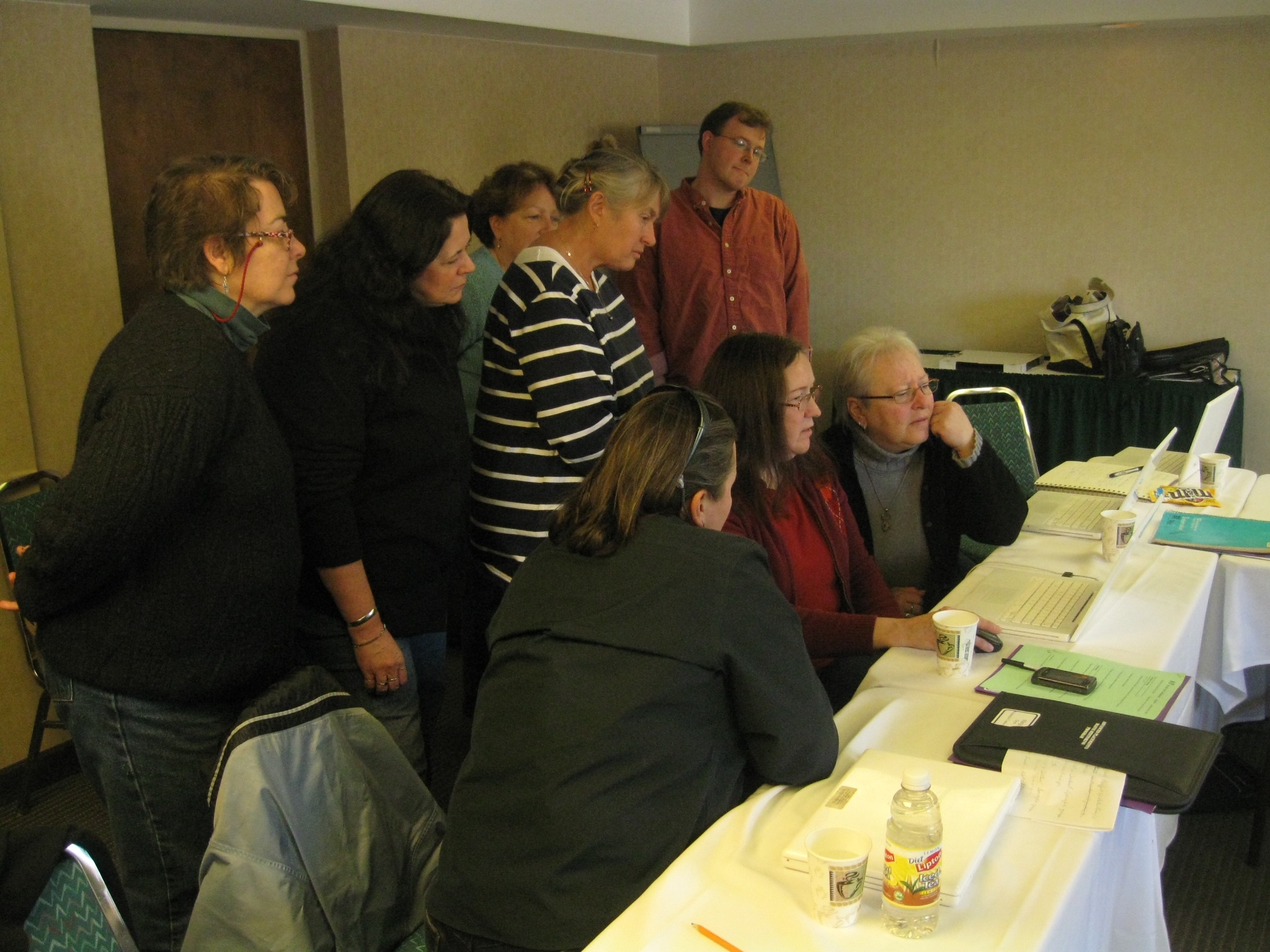
These questions and more can be answered on September 25 in Waterville. The Advanced Placement Mentees and Collaborative groups meet several times a year to share information and ideas. It is a lively group that brings years of experience and talent to the task of helping teachers improve teaching and learning opportunities for students.

At the next gathering we will look closely at the new scoring guide, practice scoring portfolios, critique student work, share lesson plan ideas, and discuss strategies for helping students to perform at a higher level.

Anyone who has taught AP Studio Art knows that this program challenges teachers to help students to create college level work while still in high school. Students who participate in these classes come to feel a great sense of accomplishment and will see their skills and abilities improve enormously as a result of their effort.

If you have questions, please contact Sheila Bohlin at bohlins@link75.org or Kal Elmore at kalelmore@gmail.com. To sign up for the workshop on September 25 contact Nancy Lamontagne at nancy.a.lamontagne@maine.gov

h1

Edutopia Article : Teaching Visual Literacy

September 9, 2010

Martin Scorsese: Teaching Visual Literacy

This article and video contain an interview with Martin Scorses talking about the importance of – and relationship between – films and education.

Please click here for the entire article and short video written by Douglas Cruickshank and published in Edutopia.

The Story of Movies is “an interdisciplinary curriculum introducing students to classic cinema and the cultural, historical, and artistic significance of film.” Designed to teach students how to “read” the visual language of film, it is a project of the Film Foundation, established in 1990 by acclaimed filmmaker Martin Scorsese and fellow film directors Woody Allen, Robert Altman, Francis Ford Coppola, Clint Eastwood, Stanley Kubrick, George Lucas, Sydney Pollack, Robert Redford, and Steven Spielberg. (The Story of Movies curriculum is available free to teachers for use in middle school classrooms via Web registration.)
h1

More STEM/STEAM

September 8, 2010

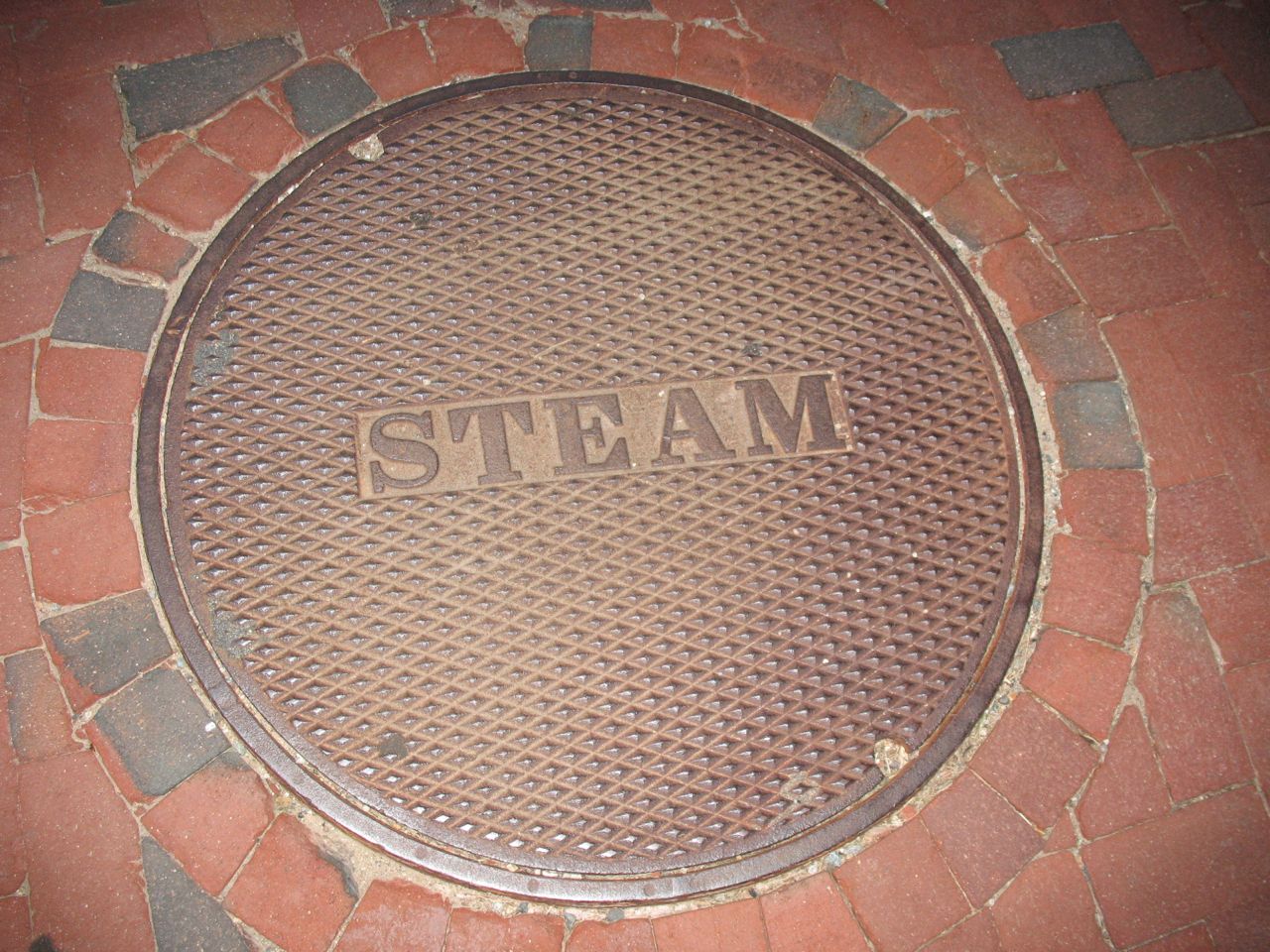
Full STEAM ahead!

“I think we need to focus on STEAM–science, technology, engineering, arts, and math. Arts and creativity are needed in the future.”

Educator Jeff Piontek, included this statement in his keynote address at the International Society for Technology in Education (ISTE) conference held in Denver this past June. Piontek is now Head of School at the Hawaii Technology Academy (HTA). A state charter school, HTA has been a hybrid model of individualized learning that combines classroom and virtual learning across the islands of Oahu, Kauai, Maui, the Big Island, Lanai, and Molokai.

His keynote also contained the following:

“We don’t just need to rock the boat; it needs to be knocked over. And the changes we need to make…are to STEAM ahead and make sure students collect and collaborate,” he said. “Our children are spreading their dreams like seeds beneath our feet. It’s our job to nourish these seeds, but we have to tread lightly because those dreams are needed for our future.”

You can read the full article that was written by Maya T. Prabhu by clicking here. The next ISTE conference will be held in Philadelphia in June!

h1

Play is the Thing: The Serious Work of Play

September 7, 2010

New England Consortium of Artist-Educator (NECAP) Professionals conference in Brattleboro, VT – September 23rd

The conference, which begins with registration at 8:30 am and continues to 5 pm, features renowned juggler and MacArthur “Genius Grant” recipient Michael Moschen; Sara Boettrich, Museum Educator, Strong National Museum of Play; and workshops with outstanding artist-educators from across New England. It is presented by the New England Consortium of Artist-Educator Professionals (NECAP) in collaboration with the New England States Arts Agencies, the Arts Alliance of Northern New Hampshire and Lesley University.

The critical importance of play in learning and human development is increasingly recognized, but there seems to be less and less space and time for it. This conference looks at the ways teaching artists can be leaders in supporting play — and the creativity it inspires — with learners of all ages and in their own lives.

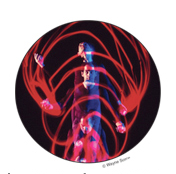
Conference keynote speaker Michael Moschen will discuss “The Work of Play: The Horizontal and Vertical.” Moschen is one of the world’s leading jugglers and one of America’s most visionary performing artists. He has transformed the ancient circus art into a mesmerizing concert form that has garnered critical acclaim as “genius,” “exhilarating virtuoso entertainment” and “flawless purity” from leading media such as the Los Angeles Times and the New York Times.

Moschen has performed both solo and collaboratively with leading artists Off-Broadway, in major concert halls, and at arts festivals in Europe, Asia and North and South America. His work crosses ethnic and social borders, and is seen on stages, film and television. He was commissioned by Cirque du Soleil to create and stage a new work for their permanent theatrical circus in Las Vegas. Film credits include “Hair”and “Annie”.; Moschen choreographed and performed with crystal balls as David Bowie’s hands in the Jim Henson film “Labyrinth.” He is also involved in understanding and sharing the physical and mathematical principles that underlie his work. He has addressed the National Conference of Teachers of Mathematics and has lectured on innovation and creativity at Carnegie Mellon, the Massachusetts Institute of Technology and the Lincoln Center Education Program.

Sara Boettrich is the Educator for School Programs at Strong National Museum of Play in Rochester, NY. Her introductory remarks, “Playing Up Play,” will provide an overview of the importance of play in human development and learning, a glimpse into the vast amount of play research that is currently under way, and a quick look at the 21st century view of play. She’ll pose the important questions that will be addressed throughout the day: Why is play important? How is the role of play in our lives changing? What does play have to do with teaching and learning in the arts?

Morning and afternoon interactive workshops will be presented by artist-educators from around New England and as far away as California, as well as Moschen and Boettrich. These include:

  • John Holdridge, ME, Playing with Play
  • Maureen Burford, VT, Improvisation, Play and Mis-takes
  • J. David Carlson, CA, Structures of Play
  • Elsie Smith, VT, Aerial Circus as Performance Art and Physical Play
  • Kate Tarlow-Morgan, VT, Explorations in Sensing, Feeling &Action
  • Jeff Warner, NH, Understanding American Culture through Traditional Games, Songs and Stories
  • Bonnie Koba, CT, Teaching Artist Mentorship Model
  • Carol Glynn, CT, The Kinesthetic Approach to Protecting the Pleasure in Teaching and Learning
  • Nick Page, MA, Opera Playground
  • Linda Price-Sneddon, MA, Using Play Power to Stoke the Fire and Build Relationships
  • Diane Postoian, RI, Do That Again! Using Humor as a Tool for Learning
  • Sarah Boettrich, Learning and Teaching Through Play
  • Michael Moschen, Bring a Ball to Play With

“Now that teaching artists have mastered the art of connecting and enhancing curricular goals, writing proposals, documenting and reporting, it’s time to remember and support the creative playful spark that interested them in the first place, so that they can delight their students, prevent burn-out, and continue to grow and love what they do,” says conference presenter Carol Glynn, a speaker, performer, teaching artist and writer from Connecticut.

The registration fee of $50 ($60 after September15) includes morning refreshments and lunch as well as professional development credits.

“We chose Brattleboro as the site of this year’s conference,” says Frumie Selchen, director of the Arts Alliance of Northern NH and NECAP coordinator, “because of its strong and interesting arts scene. We want conference participants to be inspired not only by the day’s hands-on workshops, but also by their surroundings. We’ll be using different cultural sites around town for the workshop venues, including registration at the New England Youth Theatre and our closing at the Latchis Theatre. We also hope people will visit local museums, galleries and creative businesses.”

Please click here for workshop descriptions, conference brochures and posters, and registration information. Information can also be obtained by calling 603-323-7302.

The New England Consortium of Artist-Educator Professionals is dedicated to the support and development of teaching artists. NECAP collaborates with the arts agencies of the New England states, other organizations, and individuals to advance the field of the artist-educator, increase access to quality professional development, develop a regional network and support a community of teaching artists. NECAP is now on facebook.