Archive for March, 2011

h1

In Today’s News

March 13, 2011

Surry music therapist gives workshop

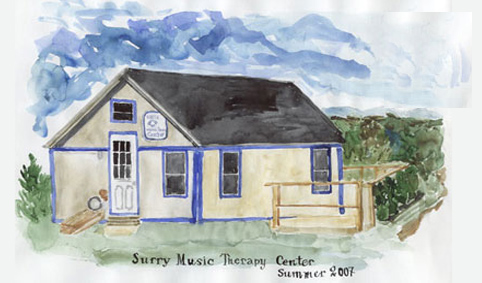
Alan Wittenberg, from the Surry Music Therapy Center recently gave a two-part series of workshops titled “Music and Medicine: An Intro to the World of Music Therapy in Clinical Pediatrics” and “Case Studies and Analysis: Music Therapy in Clinical Pediatrics.” The seminars were held at the Eastern Maine Medical Center’s (EMMC) Mason Auditorium. Please click here to read more details of the seminar from the article found in the Ellsworth American, March 3rd. Alan is available for professional development workshops to work with teachers of all content and grade levels and can be reached at alanwittenberg@me.com. His teaching has taken him to far away places including Russia and Japan. Visit the Surry Music Therapy Center by clicking here.

h1

Educator Art Show

March 12, 2011

Art in the Heart

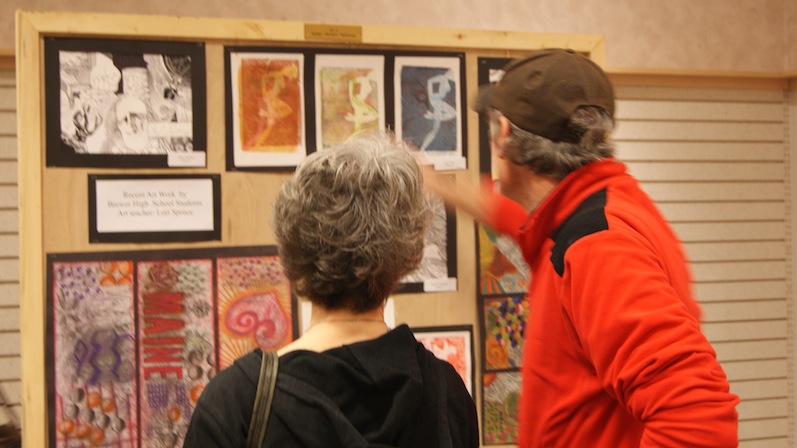
The annual Art in the Heart Art Educator Show is on exhibit at the Bangor Public Library for the month of March, in honor of Youth Art Month. There will be a reception during the Downtown Bangor Art Walk on March 18. If you are in the area, be sure to stop in and see the fabulous variety of work created by area art teachers.


Painting by Debbie Jellison, art teacher Mary Snow School, Bangor

Old Town art teacher Pam Dunphy painting

h1

One-Acts in a Neighborhood Near You

March 11, 2011

The 80th Maine Drama Festival

Over 2000 students representing 77 high schools will take to the stage this weekend for the 40 minute One-Act plays all over Maine as part of the Maine Drama Festival. The Bangor Daily News had a great article in the March 10th edition about the festival.

The weeks of collaborative work is all worth it when teams of students representing the 77 Maine high schools enter the hosting high schools. The festival is sponsored by the Maine Drama Council with the Maine Principals Association. It all comes together, set, costumes, lighting, sound, and of course the acting.

I was able to attend the Camden Hills Regional High School One-Act that was performed for the community last evening. It is a fun show and the students were outstanding! For years Rick Ash directed the One-Acts at CHRHS and before that at Medomak Valley High School. Now others take on the lead of guiding the students on and off the stage including two of my previous students. Rick was in the audience as well, clearly proud of those that follow him and of course, the students!

Camden Hills performing Dust in Your Eyes photo taken by Colin Sutch

If you are looking for something to do this weekend I highly recommend attending on Friday evening or Saturday for all day and into the evening. You can visit The Maine Drama Council website for the performance schedule.

h1

Thousand Word Project

March 10, 2011

Bates College museum’s language-arts initiative launches educational website, video

I learned of the Thousand Word Project (TWP) recently and when I visited the site I was very impressed. I suggest you take a few minutes and to look at the site to get a picture of what the TWP is all about. The TWP has a great deal to offer especially with integrated curriculum.

The Bates College Museum of Art’s Thousand Words Project has been the Museum’s flagship outreach program for more than a decade.  TWP examines art to teach writing skills, effectively providing teachers and students with a model for interdisciplinary teaching and learning.

A recently released video and complete sets of lesson plans and technology integration strategies as well as suggestions for continuing explorations including service learning opportunities has been launched and can be accessed at thousandwordsproject.org.  The video, produced by Leighton Images, features animations, demonstrations, and interviews with prominent artists and writers in high definition. Simply by visiting the website, teachers may use the program in any way they wish at any time of their choosing, or they can connect with Museum staff to schedule a visit to the Museum or to explore the possibility of our staff visiting the classroom to work on TWP with their students. This resource is FREE to your school.

Stay tuned for announcements regarding workshops for teachers.  To learn more about the program, please contact Anthony Shostak by phone at 207-786-8302 by e-mail at ashostak@bates.edu.

“Creativity is at the heart of the TWP,” says Shostak. “By giving students a long look into the creative process, we hope to show them clear connections between communication and their studies across the disciplines, from art to history, to science and math — all while they are improving their writing and speaking skills.”

h1

Youth Art Month Exhibits

March 9, 2011

Art everywhere

In celebration of National Youth Art Month (YAM) there are three art exhibits that opened this past weekend…

Portland Museum of Art

Molly Mains, Art Teacher of the Year

The annual exhibit sponsored by the Maine Art Education Association held at the Portland Museum of Art, (PMA) with over 100 works of art by Maine students in grades K-12 are on display. The opening was on Saturday, March 5th, and will remain in place until April 3rd.

Molly Mains, Art Teacher of the Year, 2011 was honored and spoke about her passion for art and her love of art education. Lauren Lessing, Mirken Curator of Education, Colby College, Art Advocate of the Year, 2011 was also honored.

Students and parents at the awards assembly at PMA

Special thanks to Tori Tyler-Maylar, Manon Lewis for their dedication year after year in setting YAM art month and doing so much work behind the scenes.  Stacy Rodenberger and the PMA for hosting this venue and all the other MAEA art teachers that pitched in and of course, the student’s art and creativity.

You can read more in the Village Soup, Capital Weekly, Feb. 28th edition by clicking here. You can also read more at the Portland Museum site by clicking here.

Maine Education Association

Proud students with their certificates MEA building

Kudos to Kay Allison and staff officials at Maine Education Association. They hosted the annual art exhibit with the opening on Sunday afternoon at their offices, 53 Community Drive, Augusta. The artwork will remain for a year.

Student’s artworks were specially framed from Michael’s Arts & Crafts, Augusta, Maine.  Kay has been instrumental in making this annual event possible.

Bangor Mall Art in the Heart and University of Maine Museum of Art annual art exhibit at the Bangor Mall is on display March 7 – 19th. Fifty five teachers exhibiting about 650 pieces of student artwork, K-12. WOW, what an exhibit!


Visitors to the art exhibit Bangor Mall

Thank you to Skowhegan Middle School art teacher Frank Chin for contributing information and photographs and to Mount Desert Island High School art teacher for contributing photographs to this blog post.

h1

Screen Savers 2011-12

March 8, 2011

Art work selected…

The photographs have been selected for the MLTI 2011-12 screen savers that will be on the 72,000 laptops used in Maine schools. The images were chosen in a statewide online competition with over 280 student entries. A panel of Judges chose 18 of the images and two other images were added based on the number of stars received (votes from users) in the Studywiz Gallery.

As congratulations the students have been granted free admission to the MLTI Student Conference if they attend with their school. Their artwork will be featured on the big screen at the conference (as well on every laptop next year!). They are also receiving a special gift with all the images on a gelaskin that they can use on their laptop.

CONGRATULATIONS to the following students for the work that has been selected:

  • “3 Musicians” inspired by Pablo Picasso, Kara Rawlings, Gr. 8, Skowhegan Area Middle School
  • “Captive” Moriah Day, Gr. 12, Dexter Regional High School
  • “The Edge of Water” Hannah Boyce, Gr. 10, Mount Desert Island High School
  • “Crows” Ann Marie Stanley, Gr. 12, Mount Desert Island High School
  • “An Apple a Day” Peter Grubb, Gr. 12, Mount Desert Island High School
  • “Fashionista” Brandi Jo Shaffer, Gr. 12, Lee Academy
  • “White Mouse” Hunter Tompkins, Gr. 7, Lawrence Jr High School
  • “Color Splash” Kathleen Murphy, Gr. 8, Tremont School
  • “Sun Lizard” Jalen Thompson, Gr. 10, Maranacook High School
  • “Native Spirit” Rebecca White, Gr. 11, Maranacook High School
  • “Blue Eyes” Veronica Jones, Gr. 9, Maranacook High School
  • “Strings” Patrick Ouellette, Gr. 8, Winthrop Middle School
  • “Sleepy Santa” Jasmine Dostie, Gr. 7, Lawrence Jr High School
  • “Lock” Alicia Eggleston, Gr. 11, Mt. Ararat High School
  • “A Single Drop” David Brann, Gr. 12, Mt. Ararat High School
  • “Cornelius the Duck” Hannah Kuhn, Gr. 12, Bangor High School
  • “Treble Bass Clarinets” Kayla Fahey, Gr. 7, Westbrook Middle School
  • “Such Great Heights” Amelia Denney, Gr. 10, Waterville Senior High School
  • “Untitled” Juan Matthew Lynch, Gr. 12, Waterville Senior High School
  • “Untitled” Whitney Ruff, Gr. 12, Mountain Valley High School

You can view all the photos that have been selected by clicking here.


"Such Great Heights" by Amelia Denney, Gr. 10, Waterville Senior HS, art teacher Suzanne Goulet

h1

Follow-up Story

March 7, 2011

Keep Winthrop Warm – Bowls for a Benefit

On February 15th I posted a story about Empty Bowl suppers and not to long after that I received an email from Margy Burns Knight who sent me a link with a related story that was featured on WCSH6. In the town of Winthrop the owner of Winthrop Fuel has established Keep Winthrop Warm which is a fund that has been established to help provide fuel for families in need. Community organizations have come together for an annual supper event.

High School art teacher Mary Dyer’s art students teamed up with 1st graders to make and sell ceramic bowls at the supper calling it Bowls for a Benefit. If all the bowls sold they would make just over $700.00, which was enough to keep 2 families warm this winter. You can watch the news clip with the story by clicking here.

h1

Imagination Conversation

March 6, 2011

SAVE THE DATE!

Tuesday, April 5th, 2011 4pm
Hannaford Hall, Abromson Center, USM, Portland, Maine

“From Imagination to Innovation: Maine Participates in the Lincoln Center Institute’s Imag’nation Conversations

Keynote Speaker: Eric Hopkins

Additional Speakers: Carol Noonan, Habib Dagher, Carol Farrell, Karen Montanaro, Imagination Intensive Community representative

Moderated By: Patsy Wiggins

Hosted by: Maine Center for Creativity and University of Southern Maine

With collaboration from: Farnsworth Art Museum, Creative Portland  Corporation, Maine Alliance for Arts Education, Maine Writers and  Publishers Alliance, Maine Arts Commission, Maine Department of  Education, the Maine Humanities Council, Wright Express and the Maine  Public Broadcasting Network.

To learn more about the conversations happening across the country please click here.


Imagination Intensive Communities will have presence at April 5th

h1

Stephen Bowen’s Testimony

March 5, 2011

This is the testimony that Stephen Bowen gave to the Education committee as they considered him for the position of Commissioner of Education at the Maine Department of Education.

Senator Langley, Representative Richardson, distinguished members of the committee.

My name is Stephen Bowen, and I am pleased and honored to be coming before you as Governor LePage’s nominee to be Commissioner of Education. My testimony today will be in three parts. I’ll begin with a brief description of my background, describe what I think we need to do in education over the next few years, and lay out for the committee my plan for getting us there.

As the committee undoubtedly knows, I currently serve as the senior policy advisor to Governor LePage on education issues. In that capacity, I have had the opportunity to meet with people from all over the state who have, as I do, a passion for making Maine’s schools better. I have also been able to spend a considerable amount talking both with members of this committee and with Governor LePage about what we can do here in Augusta to ensure that every Maine child has an outstanding education.

Prior to joining the administration, I directed the Center for Education Excellence at the Maine Heritage Policy Center, a Portland-based public policy think tank. In my three-and-a-half years of work there, I researched and wrote dozens of policy briefs on issues from school consolidation and school funding to online learning and charter schools, authored countless op-eds, columns, and blog posts on education-related issues, and regularly presented the findings of my research to policymakers and the public.

Before to joining the Center in the summer of 2007, I served two terms in the Maine House of Representatives. This experience taught me about the development of public policy and gave me the opportunity to build relationships with many of the legislators and policymakers working in Augusta today. My proudest legislative achievement during my two terms was working with lawmakers on both sides of the aisle to enact a state salary supplement for teachers who have achieved certification by the National Board for Professional Teaching Standards. The number of board certified teachers in Maine has more than doubled since then.

In order to serve in the legislature, I took leave from teaching social studies at the middle school in Camden, where I taught, with breaks for legislative service, from 2000 to 2007. I was teaching in Camden when the middle school laptops were first deployed to eighth graders in the fall of 2003, and it was there that I also experienced firsthand the state’s failed attempt to develop the Local Assessment System. I am, therefore, someone who has experienced the implementation of state education policy at the level where it matters most – the classroom.

I began my teaching career in Fairfax County Public Schools, as huge and highly successful school district in Northern Virginia. I taught there from 1997 to 2000, taking advantage of that district’s excellent teacher induction and professional development opportunities, and being part of that state’s development of a standards-based approach to education.

In sum, I have been working in education and public policy for 14 years, the last three of which were dedicated almost exclusively to the in-depth study of education policy. That experience, combined with nearly a decade of work as a classroom teacher, has given me a unique perspective on the development of education policy and its impact on teaching and learning in Maine’s schools.

Schools in Maine and across the nation are at a crossroads. For most of its history, our system of public schooling has responded relatively well to the increasing demands we’ve placed upon it. In the early days, when the system simply needed to provide people with basic educations, it did that. When it was later decided that more advanced levels of education were needed, high schools were built across the land. Later, it was decided that these schools should prepare students for college and careers, and the modern comprehensive high school was born. When Sputnik-era schools were asked to teach more science, they did. When schools were asked to teach children with complex learning disabilities, they did that as well.

Today, though, schools and the people who work in them are being asked to do something utterly unprecedented, which is to ensure that every student—not some, or even most, but every student—meets rigorous learning standards. This is something that no previous generation of educators has ever been asked to do, and while the past demands on our schools could be met by simply expanding programs and hiring more people—by building more science labs and creating more special education programs—the challenge before us today can only be met by fundamentally changing how we do the business of schooling.

There is simply no way that we can, as the American Enterprise Institute’s Fredrick Hess recently wrote, create a “world-class, 21st century system” of schools while still “retaining the job descriptions, governance arrangements, management practices, compensation strategies, licensure requirements and calendar of the existing system.” “When pursued with sufficient genius, energy, and advantages,” Hess writes, “our system of schooling can deliver in some places, at some times, and for some children, but the architecture of schooling makes it extraordinarily difficult to sustain or extend such successes.” We need change on a more fundamental level.

What we’ve been doing, though, is lurching from one “reform” to the next, without any real vision for where we want to go. It is important to point out that it is not as though we haven’t been trying; we’ve tried, and continue to try, all kinds of things. Teachers, school administrators and superintendents are working harder than ever, spending more time pouring over data, developing customized learning plans for more and more kids, and testing, testing, and testing some more. Yet we are simply not moving the needle. Too many of our kids drop out of school, and too many of the kids that do graduate are not prepared for college and careers.

In fact, if anything, we may be doing too much. When I talk to people about the state Department of Education, there is not only some concern expressed about the department’s capacity to do its job effectively, there is also a sense that the department is going in too many directions at once. My reading of the state’s Race to the Top application, about which I wrote a 15-part series of blog posts totaling more than 12,000 words, reinforced my own sense that the Department lacks a clear and coherent vision of its role in making Maine’s schools better.

So what do we need to do?

First, do no harm. Today, the Department is seen by the people in Maine schools as little more than a regulatory agency, and it struggles with basic functions like teacher certification. Step one is to undertake a careful analysis of the Department’s operations using evaluations from the Department itself, as well as feedback from the field and from stakeholders. From that feedback, we need to develop an interim plan to improve the Department’s efficiency and effectiveness.

Second, the new commissioner must undertake an aggressive effort to improve relationships with superintendents, school personnel, stakeholders, and the public. I propose to launch a listening tour that will take me to every superintendent region in the state within the next 100 days. These visits will include school visits and town hall meetings with parents and teachers. Additionally, I propose that we bring back stakeholder panels such as the Education Coordinating Committee, which is established in statute but has not met in recent memory. For the Department to be effective, we need to strengthen its connection to the people it serves.

Lastly, I propose that between this legislative session and the next we undertake an effort to establish a comprehensive plan for Maine’s education system. Are Maine’s schools moving in the right direction? Is the Department of Education achieving the outcomes we need it to achieve? It is almost impossible to know these things, because we have no roadmap for where we are going. As the old saying goes, if you don’t know where you’re headed, any road will get you there. We need to put a plan in place that drives education policy in a specific direction and focuses our state’s resources where they will have the biggest impact on kids.

In conclusion, I realize that I am not the traditional candidate for this job. Yet I think I would bring to the job a passion for education and education reform, an open mind and thoughtful manner, a capacity to communicate effectively and to work with others toward a common goal, and a strong desire to see Maine become a better place. I also know that the key to making Maine’s schools better is keeping a constant, unrelenting focus on what is best for kids.

My two girls are the ninth generation of my family to make Maine their home. If we don’t make some meaningful changes to the way Maine works, though—and soon—they will almost certainly be the last. Of my siblings and cousins in the eighth generation, I’m the only one that remains in Maine today.

There are many things that we need to do to turn Maine around, but building a world-class education system is among the most important. I will come to work every day with that intent in mind, and I will work tirelessly with other dedicated educators across the state to achieve it.

Thank you for your time and consideration, and I am happy to answer any questions.

h1

Bowen Sworn in as Education Chief

March 4, 2011

March 4, 2011

Augusta, Maine – Governor Paul LePage administered the oath to Stephen Bowen Friday afternoon. Bowen becomes Maine’s 27th Education Commissioner. Bowen was endorsed by the Maine Senate Thursday by a vote of 25-10.

“I have asked Steve Bowen to be our Commissioner of Education because we want a teacher leading our efforts to put students first,” said Governor LePage. “Our graduating seniors need to be ready for a job in a good-paying trade or prepared for college level work. And we have to inspire our at-risk kids before they make the decision to give up and drop out of school. It is a big job and we are going to get Steve the resources and flexibility he needs to get it done.”

“Teachers, school administrators and superintendents are working harder than ever, spending more time poring over data, developing customized learning plans for more and more kids, and testing, testing, and testing some more. Yet we are simply not moving the needle. Too many of our kids drop out of school, and too many of the kids that do graduate are not prepared for college and careers,” Stephen Bowen said before the Education and Cultural Affairs Committee earlier this week. “We need to put a plan in place that drives education policy in a specific direction and focuses our state’s resources where they will have the biggest impact on kids.”

Before joining the Department, Stephen Bowen directed the Center for Education Excellence at the Maine Heritage Policy Center, a Portland-based public policy think tank. In his three-and-a-half years there, he researched and wrote dozens of policy briefs on issues from school consolidation and school funding to online learning and charter schools, authored numerous op-eds, columns, and blog posts on education-related issues, and regularly presented the findings of his research to policymakers and the public.

Bowen taught social studies in middle and high schools for 10 years in Fairfax County, Virginia, and then in Camden, prior to joining the Center. He taught in Fairfax County from 1997 to 2000, taking advantage of that district’s excellent teacher induction and professional development opportunities, and being part of that state’s development of a standards-based approach to education. At Camden-Rockport Middle School he taught social studies and was there when Maine’s nationally and internationally recognized middle school laptop program was first implemented, with the deployment of laptops to eighth graders in the fall of 2003. He has experienced the implementation of state education policy at the level where it matters most – the classroom.

In 2002, he was elected to the first of two terms in the Maine House of Representatives, representing Camden and Rockport. During that time, he served on the Marine Resources and State and Local Government Committees, and the Select Committee on Regionalization and Community Cooperation. He served on the Legislature’s Appropriations Committee during his second term in the House.

Bowen’s proudest legislative achievement during his two terms in the Legislature was working with lawmakers on both sides of the aisle to enact a state salary supplement for teachers who have achieved certification by the National Board for Professional Teaching Standards. The number of board certified teachers in Maine has more than doubled since then.

Bowen has a B.A. in Political Science from Drew University and a Masters of Education from George Mason University.