Archive for August, 2011

h1

Revision of the National Arts Standards

August 11, 2011

Update on the national standards work

The National Coalition for Core Arts Standards (NCCAS) is seeking a project director to coordinate and facilitate the writing and delivery of new Pre-K-14 arts standards for dance, media arts, music, theatre, and visual arts.  

The current National Standards for Arts Education have been adopted or adapted by forty-nine state departments of education, and have become the benchmark document by which K-12 arts learning is measured in dance, music, theatre, and visual arts. Curriculum designers, teacher training programs, funders, and federal and state policy makers have relied on the 1994 national arts standards to help guide their decision-making.

NCCAS will begin revision of the current standards this fall, and will release the next generation standards in December, 2012. Interested applicants should go to NCCAS Project Director to review and download the application guidelines. The Deadline for applying is August 26, 2011.

SEADAE President Deb Hansen notes;

“Development of National Core Arts Standards is a critical and very timely, state-led effort to strengthen learning in the arts.  The current National Standards in the Arts, ground-breaking in 1994, continue to guide effective learning today.  Yet much has changed in what and how students learn.  The design of intentional learning goals will inform future state and local work, including curriculum re-design, instructional planning and delivery, student assessment, teacher accountability, and program evaluation.  SEADAE looks to the collaborative expertise of its states’ educators and its national content and cultural partners to strive for equity, access, and excellence in arts education for all students across the nation.”
NCCAS is committed to developing a next generation of voluntary arts education standards that will build on the foundation created by the 1994 document, support the 21st-century needs of students and teachers, help ensure that all students are college and career ready, and affirm the place of arts education in a balanced core curriculum.

Membership in the coalition was formalized and a strategy framework developed following a February meeting at the New York City headquarters of the College Board. NCCAS governing organizations are:

American Alliance for Theatre and Education (AATE)

Arts Education Partnership (AEP)

Educational Theatre Association (EdTA)

The College Board

MENC: The National Association for Music Education (MENC)

National Art Education Association (NAEA)

National Dance Education Organization (NDEO)

State Education Directors of Arts Education

The College Board gathering of the coalition was the culmination of a  state-led organizing process that began in May, 2010, at a meeting convened by SEADAE in Washington, D.C. and attended by the above groups, eighteen state departments of education, and eight other national arts and education organizations. In the past year, state directors of arts education and the NCCAS partners have held a series of web-based meetings designed to help refine the needs, expectations, and timeline in the arts standards rewrite process.

NCCAS will make the creation of the new arts standards an inclusive process, with input from a broad range of arts educators and decision-makers. The revised standards will be grounded in arts education best practice drawn from the United States and abroad, as well as a comprehensive review of developmental research.

In creating the next generation of core arts standards, the primary goal of NCCAS is to help classroom educators better implement and assess standards-based arts instruction in their schools. Toward that goal, the revised arts standards will address 21st-century skills, guide the preparation of next-generation of arts educators, and embrace new technology, pedagogy, and changing modes of learning.
NCCAS’s current timeline includes the creation of discipline writing teams in November, 2011, which will be followed by a six-month period of writing, review, and revision draft work.
h1

Maine Arts Ed Institute

August 10, 2011

Soooooo many resources

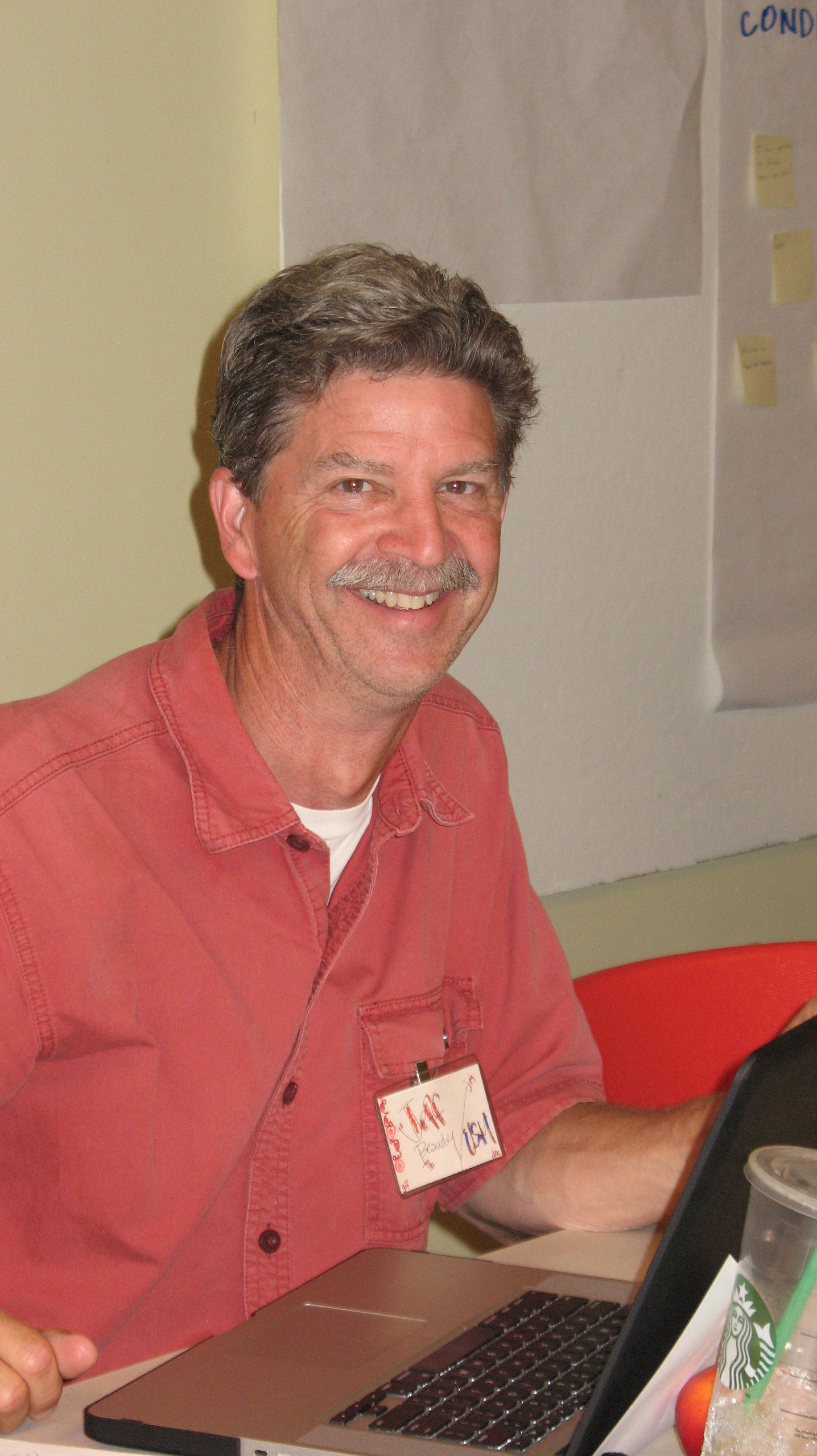
Jeff Beaudry, USM

To prepare for the institute that was held last week at Maine College of Art (MECA) participants prepared by reading articles, viewing videos, communicating on a wiki, and thinking about their role as leaders, teachers, and collaborators.

There were numerous resources provided for them and that they shared. This post is to provide you with some of the information to help you as a teacher in the 21st century classroom.

Assessment: New Hampshire Department of Education Arts Consultant Marcia

McCaffrey has many resources on the NH DOE website. For several years Marcia, and our Vermont colleague Gail Kilkelly, planned the New England Arts Education Assessment Institute. http://www.education.nh.gov/instruction/curriculum/arts/index.htm Maine’s teacher leaders read Guidelines for Arts Assessment and Envisioning Arts Assessment which can both be found at the above link. However, there are many other outstanding reading resources there as well. I suggest you spend a few minutes checking out what Marcia kindly provides there for eduators.

Jeff Beaudry, one of our planning committee members, teaches at USM. He is an

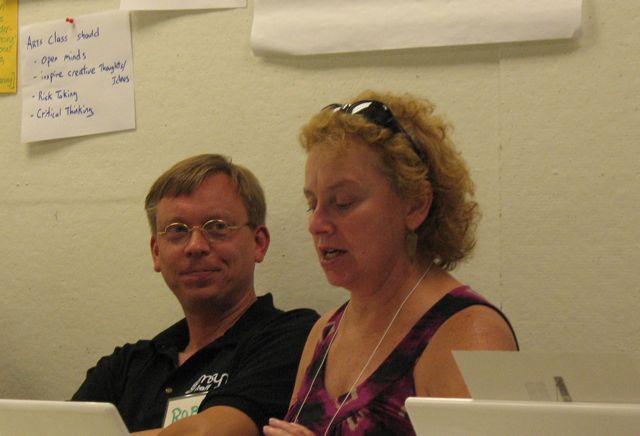
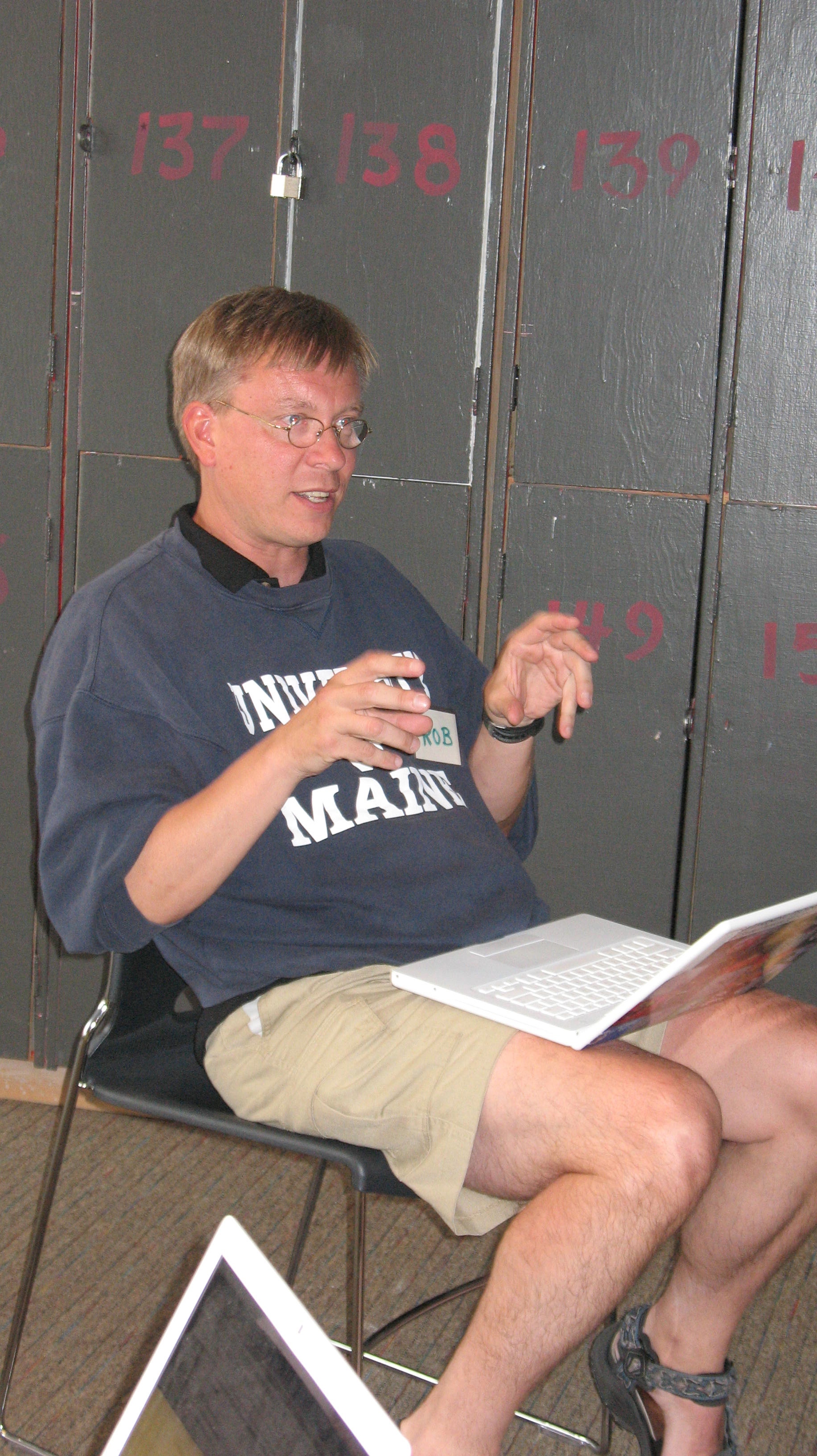
Rob Westerberg, music educator York High School

expert in assessment, data, leadership, is a photographer, and focuses much of his work (and play) on collaborating. In fact he has a really wonderful project that incorporates science and color encouraging participants to carefully observe and document the observations. We know how important observation is in the art and science world. Jeff guided participants readings contributing two chapters from Rick Stiggins assessment book. Chapter 2 is on Assessment for and of Learning and Chapter 4 called Assess How? Designing Assessments to Do What You Want. You can access both of these articles at http://maineartsassessment.pbworks.com/w/page/28367262/Resources#view=edit

Joining Jeff on the assessment portions at the institute were Bronwyn Sale who was an art teacher at Brunswick High School before joining the staff at Bates two years ago. Bronwyn provided a variety of information and led a session on some of the pre-reading assignments using jig-saw. Also at the above link are two assessment articles that participants read called Self Assessment by Heidi Andrade and The View by Maja Wilson.

Technology: To help prepare for the technology segment of the institute participants

Ann Marie Hutton, Apple MLTI

viewed Tony Wagner’s YouTube on the global economy and they read Integrating Technology with Student-Center Learning, a report to the Nellie Mae Education Foundation. We were fortunate to have Ann Marie Hutton join us for the assessment institute and share her knowledge and skills with participants. Ann Marie works for Apple with the MLTI project and was an art teacher before joining the MLTI team. Did you know that you can contact MLTI and request staff to travel to your school for professional development? And, there is absolutely no cost involved!

Leadership: Carol Trimble facilitated the session on leadership modeling her leadership skills. Pre-reading was information written by Linda Lambert from ASCD called Leadership Capacity for Lasting School Improvement. Certainly all arts educators contribute to improving schools, often at the heart of that responsibility. Another article that was written by teacher Scott Hunt is called Teacher Leadership. Both articles are available on the page embedded above.

Catherine Ring, arts consultant New England Institute for Teacher Education

Rounding out our presenters last week were music educator Rob Westerberg and arts consultant with the New England Institute for Teacher Education Catherine Ring.  Both contributed resources and their wisdom and experience to the institute. There are many more resources that will be shared as time passes and you can look forward to getting at the October 7th statewide arts conference being held at USM, Portland. More information coming in the near future on the conference. The 18 teacher leaders will be presenting workshops at the conference and will also be presenting in the regions throughout the state during the school year, 2011-12.

For an update on the arts assessment initiative please go to http://maineartsassessment.pbworks.com/ and please email me if you have questions at argy.nestor@maine.gov

Photographs taken at the institute by Jen Nash have been posted at https://picasaweb.google.com/Jen.Acosta.Nash/DropBox?authuser=0&authkey=Gv1sRgCOqAqMzDvbf1lQE&feat=directlink

h1

Maine Arts Education Institute

August 9, 2011

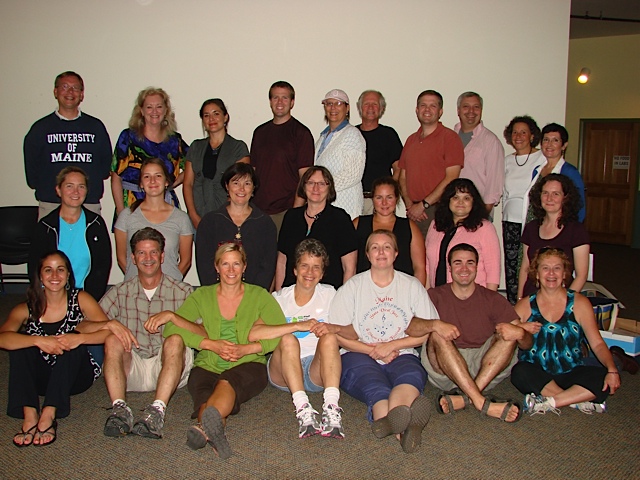
2011 Maine Arts Assessment Institute participants

The evaluations are in!

The four day institute held at Maine College of Art (MECA) fulfilled the planning committees dreams. In fact, in many cases it surpassed the plans. Below are some of the participants comments to give you an idea of the response. We have been provided with much food for thought for the future.

General comments:

  • I know you probably have the same feeling, but words can’t express how thrilled I am with this project.  It’s hard to know exactly what to call it, but I do know who was there and who made it happen.  Thanks again.
  • I had never realized how alone I was in my work at my school until I spent these 4 days.  Now that I see how wonderful it is, I am not willing to let it go and am motivated to keep up the connections.
  • Thanks for this experience I learned a great deal about assessment, leadership, technology, and myself! I appreciate this opportunity and all of your help and support.
  •  I am considering asking for our entire Arts staff to be here for professional development.
  • What a great opportunity to collaborate with colleagues and tackle important issues and topics.
  • I was empowered by colleagues who share similar passions about assessments in the arts.
  • EXTREMELY well organized. The days were paced well, the mix of people was very focused, helpful, and a lot of fun. The logistical pieces were thoughtfully prepared and executed.

About Technology:

  • There was an incredible amount of knowledge that was presented in a safe and supporting environment. Most importantly, I was told where the support would be when I need it in the future.
  • This was an informative part of the institute.
  • Little overwhelming at first, but the support was there to feel comfortable diving into these new programs and really gain an understanding of some useful technologies that can be helpful in the classroom (for assessing but not only for assessing).

About Assessment:

  • Having a general follow ups to our readings was very effective as we had the foundation for further depth.
  • Very helpful and inspiring.  Lots of good ideas that we could pick and choose from, could work with what might work best for us in our classroom and curricula with our teaching philosophies.
  • The information learned in these pods will help inform my assessment creation and explanation throughout the year.
  • These sessions were awesome and very helpful.  I like the nuts and bolts sessions.  I work best when we start with what’s relevant to me on a day to day basis and then find the theory and practices that support that.
  • The concept of working on assessments through student products was also a revealing and important topic.
  • Great dialoging and discussion/checking in. It gave me a lot to think about. Really liked hearing about the assessment work in other countries.
  •  The breakouts by subject area were fantastic collaborative times.

About leadership:

  • Clearly the students were the focus of the session.  There was no formal lecture, but a well guided opportunity to learn for ourselves and discuss with others.
  • We were given some important information around the leadership process that will most certainly benefit us as we all move forward with this initiative!
  • This was a beneficial part of the institute and added to my knowledge of leadership.

About the site:

  • Everything was awesome! The venue at MeCA couldn’t have been more appropriate
  • Everything was great, and I would highly recommend to do this here again.
  • Food and site (MECA) were both fabulous.

About the design:

  • Well done.  There’s never enough time, because this work will never be done.  good job keeping us on task and moving us forward.
  • Well organized and planned- lots of information.
  • Good number of days with appropriate length.  Good balance between extended time on an area, but frequent changes to keep things fresh.
  • Very well planned, and it was great that you worked each day to be flexible, and rework time.

About the approach:

  • Collaborative work went well.
  • It was awesome- loved the blocks and how we moved around from spaces and learning pods, really nice- FLEW by.
  • Staggered is good, collaborative good, professional colleagues, awesome!
  • Excellent mix of themes, styles, and pods!
  • Loved the supportive environment that allowed not only for collaboration, but symbiotic relationships to help each other and genuinely have everyone succeed.

About the climate:

  • Creating a learning community in such short time was well done.  Everyone was so welcoming and non-threatening.  Everyone seemed comfortable, valued and part of the process.
  • This was great as well, I liked the pre-reading and then coming and getting all the new info too add to what we already had learned from reading and from our own experience.
  • Enjoyed the opportunity to work with professionals from other disciplines
  • Our group created a climate through the built in structures of this assembly that really pushed, extended, and authenticated learning about our three main focal points!
  • I learned so much this week.  I feel much more confident about being a district leader.  I know that it’s more about collaboration than anything else, and I don’t have to know it all.
  • I loved the excitement and the support my new friends offered me. Because of the intensity of the conference, I felt a shared bond with fellow educators. I have learned more than I thought possible.

And in closing… The mark of a good conference is that at the end you wonder where the time goes and I am surprised it is over.
REMINDER: The overall assessment initiative plans can be found on the Maine arts assessment wiki http://maineartsassessment.pbworks.com.

NEXT STEPS: Five webinars starting in September facilitated by Rob Westerberg and Catherine Ring. Statewide arts education conference, October 7th. (More information on these will be posted on the wiki).

h1

Summer Arts Institute: Day 4

August 8, 2011

Culmination

Music educators Bill Buzza and Shari Tarleton collaborating

Today, Friday, was devoted to bringing it all together. Participants focused on creating their presentation draft for the statewide arts ed conference and their regional workshop. The statewide conference will be held on October 7th at USM, Portland campus. Titles and content were put together and participants shared their overview to the entire teacher leader team.

It was exciting to hear their articulated ideas which was a reflection on who they are as arts educators and their unique perspective they bring to their teaching. When they come together for their presentations at the conference on October 7th there will be a wide range of workshops for you to attend. I found myself wondering how I would choose as a conference participant.

MLTI educator Ann Marie Quirion Hutton and USM professor Jeff Beaudry

We wrapped up the day checking the consensogram to determine how much had been learned during the 4-day institute, filling out evaluations, and saying our so longs. During the next 2 months participants will rely on electronic communications to move towards being ready for the presentations on October 7th.

h1

Summer Arts Institute: Day 3

August 7, 2011

Leadership

Thursday morning of the arts education institute was spent focusing on Leadership. Carol Trimble, executive director of the Maine Alliance for Arts Education, facilitated this session. Carol often leads by example and this session was no exception. She provided participants the opportunity to view TED videos on leadership and discuss their findings in small groups and then with the entire team of teacher leaders.

Carol Trimble facilitating the leadership segment

The overarching questions for this segment of the institute dealt with these ideas:

  • What is good leadership?
  • Explore:  1) what good leadership is in a variety of situations that teachers encounter;                                                                                                                          2) skills we can develop to be more effective leaders; and                                           3) the process of “locating the energy for change.”

Participants also looked at comparisons between teaching skills with students and leadership skills with adults.

It was a worthwhile session that gave participants the opportunity to look within and to each other to broaden and understand their leadership skills.

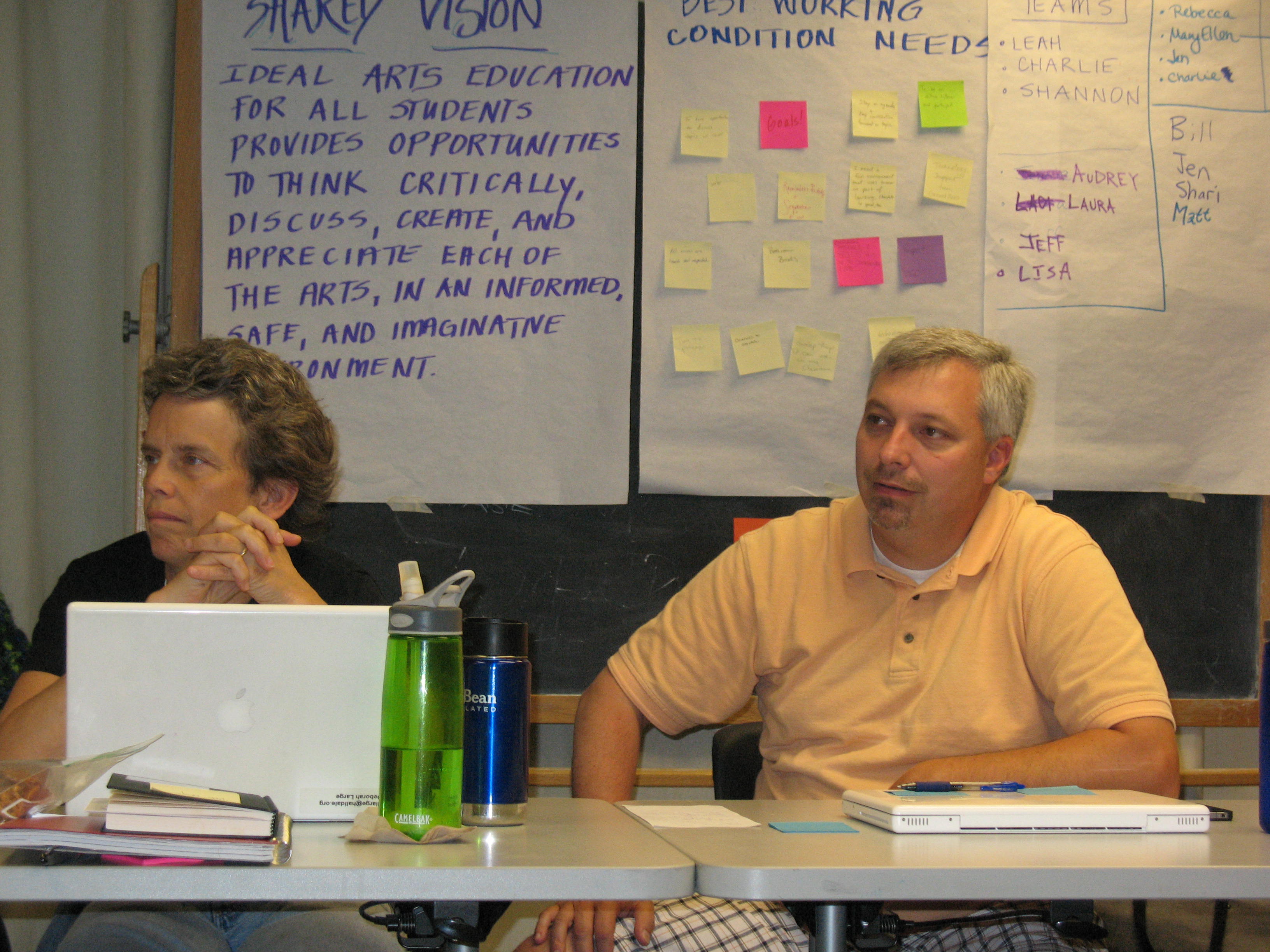
Music educators Deb Large and Matt Doiron listen intently

During the afternoon participants worked within their disciplines. The art teachers looked at student samples of art work, benchmarking and examining varioues rubrics. Most appreciated was the opportunity to have deep and meaningful discussions.

The music teachers discussed how each standard can be organized around lesson plans. The discussion included “how does this get reported? and practical ways around “reporting” digitally.

The day ended with a celebration at MECA’s gallery, ICA, with invited guests and our initiatives partners. It was so pleasurable to celebrate the good work that the teacher leaders have been doing.

Art Educators Shannon Campbell, Jennie Driscoll, Audrey Grumbling in deep discussion about artwork

h1

Summer Arts Institute: Day 2

August 4, 2011

The Beginning – Essential Questions

Music teacher Rob Westerberg and Dance teacher MaryEllen Schaper

Jeff Beaudry, professor from USM, and a member of the assessment institute planning team presented the three essential questions that are overarching our insitute.

As teachers and leaders in classroom assessment we need to pay close attention to two essential ideas identified by Stiggins in Classroom Assessment for Student Learning.  First, teachers must be masters of the five standards of assessment quality in order to communicate accurate, dependable assessment information to any audience or assessment user. The second is that students are the key users of assessment information and one of the best practices for teachers to improve student use of assessment information is to involve them directly in classroom assessment in appropriate ways as much as possible.  As we integrate teaching, learning, and assessment, we check and critique our strategies with a set of essential questions.

  1. What is good teaching?
  2. What is good learning?
  3. What is high quality classroom assessment?
  4. How does high quality classroom assessment connect with teaching and learning?

Today the Maine teacher leaders discussed some of the pre-reading which included the following: Self Assessment by Heidi Andrade, The View by Maja Wilson, Guidelines for Arts Assessment from CCSSO and SCASS, Envisioning Arts Assessment from CCSSO. Participants shared their observations in a jigsaw format.

Music teacher Jen Nash and Theater teacher Rebecca Wright

The teacher leaders are involved in professional development for four days this week at MECA. They will be be creating workshops for the statewide visual and performing arts conference on October 7th and in regions across the state. The teacher leaders are:

  • Jeffrey Orth – Richmond Middle/High School
  • Charlie Johnson – MDI High School
  • Shannon Campbell – K-12 Vinalhaven
  • Jennie Driscoll – Brunswick High School
  • Lisa Marin – K-12 Jonesport Beals High School
  • Laura Devin – K-8 Woolwich Central School
  • Audrey Grumbling – Arundel/ RSU 21
  • Leah Olson – Hampden Academy
  • Deb Large – Hall-Dale High School
  • Shari Tarleton – Brunswick Junior High
  • Allysa Anderson – 5-8 Camden-Rockport Middle School
  • Alice Sullivan – 4-12 Woodland Princeton
  • Matthew Doiron – Sandford High School
  • Bill Buzza – Leavitt Area High School
  •  Jake Sturtevant – Bonny Eagle High School
  • MaryEllen Schaper – Bonny Eagle Middle School
  • Rebecca Wright – Ellsworth High School
  • Jen Nash – Etna-Dixmont School

The day was filled with opportunities for deep conversation and learning.

h1

Summer Arts Education Institute: Day 1

August 2, 2011

Leadership, Assessment, Technology

Today was the first day of the Summer Arts Education Insitute at Maine College of Art (MECA). Eighteen teacher leaders participated in a jam pack day that felt like several days instead of only one.

Below is today’s agenda that will give you an idea of what we’ve been involved in all day. Our beginning sessions on utilizing technology, foundations of assessment, and

7:30-9:00

Arrival, Breakfast & check in activities

9:00 to 9:30 (Room 264)

Welcome, Conference Overview & History, Essential Questions

9:30 to 10:30 (264)

“Where are we?”

10:30 to 10:45- Break

10:45 to 11:30 (Student Ctr)

Introduce individual Action Plans, discuss roles and responsibilities for 2011-2012 school year

11:30 to 12:30 (Café)

Lunch

12:30 to 12:45 (264)

Grad Cred Students Mtg

12:45 to 1:30 (264)

ASSESSMENT POD #1

Types & Language

1:30 to 2:00 (264)

Wiki

2:00 to 2:15 – Break

2:15 to 3:00 (264)

TECHNOLOGY POD #1

3:00 to 3:45

(Vis Art 264, Music S.C.)

TECHNOLOGY POD #2

3:45 to 4:00 (264)

Daily de-brief

4:00 Planning team mtg

4:00 to 6:00

Supper on your own

6:00-8:00 (264) Optional – OER group panel sharing

I will post some pictures tomorrow of the participants hard at work!

h1

News Release: Imagination Intensive Communities

August 2, 2011

2010 communities website announced

NEWS RELEASE – New Resource for Creative Education

A new resource is available for parents, educators, organizations, and others who want to strengthen educational opportunities in their communities. The Maine Alliance for Arts Education (MAAE) and its partners and funders, the Maine Department of Education (MDOE), the Maine Arts Commission (MAC), the Kennedy Center, and Bangor Savings Bank, have announced the Imagination Intensive Community (IIC) web pages, available on MAAE’s website at www.maineartsed.org. Strategies and examples from exemplary Maine communities offer information on how to provide learning opportunities that foster and develop the creative skills students need for success in the 21st century.

Through the innovative Imagination Intensive Communities project, MAAE, MDOE, and MAC have identified, researched and celebrated communities where schools and organizations work effectively in collaboration to offer strong creative learning opportunities, including arts education, for their students. In 2010, six communities were named IICs: Deer Isle-Stonington, Blue Hill, Camden-Rockport, North Haven, York, and Arundel. The new web presence provide information on each of those communities. In 2011, The Telling Room, a downtown Portland nonprofit writing center, was named an IIC. A  web page will be added this fall on the Telling Room.

The Maine Alliance for Arts Education (MAAE) is a statewide nonprofit that works to strengthen education in all of the arts for all Maine students. For more information on this project and other activities of MAAE, visit www.maineartsed.org or email info@maineartsed.org .


h1

Maine Arts Education Assessment Institute

August 1, 2011

Lift-off is tomorrow!

Rob Westerberg just posted this to his Facebook….

Last August, Argy Nestor, Catherine Ring and I attended the New England Arts Assessment Institute in NH and outlined our vision for Maine. A year of planning later, we launch the Maine Arts Assessment Initiative tomorrow with 18 teacher leaders and 4 days of professional development in Portland. We’ve got the support of our new Commissioner and the Dept of Ed… a massive milestone for us this week!!!

Needless to say we are looking forward to an exciting 4 days and I look forward to sharing with you each day!


h1

Lincoln Center Institute

August 1, 2011

Farnsworth Art Museum

The museum was the host for the Lincoln Center Institute (LCI) Insternational Educator Workshop last week. Returning from the last program held last summer, 15 teachers were involved in a two-day advanced program. And, 39 teachers attended a five day foundational program. Teachers traveled from all parts of Maine and 6 from Louisiana for the outstanding opportunity. The participants included art and music teachers, classroom teachers and administrators from K-12.

The approach is imaginative learning through aesthetic education: for teachers, teacher educators, teaching artists, with multiple partnerships. The institute uses the teachings of Maxine Greene to guide the experience. Looking and creating artwork, identifying the relevance to classroom curricula, framing a question. The overall work goes between creating and examing the artwork providing multiple opportunities for participants to drill down and stand on meaning. LCI believes that the imaginative experience can be applied across the curriculum.

Last year the visual art component connected with theater and this year it was visual art connecting with music. A live performance by the Louisiana Repertory Jazz Ensemble  was open to the public in the evening. On Thursday morning while visiting I had a chance to be there for the private performance just for the participants. With a group of mostly art teachers who were beginners to music they asked many basic questions and were in awe (as I was) of the musicians and their music making. It was great to hear the questions and answers as the group learned together. There was even some dancing and music making from the group as they appreciated the music of Jelly Roll Morton, Louis Armstrong, New Orleans Rhythm Kings, and King Oliver to name a few.