Archive for October, 2011

h1

Experiencing a Standards Based Classroom

October 31, 2011

From another perspective

Christine Anderson-Morehouse is the Director of the Midcoast Regional Professional Development Center. She arranged the professional development opportunity for arts educators at Jefferson School on October 28th. The all-day workshop provided an overview to participants on Maine’s assessment initiative along with breakout sessions facilitated by teacher leaders Allysa Anderson and Shannon Campbell. And a final session on the Open Educational Resources facilitated by Kristen Andersen.

I was thrilled that Christine fully participated in the entire day. She attended Allysa’s breakout session on music assessment and below is the email that she sent to Allysa as a follow-up. It provides a view that sheds light on the importance of including non-arts educators in our work. Not to mention highlights Allysa’s skills as a teacher. I am posting this with permission from Allysa and Christine.
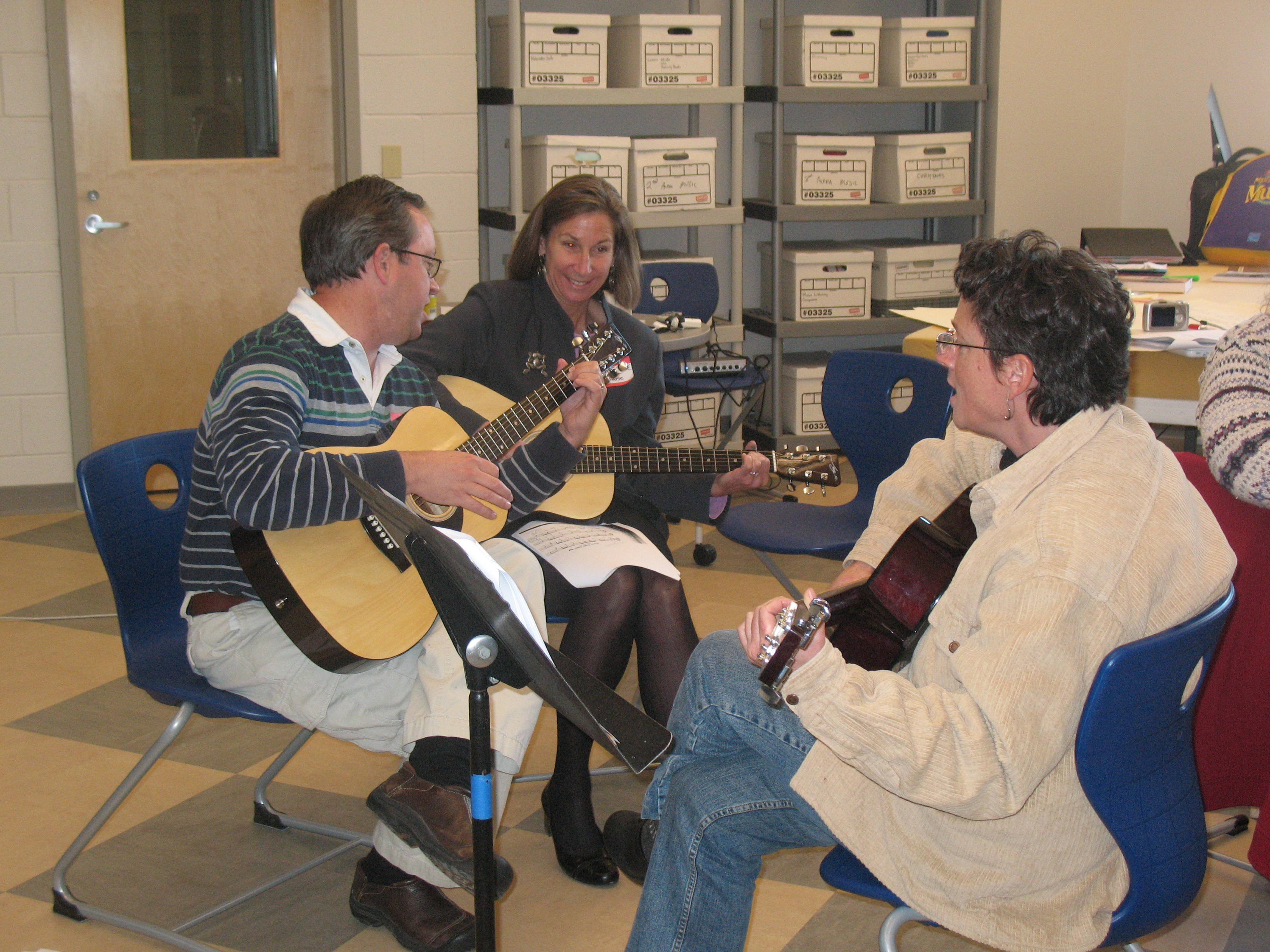
Christine in the center

Dear Allysa:

I’ve heard it said time and again that the most powerful professional development is that which comes closest to the classroom.

Today, I felt as if I were a cherished student in your classroom–thank you so much for all that you did to make today’s “Arts Assessment Workshop” for Midcoast music educators such a powerful learning experience.

You energetically modeled effective teaching by guiding us through several lessons, helping us to understand how it feels to be learners in a standards-based classroom.  From the lecture to the small-group, collaborative (creative) activities, I really got a sense of the flow that is possible under the tutelage of a gifted instructor.  You warmed us up singing in much the same way that you’d do with your students, with helpful asides as a way of explaining the contexts in which you
would use the instructional strategies you were modeling.  Your rubrics helped me to see where I was in terms of my own personal learning (and where I could go next) and your assumption that I’m already doing some things on the rubric (and that I’m capable of doing those that are next)
left me feeling comfortable enough to pick up that guitar and strum along with those experienced musicians.  What a feat!

The group enjoyed (and learned much from) the student work that you shared, be it the videos of students playing guitar together, the Garage Band sample raps or the written artifacts such as self-assessments.

I don’t know how you did it but you managed to encapsulate snippets of so much of what you do in your teaching/assessment into that one two-hour session in a way that felt very seamless–bravo!

The students of Camden-Rockport Middle School are so fortunate to have you as their teacher and the teachers of the Midcoast region are equally fortunate that you are willing to share with and facilitate them in learning more about what is possible for their own classrooms.

With many thanks and best wishes,
Christine


h1

Mid-coast Regional Assessment Workshop

October 30, 2011

Jefferson, Friday, October 29th

This past Friday in Jefferson another regional assessment workshop was held, this time for the mid-coast arts teachers. It proved to be a wonderful opportunity for 22 arts educators to re-connect and for many it was the first time meeting. The all-day event was arranged by the Director of the Midcoast Regional Professional Development Center Christine Anderson-Morehouse, in the beautiful new Jefferson, K-8 school. A HUGE thank you to Christine for making the arrangements! 

I was glad to have the chance to be with arts educators engaged in learning more about arts education assessment plus I saw two of my previous students. One is the principal at Jefferson School, the other principal at the South Bristol School.

The all-day workshop started with the history and an overview on Maine’s assessment initiative.  Teacher leaders Shannon Campbell, art teacher from Stonington-Deer Isle Elementary School and Allysa Andersen, music teacher from Camden-Rockport Middle School facilitated assessment sessions in their disciplines. Open Educational Resource (OER) and art teacher from Camden-Rockport Middle School shared the many resources identified by the OER arts team last year.

Some comments from participants included what they learned:

  • Assessment Strategies
  • All the technology info thats helpful in quick bursts to assist what we already are teaching
  • I learned about many resources. I’m excited to look into them more.
  • I learned how other teachers are approaching assessment
  • Varied assessment forms and formats
  • I learned that much of what we do as music teachers IS assessment
  • Good ideas that work well!
  • Online free resources

We know that one day is valuable but that it will take many more to make changes that will impact student learning positively. Participants left with many questions and some are included below.

  • How do I streamline figure out what the priorities are?
  • Should there be a statewide standard rubric form?
  • Will this type of workshop be repeated at a higher level with the opportunity for us to bring rubrics to critique them and make them better?
  • Could we have more discussions on standards based assessments?
  • How to implement comprehensive assessment on a schedule where I meet over 300 students once a week for 40 minutes with only 5 minutes between classes, and 2 prep periods a week.

Participants left asking to meet another time during the school year to further develop ideas and to learn more!

Some of the work created in Shannon's session

Allysa's session

h1

AP Art Studio Teachers Meet

October 29, 2011

October 22, 2011

Seventeen AP art teachers from around the state met in Portland to spend the day discussing issues and ideas. Mt. Ararat High School art teacher Sheila Bohlin and Bangor High School art teacher Kal Elmore facilitate the group for the Maine Department of Education. The AP Studio Art program is designed to challenge motivated high school students to create college level work. Teachers who work with these students must be willing to stay ahead of their students as they guide and facilitate their learning opportunities.

The group discussed the AP report that is an overview of all AP Art portfolios and other scoring issues. Sheila showed a few examples of quality works from the AP site and reviewed works that were scored 6, 5, and 3.  The revised keynote presentation that she uses with students as an overview of the program was shared.

Kal demonstrating gelatin printmaking while Heidi O'Donnell and Randy Menninghaus look on

Kal Elmore did a demonstration of gelatin printing and all participants had an opportunity to try it out. Gelatin printing is a mono-printing process that can be used to spark students imagination, to teach a number of useful concepts, and to encourage problem solving and creative thinking.

The day also included:

  • Brainstorming activity: If someone gave you a large case of small canvas boards, how might you use them with students? Participants shared many interesting ideas and a short lesson idea.
  • Several teachers brought student work for critique. Suggestions and comments given by participants will be shared with the student artists.

Future topics for workshops:

  • on-line critiquing options
  • digital photography and related issues
  • helping students to define concentration ideas

Participant and Waterville High School art teacher Suzanne Goulet said this: “The collaborative has helped me to get over only sharing outstanding work (understandable and predictable/fear of being judged). I now take advantage of secondary voices to emphasize key concepts with students (it really helps with trust).

The next meeting will be on January 14 in Waterville. If you’d like to join the AP Network blog at http://meapsanetwork.blogspot.com or would like more information on the network and join the group please contact Kal at kalelmore@gmail.com or Sheila at bohlins@link75.org. Everyone left on Saturday with new ideas and the motivation to try them.

Wells High School art teacher, Vanessa White Capelluti

h1

Phantom of the Opera

October 28, 2011

h1

Media Arts: Stand Alone or Integrated?

October 27, 2011

Let’s chat

Please humor me… I know you’re busy and some days you barely have time to eat lunch and use the rest room let alone read the meartsed blog. This is what I need from you… your thoughts, your wisdom, your ideas.

Please weigh in on this topic since it is important to the standards future and could impact your future arts education curriculum …. Should “media arts” be a stand alone topic, like dance, music, theatre, and visual arts, or should “media arts” be intervowen into the 4 arts disciplines as we now know them in the Maine Learning Results and National Arts Standards? I think it is a simple and challenging question that needs your best thinking, especially in Maine where MLTI has helped us “lead” the technology conversation in Maine and beyond.

Periodically I get emails and questions like these: My high school has put in a media arts course where students are receiving fine arts credit. Can that be done? Usually the teacher is upset since students who would normally take the arts courses are taking the media arts courses. My question in return is: have you incorporated any media arts into your traditional courses? If the answer is no, I ask why not? And add that perhaps the reason students are taking another arts type of course is because they are looking for something that contains more 21st century tools and opportunities.  Don’t get me wrong here I am not suggesting we eliminate those traditional experieinces however we need to do business differently.

To help you think differently about education, how you teach and how students learn… I suggest you read the following books:

Inevitable, by Bea McGarvey and Chuck Schwann, both makes the case for mass customized learning, but also lays out a vision of what it might look like and how we might do it. Commission Bowen had all of us at the Department read this book. Our books were passed on to the superitendents in the state and each group is reviewing the book and have been asked to pass theirs on to a school board member or another administration. It would be great to hear what you have to say about this easy read.

Another approach to customized learning is student-designed standards-based projects. The Minnesota New Country School is given much credit for developing this model, and their work has been recognized by the US Department of Education, and others. Ron Newell has captured this work and makes clear the student-designed project approach in Passion for Learning. I haven’t read this one yet but it is on my list.

What books have you read lately that you recommend to others? Please make suggestions in the “comment” section below. And what do you think… Media arts a stand alone or interwoven into the other arts disciplines for delivery of education?

h1

Art? Technology? Design?

October 26, 2011

Steve Jobs

Lynn Neary, from NPR interviewed the President of Rhode Island School of Design, John Maeda, after the death of Steve Jobs. Below is an excerpt from the interview:

NEARY: So how will Steve Jobs be remembered by designers such as yourself?

I think that Steve Jobs will be remembered as the designer who put design in the map of technology, which has transformed our lives. I think without him everything would be quite different.

How would you characterize his design style?

MAEDA: Well, it goes back to my beginnings where I was an Apple II owner. I remember buying the first Macintosh, getting on a plane to go to my first year at MIT. At MIT, all my upper classmen friends had IBM PCs, which was the macho computer. And I had the sissy computer. And what I could see is that they saw it as a sissy because it draws pictures. Who needs pictures? It looks strange. Why does it have to look strange?

And so I think that he was showing to the technology era, the people around it, that it wasn’t about faster, bigger, etcetera. It was having something that makes an emotional connection to people.

If you’d like to read more of the piece please click here.

Tonight on my way home while listening to NPR I heard the interview with Walter Isaacson about the biography he wrote on Steve Jobs. The book was just released on Monday, just three weeks after Jobs passed away.

Jobs’ attention to detail on his creations was unrivaled, says Isaacson. Though he was a technologist and a businessman, he was also an artist and designer.

“[He] connected art with technology,” explains Isaacson. “[In his products,] he obsessed over the color of the screws, over the finish of the screws — even the screws you couldn’t see.” Even with the original Macintosh, he made sure that the circuit board’s chips were lined up properly and looked good. He made them go back and redo the circuit board. He made them find the right color, find the right curves on the screw. Even the curves on the machine — he wanted it to feel friendly.

If you’d like to read this entire article please click here.

h1

Arts Assessment Initiative Webinar: Number 2

October 25, 2011

2nd in the series

Rob Westerberg and Catherine Ring are excited to be bringing the second webinar (in a series of five) as part of the Maine Arts Assessment Initiative (MAAI).  The webinar will take place on November 2, 2011 from 3:30 – 4:30, and the topic is Building an Online Arts Education Community with You.  The three main points will include:

  • Creating an online network of support for ongoing work
  • Providing tools to use for assessment and integration into teaching
  • Providing resources on arts assessment

Catherine Ring and Rob Westerberg

In this webinar, they will be discussing various ways of using technology to connect with others.  They’ll also talk about ways teachers can contribute to the wealth of resources that only a collaborative effort such as the MAAI can bring to the field of education. Arts educators know full well how important it is to have strong relationships with each other, as often work is in isolation in schools and communities. Technology now makes it possible to connect, to have rich conversations, to share the best practices in teaching and learning out there, to stay current on education policy and to share the wealth of resources we all have with each other.  Wow.  What a great way to help improve student learning in the arts!

Guests will include leaders in technology education, and arts education teacher leaders closely involved in the Initiative. So join Rob and Catherine as they facilitate another rich conversation on November 2nd!

To join, go online to http://stateofmaine.adobeconnect.com/pk201010/ (sign in as “guest”).  Conference Number 1-866-910-4857, Passcode 140893.

Please click here for more information about other webinars and the Maine Arts Assessment Initiative.

An initiative of the Maine Department of Education with contributing partners: ACTEM (Association of Computer Technology Educators of Maine), District 3 Music Educators, MAAE (Maine Alliance for Arts Education), MAEA (Maine Art Education Association), MECA (Maine College of Art), MMEA (Maine Music Educators Association), MLTI (Maine Learning Technology Initiative), New England Institute for Teacher Education, and USM (University of Southern Maine).

h1

Quasicrystals

October 24, 2011

Daniel Shechtman, Israeli scientist has won the Nobel Prize in Chemistry

Several years ago when I went to space camp in Huntsville, AL, the staff went out of their way to articuluate and provide examples of the many connections between the arts and space education. While I was teaching in the 90’s, two colleagues, one math and one art teacher and I starting looking at and figuring out how to teach fractals. The geometric shape dates back to the 17th century however it wasn’t coined “fractal” until in 1975 when Benoît Mandelbrot named it that. Another math teacher and I worked together, also in the 90’s, to create an integrated unit on tessellations. Artist M.C. Escher never thought of himself as a mathematician as he created tesselations but we know today that the foundation for his creations were strong in the understanding of mathematical concepts.

Once again, the connections between art and math are evident when earlier this month the Nobel Prize in Chemistry went to Daniel Schechtman. When I read this sentence found in the PBS Newshour, Oct. 5, 2011 article entitled What are Quasicrystals, and What Makes Them Nobel-Worthy? I wondered if science and math educators know how many of the terms are found in the visual art curriculum?

Most crystals are composed of a three-dimensional arrangement of atoms that repeat in an orderly pattern. Depending on their chemical composition, they have different symmetries. For example, atoms arranged in repeating cubes have fourfold symmetry. Atoms arranged as equilateral triangles have threefold symmetries. But quasicrystals behave differently than other crystals. They have an orderly pattern that includes pentagons, fivefold shapes, but unlike other crystals, the pattern never repeats itself exactly.

Silver/aluminum quasicrystal

Waterville High School art teacher, Suzanne Goulet, sent me the link to the article on Schechtman which got me to thinking. She suggested I google image search “patterns in Islamic tiles”. At first I didn’t use the “image” in my search, and started reading about Sir Roger Penrose, a mathematical physicist, from Oxford University and the work he was doing in the 1970s. I recalled a book of his tilings that I used to encourage students to find the shapes, patterns, repeated and others in the images. And I read about the Harvard graduate student in physics who traveled to Uzbekistan becasue he was fascinated by the patterns in the 800 year-old buildings and was curious as to how the artisans created them. Lu looked at hundreds of photographs of Islamic architecture and his research landed him an article in Science.

Finally I got to the images and was engrossed in the intracate work of the Islamic Mosaic Design. Just in case you’re looking for a connected unit with visual art and math or science (or both). I suggest you do a google search and expect to go on a journey that will suggest several ideas to broaden your knowledge. It will arm you with ideas to share with classroom teachers, math, chemistry, and/or physics teachers. Using these ideas and concepts can be the vehicle to start brainstorming with your colleagues. Imagine how these ideas might have an impact on engaging some disengaged students in school?!

h1

Arts Assessment for Learning: Part II

October 23, 2011

Karen Montanaro: Performing Artist and Movement Specialist and Door Prizes

Karen Montanaro

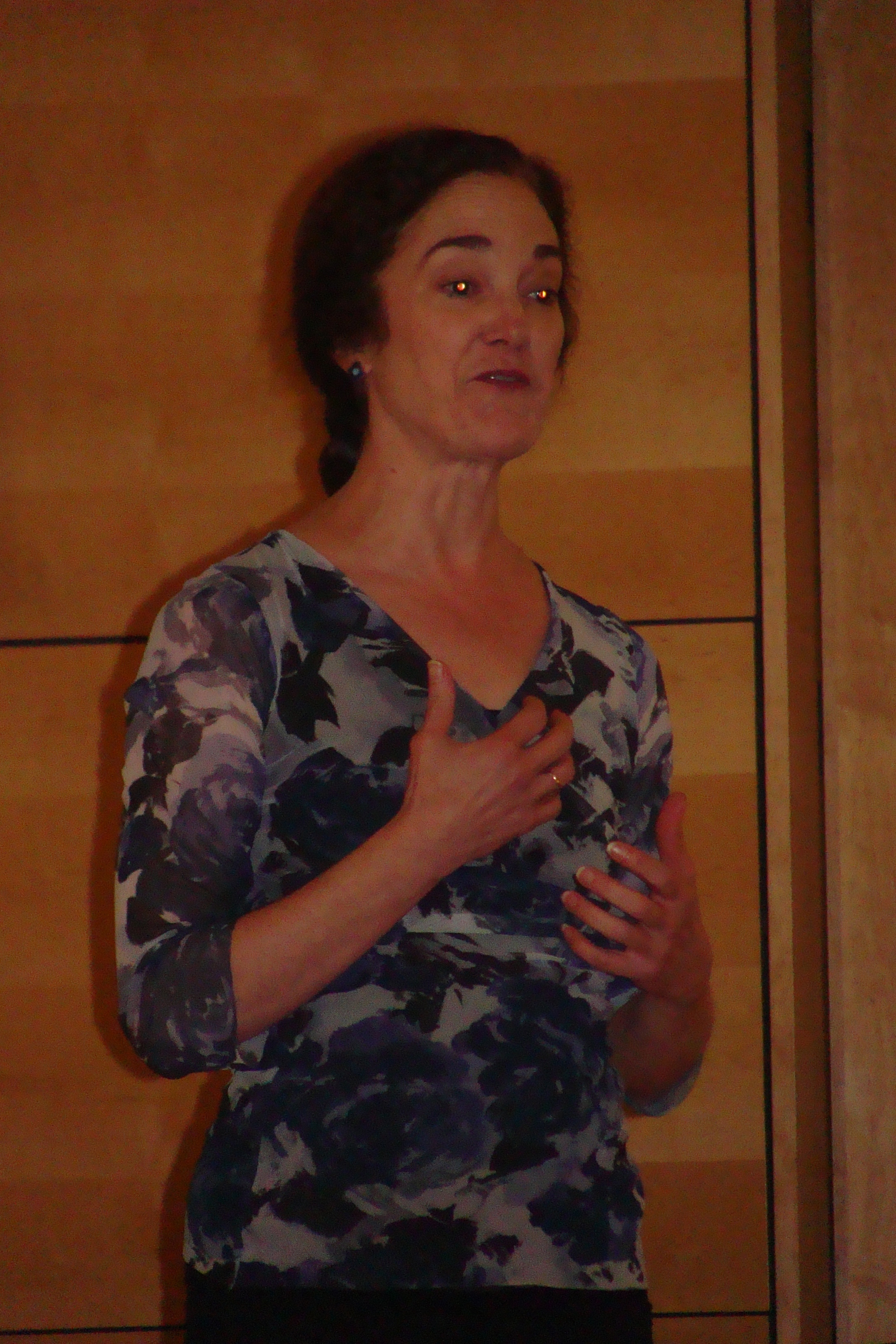
It was so great having Karen participate in the conference during the closing session – YAHOO time! Karen had everyone up on their feet moving and feeling the beat provided by music educator Mike Davis on his handmade drum. It was the frosting on the cake at the end of the day when teachers were ready to get their blood moving. Karen’s experience working with children and adults of all ages has given her many wonderful opportunities. She has participated in the National Dance Institute and they’ve posted a video on the front page of their website that you can view by clicking here.

Also during the closing session we gave out numerous door prizes. Below are the businesses and organizations that provided gifts. A GREAT BIG THANK YOU for their generous giving!

Jillaine McGough and winner of the Bangor Symphony Orchestra tickets Allysa Anderson

York Harbor Inn gift certificate winner Jane Higgins

A HUGE THANK YOU to Jillaine McGough for gathering the door prizes for the conference!

h1

Arts Assessment for Learning Conference: Part 1

October 22, 2011

Opening Session

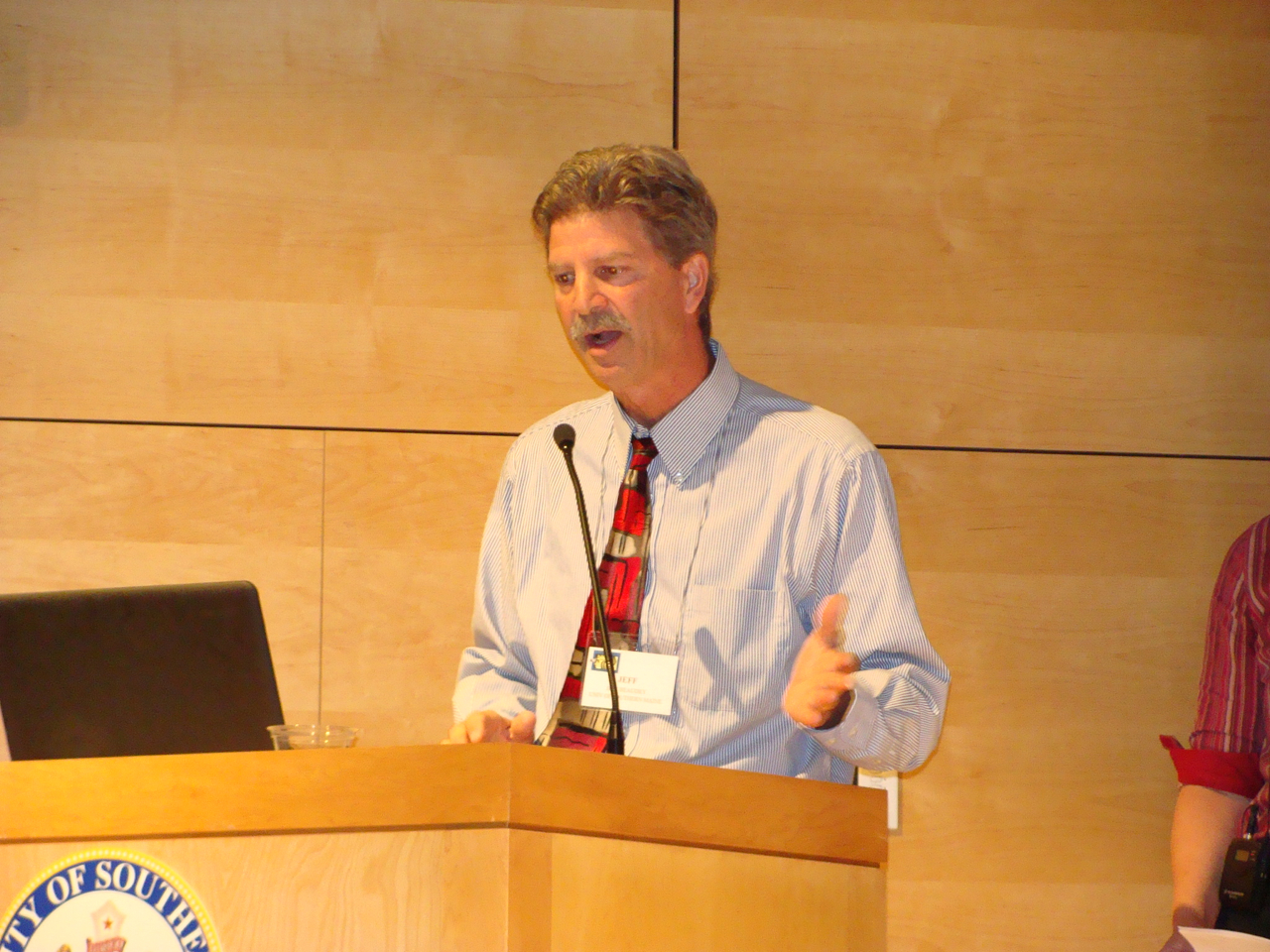
The conference started with a greeting from University of Southern Maine (USM) president Dr. Selma Botman who spoke about the commitment to arts education at USM and its integral place in education. Selma was introduced by Dr. Jeff Beaudry who is making contributions to Maine’s arts assessment. Jeff has many gifts, one of them is his expertise in assessment. He facilitated sessions at the August arts education assessment institute with Maine’s arts ed teacher leaders.

Dr. Rick Nickerson


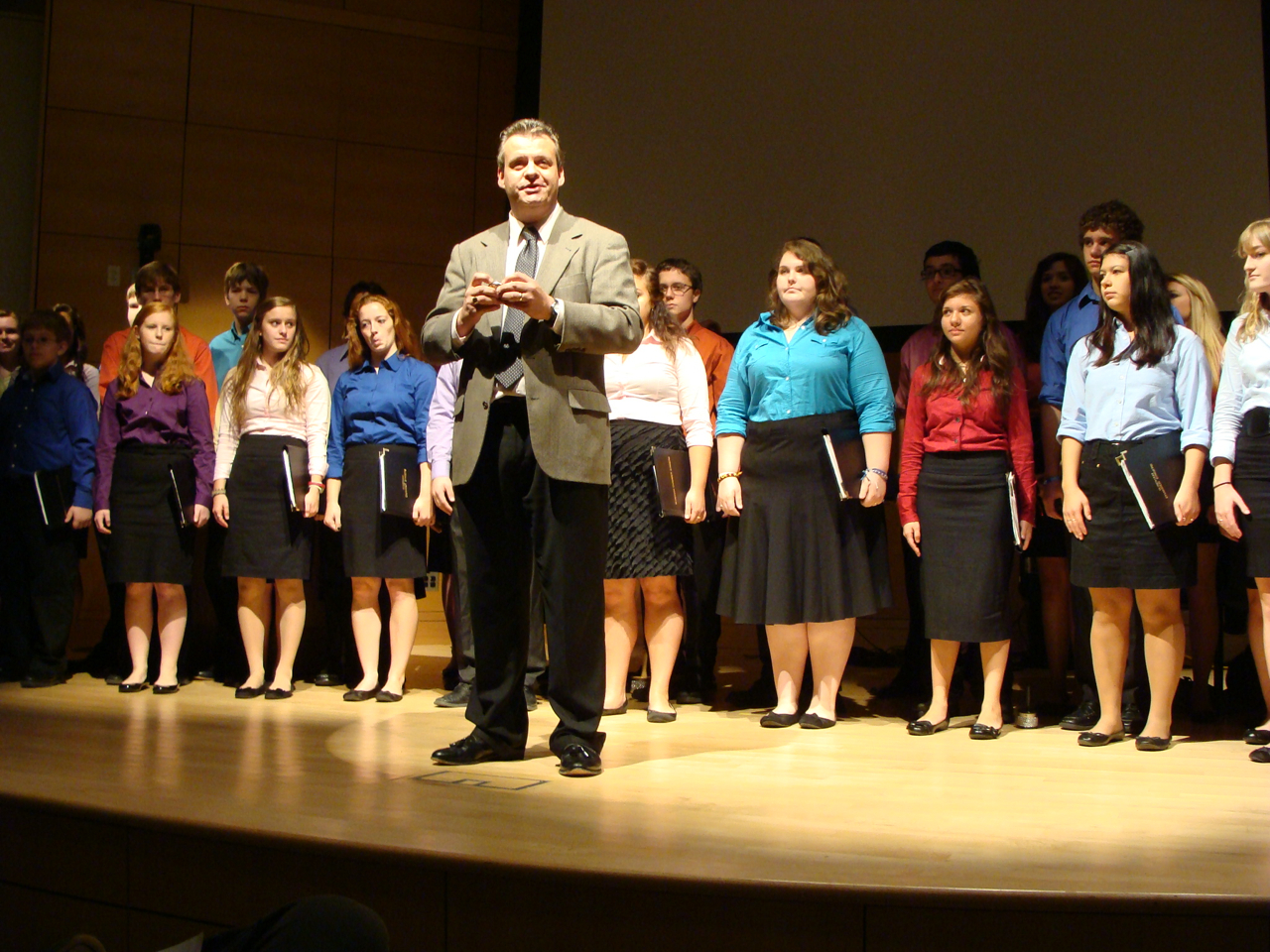
Following the president’s message the Windham Chamber Singers performed under the direction of Dr. Richard Nickerson. I have been fortunate to be in a room when music educators sing the Stars Spangled Banner and been moved to tears. The Windham High School singers beautiful voices alone were moving, but when they led the 222 participants of art, music, dance, and theatre teachers in our country’s national anthem I had chills. I think this may have been a first for our state thanks to Rick’s leadership and to the amazing Windham Chamber Singers!


Windham Chamber Singers

Jeff Beaudry

Following the chamber singers was the collaborative keynote Collaborative Keynote: Context and Connection in the Arts was delivered by Jeff Beaudry, Wiscasset High School art teacher Shalimar Poulin, and York High School music teacher Rob Westerberg. Jeff provided the history of assessment in Maine and the importance and value of assessment and it’s place in the arts ed classroom, Shalimar provided her perspective and the importance of our attitudes in assessment, and Rob provided the nuts and bolts of assessment.

This is one of a series of blog posts as a follow-up to the statewide arts education conference, Arts Teachers Leading the Way… Back to the Future: Arts Assessment For Learning, held on October 7th at USM, Portland campus.