Archive for December, 2011

h1

MAAE Awards

December 11, 2011

Nominate Someone Who Deserves Recognition!

Help locate and honor those who have contributed significantly to arts education for Maine students. Visit Maine Alliance for Arts Education’s (MAAE) website www.maineartsed.org/awards.html for details and nomination forms for these MAAE awards:

  • Outstanding Administrator Advocate for Arts Education Award: deadline January 9, 2012.
  • Bill Bonyun Award (artist, parent, community member, teacher): deadline January 9, 2012.
  • National Symphony Orchestra Summer Music Institute (student): deadline January 27, 2012.

h1

1000th Blog Post

December 10, 2011

CELEBRATING!

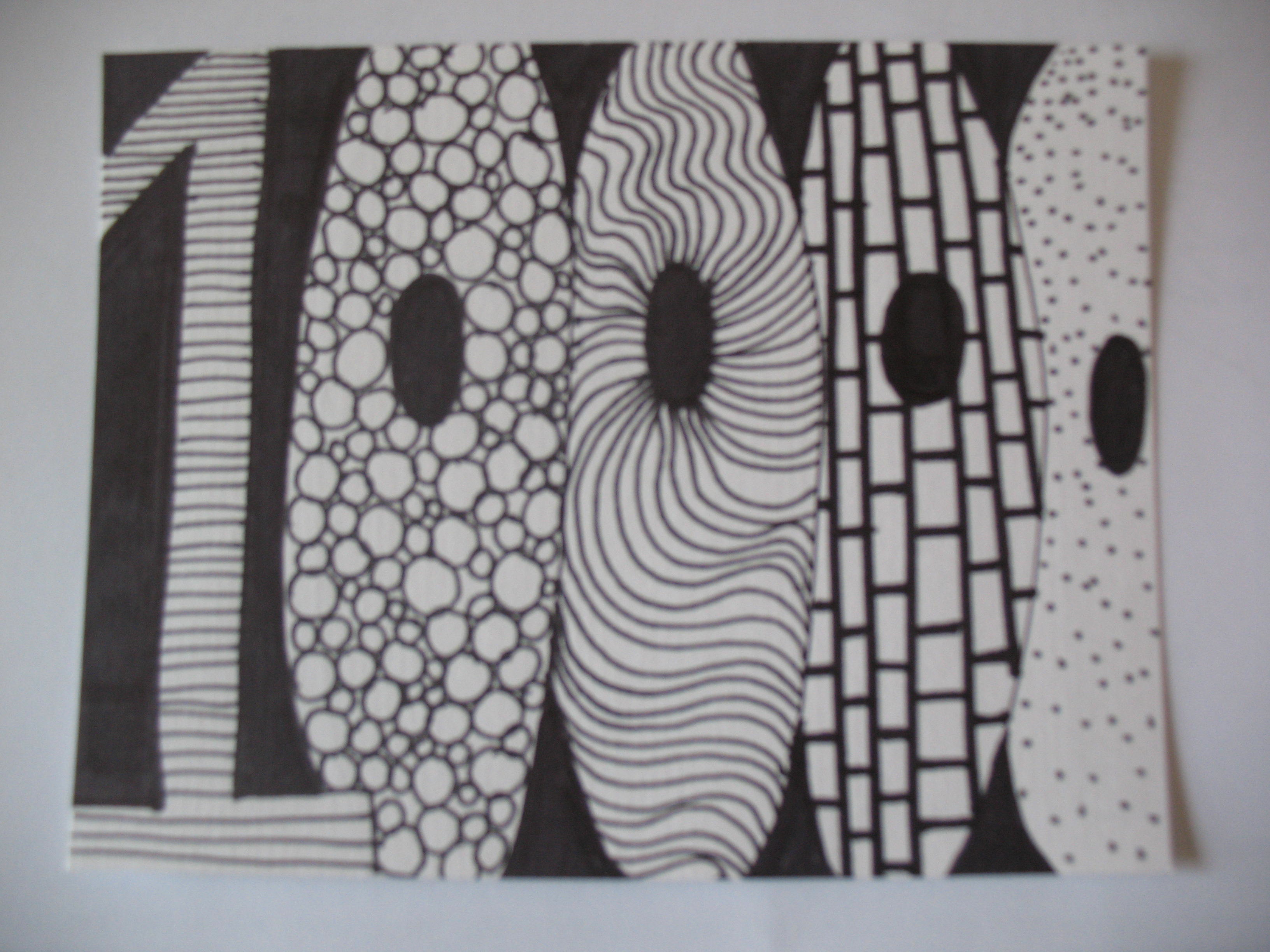
This is the one thousandth blog post on the meartsed blog.

To mark this day here are a few facts that you might find interesting.

  • There are 1174 members on the Maine arts education list-serv. (I have a goal of 1200 by January 1st so please send your email if you are not a member of the list-serv).
  • The majority of members are Maine arts educators
  • There are about 1200 arts educators in Maine
  • Every Tuesday an email is sent to the list-serv
  • The first blog post was made on February 19, 2009
  • Each week there are about 1000 visitors to the blog
  • Blog topics and other information that you find on the blog are often provided by readers. Sometimes blog posts are written by other educators. I really appreciate it the contributions.

THANK YOU FOR VISITING THE BLOG TODAY AND EVERYDAY!

Here’s to the next 1000 blog posts on the Maine Arts Education blog.

h1

Gridjumper Blog

December 9, 2011

Paul LeBrun’s blog

On December 1st I blogged about Paul’s blog called Gridjimper in a post called Skowhegan High School Students – Virtual Art.  I just learned that the blog has been  nominated for an EduBlog Award – Best Ed Tech Blog.

The listing is at http://edublogawards.com/2011-3/best-ed-tech-resource-sharing-blog-2011/

You can support the work of a Maine arts educator by voiting. To vote there are two pull downs

First pull down under Vote Here:

Pull to: EdTech-Resource / resource sharing blog

Second pull down

Pull to: Gridjumper’s Blog

Here is a link to his Blog http://gridjumper.net/

CONGRATULATIONS Paul and the good work you and your students are doing on Gridjumper!

h1

In the News

December 8, 2011

Mass Customized Learning

From the Sun Journal earlier this week an article entitled “Forums set in Sabattus, Litchfield on new teaching method” discusses the change that will be happening in Wales, Litchfield and Sabuttus. RSU 4 Superintendent Jim Hodgkin said “We’re shaking up our whole school system, the way we teach kids.”

He goes on to say: “students will be taught at the pace they need to learn,” he said. “We’re not going to put kids together in classes for a fix period of time.” Teachers will teach but also act as coaches to help students learn.

What’s happening at your regional school dristict? Please share under the comment session below. To read the article please click here.

h1

Commissioner Looking for Input from YOU

December 7, 2011

News Release

Maine Department of Education: http://www.maine.gov/education

FOR IMMEDIATE RELEASE – Dec. 5, 2011
Contact: David Connerty-Marin, Director of Communications, 207-624-6880/831-3313

Ed Commissioner asks public for ideas on school accountability and recognition
Public forums, online feedback will be used in request for federal flexibility

AUGUSTA — The federal government is offering Maine, like all other states, a chance to develop its own system of accountability and recognition of schools — allowing the state to jettison what many now consider unrealistic and unfair requirements and negative labels in the current No Child Left Behind Act.

The Maine Department of Education will submit a formal request for flexibility under the Elementary and Secondary Education Act to the U.S. Department of Education. Education Commissioner Stephen Bowen is asking educators, parents, students and anyone who has a stake in the education of Maine’s students to weigh in at a series of forums and meetings and online. Forums are scheduled Dec. 8 in Bangor; online on Dec. 13; and Dec. 14 in Portland. The Department is also seeking feedback through an online survey and in an ongoing online discussion in which the Commissioner and other staff will participate.

In the absence of Congressional action to rewrite the federal government’s landmark education law, about 40 states are taking advantage of the U.S. Department of Education’s offer of flexibility in implementing the Elementary and Secondary Education Act. In exchange, the Department is requiring that states:
Devise new systems for holding schools accountable and recognizing their success in a fair, accurate and constructive way; and
Develop and pilot systems for evaluating the performance of teachers and school administrators in a way that’s fair and promotes continued professional growth among educators.

“We need to hear from teachers, administrators, school board members, students, parents and others – the people who are working directly and indirectly with students every day,” Bowen said. “For years we’ve heard what’s wrong with NCLB, now we can all work together to build a better system of accountability and recognition.”

At the forums and in the online survey, the Department will seek ideas on measuring school and teacher effectiveness and crafting a system that holds systems accountable and rewards success.

Details for the participation opportunities are as follows:
Bangor forum, Thursday, Dec. 8
Public forum, Bangor High School cafeteria
885 Broadway, Bangor
6 to 7:30 p.m.

Online forum, Tuesday, Dec. 13
Participate online
Visit http://www.maine.gov/education/nclb/flexibility.html for instructions on participating
6 to 7:30 p.m.

Portland forum, Wednesday, Dec. 14
Public forum, Portland Arts and Technology High School, Room 250
196 Allen Ave., Portland
6 to 7:30 p.m.

More online opportunities
Take the Maine DOE’s 10-question survey:
http://www.surveymonkey.com/s/mdoe-flexibility
Join a discussion on Maine’s ESEA Flexibility request in the Maine DOE Newsroom:
http://mainedoenews.net/2011/12/05/discussion-esea-flexibility/
All Maine Department of Education news releases can be found online at:
http://mainedoenews.net/category/news-views/press-releases/.

h1

The Arts Connect Naturally

December 6, 2011

STEM/STEAM and other connections

Recently a comment was posted to the blog that was made by a person who is not trained as an arts educator nor an artist. It was in response to the post called Reaching Students Through STEM and the Arts which was posted on January 11, 2010. Not sure why the individual didn’t comment on the several other STEM/STEAM posts that have been made since that date. The comment made me pause since I have seen two other articles of note this week. One that connect the Arts to STEM in Education Week and one from the Maine Sunday Telegram about students at Waynflete School in Portland collaborating to create 23 – 7 feet tall and 4 feet wide trees.

First a look at the Ed Week article called STEAM: Experts Make Case for Adding Arts to STEM written by Erik W. Robelen. Mr. Robelen provides examples of schools across the country where the arts are connecting with STEM. One example is “the Philadelphia Arts in Education Partnership, with support from a $1.1 million Education Department grant, is working with city schools to help elementary students better understand abstract concepts in science and mathematics, such as fractions and geometric shapes, through art-making projects.

“Educators are finding where the arts intersect with the STEM fields to enhance student engagement and learning, and educators are finding that it helps unlock creative thinking and innovation.

Doesn’t sound like anything new to me or to arts educators who have been connecting curricula to deliver arts education in practice for years. In fact, arts educators understand the connections and our understanding is much greater than just to other content as stated in the Maine’s 2007 Learning Results: Parameters for Essential Instruction.

Standard E – Visual and Performing Arts Connections:

  1. The Arts and History and World Cultures
  2. The Arts and Other Disciplines
  3. Goal-Setting
  4. Impact of the Arts on Lifestyle and Career
  5. Interpersonal Skills

The work at Waynflete this month is a great example of the value of connecting content. The outcome is an exhibit called “Arboretum”. This is taken from the December 4th article written by Bob Keyes: Students conducted all kinds of research about trees, including their environmental impact, their ecological value, their role as habitat for animals and the sacred nature of trees in certain religions. Jeff Tarling, the city’s arborist, came in to talk to the students about trees in Portland, and why some survive and others do not.

As part of the process, Waynflete art teacher and gallery director Judy Novey challenged the students to create something artistic from their research. She urged them to think about the form and rhythm of trees, and to visually represent their research through their work.

These students did not approach their work as an art project at all. It had more to do with science and culture than anything with a creative quality. But as they worked through their tasks, the students said they felt their creativity willing itself to the fore.

When I reflect on my teaching the most successful and memorable work was when students had no idea what classroom they were sitting in nor what subject they were focusing on but it was the magic of learning that was taking place. Life-long learning that becomes embedded in the way we think. The culture of the classroom and school is transformed.

So, I ask you… should we be connecting with the STEM movement currently taking place in education, should we encourage our students to think beyond STEM to help them think and create artistically?

h1

Maine Arts Assessment Webinar #3

December 5, 2011

Arts Assessment Initiative Webinar # 3 to be held – December 7, 2011

Rob Westerberg and Catherine Ring will be hosting their third webinar in a series of five as part of the Maine Arts Assessment Initiative (MAAI).  The webinar entitled Standards Based Assessment In The Arts will take place on December 7, 2011 from 3:30 – 4:30.  Four primary focuses will be discussed:

  • What IS Standards Based Assessment?
  • Standards Based Assessment specifically in the Arts
  • Arts Assessment in practice
  • Looking to the future

Standards Based Assessment continues to be the path education is going down both as a country and as a state. Many questions and concerns arise when we apply “standards” for assessing the arts. In conversation with leaders in the field, this webinar will serve to address what standards based assessment is and isn’t, identify its exciting applications to the arts, and to ease concerns, answer questions and clarify issues around their formal implementation in the classroom. The webinar will conclude by getting a first hand account of where we stand as a country in the revision of the National Arts Standards.

Guests will include USM Professor Jeff Beaudry, President-Elect of State Education Agency Directors of Arts Education and NH Department of Education arts consultant Marcia McCaffrey and teacher leaders Leah Olson (Visual Art, Hampden Academy), Charlie Johnson (Visual Art, MDI H.S.) and Jake Sturtevant (Music, Bonny Eagle H.S.).

To join the meeting, go online to http://stateofmaine.adobeconnect.com/pk201011/ (sign in as “guest”). Conference Number: 1-866-910-4857, Passcode: 140893. Please click here for more information about other webinars and the Maine Arts Assessment Initiative.

Please be sure to join them for what promises to be an engaging, insightful hour on the topic that will continue to impact every one of us as arts educators in the state of Maine!

An initiative of the Maine Department of Education with contributing partners: ACTEM (Association of Computer Technology Educators of Maine), District 3 Music Educators, MAAE (Maine Alliance for Arts Education), MAEA (Maine Art Education Association), MECA (Maine College of Art), MMEA (Maine Music Educators Association), MLTI (Maine Learning Technology Initiative), New England Institute for Teacher Education, and USM (University of Southern Maine).

Arts Assessment Initiative Webinar # 3 to be held

November 30, 2011

Rob Westerberg and Catherine Ring will be hosting their third webinar in a series of five as part of the Maine Arts Assessment Initiative (MAAI).  The webinar entitled Standards Based Assessment In The Arts will take place on December 7, 2011 from 3:30 – 4:30.  Four primary focuses will be discussed:

  • What IS Standards Based Assessment?
  • Standards Based Assessment specifically in the Arts
  • Arts Assessment in practice
  • Looking to the future

Standards Based Assessment continues to be the path education is going down both as a country and as a state. Many questions and concerns arise when we apply “standards” for assessing the arts. In conversation with leaders in the field, this webinar will serve to address what standards based assessment is and isn’t, identify its exciting applications to the arts, and to ease concerns, answer questions and clarify issues around their formal implementation in the classroom. The webinar will conclude by getting a first hand account of where we stand as a country in the revision of the National Arts Standards.

Guests will include USM Professor Jeff Beaudry, President-Elect of State Education Agency Directors of Arts Education and NH Department of Education arts consultant Marcia McCaffrey and teacher leaders Leah Olson (Visual Art, Hampden Academy), Charlie Johnson (Visual Art, MDI H.S.) and Jake Sturtevant (Music, Bonny Eagle H.S.).

To join the meeting, go online to http://stateofmaine.adobeconnect.com/pk201011/ (sign in as “guest”). Conference Number: 1-866-910-4857, Passcode: 140893. Please click here for more information about other webinars and the Maine Arts Assessment Initiative.

Please be sure to join them for what promises to be an engaging, insightful hour on the topic that will continue to impact every one of us as arts educators in the state of Maine!

An initiative of the Maine Department of Education with contributing partners: ACTEM (Association of Computer Technology Educators of Maine), District 3 Music Educators, MAAE (Maine Alliance for Arts Education), MAEA (Maine Art Education Association), MECA (Maine College of Art), MMEA (Maine Music Educators Association), MLTI (Maine Learning Technology Initiative), New England Institute for Teacher Education, and USM (University of Southern Maine).

h1

One Person’s Voice

December 4, 2011

Bell Curve – The Shape of a Lie: Standards Based Education – what is it?

Last week I saw colleague Pender Makin, Director of The Real School in Falmouth, and she shared that she had been part of a recent conversation discussing standards based education. I asked her to write a blog post on the topic. Not only did she write the following post but she started a blog called Alternative Education – Topics and Solutions for Nontraditional Learners. Pender is not only an educator who takes action making a difference for students but, as you can see for yourself, is articulate and passionate! I urge you to pass this link onto your colleagues to read this post and of course, provide feedback by commenting below the post.

To be more competitive globally – in an authentic way – our public education system must abandon the illusion of competitiveness based on academic comparisons among students and their peers. Competition in schools is great when it comes to the debate team, the spelling bee, the soccer field, the jazz band finals … Athletes and mathletes alike should enjoy activities and venues for demonstrating their exceptional skills (and for receiving recognition for their specific superiority).

When it comes to the classroom, however, our goal is to help all students to meet state and national (or even international) standards in academic content and skills. And to do that, we have to let go of our desire to rank, sort, classify, and line students up from best to worst, using peers as benchmarks.

True standards-based education in a competitive, capitalist society is a very uncomfortable concept, when you think about it:  A hockey dad learns that his daughter (the center on the school team) meets a standard in Geometry.  By how much did she meet it?  Who met that standard a little bit less than she did? Would that be considered an “A+”?  Or would it be a “D-” because she dragged her achievement across that line between not meeting the standard (an “F”?) and barely making it (a “D”?)???  What do you mean someone else “exceeded” that standard?  By how much??  Who gets to be on the Honor Roll?  How do we find the Valedictorian? Who will salute her?

We crave that bell curve – a nice normal statistical distribution that lets the world know that some people are great, most are average, and some just don’t measure up.  A mother might reasonably feel that her son’s “A” in English Literature only means something because other kids earned B’s and C’s – or lower. Cognitively, we want everyone to achieve the standards – but viscerally, we want to know who’s the best.

Even after decades of school reform aimed at embracing a standards-based approach, many educators and administrators (and MOST community stakeholders, families, parents…) are unable to relinquish that white-knuckled grip on the idea of measuring students against each other rather than against the learning standards.  Most schools go so far as to explore and experiment with changes to curriculum and instruction to support standards-based learning (usually taking a diluted form involving “standards-referenced” practices), and then abandon ship entirely when it comes to exploring standards-based assessment and reporting.

“Standardized testing” is an insidious term that creates abundant confusion here – the root word, “standard”, does not refer to “learning standards” at all.  The “standard” in “standardized” simply means that the assessment is implemented in a consistent way (same or similar questions, same format, same testing conditions, same time limits, etc).  There is no reason to standardize an assessment if the goal is to measure student achievement of the learning standards!  Certainly, many “standardized” tests are also criterion-based (meaning that the tests measure the degree to which a student demonstrated knowledge/skill in specific learning standards); however, the only conceivable reason for “standardizing” a test at all is to ensure a norm-referenced comparison among test takers (in order to score student against student, in accordance with The Curve, the results of which guarantee that comfortable illusion of some high achievers, some low achievers, and a whole lot of mediocrity in between).

The entire distribution curve itself is, of course, completely relative.  When nobody “meets the standards” on an assessment, the curve simply slides down until there are excellent scorers who don’t meet the standards and average scorers who are well below the standards.  And if everyone meets the standards … well … that would squish the bell flat.  There would be no hierarchy, no Top Ten, no Honor Roll… Imagine.

People do not demonstrate their knowledge, skills, expertise in standardized ways in this world.  We synthesize, modify, extend and express ourselves uniquely; we move at varying paces with inconsistent enthusiasm and aptitude under the very non-standard, organic, fluid conditions of “real life”.  True standards-based assessments will take into account the multiple pathways through which students can gain knowledge and skills, and the multiple formats by which they can demonstrate their achievement.

Our purpose is not served in the ranking and sorting of students; we are less competent (and less competitive) when we placate ourselves with the comfortable, familiar bell curve illusion.  All of our students need to meet the content-based and skills-based standards we’re serving up in our public schools – and this requires us to knock it off with the competition already when it comes to learning, because everyone has to win.

h1

Everybody Needs Hugs

December 3, 2011

Just because

My friend and colleague Anne Kofler shared this link with me and I just couldn’t resist, I had to pass it on. Enjoy! If you Google ‘hugs’ you can find these from other parts of the world also.

h1

Using Creativity in Downtown Orono

December 2, 2011

Transforming storefronts

Under the direction of Orono High School art teacher, Jessica Barnes, students have used their creativity to transform the downtown business windows for Winter Festival.

The Orono Business Association approached Jessica about the idea and all agreed that the idea was a great opportunity for all involved. The association provided funding to make this happen. Students created sketches and presented their ideas to the business owners to determine what they wanted for the finished work.

Students said it was an honor to be involved in the unique opportunity feeling like they were contributing to their community. Jessica said (about art): “it is crucial to their development and for life after school.” The displays will be judged at this weekends Winter Festival and awards presented. You can learn more by reading the article written by Meghan Hayward (Nov. 30th) and watching the video clip from the WABI TV5 News by clicking here.