Archive for January, 2012

h1

National Standards for Arts Education

January 23, 2012

Update on national work

For anyone wishing to listen in on the live video stream of the National Coalition of Core Arts Standards meeting on Tuesday, January 24th in Reston, VA the link is: http://nccas.wikispaces.com/Framing+Meeting+-+Reston%2C+VA+-+Jan+2012

Four State Education Agency Directors of Arts Education (SEADAE) members have been nominated by the National Coalition for Core Arts Standards to serve with the writing teams that will produce the next generation of arts standards. SEADAE member Dale Schmid of the New Jersey Department of Education will serve on the Dance writing team. SEADAE member Dr. Richard Baker of the Louisiana State Department of Education will serve on the Music writing team. SEADAE member Jack Mitchell of the California Department of Education will serve on the Theatre writing team and SEADAE member Joyce Huser of Kansas will serve on the Visual Arts writing team.

The National Coalition of Core Arts Standards (NCCAS) announced the selection of writing teams and chairs for the next generation of arts standards project on Friday December 16th. NCCAS is a coalition of eight national organizations committed to developing new voluntary arts education standards that will build on the foundations created by the 1994 National Arts Standards and, more recently, the 2005 Standards for Learning and Teaching Dance in the Arts, to help guide curriculum designers, teacher training programs, funders, and federal and state policy makers in their arts education decision-making.

NCCAS announced that they received more than 360 applications from throughout the country to serve on one of the four writing teams of dance, music, theatre and visual arts. The coalition’s professional arts education organizations chose the team writers based on breadth of experience and skills in teaching, standards and curriculum writing, assessment and leadership, and practical knowledge in their area of expertise.

Lynn Tuttle, President of the State Education Agency Directors of Arts Education (SEADAE), called the selection of writers for the project “a major leap forward in our efforts to move ahead and actually begin working in earnest.” Tuttle and other SEADAE colleagues have been a guiding force in the effort to re-envision arts standards that will embrace 21st-century technology to help classroom educators better implement and assess standards-based arts instruction. “We know that this will be a complex and challenging project,” said Tuttle. “But we also know how important it is for arts teachers to articulate the skills and knowledge that ought to be available to every student in this country. If we want students to learn, we need to give our educators a framework that will help them create and teach their curricula. I think we have the team that can get this done.”

NCCAS Leadership and the chairs will meet in Reston, Virginia January 23-24 to finalize work on a learning framework that will guide the writers, and to discuss the project’s timeline and plans to include media arts as a discrete fifth arts discipline in the next generation standards. The meeting will include a streaming public Q&A period on January 24. Links to the interactive blog and available video streams will be posted the day of the event on the NCCAS website at http://nccas.wikispaces.com/Framing+Meeting+-+Reston%2C+VA+-+Jan+2012.

h1

Maine Cohort for Customized Learning

January 22, 2012

Student-based Learning

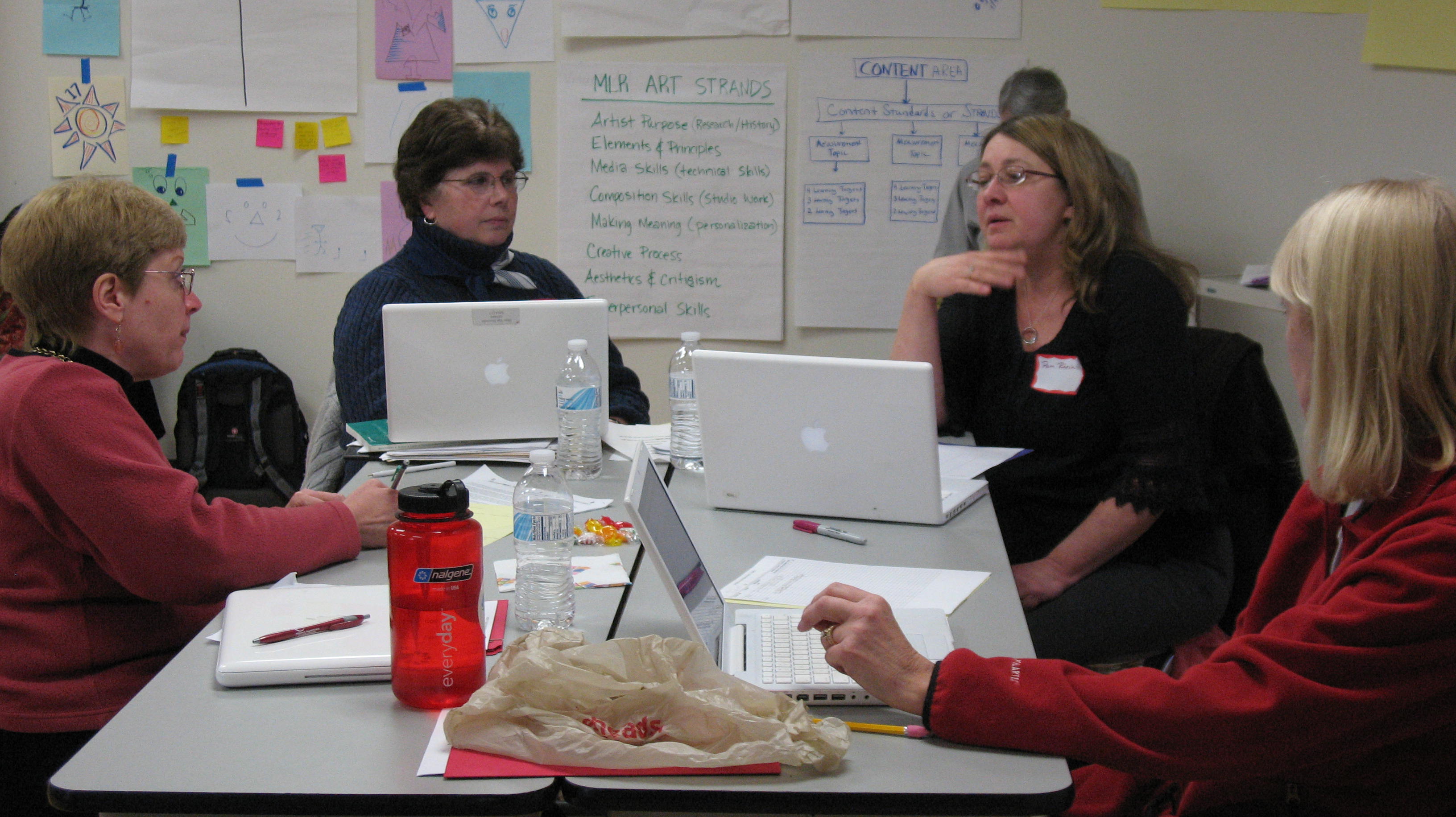
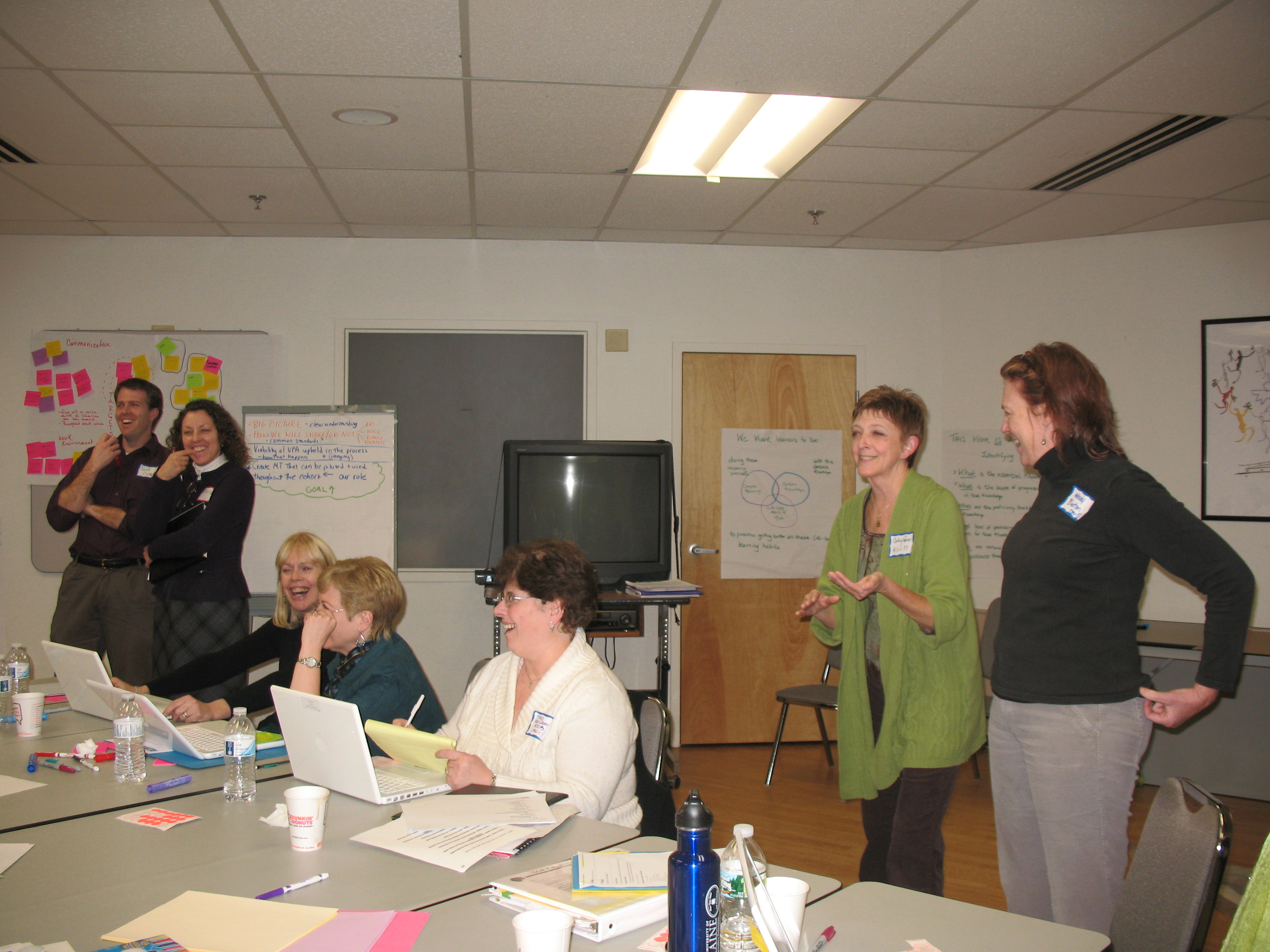
Last week the Maine Cohort for Customized Learning brought together arts teachers from their districts to begin some of the work that will help guide the teaching in arts classrooms in the cohort. At this point the cohort districts are:

  • RSU 57: Massebesic
  • RSU 15: Gray-New Gloucester
  • RSU 18: Messalonskee and China
  • RSU 2: Hall-Dale, Monmouth, Richmond, Drescen
  • RSU 82: Jackman, Forest Hills
  • Milford School Department
  • RSU 3: Brooks, Freedom, Jackson, Knox, Libery, Monroe, Montville, Thorndike, Troy, Unity, Waldo
  • Sanford Schools
  • RSU 25: Bucksport
  • RSU 4: Oak Hill

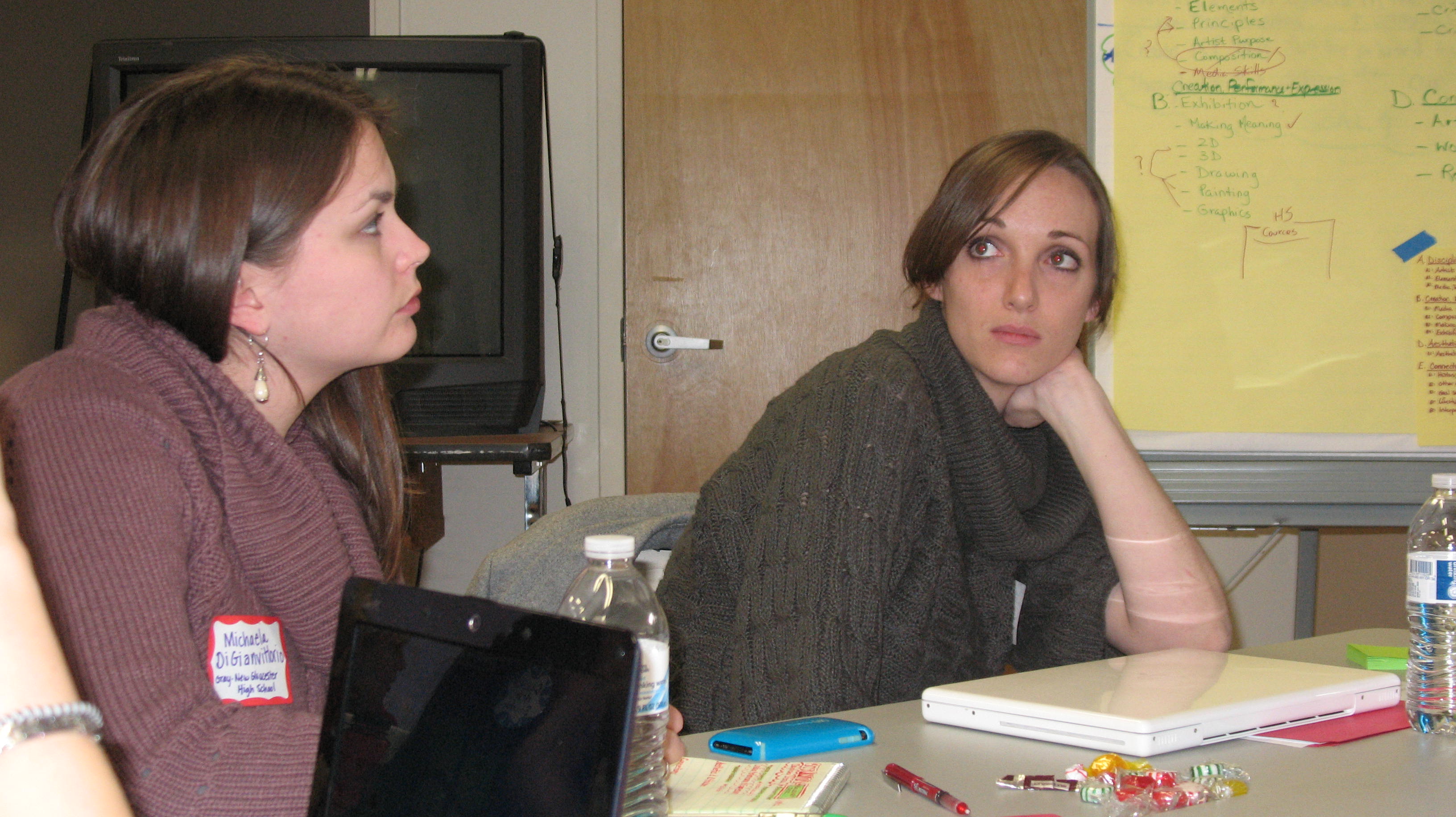
The participants started the work to create Strands, Measurement Topics and Learning Targets. This which will be the basis for the work in determining what students will need to learn to show proficiency before they leave high school. The arts teachers doing this work are:

  • Wendy Burton and Leone Donovan, visual arts, Pam Rhein, music, Messalonskee
  • Michaela DiGianvittorio and Sarah Gould, visual arts, Gray New Gloucester High School
  • Jeff Orth, visual art, Richmond Middle/High School
  • Cynthis McGuire, music Hall-Dale Elementary School
  • Carrie Abbott, visual art, Jackman/Forest Hills
  • Cathy Geren, visual art, Massabesic High School
  • Matt Doiron and Carol Baker-Roux, music, Sanford High School
  • Theo VanDeventer, music/drama, Mt. View Middle School, Eric Phillips, visual art, Mt. View High School

The work will continue in February and I will keep you posted on its progress.

In the words of music teacher from Sanford High School, Carol Baker Roux:

Sanford is new to the cohort, so this was the first meeting for Matt Doiron and I.  I was glad to see people at this meeting who are also working on the Maine Arts Assessment Initiative, as I am hopeful that the cohort’s work will dovetail with the Initiative’s work, as well as the work being done currently on the national standards.  Some concerns raised at this meeting were, “Is this another passing fad?” and “Are we re-inventing the wheel?”  I think these are valid concerns and am hopeful that these will be addressed as we continue to work on developing shared, consistent strands and measurement topics.  The general sense of the people at this meeting was that the Visual and Performing Arts have good Maine Learning Results and we hope to maintain the integrity of that document going forward.

Every time I get together with arts educators in this state I am completely impressed with their intelligence and commitment to their craft.  As a discipline that has always understood meeting and demonstrating standards at a high level, we are the perfect group to model the cohort’s goals of student-centered, performance based learning.

And in the words of art teacher Leone Donovan from Messalonskee High School:

Various members of the 11 cohort schools gathered in Topsham to begin the shift towards a standards-based learning plan. It was a harder two days then I expected with less accomplished than expected. The representatives from the different schools really are at different levels in the process. Some of us needed to learn the language of this version of standards-based curriculum. Others were already working with a version of those concepts this year.

What I like about the conversations that I’ve been involved in, both in my school and at the cohort meeting, is the concept of the learner at the center of the process. I want to believe that there’s a method to create or encourage students to become active, enthusiastic managers of there own education. As a veteran teacher and a lifelong skeptic, I am still yearning for more evidence that this is truly possible. I want to see a school where it is in process with solid evidence that it is working.

We heard that transparency in the curriculum gives the student clear goals and, thus, a clear path to success or as we say in mass customized learning speak, proficiency. Students will know what we, as teachers, want them to learn. We will act as facilitators pointing out ways to master those concepts or techniques. Students can then seek, plan, and follow their own best path to achieving proficiency.

I love that theoretical view of students and learning. But, again, as the veteran and skeptic, I believe that most, if not all of us, are now very clear about our reasons and goals for the lessons we present. I keep wondering, aloud and to myself, how assessing with a 1-4 scale instead of 0-100 scale, how calling it proficiency instead of whatever our current language is, and by rewording existing curriculum yet again will inspire this change.

I hope that we learn more about places where this is in use and has concrete progress recorded. And, despite my skepticism, I’d be thrilled to see more inspired, successful, and enthusiastic students.

h1

President Obama Sings

January 21, 2012

This week in NYC

On Thursday night at the Apollo Theatre in NYC President Obama broke into song with Al Green’s Let’s Stay Together. It is a short clip but very genuine and how wonderful to hear a President sing. Click here to view the clip and please tell us what you think music teachers?

h1

Figures of Speech TEDxDirigo

January 20, 2012

Puppet as metaphor

Many of you are familiar with Figures of Speech, the puppeteers from Freeport. This is a brief explanation from their website to give you an idea of how much more they are then “just puppets”.

Figures of Speech Theatre incubates the creative energies of its artist members, catalyzes the creation of theater rooted in the expressive power of the puppet as a distillation of life forces, and challenges audiences to venture into realms that are mythic, larger-than-life, animated explorations of the numinous boundary world between being and becoming.

If you’ve had the chance to see them performing I am sure you’ll agree with me that they are fantastic. John and Carol Farrell started Figures of Speech, I think, 32 years ago. In September they contributed at the TEDxDirigo that was held in Maine and recently I was sent the link to their presentation that was about the”puppet as metaphor”.

Take a look at their presentation by clicking here and let us know what you think by posting a comment below.

Several years ago after returning from three weeks in Japan through the Fulbright Memorial Fund program Carol Farrell spent a week with my students creating puppets which we linked to a social studies/Language Arts unit on Immigration. It was a wonderful opportunity for my students to expand their thinking and for me as well.

h1

Commissioner’s News Release

January 19, 2012

Commissioner unveils education plan

The ground is shifting underneath us. We are hearing about the importance of making changes to the way we “do education” to meet the needs of 21st century learners so all kids are successful. What does that mean for the arts classroom? If you are an arts teacher what components of how you teach meet the needs of your learners in your classroom, whether you teach elementary, middle or at the high school level? Are you taking part in the conversations in your school district? Are you meeting with your arts colleagues to converse about this topic? Please take the time to read the News Release below that will give you a broad overview of the plan from the Commissioner of Education, Steve Bowen.

“Education Evolving” lays out plan to engage students, give them more say in how they learn

AUGUSTA – Students will play a more active role in organizing their own learning and have more choice – such as internships, inter-disciplinary classes, independent study, and vocational education – in how they learn and achieve standards, according to a strategic plan for education unveiled by Maine ‘s education commissioner on Tuesday.

Stephen Bowen unveiled his much-anticipated plan, “Education Evolving: Maine’s Plan for Putting Learners First,” at a press event at the Capital Area Technical Center in Augusta. He shared the spotlight with five students from four schools who spoke about their own educational experiences in classrooms where they had a say in determining their own educational path.

“Governor LePage made it clear to me from the start that he wants an educational system that put kids first, a system where kids are at the center,” Bowen said. “That is the direction that we are proposing to go in.”

The plan lays out five core priority areas, each with four tenets or strategies for improving the educational experiences of Maine students.

The first three core priorities — Effective, Learner-Centered Instruction; Great Teachers and Leaders; and Multiple Pathways for Learner Achievement — outline the need for rigorous standards and instructional practices that customize learning for each student. By putting students in control of more aspects of their education, teachers would be freed up to focus on the individual needs of all students and work with them to build learning plans that engage them and are paced appropriately.

In this proficiency-based system, students can show they’ve met the standards in multiple ways. “If a student is learning and demonstrating understanding of an algebra concept in an automotive class at a Career and Technical Education center, why would we make the student go back to his or her regular high school and sit in an algebra class to learn the same thing?” Bowen said. “Let’s allow students more flexibility to learn in ways that engage them – a combination of classes, CTE, internships, and other experiences.” At younger levels, students might learn through a combination of experimentation, online learning, field trips, textbook exercises, and group projects.

Bowen challenged the notion that all students who enter kindergarten at the same time should go through 13 years of school learning the same material at the same pace as their classmates. “That just doesn’t make sense,” he said.

As part of the transition to a proficiency-based model of education, the plan addresses the need for improved assessment systems. Maine is a lead state in the SMARTER Balanced assessment consortium, which is developing assessments to measure higher-order thinking and problem-solving skills, not simply rote memorization, and to provide timely feedback that can inform classroom instruction.

More effective teacher evaluation systems developed in collaboration with teachers are central to the Great Teachers and Leaders section of the plan. These systems must provide clear standards to teachers, measure them fairly, and provide feedback for continuous growth and improvement. Teachers and administrators at a handful of Maine schools are already working on such systems.

In an era of limited resources, Bowen said he wants the Maine Department of Education to leverage its resources to support teachers and education leaders by facilitating professional development through an online Communities of Practice collaboration platform. The platform, which is already under development, will allow educators and Department staff to share best practices and materials, such as lesson plans and instructional tools.

The last two priority areas are:

Comprehensive School and Community Supports, including health and wellness and community partnerships, and access to internships, apprenticeships and other opportunities to learn in workplace settings, apply academic lessons and explore potential career fields; and
Coordinated and Effective State Support, which calls on the Department to better integrate student learning from early childhood education to post-high school learning, to review the way in which it provides financial and other support to schools, make better use of technology to streamline district reporting requirements, and to develop a new accountability system to replace the one required under the unfair and unrealistic federal No Child Left Behind Act.
In the plan, Bowen makes the case that change is needed to advance student achievement. While Maine exceeds national averages in test scores and graduation rates, test scores have remained essentially flat, and still nearly 20 percent of students who enter ninth grade will not graduate four years later. Moreover, initiatives in recent decades have not made things better. High-stakes testing and federal accountability have moved schools to focus on the tested subjects of English and math to the exclusion of others, and still not made a difference.

“What we’ve been doing hasn’t worked, despite the dedication and hard work of Maine’s educators,” Bowen said. “We haven’t moved the needle. The system is standing in the way of students, teachers, and leaders.”

Not surprisingly, students feel unengaged at school. Studies show they are bored and do not see the relevance of what they are learning to them or their futures. Teachers are discouraged and frustrated in an environment that focuses on the wrong measures of accountability. The structure of the current education system, established in the late 1800s, is no longer capable of meeting the needs of today’s students, Bowen said.

Some aspects of the plan would require legislation, but many would be implemented through collaboration with and support for willing school districts, many of which are already leading in areas such as developing proficiency-based systems and new teacher evaluation systems.

“In many ways we are taking our lead from the districts out there that are already doing this work,” Bowen said. “What we want to do is to help find those schools of excellence, the teachers that are making a huge difference, and share what they are doing with schools across the state. And we want to put an end to flipping from one initiative to another and help create some stability for districts that are looking to the state for steady support for programs that work.”

The commissioner asked five students to join him at the event to speak about their own learning experiences. They were:

Maggie Stokes, a fourth-grade student at Williams Elementary School in Oakland, part of RSU 18. Maggie recently completed a persuasive project encouraging others to recycle in order to protect the planet. She was joined by her teacher, Shelly Moody, the 2011 Maine Teacher of the Year who has been working with her principal and fellow teachers to create proficiency-based classrooms focused on student needs.
Gareth Robinson, an eighth grader at Auburn Middle School. Gareth has been actively using technology since elementary school both at school and personally for hobbies, like playing guitar. He recently completed a social studies project where he and a group of classmates used iMovie to make a newscast of the Battle of Bunker Hill. Mike Muir, the Multiple Pathways Leader for Auburn Schools, was also present. Muir works district-wide to implement large-scale school change efforts, such as the multiple pathways program at the high school and the early learning initiative involving iPads in the kindergarten, to help students engage in their learning.
Brooklyn Pinkham, a senior at Capital Area Technical Center and student at Cony High School in Augusta. Brooklyn hasn’t always fit the traditional definition of a good student. But when she arrived at CATC during her junior year, she started to excel after finding her passion in culinary arts. Now, she’s president of CATC’s Skills USA affiliate and has plans to attend the Culinary Institute of America to continue studying culinary arts. Center Director Scott Phair joined Brooklyn for the event.
Morgan Horn and Kaytie Scully of Sumner Memorial High School in Sullivan (RSU 24). A junior, Morgan is pursuing a career in medicine and is on track to graduate in January of her senior year. Before she graduates, her personal learning plan includes an independent scientific literature class, job shadows, an internship and college classes. Kaytie had a rough start to her high school career but managed to turn things around. Through a program called Pathways, she crafted a personal learning plan that has included adult education classes and online classes. She recently enrolled in a Certified Nursing Assistant program through Adult Education and is receiving both high school credit and a professional certificate. Morgan and Kaytie were joined by Val Peacock, Sumner Pathways teacher/adviser, and Denny O’Brien, Pathways system consultant.
Bowen called his plan a first draft and a working document, saying he plans to do a round of regional visits to educators across the state to seek feedback on the plan. Bowen conducted a “listening tour” almost immediately after being named commissioner in March 2011, visiting schools and meeting with educators, students, parents and others throughout the state to gather information and ideas for the plan.

The public is invited to read the draft strategic plan and join an online discussion about the plan at http://www.maine.gov/education/plan.

h1

Arts Assessment Course in York

January 18, 2012

Courses underway… 

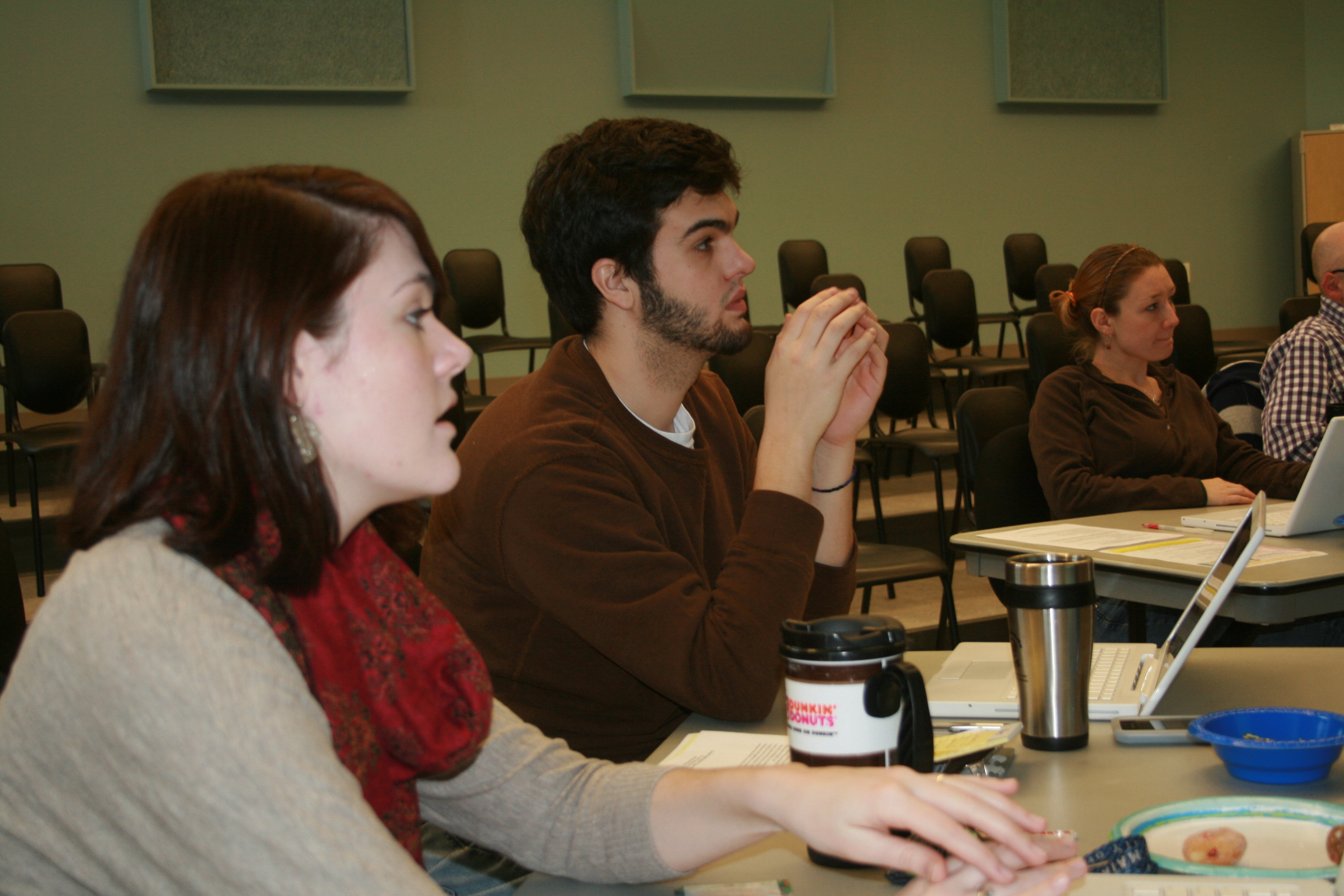
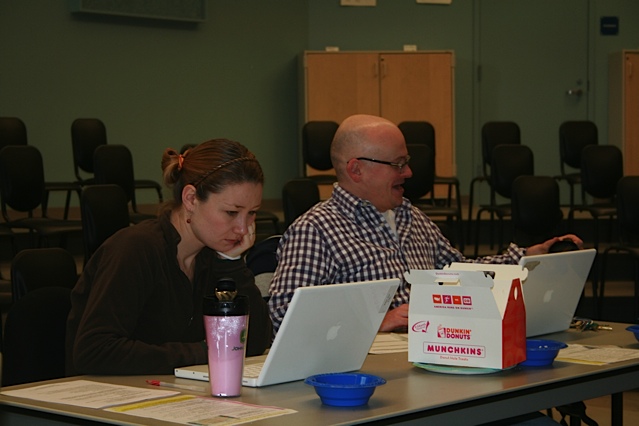
York High School was the place to be this weekend if you are interested in taking assessment to a new level in your Music classroom. Instructor Rob Westerberg greeted music educators on the first day of their graduate level course, offered by the New England Institute for Teacher Education. Great collaboration, sharing of resources, and learning ways to improve student learning are just some of the benefits of working together with colleagues in the arts.

Music educators Ashley Smith, Drew Albert and Jen Etter at York High School

Another opportunity for music teachers: Music Educator Jake Sturtevant will be teaching the course in Augusta on Feb. 10, 11 and May 11, 12, 2012 for two weekend sessions, starting on Friday (4-8pm) and going through Saturday (8-4pm).  THERE IS STILL ROOM IN THIS COURSE, so please do register soon to take advantage of a specially discounted rate of $750 for three graduate credits.  Don’t miss this great opportunity!  To register, visit www.newenglandinstitute.org.

Also, for VISUAL ART TEACHERS:
The Assessment in the Visual Art (K-12) courses are being held in:

  • Bangor on January 27, 28 and April 27, 28
  • Augusta on February 10, 11 and May 11, 12
  • Falmouth High School on March 9, 10 and May 4, 5.  (This is new!) Thanks to Nancy Durst for hosting this at her school.

Come join us for some great learning and discussions with colleagues. All courses meet in two sessions on Fridays (4-8pm) and Saturdays (8-4pm). Please register soon to take advantage of this unique opportunity to take a three-credit graduate course at the reduced tuition of $750 through the New England Institute for Teacher Education.

York Middle School art teachers Jen Etter and Jimi Neel

h1

P21 – Arts Skills Map

January 17, 2012

Arts Skills Map Webinar

I know many of you are familiar with the Partnership for 21st Century Skills website and the work that has taken place by P21. The work is focused on preparing every student for the 21st century. The websit is at http://www.p21.org/.

Not to long ago the partnership created a skills map specifically for the arts. To introduce educators to the skills map they’ve done a series of archived webinars that you can access at the site. This links to one on YouTube http://www.youtube.com/watch?v=CuL6FUKXezc. The webinars included presentations from Michael Blakeslee, the Deputy Executive Director and Chief Operating Officer of the National Association for Music Education, Barb Reinke, the Education Marketing Manager of Crayola, and Tim Magner, Executive Director of Partnership for 21st Century Skills.

In addition, don’t miss additional resources and suggested action steps for the P21 Arts Skills Map.  Please share them with other educators and administrators in your school, district, and learning community! You can find all this and more at our website:  http://www.p21.org/component/content/article/2-publications/1020-artsmapresources

h1

Art Books

January 16, 2012

Sharing picture art books

Please add your favorite picture books to this list:

  • Art & Max. By David Wiesner. Illus. by the author. 2010. 40p. Clarion, $17.99 (9780618756636). K–Gr. 3.
  • The Art Collector. By Jan Wahl. Illus. by Rosalinde Bonnet. 2011. 32p. Charlesbridge, $15.95 (9781580892704). PreS–Gr. 3.
  • Begin at the Beginning: A Little Artist Learns about Life. By Amy Schwartz. Illus. by the author. 2005. 40p. HarperCollins, $15.99 (9780060001117). PreS–Gr. 2.
  • Bridget’s Beret. By Tom Lichtenheld. Illus. by the author. 2010. 40p. Holt/Christy Ottaviano, $16.99 (9780805087758). K–Gr. 2.
  • The Dot. By Peter H. Reynolds. Illus. by the author. 2003. 32p. Candlewick, $14 (0763619612). K–Gr. 2.
  • How to Paint the Portrait of a Bird. By Jacques Prevert. Illus. by Mordicai Gerstein. 2007. 40p. Roaring Brook, $14.95 (1596432152). 841. K–Gr. 3.
  • The Imaginary Garden. By Andrew Larsen. Illus. by Irene Luxbacher. 2009. 32p. Kids Can, $16.95 (9781554532797). PreS–Gr. 1.
h1

Musical Theatre

January 15, 2012

NBC announces school programs

NBC is funding an initiative to create musical theater programs in U.S. schools in need of arts education. Twenty schools from throughout the US have received funding to pilot the program. The program will expand in the fall to another 180 programs and they have a goal of 1,000 schools by 2014. NBC is parterning with Make a Musical project by iTheatrics to reach the 1 million students by 2014. Read the article recently posted in the Huffington Post about this program by clicking here. You can learn more and obtain the application on the iTheatrics website.

h1

Maine Department of Education Strategic Plan

January 14, 2012

Release of the plan by Commissioner Bowen on Tuesday

WHAT
Education Commissioner Stephen Bowen will release “Education Evolving: Maine’s Plan for Putting Learners First” at an event Tuesday at Capital Area Technical Center in Augusta. The plan describes the Commissioner’s goals and action steps for working with students, educators, families, businesses, legislators, communities and others to design an education system in Maine around the needs of learners. The plan incorporates input the Commissioner has received over the past 10 months on how to improve the state’s public education system.

The plan to be released Tuesday is a working document. The Maine Department of Education will solicit feedback from the public and potentially refine the document in the coming months.

Commissioner Bowen will present the strategic plan to the Legislature’s Education Committee on Wednesday, Jan. 18.

WHO
A handful of students will join Commissioner Bowen at Tuesday’s event to speak to their own educational experiences with being able to discover their interests, direct their own learning and have a say in how they demonstrate what they’ve learned. The students will be accompanied either by teachers or administrators from their respective schools.

WHEN
Tuesday, Jan. 17 at 10:15 a.m.

WHERE
Cafeteria, Capital Area Technical Center
40 Pierce Dr., Suite 1
Augusta, Maine
Signs will direct visitors to the cafeteria
Google maps: http://bit.ly/catcaugusta