Archive for February, 2012

h1

Arts Ed on the Rise in Boston

February 12, 2012

Funding being put into arts education

The New York City based Wallace Foundation has just committed to $4 million over the next four years to improve and expand on Boston’s Arts Expansion Initiative for arts education. You can learn more about this committment in a February 8th article in Education Week by clicking here.

h1

Student-Centered Learning Exposition

February 11, 2012

Proficiency-based school culture

Students at the Center: Reaching High Standards

Celebrating Innovative, Powerful Learning in Our Schools

Maine Association for Middle Level Education (MAMLE) and the Middle School of the Kennebunks will sponsor the first ever exposition in Maine devoted entirely to student-centered learning within a proficiency-based school culture. Sessions, led by both students and their teachers, will be exciting to attend as we discover how teachers across grade levels and curriculum areas are creating innovative, student centered units and programs that stimulate learners intellectually and challenge them to think critically and creatively while meeting standards. This unique event will occur on Friday, April 13 at the Middle School of the Kennebunks.

This day-long conference will highlight student-centered, performance-based units and projects (classroom, school, or community-based) from across the K-12 spectrum. The presenters will demonstrate how their particular learning opportunity…

  1. Engages students in innovative, creative ways
  2. Focuses on specific learning outcomes
  3. Incorporates student voice
  4. Provides multiple ways for students to demonstrate learning

You need to attend if…

  • You and your students have examples of student-centered, performance-based units and projects to share.
  • You want to do transform your teacher-centered instructional approach to one that is more student-centered, and you need to see some concrete examples to give you ideas how to do it.
  • You’ve had no experiences with student-centered, performance-based units and need to find out the basics.
  • You want to be inspired by students and teachers sharing their exemplary work.

Every superintendent in the state of Maine has received a copy of Inevitable: Mass Customized Learning, and the Maine Cohort for Customized Learning is growing exponentially as more school districts explore the concept of customizing learning through student-centered, proficiency-based curriculum and instruction. The Students at the Center event provides an opportunity for students and educators to share strategies for transforming education from a teacher-centered approach to one where students’ learning targets, learning styles, and interests combine to provide optimum success for each student.

All details about presenting and/or attending are available at http://www.mamleonline.org/.

Questions?

Contact Dr. Wallace Alexander, Executive Director of MAMLE

wallace_alexander@umit.maine.edu

h1

Education in Finland

February 10, 2012

Success in Finnish schools

In December 29, 2011 the Atlantic published an article on education in Finland. I found it interesting and it provided me with much food for thought so I am sharing it with you. If you have any thoughts please be sure and share them at the bottom of the post. If you’d like to read the article online or send it to someone else here is the link to it http://www.theatlantic.com/national/archive/2011/12/what-americans-keep-ignoring-about-finlands-school-success/250564/

Here is the beginning of the article

Everyone agrees the United States needs to improve its education system dramatically, but how? One of the hottest trends in education reform lately is looking at the stunning success of the West’s reigning education superpower, Finland. Trouble is, when it comes to the lessons that Finnish schools have to offer, most of the discussion seems to be missing the point.

The small Nordic country of Finland used to be known — if it was known for anything at all — as the home of Nokia, the mobile phone giant. But lately Finland has been attracting attention on global surveys of quality of life — Newsweek ranked it number one last year — and Finland’s national education system has been receiving particular praise, because in recent years Finnish students have been turning in some of the highest test scores in the world.

h1

Playing at the State House

February 9, 2012

Laken Region Middle School band goes to the State House

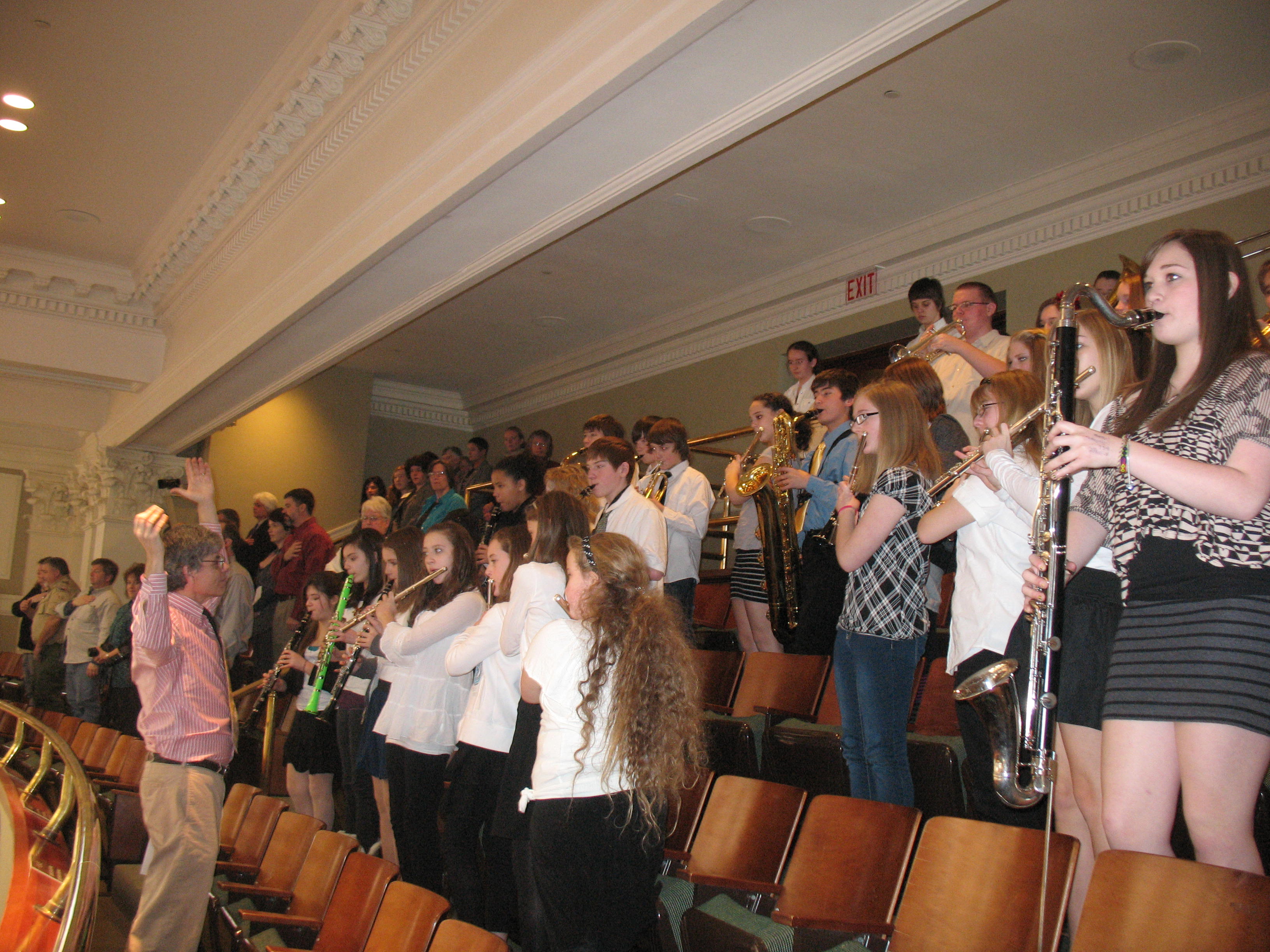
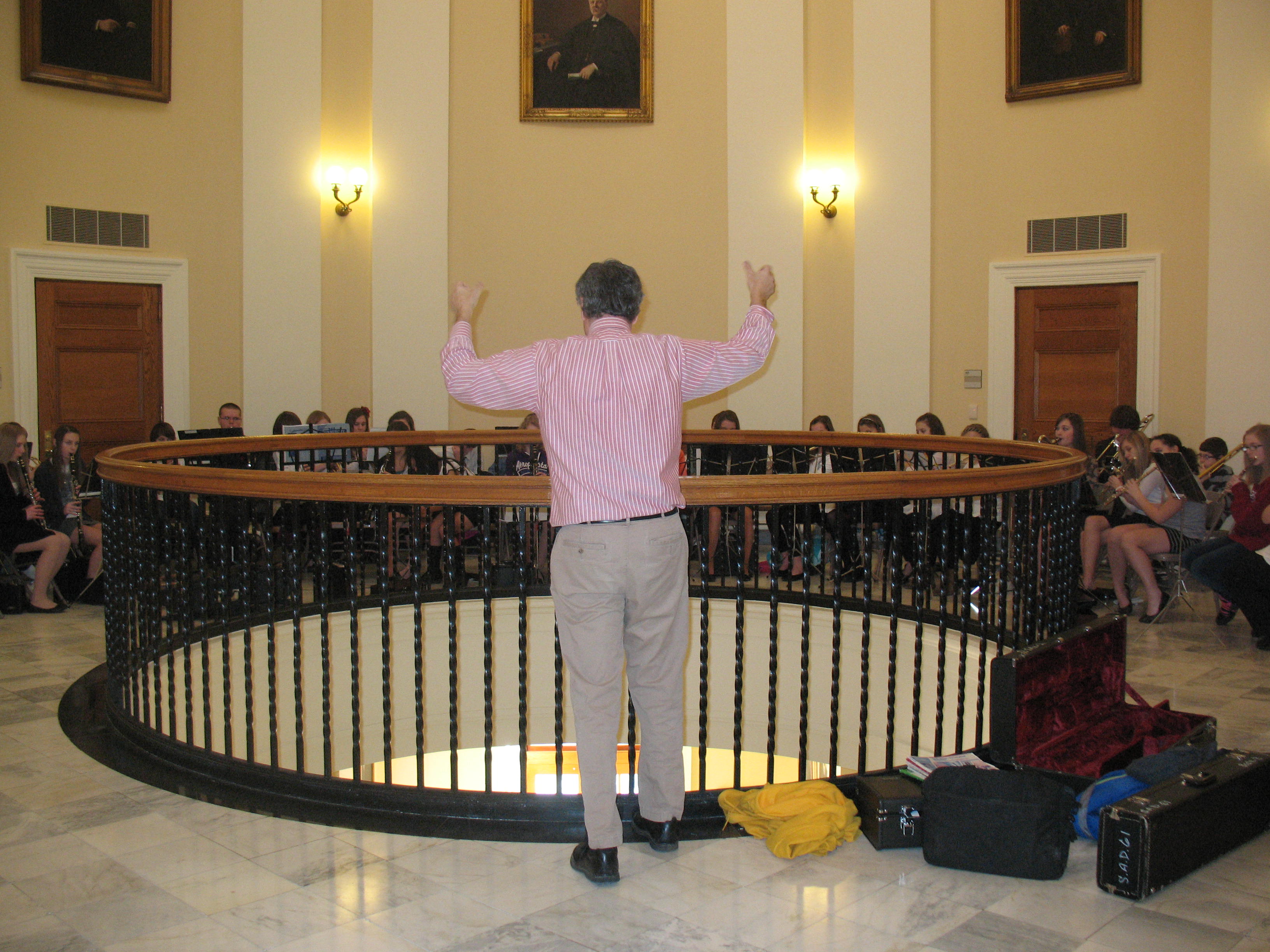
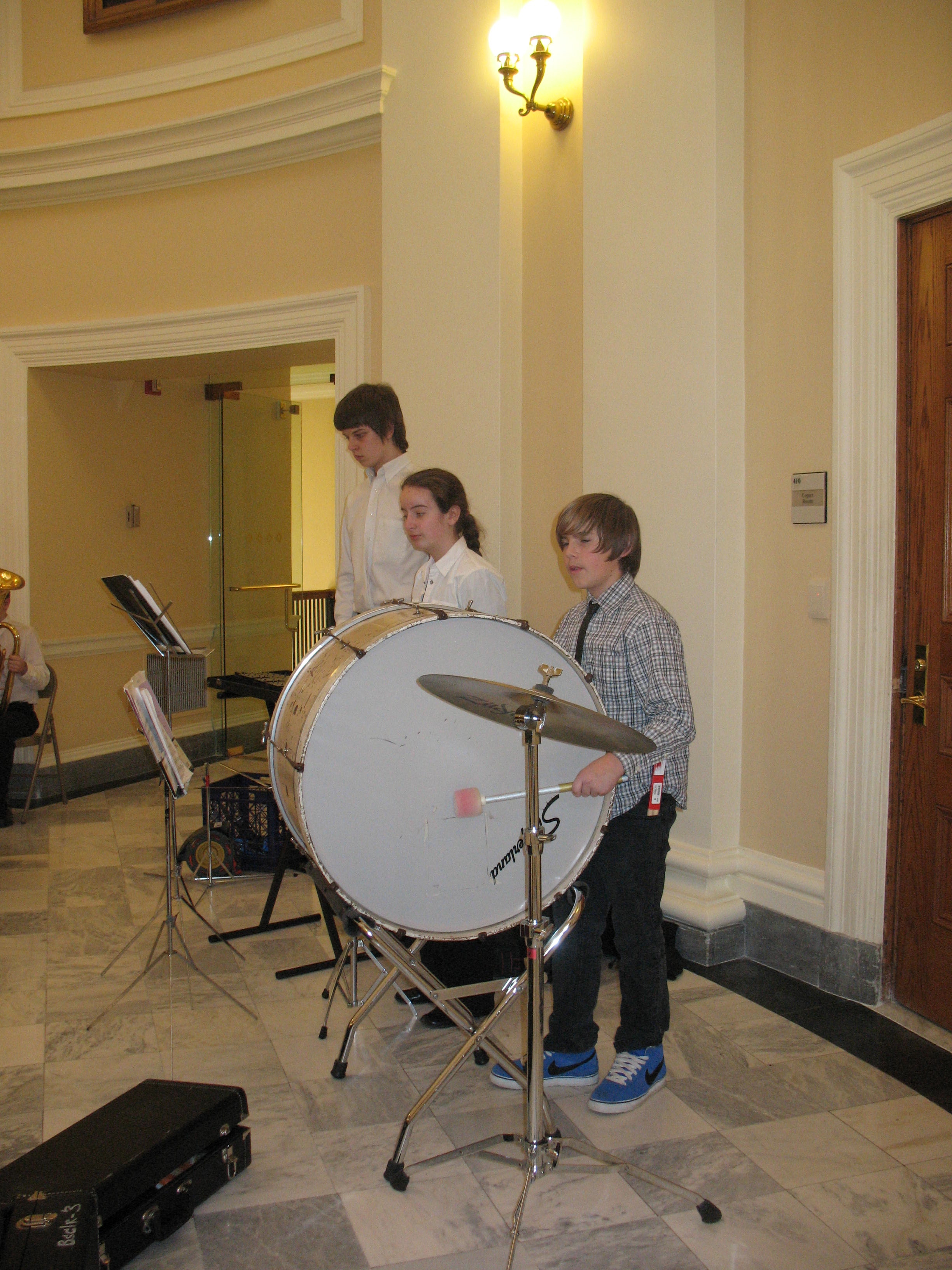
On Thursday morning, January 26, 20012, thirty-seven students from Lake Region Middle School, under the direction of band instructor Paul Greenstone, loaded their instruments onto a yellow school bus and headed up the Maine Turnpike to our state capital building in Augusta.  There they were scheduled to perform a short concert in the rotunda and then to open that day’s House session by playing the National Anthem from the house gallery.  They were invited to perform by their local representative,  Paul Waterhouse.

The ride to Augusta was fairly quiet. The students were nervous.  All previous concerts had definitely been much more low key – holiday concerts for parents, playing at the quarterly honors assemblies – this day registered much higher on the status bar for the group!  Add the fact that no sheet music would be in front of them during the National Anthem, and  it is easy to understand why there was none of the typical middle school high jinks on that morning’s bus ride.

Upon arriving at the State House, quickly unloading gear, and  smoothly passing through the new security system, band members found their positions, took up their instruments, and when Director Paul Greenstone raised his baton, the lilting strains of Tchaikovsky’s “Dance of the Flowers” resonated through the building!  That was followed by several patriotic selections and the finale was a splendid rendition of the theme from “Harry Potter”.

How different and wonderful their musical selections sounded in this auspicious venue!  Sound bounced everywhere!  The music was heard all over the building, and enjoyed by everyone.

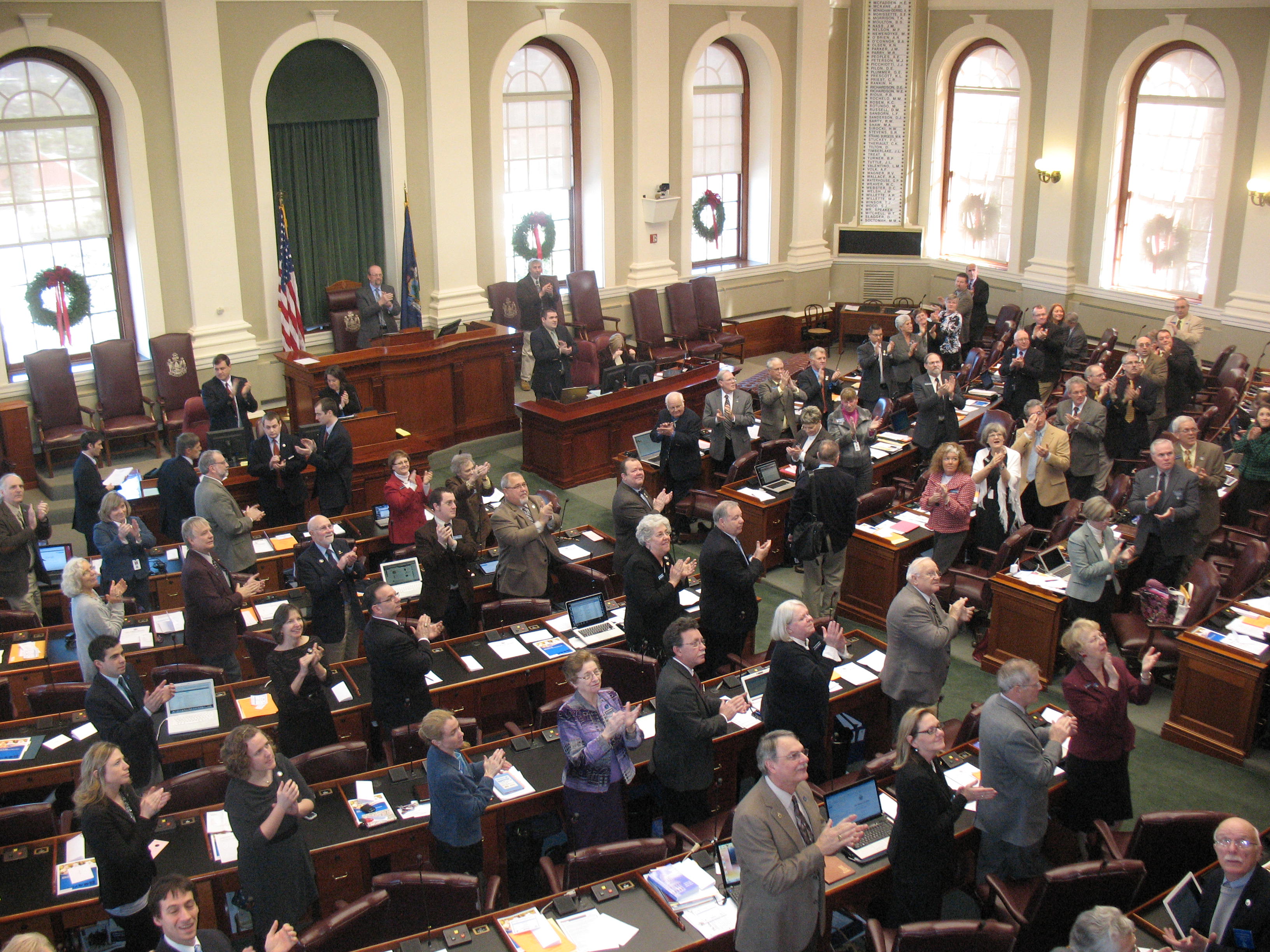
Moving into the House Chamber, nerves calmed and pride swelled as the Star Spangled Banner was performed flawlessly for the assembled state lawmakers and invited guests.  After being recognized by the House Speaker, band members watched the legislature’s proceedings for a short time before breaking down their instruments and loading back in the bus for the trip home.

Spirits were pretty high on that ride back to the Lakes Region, and why not?  They had played well, represented their school admirably, and most importantly, had shared their joy in making music with others.  The arts programs in our schools make us all part of a better community.

Music students being recognized by the House

Thank you to parent and community member from Naples, Maine who traveled with the students to the State House and who kindly wrote this blog post.


h1

Digital Learning Day

February 8, 2012

February 1st

February 1, 2012 was Digital Learning Day, a day of nationwide celebration of innovative teaching and learning through digital media and technology that engaged students and provides them with a rich, personalized educational experience. (Digital Learning Day. (2012). Retrieved from http://www.digitallearningday.org/)

The State of Maine makes every day Digital Learning Day as we’ve had a 1:1 computing program for 10 years in our Middle Schools and over half of our High Schools.  To hear Commissioner Steven Bowen talk about the success of Maine and MLTI, please visit http://www.maine.gov/mlti/dld/

On February 1, 2012, Governor LePage released an Executive Order, “An Order to Expand Opportunities for Digital Learning”,  directing the Maine Department of Education to develop a plan for expanding the digital learning opportunities available to Maine students.  Governor LePage’s executive order directs the Department to consult students, parents, educators, technology experts and others in crafting a plan for expanding access to digital learning statewide and training educators to leverage the power of technology to offer students engaging, customized educational experiences.

Among other topics, the plan will likely address how students can access online classes as part of their educational experience, how schools can leverage online resources to allow students to study topics schools might not be able to offer in-house, and how students can learn to use online resources effectively when conducting academic research.

“Maine has been a leader for more than a decade in providing students with laptops that they use to personalize and enrich their educational experiences,” said Education Commissioner Stephen Bowen. “Now it’s time to think about how we want Maine’s digital learning program to evolve so more of our students can use technology to learn anytime, anywhere and in ways that are meaningful to them. We also need to have a plan that addresses how our teachers can stay on top of the most effective practices for integrating technology into everyday instruction.”

Read the full press release and see a copy of the Executive Order online at http://www.maine.gov/mlti/dld/

h1

Professional Development Opportunities in the Arts

February 7, 2012

Join in live or listen to archived webinars

Regional Workshops:                                                                                                                 The Arts Assessment Iniative continues to offer opportunities around the state. The list of Regional Workshops being provided by the initiatives 18 Teachers Leaders are listed at http://www.maine.gov/education/lres/vpa/assessment.html.

Maine Assessment Webinars:                                                                                                The Leadership and the Arts webinar, facilitated by Rob Westerberg and Catherine Ring, was held on February 1, 2012 and explored:

  • The Role of Teachers
  • The Role of Administrators
  • The Role of the greater Community

If you were not one of the 35 participants, or if you wish to hear it again, you can go to the archive at http://stateofmaine.adobeconnect.com/p3yj73w4iaf/. Along with the archive there is a meeting plan located at http://www.maine.gov/education/lres/vpa/assessment.html. I suggest that you use the meeting plan on a school workshop day with your colleagues. Please take the time to read the plan to help you decide how to use this  valuable document. And by all means invite your administrators to participate.

There was a glitch in taping the January elementary assessment webinar that took place so it has been re-scheduled for March 14th, 3:30-4:30. You can access the link to join in at http://www.maine.gov/education/lres/vpa/assessment.html.

The Arts, Common Core, and 21st Century Connections:                                              On January 17, 2012 Joyce Huser, Kansas Department of Education, Fine Arts Consultant facilitated a webinar for my colleagues from throughout the country. Joyce created documents that I am certain you will find helpful in your work at the local level. You can access the recording at http://www.maine.gov/education/lres/vpa/eor.html. Joyce includes the direct correlation between dance, music, theatre, and visual art to the Common Core State Standards, and the 21st Century Arts Skills Map. At the above page you will find the presentation Power Point, the P21 Arts Skills Map, and an ELA Strand Organizer (Joyce and her ELA partners created). Most interesting to me is a graph in the Power Point that exhibits the skill demands for arts related careers for 2008 – 2018 which shows the skills taught in arts education classes. There is a link on the webpage is the sources for the work force data in the graph.

President’s Committee on the Arts and Humanities Report:                                Last week while I attended the Maine Art Education Association board meeting Rob Westerberg attended a webinar that provided information on the recently released report by the President’s Committee on the Arts and Humanities. Rob was kind enough send his “take-aways” from the webinar “Reinvesting in Arts Education: Winning America’s Future Through Creative Schools.” The report is posted at http://www.pcah.gov/. The culmination of 18 months of research, meetings with stakeholders, and site visits all over the country, this report represents an in-depth review of the current condition of arts education, including an update of the current research base about arts education outcomes, and an analysis of the challenges and opportunities in the field that have emerged over the past decade. It also includes a set of recommendations to federal, state and local policymakers.

In Rob’s words: A good webinar today… it hit on key components of an effective integrative strategy at the elementary and middle school levels.

  • A few quotes: “Arts Education is a flower AND a wrench” (a tool for development of creativity in the curriculum… I LOVE the analogy!)
  • “Having a good music program isn’t enough”.
  •  “Wow, schools are the ones where Arts teachers were given liscence to craft the vision for their school; were the chief creative officers for their schools.”

Rob was able to ask this question of the moderator: “How do the findings of this report tie into standards based assessment in the arts? Do they?”

Rachel Goslins response: “The report does not get into either standards or assessment… too big and messy.”

She then went on to mention the development of the national standards as the primary focal point of that discussion. In other words, it was not within the scope and sequence of this report to dive into the realm of standards or assessment.

For her final thoughts, she mentioned that “for the arts moving forward, (and I’m paraphrasing here), they must be integrated in a meaningful way, led by valued and empowered arts specialists.”

A GREAT BIG THANK YOU to Rob for sharing your notes with the blog. If you’d like to listen to the webinar please go to the archived at http://advocacy.nafme.org/page/webinars-2.

h1

Improving Arts Learning through Standards & Assessment

February 6, 2012

National Endowment for the Arts Research Roundtable

The National Endowment for the Arts (NEA) will host a webcast, “Improving Arts Learning through Standards & Assessment:  A National Endowment for the Arts Research Roundtable,” on Tuesday, February 14, 2012 from 8:30 a.m. to 3:00 p.m. ET at www.arts.gov

No preregistration is necessary. To watch the webcast, go to the NEA website at the scheduled date and time. Also, the webcast will be recorded and archived at arts.gov. It will be available for viewing beginning February 21, 2012, on the Research/Convenings page.

Questions? Contact Victoria Hutter, hutterv@arts.gov, 202-682-5692.

h1

Fruit Street School Artists

February 5, 2012

Bangor third graders create like the Masters

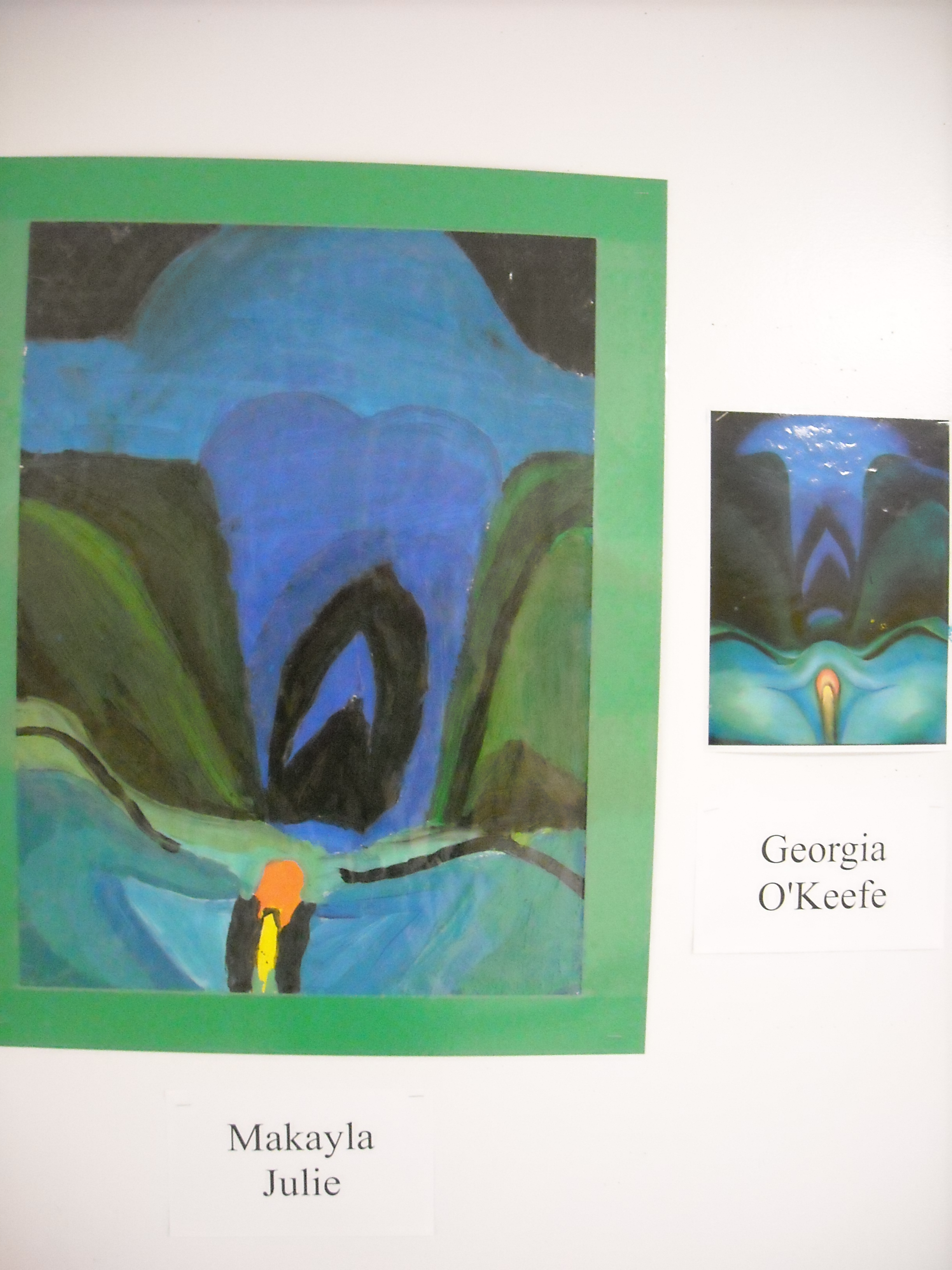
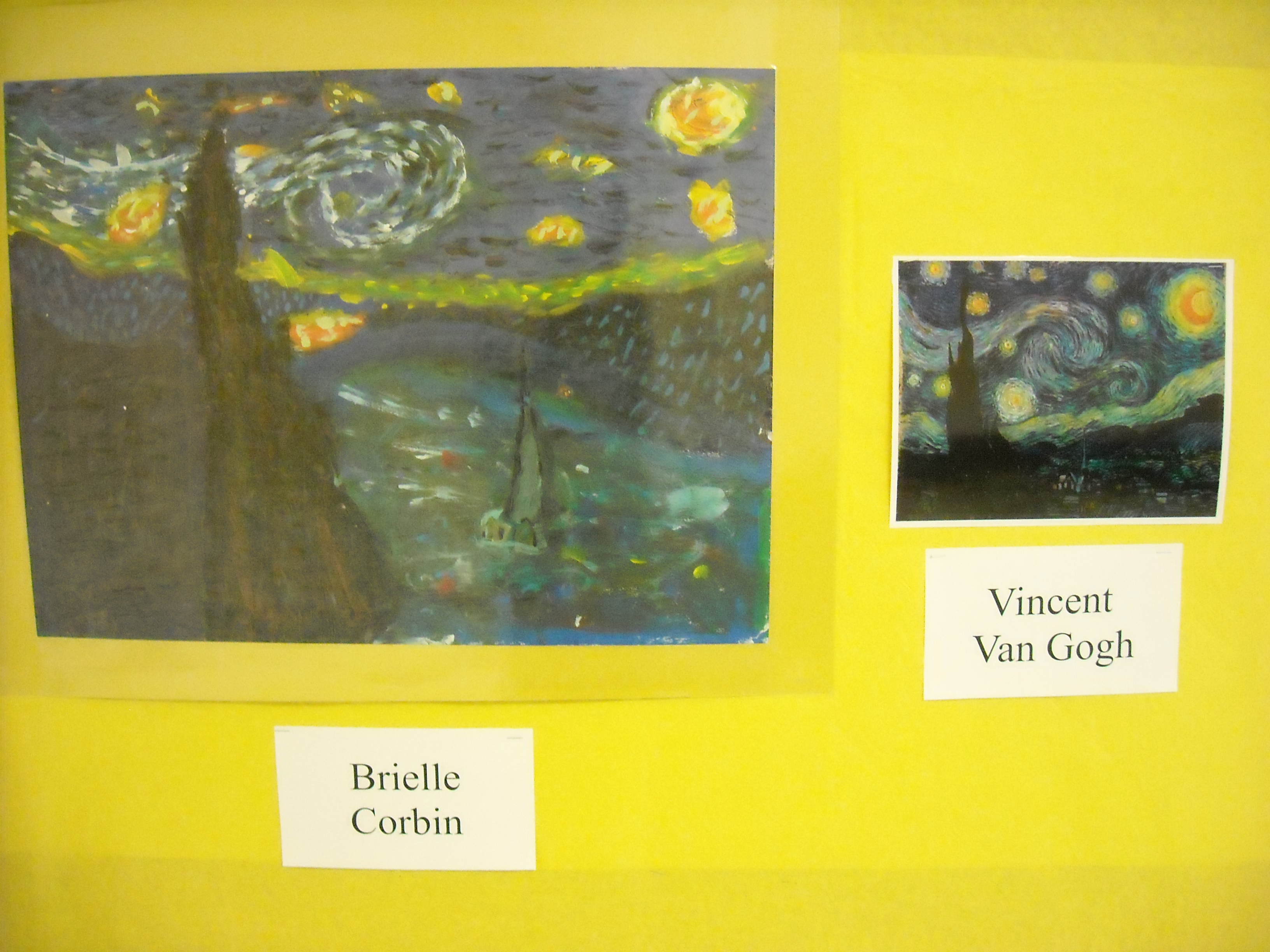
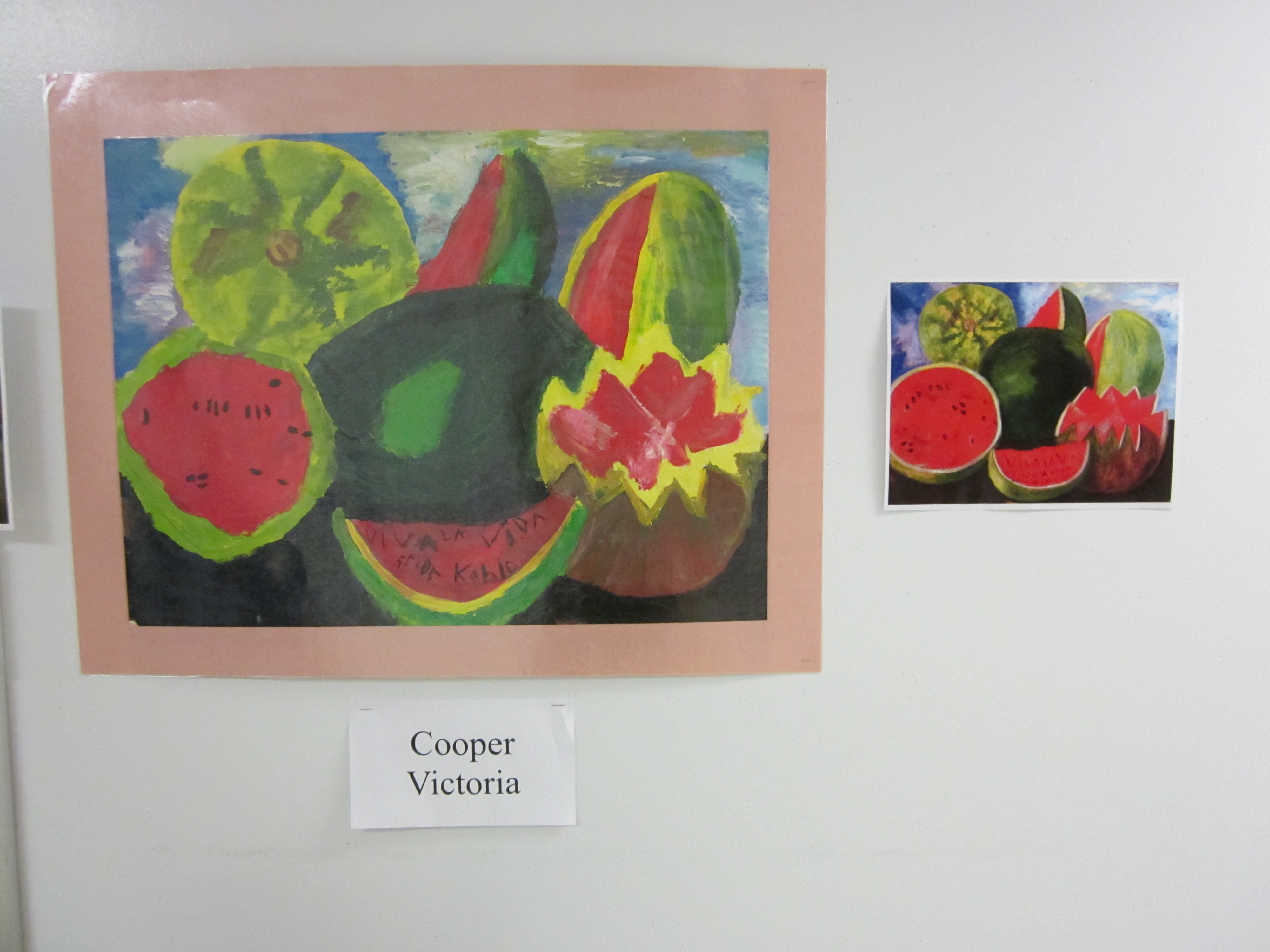
I must admit that I have always had high expectations of my students and most often they live up to those expectations. A project I recently did with my third grade classes at Fruit Street School has blown my socks off. They far exceeded anything that I thought would be capable of this age group. Not just one class of students but all four of my third grade classes and not just a few students in each room but all students. I give credit of the idea to a fifth grade class from Bangor Christian School which explored this creative lesson last year.

We began by viewing various artworks by numerous Master artists. I collected at least 3 or 4, 8 by 10 reproductions of around 35 artists and we viewed and discussed the styles and techniques of the diverse work comparing similarities and differences. Students were then paired into groups. The partners were asked to select their top 3 or 4 pieces of art work that they would like to paint. For three sessions the students created 18 by 24 size paintings fashioned after their selected reproduction. They worked on the same painting, first they drew the work to scale and then matched the colors and textures that the artist used. Their teamwork was amazing. The third graders were excited to experiment mixing the tempera paints to match the artists colors as well as mimicking the textures the artists portrayed which were a great learning experiences. Students dabbled, smoothed, dotted, and blended using various size paint brushes and swabs.

The excitement the students exhibited was contagious, exclaiming they felt like real artists. The pride they felt contributed to the atmosphere. They were always on task with quiet conversation about what they were doing. They were eager to listen to directions on how to make the “right” colors or the “right” proportions or textures to make their work look like the actual artists work. The works the students created are PHENOMENAL. Their enthusiasm, exhilaration, and pleasure were contagious. They could hardly wait to come back to the art room and I could barely wait until they did. Right now the 25 paintings are hanging in the school’s lobby next to the artists’ reproductions.

In the next steps the students will be researching their artist and their work from books that were purchased through an art fundraiser held last year. The few artist books not available in our library were loaned to us from other school libraries, the Bangor Public Library as well as University libraries. The students will work on their biographies for about three weeks and then will present an artist share and exhibition where one of the two team members will dress like the artist and the other student will become the artwork and they will converse with each other giving the viewer knowledge of both.

To add animation an oval will be cut out of the painting large enough for the student to put his or her face through. The students face will be painted with face paint to become part of the painting. We will collaborate wtih students from Bangor High School art club and University of Maine art students to help with the face painting. Anticipation is building for this event which will take place on the afternoon of Thursday, February 16th where the third grade artists will present their artist share and exhibition to other students at the school and to their parents.

The learning accomplishments are many in this project that supports the importance of the wide platform of art beginning with discussion of various artworks, decision making, and cooperative working. Besides the process of creating and the production of a visual piece of art, mathmatical skills were practiced by reproducing an 8 by 10 image to an 18 by 24 image. The science of color mixing was a constant triumph the students experienced as well as the capability to create various textures with paint. Researching information on the artist and the art work will expand the students’ knowledge of biographical research which is part of their third grade curriculum. The students will need to accurately record information and transcribe it to an interesting oral presentation. Their ability to converse with another student will strengthen their communication skills. I am extremely proud of my third grade students whose capabilities went beyond proficiency.

Thank you to Wendy Libby, Fruit Street, Bangor art teacher, for sharing this post including the pictures of the student artwork.

h1

Wallace Foundation Report

February 4, 2012

Supporting arts education for years

The Wallace Foundation has released a report on arts education which you can read at http://www.wallacefoundation.org/Pages/default.aspx. There are a handful of reports that they have posted on arts education at that same link.

Thanks to my colleague Laurel Sterling for sharing this link with me.

h1

Local Stories Project

February 3, 2012

Integrated arts project for rural elementary schools

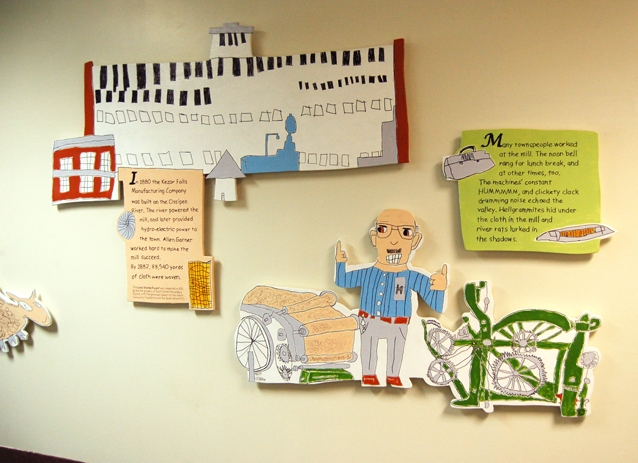
Murals depicting the Kezar Falls mill and looms by South Hiram 4th graders

The Local Stories Project has a lot going on! Last years project was at South Hiram Elementary School, and one starting shortly at the Brownfield-Denmark Elementary School. If you aren’t familiar with the program, Local Stories is an integrated arts project for rural elementary schools; the visiting artist team is Laurie Downey and Gretchen Berg. Most often, they work with 3rd or 4th grade classes to help cover the Maine history requirement. They work with classroom and art teachers to develop a research unit on town history, in collaboration with the local historical society. Then Laurie and Gretchen come in for a one-week artist residency to help students develop both a permanent in-school mural and a lively theater performance. A celebratory public unveiling and performance follows. To see a short video on the process: http://www.lauriedowney.net/schoolmurals/process.

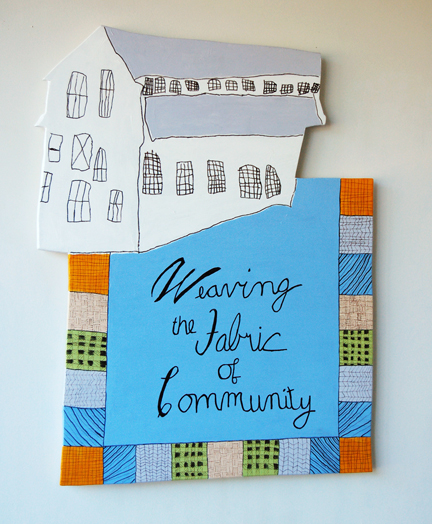
“Weaving the Fabric of Community” at South Hiram Elementary School, MSAD 55, was completed in the spring of 2011. In this project, 4th graders researched the history of the nearby Kezar Falls Woolen Mill. This focus fit neatly into classroom teacher Teresa Barnes’ yearly focus on Maine and the industrial era. Like many rural Maine towns, from 1890 through the mid 1970s the thriving mill was the economic center of the area. With the help of the Porter-Parsonsfield Historical Society, students interviewed local residents who were mill workers, and then went on the field trip and visited both the abandoned mill site and a local sheep farm. They studied the technology of creating cloth and weaving wool, and what the shift from hand weaving to automation meant for the local economy. Art teacher Cathy Adelman was closely involved as the project evolved, working with students on observational drawing, preparing sketchbooks for the project, and supporting the mural as it developed. The resulting mural and performance were powerful, expressive and demonstrated just how much the 4th graders had learned; an enthusiastic audience of over 200 parents and community members attended the unveiling and performance in April. The mural now hangs in the South Hiram hallways (see photos).

Title panel mounted in front hallway of South Hiram Elementary School, with border drawn from fabric swatches found in mill sample books

To help continue the benefits and arts-integrated learning methods modeled by this project, we also support ongoing collaborations between the historical society and the school beyond the project year. For example, this year at South Hiram there is now an “Artifact of the Month” program, where a volunteer from the Porter-Parsonsfield Historical Society comes to the school with an interesting item from their archives – pen and inkwell, a stovetop “toaster”, etc. – and tours it around the classrooms. Classroom teachers and art teacher discuss and plan units around these visits. In this way, the process of learning begun with the Project continues.

What a great opportunity Laurie and Gretchen provide for school communities. If you are interested in learning more and considering a project for your schools please contact Laurie at ld@lauriedowney.net or call her at 207-625-3387.