Archive for June, 2012

h1

Jordan Conwell’s Presentation at Bates

June 20, 2012

Bonner Senior Celebration of Learning (Capstone)

Nancy Salmon, dance educator, recently sent me an email with the text of Jordan Conwell’s presentation that he did for his capstone project at Bates. I felt the message is powerful, whether we live and/or teach in a college town or an island school, small rural town or a suburban or urban environment.  Consequently, I know some of you will be moved by Jordan’s words. It’s not about the arts specifically but it is about community – something that the arts directly connect with all the time! Jordan kindly gave me permission to reprint this on the meatsed blog and shared a photo as well. Knowing that many of us are visual learners the visual helps imagine Jordan delivering it.
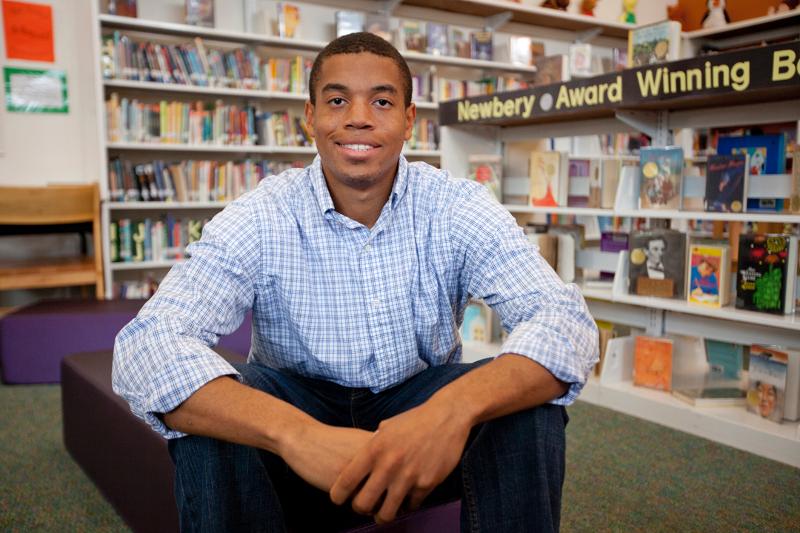
Good Evening. My name is Jordan Conwell. This month, I will graduate from Bates with a double-major in Sociology and Rhetoric. It has been privilege throughout my four years at the College to be part of community partnerships with the Lewiston School District and the Auburn School District.

The school community at Park Avenue School in Auburn has graciously welcomed me for the past two consecutive academic years (as well as for one semester during my freshman year). I consider my relationship with the school and my community partners there – Amy Heimerl, Robin Fleck, Chris Turcotte, and many others – to be my most rewarding community engagement experience.

In my work as a classroom aide in Amy Heimrel’s Kindergarten classroom, I’ve helped with tasks ranging from working with students on iPads and beginning reading/ writing skills to assembling pop-up books to making photocopies. Throughout, I’ve been able to marvel at a group of four-to-six year-olds who are learning, communicating, doing, and being.

This is what I wrote in the acknowledgements of my community-inspired sociology thesis:

To Mrs. Amy Heimerl, Mrs. Robin Fleck, Mrs. Chris Turcotte, and the students, faculty, and staff at Park Avenue School in Auburn, Maine- Thank you for allowing me to become a part of your school community, and letting me in on the tremendous joy, in spite of the many obstacles, that is embedded in the spirit of your work. Those of us with aspirations to think, write, debate, and legislate about education issues will always stand in awe of all that you do on a daily basis. You are, and always will be, the talent.

If the educators at Park Avenue School are the talent, that makes me a lackey, or maybe even a groupie. I hope that over these past few years I’ve been the best lackey anyone’s ever seen. Because the talent is doing some really important stuff. In talking about my learning, I’ll try to explain what they’ve taught me (even if they don’t know they have), and what it means relative to what I’ve learned in classrooms at Bates.

There is a sign in the teachers’ photocopy and lounge area at Park Avenue that reads, “I touch the future, I teach.”  I don’t teach, I just get to admire those who do, so I won’t claim to touch the future. However, I have looked into the future’s eyes and felt the warmth of the future’s smiles and laughter. I have unfortunately on occasion felt the acute hurt of the future’s distress. The future has the potential to be much, much better than we are. We, us adults, we are the past; we drastically affect the future’s present- sometimes for better, much, much too often for worse.

You see, we send children to school with backpacks full of our failings, insecurities, hatreds, the sub-group histories we hold at the expense of whole group dialogue, and – of course – our ideas of nation and tribe. We send them to school burdened with all of our stuff, and then we somehow expect the next generation to be better than us. Children are somehow expected to move up from their parents’ stations and be more secure, less hateful, more willing to dialogue across difference, and free of insular ideas of nation and tribe. But we blanket them with our world, a world of the opposite.

Where do schools come in, then? I think I’ve learned that educators are a radical present-tense. School days are moments in which they try their hardest to defend the future against us, the past, in order to free the future. So that it might realize its potential and be better than us.

  • We tell them that people who wear hijabs hate us; Educators tell them that people who wear hijabs are just as likely to be their friends as anyone else.
  • Media portrayals often tell young students of color that they cannot achieve in school; Educators tell them that they can indeed learn if they try. And then they say lets get back to the reading we were working on.
  • We show them our selfishness, our pettiness, and our me first-ness; Educators show them that everyone needs to pull their weight, but everyone also needs to look out for others and make sure they also have what they need to do their share. Educators tell them that you may be line leader now, but you won’t be line leader tomorrow. So it’s not in your best interest to discourage the person who’s behind you today.

We show the future the world as it is, while educators teach them to aspire to the world as it should be. But it’s not that easy; it’s not that prosaic. They know we fully expect them to do this whether or not we give them the support they need – financial and otherwise – and whether or not we get kids to school on time and whether or not we show up to parent-teacher conferences and whether or not we do anything more than change the channel when we see video of teachers’ unions protesting for the right to organize. While we continue to think the same thoughts and act like we don’t understand the world we create, and then perpetuate, we expect them to teach our children to be one million things we can’t be ourselves. Oh, and make them smart while you’re at it.

This is what I mean when I say that my learning at Bates College and my learning at Park Avenue School have formed a unique educational experience that neither could provide alone. Bates has exposed me to various points of view from which to understand the system that we adults create and perpetuate. Given my course of study, I am particularly well-versed in its social inequalities and its rhetorical discourses of power. I think I see the game for what it is, and Bates has given me the intellectual capacity to hold most of it in my head at the same time. After four years, I see in 3-D. But, in theory, there’s potential for me to see the system as a hopeless mess. I could read the A-Section of The New York Times and be depressed for hours.

But this is where Park Avenue School comes in yet again. Because what a theory can’t demonstrate and what words on pages can’t read and what a lecture can’t really espouse is that those of us thinking so hard about the system – working “across disciplines” as we say and trying to describe it in the most intricate and cutting-edge ways, even if it is in order to one day create change – we are surrounded by people who are already beating it.

More than anything, in my time at Park Avenue I have been welcomed into a community of students, faculty, and staff who are beating the system, who are working together to free the future. They hold together a fabric woven of various races, ethnicities, economic classes, religious backgrounds, levels of ability and disability, and nations of origin. They teach children skills, expose them to new technologies, and show them compassion every day, no matter what.

Although it isn’t always easy or perfect, people like Amy Heimerl and Robin Fleck create small moments of triumph and joy. If I’m not mistaken, those kinds of moments sustain them. And those moments have sustained me, too. Because you can only learn about what’s broken, in theory, so long before you’d like to meet some people who are trying to fix it…for real. When you’ve been exposed to the complete laundry list of problems, you’re excited to meet someone who says “This might only work for today, or it might not work at all, but let’s try this and see what happens.” Reorganized reading group, reconfigured classroom set up, new activity, improvised lesson plan. The future is one or two steps closer to freedom from our past.

And I thank them for allowing me to become a part of what they do so well. In accepting me into their community, they have also become a part of my Bates education. Because on Sunday, May 27th, 2012, I’ll accept a Bates diploma knowing that descriptions of the system are only as good as the understanding that educators (and many others) are everyday breaking that system’s rules – trying to get us to a better place populated by learners who realize ideals that we haven’t.

I think that I – and my fellow Bonner leaders, given their own unique, community-engaged learning experiences – know very well the conjunctive space between what the Bates mission statement terms “intellectual discovery and informed civic action.” I hope that we are ready, as the statement also says, “for the coming times.” If we have indeed planted our feet in the space and really do stand ready for the moment, we have to thank those of you representing the College and those of you representing our wider community, because you both played a part in it.

I’ve heard many discussions about the next few years at Bates College. They are sure to be full of institutional change, given the upcoming inauguration of a new president and impending faculty turnover. Efforts will be made to “increase the value of a Bates degree” and improve the College’s standing among elite colleges and universities. But I’m here to tell you, before these efforts even begin, that they won’t increase the value of my Bates degree one bit. Because my Bates degree and my fellows’ Bates degrees are different than most other Bates degrees. And I, for one, couldn’t be happier about that.

Their value is based on this combination or two-ness that I’ve been discussing. They have a certain reality and messiness based on our sometimes-uncomfortable knowledge that things aren’t that simple. But they aren’t that bad either.

  • Their value is based on a reciprocal relationship between what we’ve learned in the classroom and what we’ve learned and done with the community, with our neighbors.
  • Their value allows us to say that we graduated from Bates College, a school whose mission statement declaims preparing leaders with “a commitment to responsible stewardship of the wider world.” We are so prepared because the Harward Center for Community Partnerships and the Bonner Foundation and our community-engaged faculty mentors and our community partners encouraged us to engage with said wider world during our four years at said elite, residential, liberal arts college.

The value I’m talking about doesn’t have anything to do with the endowment, multi-million dollar capital campaigns, need-blind admissions, the ten-year plan, a student union, the General Education Curriculum, or faculty research productivity. It most certainly doesn’t have a thing to do with U.S News and World Report or what Brian Williams say about Bates tuition on NBC Nightly News, or how quickly the College responds to Mr. Williams.

If you think you can add value to my Bates degree in these ways, you fundamentally misunderstand the value of my degree. Thanks, but no thanks. I know community engagement efforts are secondary beneficiaries of these efforts, but that doesn’t change what I’m saying. Because I’m talking about priorities.

The value I’m talking about has to do with making sure that more Bates students graduate with Bates degrees like ours.

  • It has to do with closing the gap between the current Bates experience and the Bates mission statement, just like our community engagement has closed the gap for us.
  • It has to do with finally recognizing that calling our neighbors “townies” and other shows of disrespect for our community should be considered student misconduct issues of the most serious variety.
  • It has to do with the Princeton Review calling Lewiston the eighth worst college town in the United States of America, and whether or not Bates takes the time to respond to that at all.

The value I’m talking about hears a senior say, as one did to me, that community-engaged coursework was a quote “dumbed down” version of a college curriculum and that students don’t come to schools like Bates to do stuff like that. It responds with some examples.

  • Like Jacob Kaplove, Class of 2012, who takes what he learns in the psychology classroom and assesses the possibility for mental distress among local youth and their families.
  • Or like Rebecca Schmidtberger, also Class of 2012, who took a classroom of underachieving local eighth graders through the entire Feagels translation of The Odyssey.

It makes sure that every student, faculty member, department, and administrator knows that there’s nothing dumb about that. Actually, there’s something very Bates about it. The value I’m talking makes sure that students do come to Bates to do stuff like that, and that they are fully empowered to do stuff like that throughout their four years here.

In short, the value I’m talking about will allow the College to look back upon days when students spoke with humor and pride about “the Bates bubble” (as some do now) as a sad and regrettable stain upon this College’s history. Because that’s exactly what it is. It will then be able to discuss all of the efforts that were made to put, and keep, those days in the past, never to return again. That’s what the Harward Center, the Bonner Foundation, our community-engaged faculty mentors, and our community partners did for us. They popped the damn bubble.

h1

Another Arts Teachers’ Story: Leah Olson

June 19, 2012

Featuring one teacher’s journey as an educator

This is the 14th in a series of blog posts telling arts teachers’ stories. This series contains a set of questions to provide the opportunity for you to read educators stories and to learn from others.

Leah Olson is has taught visual art for 16 years. Currently, she teaches five classes of visual art at Hampden Academy. This is her first year teaching high school and has about 100 students per semester. Her teaching assignment includes Art 1 and 2, Sculpture 1 and 2, Drawing and Painting and Advanced Art. She will be teaching a new course of Jewelry and Ceramics in the fall.

What do you like best about being a visual art educator?

Teaching art is like being able to assist people in self discovery. I love watching students learn in the creative process. This job allows me to have a degree of autonomy that allows me to make daily and long term decisions that will bring the best experience for the student.  I feel like an artist when I teach!

Tell me what you think are three keys to ANY successful arts ed program?

  1. Educate yourself about art education daily, weekly, etc., in whatever means possible.
  2. Be a clear communicator. Write about “art happenings” in school newsletters/emails. Schedule time to communicate with your colleagues about curriculum, assessment and make goals. Collaborate with colleagues other than in your content area because students get more out of it when they know others are on the bandwagon.
  3. Be involved with community arts events because public relations is crucial on so many levels.

What specific way(s) do your assessment practices tie into the success of your program?

  • Collaboration is key. My colleague, Bethany Hanson, has been a crucial part of ongoing improvements that correlate with Hampden Academy’s emphasis on curriculum development. She and I work together to develop quality assessments that will help our students meet the standards in the visual arts before students graduate.
  • Backward Planning – for example: Showing student work examples of the projects before students start a unit. Having a discussion about what quality work looks like is important to see before giving students the steps required to achieve and learn.
  • Checklists – Students use them to gauge their time, process and quality of work to meet and/or surpass the expectations. We all use checklists in our life for many different things. It holds us accountable for what we do. And don’t you feel good when you cross those things off your list?

What have been the benefits in becoming involved in the arts assessment initiative?

Arts teachers are very professionally isolated in school districts. Professional development is scarce, schedule is tight, and funds are not available.  Through this initiative, people are developing ways of communication through technology that can help arts teachers access information that is relevant and helpful to their skill levels. I have learned a great deal from other teacher leaders.  It has also been refreshing to meet other arts teachers who love what they do and have much to share with others.

What are you most proud of in your career?

After 16 years, I still love my career!  Students never cease to inspire me.  Teachers shape our perspective about education and little of that changes as the years pass. I hope students leave my classes believing that learning about art is important, it is fun and it is important to support it in their community. I am proud to encourage global thinking, to work hard, and to teach that creativity is being in the process!  Teaching students how to enjoy problem solving can be a tough business!

What gets in the way of being a better teacher or doing a better job as a teacher?

Many people have mentioned time.  Thats # 1 for me too.  When you begin to not take the time to make something better, the less effective you become.  This is not only tough to do individually, but tough to teach others those various problem solving skills using the time effectively.  How can I help students find their “spark” in the creative process? That “spark” fuels the power of the arts.

Apple or PC?

This is my first year being totally Apple!  So far, so good!

What have you accomplished through hard work and determination that might otherwise appear at first glance to be due to “luck” or circumstances?

This is my first year teaching art at Hampden Academy. I owe my accomplishments to having a positive outlook on things and that has pushed me forward towards my present career.  I don’t dwell on my failures – I try to learn from them.  The love of learning does appear to be “lucky” for me (and the self fulfilling prophecy thought pattern comes in handy…..).

Look into your crystal ball: what advice would you give to teachers?

  • “Oh Great Self Fulfilling Prophecy” = Thoughts – Words – Actions –  Habits – Character – Destiny
  • “Never underestimate the power of a small, dedicated group of people to change the world; indeed, that is the only thing that ever has.” – Margaret Mead
  • My advice in general: Do the right thing when no one is looking.

If you were given a $500,000.00 to do with whatever you please, what would it be?

Add to the college fund for my two children. Buy a house on the water with a BIG space for a studio. (OMG, that sounds so responsible.)

Leah’s resources:

Thank you for sharing your story Leah!

h1

New England Music Camp

June 18, 2012

Invitation to Maine music educators

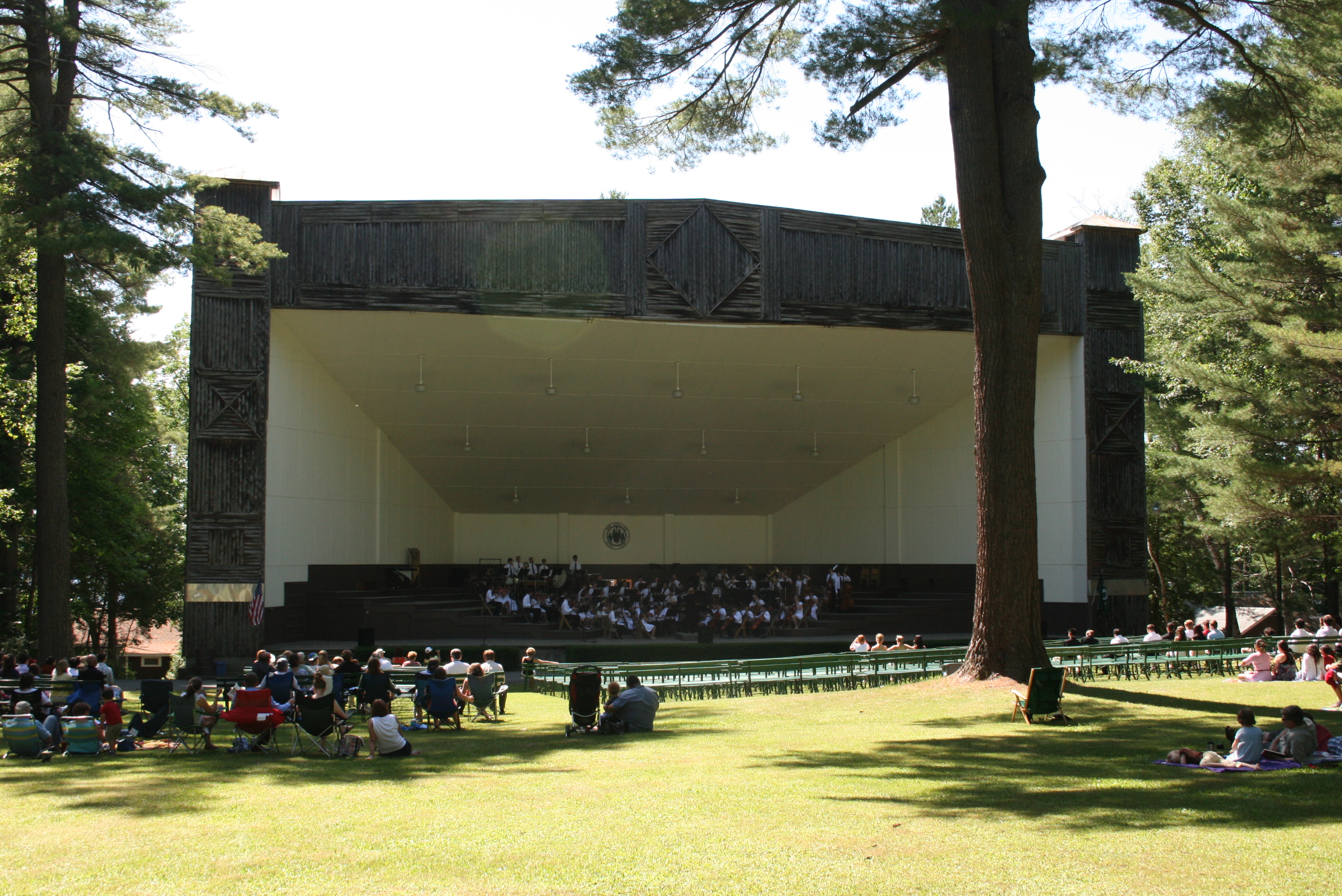
For over 75 years, young musicians have been coming from all over the United States and the world to New England Music Camp (NEMC), in Sidney, Maine. Each summer, campers experience an intensive, performance-based music program in the mornings, balanced with traditional camp recreation activities in the afternoons.

On Sunday, July 22nd, NEMC will celebrate its annual Maine Appreciation Day.  Maine Music Educators are invited to a pre-concert reception at 2pm in the Wiggin Visitors Center, to learn more about the Camp, its programs, and its plans and goals for the future. An afternoon concert will be held immediately following the reception at the Bowl-in-the-Pines, NEMC’s outdoor performing space, complete with an Artisan Market featuring local artists and vendors. Families of Educators are encouraged to join, as well!

Please go to http://nemusiccamp.com/2012/06/maine-appreciation-day-maine-music-educators-reception/ for the Maine Music Educators invitation.

For more information or to RSVP, please contact Martha Guenther at martha@nemusiccamp.com or at 914.498.6143.

h1

Summer Reading, Watching, Listening, and Learning

June 17, 2012

Points of interest wrapped up in one blog post

The information in this blog has come across my desk from a variety of sources and people. I have rolled it into one post to make reference easier for you… I am guessing there is at least one story here that will peak your interest.

  • A 5 minute+ film about John Baldessari created by Tom Waits. He is recognized for his height 6′ 7″ and his white beard and hair.  He is been called the Godfather of conceptual artist, surrealistic for the digital age. He has had over 200 solo shows, and 1000 group shows and has received many awards. You can learn more about him and watch the entertaining 5 minutes and 55 second video by clicking here. John has a great website as well – http://www.baldessari.org/.
  • While looking at the Baldessari film I discovered the website called Short of the Week which contains links to short videos. The topics are varied. This might come in useful as a resource for you and/or your students.
  • Thanks to MAAI teacher leader, music teacher at Aetna-Dixmont Jen Nash who sent me this info. I talked to Kern Kelley, who is the technology integrator for us. He shared this blogspot link with me and in her words: “The students picked a piece of art and had to put a video together. They had to talk about the different aspects of the piece of artwork and incorporate music. I thought that this would be neat to share.”
  • Will Richardson is one of those people who I find very interesting. He encourages me to think differently about school. This is a TEDx where he talks about young people and learning and starts out by referencing his daughter playing the piano.     
  • Eight schools across the country were selected to receive over $14.7 over a three year period to integrate dance, music, theater, and visual arts into the curricula. The President’s Committee on Arts and Humanities working with the US Department of Education hopes to prove that failing schools can be impacted by encouraging the expansion of creative expression. Public Radio has an interview that you can listen to by clicking here. And you can read more about the Turnaround Arts Initiative.
  • Not to long after I posted Eagles Have Landed about Suzanne Goulet’s art classroom at Waterville High School being the center of the viewing stage for the new born eagles someone sent me this video of young robins.
  • Mystery of a Masterpiece was aired on Public Television in January 2012 and tells the story of a painting that was sold for $20,000 in October of 2007 and now is thought to be a Leonardo da Vinci worth more than $100 million. Cutting-edge imaging analysis solves the mystery. You can watch the 52 min. program by clicking here. Thanks to Wiscasset Middle School art teacher Molly Carlson for sharing this information.
  • Playing for Change Day – changing the world through music. All over the world on September 22nd there will be people collaborating to inspire people to support music education. Portland is one of the locations, planned by the Maine Academy for Modern Music, and it will happen at 8:00-11:30 PM.
  • The photographs are amazing! Starstruck: The Fine Art of Astrophotography at the Bates College Museum of Art provides local teachers a FREE resource to explore a meeting point of art and science. 36 photographers from around the world are included in one of the very first exhibitions to examine astrophotography as a fine art genre. Starstruck opened June 8 and will be on view through December 15, offering ample opportunity for science and art teachers to plug in. Companion shows at the Bates planetarium are an option. To learn more or to schedule a tour, contact ashostak@bates.edu or cjones5@bates.edu. A full color catalogue with essays by the jurors is available.

ARTICLES

h1

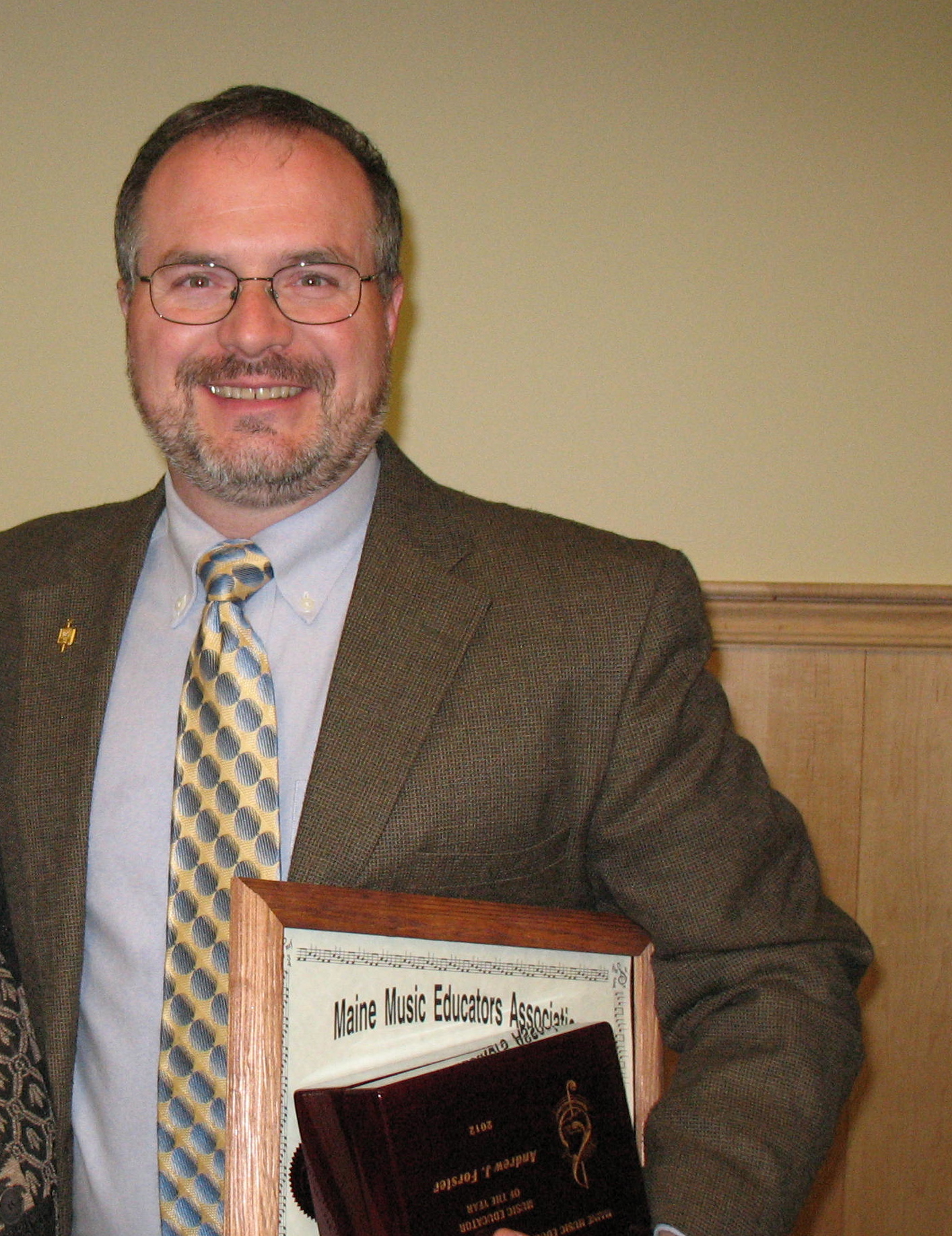
Andy Forster Honored

June 16, 2012

Maine Music Educator Teacher of the Year

Music Educator Steve Muise spoke admirably while introducing his friend and colleague Andy Forster at the Maine Music Educators banquet last month at UMaine. Below are excerpts of what Steve said:

Andy exhibits excellence in all that he does and sets the bar high for himself and his musical colleagues and students. 

Andy Forster is:
• Concert and Jazz Band Director at Messalonskee High School
• Creator and instructor for the MHS recording and engineering class
• an exemplary trumpet performer
• a highly sought after guest conductor
• one who constantly seeks professional development to enrich teaching
• Conductor and Director of MMYO (Mid Maine Youth Orchestra)
• Founder and director of the Acadia Wind Ensemble
• Founder and director of the annual “Stan Kenton Holiday Big Band”
• Co-founder of the MHS summer band camp program
• a tireless advocate for music education
• an avid photographer, volunteer ski patroller, teaches ski patrol advanced first aid, and hiker
• he is humble, helpful, talented and caring as you will see in the attached   recommendations.

Andy’s support of RSU 18’s music program is his “Stan Kenton Holiday Big Band” project. Andy personally purchased the charts for several Stan Kenton arranged Christmas Carols.  He coordinates, and rehearses the band (an extended brass big band with french horns, consisting of the areas finest professional musicians). Last year, the Stan Kenton Big Band, plus RSU #18 music ensembles, and the Downeast Brass Quintet (another of Andy’s bands) raised money for Andy’s colleague’s choral trip to NYC this spring.

Andy assists at every school music event in RSU #18. He can usually be found setting up, breaking down, doing stage tech. and lighting, providing sound reinforcement, recording, teaching students how to record, and taking professional looking photographs. (This is often done during one of his own concert band concerts). He does this without complaint, and never hesitates to be of assistance to his music students, parents and colleagues.

Andy’s fabulous work in directing MMYO (Mid Maine Youth Orchestra) involves students and families throughout Central Maine in coming together to form a full orchestra. The orchestra students in MBRSD benefit greatly from this experience. In an age where many only look out for themselves, Andy truly looks out for everyone else. 

h1

In Today’s News

June 15, 2012

Display at Waterfall Arts in Belfast

A graduate of the BCOPE alternative high school in Belfast returns to teach a course in environmental photojournalism called “Photo Justice.””focused on the controversial liquid propane gas terminal project at Mack Point in Searsport”. The work is on display in Belfast at Waterfall Arts. You can read the Bangor Daily News article by clicking here.


h1

Celebration of Arts Education

June 15, 2012

A great day for the arts

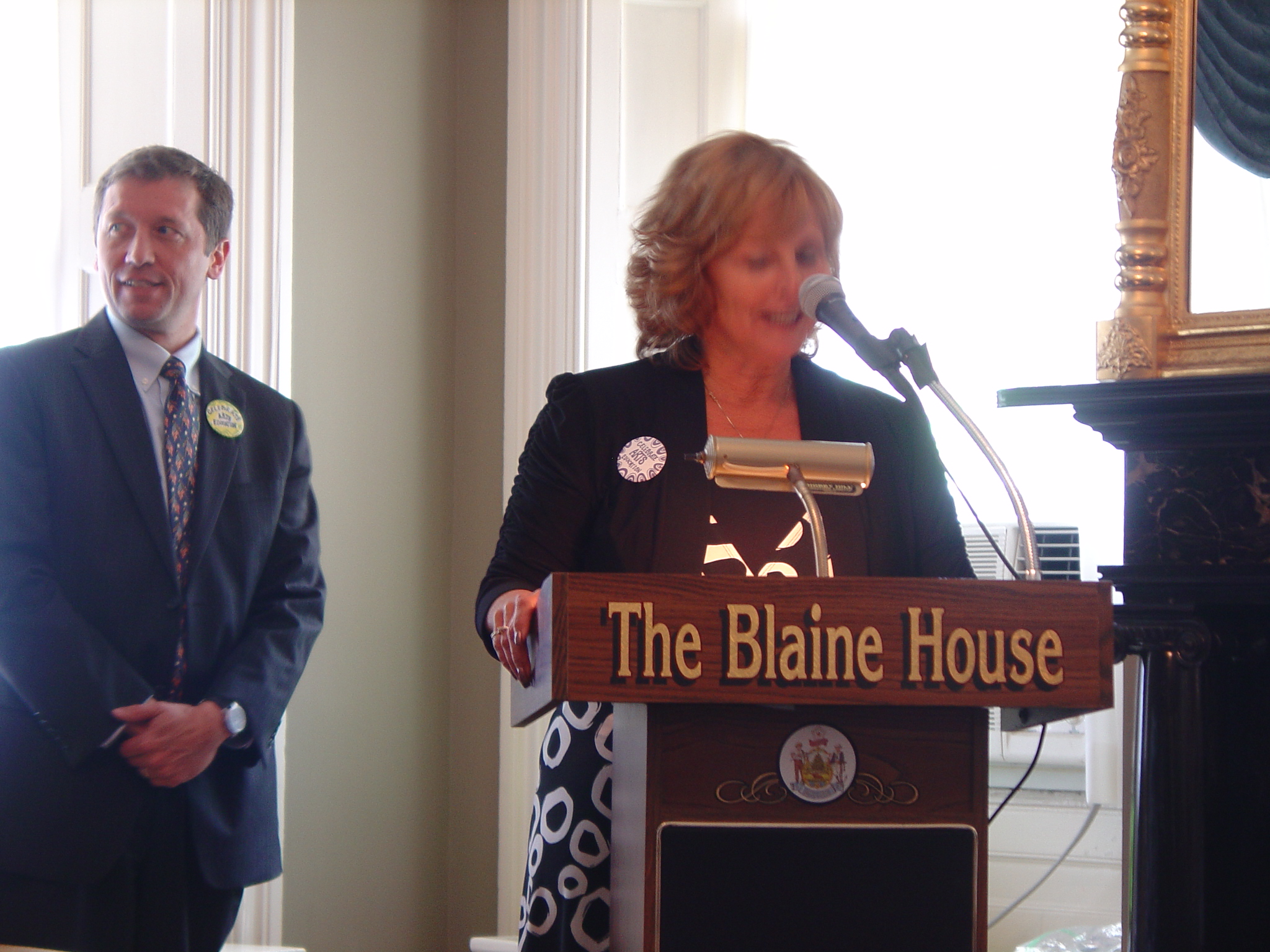
First Lady Anne LePage Welcoming families to the Blaine House

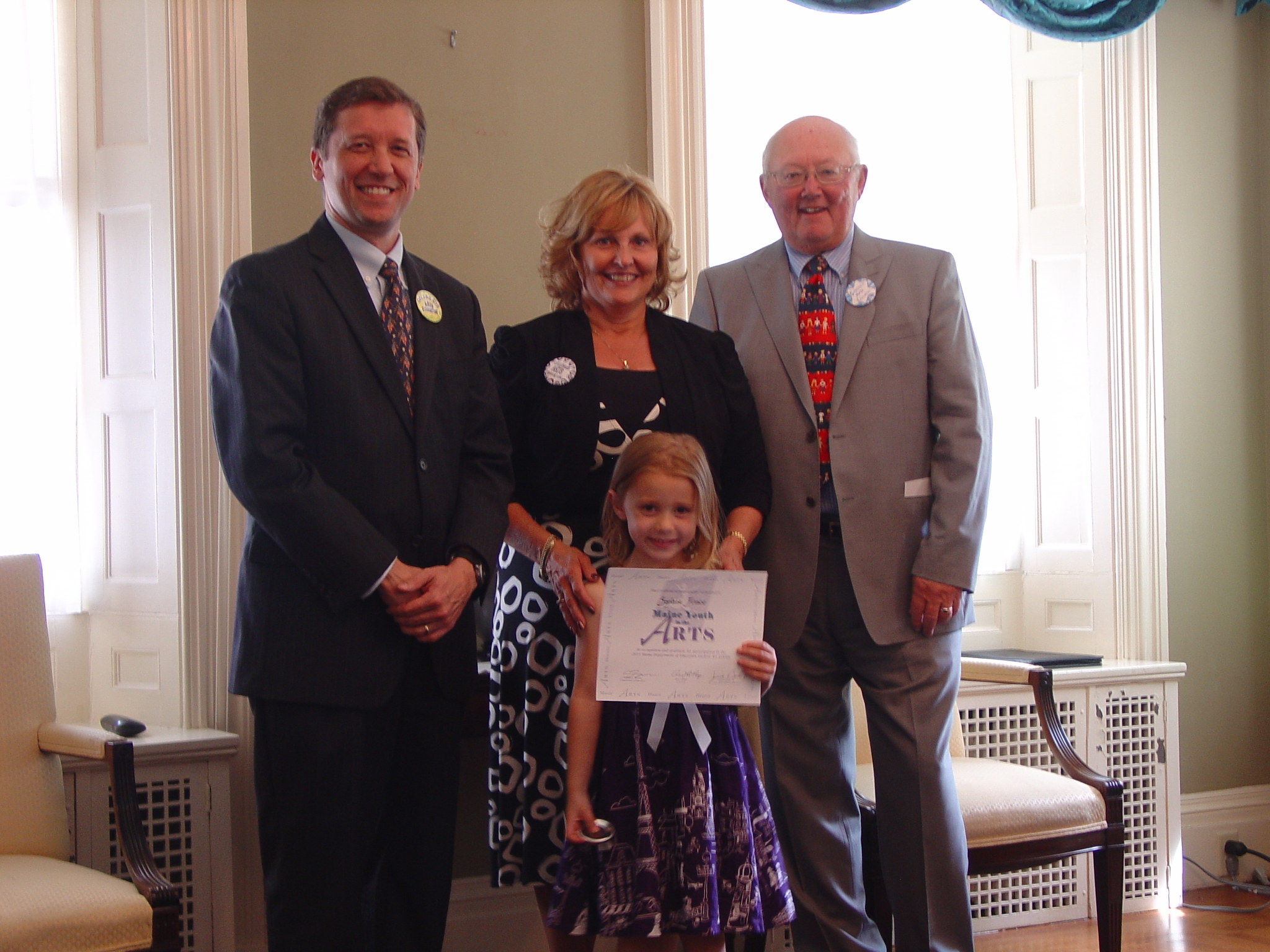
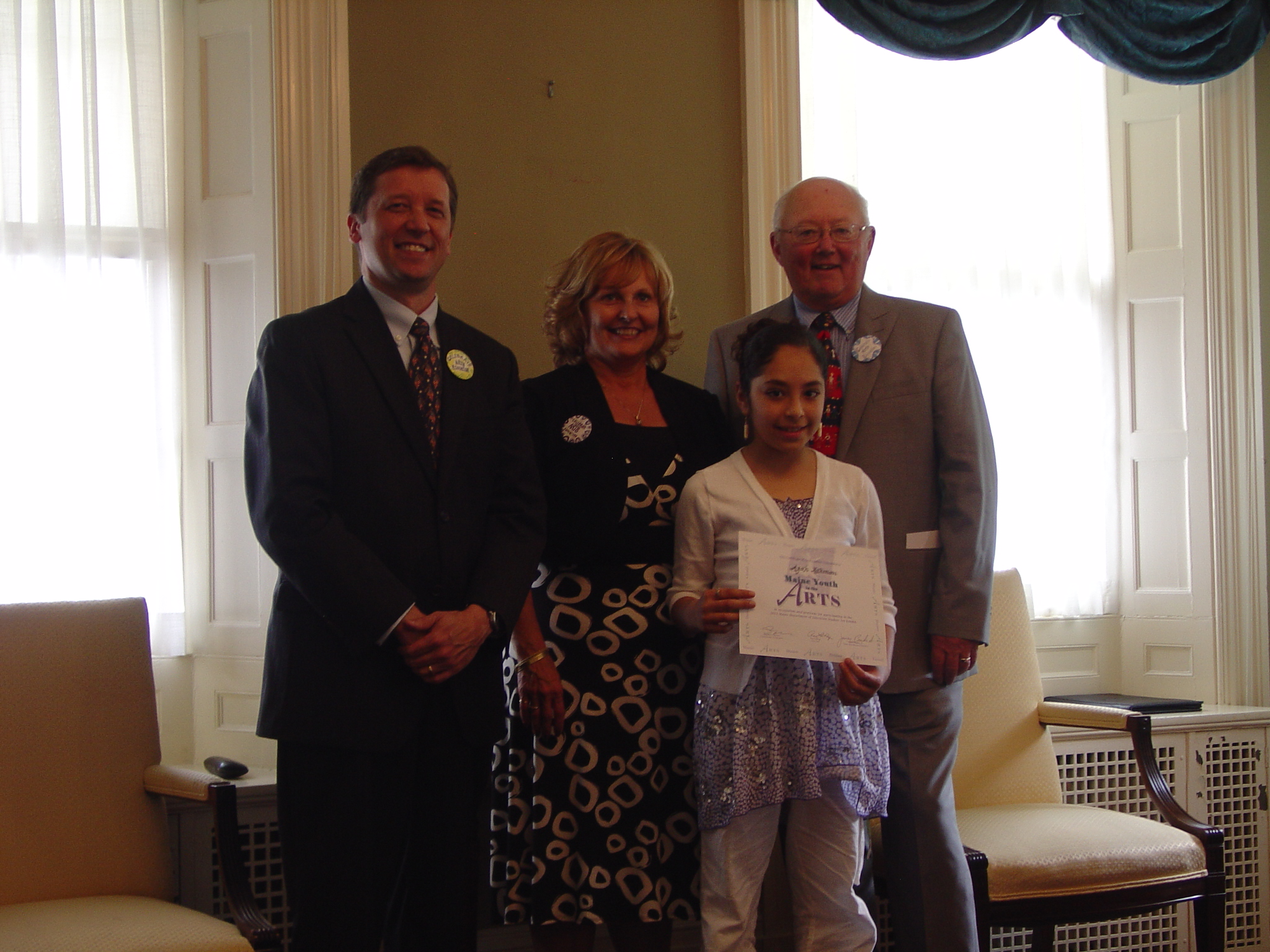
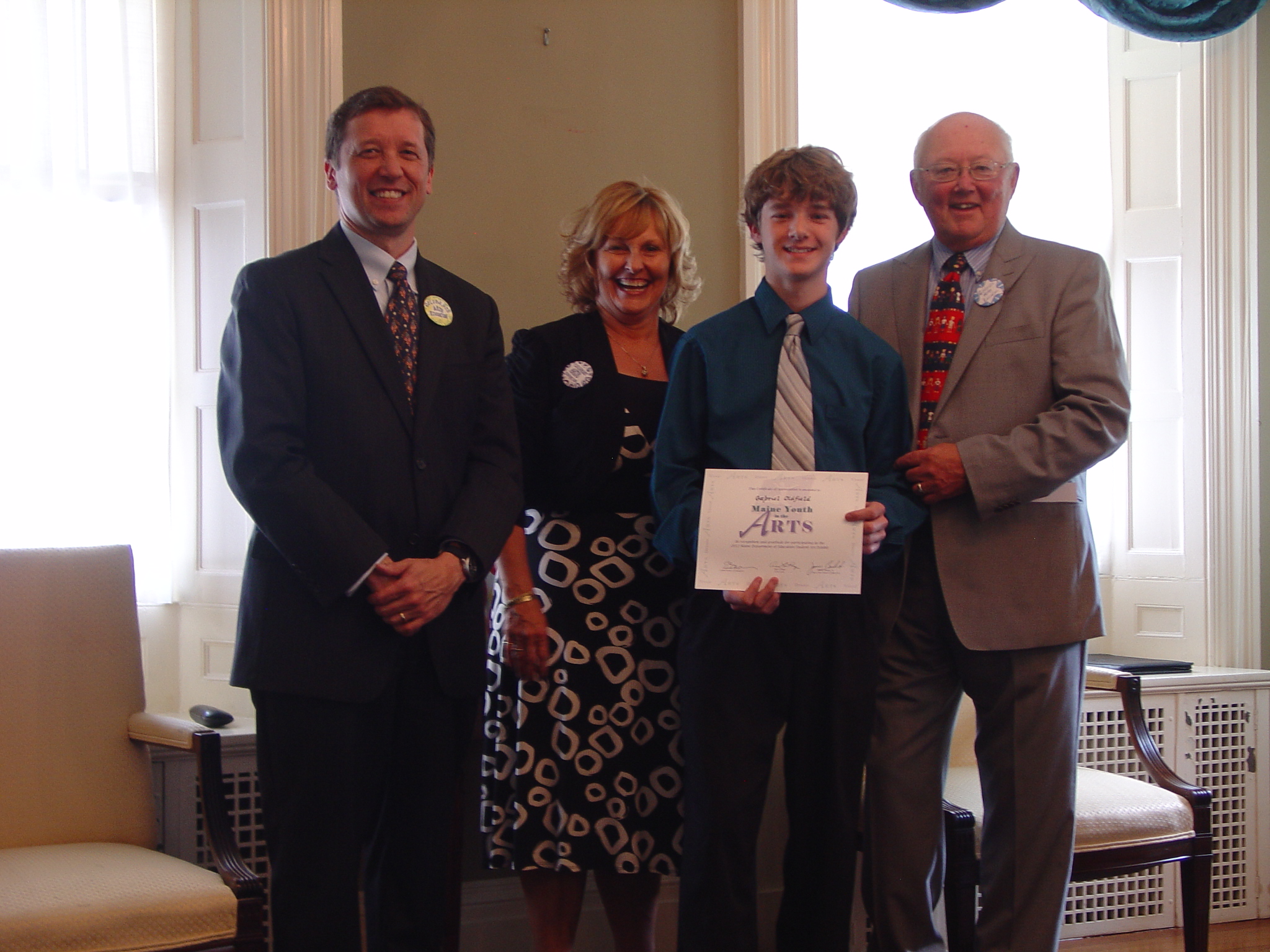
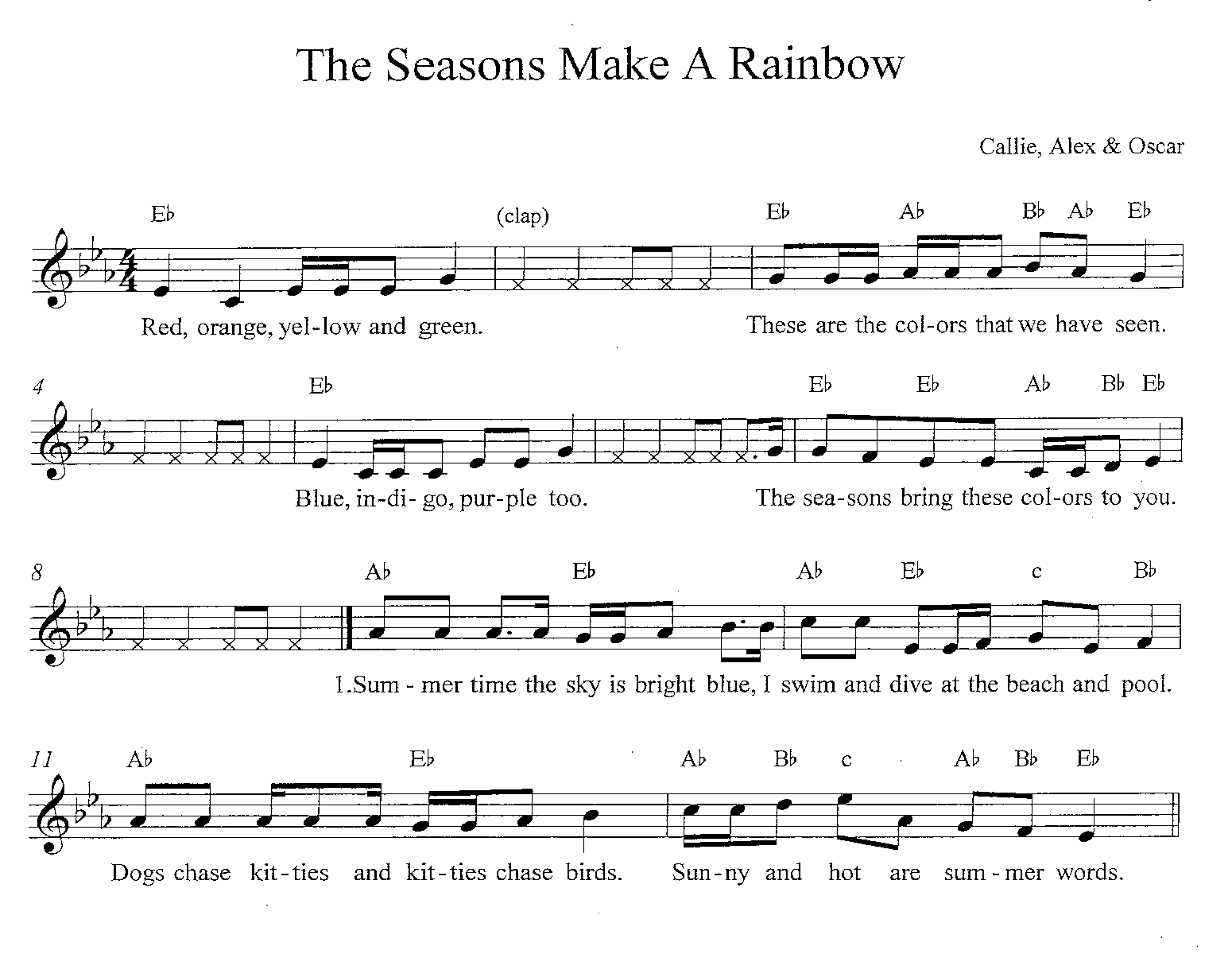
At the Celebration of Arts Education the First Lady welcomed K-6 arts students from Bangor elementary and middle schools to the Blaine House and thanked the students for sharing their work at the Department of Education. Mr. James Banks, chair of the state board, congratulated the students for their accomplishments in the arts. Stephen Bowen, Commissioner of Education, introduced three kindergarten students who performed a song they had written with the guidance of their music teacher, Anne Chamberlain-Small. Students has worked on the song all year using garage band and it is on the Department’s YouTube channel.

At the completion of the singing the students received certificates and “I am a musician” button. Artists were announced and each of them were presented a “I am an artist” button and a certificate.

After enjoying cookies and punch in the dining room the families were welcomed at the Department of Education to view the artwork on display. The musicians sang their song a second time. Many families made a day of it visiting other places of interest in Augusta.

Student artwork are posted on the Bangor art exhibit page found on the right side of the front page of the blog. The exhibit remains unil the end of June. Earlier this month a post was made on the specifics of the art exhibit.

Season Make a Rainbow Score

h1

Solo Exhibit

June 14, 2012

Aelita Andre

Aelita Andre is having a solo show at the Agora Gallery in New York City. Yea, so! you might be thinking! She is only 5 years old and is the youngest professional artist in the world. Aelita, of Russian heritage, lives in Australia with her parents. The colors she uses are stunning, the texture makes me want to touch the paintings (and this is just photos of them). To read about Aelita please click here. Her exhibit last year at the Agora Gallery sold out in a week. To view her paintings please click here. I wonder what her art classes in school will look like?!

h1

Cigar Box Guitars

June 13, 2012

Creativity in action

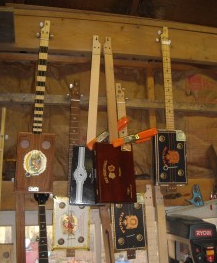
Rick Harford emailed me last week about the music programs he offers. He is not only a musician but a craftsman woodworker and builds guitars using cigar boxes, cookie tins, and bed pans. Yes, he builds them and plays them, like a guitar. Perhaps you are familiar?! When I googled cigar box guitars several sites appear. I suggest you check out his website at bindlestiffmusic.com and listen to some of the music. He is interested in following up on some work he did with a high school teacher and offering opportunities to students by visiting your schools. Rick can be reached at rhart5@hotmail.com.

h1

Another Arts Teachers’ Story: Matt Doiron

June 12, 2012

Featuring one teacher’s journey as an educator

This is the 13th in a series of blog posts telling arts teachers’ stories. This series contains a set of questions to provide the opportunity for you to read educators stories and to learn from others.

Matt Doiron teaches high school instrumental music in the Sanford Public Schools. He has been teaching for 22 years. The Sanford High School band program involves about 90 students in concert band, marching band, jazz ensemble and pep band. In addition Matt teaches AP Music Theory and about 75 beginning guitar students every year. Matt has been with the Maine Arts Assessment Initiative as a Teacher Leader in the first phase and we’re thrilled to have him serving on the Leadership Team for the second phase.

What do you like best about being a music educator?

It provides me with an opportunity to “walk the walk.”  There is a lot of research and a lot of talk about how arts education is vitally important. The rest of the educational establishment will see us as important when they experience, first hand, what arts education really can do. My goal every day to make that happen.

Tell me what you think are three keys to ANY successful arts ed program?

  1. You have to have an expert understanding of your content area.
  2. You have to have an understanding of how students learn the content.
  3. You have to be driven to use the two understandings to make things happen in your school.

What specific way(s) do your assessment practices tie into the success of your program?

I work to assess students individual musical growth throughout all the semesters they are involved in the band program at SHS. This is quite a shift from “You must attend all performances and behave well in rehearsals.” It’s about being able to individualize instruction for all students and measure that growth over time that matters. When the students get this, they see preparing for what they need to do in rehearsal and performance as a part of their overall musical growth, not simply as “I need to make sure I play Db in the trio.” This is quite a hurdle for many young musicians as it is transitioning them into a much larger and more complex musical world, but once they make the jump, they have begun a truly transforming process of being musical thinkers instead of thoughtless trained doers.

What have been the benefits in becoming involved in the arts assessment initiative?

My involvement in the arts assessment initiative brought me through a process of defining what I really believe my job entails. I don’t hesitate to be direct about what I need to be doing for my kids and what is necessary for growing the program. I have thought through both how and what I grade and how my expectations need to shift to cause the students to take ownership of their musical growth and for my program to be considered valid by the people I teach with and for.

What are you most proud of in your career?

Performing for the President of the United States.

What gets in the way of being a better teacher or doing a better job as a teacher?

Time.  (We never seem to take out the “trash” in education so many of us are still doing 31 different parts of past initiatives because they don’t ever seem to be re-evaluated and removed.)

Apple or PC?

Apple

What have you accomplished through hard work and determination that might otherwise appear at first glance to be due to “luck” or circumstances?

Re-building and maintaining the music program at Sanford High School. When I came to teach here, there were 19 students in the high school band. Now we are talking about everything from better schedules to new facilities and programs and what programs we could look to offer out into the future.

Look into your crystal ball: what advice would you give to teachers?

The long term success of what we do is dependent upon us walking the walk of best practice in teaching all the 21st century skills that can best be delivered by arts education.  We can lead the way on changes in our schools or we can continue to do what we’ve always done and then complain when we loose more programs. Without our leadership we will not be “at the table” when important decisions are made, we will be “on the menu.”

If you were given a $500,000.00 to do with whatever you please, what would it be?

Cover my daughters’ college educations, pay off the house, work on my PhD.  (There would probably be a trip to Europe in there somewhere too.)

Thank you Matt for sharing your story!