Archive for May, 2013

h1

Rijksmuseum in Amsterdam

May 23, 2013

The Night Watch by Rembrandt

The Rijksmuseum in Amsterdam has reopened its doors to the public after a 10 year closure for rebuilding. It’s most famous exhibit is “Nachten Watchen”  or “The Night Watch” by Rembrandt. The first youtube short clip (below) Onze helden zijn terug! celebrates the rejuvenation of The Museum.

However a second short clip (at the bottom) follows the making of Onze helden zijn terug! which not only rejoices that The Rijksmuseum has reopened:  but it serves as a reminder to economists about the importance of specialization, the division of labor and clusters of support services in a modern economy.Try to consider how many different specialists are involved in this project and why the division of labor is important.

The project team wanted to make an impact, inform the Dutch and the rest of the world that the Museum was reopen for business – with implications for invisible and visible exports for The Netherlands. The advert should stimulate curiosity, and demand for tickets. Next time you are in a museum and art gallery, remember the principles of complementary goods and services which have derived demand – t shirts, coasters, mugs, guidebooks, DVDs – inspired by the great paintings on display. The museum may also have a monopoly over the supply or use of images, which may allow it to charge premium prices for guidebooks and other souvenirs.  It also highlights the significance of the use of economic resources, land, labor, capital and entrepreneurship: the roles of government and private enterprise in a mixed economy, culture as a merit good, and source of economic activity.

Of course, many of us have gotten used to viewing “flash mobs” on the internet but this one has a twist and certainly provides some educational value. So many learning lessons! Perhaps you’d like to share this with your students?! Even though they are speaking Dutch in the second one some meaning is possible. And, maybe you have a language, history and/or economic program in your school that you could connect with to provide a more meaningful lesson.

h1

Arts Ed Partnership Research

May 22, 2013

Info from Sandra Ruppert

Below is information from the Director of Arts Ed Partnership, Sandra Ruppert, announcing the newly released report called Preparing Students for the Next America: The Benefits of an Arts Education. You can download a .pdf of the report which I am certain you will find useful by clicking here.

The Arts Education Partnership (AEP), a division of the Council of Chief State School Officers, is pleased to announce the release of Preparing Students for the Next America: The Benefits of an Arts Education. This new research bulletin offers an evidenced-based snapshot of how the arts support achievement in school, bolster skills demanded of a 21st century workforce, and enrich the lives of young people and communities. It draws upon the vast body of research in AEP’s new ArtsEdSearch.org, while reinforcing the relevancy to the Common Core State Standards for English Language Arts and Mathematics.

Because evidence is power, we hope this new resource will further your work and strengthen our collective voices in keeping the arts an essential part of a complete and competitive education for every young person in America.
Screen shot 2013-05-21 at 8.05.40 AM

h1

Another Arts Teacher’s Story: Susan Jones

May 21, 2013

This is the 32nd in a series of blog posts telling arts teacher’s stories. The first 19 were told last year by the phase I Maine Arts Assessment Initiative teacher leaders. The series continues with the stories from the phase II teacher leaders. These posts contain a set of questions to provide the opportunity for you to read educators stories and to learn from others.
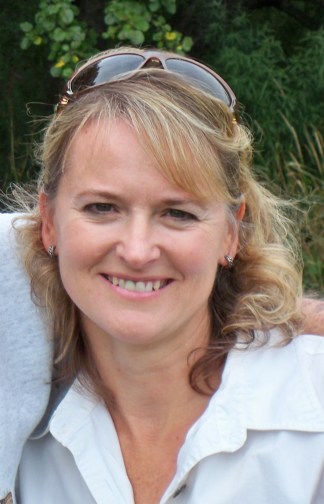
Susan M. Jones has been teaching for 19 years in MSAD/RSU 40 at Medomak Valley High School. Her present teaching responsibilities include 25 students in chorus, 17 students in theatre, and 65 students in history. Before teaching at MVHS she was in neighboring MSAD 50 for 2 years.
She started teaching music, K-12; general, vocal, instrumental for about 8 years,  and then expanded to Social Studies around 1999. Susan’s purpose was her desire to teach Music History, and learned that she could only do that with a certificate in Social Studies. So she got temporary certification and proudly showed her principal who informed her that someone else would be teaching Music History, but could she “please teach one class of World History?” The pay-off would be that she would only teach in one building all day. Fourteen years later she still hasn’t taught Music History. In 2004 she taught history full time. After four years, Susan was put back into part-Fine Arts and part-Social Studies, and then in 2011, Intro to Theatre class was added to her teaching load.

The main responsibilities of Susan’s classes are to prepare students for college (history classes); to prepare and perform choral pieces and to bring each student’s vocal ability to a higher plane (chorus); and to teach the basics of acting and improvisational theatre to her theatre students.

What do you like best about being an arts educator?

  1. The first is that I often get to see my students for more than one class; I get to see the end product of the growth they have achieved. I feel sorry for classroom teachers that only have the students for a year or for only a semester because they do not get to build the relationship that arts teachers have.
  2. We allow kids to have fun, to be creative in a controlled environment, but to have that fun, they have to be engaged. In Theatre class, they can be silly when we play the games, and when we are reading scripts, they have to be totally engaged so they don’t miss their lines when they come up.  The teamwork displayed in Theatre (and Music and Dance!) is something rarely discussed but is much more vital than that experienced on a playing field.  We don’t have subs on the bench just waiting to take over for someone who is injured or needs a rest!

Three keys to a successful visual and performing arts education:

  1. Enthusiastic, energetic, knowledgeable teachers
  2. Enthusiastic administrative support from administrators
  3. Parental & community support

How have you found assessment to be helpful to you in your classroom?

I have found assessment to be helpful in my Theatre classroom by developing a rubric that students can see and use themselves. I used the rubric I created this past spring to assess a short monologue by the students. First, I filmed the students, then played back their pieces for the class to see (they had performed in front of the class, so it wasn’t anything new), and each student had to grade themselves. I also graded them, and found that most were much tougher on themselves than I was! The rubric gave us a good jumping-off point to discuss what made a good monologue and what they could do to make it even better. It was gratifying to hear the students use the vocabulary and language of theatre to explain their thoughts.

What have been the benefits in becoming involved in the arts assessment initiative?

One of the benefits of becoming involved in the arts assessment is the network of people I’ve met who are so willing to help answer questions and give suggestions and advice. I really feel that I could talk to any one of this group and they would honestly and kindly give of their time to help me…and I would do my best to do the same!

What are you most proud of in your career?

The thing I am most proud of in my career are the students who have returned to say they’ve done or tried something they never would have if it hadn’t been for what they learned in (fill in the blank:  Chorus, Theatre, History, etc.). I have had students who have become music teachers and majored in history; so far I haven’t had any students who have gone on to continue with Theatre because I haven’t taught it long enough – most are still in high school!  I do have two students this semester who are seniors, and one is majoring in Theatre and the other is minoring in it – I can’t wait to talk with them as they go through college! One student I had who took Chorus a number of years ago, well, singing wasn’t her strong suit, but she didn’t mind being in with the whole mix of people and her lack of pitch-matching wasn’t noticeable.  She returned to visit after her sophomore year in college and proclaimed that she had taken part in a community sing-a-long of the Messiah, and that she would never have had the nerve to even try it if we hadn’t sung two pieces from the Messiah when she was in high school. She was so excited, and I was excited for her!

What gets in the way of being a better teacher or doing a better job as a teacher?

Scheduling is probably the biggest thing that gets in the way of me doing my job. In a small district, it’s hard to get the number of people who want to be in your classes to actually have room to be there. Then guidance counselors and administrators who throw up their hands and say, “Sorry, I can’t do anything about it.”  I think they need some creativity in their lives!

What have you accomplished through hard work and determination that might otherwise appear at first glance to be due to “luck” or circumstances?

I was able to get my Master’s Degree through a lot of hard work and determination! I figured if I was going to have to take courses anyway to keep my certification, I might as well have a purpose, so I applied for the program, took all the tests and was admitted. I figured I’d let my school district pay my tuition. Then before I’d even taken one class, I lost my job. Well, I paid for that one class, and through a community scholarship, I kept taking one class at a time.  When I started, my oldest child was 5, the next was 3, and the youngest was 1. For three years, I was unable to get a job, so we were living off my husband’s salary with no health insurance and three kids. And I was taking college classes which often met every day for two weeks at a time in Orono, which meant I had to drive back and forth every  day, plus have a babysitter from 7 am – 6 pm, which we couldn’t afford. I went to the local high school and asked if there were any young ladies who needed tutoring in Algebra and I was able to secure free babysitting by offering free tutoring – a win/win situation! People often think getting a master’s is something that can be done in a couple years while you are working, and it can be done…but that’s not the way I did it!

Look into your crystal ball: what advice would you give to teachers?

I would advise teachers to advocate for themselves, have the absolute best intentions for their students in mind, and be open to learning how to be the best teacher you can be. Lifelong learning is the absolute key to teaching!

If you were given a $500,000.00 to do with whatever you please, what would it be?

I would use the $500,000 to pay off some bills, and put away the rest for those “rainy days” that will come – my parents are getting older, as we all are, and we may need to help them.  Oh, and travel – I would love to travel more! I want to play djembes in Africa, go to the Shakespeare Festival in Edinburgh, learn Russian dancing in Moscow…it’s endless!

Imagine you are 94 years old. You’re looking back. Do you have any regrets?

Yes, I have regrets. I really don’t know that anyone shouldn’t have them. Mostly the regrets revolve around accidentally hurting people. I wouldn’t have said certain things in an off-hand manner, or I would have listened more closely before jumping in. Those may sound like “little things”, not on the level of “I wish had had more courage to take that position”, but those are the things that bother me after years and years, not the major life-moments.

Thank you Susan for sharing your story!

h1

Accountability

May 20, 2013

It was so great to visit with so many Maine music educators at the MMEA conference at University of Maine in Gorham. The deep conversations around teaching and learning often enter into the conversation and I love having the opportunity to learn from other educators thinking. Rob Westerberg and I have had many many conversations on this topic over the several years that I’ve known him. This blog post was an outcome of one of the conversations and it would be great to hear what you have to say on the topic. Please don’t hesitate to contact Rob at rwesterberg@yorkschools.org who teaches music at York High School or me at Argy Nestor at argy.nestor@maine.gov or post a comment at the end of this blog post.

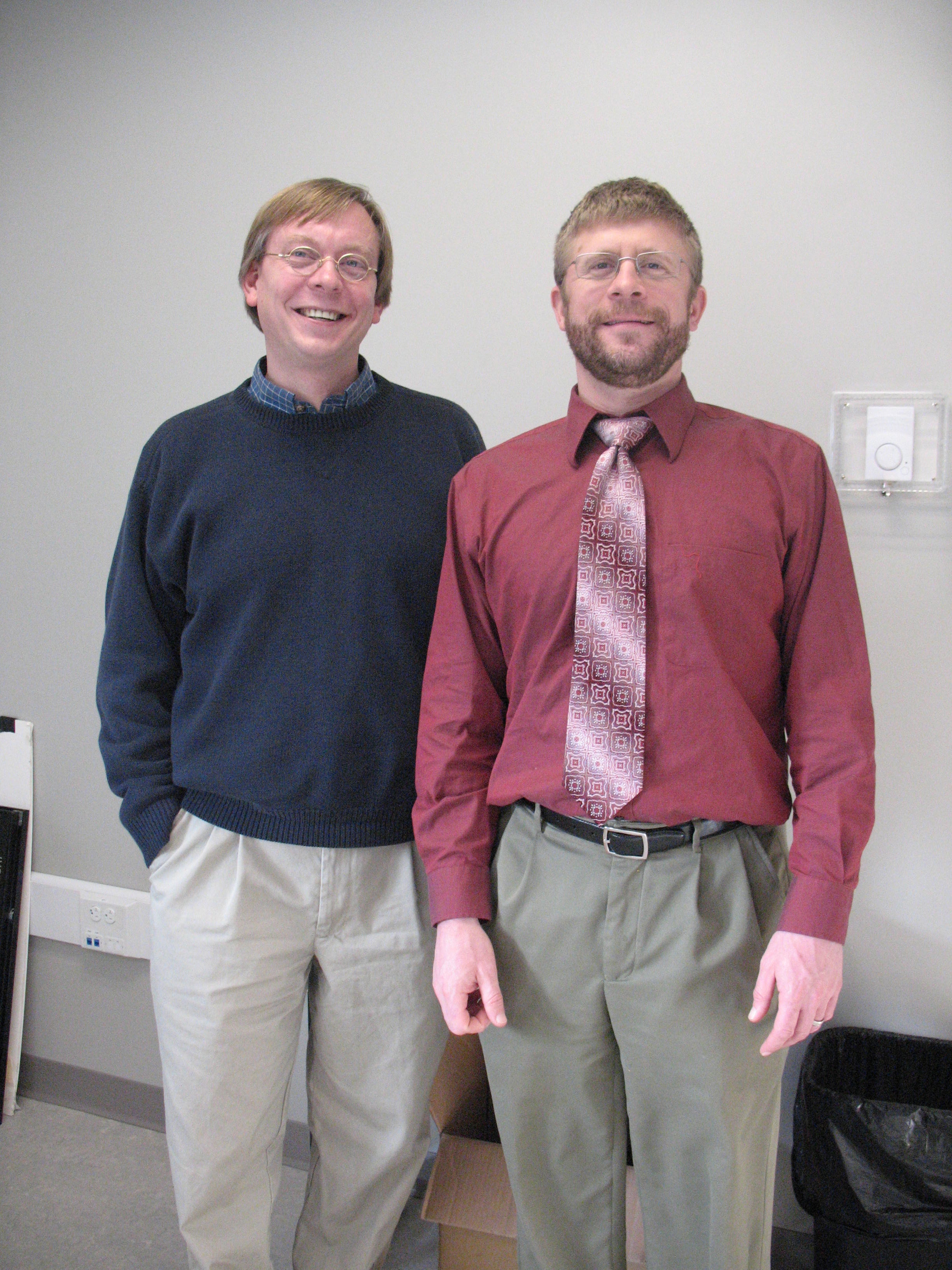
Rob with colleague York High School colleague music educator Dan Sovetsky. (Those of you who know Dan thought he was shorter than Rob. Well, surprise!

Rob with colleague York High School music educator Dan Sovetsky. (Those of you who know Dan thought he was shorter than Rob. Well, surprise!

The educational landscape in the United States as a whole, and Maine in particular, has gone through significant transformation since the publication of the landmark document, A Nation At Risk in 1983. The report took everyone by storm, documenting steep declines in SAT scores in the years between 1963 and 1980. More alarming, this period (following the Soviet launching of Sputnik) was the one in which we were supposed to making progress! A Nation At Risk reported out that we were not only failing to do so, we were in fact receding.

And wow have times changed since then. You know it and so do I. No Child Left Behind was only one of the more recent shots across our bow.

But here’s my real concern. All the incremental yet seismic changes that have occurred in the 30 years since A Nation At Risk was published have been founded on one basic, simple fundamental premise: the belief that all students can learn and excel, and the subsequent understanding that we must be held accountable for their doing so… and I wonder sometimes if we as arts educators as a whole have bought into this.

Do we believe “all” students can learn and excel, or do we believe just the talented ones can to any useful degree? Do we believe “all” students should be enrolled in visual art courses, or just those who are interested in them? Do we believe music must be for all students or just for some… and is your answer to this question altered by the age group you’re referring to? Do we believe the foundational components of our programs should be geared toward the higher achieving students or the lower ones?

Here’s another question: what percentage of the student body at your local High School is enrolled in a course in your specific subject area right now? If you’re a Math teacher, the answer is 100%. Social Studies? English? The same. But music teachers get all excited if the answer for them is even close to 20%. How is this being held accountable for educating “all” students? And is this number even close to 100% for your school district’s 7th graders? 5th graders? 1st graders? Do you even KNOW?

Maybe the answer lies in the fact that we do not have a graduation requirement in place for each individual arts subject area and we hide behind that as if to say, “it’s not my fault if I don’t get to reach every kid”. Well, it’s okay for us to feign mock disgust at this, but what efforts have we made – individually and collectively – to establish one since 1983? Have we done ANYTHING about this over the last 30 years? Do you/we not have one because you/we attempted to establish one and failed, or because you/we never attempted to implement one and succeeded? And is this vacuum the cause of a reverse domino effect at the middle school and elementary school levels, both in limited course offerings and in limited face time?

We decry that the arts are important, but sometimes it seems that all we hear in response is lip service. I can’t say I’m surprised when this happens. I’ve rarely ever met someone who didn’t believe the arts weren’t “important”. But what they actually mean by that could be virtually anything. Consequently, that word is not part of my vocabulary anymore. Instead, I only use the word that kept getting referred to when we revised the Maine Learning Results 7 years ago: “essential”. And by essential, I refer to the same premise as the other subject areas: “essential… for every student”.

When evaluating schools, it would be convenient to test only those who excel in specific subject areas. (apparently there are entire countries that agree with me on this, because in practice that is exactly what they do… I’ll save that rant for another day). Yet this is exactly what we have been guilty of in the visual and performing arts. We don’t have to be bothered with the entire student population, just those who choose to be with us. And out of those we do work with, we beg out of the testing/assessment piece by saying, “well, gee, we’re different”. One of the most condescending statements ever made to me was by my Principal in my first job after I got the School Board to agree to a graduation requirement specifically for music: “Are you sure you want to do this… after all, now you’ll have to deal with ALL the students!”. But I think he was right. DO we want to teach all the students, even through High School? Or are we content to hide behind a belief that not all kids can learn… or only the talented/interested deserve the best education… or that, “gee, we’re different”… or, “well, you know, it’s a nice idea but there’s nothing I can do about it”?

h1

Brunswick High School

May 19, 2013

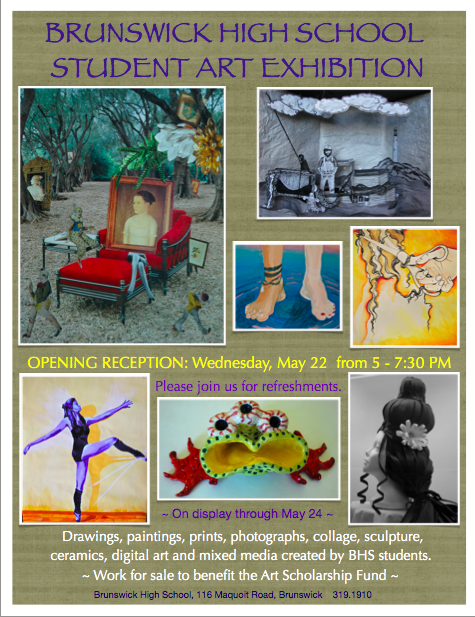
Screen shot 2013-05-17 at 9.40.44 PMThank you to Jennie Driscoll, Brunswick High School art teacher  for sending this information!

h1

Waterville High School

May 18, 2013

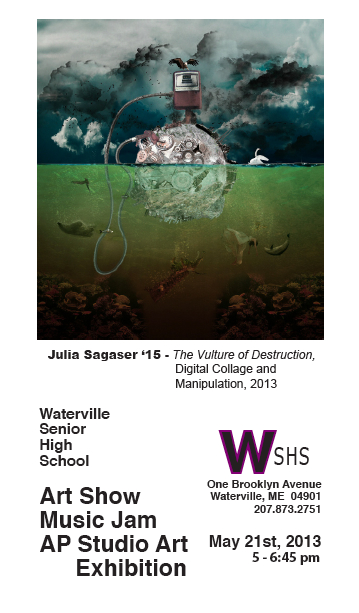
JS13AB

The image is one of 90+ different invitations/announcements for this event.

Each student artist/designer/filmmaker creates a personalized announcement that features her or his work. Students print and cut at least four copies on a sheet that is pre-printed on the back with the event information. One goes to the art teacher for the archives and one must be hand delivered to an adult that works in the school (custodian, administrator, support staff, food service or faculty). The value of promotion and advocacy is discussed and practiced (even hand shaking!) Someday students may be promoting a service, product, idea or self, and this simple word document (for introductory level students) is a great place to start.

Thank you to Kay Allison, art teacher at Lewiston Middle School, for the idea passed on to Suzanne Goulet, Waterville Senior High School art teacher.

h1

Why Teach Music?

May 17, 2013

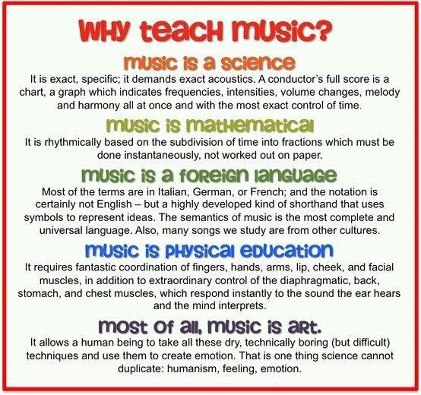
why teach music

h1

Sir Kenneth Robinson

May 16, 2013

TED Talk

imagesKen Robinson presents in his humorous way another TED Talk titled: How to escape education’s death valley. Robinson is an expert on creativity and he has proposed changing education to cultivate creativity and acknowledge multiple types of intelligence.

So what is this TED Talk about? “Sir Ken Robinson outlines 3 principles crucial for the human mind to flourish — and how current education culture works against them. In a funny, stirring talk he tells us how to get out of the educational “death valley” we now face, and how to nurture our youngest generations with a climate of possibility.”

Robinson looks closely at what is happening in schools across the United States. He believes that the funding that is going into education is not going into the right places. Robinson is clear about the place for arts education in schools. He believes that they are important because they improve math schools and because they tap into parts of the brain that are otherwise untouched. I suggest you use 18 minutes of your time and listen to this TED Talk.

h1

Pride of RSU 20

May 15, 2013

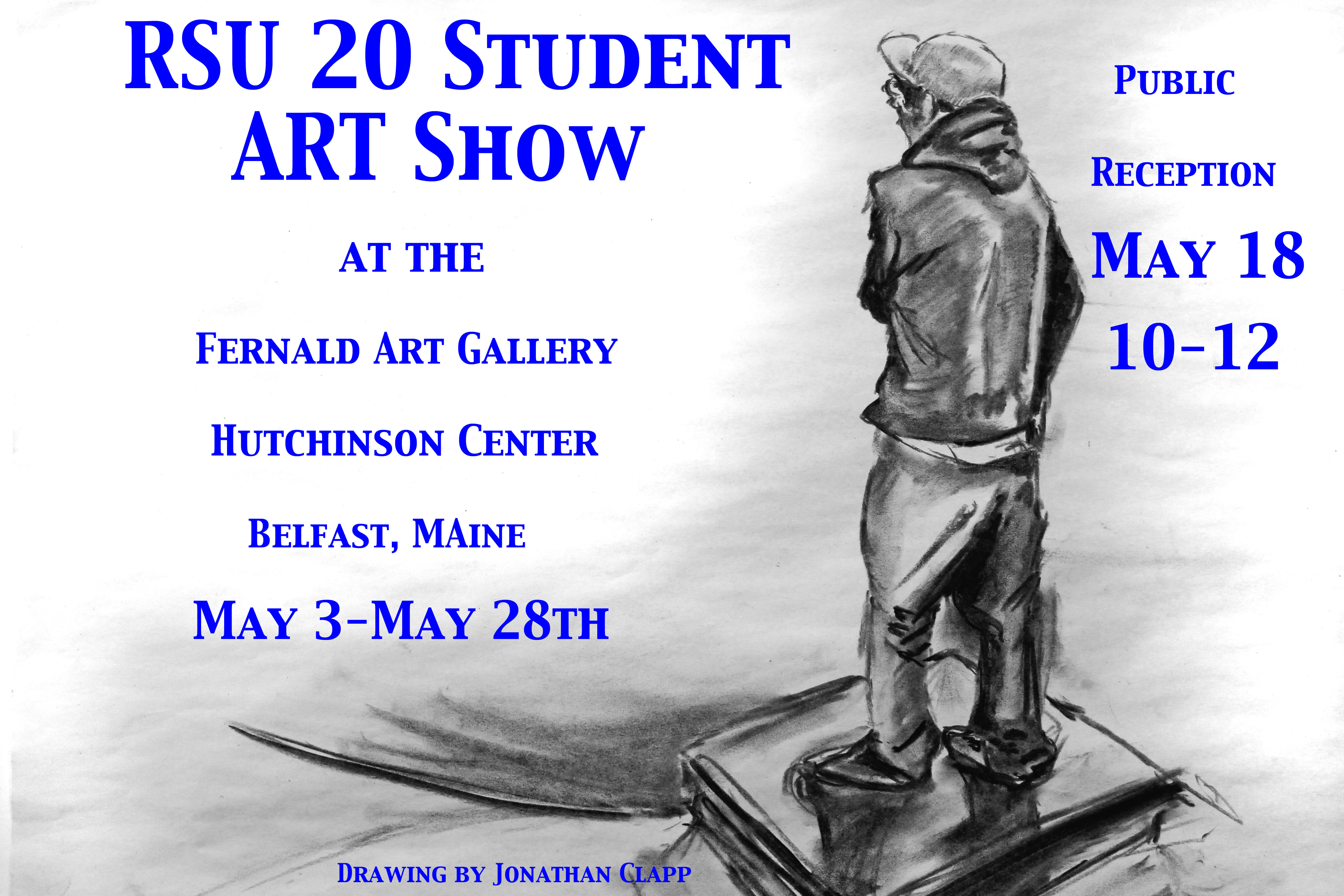
RSU20 Student Artshow poster 2013

h1

Another Arts Teacher’s Story: Pam Ouellette

May 14, 2013

This is the 31st in a series of blog posts telling arts teacher’s stories. The first 19 were told last year by the phase I Maine Arts Assessment Initiative teacher leaders. The series continues with the stories from the phase II teacher leaders. These posts contain a set of questions to provide the opportunity for you to read educators stories and to learn from others.

PamPam Ouellette has been teaching visual arts for 24 years. She is presently the art teacher at Lisbon High School, grades 9-12. Pam has 119 students in her courses which include Art Foundations, Studio Art, Photography, AP 2D, 3D, and Drawing. In addition she is the art club advisor and the advocacy advisor where she meets with student groups each day to read, discuss topics, take practice SAT tests and other similar activities.

What do you like best about being an art educator?

I enjoy connecting with students, introducing them to the excitement and benefits of art. I love watching students develop their skills and visual vocabulary and helping them understand the connections between their lives and visual arts. I enjoy creating lessons that will engage students on a meaningful level as well as challenge them to stretch and explore.

As we are gearing up for our Annual Student Art Show, I have to say that is a great event as an art educator. It’s a lot of work to put together, but the students all get involved to make it a big group effort. It’s so great to walk around and see the final show—all the proud students’ hard work, interesting conversations about art and art experiences, involved parents and community members…  It’s the highlight of each school year.

I’m also happy to be a part of a great profession that is caring and supportive and that values people and sharing ideas. All the art educators I know are dedicated, inspiring, and hard working teachers.

What do you believe are three keys to ANY successful visual and performing arts education?

An art educator who has…

1.  Enthusiasm for the Arts- because it’s contagious

2.  Strong education and preparation to teach in the art

3.  Understanding and creative ideas about how to connect the arts and students to their community and their lives.  Students need to understand the relevance of the arts to them personally as well as the relevance of the arts to their world and community.

 How have you found assessment to be helpful to you in your classroom?

I have found assessment can be a very useful teaching tool—to inform my teaching more than a tool for grading. It’s helpful to use informal assessments to gauge student understanding and use that information for teaching and lesson planning.

 What have been the benefits in becoming involved in the arts assessment initiative?

Networking with other arts professionals- sharing ideas, energy, and enthusiasm. Helping the arts be at the forefront of national efforts and progress in education.

What are you most proud of in your career?

My students who carry their visual arts experiences with them into their futures—from students who have gone onto careers in visual arts to those that are simply better human beings because of it. I’ve been able to keep in touch with many former students through social media, and I love keeping up with their careers, adventures, and families. Some have become photographers, graphic designers, art teachers, some have traveled and taught overseas, and some have beautiful families and are raising their children with more creativity and art because of their own experiences.

What gets in the way of being a better teacher or doing a better job as a teacher?

Limited time, energy, and money…  This type of work is never “done.” There’s always more that can be improved. There are also external factors such as scheduling, budgets, and various imposed limitations and requirements that hold back teaching and learning.

What have you accomplished through hard work and determination that might otherwise appear at first glance to be due to “luck” or circumstances?

This is a difficult question. I don’t feel that anything I’ve achieved has been without hard work. I feel fortunate that I did my student teaching at Mt. Ararat High School where I connected with some amazing art teachers. My experiences, hard work, and connections there helped lead me to my job as an art educator at Lisbon High School. At LHS I had the pleasure of working for over 20 years with Elaine Cyr who was not only my mentor and professional inspiration, but my friend. I feel very lucky to have made the connections with people that I have, but hard work is key to making those connections worthwhile. You have to work hard to make seemingly lucky opportunities fruitful.

Another area of “luck” that can only be achieved through hard work is trying to maintain a healthy family while also teaching. I’m fortunate that my family has been very understanding and supportive throughout my career.

Look into your crystal ball: what advice would you give to teachers?

I think most educators understand that learning is a never-ending process. I have never regretted learning more, and I would encourage all teachers to continue to grow and learn. In the arts, in particular, I think it’s vital for educators to grow as artists in their own media. We need to BE artists to teach about art and it’s vital processes. We need to be the examples we want for our students. Learn, explore, create, reflect, stretch, and grow.

I would also say that “The teaching of art is more than the teaching of art” (Eisner, 2001, p. 6).  Art is interconnected to all aspects of life and we need to help students realize and benefit from these connections.


If you were given a $500,000.00 to do with whatever you please, what would it be?

I would use the money to promote the arts in my school and it’s community. Make sure all students get a quality arts experience through better equipment, supplies, dynamic field trips, scholarships for those wanting to further their arts education and/or pursue arts careers. I’d also like to pay off my sons’ and my own school loans. And I’d really love to travel!!


Imagine you are 94 years old. You’re looking back. Do you have any regrets?

I would hope I’d have no regrets… I’m pretty happy with my life to this point.

Thank you Pam for telling your story!