Archive for June, 2013

h1

Another Arts Teacher’s Story: Suzanne Southworth

June 11, 2013

This is the 36th in a series of blog posts telling arts teacher’s stories. The first 19 were told last year by the phase I Maine Arts Assessment Initiative teacher leaders. The series continues with the stories from the phase II teacher leaders. These posts contain a set of questions to provide the opportunity for you to read educators stories and to learn from others.

IMG_0135Suzanne Southworth started teaching in NY where she grew up and has now taught for 15 years in Maine Public Schools. Currently, Suzanne is at Camden Hills Regional High School where she has been for the last 6 years. The courses she teaches change up from year to year but she always teaches the Jewelry classes and usually teaches the Advanced Art Portfolio class. This year the IA teacher and  Suzanne piloted a course that they call Metal Sculpture where students learn basic welding techniques and learn to use those skills to design beautiful metal sculptures.

“The thing I like best about being an art teacher is that it gives me the opportunity to help students learn to work with their hearts, hands, and minds together as well as the ultra focus it takes to be a successful artist. In today’s busy world it is so important to teach subjects that engage students this way. I also really like the ever-changing subject matter and the excuse to constantly search for my own inspiration in order to share the joy of the art making process with my students.”

What do you believe are three keys to ANY successful visual and performing arts education?

It doesn’t take much to run an art program but if you want a really good successful program you need to have organization, dedicated art professionals who work hard in the classroom, advocate for the program and exhibit student work, and a community who supports.

I was involved in the MAAI this year and found that after learning so much I realized how much I still need to learn. In my short career everything has changed so much and I find myself digging my heels in, refusing to update my way of thinking. I think I still do to some degree but the change is happening. What it has done for me is to see how the arts have never been more important to the well being of our next generation. As a parent and a teacher there is not so much of a buffer from a child’s environment to do what is right so, it is up to us to arm ourselves with the knowledge to protect and educate our youth at the same time.

How have you found assessment to be helpful to you in your classroom?

I feel that through well crafted assessments we can engage students and make learning personal and relevant. My favorite assessment is a written reflection. I find that having regular assessments in the classroom to be a useful tool in keeping both teacher and student in check. I also like the idea of keeping teachers accountable for good teaching practices and students engaged in their own learning process.

What have been the benefits in becoming involved in the arts assessment initiative?

Being a part of the Arts Assessment Initiative has made me so much more visible in my school and Regional area. It has been so nice to really know what the new ideas in education are and not be left in the dark during staff meetings and workshops. The best thing I got out of it though was the networking. Art Educators are generally pretty dynamic people. Just being around other conscientious Art teachers is a real boost to my attitude toward teaching and provides me with a lot of inspiration.

What are you most proud of in your career?

I am most proud of the results I see in my students work and being there when they make a breakthrough in their work and their individual ideas and watching them go through the stages from directed work to independent.

What gets in the way of being a better teacher or doing a better job as a teacher?

The thing I find most difficult about my teaching is the number of hours outside of the school day needed to do a good job and the multitude of other aspects of my teaching assignment.

What have you accomplished through hard work and determination that might otherwise appear at first glance to be due to “luck” or circumstances?

One of the things about teaching art that looks easy from the outside but takes a great deal of skill is to create an environment in the classroom that is conducive to “thinking” and creativity. Where there is a balance of “free thinking” and guided structure. I think this is a gift that you either have or you don’t but that it can be developed and improved regardless of the level of talent in this area.

Look into your crystal ball: what advice would you give to teachers?

If I were to give advice to other teachers I would say to keep updated on what is going on in art education. It is amazing how much voice we have here in Maine and we are fortunate to have people watching our backs at every level. Those people need our help in understanding the concerns of the classroom. Without our everyday art teacher input the decisions and initiatives won’t work to cater to the needs of our very real programs.

If you were given a $500,000.00 to do with whatever you please, what would it be?

If I were given $500,000 I would hire a team of top-notch educator’s who would write curriculum complete with the core standards, assessments, and technology and any other requirements. The team would write curriculum and build a library of lesson plans and boxes filled with non-consumable tools and materials to support the lessons that could circulate per request of the teacher throughout the State of Maine.

Imagine you are 94 years old. You’re looking back. Do you have any regrets?

Years from now I think I would look back and be really proud of the number of students who went on to continue with creative pursuits but I would also think that perhaps I did not get the concept of “Don’t sweat the small stuff so well and that I had a darn good job!

Thank you Suzanne for sharing your story!


h1

Statewide VPA Education Conference

June 10, 2013
h1

Honoring Dan Keller

June 9, 2013

All-State Conference

I had the pleasure of attending the Maine Music Educators Association banquet in May where awards were presented to individuals for their accomplishments and commitment to music education. The following was prepared by Sue Barre, music educator from Waterville Senior High School who nominated Dan Keller for the Maine Music Educators Association Hall of Fame. With her permission, I re-print Sue’s introduction.

IMG_3338It is my pleasure to introduce a new member of the MMEA Hall of Fame.

Tonight I will share with you the reasons I nominated Dan and share some thoughts from former students and colleagues that have arrived as word went out about this recognition.

Dan has been an advocate for music in the Waterville Public Schools for the past twenty-six years.   In the fall of 1986 he started with six students in the high school orchestra and a vision for a strings program.  He currently teaches two hundred students in grades 4 through 12 and maintains an inventory of over one hundred string instruments.

Dan is the Chair of our High School Visual and Performing Arts Department and has served a curriculum coordinator for the music program.  Dan’s vision for a well-rounded music education for all students has shaped our department K-12.   A student in the Waterville Public Schools receives forty-five minutes weekly of general music from kindergarten through grade 5.  During grade 4 general music students explore violin for one quarter and recorder for a second quarter and then are given the choice to continue with strings or general music for the second half of the year.  Literally every student in 4th grade in the Waterville Public Schools plays the violin.

If you enter the classroom where Dan teaches the 4th graders you begin to see Dans personality through the collection of 20 clocks on the wall, different shapes and sizes, all displaying different time zones (Dan has likely traveled to each time zone and will share antidotes from his trips with students)

Ask any 4th grader what piece they are learning and they will happily tell you “Mary had a can of spam” and skip off to the next activity and watch Dan walk through the playground at the end of the day as the students try to high five him, he looks like the pide piper!

One alumni – opened his note of congratulations with this commentary “ Dear Mr. Keller about twenty years ago, we blew off cello lessons at the Albert S. Hall School to tape paper cutouts of a scared man and a hungry whale to the hands of a wall clock and watch the resulting pursuit”   I don’t know if you remember that – but it continues to be one of my favorite memories of school as a kid.

In grade 5 students continue with general music and in addition are offered the opportunity to take part in band, strings or chorus.   The band and string students each attend a thirty-minute lesson and all three ensembles rehearse for thirty minutes weekly.

At the Junior High School the band, chorus and strings programs meet five days a week for sixty minutes a day!  This schedule affords Dan and I the opportunity to team-teach weekly.  We gather over one hundred string and band students and study the composers and music history with the seventh and eighth graders and the sixth graders work on the basics of music theory.   Team teaching weekly keeps me energized and motivated.

When you walk into Dans’ Junior High Room you will see, in the corner a penguin who lights up when plugged in and wears a festive scarf, this penguin has never missed a concert at the Junior High always sitting next to the bass section…and on the wall are rhythms for warm-up – #1, then #542, then # DH ……  Why?   Just because this is Dan J

A second letter came from a former student who stated :  I had sneezing problem in school and would sometimes start sneezing and would not stop 10-15 + sneezes later.  Inevitably this would happen during orchestra reharsal.  This became a running joke in Orchestra and Mr. Keller would keep a tally of how many sneezes in a row I would get on the chalkboard!

Dan has clear expectations for all of his students; he has reminded me that the sky is the limit.  Each year he will choose a subject to study with the high school orchestra.  This year he is concentrating on ear training and intervals, students take an aural and written quiz weekly.   Music students in Waterville expect written and playing quizzes weekly.  This has become standard.

A note from a former student reads:

“Having played in Mr. Keller’s ensembles from 5th grade through senior year of high school, I was witness to some absolutely fantastic teaching. Rehearsals were intense, fun, productive, zany, exhilarating, hilarious, enlightening, educational. His passion for music combined with his off-the-wall personality created an uncanny ability to retain string players from their elementary through secondary years, as he retained me. Now, as a doctoral student in organ performance, I still jump ahead of the curve in music history classes because of something I learned from Mr. Keller, or remember a music making axiom of his when practicing. I will be forever grateful for having had the opportunity to be a student of Dan Keller.

Dan has an extraordinary ability to look at the big picture.  He is the first to send me home or off to one of my children’s games.

He can often be heard reminding his fellow educators “we have a job that never ends, so don’t stay here to finish, go home to your family”.

Some could interpret this as a negative statement but I have come to appreciate the need for balance.

Dan is a mentor and a friend, he has taught me a lot over the last seven years.   He is most deserving of this honor.   As I solicited letters from his colleagues and parents of his students there was never a hesitation, always a smile that grew as people heard of the criteria for the nomination.  It is my hope that now Dan as a member of the MMEA hall of fame will begin to realize the significant contributions that he has made as a music educator in Waterville Maine and beyond.

h1

MEA Art Exhibit

June 8, 2013

Maine Education Association art exhibit

The Maine Art Education Association (MAEA) and the Maine Education Association (MEA) partner by having a student art exhibit at the MEA building in Augusta. The work is beautifully exhibited and on display for the next several months. This partnership has been underway for several years thanks to the work of MAEA board member and Lewiston Middle School art teacher Kay Allison.

Below is a photograph with Mount Desert Island art teacher (and Maine Arts Assessment teacher leader) Charlie Johnson’s grade 10 student Kathleen Murphy and members of her family. Left to right is Kathleen’s cousin, Kathleen, grandmother, mother, and cousin.

MEAyam1Stop by the MEA building when you are in Augusta to see the marvelous exhibit!

h1

Honoring Chip Farnham

June 7, 2013

All-state In-service conference

Laura Artesani, Associate Professor, Division of Music, School of Performing Arts at the University of Maine nominated her colleague Professor Curvin Chip Farnham for induction into the Maine Music Educators Association Hall of Fame. Chip was honored at the MMEA conference recently. With Laura’s permission below is her nomination document. Congratulations Professor Farnham!

IMG_3334

Professor Chip Farnham receiving his award

Chip served as president of MMEA from 1978-1980 and played a central role in the creation of our annual MMEA In-service conference.   He received the MMEA Music Educator of the Year award in 2001, and was the conductor of the Maine All State Band in 2012.

Chip began his career by teaching and directing bands in the public schools of Orrington, Brewer and Hampden, before becoming a faculty member in the Division of Music at the University of Maine.  He was Director of Bands and conductor of the Symphonic Band at the University of Maine for twenty-four years.  He has also taught music education, conducting and instrumental methods courses at the undergraduate and graduate levels, and supervised student teachers.  Many of Chip’s former students are now employed as music educators and band directors in our state.  In addition to his duties during the academic year, Chip also served as the director of Maine Summer Music Camp (both Junior camp and Senior camp) for many summers on the University of Maine campus.

Chip has appeared throughout the United States and Canada as a clinician, adjudicator and conductor, and has served as a guest conductor at several national and international festivals, including: the Atlantic Band Festival in Halifax, Nova Scotia; the NAfME Eastern Division Conference; The International Band Festival in Winnipeg, Manitoba; the Music in May Festival at Pacific University in Forest Grove, Oregon; and the Mid-West International Band and Orchestra Clinic in Chicago.  In the spring of 2009, he was the guest conductor of the DoDDS /Europe Honor Band in Wiesbaden, Germany and conducted the University of Maine Symphonic Band at Symphony Hall in Boston.

Chip is retiring from his duties at the University of Maine this spring, but he has taken on a new challenge as conductor of the Bangor Band, the oldest continuous community band in New England.   His tireless efforts continue to have a positive impact on countless individuals in our state and beyond.

h1

Creative Arts Festival

June 6, 2013

Looking for assistance

The first Maine Creative Arts Festival for veterans is taking place on June 14 at the Augusta Civic Center. The Project Coordinator, Sierra Lubahn, is seeking of volunteers. If you are interested in helping out please contact Sierra Lubahn, Project Coordinator, American Legion Auxiliary at sierralubahn@gmail.com or 207-465-4966. The event is a cooperation between the VA Togus and the American Legion Auxiliary Department of Maine. It is the state level of a national competition that allows Veterans receiving treatment at VA facilities the opportunity to participate in the arts in creative self-expression as part of their therapy and to gain recognition for these artistic accomplishments.

Sierra needs judges for the visual arts, 1:00 to 2:00 on June 14 and performing arts judges at 6:00 to 8:30 that evening. The artwork will be on display in the north wing and will include ceramics, paintings, dolls, needlework, paintings of various media, paper, photography, poetry, creative writing, and wood. The judges do not necessarily need to be skilled in all of the categories in order to judge. There will be a preset judging criteria sheet for each category. Paintings will most likely be divided by medium such as watercolors and mixed medium entries.

The Performing Arts portion will be in the Fort Western room at the Augusta Civic Center which is also in the north wing. The show will take place at 6:30 pm on June 14, volunteers need to arrive at 6. There will be spoken poetry entries, group music entries and individual music entries. Judging sheets will be provided with criteria.

The whole event is open to the public for free, the Visual Arts will be on display from 1:00pm to 4:00pm and again from approximately 5pm to the close of the performing arts show. The performing arts show will take place at 6:30 but people are welcome to come at 5 to look at the Visual Arts before the show begins.

Please contact Sierra if you have questions or if you are interested in volunteering to help with this first ever event.

h1

Carnegie Hall Partners on Music Ed Study

June 5, 2013

ISKME

The Institute for the Study of Knowledge Management in Education (ISKME), in collaboration with Carnegie Hall’s Weill Music Institute, has recently released a new study on open educational resources in K-12 music education. As the study covers the key role OER can play in helping music educators access curriculum resources and professional development, you may be interested in letting your site visitors know about this new research, described and linked below. Please feel free to post the following blurb and to contact me if you have any questions or would like more information. Sincerely, Kari Jones Contract Writer, ISKME New study explores open educational resources in K-12 music education Music open educational resources (OER) have the potential to fill resource gaps for K-12 music teachers and learners, and to support teachers and learners as content creators and collaborators in meeting educational goals. A new study by ISKME, in collaboration with Carnegie Hall’s Weill Music Institute, and with support from the William and Flora Hewlett Foundation, explores the current state of music OER, the audiences that these resources serve to benefit, and the opportunities and challenges involved in adopting an open approach to the development of music education resources. Check out the full study, “Composing Possibilities: Open Educational Resources and K-12 Music Education” here: http://iskme.org/our-work/changing-score-open-educational-resources-k-12-music-education

h1

Another Arts Teacher’s Story: Drew Albert

June 4, 2013

This is the 34th in a series of blog posts telling arts teacher’s stories. The first 19 were told last year by the phase I Maine Arts Assessment Initiative teacher leaders. The series continues with the stories from the phase II teacher leaders. These posts contain a set of questions to provide the opportunity for you to read educators stories and to learn from others.

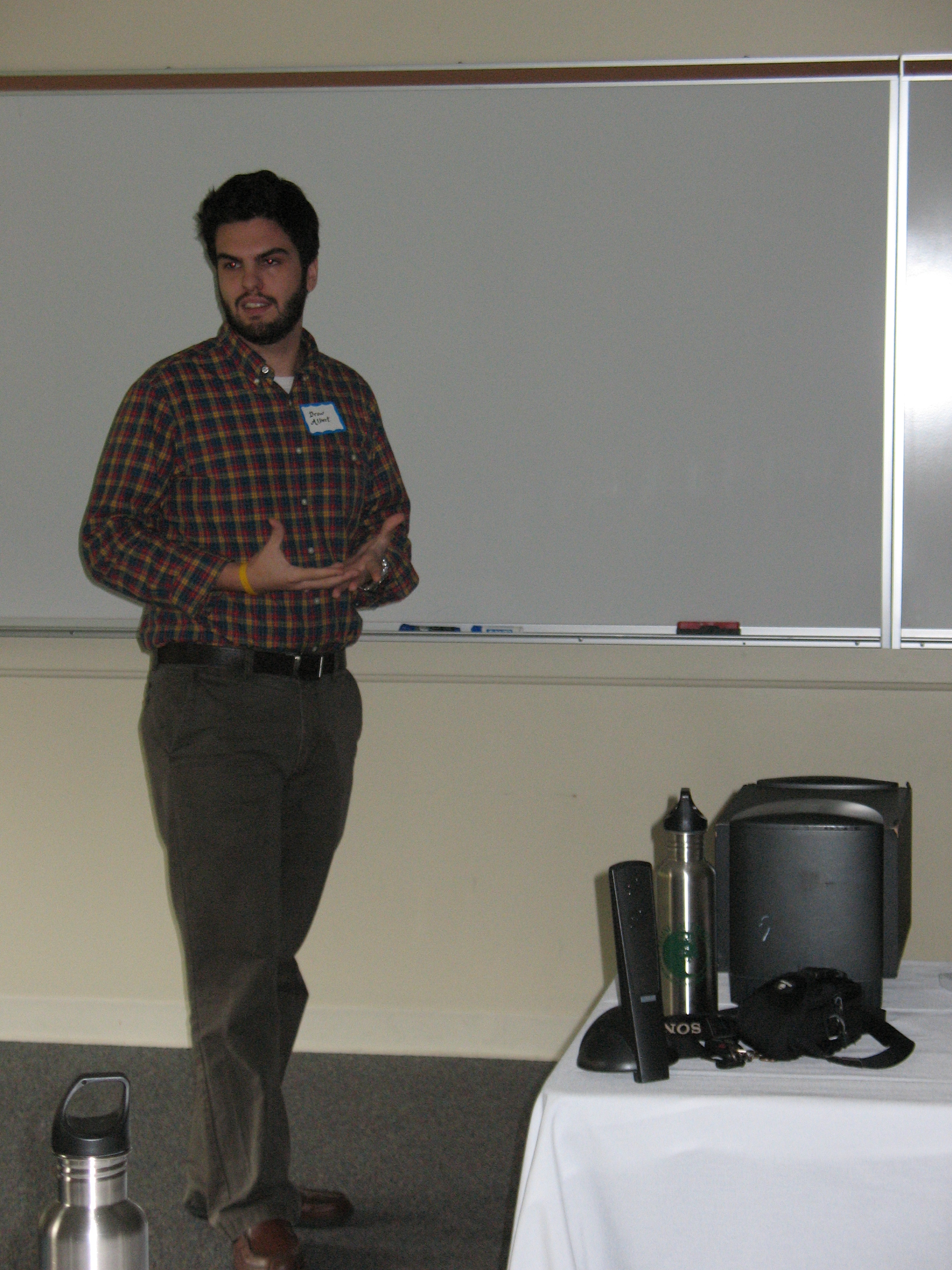
IMG_0126Drew Albert has been teaching at Maranacook Community High School in Readfield, Maine for two years. The high school serves about 400 students and Drew teaches both instrumental and vocal music.

What do you like best about being a music/art/drama/dance educator?

Certainly the most rewarding part of being a music educator is the students. It has proven to be an incredible experience to be their teacher. I feel such a sense of pride when they do something they thought they weren’t capable of, or when they realize a passion for music they might not have known they had.

What do you believe are three keys to ANY successful visual and performing arts education?

  1. Collaboration and support. Everyone needs to work well together: teacher and student, parents and teacher, administration and teacher, student and student.
  2. Vision. Setting goals for any program is the best path for growth, musically and otherwise. Reaching attainable benchmarks leaves myself and my students feeling accomplished, while also developing as both individuals and as a group.
  3. Passion. I want my students to find their passion even if it isn’t for music. Students should feel they are in an environment where they are free to express themselves and create; to take risks and make mistakes; to learn, laugh and grow.

 How have you found assessment to be helpful to you in your classroom?

Assessment has been the biggest tool in guiding my teaching. Having to work with many students, all performing at various levels, I felt responsible for knowing each students’ strengths and weaknesses. Preparing meaningful individual assessments has prevented me from letting any of my students fall through the ‘proverbial’ cracks. More often than not, I found areas in which I needed improvement. Assessing my students on a regular basis provides me with an observation of my own teaching, which is especially important considering the busy schedules of administrators and colleagues. These assessments have been an invaluable tool in evaluating student progress from lesson to lesson.

What have been the benefits in becoming involved in the arts assessment initiative?

To be surrounded by so many incredibly supportive and passionate individuals has been the greatest benefit of the initiative. I have learned so much from everyone that I am able to use in my own teaching, and we have really had a lot of fun together!

What are you most proud of in your career?

Without a doubt, being fortunate enough to be hired by Maranacook High School my first year out of college. They trusted that I was the right person for the job, so I try my best everyday when I get to school.

What gets in the way of being a better teacher or doing a better job as a teacher?

Time, for sure. That’s a universal issue. More time for students and teachers. Our students have so many opportunities to take advantage of. Naturally, the majority want to be involved in as many activities as possible. It’s no wonder we run into scheduling problems! Sometimes the math team is missing from dress rehearsal, others times a track meet is scheduled for the same day as the big Memorial Day parade. We just have to do the best we can and usually things will fall into place.

I also find myself getting in my own way. It is very easy to over plan for a particular lesson. Creating a behemoth of a plan with an unnecessary and confusing set of directions, assessment, rubrics, scales, standards, bells, whistles and the kitchen sink. I have learned these past two years to keep things simple, succinct and meaningful.

What have you accomplished through hard work and determination that might otherwise appear at first glance to be due to “luck” or circumstances?

I felt very lucky to sign my first contract at my current school. The truth is, I’ve been very fortunate to work with many supportive, passionate people. From my high school music teachers to my professors at the University of Maine, they are the ones who got me to where I am today, as well as my colleagues, friends and family. I owe them thanks for inspiring me to work even harder.

Look into your crystal ball: what advice would you give to teachers?

Every once in a while, congratulate yourself! You work hard. You inspire your students. You get to school early. You stay at school late. You put on concerts and fundraisers. You create and motivate. You play music and paint and act and dance. You are pretty great!

If you were given a $500,000.00 to do with whatever you please, what would it be?

Pay off my sister’s student loans and mine. Then I would take my entire family on vacation: aunts, uncles, grandparents, cousins…the whole crew. The last time we did that we went to Disney World. I’m thinking maybe Vegas this time? With whatever was left I would buy lots of new toys like guitars, ukuleles, steel drums…you name it. And of course I would share them with my students!

Imagine you are 94 years old. You’re looking back. Do you have any regrets?

I would be pretty excited to see 94! There will always be regrets in my life and career. In the words of Henry David Thoreau, “Never look back unless you are planning to go that way”.

Thank you Drew for sharing your story!


h1

In Today’s News

June 3, 2013

Mt. Blue High School

This is reprinted from the Franklin Sun Journal – written by Ann Bryant, June 2, 2013

FARMINGTON — What Devin Ferreira received while a student at Mt. Blue High School has inspired him to want to give back.

Now a performing rap musician, who combines rap and the saxophone, and a full-time teacher in Boston, Ferreira, 24, has started a scholarship award for a student at Mt. Blue.

“They inspired me to pursue a music career and once I started to be more successful, I wanted to give back to the people who gave me so much,” he said Friday.

Awards Night for senior students begins at 6 p.m. Tuesday, June 4, in the high school gym, according to the school’s guidance department.

Ferreira will come back to present the first scholarship Tuesday night. He graduated from Mt. Blue in 2007 and wants to say something to the seniors.

“It’s the biggest reason for the scholarship,” he said. “When you’re growing up, you have a dream but sometimes it can get lost in reality. I can go back and say I was in your shoes. If I can achieve my dream, you can too.”

As a youngster growing up in New Sharon, Ferreira began rapping at age 6 and playing the saxophone at age 8.

“While in elementary school, the music program embraced me,” he said. “I was too young for the formal program but they allowed me to move up and play with the older kids.”

During his high school years, the music teacher, Karen Beacham, “took me under her wings and gave me extra tutoring in music theory and concert band,” he said.

Beacham has helped choose the recipient from this year’s class; it’s a student who also plays saxophone and plans on a career in music education, he said.

Ferreira has decided, no matter how much he earns, to give 10 percent of everything he makes back to kids. It’s something he’s done from the first check he made.

The Mt. Blue award will continue but he hopes to extend that and create a network of scholarships.

As a teacher of music at the Boys and Girls Club in Boston, he works with inner-city youths ages 10 to 18 five days a week. Ferreira teaches recording, song-writing, music production and performance, all the things he does when he performs and records.

“I want to continue that way,” he said of the dual positions. “As a teacher, I must continue to learn and be a student to teach kids.”

He said he enjoys the teaching, mostly because he can help inspire kids to overcome their challenges and fears.

Ferreira performs around the Boston area. He writes his own lyrics. He believes music has the ability to bring people together, support people and build community. The lyrics promote that, he said.

He was able to fuse his two passions, rap and the saxophone, together.

“A lot of people think rap is a certain way,” he said. “When they see what I do, it opens their minds to it.”

His work is what he calls rap/soul with lyrics that are message driven.

Many hometown friends have traveled to his shows in Boston.

“I feel their support,” he said. “It’s really special to me.”

Ferreira has written a song “Hometown.” This July he plans to come back to Farmington to do a show and film a video on July 27, one that includes local people and represents the things he loves about his hometown.

The Internet has expanded his audience. One video went viral in Farmington in one day, he said. He cherishes the virtual audience and friends and family in Farmington.

“I want them to support me first. That’s where it all began,” he said.

Ferreira earned a bachelor’s degree in Music Business at University of Massachusetts at Lowell and recently completed a master’s in education at Lesley University.

h1

Bangor High School

June 3, 2013

libraryartshow2013