Archive for December, 2013

h1

No Room for the Extras

December 12, 2013

Ed Week blog post

The following is a post from Stu Silberman’s blog from EdWeek called Public Engagement & Ed Reform, December 9, 2013.

Guest Blog posting by Christine Holajter, Hope Street Group Kentucky Teacher Fellow and K-2 General Music Teacher at Straub Elementary in the Mason County School District where she has taught for the past seven years.

It should have been a sign.

One of the first things we learned in my music education program my freshman year of college was how to advocate for music education. I always thought it odd that I would learn how to keep my job before I ever got one. Now as the budget gets tight in districts around the state as well as my own, I am continually approached by my teaching peers wondering what programs will be cut next year. Will my program be cut? With the push for more focus on Common Core and reduced funding, is there room for extras? But then I have to ask, why cut something that only reinforces and supports the Common Core while fully implementing 21st Century Skills and the Kentucky Program Reviews?

One of the reasons why I became a music teacher was because I couldn’t decide what kind of teacher I wanted to be. I knew I wanted to be a teacher but I wanted to teach it all. That’s why I became a music teacher. Regardless of what you call us: activities, extra-curricular’s, we teach all subject areas and provide enrichment opportunities that students wouldn’t otherwise experience in the regular classroom.

At any given time I may be teaching social studies by studying other cultures, such as Native American by learning some of their language, playing their instruments and discussing how they would hunt and use materials from their environment. We may be learning science while discussing how vibrations make sound, doing experiments and utilizing the scientific method. We practice our reading fluency by reading words in rhythm with inflection and counting syllables. We work with fractions and numbers while writing measures of music. On a daily basis I am reinforcing the content that my classroom teachers are teaching and often provide extensions that classroom teachers wouldn’t have time to teach, in ways that only a trained music educator could provide. Why cut programs that teach common core subjects in such in-depth ways with real-world applications and experiences that can’t be obtained in the regular classroom?

What about the 21st century skills that teachers are being asked to embed into their already full curricula? Activity teachers such as music, art, Physical Education, and Media Specialists in the Library have been teaching these skills all along. Music and art promote the critical thinking, innovation, and problem solving that employers and colleges highly value. Physical Education provides the mental and physical healthy lifestyle important for a long and fulfilling life. Media specialists provide learning through technology as well as real-world skills of analyzing and sorting through the immense amount of data our students will be exposed to in their lifetimes.

I feel lucky that I work in a school district that supports the arts. My administrators value me as an expert educator in a highly specific field that cannot be taught by a classroom teacher with a music textbook. My school wide programs and rehearsals are not a nuisance but an opportunity for students who may not find success on a standardized test to shine with an audience for all to appreciate what they can do.

It makes me so sad to hear about highly qualified and amazing fellow teachers around the state who are losing their jobs to budget cuts not because they are poor teachers but because they teach undervalued content areas in their school district. What is even more discouraging is thinking about those freshman music education majors in college right now who are being taught how to advocate for their jobs knowing that there aren’t many out there to even apply for.

When budgets get tight, I hope that schools consider the extra value that all extracurricular activities provide students: real-life learning experiences, enriching activities, the chance to be innovative, creative, and problem solve, working collaboratively and express themselves to name just a few. School districts can be creative and cut costs in many ways without trimming the extras.

h1

Using Classroom Portfolios to Evaluate Arts Teachers

December 11, 2013

Archived webinar

Wondering about the role that portfolios might take as part of an evaluation process for arts educators? This webinar was live earlier this week. You can access the archive by clicking here. Erik Robelen, the assistant managing editor of Education Week was the host. The power point that was used is available by clicking here.

h1

Grand Canyon

December 11, 2013

Amazing photographs

Whether you’ve been to the Grand Canyon or not I am guessing that you will find these photographs pretty AMAZING! I suggest you share this link with others so they can have the opportunity to see these amazing photographs taken in a rare weather event when the Grand Canyon appears to be filled up with cloud cover. They were taken in the last month from the South Rim of the Grand Canyon National Park. I am unable to figure out who the photographer is so I can give them credit. If you know who it is please post it in the comment section (below).

Please click here to view the images.


h1

Theatre Festival

December 10, 2013

300 high school students engaged in learning

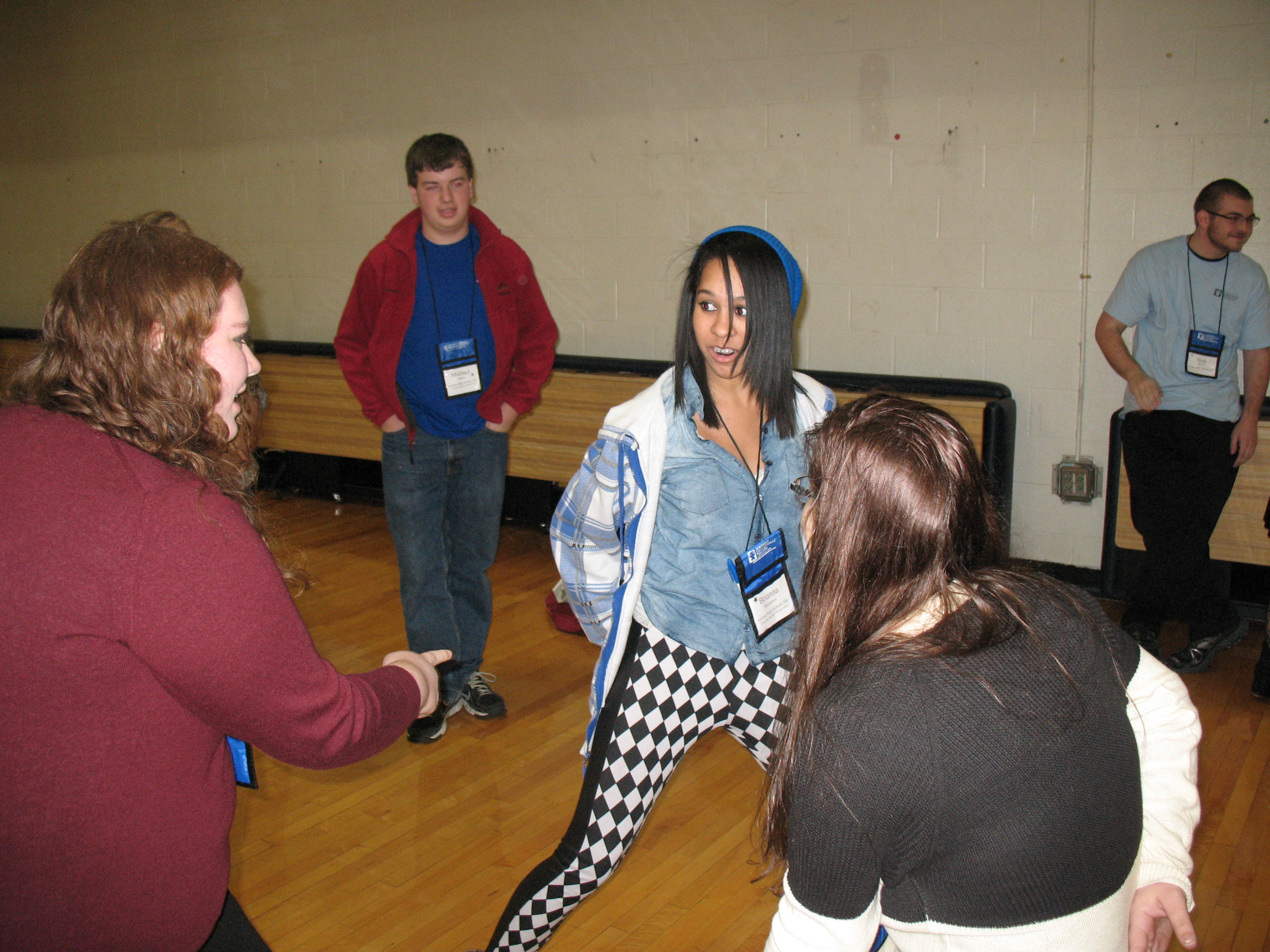
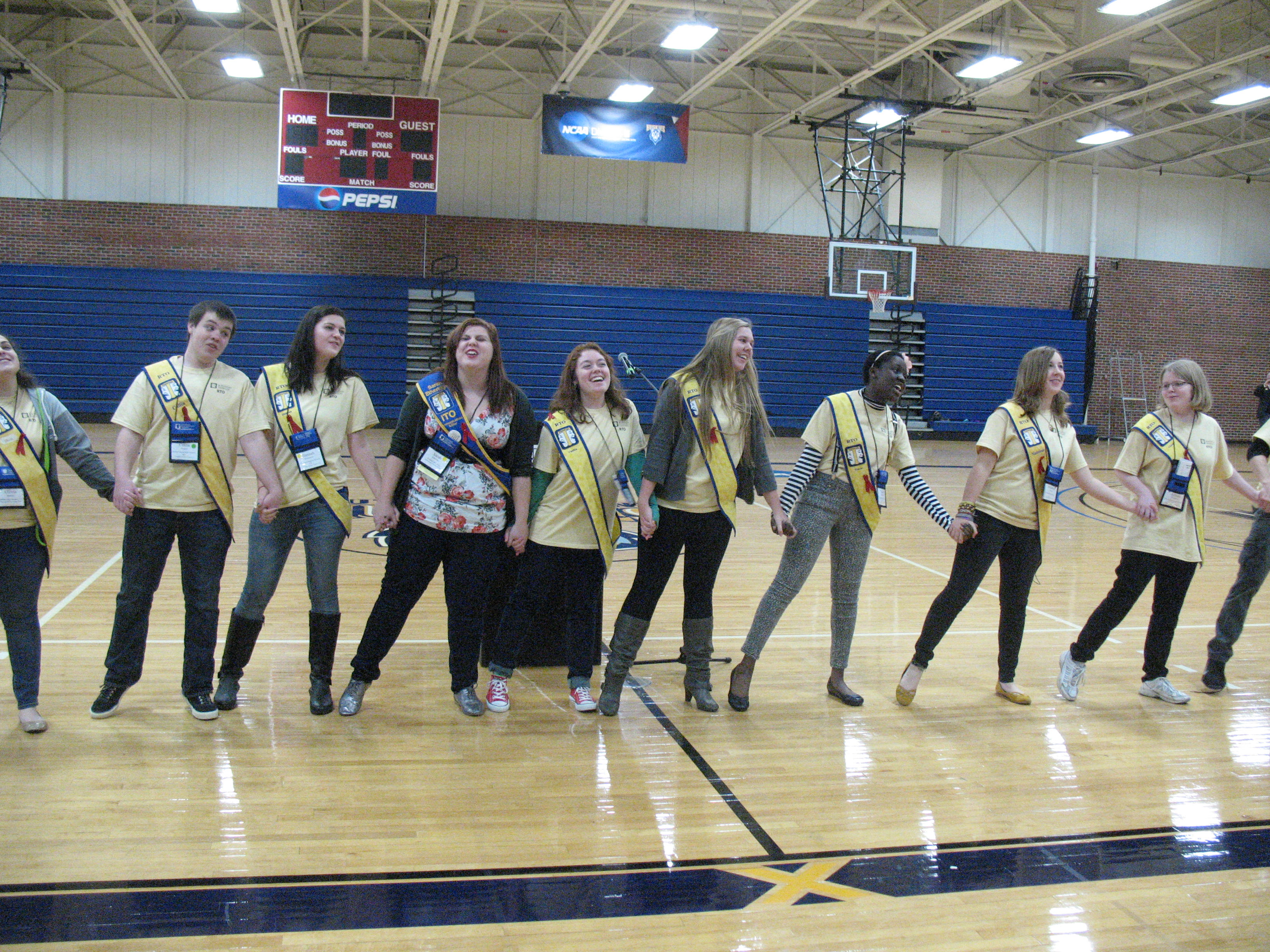
IMG_3771Every so often I have an opportunity to spend time with students. Last week I was with 300 high school students – the reason? To attend the Northeast Educational Theatre Festival that was held at the University of Southern Maine, Gorham campus. Rick Osann, arts educator from Bonny Eagle High School invited me to attend the event and I am so grateful that he did. What an experience!

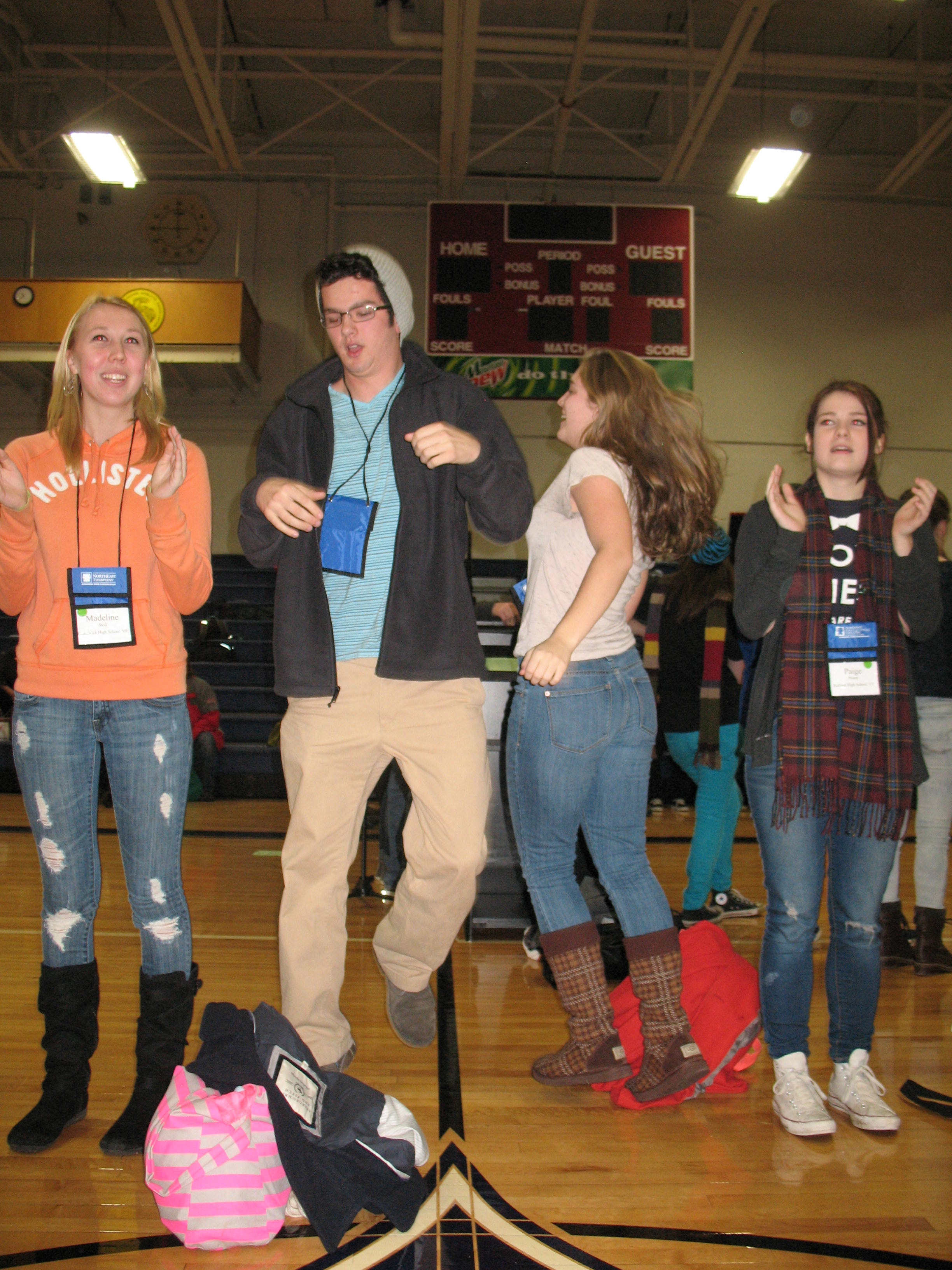
I watched as the regional thespian officers formally opened the event with a skit and proceed to provide information in a collaborative manner, utilizing their stage skills throughout. Students were easily split into groups with each leader facilitating 20-minute ice breaker activities with about 25 students each. As time passed the energy in the room rose and the activities did exactly what they were planned to do – engage students in a manner that provided them to get to know each other. I wish other teachers had a chance to observe since it was such a learning opportunity for me as well.

IMG_3740The two-day event has several purposes: to provide opportunities for students to meet others from around New England, networking to learn from others, to provide feedback to students, and to attend valuable workshops on a variety of topics. Some of the topics include: Leadership, Directing, Clowning, Film Auditioning, Medieval Comic Theatre and Masks.

Students returned to the bleachers for the continuation of the program to hear from a couple of the adults. I said a few words that included information that my younger son had shared with me about what he learned from participating in theatre programs growing up.

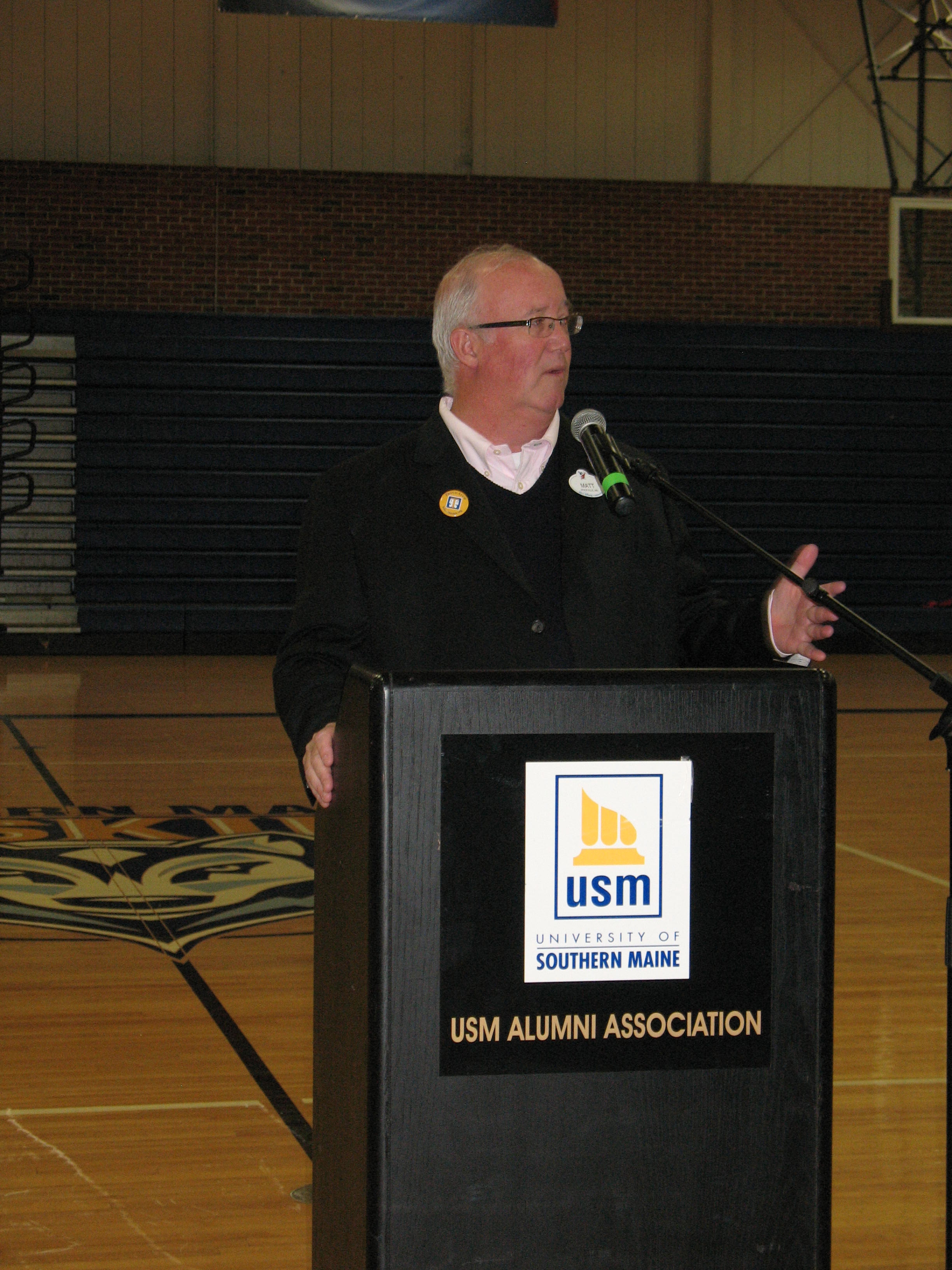
IMG_3746Following me was a wonderful presentation given by Matt Conover from the Walt Disney Company. His key points: inspiration, finding one’s spark, and leadership resonated with me. Mr. Conover traced his own history mentioning inspirational people who had (and do) provided guidance and trusted him to take on leadership roles. They also nurtured him to follow his dreams. In college he earned a degree in lighting design and gave back to his own high school. He started in at the ground floor at Disney and 17 jobs, 25 years later he continues to love the work he does.

I was sad to leave and not be able to participate in the many workshops being offered over the next day and one half. Along with workshops, I am certain the students realized how fortunate they were for the opportunity. I know I was appreciative! The morning was a reminder of why I do what I do! Congrats to the student leadership team and the adults who worked so many hours to plan and implement an event of this magnitude.

IMG_3766 IMG_3755 IMG_3786

h1

Congratulations Dennie Palmer Wolf

December 9, 2013

Proud to know Dennie!

OLYMPUS DIGITAL CAMERADennie worked with Maine arts education during 2008 when we conducted the state-wide arts education census. It is great to see her being recognized for her accomplishments on behalf of arts education! Congratulations Dennie!

Introduction for Dennie Palmer Wolf
2013 Recipient of the National Guild Service Award
National Guild for Community Arts Education
Elizabeth Whitford, Executive Director of Arts Corps
Chicago, November 2, 2013

The National Guild Service Award was established in 1989 and is conferred annually to an individual who has given exceptional service to the National Guild and to community arts education. Some of the prior recipients of the Award include: Margaret Perry, Michael Yaffe, Kalman Novak, Alice Pfaelzer, Azim and Lolita Mayadas, and Betty Allen.

The recipient of this year’s award is a leader in our field for whom I have great admiration. I am proud to present the 2013 National Service Award to Dennie Palmer Wolf in recognition of her lifelong dedication to advancing access to arts education and building the capacity of the community arts education field to increase its impact on the lives of students and communities.

Dennie is a principal researcher at WolfBrown, an international arts research and consulting firm. She has a doctorate from Harvard in developmental psychology, and she served as a researcher at Harvard Project Zero for more than a decade. At WolfBrown, Dennie pioneered evaluation that builds the capacities of schools, cities, and cultural organizations to support young people’s development as the next generation of thinkers, innovators, and creators. In recent years, Dennie particularly focused on supporting a number of city-wide and regional consortia and initiatives that build systemic efforts designed to support critical and creative learning in and out of the school day.

I first met Dennie a few years ago when I had a special opportunity to tour the Weill Music Institute’s Musical Connections program, for which she was serving as an evaluator. My first impression of Dennie was that she was cool. You know, like “New York cool”.

My second impression was that she was really smart. She was developing a rich, full-spectrum approach to evaluation in areas many of us doubt can be measured: the impact of a one-time, powerful music experience during a time of duress; the way arts learning might impact the activities a young person chooses to engage in throughout their day.

My final impression from that first meeting, perhaps counter to my stereotypes of “New York cool” and Carnegie Hall, was that she was completely unpretentious and accessible. I saw her on the floor engaging with kids naturally, welcoming of critical feedback and never defensive.

I was able to confirm these first impressions and get to know Dennie much better when I asked her to come help Arts Corps with some work we were doing to expand classroom-based arts assessments to include 21st century skills for Seattle Public School arts classes. This effort is part of our city-wide arts education initiative now called the Creative Advantage.

A significant part of this work involved collaborating with district arts teachers; some of whom, after years of feeling professionally marginalized, initially approached the task with wariness. We knew that one of the most important tasks of the project was to build trust with the teachers, and Dennie was able to do so quickly through her special mix of expertise, openness and responsiveness.

Dennie also proved to quickly learn our school district’s unique context and to be pragmatic without sacrificing quality. My initial inclination was that we needed to dump the old arts assessments and start anew. Dennie helped me recognize the value of what was already in place, and instead, look to build off of those strengths. Through Dennie, I learned to strive for incremental changes toward greater depth and quality in instruction and learning when working in a large system, such as the school district. And, through relationship-building, pragmatism and responsiveness to the context in which we were working, we have in fact exceeded our expectations around the level of quality of the new arts assessments in Seattle Public Schools today.

I know that many of you here today have also had the great privilege of working alongside Dennie, and I have no doubt there is much more you could add in celebration of her incredible service to this field. So without further ado, please join me in congratulating Dennie Palmer Wolf.

h1

New England Institute for Teacher Education

December 8, 2013

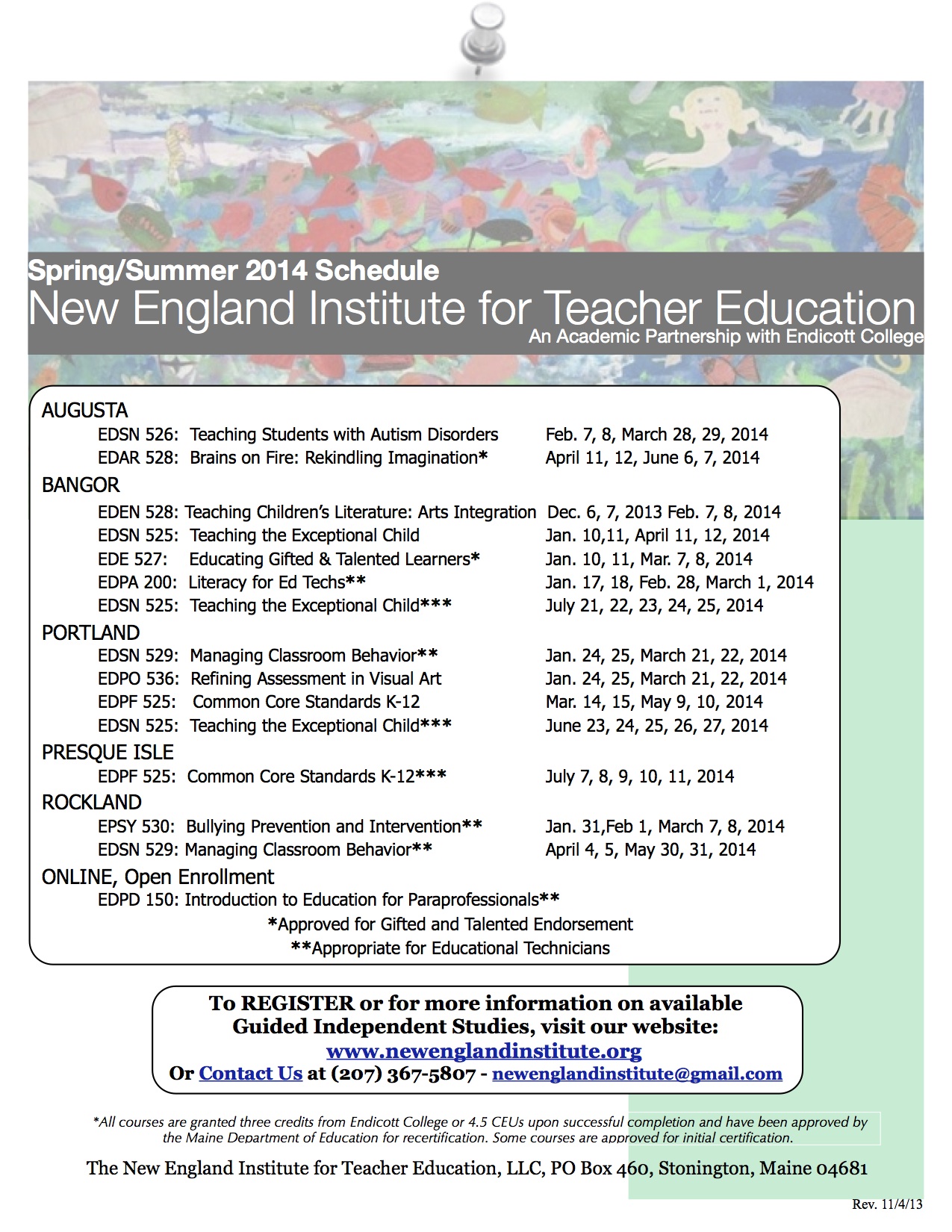
Offering courses on arts education

Children's Lit & Arts FlyerSpring 2014 Schedule

h1

The Power of the Theatre

December 7, 2013

Theatre information

Below are the beginnings of very interesting articles on theatre education. So many good examples of how theatre education is empowering and providing meaningful arts education opportunities. The articles are located in the TYA News most recent postings. To learn more please go to the site at http://www.assitej-usa.org/.

Using Drama to Embody Social Skills – It’s all about empowering students. Taken from TYA/USA Next blog: Barrett Scroggs writes, “I am currently pursuing my MA in Drama Therapy at Kansas State University. According to the website for the North American Drama Therapy Association, Drama Therapy is defined as ‘the intentional use of drama and/or theater processes to achieve therapeutic goals.’ The biggest strength of Drama Therapy is the use of embodiment.” And the link is http://nextusa.wordpress.com/2013/11/18/using-drama-to-embody-social-skills/.

Youth Theater Tackles Complex Subject by Alyssa Harvey for the Daily News about how in a youth theater in Kenntucky students are facing difficult subjects through the use of theater. Click here for the entire article.

Amidst drugs and violence, art turns lives around in P.R. housing project written by Kristina Puga for NBCLatino. This is the story of how one young man who seemed destined to end up like his father or mother in a violent world of drugs found the arts as his ticket out. Antonio Morales was 15 at the time. Now 31, he found success in multiple ways through the theater. To read the entire article please click here http://nbclatino.com/2013/11/11/amidst-drugs-and-violence-art-turns-lives-around-in-p-r-housing-project/.

The Hoboken Children’s Theatre Company is bringing Stephen King- adapted Carrie the Musical to life. Broadway star Lisa Capp shares the stage with young people from the community. Read more at http://www.nj.com/jjournal-news/index.ssf/2013/11/carrie_takes_kids_theatre_comp.html

h1

Assessing the Arts

December 6, 2013

educationcloset

A newsletter that by-line reads: Professional Development for Integrated & Innovative Teaching and is found at http://educationcloset.com/2012/12/21/why-am-i-responsible-for-assessing-the-arts/. The post includes some of what we know, understand, and believe. However, it also provides ‘food for thought’ that might provide you with ideas to consider as we navigate teaching the arts these days including assessment! The site has other information that you might find interesting as well.

h1

MAEA Logo

December 5, 2013

Submit your ideas

Maine Art Education Association – Logo Design Challenge

Screen shot 2013-12-02 at 6.28.46 AMWant to help promote visual arts education to be recognized at conferences and other public events? Please help by designing a new logo! This challenge is open to students and adults.
The first round of submissions should be sent by 1/8/2014. We may offer future submission dates until a design that resonates with the board is presented.

Requirements:
The image must be bold and easy to reproduce
. Submission format: RAW or jpeg with 300dpi resolution will be accepted. The design must include the word ME or Maine. 
Please avoid cliche symbols of Maine (e.g., a lobster holding multiple paint brushes.)

To see what other art education associations are using for logos, go to: http://www.pinterest.com/mainearted/art-education-associations/

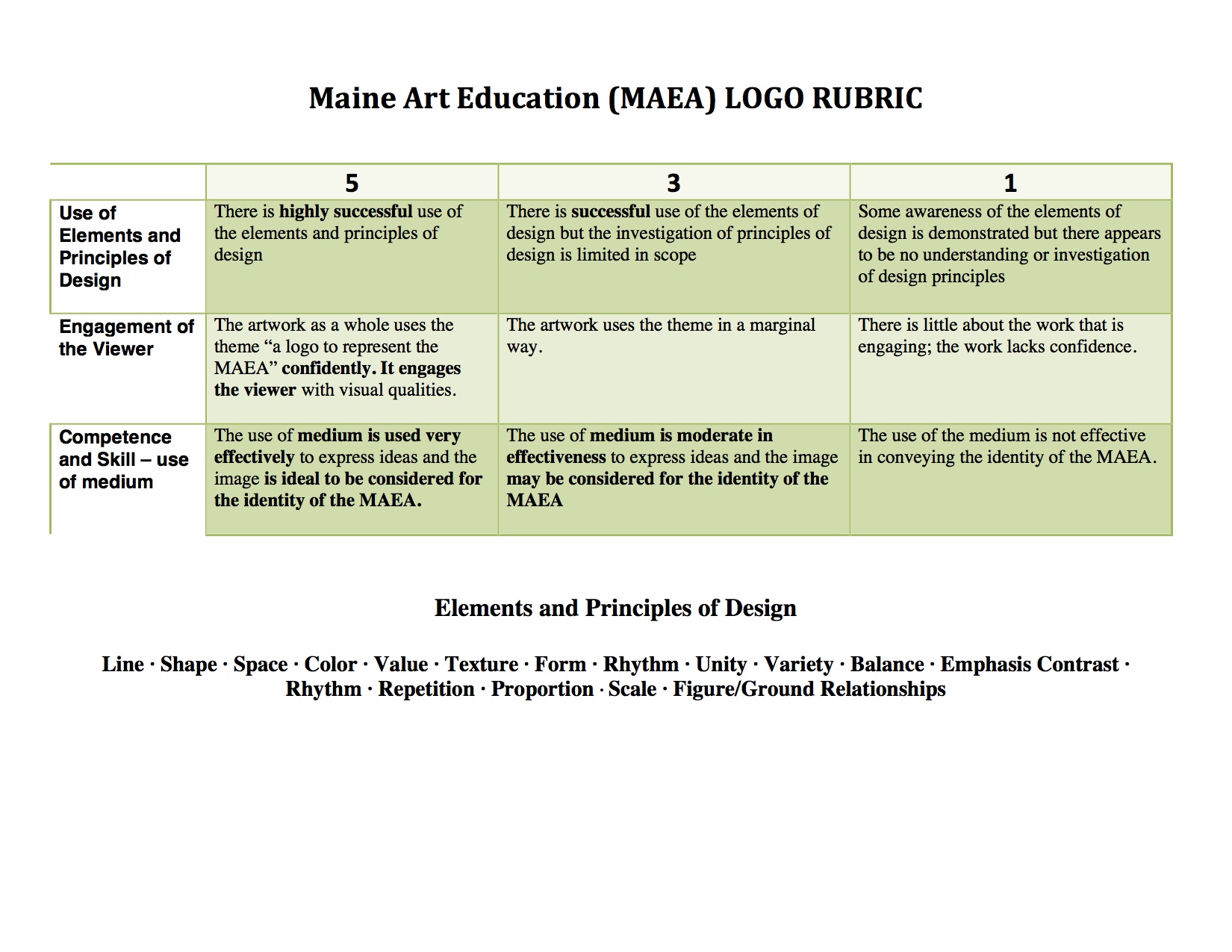
All designs will be reviewed by Maine Art Education Association board members (rubric below). The selected logo will be featured in future correspondence and be used to represent the organization. The designer of our selected logo will have a nice addition to his or her resume and will enjoy a $100.00 gift card on behalf of MAEA.

All submissions should be directed to: delrossic@link75.org. Please include your name, email, and school(s) you work at or attend.

A signed media release form must accompany your submission.  Email delrossic@link75.org for a copy of the release form and send a hard copy of the media release form to MAEA, PO Box 10463, Portland, ME 04104.

MAEA logo rubric jpeg

h1

Music Sharpens Brain Pathways

December 4, 2013

Quality music programs are essential

Education Week, November 25, 2013 in an article called Music Training Sharpens Brain Pathway Studies Say, writer Sarah D. Sparks provides an overview of the new research suggesting that the “complexity involved in practicing and performing music may help students’ cognitive development.” Now that is information that I am sure Maine music teaches are aware of and observe it day – to – day teaching students music.

Read the entire article by clicking here.