Archive for April, 2014

h1

Playwrite Competition

April 20, 2014

Kennedy Center VSA

The Kennedy Center VSA Playwright Discovery Competition invites middle and high school students to take a closer look at the world around them, examine how disability affects their lives and the lives of others, and express their views through the art of script writing. Writers may write from their own experience and observations or create fictional characters and settings. Scripts can be comedies, dramas, or even musicals. Maximum award: Division 1 (Grades 6-8, or equivalent): $375 for his/her school; publication in the 2014 VSA Playwright Discovery Program booklet. Division 2 (Grades 9-12, or equivalent): $750 scholarship, $375 for his/her school; publication in the 2013 VSA Playwright Discovery Program booklet. Deadline: April 28, 2014.

For more information please go to http://www.kennedy-center.org/education/vsa/programs/playwright_discovery.cfm

h1

Community Supported Arts Project

April 19, 2014

A collaborate project and much more

Susan Bickford is an adjunct professor at the UMA. Recently she did a most interesting collaborate project that challenged students in a unique way. You’ll learn about the project in this post along with Susan’s story.

Susan’s most recent project

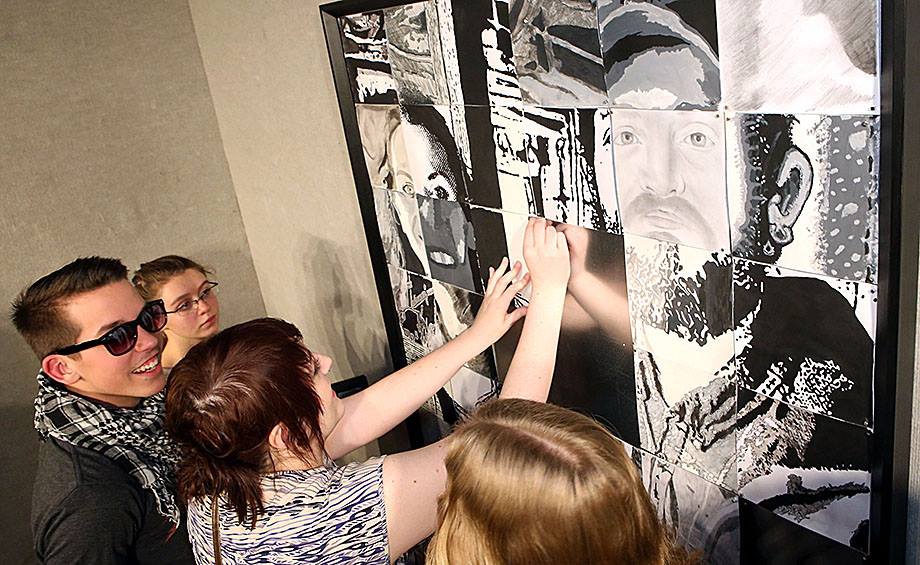
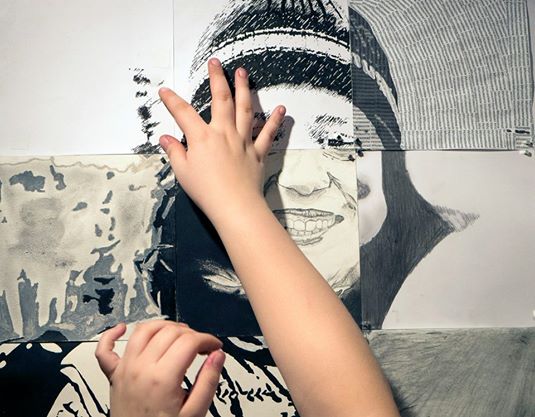
1560699_479914208779321_552558491_nThe Collaborative Portrait Project began in my 2-D classroom four years ago. I wanted to develop a project that required a group effort, like the experiential education games that we played on Cow Island at Ripple Effect. I wanted to translate that group leadership dynamic to art making. At the same time I had to deliver the value studies lesson. I was also mandated to work both digitally and manually. So in this project I begin by asking the students to research and nominate a hero, “give me three good reasons why I should vote for your candidate”. At first they suggested movie stars and pop idols, like Micheal Jackson, Hugh Jackman, and they were all male. I hinted that they could go deeper and choose people that were more meaningful to them, more relevant of the present time, and more deserving of an epic portrait. Now we are getting nominations like Malala Youzefsai, Amelia Earhardt, Edward Snowden and the Dalai Lama. Each time I do the project I figure out a better way to do a certain aspect of it. The students give me suggestions.

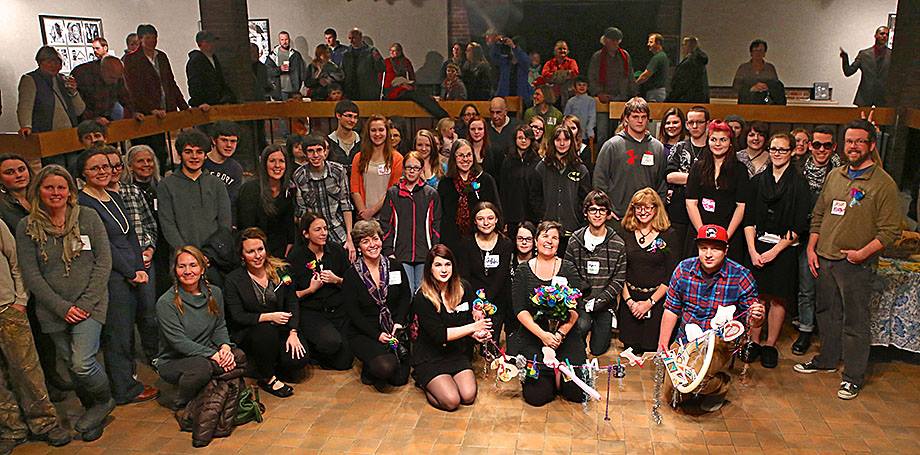
1495476_480294335407975_371321812_nThe most recent iteration of the Collaborative Portrait Project is the Farmers Edition. Over the course of making a video documentary of a growing season on the Goranson Farm, farmers in general had become my heroes. In this case I nominated the farmers that I had worked with in the CSA: Community Supported Arts Project with the Harlow Gallery. Ten of the farmers that participated in that project agreed to be subjects for the portraits. I solicited Allison McKeen to take photographic portraits of the farmers, applied a coded matrix and digital filters. Now all I needed was a group to help me make the 360 panels. Deb Fahy who helped to find funding for the project connected me with the education committee at the Harlow Gallery through which 10 teachers committed to doing the project with their classrooms. I taught the teachers the methods at workshops and distributed the panels. Our first meeting was in April, the students made the panels during the Fall semester and we showed the portraits at the UMA Danforth Gallery in January. We even got materials donated by local businesses: Artist and Craftsman Supply and A.C. Moore. Ten four foot portraits of farmers from Maine, made collaboratively by 10 teachers and their 250 students. Each panel is lovely, it is amazing how they all fit together. You can see them now on the website at www.collaborativeportraitproject.com. Epic Portraiture throughout most of history has been reserved for monarchs, religious leaders, and the very rich. Images of the few, commissioned by the few, made by a master. They reveal the dominant paradigm of their time. Andy Warhol utilizing mechanical reproduction shifted the subjects of portraits to include ordinary people and cinematic moments. Chuck Close magnified virtuosity and mastered imperfection as beauty. In contrast, making portraits in collaboration, redefines how we see ourselves as a group. This is a radically different model, many with many, not icons but locals, not virtuosity but inclusiveness. My colleague Robert Rainey designed a gorgeous documentary book of our process with a DIY section which you can view and purchase on blurb.

participantsCPPF

What are your next steps with the collaborative project?

Thank you so much for asking me that question, you might think that after doing this project with 360 moving pieces and so many people that I would be exhausted but there is something about the group dynamic that is energizing me. You have to follow your flow, so I want to do this nationally. “100 heroes” is what I am calling the next iteration for this system of collaborative portraiture. I want to work with teachers across the country, teach them the project, have each group nominate a local hero and feed it into the system. We will all learn about what amazing things local people are doing all around the country. One thing I learned from the Farmers Edition was that the kids really enjoyed being part of a larger group. It inspired them to work really hard on their panels. To belong to this larger group was expansive and empowering. Another thing that confirmed to me by Carolyn Brown from Camden Hills Regional High School was that the digital filters assisted the students in their manual reproduction. The abstract nature actually facilitated the value study because it reduced the preconception of content. I want to highlight both of these discoveries in the national project. I am developing an online interface so that all of the portraits will be remotely uploaded to the internet, and the participants will be able to pick their panels much like you would pick an airplane seat. Then apply the filters, print them out and manually and reproduce them. Finally they will send them all, carefully coded, snail mail in a packet to the exhibition site. The collection of portraits serves to empower through involvement, and make visible an index of hope for the future. Can you imagine all these newly elected heroes, portraits traveling in pieces across the country toward their exhibition to be put back together like ambassadors of hope? It gives me chills.

What is your background?

As an artist I have always pieced my living together with lots of part time work. I grew up here in Maine, in Yarmouth. My fathers side of the family goes back seven generations in the Lisbon Falls area. When I graduated from college I worked doing environmental graphics in DC for a short time. But I soon moved back to Maine and started my own business making fine craft jewelry. I had big clients like Barneys and Nordstrom as well as many small galleries. I did wholesale trade shows for 15 years, as well as taught ceramics and metal smithing at North Yarmouth Academy and continuing education venues. Then I had my daughter Bella, which changed everything because I wanted to be with her all the time. When she was three, I started the MFA program at Maine College of Art (MECA) which really re-invigorated my art practice. My mom encouraged me to continue my studies. I studied at Rhode Island School of Design (RISD) in the early eighties, now it was the new millennium and so much had changed in those 15 years. In the Masters program at MECA I was required to read and write, to think and articulate my thoughts. My artwork is systems of interactivity. Sometimes I make installation with projected video and sound that viewers can modify with their movements and voice. Other times I make projections for theater. I was the artist in residence at Ripple Effect on Cow Island for several summers, living in a tent, being a video instructor, making rings and environmental sculpture. Nature is a very important element in my work. Since 2003 I have been teaching at the college level within the University of Maine system, Augusta, Farmington, USM, and Orono and more recently at MECA. I teach 2-D, 3-D, Electronic Art and various seminars.

How did you get interested in art? 

I got my start in art because my Grandmother Vivian took me to art classes with her on Tuesday nights all through high school in the seventies. We drew with colored pencils, Mr. Matolchy and Lee Bean were my teachers, I wasn’t very good at drawing but I learned to see, make marks and the discipline of practice. Then my parents funded my undergraduate studies at RISD. I probably would not have gotten accepted if not for those classes. My Dad suggested I major in Industrial Design because it was applied, he was an engineer and liked that idea. It has served me well, I have a fond place in my heart for machines and manufacture, and well functioning, elegant objects. I like problem solving and design process. The jewelry that I made was modular and utilized all of that training. When I think about installation it is with a knowledge of three dimensional space and ability to build things.

What is your role at UMA?

Since 2003 I have been an adjunct faculty member at UMA. We have great art facilities there, for printmaking, sculpture, photography, painting, electronic art and ceramics. The faculty are really passionate about teaching and their media.  Most of our students are place bound and would not have the resources to travel to other locations to study so I feel we are providing a valuable service for Central Maine. In the twenty-first century everyone utilizes media so having some visual literacy is a skill employers are looking for.

For more information email sbickford@tidewater.net.

h1

Cultural & Strategic Planning Kickoff

April 18, 2014

MAINE ARTS COMMISSION – We Want to Hear from You!

The Maine Arts Commission is looking for artists, arts organizations, economic development professionals, educators, government & elected officials, tourism officials and anyone who is passionate about the arts, to attend a feedback meeting at one of the locations and times shown below.

The purpose of these meetings is to:

  • Inform us of your perceptions of the cultural industry in Maine–both positive
    and negative.
  • Learn about current relationships that exist across sectors and the results they are yielding to enable continued support of what’s working.
  • Explore potential benefits and outcomes of smarter partnerships between the arts and culture sector and other sectors.
  • Lay the groundwork for surveying or obtaining other types of input from these various sectors as appropriate.

Register today! Please click here to reserve your spot in one of the meetings.

APRIL 22 Ÿ 10 – 11:30 a.m. – One Longfellow Square

181 State Street

Portland, ME 04101


APRIL 22 Ÿ 2-3:30 p.m. – River Tree Arts

35 Western Avenue

Kennebunk, ME  04043


APRIL 23 Ÿ 10-11:30 a.m. – Harlow Gallery

160 Water Street

Hallowell, ME 04347


APRIL 23 Ÿ 6:00-7:30 p.m. – University of Maine Museum of Art

40 Harlow Street

Bangor, ME 04401-5102


APRIL 24 Ÿ 10-11:30 a.m. – Waterfall Arts

256 High Street

Belfast, ME 04915

h1

The Ant Girls

April 17, 2014

UMaine, Lewiston

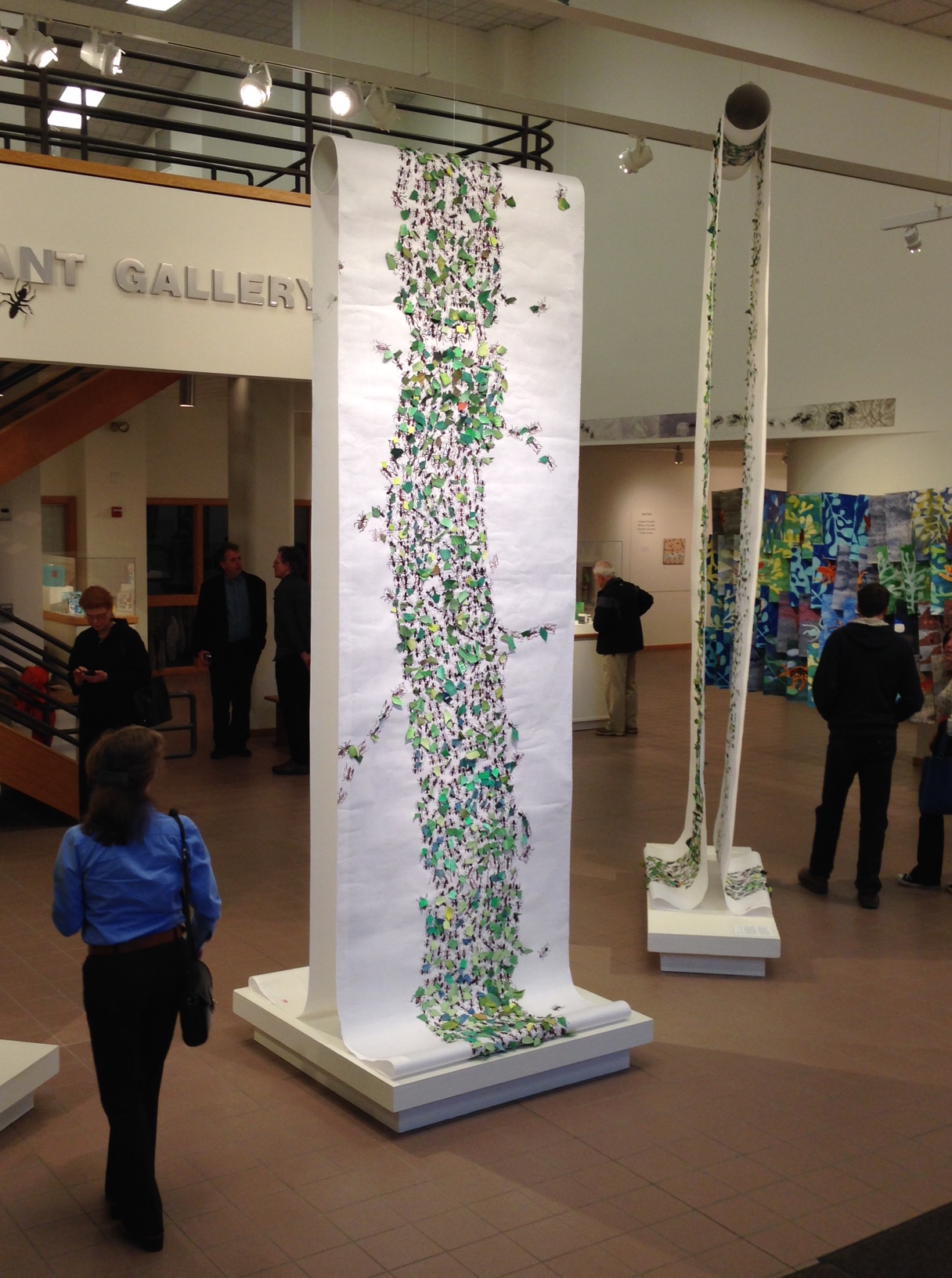
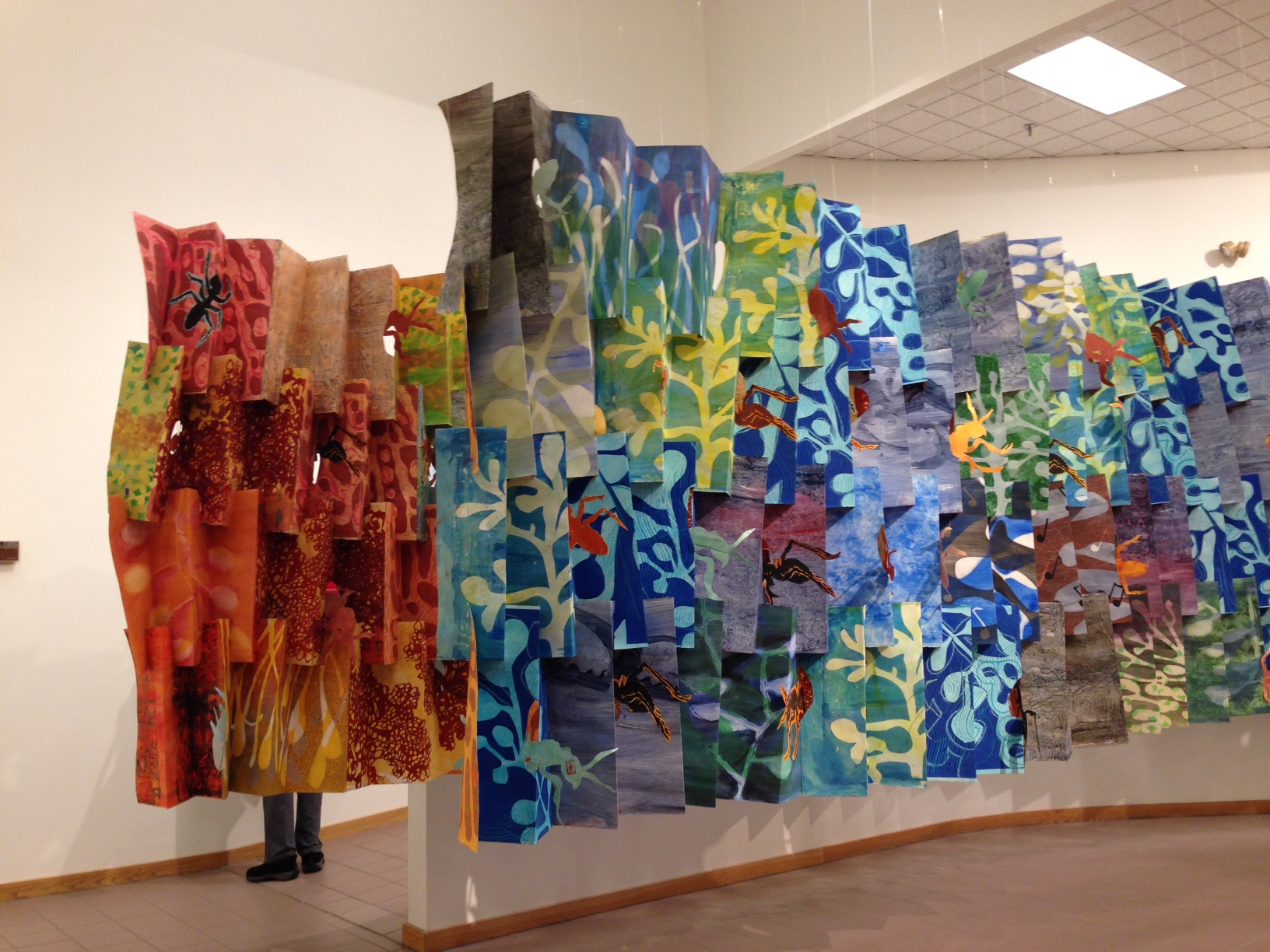
The University of Maine, Lewiston campus is the site for an art exhibit called Ant Farm. The Ant Girls are artists Dorothy Schwartz, Rebecca Goodale, Vivien Russe and Colleen Kinsella. These 4 Maine based artists have been collaborating to merge art and science through the visual exploration of leafcutter ants. The Atrium Art Gallery, 51 Westminster St., Lewiston is the exhibit location and will remain until June 6. The show is a great example of the connection of art and science and would be an excellent exhibit for students to visit.

If your school has limited funding for field trips please note that the Maine Arts Commission Ticket to Ride funding is still available and this is a perfect opportunity for your school to apply for the funding. Information and details are located at https://mainearts.maine.gov/Pages/Education/Ticket-to-Ride.

I am delighted to think that Ticket to Ride funds can be used for this–it is such a creative explosion of science and art put together by 4 artists working in different mediums plus a soundtrack! ~Carolyn Wollen

Artist Dorothy (Deedee) Schwartz passed away in March but her husband, musician Elliott performed at the Ant Farm opening this past week with musicians Caleb Mulkerin and Colleen Kinsella. Elliott and Caleb composed the piece “Ant Girls” for the show.

You can read the Ant Girls blog to learn more. Included are more photos of the exhibit, and listen to the sound tracks of the piece that Elliott and Caleb composed at http://antgirlsmaine.blogspot.com/.


photo 2

photo 3


I am delighted to think that Ticket to Ride funds can be used for this–it is such a creative explosion of science and art put together by 4 artists working in different mediums plus a soundtrack!

h1

Lisa’s Room

April 16, 2014

Madison Elementary School

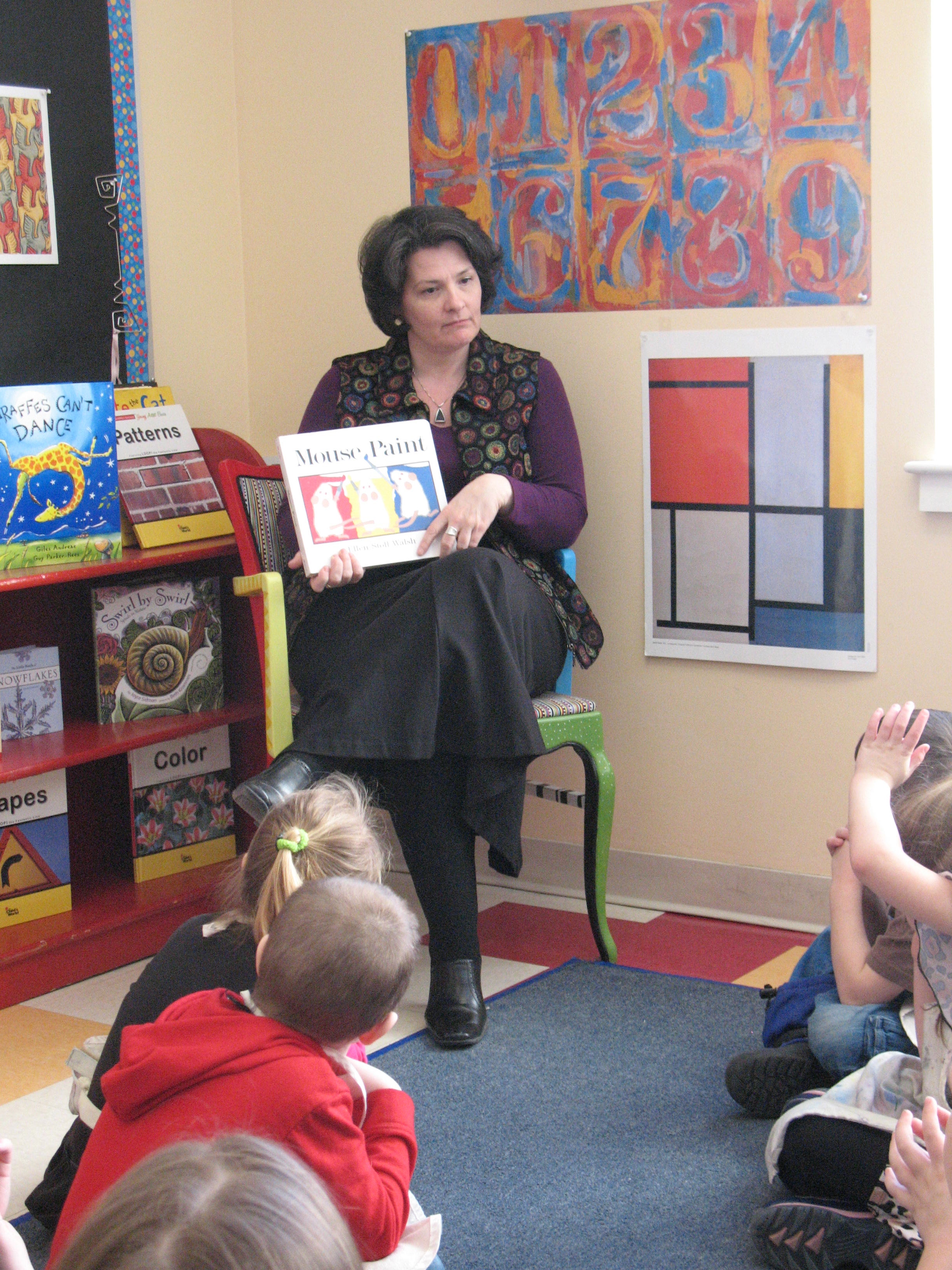
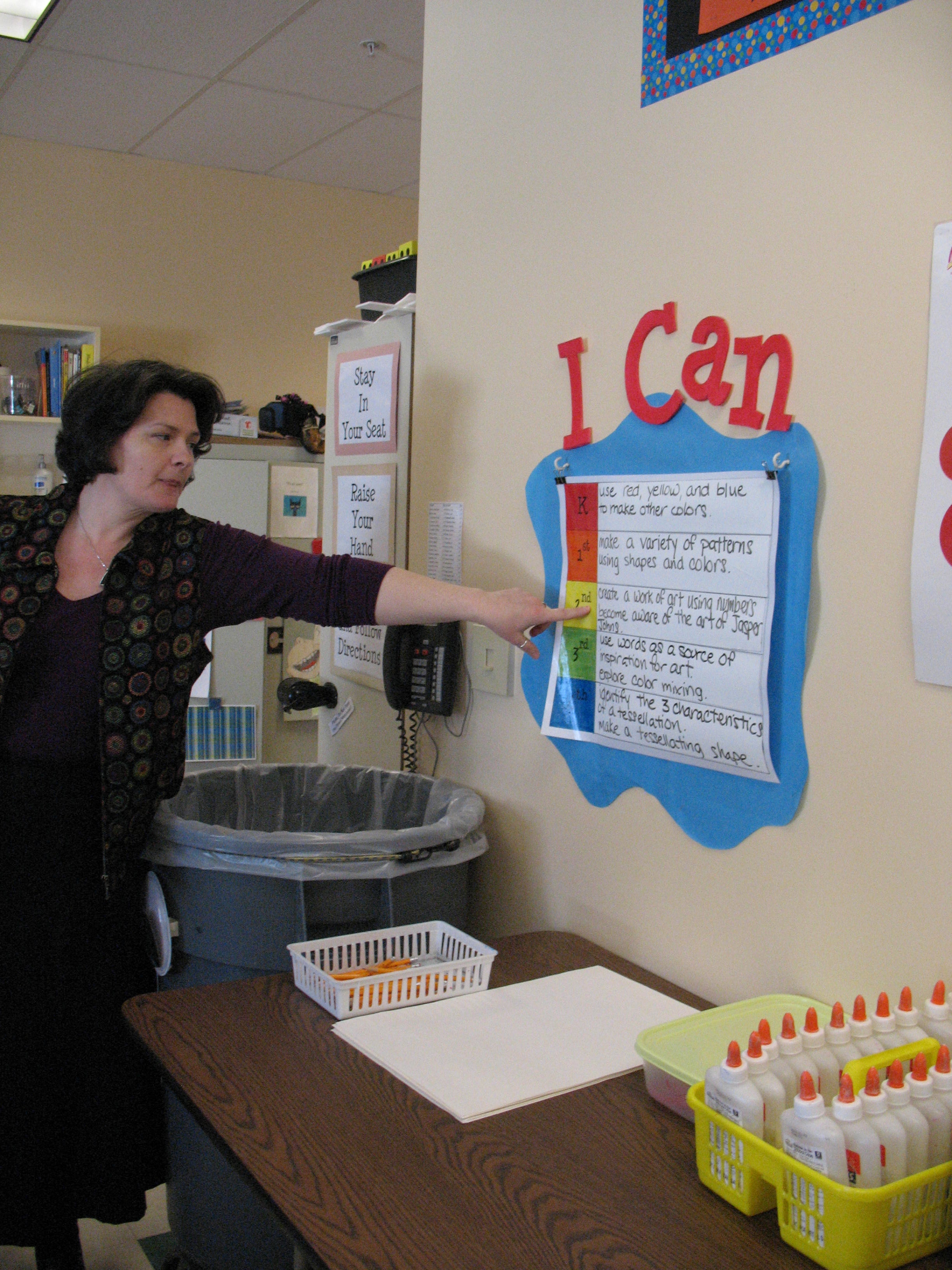
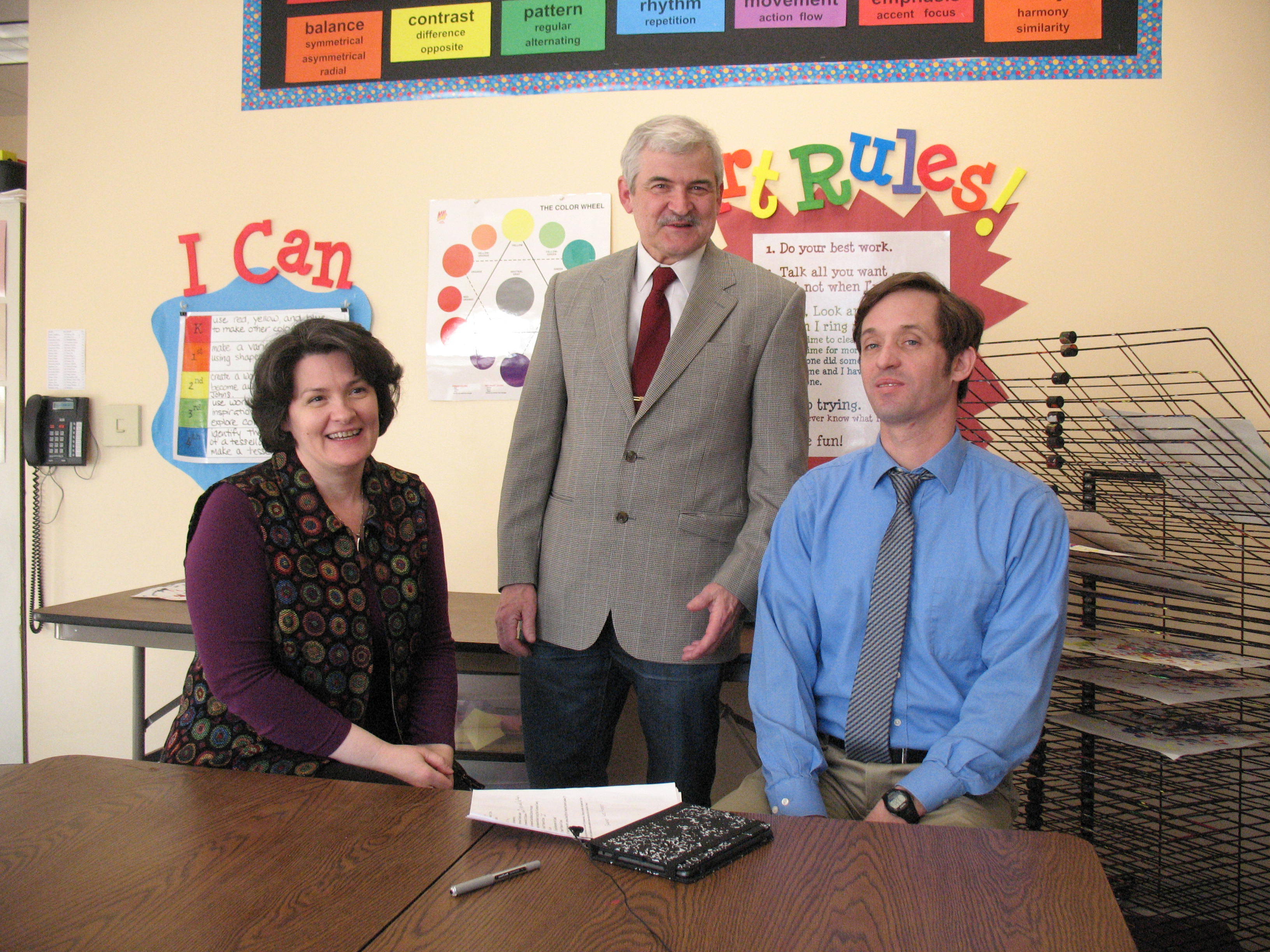
Not to long ago I had the privilege of visiting Lisa Ingraham’s art classroom at Madison Elementary School. Lisa teaches K-5 students and her room certainly reflects her love of teaching but more importantly it is arranged for student success. The colors, organization, age appropriate visuals, and every detail is about the age of her students. Her lessons were spot-on incorporating literacy in multiple ways that enhance the visual art curriculum.

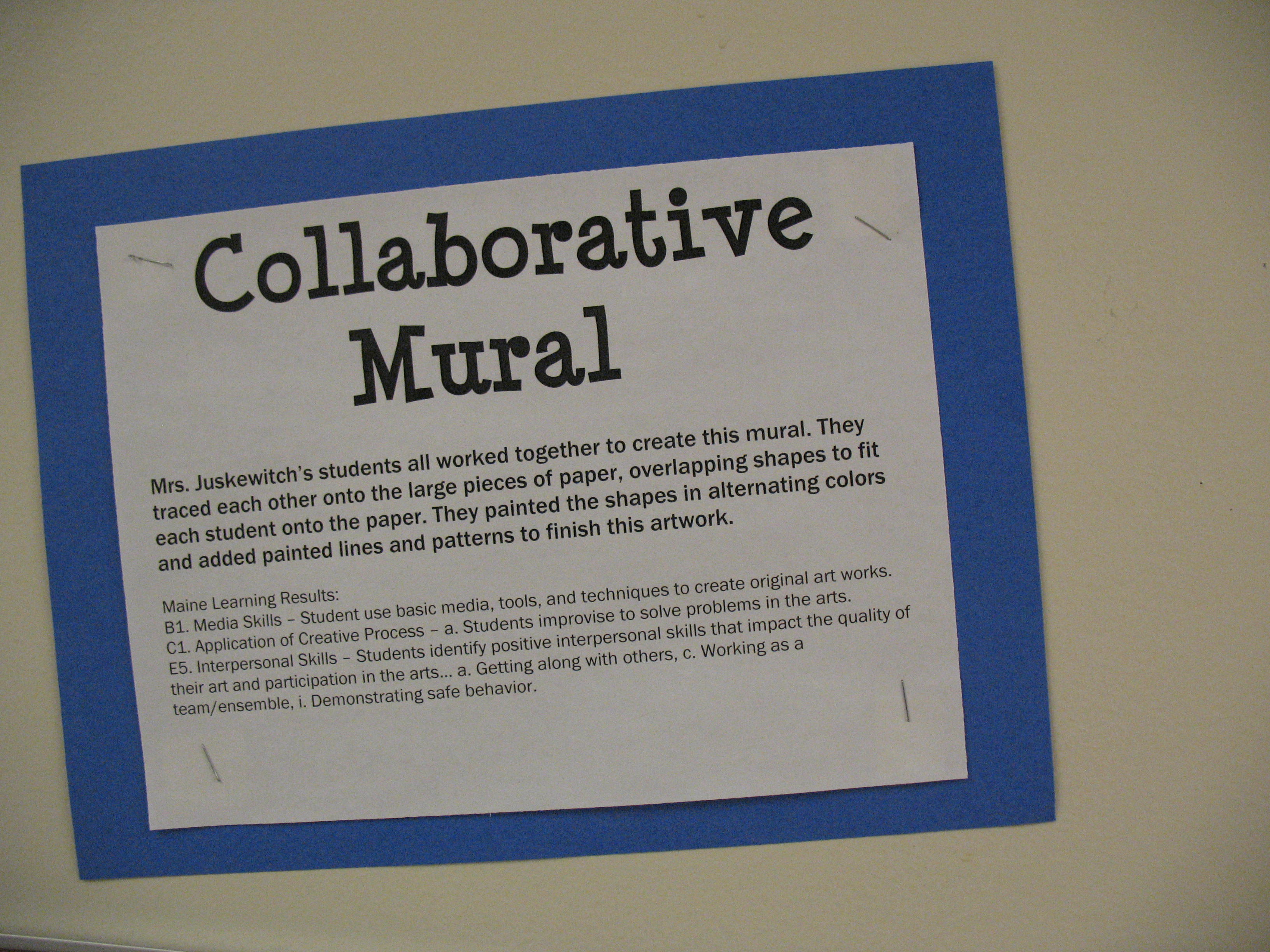
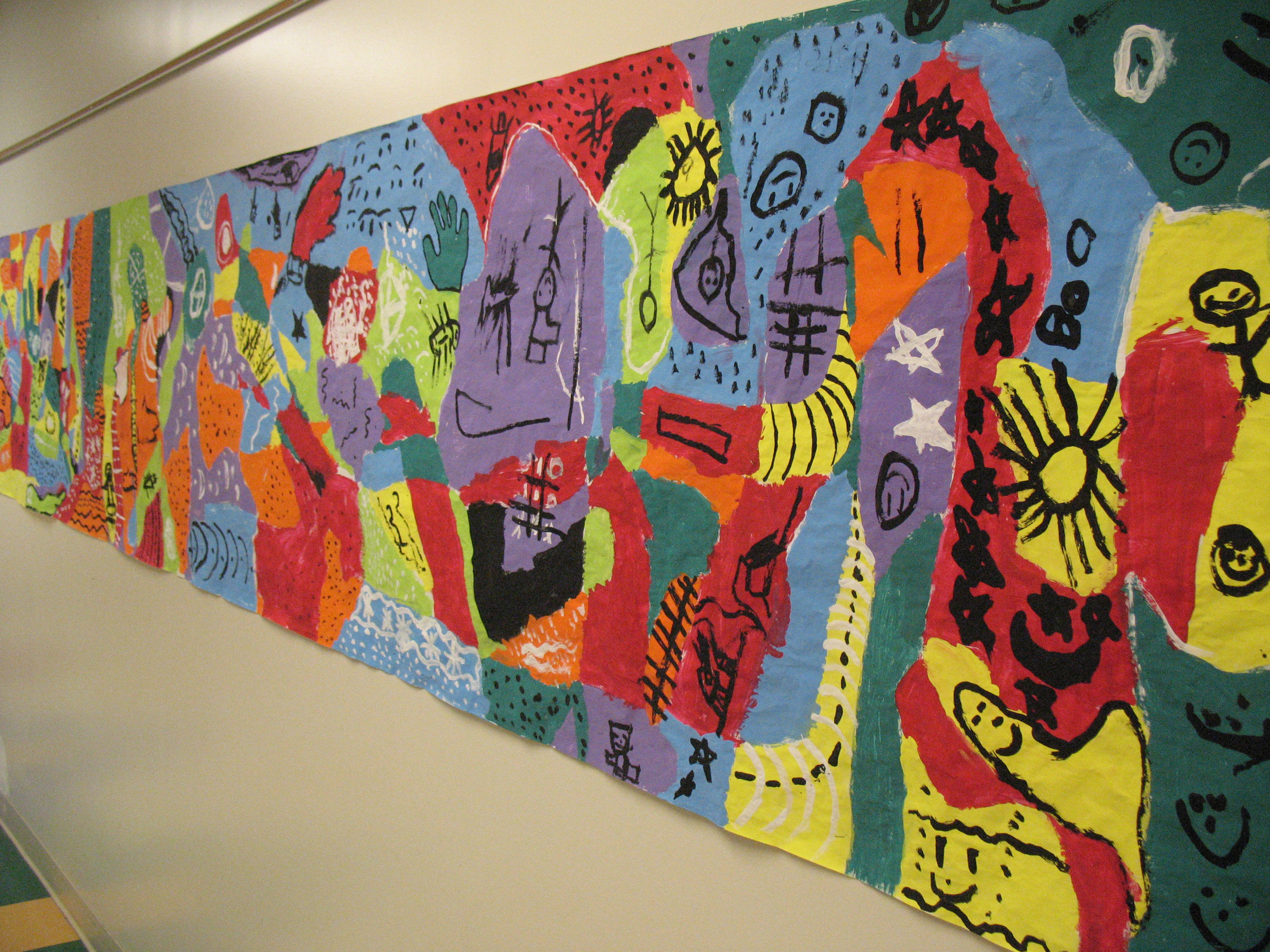
IMG_4012Not only was her classroom amazing but the school was alive with artwork. Every hallway, outside of every classroom she had shown evidence of a standards-based art environment. With each display, an explanation of the lesson.

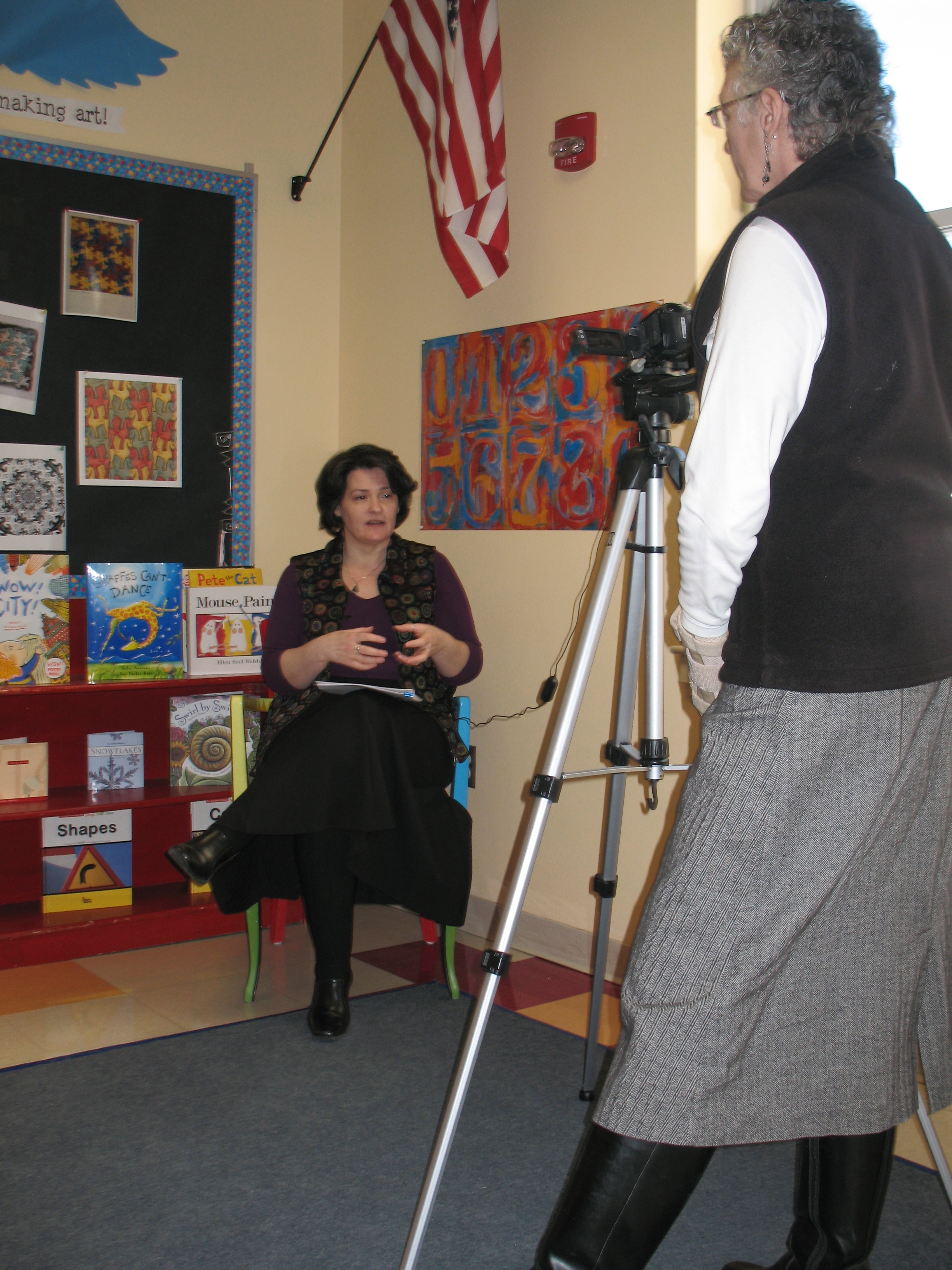
IMG_4040IMG_4041Debi Lynne Baker and I were visiting to video tape Lisa in action for one of the 8 videos that the Maine Arts Assessment Initiative is creating as a resource for educators. It was a pleasure to meet and speak with Lisa’s colleagues as they articulated what Lisa does in her standards-based classroom and why her students are fortunate to have her as a teacher. Not only are her students fortunate but we heard multiple times how fortunate the community is as well.

IMG_4077One favorite part of the visit for me was learning about the book called “Mouse Paints”. If you teach early elementary school and color mixing it is a book that I highly recommend. As a follow-up to our visit Lisa was asked to present to the school board. Her information was very well received!

Lisa became involved in the Maine Arts Assessment Initiative during phase 3 and has served as a Teacher Leader. She is also the secretary of the Maine Art Education Association. Last Saturday she facilitated a round table discussion on Teacher Effectiveness and Evaluation. MAEA is writing a position paper on the topic so the information that art teachers shared was very helpful in that endeavor.

IMG_4028Thank you to Lisa for the opportunity and for the important work you do each day providing a quality arts education for the students of Madison Elementary School.

IMG_4089


h1

Another Teacher’s Story: Patti Gordan

April 15, 2014

Raymond Elementary School music educator

This is the sixth blog post for 2014 and the third phase of the Maine Arts Assessment Initiative of this series sharing arts teachers’ stories. This series contains a set of questions to provide the opportunity for you to learn from and about others. I had the pleasure of visiting Patti’s classroom last week; grade 5 and 6 strings and kindergarten general music class. It was a wonderful morning. I was reminded of the combination of skills it takes to be an elementary music teacher. The fast pace of the class, the attention to the needs of small children, and the energy level is truly amazing. All of this with music learning at the heart!

IMG_3609Patti Gordan has been teaching for 31 years, the past 30 of those years in Raymond.  For the last four years Raymond has been part of RSU#14, Windham/Raymond, so she now also teaches in Windham. During her 31 years she has taught K-8, General Music, Chorus, Band and Orchestra.  Her present assignment is K-4 General Music, 3rd/4th Grade Chorus and 5th & 6th Grade Orchestra. Patti is teaching approximately 350 students.

What do you like best about being a music educator?

 I love watching my students’ faces light up when they are feeling the joy of expressing themselves through music.  I love their enthusiasm and their eagerness. Music means everything to me and I love sharing that with my students.

What do you believe are three keys to ANY successful visual and performing arts education?

The most important key to success is be passionate about teaching and to continually improve my craft. I am always striving to learn. The second key to success is to have “decision makers” (administration, parents, school board) who are committed to providing best practice in arts education for our students. The third key to success is to have the time and resources necessary to provide best practice.

How have you found assessment to be helpful to you in your classroom?

Before I began authentic, individual assessment of my students’ singing skills in General Music class I assumed that most of my students could match pitch in their full singing range. After all, when I listened to the class as a group it sounded pretty good. When I started assessing them individually I was shocked to discover that approximately 25% of my students were carrying the rest of the class. I started using these individual assessments to inform my instruction and also started having the students do self-assessments of their singing skills so that they could make their own plan for improvement. The percentage of students who can match pitch in their full singing range has risen to 85% by the end of 3rd grade.  I have expanded these methods to assessing their beat/rhythm skills and literacy skills as well.

What have been the benefits in becoming involved in the arts assessment initiative?

It has been very exciting to meet other arts educators with the same passion for improving their teaching and assessment methods. I have loved bouncing ideas off of the other teacher leaders and I come away with new energy and enthusiasm every time we meet.

What are you most proud of in your career?

I guess I’m most proud of always wanting to learn more about being a music teacher. I’ve never felt like I know all I need to know. If ever I’ve begun to feel that way I’ve always then gained a bit more wisdom to realize I still don’t know what I’m doing. I am also proud of helping 30+ years of students experience the joy of music. I now teach many children of former students and I am so happy when I hear those parents share fond memories of music class and when they express their happiness that I will be teaching their children.

What gets in the way of being a better teacher or doing a better job as a teacher?

I get frustrated when I hear lip service that the arts are just as important as math and ELA, that they’re “CORE,” but then are not treated as equal. The truth is that there is no way that any K-4 General Music teacher, no matter how expert, can give students a true, standards-based music education, using the Maine Learning Results or the new Common Core Standards, in 45 minutes per week.

What have you accomplished through hard work and determination that might otherwise appear at first glance to be due to “luck” or circumstances?

From 2000 to 2010 I worked with a group of teachers and administrators at my schools that were dedicated to providing quality arts education programs to students in Raymond, through sufficient class time, resources and optimal schedules.  By 2010 students had music class twice a week for 45 minutes in grades K & 1, and 5 through 8, and once a week for 45 minutes plus a 30-minute chorus rehearsal, during the school day, for grades 3 and 4, and a remedial singing class in addition to their regular 45-minute General Music class for 2nd graders who were having trouble finding their head voice or matching pitch. Sadly, since consolidation, some of that has been chipped away.

Look into your crystal ball: what advice would you give to teachers?

Keep learning! It’s the best way to stay fresh, prevent teacher burnout and give your kids the best possible experience.  Also, keep trying to make little improvements in your program. It can be overwhelming to look at your program as it is and think of what it should be. Plug away, bit by bit to improve the students’ experience and before you know it, 30 years later, your program will have grown by leaps and bounds!

If you were given a $500,000.00 to do with whatever you please, what would it be?

Too bad you can’t buy time. I’d get my masters degree, buy a bunch of small violins to give my 3rd or 4th graders a “pre-orchestra” experience, buy more puppets for General Music class (you can never have enough puppets.), buy some additional technology for the music room, pay some bills and take some trips (Scotland, Germany, camp across America).

Imagine you are 94 years old. You’re looking back. Do you have any regrets?

No. If you can’t fix it, regrets are a waste of time. Learn from the experience and don’t’ make the same mistakes again.  Make new ones.

I’ll probably be one of those little old ladies who gives music lessons and home baked cookies.


h1

MAEA Awards

April 14, 2014

Several recognized!

What a pleasure it was to attend the awards presentation for the Maine Art Education Association. Last year the program changed considerably and the new tradition continues by celebrating the accomplishments and teaching excellence of several art educators with different roles. When I attend these type of events my heart swells with pride just thinking about the impact that arts educators have on the development of young people!

Below are the awards that were presented for 2014.

  • National Board Certification Recognition: Genevieve M. Keller, Windsor Elementary School, RSU 12
  • Pre-Service Student: Jennifer Kowtko, Maine College of Art
  • Elementary Art Educator of the Year: Brian D. McPherson, Woodside Elementary School, Topsham
  • Middle Level Art Educator of the Year: Janie Snider, Hancock Grammar School, RSU 24
  • Secondary Art Educator of the Year: Jennifer Merry, Thornton Academy, Saco
  • Maine Art Educator of the year, Allison Price, Brunswick High School
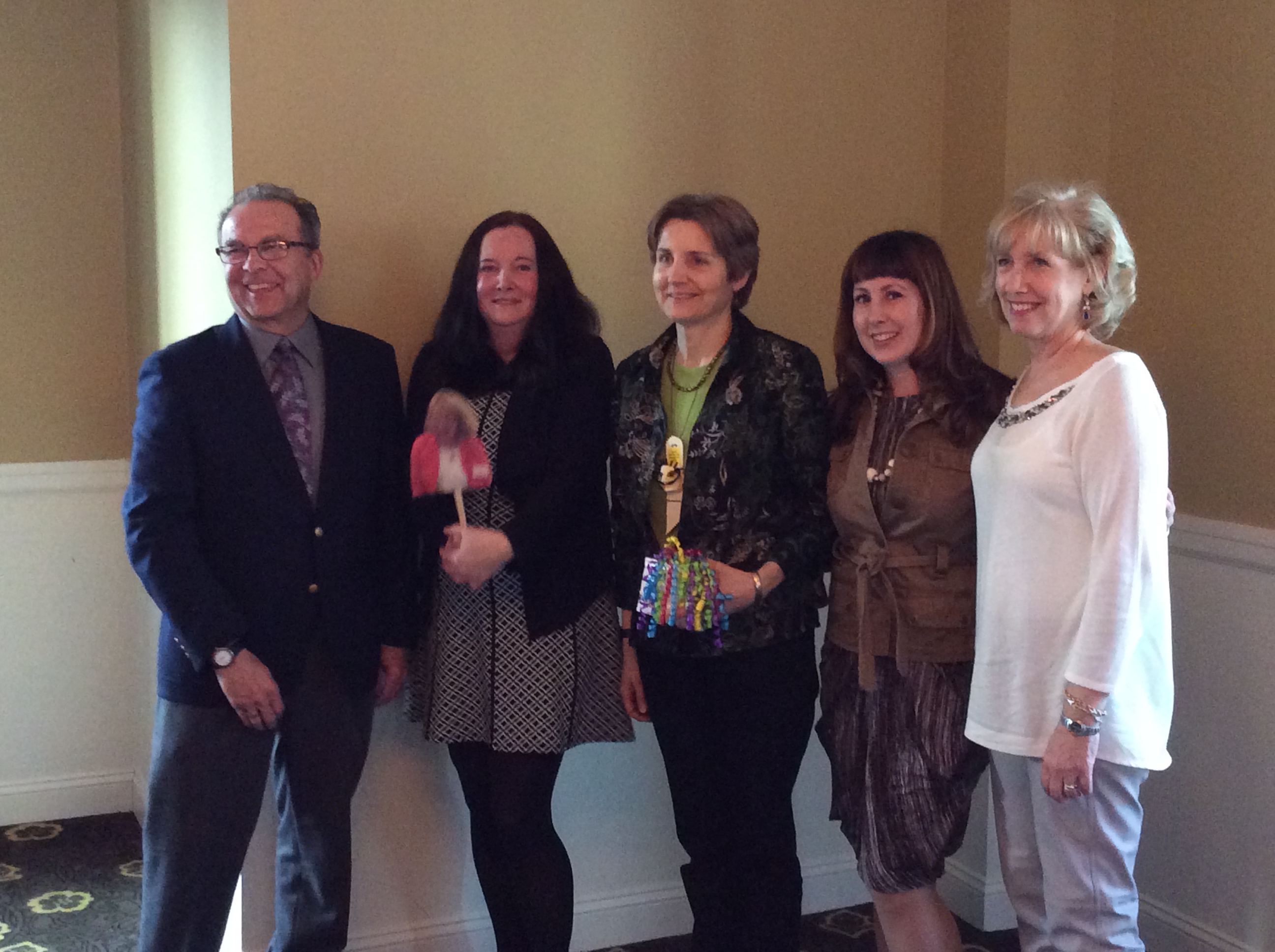
Brian, Allison (with Janie), Genevieve, Jennifer K, Jennifer M.

Brian, Allison (with Janie), Genevieve, Jennifer K, Jennifer M.

h1

High School Scholarship

April 12, 2014

Maine Art Education Association

The deadline for the high school scholarship application is May 1. Each year these awards are made after using a rubric to  Screen shot 2014-04-11 at 9.36.39 PMscore electronic artwork. Yarmouth art educator and MAEA board member serves as the Recognitions Chair. If you have questions please contact her at holly_houston@yarmouthschools.org. The information is below and the application and rubric are located at http://www.aeforme.org/MAEA/Recognitions.html.

Who may enter?

You must be:

  1. A high school senior attending a school in Maine
  2. Currently enrolled in a visual arts class
  3. Nominated by a teacher who is a current member of the Maine Art Education Association
  4. Pursuing a degree in Fine Arts or Design fields

How much is the scholarship and how is it awarded?

$500-$1,500 will be awarded directly to the student upon receipt of proof of the successful completion of the first semester of post-secondary school. The scholarship shall be forfeited if the above criteria are not met within the first year after graduating from his or her Maine High School.

How many scholarships are awarded?

Typically, one award will be presented annually. However, if the scholarship fund allows, a second award may be issued to a second qualified candidate.

What are the requirements?

  1. Personal Information Form including:
  • Contact information
  • Where you plan to go to school (2 or 4 year college or university)
  • Current GPA (un-weighted)
  • A list of high school arts classes and name of art teacher(s)
  • A list of activities, leadership, awards, and honors
  • A list of, community service and employment
  • A letter of recommendation from your nominator (current MAEA member.) Must include: Evidence strength in academics and character and Evidence of accomplishments
  • 2. An artist statement (no more than 500 words) that addresses: Your artwork: motivation, process and product and Why you wish to pursue a college degree in art
  • A disk of images including: (The disk becomes property of MAEA and will not be returned. Artist retains all copyrights to imagery.)
  • 10 jpeg images: 72dpi-2mb – labeled by title (at least two from direct observation)
  • A .doc or .rtf file with the name/title, media, and dimensions of the original work                                                        Important to note! By submitting an application you agree that images of your artwork may be used in MAEA publications, announcements, and websites.

When is the application due?

The application must be postmarked by May 1st. Metered mail is NOT eligible (meters can be turned back)

How will my entry be judged?

The MAEA High School Scholarship Rubrics can be found on the MAEA website: www.mainearted.org

How and when will I know if I was selected?

You will be notified by mail no later than June 1st.

The recipient(s) of the scholarship will be posted on the MAEA website on June 1st.

Where do I send my application?

holly_houston@yarmouthschools.org (Write: MEAE Scholarship in the subject line!) Once your information has been received you will get an email confirmation. Assume that if you do not receive confirmation, your application has not been received!

Or mail to MAEA High School Scholarship, PO Box 10462, Portland, ME 04104

Questions?
Contact Holly Houston at holly_houston@yarmouthschools.org.

h1

Webinar Archive CC and the Arts

April 11, 2014

April’s MAAI Webinar

This post was provided by music educator Rob Westerberg.

The second of a series of four webinars for phase 3 of the Maine Arts Assessment Initiative was held on Tuesday, April 8, entitled “Common Core and The Arts”. Catherine Ring and I facilitated what ended up being a pretty full hour with guests Marcia McCaffrey, Arts Consultant at the New Hampshire Department Of Education, and Jenni Null, Fine Arts Coordinator in S.A.D. #61. The dialogue focused around three broad topics:

  1. what is the Common Core and what are it’s origins,
  2. how does it tie in to Visual and Performing Arts, and
  3. how do we confront authentic concerns and questions we have around it all?

A focal point of the webinar was a resources page on which we provided live links (those links are still live in the archived webinar, which you can access at the end of this blog post) to abundant information on the Common Core, practical connections to the Arts and yet even more links that can assist Arts teachers, informing their work at integrating Common Core. As those links were shown, we had a rich conversation that included articulating the difference between “enrichment” and authentic integration. We also spent time addressing specific concerns from the field, stating that some have been coerced into sacrificing their own work to accommodate ELA prompts and increase math achievement scores. Others have had their face time with students slashed so those students can receive remedial help in other subjects. Rather than skirt these issues, confronting them head on brought about many insights and ideas for moving forward.

It became apparent that the issues we confront here in Maine have less to do with the Common Core than practical implementation of them in local controlled school districts. In short, it is evident that the Common Core standards hold many promises for all of us in Maine, including the potential for exciting collaborative work in the Arts. But implementation of this requires much prep work and a commitment to ideals that squarely place the focus on students, not programs. Successful implementation will require “intentionality” and school leadership where a broad understanding of how the arts appropriately contribute to the Common Core is present.  There is not only a place for the Arts at the table, but the scenario exists in which we potentially play a larger role than ever before in the development of our students in the 21st Century.

As Marcia McCaffrey pointed out, the College Board has come out with a Review of Connections Between the Common Core and National Core Arts Standards Conceptual Framework and specific ways to approach alignment.  Marcia provided an overview of this research which will be posted at http://mainearts.maine.gov/Pages/Education/MAAI-Webinars in the near future.

On Wednesday, May 7, we will be holding our third webinar in which we will be discussing how the Arts are impacted by the Maine law mandating Proficiency in all subject areas – including the Arts – and what that will look like for us as we move forward. No doubt it will tie into additional Common Core topics as well as the revision of the National Core Arts Standards that will be released in early June. Please plan on joining us from 3:30 to 4:30 on that first Wednesday of May. In the meantime, you can access the archive of the April 8 webinar at http://stateofmaine.adobeconnect.com/p7qnkdt5lp2/. In the near future along with Marcia’s presentation there will be a Meeting Plan which you can use individually or with your colleagues, along with additional information on the Maine Arts Commission website at http://mainearts.maine.gov/Pages/Education/MAAI-Webinars.


h1

Another Student’s Story: Zachary Fisher

April 10, 2014

What Can The Arts Do For Me? By Zachary Fisher

Zachary is the student representative on the Maine Alliance for Arts Education board. On Arts Education day recently at the State House in Augusta Zachary shared the following message.

Why on Earth is arts education a necessity in my upbringing? What could theatre do for me? What could music do for me? Painting, dancing, acting, singing, sculpting? What could they do for me? What could the arts possibly do for me?

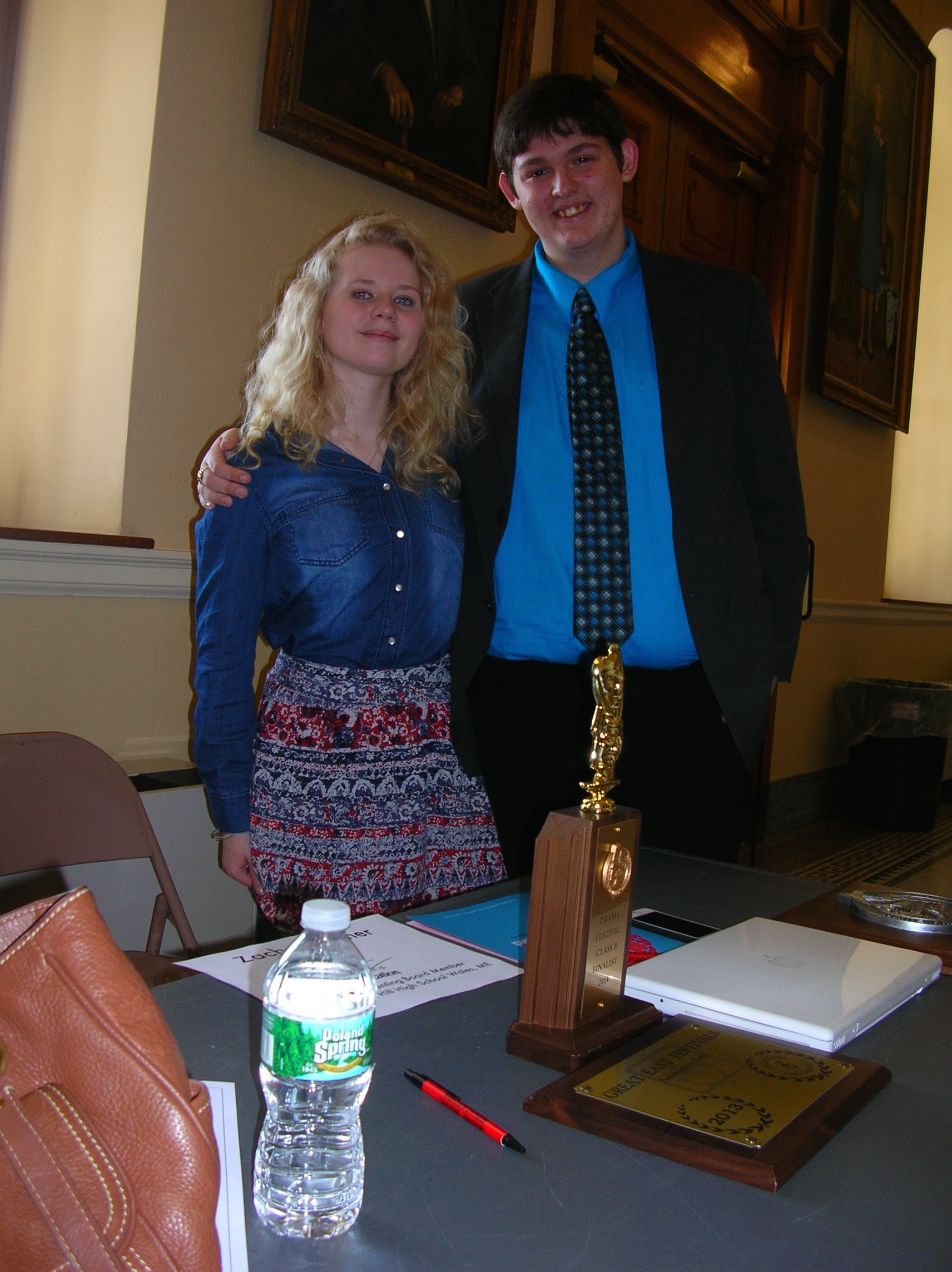
DSCN4576

Zack and fellow student on Arts Education Day at the State House in Augusta

It scares me to think that this is the mindset of some people in our world. When I hear the question, “What can the arts do?”, I think to myself, “What can’t the arts do?”. Mind you, the Minuet in G has never cleaned my room nor has it cooked me dinner, but when the arts are placed in such a useless and expendable light, I cannot help but be appalled.

I am required to take math because it is a fundamental component of our universe. Math classes increase logical problem solving skills and keep the brain sharp.

I am required to take science because it allows me to comprehend my universe. Science class helps me acknowledge the processes of life and complicated systems in my surroundings.

I am required to take English because it is the language I, and approximately 30% of the entire world speak. English classes help me to express ideas and communicate effectively through our common tongue.

I am hardly required to take classes in the arts. My high school, and many others like it, only require a single year of any “fine arts” class to gain the credit. Compare this to the three years of math, three years of science, and four years of English I was required to take in order to obtain my high school diploma.

What is it then, that separates the arts from other classes? Most importantly is emotion. In high school emotions rage like a wildfire. I have never met a person who can express themselves properly by use of the trigonometry fundamentals. In theory, the english language could express our emotions, and does to some degree, but we as students learn quickly that English class is not interested in our opinion influenced by emotion, but our opinion influenced by research. The arts give us a place to release these kept emotions, and grants us a medium to express ourselves at a satisfactory level.

Common statistics show us that the arts are components to an overall better student. Students who take over a year of classes pertaining to the arts have on average better attendance rates, less discipline reports, higher grade point averages, higher graduation rates, and higher standardized test scores. This is because the arts teach discipline like no other classes offered in a school. This discipline transfers to other classes quite easily and in turn creates a student with better habits.

Finally, if the arts making a better student and providing safe emotional expression does not interest you, then hear this final argument. I have to sit eighty minutes every day, learning how to do complicated math problems. As a future music teacher, I will never touch quadratics after high school so long as I have something to say about it. The future engineering major who sits beside me though, cannot get enough of this curriculum. Just as he enjoys math because it pertains to his career, chorus class is my shining moment of the day where I get a taste of my future, and a taste of what I love. Without math class, the country would be in turmoil. Our economy would likely collapse and our everyday innovations cease to exist. That being said, even utopia would be boring without the arts to color it. The perfect world would give us music to be heard, art to be seen, and plays to be entertained by. Poets would be praised, and singers highly respected. The unfortunate truth is, we live in a world far from perfect. Which means we need the arts more than ever. You need the arts more than you realize. We as students are the influences of your future, so please ask yourself, what can arts do for our students? As you’ll then in turn ask yourself, what can the arts do for me?