Mark your calendars for the birthday party!



The deadline to enter MSFVF is coming up! There’s still time for students to craft an entry for the 37th annual film competition, though. Youth in grades K-12 are eligible to enter, and all genres are welcome, including cinematic/narrative, animation, documentary, public service, among others.
Finalists and winners of the competition will be screened at the festival’s awards presentation on July 19, in collaboration with the Maine International Film Festival. This year’s grand prize winner will receive a one year subscription to Adobe’s Creative Cloud featuring full access to Photoshop, Premiere, and a number of other programs. The winner will also receive a full festival pass to MIFF.
The Maine Student Film and Video Festival offers a great opportunity for young filmmakers to present their work before an audience. Entries are evaluated by a panel of judges on originality, content, style, and technique, and finalists and winners are selected in three categories: pre-teen, (grades K-6), junior (grades 7-8), and senior (grades 9-12).
Entries should be no longer than 10 minutes, and are submitted via YouTube. There is no fee to enter. Full contest details can be found at http://www.msfvf.com.
What fun!
 I have been enjoying the opportunity to be a guest blogger for the National Art Education Association for the month of May. You can check it out by clicking here. Scroll down part way on the front page to get to the information.
You can get to the posts from all of these spots on the NAEA site:
Getting ready!
All of the information regarding dates (September 26-28), workshops and descriptions, Haystack positions, etc. can be found on the website: http://aeforme.org/MAEA/Haystack.html
Registration opens Sunday, June 1st! You must register online through the website (a link from the website will be provided on June 1st.) There is NO paper registration option! You will have the option of paying online via Paypal or mailing in your payment to: MAEA, PO Box 10463, Portland, ME 04104.
(If you plan on sending in a check for your payment, instead of using the Paypal option, you may do so early – like right now! Once registration opens on June 1st, if your payment is in our mailbox, it will be added to the queue. Note: If it arrives early it does NOT mean it will be first in line – it will be placed in the order in which ALL materials are received – including the on-line registration! Checks need to be made out to: MAEA. The conference is $250 on-campus and $200 off-campus. Don’t forget to add payment for your 2014-2015 membership as well!)
To be clear… Your registration will be complete, and your workshop request placed in the queue, ONLY when ALL registration materials have been accounted for:
Workshops are filled on a first come, first served basis.
The opportunity to receive CEUs will be provided this year. When you register, please indicate whether this is something you need. You will be responsible for mailing in the paperwork provided and paying for the processing (I believe it is $10).
Reminder that your active membership ends on June 30th.
If you are registering for the Fall Conference at Haystack and plan on paying via Paypal online at the time of registration, you do not need to go to the membership page and renew!!! You will pay for the conference AND membership at the same time once the conference registration opens on June 1st. However, if you do not plan on attending the fall conference, and you wish to stay an active member, the renew membership Paypal button for the 2014-1015 year is now on the website. (http://aeforme.org/MAEA/Membership.html)
If your MAEA membership is not renewed by June 30th, you will be designated as non-active and, as a result, may not receive up-to-date information or be eligible for conferences, scholarships, exhibitions, opportunities, etc. Don’t miss anything! Please join or renew today!
This is the eighth blog post for 2014 and the third phase of the Maine Arts Assessment Initiative of this series sharing arts teachers’ stories. This series contains a set of questions to provide the opportunity for you to learn from and about others.
 Amy Cousins has been teaching in one form or another since she was 19 years old. She has been in public education, as an art teacher, for 17 years. Amy teaches Middle Level Art and Alternative Education (Integrated Arts and Outdoor Education) at Gorham Middle School. She teaches approximately 300 Art Students and 15 Alternative Education students.
What do you like best about being an arts educator?
I LOVE the creative part of lesson planning and figuring out how to engage all students. Teaching art is about observation. Who are my students? What do they respond to and what engages them to be creative problem solvers? It’s wonderful to watch students wrestle with ideas and concepts and come up with their own solutions.
What do you believe are three keys to ANY successful visual and performing arts education?
1.) Exploration – The freedom to explore.
2.) Ingenuity – To foster ingenuity.
3.) Challenge – The ability to challenge in unique, individual ways.
How have you found assessment to be helpful to you in your classroom?
Assessment is the key to validating what we do as art teachers. It helps students recognize their strengths and what they need to work on. A good assessment tool guides students through the process of making, analyzing and interpreting their art work. As a teacher it helps me to craft lessons that meet the standards, but still embrace artistic license.
What have been the benefits in becoming involved in the arts assessment initiative?
The benefits have been plentiful but the biggest gift I have received from the MAAI is camaraderie. It has been an absolute pleasure to meet and be energized by individuals from all over the state! They have given me new ideas, helped problem solve the old ones and have revitalized my desire to teach.
What are you most proud of in your career?
Not sure yet, ask me when I am 94!
What gets in the way of being a better teacher or doing a better job as a teacher?
Time. There is never enough time to get it all done! We only get a brief glimpse of our students during the course of a year. In some cases as few as 35 hours. That doesn’t allow students enough time to fully explore all the endless avenues of art, nor does it allow for retention of concepts, techniques or processes from year to year. I consistently feel like I am taking 1 step forward and 4 backwards.
What have you accomplished through hard work and determination that might otherwise appear at first glance to be due to “luck” or circumstances?
Think that’s another one you are going to have to ask when I am 94.
Look into your crystal ball: what advice would you give to teachers?
Remember your job is to not only to educate students but to engage them in manner that leaves them craving for more.
If you were given a $500,000.00 to do with whatever you please, what would it be?
Right know I would do just about anything for about 20,000.00 to buy a classroom set of iPads. So I am going to take this opportunity to shamelessly advocate for my cause. Anybody want to make a donation????
Imagine you are 94 years old. You’re looking back. Do you have any regrets?
I have made a gazzilion mistakes in my life and I don’t regret any of them. Mistakes are how we learn. If you regret them, you haven’t learned anything.
Interested in Being a Teacher Leader?
The Initiative is a partnership with MAC, MDOE, USM, MAEA, MMEA, MAAE, MLTI, and
New England Institute for Teacher Education
Join us for a GREAT opportunity! The Maine Arts Assessment Initiative invites YOU to be part of Phase IV. We are looking for teachers interested in leading and in taking a close look at assessment in the arts. If you are selected, you will be required to attend the New England Summit on Arts Education, July 29, 30, 31, Aug. 1 at USM, Portland. Details and registration at https://mainearts.maine.gov/Pages/Education/NESummit. We will provide professional development and ask that you take what you’ve learned and share it with other educators in your region and beyond.
If interested, please send a completed application to Argy Nestor at argy.nestor@maine.gov NO LATER THAN JUNE 2, 2014.
APPLICATIONS AVAILABLE AT http://mainearts.maine.gov/Pages/Education/MAAI#.
Selected teacher leader responsibilities for the 2014-15 school year include
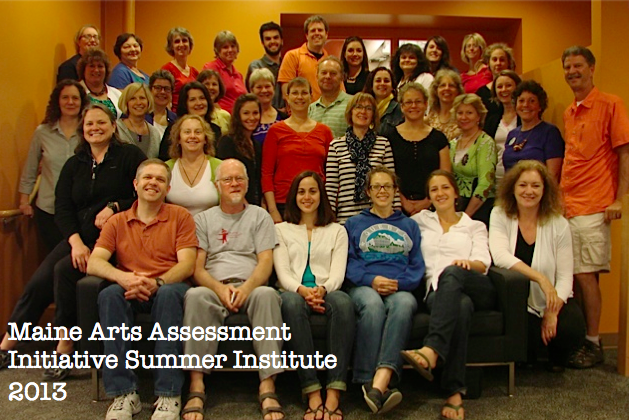
MAINE ARTS ASSESSMENT INITIATIVE – BACKGROUND INFORMATION
OVERALL DESCRIPTION
Create an environment in Maine where assessment in arts education is an integral part of the work all arts educators do to improve student achievement in the arts.
Since 2011 the initiative has been building capacity by training arts educators on the “what” and “how” of arts assessment so they can provide the leadership in Maine through professional development opportunities. The details of the initiative are at http://mainearts.maine.gov/Pages/Education/MAAI#.
OVERALL OBJECTIVES
Devise a statewide plan for assessment in arts education, which includes professional development opportunities, regionally and statewide, to expand on the knowledge and skills of teachers to improve teaching and learning.
HISTORY – Phase I, II, III – Summer 2011 to present
Phase IV components
Goals of Day 4, August 1
For More Information
Kevin Facer, Visual and Performing Arts Specialist, Maine Department of Education
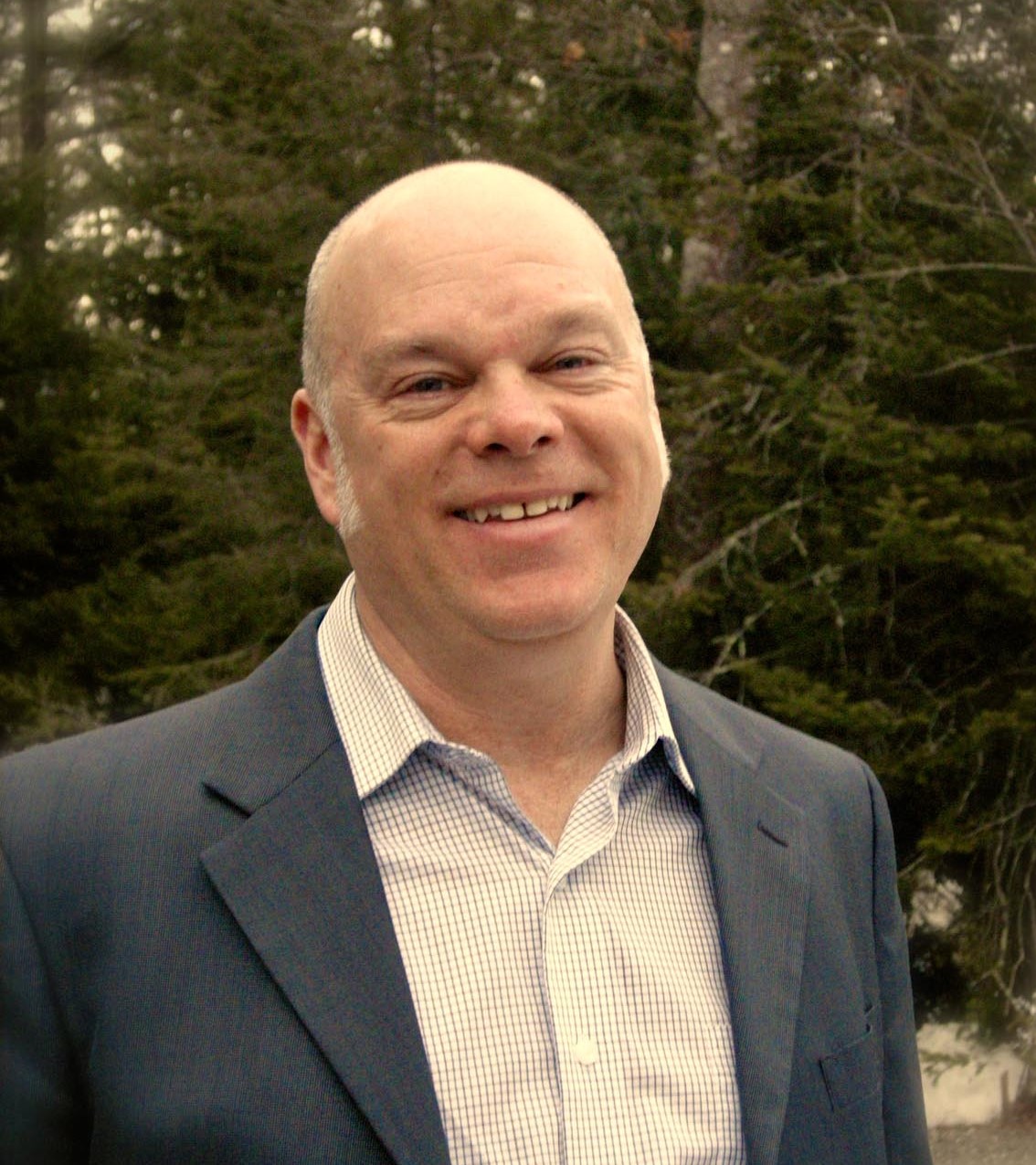 I am happy to introduce you to Kevin Facer who joined the Department recently. He’d love to hear from you so don’t hesitate to contact him at kevin.facer@maine.gov
Hi Argy, thanks for the opportunity to meet arts educators through the blog. I was an arts kid in high school. The arts were, and still are important to me and most likely helped me stay in school. After high school, I served in the U.S. Marine Corps, and then started a community college program in photography. I worked as a blue collar chef and then photographer in commercial and fashion sectors in Philadelphia. I went back to graduate school and did an MA in Humanities and M.Ed. in Arts Ed., and started teaching photography after having a show at college. Currently, I’m working on a dissertation about artists and creative problem solving toward an Ed.D.
This one seemed harsh. I hope it gets better.
I didn’t set out on a career to become a teacher. I suppose it found me by accident. Having experience as a working photographer and making my own photographs to show led me to start teaching after an exhibit I had at a college. After a few years adjunct teaching, I began teaching high school photo and art. Working in a studio environment with students is a rewarding experience and I believe all arts teachers share a similar perception about what they do.
As a teacher, for me it is all about creating memorable learning experiences. The kind of experiences students will know and remember because they grew and gained from doing it. Arts teachers understand the uniqueness of the creative learning process that ultimately lead to both self and creative discovery. Curriculum standards and learning outcomes are part of the process of teaching that frame steps in learning, but as teachers we also want to do things that spark creative thinking as a lifelong habit.
Right now all of the core functions of the job seem important, with emphasis on supporting Proficiency Based Education and Educator Effectiveness. But with arts education specifically my work with MAAI, promoting arts integration with other content specialists and teachers, STEAM education as an approach to teaching, gifted education opportunities in the arts and building partnerships with arts teachers across the state, and connecting to community, state and national arts organizations are my priorities.
I may not be the best choice for advice. But, I believe arts teachers need to take ownership of the arts programs in their school. Network and gain support from parents and your community. Showcase your work and the work of your students; collaborate and acts upon discussions with teachers and administrators in your school and those connected to you as these discussions can create great things. Look for unusual and customary ways to advocate for the arts in your conversations as these connections help everyone involved to become stronger and more engaged. Years ago, I taught in a high school that didn’t have a gallery space to show student work. Sure the hallways are okay, but I really wanted to do more. So, during a week there were school board and community meetings I got a 16’ truck and turned it into a mobile gallery, parked it in front of the meeting places and in town on Friday evening. Many people walked up the ramp to see the student show, which turned into strong support for the school and our arts programs.
I spent some time thinking about how success can be defined in terms of stability of the arts program, status within the school and community, experience and notoriety of the teacher. These things can have influence on a program, but it’s all about student learning and their engagement with the arts. So, with this out front, my three keys are:
Arts assessments are going to change the scope of arts instruction, not necessarily in the content of what is being taught, but definitely in how the arts will be taught and the nature of evaluation. Therefore, assessment is split into two major areas of Arts Knowledge (basic skills to include tests) and Art Ability (examples of production). This implies there is a shift in thinking from grading an assignment or project, to evaluating student learning. This is why being part of MAAI and learning new approaches to teaching and assessment will be valuable to teachers.
It’s been far too long since my wife and I had a real vacation, but after that I would like to put the funds into the development of a center/institute for arts, craft and science where the mission is to discover connections between disciplines. Light on curriculum, heavy on creating, that would be my ideal learning environment.
Contact Information: kevin.facer@maine.gov
207-624-6826
Tuesday, May 20, 2014
As a supplement to the series being presented by the Maine Arts Assessment Initiative this Spring, MAAI will be holding a webinar entitled, “Maine Music Education Roundtable” on Tuesday, May 20 from 3:30 to 4:30. Hosted by Rob Westerberg, choral director at York High School, this webinar is being held in direct response to music educators in the field who are asking subject specific questions pertaining to their own classrooms and issues confronting them in the current educational climate. The roundtable format will intentionally make this hour conversational in nature, leading to what will no doubt be a rich dialogue around current topics in Music Education. Topics will likely include issues around proficiency, standards, creation and assessment of individual student learning targets, PK-12 curricular alignment and advocacy. All attendees will also be encouraged to ask their own questions, voice their own concerns, and share their own perspectives. Roundtable guests will include music educators from across the state. Please plan to join us so that YOUR voice can be heard as well!
I suggest that you join the webinar at 3:20 and go to the top left corner of you screen, click on the drop down menu, Meeting, Audio Setup Wizard and follow the directions to check your audio.
Studying the brain to learn about the impact of dance
In the April 29 edition of the TERP out of the University of Maryland there is an article entitled How Dancers Think When They Dance by David Kohn with photographs by Toni Gauthier. Researchers are looking at the brain to analyze them while they are dancing. You can imagine this alone is a difficult task – to secure sensors to a dancers brain so it doesn’t interfere with the movements they need to make.
Karen Bradley, who is an associate professor in the School of Theatre, Dance, and Performance Studies, has teamed up with neuroscientist from the University of Houston, Jose Contreras-Vidal. Contreras-Vidal was a professor of kinesiology. The study looked closely at 5 experienced dancers study and is featured in the April issue of the journal Frontiers in Human Neuroscience.
“The researchers found that dancers use multiple parts of the brain simultaneously, including those involved in higher-order decision-making, as well as parts that play a role in controlling and planning movement. “This gives us a fantastic glimpse into how dancers think when they express themselves,” says Bradley.”
You can read the entire article and learn more at http://terp.umd.edu/new-study-unravels-how-dancers-think-when-they-dance/#.U2JPJigwJFL.
Thanks to Nancy Salmon for sending the information about this article.
Note to Self
 Chuck Close is an AMAZING ARTIST but he didn’t get to where he is easily. His hard work and never give up attitude. He says “never let anyone define what you are capable of by using parameters that don’t apply to you. Every great idea grew out of work itself. Everyone needs to feel special in their lives.”
CBS – NOTE TO SELF series is asking individuals to write a letter to self as if you were 14 years old. This youtube is well worth 5 minutes of your time to watch and you might want to share it with your students. Wonderful story and filled with wise words.
You are currently browsing the me arts ed blog archives for May, 2014.

 me arts ed