What do you think?
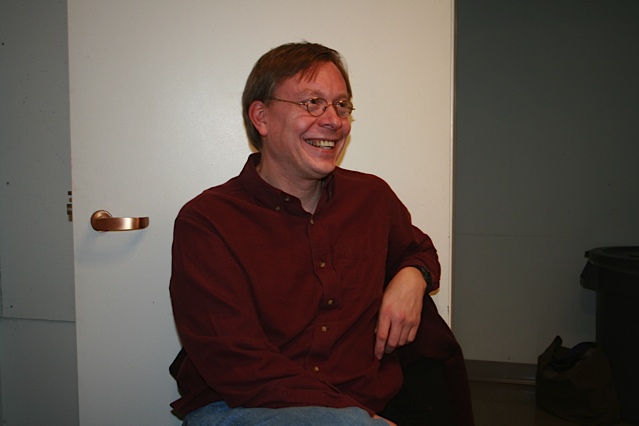
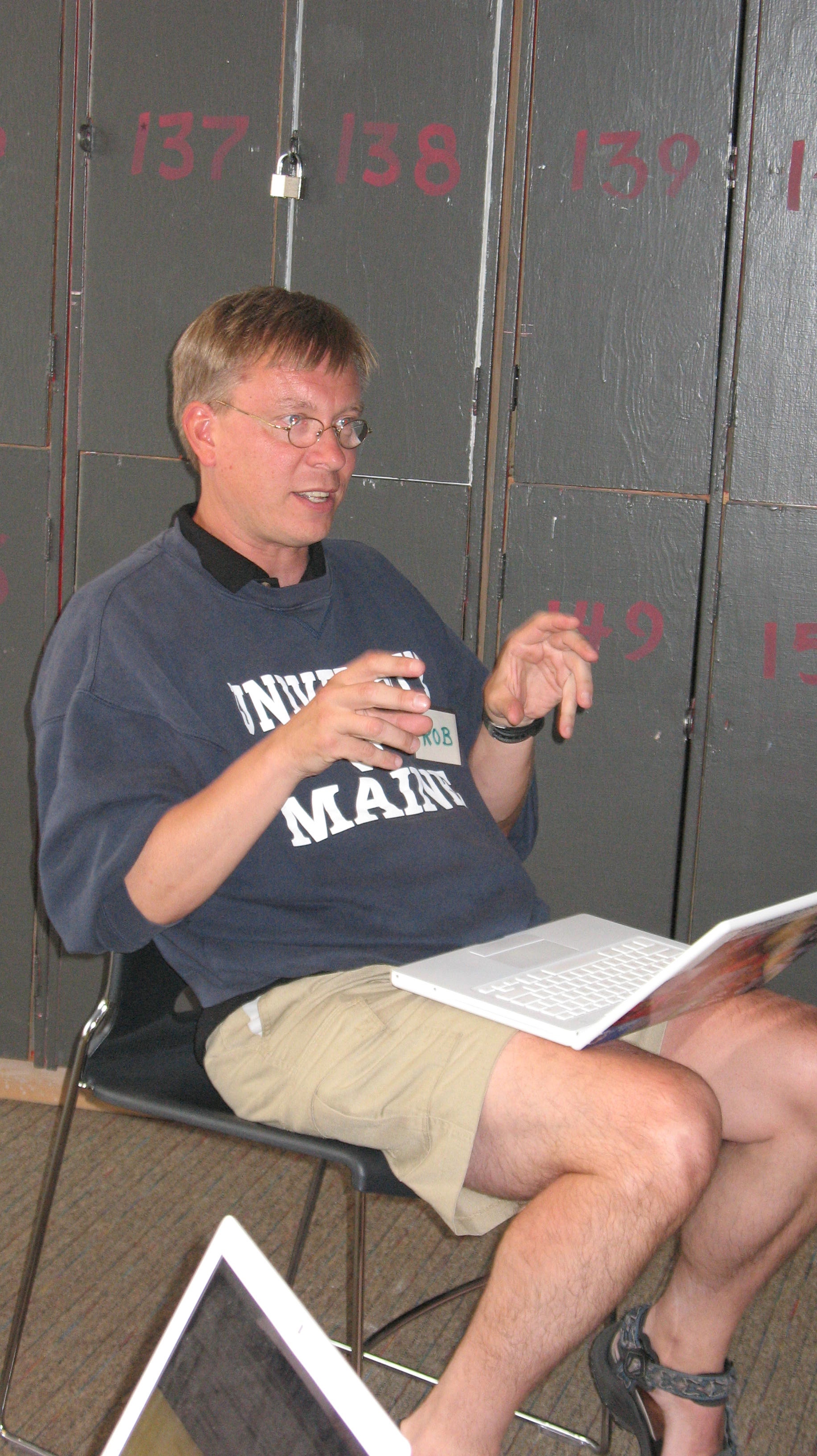
Last week while I was in New Orleans at the Professional Development Institute held each fall for the “Arts Ed Managers” (people in positions like mine at the Arts Commissions, or Arts Councils, as they are called in many states), we visited an Arts high school that had the morning devoted to “academics” and the afternoon devoted to the “Arts”. The school is 40 years old but in more recent years it added the “academics” so students could spend the entire day there to receive all of their instruction. I asked one of the administrators why they considered the Arts as non-academic and thought about the handful of conversations I’ve had with York High School music educator Rob Westerberg on the topic. When I returned I asked Rob if he would write a blog post on the topic and below is the post. It would be great to hear what you have to say on the topic. As you read through it please think about where you stand on the topic and I invite you to post a comment at the end of the post. Consider having this discussion with your own school district arts staff. Thank you Rob!
 In 2010, a student applying to Stanford University posed this question on an online forum called “College Confidential”, asking if their music teacher’s recommendation letter would count as an academic teacher recommendation. This was the primary response: “A music theory teacher, or music history teacher, I could make arguments for. A band director does not teach an academic subject, any more than a football coach or a driver’s ed instructor does.” In contrast, that same year, Indiana published their Academic Standards for Music which states, “The ultimate goal of a fine arts curriculum is to enable students to be proficient creators, performers, critics, listeners, and observers of the arts. Students who attain academic standards in the fine arts will be able to use the arts to think and learn independently, know themselves and the world around them, and communicate in the art forms studied.”
So which are the Arts: co-curricular or academic? Let’s take a closer look at the two diametrically opposed perspectives.
As for the insinuation that the Arts are co-curricular, the Glossary of Educational Reform (created by the Great Schools Partnership) defines co-curricular in part as, “…typically, but not always, defined by their separation from academic courses. For example, they are ungraded, they do not allow students to earn academic credit…” I don’t think too many would argue with this definition, simple though it may be. But Great schools partnership continues with, “A few examples of common educational opportunities that may be considered co-curricular include student newspapers, musical performances, art shows, mock trials, debate competitions, and mathematics, robotics, and engineering teams and contests.” We can decry that the music and art references are entirely misplaced, but we’d be in the vast minority. And we could argue that the Arts are more academically rigorous than the other examples, but we’d be very wrong (more rigorous than robotics – really??).
Yet having said all that, there’s one argument the Arts have that sticks: many of our performing arts presentations and art shows are tied to academic coursework. So let’s look at that end of the spectrum. The Indiana document, which clearly states the Arts as academic, embeds one extraordinarily important caveat: students are to “attain academic standards”. Let’s roll with that. Great Schools Partnership definition of standards: “…concise, written descriptions of what students are expected to know and be able to do at a specific stage of their education—that are used to guide public-school instruction, assessment, and curricula.” Got that? Academic courses are entrenched in curriculum, instruction and assessment. Again, I find it hard to believe anyone would argue this definition.
Now back to the original question: are the Arts co-curricular or academic? To witness arts education across Maine, the answer seems to be a big, resounding, “depends.” It depends on whether or not you base it on what we say, or you base it on what we do. Based on what we say, we’re indeed academic. Based on what we do, it’s usually anything but. I’ll tell you why. We are resistant to changing the way we do things to actually reflect the definition of being an academic subject; we run our Visual Art and Performing Art classes the way we were exposed to when we were in High School. We run them the way we were taught in College. We run them the way we’ve been allowed to by administrators who are happy to have us do what we want because they largely do not see us as academic anyway. At the elementary level, we are viewed as keeping the kids occupied so classroom teachers can have a prep. At the Middle and High School levels, as long as the exhibits and concerts look and sound great, we’ve always received pats on the back and told to keep up the good work.
 As Maine implements its proficiency law, it’s about time we in the Visual and Performing Arts took a cold, hard look in the mirror. We are in the extraordinary position of linking arms with the other academic subject areas and joining them in this work if we choose to, holding every individual student academically accountable. I have heard for years from colleagues – verbatim – that “you can’t (or shouldn’t) assess the arts”, and “some kids are just more talented than others”, and “we teach kids, not stuff”, and “when will there be time to rehearse?”, and “I just want my kids to be happy in my classroom.” You know what? We can go there… we can absolutely determine as a state that these are our mantras, and that we are here to enrich our students lives in awesome, meaningful and lasting ways. Game on. Just don’t whine when we finally get removed from the school day, and get completely marginalized as co-curricular in nature. The alternative of course is to move forward as fully fledged, card carrying members of the academic core. But doing so means having to get off our soap boxes, out of our comfort zones, and articulating exactly what we are. Academically. No more, no less. By definition, that means developing standards and proficiency for every student. Every individual student. No more excuses. Does this mean reinventing what we do, how we do it and what that all looks like in practice? You bet it does. But before we complain about it, we need to ask ourselves if the alternative is acceptable. It’s time to get off the fence for once and for all and determine what we are. If we’re truly academic, it’s time to act it.

 The President’s Committee on the Arts and the Humanities, in partnership with the National Endowment for the Arts, the National Endowment for the Humanities, and the Institute of Museum and Library Services, is accepting applications for the 2015 National Arts and Humanities Youth Program Awards.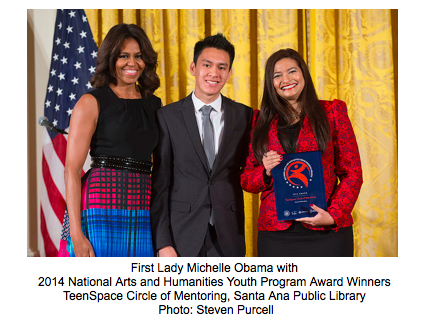





 me arts ed