Archive for January, 2015

h1

MAAI Megas!

January 13, 2015

MAAI Mega-regional workshop opportunities

The Maine Arts Assessment Initiative (MAAI) is providing four more Mega-Regional workshops throughout the state in March and April. At each event there are several sessions to choose from, all facilitated by MAAI Teacher Leaders. Each site has different offerings and YES, you are welcome to attend more than one. The cost is $25 and 5.5 contact hours are offered. To read about the workshops and reserve your space by registering please click on
http://mainearts.maine.gov/Pages/Education/MAAI-Mega-Regionals-2014-2015#.

Participants have the opportunity of attending two workshops in the morning and a whole group session in the afternoon on Proficiency-Based Education in the Arts classroom.

Leading the Way

Dates and Locations

  • Friday, March 6, 2015 Aroostook county (Registration available in the near future.)
  • Friday, March 13, 2015 Oxford Hills Middle School, South Campus
  • Thursday, April 2, 2015 UMaine, Orono
  • Friday, April 3, 2015 University of Southern Maine, Portland

If you have any questions please contact me at argy.nestor@maine.gov.

MAAI is a program of the Maine Arts Commission with several partners.

h1

Celebrating PBE

January 12, 2015

Transitioning to Proficiency Based Education (PBE)

I am well aware of the difficult task educators have taken on across the state of Maine. Each week I receive emails and/or phone calls from visual or performing arts teachers with questions and concerns about the PBE work underway. Fortunately, the Maine Arts Assessment Initiative (MAAI) presently has PBE at the heart of our work. And, thanks to Rob Westerberg, MAAI Leadership Team member and York High School music teacher, who has created the Maine Arts Assessment website at http://www.maineartsassessment.com/ to assist you as teachers tackling this task, alone or with colleagues. MAAI is committed to shifting our work to respond to the challenges of the arts classrooms across the state. If you reach out and connect with the MAAI Teacher Leaders or Leadership Team members, no one needs to feel like an island. Contact information is on the site included above or please contact me at argy.nestor@maine.gov.

As is the case, at any time in educational reform, districts are at different places with the work. At the end of the first grading term earlier this year, I saw one of the MAAI teacher leaders who was very excited to share what was happening in her school. I asked her to write it down and send it to me so I could share it with the Maine Arts Ed community on the blog. Below is her post, I am sure you will read the excitement in her words and get a picture of the journey one school has had underway for two years.

A Celebration of Proficiency Based Learning

by Jen Etter, Music Educator, York Middle School

IMG_4138

Jen conducting a middle level chorus class. She is not that tall, yes, she is standing on a chair.

I imagine it is not an every day occurrence to walk into a staff meeting and be whacked on the head by a gigantic balloon. It certainly isn’t at our school! This particular day, the multi-purpose room was decorated from top to bottom with streamers and colorful dots. There was loud music blaring and enough food to feed an army. So what would warrant this kind of celebration on a random Wednesday in the middle of October? The release of the report card of course!

The report card we released in mid-October is far from perfect, however to say it represents an enormous amount of hard work and commitment would probably be the understatement of the century! In the past year, York Middle School has transitioned to completely proficiency based instruction and reporting. This change required a complete overhaul in the way we do things around here.

IMG_3554

Jen presenting to “critical friends”, summer 2013

For us the process began about two years ago. Our district had almost a complete change over of administration and our new focus became teaching and learning. I always feel odd saying that because really, shouldn’t the focus always be on teaching and learning? Well yes, it should be but I think everyone knows that more often than not, other things seem to get in the way. For many, including myself, this was a major transition in how lesson planning was approached. Until this point in my teaching career, when I planned a lesson, I usually thought about it in terms of two things: what do I want to teach the kids? and how much time do I have? Now, two years later it seems crazy to even think about that. In hindsight it seems so unprofessional! Personally, the shift of focus to teaching and learning has forced me to change my focus in lesson planning. What do I want every student in my room to learn? and how do I know they’ve learned it? For me, this change in mind set has made all the difference.

I don’t mean to paint a picture of perfection at my school because it is anything but that. For all staff, the transition to standards based reporting and proficiency based learning has been a major undertaking. It has raised major questions about the direction that education is heading both in our state and nationally and in many ways has divided our staff because of different philosophies. Despite this, the level of professional conversation that has been happening throughout our school is one of such depth and substance that it could motivate the most unambitious of teachers!

DSC_0108

Jen with colleagues, Rob Westerberg, and Cynthia Keating at the Summit on Arts Education, July 2014

There are major changes happening in the world of education, there is no doubt about that. It is both an exciting and very scary time to be in the profession. I urge you, get caught up in the excitement and be part of the change. Be part of the conversation about what education should look like for our kids because I guarantee, no matter how you feel about proficiency based learning, diving into the discussion about what it should look like could be one of the most valuable things you will do as an educator.

Thank you Jen for sharing part of your journey and taking on a leadership role in your school. Jen can be reached at jetter@yorkschools.org.

h1

NEA Art Works Grants

January 11, 2015

Funding available
Screen Shot 2014-12-18 at 8.34.30 AM
Available amount: $10,000 to $100,000

GRANT NAME:
NEA Art Works

DEADLINE:
February 19, 2015 or July 23, 2015 depending on field/discipline.

AVAILABLE:
$10,000 to $100,000

NUMBER OF AWARDS:
Not specified

Link to RFP:
http://arts.gov/grants-organizations/art-works/grant-program-description

FUNDING USES:
This National Endowment for the Arts program supports the creation of art that meets the highest standards of excellence, public engagement with diverse and excellent art, lifelong learning in the arts, and the strengthening of communities through the arts.

GENERAL ELIGIBILITY REQUIREMENTS:
Arts organizations, local arts agencies, arts service organizations, local education agencies, and other organizations that can help advance the goals of the Arts Endowment.

COST SHARE:
50%

h1

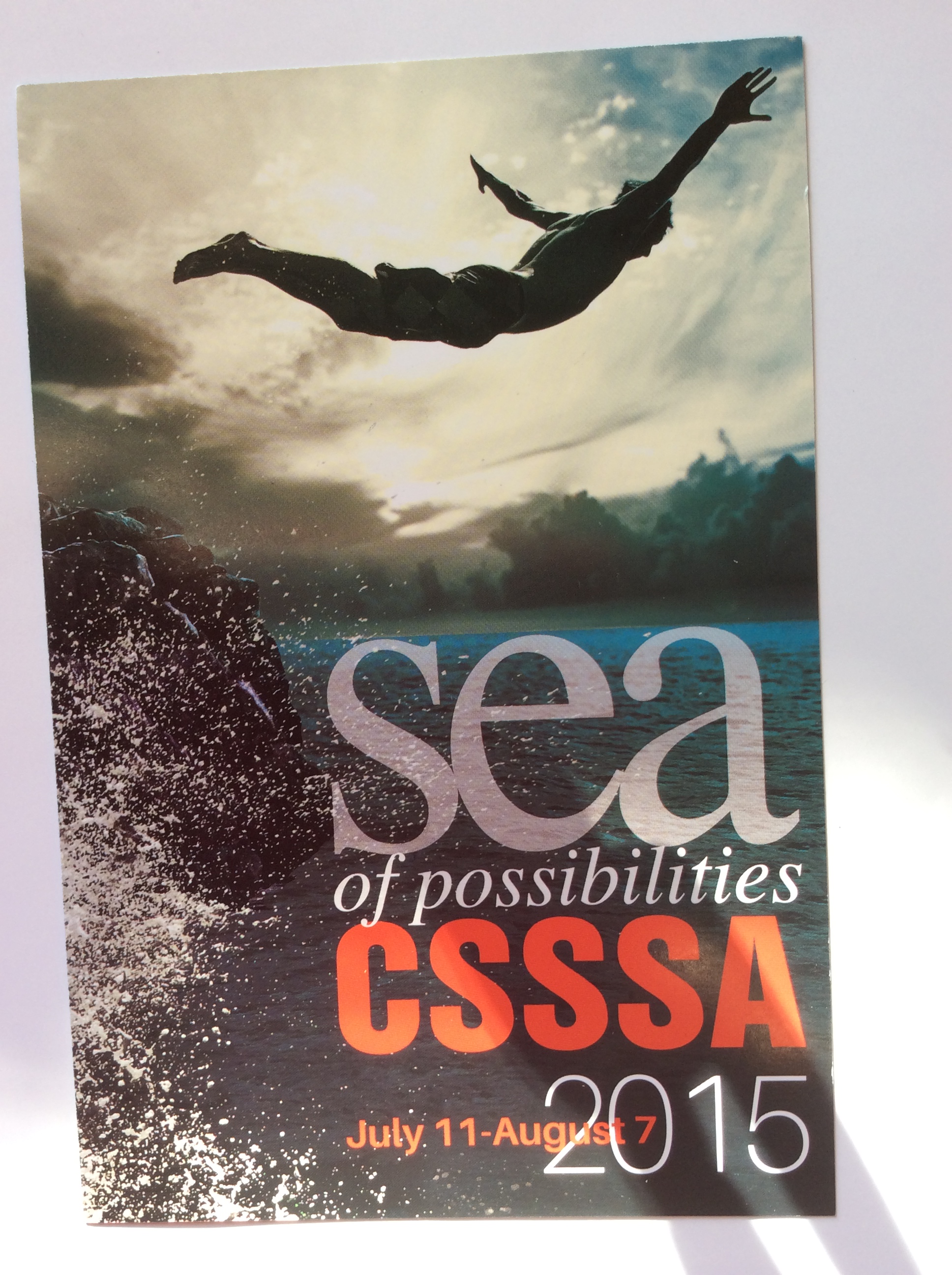
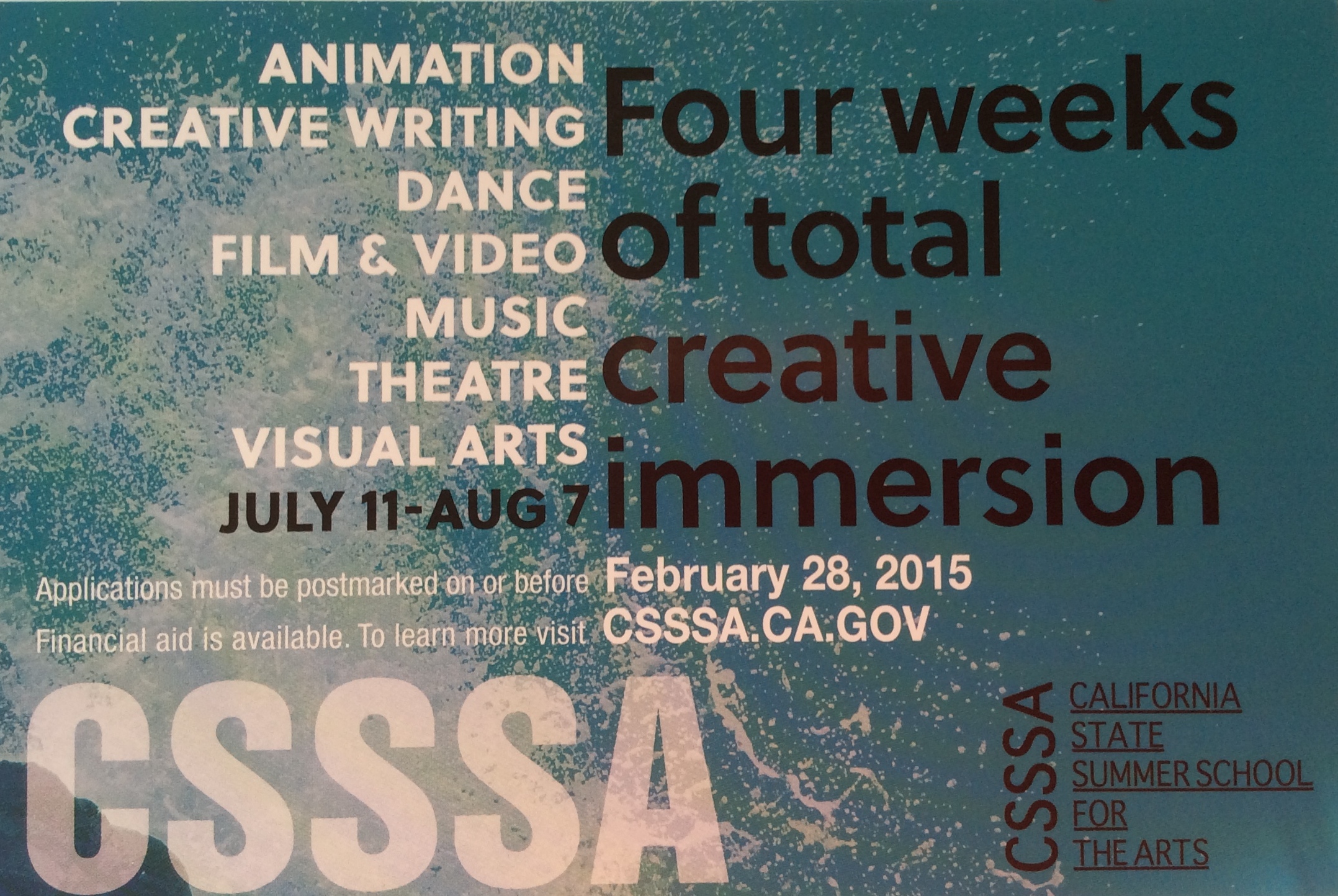
Summer School for the Arts

January 10, 2015

California

photo1

photo

h1

Bates Dance Festival

January 9, 2015

Brand new website

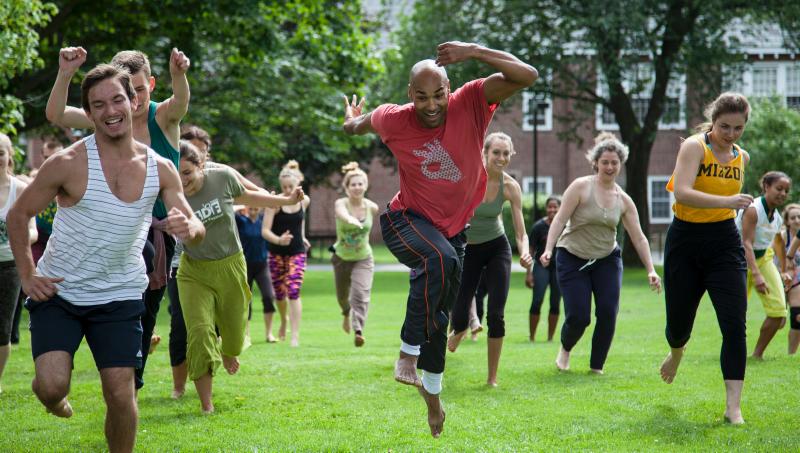
Bates Dance Festival is an amazing organization that offers a ton of opportunities for dancers and those who appreciate and support dance. Their doors are open to any and all who’d like to participate.

Visit their brand spanking new, responsive website for details on our upcoming winter workshops and summer training programs.

230

Darrell Jones teaches class


h1

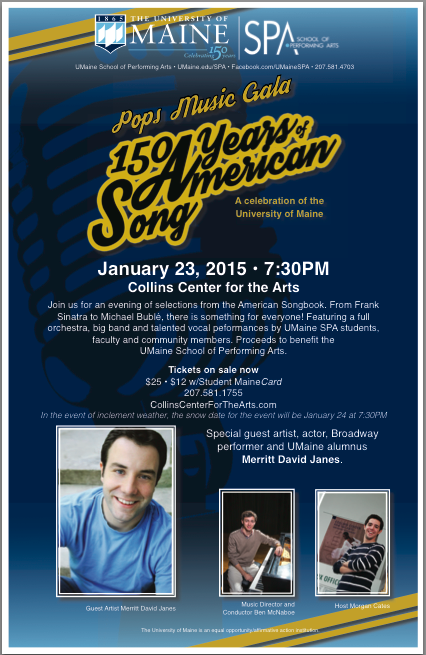
UMaine Performance

January 8, 2015

Screen Shot 2014-12-22 at 10.53.57 PM

h1

Creative Aging

January 7, 2015

Maine Arts Commission program

Late in 2014 the Maine Arts Commission (MAC) established a Creative Aging Teaching Artist roster located at https://mainearts.maine.gov/Pages/Traditional/Teaching-Artist-Roster. The artists on the roster have demonstrated mastery of an artistic discipline, knowledge and expertise in sequential arts instruction, good communication skills, planning and organizational ability, and an understanding of their target learners. Each artist was selected after careful consideration of their application.

You might be wondering what “creative aging” is all about. It might be a term that you’ve never heard before. The information below was provided by Kathleen Mundell, Special Programs Director for MAC. One of Kathleen’s responsibilities is for the Creative Aging program. If you have specific questions please feel free to contact Kathleen at Kathleen.Mundell@maine.gov.

CA_Rohdin_ StudentPhoto

Many people working in Creative Aging cite Dr. Gene Cohen as one of  pioneers  in this emerging field.
He spent the majority of his career at the National Institutes of Health acting as Director of the Institute of Mental Health and the Institute on Aging. There he pioneered several research studies on
the positive benefits of creativity on the aging process. In a 2006 study, co-funded by the National Endowment for the Arts and the National Institute of Mental Health, Cohen measured the impact of cultural programs on the physical and mental health and social functioning of older adults.  The results showed positive findings, helping  make the case for the importance of creative engagement in healthy aging.

Other evidence based studies are summarized in the National Endowment for the Arts’ “The Arts and Human Development: Framing a National Research Agenda for the Arts, Lifelong Learning, and Individual Well-Being” (2011).

A renowned  geriatric psychiatrist, Cohen was  author of many foundational books on Creative Aging including “The Creative Age: Exploring Potential in the Second Half of Life” and founded, in partnership with Susan Perlstein, the National Center for Creative Aging, a national organization dedicated to fostering an understanding of the vital relationship between creative expression and healthy aging www.creativeaging.org. This organization has been invaluable in helping jump start the Maine Arts Commission’s new Creative Aging Program.

Wondering about the impact of music on the Alzheimer’s patients? Please go to this link, http://www.wwltv.com/story/news/nation-now/2014/12/08/inspiration-nation-alzheimer-choir/19964747/, read the information that provides an understanding and watch the video.

I will provide more information in future blog posts. Please do share any information that you might have on related topics.

h1

Maine Educator

January 6, 2015

January 2015 issue

Screen Shot 2015-01-02 at 8.56.48 AM

Thornton Academy students Abby Chelate and Vojtech Machytka

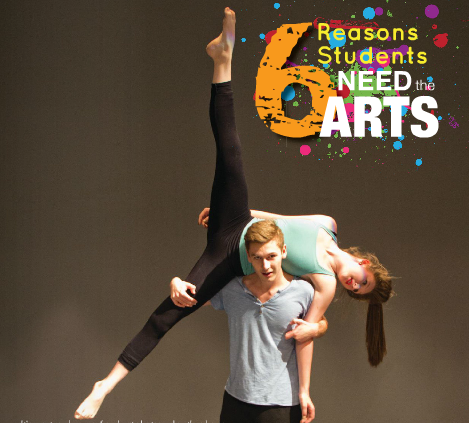
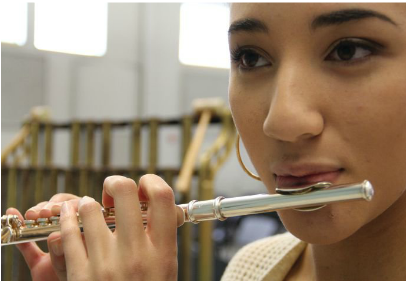
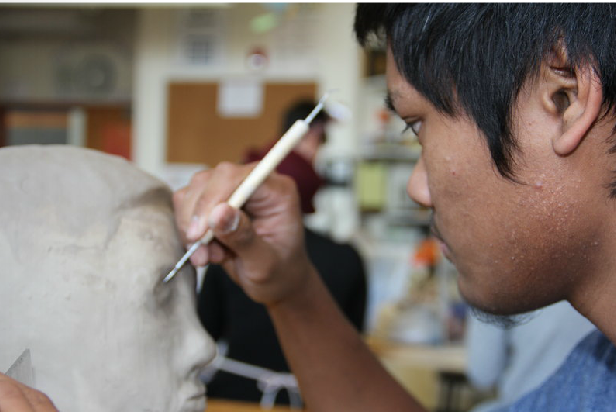
In the latest edition of Maine Educator the cover includes a high school dancers and the title of the article found within called “6 Reasons Students Need the Arts” located at http://mydigimag.rrd.com/publication/?i=239922. It is great to see Maine Arts education receive the coverage. Some of our Maine Arts Assessment Initiative Teacher Leaders are included along with other Maine arts teachers and students in action. The entire article starts on page 30.

York High School student Celina Neal

York High School student Celina Neal

Screen Shot 2015-01-02 at 9.05.12 AM

Belfast High School student, Arius


h1

Global Local Dance Show

January 6, 2015

Oxford Hills High School – January 10

Screen Shot 2015-01-05 at 8.14.24 AM

h1

Travel, Teach, and Learn Opp

January 5, 2015

Promoting American understanding of Russian folklore & traditional Russian life & culture

Russian / American Educators’ Exchange
–connect at the roots–
Summer 2015

In 2014 AFRF sent 20 American middle and high school teachers on out-of-the-ordinary field trip — they traveled to rural Russia, taught Russians about American folklore, and collected Russian folklore to incorporate into their own curriculum back home.

Everybody was so pleased with the results that in 2015 we’re doing it again!

Thanks to a grant extension from the US/Russia Peer-to-Peer Dialog Program, and with travel support from the Russian & East European Institute at Indiana University, we’ll be sending 12 more American teachers to Russian villages to film holiday celebrations, record local singers, interview villagers about traditional lore, and photograph local handicrafts.  The teachers will experience Russian village life first-hand, living in a village house and eating the local food.

They will also visit Russian rural schools, where they have been invited to make presentations about American folklore to the students and staff. There they will meet with Russian teachers to discuss matters of mutual professional interest and make contacts for possible future collaboration.

Back home, the American teachers commit to producing, using and sharing curriculum materials incorporating some element of  Russian folklore. The curriculum materials can be in any subject.

The three folklore expeditions are timed to coincide with important holidays of the Russian traditional calendar:

• Expedition 1: Easter in Volgograd province, Danilov district.
April 8 – April 21 2015
• Expedition 2: Pentecost/Trinity Week in Smolensk province, Sevsk district.
May 21 – June 3 2015
• Expedition 3: Dormition Day traditions and first day of school traditions,
Bryansk province, August 22 – September 4.

What do you need to qualify?  You need to:

  • hold a valid US passport
  • be employed as a teacher or curriculum specialist at a public or private school
  • teach at the middle- or high-school level (grades 6-12)
  • prepare an American folklore presentation to share in Russia
  • commit to creating, using and disseminating curriculum materials that incorporate Russian folklore. The curriculum materials can be in any subject.
  • provide a letter of support from your principal

What will this cost?

The program grant covers all travel, food and lodging, including an orientation meeting before departure and flights between New York and Moscow. While funds last, participants who live at least 200 miles from New York City can also apply for up to $200 reimbursement of their travel costs between their homes and JFK.

We will assist with obtaining a Russian visa, but participants will be responsible for most of the visa fee — your cost will be around $300, more if you require rush service.

All educators who work with middle- or high-school students or curriculum are encouraged to apply.  Preference will be given to those whose schools are in rural areas — Census Bureau Locale Codes 41,42 or 43.
Registration for each trip will close 60 days before the trip start date.

Application instructions are here.