Archive for August, 2015

h1

Teaching Artists

August 12, 2015

TA Opportunities

IMG_0037

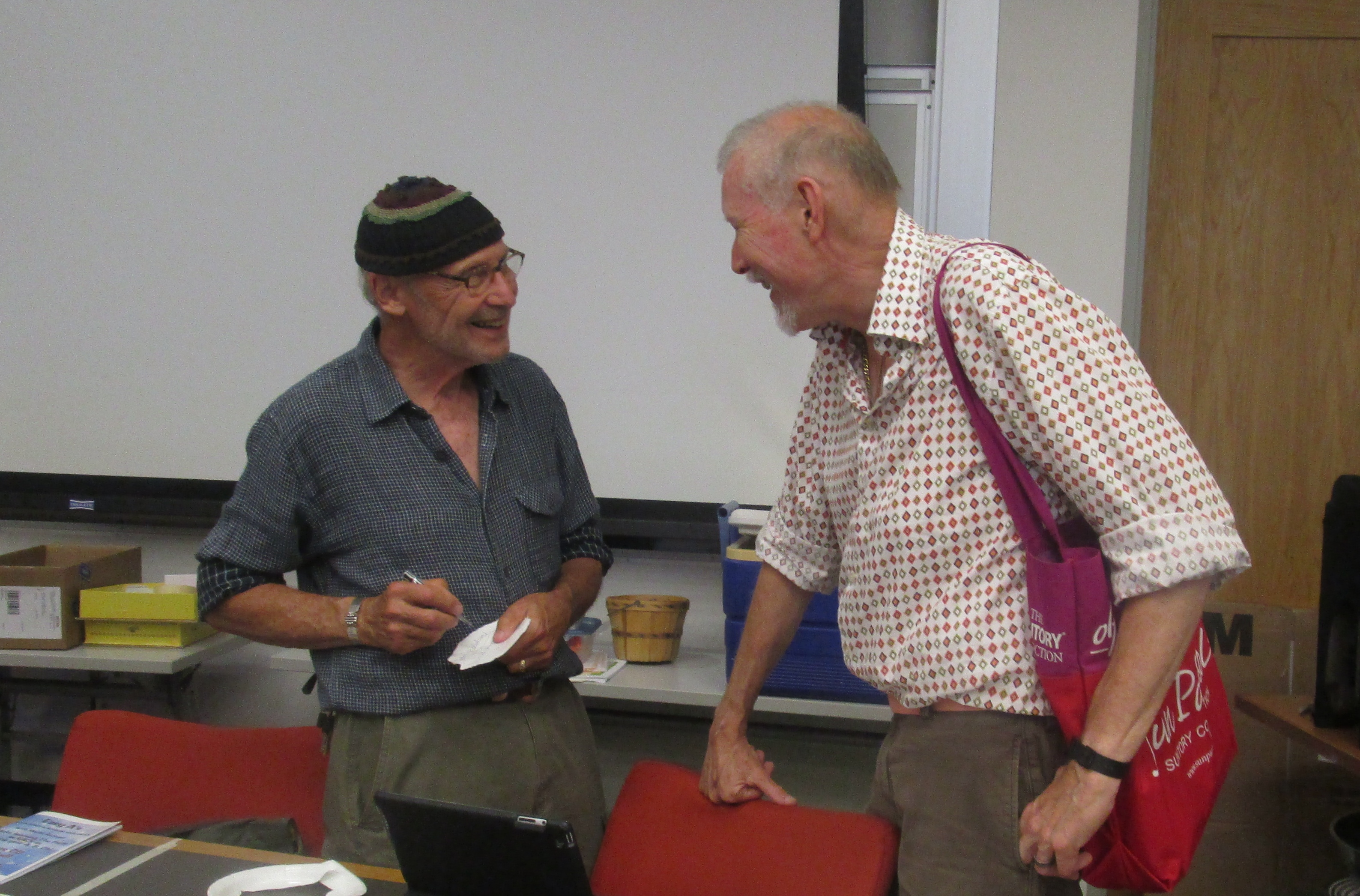
Teaching Artists Martin Steingesser and Martin Swinger, MALI summer institute, August 2015

The Maine Arts Commission (MAC) is committed to providing learning opportunities for Maine Teaching Artists. On August 3, during the Maine Arts Leadership Initiative summer institute, MAC worked with Teaching Artist Nancy Salmon, to provide an all-day workshop. Dancer and teaching artist/teacher leader John Morris provided a segment on creativity and the Elements of Dance. Teacher Leader MaryEllen Schaper provided a segment on the Maine Learning Results and the visual and performing arts learning standards. Barb Vinal provided a segment on technology tools and how to leverage them as a Teaching Artist. In all, fourteen Teaching Artists participated and received information about arts education teaching and learning standards, technology tools, and discussed their roles as Teaching Artists in 2015.

In answer to the question What about this professional development day has been useful to you? the Teaching Artists response was:

  • Networking
  • Kick started some creativity that has been lacking in my professional life
  • Creating together
  • Exploring arts education verbiage
  • Being able to talk/network with other teaching artists, share challenges, ideas, frustrations, make some work together.
  • Meeting and chatting with other teaching artists what they do and HOW. I enjoyed active workshops.
  • It’s been encouraging and inspiring to share information and experience among my artist and teaching peers—as well as to renew a sense of community among them. One specific area is identifying and re-affirming underlying principles among our different arts disciplines.
    High on the useful list also is networking, meeting teachers and administrators who share like loves, passions and goals who may help connect me with professionally rewarding engagements.
  • The opportunity to come together & meet other TA’s, exploration into marketing and social media, and creative process.
  • ALL of it!  Lively conversations with fellow artists. GREAT information about using technology with Barb. Hints about Pinterest, Password manager, FB, Google Presentation, Personal Learning Network, Klout…
    Inspiring and informative workshop with John about Elements of Dance and the meanings of Creativity….  the tour of all of Argy’s amazing network of information, blog, connection and the new directions for the MAC. Suddenly, I’m excited to be a ‘Maine Teaching Artist’ again!!  THANKS!!

Some of you who are not teaching artists might be wondering what is a Teaching Artist?! MACs definition: Teaching Artists are professional artists who are dedicated to lifelong learning and arts education, have made it an integral part of their professional practice, and who have cultivated skills as educators in concert with their skills as artists.

If you are a PK-12 visual or performing arts teacher or a school administrator, or perhaps a parent/community member please consider hiring a Teaching Artist to enhance your educational program. MAC provides a Teaching Artist roster located at https://mainearts.maine.gov/Pages/Education/Teaching-Artist-Roster to help you consider who you might want to invite to your school. You will find information including the Teaching Artist contact information so you can communicate with them directly.

If you are a Teaching Artist and are interested in applying to be a member of the roster please email me at argy.nestor@maine.gov. For further information please go to https://mainearts.maine.gov/Pages/Education/Teaching-Artists.

Just a reminder that on August 3, 2015, MAAI, the Maine Arts Assessment Initiative, announced its new name, MALI, the Maine Arts Leadership Initiative. You can read about it at https://meartsed.wordpress.com/2015/08/09/maai-goes-to-mali/. Please let me know if you have any questions.
h1

MALI Critical Feedback

August 11, 2015

A favorite part

IMG_0095

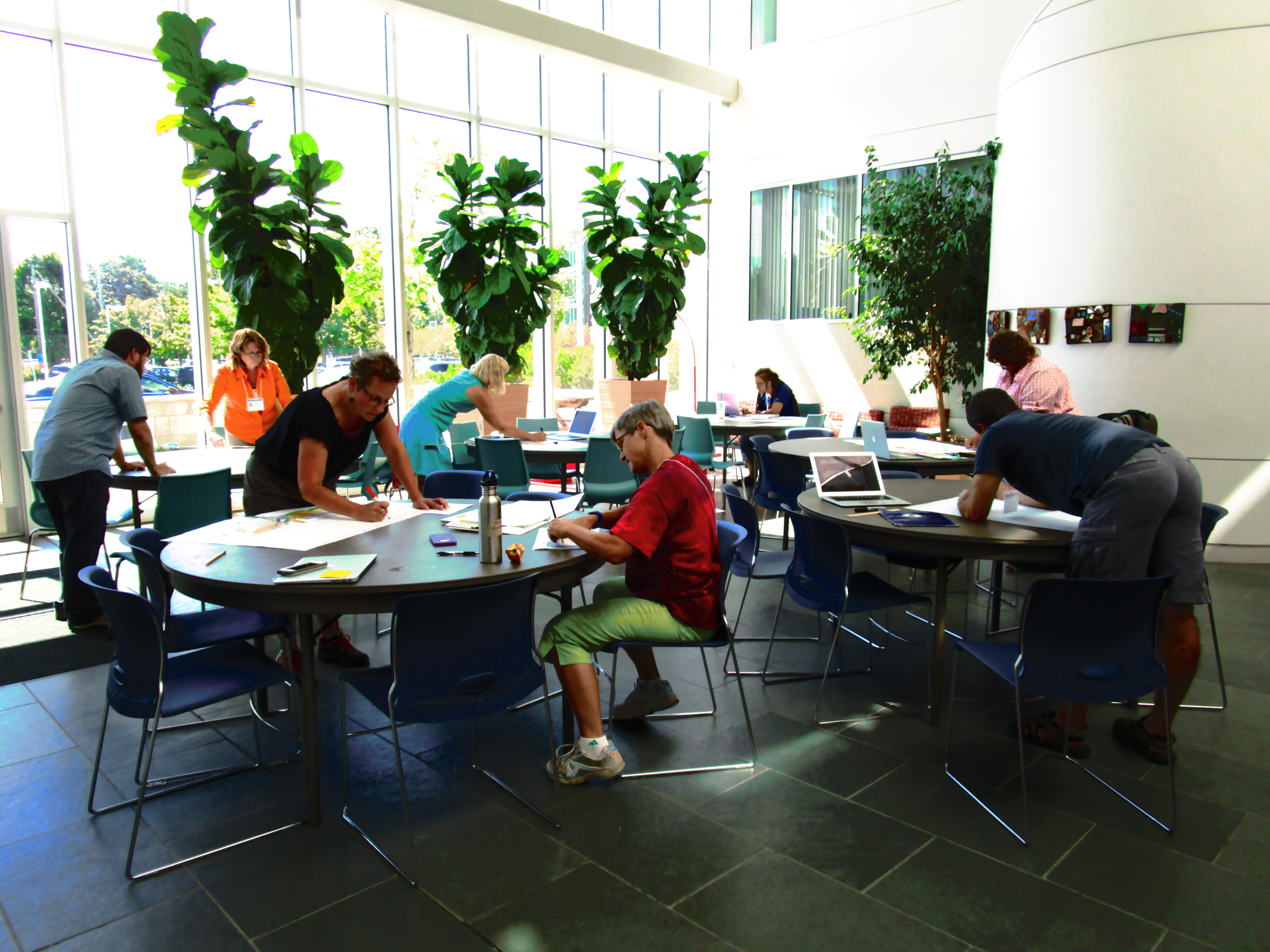
Teacher Leaders working on their posters creating their action plans and logic models for sharing

The Maine Arts Leadership Initiative (MALI) continues to use a Critical Friends model to provide feedback to each other as the work progresses. This years new Teacher Leaders created Action Plans that start with Essential Questions. For example, Why and how should we assess students in instrumental ensembles? The questions vary depending on what each teacher leader is learning and needing in their classroom. The template that is used helps the teachers formulate their ideas so they can present a workshop on the topic for other visual or performing arts teachers during the 2015-16 school year.

Along with the question(s), the template includes the following categories:

  • Rationale
  • Workshop Objective
  • Workshop Description
  • Timeline 1-6 months out
  • Resources Needed
  • Student Impact

You can imagine once the above are fleshed out, a plan develops for the workshop format. This is not to say that the plan is simple. In fact, some teachers really struggle to bring the plan together. It is amazing to watch the progress.

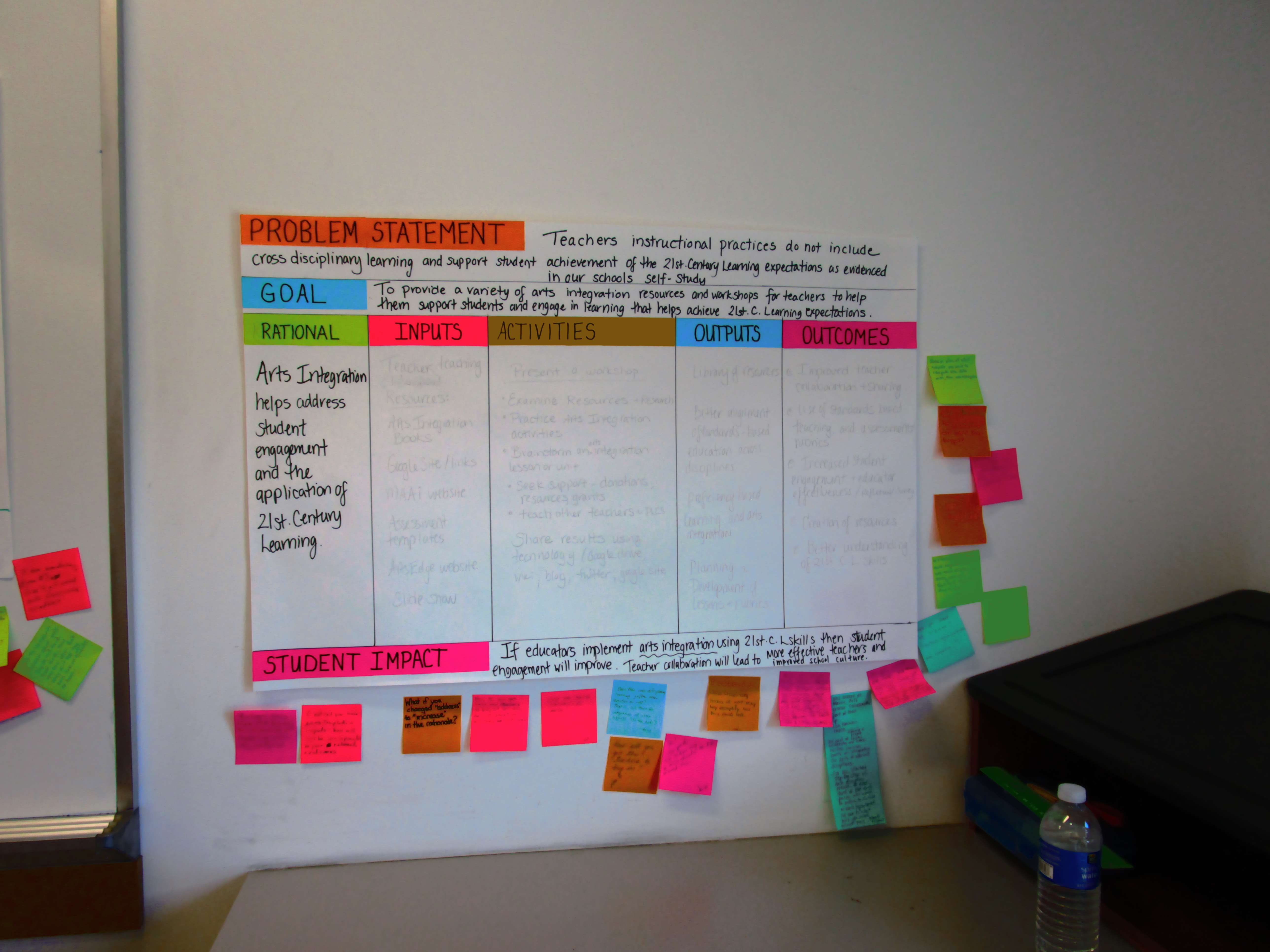
The returning Teacher Leaders used a different format this year – new to MALI as well. Teachers started with a Problem and a Goal.

From there they developed the following:

  • Inputs
  • Activities
  • Outputs
  • Outcomes
  • Student Impact
  • Rationale
IMG_0109

A Logic Model poster with comments on stickies

The MALI team that went to Washington, D.C. for the Teach to Lead Summit in July learned about the Logic Model template and decided hands-down that it was the way to proceed with the returning Teacher Leaders.

On the third day of the summer institute held at USM, Portland on August 3-5 all the Teacher Leaders shared their ideas in small groups with critical friends and received feedback that they could immediately apply and make any of the changes.

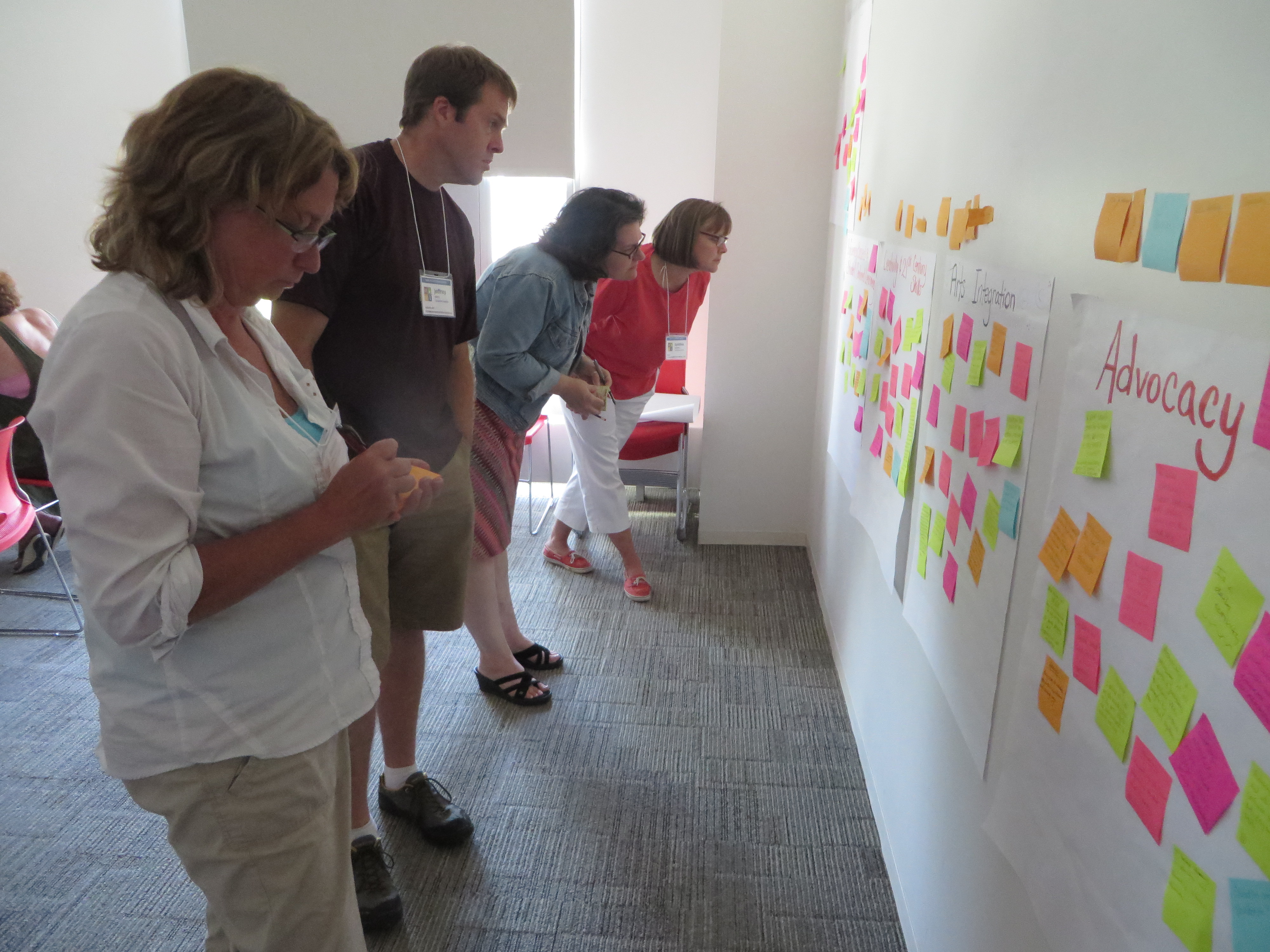
The frosting on the cake comes during the afternoon when teachers participated in a gallery walk reviewing the plans of each teacher. It was silent for 90 minutes while each Teacher Leader provides thoughtful feedback on stickies that the teachers use to make further changes. Both groups produced an amazing amount of high quality work during the 3-day institute.

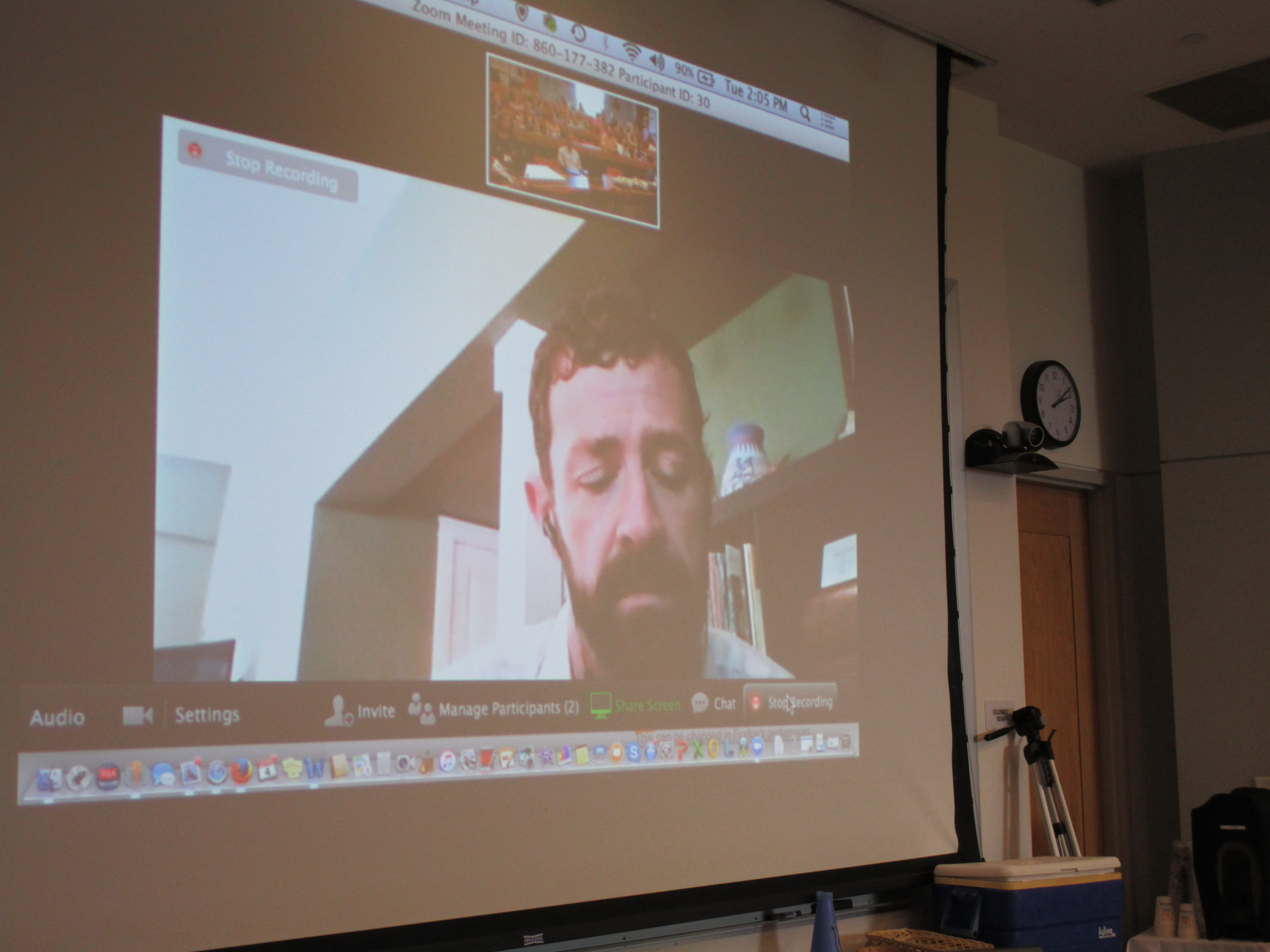
In addition, the Critical Friend assigned to the MALI team while in DC for the Summit joined us electronically to provide feedback to Teacher Leader and music educator from Bonny Eagle High School, Jake Sturtevant. It was great to watch the process in action.

IMG_0085

Jacob Bruno from Corwin, MALIs Critical Friend, providing feedback to Jake Sturtevant

On August 20 the MALI will have a Critical Friends Day to provide feedback for the last time before they take their workshops and plans “on the road”.

Just a reminder that on August 3, 2015, MAAI, the Maine Arts Assessment Initiative, announced its new name, MALI, the Maine Arts Leadership Initiative. You can read about it at https://meartsed.wordpress.com/2015/08/09/maai-goes-to-mali/. Please let me know if you have any questions.
h1

Summer Institute – MALI

August 10, 2015

Successful plus

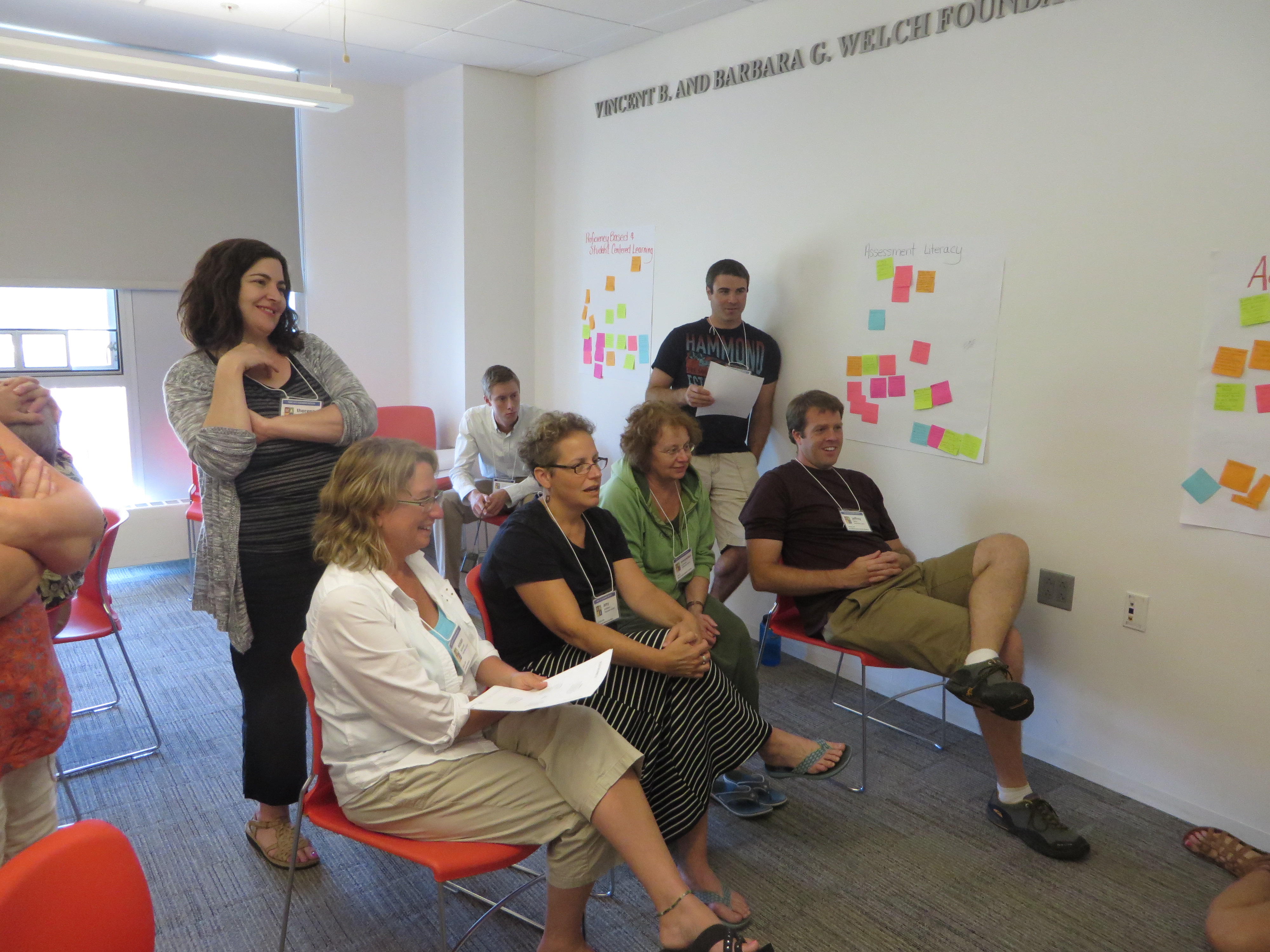
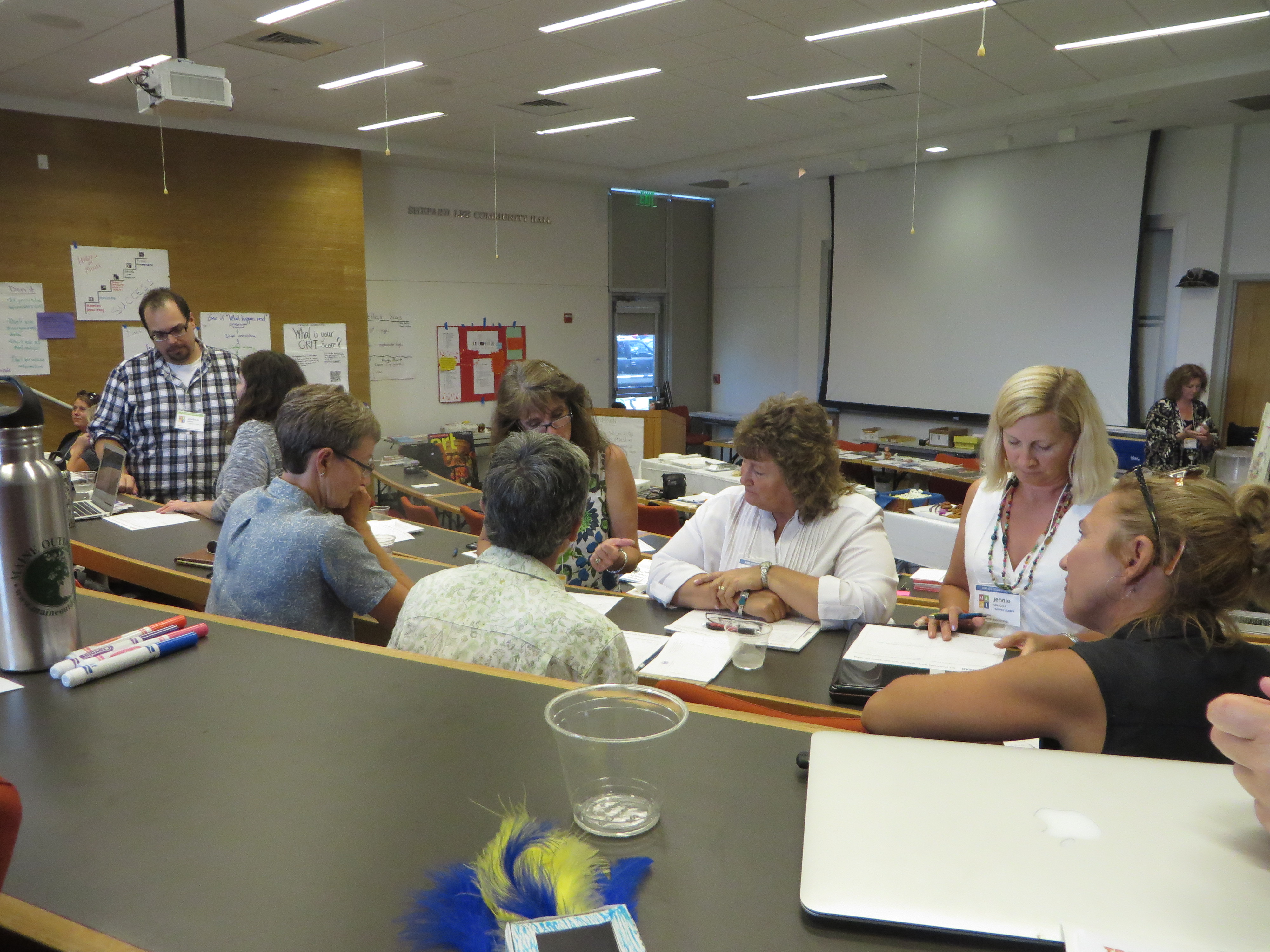
IMG_1941Last week MALI had its summer institute at USM in Portland where 60 educators participated in professional development. On the first day 13 Teaching Artists had the chance to learn about standards, technology tools, and creativity in action. The feedback  pointed to a success for all involved.

Twelve new Teacher Leaders were selected for Phase 5 and during the three days they had many chances to expand their thinking in Assessment, Proficiency and Standards, Advocacy, Leadership, and Technology. They created an Action Plan that guided them to design a workshop that they will present during the 2015-16 school year.

IMG_1918Returning Teacher Leaders learned about the Logic Model and how to create a plan that will lead them to action. They had workshops on Messaging, Social Media, Cross Disciplinary Teaching, and Leadership. They collaborated to create drafts of MALI belief statements on several topics that are key to MALI.

The opportunity to network and interact with each other was definitely a highlight for all attendees. The Leadership Team and some Teacher Leaders took on leadership roles to facilitate sessions. They were amazing!

IMG_1901On the third day each teacher shared their action plans and logic model plans using the critical friend model and ended with a gallery walk that was amazing! The teachers were pleased to have so many comments to help them with their next step. It was so impressive to see what they accomplished in a short period of time.

Teacher Leaders will be sharing their work in a more final stage on August 20 with critical friends. If you’d like to participate in the Critical Friends day please let me know ASAP by emailing me at argy.nestor@maine.gov.

I will share more information on the MALI summer institute in future posts.

h1

MAAI Goes to MALI

August 9, 2015

Name Change

On February 28, 2015 the Maine Arts Assessment Initiative (MAAI) Teacher Leaders met and decided that it was time to consider a change – a change in the title of the initiative AND the mission. It was time because MAAI, since its inception has been committed to meeting the needs of visual and performing arts teachers and education.

The participants that day brainstormed ideas and titles and at the summer MAAI institute on August 3 at USM the new title and mission were unveiled. MAAI is now MALI – from the Maine Arts Assessment Initiative to the Maine Arts Leadership Initiative.

The Mission:

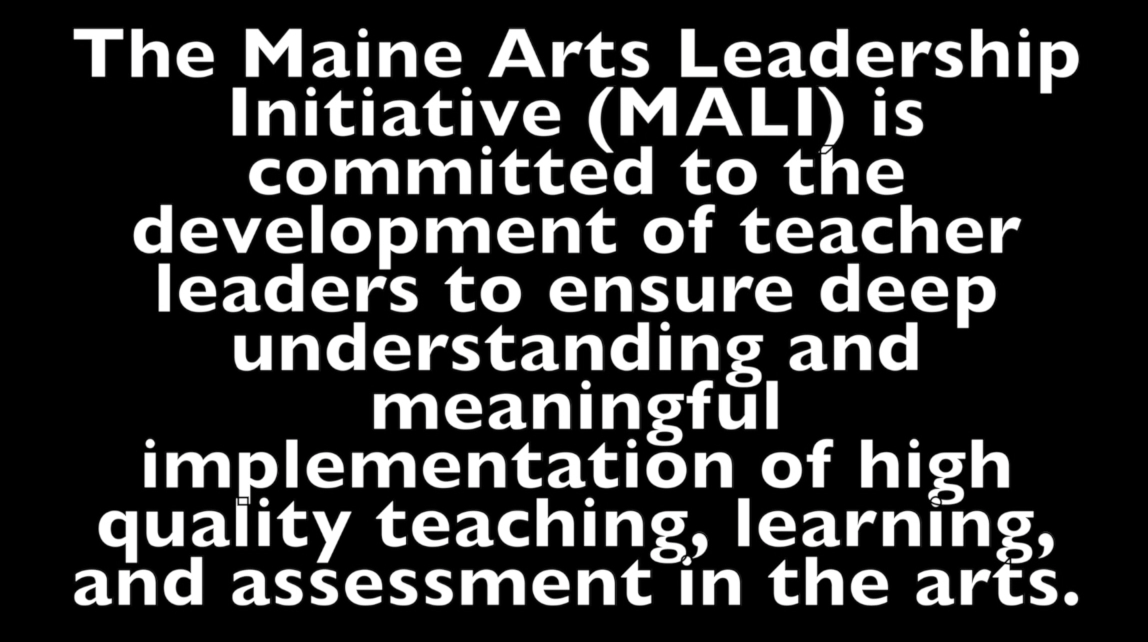
Screen Shot 2015-08-08 at 10.23.17 AMMALI is committed to providing opportunities for visual and performing arts educators to build and expand on their knowledge and skills in teaching, learning, and assessment. In addition, MALI will continue to intentionally recognize the potential in teachers as leaders and provide ways for educators to find their voices and spaces at the table.

Thank you to the MAAI/MALI Teacher Leaders and Leadership Team who helped navigate to the new title and mission for this valuable Maine Arts Commission program.

h1

Meet the Artists

August 8, 2015

Series of books for children

Meet the Artist! books by Patricia Geis are now available. These books are interactive with pop-ups and cut-outs. They focus on Pablo Picasso, Henri Matisse, and Alexander Calder. You can learn more about them on The Art of Education site by clicking HERE.

Screen Shot 2015-07-26 at 6.22.32 PM

h1

National Core Arts Standards

August 7, 2015

Volunteer to contribute

Screen Shot 2014-12-22 at 10.42.15 PMModel Cornerstone Assessments help bring the Standards into focus. National Association for Music Education did initial piloting of these Assessments in the Spring of 2015, and we’re expanding that pilot in the Fall of 2015 and Spring of 2016.

Teachers who pilot test these assessments learn deeply about the Standards and contribute greatly to the field. Request a part in the essential work of piloting assessments by going here.

Teachers in all areas of music are welcome, but we’re particularly looking for teachers in:
8th grade general music
Alternative ensembles
Composition and Theory
Music Technology
Harmonizing Instruments

Volunteer to take part now!

h1

What Great Teachers Know

August 6, 2015

Written by Marc Prensky for a blog post on Education Week, published November 4, 2014

Marc Prensky is a speaker and author in the field of education and the founder of the Global Future Education Foundation and Institute. He has written six books, over 100 essays and has given education-related speeches in over 35 countries. His website is marcprensky.com.

In my last post I wrote about the changing role of teachers in an age of technology — from provider and explainer of content to provider of the human skills that machines don’t provide, including respect, empathy, motivation and encouragement of students’ passions.

Here’s what today’s great teachers have already figured out.  They know:

— that they do not need to “cover” everything in the syllabus (or even all the standards) equally. They can set priorities and relative importance — allotting two weeks to some things and two sentences to others.

— that they do not need to waste their time teaching the same lesson to an entire class at once. They can find ways to have each student be doing something different and appropriate.

— that they can leverage technology strongly to do this. The best teachers do so to the max, letting all kids proceed with details on their own (and through their own passions), while making sure everyone gets the main points.

— that they get the best results from students by challenging them and saying “surprise me.”

The best teachers also realize that they need to include in their teaching huge number of skills that are crucial to success in the future and that we DON’T include in our curriculum today. Here’s a sample list:

Effective Thinking Skills. We do, of course, teach mathematical and scientific thinking systematically, and, lately — perhaps — critical thinking and a bit of collaborative problem-solving. But we rarely teach, systematically, the intellectual skills of creative thinking, design thinking, integrative thinking, systems thinking, financial thinking, judgment, transfer, inquiry, argument, aesthetics, positive mindset, self-knowledge of one’s passions, strengths and weaknesses, stress control, focus, or contemplation and meditation.
Effective Action Skills: We rarely systematically teach ANY effective action skills, including all that is known about the Habits of Highly Effective People, leadership & followership, decision making under uncertainty, prudent risk taking, patience, grit and resilience, entrepreneurship, innovation, improvisation, ingenuity, strategy & tactics, breaking barriers, project management, coaching & being coached, programming machines, making effective videos and interacting with future technologies.
Effective Relationship Skills: We do not systematically teach AT ALL communication & collaboration in teams, in families, in a community, at work, online, or in virtual worlds. We do not teach our kids, systematically, the skills of relationship-building, empathy, courage, compassion, tolerance, ethics, politics, citizenship, conflict resolution, or negotiation.
All of these things are known about and can be taught in systematic ways. All the great teachers I know think continually about these skills and how to help their kids acquire them.  But they definitely could use more help. We need to provide this.

One of the biggest ways we could help would be to delete almost all the detail that now constitutes our curriculum, while making sure that all students understand the essentials — something that today happens far too rarely.

It is important to note that information is provided as a resource.

h1

Music Changes the Learning Brain

August 2, 2015

Mind/Shift article

A July 2014 article written by George Hicks states that music changes the learning brain. Below is the beginning of the article. You can read the entire article by clicking here http://ww2.kqed.org/mindshift/2014/07/22/unpacking-the-science-how-playing-music-changes-the-learning-brain/.

Remember “Mozart Makes You Smarter”?

A 1993 study of college students showed them performing better on spatial reasoning tests after listening to a Mozart sonata. That led to claims that listening to Mozart temporarily increases IQs — and to a raft of products purporting to provide all sorts of benefits to the brain.

In 1998, Zell Miller, then the governor of Georgia, even proposed providing every newborn in his state with a CD of classical music.

But subsequent research has cast doubt on the claims.

Ani Patel, an associate professor of psychology at Tufts University and the author of “Music, Language, and the Brain,” says that while listening to music can be relaxing and contemplative, the idea that simply plugging in your iPod is going to make you more intelligent doesn’t quite hold up to scientific scrutiny.


h1

Mnozil Brass

August 1, 2015

Lonely Boy