Archive for September, 2015

h1

Arts in Education Week

September 8, 2015

September 13-19, 2015

Screen Shot 2015-09-03 at 2.43.54 PMIn July of 2010, the U.S. House of Representatives passed a resolution designating the second week of September as “Arts in Education Week.” The resolution (H.Con.Res. 275) was proposed and introduced by Rep. Jackie Speier from California.

The resolution states: […] Arts education, comprising a rich array of disciplines including dance, music, theatre, media arts, literature, design, and visual arts, is a core academic subject and an essential element of a complete and balanced education for all students.

View the HR275 Arts in Education Week Resolution

Congress designated Arts in Education Week to promote and showcase the immense role arts education has in producing engaged, successful, and college and career-ready students. You can read statements made by congressmen on the House floor regarding arts education.

In May of 2011, arts education was again given a national spotlight with the release of the President’s Committee on the Arts and the Humanities report Reinvesting in Arts Education: Winning America’s Future Through Creative Schools.

The culmination of 18 months of research, meetings with stakeholders, and site visits all over the country, this report represents an in-depth review of the current condition of arts education, including an update of the current research base about arts education outcomes, and an analysis of the challenges and opportunities in the field that have emerged over the past decade. It also includes a set of recommendations to federal, state and local policymakers.

BRING ATTENTION TO THE CAUSE
Join in the national celebration on social media. Let your circle of colleagues, friends and family know you care and bring them into the greater movement!
⇒During #ArtsEdWeek, be sure to follow @NAEA on Twitter and Facebook and upload your favorite arts education moments.
⇒Show us a picture of student artwork with #EncourageCreativity.
⇒Or tell us about an art educator who made a difference with #TeachTheArts.
⇒Check out Americans for the Arts’ new advocacy video series: Encourage Creativity and other great tools and resources!
– See more at: http://www.arteducators.org/news/arts-in-education-week#sthash.IaZHXkLK.dpuf

Resources

National Visual Arts Standards Resources

National Core Arts Standards

President’s Committee on the Arts and the Humanities

Learning in a Visual Age

NAEA White Papers for Art Education

Advocacy Resources

h1

WERU – Arts Alive

September 7, 2015

Listen to the archive

showweru

Susan Potters, Jen Nash, Michael Donahue

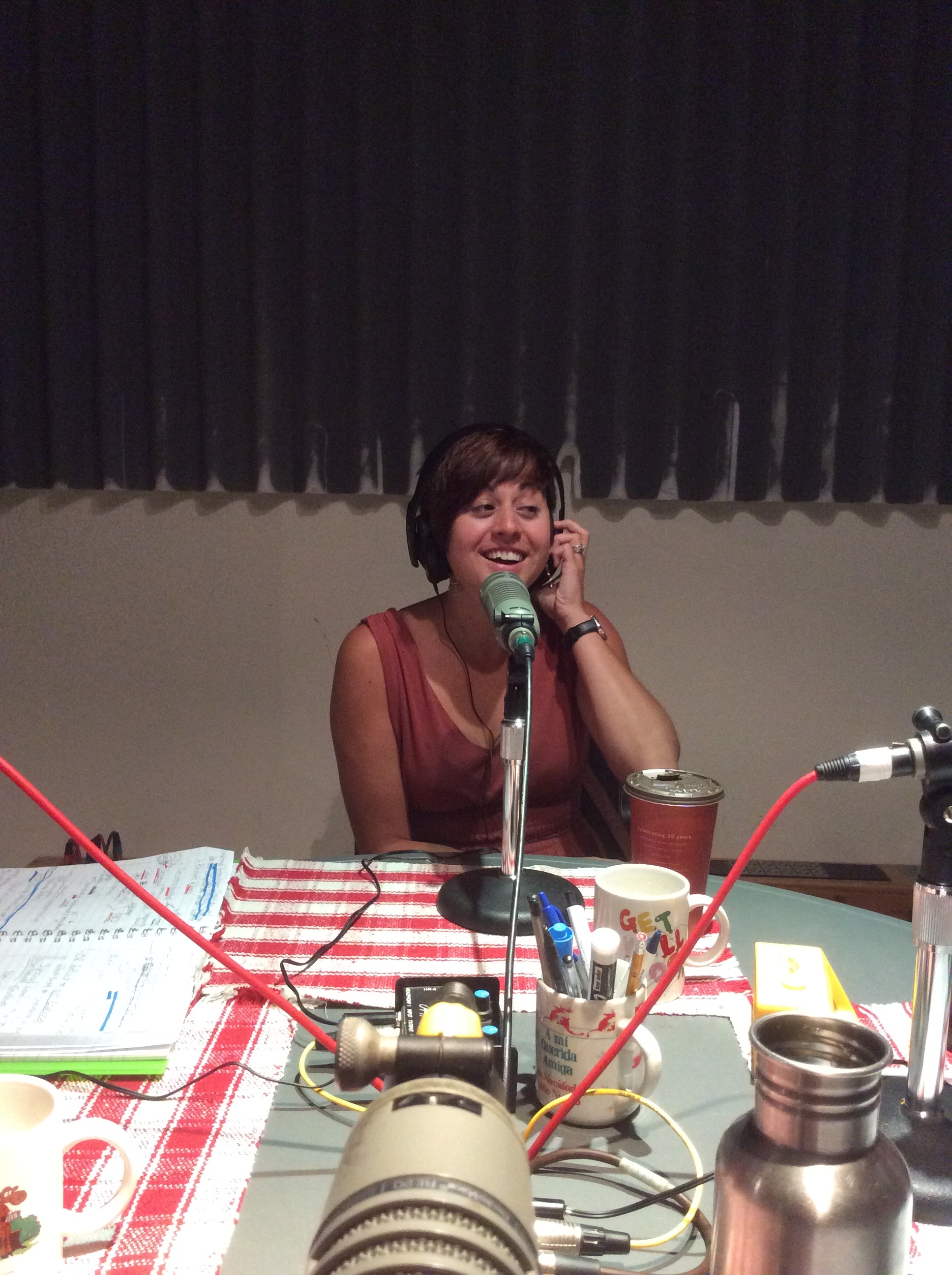
I mentioned last week that the WERU Arts Alive program invited a group to discuss arts education and advocacy week, September 14-18. The program has been archived so you can access it and listen to your colleague, music educator from Sebasticook Middle School and Maine Arts Leadership Initiative Teacher Leader Jen Nash. Also participating in the program were Susan Potters, Executive Director of the Maine Alliance for Arts Education, Jeff Poulin, Arts Education Program Director from the Americans for the Arts, and me, Argy Nestor. Michael Donahue is the host of WERU, Maine Arts Alive and did a wonderful job.

To access the program on WERU Community Radio, MaineArtsAlive, please go to the site http://archives.weru.org/maine-arts-alive/, click on Public Affairs Archives in the lower right, scroll down to MAINEARTSALIVE and click on title; or

go directly to MaineArtsAlive.org and click on “Program Information” and click on “recent programs” drop down.  This is the direct link: http://archives.weru.org/maine-arts-alive/2015/08/maine-arts-alive-82515/

h1

Science Discoveries about Music

September 6, 2015

This year science discovered

From Music.Mic an article titled 7 Amazing Things Science Has Discovered About Music This Year So Far written by Tom Barnes and published on August 14, 2015 on Music.Mic. Read the entire article at http://mic.com/articles/123862/7-amazing-things-science-has-discovered-about-music-this-year-so-far.

  1. Learning music has a positive effect on teenagers’ brains
  2. We can all be taught how to achieve perfect pitch…
  3. … but neurological factors can stand in the way of true mastery.
  4. Music can help improve patients’ recovery after surgery…
  5. … as well as improve the surgeon’s performance.
  6. Our musical tastes can predict how we think.
  7. The way we respond to music is largely universal.

This is a great article that includes different research and provides you with the latest information that researchers are learning. Think about how this might impact your teaching and student learning and how you communicate about how essential a quality arts education is for all learners.

h1

Creativity and the Brain

September 5, 2015

Excellent reading

Screen Shot 2015-09-01 at 1.14.17 PMI suggest you find a quiet spot when your brain is very alert and read this report that was put together after a two-day meeting called “How Creativity Works in the Brain”. The meeting was sponsored by the NEA and the Santa Fe Institute and the purpose was to:

  • evaluate the legacy of creativity of research; and
  • explore new knowledge at the intersections of cognitive psychology, neurobiology, learning, complex systems, and the arts.

The conversation included folks from a wide variety of disciplines including psychology, neurobiology, education, and the arts. From the meeting came ideas and themes that reflect experiences and knowledge that will impact the future. The need for more integrated thinking and working is necessary if we are to tap into the brain power of all groups.

The report is located at http://arts.gov/sites/default/files/how-creativity-works-in-the-brain-report.pdf.

h1

Farnsworth Prof Dev Opp

September 4, 2015

Five years old

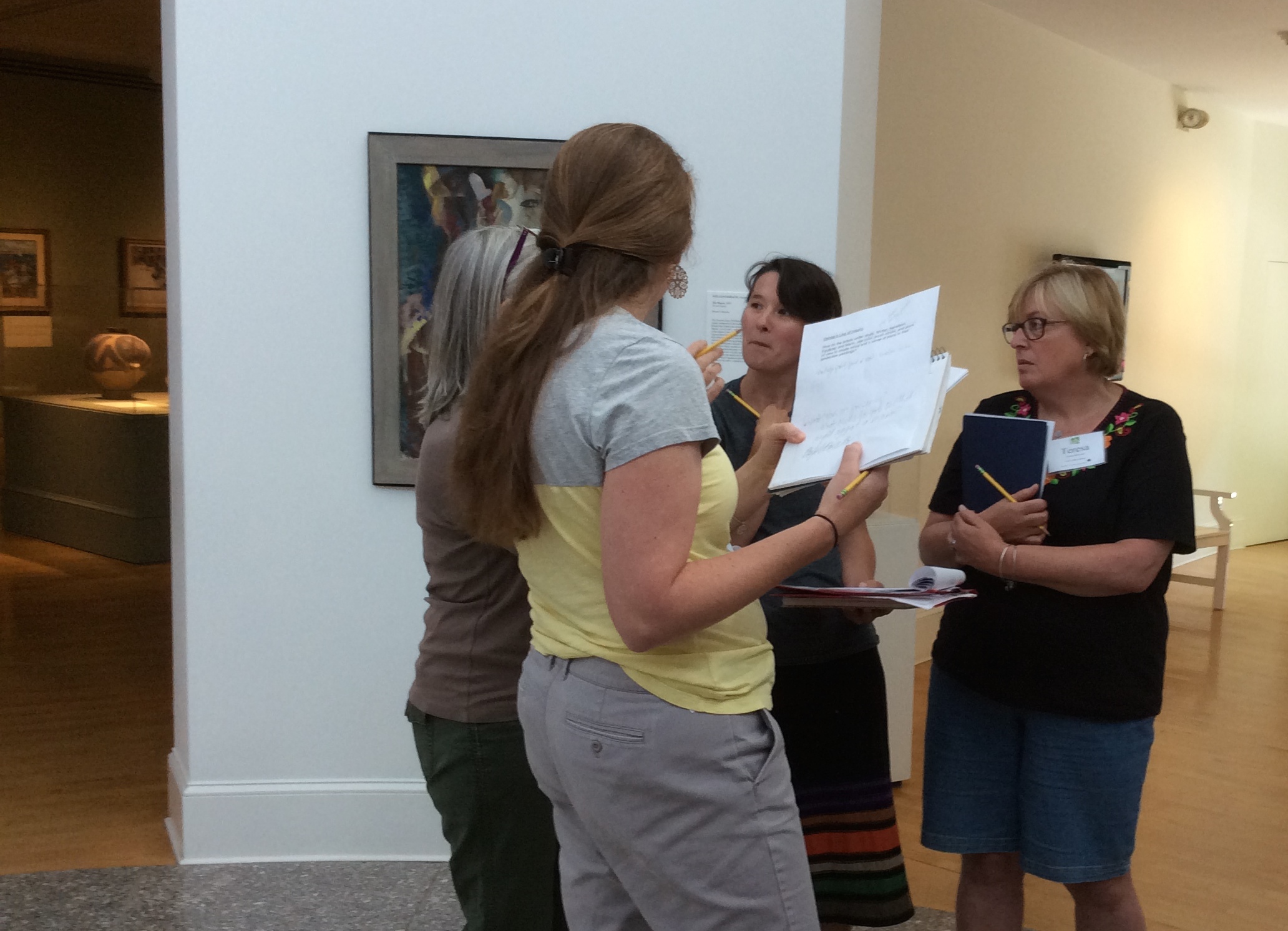
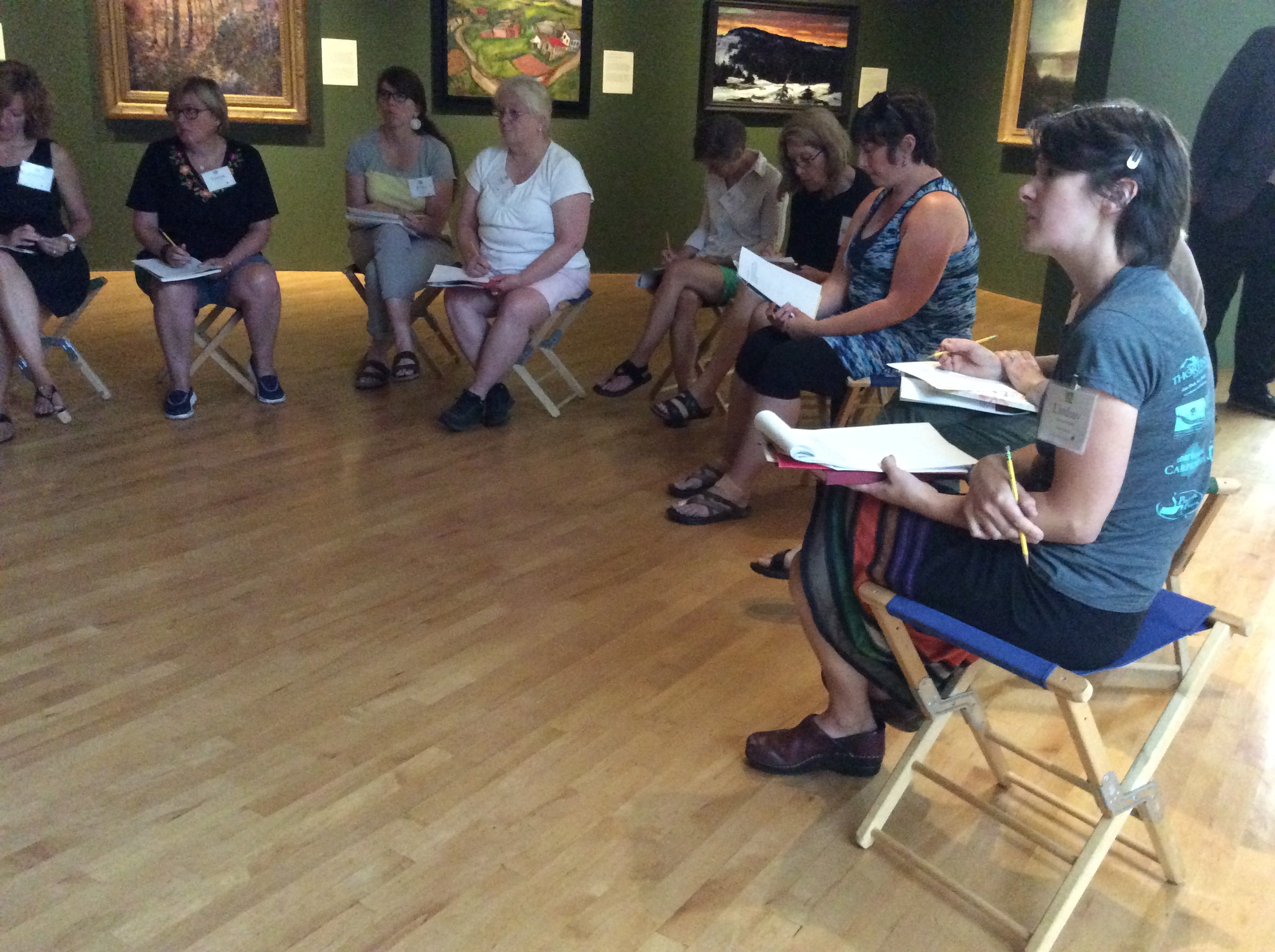
photo2The Farnsworth Art Museum in Rockland has collaborated with the Lincoln Center Education (LCE) program for the past six summers to provide an extensive aesthetic workshop. This summer’s workshop took place July 27-30 in Rockland, and included 17 Maine arts and non-arts educators. The workshop used an arts-integrated, inquiry-based approach to teaching that helps students develop skills of imagination, creativity, and innovation.

Participants developed a learning community through an experiential and inquiry based immersion in LCE’s aesthetic education philosophy and practices. The work is guided by four core teaching concepts and the Capacities for Imaginative Thinking. The teachers learned about LCE’s aesthetic education planning process which includes key ideas, line of inquiry, and the development of an aesthetic education lesson.

photoThe overarching question for the workshop was: How can engagements with live works of art, through LCE’s aesthetic education approach, offer new possibilities for imaginative teaching and learning across content areas? LCE’s educator Tenesh Webber joined with Farnsworth educator Denise Mitchell to facilitate.

I was glad that I had the opportunity to visit during one day of the workshop and see the program in action! The teachers, working in groups of four, were engaged in conversation after ‘deep looking’ at artwork. Some of the teacher reflections on the value of re-visiting works of art included the following:

  • Being able to stand in a different place and really look provided me with a different perspective.
  • While looking at Louise Nevelson’s whimsical artwork I wish she had done more of that type of work and wish that I could have seen her working down the street in Rockland.
  • Returning to the artwork for another look makes me realize, why wouldn’t we do this with students?, to look and see artwork again and spend time in front of works of art from the past.

photo3During my visit the Education Director, Roger Dell stopped by and addressed the group with the following: “Being willing to look at objects from the past, tell us something about the past”. He had read in a newspaper article last winter that was written by an art historian on the topic, the art of looking. “The art of looking is the only art that is in danger of being lost”.

The workshop continuously models good teaching practices by the facilitators and teachers and creates relevance for each teacher attending.

h1

Welcome Beth Lambert!

September 3, 2015

News from the Maine Department of Education – VPA Specialist

Screen Shot 2015-09-03 at 2.58.42 PMI am absolutely giddy over the announcement of Beth Lambert as the new Visual and Performing Arts Specialist at the Maine Department of Education. Beth has most recently taught performing arts education at Carrabec High School in North Anson. She holds a Bachelor’s Degree in Theatre Arts/English from Lawrence University and a Masters in Educational Leadership from the Harvard Graduate School of Education (HGSE)

Screen Shot 2015-09-02 at 9.34.34 AMBeth brings 10 years of education experience at the middle and high school levels in the Arts. In addition to her classroom experience, Ms. Lambert worked for Syntiro as an assistant director for the GEAR UP grant and served as a research assistant at HGSE. Through her involvement in the Maine Arts Leadership Initiative (MALI, formerly Maine Arts Assessment Initiative, MAAI) and her local leadership in standards, curriculum and assessment, she has extensive experience with proficiency-based assessments, student-centered teaching and teacher leadership.

Beth was a member of the MALI Resource Bank team in 2013-14 and created resources that are available as part of the Maine Assessment Resources website http://www.maineartsassessment.com/. Theatre at http://maairesourcebank.pbworks.com/w/page/82916230/MAAI%20Resource%20Bank.

Beth is involved with state and national VPA professional organizations including the MALI, the Maine Drama Council and Maine Arts Commission with Poetry Out Loud.

I know that you will all join me in welcoming Beth to the Maine DOE, during her first week on the job. You can reach her at beth.lambert@maine.gov.  We are certain that her commitment and passion for arts education makes Beth a GREAT choice for the position and look forward to working with her through all of the work underway for Maine students and the ARTS! Yahoooooo!

In Beth’s own words: “I am pleased to be starting this position at the Maine Department of Education and look forward to working collaboratively with Argy Nestor, and everyone with MALI, to continue to support and foster great learning for arts teachers and students in Maine!”

h1

Rob’s Talking

September 2, 2015

When a former student speaks, listen up

Thank you to Rob Westerberg, music educator from York High School and co-founder of the Maine Arts Leadership Initiative (formerly known as the Maine Arts Assessment Initiative), who provided the following blog post.

Katrina Faulstich is a former student teacher of mine and choral director at Bedford High School in Massachusetts. She has been doing some course work for her Masters degree down in Connecticut this Summer. As part of that work she submitted a paper for her Measurement and Evaluation class called, “The Use of Recordings to Assess Individuals in High School Chorus”. If you are not a high school choral director, don’t stop reading – this is one of the most informing pieces of writing I’ve come across in awhile. There are takeaways that translate to every music educator regardless of age group or specialty. To be sure, Katrina lays out her plans for assessing individuals in her program. And they are really cool. But there is so much more going on here and it’s a game changer when you look at it through a finer lens. She concludes her opening paragraph with the statement, “With so many changes affecting education, teachers must remember to do what is best for student learning and achievement.” Ya think? My takeaways from her paper:

  • We always cry foul when colleagues and administrators marginalize academic music programs, but research shows that they have every right to. J. A. Russell and J. R. Austin (2010): “researchers examining assessment practice in secondary music classrooms found that attendance and attitude were the most common grading criteria employed by instrumental and choral music teachers” (“Music Assessment Research,” para. 3). If this statement were true for any other teacher in any other core subject area, they would be fired. And you know it. We’ve been doing it however – and getting away with it – for generations. The research found that music teachers on average based 60% of grade weight on non-achievement criteria. When MAAI (MALI) ran its first state conference in 2011, the debate we had on the Leadership Team was whether or not to include the word “assessment” in it, the argument being that if we did it would scare arts teachers away. In retrospect, I don’t know which is scarier: that we were actually fearful about including the word or that we had reason to be.
  • We are too often guilty of assessing the skills of an entire ensemble over those of the individuals within. L.H. Tracy (2002): Two hundred and seventy four high school choral teachers completed a survey. (It was found that) teachers seemed to use personal philosophy to decide whether or not to assess individuals. In accordance with previous studies, Tracy found most teachers assess students on attendance, attitude, and effort. Tracey attributed this to the “‘teach as we are taught’ phenomenon” (p. 154). Most participants reported using in-class observations as a form of assessment, but Tracy stated this does not mean teachers know what individuals know and are able to do (Colwell, 1991, as cited in Tracy, 2002). Personal assessment “philosophy” has no place in 21st century classrooms. We know from a national standpoint as well as from an international standpoint that assessment of individual student growth is now a foundational expectation of every classroom teacher, period. We can get caught up too easily in state and federal mandates that carry this to an extreme with the “how oftens” and the “let’s standardize all this” filtering out the real issue here. There are effective ways of assessing that enhance and articulate student learning, and there are ways that don’t. That debate isn’t being held here. But to avoid individual assessment because of those and/or other filters that we allow to impact our choices? Inexcusable.
  • Tracy indicated many chorus teachers lack training in assessment and therefore do not use the best assessment practices. This was the foundational reason we formed MAAI 5 years ago. To date, we have provided professional development to over 1,200 arts educators here in Maine, provided by peers in the trenches fighting the same battles as everyone else. Though it is entrenched in research, all of it is foundational and practical so teachers can individualize their work based on their setting and available resources. Maine’s arts educators are running out of excuses on this one.
  • Individual assessment facilitates growth. Katrina alluded to a study in which students who were assessed on sight reading skills for instance showed significant improvement over those who were not assessed. We cannot look at assessment as something that “gets in the way of what I’m trying to do” any longer. Conceptually, curriculum, assessment and instruction must be an integrated entity. When we divide these elements like slices of pie we miss out on the real power of each. Our students benefit when we transparently link them in a thoughtful, sequential and systematic way. Research supports this for every other core subject area, and it supports it for the arts as well.
  • Many teachers justified the lack of individual performance assessments by claiming teachers do not have time to assess each student during class time. Kotora suggested researchers look into teachers’ use of computer, audio, and video technology to assess individual students in chorus. I literally refer to my career as the years I taught before attending the Hartford, Connecticut MENC Eastern Division Conference in February 2007, and the years I’ve taught since. That was when I discovered Smartmusic. I’m not a Smartmusic shill, and I don’t believe it’s the best technology for every situation. Far from it. But through Smartusic I found a way to assess every individual in my chorus. At the time I had 230 singers in a school of 650 with NO way to individually assess them. Technology changed that, and transformed my courses, my curriculum, my instruction and, most importantly, my students learning. Mind you, that was eight and a half years ago. The vast landscape of technology at our fingertips now offers astounding opportunities for individual assessment in the large group setting.
  • We need to listen to our newer colleagues to the profession. Katrina is a great example of this. She prefaces her paper with the statement that she already utilizes individual assessment in her classroom, but she’s not satisfied with her strategies. She already does it but isn’t satisfied! How many times have we as veteran teachers filtered out valuable growth opportunities with a wee small voice on the inside of us that says as a rebuttal, “but I’ve always done it my way and it works?” To satirize the meme that is often used in social media these days, “But I’ve always done it my way and it works”, said no beginning teacher ever. Katrina and her classmate Kaitlin Young, Drew and Ashley Albert, Jen Etter, Jen Nash, Jake Sturdevant. I wrote my own blog post a couple of years ago on this topic (http://goobermusicteachers.com/2013/03/02/nothing-to-learn-from-beginning-teachers/) and feel even stronger about it today than when I wrote it. Inexperience = searching. And perhaps that’s something we can all give them more credit for.

There’s much more in Katrina’s paper and it’s worth the read. Working with data and educational studies can be very dry. But from that work can be mined some essential truths. “Assessment based on curricular objectives is important if music education is to be perceived as a legitimate subject” (Shuler, 1990, as cited in Kotora, 2005, p. 73). Choosing to ignore research, best practices, new ideas and new strategies for music instruction is an option. It is. But doing so will inevitably lead to the demise of our programs and of our profession, and research supports this. The 2015-2016 school year is a perfect opportunity for each of us to move our assessment work forward in whatever capacity is available to us in our own schools. Not the state, not the DOE, not NAfME, not your administrators, not MALI, but your STUDENTS will be the beneficiaries. And that’s why we’re here to begin with, isn’t it?

Fortunately for us Katrina’s paper is available on the Maine Arts Assessment Resources website at http://media.wix.com/ugd/4747f3_fd6b4c29ecbd434cb73884fa7b3be72a.pdf.

h1

Rock Stars!

September 1, 2015

Great stuff happening with Arts educators and Arts education!

Photo on 8-25-15 at 2.44 PM

Sue Barre’s colleagues on the first workshop day: Strings Teacher Ciara Hargrove, Digital Arts Teacher and MALI Teacher Leader and Leadership Team member Suzanne Goulet, Strings Teacher Sam Lyons, and art teacher Dave Matteson

Everyday I hear about the focus and commitment that Maine Arts Educators have about teaching and to their students. The following all happened on the same day. YES, these made my day – I am so proud of the work that Arts educators do for the sake of their PK-12 students! These teachers are all making a difference and carry the sign ROCK STAR! in my book!

  • Sue Barre sent this early one morning… “In the opening school assembly today the Superintendent told everyone to look to the music document for guidance… kinda cool!” CONGRATULATIONS to Sue who teaches music in Waterville Schools and is a Teacher Leader with the Maine Arts Leadership Initiative (MALI). In addition, Waterville High School VPA teachers (seen in the photo to the right) established this goal: “We made a VPA goal to have all students in our Waterville High School VPA classes do at least one reflective writing assignment and then share those at a faculty meeting this year.”  Awesome work team!
  • jen - Version 2Jen Nash was on WERU morning show called Arts Alive and was a ROCK STAR! Jen was articulate and represented arts educators across the state…. Jen teaches music at Sebasticook Middle School and is an MALI Teacher Leader.
  • Theresa Cerceo is a MALI Teacher Leader who teaches K-12 Visual Art in Dr. Levesque Elementary School, Wisdom Middle/High School, MSAD 33 (all the way up in the County). Her Logic Model plan for her work as a Teacher Leader this year, involves advocacy work with students. In her own words: “I started working with my students today on advocacy work. I had K – 12 come up with possible blog titles and the high school art club created the, “Student Leaders in the Arts Movement” or S.L.A.M.!  We will have a meeting at the start of every art club meeting (once a week).  We had a great talk about the importance of messaging why the arts are essential. They had a lot of great ideas and really took ownership of the project. We have a board going for all the different activities we will work on. They are excited!” (There will be more information about this in the near future. Theresa is piloting this idea and will gladly share more with you about this in the months to come!)
Students (l to r): Daley Pedersen, grade 11 Elizabeth Raymond, Grade 12, Adam Weyneth, Grade 12, Jasmine DeMoranville, Grade 11, Sarah Harris, Grade 12, Dorothy Harris, Grade 10, Cassandra Boucher, Grade 10, Celine "Ce Ce" Young, grade 12

Students (l to r): Daley Pedersen, grade 11, Elizabeth Raymond, Grade 12, Adam Weyneth, Grade 12, Jasmine DeMoranville, Grade 11, Sarah Harris, Grade 12, Dorothy Harris, Grade 10, Cassandra Boucher, Grade 10, Celine “Ce Ce” Young, grade 12

  • Joshua Bosse is the PK-12 Music Teacher in Madawaska and a new Phase 5 MALI Teacher Leader and put this message on the MALI community wiki: “I would like to take the time to just say that I appreciate what each and every one of you have been doing for MALI and for your school districts. With school already starting for me, I can say that I have already seen a dramatic change in my teaching (for the better). I feel that MALI has done great things for me, and I am more excited than ever to be teaching students what I love most! Again, thank you so much for all that you have done, and I hope you all have a wonderful school year, and that all of your workshops go well! I saw a lot of great plans! I will definitely be keeping in touch throughout the school year, and I am so overjoyed about being able to be part of this wonderful organization!”

When you find yourself asking yourself the hard questions about your chosen career field, know that you are not alone! I suggest that you “get off your island” and attend a MALI event to connect with spirited Teacher Leaders. And, join us at the fall biennial arts conference, Arts Education: The Measure of Success, October 9, Point Lookout Conference Center. Information and registration (early-bird through September 9) is located at http://mainearts.maine.gov/Pages/Education/Biennial-Statewide. MALI resources located at http://www.maineartsassessment.com/.