Archive for March, 2016

h1

Proposed Legislation

March 3, 2016

Public Hearing Monday, March 7, 11:00
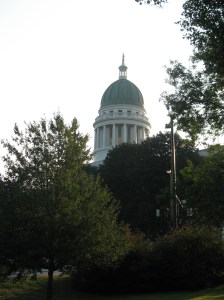
IMG_3637‘An Act to Implement Certain Recommendations of the Maine Proficiency Education Council’, LD 1627, is scheduled for public hearing in front of the legislature’s Education and Cultural Affairs Committee on Monday, March 7, 11:00 am in Room 202, Cross Office Building, Augusta.

The current language proposes students demonstrate proficiency in English language arts and mathematics and two other content areas. 

The bill text can be found at THIS LINK or it is located at the bottom of this blog post. The Committee hears both written and in-person testimony for bills (either for, against, or neither for nor against). Anyone interested in providing testimony please deliver written testimony by emailing jayne.deneen@legislature.maine.gov (LD1627 in the subject line).

To submit written testimony via the postal service mail:
Jayne Deneen, Committee Clerk
Joint Standing Committee on Education and Cultural Affairs
100 State House Station
Augusta, ME 04333-0100

To deliver testimony in person at the hearing on Monday, March 7, 11:00 AM, Cross Office Building, Room 201, the information on public hearings and procedures is located at:   http://legislature.maine.gov/house/testify.htm.

LD1627

An Act To Implement Certain Recommendations of the Maine Proficiency Education Council

Be it enacted by the People of the State of Maine as follows:

     Sec. 1. 20-A MRSA §4511, sub-§3, ¶J  is enacted to read:

J.  The school demonstrates evidence of sufficient capacity through multiple pathways as set out in section 4703 for students to reach proficiency in each of the content areas of the system of learning results established under section 6209 and in each of the guiding principles set forth in department rules governing implementation of the system of learning results established pursuant to section 6209.

     Sec. 2. 20-A MRSA §4722-A,  as amended by PL 2015, c. 267, Pt. C, §3; c. 342, §1; and c. 367, §1; and corrected by RR 2015, c. 1, §14, is further amended to read:

§ 4722-A. Proficiency-based diploma standards and transcripts

Beginning January 1, 2017, a diploma indicating graduation from a secondary school must be based on student demonstration of proficiency as described in this section. The commissioner may permit a school administrative unit to award diplomas under this section prior to January 1, 2017 if the commissioner finds that the unit’s plan for awarding diplomas meets the criteria for proficiency-based graduation under this section.

     1. Requirements for award of diploma.  In order to receive award to a student a diploma indicating graduation from secondary school, a student school subject to the system of learning results established under section 6209 must:

A. Demonstrate that the student engaged in educational experiences relating to English language arts, mathematics and science and technology in each year of the student’s secondary schooling;
B.  Demonstrate Certify that the student has demonstrated proficiency in meeting state graduation standards established by rule in all the content areas of English language arts and mathematics in the system of learning results established under section 6209;
B-1.  Certify that the student has demonstrated proficiency in meeting state graduation standards in at least 2 content areas in addition to English language arts and mathematics in the system of learning results established under section 6209;
C.  Demonstrate Certify that the student has demonstrated proficiency in each of the guiding principles set forth in department rules governing implementation of the system of learning results established pursuant to section 6209; and
C-1.  Certify the highest standard of proficiency achieved by the student in each content area of the system of learning results established under section 6209;
C-2.  Certify that the student has demonstrated by objective measures college and career readiness as evidenced by skills in problem-solving, collaboration, critical thinking and communication. These objective measures must be established through major substantive rules adopted pursuant to this chapter and may include measures of advanced placement exams, advanced placement courses, dual enrollment credits in college English and mathematics courses, international baccalaureate exams or college readiness placement assessments, attendance rates, community service, cocurricular activities, workplace learning experience, industry credentials or dual enrollment credits in career and technical education courses; and
D.  Meet Certify that the student has met any other requirements specified by the governing body of the school administrative unit attended by the student.
     2. Method of gaining and demonstrating proficiency.  Students must be allowed to gain proficiency through multiple pathways, as described in section 4703, and must be allowed to demonstrate proficiency by presenting multiple types of evidence, including but not limited to teacher-designed or student-designed assessments, portfolios, performance, exhibitions, projects and community service.

     3. Exceptions.  Notwithstanding subsection 1, a student may be awarded a diploma indicating graduation from a secondary school in the following circumstances.

A. A student who is a child with a disability, as defined in section 7001, subsection 1-B, and who achieves proficiency as required in subsection 1, as specified by the goals and objectives of the child’s individualized education plan, may be awarded is eligible to receive a high school diploma.
B. A student who has satisfactorily completed the freshman year in an accredited degree-granting institution of higher education may be is eligible to receive a high school diploma from the secondary school the student last attended.
B-1. A student who has satisfactorily completed the junior and senior years in a dual enrollment career and technical education program formed pursuant to chapter 229 and who successfully demonstrates proficiency as required in subsection 1 may be in meeting state graduation standards in the content areas of English language arts and mathematics as well as the guiding principles in the system of learning results established under section 6209 or by an articulation agreement established under section 8306-B, subsection 4 is eligible to receive a high school diploma from the secondary school the student last attended.
B-2.  A student who has satisfactorily completed a state-approved career and technical education program and met 3rd-party-verified national or state standards as required by rule pursuant to section 8306-B and who successfully demonstrates proficiency in meeting state graduation standards in the content areas of English language arts, mathematics and one other content area as well as the guiding principles in the system of learning results established under section 6209 is eligible to receive a high school diploma from the secondary school the student last attended.
D. A school administrative unit may award a high school diploma to a student who has met the standards set forth in a waiver request that was approved by the commissioner pursuant to section 4502, subsection 8.

E. A person may be awarded a high school diploma, including a posthumous award, if the person or a family member of the person applies to a secondary school and:

       (1) The person:

                     (a) Attended a secondary school in the geographic area now served by    the secondary school from which a diploma is requested; or

                     (b) Resides at the time of application for a diploma in the geographic area served by the secondary school from which a diploma is requested;

     (2) The person did not graduate or receive a diploma from a secondary school because the person left secondary school to serve in the Armed Forces and served during the following periods:

                    (a) World War II, from December 7, 1941 to August 16, 1945;

                    (b) The Korean Conflict;

                    (c) The Vietnam War era, from February 28, 1961 to May 7, 1975;  or

                    (d) The period of wartime or peacetime after a period of wartime described in division (a), (b) or (c); and

     (3) The person received an honorable discharge or a certificate of honorable service from the Armed Forces.

For the purposes of this paragraph, “Armed Forces” means the United States Army, Navy, Air Force, Marine Corps , and Coast Guard and the Merchant Marines merchant marine.

     4. Grants; contingent extension of full implementation.  During the period of transition to proficiency-based graduation in accordance with this section, the department, if funds are available, shall make annual transition grants to each school administrative unit equal to 1/10 of 1% of the school administrative unit’s total cost of education calculated under section 15688, subsection 1 to be used in the manner determined by the school administrative unit to fund the costs of the transition not otherwise subsidized by the State through the 2014-2015 school year. The date for implementation of the awarding of diplomas based on student demonstration of proficiency as described in this section is extended one year for each year for which transition grants are not made available to a school administrative unit or for which levels of general purpose aid for local schools fall below school year 2012-2013 levels. Beginning in the 2015-2016 school year through the 2020-2021 school year, the department, if funds are available, shall make annual transition grants to each school administrative unit that operates schools equal to 1/9 of 1% of the school administrative unit’s total cost of education calculated under section 15688, subsection 1 to be used in the manner determined by the school administrative unit to fund the costs of the transition not otherwise subsidized by the State.
     5. Transcripts and certification of content area proficiency.  A school administrative unit may shall certify a student’s content area proficiency and may award a certificate of content area proficiency as a part of the high school transcript to a student for each content area in the system of learning results established under section 6209 in which the student has demonstrated proficiency. A certificate Certification of content area proficiency may must be included in the student’s permanent academic transcript, and a student may use a certificate certification of content area proficiency as an official credential of academic achievement for the purposes of employment and postsecondary education. If When a school administrative unit awards certificates of certifies content area proficiency, it shall report its issuance of certificates these certifications of content area proficiency to the department, and the department may collect and aggregate these data as evidence of intermediate progress towards high school graduation goals of readiness for college and careers. Schools may supplement reports on college and career readiness with other evidence of postsecondary student success.
     6. Implementation of proficiency-based diplomas and transcripts.  Beginning in the 2015-2016 2016-2017 school year, the department shall annually collect and report data on the progress of public schools and public charter schools towards the implementation of proficiency-based diplomas and transcripts in relation to the ongoing transition plan required pursuant to section 4502, subsection 1, including the number of students graduating with proficiency-based diplomas and , the number of students awarded proficiency concluding their high school careers proficient in each of the content areas of the system of learning results established under section 6209 and in each of the guiding principles set forth in department rules governing implementation of the system of learning results established pursuant to section 6209 and the number of students certified as ready for college and careers. By January 15, 2017, and annually thereafter, the department shall provide an annual report of the data collected for the prior school year to the joint standing committee of the Legislature having jurisdiction over education matters, and the department shall post the annual report on its publicly accessible website.

     Sec. 3. 20-A MRSA §6209, first ¶,  as amended by PL 2015, c. 40, §5, is further amended to read:

     The department in consultation with the state board shall establish and implement a comprehensive, statewide system of learning results, which may include a core of standards in English language arts and mathematics for kindergarten to grade 12 established in common with the other states, as set forth in this section and in department rules implementing this section and other curricular requirements. The department must establish accountability standards at all grade levels in the areas of mathematics; reading; and science and technology. The department shall establish parameters for essential instruction and graduation requirements in English language arts; mathematics; science and technology; social studies; career and education development; visual and performing arts; health, physical education and wellness; and world languages. Only students in a public school, a public charter school as defined in section 2401, subsection 9 or a private school approved for tuition that enrolls at least 60% publicly funded students, as determined by the previous school year’s October and April average enrollment, are is required to participate in the system of learning results set forth in this section and in department rules implementing this section and other curricular requirements. The commissioner shall develop accommodation provisions for instances where course content conflicts with sincerely held religious beliefs and practices of a student’s parent or guardian. The system must be adapted to accommodate children with disabilities as defined in section 7001, subsection 1-B.

     Sec. 4. 20-A MRSA §6209, sub-§2,  as amended by PL 2007, c. 259, §5, is further amended to read:

     2. Parameters for essential instruction.  Each student shall study and school subject to the provisions of this section shall ensure sufficient opportunity and capacity through multiple pathways for all students to study and achieve proficiency in the areas of:

     A. Career and education development;
     B. English language arts;
     C. World languages;
     D. Health, physical education and wellness;
     E. Mathematics;
     F. Science and technology;
     G. Social studies; and
     H. Visual and performing arts.

     Sec. 5. 20-A MRSA §6209, sub-§3-A  is enacted to read:

     3-A.  Transcripts.   A school subject to this section shall:

A.  Maintain student transcripts containing certification of content area proficiency for a student who has successfully demonstrated achievement of proficiency in the content standards in the system of learning results pursuant to this section;
B.  Certify on the basis of objective measures in the transcript a student’s college and career readiness as evidenced by skills in problem-solving, collaboration, critical thinking and communication; and
C.  Establish a transcript that meets the requirements of paragraphs A and B as an officially sanctioned credential of student learning for admission to a postsecondary education institution and employment in a business, trade or industry.

     Sec. 6. 20-A MRSA §6211,  as enacted by PL 2001, c. 454, §33, is amended to read:

§ 6211. Rulemaking

The commissioner shall develop rules to accomplish the purposes of this chapter. Rules adopted by the commissioner under this chapter must include guidelines and protocols to strengthen the capacity of school administrative units to ensure sufficient opportunity through multiple pathways for all students to achieve proficiency in meeting the state standards and guiding principles established pursuant to the system of learning results pursuant to section 6209. Rules adopted pursuant to this chapter are major substantive rules as defined in Title 5, chapter 375, subchapter II-A 2-A.

     Sec. 7. Department of Education; rules. The Department of Education shall amend rules in accordance with the rulemaking provisions established under the Maine Revised Statutes, Title 20-A, section 7005, subsection 1 in order to establish strategies by which special education students with an individual education plan may demonstrate proficiency in meeting the state standards and guiding principles established pursuant to the system of learning results established under Title 20-A, section 6209.

      Sec. 8. Commissioner of Education; rulemaking. By January 2, 2017, the Commissioner of Education shall provisionally adopt or amend rules in accordance with the rulemaking provisions established under the Maine Revised Statutes, Title 20-A, section 253, subsection 9 and Title 20-A, section 6211 in order to ensure compliance with the amendments to the standards-based education system and the proficiency-based graduation provisions under Title 20-A, section 4511, subsection 3, paragraph J; section 4722-A; section 6209; and section 7005, subsection 1 pursuant to this Act.

SUMMARY

This bill is reported out by the Joint Standing Committee on Education and Cultural Affairs pursuant to Joint Rule 353. The bill includes certain recommendations proposed in the report submitted by the Maine Proficiency Education Council established pursuant to Resolve 2015, chapter 41, section 3 for consideration by the joint standing committee.

The joint standing committee has not taken a position on the substance of the report or this bill and by submitting this bill the committee is not suggesting and does not intend to suggest that it agrees or disagrees with any aspect of the recommendations and the necessary changes to the Maine Revised Statutes, Title 20-A included in the report or this bill. The joint standing committee is submitting the bill for the sole purpose of turning certain proposals in the report into a printed bill that can be referred to the committee for an appropriate public hearing and subsequent processing in the normal course of business. The joint standing committee is taking this action to ensure clarity and transparency in the legislative review of the proposals included in the report submitted by the Maine Proficiency Education Council.
h1

In Today’s News

March 2, 2016

Congressional Art Awards

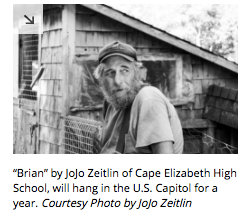
Screen Shot 2016-03-01 at 2.32.19 PMA photograph taken by a Cape Elizabeth High School student has won the 2016 Congressional Art Competition for Maine’s 1st District and will be displayed as part of a national exhibit at the U.S. Capitol for one year.
JoJo Zeitlin, a junior at Cape High, took top honors with a black-and-white photo she shot in the midcoast town of Friendship during a youth workshop last summer with Maine Media Workshops and College in Rockport.

Read the entire article by CLICKING HERE.

h1

Happy Arts Education Month!

March 1, 2016

March it is!

When others are looking out the window waiting for Spring, Visual and Performing Arts Educators and others committed to excellent quality and access to arts education, are celebrating Arts in the Schools Month!

The month of March officially marks Youth Art Month, Music in Our Schools Month, Theatre in Our Schools Month, and Dance Education Month. A time for everyone to recognize students and their involvement in Arts education. We celebrate all that is “right” and “great” about visual and performing Arts education and a time to shout about it!

Celebrating Arts in Our Schools Month

Celebrating Arts in Our Schools Month

March provides an opportunity for Arts education to shine even greater than it does day to day. How will you take advantage of this opportunity? I suggest that you read the post I wrote one year ago called Arts Education Month for ideas or borrow language from this post to communicate with others. Use your voice to let others know why you believe that a quality Arts education is essential for all students, PK-grade 12.

Parts of this blog post have been borrowed from HomeRoom, an education blog of the US Department of Education who borrowed the post from the Office of Innovation & Improvement. Other parts are from the professional dance, music, theatre, and visual arts organizations websites.

The arts are an important part of a well-rounded education for all students. Arts-rich schools, those with high-quality arts programs and comprehensive course offerings, benefit students in and outside of the art or dance studio, music room, or stage. “All children deserve arts-rich schools,” Secretary Duncan told an audience of arts education advocates in 2012, as he discussed the disappointing results of an ED survey that showed many students lacking adequate access to arts education.

There’s no better time to echo the secretary’s pronouncement than in March, widely known as “Arts in the Schools Month.” Under the leadership of national associations representing teachers of dance, music, theatre, and the visual arts, a variety of activities unfold throughout the month — some that showcase the achievements of students and others that focus on the professional growth of arts educators committed to achieving the goal of arts-rich schools for all students.

Waterville Senior High School band students

Waterville Senior High School band students

MUSIC

Music in Our Schools Month was established nation-wide in 1985 by the National Association for Music Education.

Music teachers celebrate Music In Our Schools Month (MIOSM) in many ways by offering special performances, lessons, sing-alongs and activities to bring their music programs to the attention of administrators, parents, colleagues, and communities to display the positive benefits that school music brings to students of all ages.

Each year the National Association for Music Education sponsors a concert for MIOSM. You can view the concert videos by CLICKING HERE.

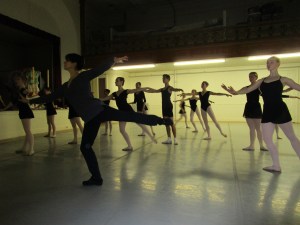
Bossov Ballet, Maine Central Institute

Bossov Ballet, Maine Central Institute

DANCE

For students of dance, March is when the National Dance Education Organization celebrates the artistic and academic achievements of exceptional students through the National Honor Society for Dance Arts (NAHSDA), which recognizes students who display outstanding artistic merit, leadership, and academic achievement in studying dance. Students who are members of NHSDA have an opportunity to be nominated for one of the highest honor programs for dance in the U.S., the NDEO Artistic Merit, Leadership, and Academic Achievement Award.

Poland Community School STEAM camp

Poland Community School STEAM camp

VISUAL ART

Youth Art Month (YAM) focuses on the value of visual art and art education for all children, with the theme of “Start With Art, Learn for Life.” State affiliates of the National Art Education Association (NAEA) help with support of YAM programs throughout the month, and NAEA members locally sponsor art exhibits and other activities to direct attention to benefits of visual arts learning and to increase community understanding and support of their schools’ arts education programs.

Maine Northern Maine Regional Final participants

Maine Northern Maine Regional Final participants

THEATRE

Theatre In Our Schools (TIOS) is a celebration of theatre in our schools and schools in our theatres. Sponsored by the American Alliance for Theatre & Education (AATE) and the Educational Theatre Association (EdTA), the goals of TIOS are to raise public awareness of the impact of theatre education and draw attention to the need for more access to quality programs in and out of school for all students. While TIOS presentations and advocacy may happen anytime in schools, theatres, and other public spaces, AATE and EdTA will recognize and promote March as the official Theatre In Our Schools month.

PROFESSIONAL LEARNING

Like all academic areas, students of the arts are successful because of teachers who are highly skilled, knowledgeable of developments in their fields, and motivated.

The Maine Arts Leadership Initiative provides resources aplenty at THIS LINK.

Maine DOE MEARP-1 participants

Maine DOE Maine Arts Education Resource Project – Integration participants

It’s your turn to get involved

Arts-rich schools benefit everyone. Research increasingly shows that arts education heightens engagement for all students and can increase motivation and persistence for those most at risk of failing or dropping out of school. Learning in the arts also uniquely equips students with the skills in creativity and divergent thinking as well as problem-solving and teamwork that they need to be college and career ready. The Arts Education Partnership, with support from ED and the National Endowment for the Arts, has publications and a research clearinghouse, ArtsEdSearch, to help you learn more about why the arts in our schools are worth honoring for a month.

Screen Shot 2016-03-01 at 5.53.30 AM

Attend Maine’s Arts Advocacy Day at the State House in Augusta, March 24. For more information CLICK HERE for the Maine Alliance for Arts Education website. I hope to see you there!

Take advantage of Arts Education Month to engage others in the conversation of why a quality arts education is essential for all students. Be sure that your principal and school have participated in the statewide Arts Education Census that is underway and being facilitated by the Maine Arts Commission. To learn more CLICK HERE.