Archive for September, 2016

h1

Two Weeks Left

September 20, 2016

Register today for the MICA and arts ed conferences

7a22ed20-651c-4248-a5b3-d22515d38944-1

CREATIVITY.   INDUSTRY.    ART.   INNOVATION.
The Maine International Conference on the Arts in Lewiston/Auburn
October 6-7, 2016

Don’t miss your chance to network, work, and learn with artists, arts organizations, arts educators, community developers and policymakers from throughout Maine.

  • CLICK HERE for the full schedule
  • Opening Reception & Keynote: Thursday, October 6, 4:30 p.m. at the Gendron Franco Center. Poet,  essayist, advocate, and Vice President of the Office of Diversity at Bates College  Crystal Williams. Williams will speak on “Practical Approaches to Creating Impact: Getting to Cultural Equity.”
  • Celebrate Lewiston/Auburn’s vibrant creative culture and industries Thursday evening visiting downtown local artist studios in an Art Crawl; enjoying some of your favorite show tunes and getting behind the scenes in Maine’s oldest community theater, the Community Little Theater in Auburn; or attending a poetry reading at the Lewiston Public Library in which Maine’s Poet Laureate Stuart Kestenbaum will be joined by some of the diversely talented, poetry slam-winning students from Edward Little High School in Lewiston.
  • Friday morning Idea Lab featuring five of Maine’s most innovative artists
  • 20 breakout sessions focused on the skills and discussions you say you need and want to strengthen the arts in Maine. Workshop sessions are offered in each of the priority areas of the Commission’s 5-year Cultural Plan: Leveraging Investment, Visibility for Arts & Culture, Arts Education & Lifelong Learning, Cultural Tourism, and Building Capacity.

More than a dozen pop-up performances showcasing Maine talent
screen-shot-2016-09-19-at-9-33-38-pm

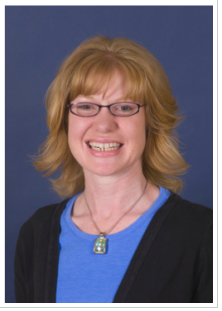
The October 6 focus will be arts education with Cheryl Hulteen ” “Teaching Artful Practice/Practice Artful Teaching”. Cheryl is the author of YES YES GOOD: The heART of Teaching.

DESCRIPTION of CHERYL’S SESSION
Arts teaching professionals have much to share in their partnership to create personal artful pathways for students to express and explore creative voice through the arts. Using the Multiple Intelligences Theory, join us in a collaboration defining, exploring, celebrating and understanding different practices of artful teaching. We will build a learning community that reflects the role the arts play in everything we do, teach and learn by strengthening the creative exchanges of artful process and practice-defining, exploring, celebrating and
understanding different practices of artful teaching. We will build a learning community that reflects the role the arts play in everything we do, teach and learn by strengthening the creative exchanges of artful process and practice.

The arts education conference takes place at the Franco American Heritage Center, Lewiston, 11:30 am – 4:00 pm, $40 (includes lunch). For details CLICK HERE. For registration CLICK HERE.

h1

Everyone Goes to the Fair

September 19, 2016

Judging

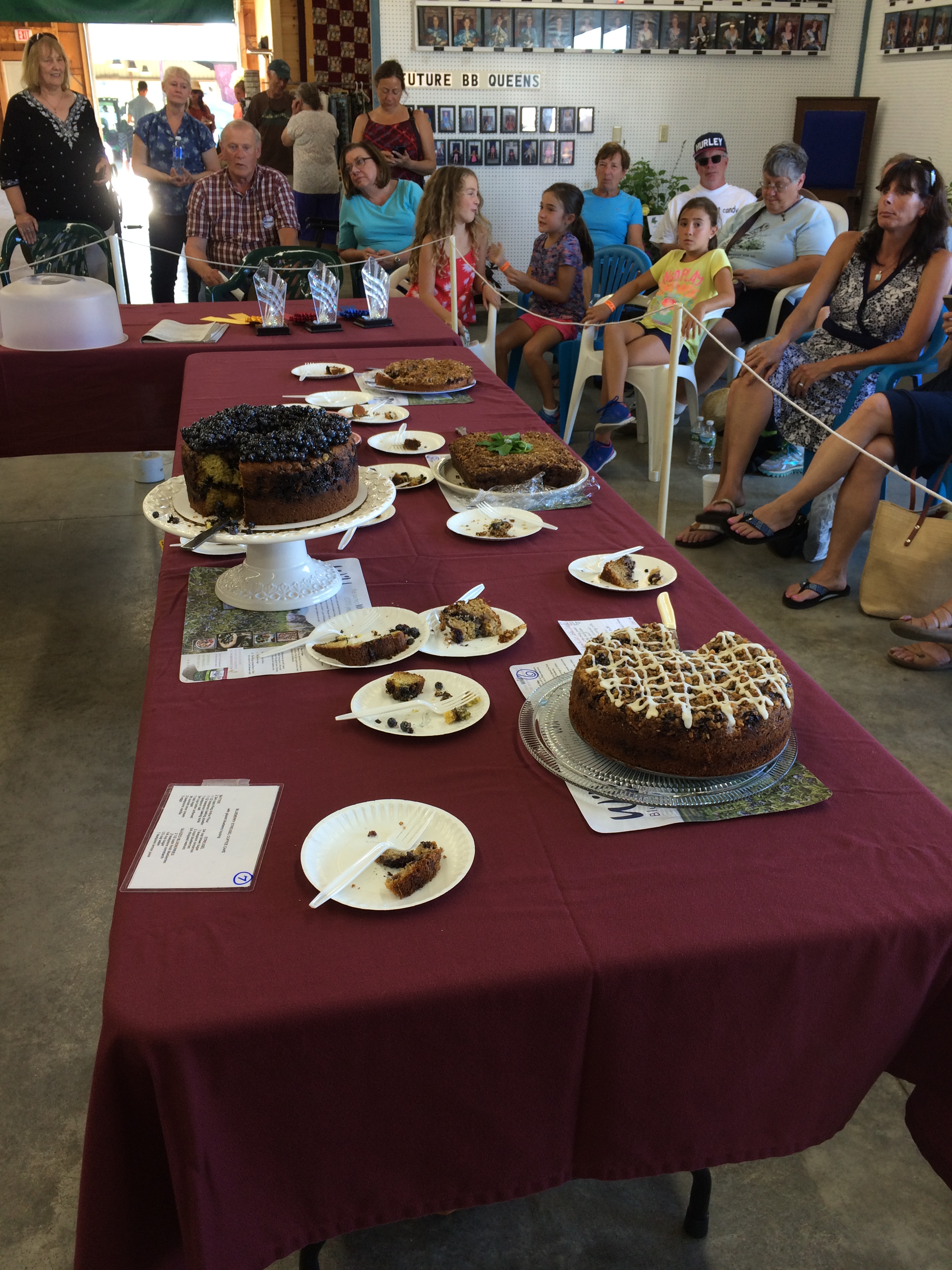
img_0553In August I had the opportunity to judge the blueberry coffee cakes at the Union Fair. I was excited to participate for several reasons. Included was the fact I was curious about the scoring criteria and the process. When I arrived with the other two judges, I was handed a score sheet attached to a clip board which included a line for each of the over 20 submissions. Of course, the best part was the chance to try each one of the yummy recipes. Many people enter each year and often enter each of the blueberry categories (one each day) including blueberry pie. For some of the categories the rules include following a recipe that is provided. But for coffee cake each cook can choose their recipe.

The score sheet is a real life rubric in action. When we were informed that the best possible score from each judge was 25 total points my thoughts immediately were hmmm… is it really necessary to have so many points for each category? Interestingly, the cooks hadn’t seen the criteria beforehand. Each entry must be accompanied by the ingredients and recipe on a 3″x5″ card. The only ingredients required are Maine wild blueberries and King Arthur flour.

img_0554

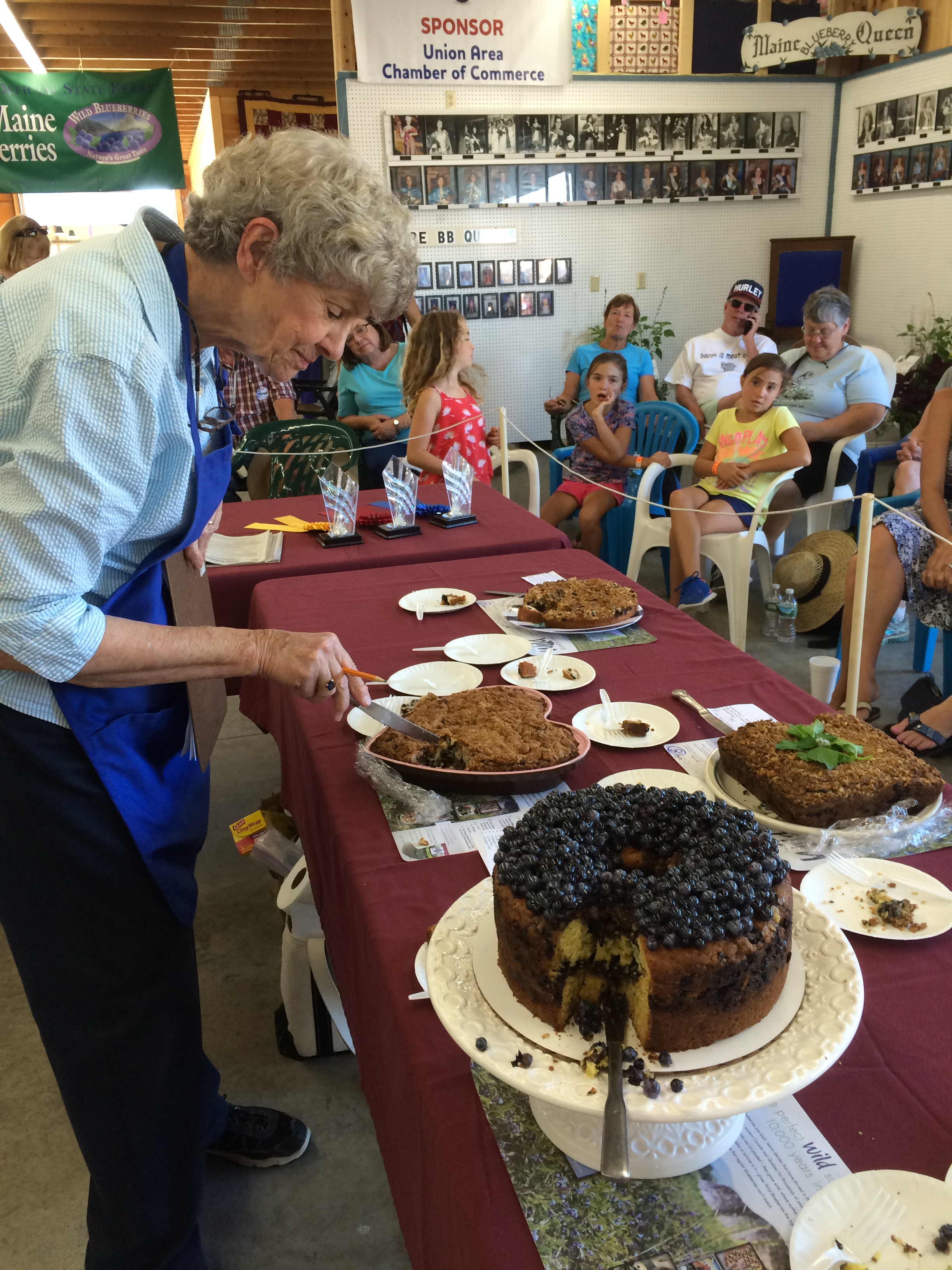
Retired educator and judge Grace Bogard observes closely the blueberry coffee cake task at hand!

JUDGES DIRECTIONS

  • Judges will examine all entries for overall appearance before beginning to taste the coffee cake and judge for creativity of recipe, explanation of preparation and originality.
  • Judges should take time to read each recipe, including method of mixing. Coffee cake must also be judged for texture and flavor.
  • Judge consistently with the following criteria in mind.

CRITERIA

Creativity of Recipe: 5 pts.

  • Does the coffee cake recipe demonstrate innovation?
  • Is it unique? Is it imaginative and/or fresh or novel?
  • Does it demonstrate inspiration and/or inventiveness?
  • Give points if this coffee cake successfully departs from the traditional or demonstrates a new approach

Texture: 5pts.   Appropriate for coffee cake:

  • Uniform medium to fine grain small holes uniformly distributed
  • Light, cake-like crumb slightly moist and tender

   Flavor: 5pts.  

  • Pleasingly sweet, well blended flavors
  • Maine Wild Blueberries are evident in the flavor

     Preparation: 5pts.

  • Is the preparation described as ‘coffee cake’ moist and tender with Wild Maine Blueberries?
  • Are the directions complete? Could this coffee cake be duplicated following the directions on the 4” x 6” card?
  • Obviously sanitary and premium booklet entry directions were followed.

     Overall Appearance: 5 pts.   Does the coffee cake:

  • Have even contour, with characteristic cracks on top?
  • Fresh berries will not bleed excessively, should appear as blue spots.
  • Is the product presentation sanitary, appealing, appetizing, eye catching and attractive?
  • Does it look good enough to eat?

The judges scores were added together and the three with the most total points were awarded 1st, 2nd, and 3rd place. Afterwards the 3 judges made some suggestions on the score sheet for the future.

It was a fun afternoon of tasting and judging and seeing former students (who had entered the contest). The 1st place winner was very surprised since she had never entered before this year. I do hope I’m asked to return next year!

h1

Tempo

September 18, 2016

Celebrating the park

screen-shot-2016-09-11-at-12-46-54-pm

screen-shot-2016-09-11-at-12-47-03-pm

h1

MAMLE Conference

September 17, 2016

Point Lookout

Success at the Summit!

Moving Middle Level Learners Forward

The Maine Association for Middle Level Education’s annual conference, Success at the Summit is being held on Thursday and Friday, October 20 and 21, Point Lookout, Northport, Maine. A great opportunity to dig deep into challenging work for middle level education. Consider taking a team from your school.

  • Here’s a peek at what to expect:Two inspiring keynotes
    Relevant and engaging concurrent sessions
    Networking with like-minded middle level educators
    The never-to-be-forgotten experience of a MAMLE social

    Jennifer Dorman

    Jennifer Dorman

    Opening Keynote: Jennifer Dorman—Teacher Leadership: Moving from Good to Influential

    CLICK HERE for more information and registration.

h1

Tim Christensen – Teaching Artist

September 16, 2016

Berwick Academy Community Emotional Map Sculpture

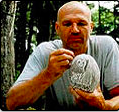
screen-shot-2016-09-11-at-7-37-10-pmTim Christensen, in his own words below provides an overview of a residency he did at Berwick Academy. Tim graduated from Berwick Academy in 1987 so returning to his community to collaborate on this unique project is pretty special! Congratulations to the community, Tim, and Raegen for carrying out this idea. The artwork is permanently displayed in the Commons building on the Berwick Academy campus.

screen-shot-2016-09-11-at-7-25-33-pmRaegen Russell (Berwick Academy art teacher) and I started talking about me coming to Berwick Academy, in South Berwick, at last year’s Haystack Maine Art Education Association fall conference. As the conversations continued, an idea began to form of making a community sculpture with the entire Berwick Academy (Pre-K to alumni to faculty to staff) in commemoration of the 225th anniversary of the founding of the school.

I started thinking about what was really being celebrated, what we mean when we say, “this school is 225 years old”. I figured out what was being celebrated was an unbroken chain of relationships that went all the way back to those three boys going to school in what is now on campus called, “the 1791 House”. Those relationships I wanted to document are the result of feelings and emotions of the community members for each other, and so could be recorded as abstract expressionist marks.

screen-shot-2016-09-11-at-7-24-45-pmI asked the artists to think about how it felt in their guts when they came up the hill in the morning to go to school, or were laying in bed at home at night and thinking about school. I asked them to make marks that seemed in concert with those feelings, and not to worry about drawing anything, to have no expectations except to show up and make marks.

They were each given a disk of dried porcelain which had been covered with black underglaze, and into the center of which I had drilled a hole, and gave them an etching tool of one sort or another. Most artists worked for 20 or so minutes, although some worked for 15-20 hours on their disk.

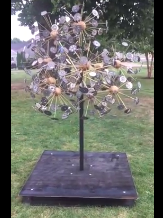
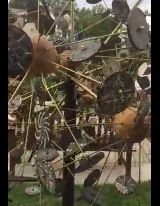
screen-shot-2016-09-11-at-7-25-22-pmThese were then fired and installed on 1/8″ brass rods into which I cut threads on either end, to allow them to screw  into a metal insert in maple orbs, which I turned on the lathe. The result looks like dandelion fluff, or atoms, or drawn circles.

It is basically a community self-portrait, in which every member has an equal voice. In my opinion, one interesting result was a school-wide conversation about the community’s feelings about itself, a self-assessment if you will. This of course invited the related questions of “where do we go, and what do we value as a community?”.

It was an honor to be part of this project.

Tim can be reached at timchristensenporcelain@gmail.com. Last Spring he worked at the Camden Rockport Middle School on an integrated unit. The blog post describing the residency is at THIS LINK. Tim is on the Maine Arts Commission Teaching Artist roster at THIS LINK. Tim is available for school and community artist residency’s. Tim is also a Maine Arts Leadership Initiative (MALI) Teaching Artist Leader – a new program established this year. The Teacher Leaders are listed at THIS LINK.

Embedded is a video that provides a close up look at this project.

h1

News from USDOE

September 15, 2016

Focusing on Arts Ed

The following information is reprinted from a weekly newsletter from the USDOE called TEACHERS EDITION. It is a newsletter “Celebrating Teaching & Leading”. Several of the segments in the newsletter during the week of September 8, 2016 pertained directly to Arts Education.

In July, the Department issued guidance emphasizing the importance of the arts in a well-rounded education, and last week, Secretary King welcomed 12 arts teachers to discuss the issue. The teachers insisted that the arts continue to fight for a place in schools, even though research has shown the positive impact the arts can have on socialization and test scores. Currently only 17 states specify arts education as a requirement for schools to be accredited and only 26 states require course credits in the arts for high school graduation. Teachers shared the important life lessons the arts provide to students through encouraging perseverance, dedication, critical thinking, and management skills. These life skills can’t be measured by a test they said, but teachers can show growth for individual students, if school leaders and policy makers are willing to act. Find some resources below for next week’s National Arts Education Week — thank an arts teacher you know and learn more about what your state is doing for arts education.

screen-shot-2016-09-12-at-10-12-54-am

VOICE FROM THE CLASSROOM
Stacey Dallas Johnston,  a 2016 Classroom Teaching Ambassador Fellow at ED and an English and Literature teacher at the Las Vegas Academy of the Arts, has found that when students are given the chance to be creative, they often become engaged in school for the first time. The arts are “powerful tools that can unlock the opportunity for a student to learn about Math, English, or Science.” Read more of her blog in ED’s Homeroom.

Let’s Bring Some Love to Our World
In 2001, will.i.am and the Black Eyed Peas recorded a song called Where’s the Love?, a social commentary on the state of our communities. He recently revisited the song and applied it to today’s environment. In an interview with the website ATTN, he said he hopes the song will spark conversation about what’s happening in society today — especially when it comes to education.

It Made a Bad Day Good
Teacher Stephanie MacArthur shares an idea to spread the love by way of compliments from students, to students. The idea is simple yet powerful: students take turns in the “hot seat” facing away from the board. Classmates write positive statements about the student on the board, and when they finish, the student gets to turn around and read them. What a beautiful way to start a year, or to respond to events as they arise in students’ lives.

Superheroes Inspire Students to Learn STEAM
What happens when you cross pop culture with STEAM? Marvel Comics has an answer in their new covers, designed to promote Science, Technology, Engineering, Arts and Math. The covers feature superheroes engaging in STEAM-related activities and are meant to get kids excited about the possibilities in their own futures (Slotkin, NPR, Marvel).

What We Heard from Educators This Week
5. “I was never taught how to teach creativity and I didn’t know you could teach it until now.” Teacher, California.
4. “I teach music because I think everyone deserves the chance to develop their soul.” Teacher, West Virginia.
3. “My favorite thing is that theater teaches empathy and sense of identity and neither of those is measurable.” Teacher, Virginia.
2. “Our students are our trophies.” Teacher, Texas
1. “The arts work to create wonder in students.” Teacher, Maryland.

h1

Maine International Conference on the Arts

September 14, 2016

MICA – Lewiston/Auburn – October 6-7

image003October 6 and 7 will be two days filled with great learning opportunities and lots of excitement for the Arts in Maine. This is Maine’s ONLY statewide convening of artists, arts organizations, arts educators, public policy makers, and community and economic developers who know the power arts and culture brings to Maine’s communities.

The October 6 focus will be arts education with Cheryl Hulteen ” “Teaching Artful Practice/Practice Artful Teaching”. Cheryl is the author of YES YES GOOD: The heART of Teaching.

DESCRIPTION of CHERYL’S SESSION
Arts teaching professionals have much to share in their partnership to create personal artful pathways for students to express and explore creative voice through the arts. Using the Multiple Intelligences Theory, join us in a collaboration defining, exploring, celebrating and understanding different practices of artful teaching. We will build a learning community that reflects the role the arts play in everything we do, teach and learn by strengthening the creative exchanges of artful process and practice-defining, exploring, celebrating and
understanding different practices of artful teaching. We will build a learning community that reflects the role the arts play in everything we do, teach and learn by strengthening the creative exchanges of artful process and practice.

We will meet at the Franco American Heritage Center, Lewiston, 11:30 am – 4:00 pm, $40 (includes lunch). For details CLICK HERE. For registration CLICK HERE.

MAINE INTERNATIONAL CONFERENCE ON THE ARTS (MICA)

Following the arts education conference, the MICA will officially open at 4:00 pm on Thursday, October 6 with a reception at 4:30 pm, Franco Center, Lewiston. Following the reception Pam Breaux, CEO of the National Assembly of State Arts Agencies (NASAA) will provide a brief “State of the States”. Crystal Williams will be the opening keynote at 5:30 pm for MICA. Poet, essayist, and Bates College VP and Chief Diversity Officer Crystal’s keynote address “Practical Approaches to Creating Impact: Getting to Cultural Equity,” will establish several themes to be furthered during the rest of the conference. Following the keynote in downtown Lewiston: cultural offerings including Downtown Lewiston Gallery Crawl, showcases at The Community Little Theater in Auburn, Franco-Fest at Bates College, Poetry Reading at the Lewiston Library, and more.

FRIDAY, OCTOBER 7

MICA starts on Friday morning with an Idea Lab – 5 artists presenting in a Pecha Kucha format. Included in the Idea Lab is Nancy Frolich who works with the arts and literacy with a program she created called LEAPS of Imagination. Following the opening there are over 20 sessions – 5 different strands with 4 sessions under each of these topics: Leveraging Investment, Visibility of the Arts & Culture Sector, Arts Education, Cultural Tourism, and Building Capacity. A general schedule is located at THIS LINK. A pdf and more schedule info is located at THIS LINK.

REGISTRATION

Advance Registration is now open, and still offers a discount over registration at the door. Registration is located at THIS LINK. Conference website pages START HERE.

h1

Teaching Artist Roster

September 13, 2016

Join the roster

Interested in being on the Teaching Artists roster?

Teaching Artist Ian Bannon

Teaching Artist Ian Bannon

The Maine Arts Commission is now accepting applications for the PK-12 Teaching Artists Roster. The online roster was established in the fall of 2014 and includes artists whose applications reflect their expertise and commitment to providing learning opportunities for students and/or teachers in the PK-12 education setting.

Teaching Artists are professional artists who are dedicated to lifelong learning and arts education, have made it an integral part of their professional practice, and who have cultivated skills as educators in concert with their skills as artists.

For more information about the program and application information including the downloadable application please CLICK HERE. The application deadline is October 13, 2016!

Application Calendar 

Tuesday, September 13, 2016   PK-12 Teaching Artist Application available

Thursday, October 13, 2016   Application deadline for PK-12 Teaching Artist

December 2016 Updated Teaching Artist roster available

Spring 2017  PK-12 Teaching Artist Application available for next round

This opportunity is provided to teaching artists who are not employed by one particular school in an ongoing teaching situation.

If you have any questions please contact Argy Nestor, Director of Arts Education, at argy.nestor@maine.gov.

h1

Maine Arts Commission Job Opening

September 12, 2016

Arts ed, creative aging, % for art

Interested in working at the Maine Arts Commission? Below is an opportunity for that includes three program areas – arts education, creative aging and per cent for art. Please go to the Maine Arts Commission site and learn more about these programs.

mac_logo_rgb_lgDirect Hire Career Opportunity Bulletin

Maine Arts Commission Arts & Humanities Associate

Special Programs Director

CLASS CODE 0822           PAY GRADE 24$39,062.40- $ 52,936.00 Annually

OPEN FOR RECRUITMENT: September 9, 2016 to October 7, 2016

JOB DESCRIPTION

The Special Programs Director will work in a team setting with other program directors and under the supervision of the agency’s Executive Director. The Special Programs Director will provide leadership and oversight in the planning, development, coordination, administration and evaluation of some of the Maine Arts Commission’s programs, such as Percent for Art, Creative Aging, and Arts Education. The position works at the state level to design and implement arts programs and projects; and to provide professional development opportunities and technical assistance to artists, teaching artists, arts organizations and others. Statewide travel is required.

DESCRIPTION OF JOB RESPONSIBILITIES

  • Direct Special Programs as defined and directed.
  • Take on special projects as assigned.
  • Develop programs and initiate new projects in field relating to areas such as Creative Aging.
  • Communicate with the field, provide technical support for, and manage the Percent for Art and Creative Aging Programs, and assist with or manage Arts Education initiatives and other special programs as directed.
  • Oversee, manage, and direct the distribution of funding to special programs.
  • In coordination with other staff, provide program information for distribution, and create print and publication material related to program as needed.
  • Manage the process-tracking of each program’s activities.
  • Manage the archiving of completed and ongoing projects in a way that is accessible to entire organization.
  • Manage program budgets effectively.
  • Build collaborative relationships inter-agency, within the state system, and in the field.
  • Work with individuals and organizations (in both for-profit and nonprofit sectors) in a positive way for the betterment of the agency’s goals.
  • Curate, organize and direct ongoing agency programs.

REPRESENTATIVE TASKS (A position may not be assigned all the duties listed, nor do the listed examples include all the duties that may be assigned).

  • Curate, organize and direct ongoing agency programs, such as the Creative Aging and Percent for Art programs.
  • Assist in the interpretation and implementation of the Percent for Art law and legislated rules.
  • Provide leadership and oversight in the planning, development and implementation of the Percent for Art and Creative Aging programs, as well as other projects in the arts.
  • Collaborate and consult with state and national arts organizations and institutions to promote best practices, exemplary arts programming, and to implement professional development opportunities.
  • Manage agency funding programs that relate to all identified Special Programs.
  • Secure panelists, select or coordinate committees, structure grant and program reviews, and create minutes of grant review processes as needed.
  • Cultivate, support, and work with constituents.
  • Represent the Maine Arts Commission at public and formal events.
  • Research grant and funding opportunities and prepare applications for state or federal funds as appropriate opportunities are available.
  • Develop and maintain national contacts and be current in research and exemplary practice in arts field.
  • Provide reportage to the Executive Director and members of the Maine Arts Commission when required.

KNOWLEDGES, SKILLS, AND ABILITIES REQUIRED (These are required to successfully perform the work assigned).

The ideal candidate will have:

  • Knowledge of the trends and history of the Public Art and Creative Aging fields.
  • Knowledge of the current art world, including exhibitions, artists and current practices.
  • Ability to interface with arts practitioners as a responsive mentor and advocate.
  • Ability to organize work assignments in a timely and professional manner, including but not limited to the ability to delegate duties and tasks when optimal.
  • Ability to assemble grant materials, take minutes and provide transparent and valuable reportage on program activities.
  • Ability to apply and facilitate group dynamics and use exemplary interpersonal skills.
  • Ability to establish and maintain effective working relationships and provide quality service.
  • Ability to communicate effectively orally and in writing.
  • Ability to evaluate programs and to generate clear and comprehensive reports for projects.
  • Awareness of, and ability to use, current communications methods and technology, such as cloud-based. applications, laptop and desktop computer systems, word processing and data applications.
  • Ability to work independently with minimal supervision, as well as collaboratively in a team environment, and with other organizations and institutions.
  • Ability to organize multiple projects effectively in a flexible environment.

MINIMUM QUALIFICATIONS

To qualify, candidates must have a Bachelor’s Degree in an Arts or Humanities related field and two (2) years’ experience working with artists, arts groups, and/or humanities organizations. Directly-related experience may be substituted for education on a year-for-year basis.

Preference will be given to applicants with a Master’s Degree or commensurate work experience preferably in the fields of Public Art or Creative Aging. Knowledge of Maine artists, galleries and museums is a benefit. Knowledge of and passion for the aging population is also a benefit.

BENEFITS

The value of State’s share of Employee’s Retirement: 15.85% of salary for BU positions. The value of State-paid Dental Insurance: $13.13 biweekly. The value* of State-paid Health Insurance:

  • Level 1: 100% State Contribution (employee pays nothing): $415.11 biweekly
  • Level 2:   95% State Contribution (employee pays 5%): $394.35 biweekly
  • Level 3:   90% State Contribution (employee pays 10%): $373.60 biweekly
  • Level 4:     85% State Contribution (employee pays 15%): $352.84 biweekly

*The level of the actual value of state paid Health Insurance will be based on the employee’s wage rate and status with regard to the health credit premium program.

HOW TO APPLY

Please submit a cover letter, resume’ and Direct Hire Application. This job posting and a Direct Hire application can be found on our website: http://www.maine.gov/fps/opportunities/

APPLICATIONS MUST BE SUBMITTED BY

Friday, October 7, 2016

MAIL APPLICATIONS TO

Tammy Sturtevant, HR Generalist

General Gov. Service Center

74 State House Station

Augusta, Maine 04333-0074

207-624-7418 (T)

207-287-4032 (F)

OR EMAIL TO

dafsdirecthire@maine.gov

The information online is located at http://www.maine.gov/fps/opportunities/

h1

9-11 Story

September 11, 2016

Remembering the good in the world today

screen-shot-2016-09-08-at-8-59-46-amFrom a flight attendant on Delta Flight 15, written following 9-11:

On the morning of Tuesday, September 11, we were about 5 hours out of Frankfurt, flying over the North Atlantic.

All of a sudden the curtains parted and I was told to go to the cockpit, immediately, to see the captain.

As soon as I got there I noticed that the crew had that “All Business” look on their faces. The captain handed me a printed message. It was from Delta’s main office in Atlanta and simply read, “All airways over the Continental United States are closed to commercial air traffic. Land ASAP at the nearest airport. Advise your destination.”
No one said a word about what this could mean. We knew it was a serious situation and we needed to find terra firma quickly. The captain determined that the nearest airport was 400 miles behind us in Gander, Newfoundland.

He requested approval for a route change from the Canadian traffic controller and approval was granted immediately — no questions asked. We found out later, of course, why there was no hesitation in approving our request.

While the flight crew prepared the airplane for landing, another message arrived from Atlanta telling us about some terrorist activity in the New York area. A few minutes later word came in about the hijackings.

We decided to LIE to the passengers while we were still in the air. We told them the plane had a simple instrument problem and that we needed to land at the nearest airport in Gander, Newfoundland, to have it checked out.

We promised to give more information after landing in Gander. There was much grumbling among the passengers, but that’s nothing new! Forty minutes later, we landed in Gander. Local time at Gander was 12:30 PM …. that’s 11:00 AM EST.

There were already about 20 other airplanes on the ground from all over the world that had taken this detour on their way to the US.

After we parked on the ramp, the captain made the following announcement: “Ladies and gentlemen, you must be wondering if all these airplanes around us have the same instrument problem as we have. The reality is that we are here for another reason.”

Then he went on to explain the little bit we knew about the situation in the US. There were loud gasps and stares of disbelief. The captain informed passengers that Ground control in Gander told us to stay put.
The Canadian Government was in charge of our situation and no one was allowed to get off the aircraft. No one on the ground was allowed to come near any of the air crafts. Only airport police would come around periodically, look us over and go on to the next airplane.

In the next hour or so more planes landed and Gander ended up with 53 airplanes from all over the world, 27 of which were US commercial jets.

Meanwhile, bits of news started to come in over the aircraft radio and for the first time we learned that airplanes were flown into the World Trade Center in New York and into the Pentagon in DC.

People were trying to use their cell phones, but were unable to connect due to a different cell system in Canada . Some did get through, but were only able to get to the Canadian operator who would tell them that the lines to the U.S. were either blocked or jammed.

Sometime in the evening the news filtered to us that the World Trade Center buildings had collapsed and that a fourth hijacking had resulted in a crash. By now the passengers were emotionally and physically exhausted, not to mention frightened, but everyone stayed amazingly calm.

We had only to look out the window at the 52 other stranded aircraft to realize that we were not the only ones in this predicament.

We had been told earlier that they would be allowing people off the planes one plane at a time. At 6 PM, Gander airport told us that our turn to deplane would be 11 am the next morning.

Passengers were not happy, but they simply resigned themselves to this news without much noise and started to prepare themselves to spend the night on the airplane.

Gander had promised us medical attention, if needed, water, and lavatory servicing.
And they were true to their word.

Fortunately we had no medical situations to worry about. We did have a young lady who was 33 weeks into her pregnancy. We took REALLY good care of her. The night passed without incident despite the uncomfortable sleeping arrangements.

About 10:30 on the morning of the 12th a convoy of school buses showed up. We got off the plane and were taken to the terminal where we went through Immigration and Customs and then had to register with the Red Cross.
After that we (the crew) were separated from the passengers and were taken in vans to a small hotel.

We had no idea where our passengers were going. We learned from the Red Cross that the town of Gander has a population of 10,400 people and they had about 10,500 passengers to take care of from all the airplanes that were forced into Gander!

We were told to just relax at the hotel and we would be contacted when the US airports opened again, but not to expect that call for a while.

We found out the total scope of the terror back home only after getting to our hotel and turning on the TV, 24 hours after it all started.

Meanwhile, we had lots of time on our hands and found that the people of Gander were extremely friendly. They started calling us the “plane people.” We enjoyed their hospitality, explored the town of Gander and ended up having a pretty good time.

Two days later, we got that call and were taken back to the Gander airport. Back on the plane, we were reunited with the passengers and found out what they had been doing for the past two days.

What we found out was incredible…..

Gander and all the surrounding communities (within about a 75 Kilometer radius) had closed all high schools, meeting halls, lodges, and any other large gathering places. They converted all these facilities to mass lodging areas for all the stranded travelers.

Some had cots set up, some had mats with sleeping bags and pillows set up.

ALL the high school students were required to volunteer their time to take care of the “guests.”
Our 218 passengers ended up in a town called Lewisporte, about 45 kilometers from Gander where they were put up in a high school. If any women wanted to be in a women-only facility, that was arranged.

Families were kept together. All the elderly passengers were taken to private homes.

Remember that young pregnant lady? She was put up in a private home right across the street from a 24-hour Urgent Care facility. There was a dentist on call and both male and female nurses remained with the crowd for the duration.

Phone calls and e-mails to the U.S. and around the world were available to everyone once a day.

During the day, passengers were offered “Excursion” trips.

Some people went on boat cruises of the lakes and harbors. Some went for hikes in the local forests.

Local bakeries stayed open to make fresh bread for the guests.

Food was prepared by all the residents and brought to the schools. People were driven to restaurants of their choice and offered wonderful meals. Everyone was given tokens for local laundry mats to wash their clothes, since luggage was still on the aircraft.

In other words, every single need was met for those stranded travelers.

Passengers were crying while telling us these stories. Finally, when they were told that U.S. airports had reopened, they were delivered to the airport right on time and without a single passenger missing or late. The local Red Cross had all the information about the whereabouts of each and every passenger and knew which plane they needed to be on and when all the planes were leaving. They coordinated everything beautifully.

It was absolutely incredible.

When passengers came on board, it was like they had been on a cruise. Everyone knew each other by name. They were swapping stories of their stay, impressing each other with who had the better time.

Our flight back to Atlanta looked like a chartered party flight. The crew just stayed out of their way. It was mind-boggling.

Passengers had totally bonded and were calling each other by their first names, exchanging phone numbers, addresses, and email addresses.

And then a very unusual thing happened.

One of our passengers approached me and asked if he could make an announcement over the PA system. We never, ever allow that. But this time was different. I said “of course” and handed him the mike. He picked up the PA and reminded everyone about what they had just gone through in the last few days.

He reminded them of the hospitality they had received at the hands of total strangers.

He continued by saying that he would like to do something in return for the good folks of Lewisporte.
“He said he was going to set up a Trust Fund under the name of DELTA 15 (our flight number). The purpose of the trust fund is to provide college scholarships for the high school students of Lewisporte.
He asked for donations of any amount from his fellow travelers. When the paper with donations got back to us with the amounts, names, phone numbers and addresses, the total was for more than $14,000!

“The gentleman, a MD from Virginia , promised to match the donations and to start the administrative work on the scholarship. He also said that he would forward this proposal to Delta Corporate and ask them to donate as well.

As I write this account, the trust fund is at more than $1.5 million and has assisted 134 students in college education.

“I just wanted to share this story because we need good stories right now. It gives me a little bit of hope to know that some people in a faraway place were kind to some strangers who literally dropped in on them.

It reminds me how much good there is in the world.”

“In spite of all the rotten things we see going on in today’s world this story confirms that there are still a lot of good people in the world and when things get bad, they will come forward.