VOICES OF THE WILDERNESS
2018 INFORMATION – Artists check out this opportunity at http://www.fs.usda.gov/goto/votw
| Sponsored by US Forest Service, National Park Service & US Fish & Wildlife Service
Residencies open to: Art professionals in all media – visual (two and three dimensional: photographers, sculptors, painters, etc.), audio (musicians, singers, composers), film (video/filmmakers), performance artists, and writers (poets, fiction, essays, storytellers).
Residency period: Typically June through August; dates & length of residencies vary.
Coordinator contact: Barbara Lydon at blydon@fs.fed.us
Contact Barbara for an application. |
The Voices of the Wilderness artist residency is a unique opportunity. It is modeled after traditional residencies in the national parks…with a twist. Instead of staying at a remote wilderness cabin, our participating artists are paired with a wilderness specialist and actively engaged in stewardship projects, such as research, monitoring, and education. The idea is to give artists a sense of the stewardship behind America’s public lands, fostering an artistic exploration of these natural and cultural treasures. The hoped-for result is artwork that communicates something of the meaning of these lands.
Artists in Public Lands
Artists have long contributed to the preservation and interpretation of our public lands. Early examples include George Catlin, Albert Beirstadt, and Thomas Moran, whose nineteenth-century paintings inspired pride in America’s wild landscapes and influenced designation of our first parks.
In subsequent generations, artists used song, photograph, poetry and other mediums to celebrate America’s public lands. Their work demonstrates that artistic expression plays a vital role in connecting people to the natural world.
Now it’s your turn.

 Recognizing that today’s artists continue to link people to the land, the US Forest Service, National Park Service and US Fish & Wildlife Service are sponsoring Voices of the Wilderness, artist-in-residence opportunities hosted in some of Alaska’s wildest and most scenic areas.
Your job? It’s to be inspired. Experience the wilderness and use your creative energy to bring its voice back to the community.
Artist-In-Residence
In the summer of 2018, artists will be invited to participate in our residencies, each opportunity completely different. The purpose is to share with the community artwork that conveys the inspirational and other values of wilderness.
Each artist will be provided the same safety training as other volunteers (may include aviation and boat safety, kayak safety, use of radios and satellite phones, review of Job Hazard Analyses, etc.). The hosting federal agency will provide transportation to and from the field, camping and field gear, and in many cases, food as well.
Travel to and from Alaska is the artist’s responsibility. Participants should plan to arrive in Alaska at least one full day prior to a residency to ensure enough time for safety training. Return travel should be planned for a couple days after a residency, as weather sometimes delays the return from the field. Artists are also responsible for their personal gear, including art supplies.
As an artist-in-residence, you will experience the wilderness like few others. Traveling alongside a ranger, you might kayak the calm fiords and camp on glacier-carved shores. There will be plenty of time to sit back in your camp chair and absorb the crackling ice bergs and roaring waterfalls. From the water, you might see a bear foraging among intertidal mussels, or seals hauled-out on the ice. On remote beaches, your steps will mingle with the tracks of wolves, bears, birds, maybe even a mink. The wilderness soundscape will embrace you with the screeches of eagles or the songs of whales. Along the way, you’ll get a peek at what it’s like to care for the land by sharing time with a ranger.
As a volunteer, each artist will assist with some basic ranger duties, which may include boarding a tour boat to provide education, participating in research projects, such as seal counts or climate change studies, walking a beach to remove litter, or other generally light duties. However, an emphasis for the artist will be experiencing the wilderness and exploring how to communicate its inspirational qualities through their artwork.
2018 Participating Wilderness Areas:
Kootznoowoo Wilderness
Tongass National Forest
US Forest Service
The Kootznoowoo Wilderness is on Admiralty Island near Juneau, Alaska. The name “Kootznoowoo” comes from the Tlingit people of Southeast Alaska, and means “the fortress of the bears”. This wilderness, which makes up almost all of Admiralty National Monument, is the largest remaining intact tract of temperate rainforest in the northern hemisphere. It hosts some of the densest populations of brown bears and nesting bald eagles in the world. The Kootznoowoo Wilderness has a rich cultural history and is home to the small Alaska Native community of Angoon which still relies on the bounty of the lands and waters for subsistence.
The selected artist will work with rangers administering the Pack Creek brown bear viewing area and also with wilderness stewards maintaining Admiralty Island cabins and trails. During the fieldtrip, the artist and rangers may stay in small tents, a rustic wall tent or historic cabins. Prospective artists should be prepared to camp, work and hike in bear country where conditions may be cold, wet, boggy and buggy. Transport to the wilderness will be by floatplane or skiff. Artists will depart for the field from Juneau. One artist will be selected to participate during the 2018 summer.
Contact Kevin Hood at Admiralty Island National Monument for further questions about Kootznoowoo Wilderness: (907) 789-6220 or kehood@fs.fed.us
Misty Fiords National Monument
Tongass National Forest
US Forest Service
Misty Fiords National Monument Wilderness encompasses 2.2 million acres of coastal rainforest on the southern tip of the Alaska Panhandle. The area is characterized by numerous streams and river systems; alpine and subalpine lakes; forested mountains; and an abundance of fish and wildlife. Past glaciations have formed picturesque fiords, such as Walker Cove and Rudyerd Bay, which are surrounded by granite walls rising 3,000 feet above the ocean. Flight seers, boaters, and hikers come to Misty Fiords to photograph, kayak, explore, fish, and hunt, and to view the outstanding scenic beauty of the rugged terrain. Brown and black bears, mountain goats, and black-tailed deer are common sights in Misty Fiords. Moose, marten, wolves, wolverines, and river otters may also be found in abundance. All five species of salmon share the waters with sea lions, harbor seals, killer whales, humpback whales, and porpoises.
As an artist-in-residence, you will experience Misty Fiords like few others. Traveling alongside a ranger, you’ll kayak the fiords, hike trails to subalpine and alpine lakes, and camp along the shoreline. You’ll also assist with some basic ranger duties, which may include cleaning up campsites, monitoring visitor use, and light trail maintenance. The artist-in-residence selected will have outdoor experience and be physically and mentally prepared for a primitive travel and camping experience. As you work with wilderness managers, you’ll have plenty of time to take in the sights and sounds of the scenic landscape. Artists will depart for the wilderness from Ketchikan.
Contact Daryl Bingham at Ketchikan-Misty Fiords Ranger District for further questions about Misty Fiords National Monument: (907) 228-4114 or darylabingham@fs.fed.us
Nellie Juan-College Fiord Wilderness Study Area
Chugach National Forest
US Forest Service
In 1980, Congress designated roughly two million acres along western Prince William Sound as the Nellie Juan-College Fiord Wilderness Study Area (WSA). This recognized the area’s exceptional beauty and remoteness and its possible future designation as federal wilderness. Until Congress determines the next step, the Forest Service is committed to preserving the area’s wilderness character to provide the public outstanding opportunities for solitude, primitive recreation, and inspiration in an undeveloped setting.
Located in south central Alaska on the Chugach National Forest, this wild landscape features countless glaciers-the densest concentration of tidewater glaciers in the world, some flowing a dozen miles from ice-capped peaks to terminate in cliffs of ice towering hundreds of feet above the water. The history of glaciation is evident everywhere you look, from newly de-glaciated barren hillsides, to ancient moraines just below the water’s surface.
Traveling by sea kayak in these expansive fiords, you’ll look straight up at peaks rising 2,000-9,000 feet right from the water’s edge. Camping alongside the ocean shores you’ll be able to follow the tracks of an animal, check out glacier ice up close, or take a short hike up to the alpine for an expansive glimpse of the fiords. Diverse wildlife is prevalent in the Sound, including black bears, humpback whales, sea otters, Dall’s porpoises, harbor seals and sea lions.
Artists will be partnered with rangers during an approximate sixteen day residency participating in various wilderness stewardship duties, including accompanying a six-day teacher training course centered on the cultural and natural history of Prince William Sound. The selected artist may also be involved with invasive weed surveys, visitor contacts, wilderness character monitoring, and rehabilitation projects, and will be kayaking and boating while camping in remote areas of the Sound. During the residency, there will be plenty of time to experience the solitude and wildness of this place. Artist will depart for the field from the Glacier Ranger District in Girdwood, located approx. 40 miles southeast of Anchorage.
Contact Barbara Lydon at the Glacier Ranger District for further questions about Nellie Juan-College Fiord WSA: blydon@fs.fed.us
Sitka Ranger District Wilderness Areas:
South Baranof or West Chichagof-Yakobi Wilderness
Tongass National Forest
US Forest Service
Alexander Baranof, the first governor of Russian America, built his headquarters in nearby Sitka and left his name on this large island (1,600 square miles) with most of the southern extremity of the island (319,568 acres) designated as the South Baranof Wilderness Area. Bounded on the west by the Gulf of Alaska, the scenery is stunningly picturesque with granite glacier-scored mountains, long saltwater fiords and hanging lake valleys. On the east side of the wilderness by Chatham Strait, the saltwater coastline is not as rugged and there is a higher snow accumulation over the whole area with over 200 inches of precipitation per year. Permanent snowfields and active glaciers blanket the high country above 2,000 feet, giving way to dense undergrowth in a coastal forest of spruce and hemlock. The wildlife that inhabits this area includes brown bears, Sitka black-tail deer, mink, marten and river otters, as wells as eagles and shorebirds. Seals, sea lions, whales, and a large population of sea otters are often seen offshore, and crab, shrimp, herring, salmon and halibut are harvested from the sea.
The West Chichagof–Yakobi Wilderness Area occupies the western portions of Chichagof and Yakobi Islands in the extreme northwest portion of the Alexander Archipelago of Southeast Alaska. The wilderness consists of 265,286 acres of wave-pounded open coastline, remote rivers, forests of old-growth western hemlock and Sitka spruce and uplands of alpine, muskeg, and rare karst cliffs. Sitka black-tailed deer are common here along with brown bears and an abundance of smaller furbearing animals including mink and marten. Migratory waterfowl frequent the more protected bays and inlets in remarkable numbers. Marine mammals include sea otters, Stellar sea lions, and harbor seals.
As an artist-in-residence you will be joining in a unique collaboration between the Sitka Ranger District and the Sitka Conservation Society in monitoring this rarely visited Wilderness Area. Access will be by floatplane or motorboat. Trips will consist of basecamps in remote locations or by roving monitoring from a sea kayak. Artists should be available for at least a two-week period to allow for adequate weather windows given the area’s exposure to the wide-open Pacific Ocean. Artists will depart from Sitka.
Contact Rebecca Peterman at Sitka Ranger District for further questions about the Sitka Ranger District Wilderness area opportunities: (907) 747-4225 or rpeterman@fs.fed.us
Tracy Arm-Ford’s Terror Wilderness
Tongass National Forest
US Forest Service
Tracy Arm-Fords Terror Wilderness is located fifty miles south of Juneau. This is a spectacular Wilderness Area cradling two steep-walled fjords that terminate at three of the most southerly tidewater glaciers in the northern hemisphere. Experience the abundance of life in an old-growth temperate rainforest, and then transition to the calving face of a tidewater glacier as it exposes land that hasn’t seen the sky in hundreds of years. Our stewardship projects here are as various as the characteristics of Wilderness. Artists may assist rangers in monitoring cruise ship emissions, providing shipboard education, treating invasive weeds, recording wildlife, and monitoring solitude.
Each selected artist will accompany a wilderness ranger approximately nine days. Artists will depart for Tracy Arm-Fords Terror from Juneau via floatplane or skiff. During the fieldtrip the artist will be accompanying a ranger, traveling primarily by sea kayak in the fjords and camping in a two person tent in what can be a cold and wet environment. Applicants will participate in kayak training in Juneau before departing for the wilderness, and the district will provide all needed kayak and camping gear. The selected artist-in-residence should have backcountry experience and be physically and mentally prepared for primitive travel and camping.
Contact Kevin Hood at Juneau Ranger District for further questions about Tracy Arm-Fords Terror Wilderness: (907) 789-6220 or kehood@fs.fed.us
Tebenkof Bay Wilderness:
Tongass National Forest
US Forest Service
Tebenkof Bay Wilderness, located on Kuiu Island, comprises a complex system of smaller bays, where islands, islets, and coves are the prominent features. The western side is bound by Chatham Strait, a body of water exposed to the open ocean. The waters of the bay are home to sea otters, humpback whales, harbor seals and four types of salmon, while the land is covered by a thick forest of old growth, muskeg and alpine areas. Historically the Kake and Klawock Tlingit utilized Tebenkof Bay. They trapped, hunted, fished, gathered seaweed and gardened throughout the area. The bay was named in 1879 for Captain Tebenkov, governor of the Russian American colonies from 1845-1850. Early into the 20th century, canneries and salteries expanded into the coastal waters of what is now Alaska, and at least one of the industries operated within the bay during those formative years. At about the same time, the commercial raising of fur-bearing blue foxes spread. Almost every island group within Tebenkof Bay sheltered one of these businesses, but most were abandoned in the early 1940’s. Commercial fishing continues inside the bay and in the outside waters.
Participating artists will be partnered with a ranger for a five to ten day trip working on projects such as invasive plant eradication, encounter monitoring, wildlife monitoring and campsite inspections. The crew will live in small tents and travel will be by floatplane and kayak, spending days in what can be a cold and wet environment.
One artist will be selected to participate during the 2017 summer. The artist will depart for the field from Petersburg.
Contact Karisa Garner for further questions about this opportunity: (907) 772-5910 or klgarner@fs.fed.us
Arctic Wilderness
Arctic National Wildlife Refuge
US Fish & Wildlife Service
“Here was the living, moving, warm-blooded life of the Arctic…with the wisdom of the ages, moving always, not depleting their food supply, needing all these valleys and mountains in which to live.” -Margaret Murie, Refuge Founder
Arctic National Wildlife Range was established in 1960 to preserve unique wildlife, wilderness and recreational values. In 1980, the Alaska National Interest Lands Conservation Act (ANILCA) re-designated the Range as part of the Arctic National Wildlife Refuge, and provided four purposes that guide management of the entire Refuge: to conserve animals and plants in their natural diversity, ensure a place for hunting and gathering activities, protect water quality and quantity, and fulfill international wildlife treaty obligations.
Arctic Refuge is about 19.3 million acres in size. It’s approximately the size of South Carolina and has no roads, marked trails, or campgrounds. The Refuge includes an array of landscapes and wildlife habitats–from the boreal forest of the Porcupine River uplands . . . to the foothills and slopes of the Brooks Range . . . to the arctic tundra of the coastal plain . . . to the lagoons and barrier islands of the Beaufort Sea coast. Together these areas contain hundreds of species of mosses, grasses, wildflowers, shrubs and other plants. The Refuge contains the greatest wildlife diversity of any protected area in the circumpolar north.
Arctic Refuge contains the largest area of designated Wilderness within the National Wildlife Refuge System, “where the earth and its community of life are untrammeled by man.” [The Wilderness Act, 1964] The Arctic Refuge is recognized as one of the finest examples of wilderness left on the planet. It is among the last to be visited by modern man and among the least affected by his doings. It’s a place where the wild has not been taken out of the wilderness.
Untold mountains, diverse wildlife and a wealth of habitats give this unspoiled national treasure first-rate cultural, scenic, scientific and experiential values. Values that are ageless. Values that make the Refuge a national symbol of wilderness. Arctic Refuge is a place that changes those who visit. It’s a place whose existence strengthens our awareness of and sense of responsibility for the natural world.
The length of the residency will last from 7-20 days in length. Artists will be responsible for flying to Fairbanks International Airport and air travel to Arctic Refuge will be provided. Possible field opportunities include flying to a remote location with a field biologist and hiking to various locations within the Refuge. Another option would involve flying into a remote location and assisting a biologist on a float trip. There are also possible opportunities to fly into the rural communities of Arctic Village or Kaktovik, Alaska.
Contact Allyssa Morris, Environmental Education Specialist at Arctic National Wildlife Refuge for further questions: (907) 456-0224 or Allyssa_Morris@fws.gov
Aleutian Islands Wilderness
Alaska Maritime National Wildlife Refuge
US Fish & Wildlife Service
Alaska Maritime National Wildlife Refuge was established to conserve marine mammals, seabirds and other migratory birds, and the marine resources upon which they rely. The Refuge’s 3.4 million acres include the spectacular volcanic islands of the Aleutian chain, the rich rainforests of the inside passage, the seabird cliffs of the remote Pribilofs, and icebound lands washed by the Chukchi Sea, providing essential habitat for some 40 million seabirds, representing more than 30 species.
Much of this Refuge of islands and headlands is federally designated wilderness. Swirling clouds of seabirds, rare Asiatic migrant birds, beaches of bellowing sea lions and fur seals, and salmon streams in abundance are a few of the wildlife highlights on the Alaska Maritime Refuge. The refuge is perhaps most unique for: the sheer abundance of life, species and subspecies found nowhere else (6 subspecies of Rock Ptarmigan are found only in the Aleutians), endangered and threatened marine mammals (Steller sea lion and otters), threats from invasive species (rats, fox, cattle, and marine invertebrates), and the possibility that new species are yet to be found among the remote and rugged 2,500 rocks, reefs and islands of the refuge.
The length of the residency will last from 7-20 days in length. Artists will be responsible for flying to Adak Airport. Artist may travel on the Research Vessel Tiglax to islands such as St. Matthew or elsewhere in the Bering Sea or North Pacific. While onboard all of the artist’s lodging, meals, and marine safety equipment are provided by the refuge.
For more information about AK Maritime NWR, please contact Marianne_Aplin@fws.gov
Innoko Wilderness
Innoko National Wildlife Refuge
US Fish & Wildlife Service
In Alaska’s central interior, along the eastern bank of the Yukon River, lies the 3.85 million acre Innoko National Wildlife Refuge. The broad, wetland dotted lowland is bordered on the north by the Khotol Hills and the south and east by the Kuskokwim Mountains. The meandering Innoko River bisects the refuge and forms the northern boundary of the Innoko Wilderness Area. The Wilderness comprises the southeastern portion of the refuge, roughly one-third of the total area (1.2 million acres). A transition zone between the boreal forestland of interior Alaska and the open tundra of western Alaska, Innoko stands well over half in wetlands of muskeg and marsh, lakes, meandering rivers, and streams.
Frequent flooding of Innoko’s many rivers and streams helps fertilize surrounding soils and maintain the rich willow sandbar habitat that provides winter food for the refuge’s moose population, as well as for the beaver that are common along virtually all of Innoko’s waterways. Barren ground caribou from the Beaver Mountain herd winter on Innoko when deep snows move them down from the uplands, while both black and grizzly bear and wolves are present year around. Other fur-bearers include marten, lynx, red fox, river otter and wolverine.
During spring and summer of 2015 the Alaska Department of Fish and Game released 130 wood bison to an area adjacent to the Innoko Wilderness as part of a project to restore this species to Alaska. Historic records indicate that wood bison roamed free in parts of Alaska up until about 200 years ago. Once thought to be extinct, the species has been restored to several areas in Canada. The wood bison in the Innoko area represent the only wild herd in the United States. The bison have expanded their range from the release site and now roam portions of the Innoko Refuge.
An artist in residence will journey to a remote field camp in the Innoko Wilderness by float plane* from the refuge headquarters in Galena, Alaska. The field camp, which includes small cabin accommodations, serves as base camp for biological monitoring and other refuge operations. The artist will have opportunities to explore the area while assisting refuge staff with field projects.
*Special Note: In order to travel by float plane to and from the Refuge as a volunteer for USF&WS, the artist would be required to have completed the course “Water Ditching and Survival” before arriving in Galena, Alaska, noting USF&WS Volunteer Coordinator Helen Strackeljahn as the supervisor if you get the training before you are accepted to a residency. For more information and to enroll in a free Water Ditching and Survival Course, go to the Interagency Aviation Training website at http://www.iat.gov, create a login and password, and look for A-312 course offerings. Check the website regularly; there are more course offerings during the spring prior to the summer field season. Once someone has taken the course in person in the classroom/swimming pool, they remain current by taking the online refresher A-325R every two years.
Contact Karin Lehmkuhl Bodony for questions about Koyukuk: (907) 656-1231or karin_bodony@fws.gov
Selawik Wilderness
Selawik National Wildlife Refuge
US Fish & Wildlife Service
The 2-million acre Selawik National Wildlife Refuge straddles the Arctic Circle in remote northwestern Alaska. This land of vast tundra, complex waterways, and spruce- and birch-covered hillsides exemplifies the interface between the boreal forests of Interior Alaska and the treeless tundra of the Arctic. The largest caribou herd in Alaska migrates seasonally through the refuge, and countless birds, fish, and other wildlife thrive seasonally or year-round in this rich habitat. The refuge is the homeland of the indigenous people of the region, the Iñupiat, who continue to make extensive use of the land for hunting, fishing, and berry picking.
Traveling primarily by motorized river boat, you will accompany refuge staff to explore the Selawik River, and will interact with local residents from Selawik. Ideal applicants should be hardy as well as interested in the connections between wildlife, wild places, and culture.
Artist will be responsible for getting themselves to Kotzebue, located about 500 miles northwest of Anchorage and accessible only by air. Refuge will arrange lodging and transport to and from the field. The residency is expected to last 7-14 days in July or August.
Contact Brittany Sweeney for further questions about Selawik NWR: (907) 442-3799 or brittany_sweeney@fws.gov
Togiak Wilderness
Togiak National Wildlife Refuge and Wilderness
US Fish & Wildlife Service
Togiak Refuge is a 4.7 million acre expanse of mountain, river, and coastal habitats in southwestern Alaska – an area about the size of Connecticut and Rhode Island combined. Within the refuge, peaks tower 5000’ over broad glacial valleys of the Ahklun and Wood River mountains. Numerous rivers flow from mountainous headwaters and deep clear lakes toward the Kuskokwim and Bristol bays. Togiak Refuge encompasses a variety of terrain with a correspondingly varied wildlife population. The northern 2.3 million acres of Togiak Refuge have been designated as the Togiak Wilderness to preserve the pristine character of the land and the animals that make it their home.
Togiak Refuge is home to at least 282 species of wildlife. Some resident species stay through the winter when snow blankets the land and food is scarce. In the spring, the land comes to life as plants produce new growth, hibernating residents awaken, and migratory birds arrive by the tens of thousands. During the summer, when wildflower blooms cover the hillsides and over a million salmon run up Refuge rivers to spawn, animals busily feed, putting on weight for the cold winter months or their long journeys back to wintering areas. Autumn days grow shorter as the tundra changes to brilliant reddish hues and juicy berries are abundant.
Depending on the timing of their visit, the selected artist may have the opportunity to take part in a five-day Environmental Education trip on the Refuge either (1) rafting on a Refuge river with six local high school students, or (2) travelling to Cape Peirce with eight middle school students and staying in two cabins, beachcombing, hiking, and observing wildlife. In either case, the artist would be able to share their talents with the students during the trip, sharing trip and instruction responsibilities with a few Refuge employees. There may also be other opportunities to join a biologist on a trip to the field to study wildlife or fish. [Note: In order to participate in any of those three trips (which require travel by float plane), the artist would be required to have completed the course “Water Ditching and Survival” before arriving in Dillingham, Alaska *].
If the selected artist is unable to take the Water Ditching and Survival course, or their visit must take place on dates that do not correspond with the trips described above, they would have the opportunity to do a multi-day River Ranger jet-boat patrol on the Togiak River or to propose and provide an art instructional program or presentation for residents in Dillingham, AK. Neither of those two options would require the completion of the Water Ditching and Survival course.
Artist is responsible for their own airfare to and from Dillingham. While there, groceries and bunkhouse accommodations, along with transportation around Dillingham and to and from the Refuge will be provided.
*For more information and to enroll in a free Water Ditching and Survival Course, go to the Interagency Aviation Training website at www.iat.gov, create a login and password, and look for A-312 course offerings. Check the website regularly; there are more course offerings during the spring prior to the summer field season. Once someone has taken the course in person in the classroom/swimming pool, they remain current by taking the online refresher A-325R every two years.
Contact Susanna Henry or Allen Miller at Togiak with questions (907) 842-1063 or susanna_henry@fws.gov
APPLICATION PROCESS FOR OUR 2018 RESIDENCIES:
How to Apply:
To submit: Applications must be emailed to blydon@fs.fed.us; no paper applications will be accepted.
* Include three attachments
- 2018 application filled out, unlocked PDF format or Word formatted document
- A resume no more than 2 pages, in either PDF or Word formatted document
- Six Artistic samples composed in single PDF or Word formatted document, 5 MB max., six pages max.
-Include descriptions of artwork with title, materials and dimensions of work:
–Visual Artists (i.e. Photographers, Sculptors, Painters, etc.): Six color photos.
–Writers: Six pages of written examples (prose, short stories, plays or poetry).
–Musicians/Composers: Musicians and composers should submit lyrics and recordings of their work (links to recordings is fine to include)-six recordings total.
–Multidiscipline Artists: Send appropriate sample combinations, six color photos.
* In the ‘subject’ of the email, include your last name & your artistic medium, for example, “Lydon-Ceramics”.
- Submit only one application, even if applying to multiple residencies.
- Insufficient materials or incomplete application are causes for rejection, as are an artist’s proposed use of a work already in progress as a residency project. Zip files, Google Documents, Dropbox, etc. will not be considered.
- Finished artwork and community extensions must be completed and donated within six months of completing your residency.
- This original artwork resulting from the residency will be donated to the United States Government, which means that the artist relinquishes publishing and reproduction rights to that work.
- Selected artists agree to provide a high resolution, professional quality digital image of their completed artwork to use for publicity and educational purposes.
- Selected artists agree to submit a summary of their community extension and projects/outreach associated as a result of their residency.
- Emailed applications are due by 11:59 PM AK time March 1, 2018. Artists will be chosen by mid-April by a panel of professional artists and federal employees. Selections will be based on artistic merit, proposed donations/community extensions, and appropriateness to a stewardship-based wilderness residency. All applicants will be notified of decisions via email at that point.
- Please note that due to unforeseen budget constraints in the spring, some residencies may not be offered.
- Your application is very important to us. If you do not receive a confirmation email stating we’ve received your submission, it may not have gone through. Please contact program coordinator Barbara Lydon at blydon@fs.fed.us if you don’t receive a confirmation email within a week of submitting your application and supporting documents.
For more photos and information from our past residencies, visit http://www.fs.usda.gov/goto/votw
Checklist for 2018 VOTW submission:
Label subject of email: “Your Last Name – Your Medium”
There should be 3 attachments included in your email to blydon@fs.fed.us:
- The filled out 2018 application
-Save as “Application_Your Last Name”
-Save as “.pdf or .docx” formatting
- Six artistic samples in a single document, 5 MB maximum
-One sample per page, not to exceed 6 pages
-Save as “Samples_Your Last Name”
-Save as “.pdf or .docx” formatting
- Resume of no more than two pages, in a single document
-Save as “Resume_Your Last Name”
-Save as “.pdf or .docx” formatting
Qualification
Residencies are open to artists of all mediums. Selection will be based on:
- Appropriateness to a stewardship-based wilderness residency
- Proposal for donated artwork and community extension, and willingness to work with the federal agencies to make this program a success
- Artistic merit
- Ability to camp in a remote location and travel by skiff, airplane and sea kayak, and willingness to assist with light ranger duties. (Extensive backcountry/kayaking experience is not necessary for all residencies, just capability.)
Artwork Donations
The goal of the Voices of the Wilderness program is to share the scenic beauty and inspirational values of Alaska’s wilderness areas, through the talents and reflections of professional artists. Each participant is expected to donate one piece of artwork to the hosting federal agency for use in highlighting the values of our public lands. Donated artwork should be representative of the area and communicate its inspirational or other values.
- Artwork should be delivered to the appropriate agency office within six months of the residency.
- Artwork from visual artists should be framed with glass or otherwise prepared for hanging before donation.
- An electronic, high resolution digital image of the completed artwork must be provided by the artist prior to receiving the donation.
The artwork will be shared with the public through exhibition, publication, websites, or other means. The original work resulting from the residency will be donated to the United States Government, which means that the artist signs over publishing and reproduction rights to that work.
Community Extension Artists are expected to provide one public presentation within six months of completing their residency, such as a slideshow lecture, demonstration, or workshop that publicizes the program and connects the community to their public lands. Other examples include a performance, explorative hike, or participation in a public lecture. The presentation can be tailored to an individual’s medium, interest and experience, but each artist must provide supplies, equipment and logistics for the presentation. Community extensions do not have to take place in the community of the residency.
Collaborative Applications
Two artists are invited to submit an application together only if both are needed to successfully accomplish the proposed project and community extension, though many hosting wilderness areas may not be able to accommodate a pair of artists.
Please note–If artists would like to be considered individually as well for a collaboration, they must submit a separate application geared towards a project and extension conducted by a single artist.
Details on how to submit a collaborative application:
-Label subject of email should read: “Both Last Names – Your Mediums”
-Submit three attachments in your email:
- The filled out 2018 application
-List contact information for both artists
-Save as “Application_Last Name and Last Name”
-Save as “.pdf or .docx” formatting
- Six artistic samples total (three from each artist) in a single document, 5 MB maximum
-One sample per page, not to exceed 6 pages
-Save as “Samples_Last Name and Last Name”
-Submit only six artistic samples total (three from one artist, three from another—or six total if you have collaborative pieces)
-Save as “.pdf or .docx” formatting
- Resume of no more than two pages, in a single document
-Save as “Resume_Last Name and Last Name”
-Save as “.pdf or .docx” formatting
-Submit a single two page resume for both artists showing collaborations, or submit a single page resume for each individual artist
All emailed applications are due to blydon@fs.fed.us by 11:59 PM AK time March 1, 2018

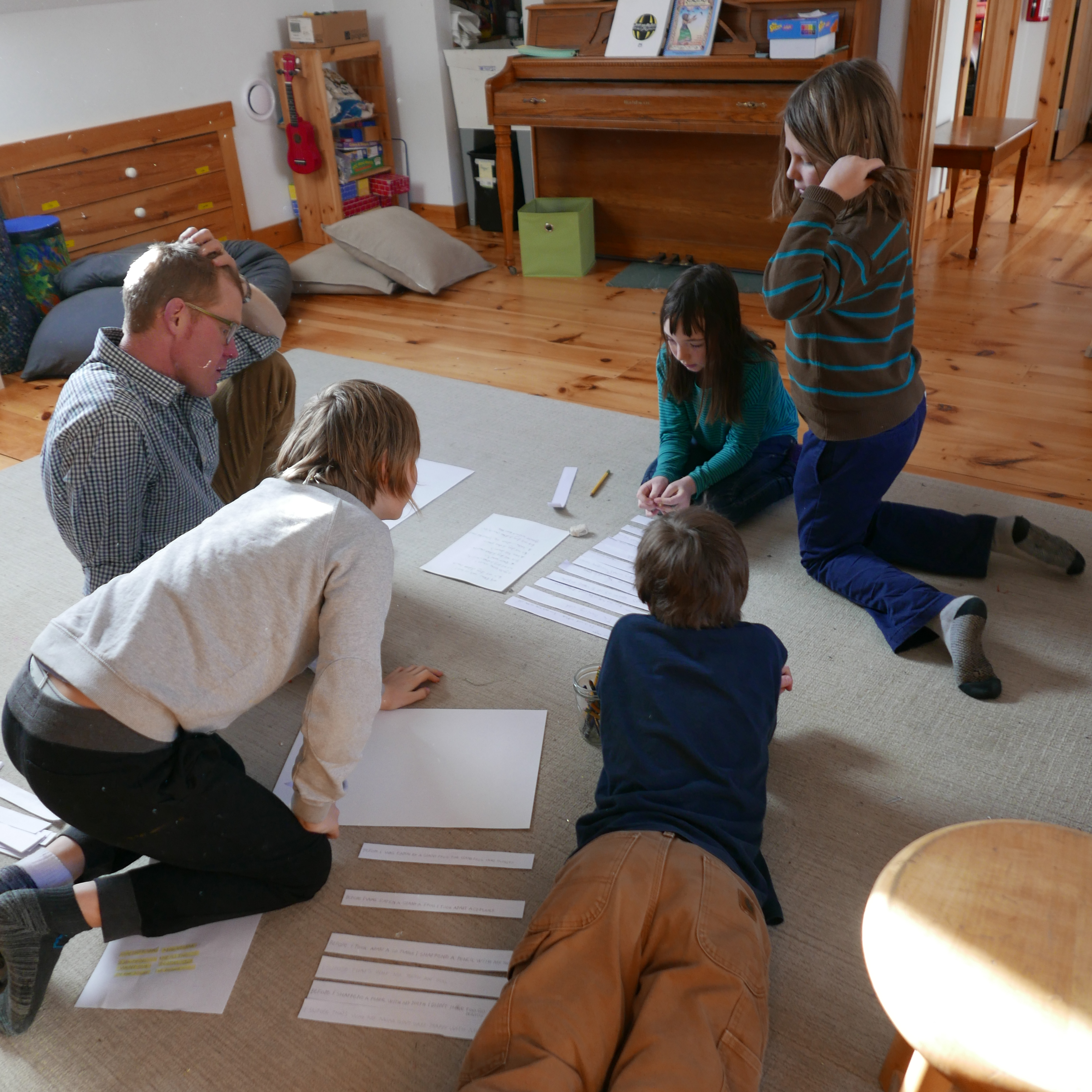
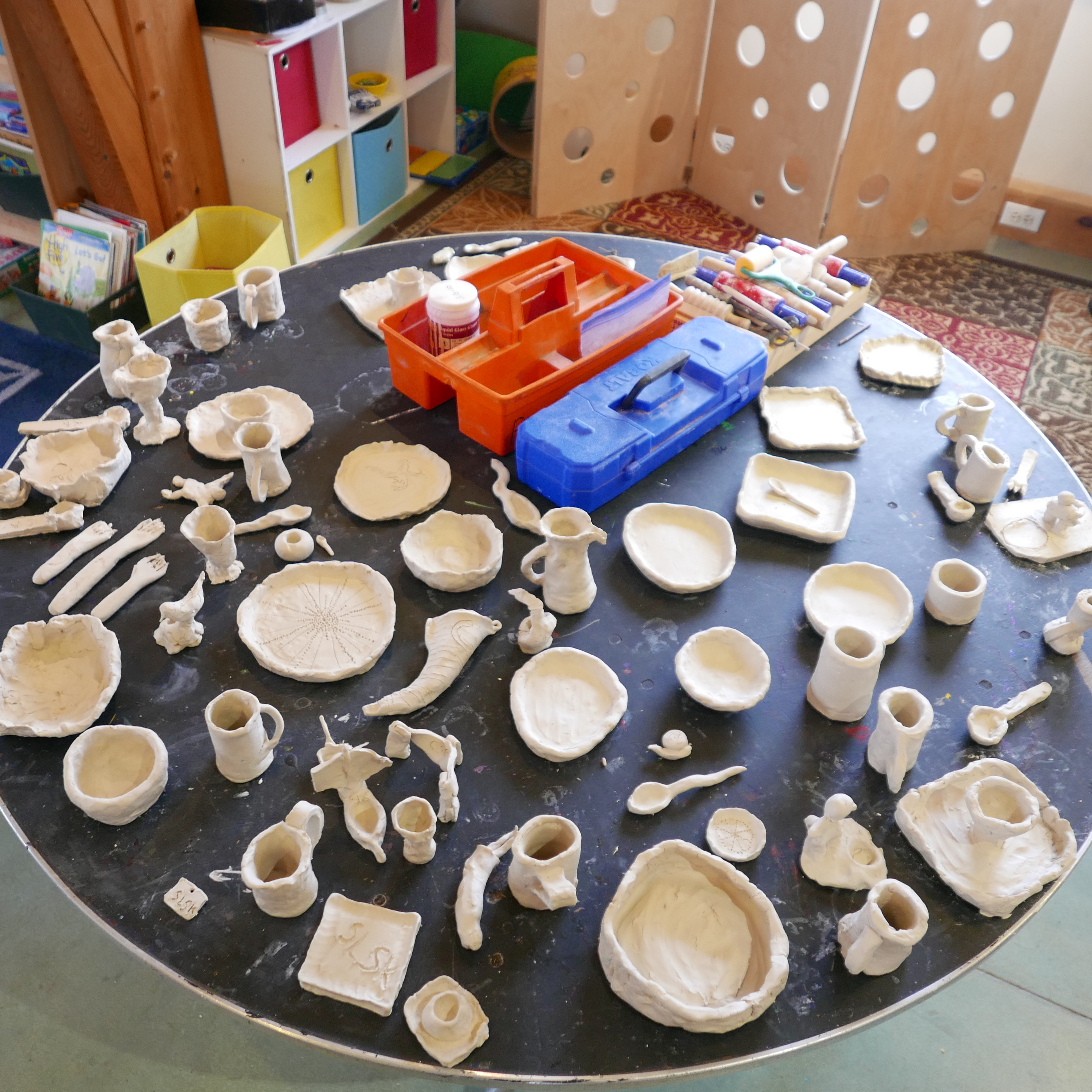 What happens when a collaboration takes place with an arts integrated school and two teaching artists? MAGIC! I had the amazing opportunity to be present while young learners were engaged in connecting their learning through pottery and poetry.
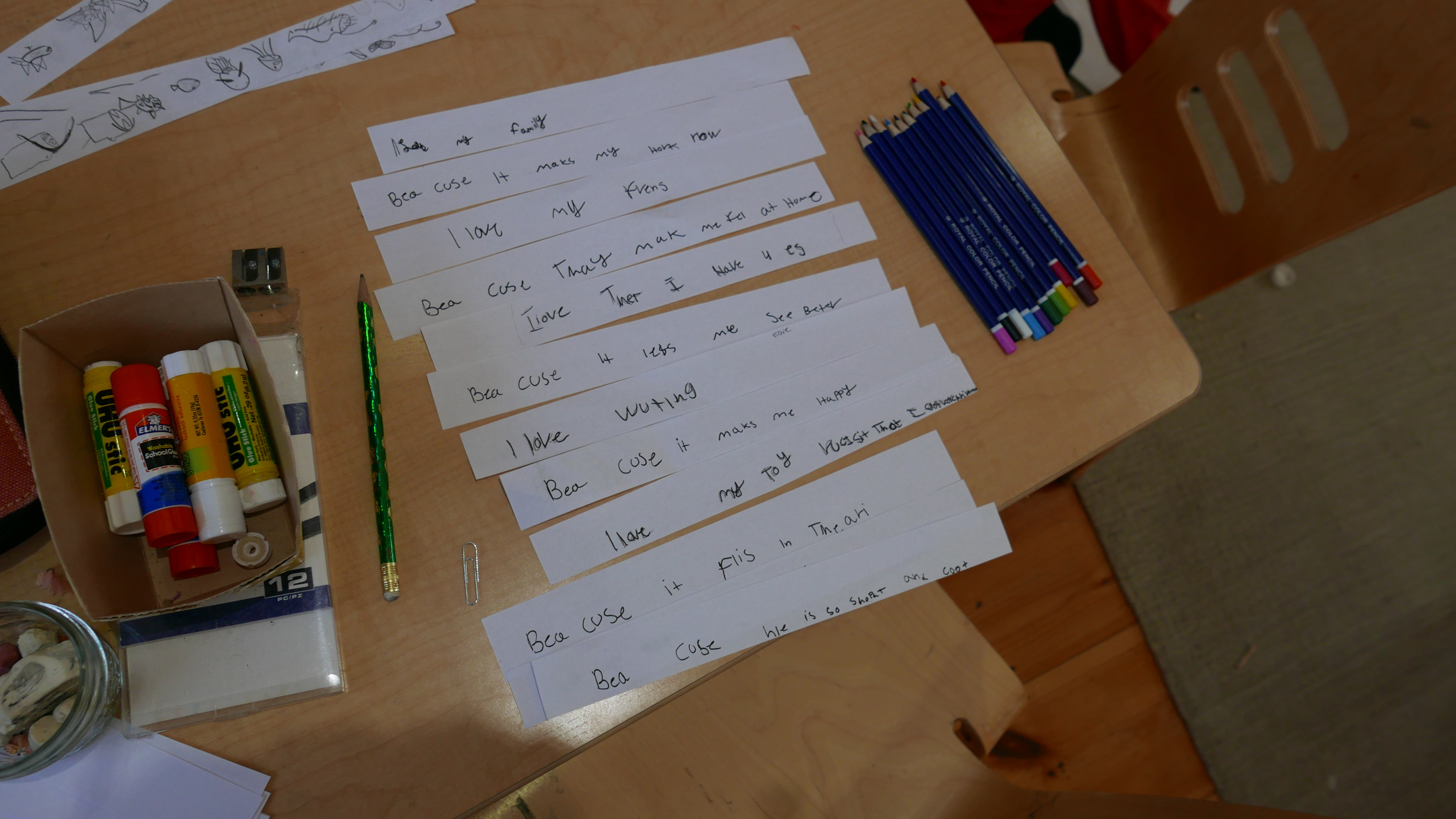 FROM THE COLLECTIVE VOICES OF THOSE WHO PARTICIPATED
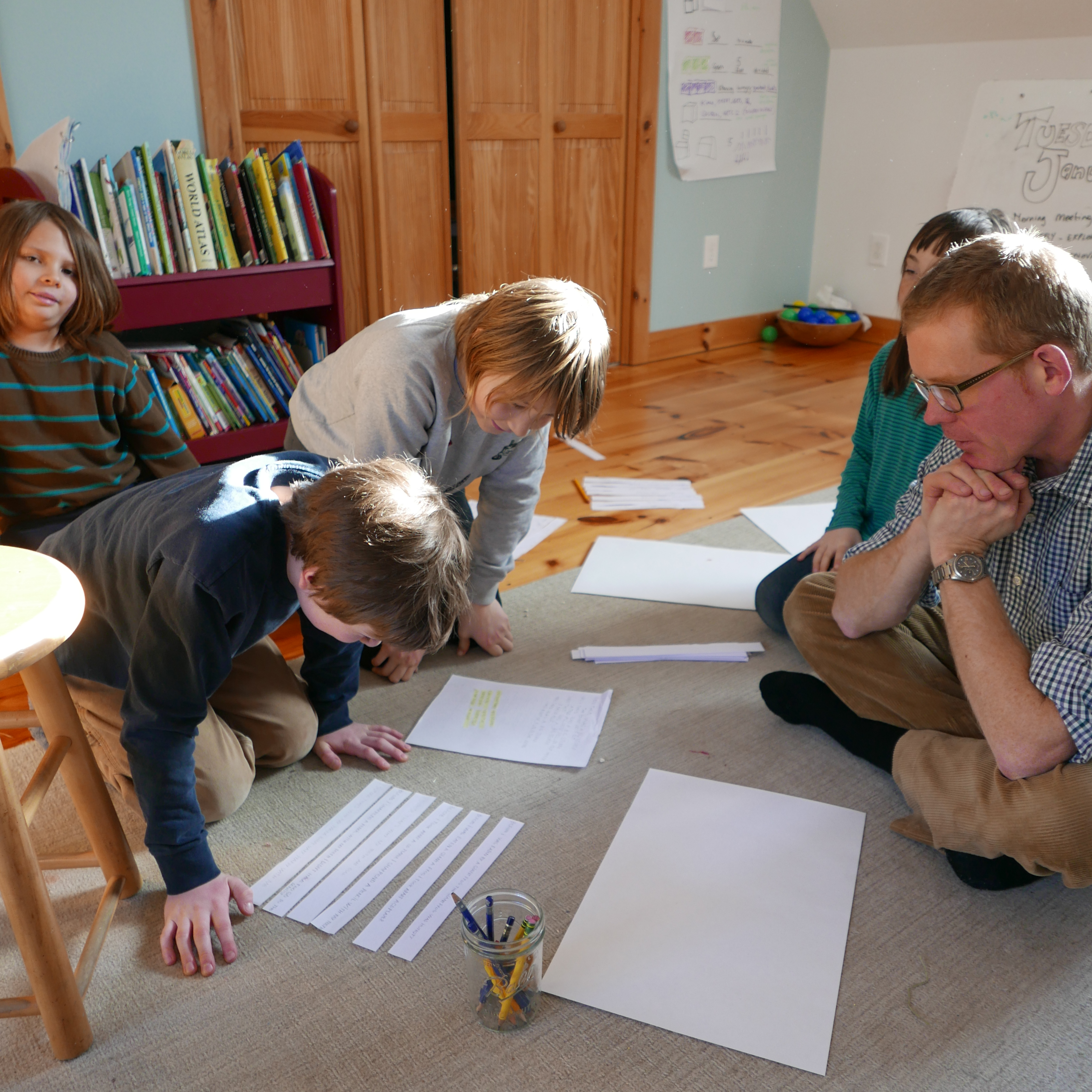 Brian shared a style of poetry called the Anaphora, with repeated lines. He pushed the children to apply real and imaginary content into their poems. He helped the children generate ideas and then edit and refine their poetry. His goal was to support each child to make a 5 line poem, they all generated much more work. I observed writing, reading, sharing, helping one another, public speaking, laughter and pure joy as the children created and shared their work.
  Children’s conversations:
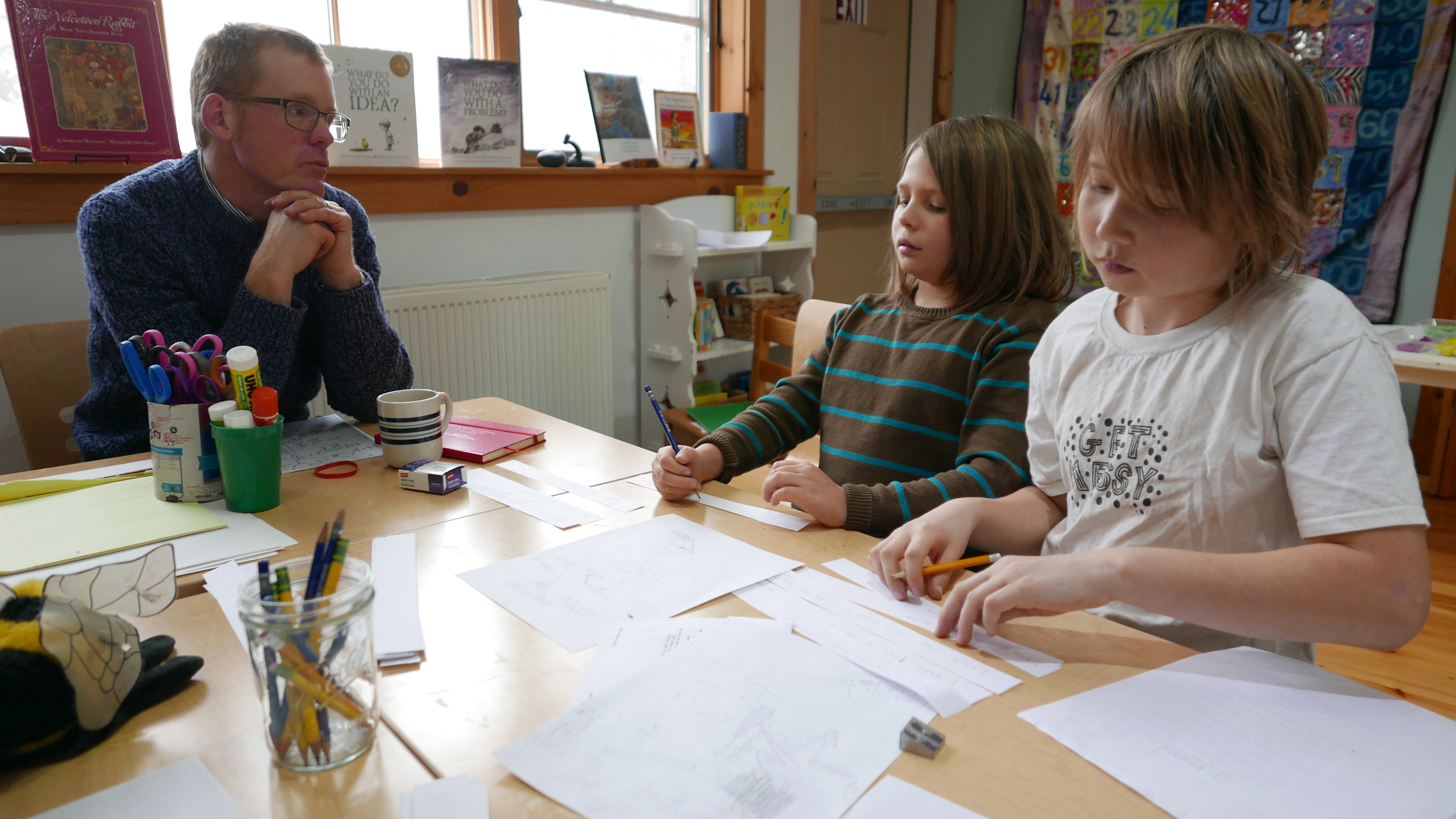 environment where the children have learned to be themselves and own their ideas they were able to fly with the support of professionals who are passionate about sharing the magic of the process and their craft. We as a staff learned alongside the children and were a community of learners together.
 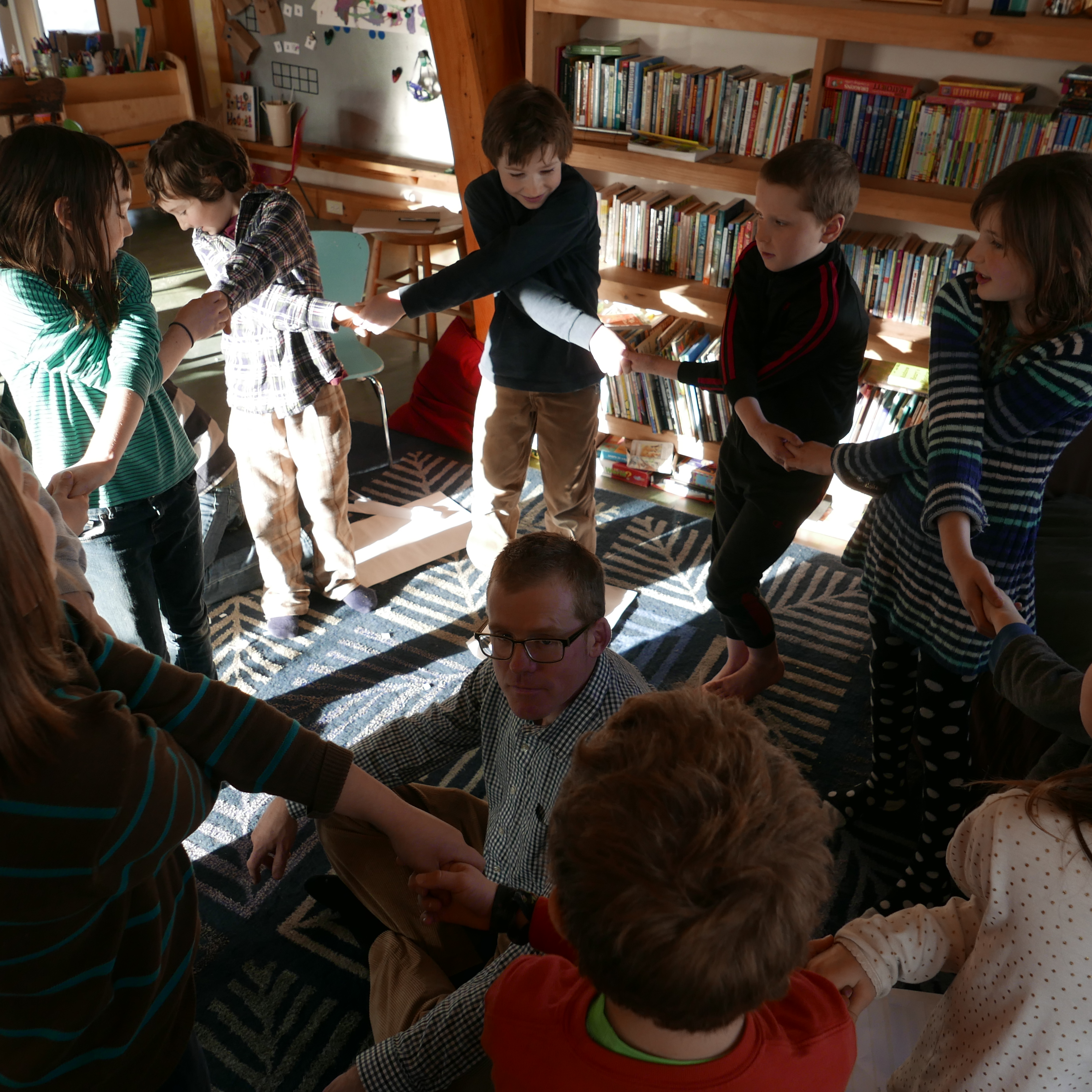 BRIAN
BRIAN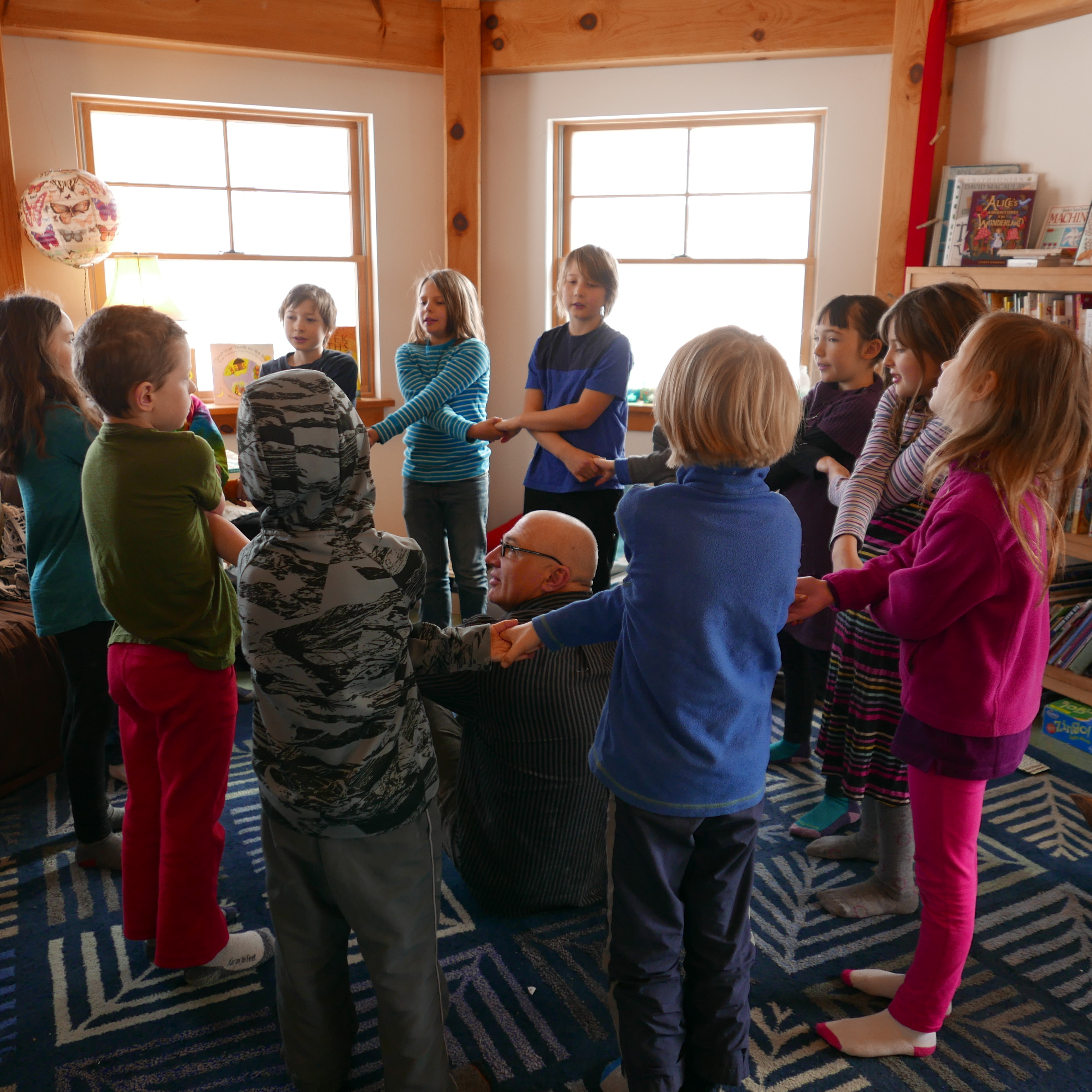 During the previous two days, I had sometimes felt the opposite of deep peace, great happiness, and safety: I had feared that my whole work at the school was going awry. I am not now sure why I felt this way, except that panic and a feeling of ineluctable disaster are often a part of a creative process. But by the students’ continued steady efforts, and I suppose mine too, things had turned out right in the end. Their poems collectively were funny, tender, deeply personal, wildly inventive, and above all wonderful to hear all read out one after another, as they had just done.
  So what I will take away from this residency is a feeling of gratitude, not for what I taught, but for what I learned. I learned that a vision, to create a school where the arts are not peripheral but central, can be made to happen, by Lindsay and her husband Chris. I learned that children who are skillfully supported to trust their own decision-making and imaginations can invent the most marvelous things, such as the spontaneous class play involving sheep and blades of grass that was scripted and performed by the grade 1-3 group, to illustrate concepts of division and remainders, based on a poem they’d made about the number 17. I learned that there is more scope in my own teaching to allow students to make their own choices about how they grow their writing. And I learned a little, just a little, about what can be achieved if we step back, let go of control, and trust the kids, the process, and the art.
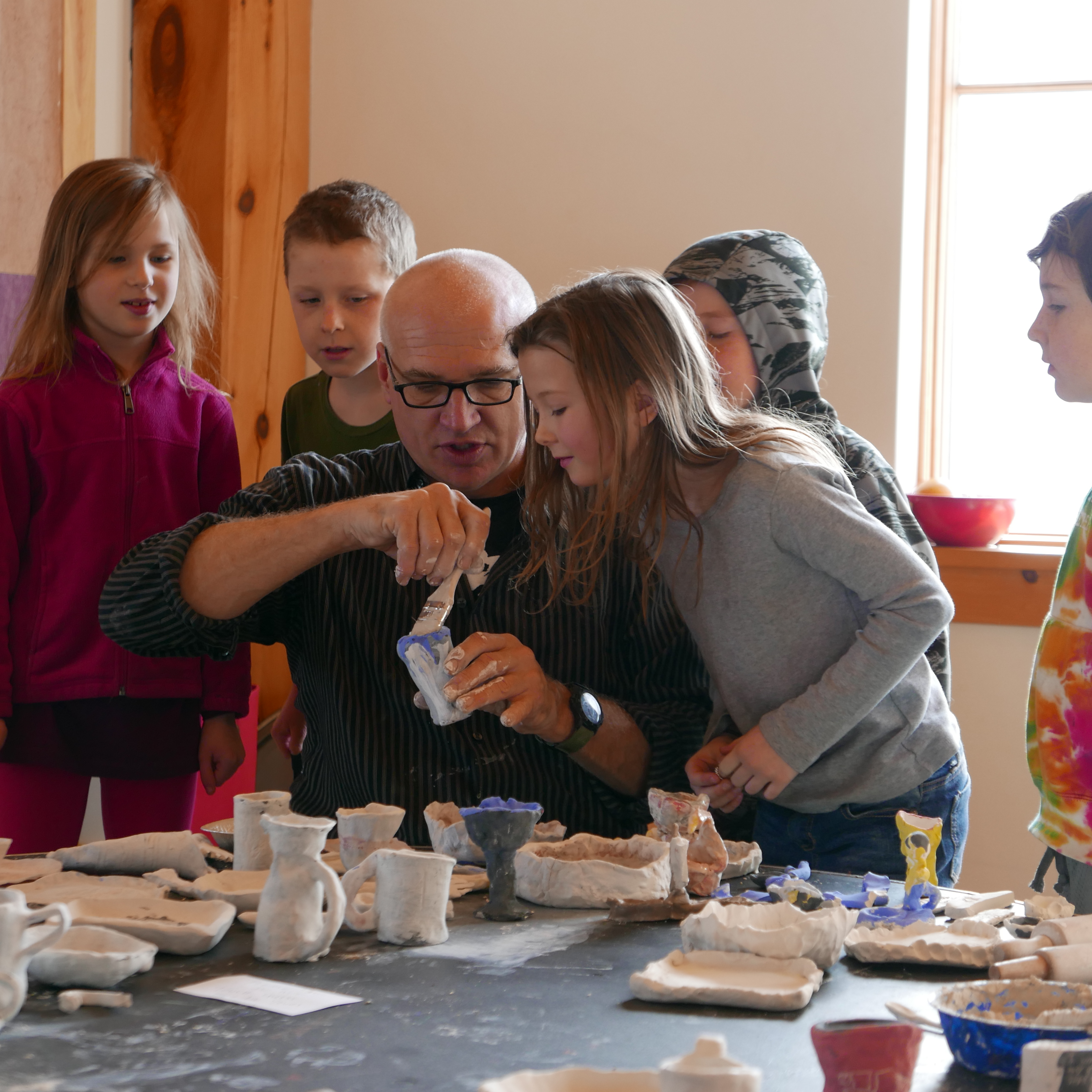 NINA
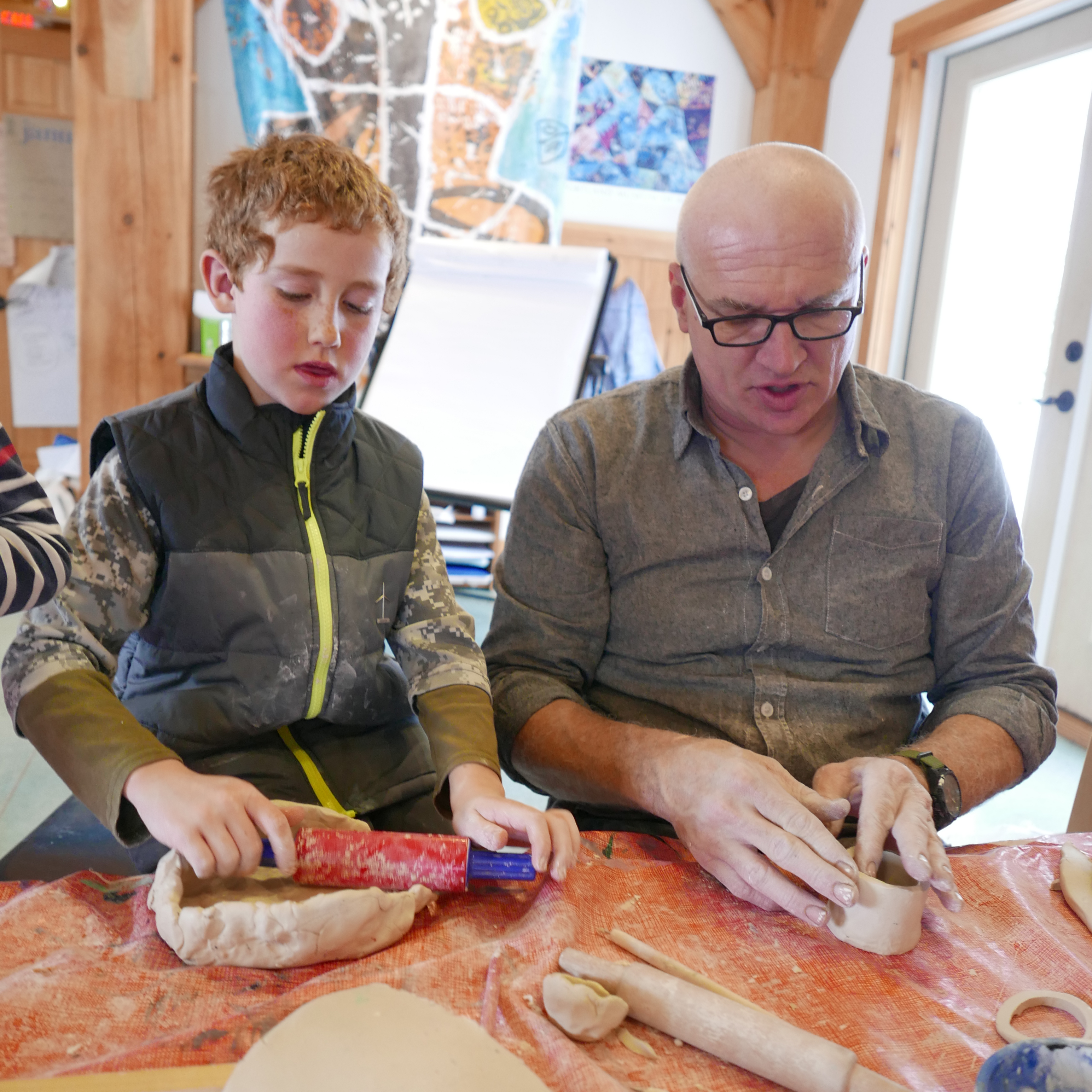
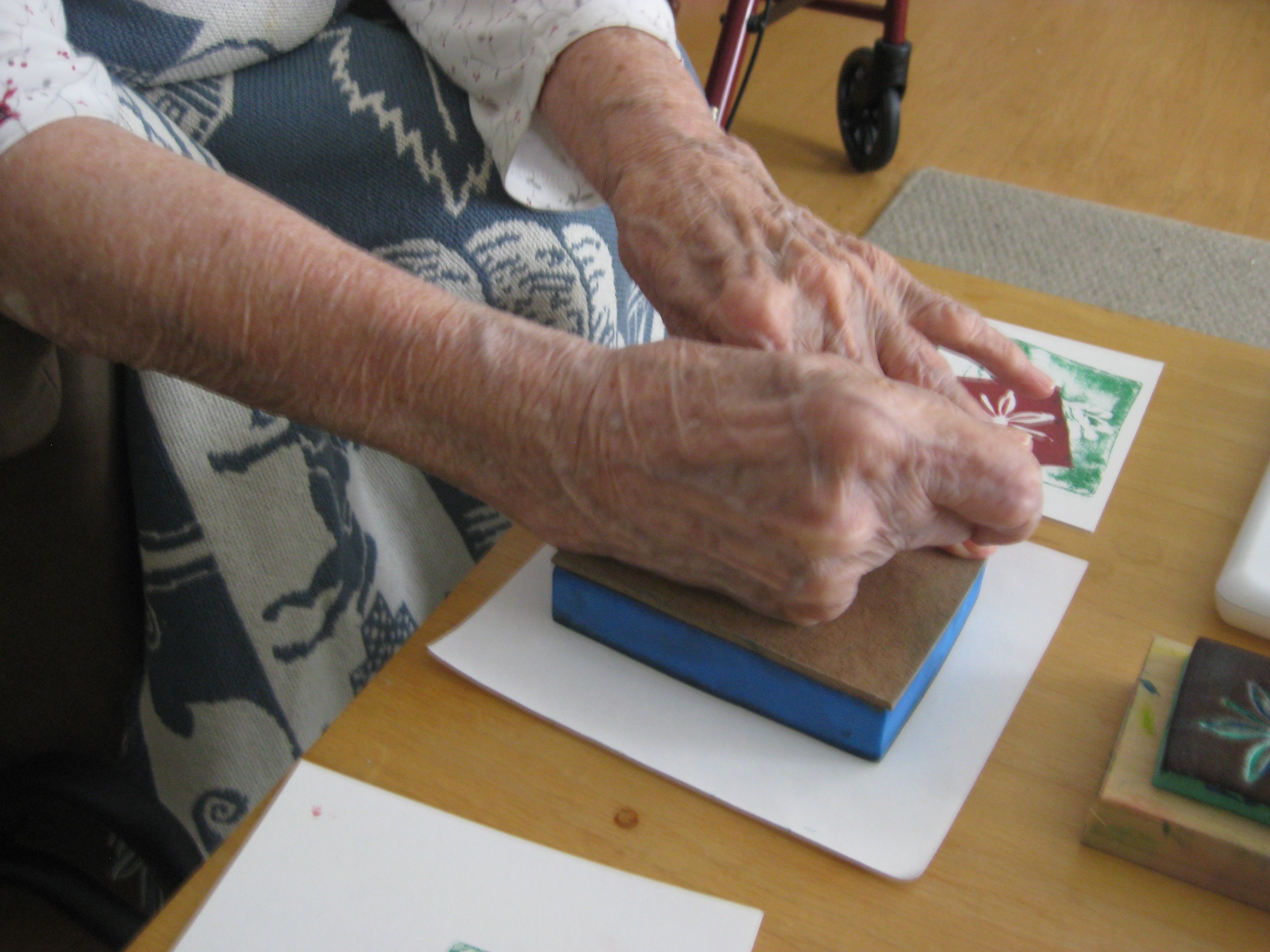
NINA For four days, I had the great pleasure to work at Sweetland School. The students wrote poems, working for two days with Brian, an award winning poet from South Berwick. They then created 5 functional pieces of pottery, on which they etched, using the sgraffito technique. Starting with individual lines of their poems, the young artists translated verbal language into visual language, creating a place setting which could be rearranged in different settings, making mix and match pottery poems. This exercise challenged the artists to formulate imagery that was as specific as their words: no mean feat!
  poetry lines, illuminating their intent, adding focus and emphasis. All of the poems, read aloud during a sharing period at the end of Brian’s time at Sweetland, were insightful and important, the young poets finding their voice easily, conveying thought and emotion beautifully.
  LINDSAY LAST WORDS









 me arts ed