Little kids rock
Bangor Daily News article on Maine DOE music program.

Phase 8 leadership role
The Maine Arts Commission invites you to consider applying for the role of Teacher Leader with the Maine Arts Leadership Initiative (MALI). Now in phase 8, MALI offers the opportunity to learn and network with arts educators and teaching artists from across the state. MALI is looking for PK-12 teachers interested in leading and in taking a close look at effective teaching and learning in the arts. Join us for a GREAT opportunity!

MALI Teacher Leader Winter Retreat, March 2018
MALI provides professional development and asks that you take what you’ve learned and share it with other educators in your region of Maine and beyond. Teacher Leaders are required to attend the three-day summer institute, July 31, August 1 and 2, 2018 at University of Southern Maine, Portland.
If interested, please submit a completed application by Tuesday, May 29. APPLICATION
Selected teacher leader responsibilities for the 2018-19 school year include:
Overall Description
MALI Mission: Committed to the development of Teacher Leaders to ensure deep understanding and meaningful implementation of high quality teaching, learning and assessment in the Arts for all students.
Since 2011 the initiative has been building capacity by training arts educators on the “what” and “how” of teaching and learning in the arts so they can provide the leadership in Maine through professional development opportunities. MALI DETAILS.
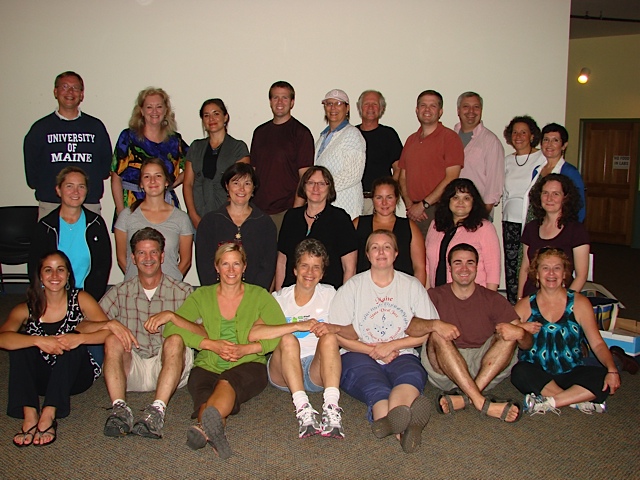
MAAI Summer Retreat, phase 1, MECA
MALI’s OVERALL OBJECTIVES
HISTORY – Phases I through VIII – Summer 2011 to present
APPLICATION REQUIREMENTS
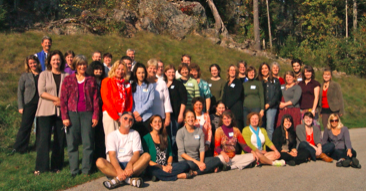
MALI Critical Friend Day, Point Lookout, October 2013
In the near future we will put a call out for Teaching Artist Leaders! If you have questions please contact Argy Nestor, Maine Arts Commission, Director of Arts Education at argy.nestor@maine.gov.
Visual Art Educator
This is one of several blog posts in 2018 that include stories of the Maine Arts Leadership Initiative (MALI) Phase 7 Teacher Leaders and Teaching Artist Leaders. This series includes a set of questions so you can learn a little bit about each leader. CLICK HERE for more information on MALI. CLICK HERE for more information on the 93 Teacher Leaders and 8 Teaching Artist Leaders. CLICK HERE for Arts education resources. CLICK HERE for the MALI Resource Bank. Search in the “search archives” box on the bottom right side of this post for past teacher leader stories. Thank you Hope for sharing your story!
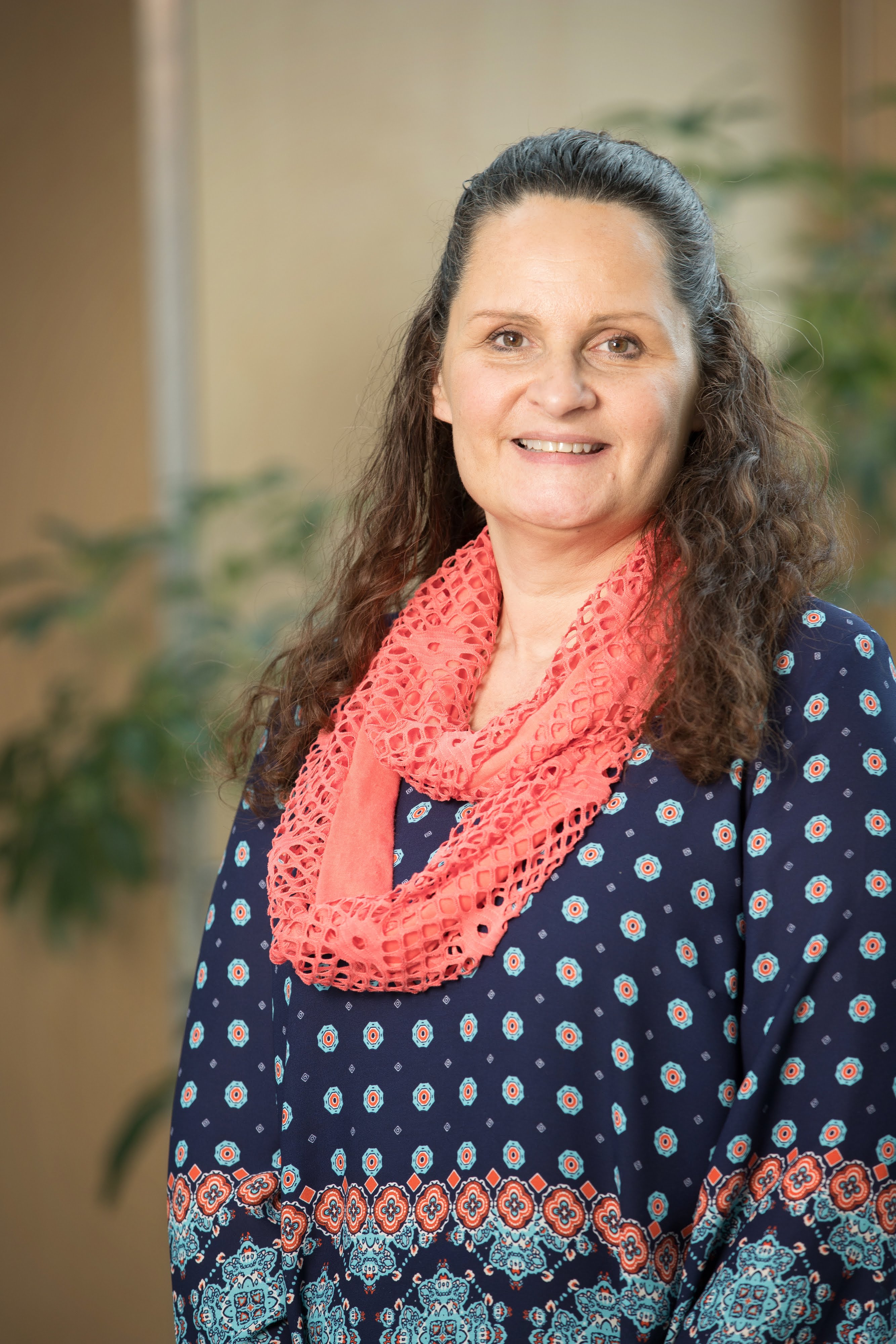 Hope Lord has been the Art & Design teacher for 300 grades 6 through 8 students at Maranacook Community School for the last 7 years. She also teaches and inspires 16 gifted and talented art students and is the co-advisor for the school’s yearbook. Prior to that Hope taught in RSU #38 for 19 years, 12 as a special education teacher.
What do you like best about being an art educator?
It’s wonderful when I see my students make connections between art & other content areas. I love watching my students take risks in their art and grow as artists. I enjoy being surrounded by young artists and presenting them with opportunities to explore, develop, challenge, and create art. The best part of being an art educator is witnessing a student’s success, as they become and see themselves as artists.
What do you believe are three keys to ANY successful visual and performing arts education?
Three keys to a successful visual arts education program are creativity, perseverance, and collaboration.
How have you found assessment to be helpful to you in your classroom?
 Quality assessment helps me understand how a student is learning and the degree to which they comprehend a concept. It also helps me plan my instruction based on concepts students need more instruction or may have misunderstandings and need clarification. Assessment also provides students feedback on their learning and how they can improve their work.
What have been the benefits in becoming involved in the Maine Arts Leadership initiative?
MALI has provided me the support, encouragement, and skills I needed to become an arts leader in my school, district, and state. I have the confidence to take creative risks in my teaching. My teaching has improved because of those risks and the collaboration with teachers throughout my district. My professional growth has enabled me to become an arts education leader and mentor to new teachers in my district. Additionally, I have the confidence to share my teaching experiences with other art teachers and receiving constructive feedback. MALI has been a great inspiration.
What are you most proud of in your career?
I am most proud of the work I’ve done with some of my most challenging students. I love seeing these students grow creatively and find success in art, when they have not been successful in other content areas. As I watch their art confidence grow, I also see their self-esteem improve, and it warms my heart. I know the extra investment and encouragement these students need, is well worth the effort. Every student needs to feel they are good at something. I am proud that I have been able to assist students in finding success in art and also building their self-esteem.
What gets in the way of being a better teacher or doing a better job as a teacher?
 The day to day politics of education interfere with being a great teacher. The increasing demands of our time and ever changing policies, hinders educators. The lack of support & funding for the arts from administrators, school boards, community, and legislators, all interfere with being a great teacher.
What have you accomplished through hard work and determination that might otherwise appear at first glance to be due to “luck” or circumstances?
I have spent the last seven years developing an arts curriculum that is engaging and fosters creativity, collaboration, critical thinking, and communication, while connecting the arts to other content areas. It is hard work and requires continuous revisions and alterations, as I teach each group of students. When a well planned and integrated art unit is executed, it seems effortless. However, it requires numerous hours of planning, research, collaboration, and support.
Look into your crystal ball: what advice would you give to teachers?
I would tell them to trust their instincts and take risks. Share your ideas with colleagues and get feedback and support to act on those ideas. Reach out to your community and colleagues throughout the state for resources and support to bring your ideas to fruition.
If you were given a $500,000.00 to do with whatever you please, what would it be?
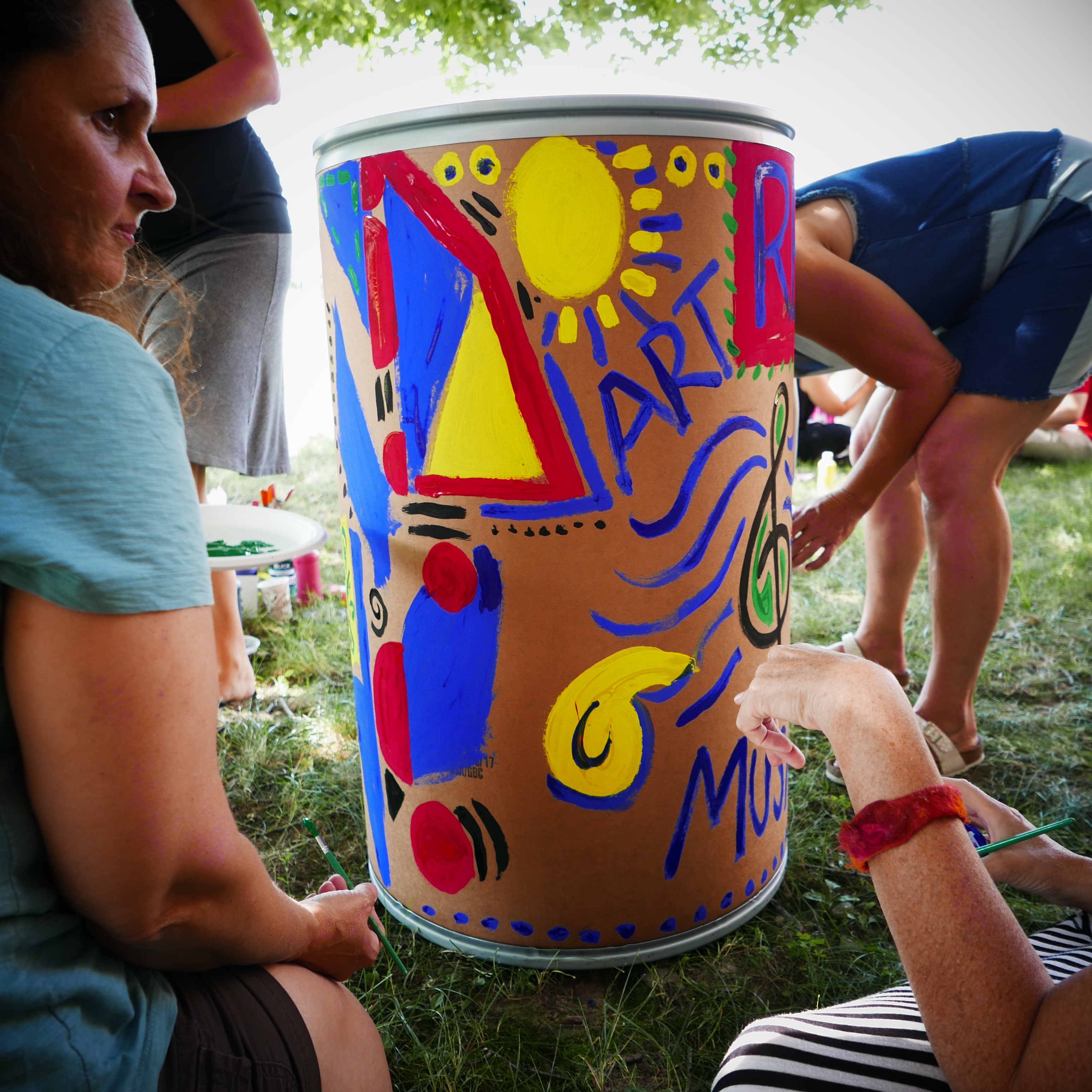
Making drums at the MALI Summer Institute, August 2018
I would take some of the money to build a new art and design studio and gallery at my school. I would also establish a grant that would be available to art teachers to help fund art materials and equipment, field trips, and artists in residence programs throughout Maine.
Imagine you are 94 years old. You’re looking back. Do you have any regrets?
My only regret would be that I didn’t start my teaching career as an Art Educator. Even though I enjoyed the challenges and successes of a Special Education teacher, I wish I would have taught Visual Arts from the beginning. I would still have had the opportunities of teaching students with special needs, but through the arts lens. Teaching art and mentoring young artists has been very rewarding and my only regret is I didn’t start sooner.
Happy Week, Teachers!
 If I could drive all over the state this week and provide every teacher with an apple, I would! I’d say THANK YOU and let you know how much I appreciate the work (and play) that you do each day providing an excellent arts education to every learner!
I hope that your week includes at least one celebration that’s all about you! Perhaps you have a full week planned to celebrate yourself and your colleagues. Pat yourself on the back and yelp so loud that I can hear you – from your school to the Maine Arts Commission!
If you’re interested in letting others know about how grateful you are for someone who supports the work that you do or perhaps someone who has inspired you in the past, you can record your story. All week long Teacher2Teacher is collecting stories of gratitude.
 You can listen to examples of messages recorded by other educators by scrolling to the bottom of the page. I recorded a message thanking all of the visual and performing arts teachers in Maine and a special shout out to the Teacher Leaders and the Teaching Artists Leaders from the Maine Arts Leadership Initiative.
Have a great week and be sure and do something nice for yourself and your colleagues!
Fabric Artist
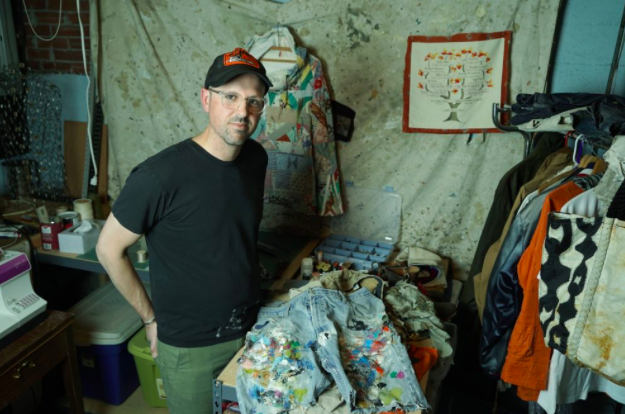
Photo by Gregory Rec
From today’s Maine Sunday Telegram, the Source section an article about an artist who works with clothing and discarded fabric by turning them to other clothing and other items. He started his work in 2008 by teaching himself to sew. This is an inspirational article that you may wish to share with your students about Jared DeSimio.
Carl Little and Memorizing Poems

Carl Little
I have served as the accuracy judge for Maine’s Poetry Out Loud competition on several occasions (not this year—the snow derailed my plans). Each time I hear those brave high schoolers present the work of Tony Hoagland, Linda Pastan, Langston Hughes, Wallace Stevens, and other great poets past and present, I am reminded of my own experiences with memorizing poetry—memories that are a mix of pleasure and pure fear.
My first recollection of learning verse goes back to elementary school in New York City in the 1960s. Every summer each student in the three senior classes (sixth, seventh and eighth grades) at the Buckley School was required to learn by heart several poems to be recited in the classroom upon returning to school in the fall, an obligation that put a small but significant damper on end-of-summer fun.
Just like the Poetry Out Loud contestants, we were given a group of poems from which to choose. Among my selections were “The Congo” by Vachel Lindsay and “On His Blindness” by John Milton. The latter I can still recite by heart. I loved the music of his words—“When I consider how my light is spent,” is the opening line—but also finding out that Milton went blind later in his life, which deepened my appreciation of this poem, so abstract yet so personal.
Flash forward to 1976. I had graduated from Dartmouth, moved back to New York City, and, as an English major, was desperate for some kind of employment. I took a job as a guard at the Metropolitan Museum of Art. I was posted to the Lehman Wing, on the Central Park side of the museum, a somewhat remote section of the sprawling complex.
To pass the time guarding Rembrandt’s portrait of the syphilitic art theorist Gerard de Lairesse and other art works, I decided to memorize poems, among them, William Carlos Williams’ delightful “Danse Russe,” in which the speaker dances naked before a mirror, asking “Who shall say I am not/the happy genius of my household?” Years later, a Mount Desert Island acquaintance, photographer Linn Sage, recounted how one day she came into one of the Lehman galleries and caught me practicing that poem.
A few years later, enrolled in Columbia’s MFA writing program, I took Derek Walcott’s “The English Pentameter Tradition” class. The West Indies-born poet, who would go on to win the Nobel Prize for Literature in 1992, had all of us memorize poems by Robert Frost and Edward Thomas.
Walcott loved both poets dearly and highlighted their connection: when Frost moved to England with his family in 1912, the 40-year-old poet was looking for a fresh literary start to a career that had stalled in America. He met and became close friends with Thomas, a critic and budding poet. Frost found a London publisher for his first book, North of Boston, now considered a masterpiece of American literature. Thomas’s favorable appraisal of the collection—he called it “one of the most revolutionary books of modern times”—helped launch his newfound friend’s career. Interesting to note that Frost’s famous poem “The Road Not Taken” led Thomas to enlist in the British Army. He died in World War I.
Most of us in Walcott’s class were in our 20s and we were collectively petrified by his assignment, but after weak protestation, we gave in. I can’t recall what I memorized for Frost—maybe “Raking Leaves,” which my son James later learned by heart in elementary school—but for Thomas it was his poem “Rain.”Certain lines still ring in my head: “Blessed are the dead that the rain rains upon.”

Martin Steingesser
The only Maine poet I know who presents his work from memory is the inimitable Martin Steingesser. At the second annual celebration of Edna St. Vincent Millay’s birthday at the Farnsworth Museum this past February 24th, he recited by heart one of her most famous poems, the sonnet “What lips my lips have kissed, and where and why.” It was, indeed, “by heart” that Steingesser gave us Millay’s bittersweet lines. “I cannot say what loves have come and gone”—nor could we.
I have given many readings of my own verse, but never presented it without the words in front of me. Inspired by those high school students and Steingesser, and wanting to be able to impress my grandchildren, who seem to be able to memorize a book after a single reading, I have decided to embark on memorization. I’m starting with “The Lake Isle of Innisfree” by William Butler Yeats. Take a deep breath, Carl. Ready? “I will arise and go now, and go to Innisfree.”
Thank you to Carl Little, Communications Manager, Maine Community Foundation, for providing this blog post. Carl is also a poet.
Promoting online arts education
 Heni is a non-profit platform which has a similar format to TED Talks. Heni produces film, photography and publishing projects with artists and estates. The new website has 25 videos and plans to post new films once every two weeks. The artists include works of art like Mona Lisa and Cezanne and topics like Pop art and Modernism. The content is wide-ranging and varied. Read the entire review at THIS LINK.
Below are links to three of the Heni Talks.
Share your work
 Interested in sharing your work with arts in education leaders and stakeholders?
The Arts Education Partnership is accepting concurrent session proposals for the 2018 AEP Annual Convening: “The Arts Leading the Way to Student Success,” taking place Sept. 12-13 in Indianapolis.
This annual event will explore arts-centered solutions aimed at ensuring America’s youth have access to a high-quality education in and through the arts by addressing the priority areas outlined in AEP’s 2020 Action Agenda for Advancing the Arts in Education. (Proposals must address one of the four priority areas.)
AEP invites partner organizations and leaders in the field to share their exemplary work supporting the role and contribution of the arts in preparing all students for success in school, work and life.
For more details about concurrent sessions at the 2018 AEP Annual Convening and to submit a proposal, please click here. AEP will accept concurrent session proposals until 5 p.m. PST Friday, June 1.
Denver – June 14-17

Join your fellow arts leaders and professionals for the arts networking event of the year! The 2018 Annual Convention will feature more than 100 speakers, more than 30 sessions, three Preconferences covering public art, equitable investment in the arts, and creative youth development – ten ARTventure tours across Denver.
The Americans for the Arts annual convention is scheduled for June 14 – 17 in Denver. It will be sure to provide an outstanding learning experience for you!
Creative potential in youth
 The Creative Youth Development National Partnership, in concert with more than 650 cross-sector stakeholders nationally, is calling for all young people to have equitable access to opportunities to: realize their creative potential; live richer, fuller lives; and develop the critical learning and life skills they need to become active contributors to their communities.
The resulting Creative Youth Development National Blueprint identifies three strategic priorities for advancing CYD:
The CYD National Partnership will host an online forum in May to discuss the Blueprint’s three strategic priority areas.
 Creative youth development is a long-standing practice that integrates creative skill-building, inquiry, and expression with positive youth development principles. In these programs, young people create original work—including animated films, 3-D printed sculptures, dance and theater productions, musical compositions, curated book collections, and more—and apply their creative skills to solve problems, shape their lives, and imagine and build the world in which they want to live.
With support from the National Endowment for the Arts, the CYD National Partnership—which includes the National Guild for Community Arts Education, Americans for the Arts, the Mass Cultural Council, and formerly the President’s Committee on the Arts and the Humanities—gathered input on strategies to expand the reach and impact of CYD through numerous community conversations throughout the country over an 18-month period.
Woven throughout the Blueprint are core values of the CYD coalition: racial equity and social justice, youth voice, and collective action. Read the Executive Summary.
“Creative youth development has the unique potential to deepen and sustain youth engagement by providing opportunities for youth to develop their creative potential, amplify their voices, and build leadership skills,” said Jonathan Herman, Executive Director of the National Guild for Community Arts Education. “For many youth, CYD programs also can be a pathway to other services such as college and career readiness, mental health services, academic support, and more.”
Participants in this national movement include youth, practitioners, researchers, funders, policy makers, and other stakeholders in creative youth development and allied sectors. The Partnership also commissioned research by the Forum for Youth Investment that mapped opportunities for alignment, e.g. developing social emotional competence; promoting healthy decision making/behaviors; and reengaging young people in positive learning and work environments, among CYD and allied youth sectors, including afterschool, juvenile justice, mental health, education, and workforce development. Three cross-sector Action Teams were then formed to analyze and distill the research and stakeholder inputs and make final recommendations for the Blueprint.
“Providing today’s youth with the skills they need to lead fulfilling lives across all economic, social, and family circumstances is a large-scale undertaking,” said Erik Peterson, Vice President of Policy, Afterschool Alliance. “To do this urgent work effectively, we must work together to share lessons learned, networks, and resources.”
The Blueprint will evolve as implementation unfolds and will be updated online to reflect progress toward goals.
You are currently browsing the me arts ed blog archives for May, 2018.

 me arts ed