Summer workshops
The workshops listed below are offered by the Arts Alliance of Northern NH, in partnership with VSA NH, the NH Arts Learning Network, the NH Department of Education and the NH State Council on the Arts, under a contract with the John F. Kennedy Center. We are also pleased to be collaborating with schools and cultural and educational institutions all around the state. The workshops are all based on principles of Universal Design for Learning and are suitable for classroom, arts and SPED teachers; para-educators; administrators, including curriculum coordinators; after-school and out-of-school providers; media specialists; and all those interested in inclusive education. Parents are also welcome to register.
The workshops are designed to address the needs of all learners, including students with disabilities and other learning challenges. They are all hands-on and interactive, offering cross-curricular ideas that can immediately be put to use by participating educators. Instructors are recognized experts in their fields (see bios on pages 6-7).
Workshops are 9 a.m. to 3 p.m. unless otherwise noted. When registering, please be sure to provide your summer email address and phone number so that we can contact you in case of any changes.
Professional development credits are offered. We keep workshop fees as low as we can, and partial scholarships are available as needed (in most cases we invite you to bring your own lunch and snacks). No one who is interested in a workshop will be turned away; please contact us if the fee is a hardship.
Please CLICK HERE for detailed registration information for each of the offerings listed below. For additional information, call 603-323-7302 or email programs@aannh.org.
WORKSHOPS
Arts Integration & Personalized Learning:
2 Workshops with Lisa Condino (attend one or both)
Audience: General and special education teachers, arts educators, paraprofessionals
Using the Creative Process to Engage All Learners
Tuesday, July 31, Kimball Jenkins Estate, Concord. Register here.
Wednesday, August 1, Littleton High School. Register here.
In this workshop, participants will examine how using the creative process can engage all learners in k-12 classrooms. What is the creative process? How do we make space in our curriculum for students to use the creative process to synthesize, process and personalize their learning? We’ll discuss what students of all abilities need to support their creativity and innovative capacity. Lisa will introduce ways to make multiple modalities – visual art, movement, video and music –available to support personalized learning, creative expression and demonstration of knowledge. No previous arts experience necessary.
Making Your Classroom a Creative Studio
Thursday, August 2, Littleton High School. Register here.
All of us become more innovative in our thinking and also retain knowledge better when given the opportunity to reflect on our learning through art. Participants in this workshop will learn how to “flip” their classroom into a creative studio that is inclusive to all learners. We’ll answer questions like: What type of basic materials kit do I need for painting, sculpture, drawing, creative movement or drama? What adaptations can I make to my classroom that will turn it into a gallery space? How do I do this with little or no budget? Even if the arts are not your comfort zone, you can learn how to provide your students the opportunity to explore personal creative capacity.
3 Workshops with Rhoda Bernard
The Arts & Universal Design for Learning:
Strategies that Work Across the Curriculum
Monday, August 13, Monarch School of New England, Rochester. Register here
Audience: All educators, teaching artists, paraprofessionals, administrators & parents
Universal Design for Learning offers a powerful framework for providing meaningful access to the curriculum and to teaching/learning experiences for all students. The arts are particularly compatible with Universal Design for Learning because, by their very nature, they provide and engage multiple forms of thinking, learning, expression, and understanding. This session will provide attendees with strategies and frameworks in the arts that can facilitate the use of Universal Design and personalized learning across the curriculum.
Teaching Music to Students on the Autism Spectrum:
Strategies & Best Practices
Monday, August 20, 9:30 a.m.- 3:30 p.m., Crotched Mountain School, Greenfield
Register here.
Audience: music educators, classroom teachers, paraprofessionals, parents & administrators
Making and listening to music is known to be powerful for individuals with autism. In this workshop, participants will learn how to best reach students on the autism spectrum in music classes, classrooms and at home. The session will feature information on autism spectrum disorders and specific strategies for teaching music to students with autism in one-on-one, group, and integrated sessions. The session will also provide participants with tools and resources to address personalized learning and competency-based learning in integrated settings that include students with and without disabilities.
Teaching the Arts to Students with Special Needs: Strategies & Best Practices
Tuesday, August 21, Currier Museum of Art, Manchester. Register here.
Audience: Arts educators
Most arts educators see all of the students in a particular school and/or district. Students with special needs often excel in the arts and find those subjects to be areas of strength and great joy. In this workshop, arts educators in all disciplines will learn how to best reach students with special needs. The session will include information on the range of disabilities and disorders, as well as specific strategies for teaching the arts to students with special needs in one-on-one, group, and integrated sessions. The session will provide educators with tools and resources to address personalized learning and competency-based learning in integrated settings that include students with and without disabilities. Universal Design for Learning and Differentiated Instruction strategies and frameworks will be employed throughout the session.
WORKSHOPS LED BY OUR NEW HAMPSHIRE TEACHING TEAM
Arts Education: Learning & Sharing session
Marcia McCaffrey, NH Dept. of Ed, Arts Consultant
Thursday, August 16, New Hampshire Institute of Art, Manchester
Proceeds support NH Arts Learning Network.
Register here.
Is your curriculum relevant? Do you know how to connect what you do to current issues in education? Do you wonder how your colleagues are addressing new or re-treaded trends? Join NH Department of Education Arts Consultant Marcia McCaffrey for a full-day review of and peer discussions about overarching state initiatives, arts-specific national initiatives, and other topics driven by attendees’ wonderings. Topics will include personalized learning, competency based education, competency-based reporting systems, Universal Design for Learning, and well-rounded education in ESSA (Title IV-A). Participants are invited to bring questions and ideas to share. The goal of this day is to clarify what these buzz words mean and learn from others about approaches, success, and challenges related to topics discussed.
Reflections from Nature:
Creating art with natural materials to inspire oral and written expression
Deborah Stuart & Will Cabell
For K-6 classroom & art teachers; after-school, out-of-school and community program staff; homeschool parents; and K-12 educators in specialized settings
Tuesday, July 24, North Country Education Services, Gorham. Register here.
Wednesday, July 25, Pease Public Library, Plymouth. Register here.
Friday, August 10, The Longview School, Deerfield. Register here.
This workshop will bring together art, writing and ecology, offering teachers creative and engaging ways to help students relate to the natural word, to observe and express their experiences through handmade nature journals, and to create unique constructions (inspired by artist Andy Goldsworthy) using natural materials. Linked to the principles of UDL, it will include focus on students with unique learning needs as well as typical learners. This workshop is useful for classroom and art teachers of K-6, as well as older students in specialized settings. It as also a great project for out-of-school, home school and community program staff.
The Art of Writing for All Students:
Turning words, sentences & stories into unique, student-created books
Deborah Stuart
Wednesday, August 15, RSEC Academy, Amherst. Register here.
Thursday, August 23, Currier Museum, Manchester. Register here.
Friday, August 24, Conway Public Library, 9:30 a.m. to 3:30 p.m. Register here.
This workshop introduces multiple ways to motivate young writers at any academic level with appealing exercises in writing, journaling and imaginative expression. Attention will be paid to differentiating and adapting lessons to include students with learning differences and disabilities. We’ll explore the creation of unique books, using this visual art form to motivate students. A wide variety of art techniques and inexpensive, easily assembled materials will be introduced and demonstrated. All activities can be linked to the Common Core and to language arts learning goals.
Songs & Singing Games, preK-Grade 3
Deborah Stuart
Friday, August 17, Littleton High School, 8:30 a.m. to 1:30 p.m. Register here.
An exploration of the rich repertoire of early-childhood music, rhymes, counting-out chants, finger plays and traditional circle and playground games. Participants will learn by doing and will take back to their children lots of new ways to introduce rhythm and music into activities. The links between music and language, self-expression and literacy skills will be explored; singing games are an effective tool for social learning and offer children ways to use these traditional rhymes and games on their own, at school and at home, with their friends and families. The workshop will also introduce ways to make simple rhythm instruments that can be used in a variety of creative activities.
Workshops with Deborah Stuart noted above are available for in-service programs — contact us to arrange. These workshops are also available:
Successful Inclusion in the Art Classroom
This workshop will address the many challenges which present themselves when designing art classes which include children and young people with special learning needs or disabilities. The emphasis will be on practical strategies and ways to problem-solve situations where there are barriers to successful participation by students. This workshop will be very hands-on, using art activities, tools and processes useful in both elementary and secondary school art classes. In the many activities we do, we will always be looking at adaptive strategies that make the art experience accessible for all, including for students with developmental, neurological and behavioral involvements.
Arts Learning for Paraprofessionals
This workshop is designed for paraprofessionals and one-on-one aides working with students with special learning needs and with identified disabilities. Music and art classes are often the ones into which students are first integrated; both these areas can be effectively used to promote learning for students with different learning styles and those who do not succeed in core academic areas. We will look at best practices for making “specials” work well for all students, at adaptive strategies and tools, at how to work with the art and music teachers to help them offer a wide array of ways that students can participate and learn so that all may feel successful and grow in skills and enjoyment.
Engaging Young Children through Music & Movement (& connecting music and books)
For teachers, program directors, special educators, families and caregivers of young children preK-grade 2.
WORKSHOP LEADERS’ BIOS
Rhoda Bernard is the managing director of the Berklee Institute for Arts Education and Special Needs. Bernard also oversees the Master of Music in music education (autism concentration) and Graduate Certificate in music education and autism programs at Berklee. She holds a Bachelor of Music with academic honors from New England Conservatory and earned her Master of Education and Doctor of Education degrees from the Harvard Graduate School of Education. Bernard regularly presents research at conferences throughout the United States and abroad, and provides professional development workshops for educators in local, national, and international forums. Her work has been published in several book chapters and in numerous journals, including Music Educators Journal; Music Education Research; and Arts and Learning Research Journal. Bernard has been honored with the Berklee Urban Service Award and the Boston Conservatory Community Service and Faculty/Staff Spirit Award.
Lisa M. Condino, is a visual artist and a longtime teaching artist for VSA Vermont. She is a juried and selected graduate of Arts Connect, a program that concentrates on merging UDL with arts integration, and for the past five years has served as Artist-in-residence at the Howard Center, Baird School, a therapeutic school for highly reactive and reluctant learners. She is also a longtime mentor in the TA & Mentoring Program of VSA VT and a fellow of the national Community Engagement Lab. Providing a safe environment for creative expression, social & emotional learning, active engagement, and the inclusion of ALL students are at the root of her teaching
Will Cabell is an educator, musician, theater artist and puppeteer who has served as a trainer for the AANNH/VSA partnership since its inception. He has an MA in Integrated Arts and served as the art and music program director for The Monarch School of New England.
Sharon Malley has a Doctorate of Education in therapeutic recreation, special education and psychology, with teaching licenses in K-12 art education and special education. She has served as special education specialist for the Kennedy Center, led the special education team contributing to the development of the National Core Arts Standards and has coordinated and provided leadership for national forums and conferences dedicated to advancing knowledge of the intersection of arts and special education. She is co-editor of the Handbook of Arts Education and Special Education: Policy, Research & Practices (Taylor & Francis).
Marcia McCaffrey has served as Arts Consultant for the NH Department of Education for 19 years, working with partners and stakeholders to guide the implementation of quality arts education for the state’s education sector. Past president of the State Education Agency Directors of Arts Education (SEADAE), she represented SEADAE on the National Coalition for Core Arts Standards (NCCAS) Leadership Team, facilitating team meetings during the three years of standards development. She has served as a dance grant panelist for the National Endowment for the Arts; as a member of the National Dance Education Organization’s Advisory Board, focusing on curriculum, standards, and assessment; and has presented nationally and internationally on research in arts assessment. She holds a Master of Arts from Columbia University, and B.S. degrees in elementary education and physical education from Iowa State University.
Deborah Stuart has been involved in arts and education for over 40 years, working around the country and around the world with children, artists and teachers. She has done extensive UDL-focused training for educators around the globe, and was a core faculty member for the VSA Arts Institute: Professional Development in Art, Education and Disability, Deborah served as an editor for “Start with the Arts,” wrote the companion parent book and designed and edited a series of books for teachers and youth workers supporting creative writing in inclusive settings. She is the 2014 recipient of the national VSA Ginny Miller Award for Mentorship.

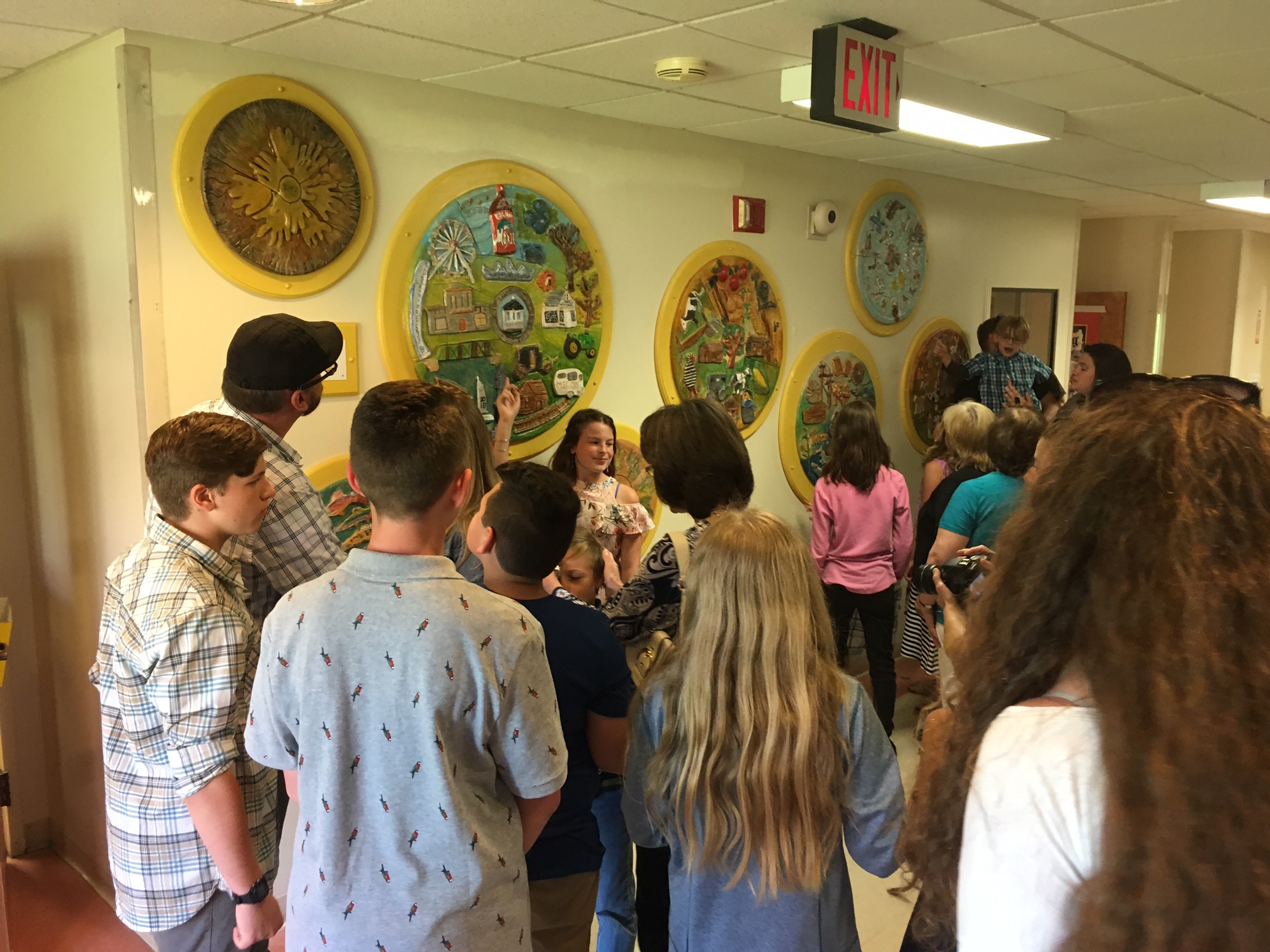
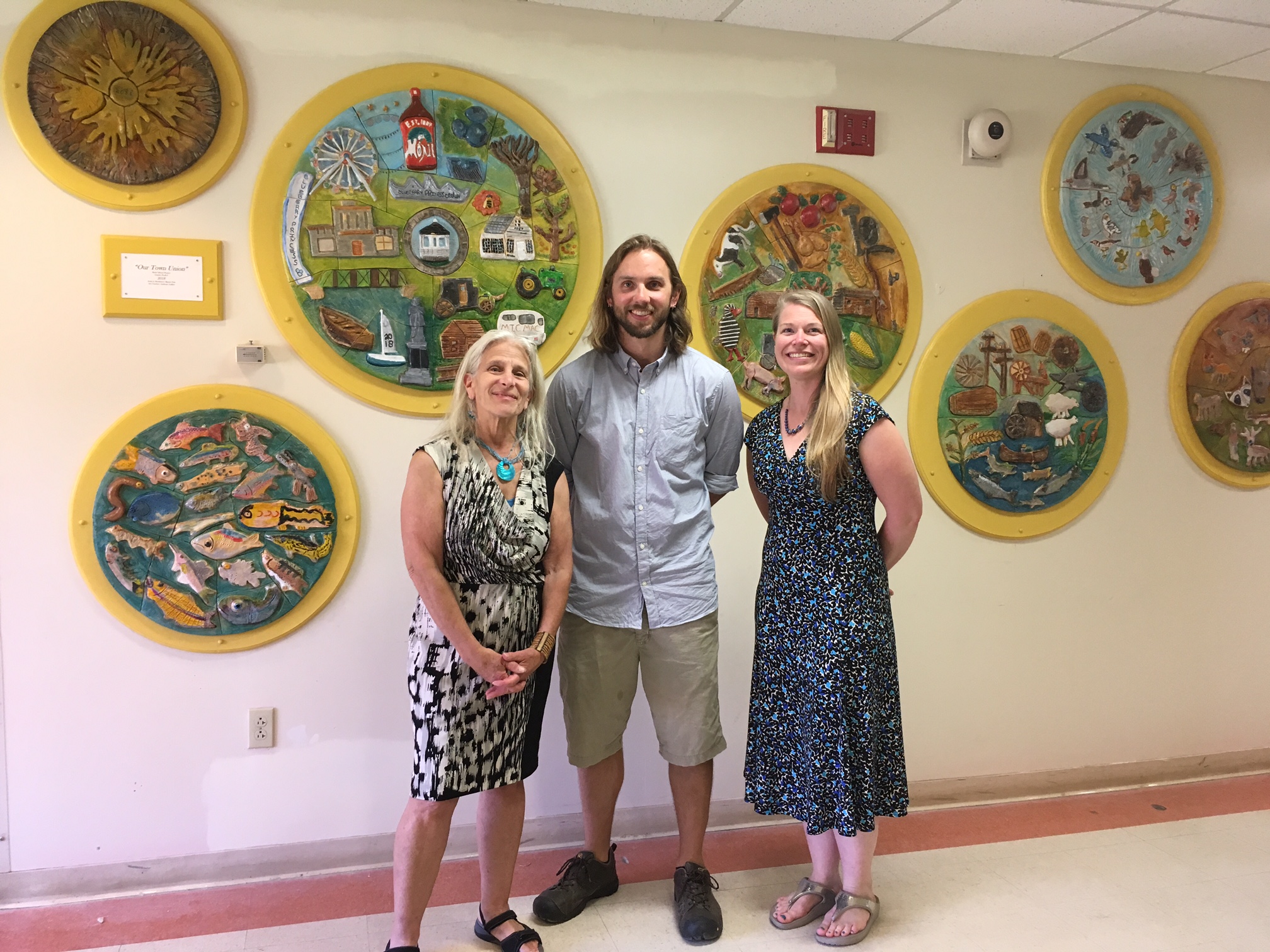
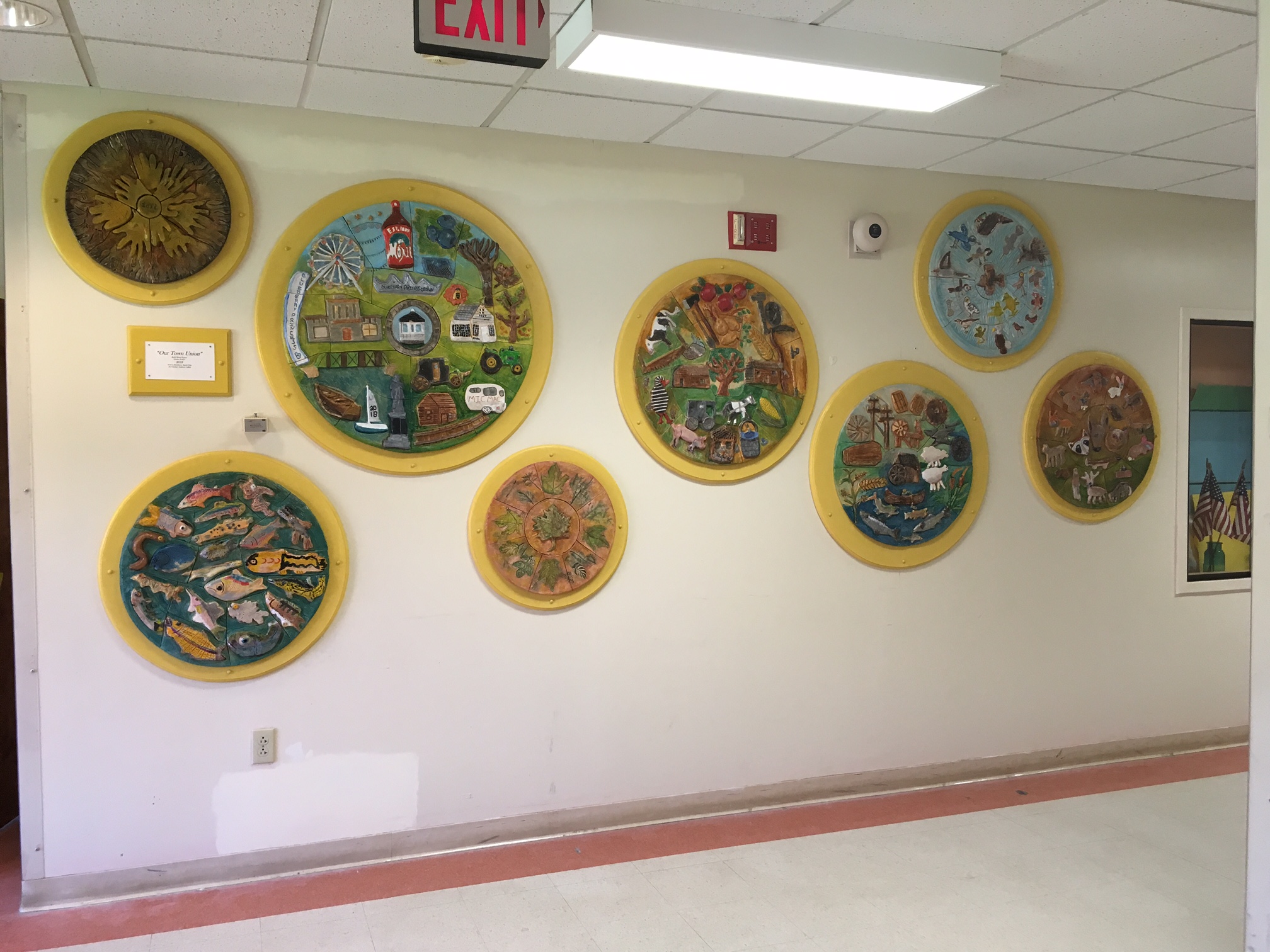
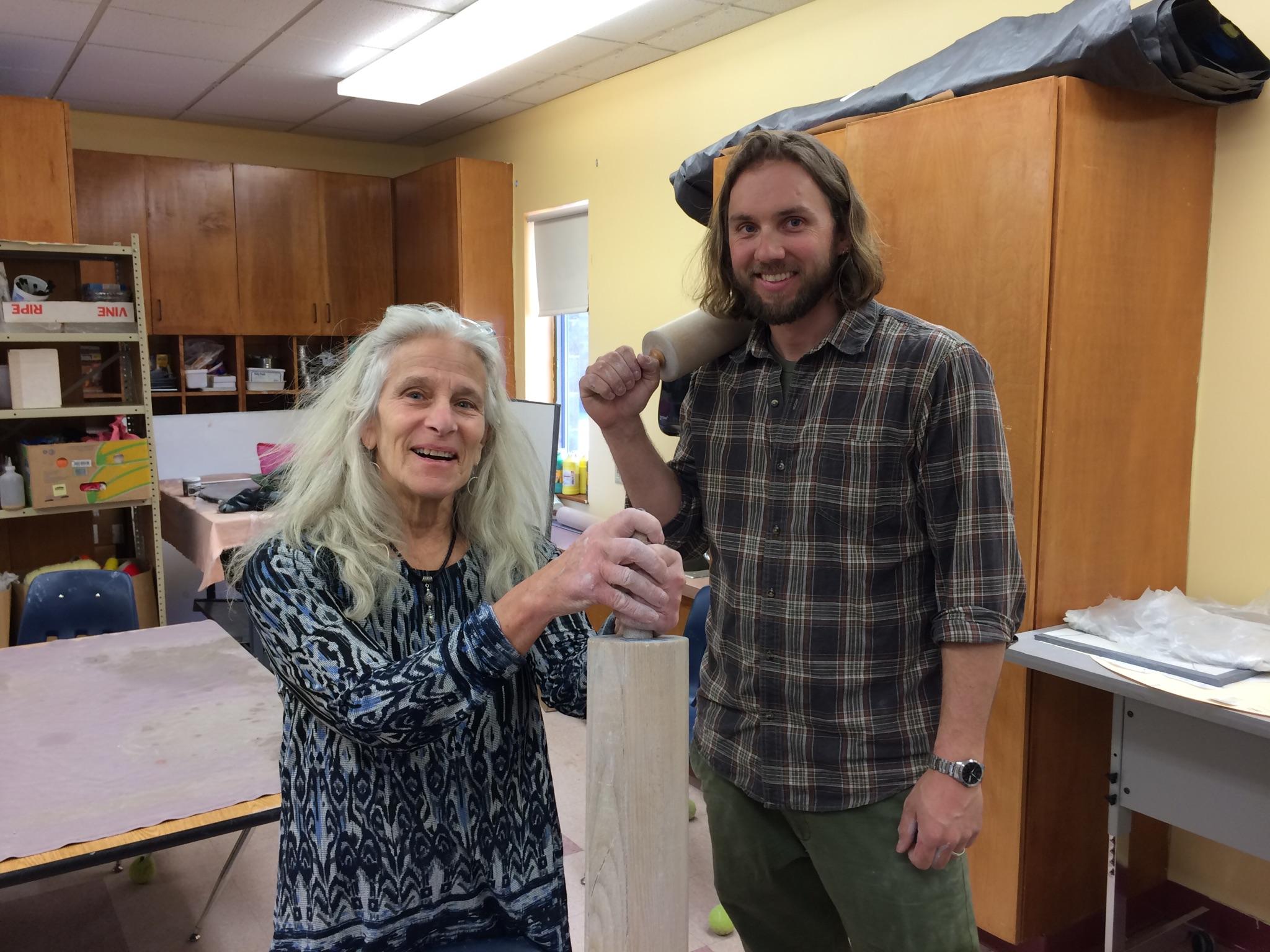 Over a two month period this spring art teacher Anthony Lufkin and teaching artist Randy Fein collaborated to provide an outstanding learning opportunity for all the preK-6 students at Union Elementary School. The residency was funded by an Arts Learning grant funded by the Maine Arts Commission.
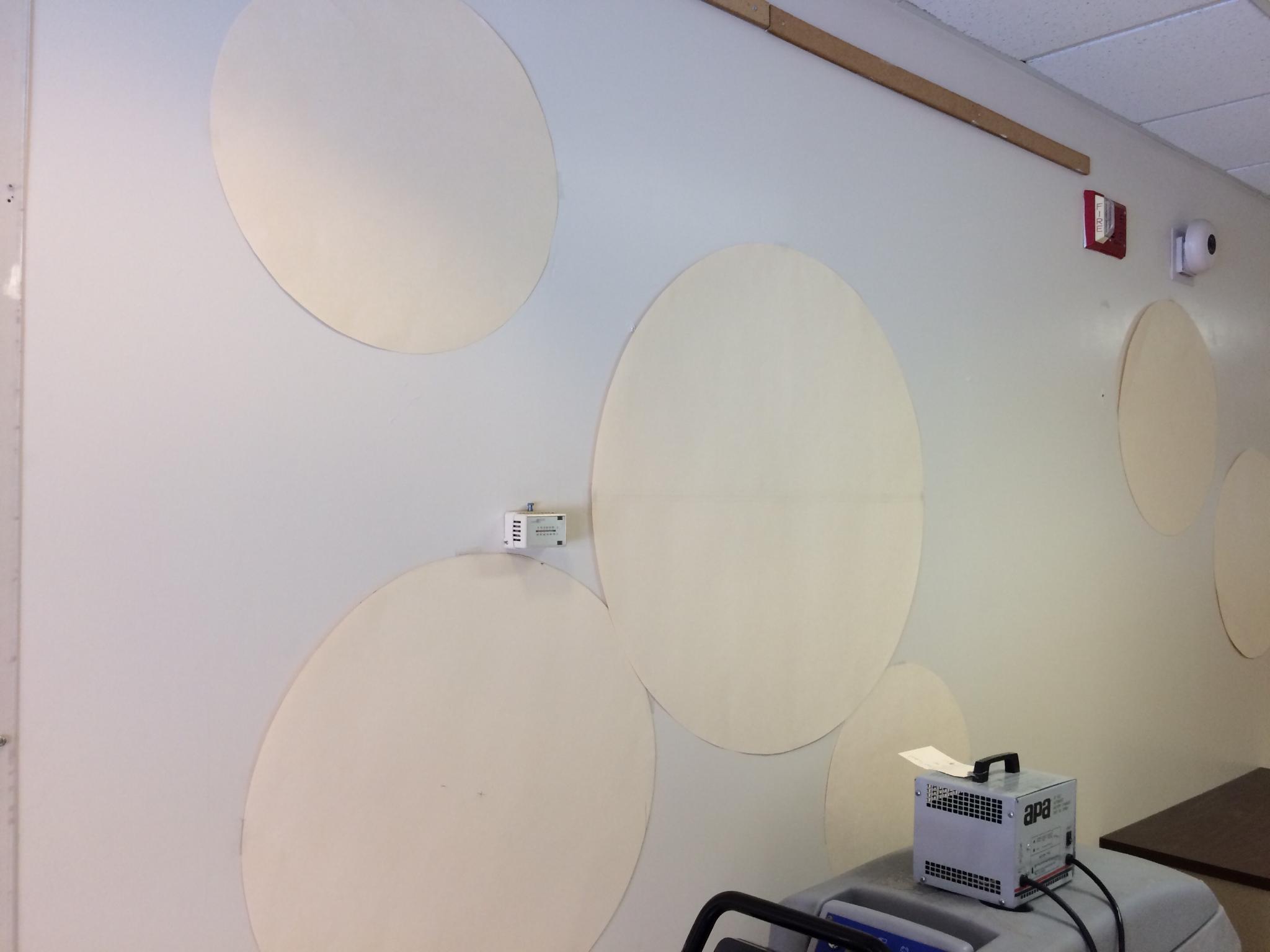 It was a pleasure to watch this project unfold and develop, the steps involved are too many to count, the commitment from all staff to help with the success, the student learning observed and so much more. It is easy to forget during the day to day details of “school” that these type of large projects hold meaning and learning way beyond the actual project. I suggest you consider taking on something like this, if you haven’t done so in the past.
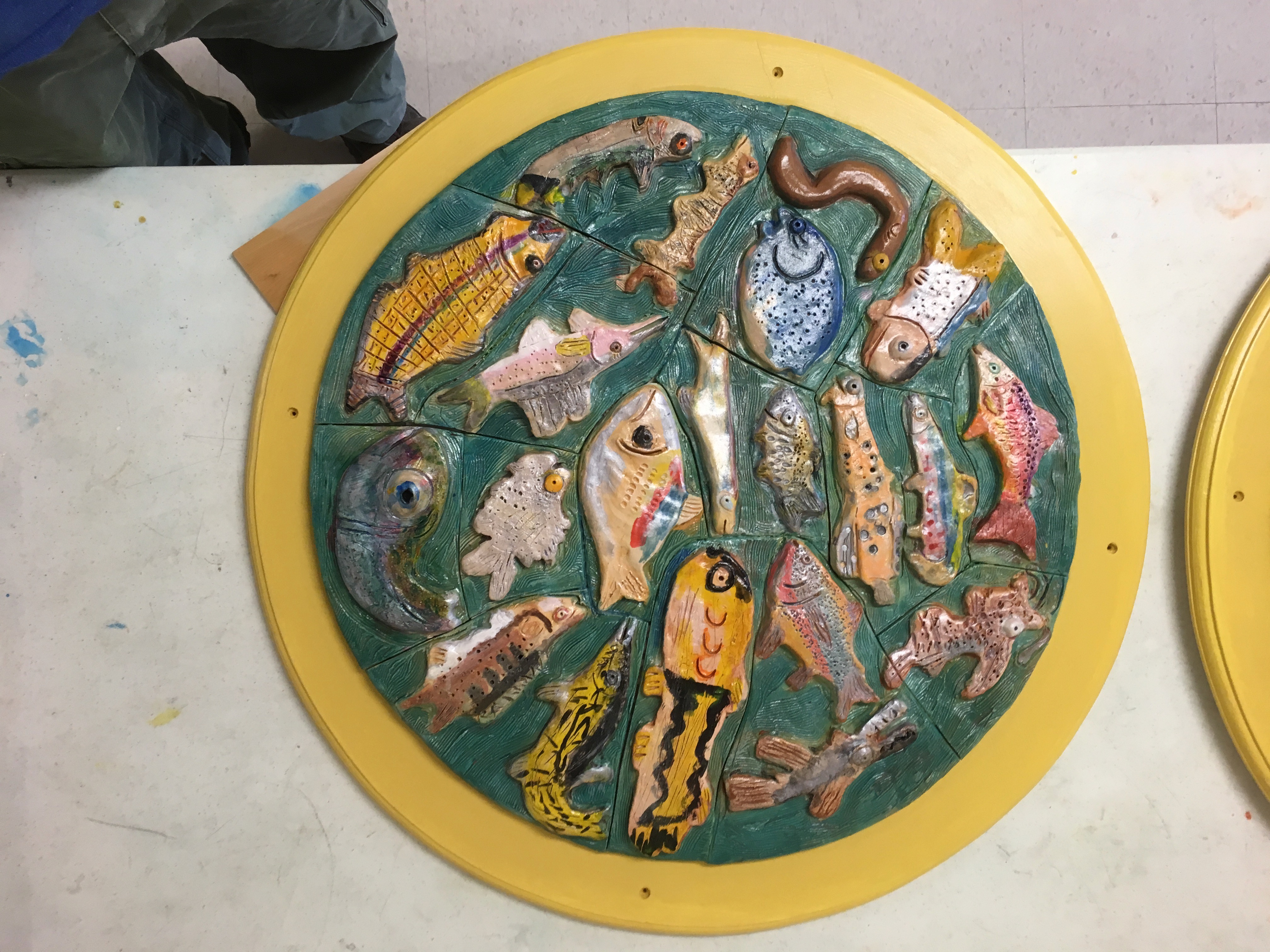
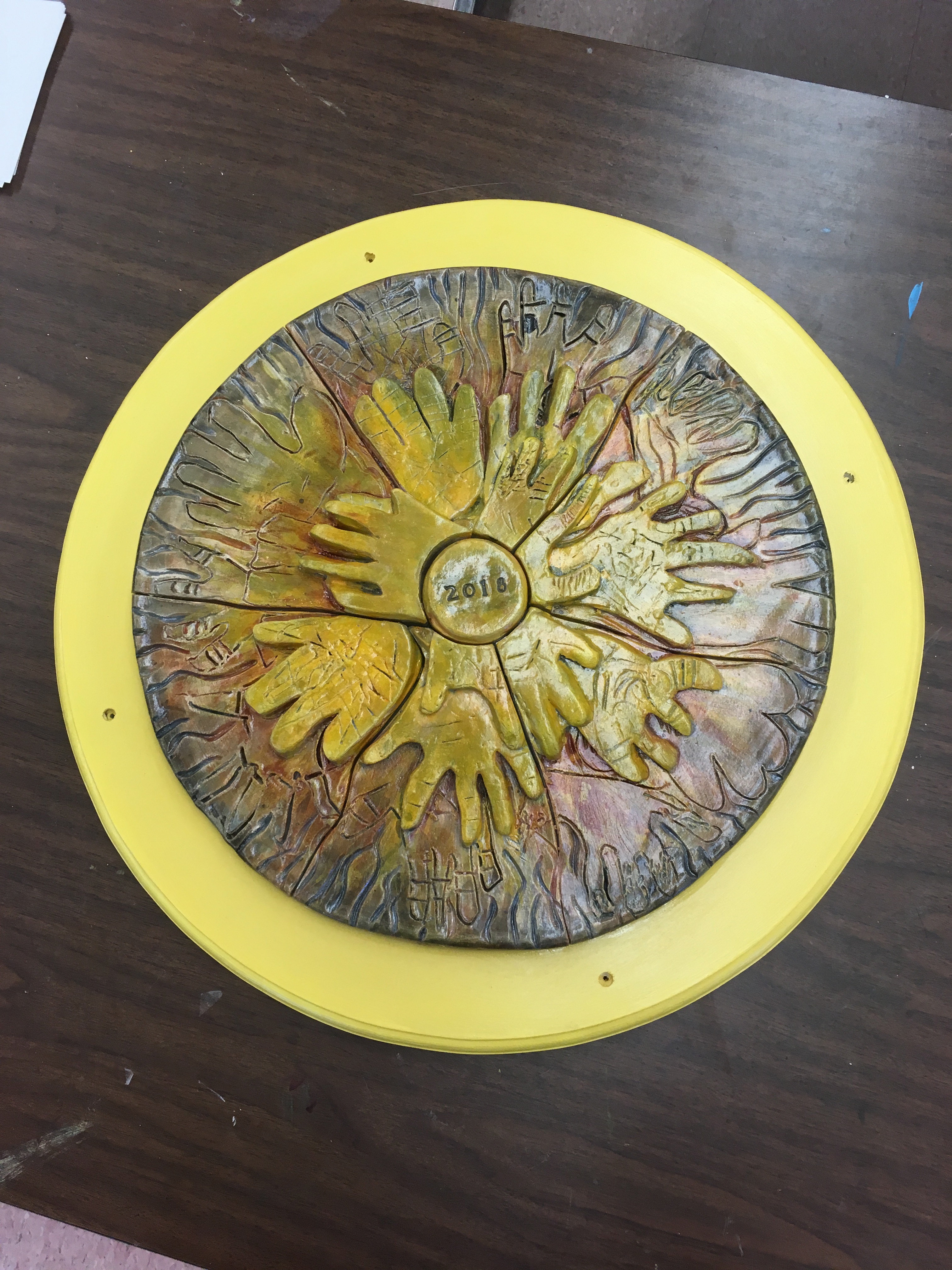
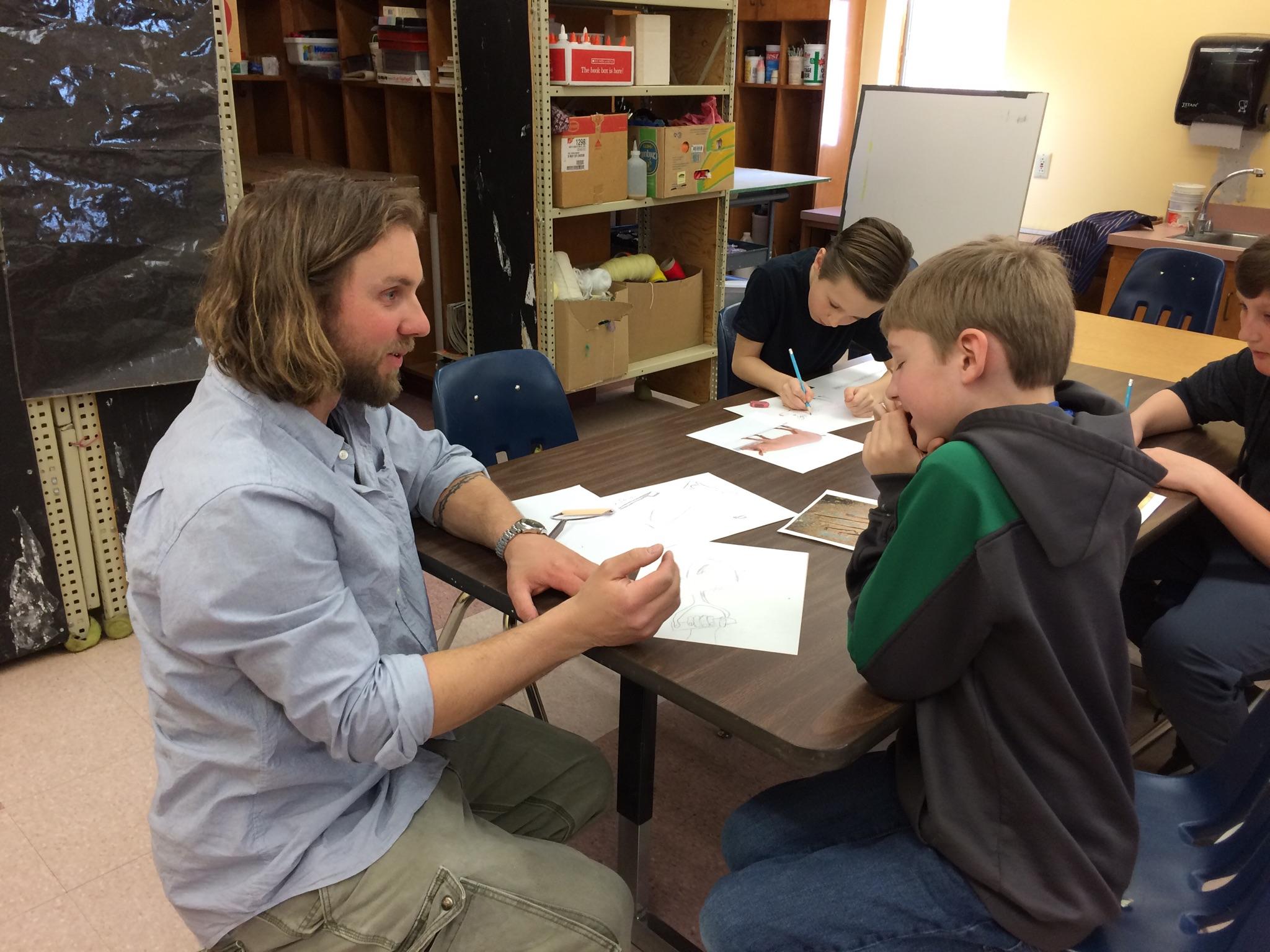 almost 2 years before its completion in June. The mural celebrates the community of Union, including the history, environment and architecture and how students interact and connect with these components. The completed work will continue to educate future learners, young and older, about their community.
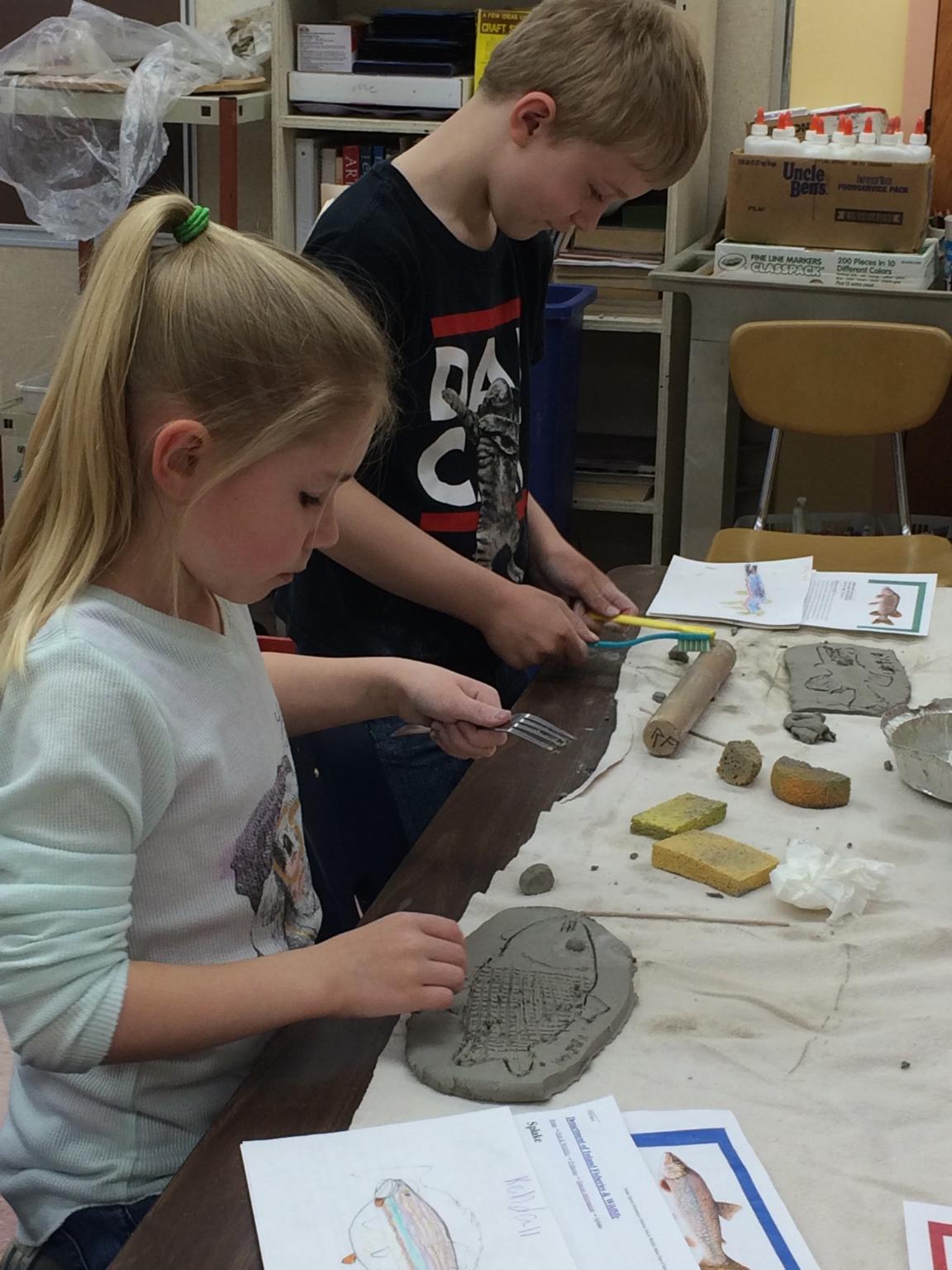 This project was funded by an Arts Learning grant from the Maine Arts Commission ($2,300), the Perloff Foundation Fund ($2,000), and from the Maine Space Grant Consortium ($1,000).
 The second component, was to help foster connections with other subject areas and connect students with the local ecosystems and history of the community. Classroom teachers have been very helpful introducing the topics through multiple lenses. Students have had to research their subjects, and then use that research to educate their image development. Members from the Union Historical Society came in and presented to students in grades 4-6, giving them first-hand information about some of the past events that helped shape the town into what it is today. As students images developed through sketching and then sculpting, their understanding of the subject grew. They also learned much more about working with clay as a medium, and some of the logistics of putting together an installation like this.
  What do you see/know are the greatest benefits to students in having an artist in residency? What does Randy bring that supports/enhances your curriculum Anthony?
 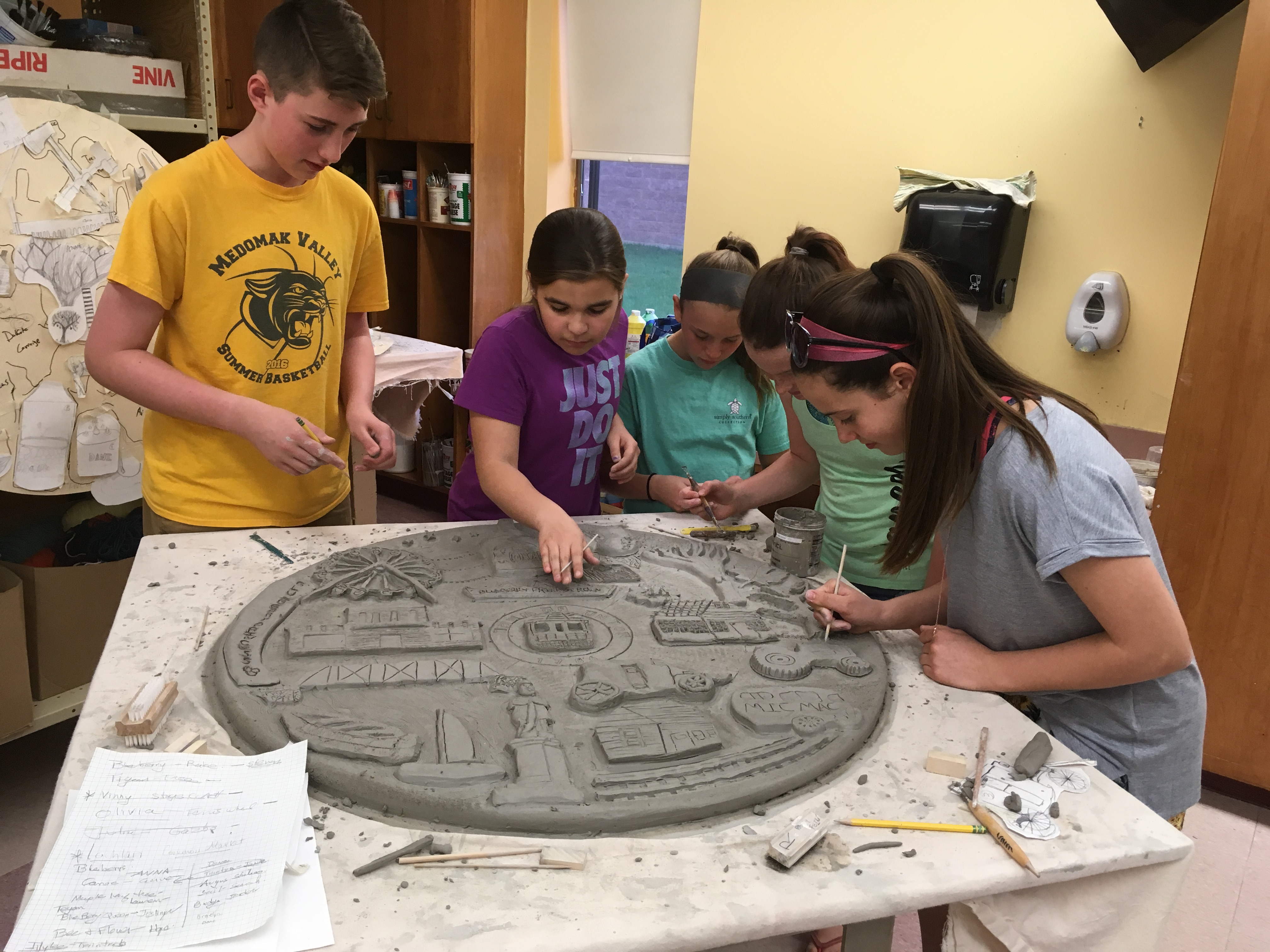 We hope that students have created a connection to this project whether through working with Randy, working on something of this scale, or with the subject matter they helped to generate. The emphasis of the project, both to make it happen, and to create the cross-curricular connections have transformed the normal schedule and so that alone may also have had an effect on student perception. Hopefully, students will recall the information learned through this process by being a part of it and by seeing it regularly throughout their elementary experience. With the nature of being an installation piece, it will hopefully remind students of the experience, give them a sense of pride in the work they were able to accomplish, and help scaffold future learning and understanding about art and the connections to community and environment. I think that students will become more aware of the opportunity this project has been as we get back into a more routine schedule again. I think that they will begin to recognize the hard work and time it takes to create something like this. I anticipate them to say in the next few years, “I did that,…its represents…”.
 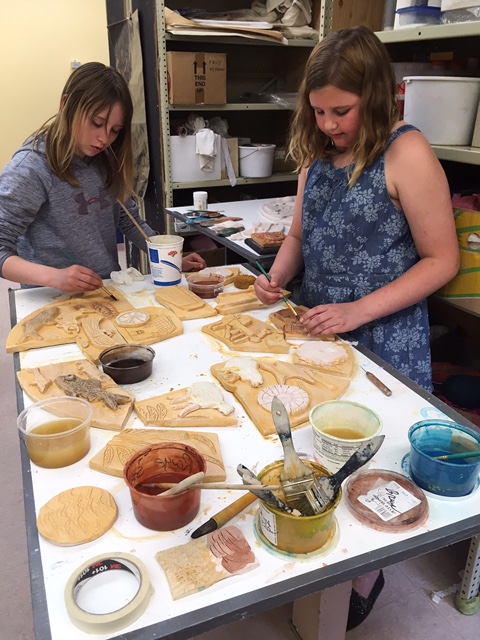 Hopefully, they will appreciate the opportunities they have had to work on something for extended periods of time with direct instruction from both Randy and myself. Hopefully, they will appreciate and help advocate for these opportunities in the future.
 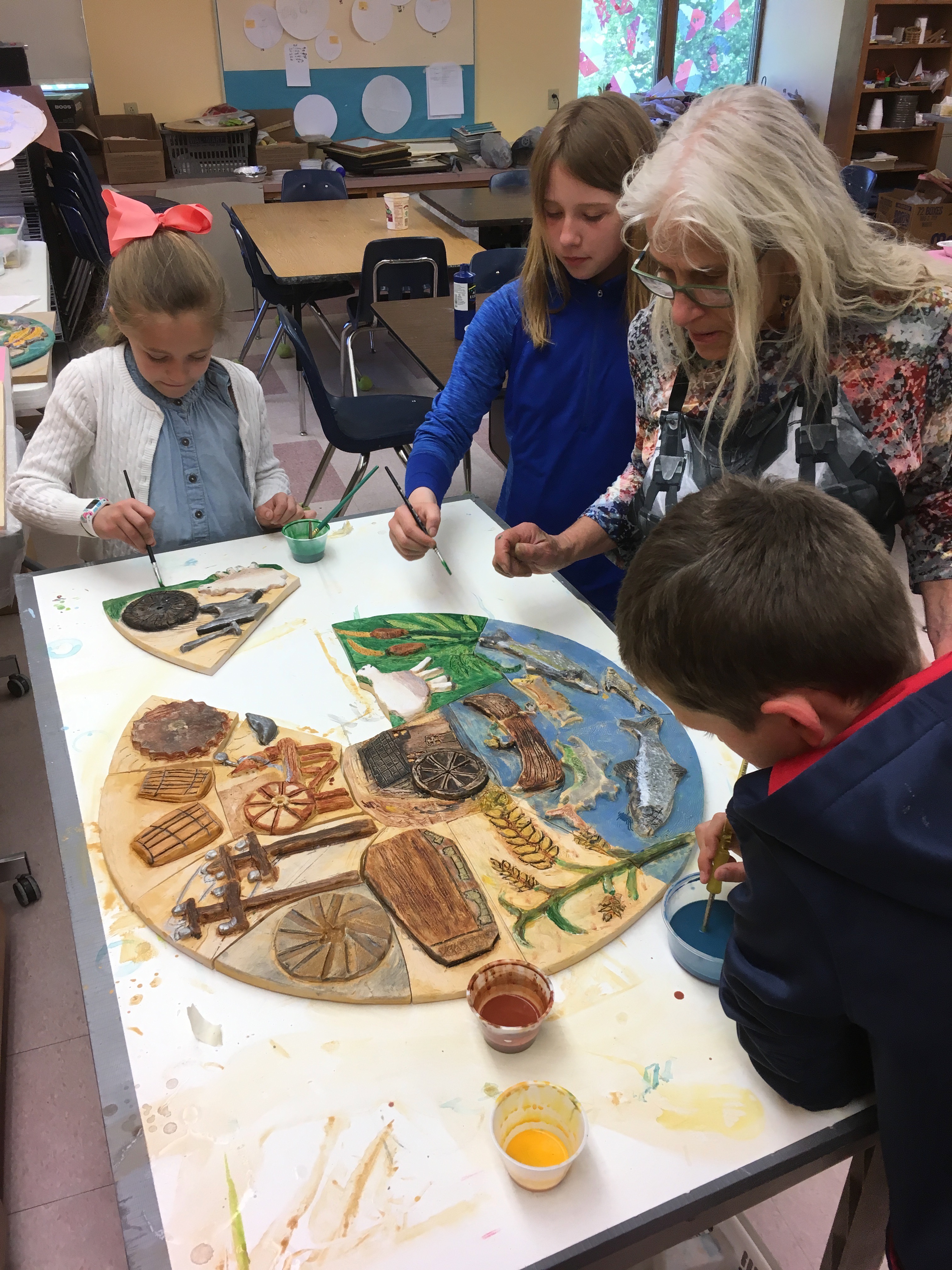 found along the St. George River. Another talked about the dam at Morgan’s Mills. Many younger students also connected with their organisms whether from personal experience or from experiences by family members. I was surprised at how many had seen a bear! They definitely like to elaborate but there are clearly past events that could be the basis for some good folk lore.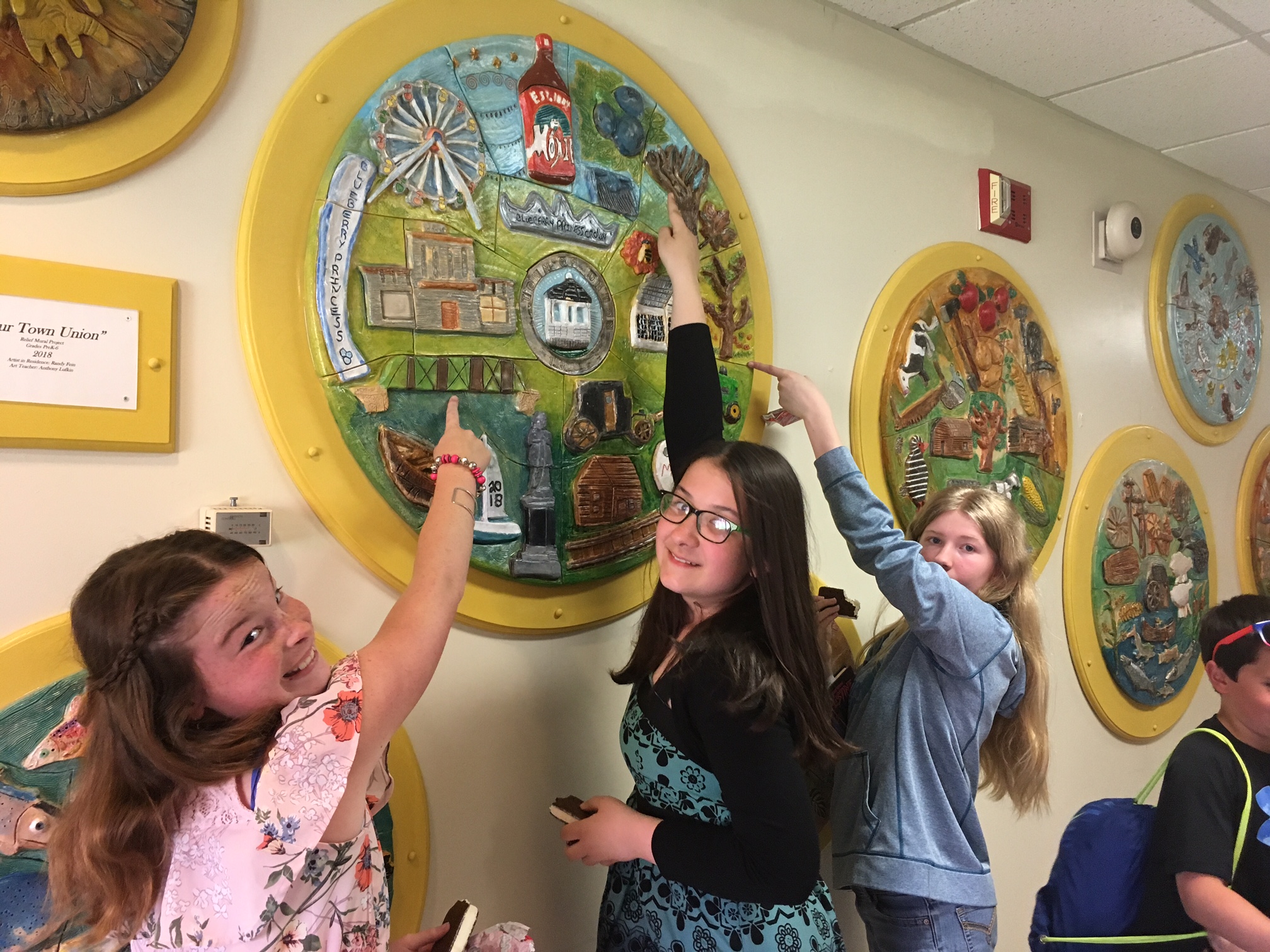












 me arts ed