Archive for January, 2019

h1

Call for Presenters

January 20, 2019

Spring conferences

The annual Maine Art Education Association (MAEA) Spring Conference is just around the corner and they are looking for presenters. Saturday, 6 April, Belfast Area High School is hosting.

Interested in presenting? CLICK HERE and complete the form. Wondering what workshops were included in 2018? CLICK HERE.

The Maine Music Educators Association is hosting their annual conference on May 16 and 17. If you are interested in presenting please submit your proposal by CLICKING HERE
h1

In Today’s News

January 19, 2019

Art in Education Triangle – Maine, Malawi, Helsinki

Article written by Dagney C. Ernest, for Village Soup, January 16, 2019. “We teach because the future belongs to learners.” CLICK HERE to read Dagney’s article about Lindsay Pinchbeck and Argy Nestor’s trip to Helsinki and the connection between Maine, Malawi, and Helsinki.

h1

New International Resource

January 19, 2019

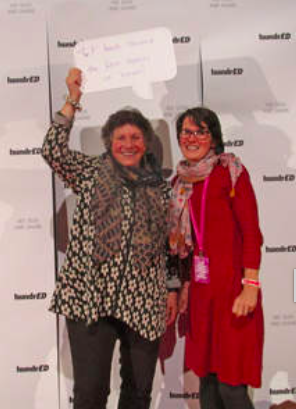
ARTS EDxchange

Americans for the Arts is home to the International Arts Education Research and Resource Exchange – or ARTS EDxchange – a digital platform fostering engagement and collaboration between arts educators and practitioners from around the world. Open to Americans for the Arts members and non-members alike, ARTS EDxchange is the first international arts education listserv, allowing subscribers the opportunity to share their work with a global audience and access resources on the cutting edge of arts and cultural education. Learn more.

This is the first-of-its-kind international arts education listserv, allowing subscribers the opportunity to share their work with a global audience and access resources on the cutting edge of arts and cultural education.

You can sign up for ARTS EDxchange here and please share with others!

h1

Maine Teacher of the Year

January 18, 2019

Looking to 2020

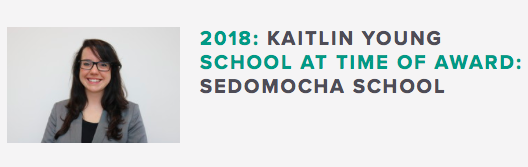
2018 Maine State Teacher of the Year, Kaitlin Young, Music Educator

Every outstanding teacher knows someone who would make a great representative for education. The person who teaches down the hall or at another grade level or perhaps someone you’ve watched from a distance at district workshops. Whoever it is, do they inspire students, plant seeds for their colleagues, and/or take on leadership roles with a clear voice? Here is your chance to honor them and communicate how important they are to the profession. Consider nominating them for the 2019 County Teacher of the Year. If they are selected they will be considered for the honor of 2020 Maine Teacher of the Year.

NOMINATION

Teachers may be nominated by students, parents, teaching colleagues, principals, superintendents or anyone from the community who wants to honor an outstanding educator. 

Publicly recognizing outstanding teachers encourages students to think about teaching as a career, and provides the community a sense of pride and investment in their teachers who are making a positive impact on student’s lives every day.

To nominate an outstanding teacher as a 2019 County Teacher of the Year CLICK HERE!

Deadline: MONDAY, 4 FEBRUARY 2019, 5:00 p.m.

About the Teacher of the Year Program

The Maine Teacher of the Year program starts with your nomination!
To be considered, the teacher must:

  • Hold the appropriate professional certification for their teaching position;
  • Be employed by a Maine public school, including a Career and Technical Education center, public charter school; or be employed by a publicly supported secondary school (a private school that enrolls 60 percent or more publicly funded students, sometimes referred to as “town academies” and
  • Have been teaching for a minimum of 5 years – 3 of which are in Maine.
  • Be actively teaching students at least fifty percent of full-time employment at the time of nomination and during the year of recognition.
  • Not have been a County Teacher of the Year within the past 5 years.  

From those nominees, one exemplary teacher from each of the 16 Maine counties will be selected as a 2019 Maine County Teacher of the Year. From the 16 County Teachers of the Year, 8 semi-finalists are selected. The field is narrowed to 3 state finalists, one of whom will be announced as the 2020 Maine State Teacherof the Year at a surprise school assembly in the fall of 2019.

The Maine Teacher of the Year program is administered by Educate Maine in partnership with the Maine Department of Education. The Maine State Teacher of the Year represents Maine at the national level and becomes eligible for the National Teacher of the Year award.

Please contact Dolly Sullivan at Educate Maine if you have questions or want more information on the process.

Please don’t miss this opportunity to honor and recognize a great Maine Teacher!

DEADLINE: 4 FEBRUARY 2019

h1

Human Rights Speak Truth

January 17, 2019

Robert F. Kennedy Video Contest

“THE GREATEST VOICE IS THE VOICE OF THE PEOPLE – SPEAKING OUT – IN PROSE, OR PAINTING OR POETRY OR MUSIC; SPEAKING OUT – IN HOMES AND HALLS, STREETS AND FARMS, COURTS AND CAFES – LET THAT VOICE SPEAK AND THE STILLNESS YOU HEAR WILL BE THE GRATITUDE OF MANKIND.” ~Robert F. Kennedy

Robert F. Kennedy

Middle and high school students are invited to create short videos that highlight the work of a human rights defender. Year 8 for this opportunity is available from a partnership with the American Federation of Teachers and the Tribeca Film Institute. In creating these short videos, whether they be documentaries, narrative films or digital photo essays, students not only learn about human rights, but also become champions of change and social justice.

Submissions are judged by a panel of film industry experts, actors and educators, and contest winners will have their films premiered at the Tribeca Film Festival in New York City. You can learn more on the contest website at THIS LINKFind the guidelines for the contest and see examples of work submitted from the last seven years. DEADLINE: February 17, 2019.

h1

Greely Center for the Arts

January 16, 2019

Grand Opening – you’re invited!

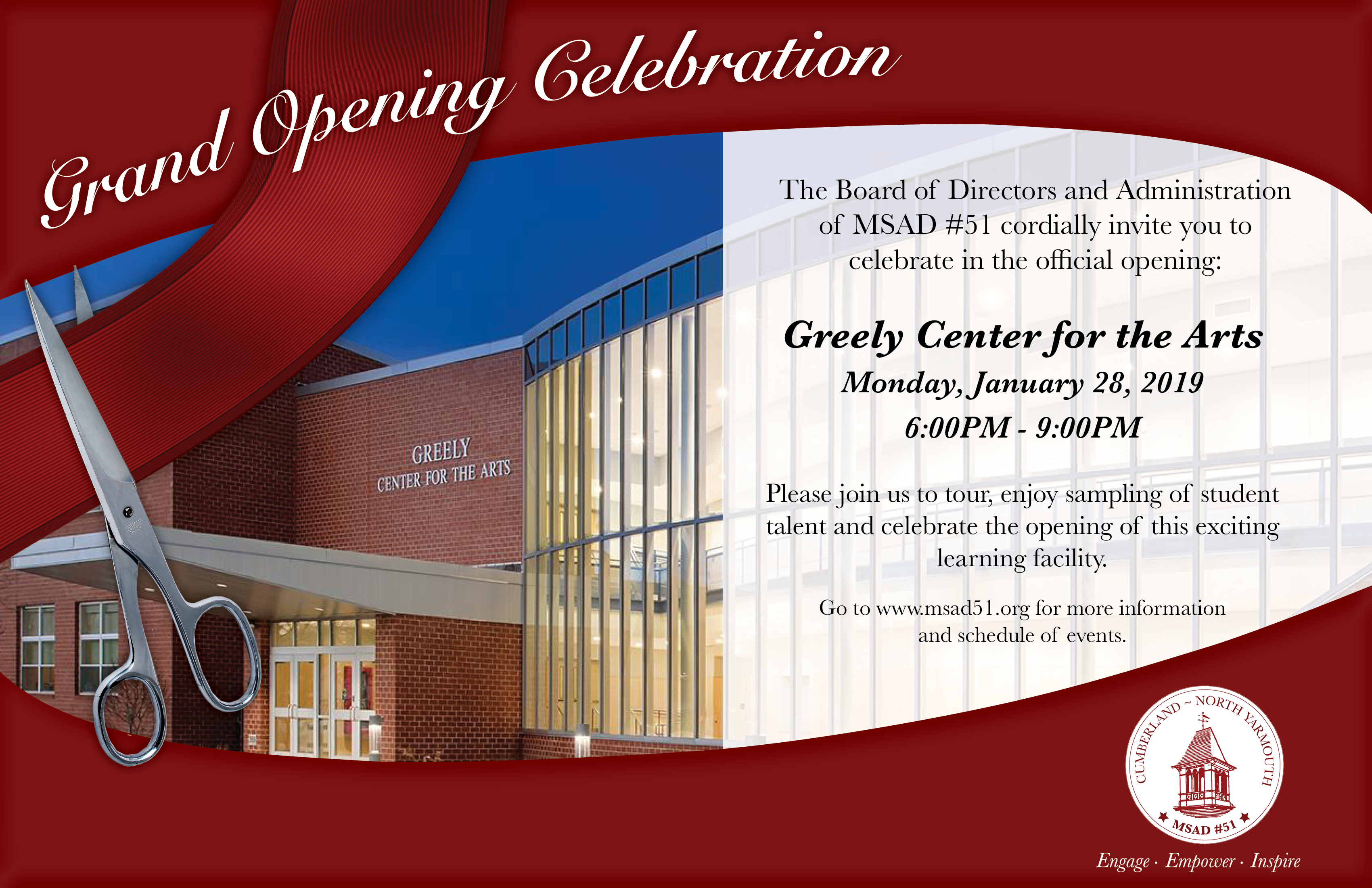
On Monday, January 28, 6:00 – 9:00 p.m. you’re invited to attend the grand opening of the Greely Center for the Arts. MSAD #51 is proud to share in their celebration – join them for a tour, student’s sharing their talents, and to celebrate the opening of their new learning facility. FOR MORE INFORMATION!

h1

In Today’s News

January 15, 2019

Sarah Orne Jewett House

Once again the Sarah Orne Jewett House is collaborating with schools in the Berwick area. This time two high schools; Berwick Academy and Marshwood High School. Read about what’s happening at THIS LINK

h1

Invite a Legislator to School Month

January 15, 2019

Every teacher in Maine

The message below is from Maine Teachers of the Year, Shelly Moody (2011) and Kaitlin Young (2018). They’re following through with an initiative that Kevin Grover started before he died in 2012.

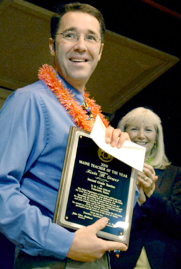
Kevin at the surprise announcement for the 2010 Maine Teacher of the Year.

Many of you may not have had the pleasure of meeting Kevin Grover, our 2010 Maine Teacher of the Year. Kevin made a connection with every person who was fortunate to cross his path. He had a deep commitment and love of teaching that inspired all of us who were blessed to know him.

Kevin created “Bring Your Legislator to School Week” with a goal of engaging, enlightening and informing policy makers from our local or state government. His intent was to provide school board members and legislators with a better understanding of how their decisions affect learners and educators across the state of Maine. In 2013, Representative Mary Nelson of Falmouth and Educate Maine moved forward with Kevin’s vision by sponsoring LD 822 in his honor.

Although it has been almost 6 years since LD822 established January as Invite Your Legislator to School Month, the Maine State Teacher of the Year Association believes that that it’s time for us to return to Kevin’s vision.  Our goal is to begin an annual tradition of inviting stakeholders into our schools to meet with teachers, administrators, and students. It is our hope that this experience will strengthen the relationships between all parties, promote increased knowledge, and initiate productive conversation surrounding prekindergarten to grade twelve public education programs.

The following is an excerpt from a letter Kevin sent to his colleagues regarding his idea:

Yes, that’s Grover in the photo with Kevin and Vice-President Joe Biden during a visit to Washington, D.C. as the 2010 Maine Teacher of the Year.

I propose that teachers contact local town councilors, school board members, state representatives and federal representatives. Elected officials should be invited to spend at least one hour in a classroom helping and/or observing. It is not a time for a panel discussion, whole school assemblies in honor of prestigious guests or catered lunches, it is time for sitting in on a math lesson, reading to students, or joining teachers on their 20 minute lunch break at the photocopier. It is time for a dose of reality.

Let’s join together and start 2019 by building bridges with the decision makers who impact our students and schools!

For more information, please visit our Invite Your Legislator to School Month collection of resources and/or resources from our session presentations at ECET2ME and MEA Fall Conference! CLICK HERE to find your Senator or Representative. 

h1

Arts Accessibility

January 14, 2019

What does it mean?

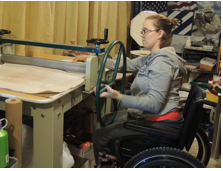
This post is reprinted with permission from Shawna Barnes’ blog located at THIS LINKShawna is a Teaching Artist Leader with the Maine Arts Leadership Initiative (MALi). She is a ceramic sculptor and mixed media artist who loves sharing her passion with others. Shawna is a strong advocate for the arts being accessible to all. She is an Army veteran who served in Operation Iraqi Freedom (OIF 7) from 2009-2010. Shawna lives with several disabilities including myasthenia gravis, cervical dystonia, seizures, hypermobility joint syndrome, peripheral neuropathy, and PTSD. 

Shawna created a survey on arts accessibility which you are invited to complete; access it at THIS LINK

One of the things I talk about a lot is the phrase “arts accessibility” and the fact that I am an advocate for it. In discussions with colleagues and friends, I realized that it isn’t really a clear term. This point was driven home even further when I included the question “What does arts accessibility mean to you” in a survey I shared asking for feedback regarding educators’ struggles with arts accessibility in the classroom/studio. So I figured I’d take some time and provide an overview on all the different possible definitions of arts accessibility and what it means to me.

Arts Accessibility – Definition #1

For me, it started when I was exploring different opportunities for artist residencies, workshops,  and seminars. As someone with mobility impairments, I always had to ask if the facility was accessible. No…….handicap accessible, not accessible from the highway. One of the things I discovered was that most of the facilities are not friendly or easy to navigate for those of us who have any type of mobility impairment/disability. This was a discovery made long before I became a teaching artist leader with the Maine Arts Leadership Initiative; it was then, however, that arts accessibility became my pet project. I was disappointed and downright bummed out about missing out on some amazing learning opportunities because the studio spaces were on the second floor of an old barn with no elevator access… or down several flights of outside stairs down the side of a cliff…or lacking any sort of climate control (air conditioning or heat source). And those barriers were from just a few of the locations I looked at locally. The facilities themselves are spectacular and amazing; drawing high caliber artists and professionals from around the world… This is just one example of what arts accessibility could look like – the most literal definition of the phrase – physical accessibility to a facility.

My disabilities are acquired; I was not born with them.  As a result, I am acutely aware on all the amazing things I am missing out on as a result. That FOMO (fear of missing out) is real ladies and gentleman, and the sting is one that is ever present. I quietly made it my mission to let the administrators of these facilities know that I was deeply saddened to be missing out because the facilities were not accessible. Some enlightening and hopeful conversations have been had as a result of this dialogue.

Arts Accessibility – Definition #2

Another quite literal definition of the term is actually having access to the arts. This includes students having access to art classes at their school, having nearby museums or art studios to attend, local theaters and dance halls, et al. There was a big focus on STEM curriculum, and as a result the creative arts saw a lot of cuts in Prek-12 curriculum. Recently however, administrators, educators, and clinicians are acknowledging the importance art has in youth development. This re-discovery has transitioned STEM curriculum to STEAM with the A standing for the arts. There are still many students who do not have the opportunity to take an art class – either one offered as part of their daily curriculum OR after school activities. This access barrier extends well beyond academic and includes all people who have interest in learning more about a topic in art.

Arts Accessibility – Definition #3

A third definition of “arts accessibility” is one of economic hardship. Learners of all ages who live in impoverished communities lack the financial means to be able to explore the creative arts. In areas where art and band are still offered as part of the middle/high school curriculum it’s less of an issue; at least they have the exposure to a creative outlet. However for others where these classes are not available, lacking the financial ability to enroll in after school classes at studios or arts organizations is a barrier. Economic barriers prevent access… which leads me to my next definition…

Arts Accessibility – Definition #4

Accessibility to the arts could have nothing to do with infrastructure and everything to do with the abilities of the staff. For adults and children with a wide range of developmental disabilities, the physical access definition is less important than having access to teachers who are able to meet them where they’re at. What I mean by that, is that for many in this demographic, teaching/leading them through an art class takes considerable patience and an understanding of how their brain functions. When families find artists/educators who ARE qualified and adept at working with these populations, the financial barrier is then factored in. Finding and hiring experienced artists can be expensive.  Investing in custom equipment and tools to allow the student the highest level of engagement in activities can be cost prohibitive.

Arts Accessibility – Definition #5

My fifth and final definition for arts accessibility, is one of the psychological variety. It has everything to do with the possible/potential student. The commonly accepted definition/understanding of creativity is that it’s something artists have. If the student feels and truly believes that they just don’t have the skill to create anything worthwhile and thus are defeated before they even try, that is a barrier to access. If it’s one thing I LOVE doing…it’s breaking down this particular barrier to arts access. It is a barrier that anyone can break down and help the student over if the teacher has the right tools in their toolbox.

And there ya have it. Those are MY five definitions of what  arts accessibility barriers could look like. There’s likely more that I haven’t thought of or come across yet. In future posts, I will break down each definition and explain how I personally work towards overcoming the barrier to access. It’s just as much about breaking down the stigma that only artists can appreciate art and reap benefits from a creative outlet as it is about providing opportunities for people to explore activities they’d never considered.

What does “arts accessibility” mean to you? How do you overcome the barriers?

You can follow Shawna at the following: 

www.shawnabarnes.com
www.facebook.com/shawn.n.m.barnes
www.instagram.com/shawna.n.m.barnes

h1

Congratulations Music Educators

January 13, 2019

Two music teachers recognized

Dean Neal

For 20 years band directors from across the country have been nominated to the School Band and Orchestra Magazine for the award titled “50 Directors Who Make a Difference”. Representing Maine this year is Dean Neal, music educator who has taught for 29 years at Maine Central Institute in Pittsfield. Congratulations Dean! Below you can read his story published with the other 49 recipients at THIS LINK.

What is your proudest moment as an educator?

There is no singular moment which compares to the great sense of pride I have in being a part in helping music education become an integral part of the school community at Maine Central Institute. When I first began teaching at M.C.I. in 1990, music classes and ensembles were present, but they had not yet realized their great potential to influence the lives of each person in our school community. Through the joint efforts of K-12 Music Educators, parents and students, music now enjoys being a part of a vibrant arts community which impacts our school and local community in significant ways.

How do you hope to make a difference in your students’ lives?

I hope to give them a voice to express their thoughts, emotions, and creativity through music. Regardless of their chosen instrument be it wind, percussion, voice, piano, string or digital music creation; each student has something to say and something to share through music which is programmed for them or music which they select or create. Effective art has the ability to communicate with people in powerful ways and I am thankful to be a part of bringing that out of our students.

I have a zippered vest which I wear to school most days. On this vest is embroidered a simple three-word phrase “Work in Progress.” I want my students to know that I am a “work in progress,” they are a “work in progress,” the music we study is a “work in progress,” each class is a “work in progress,” and likewise each performance is a “work in progress.” This is not meant to convey a sense of never-ending work but rather the reality that each day brings with it new challenges and new accomplishments. It is exciting to be on the “construction team” of their “work in progress!”

Tom Lizotte

Congratulations Tom Lizotte, music educator from Cape Elizabeth High School! Tom was recently named the 2019 John LaPorta Music Educator of the Year by the Berklee College of Music and the Jazz Educators Network (JEN). Tom will receive his award at the JEN conference in Reno, NV, and at the Berklee High School Jazz Festival.

Thomas Lizotte is an accomplished music educator who has influenced the artistic lives of thousands of students. He is a teacher at Cape Elizabeth High School in Cape Elizabeth, ME. Thomas Lizotte has been in public education for the past 30 years. He is a graduate of the University of Massachusetts, with degrees in music education and wind conducting. He has taught high school in Massachusetts, Connecticut, Florida and Maine. His primary jazz influences have been Dave Sporny, Dave Demsey Paul Alberta, Don Doane and Steve Massey. He is a regular contributor to The Instrumentalist magazine. Long active as a teacher and judge in the marching arts, he is a member of three teaching halls of fame – Massachusetts Drum Corps, Boston Crusaders and Maine Music Educators.

Read more about Tom and his award at THIS LINK!