Archive for the ‘assessment’ Category

h1

Another Arts Teacher’s Story: Theresa Cerceo

February 24, 2015

MAAI Teacher Leaders series

This is the second blog post for 2015 on the Phase 4 Maine Arts Assessment Initiative’s (MAAI) Teacher Leaders sharing their stories. This series contains a set of questions to provide the opportunity for you to learn from and about others. You can learn more about MAAI at http://mainearts.maine.gov/Pages/Education/MAAI# and learn more about all 61 of the MAAI Teacher Leaders at http://www.maineartsassessment.com/#!teacher-leaders/c1qxk.

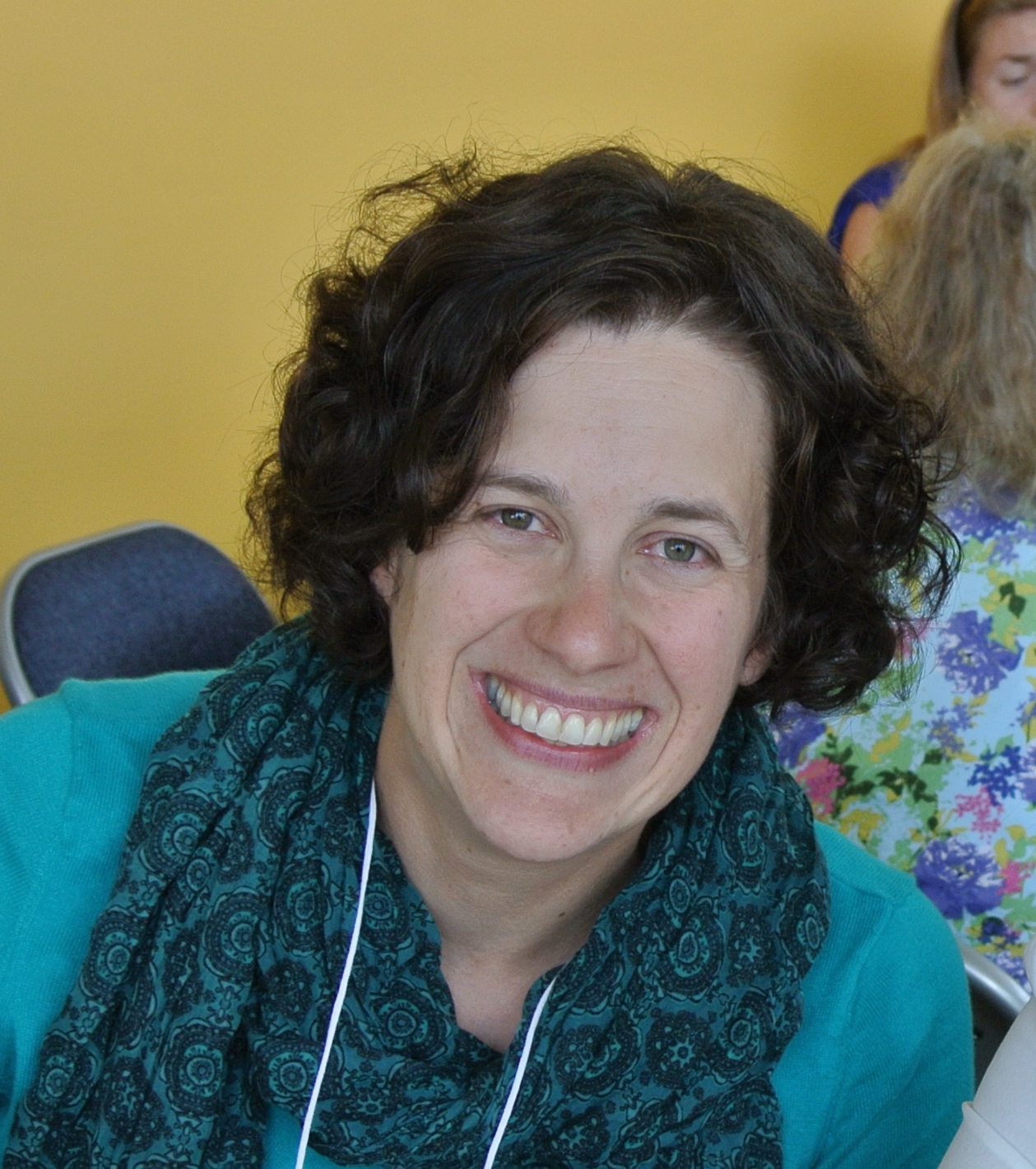
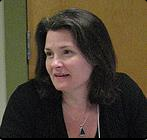
Theresa CerceoTheresa Cerceo is in her ninth year teacheing Visual Arts, K – 12 with MSAD 33 in Frenchville / St Agatha school district. Check on the map, it is WAY UP NORTH! She teaches full time;  I teach full time; middle / high school in the morning (four times a week) and elementary in the afternoon (each class once a week). In addition to teaching art, Theresa is a certified Gifted and Talented teacher and works with students in this capacity for Visual and Language Arts enrichment.  At the elementary level, she helps facilitate Language Arts, Science and Math Skill Seminars as part of the school-wide daily schedule. These seminars occur for 45 minute Monday – Thursday and change topics every two weeks. Also, Theresa serves on the school district’s Leadership Team for Learner – Centered Proficiency-Based Learning. Before moving to Maine in 2006, she lived in (my home town) Philadelphia.  There, she spent some time at Tyler School of Art (Temple University) before receiving a BFA from Rosemont College and an MAT (Visual Arts) from the University of the Arts.  In addition to working for the Main Line Art Center and the University of the Arts as an arts teacher in their children’s weekend and summer programs,  she taught art for 3 years within Philadelphia and the surrounding area at the elementary, middle and high school level.

What do you like best about being a visual art educator?

What I enjoy most about being an art educator is being able to provide an opportunity for students to engage in one of our basic human instincts, to create. I am humbled that I can assist in nurturing a child’s ability to express their unique identity while providing them the knowledge in skills and  techniques so that they may communicate more effectively.

What do you believe are three keys to ANY successful visual and performing arts education?

In addition to administrative support, I believe love and personal commitment for one’s content, assessment supported curriculum, and teacher flexibility are the three keys to providing a successful art education.

How have you found assessment to be helpful to you in your classroom?

Good assessments offer me a tool in which I can communicate with my students regarding expectations and their growth. It allows me to plan for what students need and how they need instruction delivered. This allows me to make their time in my room as individualized as possible.  Students see constructive feedback regarding their thought processes and skills and then, they can set real goals that are meaningful to them. I am finding that this facilitates not only skill and concept development, but a deeper appreciation for their time spent in art class.

What have been the benefits in becoming involved in the arts assessment initiative?

Becoming involved with MAAI has given me the tools and support to establish my voice in my district. By attending Mega-Regionals and then going through the Teacher Leader training I have gained the knowledge base to establish the arts as an academic subject. At the core, what I have gained through MAAI is the knowledge that I am no longer an isolated arts teacher; that I am part of  a large group of educators that believe that the Arts are essential to human development; they understand why and they are committed to strengthening arts education and advocacy for the arts in Maine. This has reinvigorated my passion for teaching as well as my commitment to building the best art program possible.

What are you most proud of in your career?

I am most proud of my personal growth as an educator. Over the years, I have spent a lot of time developing, reflecting and revising my curriculum and it has gone from a basic outline of what I thought was important for students to know (based on my personal experiences as a student and my personal interests),  to a more (teacher – student) collaborative piece that allows for exploration and discovery, reflection and personal goal setting. The most important thing I have learned, and I am still developing is flexibility in terms of instruction. A concept may be important for all students to get, but the way I deliver it might change from class to class depending on their readiness level, learning styles or even time constraints. I strive to treat students as individuals and to allow the art room to be a place where they can make personal connections to the materials and techniques offered and feel safe to make mistakes and to grow. Although this was always my theory about how an art classroom should run, it took me time and a lot of reflection and revision in order to reach a place where I can feel I am closer to this goal.

What gets in the way of being a better teacher or doing a better job as a teacher? 

I think we can often get in our own way through self doubt or rigidity in our thinking. I realize now, I used to act as though students should be the kind of student I was or should care about the subject matter I find important. Teaching through this paradigm produced some success but not much growth or the overall “ love for the arts” I was hoping to foster. By surveying students, hearing other teachers, reflecting, and trying new ideas, I feel I learned a lot about myself and how to be a better teacher.

What have you accomplished through hard work and determination that might otherwise appear at first glance to be due to “luck” or circumstances? 

I am not sure. I guess I believe luck can only get you so far. For real success to happen, hard work and determination has to be part of it.

Look into your crystal ball: what advice would you give to teachers?

My advice is; do what you know is right, honor your natural instincts and let your classroom be a reflection of who you are and how you want the world to be.

If you were given a $500,000.00 to do with whatever you please, what would it be?

If the money went to my classrooms, I would build a ceramics studio at both schools.  If it was for me to use personally,  I’d get an RV and travel around all the parts of the US I have never seen and/or start an arts center.

Imagine you are 94 years old. You’re looking back. Do you have any regrets? 

No, I believe all the parts of our journey offer learning experiences to help us evolve.  And, as we go through the various ins and outs of our life, we influence and are influenced by those around us.   As long as we keep learning from our mistakes, working positively and honestly toward our goals, there is nothing to regret.
 MAAI Logo_Color_TxtCtr

h1

Visual Arts PD Opp

February 21, 2015

Professional development opportunity for visual art educators 

An invitation from Catherine Ring, Ex. Director, New England Institute for Teacher Education

I’d like to personally let you know of a special opportunity coming up right in Augusta, starting MARCH 14 — a 3 credit course on Visual Art Assessment, K-12.  The course will meet for two weekend sessions, March 14 and May 9.

You might wonder, how can I add this to my already full plate?  Is Assessment really necessary, or even possible, in an art room when I see so many students?  It really doesn’t matter where you are on the Assessment bandwagon — both experienced and teachers new to assessment in visual art classrooms have taken this course. There’s always more to learn, and this course gives you the time to talk and learn and try things out — imagine that!

You’ll be surprised at how much art teachers learn from each other – and that’s just what we do! We share resources that arts educators have created or discovered through the Maine Arts Assessment Initiative, ask hard questions, problem-solve, try some things out in our classrooms, and figure out what we CAN do in our very busy schedules to help improve teaching, learning and assessment.  The course meets for two weekends only – Friday night (4-8pm) and Saturday (8-4pm) with weekly contact with the instructor, in between.

Screen Shot 2015-02-16 at 4.33.54 PMWe’re especially delighted to announce that Lisa Ingraham will be teaching the course for the New England Institute this spring. Lisa has taught Visual Art for ten years and has been a Teacher Leader in the Maine Arts Assessment Initiative since 2013.  She has a BA in Graphic Design and Illustration from Western Connecticut State University and a MS in Education from Thomas College. Lisa has collaborated with other visual and performing arts teachers from around the state of Maine in reflecting on assessment and designing professional development presentations for regional workshops. Lisa is currently the Secretary and Advocacy Co-chair for the Maine Art Education Association, and is working toward her endorsement in Gifted and Talented Education.

So come join us and find out what’s happening in Maine with assessment in visual art, and with meeting proficiency in the art room. You will be excited to know that arts educators are leading the way and other educators are following suit.  Here are the details:

EDPO 536: Refining Assessment in the Visual Art Classroom, K-12

Augusta, Maine (Viles Arboretum)

Session 1:  Saturday (8-4pm), March 14

Session 2:  Saturday (8-4pm) May 9

This course meets for both sessions

You can choose to take this as a graduate course through our partnership with Endicott College, or for recertification credits for 4.5 CEUs. We can bill your school directly with a purchase order, or are happy to make payment arrangements.

To register, please visit the New England Institute website at www.newenglandinstitute.org. If you have any questions at all, pick up the phone and call me any time, or email me.

Thank you! We hope to hear from you!

Catherine Ring

Executive Director

New England Institute for Teacher Education

PO Box 460

Stonington, Maine 04681

207-367-5807

newenglandinstitute@gmail.com


h1

Another Teacher’s Story: Kate Smith

February 17, 2015

MAAI Teacher Leader series

This is the first blog post for 2015 on the Phase 4 Maine Arts Assessment Initiative’s (MAAI) Teacher Leaders sharing their arts teachers’ stories. This series contains a set of questions to provide the opportunity for you to learn from and about others.  You can learn more about MAAI at http://mainearts.maine.gov/Pages/Education/MAAI# and learn more about all 61 of the MAAI Teacher Leaders at http://www.maineartsassessment.com/#!teacher-leaders/c1qxk.

Screen Shot 2015-02-16 at 3.58.23 PMKate Smith is an elementary music teacher at Central Elementary School in South Berwick where she teaches 400 students in PreK through third grade. PreK students receive half a year of music, 30 minutes a week. Kindergarten receive 30 minutes a week and First through Third Grade receive 50 minutes a week. Kate also offers second and third grade chorus during January and February for 30 minutes a week. Prior to teaching at Central, Kate was the Music Director at Presentation of Mary Academy, a private all-girl high school in Methuen, MA. Kate received her bachelor’s degree from USM in 1998 and her Master’s in Technology in Education from Lesley University in 2011. Kate is the Outdoor Classroom Coordinator at her school and the 2014 York County Teacher of the Year and the 2015 District 11 VFW Teacher of the Year.

What do you like best about being a music educator?

The joy on the children’s faces each day as they experience music in its many forms.

What do you believe are three keys to ANY successful visual and performing arts education?

  1.  Highly trained passionate and effective educators.
  2.  A well planned curriculum with meaningful objectives
  3.  Support from the administration, staff and community. Support should come not only in the form of adequate funding but also through parent involvement and authentic opportunities for collaboration and integration with peers. The Arts MUST have a place at the table.

How have you found assessment to be helpful to you in your classroom?

Assessments tell me where we are and inform my next destination. Without them I am left to guess (or worse, assume) that students understand and can perform the content. Frequent assessment assures me they still remember or allows me to fill in the gaps. I refer to my favorite form of assessment as “dipstick” assessments, kind of like checking the oil in your car. Quick, easy and essential. Student centered assessment and proficiency based assessment mean the kids know I am with them to the end. I am going to differentiate until I find the right method for their learning style and I am not going to quit until they have met their objectives.

What have been the benefits in becoming involved in the arts assessment initiative?

There are so many benefits!!! For one, the teacher leaders are like one big family. Everyone is incredibly helpful and supportive. There are many readily available resources through the initiative that take the guess work out of creating authentic, effective assessments. Best of all, it is a “Judgement Free” Zone. Everyone realizes no journey is the same. We have all received vastly different levels of professional development through our individual districts, and that’s okay The point is to move forward from wherever you find yourself through the arts assessment initiative.

What are you most proud of in your career?

My students. My growth as a teacher too. I am constantly learning and willing to take risks.

What gets in the way of being a better teacher or doing a better job as a teacher?

Isolation. We are often the only music, art or drama teacher in our building. It’s really important that we find ways (and time!) to observe each other, collaborate with each other and share resources. Technology can make this possible, but we have to be willing to take risks, step out of our comfort zones and open ourselves to opportunities for powerful collaboration and personal reflection.

What have you accomplished through hard work and determination that might otherwise appear at first glance to be due to “luck” or circumstances?

Relationships and connections. These include community members, parents, staff, local businesses, our education foundation, local musicians, artists and past and present students.

Look into your crystal ball: what advice would you give to teachers?

Drink water. Eat breakfast. Go for walks. Build a PLC (personal learning community) comprised of exceptional Arts teachers . Read for pleasure. Go on vacations or staycations. Rest. Remember, you need to be at your best for these kids, they deserve it.

If you were given $500,000.00 to do with whatever you please, what would it be?

I would split it three ways-

  1. a donation to our local education foundation
  2. establish after-school Visual and Performing Arts classes, Culinary Arts programs, and Gardening classes for South Berwick residents ages 3-103.
  3. a donation to Copper Cannon Camp, a free fresh air camp for underprivileged children, located in Bethlehem NH.

Imagine you are 94 years old. You’re looking back. Do you have any regrets?

I am a visionary. We don’t look back. My grandparents never stopped making a difference in other people’s lives. Even in their 90s. I intend to follow in their footsteps.

DSC_0107 - Version 2

MAAI Logo_Color_TxtCtr

h1

“Stuff” Happens

February 10, 2015

What’s happening

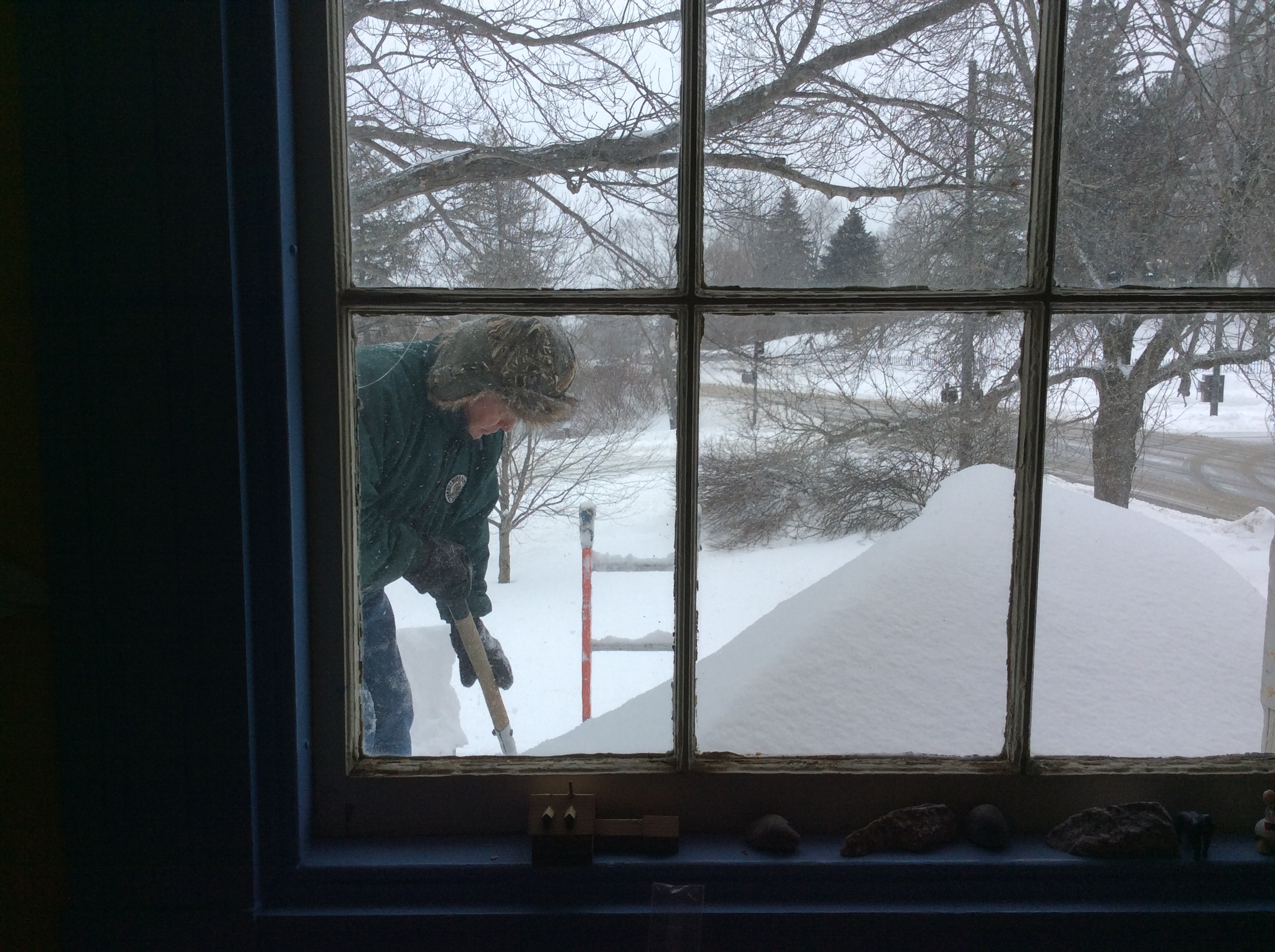
photoSometimes “stuff” happens that I didn’t see coming which cause me to pause. Yesterday that happened when I noticed a man standing on the roof outside of my office window. I wondered about the angle of the roof and his safety. I thought about how much snow had accumulated on the small angled roof as he shoveled while snow continued to land on his head and shoulders. As he went about his work, my work was stopped. I couldn’t help but smile at the snow and also think ahead to the next season(s).

Also, yesterday I was forced to pause and reflect on some of the highlights of the research that the Maine Arts Commission has underway. As many of you know during the last several months the Maine Arts Commission has been surveying Maine citizen groups to create a Maine Arts and Culture plan. One of our surveys was just for visual and performing arts teachers and 284, representing PreK-12 evenly, completed it – THANK YOU VERY MUCH!

This is one of those times that I am pausing to consider the feedback from arts educators who took the time to complete the survey to help determine the direction of Maine Arts Education. I thing the following pieces of information learning from the survey might be of interest.

  • The majority have taught for more than 10 years with 72 teaching 10 years or less
  • Almost everyone has heard of the Maine Arts Assessment Initiative and over 100 have utilized the resources that MAAI provides
  • Almost 150 have participated in professional development opportunities that MAAI has provided
  • On a scale of 1-7, 117 said that they are somewhat to highly prepared to teach in the proficiency-based education system

The following are quotes from two participant answering the question: How has what you’ve learned from MAAI affected their teaching and/or assessment practices?

It’s made me narrow better what I’m teaching and want my students to learn. I’ve been more collaborative with other teaching professionals. It has also reminded me what my personal professional beliefs are valid in holding students to higher standards and working them towards that common goal.

These experiences have made my teaching even more student -centered, which is a direction all Maine schools should be headed.

As you consider participating in the MAAI please know that we have Mega-regional workshops being offered throughout the state during the next three months. Details, descriptions, and registration can be found by clicking here https://mainearts.maine.gov/Pages/Education/MAAI-Mega-Regionals-2014-2015.

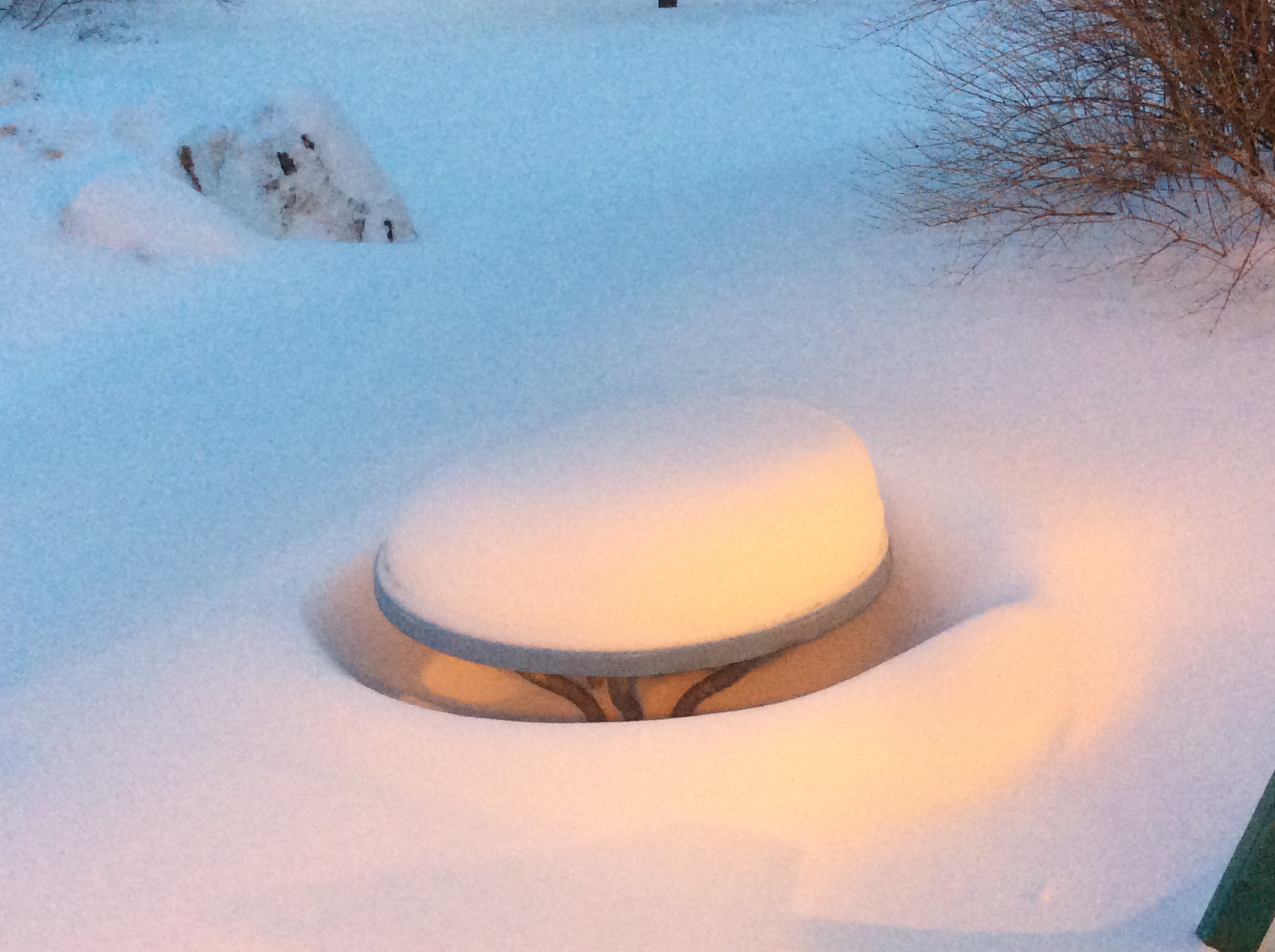
tableAt the end of the day, as the light was dimming and I was leaving the office, I pulled out my ipad and took photos of the picnic table near the back door of the Maine Arts Commission. As my colleague said earlier in the day, it looks like a dessert. The State House loomed up in the background and I was reminded of the importance of stopping to reflect about how fortunate I am, even on challenging days!

photo1


h1

Best Art Blogs

February 9, 2015

According to the Art of Education

Screen Shot 2015-01-30 at 8.29.23 AMMany of you are familiar with the work of Jessica Balsley with Art of Education (AOE) and the outstanding work they do providing a variety of information on their blog.

Among one of the annual offerings the AOE provides is a contest to determine who has the best Art education blogs. On January 25 the results were posted. You can read all of the details and check out the blogs selected by clicking here.

Four categories for the best blogs
1. Best Elementary Art Ed Blog
2. Best Secondary Art Ed Blog
3. Best Rising Star Art Ed Blog
4. Best Wild Card Blog

It is great to follow some of these blogsters to see what they are doing with curriculum, assessment, teaching and learning in their classrooms in other parts of the country.

Screen Shot 2015-01-30 at 8.29.12 AM

h1

Certification

February 3, 2015

Opportunities for contact hours

Last week the paperwork arrived from the Maine Department of Education Certification office informing me that it is time to resubmit paperwork and a check to continue my certification for another five years. I was a bit nervous since I am not in a school district with a certification committee to help guide me if I have any questions. I read through the paperwork three times just to be sure I understood all that I had to do.

I dragged out my portfolio where I file my proof of contact hours and CEUs looking for the magic “90” hours. I stacked them in order and copied them highlighting the hours so it would be easy to get a total. I was surprised to learn that I had over 200 contact hours.

Periodically I receive desperate emails from teachers asking if I know of any professional development opportunities since they’ve received the same envelope that I did and that they don’t have enough hours. Quite frankly, I am not sure how, in this day and age, someone can not have enough!

For example, the Maine Arts Assessment Initiative (MAAI) is offering five professional development opportunities during this school year throughout Maine.

MAAI Logo_Color_TxtRtMAAI MEGA-REGIONAL WORKSHOPS
Details and registration information is available at http://mainearts.maine.gov/Pages/Education/MAAI-Mega-Regionals-2014-2015#. Each site has different offerings and you can attend one or more.

The cost is $25 and 5.5 contact hours are offered.

I made that last part nice and large so you can see the contact hour offering quite clearly.

Locations and Dates

Schedule for each Mega-regional

  • 8:15 a.m. Registration begins
  • 8:45 a.m. Opening Session and Morning Workshops
  • 9:10 – 10:20 a.m. Breakout Workshop Session I
  • 10:20 – 10:30 a.m. Break
  • 10:30 – 11:40 a.m. Breakout Workshop Session II
  • 11:40 a.m. – 12:30 p.m. Lunch, participants on their own
  • 12:30 – 12:45 p.m. Artist Showcase
  • 12:45 – 2:45 p.m. Session III Large group by Arts Discipline on Proficiency-Based Education and Teacher Effectiveness
  • 2:45 – 3:00 p.m. Closing Session

Maai group 2PM Session

The Arts and Proficiency: What, Why and How?

The afternoon session will be focused around group discussions utilizing key questions on how proficiency (and teacher effectiveness) is being implemented across the state of Maine in our own arts classrooms. Participants will leave with concrete ideas and/or plans to facilitate their own actions. These may lead to breakout sessions to deeper discussions and common concerns. This session will be separated between visual and performing arts teachers.

I hope that you will take advantage of these opportunities to learn from and with your colleagues. Maine has a wonderful network of visual and performing arts teachers who are willing to collaborate and share information. We are so fortunate! Please email me at argy.nestor@maine.gov if you have any questions.


h1

Visual Art Assessment Course

January 21, 2015

Opportunity for learning – from Catherine

Catherine Ring, one of the co-founders of the Maine Arts Assessment Initiative (MAAI), an integral member of the MAAI Leadership Team, former art teacher and principal offers graduate courses through The New England Institute for Teacher Education. Her Visual Art Assessment course is being offered during two weekends in January and May this winter/spring. Details below in a letter from Catherine, along with links to the website with more information. Please contact Catherine directly (contact info below), if you have questions.

Screen Shot 2015-01-21 at 6.10.31 AM

I’d like to personally let you know of a special opportunity coming up right in Augusta, starting January 30 — a graduate course on Visual Art Assessment.

You might wonder, how can I add this to my already full plate?  Is Assessment really necessary, or even possible, in an art room when I see so many students?  And it really doesn’t matter where you are on the Assessment bandwagon — both experienced and teachers new to assessment in visual art classrooms have taken this course. There’s always more to learn, and this course gives you the time to talk and learn and try things out — imagine that!

Catherine Ring

Catherine Ring

You’ll be surprised at how much art teachers learn from each other – and that’s just what we do! We share resources that arts educators have created or discovered through the Maine Arts Assessment Initiative, ask hard questions, problem-solve, try some things out in our classrooms, and figure out what we CAN do in our very busy schedules to help improve teaching, learning and assessment.  The course meets for two weekends only – Friday night (4-8pm) and Saturday (8-4pm) with weekly contact with me, the instructor, in between.

So come join us and find out what’s happening in Maine with assessment in visual art, and with meeting proficiency in the art room. You will be excited to know that arts educators are leading the way and other educators are following suit.  Here are the details:

EDPO 536: Refining Assessment in the Visual Art Classroom, K-12
Augusta, Maine (Specific location to be determined),
Session 1:  Friday (4-8pm) January 30, Saturday (8-4pm), January 31
Session 2:  Friday (4-8pm) May 8, Saturday (8-4pm) May 9
This course meets for both sessions.

You can choose to take this as a graduate course through our partnership with Endicott College, or for recertification credits for 4.5 CEUs. We can bill your school directly with a purchase order, or are happy to make payment arrangements.

To register, please visit our website at www.newenglandinstitute.org. If you have any questions at all, pick up the phone and call me any time, or email me here.

Thank you! Hope to hear from you!

Cheers,
Catherine Ring
Executive Director
New England Institute for Teacher Education
P.O. Box 460
Stonington, Maine 04681

www.newenglandinstitute.org
ms.catherinering@gmail.com
207-367-5807

h1

Make the Trip!

January 14, 2015

Above and Beyond!

MAAI Logo_Color_TxtCtr

Rob Westerberg and Catherine Ring

Rob Westerberg and Catherine Ring

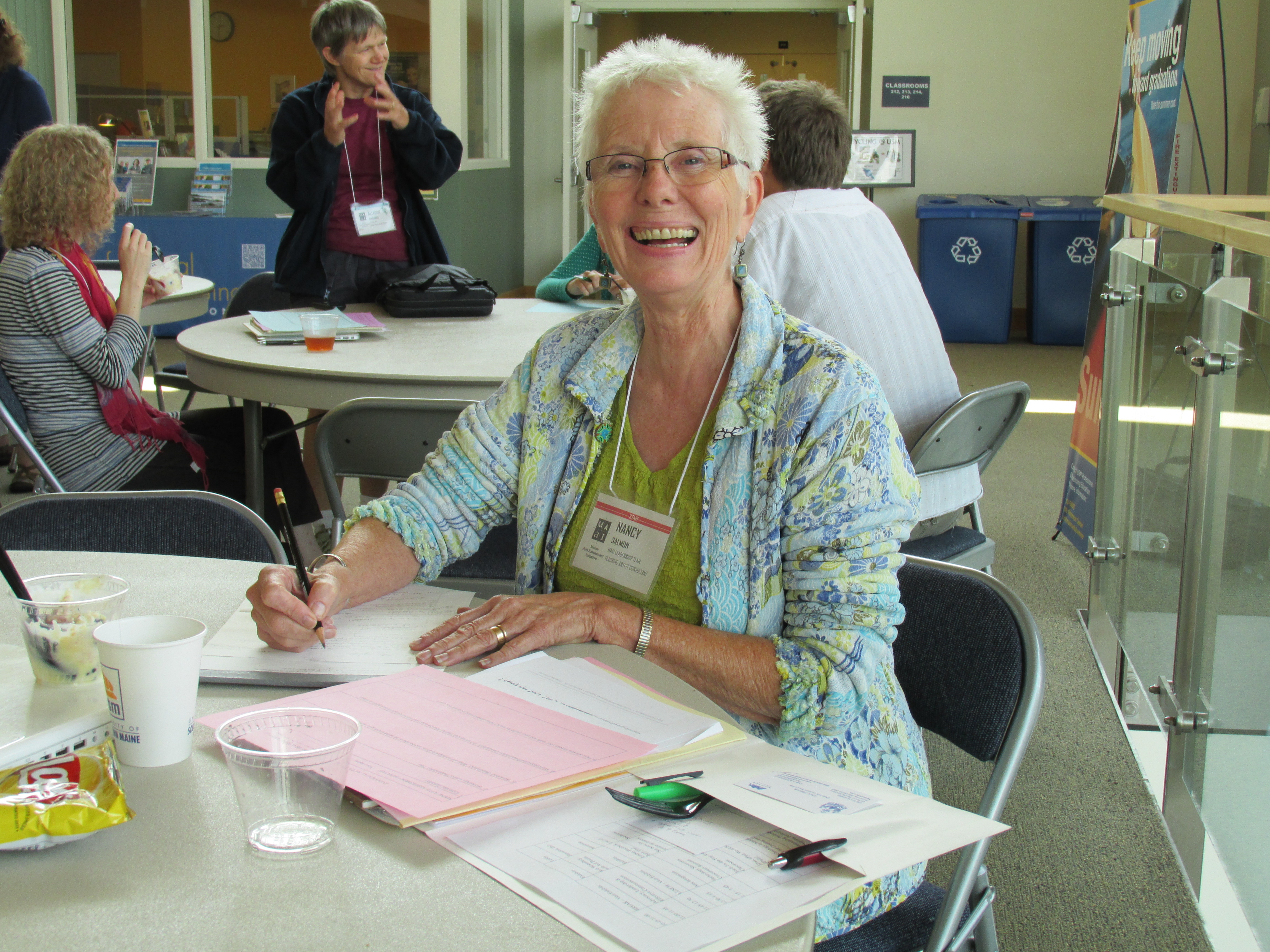
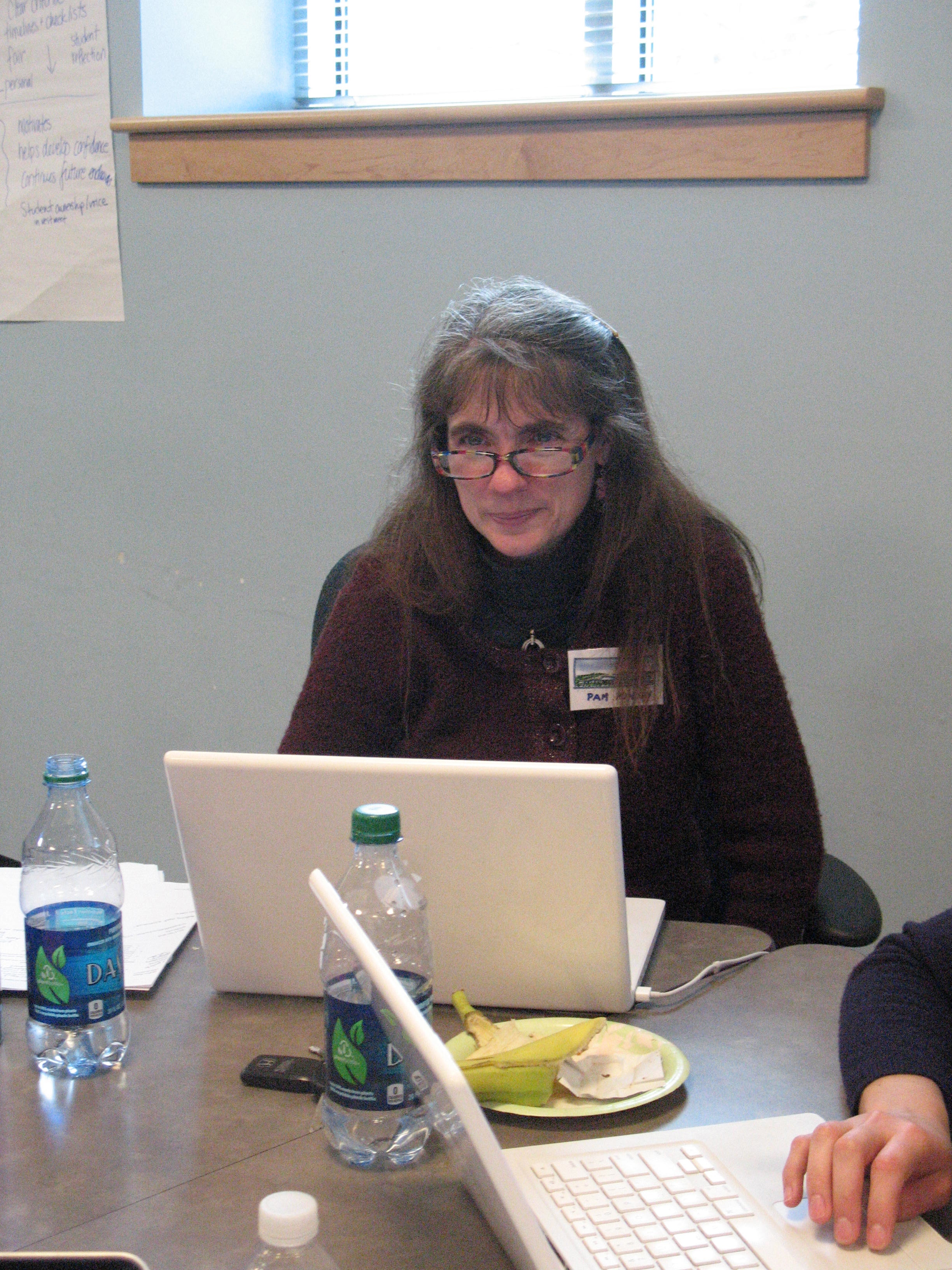
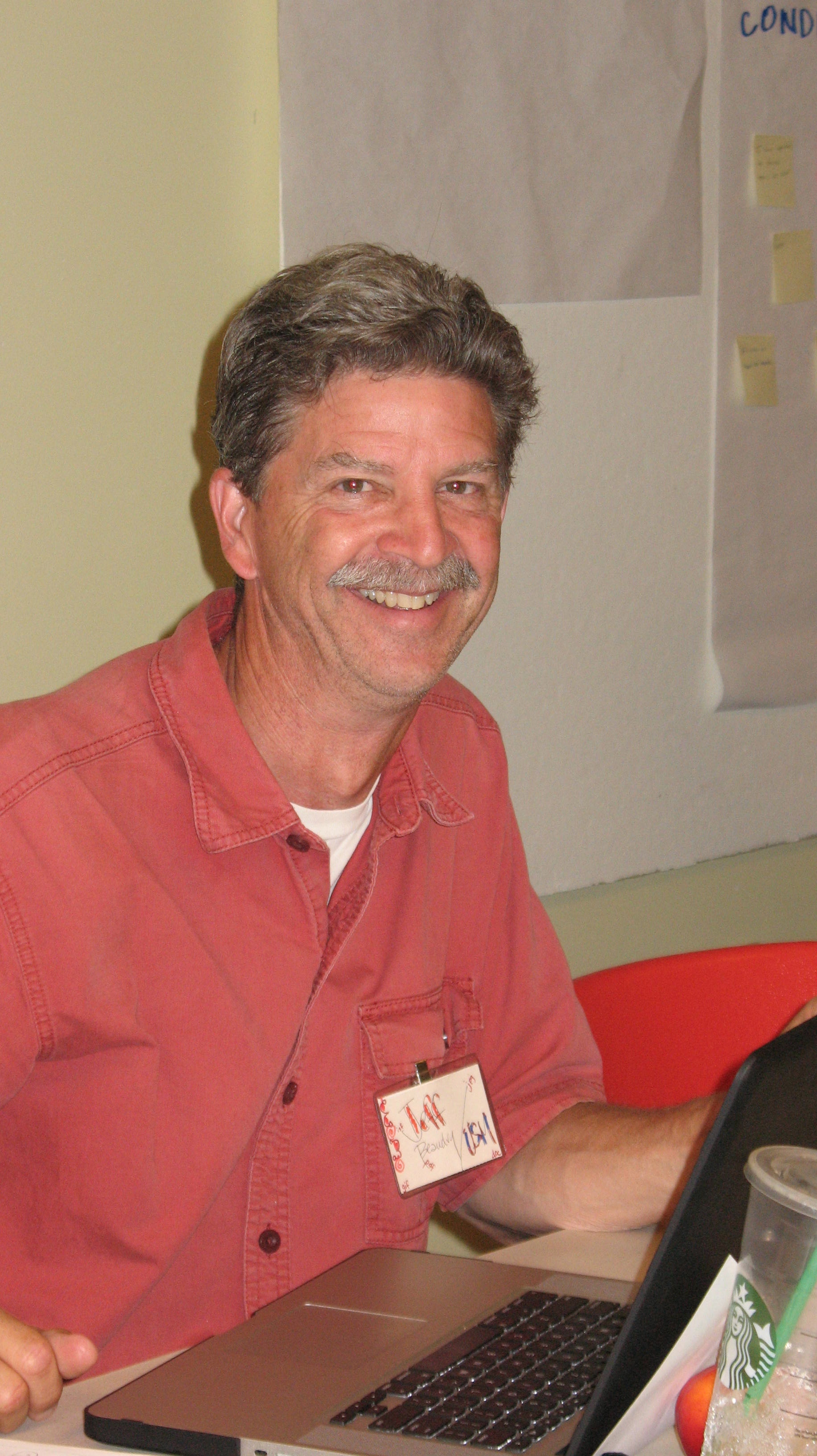
This past Monday night I was driving home in the snowstorm, after meeting all day with the Maine Arts Assessment Initiative (MAAI) Leadership Team. Catherine Ring, Rob Westerberg, and I started at 8:00 am. We had traveled to Bangor the night before so we could get an early start. At 2:00 pm the rest of the team joined us, including Bill Buzza (on Zoom), Nancy Salmon (who took the bus from Freeport to get there), Jeff Beaudry (who drove up from Portland), Pam Kinsey (who drove down from Easton), and Suzanne Goulet (after meetings at her school in Waterville).

The going was slow since the snow was coming down heavy and the plow trucks hadn’t been out in some time in several towns along the way. I thought about the rest of the team returning to their warm homes in different parts of the state. I was concerned, knowing how treacherous my drive was, that they’d all get home safely. It wasn’t the first time that we had ended an MAAI meeting in a snowstorm.

Nancy Salmon

Nancy Salmon

As I drove, my thoughts turned to the commitment that the MAAI Leadership Team continues to make! They are truly amazing individuals who are knowledgeable, life-long learners, and GREAT collaborators. They are impressive and thoughtful educators from across the state of Maine, willing to “make the trip” on multiple levels. The MAAI journey has been amazing. When Catherine, Rob, and I traveled to Plymouth State University in August 2010, we left very enthusiastic and abuzz about what we had learned and the possibilities for Maine. Our imaginations encouraged us to “dream big” but what has occurred during phases 1, 2, 3, and now 4 is not about our imaginations (only), but the collaboration of so many who are dedicated to excellent arts education for all students!

IMG_3233

Pam Kinsey

If you’ve participated in one or more MAAI opportunities you’ve contributed to the direction of MAAI. You are one of over 1000 arts educators who have taken advantage of the over 100 professional development workshops offered by MAAI. The Leadership Team takes the feedback seriously and incorporates your needs and the needs of education into the professional development opportunities provided. Each phase is built on the successes of the previous year and adds components that we know are in the best interest of Maine educators.

The purpose of our meeting on Monday was to reflect on phase 4 and to begin to prepare for phase 5. This winter the MAAI Teacher Leaders will come together to take the preparation to the next step. The work that they do reaching out and connecting with other arts educators is amazing. If you need assistance, no matter where you live in Maine, with the arts education work you are doing in your school/district, many of them are available to assist. The Teacher Leaders in red on http://www.maineartsassessment.com/#!teacher-leaders/c1qxk are available. As you know, they are providing workshops at the regional and mega-regional level. The mega-regional information is located at http://mainearts.maine.gov/Pages/Education/MAAI-Mega-Regionals-2014-2015#.

It was clear that the Teacher Leaders are such an integral part of the work that we will be doing

Jeff Beaudry

Jeff Beaudry

a call for others to join the 61 who have participated in the summer institute during the first 4 phases. Perhaps you’d like to join the MAAI and take on a leadership role. We know that it goes way beyond and deeper than learning more about assessment or proficiency-based education. I hear from Teacher Leaders that it includes:

  • Finding your voice so when you return to your school district you have a place at the table.
  • Making connections with people that otherwise you wouldn’t meet.
  • Realizing that you’re not alone.
  • That going deeper with assessment is not more work, but in fact, it makes your jobs easier.
  • Provides the opportunity to learn the why we do something, how to do it, and be the one who is making it happen. Instead of someone telling you that you have to do it.
Bill Buzza

Bill Buzza

And so much more! There is nothing more exciting to me than to hear from a Teacher Leader about how their MAAI journey has made a huge difference, not just for them as a teacher, but for their students!

Let me take this opportunity to THANK the Leadership Team for making the journey – through snow storms, and all! I am so fortunate to work closely with an incredible group of dedicated educators! A special thank you to Bill Buzza who is stepping down from the Leadership Team. And, another to past Leadership Team members, Bronwyn Sale and Matt Doiron, and our long distance member, Barb Vinal from North Carolina!

If you have questions about how to get more involved or to become an MAAI Teacher Leader, please don’t hesitate to contact me at argy.nestor@maine.gov.

Suzanne Goulet

Suzanne Goulet


h1

Core Arts Theatre Standards

January 3, 2015

TYA/USA Professional Development
Screen Shot 2014-12-22 at 10.42.15 PMSpecial Guest James Palmarini, Director of Educational Policy for the Educational Theatre Association (EdTA)
Wednesday January 14, 2015 Noon to 1:15 CST

This session will present an introduction of the purpose, structure, web-based environment, and state adoption strategies of the new Core Theatre Standards. The presenter will offer an overview of the creation of the standards, the philosophy and framework elements behind it, a tour of the website, and future plans around standards-based professional development, instructional resources, and advocacy. The session will also include periodic and concluding Q&A opportunities.

By attending this workshop, participants will be able to….

1. Understand the structure and purpose of the new core standards and their applicability to in and after school theatre education programs taught by certified educators and/or teaching artists
2. Gain literacy around the web-based environment of the standards
3. Learn how the Model Cornerstone Assessments embedded in the standards can be used to create reliable standards-based measures of student learning in theatre
4. Discover what role they can play to support adoption in their state

REGISTER NOW (Visa/MC):
Click: TYA/USA MEMBERS – $5.75
Click: NON TYA/USA MEMBERS – $15.75

After payment, you will be redirected to the event registration page. If you are not redirected, email us, and we will send you the registration link.

Click here for further information on our Professional Development Webinars and to suggest topics and guests for future events.

Our Guest
Screen Shot 2014-12-22 at 10.40.06 PMJames Palmarini is the Director of Educational Policy for the Educational Theatre Association (EdTA), a member of the Leadership Team for the National Coalition for Core Arts Standards (NCCAS), and executive editor of Teaching Theatre, the association’s journal for theatre educators that he co-founded in 1989. James was awarded EdTA’s Founders Award in 2005, and was recently inducted in the Ohio Educational Theatre Association Hall of Fame.

James has written extensively about arts education, including articles on methodology, standards, assessment, and a wide range of theatre-specific subjects. In 2013, he interviewed assessment expert Jay McTighe in for Teaching Theatre, and wrote articles focusing on the rise of Career and Technical Education (CTE) in theatre education and the new wave of teacher evaluation models and their impact on arts educators. Most recently, he wrote an overview of teacher evaluation strategies for the journal.

As EdTA Director of Educational Policy, James serves on the Arts Education Partnership Advisory Committee; the Washington D.C.-based Arts Education Working Group; and the board of the Ohio Alliance for Arts Education. He has led or participated in presentations addressing the new National Core Arts Standards at conferences sponsored by Americans for the Arts; the Kennedy Center; the Arts Education Partnership; and the National Guild for Community Arts Education, among others. He tweets regularly at @edtadvocacy and blogs occasionally at http://schooltheatre.org/advocacy.
Screen Shot 2014-12-22 at 10.33.12 PM

h1

MAAI Proficiency Q’s and A’s

December 9, 2014

You’re not alone

MAAI Logo_Color_TxtCtr

This Fall has been one of the busiest in recent memory for me and for many reading this post. As Maine moves to implement its proficiency-based education requirement, virtually every arts program in Maine has been scrambling to define “proficiency” and what it looks like in their own classrooms. Invariably this has also led to the development of standards and indicators for each grade level. Our task is daunting, but the difficulty level is compounded by ours being a “local control” state; one in which the state sets policy, but local school districts have some degree of autonomy over curriculum and implementation.

Consequently, many of us in the Maine Arts Assessment Initiative leadership have been approached by arts educators all over the state and asked very leading questions. One of the quotes we received in feedback from our first state Mega-Regional Workshop on November 25th at MDI High School (https://meartsed.wordpress.com/2014/12/02/successful-mega/) is typical: “(I need), more information about upcoming changes in policies, standards, teacher assessments, etc. My school does not keep me informed of any upcoming changes, i.e. proficiency based education…”

We have been working individually and collectively with so many districts and so many arts educators that I believe we’ve finally lost count. As school districts and arts educators continue their work through the Winter months ahead, here are some of the common questions we have received and our recommendations and suggestions moving forward.

Which standards should I be using?

MAAI has always taken the position that the only valid work is meaningful work, and that backwards design – identifying what knowledge or applied skills you believe is essential for every one of your students first – will lead you where you want to go. The North Carolina “I Can” statements by subject area located at www.maineartsassessment.com/#!projects/c21kz provide a rich selection of these by standard and by grade level. Best of all they identify these by what a student knows, not what a teacher teaches.

There are many other helpful documents on the Maine Arts Assessment at www.maineartsassessment.com/#!cross-curricular-documents/c2gj for you to look at and utilize as you make these determinations by grade span. The letter of the state law articulates that student proficiency is to be aligned with the Maine Learning Results. However, the work that we do in the arts can be connected to many exceptional standards documents, including those from other states, the national revised standards and even those of other countries. MAAI has found that if you connect to the indicators that resonate best with what you and your school values for proficiency in the arts, you will come up with a more meaningful, relevant and usable set of standards and indicators. These in turn will authentically move your work forward. If a crosswalk is required by your school district after the fact that ties your work directly to one specific set of standards, that will likely be a very manageable endeavor. Bottom line: make it meaningful and relevant by tying your work to essential student expectations first and then connecting to a specific standards document or set of standards later. This may all be done concurrently, but does not need to be, at least initially.

“What is the difference between a ‘standard’ and an ‘indicator’?”

There has been a lot of confusion even at the administrative level as to what each of these terms refer to. In essence, standards are the overarching, very broad umbrella statements. The Maine Learning Results have 5 of them, the first two (sections A and B) specific to each arts subject area. Indicators are the measurable statements or learning targets within each. Assessment of multiple indicators/learning targets will allow for an accurate measurement of proficiency within a specific standard. For instance, “Disciplinary Literacy” is a standard, underneath which would be measurable indicators, such as “Displays proper posture”, “Identifies correct key signatures” and so on. It is these indicators which will inform student proficiency for each standard.

“What’s the difference between ‘formative’ assessment and ‘summative’ assessment?”

In simple terms, formative assessment is the gut check. Formative assessments give you and your students the opportunity to take stock in progress made. These are utilized best when they also inform curriculum and instruction based on the results. These do not usually apply to a student’s “grade” per se, but inform everyone where students individually and/or collectively stand in the learning process. Summative assessment however is the running of the race; this is closer to what many would identify as ‘the test”. In proficiency based education models however, the difference between an assessment and a traditional test is that summative assessments may be given multiple times. The reason is because knowledge/application is measured for the purpose of demonstrating proficiency, and students are offered multiple opportunities to demonstrate.

“How can I possibly assess every student AND do all I need to do with such limited student face-time?”

Attend MAAI Regional and Mega-Regional Workshops (https://mainearts.maine.gov/Pages/Education/MAAI-Mega-Regionals-2014-2015) which are offered throughout the entire school year. Attend an MAAI state event during the Summer or Fall. Reach out to an MAAI Teacher Leader  (www.maineartsassessment.com/#!who/cqmo) who can assist you with some spot on ideas. Check out one of the MAAI videos on what standards based learning looks like in practical application (www.maineartsassessment.com/#!arts-assessment-in-the-classroom/c1vvi). In the mean time, as you develop your proficiency work, keep it manageable. Not every indicator of every standard is required to be hit. But at the same time, use this authentic need for more student face time to drive conversations in your school about course scheduling and class frequency for the arts.

“How do I get started?” (alternate heading: “I’ve already had three false starts and am getting nowhere fast!”)

The Arts Assessment Resources site has a link called “Proficiency Toolbox” (www.maineartsassessment.com/#!proficiency-toolbox/covj). This toolbox provides step-by-step suggestions for getting started and how to proceed once you’ve done so. Take a look at this site and see if it lends some clarity for you.

We’re in the thick of this proficiency work. But we’re in it together. Even as each individual school district goes about this journey in its own unique way, please make sure that YOU are connecting with other arts teachers as you develop your work. A collaborative process is one which will yield real, meaningful results, positive reinforcement in the process of getting there, and shared conversations which can only lead to deeper understanding for teachers and students alike. Remember: None of us is as smart as all of us! Please continue to share your work.