Archive for the ‘assessment’ Category

h1

Arts Organizations Invited

July 17, 2014

You’re Invited!

MAAI Logo_Color_TxtCtr3L

The Maine Arts Education Summit taking place at USM, Portland July 29-31 invites organizations who include arts education programs to join us on Wednesday, July 30, 8:00 – 12:30, to strut your stuff. The Summit is shaping up to be a wonderful opportunity not only for arts educators to come together and learn but also others. We have teaching artists joining us and now I am happy to extend this invitation to you. Where else can you go in Maine and share arts education opportunities with Maine arts teachers? Contact me ASAP to reserve a 4 foot or 8 foot table space. We will include your information in the participant packets and a blurb about your organization and your logo in the wiki space with all the Summit information.

If you are interested or wish to learn more please email me at argy.nestor@maine.gov TODAY!

h1

ZOOM Planning

July 15, 2014

Getting ready

Screen Shot 2014-07-15 at 11.23.53 PMMany of the Maine Arts Assessment Initiative (MAAI) Teacher Leaders and Leadership Team have been working (almost) around the clock getting ready for the Arts Education Summit happening on July 29-31 at USM, Portland campus. The Summit is chock full of sessions facilitated by educators with years of experience in teaching and assessment practices. To learn more please click here.

During the last three summers the MAAI has provided a summer institute for teachers interested in being Teacher Leaders. The feedback we received from many teachers included requests to provide summer extended professional development for everyone, not just those who wish to be MAAI Teacher Leaders.

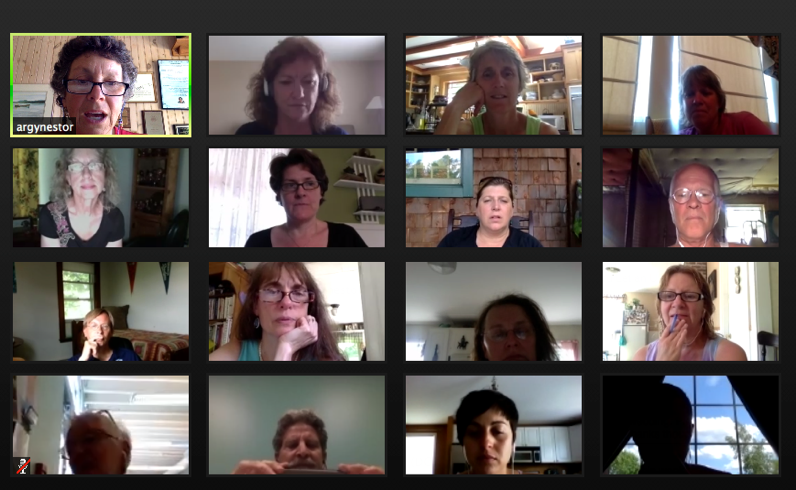
Recently several of the Teacher Leaders planning the Summit came together for a planning meeting using Zoom.us which provides video conferencing. MAAI has been using it for meetings recently and found it very simple and reliable! Above is an image that I took (screen shot) during the meeting attended by 16 educators. Direct registration to the Summit can be accessed by clicking here.

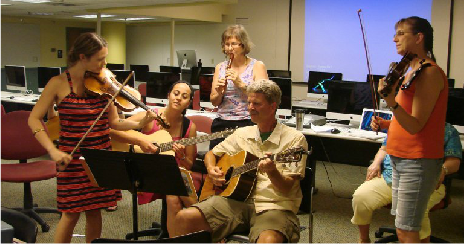
MAAI is continually breaking new territory to meet the needs of arts educators across the state which we know ultimately impacts arts education and all students. It is not to late to register for the Summit! Don’t miss this fabulous opportunity! Please contact me by email if you have any questions at argy.nestor@maine.gov. The image below is arts educators (plus 1) jamming last year at the MAAI summer institute.

Screen Shot 2014-07-15 at 11.29.38 PM


h1

Happy July!

July 1, 2014

Time is flying by

I am not sure where June went but I am glad to know that visual and performing arts teachers are taking a break from their during the school year teaching responsibilities. I’ve heard from many teachers saying what a tough and busy year it has been. Well, hopefully you are enjoying the beautiful Maine weather and are preparing to celebrate the birth of our country this weekend with family and friends.

Screen Shot 2014-07-01 at 3.05.53 PM

I am busy preparing with the Maine Arts Assessment Initiative (MAAI) Leadership team and Teacher Leaders for the Summit on Arts Education at USM, Portland, July 29-31. If you are interested in attending there is still room – information and registration can be accessed by clicking here. Very exciting!

The Maine Arts Commission Arts Education list-serv is up and running once again. If you’d like to subscribe please email me and I’d be glad to add your email address.

The MAAI videos that were created of standards-based arts education classrooms are almost completed and will be posted in the near future. Watch the blog for more information in the near future.

And, the Resource Bank Team has completed their tasks of created two units each. That means that there will be 12 units available in the future. They will be part of the Summit in July so if you want to take a look please join us there.

The Maine Arts Commission grant reviews will be taking place in two weeks and I am busy reviewing and arranging for the three day review. One of those days will be working with a panel that will review the 22 Arts Learning grant requests. What an exciting process it is and a fabulous learning opportunity.

In between I am finding time to enjoy the sunshine and I hope you are as well. If you have any questions about the Maine Arts Commission programs please visit our site by clicking here. Email me at argy.nestor@maine.gov if you have any questions.


h1

Another Arts Teacher’s Story: Lisa Ingraham

June 17, 2014

Madison Elementary School art teacher

This is the 12th blog post for 2014 and the third phase of the Maine Arts Assessment Initiative (MAAI) of this series sharing arts teachers’ stories. This series contains a set of questions to provide the opportunity for you to learn from and about others. Lisa has been a teacher leader during phase 3 of the MAAI.

IMG_3439Lisa Ingraham is a Kindergarten-4th Grade Visual Arts teacher in MSAD 59. She has been teaching all 260 of the students at Madison Elementary School for the past 3 years. She has been teaching art for 9 (!) years, all at the elementary level. Her students attend 50 minute art classes once per week throughout the school year. Lisa joined the MAAI has a teacher leader during the third phase. Lisa and her program are highlighted this year in one of the 8 arts classrooms videos being created that highlight standards-based/student-centered learning. Phase 3 videos are almost complete, phase 2 videos can be viewed by clicking here.

What do you like best about being an arts educator?

My favorite part of being an arts educator has always been working with every student in my school. This is my third year as the K-4th grade art teacher at Madison Elementary School. I have gotten to know each of the students here, their strengths, their preferences, and their quirks. As I have gotten to know more about my students, I have developed an even deeper appreciation for them as uniquely creative individuals.

What do you believe are the three keys to ANY successful visual and performing arts education?

  1. Passion for your content – I firmly believe in the power of the arts to change lives.
  2. Compassion for your learners – Each of my students approaches art in their own way. It is my job to make it meaningful for all of them.
  3. Support from your school and community – I would not be able to do what I do effectively without the support of my administrators, colleagues, and the parents of my students.

How have you found assessment to be helpful to you in your classroom?

I have found assessment to be critical in helping my students understand what they are learning and why, and how it all connects to their classroom goals and the world outside our school. As I have examined and modified the types of assessment I use the focus has shifted from discrete skills and bits of knowledge to helping students think about the bigger picture. Assessment, while helping me determine where we are going in the art room, has also kept me focused on providing depth for the students within our lesson and units.

What have been the benefits in becoming involved in the arts assessment initiative?

The examples set by the incredible leaders, and teacher leaders I have met through the MAAI helped me understand that really good arts programs don’t happen by accident. Really good arts programs are driven by teachers who believe in what they are doing and are willing to work hard to create them. Thank you all for sharing your passion and knowledge! You have helped me realize that no one knows my art program better than me, and if I am going to make it the best program for my students I need to speak up and say, “this is what we are learning, and this is why it is important.”

What gets in the way of being a better teacher or doing a better job as a teacher?

Time is always a factor, as are resources. But I think some of the biggest hurdles I have had to get over have been the narrow expectations of others. While I am working to change this, the perception of the arts as their own isolated content area that will only truly benefit those students who become visual arts professionals limits the types of learning that others can imagine taking place through the visual arts. This affects the importance placed on the arts, their position in the school, and the resources allotted to them.

What have you accomplished through hard work and determination that might otherwise appear at first glance to be due to “luck” or circumstances?

I love my job! I don’t “go to work” in the morning. I rarely think about it like that. I get to go to school and spend the whole day making art with young students. I feel incredibly lucky. However, I also know the years of work that went into switching to this – my second – career, and the work I’ve committed to in trying to bring the best visual arts education to my students.

Look into your crystal ball: what advice would you give to teachers?

When I went back to school to become an art teacher I had this idea that I was going to teach art. This was my loftiest aspiration: To Teach Art. The reality as it has turned out is that I teach kids. Side by side with art content I teach listening skills, how to be kind and responsible, how to work toward a goal and be persistent, how to appreciate the ideas and opinions of others, and how to learn from so-called mistakes.

My first professor in the very first education class I attended shared with us the old adage that “students won’t care how much you know until they know how much you care.” My students have confirmed this again and again, which leads me to my answer for the question…

What are you most proud of in your career?

Reaching students who appear at first glance to be unreachable. Some students take longer to trust that they are allowed to be who they are and express themselves creatively in the art room, but these are the students I am sure I will remember well after they leave me. I am thankful to the teachers who work closely with these students every day and have been very generous with their time in helping me make the connections necessary for them to have the successes they do in the art room.

If you were given a $500,000 to do with whatever you please, what would it be?

I am not really sure what I would do with all the money, but I know my school would have one absolutely incredible art program! (And I would probably still get really excited about finding the best “art supply” at a yard sale or discount store.)

Imagine you are 94 years old. You’re looking back. Do you have any regrets?

I hope not. One of my students’ favorite stories is “Pete the Cat, I Love My White Shoes.” I don’t currently have an art lesson I would like to go with it, but I love reading and singing the book with my students anyway. The best part is sharing the moral of the story, which I tend to repeat A LOT over the course of the school year: “No matter what you step in, keep walking along and singing your song… because it’s all good.”

IMG_4079

h1

Another Arts Teacher’s Story: Lisa Neal

June 10, 2014

Theater Arts, grades 9-12, Nokomis High School, Newport, Maine

This is the eleventh blog post for 2014 and the third phase of the Maine Arts Assessment Initiative (MAAI) of this series sharing arts teachers’ stories. This series contains a set of questions to provide the opportunity for you to learn from and about others. Lisa has been a teacher leader during phase 3 of the MAAI.

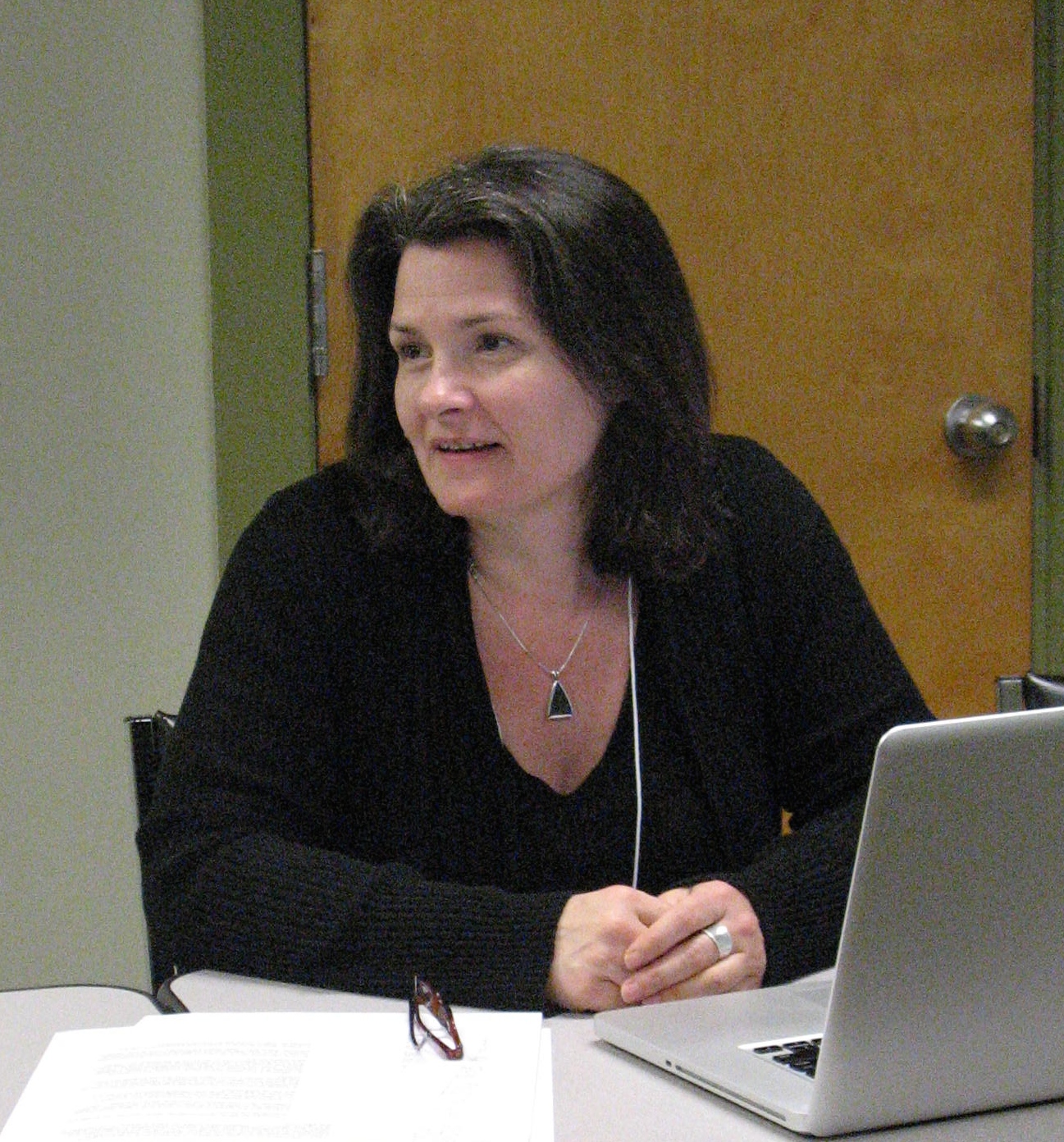
Screen Shot 2014-05-16 at 11.04.45 AMLisa Neal teaches Theater Arts to grades 9-12 students at Nokomis High School in Newport. She has been part of the district for 27 years where she began her educational career as an Education Technician. Lisa directed the middle school show chorus for 21 years and will begin her 19th year with the High school show chorus this fall. She also worked as a 7th grade social studies teacher for 10 years at Somerset Valley Middle School. Lisa has been at the high school teaching Theater Arts for the past two years. She  teaches two Acting classes, a Script Writing class, an Advanced Theater Class and a Comedy class. She also assists with the concert chorus and run the after school Drama Club. Her program is growing quickly; she has about 100 students in her classes and between the two after school productions, one of which was a musical, Lisa has about 50 students involved.

What do you like best about being an Arts educator?

There are so many reasons that I love teaching theater arts. It is very exciting to teach in an area where most of the students are excited to be there because they were able to choose the class. These students enjoy the content and are willing to give the effort needed to do the difficult work. I love watching students blossom into confident young men and women. So many come into the class as very shy individuals, not truly believing that they can conquer their fears around public speaking, yet they leave realizing that they have it within themselves to take those crucial risks. I love hearing them use terminology we have learned in class and be able to evaluate the craft based on true understanding of what they are viewing. I love hearing them make connections to other content areas and hearing them tell me they “felt smart” in their other classes because they applied concepts and knowledge they learned in Comedy class. In short, I love my job!

What do you believe are three keys to ANY successful visual and performing arts education?

  1. Effective Educators:  Nothing in education will be successful if there are not people who are passionate about their content, but even more importantly, people who love being with students. Educators must inspire students and help them achieve their potential by encouraging and critiquing. When students know they have someone in their lives that truly care about them, they will thrive.
  2. Opportunities to DO:  The nature of the arts is to share. We need to give students the chance to share their work whether that is in front of an audience of ten peers or a public audience of 800. Remembering to consider each student as an individual while planning these opportunities is imperative, but it is giving them a chance to prove to themselves that they can do it is vital to their growth.
  3. Connections: We need to show students how the arts connect to other content areas, as well as other facets of their lives.  When they make this realization, they will continue to allow the arts to enrich their lives and become life long lovers of the arts.

How have you found assessment to be helpful to you in your classroom?

Invaluable! This year our school has put great emphasis on formative and summative assessments. I use formative assessments in many forms, every day in my classroom. Having a clear picture of your student’s understanding of the content, where their interests lie and what their ability level is, is the most important information that any educator can have. It helps to differentiate instruction for content, process and product, and it gives direction for future lessons. It allows a teacher to decide if they need to reteach certain concepts or if they can move on to the next one. It also assures that students will proficient on summative assessments that are given, which will be even more important as we move towards standards based diplomas.

What have been the benefits in becoming involved in the arts assessment initiative?

I have had the chance to meet other talented, passionate educators from around the state; I have been able to share experiences.  Being a Theater Arts teacher can sometimes be lonely. I am the only one in my entire district to teach in this content area. Meeting other teachers who teach in the same content has been extremely helpful. We have developed a wonderful relationship, sharing ideas, rubrics, costumes and even did an exchange production, bringing each of our respective groups to the fall musical in each school.

What are you most proud of in your career?

I don’t know if I would say I am “proud”, but I will say what I hope that I have done is make a difference in the lives of my students. It is what I strive to do every day. I would like to think that some of them have learned something from me and they might look back and be able to say that they had a teacher who genuinely cared about their well-being and not just their education.

What gets in the way of being a better teacher or doing a better job as a teacher?

It never feels like there is enough time to do everything that needs to get done. I would love more time to reflect on my lessons and discuss with other educators ways to improve my practices. I think the most important thing that any educator has to do is continue to work towards “better.” I have always said that when I think I have it all figured out and that there is nothing more I can do to improve, then I better retire. I think it will take all the time I have to get to be the best teacher I can be.

What have you accomplished through hard work and determination that might otherwise appear at first glance to be due to “luck” or circumstances?

I came into teaching later in life. When my daughter was in 7th grade, I quit my job and went back to school full time. I graduated when I was 35 years old and “fell” into a job during my student teaching. Although this may have looked like “luck”, I had spent 15 years in the community volunteering in my children’s school, working with a theater company that offered Shakespearean residencies to middle school students in the state of Maine, and working as the director of the middle school show chorus. After teaching for 10 years I decided I wanted to get my Masters Degree which I received last December from University of New England in Literacy Instruction. Getting the job as the Theater Arts teacher at Nokomis was lucky in that it opened at a perfect time, but the reason I was asked to be there was because of the work I had done in the district over the last 20 years.

Look into your crystal ball: what advice would you give to teachers?

Remember that teaching is not a job, it is a calling. Not everyone should be a teacher. You must be passionate about your content and know it well, but you must love being with students and imparting that knowledge even more. You must have patience, be flexible and above all, have a sense of humor. Before you become a teacher, make certain it is your calling because when you are called to be a teacher, there is no job more rewarding.

If you were given a $500,000.00 to do with whatever you please, what would it be?

Build a beautiful Performing Arts Center so my students could experience what it is like to perform on a real stage! Okay, I know this amount wouldn’t come close to doing that but I would just multiply my hypothetical money and make it a few million.

Imagine you are 94 years old. You’re looking back. Do you have any regrets?

At this point, I would say I do not have any regrets. I have a full rich life that includes a wonderful family, opportunity to perform with other talented people who love the arts on historic stages like Lakewood Theater and Waterville Opera House, and I work in a field that makes a difference in the lives of others. What could be better?

h1

Maine Arts Assessment Initiative Webinar

June 6, 2014

Last webinar of the series

IMG_3708Catherine Ring will be hosting the last in a series of webinars with Rob Westerberg  as part of the Maine Arts Assessment Initiative (MAAI).  The webinar entitled The Resource Bank: Standards-Based Units by Arts Educators will take place on Wednesday, June 11,  2014 from 3:30 – 4:30. Primary discussions will be based around:

  • What is the Research Bank?
  • History, Process, Challenges
  • The Role of Critical Friends
  • Ensuring Quality
  • Sneak Peak at the Units
  • How the Resource Bank can be Used
  • The Future – Ongoing and Growing

Engaging participants in dialogue around these topics, and discovering how to both use the Resource Bank and be future contributors to it will be takeaways from this webinar.

Our Guests will include two Teacher Leaders with MAAI, Jake Sturtevant, Music Educator from Bonny Eagle High School and Beth Lambert, Theatre Educator from Carrabec High School. Both Jake and Beth served on the Resource Bank Team this past year, and will be sharing the Standards-Based Units they have designed and contributed to the Resource Bank, providing a “sneak peak” of some of the 12 units designed by six Teacher Leaders on the team.

  • To join the meeting, please click here.
  • Enter as a guest and sign in using your first and last name please.
  • Click enter room.
  • Please be wired and do not use a wireless connect.
  • No telephone is required. (There is no call-in number).

Please join the webinar at 3:20 and go to the top left corner of you screen, click on the drop down menu, Meeting, Audio Setup Wizard and follow the directions to check your audio.

Please click here for more information about the other webinars and the Maine Arts Assessment Initiative.

Please be sure to join them for what promises to be an engaging, insightful hour on the topic that will continue to impact every one of us as arts educators in the state of Maine!


An initiative of the Maine Department of Education with contributing partners: ACTEM (Association of Computer Technology Educators of Maine), MAAE (Maine Alliance for Arts Education), MAEA (Maine Art Education Association), MECA (Maine College of Art), MMEA (Maine Music Educators Association), MLTI (Maine Learning Technology Initiative), New England Institute for Teacher Education, and USM (University of Southern Maine).

h1

National Party!

June 4, 2014

NCAS today

Earlier today I attended the announcement webinar for the new National Core Arts Standards. It was informative and an opportunity to hear from a variety of arts leaders from across the country. Even our own Maine Arts Commission director Julie Richard was a guest on the webinar. She eloquently stated the role of the state arts agency’s now that the new standards are complete.

So, what next you might be thinking/asking?! Well, this is my suggestion… go to the National Core Arts Standards new website at http://www.nationalartsstandards.org that JUST went live this afternoon at 4:30 and check them out. Look closely at what the standards have to offer.

Screen Shot 2014-06-04 at 6.47.23 PM

Gorham Middle School art teacher Amy Cousins, Brunswick High School art teacher Jennie Driscoll, and Woodside Elementary School art teacher Brian McPherson

Perhaps your school/district is discussing standards, curriculum, proficiency, assessment and your head is swimming with all that you have to think about. I suggest that you join us at the New England Summit on Arts Education, July 29-31 at USM, Portland, to help figure out what your role and responsibility is. You can attend alone or with a team from your district, build on your knowledge so you can return to your school with a plan on how to proceed. To learn more and to register please go to https://mainearts.maine.gov/Pages/Education/NESummit. The summit is happening because of feedback from Maine arts teachers asking for an extended learning opportunity from the Maine Arts Assessment Initiative. If you have questions please contact me at argy.nestor@maine.gov.

And, what’s next with Visual and Performing Arts standards in Maine? Good question. Recently I asked Kevin Facer, the VPA specialist at the Maine Department of Education that question, and this is the information he provided:

The new NCAS standards present an exciting approach to arts teaching and learning. As schools plan for the future they should keep the following in mind.

  1. MLR’s are still in effect as state standards
  2. Graduates to 2018 will need to demonstrate proficiency to MLR standards

The rulemaking process to adopt new standards requires public hearings and a vote of the Legislature.  At this present time, the timeline to start any rulemaking to adopt new visual and performing arts standards is unknown.

  1. Teachers can use the NCCAS standards locally to enhance/augment current MLR’s. As you know, curriculum including textbooks, lessons, teaching methods – is entirely controlled at the local level.

Use caution on a full commitment to new standards before everything is in place to go ahead.

If you have questions please contact Kevin at kevin.facer@maine.gov.

h1

Another Arts Teacher’s Story: Melanie Crowe

June 3, 2014

Marshwood Middle School Art, Eliot

This is the tenth blog post for 2014 and the third phase of the Maine Arts Assessment Initiative (MAAI) of this series sharing arts teachers’ stories. This series contains a set of questions to provide the opportunity for you to learn from and about others. Melanie has been a teacher leader during phase 3 of the MAAI.

croweMelanie Crowe teaches painting, drawing, printmaking, book arts, multi-media, and sculpture at Marshwood Middle School where she has been for 11 years. During the course of the school year, Melanie has the honor to work with approximately 400 students, sixth through eighth grade.

What do you like best about being a visual arts teacher?

The best part about being a visual arts educator is the unique opportunity to engage with students during the creative problem solving process. For me, it is during this stage that is so rewarding. Challenging students to push the envelope of creativity and exploring ways to see the common, uncommon – is a beautiful moment. In the art room, students know they have a safe place to challenge one’s self and to take risks – when students move outside of that comfort zone – I know I’ve done my job.

What do you believe are three keys to ANY successful visual and performing arts education?

  1. Communication and support from administration, school community, and local community.
  2. Student connection – creating genuine, authentic relationships with kids, to show them their thoughts and ideas are valued and we are all in it together.
  3. Creation of real life connections for students is key to their understanding of how the Arts are so important in everyday life.

How have you found assessment to be helpful to you in your classroom?

Using rubrics along with self assessments, students take the learning ownership directly into their hands. When it is clear what the learning objectives are and students can clearly see what they are to know and be able to do, takes all the guess work out. As a newbie teacher, this was one area I struggled with. Now after my first decade, I see the utmost value in reflection as a tool for assessment along with clear ways to present rubric information.

What have been the benefits in becoming involved in the Maine Arts Assessment Initiative?

Without a second thought, the greatest benefit has been getting to know, work with, and learn from such an AMAZINGLY TALENTED group of arts educators. I have also gained new insight to my own teaching practices along with many ideas to try out in my own classroom. I now feel more a part of a bigger community and that is refreshing. Knowing that there are others that may have the same concerns, ideas, or suggestions and we are all just a few keystrokes aways from each other is liberating.

What are you most proud of in your career?

My students and their accomplishments.

What gets in the way of being a better teacher or doing a better job as a teacher?

Time – never enough always wanting more!

What have you accomplished through hard work and determination that might otherwise appear at first glance to be due to “luck” or circumstances?

I would have to say almost everything – the more hard work you put into anything it may appear effortless to those who may not have gone down the same road of struggle and determination.

Look into your crystal ball: what advice would you give to teachers?

“Be the change you wish to see in the world”. This was told to me by one of my professors in life and I do “life” by it. If you have the desire to work with students in challenging them to open their mind up to the “what if’s” in the world then teaching is the right place for you.

If you were given a $500,000.00 to do with whatever you please, what would it be?

I would build / open a community printmaking studio where students can come, create, hang out and learn the art of lithography and letterpress. There are so few places for just students to showcase and sell their work that I would like them to have a place of their own. Letterpress and Lithography are two forms of printmaking that I hold near and dear and do not want to see disappear. I love technology, but the beauty of ink on paper from a lithography stone is pure magic, I want to share this experience with as many others as I can.

Imagine you are 94 years old. You’re looking back. Do you have any regrets?

No. All paths have taken during my journey in life have brought me to this space in time, for that I am thankful.

h1

Danette Kerrigan’s View

June 2, 2014

Going away to understand what is happening right here in Maine arts education

Thank you to Danette Kerrigan for contributing this post and sharing her experience and her ah-ha moments while on a trip to Washington, D.C. earlier this Spring. Danette is an art teacher at Sacopee Valley Middle School.

Danette and her two colleagues in Washington, D.C. at a Chagall mosaic.

Danette (in center) and her two colleagues in Washington, D.C. at a Chagall mosaic.

As part of our district’s participation in the Schools for Excellence Grant, three colleagues and I were chosen to attend the National Board for Professional Teaching Standards Teaching and Learning Conference in Washington, D.C. this past April. Our group consisted of an ELL teacher, Special Educator, First Grade teacher and myself (middle school art). We seemed an unlikely bunch, but we share a passion for teaching and learning, so in retrospect it was a pretty fantastic fit.

The amount of professional development available to us during three days was staggering. Plenary speakers ranged from Arnie Duncan and Doris Kearns Goodwin to Bill Gates and Bobby McFerrin.  While a star studded event, the content was serious, meaningful, and frankly, game changing for me and my colleagues.

There was a very clear message throughout……

Teachers are the best resources for educational change and Teacher Leaders can be the conduit for that change.

I attended a number of sessions devoted entirely to leadership. One in particular, Teacherprenuers: Leading teachers that don’t leave was amazing and featured 2013’s Teacher of the Year, Jeff Charbonneau. As I listened to him, he could have been any one of the teacher leaders of the Maine Arts Assessment Initiative (MAAI). His passion, innovation and energy have changed his high school and district by enabling students to receive as many as 27 college credits in the sciences. He shared how when he created a hybrid position for himself that splits teaching with coordinating the college interaction within the district he had to give up nine other extra curricular positions do so. Just as so many of us with a passion for change, he had spread himself quite thin.

I also attended a session with Jen Nash, held by the National Coalition for Core Arts Standards for a glimpse of those newly developed National Core Core Standards and the different plans for support of them. I know that many of us have seen and explored their site, as well as taken part in their public review.  What I would like to share with all of you are my observations about the presentation and discussions therein.

As I listened to the speakers present and the audience questions I was struck by a thought. People were speaking in a way that lead me to believe that they are still scared, searching for the thing that is going to cement relevance for the arts in education. In all of the meetings and workshops that I have attended for MAAI, the tone was different. I thought carefully about what was being said and I realized that MAAI and its members have moved on to a more sophisticated advocacy. No longer are we on the convincing side of persuasion. We don’t have to extol the virtues of an arts education. WE PROVE IT.

We do so every day with actions both within our schools, districts and statewide. With the many presentations we have brought to others we are providing a road map to the future of the advocacy of the arts. During the presentation I thought, MAAI is so far beyond this!

Another sneaking thought crept in….we are not fearful.

MAAI is making strides I don’t think others are. I think we are making a presence and setting the stage for advocacy that is based in fact. I think we are unique and powerful. I want to let Argy and Jeff and Catherine and Rob and all of our people know that we are on the right track….

It was an amazing conference and I encourage any of you to try to attend in the future. But know, we have a solid route to leadership and success in advocacy for the Arts right here in Maine.

To become a teacher leader with the MAAI, applications are now available at this link with a deadline of today, June 2. All teacher leaders need to attend the New England Summit on Arts Education. In addition, all educators are invited to attend the Summit being held at USM, Portland, July 29-31. Registration is available at this link.   Please email Argy Nestor at argy.nestor@maine.gov if you have any questions. Thanks for considering this opportunity!