Archive for the ‘assessment’ Category

h1

Roundtable Music Ed Webinar

May 28, 2014

Review of webinar

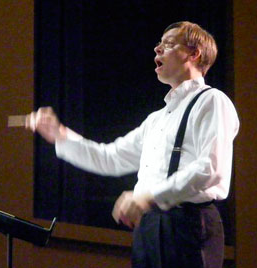
Screen Shot 2014-05-27 at 9.42.14 PMThe fourth in a series of webinars for the Maine Arts Assessment Initiative was held on Tuesday, May 20, entitled “Maine Music Educators Roundtable”. The webinar was facilitated by Rob Westerberg, choral director at York High School in direct response to concerns from music educators in the field around a broad selection of topics. The hour included participation by Maine’s Visual and Performing Arts Specialist at the Maine Department of Education, Mr. Kevin Facer.

Roundtable guests were: Drew Albert – vocal and instrumental, Maranacook Community High School, Andria Bacon – instrumental/strings & general, RSU #64; Corinth, Bill Buzza – instrumental & general, Edward Little High School, Jen Etter – vocal music, York Middle School, Jen Nash – instrumental/strings & general, Sebasticook Valley Middle School and Ashley Smith – vocal & general at Brunswick High School. After a brief introduction, the roundtable went to work fleshing out thoughts around topics which included:

  • Effect of common core on music programs
  • Proficiency & standards based assessment
  • Music teachers as leaders in your own schools
  • National Standards release and ramifications
  • Teacher evaluation implementation

Additional discussion prompts were also presented:

* “I feel our district is caught between common core, national standards, Maine Learning Results and our own ad lib set of standards created from the consortium of schools we belong to. It’s mind numbing that we have so many versions of what is ‘important’ in a curriculum versus what should be required of Maine students in order to receive a high school diploma.”

*How can we create an effective mentoring system for teachers who are in need of improving their pedagogical skills?

*As we deal with budget issues, our teachings loads are increasing as we are being asked to do more with individual assessments. We cannot administer these assessments without adequate time in our schedules.

Many viewpoints were presented on all of these topics, providing a practical platform for further discussion by music teachers within and between school districts. The archived recording of the session is located at http://stateofmaine.adobeconnect.com/p5rre115tqg/. Accordingly, a follow-up meeting plan has been developed to facilitate this discussion, applicable for school district professional days or regional meetings between music educators. The meeting plan is located at http://mainearts.maine.gov/Pages/Education/MAAI-Webinars.

On Wednesday, June 11, 3:30 to 4:30 the MAAI will be holding a webinar hosted by Catherine Ring, featuring the ongoing work of the Resource Bank team for Visual and Performing Arts. Teacher leaders on the Resource Bank team will be our guests. Please plan on joining us for an exciting conversation and a sneak peak of some of the rich resources created by the team on that second Wednesday of June. 

h1

Another Arts Teacher’s Story: Jenni Null

May 27, 2014

Fine Arts Coordinator, Instrumental and Choral Music Instructor, K-12, SAD #61 

This is the ninth blog post for 2014 and the third phase of the Maine Arts Assessment Initiative of this series sharing arts teachers’ stories. This series contains a set of questions to provide the opportunity for you to learn from and about others. Jenni was a guest on the MAAI webinar from April on Common Core and the Arts. You can see/listen to the archive by going to http://mainearts.maine.gov/Pages/Education/MAAI-Webinars. Jenni is also working on the team of teacher leaders who are developing resources. The webinar scheduled for June will provide the opportunity for you to learn more about the arts ed resource bank.
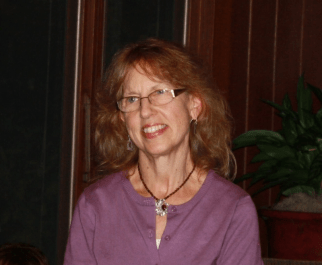
png;base645078de7cb68c173dJenni Null is the SAD#61 K-12 Fine Arts Coordinator, Instrumental and Choral Music Instructor. She has taught for 36 years, 35 of which have been in my present district of Lake Region. Jenni teaches Grades 4 and 5 instrumental music in three different schools in three different towns (Bridgton, Sebago, and Naples), and has a very healthy chorus (60+ students) in Naples. When I am not in the classroom, I am overseeing the art, music, and dance program for the District, which includes the scheduling of our fine arts events for the year, as well as assisting colleagues in developing and reviewing the arts curriculum and assessments.

What do you like best about being an arts educator?

I love seeing the excitement in my beginning instrumental students when they are successful
on their respective instruments for the first time.  Coupled with that, is fast forwarding through the years and attending middle and high school concerts where I hear these same students performing. It’s very rewarding to think I gave them their start or awakened a talent within that they didn’t know they possessed.

What do you believe are three keys to ANY successful visual and performing arts education?

A successful visual and performing arts education should have:

  1. Passionate arts educators – These are the think-outside-the-box people who don’t let all the obstacles of the daily minutia get them down. They are the problem solvers!
  2. Supportive administrators –  All administrators say they are supportive, but the ones who truly are, find other areas to cut at budget time. The administrators I admire recognize that the square pegs don’t fit in the round holes. They provide QUALITY time so that arts educators can access students in a meaningful way, rather than seeing how many different classes can be stuffed into the day.
  3. A partnership between arts education and the surrounding arts community, where we share our resources, including performance and art display venues. Professional artists share their expertise in the classroom and provide workshops and mentor opportunities. High School students can work in tandem with these arts professionals and hopefully glean a vision of the arts as a vital part of their lives beyond their K-12 education.

How have you found assessment to be helpful to you in your classroom?

Assessment has helped me to stay focused on the key elements of my program. It also compels me to reevaluate and adapt in accordance with the needs of my students. A fringe Assessment has helped me to stay focused on the key elements of my program. It also compels me to reevaluate and adapt in accordance with the needs of my students. A fringe benefit of assessment is that students pay attention to the grading rubrics and what is required of them to meet standards. In this regard, I feel that today’s students take the arts classes more seriously than their predecessors.

What have been the benefits in becoming involved in the arts assessment initiative?

The Maine Arts Assessment Initiative has introduced me to some passionate arts educators statewide. Participating in this initiative has consequently energized me both in and out of the classroom. We must all be continually involved in advocacy, both individually, and collectively. MAAI has taught me that, “One of us is never as strong as all of us,” and that as a cohesive unit, we have been empowered to elevate arts education for the students of Maine!

What are you most proud of in your career?

For five consecutive years, I was able to organize a school-wide Arts Week for grades 4-6, centered around a musical production. Students learned the musical numbers in general music, and thanks to a grant, I was able to bring in professional artists to work with students in multi-age groups. Each day, the multi-age groups rotated through activities related to the play and aligned to the Maine Learning Results: making props, painting the scenery, working on lighting, (including the scientific properties of combining different colors), the cultural and historical background, and of course being entertained by the visiting professional musicians, dancers, and artists. The entire school was involved through the culminating activity, which was the musical production.  The students worked together as a community and learned so much in a meaningful way that was arts based.

What gets in the way of being a better teacher or doing a better job as a teacher?

People without vision who prevent me from pursuing mine!

What have you accomplished through hard work and determination that might otherwise appear at first glance to be due to “luck” or circumstances?

I worked for two summers for The Edinburgh International Film Festival. I had to fly to Edinburgh for an interview and convince my perspective employers that an American could learn the city well enough to organize all levels of accommodation, from student flats to luxury hotels, as well as travel arrangements for festival attendees.

Look into your crystal ball: what advice would you give to teachers?

  • Don’t let the small stuff get you down!  The endless meetings, paperwork, and duties will not disappear, but in spite of it all; remember you get to do amazing things with students and perhaps transform their lives in a way that others do not.
  • Don’t let boredom set in.  Change it up with a new lesson, new curriculum, or new job!  If you are bored, you can be sure your students are, too.
  • A network is critical for the arts educator to survive, so build one within and outside of your school or district.
  • Advocate for the arts with everyone you meet; administrators, parents, colleagues, and your students.  People need to be reminded why arts education is important.

If you were given a $500,000.00 to do with whatever you please, what would it be?

If I suddenly had a large sum of money, I would set up an endowment that would provide for students to travel to New York City to visit the Metropolitan Museum of Art, Lincoln Center or Carnegie Hall, and attend a Broadway Show. All students deserve the opportunity to have their senses awakened by such world class artistic experiences.

Imagine you are 94 years old. You’re looking back. Do you have any regrets?

If I were to start again, I would formulate a plan for my professional life.  I never really did that, but rather just let life happen.  I think that teachers entering the profession today are more forward thinking about where they want to be 10 or 20 years from now.

h1

Calling All Teaching Artists!

May 26, 2014

Professional Development Opportunity for Teaching Artists Interested in PK-12

Arts-84

Gretchen Berg, Teaching Artist and Director of Ovations Offstage, presenting a workshop at the Statewide Arts Ed conference

This summer, the New England Summit on Arts Education will take place on the University of Southern Maine Portland campus, July 29-31. The Summit is designed to provide an outstanding collaborative opportunity for educators to dig deep into teaching, learning, and assessment in arts education including student-centered classrooms and proficiency.

The Summit is offered through the Maine Arts Assessment Initiative which was established in 2010 and has been responding to the needs of arts education ever since. The overall focus of the MAAI has been to create an environment in Maine where quality assessment in arts education is an integral part of the work all arts educators do to improve teaching and learning, and student achievement in the arts.

During the past three summers MAAI has offered opportunities to PreK-12 visual and performing arts teachers who make a commitment to take on a leadership role beyond the summer work. This year we are broadening the work to include others who make a commitment to educating young people in the arts. Teaching artists are invited to attend the Summit as part of a team or as an individual.

The Summit offers the following:

  • Scholarships for a limited number of Maine teaching artists to participate in the three-day summit
  • Sessions to build knowledge on arts teaching and learning, including assessment
  • Provide a mentor who will be available beyond the Summit
  • Networking opportunities with other Teaching Artists and school personnel from Maine and beyond
  • Hosting of 5-10 minute showcases for Summit participants
  • Three or four days of professional development (See Teaching Artist Leader Opportunity information below)

For detailed information about the New England Summit on Arts Education click here.

Teaching Artists Scholarships Available

The Maine Arts Commission is offering scholarships for a limited number of Teaching Artists to apply to participate in the New England Summit on Arts Education. The application deadline for scholarships is June 9, 2014.

To be eligible for a New England Summit on Arts Education Teaching Artist Scholarship, an artist cannot be employed by a school district as an arts educator.

As a scholarship recipient, teaching artists are required to:

  • Participate in online conversations using a wiki where the teaching artists will share information, ask questions, learn from each other, and establish an online community.
  • Complete a plan (i.e., a marketing packet) that includes a lesson/unit and description of their work that can be used to promote themselves with administrators, and/or teachers. These plans may be included in the MAAI Resource Bank, an online repository of learning units that will be available to all educators.
  • Attend a one-day professional development day in October to present their ideas and plans to invited “critical friends” for review and feedback.

Once the final plan is submitted and approved the teaching artist will be added to the Maine Arts Commission Teaching Artist Roster and receive a stipend.

Please click here for the scholarship application located near the bottom of the page.

DEADLINE FOR APPLICATION: June 9, 2014

If you have any questions please email the Maine Arts Commission Director of Arts Education Argy Nestor at argy.nestor@maine.gov or call 207.287.2713.

The Maine Arts Assessment Initiative is guided by the State of Maine Learning Results legislation Chapter 125 for the visual and performing arts which includes these four disciplines: dance, music, theatre, and visual arts.

In 2015, Arts Learning Grant applicants will be encouraged and given extra consideration if partnering with a Teaching Artist who is listed on the Roster.


h1

Virtual Launch of NCAS

May 23, 2014

Mark your calendars for the birthday party!

NCCAS Launch Save the Date)

h1

Another Arts Teacher’s Story: Amy Cousins

May 20, 2014

This is the eighth blog post for 2014 and the third phase of the Maine Arts Assessment Initiative of this series sharing arts teachers’ stories. This series contains a set of questions to provide the opportunity for you to learn from and about others.

Screen shot 2014-05-10 at 10.24.31 PMAmy Cousins has been teaching in one form or another since she was 19 years old. She has been in public education, as an art teacher, for 17 years. Amy teaches Middle Level Art and Alternative Education (Integrated Arts and Outdoor Education) at Gorham Middle School. She teaches approximately 300 Art Students and 15 Alternative Education students.

What do you like best about being an arts educator?

I LOVE the creative part of lesson planning and figuring out how to engage all students. Teaching art is about observation. Who are my students? What do they respond to and what engages them to be creative problem solvers? It’s wonderful to watch students wrestle with ideas and concepts and come up with their own solutions.

What do you believe are three keys to ANY successful visual and performing arts education?

1.) Exploration – The freedom to explore.
2.) Ingenuity – To foster ingenuity.
3.) Challenge  – The ability to challenge in unique, individual ways.

How have you found assessment to be helpful to you in your classroom?

Assessment is the key to validating what we do as art teachers. It helps students recognize their strengths and what they need to work on. A good assessment tool guides students through the process of making, analyzing and interpreting their  art work. As a teacher it helps me to craft lessons that meet the standards, but still embrace artistic license.

What have been the benefits in becoming involved in the arts assessment initiative?

The benefits have been plentiful but the biggest gift I have received from the MAAI is camaraderie. It has been an absolute pleasure to meet and be energized by individuals from all over the state! They have given me new ideas, helped problem solve the old ones  and have revitalized my desire to teach.

What are you most proud of in your career?

Not sure yet, ask me when I am 94!

What gets in the way of being a better teacher or doing a better job as a teacher?

Time. There is never enough time to get it all done! We only get a brief glimpse of our students during the course of a year. In some cases as few as 35 hours. That doesn’t allow students enough time to fully explore all the endless avenues of art, nor does it allow for retention of concepts, techniques or processes from year to year. I consistently feel like I am taking 1 step forward and 4 backwards.

What have you accomplished through hard work and determination that might otherwise appear at first glance to be due to “luck” or circumstances?

Think that’s another one you are going to have to ask when I am 94.

Look into your crystal ball: what advice would you give to teachers?

Remember your job is to not only to educate students but to engage them in manner that leaves them craving for more.

If you were given a $500,000.00 to do with whatever you please, what would it be?

Right know I would do just about anything for about 20,000.00 to buy a classroom set of iPads. So I am going to take this opportunity to shamelessly advocate for my cause. Anybody want to make a donation????

Imagine you are 94 years old. You’re looking back. Do you have any regrets?

I have made a gazzilion mistakes in my life and I don’t regret any of them.  Mistakes are how we learn. If you regret them, you haven’t learned anything.

h1

Inviting All Arts Educators!

May 19, 2014

Interested in Being a Teacher Leader?

Regional VPA Assessment Leader Search

Maine Arts Assessment Initiative-Phase 4

The Initiative is a partnership with MAC, MDOE, USM, MAEA, MMEA, MAAE, MLTI, and

New England Institute for Teacher Education

Join us for a GREAT opportunity! The Maine Arts Assessment Initiative invites YOU to be part of Phase IV. We are looking for teachers interested in leading and in taking a close look at assessment in the arts. If you are selected, you will be required to attend the New England Summit on Arts Education, July 29, 30, 31, Aug. 1 at USM, Portland. Details and registration at https://mainearts.maine.gov/Pages/Education/NESummit. We will provide professional development and ask that you take what you’ve learned and share it with other educators in your region and beyond.

If interested, please send a completed application to Argy Nestor at argy.nestor@maine.gov NO LATER THAN JUNE 2, 2014.

APPLICATIONS AVAILABLE AT http://mainearts.maine.gov/Pages/Education/MAAI#.

Selected teacher leader responsibilities for the 2014-15 school year include

  • Communicate by wiki
  • Attend 3-day New England Summit on Arts Ed plus 1 July 29,30,31, Aug. 1
  • Attend all-day meeting as a follow-up to Summit
  • Present a workshop in your region, planned by you
  • Present a workshop at the mega-regional workshop site that will be coordinated by the leadership team
  • Attend an all-day meeting to reflect on work of phase IV with teacher leaders, and leadership team – winter/spring 2015


Screen Shot 2014-05-16 at 1.25.33 PM

MAINE ARTS ASSESSMENT INITIATIVE – BACKGROUND INFORMATION

OVERALL DESCRIPTION

Create an environment in Maine where assessment in arts education is an integral part of the work all arts educators do to improve student achievement in the arts.

Since 2011 the initiative has been building capacity by training arts educators on the “what” and “how” of arts assessment so they can provide the leadership in Maine through professional development opportunities. The details of the initiative are at http://mainearts.maine.gov/Pages/Education/MAAI#.

OVERALL OBJECTIVES

Devise a statewide plan for assessment in arts education, which includes professional development opportunities, regionally and statewide, to expand on the knowledge and skills of teachers to improve teaching and learning.

  • Develop and implement standards-based assessment statewide for Visual and Performing Arts (VPA)
  • Continuation of building a team representing all regions of Maine
  • Workshops to provide ongoing learning opportunities for arts teachers

HISTORY – Phase I, II, III – Summer 2011 to present

  • Fifty two teacher leaders attended summer institutes on assessment, leadership, technology, creativity, standards-based and student-centered teaching and learning
  • Teacher leaders presented workshops at two statewide arts education conference, USM, Portland and UMaine, Orono with over 450 educators attending
  • Teacher leaders facilitated regional workshops across Maine
  • Teacher leaders facilitated workshops at 8 mega-regional sites across Maine
  • Another Arts Teacher’s Story series (52) on Maine Arts Ed blog
  • Arts assessment graduate courses offered by New England Institute for Teacher Education
  • Nine arts education assessment webinars for Maine educators facilitated by Rob Westerberg and Catherine Ring – archived
  • Video stories of 7 teacher leaders that demonstrate a standards-based arts education classroom
  • Teacher Leader Resource Team ongoing development of items for resource bank

Phase IV components

  • July 29, 30, 31 2014: New England Summit on Arts Education, USM, Portland
  • August 1: Professional Development for teacher leaders
  • Regional and Mega-regional workshops throughout Maine
  • Webinars
  • Video stories
  • Resource Bank continuation
  • Professional development for teaching artists

Goals of Day 4, August 1

  • Professional development for teacher leaders that will prepare them for their role of the MAAI, phase IV

For More Information

Screen Shot 2014-05-16 at 1.26.01 PM


h1

Maine Music Educators Roundtable

May 17, 2014

Tuesday, May 20, 2014

As a supplement to the series being presented by the Maine Arts Assessment Initiative this Spring, MAAI will be holding a webinar entitled, “Maine Music Education Roundtable” on Tuesday, May 20 from 3:30 to 4:30. Hosted by Rob Westerberg, choral director at York High School, this webinar is being held in direct response to music educators in the field who are asking subject specific questions pertaining to their own classrooms and issues confronting them in the current educational climate. The roundtable format will intentionally make this hour conversational in nature, leading to what will no doubt be a rich dialogue around current topics in Music Education. Topics will likely include issues around proficiency, standards, creation and assessment of individual student learning targets, PK-12 curricular alignment and advocacy. All attendees will also be encouraged to ask their own questions, voice their own concerns, and share their own perspectives. Roundtable guests will include music educators from across the state. Please plan to join us so that YOUR voice can be heard as well!

  • To join the meeting, please click here.
  • Enter as a guest and sign in using your first and last name please.
  • Click enter room.
  • Please be wired and do not use a wireless connect.
  • No telephone is required. (There is no call-in number).

I suggest that you join the webinar at 3:20 and go to the top left corner of you screen, click on the drop down menu, Meeting, Audio Setup Wizard and follow the directions to check your audio.

h1

Another Arts Teacher’s Story: Jen Etter

May 13, 2014

York Middle School music educator

This is the seventh blog post for 2014 and the third phase of the Maine Arts Assessment Initiative of this series sharing arts teachers’ stories. This series contains a set of questions to provide the opportunity for you to learn from and about others. I had the pleasure of visiting Jen’s classroom recently, what a treat! It was a wonderful day.

Screen shot 2014-05-10 at 7.29.37 PMJen teaches grades 5-8 music. She directs the 5th, 6th, 7th and 8th grade choruses and 7th and 8th grade general music.  She also assists with beginner band lessons. Jen has been teaching for 7 years in the York Schools.

What do you like best about being a music educator?

My favorite thing about being a music educator is watching students surprise themselves with what they are capable of after working hard to achieve a goal.  This is especially excited when it happens with a student who struggles to find success in other areas.  For me it reaffirms why music education is such an important part of a public school curriculum.

What do you believe are three keys to ANY successful visual and performing arts education?

1.) Meaningful objectives and assessments tied to those objectives

2.) A passionate teacher who always keeps what is best for students at the forefront

3.) Having the support of the school and community around you including, fellow teachers, administration and parents

How have you found assessment to be helpful to you in your classroom?

Assessment drives my classroom. So much so that I wonder how I could have possibly run my classroom without meaningful assessments as I did a few years back. Assessment is at the cornerstone of what I do as a teacher and I do it constantly. As I sit here answering this question I am smiling. I am smiling because I enjoy assessment so much that often my colleagues tease me about constantly planning my next assessment strategy. I’m sure at first this probably sounds as if I spend a whole lot of time testing my students which sounds really dull, however in my classroom, it is much more informal than that.

When I first started assessing students in my classroom, I realized very quickly that I knew my students better after assessing them. The more I assessed, the more I learned about their strengths and weaknesses and the more I knew about that, the better job I did at tailoring my instruction for all the learners in my classroom. I used to have a pretty good idea about the strengths and weaknesses of my students who loved to sing, because they would “put themselves out there” but there were many that I knew very little about.

My assessments are usually just quick check ins. They are done by asking questions on a 3 minute “exit form” that they submit to me electronically at the end of a class. Or I will randomly ask questions to students that have to do with the essential knowledge I would like them to take away for the day. This kind of questioning allows me the background knowledge I need to tailor my instruction to the needs of the students. Because of this I know constantly what my students are struggling with and what I need to do to help them- either on a large scale of individual level. I also assess students in more formal ways by having them submit recordings to me based on the objectives of our class. I feel that students don’t “slip through the cracks” in my classroom. Students are held accountable for mastery of  our music standards and when they are having trouble with that, I am in a much better position to know what I can do to help them succeed. This has also proved to be a huge factor in student motivation. My students no longer can sit in the back row and go through the motions. They know that it is their responsibility to meet the standards and they will be help accountable for them.

What are the benefits in becoming involved in the arts assessment initiative?

The conversations and the camaraderie!!! The doors that have been opened as a result of being involved in the initiative are unbelievable. I now feel that I have so many contacts and so much support from teachers around the state that I would not have had otherwise. I feel inspired and challenged by these peers every day and it pushes me to try to get better at what I do!

What are you most proud of in your career?

I think I am most proud of the changes I have made in my classroom to make it more student-centered and standards- based. I believe that no one slips through the cracks in my room and I hold every student accountable for their own work. The returns I have seen on this have been amazing. Students rise to the occasion almost every time and seeing the pride that they have in themselves for the work they have done is just amazing.

What gets in the way of being a better teacher or doing a better job as a teacher?

Honestly, lately the Common Core. We are fighting an uphill battle against the “CORE” subjects and because of it we are continually losing time and funding.

What have you accomplished through hard work and determination that might otherwise appear at first glance to be due to “luck” or circumstance?

As a district we have worked hard to create graduation requirements for both visual arts and music separately from each other. This change has driven more concrete requirements at the lower levels resulting in programs that are tied to a very academic curriculum but also have enrollment numbers that are through the roof.

Look into your crystal ball:  what advice would you give to teachers?

Approach your classroom with the whole picture in mind. What is best for all students, all staff and the whole school. If you approach situations (especially with administration and other teachers) with the whole school in mind you will be more credible. This in turn will give you more solid footing when it comes to advocating for your own program.

If you were given a $500,000.00 to do with whatever you please, what would it be?

Wow! That’s a lot of money! Steel drums for the General Music program, (working on that one even without the $500,000) SmartMusic for all the music students and also save a whole bunch for travel for the ensembles. Students gain so much from being able to travel and perform but also through listening to live performances, I wish we had both more time and more funding for that type of thing.


h1

LD 1422 Webinar

May 12, 2014

MAAI webinar, May 7

The third of a series of four webinars for the Maine Arts Assessment Initiative was held on Wednesday, May 7, entitled “LD 1422: digging deeper into the new Proficiency expectations for Maine’s schools and Arts classrooms”. In coming up with this particular webinar, facilitators Catherine Ring and Rob Westerberg were reacting to what they both believed has been a lot of misunderstanding and a great lack of clarity around the new law which states that all High Schools will be issuing diplomas, “based on student demonstration of proficiency”. The hour with nearly 20 attendees, including the Maine Department of Education new Visual and Performing Arts Specialist, Mr. Kevin Facer, allowed the opportunity to de-mystify it, and to discuss its ramifications as it pertains to Visual and Performing Arts.

The first part gave an overview of LD 1422, with links to valuable resources at the Maine Department of Education. Catherine and Rob went through the important details pertaining to how it relates to VPA, the Maine Guiding Principles which all students will be required to meet, and a few thoughts around the concept of “multiple pathways” to demonstrate proficiency. An extended conversation was had around proficiency in the arts and what that actually can mean in practice. Information very specific about what that looks like in the classroom, and articulation of the next steps for everyone to get there, regardless of where you are presently.

Finally, there was a give and take conversation around relevant questions and observations from the MAAI Teacher leaders last Summer. Some of these included, “Once established, this will inform curricular and instructional decisions?”, “How do we establish proficiencies while leaving room for creativity?”, “You cannot define proficiency until the “vagueness” is taken out of the standards… is this a road we want to go down?” and “How do we find time to do everything and teach at the same time?” Along the way, webinar attendees asked some very pointed questions as well and shared some great insights.

In debunking myths or misinterpretations, and showing how the Arts can proactively move toward proficiency, the hope is that attendees and those utilizing the archive and meeting plans can get a leg up, perhaps even on the other content areas in our own buildings, and truly be leaders as we move toward this next chapter in Maine education. In this vein, it is strongly encouraged that arts teachers spend some time viewing the archive: the live links alone will make this worth your while, while the conversations will add clarity for what is expected of arts teachers in the months and years to come.

On Wednesday, June 4, we will be holding a related webinar, featuring the ongoing work MAAI has undertaken creating a rich Resource Bank for the Visual and Performing Arts. Please plan on joining Catherine and Rob from 3:30 to 4:30 on that first Wednesday of June. In the meantime, you can access the archive of the May 7 webinar at http://stateofmaine.adobeconnect.com/maaimay2014/. You can access the professional development meeting plans that accompany the webinar at http://mainearts.maine.gov/Pages/Education/MAAI-Webinars (available tomorrow). You may utilize with this with your building and district VPA colleagues.

h1

Maine Arts Assessment Initiative Webinar

May 6, 2014

Providing you a special professional development opportunity just for teacher appreciation week

DON’T MISS THIS PROFESSIONAL DEVELOPMENT OPPORTUNITY

Rob Westerberg and Catherine Ring will be hosting their third 2014 webinar in a series of four as part of the  Maine Arts Assessment Initiative (MAAI).  The webinar entitled “LD 1422: Proficiency And The Arts” will take place on Wednesday, May 7, 2014 from 3:30 – 4:30.  Primary discussions will be based around:

  • What is LD 1422 & what does it mean?
  • What is “proficiency”?
  • What does proficiency in the Arts look like?
  • Next steps

The overarching goals of this webinar will be to help arts educators move forward proactively as our schools and our state moves toward a proficiency based diploma. While LD 1422 is spelled out specifically for high Schools, the domino effect has critical ramifications for all PK-12 music, art, dance and drama teachers.

For best chances of success please join the webinar 10 minutes early and do the following:

  1. Join the meeting by clicking: https://stateofmaine.adobeconnect.com/_a827390218/maaimay2014/  Enter as a guest.

  2. Use a hard-wire connection, not wireless.
  3. Test your sound by going up to the top left, click on Meeting and Audio Setup Wizard and follow the directions.

At the conclusion of the webinar there will be a link for you to complete a short feedback survey. You will receive one contact hour for completing the feedback form (issued at the end of May).

Please be sure to join for what promises to be an engaging, insightful hour on the topic that will continue to impact every one of us as arts educators in the state of Maine! One contact hour is available for participating. If you miss the session live it will be archived afterwards for your viewing. Please watch the Maine Arts Education blog for the link to it.

If you have any questions please email me at argy.nestor@maine.gov.