
Music Educator
This is one of several blog posts in 2018 that include stories of the Maine Arts Leadership Initiative (MALI) Phase 7 Teacher Leaders and Teaching Artist Leaders. This series includes a set of questions so you can learn a little bit about each leader. CLICK HERE for more information on MALI. CLICK HERE for more information on the 93 Teacher Leaders and 8 Teaching Artist Leaders. CLICK HERE for Arts education resources. CLICK HERE for the MALI Resource Bank. Search in the “search archives” box on the bottom right side of this post for past teacher leader stories. Thank you David for sharing your story!
 David Coffey currently teaches music grades 6-12 for RSU 71 in Belfast. He is in his 15th year of teaching but only 4th year at RSU 71. He currently teach choirs grades 6-12, 6th grade general music, and high school modern band serving around 170 students. Outside of the school day he serves as music director for the middle school and high school musical productions, teach an a cappella group called Belfast Voices, and serve as Department Chair for the high school Visual and Performing Arts Department.
What do you like best about being a music educator?
I like the opportunity to open student’s minds to new discoveries. Though it’s great when those discoveries are academically focused, social and civic discoveries are equally important to the building the lives of our students. At the beginning of my career I adopted a vocal music motto; Building lives and voices with song. That is the essence of what I believe as a vocal music instructor and it brings me great joy when I am privileged enough to see it happen.
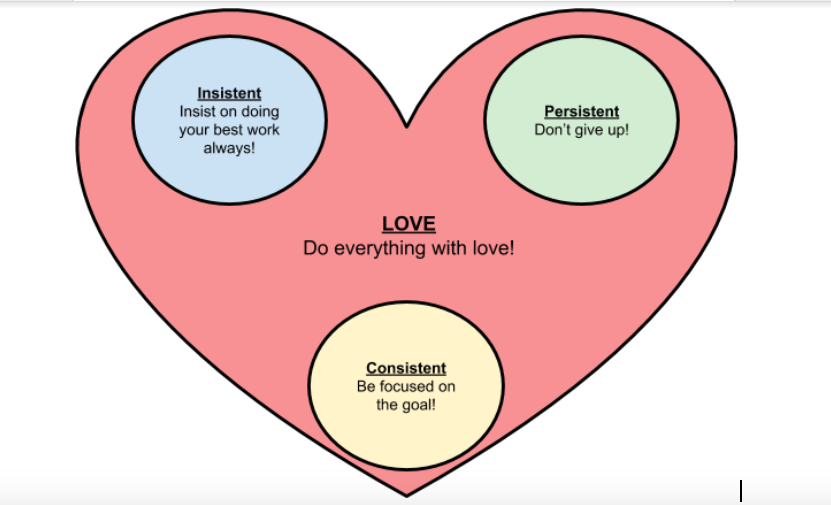
What do you believe are three keys to ANY successful visual and performing arts education?
How have you found assessment to be helpful to you in your classroom?
The assessment practices I have developed over the past three years, online individualized vocal assessments based on voice type and level, enable me to enter into one on one digital conversations with students in ways that I was previously not able to in an ensemble setting. Using Google Classroom as a platform I am able to assess students individually without losing any rehearsal time. The assessments I offer provide students an experience where they are able to learn a song on their own, record a video of it, receive feedback from me, reflect on and respond to that feedback by correcting their performance until standards are met. This allows them to see and hear vocal growth as they continue through the choral program.
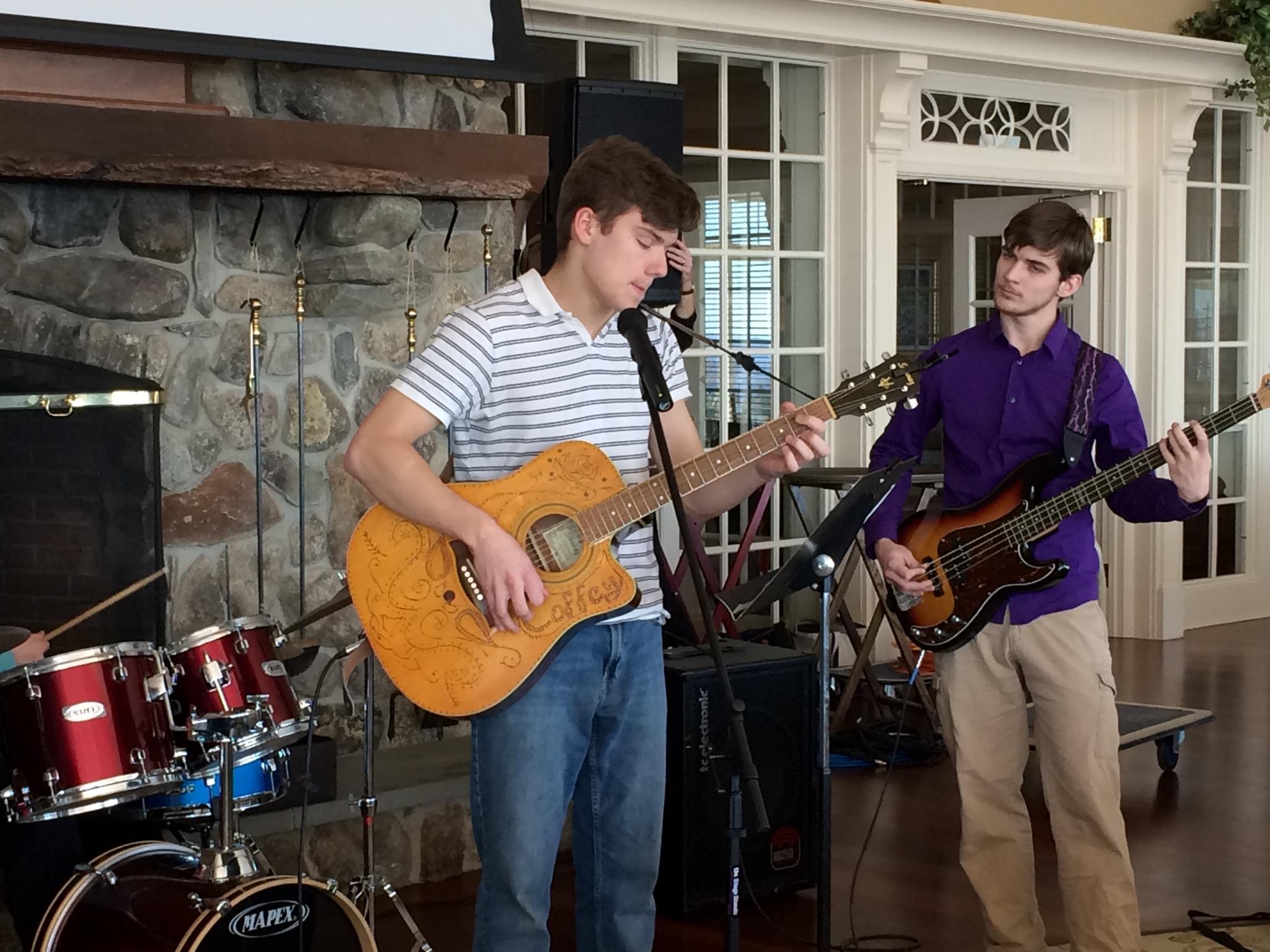
David’s students performing at Point Lookout for the arts and economic impact Maine Arts Commission luncheon.
What have been the benefits in becoming involved in the Maine Arts Leadership initiative?
By becoming involved in MALI I have encountered new colleagues, been given access to new resources and new ways of thinking, and because of those things I have grown as an educator. The ultimate goal is growth, whether it be mentally, physically, spiritually, professionally or in the case of MALI, a growth fusion. In order to grow we must first acknowledge that there is room to grow (there always is!) and then seek or seize the opportunities as they arise. I didn’t really know what to expect when I agreed to be involved but I am glad I did.
What are you most proud of in your career?
I am most proud of the relationships I have built with the staff, students, parents, and the communities where I have worked over the course of my 15 years in education. Though not always easy and while this taken many forms it is always wonderful when the people involved feel a sense of satisfaction, self-worth, and joy. Whether it be working with students and audience members at concerts, preparing students for festivals, getting volunteers for our annual mattress sale, or lending a voice at a school board meeting we, as an education community, have academic, social, and civic responsibilities that we must see through together. What we do as educators, administrators, parents, and community members matters. How we support one another matters. Though not always perfect I am choosing to focus on the positive (or should I say “Accentuate the Positive”) things that have happened to me as an educator and hopefully the contributions I have made have helped to positively shape the lives of the educational communities I have been a part of.
What gets in the way of being a better teacher or doing a better job as a teacher?
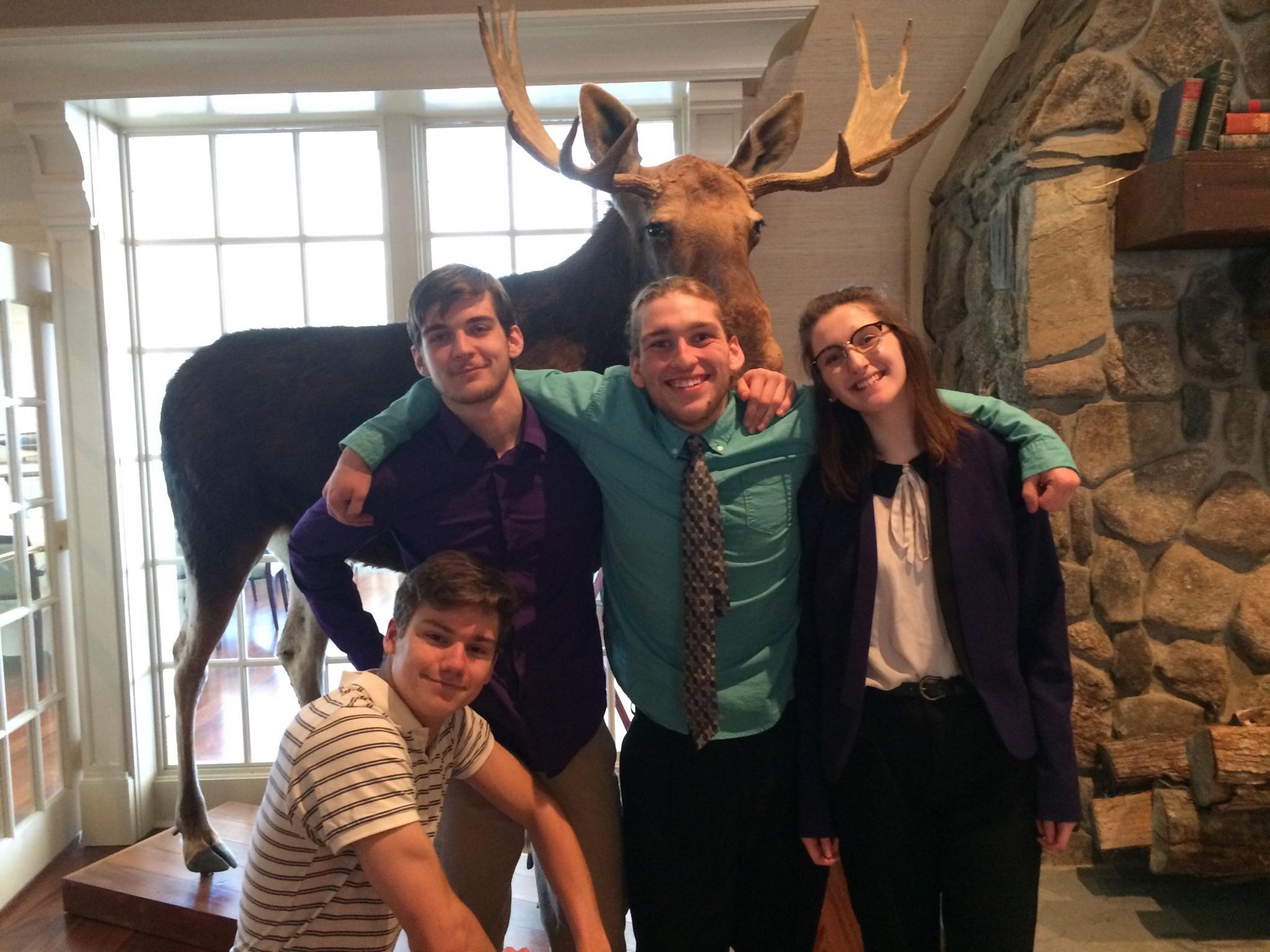
David’s students taking a break from performing at Point Lookout for the arts and economic impact Maine Arts Commission luncheon
One word answer, me…okay, so maybe the answer isn’t quite that simple but that is pretty much the case. Is it true that there are plenty of external factors at work? Yes, but ultimately it is me. Time is one of the biggest things I complain about; not enough time to do this because of that and not enough time to do that because of this. Let’s face it, there’s a lot on our plates. However, while all of that is true, I am starting to realize that maybe there isn’t enough time because I haven’t set limits for myself. Why haven’t I set these limits I might ask myself? Do the words guilt, pride, or ego ring a bell? I want so badly to do a “good” job and help as many people as possible but at the end of the day I haven’t always done a very good job of taking time to take care of me. It’s the whole analogy of putting on your air safety mask in the case of an emergency on an airplane. You can’t help your neighbor until you have put your mask on first. I don’t want to sound selfish or come across as thinking only about myself but this year I am trying to put my mask on first. Yes, I am very busy still but I am taking some time to focus on things I want to do, things that help me feel more refreshed, more energized. Do I have it all figured out? No, of course not, who does? Am I trying, am I doing my best given the circumstances I have to work with? You bet, it’s all I can do sometimes! What are you doing you might ask? Exercise was completely squeezed out of my schedule last year and it has taken its toll. While the toll was more mental than physical, it was noticeable. Knowing that exercise was an important part of my life that was missing I had to make some adjustments to my schedule and expectations of myself to add it back in. I am still working it out but I am glad I am trying, it has helped me and those around me immensely.
What have you accomplished through hard work and determination that might otherwise appear at first glance to be due to “luck” or circumstances?
 Before I moved to Maine I worked for 10 years as a choral and eventually modern band (rock band) director serving students grades 6-12. I also directed the music for the fall musical, had an extra curricular a cappella group, and served on various committees here and there. Pretty standard fare for an Ohio music teacher.
However, when I moved to Maine all of that changed. I found myself teaching concert band grades 6-12, high school chorus, guitar class, directing music for both the high school and middle school musical, directing pep band, jazz band, an a cappella group, and trying to do all of the stuff that comes along with being a teacher. Can’t you just hear the Simon and Garfunkel song “The 59th Street Bridge Song?” “Slow down, you move to fast…Gotta make the moment last….” Needless to say, I was not “feelin’ groovy!” Staffing cuts in our department prior to my arrival had eventually led to an unsustainable system with holes in our course offerings and a ½ time position in our band program that we feared was going to become a revolving door (not helpful when trying to build a program). Over the course of 4 years and in collaboration with the district music staff, administration, and school board we were able to shuffle the staff around in a way that better served the needs of our students, schools, and us as music teachers. It wasn’t easy and I even resigned and got rehired along the way but it was worth it in order to provide a higher quality, more consistent music education to our student population.
Look into your crystal ball: what advice would you give to teachers?
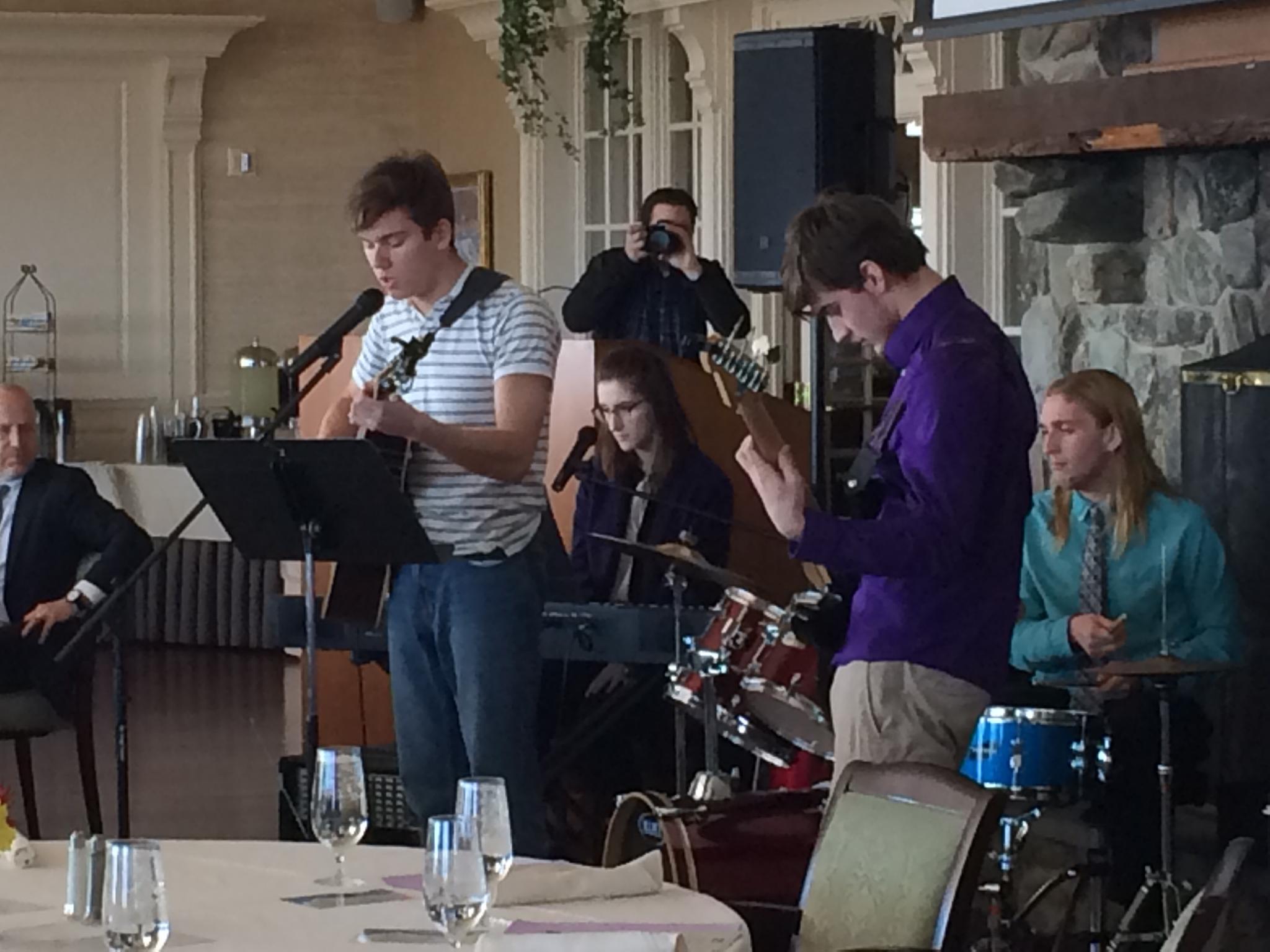
David’s students performing at Point Lookout for the arts and economic impact Maine Arts Commission luncheon
Be patient and don’t spread yourself too thin, set limits. In our efforts to provide high quality arts education we can sometimes fall into the trap of trying to do everything at once. In my case, I see a new lesson or concept and want to try it out right away but without considering the artistic process of preparation, incubation, illumination, and implementation. It usually is more like instant implementation that leads to serious inflammation! Be patient, sit with the lesson or concept for a while, let it incubate, so that you can enter deeply into it not just scratch the surface. You have plenty of time to do it.
Arts educators do amazing work and are often give less time to do it. That being said I know that I am guilty of spreading myself so thin that I get to a point where I feel overwhelmed by it all, crushed under the pressure (again, can’t you hear the chorus of “Under Pressure” by Queen and David Bowie….”Pressure, pushing down on me, pressing down on you, no man ask for”). I say yes to this and yes to that and by the end I am doing way too much at once and can’t really do a great job at anything. We have to learn to set limits. We don’t set limits because we aren’t willing to be helpful, we set limits because we want to be able to be helpful. Think about the oxygen mask emergency training given on airplanes (yep, here it is again!). In order to be able to help others you have to put on your mask first. You won’t do any good passed out on the floor.
Be yourself and listen. You have a core, a center to who YOU are. Am I saying not to look to others as role models and guides? Absolutely not, but I am saying to follow your inner voice and to be corny and quote Shakespeare, “To thine own self be true.” Always, period! You can learn a new concept but learn how to put it in your own words, use your own voice. People crave authenticity, they can smell phony a mile away. Don’t forget to listen to those older and younger than you, you might learn something. Age doesn’t always mean more wisdom, sometimes the greatest learning you can do is by listening to your students. Trust me, they love to know that they taught the teacher something new and what a lesson that is for them to learn!
Imagine you are 94 years old. You’re looking back. Do you have any regrets?
I regret the way I approached my first year of teaching. I was trying so hard to be like my mentor and try things in a way that wasn’t true to myself and I ended up doing some damage to my program that took a couple of years to fix and rebuild. I forgot to take the advice I would now give to new teachers, be yourself and listen. I wanted to build a program the same way other people did and not listen to the advice of those around me. That being said, if we truly believe that education is lifelong and is about growth then we must also learn to apply that to ourselves as educators and be insistent, persistent, and consistent in that belief. I desire and try to be flexible in all things but to me it is important to always be a learner, that is non-negotiable!



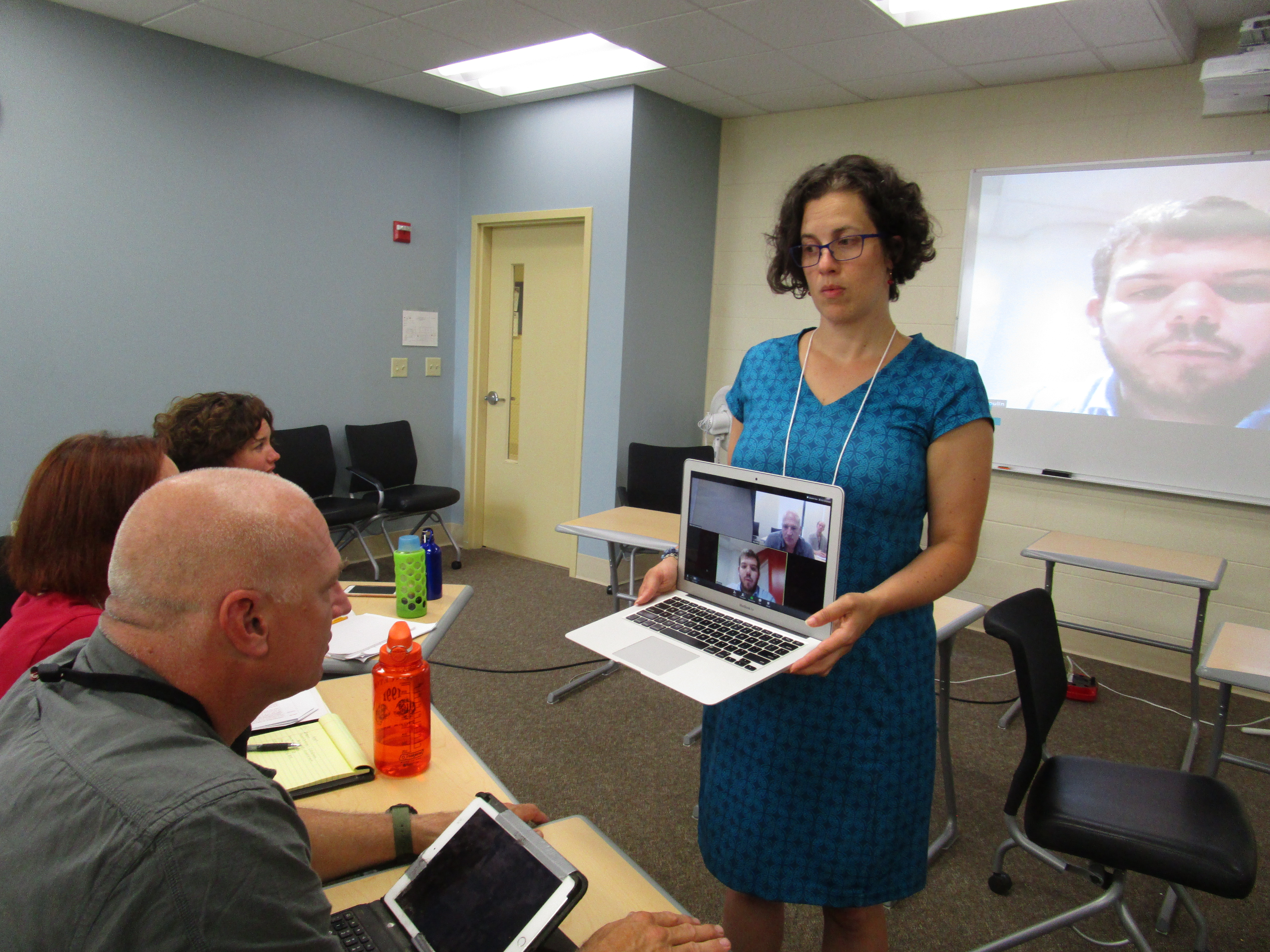
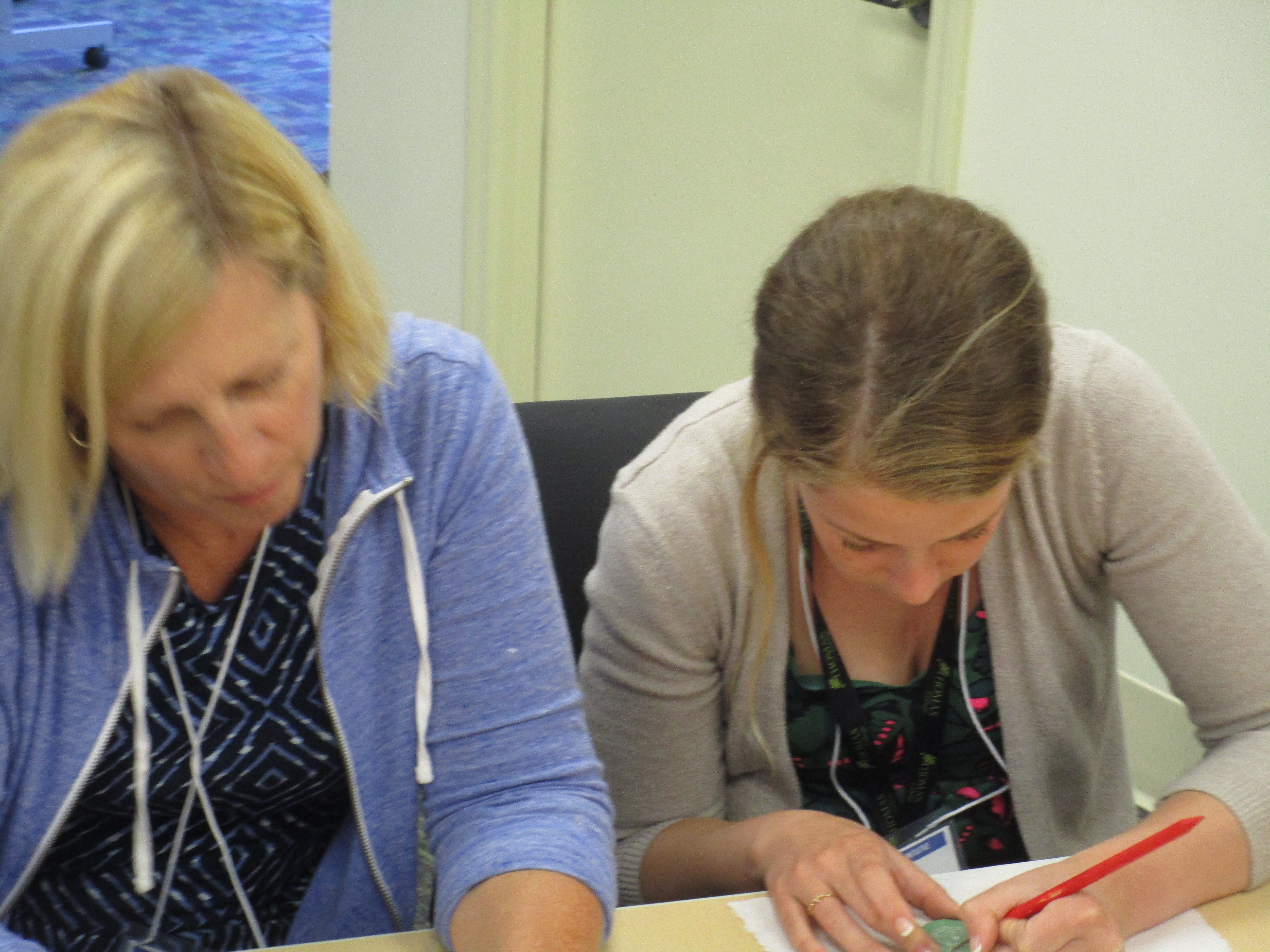
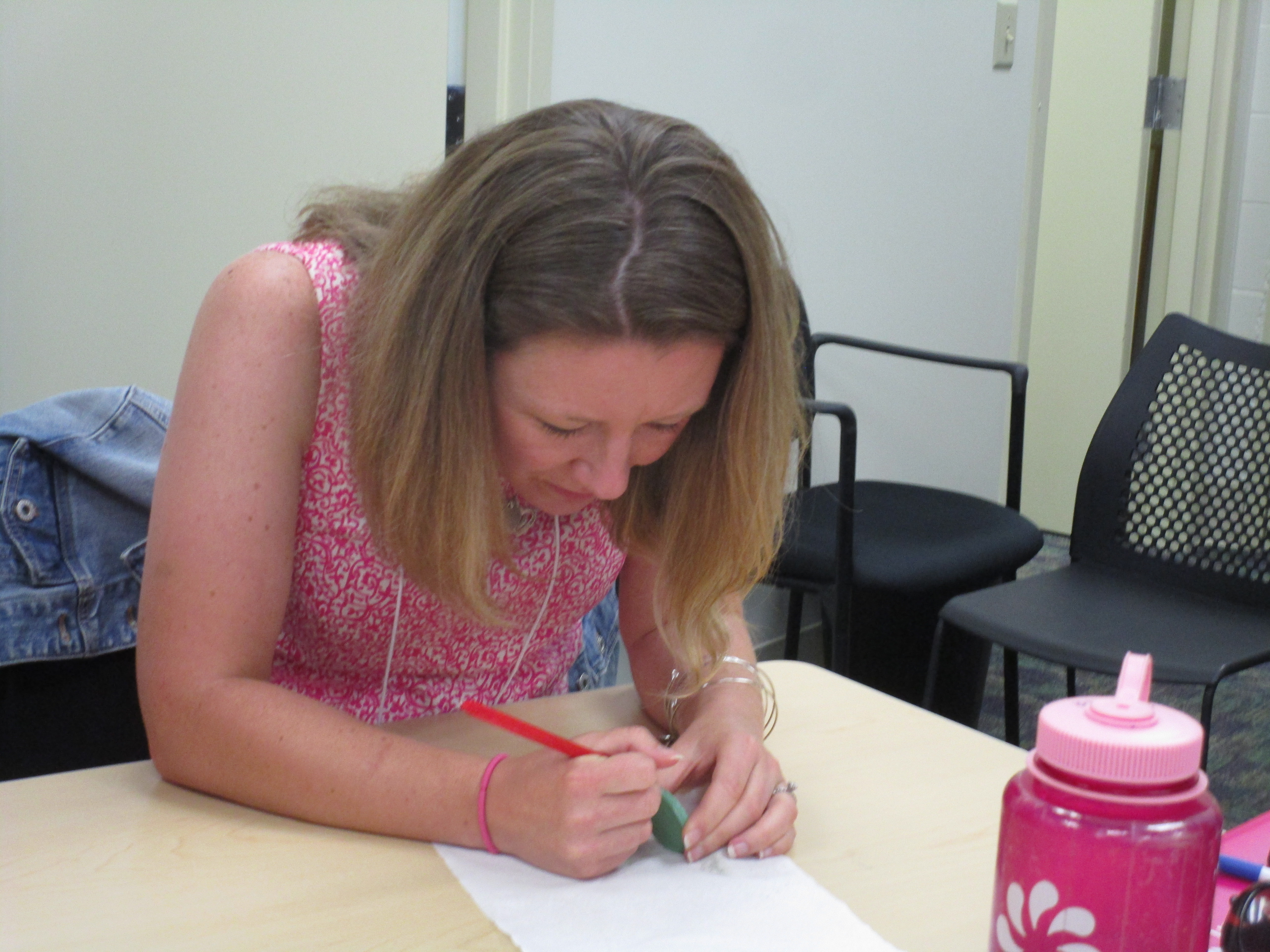
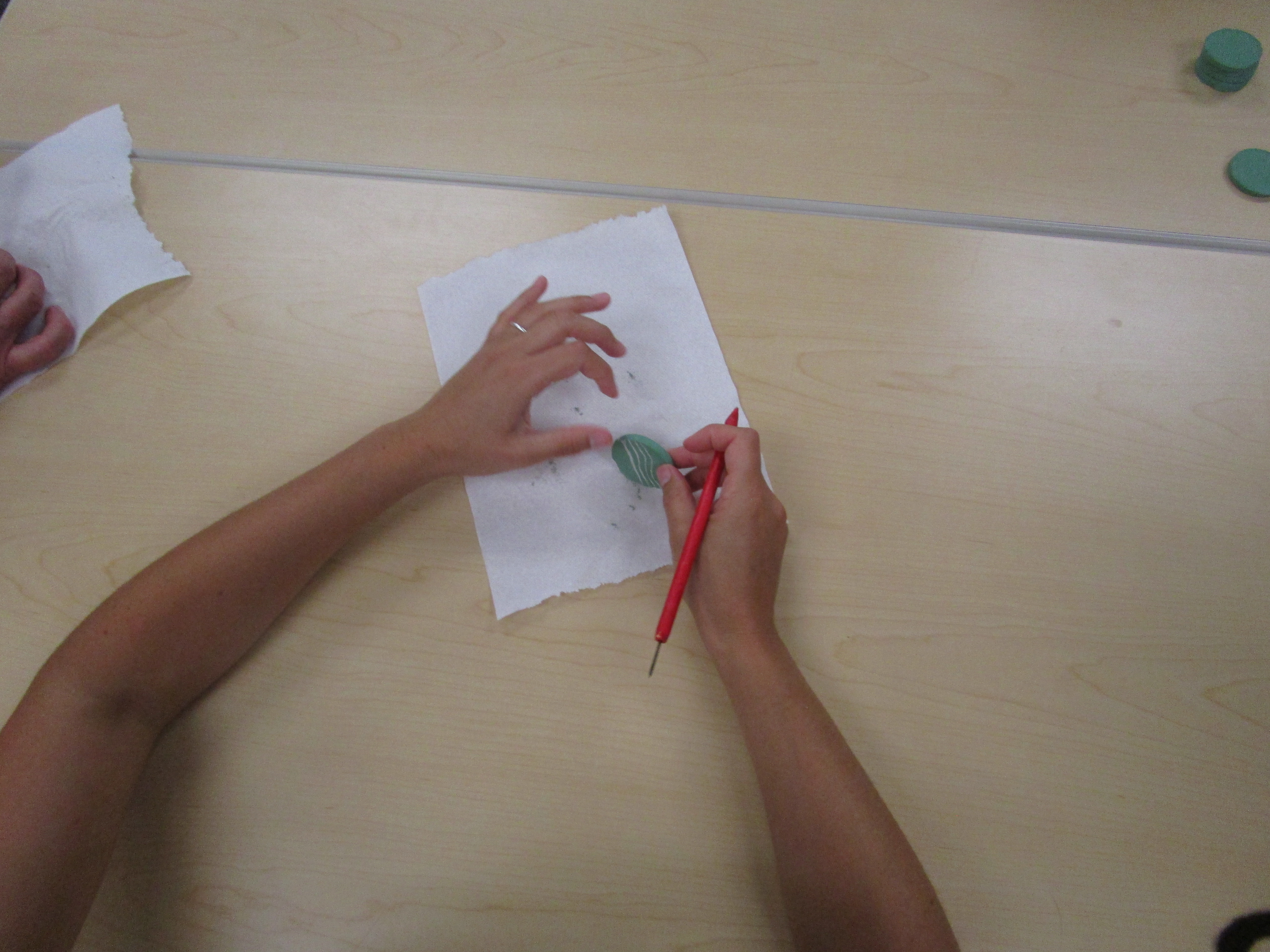
 Develop a creative book making project to assess your students’ authentic learning. Perfect for the end of a grading term, this idea can be tailored to suit the needs of you and your students. Impress your administrators with your ability to keep every student fully engaged in the assessment of their own work. Grades 7-12
 Rhythm!! Is this one of the elements of music that you spend a lot of time on in rehearsal? How are your kids at sight-reading? Have you ever fallen into the trap of singing the part for your students? Are you clapping rhythms in class and finding that it sounds more like applause? Intended for ensemble directors, this workshop will provide a new approach to many based upon a tried and true method of counting and verbalizing rhythmic patterns. Grades 7-12
 Looking at ideas on emotional intelligence and leadership collected by Daniel Goleman we will identify the core elements of emotional intelligence and compare them with habits and skills practiced in the creative process. Be ready to create, journal and discuss ideas together on creativity, the arts and emotional intelligence. All grade levels and all content
 It is the age of customized education and differentiated instruction. Chances are, your building administrators are looking for observable evidence of this in your teaching practice. Time constraints and scheduling difficulties can make customized learning a challenge to implement in the general music setting. In this workshop, we will discuss the benefits of flexible grouping strategies, and how to use them to your advantage. Grades PK-12 General Music
  Ovations Offstage Director Catherine Anderson will introduce workshop participants to Ovations Dynamic School-Time Performance Series for 2018-19, and model for teachers how to help students engage with any story, or content (fictional or not) through the use of “tableau”. Tableau is a wordless theater activity for small groups of students that can be adapted for any age group. Participants will leave with a leasson plan with clear learning targets, and assessment criteria. All grade levels
 Stars and Stairs, Where am I now and Where am I going? How can the use of Stars and Stairs in your classroom help to inform you and your students of their learning progression and actively engage them in the learning process? This will be a round table discussion. Looking at your standards and your curriculum how can you use the Stars and Stairs model in your classroom. All grade levels and all content
 Everyone seems to agree that we need more creativity in education, but just what is creativity, and how can we possibly teach it? This workshop will answer both those questions (gasp…) With one foot planted in neuroscience, and the other dangling in the depths of the subconscious, we will conduct transformative activities (visual arts based) designed to enhance the “brainsets” that contribute to creative states of mind. Grades 7-12
 Improvisation is commonly viewed as a specialty skill, and one that you either have or don’t. This presentation makes the case for improvisation as an essential skill, a naturally growth-minded learning tool, and an additional resource to address any number of Maine Learning Results, and to engage students and give them more ownership over their musical voice. This will be heavily participatory, exploring simple methods to more advanced, and using multiple musical languages/genres. All grade levels
 Art can propel the next generation of leaders to make a personal connection to real world issues. In this workshop participants will explore strategies for helping young people forge a deep and personal connection between the environment and themselves. If our students are to have the courage to address the environmental challenges we face today, they must believe in the power of their ideas and know that they can create something tangible from them. Participants will make art that crosses subject matter boundaries and explore ways to design original curriculum that leads to action. Elementary and Middle Levels and Visual Arts
 Come join a conversation, share thoughts, and cultivate ideas regarding the challenge of integrated curriculum work at the highschool level. How can finding commonalities between subject areas motivate student learning, provide hands on experience with cross curricular connections, as well as benefit the educator as they become more proficient in the language of other disciplines? High School
 Self-reflection is a crucial part in the cycle of learning for both student and teacher. With regular self-reflection integrated in your classroom, students will become more aware, dig deeper, and take ownership of their learning. This applies to us as teachers. We will also discuss the importance of documentation and strategies of reflection upon our own teaching. Information gathered about student growth, understanding, and feedback on units/lessons will not only be beneficial for the development of a curriculum, but also in providing evidence for teacher evaluations. All grade levels and all content
 This workshop documents the progression of a year-long chorus project in which 7th and 8th grade students composed lyrics and music for an original performance piece. The project developed a model of integrated arts programming, including extensive literacy integration through working with a guest poet-in-residence for several weeks. The project also tied in hands-on classwork, a field experience, a connection with a wider community project, video diaries, peer critique, and of course music composition and performance skills. The workshop will give participants a hand-on experience of our project, as well as tools to create their own. All grade levels
 Interested in transforming your school into a STEAM based model? This workshop will include the benefits of STEAM for students, some sample STEAM lessons, and a suggested action plan for incorporating a STEAM approach into your school. Upper Elementary
 How do we teach aesthetics and criticism in our Visual and Performing Arts classes? How do teachers design learning experiences for Maine Learning Results standard D? In this interactive workshop teachers will experience methods for teaching aesthetics and criticism in the 7-12 arts classroom. Sample lessons that teach forms of artistic interpretation to students will be shared as well as methods for critique. The workshop is geared toward supporting the teaching and assessment of Maine Learning Results standard D. During the second part of the workshop participants will be encouraged to share their own approaches. Participants will leave with tools that they can immediately use in their classes. Grades 7-12, adaptable for all grade levels
 This will be a fun and informative program with practical involvement by all. All participants will have ideas to take back to the classroom and hopefully a reinvigorated perspective on their teaching with a theater focus. All grade levels

 This course is taught Jake Sturtevant who was born and raised in Maine by a musical family. He is a prolific composer, performer, and music educator. His compositions encompass a variety genres and media including jazz, funk/fusion, vocal, chamber music, orchestral, electronic, and multi-media works. Jake currently is a music educator at Falmouth High School. He is the former music director at Bonny Eagle High School, in Standish Maine and was music educator at Washington Academy in East Machias, Maine, Teaching Assistant of the Composition department at the University of Minnesota, and he has worked as an intern and as an independent contractor for the Maine Arts Commission. Jake has been interested in acquiring and changing his teaching and assessment practices to focus on standard based grading. He has had the opportunity to be part of the Maine Arts Leadership Initiative formally know as the Maine Arts Assessment Initiative, and has taught a variety of workshops at since the initiative started in 2011. He is continually inspired by other teachers around the state and the country who have found a variety of assessment practices that help students achieve practical goals that will help them progress, while not stifling their creativity. Jake holds degrees from the University of Maine at Augusta’s Jazz and Contemporary music program (B.A., Music, 2003), and the University of Minnesota (M.A., Composition 2005), where he studied with Dr. Judith Lang Zaimont. Beyond his profession Jake enjoys his time with his family, and all outdoor activities especially hiking and skiing.
 from Lesley University, a Bachelors in Music Education from the University of Massachusetts at Lowell and holds a certificate in online instruction through the Carolina Online Teacher program (COLT) through LearnNC, a program of the UNC School of Education. She is currently an Instructional Technology Facilitator and Magnet School Coordinator for the Wake County Public School System in Raleigh, NC. She has been an educator in Maine, New Hampshire, NC and Texas for over 30 years. Mrs. Vinal was a member of the Maine Department of Education Learning Results Review Committee in 2007, which developed the Maine state standards in Visual and Performing Arts. She has presented sessions at multiple conferences on technology integration in the classroom, assessment techniques and in developing standards-based curricula and served on the Maine Arts Leadership Initiative Leadership Team.



 me arts ed