Archive for the ‘Communication’ Category

h1

MALI Becomes MAEPL

December 8, 2020

Teacher Network Rebrands its Commitment to Arts Education

The Teacher Leader network known as MALI, or Maine Arts Leadership Initiative, has taken on the new mantle of MAEPL, Maine Arts Education Partners in Leadership, with the revised mission to develop and promote high quality arts education for all.” Leaders of MAEPL say the new name and mission statement better encapsulates what this community of arts educators has been and will continue to be. The process evolved as a result of bringing in new staff and expanding the organization’s leadership structure. Jake Sturtevant, music educator at Falmouth High School, longtime MALI member and Chair of the MAEPL Vision Team, said, “We are still committed to partnering with each other to be resilient, compassionate, and curious Teacher Leaders for our students and in our communities.”
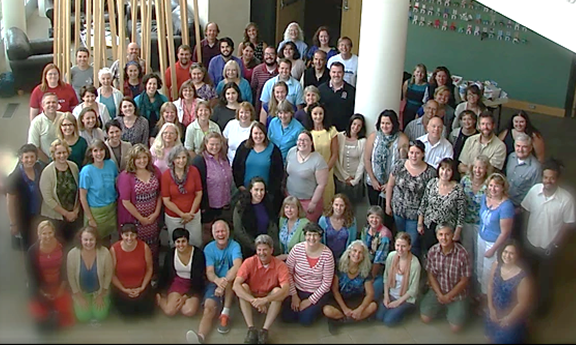
2014 Summer MALI Institute

MALI, now MAEPL, a program of the Maine Arts Commission, is a unique teacher leader development program specifically for preK-12 visual and performing arts (VPA) educators from across the state, one of the very few in the country.  Led by active educators, they focus on the emerging needs of the field.  Components of the year-long program for both classroom teachers and teaching artists in all arts disciplines include community-building, an annual Individualized Professional Development Plan, structured mutual accountability, and leadership development. Over 120 Maine VPA teachers, as well as teaching artists, have participated in the last ten years.  

Even before the pandemic, teachers of the arts often felt isolated.  School district-level trainings are often geared towards general or “core” subject teachers.  “I’m only one of two in my district teaching elementary music.  We are in our little islands, far from anyone else doing what we do,” said Kate Smith, 2014 York County Teacher of the Year and MAEPL Program Team Leader.  “MALI changed all that.” 
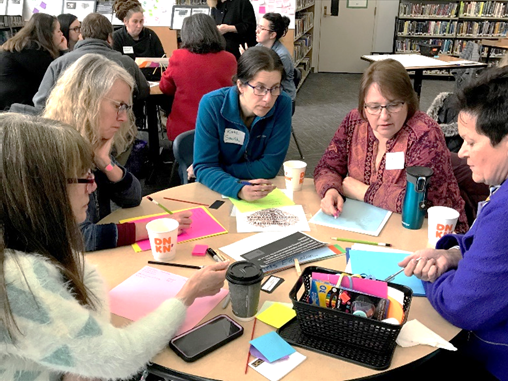
Pamela Kinsey, Lori Spruce, Kate Smith, Pam Chernesky, Julie Richard, Winter Retreat 2020

This past year the group took a deep dive into their own organizational structure, assessing and clarifying their policies and processes. Even through the pandemic, the Leadership Teams met and solicited input from the entire membership, and determined a new name, a refined mission, and a new logo. “We chose the whirling maple seed pod as our new symbol because we felt it reflected the best of what we do – taking new ideas, learning and sharing together, then planting them throughout our school communities,” said Jennie Driscoll, visual art educator at Brunswick High School and Vision Team member. “It’s got our energy.”  

In 2020 they also delivered a virtual Summer Institute to 50 VPA educators, addressing the social and emotional resiliency needed this year. In addition, many members led efforts to support and connect with other teachers quickly adjusting to online instruction, leading virtual seminars through the Maine Department of Education and the Maine Arts Commission.

Group exercise at Winter Retreat, 2020

 “MALI grew a wealth of resources and committed members over the years,” said the current Director of Arts Education for the Maine Arts Commission, Martha Piscuskas, referring to the online Resource Bank and Arts Assessment Resources website, available free to all teachers. “We wanted to build on those strengths.” In addition to the professional development programs, next steps include creating an advisory council, streamlining their web presence, and continued advocacy for the sector. 

The group formed in 2010 to focus on student assessments, an emerging need for visual and performing arts teachers at that time. After learning from other states, a small group of educators led by Argy Nestor, the former Director of Arts Education at the Commission, Rob Westerberg, Choral Director at York High School, and Catherine Ring, former school administrator and art teacher, created the Maine Arts Assessment Initiative. They established the multi-day Summer Institute, sharing a framework and best practices for successful arts assessment in the classroom. “We quickly became the assessment experts in our schools,” said Sturtevant. 
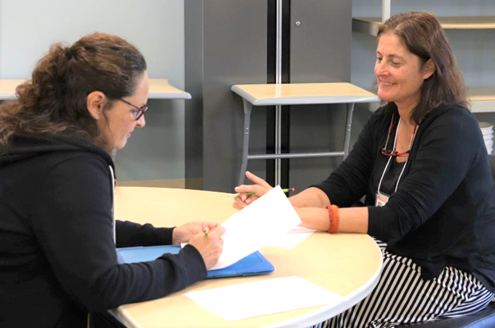
Hope Lord and Adele Drake, MALI Summer Institute 2017

In 2015 the group added “teacher voice” and advocacy to their mission, becoming the Maine Arts Leadership Initiative (MALI), again addressing emerging needs of the sector. “I never would have thought to seek out leadership positions, continue my graduate studies, or have presented at conferences without the support and influence of MALI,” said Iva Damon, visual art teacher and Humanities Department Head at Leavitt Area High School.    

For more information about MAEPL, and to learn about how to get involved, contact Director of Arts Education for the Maine Arts Commission, Martha Piscuskas at martha.piscuskas@maine.gov. Arts education resources developed over the years are accessible through the Maine Arts Commission’s website, https://mainearts.maine.gov/pages/programs/maai.
The Maine Arts Commission is a state agency supporting artists, arts organizations, educators, policy makers, and community developers to advance the arts in Maine since 1966.  www.Mainearts.com


h1

The Poetry Place

December 7, 2020

Teaching Artist Brian Evans-Jones

Maine is fortunate to have Brian Evans-Jones as a poet and writer. He has established a unique website called The Poetry Place. What’s so interesting about it is that he offers The Poetry Parlor to offer support and an online learning environment for participants to write poetry. If you’re interested in writing poetry or perhaps you write poetry but want to learn more about writing poetry, I recommend Brian and The Poetry Place. Here are some questions (from Brian’s site) that can help you get a better idea:

  • Do you want to write better poems?
  • Do you wish you knew more about the techniques of poetry?
  • Do you need help with ideas and getting poems written?
  • Would you love to connect with like-minded poets?

There are many free resources on the site including a 30 page .pdf that you can download. It is called 8 Steps to Better Poems and is filled with a plethora of ideas and information to guide you to writing better poems. The document is broken into 3 segments: Poetry Techniques, Mastering Drafting and Your Next Steps. You can’t go wrong since the document is free! I suggest that you check it out and recommend that your colleagues and students do the same. You can also sign up for his newsletter which is filled with inspiring ideas.

LOOKING FOR INSPIRATION?

Poetry Parlor took me on a positive journey from using an existing poem as an idea to developing the first draft of my poem. The chosen poem and the discussions were inspirational in my own poetry writing.

Then, there were excellent tips on editing that helped to produce a published poem.”

— Sue B.

Brian is a teacher who is providing the motivation and guidance on an individual basis as well as providing time with others who write poetry. You can become a member of the parlor and benefit from following:

  • Getting authentic feedback and support from Brian and others
  • Learning techniques
  • Reading great poetry
  • Writing every month
  • Meeting other poets

Poetry Parlor can work for you if…

  • You have written poetry before, maybe for years, and you would like to broaden your knowledge and skills
  • You would like to learn more about the techniques and forms of poetry
  • You are looking for regular inspiration to help you create poems
  • You want to get feedback on your poems to help you improve
  • You want to know more about poetry being published now
  • You’re just starting poetry and would like some structure and guidance to help you
  • You’d like to get to know other poets in similar positions to yourself, for support, friendship, and encouragement.

ABOUT BRIAN

I was Poet Laureate of Hampshire in the UK (where I used to live) in 2012‑13, and in America I won the Maureen Egen Award from Poets & Writers in 2017. I’ve had poems published in magazines, competitions, and art events on both sides of the Atlantic. And I’ve taught at three colleges/universities, visited dozens of schools as a visiting Teaching Artist, and worked with hundreds of adult students through my own workshops and courses.

Brian coached the Maine State Poetry Out Loud (POL) champion Joao Victor before he traveled to the national competition where he finished in the top 10. Brian served as a judge for POL during 206-2018. POL is open to all Maine high school students and administered by the Maine Arts Commission (MAC). Brian is a member of the MAC Teaching Artist roster and a Teaching Artist Leader with the Maine Arts Leadership Initiative (MALI) established in 2011.

If you want to learn more check out the site and contact Brian at brian@brianevansjones.com and please let him know I sent you.

h1

Transmission Times

December 4, 2020

3 Maine artists sharing

Since mid-March Katie Semro has been making the podcast Transmission Times using audio diaries from people around the world about life during the pandemic. She’s done a special episode on Artists. There are 14 artists in all, 3 from Maine, and it’s filled with their pandemic stories as well as clips of their art. The episode is wonderful as are all of the episodes. Voices from around the world reminds me ‘we are not alone’. They share their struggles and their surprises. Many of the artists mention ‘the silver lining’ and art they’ve created that they would never have during a non-pandemic time. You can listen at THIS LINK.

You can tell your stories as well by recording on your smartphone and email them to Katie at ksemro@gmail.com, or call 847-354-4163 and leave your answers as a voicemail.

h1

Arts Advocacy Week

December 2, 2020

If there was ever a year for Arts Education Advocacy Day, this is it!… so mark your calendars for February 17 – 28th!  This year’s Virtual Advocacy “Day” will be a full week-and-a-half of important events and meetings. Our plenary session on Wednesday, February 17th will feature reports from the field by the leaders of each of the four professional arts educators’ associations that partner with MAAE in the Arts are Basic Coalition (ABC), representing visual art, music, theatre and dance. They’ll be sharing how the pandemic has impacted their discipline, and showing us how they’ve been responding to the challenges, including students’ voices as well.

The week and a half will also be an opportunity for Maine arts students to advocate directly with their legislators in small groups, a tradition we started in 2016 that brought students to Augusta from all around the state. This year zoom meetings will make that trip a lot easier! And the student delegations will also have other advocacy opportunities this year. Our new ABC Student Leadership Group (SLG – see below) has been hard at work on an initiative to form the teams of students who will be representing their schools on Advocacy Day first as advocacy teams at their school who can support arts education locally, as well as connect with the other school teams around the state via our student-managed Instagram account!

Organizing the teams will start this week with a message to the arts teachers from the ABC and Student Leadership Group asking the teachers to encourage one or two enthusiastic arts students at their school to attend a zoom meeting with the SLG about forming a team. The meeting will take place on December 6 at 7 pm

You can help!  If you’re a high school or middle school arts educator but not a member of your ABC arts organization, you can contact Melissa Birkhold, MAAE Advocacy Coordinator, at melissa.birkhold.maae@gmail.com to start the process. If you’re not an arts educator, please forward this email to your local arts educators so they can follow up.

Our SLG students below are looking forward to connecting with other students who share their arts enthusiasm. Their goal is creating a broad network of student arts advocacy teams for Advocacy Day and beyond!  This is the year when those teams are needed more than ever. We thank you for your help, and we’ll keep you posted as we make progress!

If you have any questions please contact Susan Potters, Executive Director
Maine Alliance for Arts Education at maaebangor@aol.com.

ABC Student Leadership Group

h1

I Am Grateful for Dance

December 1, 2020

Thornton Academy Dance program

The dance education program at Thornton Academy is well established and meeting the needs of all learners who are deeply engaged in their learning. Thornton Dance educator and Maine Arts Leadership Initiative Teacher Leader Emma Campbell has high expectations and understands how to connect with all students.

Every year Emma has students respond to the question – What am I grateful for? In a non-Covid year student responses write their gratitude notes on giant cut out leaves and tape them to the mirror in the dance studio.

This year the assignment was adapted to replicate while students are at home this year. They use the Google app called jam board to draft the notes. So everyone contributes a sticky note and then they get to pick from that as groups of that makes sense. Students use this format so there was no need to learn a new concept for the project.

Emma splits the group into breakout rooms to brainstorm thoughts and ideas and recorded one voice from each group and sent Emma the recording. She screen recorded them saying the phrase. Emma takes the footage and voices and does the editing and uploaded it to YouTube. The results are below. A wonderful way to incorporate dance into student thoughts and the outcome is amazing! Thank you Emma and Thornton Academy dancers for sharing your love for dancing and your gratefulness during this season.

h1

Richard’s Leaves Commission

November 16, 2020

In the news Portland Press Bob Keyes

Julie Richard, who has directed the Maine Arts Commission since 2012, will leave her post in Augusta next month to return to Arizona, where she will direct the Sedona Art Center.

“This has not been an easy decision for me,” Richard wrote in her letter of resignation. “I care deeply about the arts and culture sector in Maine and I am very proud of what has been accomplished during my tenure.”

David Greenham, the commission’s chairman, thanked Richard for her service and wished her well. “I am very happy for Julie and also very grateful for the work she has done in Maine to bring the arts commission forward in so many areas,” he said in a phone interview. An interim director likely will be named in a few weeks, while the commission begins looking for a replacement, he said.

In a news release announcing Richard’s departure, the commission cited her work to create a statewide cultural plan in 2015, her efforts to reform the agency’s grant programs and the creation of an advocacy and support organization for the state’s cultural sector, ArtsEngageMe. She also oversaw a statewide census of arts education in Maine and instituted the biennial Maine International Conference on the Arts.

Greenham said Richard and her staff have been responsive to the pandemic, taking on at least two extra grant programs since March to help artists and arts organizations. “That’s a lot of work and a big process, and that was on top of all the regular work they do with the grant programs,” he said.

In a typical year, the commission processes about 450 grant applications across multiple programs and artistic disciplines. In 2020, it reviewed and processed 1,421 successful grants to provide emergency relief with additional funding from the National Endowment for the Arts and CARES Act.

Read the entire article from the Portland Press at THIS LINK.

h1

Institute for Arts Integration and STEAM

October 28, 2020

13 Strategies for Making Thinking Visible in the Classroom

For many educators focusing on the process and not the product has been a gradual change. The pandemic has forced this shift rapidly and educators are gracefully embracing it in many cases. This requires a growth mindset and ideas and suggestions from supportive colleagues. Susan Riley’s Institute for Arts Integration and STEAM has put together a comprehensive list of strategies that you can apply (in person and/or remotely) in your classroom environment that will make your students thinking visible.

Why make learning more visible you may wonder? Critical and creative thinking skills are an integral part of teaching and learning, always have been part of arts education. I’m glad that other educators have gotten on board with this in this 21st century. One key for developing and assessing critical and creating thinking skills is to making thinking more visible. If we can see the process students are using to analyze problems, make predictions and draw conclusions, teaching and guiding students thinking becomes easier.

I encourage you to take a look at the ideas Susan Riley suggestions below to support your teaching and students learning.

  1. Use Artful Thinking Routines
  2. Try Close Reading of an Art Composition
  3. Connect with Cooperative Poetry
  4. Explore Ekphrasis Poetry for Vivid Language
  5. Generate One Word Focal Points
  6. Develop Collaborative Narrative
  7. Sketch to Write
  8. Create an Art Recipe
  9. Design Haibun Poems
  10. Perform a Human Slideshow
  11. Build Summarizing Skills
  12. Composing a Soundtrack
  13. Produce Curriculum-Based Reader’s Theatre
h1

Passamaquoddy People

October 26, 2020

Geo Neptune is a performance artist, educator, and basket maker who left Indian Township where he grew up to attend Dartmouth College in 2006. Geo returned to the Indian Township community in 2010 and has learned a great since. As a newly elected member of the Indian Township school board Neptune has plans to make a difference for young people.

One of the things that makes the Passamaquoddy unique, Neptune says, is that they don’t have a “migration or removal story.” The tribe, which numbers around 3,500 people, has “lived on the shores of these lakes and our ancestral river for 13,000 years.”

Geo plans to advocate for greater education on Passamaquoddy culture and language, which they feel have been deprioritized by faculty and administrators in recent years.

Read Geo’s strong and clear statements about what it’s been like for the Passamaquoddy people in this interview for them with Nico Lang.

Photo credit: Sipsis Peciptaq Elamoqessik
h1

Helpless

October 23, 2020

Hamilton

Hamilton is a story about hope, revolution, and love. The original cast of Hamilton singing “Helpless” will have you moving and smiling. How might you incorporate this into your curriculum this year? Let me count the ways!

h1

Grammy Music Educator Award

October 20, 2020

25 Semifinalists announced – Maine proud!

In the beginning of June 2020 the Music Educator Award presented by Recording Academy and Grammy Museum announced their quarterfinalists for 2021. I was proud to announce on the blog that three Maine music educators were named to the list of nearly 2,000 nominees!

  • CAROL CLARK – Gray-New Gloucester High School
  • PATRICK VOLKER – Scarborough High School
  • TRACY WILLIAMSON – Gorham Middle School 

As a follow up Tracy shared her Covid story posted on this blog that provided details on her teaching journey through the school year.

Tracy Williamson

Recently Tracy learned that she is one of 25 music teachers from 24 cities across 16 states to be named a semifinalist for the award given by the Recording Academy and GRAMMY Museum.

CONGRATULATIONS TRACY!

The finalists will be announced in December and Maine Arts Educators will be waiting to hear the outcome!

The Music Educator Award recognizes current educators who have made a significant and lasting contribution to the field of music education and who demonstrate a commitment to the broader cause of maintaining music education in the schools. The recipient will be recognized during GRAMMY Week 2021.

The award is open to current U.S. music teachers, and anyone can nominate a teacher — students, parents, friends, colleagues, community members, school deans, and administrators. Teachers are also able to nominate themselves, and nominated teachers are notified and invited to fill out an application.

Each year, one recipient is selected from 10 finalists and recognized for their remarkable impact on students’ lives. They will receive a $10,000 honorarium and matching grant for their school’s music program. The nine additional finalists will receive a $1,000 honorarium and matching grants. The remaining fifteen semifinalists will receive a $500 honorarium with matching school grants.

The matching grants provided to the schools are made possible by the generosity and support of the GRAMMY Museum’s Education Champion Ford Motor Company Fund. In addition, the American Choral Directors Association, National Association for Music Education, NAMM Foundation, and National Education Association support this program through outreach to their constituencies.

The finalists will be announced in December, and nominations for the 2022 Music Educator Award are now open. To nominate a music educator, or to find more information, please visit www.grammymusicteacher.com.