Archive for the ‘Communication’ Category

h1

MALI Teaching Artist Leader Story: Shawna Barnes

February 5, 2019

Teaching Artist – Sculptor

This is one of six blog posts in 2019 that include stories of the Maine Arts Leadership Initiative (MALI) Phase 8 Teacher Leaders and Teaching Artist Leaders. This series includes a set of questions so you can learn a little bit about each leader. CLICK HERE  for more information on MALI. CLICK HERE  for more information on the 96 Teacher Leaders and 11 Teaching Artist Leaders. CLICK HERE  for Arts education resources. CLICK HERE for the MALI Resource Bank. Search in the “search archives” box on the bottom right side of this post for past teacher leader stories. Thank you Shawna for sharing your story!
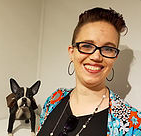
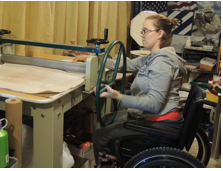
Shawna N.M. Barnes is a Ceramic Sculptor who has been focused on teaching for three years. Her favorite group to teach is the one full of people who “don’t think they can” because of a disability. Or never gave art a try because of their disabilities. “Problem solving and finding ways to show them they can create and engage in creativity… is amazing.”

What do you like best about being a teaching artist?

I love all the people I have met as a teaching artist. Doors that have been opened, and opportunities presented. It has provided me the ability to share my passions with others who appreciate it.

What do you believe are three keys to ANY successful visual and performing arts education?

First, allowing for differential interpretations of a topic. Essentially acknowledging that the world is full of gray. And when it comes to art, the spectrum of how art and its concepts are perceived, truly is a spectrum.

Second, the ability to acknowledge that art is a bridge between worlds. Whether that be yours and mine, real and fantasy, or past and future. It allows for difficult conversations to be had, often bridging a divide caused by a lack of understanding. Teaching this concept to our students is vital.

Third, the ability to appreciate content, subject matter and skills needed to complete a work of art without having to like the art itself. The ability to see it with an objective eye.

Have you found assessment to be helpful in your classes, workshops and residencies, and if so, how?

Thus far, assessments have helped guide the evolution of my classes and workshops. By evaluating what is working, what is not; what different ages and abilities respond to; I have been able to fine tune the classes so that the highest number of people fund value and enjoyment from the class.

What have been the benefits in becoming involved in the Maine Arts Leadership initiative?

The benefits have been innumerable! It has been the push I needed to create the resource center in my website. I have been given the opportunity to grow my speaking career by giving presentations at conferences. It has sparked collaborations between several members for brand music, for upcoming tutorials, and similar applications. It has introduced me to a group of peers that have become my support network. It has given me the confidence in my own set business that my intuition is right and I am on the right path.

What are you most proud of as an artist and/or a teaching artist?

I am most proud of breaking barriers and showing others where barriers exist. As a disabled artist, I often chose to just not participate in events and workshops because it was easier. I’m taking my challenges and helping create solutions that benefit not just me… but hopefully generations of disabled learners and artists so that they can have access to creative outlets.

What gets in the way of doing a better job as a teaching artist?

My health, admittedly. It can cause me to be unreliable and miss deadlines. Another factor is physical accessibility to facilities that may want to host me for workshops or seminars

What have you accomplished through hard work and determination that might otherwise appear at first glance to be due to “luck” or circumstances?

Simply being an artist is hard work and requires determination every day to put the work in. I work through a variety of disabilities just to be able to create; myasthenia gravis,  cervical dystonia,  hypermobility joint syndrome, seizures, chronic pain, peripheral neuropathy and PTSD are the heavy hitters.

What advice would you give to someone who is thinking about becoming a teaching artist or is just starting out?

You will stumble as you find your footing but don’t let that detour you from continuing to put the work in to build the foundation of your career. Don’t be afraid to ask for help.  There’s plenty of room for everyone at the top, do not entertain a scarcity mindset. 

If you were given a $500,000.00 to do with whatever you please, what would it be?

Build my handicap accessible studio. Give a few grants to local artists and arts organizations looking to make their space accessible by adding ramps or stairlifts to their infrastructure. And spend a few weeks in Paris, soaking up all the amazingness that is the Louvre.

Imagine you are 94 years old. You’re looking back. Do you have any regrets?

None.

h1

Celebrating Teachers

February 3, 2019

Proud of arts educators

Today is the last day nominations are being accepted for the 2019 County Teachers of the Year and the 2020 Maine State Teacher of the Year.

Information is located on the Maine Teacher of the Year Website.

The Maine State Teacher of the Year process of selecting and recognizing educators is very extensive. The process starts in January with nominations and during the following several months essays are written and submitted, interviews take place, presentations occur and video tapes created. Many are nominated of which each county has a teacher named. After 9 months the process takes it down to 3 finalists and in the end one teacher is selected. Each year in November a gala celebration happens where all of the county teachers of the year are recognized along with the next years State Teacher of the Year.

Anthony Lufkin

The 2019 gala took place the week before Thanksgiving. It was to see Kaitlin Young, music educator, Maine Arts Leadership Initiative Teacher Leader and the 2018 Maine Teacher of the Year emcee the evenings program. It was a chance to celebrate Kaitlin’s amazing journey and what she has contributed to education. She has been a wonderful representative of all Maine teachers and especially Visual and Performing Arts Educators. In addition, three more arts educators were celebrated. I’m so proud of their work.

  • Christine Del Rossi, Sagadahoc County, Visual Arts grades 9-12 Mt. Ararat High School
  • Anthony Lufkin, Knox Counnty, Visual Arts grades PreK-8 Union Elementary School, Prescott School (Washington), Friendship Village School, Middle School Alternative Education
  • David Coffey, Waldo County, Music grades 6-12 Belfast Area High School

Christine Del Rossi


h1

POL Northern Regional Finals

January 31, 2019

Amazing High School Students

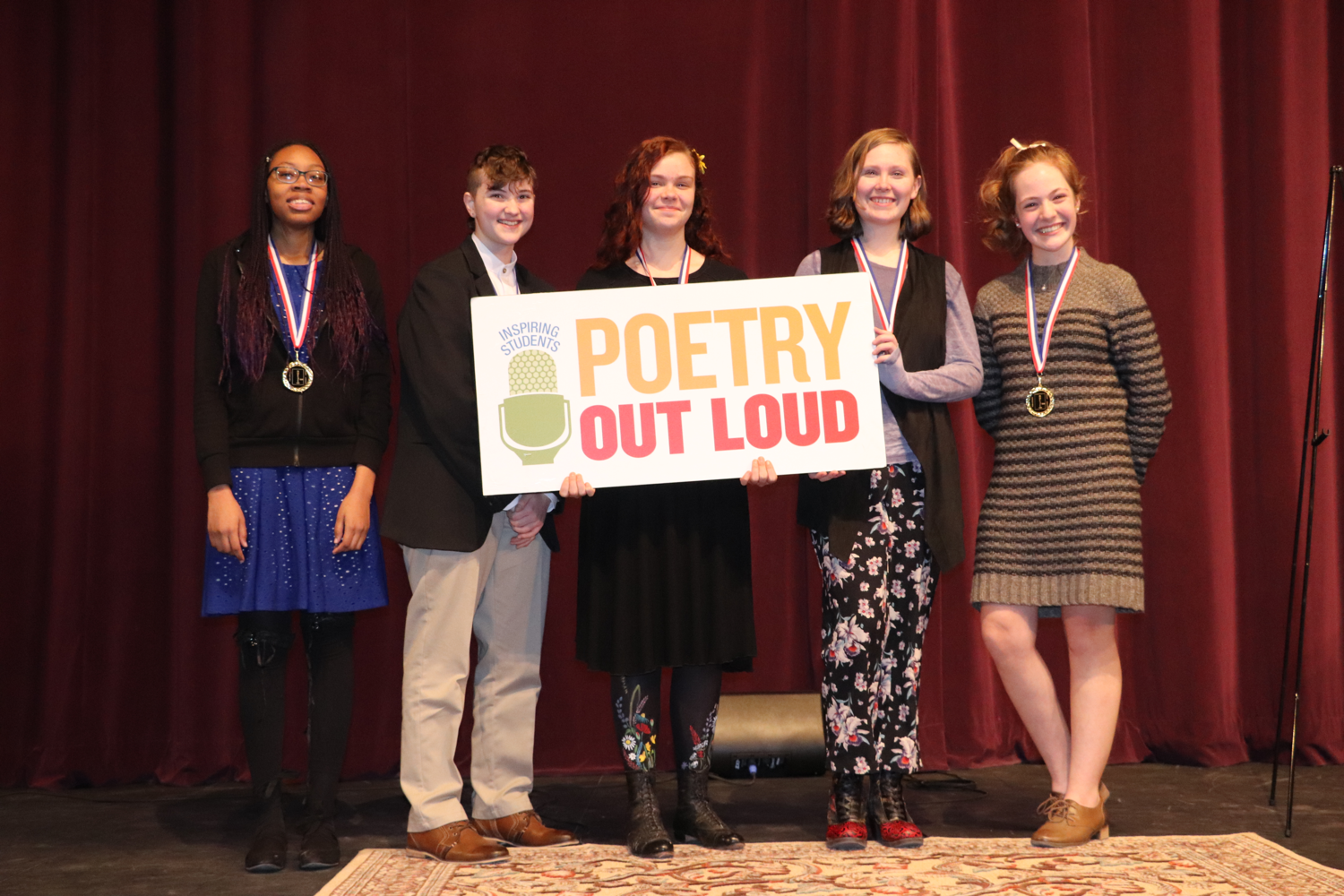
Five Northern Maine Finalists: Shaphnah McKenzie, Emma Jacot-Descombes, Magnolia Vandiver, Hanna Lavenson, Emily Campbell

At Hampden Academy earlier this week students, teachers and families traveled from different parts of Maine to recite poetry. The Maine Arts Commission held the Poetry Out Loud (POL) Northern Maine Regional Finals in conjunction with the Poetry Foundation and the National Endowment for the Arts. Students have been practicing and reciting poems in schools across the state and country since early in fall. For the event they had prepared three recitations and wowed the audience with their amazing performances.

We’re so proud of the following students who participated. The names with stars are the five students moving onto the state finals on March 11 at the Waterville Opera House, 3:00 p.m. The event is free and open to the public. All are welcome!

  • Hanna Lavenson, Messalonskee High School **
  • Emily Campbell, Waterville High School **
  • Emma Damboise, Hampden Academy
  • Kate Kemper, Camden Hills Regional High School
  • Maria Dottie, Winthrop High School
  • DiamondRose Dunfee-Platt, Searsport High School
  • Rebecca Collins, Presque Isle High School
  • Emma Jacot-Descombes, Rangeley Lakes Regional High School **
  • Magnolia Vandiver, George Stevens Academy **
  • Shaphnah McKenzie, Bangor High School **
  • Elias Miller, Medomak Valley High School
  • Neily Raymond, Hermon High School
  • Kaitlyn Bilodeau, Leavitt Area High School
  • Kaitlyn Carreira, John Bapst Memorial High School
  • Shelby Skipper, Gardiner Area High School

The Southern Regional Finals will take place on Monday, February 11, 3:00, Westbrook Middle School Performing Arts Center. For more information about the Poetry Out Loud program please go the POL pages at the Maine Arts Commission website.


h1

Human Rights Speak Truth

January 17, 2019

Robert F. Kennedy Video Contest

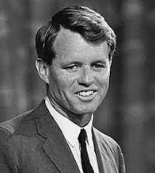
“THE GREATEST VOICE IS THE VOICE OF THE PEOPLE – SPEAKING OUT – IN PROSE, OR PAINTING OR POETRY OR MUSIC; SPEAKING OUT – IN HOMES AND HALLS, STREETS AND FARMS, COURTS AND CAFES – LET THAT VOICE SPEAK AND THE STILLNESS YOU HEAR WILL BE THE GRATITUDE OF MANKIND.” ~Robert F. Kennedy

Robert F. Kennedy

Middle and high school students are invited to create short videos that highlight the work of a human rights defender. Year 8 for this opportunity is available from a partnership with the American Federation of Teachers and the Tribeca Film Institute. In creating these short videos, whether they be documentaries, narrative films or digital photo essays, students not only learn about human rights, but also become champions of change and social justice.

Submissions are judged by a panel of film industry experts, actors and educators, and contest winners will have their films premiered at the Tribeca Film Festival in New York City. You can learn more on the contest website at THIS LINKFind the guidelines for the contest and see examples of work submitted from the last seven years. DEADLINE: February 17, 2019.

h1

Arts Accessibility

January 14, 2019

What does it mean?

This post is reprinted with permission from Shawna Barnes’ blog located at THIS LINKShawna is a Teaching Artist Leader with the Maine Arts Leadership Initiative (MALi). She is a ceramic sculptor and mixed media artist who loves sharing her passion with others. Shawna is a strong advocate for the arts being accessible to all. She is an Army veteran who served in Operation Iraqi Freedom (OIF 7) from 2009-2010. Shawna lives with several disabilities including myasthenia gravis, cervical dystonia, seizures, hypermobility joint syndrome, peripheral neuropathy, and PTSD. 

Shawna created a survey on arts accessibility which you are invited to complete; access it at THIS LINK

One of the things I talk about a lot is the phrase “arts accessibility” and the fact that I am an advocate for it. In discussions with colleagues and friends, I realized that it isn’t really a clear term. This point was driven home even further when I included the question “What does arts accessibility mean to you” in a survey I shared asking for feedback regarding educators’ struggles with arts accessibility in the classroom/studio. So I figured I’d take some time and provide an overview on all the different possible definitions of arts accessibility and what it means to me.

Arts Accessibility – Definition #1

For me, it started when I was exploring different opportunities for artist residencies, workshops,  and seminars. As someone with mobility impairments, I always had to ask if the facility was accessible. No…….handicap accessible, not accessible from the highway. One of the things I discovered was that most of the facilities are not friendly or easy to navigate for those of us who have any type of mobility impairment/disability. This was a discovery made long before I became a teaching artist leader with the Maine Arts Leadership Initiative; it was then, however, that arts accessibility became my pet project. I was disappointed and downright bummed out about missing out on some amazing learning opportunities because the studio spaces were on the second floor of an old barn with no elevator access… or down several flights of outside stairs down the side of a cliff…or lacking any sort of climate control (air conditioning or heat source). And those barriers were from just a few of the locations I looked at locally. The facilities themselves are spectacular and amazing; drawing high caliber artists and professionals from around the world… This is just one example of what arts accessibility could look like – the most literal definition of the phrase – physical accessibility to a facility.

My disabilities are acquired; I was not born with them.  As a result, I am acutely aware on all the amazing things I am missing out on as a result. That FOMO (fear of missing out) is real ladies and gentleman, and the sting is one that is ever present. I quietly made it my mission to let the administrators of these facilities know that I was deeply saddened to be missing out because the facilities were not accessible. Some enlightening and hopeful conversations have been had as a result of this dialogue.

Arts Accessibility – Definition #2

Another quite literal definition of the term is actually having access to the arts. This includes students having access to art classes at their school, having nearby museums or art studios to attend, local theaters and dance halls, et al. There was a big focus on STEM curriculum, and as a result the creative arts saw a lot of cuts in Prek-12 curriculum. Recently however, administrators, educators, and clinicians are acknowledging the importance art has in youth development. This re-discovery has transitioned STEM curriculum to STEAM with the A standing for the arts. There are still many students who do not have the opportunity to take an art class – either one offered as part of their daily curriculum OR after school activities. This access barrier extends well beyond academic and includes all people who have interest in learning more about a topic in art.

Arts Accessibility – Definition #3

A third definition of “arts accessibility” is one of economic hardship. Learners of all ages who live in impoverished communities lack the financial means to be able to explore the creative arts. In areas where art and band are still offered as part of the middle/high school curriculum it’s less of an issue; at least they have the exposure to a creative outlet. However for others where these classes are not available, lacking the financial ability to enroll in after school classes at studios or arts organizations is a barrier. Economic barriers prevent access… which leads me to my next definition…

Arts Accessibility – Definition #4

Accessibility to the arts could have nothing to do with infrastructure and everything to do with the abilities of the staff. For adults and children with a wide range of developmental disabilities, the physical access definition is less important than having access to teachers who are able to meet them where they’re at. What I mean by that, is that for many in this demographic, teaching/leading them through an art class takes considerable patience and an understanding of how their brain functions. When families find artists/educators who ARE qualified and adept at working with these populations, the financial barrier is then factored in. Finding and hiring experienced artists can be expensive.  Investing in custom equipment and tools to allow the student the highest level of engagement in activities can be cost prohibitive.

Arts Accessibility – Definition #5

My fifth and final definition for arts accessibility, is one of the psychological variety. It has everything to do with the possible/potential student. The commonly accepted definition/understanding of creativity is that it’s something artists have. If the student feels and truly believes that they just don’t have the skill to create anything worthwhile and thus are defeated before they even try, that is a barrier to access. If it’s one thing I LOVE doing…it’s breaking down this particular barrier to arts access. It is a barrier that anyone can break down and help the student over if the teacher has the right tools in their toolbox.

And there ya have it. Those are MY five definitions of what  arts accessibility barriers could look like. There’s likely more that I haven’t thought of or come across yet. In future posts, I will break down each definition and explain how I personally work towards overcoming the barrier to access. It’s just as much about breaking down the stigma that only artists can appreciate art and reap benefits from a creative outlet as it is about providing opportunities for people to explore activities they’d never considered.

What does “arts accessibility” mean to you? How do you overcome the barriers?

You can follow Shawna at the following: 

www.shawnabarnes.com
www.facebook.com/shawn.n.m.barnes
www.instagram.com/shawna.n.m.barnes

h1

Americans Who Tell the Truth

January 9, 2019

Syracuse University curriculum connections

Students preparing for their solo performance based on one of Rob Shetterly’s paintings.

If you are a Maine Arts Education blog follower you know that I’ve included a handful of posts on Americans Who Tell the Truth and artist Robert Shetterly. The last post Americans Who Tell the Truth in Syracuse included information on the 238 portraits of Rob’s that were on display at Syracuse University.

I followed up with Connie Carter who works with Rob visiting Maine schools who are using the paintings in multiple ways. I was curious how a higher education institute was tapping into this incredible body of work. Fortunately, it was a question that Rob and Connie asked as well and videos have been created on the topic. Raw footage for the most part that are posted on Vimeo can be found at the links below.

Steve and Rob conversing about the Solo Creations course work.

Jim Clark from the theater department at Syracuse University was interviewed and speaks very clearly about the power of the portraits for students in the creative arts and beyond. CLICK HERE to view the interview and use the password AWTTClark.

The second video includes an incredible interview with Steve Cross, professor of Visual and Performing Arts at Syracuse University. He teaches a required course titled: Solo Creations that uses the portraits to explore ideas about creating a solo piece. The video includes performances by a couple of his students so you can see the outcomes of the work with Mr. Shetterly’s paintings. CLICK HERE to view the interview with Steve and his students performances. Use the password AWTTCross. 

h1

Maine Community Foundation

January 7, 2019

Over 600 Scholarships Available

The Maine Community Foundation offers more than 600 scholarships that support students pursuing studies in music, journalism, teaching, horticulture, technology, the arts, and many other fields. The scholarships are available for students who attend secondary, post-secondary, and graduate schools, as well as non-traditional programs.

A complete listing of scholarships available for the upcoming school year is now online at the Maine Community Foundation website, www.mainecf.org.

In 2018, the community foundation awarded nearly $3 million in scholarships to more than a 1,000 Maine students attending schools in the state, across the country, and around the world.

Adult learners also can benefit from a number of scholarship funds that help them navigate the road back to school. About 200,000 Mainers who started college never completed their degrees. The Maine Community Foundation is focusing on this group as part of its goal to advance education in Maine.

MaineCF is a supporting member of the MaineSpark coalition, a 10-year commitment by education, nonprofit, philanthropy, and business leaders to ensure Maine’s workforce is productive and competitive. Its goal: By 2025, 60% of Mainers will hold education and workforce credentials that position Maine and its families for success.

MaineCF’s scholarship funds are established for a variety of reasons, from honoring a family member to carrying on the tradition of “giving back” that helped an individual through college. To establish a scholarship fund at the community foundation, call Liz Fickett, scholarship funds manager, toll-free at 877 700 6800, ext. 2015.

Headquartered in Ellsworth, with additional personnel in Portland, Dover-Foxcroft, and Mars Hill, the Maine Community Foundation works with donors and other partners to improve the quality of life for all Maine people. To learn more about the foundation, visit www.mainecf.org.

h1

Teacher and Educator Open House

January 4, 2019

Digging into Winslow Homer

You’re invited: Wednesday, January 16, 2019, 3:30 p.m. to 6 p.m., Portland Museum of Art, open house for educators!

Winslow Homer (United States, 1836–1910), Weatherbeaten, 1894, oil on canvas, 28 1/2 x 48 3/8 inches. Bequest of Charles Shipman Payson, 1988.55.1

Come explore Winslow Homer and ways to dynamically bring this iconic Maine artist’s work into your classroom! Discover ways to infuse lessons with Maine’s rich artistic history through the lens of Winslow Homer’s artwork, and through explorations of contemporary artists’ depictions of the Maine landscape. Featuring a talk with Frank Goodyear, Winslow Homer Scholar and Bowdoin College Museum of Art Co-Director, and in-gallery activities facilitated by museum educators and docents.

Click here for more information

Complimentary refreshments and classroom resources will be shared with attendees. Limited Free Parking is Available: Attendees will be able to park in the Holiday Inn By the Bay lot for this event.
Just mention you are a teacher attending an event at the PMA.

Click here to RSVP electronically today  or RSVP call Emily Junker at (207) 775-6148 ext. 3228.
h1

Lean In, Take a Chance, Be Bold

January 3, 2019

2019

What will 2019 be like for you? Will it be a continuation of 2018 or will you try something different, take on new ideas, be more innovative? Will you be brave and jump into an idea that you’ve been considering? Watch this TEDxVienna given by Kyle MacDonal who started with a red paper clip and met wonderful people. Open your mind and heart to being inspired!


h1

The Dad Who Dances

December 20, 2018

Parenting

I was reminded at the dance performance at Thornton Academy in November of how parents support their children’s passions. While waiting in line for the rest room I found myself in conversation with a woman holding a bouquet of flowers. A dead give away that this was a mom of one of the dancers. I asked her about the support that is necessary that she provides her daughter in order to dance. Turns out that she drives over two hours to get her daughter to and from the dance studio, twice a week, so she can go to dance class. She has two other children and is in graduate school. My response: thank you – I’m sure that it is worth it since your daughter is growing and learning skills that are transferable and will last a lifetime.

The Dad in this video stepped up to support his small child. He clearly went above and beyond and the memories made will last a lifetime! I have to wonder if he is a dancer himself. Thanks to technology, he and his daughter can relive this moment and hopefully the story will be shared multiple times with smiles on both of their faces.