“LOVE WHAT YOU DO AND NEVER STOP LEARNING ABOUT WAYS YOU CAN ENGAGE STUDENTS!”
While reading Janie Snider’s reflections below you will understand who she is and the impact she has had, not only on her elementary and middle school students, but the adults in her life also. Janie is a gem whom I’m certain will be missed in her daily teaching role. I’m confident that she will continue to make a difference in this world through her interactions with others as she enjoys her retirement. Thank you Janie for your service to the field of education! I know the blog readers join me in wishing you the very best in your retirement.
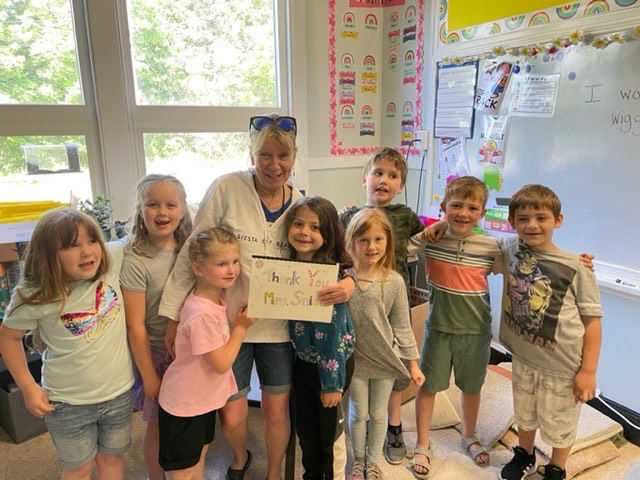
Last week of school, Hancock Grammar School
IN JANIE’S WORDS…
I have been teaching for 30 years. My first ten years teaching were in SAD#37 including Columbia Falls, Millbridge, Cherryfield, Harrington, and Addison. I started as a long-term art substitute, then as a kindergarten teacher and the following year as the art teacher. In 2002 I started teaching at Hancock Grammar School, where I spent the last 20 years. As a result of consolidation, I also taught art at Lamoine Consolidated for four years from 2011-2015. I received a Bachelors Degree in Elementary Education, K-8 from University of Maine, Machias and K-12 Visual Arts Certification.
My favorite part of teaching is building the most wonderful relationships with students that revolve around art making! Painting is my favorite discipline. Guiding students through color exploration and expression is so rewarding.
Cherryfield School – notice all the art styles included?
It has been quite the journey from when I was a young itinerant art teacher. I remember being so overwhelmed in my early years; five schools, 600 students and all the different challenges. In year three I was considering giving it up. I was feeling isolated and unsure of my impact on students. Then one day as I was introducing landscape to third graders I learned that I was! As I explained the horizon line, a little boy who normally didn’t participate suddenly started waving his hand, so I called on him. He was so excited to have made this connection, he said, “I saw it this weekend when I was on the lobster boat with my Dad, there it was and I knew it had something to do with art!!!” From that moment on, I never questioned my ability to connect students with the wonders of art in their world. It was my inspirational moment. Nature is my inspiration for my own work and it easily found it’s way into my lessons!
I have seen many changes in education and art education over the years. I truly believe that being included in the “Maine Learning Results” gave validity to arts education. However, it was challenging to keep up with the interpretation of standards that serve as guidance in developing strong arts programming. I was fortunate to have been an active part of this process, a member of the Maine Arts Leadership Initiative (MALI, now MAEPL), a local leader, and advocate for arts education. All of which helped me tremendously with meeting students needs! As a result of my work, I was recognized as the 2014 Maine Middle School Art Teacher by the Maine Art Education Association. This was a very important time in affirming my career. Representing Maine and attending the National Art Education Association conference in New Orleans was a definite highlight!
Another huge change is how technology has developed and changed the art curriculum, this boggles my mind. I started my career without using any technology and in 2020 developed an online art curriculum for remote learning.
Three things that are really key to a successful art program are:
KNOW your students, develop a relationship with them!! Listen to them!!
SHOW your passion for your profession!! Be creative in your approach!!
GO WITH THE FLOW, be flexible, be current with best practices and meet students where they are!
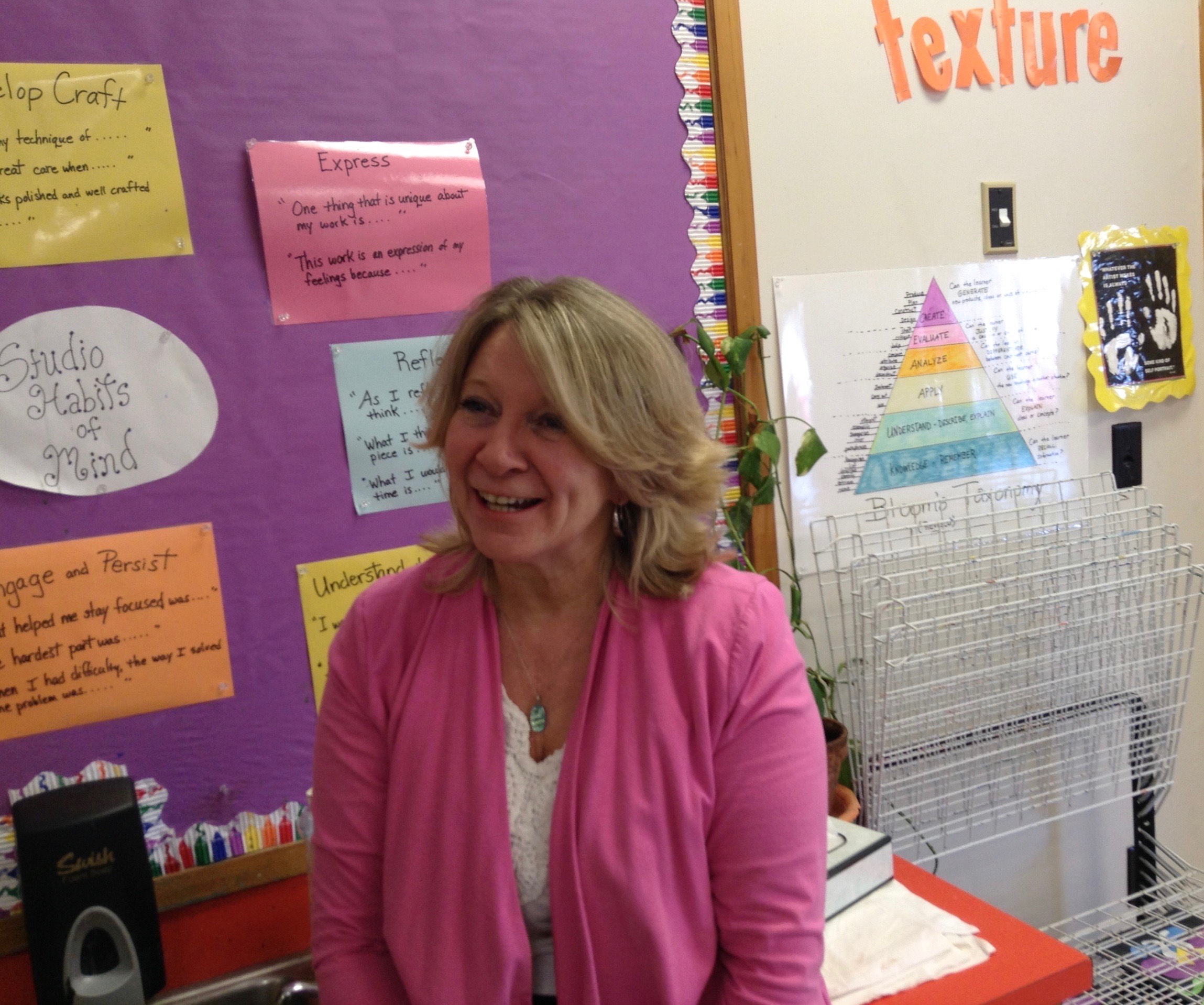
Janie in her classroom at Hancock Grammar School
I am most proud of my ability to guide students and help them understand and appreciate art in education and the world. I recently received a message from a former student who was in Washington DC at the National Gallery and was thinking back to the many lessons she learned in my classes. She thanked me for that. I have many young adults that have reconnected with me and shared their fond memories in art!
Looking into my crystals ball….My advice to teachers is “LOVE WHAT YOU DO AND NEVER STOP LEARNING ABOUT WAYS YOU CAN ENGAGE STUDENTS!”
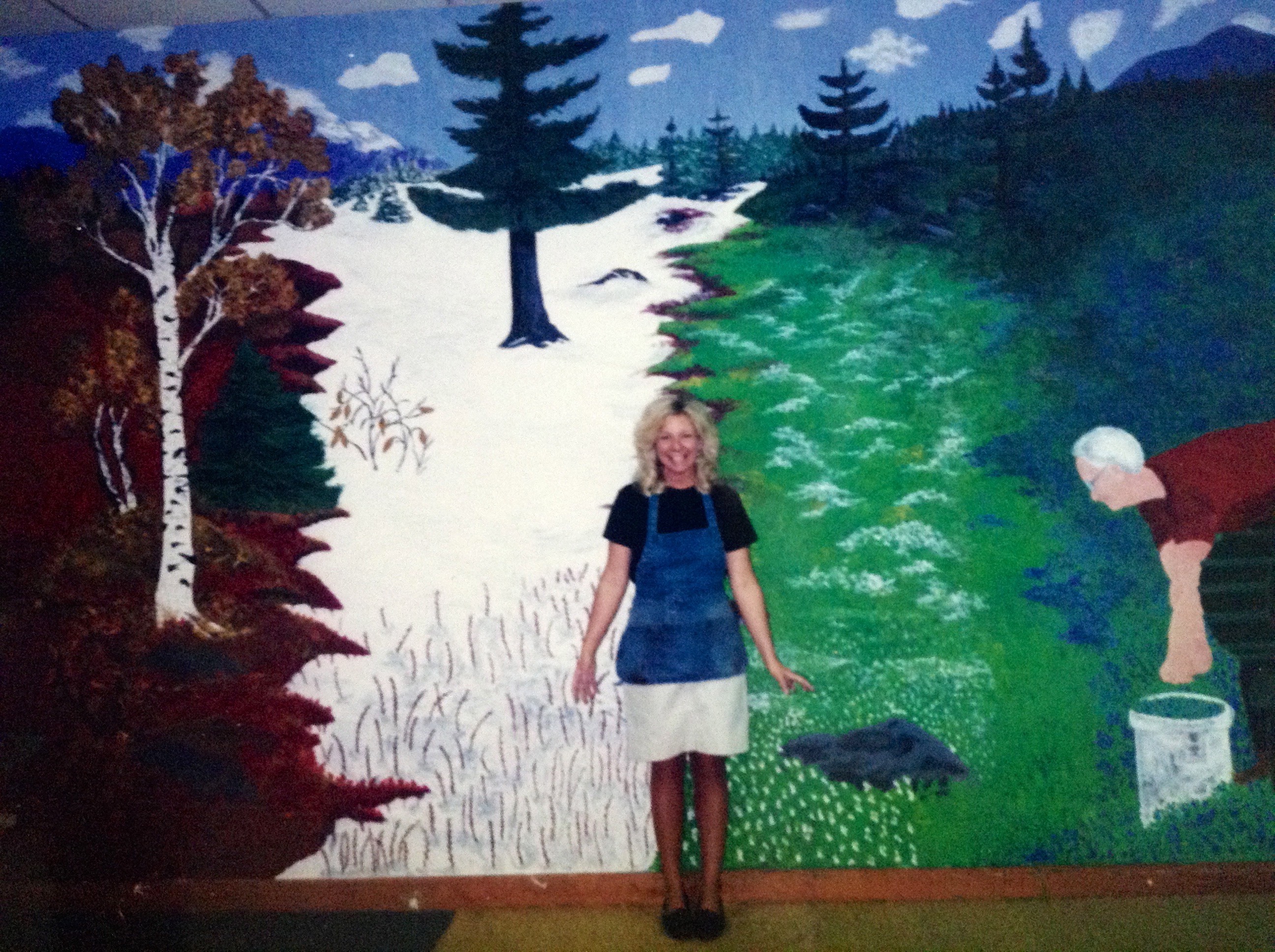
K-8 mural, D.W. Merritt Elementary School, Addison. Kindergarten students started at the bottom and the mural grew as each grade contributed.
Stay curious, involved and be a life long learner. Take classes and reach out to others in your area of expertise, they are a gift!
I have come to realize that I was supposed to be an art teacher. So I guess the innate ability to teach was there, I just needed to become aware of it. I knew early on I had some artistic talent and wanted to be an artist. However, life happened and that dream had to be on hold. So I learned a lot of teaching skills over the years that helped me in my work! I’m still learning more about my work through my reflection. I am hopeful that during retirement I will rediscover that innate “art-self” that will bring my life-long dream into being.
Hancock Grammar School
I plan to make time for me and my art! I plan to take art classes, garden, read, travel with my honey and spend time with family and friends. I have grandkids that I am excited to have more time with!❤️ I know me and I am always busy, so my goal is to slow down just a bit and smell the roses!!
If I was given $500,000….definitely, buy a camper to continue my trips to the national parks. Contribute to my grandkids education fund and invest in my community arts programming!
I hope to be 94 and looking back!! My mom made it to 93 and we had a conversation about regrets before she passed. No regrets here, I have lived a good life, learned many lessons to carry me into the present! I have listened to my intuition and followed my heart, which is full of love!!❤️
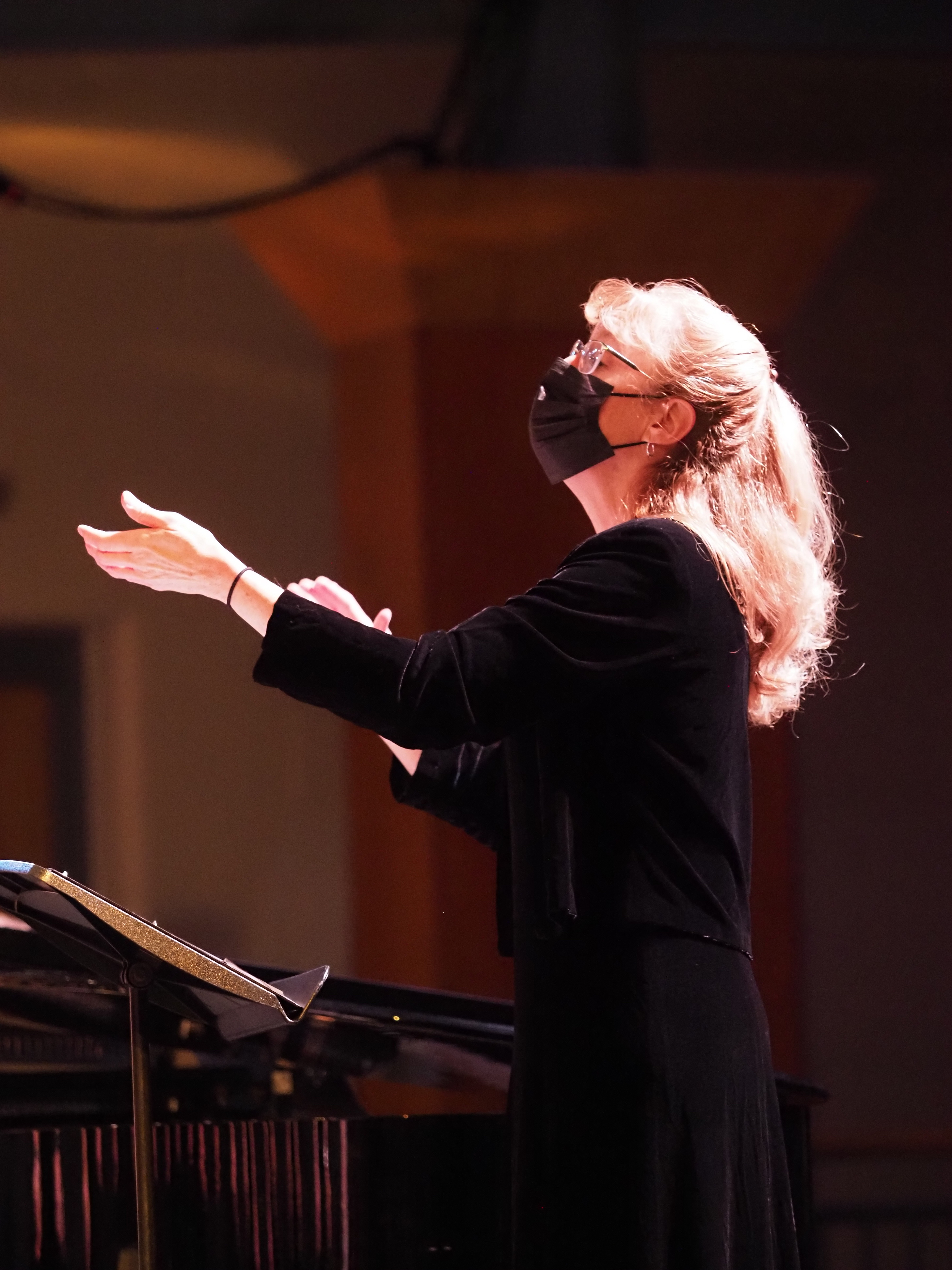
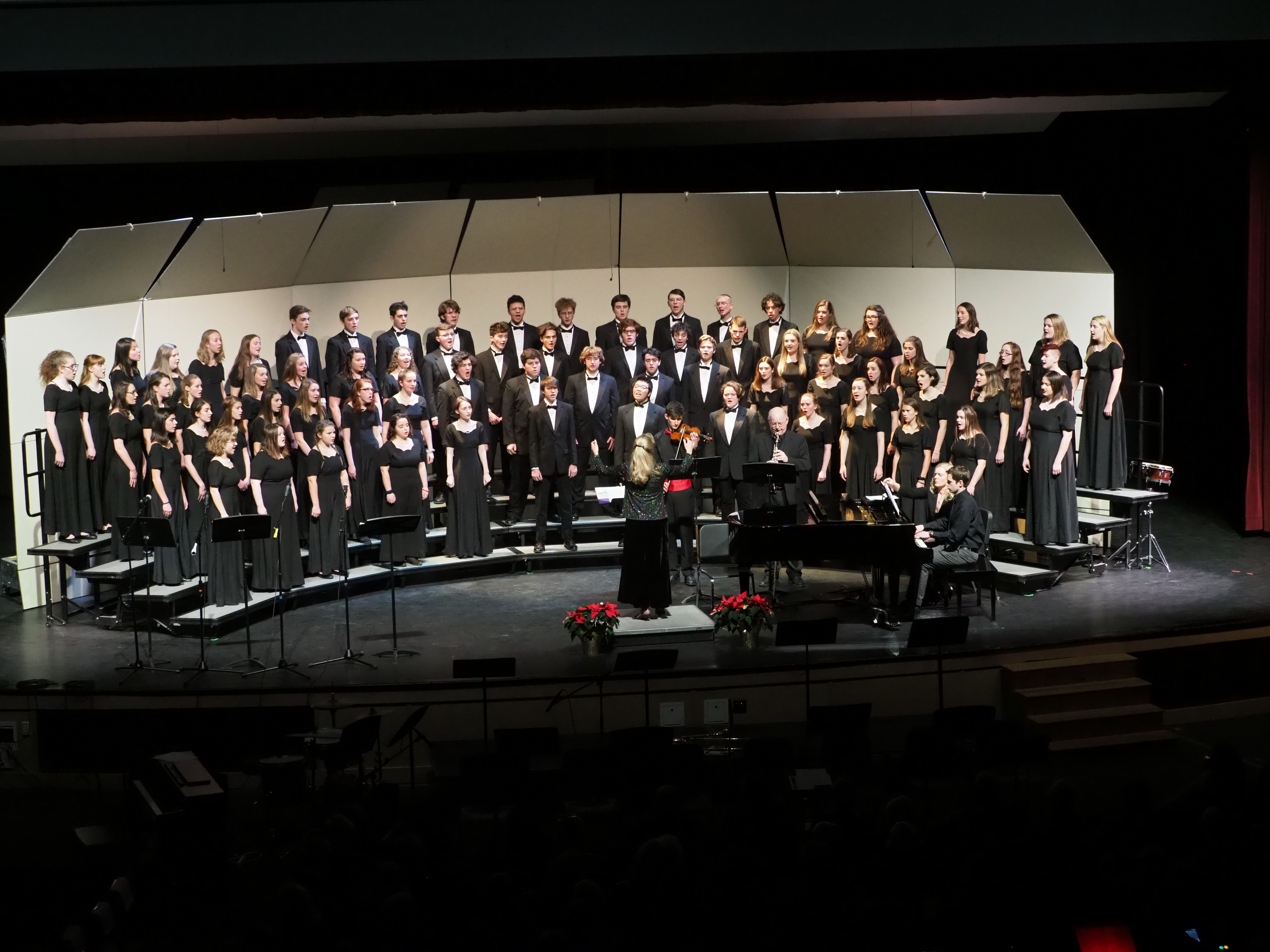
Kim Murphy has been teaching music for the last 34 years and is retiring this month. She’s one of those teachers who I thought would never retire since she has a ton of energy and is totally engaged in every aspect of teaching. She has high expectations for herself and her students. Kim always has a smile on her face and her laughter is contagious! I’m certain that she will be missed! (You can learn something about Kim’s humor by the most of the photos below and the embedded links, be sure and click on the center capitalized titles to see the videos).
Kim started teaching grades 6-12 Choral and General Music at Oak Hill High School, Sabattus, Litchfield and Wales. Shortly afterward the position changed and she taught Band and Chorus, grades 9-12 at Oak Hill High School. She took a sabbatical in 1996-97 and then moved to Lincolnville. For the last 25 years she has taught at the high school, Camden-Rockport High School for 3 years and when the new high school opened, Camden Hills Regional High School (CHRHS), she has taught there. Earlier in her music career she worked as a music therapist in Peapack, NJ and Bethlehem, PA.
Kim was a double major and has a Bachelor of Science degree in Music Education and Music Therapy. She is a Nationally Board Certified teacher.
What has been your favorite part of teaching?
I love helping students find their voices. Find their self-confidence through singing. I love it when someone has a solo – and other people never realized what a beautiful voice that person has. And then there is just the self-confidence in getting up and singing before a large crowd – whether in a small group or a large group. There are life lessons – the teamwork is necessary.
I love music festivals – where students from different schools come together to create works of beauty. It’s SO different from sports – where someone is always the winner and someone is always the loser. With music festivals – the competition has already happened (through auditions) and the coming together to create a concert in 2 – 3 days is a wonderful way to build connections.
And then of course – I love musicals!
Tell the readers about a moment in your teaching career that has been unforgettable?
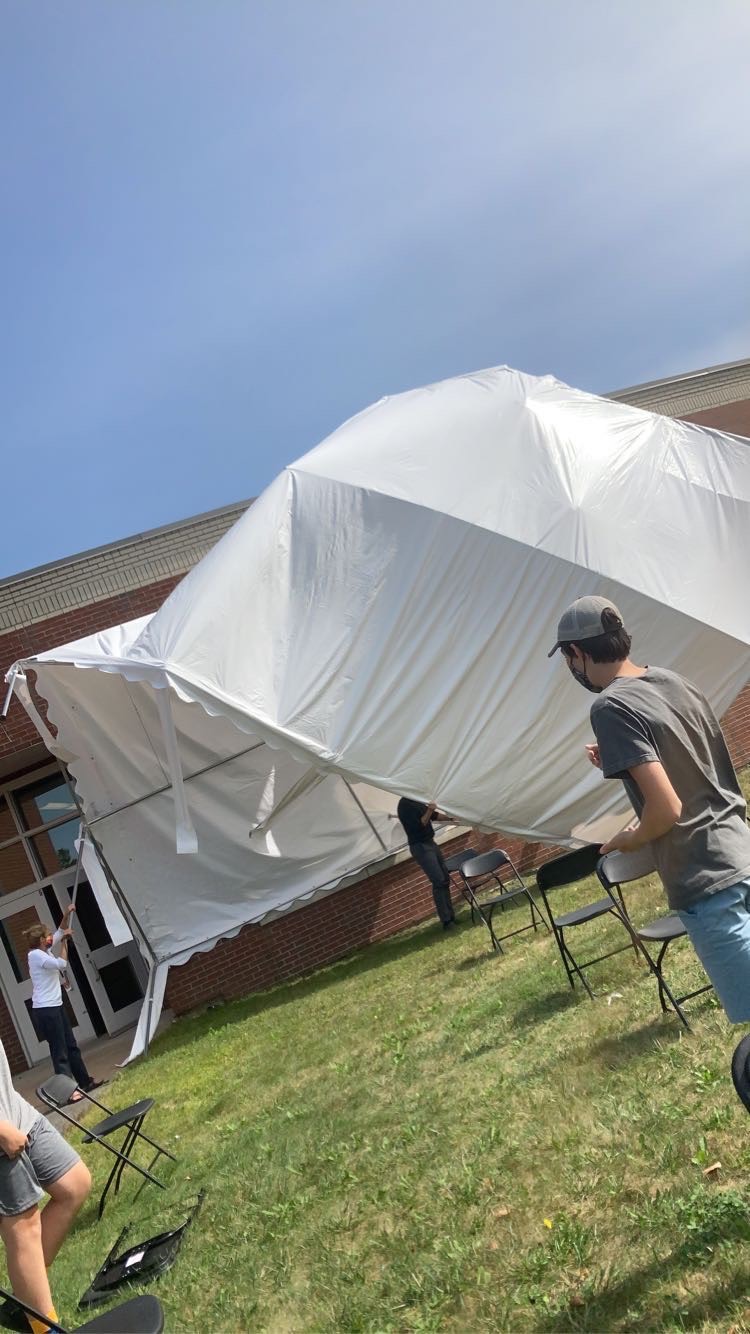
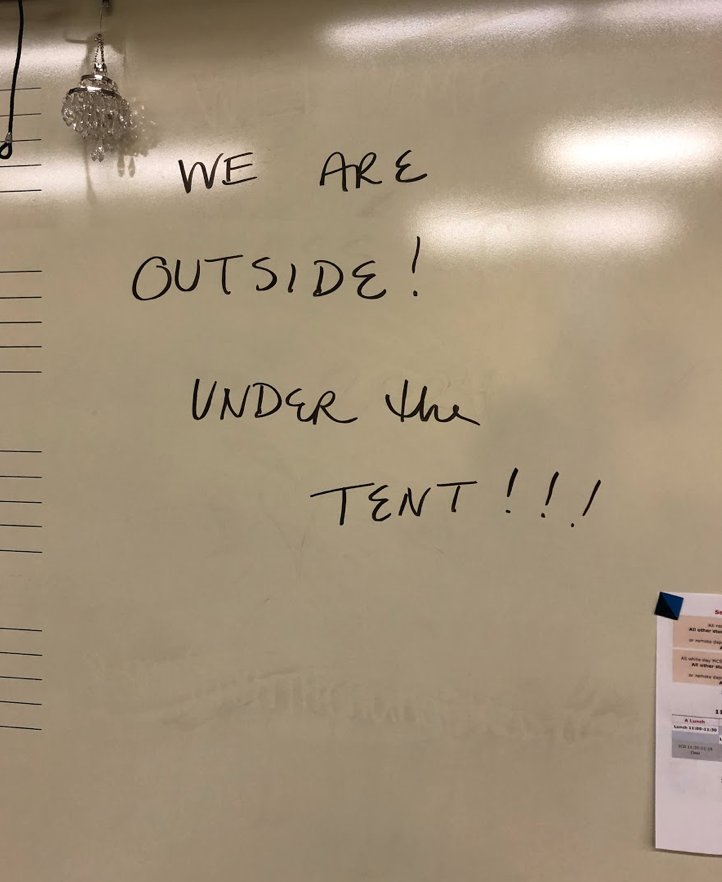
Well – there are many. But a recent one is…. During the 2020-21 school year, I had the FIRST tent up! And my tent was the FIRST to blow away! UNDER THE TENT!
And there she blows!
What changes have you experienced during your teaching career that have been positive and/or negative?
I think it’s great that kids can take so many AP courses – and get college credit. Yet this (adding of AP classes to schedules) has really hurt music programs in that the schedule and time for Band and Chorus is getting squeezed out. And also – is it healthy for a student to have so many AP classes?
In a positive manner, I think students are more assertive; they self-advocate for what they need in education; education is now – less “top down” instruction and more collaboration.
What do you think are three keys to ANY successful music ed program?
Know your students, be genuine in your care for them
Flexibility and creativity – learn to work with schedule changes, or things that happen that throw your carefully written plans out the window
Plan, plan, plan
And (a 4th!) have a sense of humor!
What are you most proud of in your career?
When I was hired at CRHS I said that my personal 10 yr goal was to have the strongest choral program in the State of Maine. We are lucky – we have fantastic community support. I think – with the numbers of students that have been accepted to District III, All State, All Eastern and National festivals over the years – I think that it has been one of the strongest choral programs in the State. Unfortunately – right now – due to Covid and other challenges – the Chorus program is not as strong (in numbers) and that breaks my heart. You have to have the numbers.
Who influenced your work as a teacher or perhaps inspired you?
Charlie Seymour and Steve Moro
Look into your crystal ball: what advice would you give to teachers?
Teaching is the hardest and best profession. There are days when you will want to cash in your chips early – don’t! Hold on. Your students learn more from your daily attitude and mindset than you realize. As a teacher – you teach a subject area – but it’s the character that you bring into the classroom that has the lasting educational benefit.
How much of what you do is learned skills and how much is innate?
Wow – that’s an interesting question. I come from a family of teachers – so I think that was how we grew up. So – teaching comes naturally. I was going to be either an English or Math teacher. Those subjects come easily to me (well….not Math anymore – ha ha). But Music didn’t come easily. I had to work at it. I had to make it look easy. But – because I had to work at my music skills so hard, that made me a better teacher – because I could understand why kids were struggling, and I could break it down into smaller chunks for them to understand.
Exciting and Terrifying. I have an Air BNB business at my house, which I LOVE to do – and hope to be able to grow that – especially in the shoulder seasons (when I would have been at school). I’m connecting with community theater and music groups – because that is my passion. I do a lot of work with my church – and hope to be able to volunteer more with places like AIO food pantry (food and energy assistance for citizens of Knox county) or other social programs. And finally – I will fly to CA (whenever I damn well please) to see my son!
If you were given $500,000.00 to do with whatever you please, what would it be?
I would create a theater program for kids – especially kids who struggle in life.
Imagine you are 94 years old. You’re looking back, do you have any regrets?
I hope not! You have to live in the moment and enjoy each beautiful step.
Today, June 19 marks the 157th anniversary of Juneteenth, also known as Freedom Day or Emancipation Day. It commemorates the day in 1865 when Union soldiers arrived in Galveston, Texas, and brought news that slavery had been abolished more than two years earlier.
I came across this story from 2015 on NPR, an interview recorded in 1941 with Laura Smalley who was born into slavery. Most slave owners kept the news from the slaves. Maj. Gen. Gordon Granger arrived in Galveston, Texas on June 19 with 2000 troops and a message – slaves were free.
Finally, after President Lincoln’s Emancipation Proclamation two years earlier, the news reached the slaves in Texas. I can’t imagine being a child and being born into slavery let alone not being told that in fact, my freedom had been granted. I wondered how much respect Laura had for the slave owner after learning the news. Access Laura’s recording at THIS LINK.
Laura’s story and others are archived at the Library of Congress. There is a collection of stories in a section called Voices Remembering Slavery: Freed People Tell Their Stories. The documented stories took place between 1932 and 1975 in nine states. We can learn from the plethora of information included in the stories. Juneteenth became a federal holiday in 2021 amid discussions of racial injustice following the death of George Floyd.
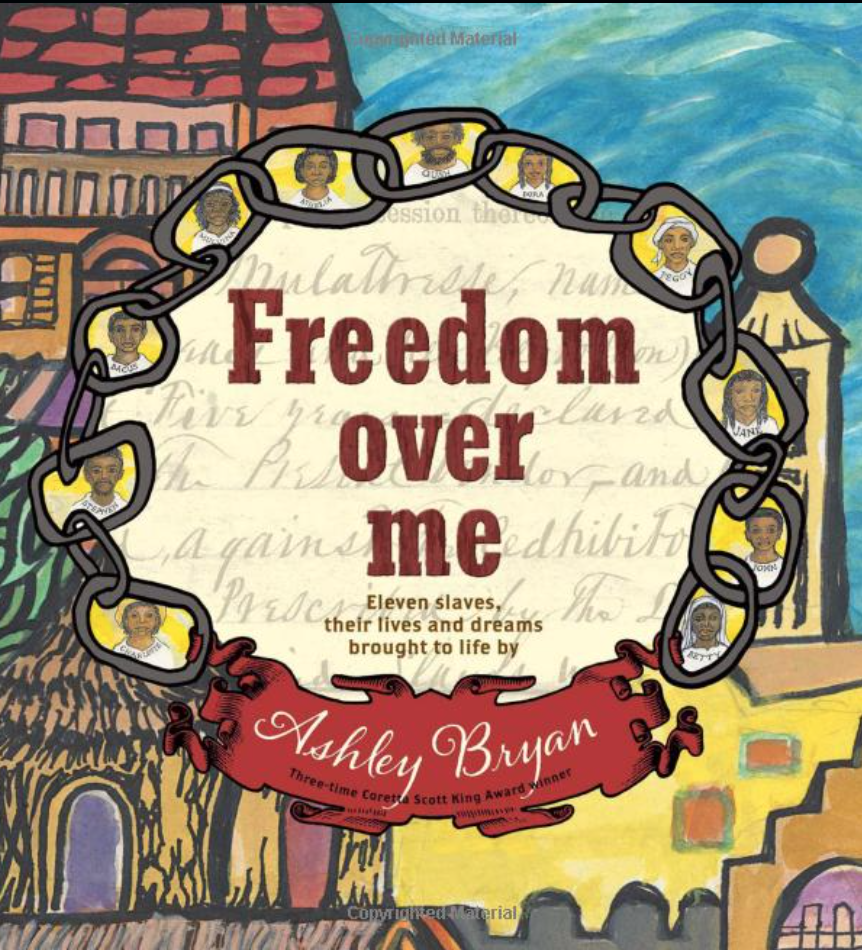
I can’t help but think about Ashley Bryan on this day. His contribution as a black artist, storyteller, poet and all around amazing human being is immeasurable. Many of you know that Ashley passed away in February of this year. He left a large body of artwork but my favorite and most cherished pieces of what he left are his children’s books. Even though they are children books each one has a message for all ages. If you read no others I recommend you get yourself a copy of Freedom over me. It includes the stories of 11 slaves, their lives and dreams were brought to life by Ashley. Mr. Bryan bought the slave papers at an auction in Southwest Harbor, ME and used them as a launch pad for the book. In this book he combined the simple descriptions and the price the slaves were sold for with his imagination and creativity and created a tribute to all slaves.
“There is nothing more rewarding than being in a room full of students who are productive and teaching each other the skills you have shared with them. When all the art rooms are full of active learners at every level and they are teaching each other a broad range of skills, that feeling is intoxicating. I still marvel at it to this day and I cannot think of anything like it.“
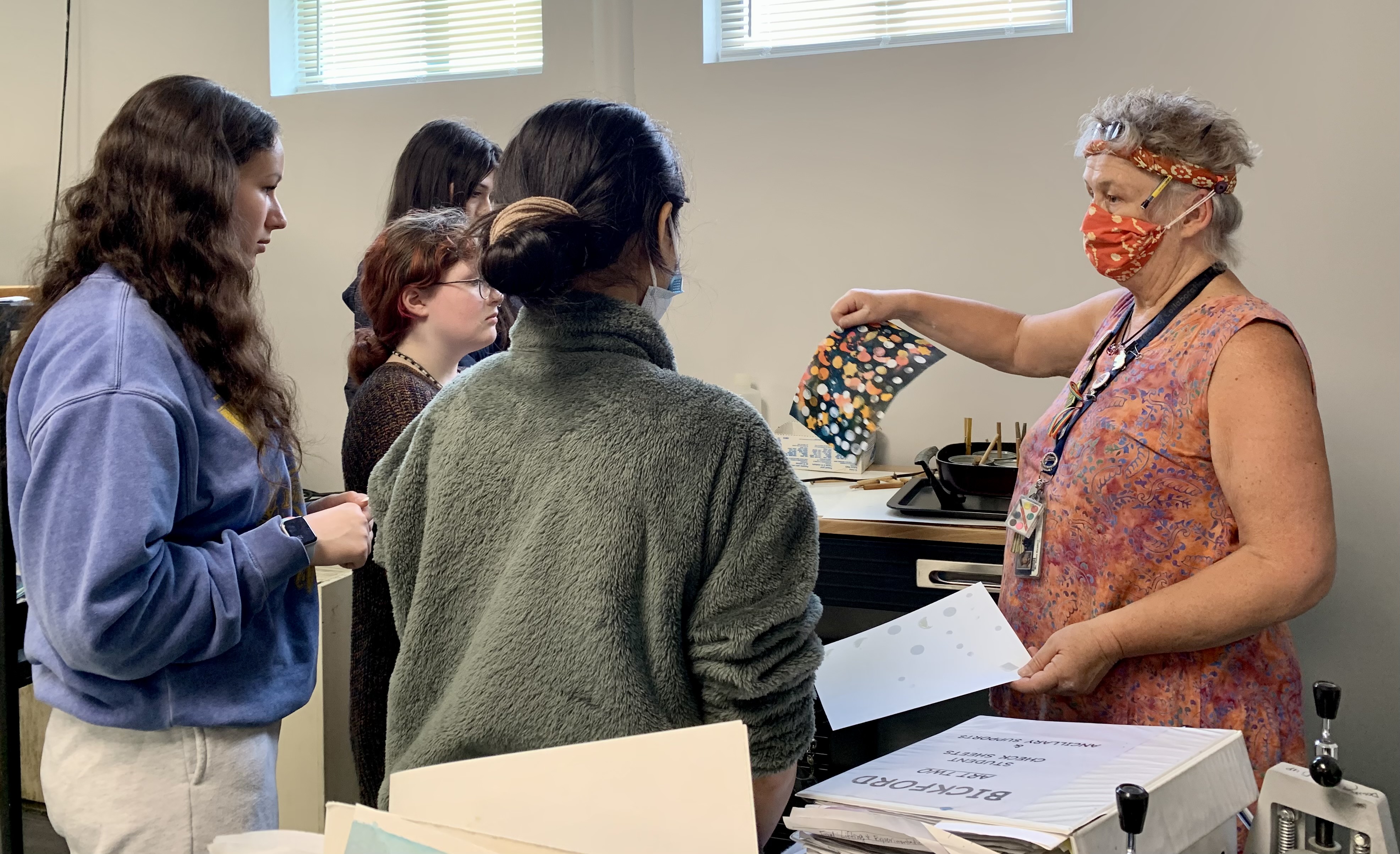
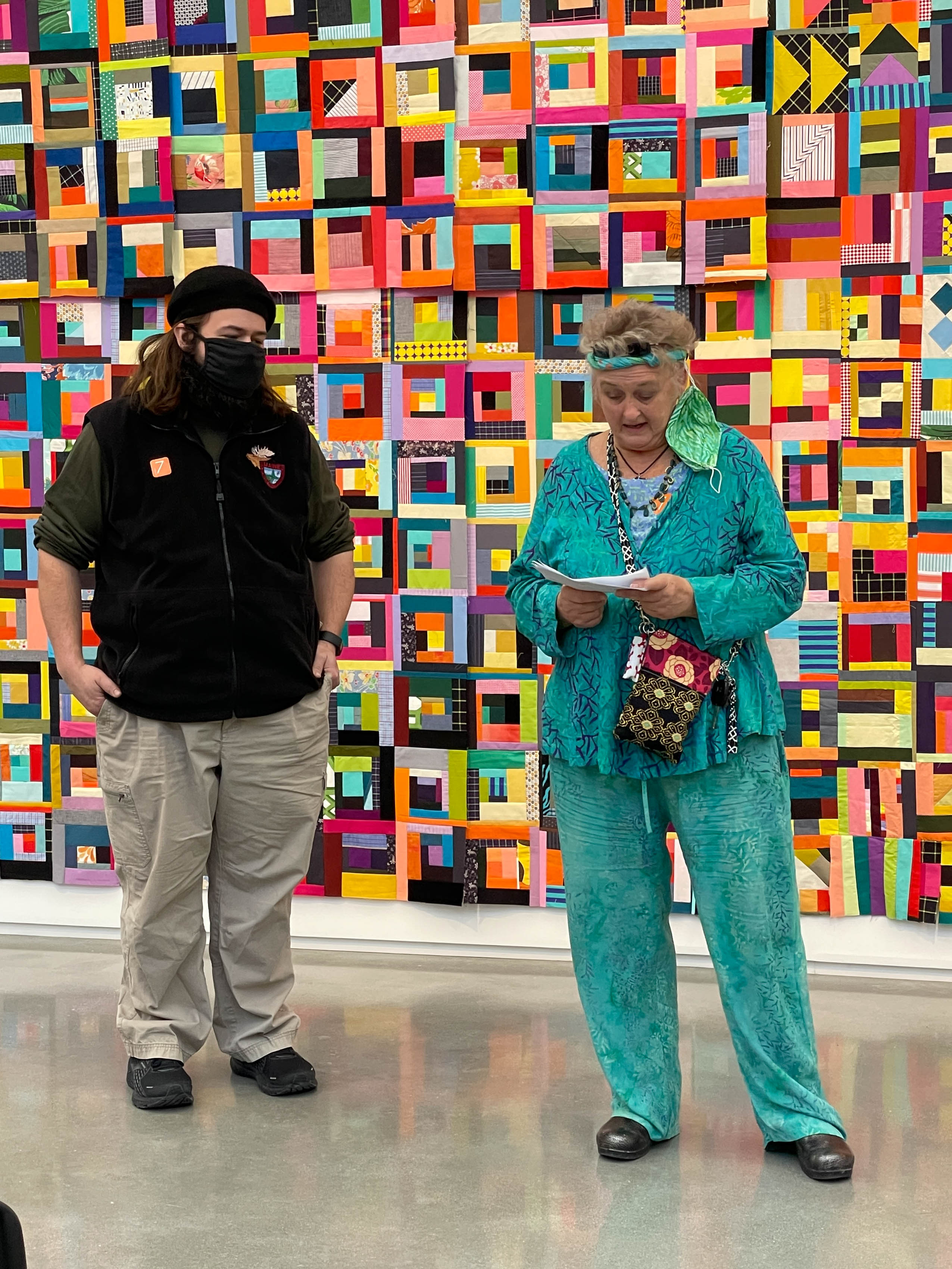
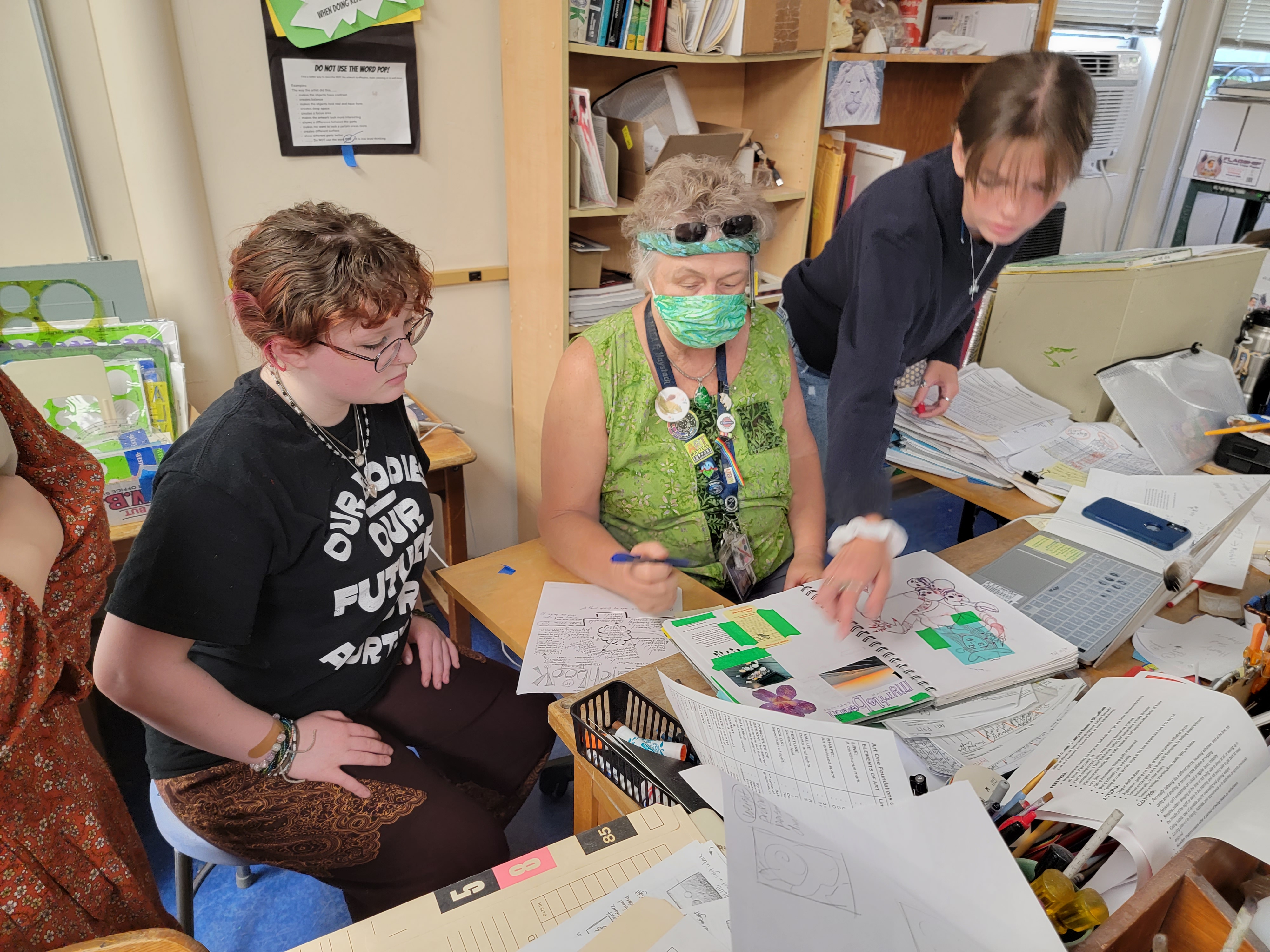
Debra Bickford, better known as Deb, is retiring this year after 37 years teaching visual art. Her career started at Wells Jr. High School (1 year), she moved on to Westbrook Middle School (2 years), and she is ending her career at Westbrook High School (34 years).
Her early experiences as a student have influenced her teaching and her life. She learned at a young age that she loved learning but didn’t care for school. When she arrived at Maine College of Art & Design – then called Maine College of Art (MECA), she fell in love with being in a space where people were hungry for learning about the same thing. She earned a Bachelor of Fine Arts from MECA and went on to the University of Southern Maine where she received a Bachelor of Science degree in Art Education. During her formal learning she was engaged in pre-service teaching at Waynflete School in Portland and student taught at Gorham Schools and Thornton Academy in Saco.
Deb and I had a conversation about her teaching career and what became clear is her passion comes through every single day in and out of the classroom. She has positively impacted thousands of students! She’s proud of the fact that she is honest with students, even when it is hard. And, she has NEVER taken a sick day! Many people have influenced Deb over the years. She’s had the opportunity to work with many positively astonishing educators who have shown her what excellence looks like and how to make it happen.
“It would be really inspiring to make some sort of visual map or “who” and “what” I learned from so many. Like a mind map with art education inspiration at the center and people fanning out all around the center.“
I hope Deb takes the time to make this visual map and send a copy to everyone on the map. It would be an amazing representation exhibiting the numbers that influence teachers!
Deb has had many unforgettable moments during her 37 years in the classroom. Here are a few highlights:
The day a student in my adaptive art class shared how much her family loved her art work and said: “I never knew I could be an artist”.
The day both parents met a students guidance counselor at 7a.m. to have her drop another content area to start Pre-AP Studio Art. The student had made the request but was told she had already had an art class. That same student went on and received a $10,000 scholarship at class night and earn a BFA in Painting at MECA.
The many texts, visits and emails from students thanking me for preparing them to be successful in college level visual arts classes. Many have even reported being asked to lead critiques in class. This makes me so happy.
Deb presenting her colleague Matt Johnson the Maine Art Education Association (MAEA) Art Teacher of the Year award in April at the spring MAEA conference at CMCA, Rockland
During Deb’s career she has experienced many changes, both positive and negative. She is pleased to see “more students who desire a broader, deeper education in the arts and are willing and prepared to advocate for what they want even when there are roadblocks.” The negative aspect: “Over a decade of lower expectations in just about every aspect of what makes a strong, successful student has had a powerful impact on adequate progress. In general, students who used to be in the average range are finding the typical stress of high school level classes too much to cope with and organize for. What it means to “be a student” has, on average, deteriorated.“
Deb’s program has evolved over the years. She’s grateful for the educators she has worked closely with who have influenced the evolution. Her classes are often mixed groups with AP, Art 1, and advanced students in one space. And, Art 3, 4, AP and Studio Art the same. Juniors and seniors enrolled in Studio Art have their own studio spaces within the art room. Her colleague Matt Johnson teaches in an adjoining classroom. Students migrate between Matt’s and Deb’s classes, moving where learning needs can be met. Deb and Matt’s collegial relationship promote a common studio space that encourages a cross pollination between students. Flexibility has been critical in leading to student success. The teachers move to meet the needs of the kids, not visa versa. A great example of ‘student-centered’ learning environment.
These are the four key ingredients that Deb believes are essential to any successful visual art education program:
Know your content inside out, backward, forward and upside down and be willing to honor tradition whilst embracing the future.
Understand that art skills and teaching skills are two very different things.
Make sure that ‘what’ you are teaching and ‘how’ you are teaching it provides real world, valuable skills to every student no matter what level (skill level, experience in art) they are, or why, they are taking your class.
Embrace Advocacy at every single turn. Never, ever pass up the opportunity to help people understand how and why arts education matters, no matter how exhausting it is.
Deb’s advocacy has been ongoing and her successes have served students well. I asked Deb to look into her crystal ball and offer advice to teachers.
“Being an educator is not for the faint of heart. Wanting to help others learn and grow takes courage. When you do your preservice, think really hard about ‘why’ you want to pursue this. Teaching Art is not easy or fluffy or romantic. If you want to work hard and can commit to being a lifelong learner – go for it.”
Deb’s future is bright with a retirement plans filling her days with activities she loves. She’ll be tending her multiple gardens. 60X40 vegetable, fruit trees, and perennials. She has willow gardens for traditional willow basket making. Deb and her husband are tearing up 20 year old floors in her home and replacing them with something easier to care for time in retirement. Deb will include time in her studio on a regular basis; printmaking and painting. She plans to pursue becoming a Golden Artist Educator and run a few painting workshops. Deb and her husband love visiting remote locations and plan to travel to the Cabot Trail on Cape Breton and make a return visit to Jasper National Park, Alberta, Canada as well as several other beautiful highways.
I’m sure all your colleagues and the blog readers are joining me to wish you well on your retirement Deb!
If you know of other visual or performing arts teachers retiring this year please let me know by emailing meartsed@gmail.com.
This has been a very difficult couple of weeks for me and I know for many others. On reflection, my sadness and anger started with the Columbine High School massacre on April 20, 1999 when 12 students and one teacher were killed by two 12th grade students. On April 16, 2007, a student at Virginia Tech killed 32 students. On December 14, 2012 at Sandy Hook Elementary School a 20 year old killed 20 children between 6 and 7 years old and six adult staff members. On February 14, 2018, a 19 year-old opened fire on students and staff at Marjory Stoneman Douglas High School in Parkland, Florida murdering 17 people and injuring 17 others. The perpetrator pleaded guilty and is still awaiting sentencing.
Since January 1, 2022 there have been 27 shootings, with injuries or deaths, that have taken place in schools across the United States. We all know that school shootings have been going on for decades. The first one that I found documented took place in 1840 when a student entered a classroom on the campus of the University of Virginia and shot his professor who died three days later.
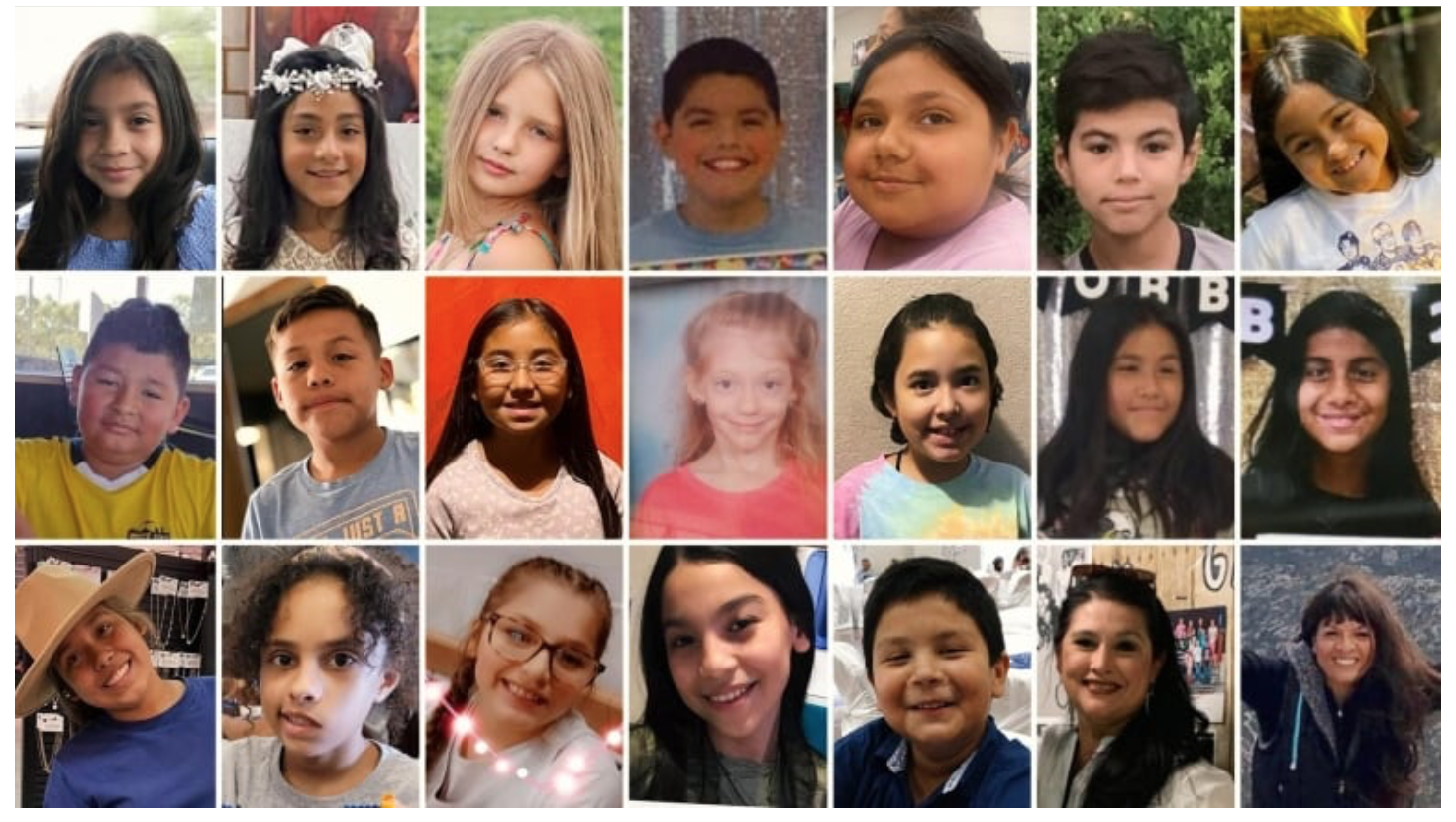
The latest heart wrenching event on May 24, 2022 at Robb Elementary School in Uvalde, Texas 19 fourth graders and their two teachers were gunned down in their classroom by an 18 year old. I say ENOUGH!
These innocent young faces below each have a story and for their stories to end abruptly and unnecessarily is very sad. And the two teachers smiling and such happy faces who guided and taught these young children – to have their teaching careers cut short by a gunman is totally unfair.
Precious victims from Robb Elementary School
I’m sure you’ve heard the horrific stories connected to this event which include the police not entering the classroom for over an hour and the gunman shooting his grandmother before going to the school and on and on. As I process the event I can’t help but feel and think so many emotions. From what I’ve read…
it’s OK to feel scared and sad AND also feel joy and hope.
I choose to imagine the bright stories. Read about these children and teachers. Ten year old Alithia Ramirez loved to draw and wanted to be an artist. She recently submitted a drawing to the “Doodle for Google” contest.
TAKING ACTION
I wanted to volunteer in the school district where I live and taught for 30 years but due to the pandemic, I was unable to be in the schools. So, I decided in January to start substituting, after the local district increased the substitute daily pay which they’ve based on experience and formal education. They’re using federal Covid relief funds and it has increased the number of substitutes exponentially. The idea is working! I was called to sub for elementary art two days after the shooting in Uvalde and I admit I hesitated to say ‘yes’. I took out the sub manual and didn’t read anything about what to do in a similar situation. I asked in the office when I arrived at the school for the protocol. Little information was provided and I felt scared that if there was a similar emergency, I would not be able to act on anything but my gut of what to do. My message to teachers and substitutes is…
Review the school policy and protocols with your colleagues and administrator. Do what you can to arm yourself with the knowledge and options so you can be as prepared as possible. Do it for yourself and for your students safety!
At the end of my day substituting for art, I sent an email to the Assistant Superintendent who oversees the substitute program. Ten days later, I’m still waiting a reply. I will circle back to the administrator since I understand how busy school personnel are at every level.
MY THOUGHTS ON GUNS
I want you to know that I’m not opposed to individuals owning guns but I think owning a gun for the ‘right’ reason is important and perfectly fine. Here’s an example of what I mean. Last week in a House Judiciary Committee hearing on gun violence, Representative Ken Buck from Colorado dismissed a proposal to regulate AR-style rifles. He said: “An AR-15 is a gun of choice for killing raccoons before they get to our chickens.” I understand that the farmers and ranchers in Colorado need to protect their chickens however, there are other guns that can be used for this purpose. Owning an AR-15 for this reason is simply not ‘right’.
An example of what I believe is a right reason. I grew up in a hunting family. My father was a rabbit and deer hunter so there were always guns in our home, locked in a gun cabinet when not in use. The animals my dad shot helped put meals on our supper table and sustain our family of six. My brothers were taught to hunt and so were my sister and I. Safety was a priority and I can hear my father’s voice emphatically saying: “never, ever point a gun at a human being”. You see, my father proudly served in the Army in WWII, 26th Infantry Regiment of the 1st Division (known as the Big Red One). He was trained in desert fighting and sailed on the Queen Mary to England to prepare for the invasion of Africa. On the first day, Corporal Nestor’s first day in battle anywhere, he was awarded the Silver Star medal and promoted to Sergeant. He fought against General Rommel’s German troops in Northern Africa and fought across Sicily. On June 6, 1944, his division was part of the second hour landing on Omaha Beach at Normandy. He continued the fight across France, Belgium, and crossed the Rhine River into Germany including The Battle of the Bulge. For 34 months he served as a Forward Observer until he was seriously wounded. He put himself in extreme danger in order to save a battalion of fellow First Infantry soldiers guarding an air base. His injury on the battlefield sent him home and for this action he was awarded the Distinguished Service Cross. His exemplary valor, bravery, and leadership also earned him a Silver Star with an Oak Leaf Cluster, a Bronze Star with Four Oak Leaf Clusters, two Purple Hearts, The French Croix de Guerre, a battlefield commission to 2nd Lieutenant, as well as numerous other commendations. My dad never talked about the difficult parts of the war but he told stories about the many friendships and shared his mementos. He was proud to have served and to be an American and humbly served our country for the many freedoms we have. After the war he put his energy towards his family and community and made a lasting positive impact. In my opinion, all his life he used guns and owned guns for the right reasons.
TEACHERS AND GUNS
We all know that teaching is a challenging and also a rewarding career. The stresses that exist today due to the pandemic and another massive school shooting have teachers asking the hard questions. They’re struggling to find time to take care of themselves. We all know self-care is critical. The shortage of teachers has been ongoing for several years, especially in certain subject areas, more so in school districts with low- income households and in rural areas. According to Education Week typically about 8% leave every year. Some states are discussing arming teachers with guns to stop school shootings. In my opinion that is a bad idea for many reasons. First of all, we have more guns in America than people. Has this kept individuals and schools safer? According to the Maine Criminal Justice Academy website it looks like 120 hours of training is required to be eligible to be a Maine State Police officer. I don’t see where any state is suggesting 120 hours for teacher training however, expecting teachers to train to respond to a shooter in school is unreasonable. Here are other reasons I believe this is an unfair expectation:
In a moment of duress and confusion when an intruder enters a classroom, there is no way to predict how a teacher may respond.
This increases the chances of their own students being shot.
The liability for the school district will be near to impossible.
Do we really want students to be watching this type of scenario played out?
Teachers are hired to teach not to be law enforcement and security personnel. Their jobs are enormous already.
WHAT CAN SCHOOLS DO?
When I was in elementary school (a hundred years ago) we practiced for fire drills and we also had ‘duck and cover drills’ preparing us for an atomic bomb. We silently filed into the hall, kneeling up against the wall with our arms crossed over our heads without moving, until the teacher said it was OK to release our position. Yes, we were scared but we practiced so we’d be prepared, just in case. If drills are done with the best interest of the children to help alleviate the fears, practicing can contribute to the effectiveness and ease their fears. I was on a zoom call last week with several Maine teachers who shared that there are problems with the various situations in school buildings. Some examples include: outside doors don’t lock without a certain key, turning off lights in classrooms without windows makes it very difficult to get 20 students to the designated safe space in the classroom, and passing students out windows can be very risky when you don’t know where the shooter is located.
WHAT CAN OUR ELECTED OFFICIALS DO TO MITIGATE THIS DREADFUL PROBLEM?
MCSTOYA is an organization whose members are Maine county and state teachers of the year. A week ago members were invited to discuss ideas for addressing the complex issues related to school safety. We landed on two ideas and met with an aide of Senator Collins last Friday to share our requests.
Request #1: Raise the age of people purchasing an AR-15 to 21
WHY? Part of the answer lies within understanding the effects of bullets from an AR-15. This information is taken from the The Atlantic: What I Saw Treating the Victims from Parkland Should Change the Debate on Guns written by Heather Sher. Bullets travel at a higher velocity from an AR-15 and are far more lethal than routine bullets fired from a handgun. The damage they cause is a function of the energy they impart as they pass through the body. The bullet leaves the barrel traveling almost three times faster than-and imparting more than three times the energy of a typical 9mm bullet from a handgun. When these guns are outfitted with a magazine with 50 rounds it allows many more lethal bullets to be delivered quickly without reloading.
The second part of the answer lies within understanding the brains of a young person. Many educators know this information. According to theUniversity of Rochester Medical Centerthe rational part of a teens brain isn’t fully developed until 25 or so. An adult brain and teen brain work differently. Adult brains think with the prefrontal cortex, the brain’s rational part. This is the part of the brain that responds to situations with good judgment and an awareness of long-term consequences. Teens process information with the amygdala. This is the emotional part. In teens’ brains, the connections between the emotional part of the brain and the decision-making center are still developing – and not always at the same rate. That’s why when teens have overwhelming emotional input, they can’t explain later what they were thinking. They weren’t thinking as much as they were feeling.
Request #2: Funding for school violence prevention and intervention programs
WHY? It makes perfect sense that if we could identify the struggling students and provide them the support they need to begin to articulate their needs and process their stresses school personnel would be assisting to address some of the problems. In many schools there is one social worker or guidance counselor responsible for hundreds of students. This makes it impossible for the existing staff to service students.
WHAT CAN YOU and THE PUBLIC DO?
Consider your options. Don’t be afraid to ask questions or be in fear of losing your gun if stricter laws are put in place to keep schools safe. Have conversations with your neighbors and community members. Often they do not know what goes on in schools. You’re the expert, share information, enlighten them.
Contact your legislator to share your opinions and beliefs. Vote every time you have the opportunity. Below is a sample to help start a phone conversation. And, you will find the phone numbers for Senator King and Collins’ offices.
Hi, my name is ……………
I am a constituent from (name of town) and an educator in Maine.
I am calling about (state the issue)
Please consider supporting legislation that will……………. Or I am concerned about (issue) and would like this looked into.
Thank you for hearing my concerns.
Phone numbers:
Senator Angus King Washington Office: Phone: (202) 224-5344
Senator Susan Collins: Washington Office: (202) 224-2523
Caribou Office: (207) 493-7873
Lewiston Office: (207) 784-6969
TAKE CARE OF YOURSELF
This is a book that you might find helpful at this point in your career (no matter how long you’ve been teaching) and the school year (with all that has been going on during the last 27 months.
Emily’s Masters’ degree is in counseling and Amelia’s is in choral conducting; one day they realized they both got graduate degrees in how to listen and feel feelings.
Thank you for your ongoing commitment to education. Please don’t hesitate to post a comment below in this blog post and/or reach out to me if you have questions/comments at meartsed@gmail.com.
If you’re interested in connecting with a global audience of educators, please read this post. I’ve blogged about HundrED in the past. In 2018 I was selected as a HundrED Ambassador and was invited to attend the HundrED Summit in Helsinki in 2018 and 19. I met amazing educators from around the world. Some of my follow up roles with HundrED have been to assist in the selection of innovations that best represent HundrED’s mission.
What is HundrED?
HundrED is a global education non-profit, recognized as one of the world’s leading experts on scalable innovations in K-12 education. HundrED’s mission is to help every child flourish in life by giving them access to the best possible education innovations. HundrED annually selects 100 leading education innovations globally packages and shares their amazing work with the world, for free.
Applications are open for the HundrED 2023 Global Collection – DEADLINE: JUNE 1ST, 2022
Are you an education innovator? We want to hear from you! Submit your initiative to the HundrED 2023 Global Collection before June 1st, 2022. If you are not an innovator, but know an organization doing great work in the field of education, send us an email at research@hundred.org with a link to their website. APPLICATION.
In an unprecedented way, the global pandemic has highlighted the importance of building social and emotional skills (SEL) to help children thrive in school, the workplace, and life. In this report we highlight 13 of the most impactful and scalable education innovations fostering SEL skills in students. In addition, the report offers 5 successful strategies for implementing these programs.
HundrED and Ukraine
Of course HundrED has Innovators and Ambassadors from Ukraine. They’re reaching out to these people and in this writing you can read about the crisis from a Ukrainian teachers perspective. In addition HundrEd provides resources on how to speak with children about the crisis in Ukraine.
With a few spaces left to attend the spring conference, the Maine Art Education Association (MAEA) is extending the deadline – don’t delay. How wonderful it is to know that teachers can come together IN PERSON for professional development once again. Join colleagues from across the state on April 2, 9:00 a.m.-3:30 p.m. MAEA is partnering with the Center for Maine Contemporary Art and the Farnsworth Art Museum in Rockland to offer this learning opportunity for Maine teachers who are *members of MAEA. Register at THIS LINK.
Keynote will be given by Medomak Valley High School teacher and artist Krisanne Baker. Daniel Salomon from Camden Hills Regional High School is a guest speaker. Several members of the Downtown Rockland Association are offering a discount during the conference including restaurant.
**You can become a member at the same time you register. Ignore the registration deadline below.
Musical journey and it’s impact on something larger
This is a story about Nicholas Parker but his story is especially poignant at this time with the invasion by Russia of Ukraine earlier this week. Samantha Smith was a 10 year old girl living in Manchester, Maine when, in 1982, she wrote to the General Secretary of the Communist Party of the Soviet Union, Yuri AndropovI. She was seeking to understand why the relations between the Soviet Union and the United States were so tense. Her question and bravery prompted a response and made a huge difference. She received an invitation to the Soviet Union and became a Goodwill Ambassador. Sadly, Samantha, at the age of 13, and her father, died in a plane crash. Her spirit and commitment to peace lives on. I pray for peace for the people of Ukraine.
“If we could be friends by just getting to know each other better, then what are our countries really arguing about? Nothing could be more important than not having a war if a war could kill everything.” ~Samantha Smith
NICHOLAS PARKER’S STORY
As many young children do when there is a piano in the house Nicholas started ‘playing’ random notes for fun at an early age. At age 9 he started taking piano lessons from Amy Irish. At the time, he knew how to play “Do-Re-Mi” from TheSound of Music using solely his pointer finger. Amy taught him to develop his piano abilities and he fell in love with the instrument over the next decade.
PLEASE NOTE: All of the indented bold and italic sections below are quotes from Nicholas Parker.
“Plunking around on the piano and coming up with my own melodies has been one of my favoriteactivities since the beginning, though I never really put my efforts into writing a complete piece until the eighth grade.”
Nicholas playing Do-Re-Mi
In 2014 while in grade 8 at Reeds Brook School in Hampden Nicholas had Karyn Field for a teacher. Students were engaged in project based learning using Meridian Stories. Along with teaching Karyn was the Civil Rights Advisor so she decided to reach out to Rob Shetterly and Americans Who Tell the Truth (AWTT) to enrich the opportunities for student learning. Rob brought some of his large portraits to school to hang in the library. Students selected a portrait from Rob’s collection and were assigned to do some sort of creative project on that person. Nicholas chose Samantha Smith.
“I chose Samantha Smith, a girl from Maine who, in the ‘80s, was known as America’s Youngest Ambassador, and who traveled to the Soviet Union as a peace activist at the height of the Cold War. For my project, I wrote a piano piece about Samantha’s life.“
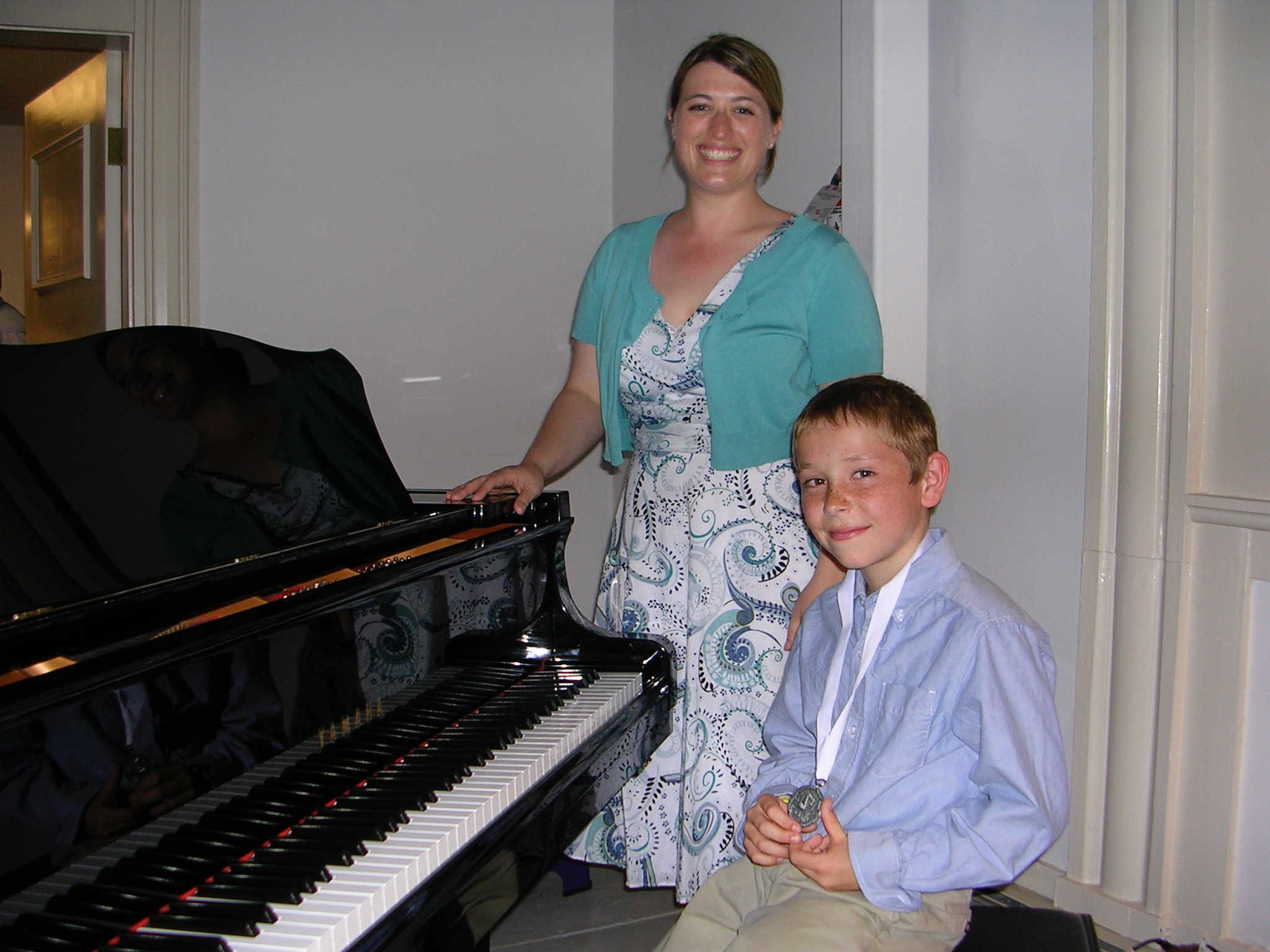
Piano recital with Amy Irish
For several days Nicholas worked independently in the music room while writing the piece about Samantha Smith. Karyn remembers checking in with him periodically to hear what he was accomplishing. Nick used his musical abilities and combined them with Samantha Smith; an ideal project in many ways.
When Rob and AWTT staff saw and heard what Nicholas had accomplished they were very impressed. A conversation followed and out of this grew the ongoing AWTT project offered each year to middle students. The Samantha Smith Challenge (SSC) is a dynamic educational program for middle and high school students that uses the creative arts to build a bridge between the classroom and the world as students become compassionate, courageous, and engaged citizens. SSC projects teach students that, no matter what age, they can be part of solving the challenges and problems they see around them and work for the common good.
“Looking back, I would have written the piece a bit differently now (on account of my skills having developed significantly since I was 13), but the music nevertheless managed to elicit a response from Mr. Shetterly, who was present when we displayed our projects.”
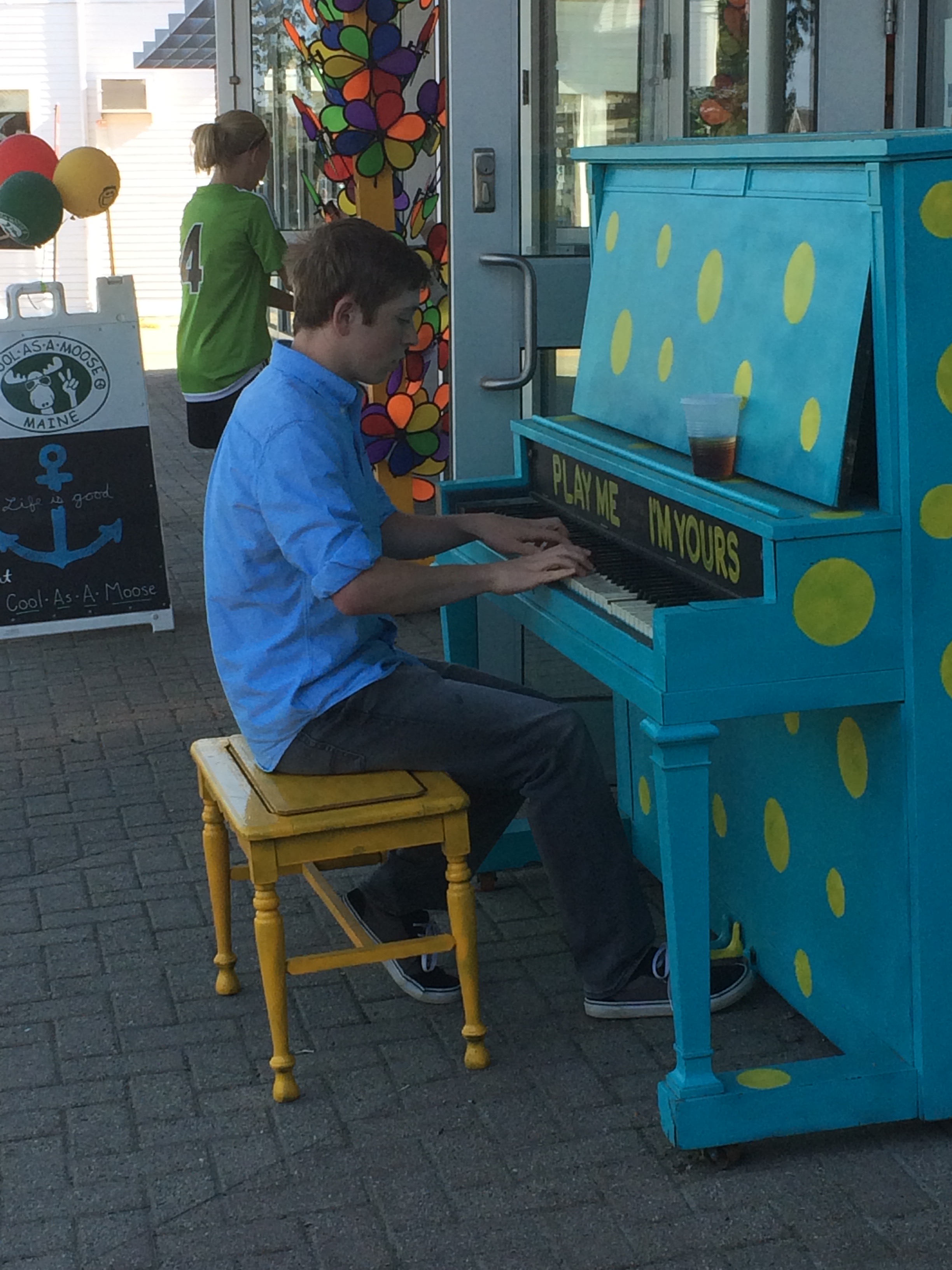
Playing on a street piano
Karyn shared that Nicholas was a confident and very humble student. He was provided an amazing opportunity to take what someone did that created change and through Rob’s painting of Samantha, together they elevated her voice. Nicholas was invited, while in high school, to speak at the New England League of Middle Schools annual dinner. Karyn said: “Through his passion and intelligence and his gifts he opened doors for others students and served as a good role model.”
“Seeing the impact my project had on Mr. Shetterly and the creation of the Samantha Smith Challenge was wonderful. Since then, I’ve loved staying in touch with AWTT when I’m able, and have enjoyed learning much more in the fields of piano performance and composition.”
Nicholas returned at Christmas from a semester studying in Italy. He took time to provide an update what he’s doing and some of his thinking.
“Today, I am headed into my senior year at Wesleyan University in Middletown, CT, where I am majoring in Music and Italian Studies. While I have grown a lot in my abilities, I must admit that I’m still trying to figure out what it is that I want to write (and how to write it). George Winston, whose CDs my parents used to play when I was growing up, is a source of much inspiration. His seasonal albums are some of my favorites, and the way in which he captures natural settings through the piano is exceptional.
Working on music while in Italy last fall
The opportunity to teach music to others has presented itself in recent years as well, and I have found myself working with a few students—albeit largely in a virtual format—on the fundamentals of music and piano-playing. To introduce people to the piano has been an immense joy, and quite often has made me think of the importance of the arts and music in education. I personally have learned at least as much from studying music as I have from any science or math course, and in fact have found that the subjects of music and science are not quite so different. And yet, when it comes to many schools (especially those in less-privileged areas or with less funding), the arts and music programs are all too often the first on the chopping block. The benefits of music in education are plentiful, but inclusion and accessibility are indispensable when it comes to having an impact on students’ development.
Nick performing the Samantha Smith piece he wrote:
As was stated by Stanford University professor Eliot Eisner (quoted previously on this blog), “The arts make vivid the fact that neither words in their literal form nor numbers exhaust what we can know. The limits of our language do not define the limits of our cognition.” Whether by aiding in telling the story of Samantha Smith, or by helping me explore the natural world around us in a way that words and numbers cannot, music has occupied a space in my life that nothing else could. It’s impact on me has in turn given me the potential to impact a little bit of my corner of the world, and I couldn’t be more grateful.
AWTT Education Director Connie Carter has valued her time working with Nicholas and said the following: “Besides being the catalyst for AWTT’s education program the Samantha Smith Challenge, Nick has continued to be a strong voice for courageous student activism. He has spoken at conferences about AWTT and was a critical voice in our strategic planning process. Listening to Nick talk about the importance of finding and using one’s voice is like listening to a beautiful musical composition — full of meaning, compassion, and inspiration.”
It was such a gift to converse with Nicholas and hear his story. His journey in many ways is just beginning, especially to those of us who have been around for many years. But, his musical journey started many years ago as a small child. I’m grateful Nicholas shared his story and I’m sure it will inspire and remind us how important it is to provide learning opportunities in the arts for all.
If you have a student or a former student whose story will inspire please contact me at meartsed@gmail.com!
The word watershed (noun) means a time when an important change takes place. Over the years Watershed Center for Ceramic Arts, located in Newcastle, Maine has shifted and grown as changes were needed and I’d say most, if not all, were important to the organization. At its inception the focus was on bringing artists together to learn and create. And, for many years Watershed has offered professional development for educators, many of them Maine K-12 visual art teachers.
Watershed Center for Ceramic Arts story started thousands of years ago. There is an abundance of glacial marine clay from the mountains to the sea because at one point Maine was covered by a giant glacier. Watershed is located in Newcastle, a place that has an abundance of clay with a blue-green tinge. Clay can be found throughout our state along banks of rivers and streams and also in fields. Sometimes it takes time to locate; it can be very pure or filled with other components that need to be picked and sifted out. Fortunately, one of the resources that Watershed provides for teachers is a video depicting the exploration to find clay.
This blog post tells the story of Watershed with several topics; history, philosophy, educationalopportunities, audience, pandemic – ups and downs,changesunderway, and supporting Watershed. Some of the blog content is taken directly from Watershed’s website; some is provided by the founders, teachers who have taken workshops, artist working at the center, and some from staff. A great big thanks to Claire Brassil, Watershed’s Outreach & Communications Director for her assistance with this post.
Original studio space
HISTORY
The history of Watershed begins with the geological gift of clay found along the banks of local rivers in midcoast Maine. For much of the 19th century, the local community relied on vital income from the manufacturing of waterstruck brick (so called because it was made from a wet mixture of clay and water). Waterstruck brick had lasting historical appeal, and in the 1970s an attempt was made to re-establish its manufacture on the site that is now the Watershed campus in Newcastle. While the brick business folded after a year, a group of artists became inspired to make use of the abandoned factory and the tons of local marine clay left at the site.
In 1986, Margaret Griggs, George Mason, Lynn Duryea and Chris Gustin collaborated on a new vision for the brick-making factory—as a place for clay artists to live and work in community. The open layout of the facility encouraged the artists to approach their work with a new vigor and awareness, and the seeds for what would become Watershed Center for the Ceramic Arts took hold.
Founders George Mason, Lynn Duryea and Chris Gustin
During Watershed’s early years, small groups of 10-12 artists would spend the summer living and working together on the campus. The first residents formed connections and friendships in a space that provided opportunities to create without hierarchy. Artists developed their personal work and envisioned new possibilities for a creative community. Watershed soon began to attract artists from far corners of the world who sought a creative environment in which to engage and explore. Today, more than 100 artists a year come to Watershed to create and connect with like-minded makers.
I’ve been fortunate to know Ceramic ArtistGeorge Masonfor many years. In 1987 he created a Percent for Art Project at the new school building where I was teaching in Union. He is an amazing, thoughtful and kind artist. When I asked George what his vision was when he first came together with his colleagues, this was his response:
“You know, this all started among friends inviting friends. We sensed a creative opportunity to find out what might unfold by just living and working together with no aesthetic agenda or expectation of result. Even before the name Watershed Center for the Ceramic Arts came into being after the first season, this place was already a refuge apart from career; where the magic of relationship and creativity had the space to spark the unexpected.“
PHILOSOPHY
Central to Watershed’s philosophy is a belief that the unexpected sparks creativity and that new people, ideas and spaces nurture the evolution of artistic practice. Our dual mission is to provide artists with time and space to explore ideas with clay; and to promote public awareness of the ceramic arts. Through residencies, workshops, public events, talks and exhibitions, Watershed supports the process and work of clay artists from around the country and world.
This video on youtube is very informative.
EDUCATIONAL OPPORTUNITIES, YES FOR TEACHERS
Watershed offers educational programs and resources for grades K-12 art teachers and students of all ages. From workshops and classroom-based experiences, to professional development and online tutorials, Watershed works to support ceramic art educators and the next generation of ceramists.
Watershed provides professional development opportunities; workshops, residencies, and resources. Teachers hone their clay education skills, develop curricula, and connect with other educators from around the state. Watershed provides newly created online tutorials, Digging & Processing Wild Clay and Raku Firing, developed by Teaching Artist Malley Weber.
Teaching Artist Malley Weber who created educational videos for Watershed
“Watershed has been so important to my development as an artist and teacher. We’re incredibly fortunate to have this facility here, in Maine. It serves as a gathering and sharing place for all of the acquired knowledge of the American, and to some extent the international, ceramic scene, at the same time as providing world class studio facilities and learning opportunities. If we think of art as a language, and the different techniques and styles available to us as our vocabulary, working through Watershed allows me to say an entire range of things that I would be otherwise unable to express through my artwork. Having Watershed available to me in Maine means I have the opportunity to say anything I can conceive with clay.”
Winthrop Middle School Art Teacher Lisa Gilman commented after the workshop she attended:
“Watershed nourishes the whole artist. They provide space and time for an artist to grow. They support the artist’s mind, body and soul. Watershed is a rare gem in today’s world. Not once all week did I miss technology or really even think of it. I was able to truly connect and grow as an artist and engage in deep thoughtful art making. Pure magic!”
Vinalhaven’s K-12 art teacher, Heather White, comment:
“I’ve participated in countless professional development opportunities over the years, and my time spent at Watershed ranks at the very top of the list. The instructor and everyone on the Watershed staff was knowledgeable and encouraging, I got a lot accomplished in a short time, I’m going back to my classroom with new and fresh ideas, everyone I met was fun and friendly, and the food was amazing! Hopefully every art teacher in the state has an opportunity to go at some point!”
Teaching Artist Malley Weber demonstrates to a session with art teachers
AUDIENCE
Watershed’s audience is wide and varied. From artists who have different focus to teachers looking for learning opportunities to communities members who appreciate and wish immerse themselves and support ceramic programming. Some of listed below.
Artists who can work independently in a clay studio and come from Maine, around the country, or abroad take part in our residency program. We aim to foster community and connection among practicing artists at all stages of their careers, from students and recent graduates to established professionals looking for an opportunity to connect with other ceramists. Scholarships are available for all populations. For example in 2017 The Zenobia Fund was established for BIPOC artists, Black, Indigenous, and People of Color (BIPOC)
Artists with some experience in clay who are looking to further their skills and knowledge. Guest artist and kiln firing workshops are available.
Maine K-12 educators and students. The teacher education program prioritizes skill-building and technique-sharing in clay for Maine’s art educators. Teachers know their students best and can tailor what they learn at Watershed to suit their particular needs and interests. The teacher sessions also provide an opportunity for art educators who usually work solo to connect and collaborate.
Watershed offers some programs for student groups as well. Art classes come to campus to learn about Raku firing.
Ceramic art lovers & appreciators. While the bulk of our programs prioritize hands-on learning for artists, Watershed offers opportunities for the public to learn more about and appreciate ceramic work via exhibitions, artist talks, special events, and Salad Days, our annual fundraiser and celebration of ceramic work.
PANDEMIC– UPS and DOWNS
In person Watershed programming was on hold during the summer of 2020 due to the pandemic. However, the timeline for the building of the new studio (see more under ‘changes underway’ below) was pushed forward and completed more quickly since the campus was quiet.
New ways for artists to create and connect became a priority and the following are some of the programs developed:
Online gatherings for artists around topics that mattered to them. For example a partnership was formed with The Color Network and Ayumi Hori to facilitate online conversations for artists who focused on racial equity, economic parity, and creativity during Covid-19.
Kiln firing opportunities for Maine artists during the summer were available since because they’re usually in constant use by artists-in-residence.
An outdoor sculpture exhibition called “Outstanding in the Field” (details under “past exhibitions”) supported clay artists and offered the public an opportunity to safely view work outdoors.
During the last 20 years or so Watershed has been able to maintain and upgrade some of the facilities on the property. They built and fully insulated artist cabins, built a kiln shed, and updated Thompson Hall to name a few changes.
Phase 1, 2015-17: Included project planning, a feasibility student and conceptual facility designs. From this first phase action has taken place and so many wonderful and much needed changes have occurred.
Phase 2, 2018-19: A beautiful historic building, the Joan Pearson Watkins House is located about a quarter mile down the road from the main campus. Watershed purchased the house and the accompanying 20 acres, which abut the land that leads to the studio. It was renovated and restored and holds Watershed’s Barkan Gallery, which offers year-round exhibition, lecture, and event space. Watershed’s administrative offices and retail shop are also located in the house.
Phase 3, 2020: Studio Annex provides climatized, flexible space for adjunct programming and material and equipment storage.
Phase 4, 2021-21: Windgate Studio is a 7,500 square foot studio, weatherized and ADA-compliant, supporting an expanded residency and workshop season. Features include a state-of-the-art filtration and ventilation system, spacious glaze area, custom spray booth, plaster room, and a single-level floor plan offering a seamless transition between studio and kilns.
Supports artists working on commissions or large scale projects.
Brings (inter)nationally-known guest artists to lead workshops.
Provides opportunities for student groups to make and fire work.
Enables Watershed to collaborate with partner organizations.
Offers space for artists to create and connect throughout the year.
Tap into limitless potential!
Recently opened Windgate Studio
Phase 5: Campus Commons design and construction, 2022-2023. The Commons will replace the existing Thompson Hall. The plan includes comfortable dining facilities, a commercial kitchen, and weatherized housing for staff.
SUPPORTING WATERSHED
After reading about Watershed you might be wondering how they’ve been able to accomplish so much. Like anything successful they’ve had a vision, commitment from amazing staff and supportive board of directors and advisors. And, they’ve had donors (small and large contributions) who have contributed generously to the mission and success of Watershed. Their Capital Campaign called ‘Watershed NOW’ is creating spaces that inspire bold artistic practice and community. LEARN MORE.
There are opportunities to support Watershed with donations to the scholarship fund, the capital campaign, and the annual fund. Occasionally, Watershed seeks volunteers for specific events and projects.
Watershed is well-known in the national ceramics community but has perhaps less name recognition in Maine. As capacity for year-round programming grows, Watershed plans to offer more ways for Mainers to connect.
Co-founder Lynn Duryea shared her remembrance and thoughts on Watershed:
It really was Peg’s vision that got Watershed going. She was a long-time seasonal resident of the area and an investor in the brick factory. When it ceased to be financially viable, she really wanted to see artists use the space, did a lot of outreach and research to see how that might happen, contacting clay programs as well as individual artists. She knew George and ultimately convinced him to try the pilot program in 1986. George invited artists he knew and who had been recommended to him. He invited me because I was working on large-scale planters for a Percent for Art installation that couldn’t be executed in my Congress St. Portland studio. He knew Chris and invited him to come with his students at Swain School of Design early in the fall. I was still working at Watershed when Chris came with his students. It was conversations that came out of that week that moved us forward. I don’t recall that we were looking too far down the road – as it were. I don’t know that we were thinking we were laying the groundwork for what would become a major institution in our field. We definitely saw the potential of a group of people coming together to work in what was then a very raw space, just to see what might happen collectively and individually. Watershed has always been about community – people working together on an equal footing regardless of their reputation, status, age, etc. Watershed in its early years was about as grass roots as you could get: a group of artists and a small board of directors figuring it all out. And it has worked. The growth has been organic, uneven and amazing, particularly amazing in the last decade. Fran (Rudoff, executive director) has worked wonders – along with a very dedicated staff and board. In no way did we envision the specifics of Watershed’s programming today in the fall of 1986, but we knew something significant could happen. And it has, by putting one collective foot in front of the other for all these years, never giving up on the ideas and potential.”
NEXT STEPS
Hopefully you’ve read to the end of this long blog post. And either learned about a new place in Maine or reminisced about your own experience(s) at Watershed. It’s a beautiful gem where thousands have traveled to, learned, and left with a full heart. When I think about the co-founders (in their 30’s at the time) who were brave enough to take a chance, I am reminded of Vincent van Gogh’s words: “What would life be if we had no courage to attempt anything…”
I am grateful for the help Watershed’s Outreach & Communication Director, Claire Brassil provided in putting together this blog post. As for the future of Watershed, Claire’s thoughts below:
In the spring, we celebrated the building’s completion and collectively reoriented after such a rapid metamorphosis. The studio can contain any program we dream up. But … how will Watershed’s limitless future take shape? As an organization known for its scrappy rough edges, what will it mean to nurture the best parts of our original identity while making the most of our shiny new vessel? These coming-of-age throes find us wrestling with invigorating yet challenging questions of who we’ve been and who we want to become.
The shape and scope of Watershed’s next chapter will begin to emerge over the coming year. I feel confident that my colleagues, the board, and our greater community share a collective passion for refining and growing this unique place. Watershed is a quantifiable physical space: 54 acres, 7,500 square feet of studio space, 31 dining room chairs, 15 bedrooms, 11 kilns, and one gallery. But in an equally real sense, we are an experience, an idea, and a respite during an era when few places affirm that creative practice and artists matter.”
Here we are at the start of another year – 2022. It feels like it couldn’t possibly be over 20 years when we were turning the century and we experienced the fear of the computer flaw and the Y2K scare. I know that the last year has been absolutely crazy for educators and I am grateful for those of you who continue to dedicate yourselves to teaching and putting students best interest in the center. I’m excited about starting a new year and sharing many arts education and educators stories with you that I’ve been working on during the last month.
Today I’m sharing a short story of my own. On December 13 I attended the winter concert at Camden Hills Regional High School. Many of you know Kim Murphy who teaches music at the school and directs the chorale, treble choir and chamber singers. I was moved to tears when the treble choir sang Where the Light Begins with text by Jan Richardson and music by Susan LaBarr. The piece was originally written for a middle school and the composer was asked to “contemplate the theme of peace”. When I think about peace I imagine teachers putting on their supermen capes each morning to face the challenges of the day. The first few lines of the song Where the Light Begins…
Perhaps it does not begin.
Perhaps it is always.
Perhaps it takes a lifetime to open our eyes,
to learn to see what has forever shimmered in front of us
If you google the title you can find the rest of the words and hear the song and perhaps you’ll be moved by the piece as well.
A few days later on December 21, I invited our neighbors for a Winter Solstice gathering. Some of you know that I’ve lived on a gravel, dead end road with 6 other homes in a small Maine town for over 20 years. Over the years we’ve gotten to know our neighbors through chatting while walking on the road, welcoming new folks with a loaf of bread and exchanging cookies during the holidays. Most importantly, we wave as cars pass by. We recognize people from the cars they drive. In all these years we’ve never had a gathering of all the neighbors. Two things prompted the invitation; one was the isolation of Covid, the second reason was because one neighbor passed away in August. I am reminded, now more than ever because of Covid, how important it is to reach out to others. Our outside gathering included a chance to look at the stars, stand around the fire pit, share and exchange cookies and refreshments. And, my favorite part … we each lit a candle (children and adults) and listened to a poem called The Shortest Dayby Susan Cooper. And, on the shortest day of the year, we all felt a new connection.
Today on Facebook, a former student (whose mother I also taught), had listed some favorite moments of 2021. It was a very sweet post that had beautiful photos accompanying the moments. She lives on a farm and raising her own food including vegetables, chicken and rabbits. My favorite was a picture with 6 shelves of canned foods, and baskets and crates stacked and filled with different squash. She won’t go hungry and she has plenty to share!
Her post helped me pause and give thought to some of my favorite moments this year. One is – drinking my favorite tea, quince, sent to me by my Danish sister (that I can’t find in the US). I enjoy a cup of tea while listening to Poem-a-day which comes by email from the Academy of American Poets. (If interested, sign up at https://poets.org). I’ll finish this post with today’s poem called The New Year by Carrie Williams Clifford. My wish for you for 2022 is to remember to put on your Superman cape each day and have a safe and happy new year!
The New Year comes—fling wide, fling wide the door Of Opportunity! the spirit free To scale the utmost heights of hopes to be, To rest on peaks ne’er reached by man before! The boundless infinite let us explore, To search out undiscovered mystery, Undreamed of in our poor philosophy! The bounty of the gods upon us pour! Nay, in the New Year we shall be as gods: No longer apish puppets or dull clods Of clay; but poised, empowered to command, Upon the Etna of New Worlds we’ll stand— This scant earth-raiment to the winds will cast— Full richly robed as supermen at last!
Argy Nestor
Arts Educator, Blogger, Artist, Connector meartsed@gmail.com
https://sites.google.com/view/anestor/
Argy’s Blog
The purpose of this blog is to share stories about people and places; and to celebrate the amazing work (and play) that students, educators, and organizations are doing in and for arts education. In addition, the blog has a plethora of resources and innovative ideas. This forum gives blog readers the opportunity to learn from each other. It is essential that we listen, learn, and collaborate in order to build on teaching practices for the benefit of every learner in Maine and beyond.









 me arts ed