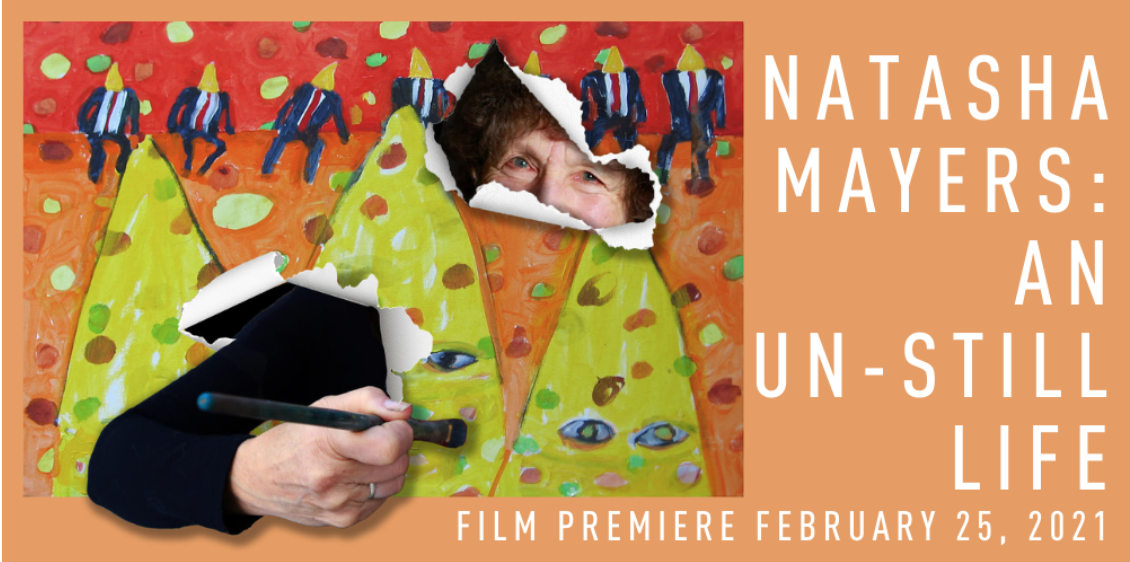
We are thrilled to announce the film premiere of Natasha Mayers: an Un-Still Life
Thursday, February 25, 2021, 7:00–8:30 p.m. Virtual, via Vimeo & Zoom Video Q&A Tickets available through Eventbrite–FREE for all and all are welcome!
Artist. Trickster. Activist. Natasha Mayers: an Un-Still Life follows Maine’s “most committed activist artist” in her quest to engage with the questions that face people-of-conscience today.
Humor. Anger. Love. Outrage. Grief. Hear Natasha’s inspirational call to activism; join her and filmmakers Anita Clearfield and Geoffrey Leighton at the virtual film premiere!
Now, more than ever, people want to see truthful, creative role models like Natasha Mayers, who Maine Senator George Mitchell called a “state treasure.” Natasha Mayers: an Un-Still Life presents an artist who has remained true to her passion for over 50 years, following Natasha as she takes on social, economic, and environmental justice issues with humor, irreverence, and a keen aesthetic that enlightens while it entertains. Using a non-traditional approach, the film’s animation and special effects reflect Mayers’ own art-style.
Once the film has premiered, those of you who contributed to the Indiegogo campaign will receive your premiums — Thank you for your patience!
AUGUSTA, Maine – Applications are now open for the Allagash Wilderness Waterway (AWW) 2021 Visiting Artist Program, which brings artists to the remote wilderness of Maine for two-weeks of solitude. The program provides artists with the opportunity to immerse themselves in nature to interpret and share their experiences through their art. For summer 2021, one chosen artist and a guest will receive complimentary lodging at the AWW Lock Dam Camp for two weeks during August and orientation by AWW rangers. The application deadline is February 28, and notification will be made by March 20, 2021. Interested artists are encouraged to apply now online.
Lock Dam Camp is a one-room cabin on the northern end of Chamberlain Lake, one of the largest and deepest lakes in the North Maine Woods. For 28 summers, it was the home of Dorothy Boone Kidney and her husband Milford – where they provided information to canoeists and tended the dam. Dorothy wrote two books about their life at Lock Dam, Wilderness Journal: Life, Living, Contentment in the Allagash Woods of Maine, and Away from it all.
Lock Dam Camp
Lock Dam Camp is located approximately 10 miles from the boat launch at the southern end of Chamberlain Lake and 60 miles from the nearest town, Millinocket. Amenities include:
Hand-pumped running water.
A wood stove.
Gas appliances including a cookstove and refrigerator.
Solar-powered lights.
Lock Dam is a favorite spot for canoeists traveling the AWW, anglers, and those who are looking for a quiet retreat from our modern world.
Artists can learn more about the AWW and access the 2021 application on the Maine Department of Agriculture, Conservation and Forestry website. Or by contacting Matt LaRoche, AWW Superintendent and Registered Maine Guide, at (207) 695-2169, matt.laroche@maine.gov.
2020 was the first year this program was in place and art teacher/artist Michael Vermette was selected. See an interview with him below.
A couple years back I had the opportunity to serve on the selection panel for the Maine Audubon’s Federal Junior Duck Stamp Challenge provided for students in grades K-12. It was a pleasure to help out and I was so impressed with the student artwork. This challenge is a great opportunity for interdisciplinary connections – science and art – for teachers across the state. And, the big winners are the students! Learners can understand how the Federal Duck Stamp Program is one way to conserve our country’s wildlife and wildlife habitat.
Maine Audubon is collaborating with U.S. Fish and Wildlife Service for the 27th annual Federal Junior Duck Stamp Program, and we’re looking for Maine students to submit some creative, innovative, beautiful waterfowl art!
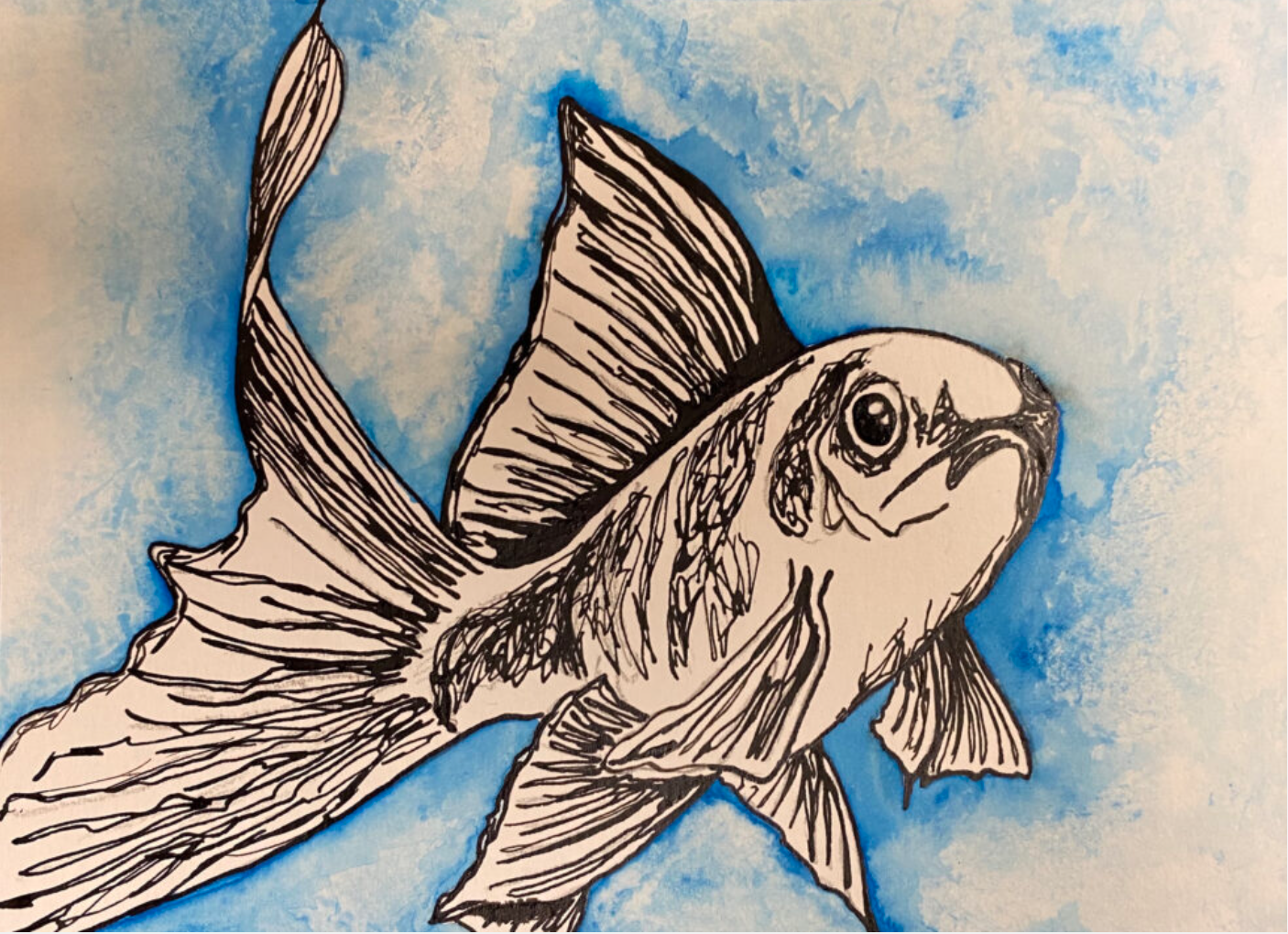
Maine Junior Duck Stamp Best in Show 2019-20: “Watchful Waterfowl” by Saffron Labos, 16, Freeport
The Federal Junior Duck Stamp Conservation and Design Program is a dynamic, multidisciplinary curriculum that teaches wetland and waterfowl conservation to students in kindergarten through high school. The program encourages students to explore their natural world, invites them to investigate biology and wildlife management principles and challenges them to express and share what they have learned with others. This program and curriculum lend themselves to learning in a variety of forms, remote, hybrid teaching and in-classroom instruction.
The winning artwork from a national art contest serves as the design for the Junior Duck Stamp, which the U.S. Fish and Wildlife Service produces annually. This $5 stamp has become a much sought after collector’s item. One hundred percent of the revenue from the sale of Junior Duck stamps goes to support recognition and environmental education activities for students who participate in the program.
This program has a free downloadable curricular guide to help support learning about waterfowl habitat and conservation. The guides provide fun, age-level appropriate activities that will enhance your curriculum and students’ knowledge of wildlife and habitat.
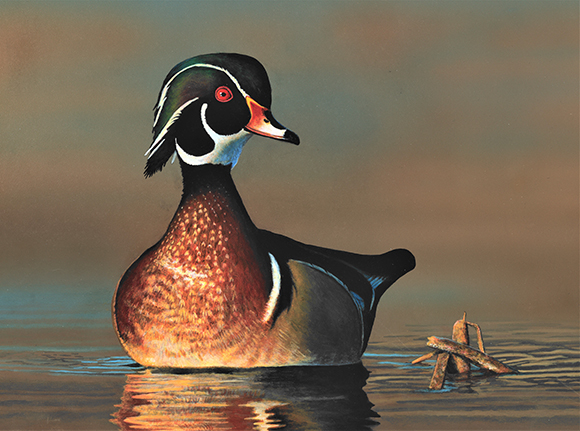
Madison Grimm, a 13-year-old from South Dakota, took top honors in the Service’s National Junior Duck Stamp Art Contest with her acrylic rendition of a wood duck. Her artwork will graces the 2020-2021 Junior Duck Stamp.
Maine Program and Submission Info
Students will be able to submit an entry of approved waterfowl art into the competition. Designs are considered in four grade categories—K-3rd grades, 4th-6th grades, 7th-9th grades, 10th-12th grades—with recognition for first, second, and third places and honorable mentions.
The Maine Best of Show entry will be considered with artwork representing each state in the country. One design will be selected at the national level to create the Federal Junior Duck Stamp. Proceeds from the sale of Junior Duck Stamps (which cost $5 each) support conservation education by providing awards and scholarships for students, teachers, and schools.
You can download the teacher guides here and view the contest rules and entry forms here. For questions and/or curricular support, please contact Maine Audubon’s Lead Educator, Linda Woodard at lwoodard@maineaudubon.org.
Over the past two weeks I’ve been considering what to include on the blog to recognize Black History Month. I don’t want what I offer to be just for this month but something that can be for every month. Like excellent arts education should be fostered every day in every classroom, black history should be part of our everyday education. One of the questions I’ve asked myself: how do I, a white woman living in a predominantly white state, avoid common errors that white people make when attempting to provide educational resources that support and recognize black and brown people? I’ve been reading many books and articles, checking websites and listening to podcasts to help open my mind, help me better understand, and move out of my comfort zone. I’ve stopped bashing myself over the head about ‘getting it’ and moved to realizing that I need to be patient with myself because the unlearning necessary will take time and its most likely not a place I’ll reach – my learning will be ongoing.
So, what can I offer you at this time and share with you, the Maine Arts Ed blog readers? Some of the educational resources that I access regularly and some of what I’ve read recently. Places I turn to that pushes on my thinking, sometimes making me uncomfortable. I invite you to share what you’ve been learning by commenting at the bottom of this blog post or by emailing me at meartsed@gmail.com.
Credit: Black History-Shenandoah University
PODCASTS
Leading Equity – Sheldon L. Eakins, Ph.D. is an accomplished K-12 educator and administrator and provides the podcast. He has taught at the elementary, middle, and high school levels during his career in the states of Florida, Louisiana and in St. Croix, US Virgin Islands. Dr. Eakins also served several years as a school principal in the states of Louisiana and Oregon. His most recent podcast was an interview with Stephanie Gates and is called How to Combat Colorism in the Classroom with Ms. Stephanie Gates. Dr. Eakins faces challenging topics head on and helps us move to a helicopter view as well as down in the weeds.
The Cult of Pedagogy – Jennifer Gonzalez is the Editor in Chief and works with a group of thoughtful and knowledgeable individuals to provide the podcast. Jennifer taught middle school language arts in the D.C. area and in Kentucky. She provides the podcast to support teachers through a community approach. The Cult of Pedagogy website includes an overview of podcasts by category. I suggest that you go to the category called ‘Hot Topics’. Jennifer interviewed Dr. Sheldon Eakins for one called Why White Students Need Multicultural and Social Justice Education. You’ll see a variety of ‘hot topics’ there including one called Talking about Race in School: An Interview with Jose Vilson.
RESOURCES ONLINE
Americans Who Tell the Truth – Maine artist, Rob Shetterly’s portraits and narratives highlight citizens who courageously address issues of social, environmental, and economic fairness. Paintings of ‘truth tellers’, their stories, and what they stood and still stand for. The paintings communicate all by themselves.
Natasha Mayers – Activist artist from Maine and one of Rob Shetterly’s portraits. See film trailer, an Un-Still Life created by Maine film makers Anita Clearfield and Geoffrey Leighton. Website will include many resources in the near future. (blog post later this week with film premiere info)
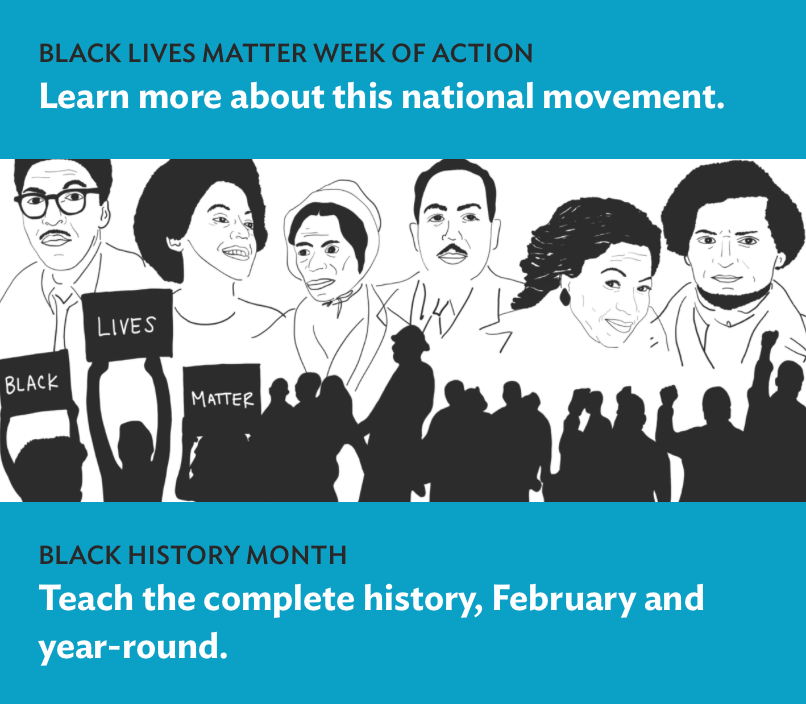
Edutopia – Teaching Black History in Culturally Responsive Wayswritten by Rann Miller. In this article Rann discusses how Black History is American history, and it should be taught throughout the year across the curriculum—not confined to a single month.
Learning for Justice recently changed their name from Teaching Tolerance. Learning for Justice seeks to uphold the mission of the Southern Poverty Law Center: to be a catalyst for racial justice in the South and beyond, working in partnership with communities to dismantle white supremacy, strengthen intersectional movements and advance the human rights of all people. Visit their site to sign up for their weekly emails and access many free resources for K-high school including downloadable posters that will inspire teachers and learners. They also publish a magazine, this springs edition White Supremacy in Education.
Anti-Racism Daily – Since June 3, the Anti-Racism Daily has been sending one email a day pairing current events with historical context and personal reflections on how racism persists in the U.S. (and around the world). You can subscribe and receive an email daily or the weekly archive. The daily information is provided at no cost and was created by Nicole Cardoza. You can subscribe on the website.
Teaching for Change – Their website helps connect to real world issues and encourage students and teachers to question and re-think the world inside and outside their classrooms, build a more equitable, multicultural society, and become active global citizens.
Inspired Teaching – They provide innovative professional learning programs and help teachers build their practice to engage their students as empathetic, critical thinkers. They have several programs and resources that you can access on their website.
Indigo Arts Alliance – Portland, ME and cultivating the artistic development of people of African descent. Mission: to build global connections by bringing together Black and Brown artists from diverse backgrounds to engage in their creative process with an opportunity to serve as both mentors and mentees. An integral aspect of the Indigo vision is to provide Maine based artists of African descent access to a broader range of practicing artists of color from around the world.Website.
Holocaust and Human Rights Center – Augusta, ME. One of the educational resources that they have available on their website is called Decision Making in Times of Injustice. A presentation filled with facts to help support educators in their teaching of the injustices in the world.
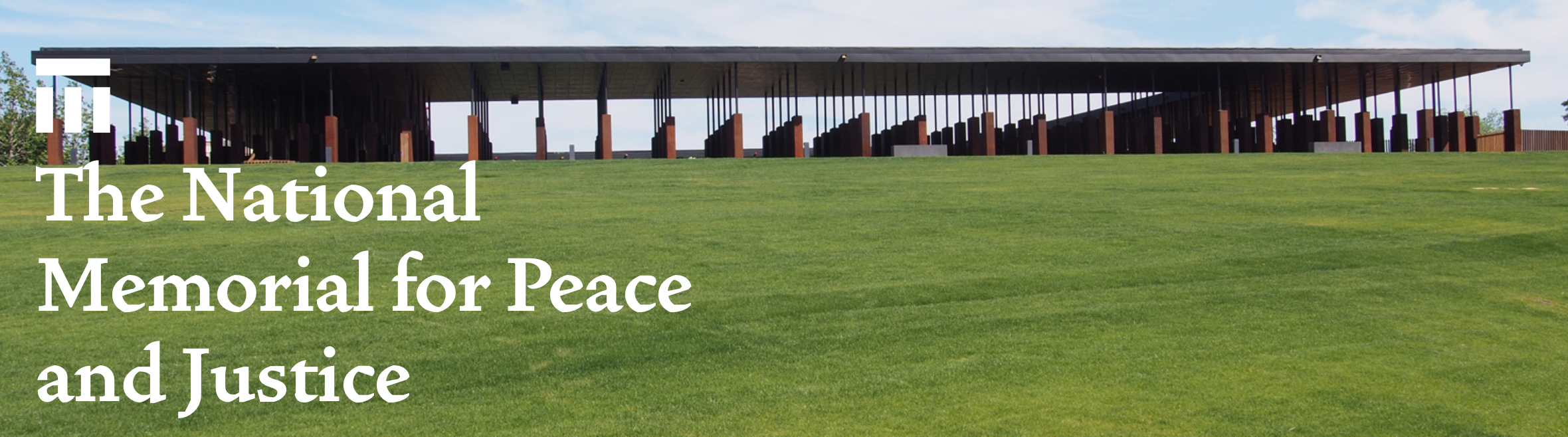
Located in Montgomery, Alabama
BOOKS
Black Like Mewritten by John Howard Griffin was written over 60 years ago. Griffin embarked on an experiment. He darkened his white skin to become black and traveled through the south, from New Orleans to Atlanta. He wrote the book to share his stories traveling as a ‘black man’ which ended up selling ten million copies and became a modern classic. I was able to purchase a used copy and I was mesmerized. “Black Like Me disabused the idea that minorities were acting out of paranoia,” says Gerald Early, a black scholar at Washington University and editor of Lure and Loathing: Essays on Race, Identity, and the Ambivalence of Assimilation. There was this idea that black people said certain things about racism, and one rather expected them to say these things. Griffin revealed that what they were saying was true. It took someone from outside coming in to do that. And what he went through gave the book a remarkable sincerity.”READ MORE about the book in a Smithsonian Magazine article from 2011.
Waking Up White: and Finding Myself in the Story of Race written by Debby Irving. The author tells her true story growing up in a somewhat sheltered upper middle class suburban childhood in Winchester, Massachusetts. Her career focuses on working in nearby Boston in performance art and community based non-profits where she learned that her best efforts were actually doing more harm than good. Her persistence provided lessons along the way and a racial understanding and her white privilege revealed her past.
Just Mercy: A Story of Justice and Redemption written by Bryan Stevenson. A true story (made into a movie) about the inequities in the justice system. Just out of law school Mr. Stevenson moved to Alabama and established the Equal Justice Initiative. He represented the poorest and most marginalized people in the country: those suffering from excessive or unfair sentences, or facing the death penalty. The stories of the people he represented provides a clear picture of the inequities. In addition to writing this book Bryan Stevenson and a small group of lawyers spent years immersing themselves in archives and county libraries to document thousands of lynchings. From their research a sculpture was created called the National Memorial for Peace and Justice and installed in Montgomery, Alabama. It is the nation’s first memorial dedicated to the legacy of enslaved Black people, people terrorized by lynching, African Americans humiliated by racial segregation and Jim Crow, and people of color burdened with contemporary presumptions of guilt and police violence.
In addition to the resources included above on June 8, 2020 I created a blog post called Social Justice Resources that includes nearly 50 links to a plethora of resources. Included are books for young children, middle school, and young adults along with many other resources.
We’ve all heard Amanda Gorman’s name at this point. Her performance of her original poem “The Hill We Climb” endeared her to many. Amanda has been making a splash and sharing her voice for some time. On July 4, 2019 Amanda accompanied Boston Pops conductor Keith Lockhart with the “Believer’s Hymn for the Republic”. She was 21 years old at the time and recently named the nation’s first ever Youth Poet Laureate. At the request of CBS This Morning, she wrote this poem honoring Independence Day. Gorman states that she was inspired by the “Battle Hymn of the Republic” and for her performance she “wanted a musical and poetic composition that felt anthemic, which also spoke to the higher ideals of America — of belonging, of diversity… of equality.”
Passamaquoddy basketmaker Geo Neptune has been awarded a national fellowship. The basketmaking tradition was passed to him by Molly Neptune Parker, the artist grandmother who passed away in June.
Ash Basket, Geo Neptune, Abbe Museum
Neptune is one of 60 artists representing 10 “creative disciplines” from across the country awarded $50,000 from United States Artists, an organization in Chicago, awarding USA Fellowships since 2006. The cash award honors artists and supports their practice and development.
Neptune is 32 and lives in Indian Township and is the third Passamaquoddy basketmaker to receive the award. Past recipients were Gabriel and Jeremy Frey, the Passamaquoddy basketmakers, and Warren Selig, Lauren Fensterstock, Anna Hepler, Ayumi Horie, Wesley McNair and Annie Proulx.
Geo served as the Museum Educator at the Abbe Museum from 2012-16. They returned to Indian Township and this past September elected to the school board. Read more about the honor in the Portland Press Herald.
YOU’RE INVITED (and your students are as well) to submit artwork with the them “HOPE” for the virtual community art exhibit being provided by the Bangor Public Library.
Application is due February 15th Exhibit dates are March 1-April 30, 2021
Artists are encouraged to submit one piece of artwork for the first virtual exhibit of 2021, using the theme “Hope.” The artwork should be submitted as a digital image, either in its original format or as a photograph or scan of your physical piece. An application should be submitted at the same time.
Formats are .jpeg or .png with a 50 MB maximum size
Limited image editing may be available through the library
3D art will not be accepted as it will not display well in our virtual gallery
The Bangor Public Library Art Committee will review applications and select 18 pieces of artwork to be displayed in our virtual exhibit gallery. If more than 18 submissions are accepted, another exhibit will be scheduled after April 30.
For more information, obtain an application to submit artwork, or if you have other questions, please contact Candis Joyce by calling 207-947-8336 ext. 127 or by emailing candis.joyce@bangorpubliclibrary.org OR go to the Bangor Public Library site at https://www.bangorpubliclibrary.org/art-exhibits-information. You will need to submit your application and the image of your artwork through a file-sharing service, ie. Dropbox.
The Union of Maine Visual Artists (UMVA) represents visual artists statewide in all fields of endeavor and welcomes those who support contemporary artists in Maine. The UMVA is dedicated to upholding the dignity of artists, while creating positive social change through the arts. By collaborating with other cultural and progressive organizations, we raise awareness for significant issues while promoting an inclusive arts community in Maine.
The winter edition of the Union of Maine Visual Artists journal includes a piece on the Open Art Teachers Studio. The article was written by Bronwyn Sale, Martha Piscuskas, Iva Damon, and Melanie Crowe and describes the opportunity for art teachers to come together for five sessions and create art together for an hour each time. One participant said: “It was good to see people’s faces and to feel connected.” We know how difficult it can be to feel connected to others and during the pandemic that has been highlighted even more. It was wonderful that Open Art Teachers Studio provided a chance to come together, make and share art, and know that the community is there. READthe entire article.
On May 21, 2017 I wrote a blog post about artist and scientist Jill Pelto. Jill uses her art to communicate scientific research. As many are well aware, scientific jargon to the rest of the world can be easily misunderstood. As educators we know this happens when we communicate with non-educators using educational jargon that others don’t understand. This is an opportunity to hear from Jill herself talking about incorporating her scientific research and climate change data into watercolor paintings to share stories about what is happening in the environment.
Join Jill Pelto, climate change artist and scientist, as she talks about communicating human-environment connections on Wednesday, Feb. 3, at 6:30 p.m. via Zoom. Her talk will cover how she uses her dual background to incorporate scientific research and data into watercolor paintings, and why interdisciplinary science communication is a powerful way to share environmental stories.
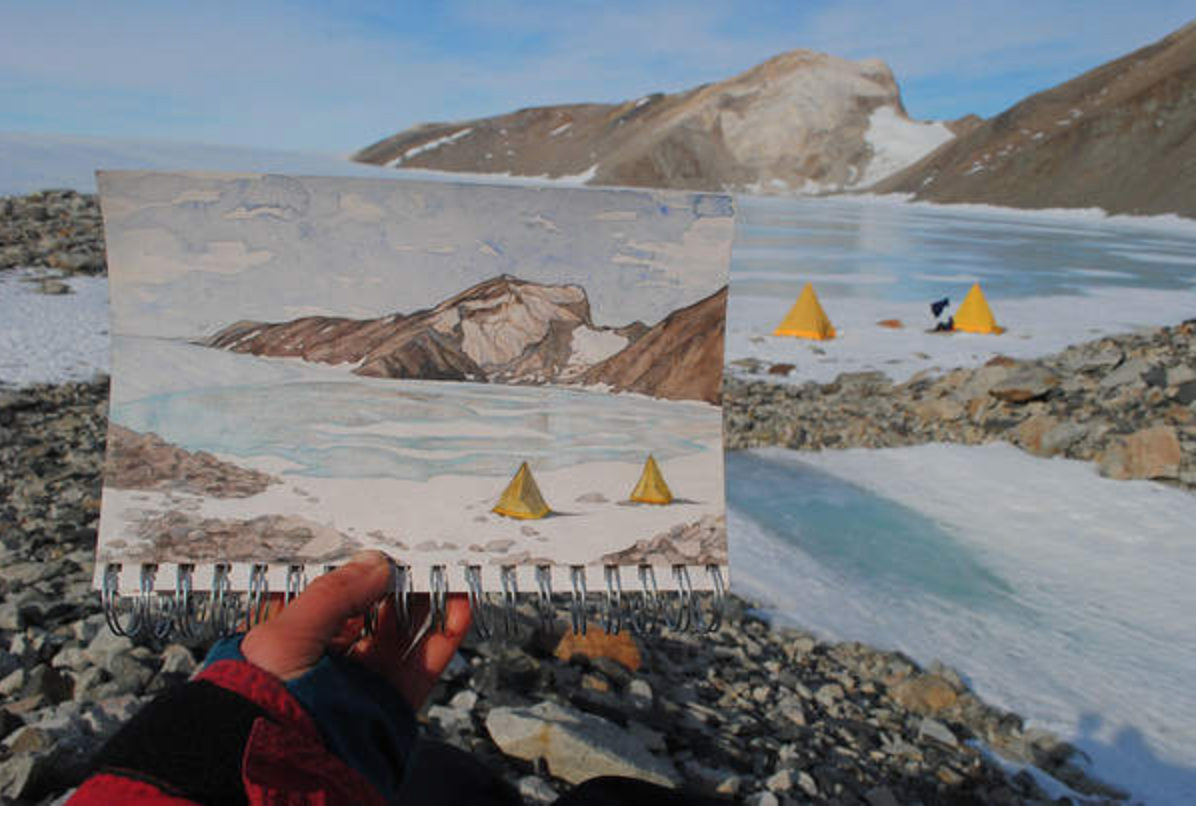
Jill Pelto holding up a watercolor of the landscape at one of the remote campsites she worked at in the Antartica while pursuing her Masters of Science.
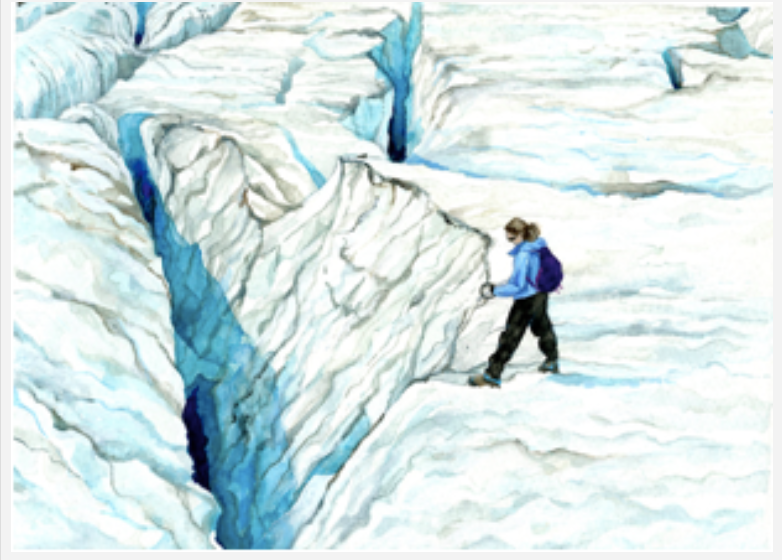
Her diverse background has allowed her to create artwork that engages broad audiences with climate change data. Because climate change can be difficult to verbalize and visualize, Pelto hopes her work will encourage open dialogue about human impacts at different scales. She is inspired by her work in Antarctica, and on alpine glaciers in Washington, and by other scientists who are fighting to conserve fractured ecosystems. From the impossible blues of a single glacier to the concentric secrets held across nature, Pelto shares many stories of change.
Measuring Crevasse Depth
Pelto’s work has inspired online features in Smithsonian, PBS News Hour, and National Geographic. It is also being used in K-12 curriculum programs across the U.S. and Canada. Her work also was featured on the cover of the July 2020 Time Magazine. Pelto will be exhibiting at the Friends of Maine Coastal Islands National Wildlife Refuge Art Gallery in Rockland this summer.
Register at http://bit.ly/2M8UNYi or on the Friends of Maine Coastal Islands National Wildlife Refuge website at mainecoastislands.org. For questions, email info@mainecoastislands.org or call 594-0600, ext. 5.
This article is from the Courier-Gazette and Camden herald, and The Republican Journal, January 28, 2021.
This is a special year for us here at Bay Chamber Concerts and Music School with offices and studios in Camden. 2020 marked the 60th Anniversary of our organization while this coming spring ushers in 10 years for our Music School. We could not have anticipated that both of these milestones would be celebrated in the face of a global pandemic but it has made us ever more mindful of the important role music plays in our lives. At Bay Chamber Concerts and Music School our mission is to enrich the lives of people in our community through high-quality concert programs, music education and community engagement. Through both our performing arts series which introduces a wealth of diverse and varied musicians to the Midcoast and our music school, which offers high quality private and group instruction, we strive to make classical and new music accessible to all.
To say this year has presented us all with challenges would perhaps be an understatement. The COVID-19 pandemic, which first impacted our lives in March has continued to limit our daily comings and goings, our travel plans, and holiday gatherings. Without the option to host live events, our summer and fall have been notably quiet. While this has in many ways been difficult, it has also offered us a unique opportunity for reflection. We are continually inspired by the energy, enthusiasm, and commitment that our Music School has showcased. In the face of a seemingly insurmountable obstacle, the desire to hear, create, learn and listen has triumphed.
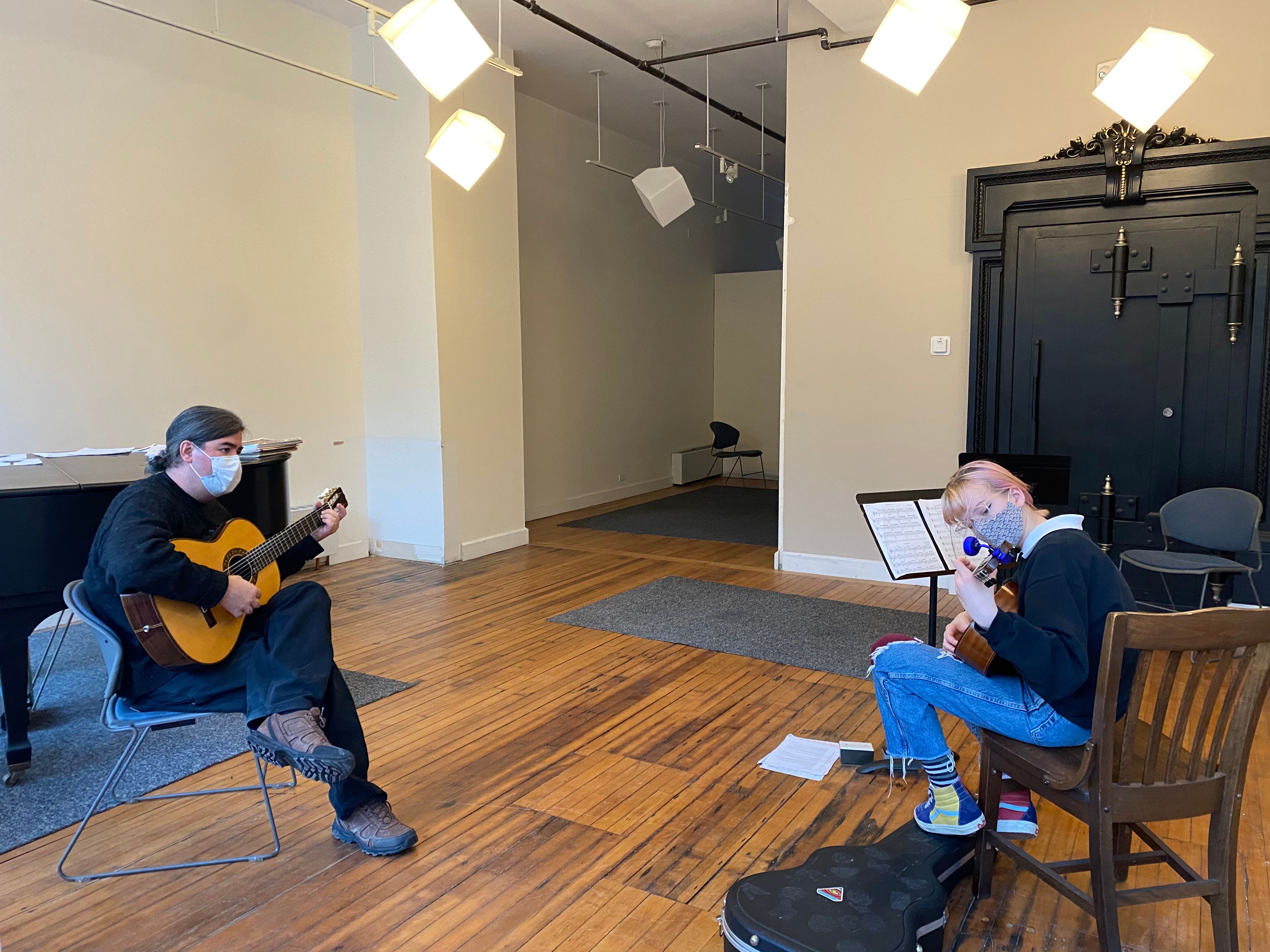
When we first closed our doors in March it was with deep sadness and anxiety, and yet through the efforts of our staff, faculty, and Music School families the shift to virtual lessons, while certainly not without its hiccups, was a smooth one. Now, as fall shifts into winter we are proud to be offering both limited in person and virtual lessons to more than 70 students. To have our offices filled with music again is a delight! A lesson we have learned in the face of these challenges is that there is immense strength and beauty in our community as we all look to find new and inventive ways to continue to forge connection and nurture joy. From our students who Skype in sonatas, and Face-time arias, to our faculty who have worked so tireless to juggle schedules, accommodate needs, and be sure that each lesson is held safely, we are so grateful for the flexibility and patience we have seen in the past months. There is immense solace and joy to be had in music and we are honored to be a part of our student’s continued journeys.
In the face of rapid change, it has been astounding to see the ingenuity that surrounds us. This month we will be screening our student recitals, filmed at home or with an instructor, on the wall of the Shepherd Building in Rockport Village and inviting parents and students to join us outside for a socially distanced viewing. Finding ways to continue to come together, safely and joyously, is vital in this moment and we are grateful for the support we have received from the community in helping us facilitate learning, sustain growth and continue to offer our programming even in the midst of so much uncertainty.
Spring Registration is now open! We will be offering virtual and limited in-person private lessons, Chamber Groups and Ensembles beginning February 1st, 2021. Bay Chamber Music School welcomes students of all ages and musical backgrounds. We are committed to making music education affordable and accessible to all. Scholarship assistance is available to those who qualify.
Argy Nestor
Arts Educator, Blogger, Artist, Connector meartsed@gmail.com
https://sites.google.com/view/anestor/
Argy’s Blog
The purpose of this blog is to share stories about people and places; and to celebrate the amazing work (and play) that students, educators, and organizations are doing in and for arts education. In addition, the blog has a plethora of resources and innovative ideas. This forum gives blog readers the opportunity to learn from each other. It is essential that we listen, learn, and collaborate in order to build on teaching practices for the benefit of every learner in Maine and beyond.








 me arts ed