Archive for the ‘Creativity’ Category

h1

Congratulations Sarah

May 25, 2021

Hancock County Teacher of the Year Sarah Doremus

The Maine Teacher of the Year process is extensive which includes writing, interviewing, and sharing about what is most important to teachers. It provides an opportunity for teachers to consider every aspect of the details of teaching. The 2021 county teachers of the year were recently announced and art teacher Sarah Doremus was named the Hancock Teacher of the Year. Sarah, along with the other 15 county teachers are eligible for the 2022 Maine State Teacher of the Year. Maine Teacher of the Year is a program of the Department of Education and is administered by Educate Maine.

Sarah teaches at Sedgwick Elementary School and recently provided her story in an interview for the Maine Arts Education blog. I’m sure you’ll join me in congratulating Sarah and once you read this will understand why Sarah was selected. Included in this post are amazing examples of student work as well as Sarah’s own art. I’m so proud that an arts teacher has been selected and I know that Sarah will represent us well in her role.

WHY SARAH LOVES TEACHING

I love the fact that it is different every day. I love that I work with little people who have yet to see limitations in what they can do and are eager to try anything. I love that my job allows me to make a living doing what I love to do.
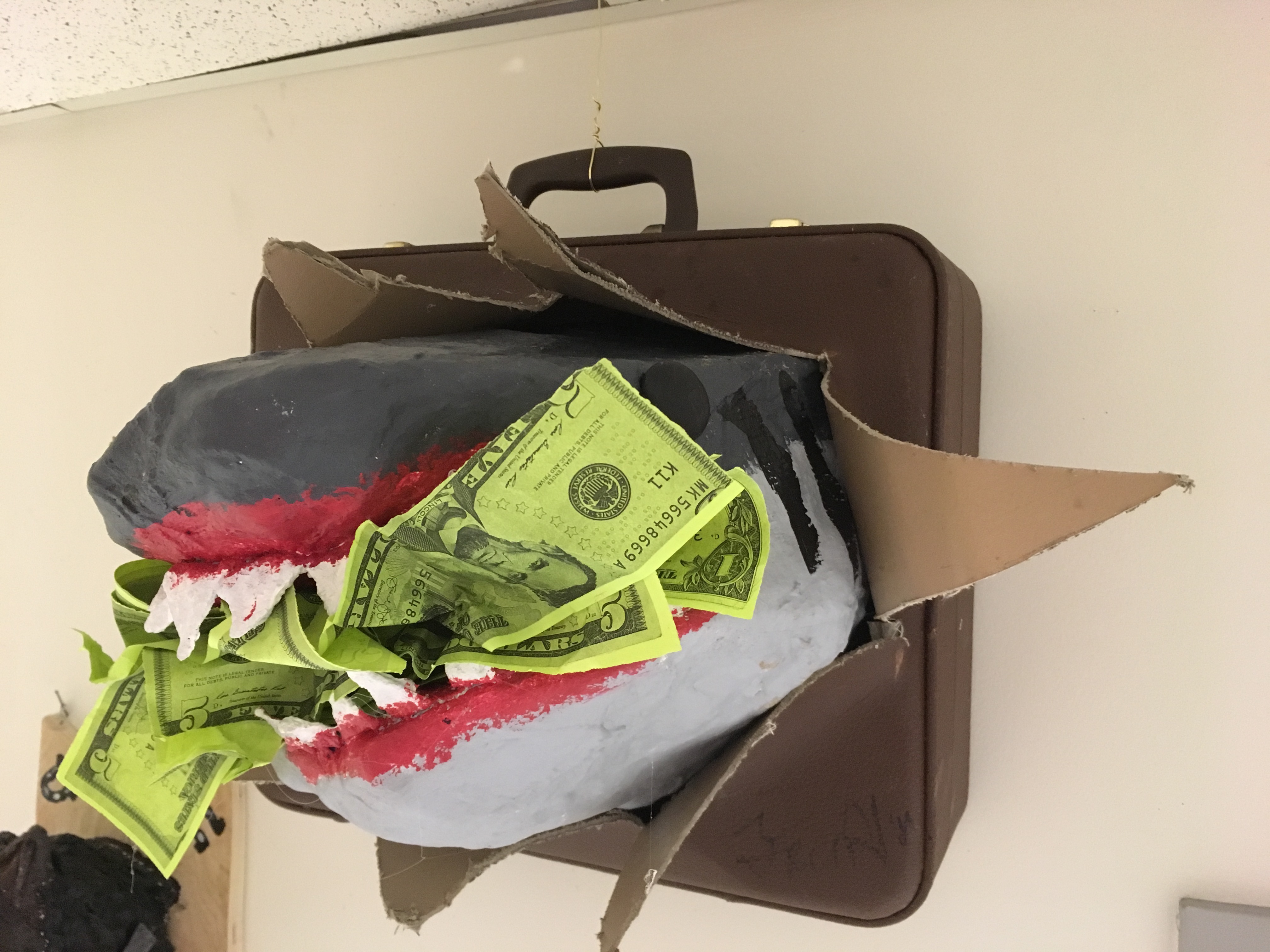
Making trophies – “Loan Shark”

TEACHING STORY

One of my favorite stories was a decade in the making. My first teaching position was in Massachusetts at an alternative middle school for kids who had a difficult time mainstreaming into public school. I taught jewelry and had a student who was fascinated with metal, fabrication and design. He took every art class offered and I was able to hire him as a work study (a practice common at the school). When he graduated he applied for and got accepted at Mass College of Art (my alma mater). After graduation he went to UMASS Dartmouth and earned his MFA in metals. I teach adult learners at a jewelry school outside of Boston and during his training in college he served as a Teaching Assistant for me. Recently I took a class at the school taught by him. I love this story because it is an example of “teaching full circle”. I taught him and now he is teaching me!  

I realize where I teach now (elementary school) I learn as much from my students, if not more, as they learn from me. Student interest and curiosity informs our curriculum development. Our school works to integrate curriculum between subjects. 
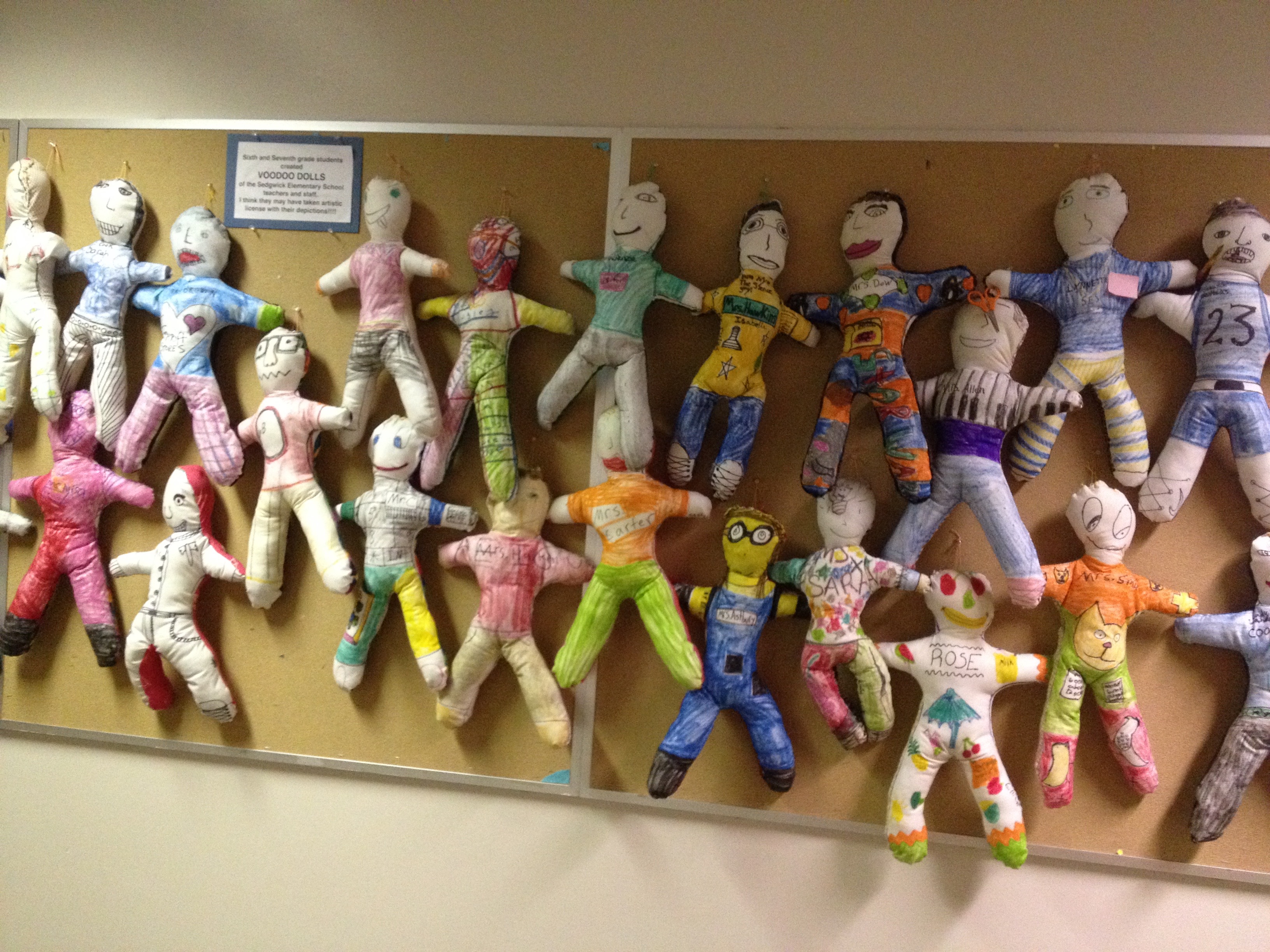
Voodoo dolls of the teachers and staff

STEM/STEAM CONNECTION

There is a connection to STEM and that is STEAM. Which includes art in the equation (Science, Technology, Engineering, Art and Math). My own art work addresses a wide range of subjects; from phobias to politics. My work is narrative so I want there to be a message which also works well with my teaching. I like using what the students are learning in their other classes to inform what we do in art. Having an added class of STEAM allows for even more integration.

  • Example 1: Students made whirligigs that represent non-violent world leaders and displayed them in front of the school. In science class they were studying force and motion and in social studies class they were studying civil rights leaders. It made sense for them to use what they were learning in other classes to create a whirligig installation.
  • Example 2: Students learned about plastic pollution and its effect on our ocean (many of our students have parents who make their living by fishing). We teamed with Haystack Fablab to teach the students  Scratch (a coding program) which they used to tell a story about the problem. We teamed with Alison Chase Dance Company to create a performance piece about ocean plastics and had scheduled an environmental artist from North Carolina to come up to create a pot warp (lobster bait rope) sculpture with the school and community. (Unfortunately Covid tabled the plan.) 
  • Example 3: Learning about what challenges face those who are differently abled we invited a blind alumnus to talk about braille and made copper braille alphabet plaques. We cast student hands in American sign language. Both were exhibited in our school lobby. 
  • Example 4: We invited a naturalist to come to talk to students about our vernal pool and right now I am preparing a class to investigate the caddisfly- Nature’s Engineers. The larval stage builds cases around themselves out of the detritis from pool floor for protection. At the conclusion of our study students will be asked to become caddisfly larvae and will use strips of cardboard, twine and egg cartons to build a larvae case around themselves. As much as possible I try to bring the community into the school to share their expertise. What we teach in school is so greatly enriched by having those that DO what we teach come and tell about it.
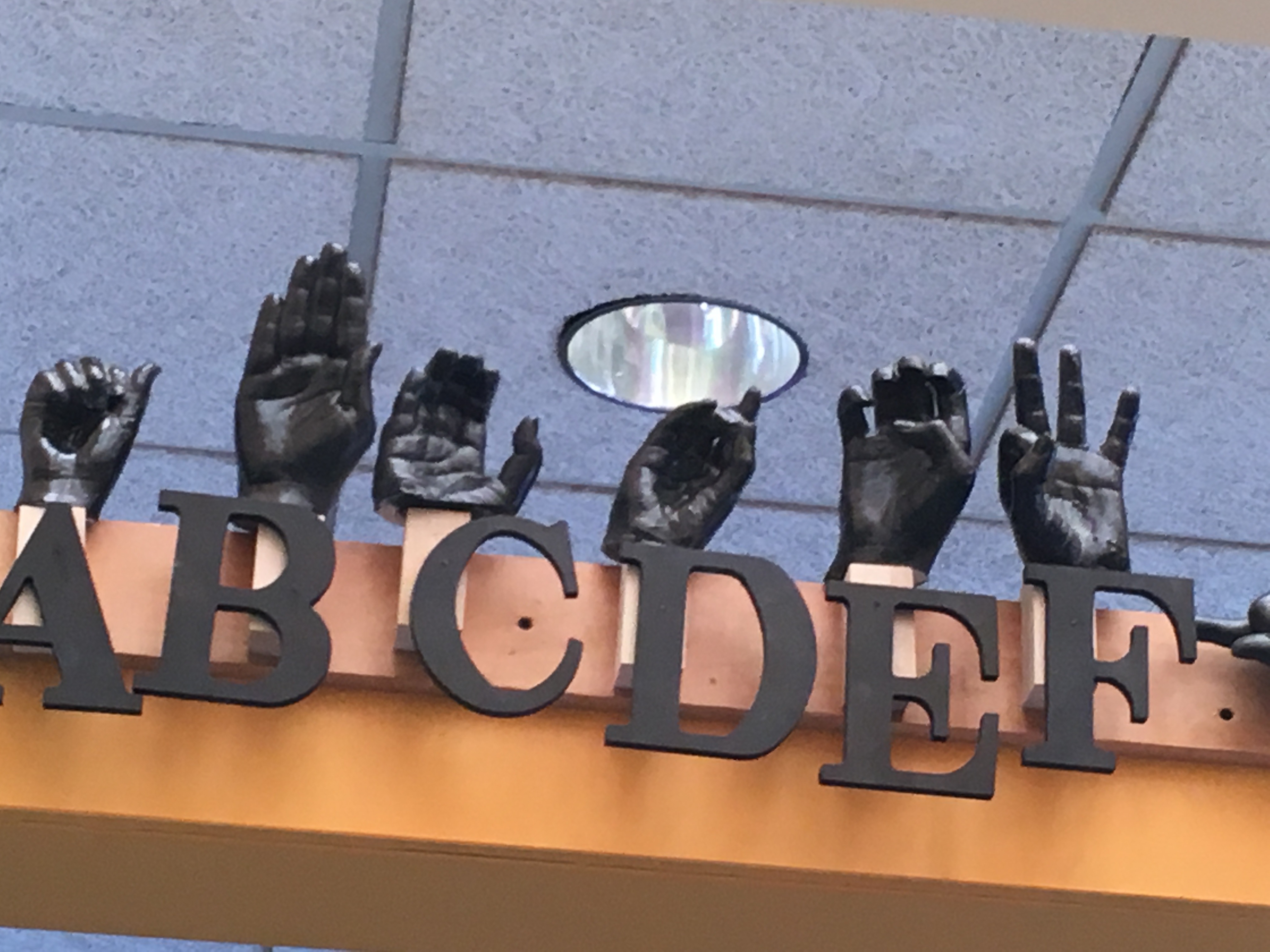
Cast hands in American Sign Language

TEACHER OF THE YEAR PROCESS

It is weird to be talking so much publicly about what I do in the classroom and at first I was a little embarrassed and shy but then I thought this could be a platform to advocate for what I believe in: project based learning and curriculum integration. I watched a Netflix show titled Abstract About Artists, Designers, Etc. and one episode was featuring a toy designer. She created these amazing toys and talked about a Chinese School where a new method of learning was being tried. It’s called Anji Play, where students are given building materials and set loose to explore, invent and create. It was fabulous! That probably would not fly in American public schools yet but I would like to see more inventive approaches to education. The Teacher of the Year process allows one to talk to other teachers and share new ideas and learn from the ideas of others. We don’t get much of that in our day to day teaching.
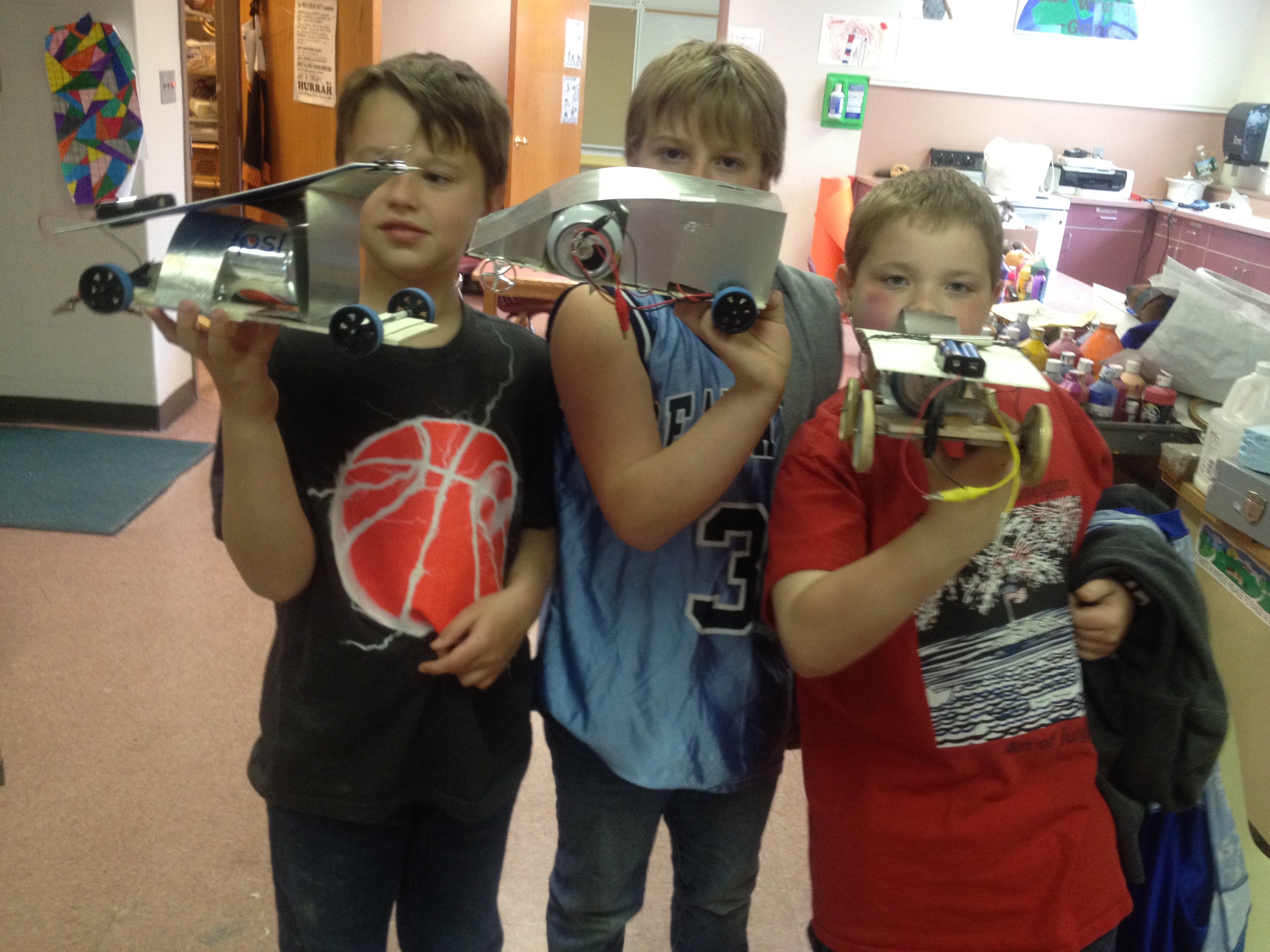
Solar cars

BECOMING AN ART TEACHER

I never intended to be a teacher. I don’t really think I ever knew what I wanted to be when I grew up. First, a nun, after watching “The Sound of Music” but then a firefighter. My career seemed to hop around like that until I started teaching at Sedgwick. I never could decide because there are so many options. I started college as a nursing major switched to chemistry and ended up with a BS in Art History. I got my Masters in Environmental Studies and went back to college and got a BA in Fine Arts. I started teaching when a friend  on the school board suggested I apply.  Initially I thought I would rather gnaw my arm off then work with little kids all day but summers off and health insurance were really appealing and I thought it could be a fun challenge. Now I can’t think of anything I would rather do. I have a very understanding wife and we have 3 amazing grown kids. We live with 2 dogs on Deer Isle up a mile long dirt driveway where I have a studio

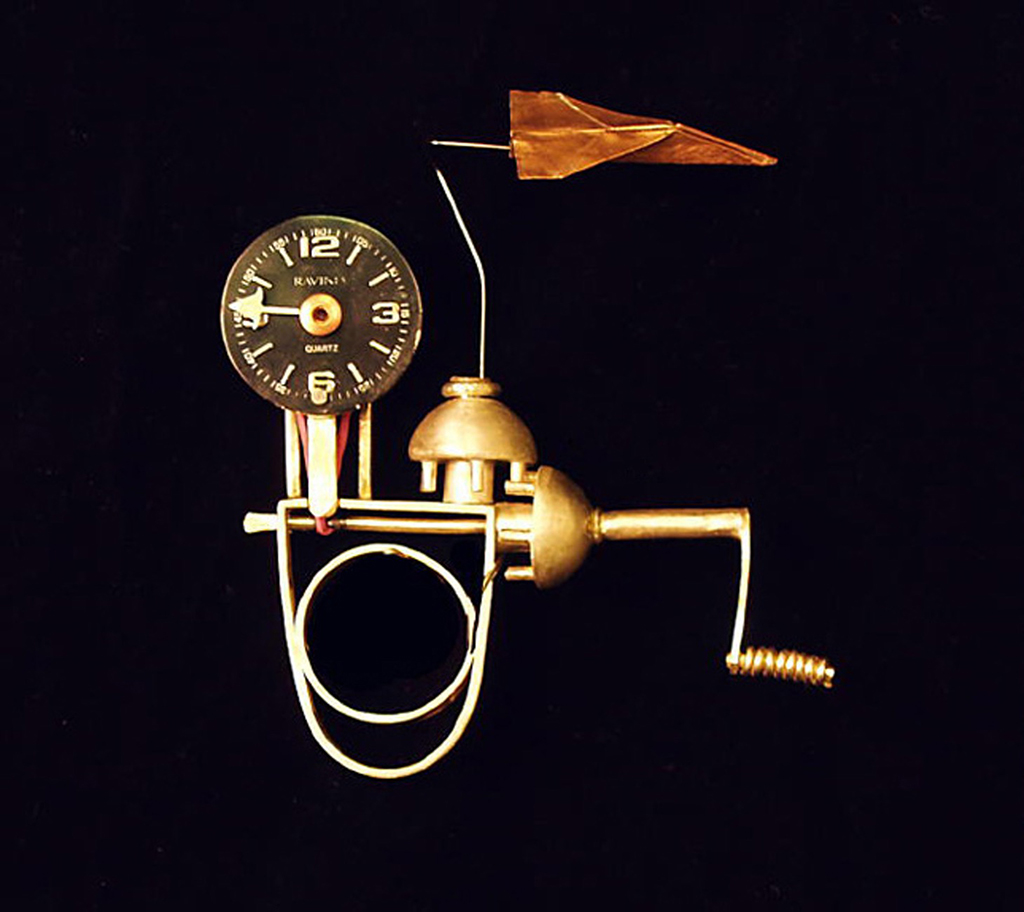
empusta ugitfa or tempus fugit or time flies – Kinetic ring

ARTIST STATEMENT

As a sculptor, I work with my hands and in all honesty I think with my hands too. The texture, density, consistency and malleability of a material are its language and that language is what I find rewarding in the use of mixed media. I look to the inherent qualities of a material and try to manipulate them to my end.

I like to use my work to create a sort of tongue in cheek play on the human condition. Using words, puns or expressions in combination with physical representation of form I want to poke fun at our collective angst-ridden human condition: Not to minimize or diminish its impact but rather put it in perspective and by doing so remove the perceived anxiety; Basically, to render it impotent.

Most recently I have been interested in kinetic art especially kinetic jewelry. My work suggests sculpture that is ostensibly meant to be worn. Using found objects, doll parts and metal I make small scale pieces that are intended to comment on body adornment and ornamentation, both functional and otherwise. I’ve noticed that cell phones, and personal electronic equipment have become so commonplace that they are taking on the mantle of jewelry; jewelry that has a function and perceived necessity. My work questions this norm by functioning in a way that is both absurd and completely unnecessary.
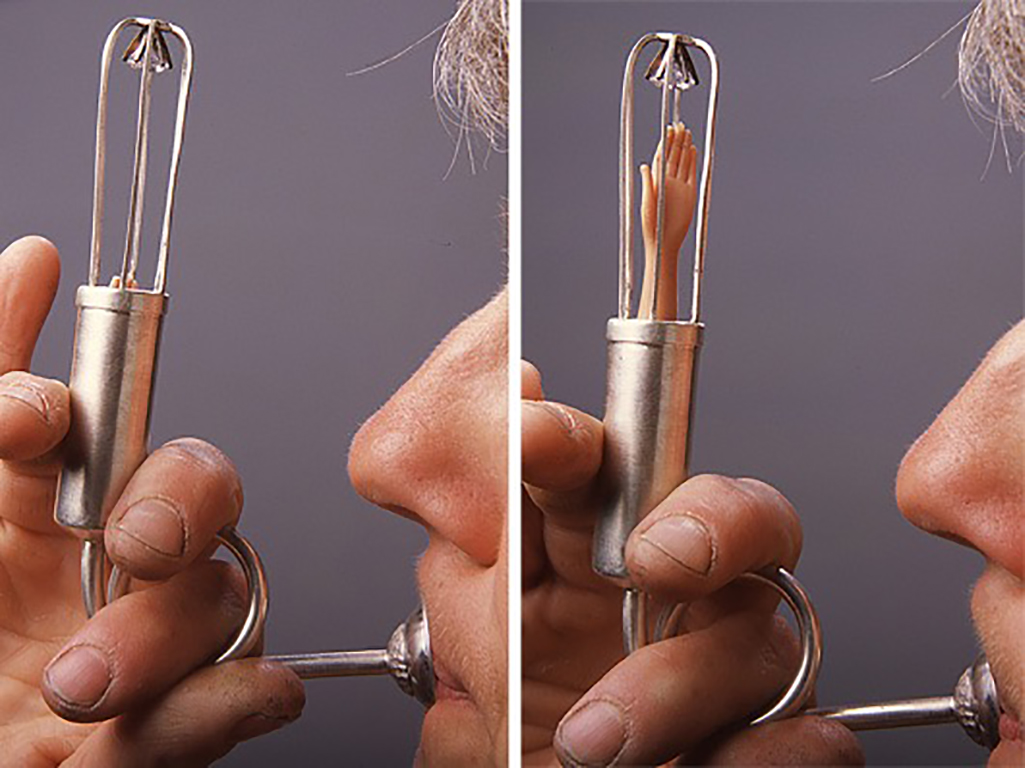
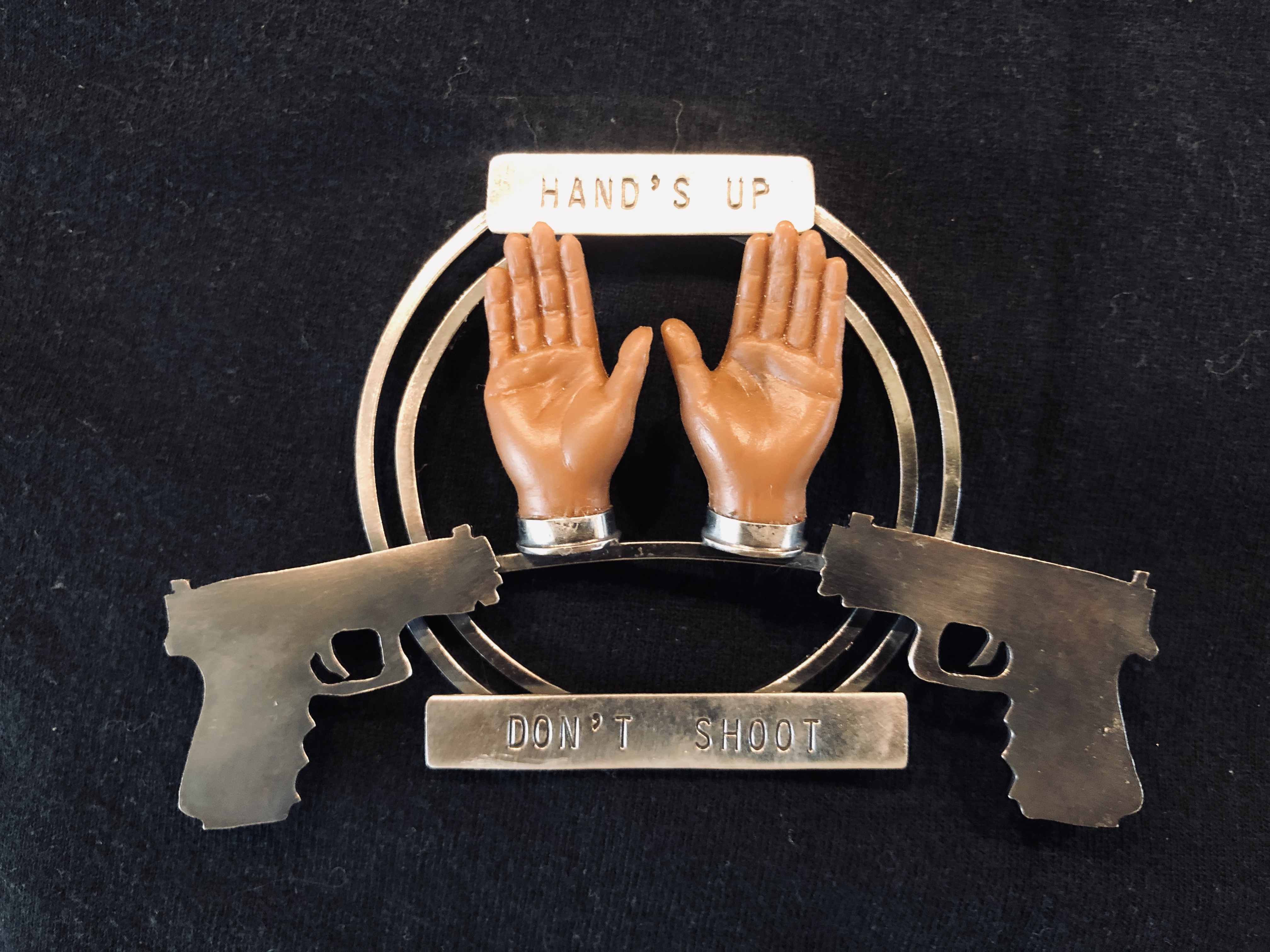
 Barbie meets Sisyphus – Kinetic ring
 Hands up, don’t shoot
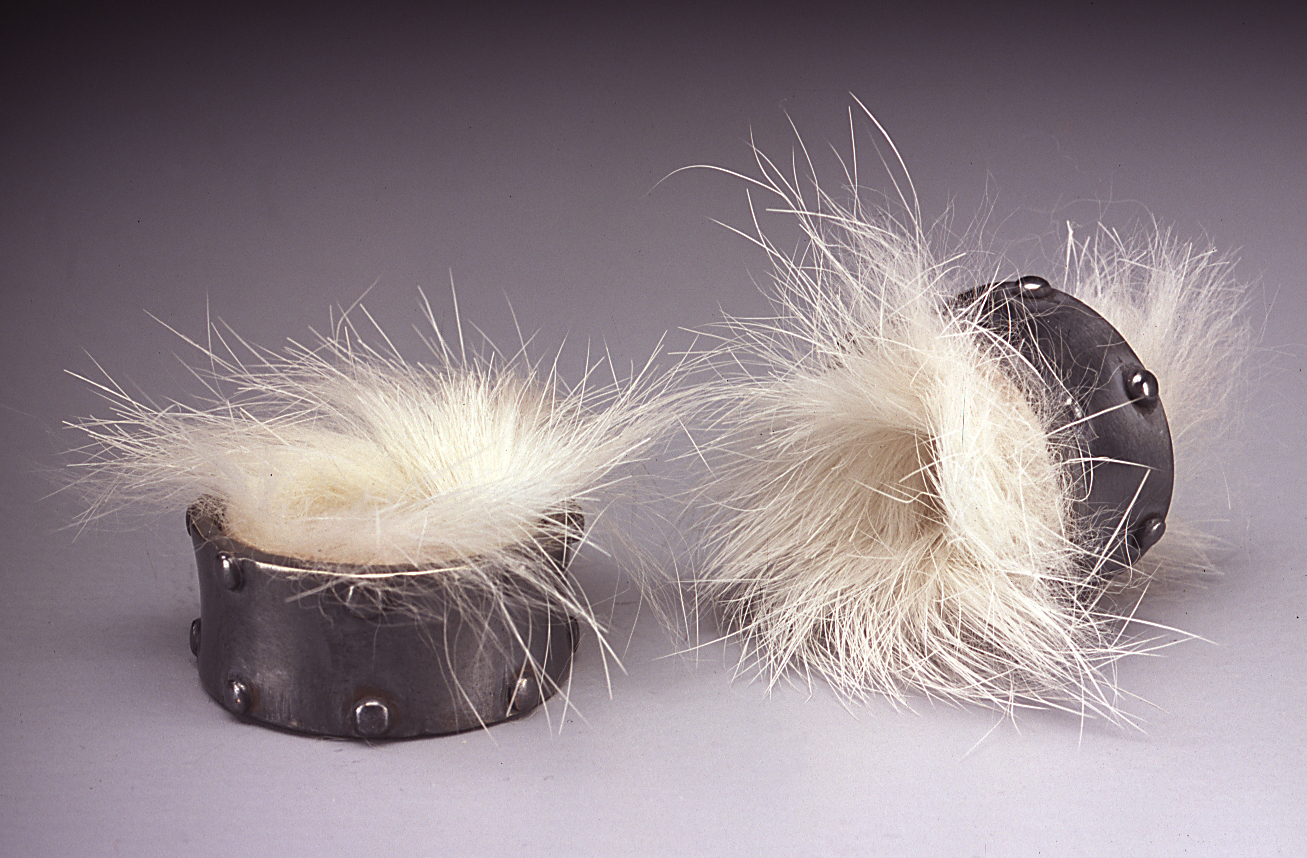
Fur lined wedding rings

Thank you Sarah for taking the time to share your amazing story. Sarah can be reached at sdoremus@sedgwickschool.org.

h1

The Art of Education University

May 24, 2021

Learning opportunities for art teachers

PODCAST

The Art of SEL is a limited-run podcast about connecting social-emotional learning to what we already do every day in our teaching. Throughout eight episodes, Jonathan Juravich and his guests will explore how we can help ourselves and our students understand emotions, thoughts, feelings, and behaviors and why that understanding is crucial right now.

Each episode is based on one of the core competencies of SEL, self-awareness, self-management, social awareness, relationship skills, and responsible decision-making, with practical applications at every turn for you and your students. The first episode was released on Monday, May 17th.

Find The Art of SEL podcast and get started listening to the informative content that the Art of Education University is providing.

SUMMER CONFERENCE

Art teachers world-wide are invited to attend the summer conference provided by The Art of Education University on July 29. Enjoy a day full of artmaking, creativity, and discovery with thousands of art teachers from around the world—all without leaving your home! You’ll walk away with loads of inspired ideas, resources, and downloads you can immediately implement into your art room.

Highlights include:

  • Highly-engaging, fast-paced TED Talk-style presentations full of real-world, practical art room strategies.
  • Connect with over 2,000 art teachers from around the world!
  • Over 20 highly-practical and relevant art ed presentations, handpicked and expertly curated by AOEU.
  • Useful downloads ensure you can actually put the tips and strategies you learn to use right away in your real-world art room.

REGISTRATION

h1

Watershed Center for Ceramic Arts

May 20, 2021

Summer workshop offering for K-12 Art Educators

July 19 – 23 – $15 per session

Join teaching artists Martha Grover, Reeder Fahnestock, Liz Proffetty and Malley Weber in Watershed’s new studio for a week of learning and exploring with clay. Each day-long workshop will provide Maine art educators with an opportunity to develop and refine clay-based skills that can be used in the classroom. Workshops will cover surface decoration, Raku firing, slip casting, mold-making, and altering forms. Watershed Center for Ceramic Arts is located in Newcastle, Maine.

Sign up for one workshop or join for all four!

Session I: Open Studio

Monday, July 19, 9:00 am to 4:00 pm

Enjoy a day of guided independent practice in Watershed’s new state-of-the-art studio! Teaching artists Liz Proffetty and Malley Weber will demonstrate surface decoration techniques to explore in your work and Studio Manager Reeder Fahnestock will provide a tour of the facility. You’ll have the option to work on the wheel and/or experiment with hand building. Clay and glaze materials will be provided.

Session II: Techniques for Altering Forms

Tuesday, July 20, 9:00 am to 4:00 pm

Discover the idiosyncrasies of working with porcelain on and off the wheel as guest instructor Martha Grover demonstrates how to make her signature undulating functional forms.  Working with a variety of bottomless wheel-thrown forms and slabs in both the soft and leather-hard stages, Martha will demonstrate various altering techniques and additions of slabs, handles, and spouts to create an assortment of functional forms. Forms will include cups, bowls, vases, pitchers, lidded forms, and baskets.  The session will include demonstrations and hands-on studio time with support from Martha. Clay will be provided.

Session III: Raku Firing #1

Wednesday, July 21, 9:00 am to 4:00 pm

Join Watershed Studio Manager Reeder Fahnestock to experience the drama of Raku. The small group of six participants will fire Watershed’s new commercial propane-fired kiln and learn about the steps needed for a successful Raku firing. 

During the workshop, Watershed staff will be available to talk about options for bringing students to Watershed for a Raku experience during the 2021-2022 school year.

Please bring 6 -10 small to medium sized bisque pieces of work to fire.  Watershed will provide glazes.

Participants are encouraged to view Watershed’s new Raku video and review the guidelines for Raku firing at Watershed. 

This session is limited to six participants. We want to offer the opportunity to participate in a Raku firing for as many  as possible. If you already registered for the Friday Raku firing, please do not sign up for this one as well.

Session IV: Plaster Molds & Slip Casting

Thursday, July 22, 9:00 am to 4:00 pm

Learn to make one-piece plaster and bisque molds to be used for decorating and embellishing ceramic objects, or simply as objects themselves. Session leader and Watershed Studio Manager Reeder Fahnestock will discuss how to select or make objects from which multiples can be reproduced in clay; how to prepare objects to be molded; how to prepare clay for use as mold material; how to mix and pour plaster for mold making; as well as how to make, and then use, the molds.

Participants should bring one or two small items from which they think they might want to make a mold. Reed will discuss the suitability of the objects with participants. Objects will also be on hand from which participants may make molds. This should be considered a hands-on workshop and participants may anticipate taking several molds home with them.

Session V: Raku Firing #2

Friday, July 23, 9:00 am to 4:00 pm

Join Watershed Studio Manager Reeder Fahnestock to experience the drama of Raku. The small group of six participants will fire Watershed’s new commercial propane-fired kiln and learn about the steps needed for a successful Raku firing. 

During the workshop, Watershed staff will be available to talk about options for bringing students to Watershed for a Raku experience during the 2021-2022 school year.

Please bring 6 -10 small to medium sized bisque pieces of work to fire.  Watershed will provide glazes.

Participants are encouraged to view Watershed’s new Raku video and review the guidelines for Raku firing at Watershed. 

This session is limited to six participants. We want to offer the opportunity to participate in a Raku firing for as many as possible. If you already registered for the Wednesday Raku firing, please do not sign up for this one as well.

REGISTRATION

Workshop Details (for all sessions) 

  • Payment for workshops is due online with registration. Watershed can provide you with a receipt to submit for reimbursement.
  • Watershed will offer a light breakfast and lunch during the workshops. Food will be individually served outside under tents.
  • Dinners and overnight accommodations on campus will not be available.  Participants will be responsible for dinners and arranging their own overnight accommodations.
  • See our FAQs for a list of area lodging options.
  • Watershed will provide proof of contact hours for participants.

h1

Maine Youth Action Network

May 18, 2021

Arts well represented

I am sure that many of you are familiar with the youth leadership group that the Maine Alliance for Arts Education (MAAE) supports. If not, below is a letter written by one of ABC’s (Arts are Basic Coalition) Student Leadership Group who recently experienced the 2021 Maine Youth Action Network (MYAN) conference. The work of MYAN and the leadership group are closely related. Thank you MAAE and students for participating! And a great big thanks to Delia for sharing her story.

Hi Everyone. My name is Delia Harms and I’m one of the members of ABC’s Student Leadership Group. I, along with Michaela Carrow, another Student Leadership Group member, and Madison Westrich, a leader of one of our recently formed Arts Advocacy Teams, facilitated a workshop at the 2021 Maine Youth Action Network (MYAN) conference in April. MYAN’s mission is to build healthier communities for young people, and this year’s virtual conference was specifically centered around building connections among young people after a year of such tragic loss and disconnect. 

As students involved with ABC, we saw that our experience with and passion for the arts fit perfectly into MYAN’s goals for this year’s conference. A strong presence of arts programs in schools is essential to building those healthier communities for young people. The arts in schools create emotionally safe environments for students to express themselves and grow together. This is the message we hoped to deliver throughout our workshop. This is why we focused our activities around creating space for meaningful conversations, all while building that inclusive, connected environment that we see the arts fostering in our schools.

Delia Harms

I got to watch the group of students participating in the workshop get to know each other in small groups and engage in exciting conversations about advocacy efforts in their schools and what they are passionate about, which was wonderful for me to see as a facilitator. We are hopeful that we can continue to foster these safe spaces for conversations, often using the arts as a catalyst, at more events in the future and in our own schools in collaboration with all of our arts advocacy teams across the state!

Michaela Carrow
Madison Westrich
h1

Maine’s Poet Laureate

May 17, 2021

Stuart Kestenbaum finishes five-year term

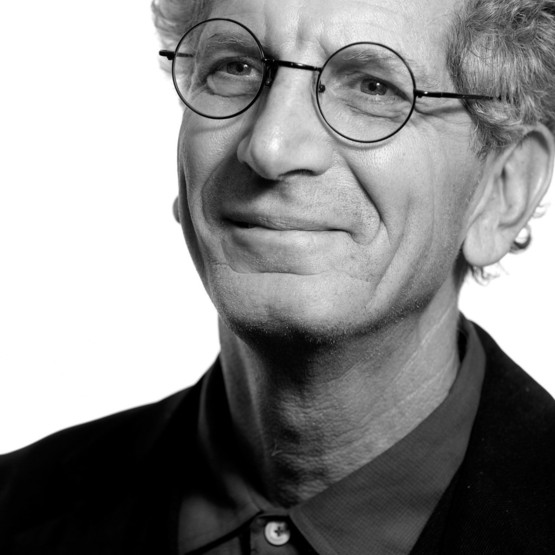
The Maine Arts Commission requests applications to select a new state poet laureate for a five-year term. Stuart Kestenbaum will turn over the reigns. He is no stranger to visual arts teachers who have attended the state art education conference at Haystack Mountain School of Crafts. “We are so grateful to Stu for his wonderful work at Poet Laureate,” said Arts Commission Executive Director, David Greenham. Greenham will facilitate the process for selecting Maine’s next poet laureate. “We see this as a wonderful opportunity to recognize another member of Maine’s thriving community of poets,” he added.

Maine’s Poet Laureate position is an appointment designed to promote poetry throughout the state while honoring a Maine poet whose work can inspire an understanding and appreciation of the craft of poetry for the people of our state. 

Current Poet Laureate Stuart Kestenbaum completes his five-year term in 2021. Kestenbaum, a resident of Deer Isle, has used his position to share poetry in many different mediums, including his Poems from Here collaboration with Maine Public, which features a new Maine poem each week. Kestenbaum is the author of five collections of poems, most recently How to Start Over (Deerbrook Editions, 2019). He is also the author of the essay collection The View from Here (Brynmorgen Press, 2012).
The poet laureate position was established by Maine statute in 1995. The specific duties are minimal to ensure incumbents have maximum freedom to work on their own projects during their tenure. While the position does not include a stipend, all expenses are paid for

appearances and programs, which include, an annual lecture and reading of his or her poetry; participation in the Maine Arts Commission’s administration of the national Poetry Out Loud project; as well as appearances and events to broaden appreciation and understanding of, and participation in, poetry in Maine communities. Each poet laureate brings a different emphasis to the position.

To be considered for this appointment, poets must be full-time Maine residents and have a distinguished body of poetic work. Applicants must submit up to five poems, totaling no more than 10 pages, as well as a one-page statement outlining your vision for your public role as poet laureate and a copy of your resume no later than June 1, 2021.

APPLY TO BE THE NEXT MAINE POET LAUREATE

Maine Poet Laureate review committee

Janet Mills, Governor (and poet)

Samaa Abdurraqib, Maine Humanities Council

Susan Minot, Author and Poet

Gibson Fay-LeBlanc, Maine Writers and Publishers

James Ritter, Maine State Library

Stuart Kestenbaum

To learn the history of Maine’s Poet Laureate CLICK HERE. If you have questions, please contact David Greenham, Executive Director of the Maine Arts Commission at david.greenham@maine.gov.

Maine’s Poet Laureates

Kate Barnes (1996-1999)

Baron Wormser (2000-2005)

Betsy Sholl (2006-2011)

Wesley McNair (2011 – 2016)

Stuart Kestenbaum (2016 – 2021)

h1

Mayers Film is a Winner

May 13, 2021

Natasha Mayers: an Un-Still Life

Vermont PBS Award for Best Documentary Film Natasha Mayers: an Un-Still Life. “This film is a delight. Mayers is a compelling character, lively, intelligent, and interesting. But what makes it award-worthy is its intelligent and playful stylistic approach, its story arc and pacing, and its avoidance of some of the foibles of bio-pics. Overall an excellent, fun, and relevant documentary.” Congratulations to Maine filmmakers Geoffrey Leighton and Anita Clearfield for their creative work on the film. Thank you Natasha for sharing your story!

See more about the film and how you can view it online at https://natashamayers.org/

Filmmakers Anita Clearfield and Geoffrey Leighton are thrilled to share the news that Natasha Mayers: an Un-Still Life has won the Vermont PBS Award for Best Documentary at the 2021 Made Here Film Festival, New England’s only competitive festival devoted entirely to films made by filmmakers of the Northern New England states and Québec. The film elicited glowing accolades from the festival judges! A live conversation with the winning filmmakers, moderated by Eric Ford, Director of Programming at Vermont PBS, will take place virtually on May 16 at 7pm. Registration is required for this free virtual event.
Congratulations to Natasha, Anita, and Geoff for this well-earned award!
h1

Doodle for Google

May 12, 2021

Vote TODAY for Maine!

Scarborough High School senior, Kelly Dodge, is the State of Maine winner in the Doodle for Google Scholarship competition! Congratulations Kelly! The theme this year was inner strength. She titled her doodle “perseverance of passions”. In Kelly’s description, she wrote, “During the pandemic, finding time and energy to do the things I love has been very challenging. This doodle represents me still having the strength to do what I’m passionate about in these tough times.”

Kelly’s artwork now moves on to the National Competition. She is one of 54 finalists in the entire country and now she is competing against all of the other state winners. The top prize is a $30K scholarship for Kelly AND a gift of $50K worth of technology equipment to the school! They are also awarding $5K scholarships to the next four highest vote-getters.

There is a live online voting period from May 10-15 that will determine the winner. Here’s where we need your help! We need to spread the word on this, not only within our school & district, but also throughout the state of Maine. Please share the link with your friends, family, and professional organizations. Let’s get Kelly some votes!

Vote for Winning Doodles until Friday 5/15 at 11:59 pm PT.

VOTE FOR KELLY’S DOODLE

You’ll need to select the “Grades 10-12” button. That will take you to a series of doodles, starting with Alabama. Scroll down to MAINE. Click on Kelly’s doodle.

Congratulations also to Kelly’s art teacher Erin Landry-Fowler, Scarborough High School.

h1

Narraguagus Jr/Sr High School

May 11, 2021

6th Annual Student Art Exhibit

h1

Influenced by Art Teacher

May 11, 2021

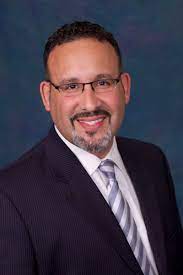
Letter from US Secretary of Education Dr. Miguel A. Cardona

How wonderful that we have an educator in the position of Secretary of Education at the federal level who was influenced by an art teacher during his elementary education. I urge you to embrace this moment and consider our roles as educators and ask yourself: what can I do to take a leap in moving visual and performing education forward? You have the potential to encourage, challenge and guide learners to wrap their arms around being life long learners of the arts!

I never could predict what might happen in Mr. O’Neil’s art classes; I just knew I couldn’t wait for the next assignment.  Back then I didn’t realize all the ways this dynamic educator, a rare man of color leading our diverse classroom of second graders, was serving as a pioneer and role model for me and my peers in John Barry Elementary School.  But I’ll never forget how his teaching made me feel.  As a second grader, I remember looking up — watching him encourage, challenge and guide us – and thinking: “I want to be like him.”

In the years since embracing that calling and starting my career as a classroom teacher, I’ve kept that sense of purpose and wonder.  And my goal in all the administrative roles I’ve held is to facilitate great teaching and learning: to support and expand the transformative impact that skilled, caring classroom teachers have for students, schools, and communities.

Every day America’s teachers change lives, and every day those lives change the world.

Dr. Miguel A. Cardona US Secretary of Education

Now, this truth can seem to recede as you rush to keep up with the day’s intense pace, and your students’ needs and opportunities. Yet, from the first bell on the first day of the school year, you build a relationship with each of them. You learn their strengths and struggles, laugh with them, cry with them, worry over them, cheer for them – and at the end of the school year, help them transition to their next grade level adventure. You know all those experiences – both the academic and life lessons – have changed both you and them for the better.  You empower them to grow in skill and character — expand their understanding of the world and how to shape it — explore their interests and decide where to make their mark.

Teaching is not a job anyone just falls into. It is mastery of a craft: in fact, the craft that enables all the others. In my experience, great teachers are also quintessential lifelong learners. You use your command of learning science, your insights into your students’ unique needs and aptitudes, as well as the lessons of the past, the realities of the present and the inspiration, innovation and ingenuity of the future to help each new generation become leaders for today and tomorrow. Throughout the year you support your fellow educators, add to your tools through professional development, provide feedback on assignments, sponsor sports, service learning, clubs and other extracurricular activities, collaborate with parents –in addition to everything you pour into your students during class.

Even in this unprecedented year, you rallied, finding new ways to engage with students. In the face of tragedy, you learned new technologies and built virtual classroom communities, all while caring for yourselves and your own families.  As we heal, recover, and rebuild, this pandemic presents a chance to forge opportunity from crisis and reimagine education on every level. We will use this time to address inequities in our education system, and your contributions will be invaluable.  The work won’t be easy, but the impact of your success will be profound, for students and communities. I urge state, local, and elected officials to make sure classroom teachers have a voice in your plans and efforts to reimagine education; second to parents, they know our students best.

I look forward to learning and listening from you in the days ahead.  And, from all of us at the Department of Education: Happy Teacher Appreciation Week. There’s a reason teacher like Mr. O’Neil – and all of you – are memorable.  There’s a reason student in America’s classrooms watch you share your curiosity, energy and passion for ideas and think, “I want to be like them.”

You are embodiments of possibility, champions of your students’ potential and stewards of their success.

Dr. Miguel A. Cardona, U.S. Secretary of Education.

h1

Spirit of Reciprocity

May 6, 2021

Global Oneness Project

With a deadline of June 3, 2021 the Global Oneness Project is providing an opportunity for students ages 13 and up in the US and 16 and up globally to submit a photograph or illustration that reflects the spirit of reciprocity and kinship with the living world.

SPIRIT OF RECIPROCITY

You might be wondering, what is meant by the spirit of reciprocity?!

Reciprocity is an act or process of exchange where both parties mutually benefit. The origin of the word reciprocity in Latin, reciprocus, means moving backwards or forwards. The actions of giving and receiving are both included. 

For example, if you look up a diagram documenting the process of photosynthesis and respiration, you’ll see a circular motion. Plants are living and breathing systems.

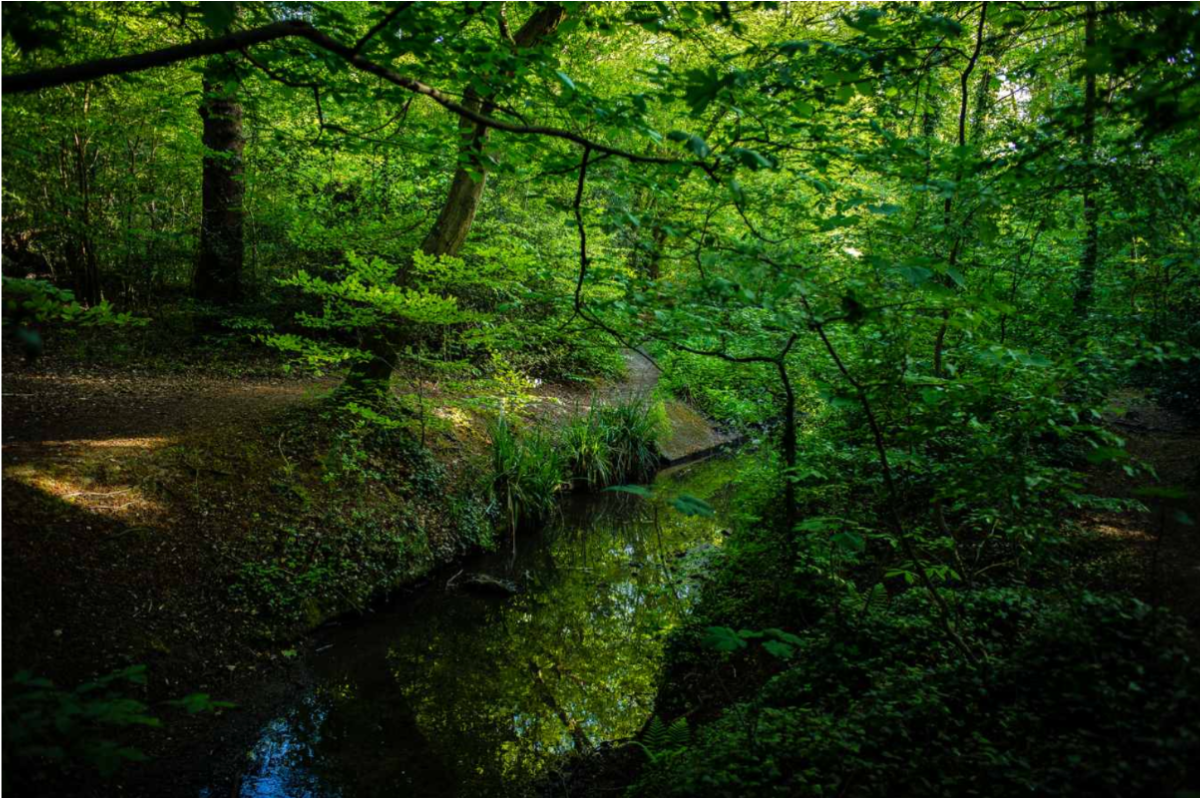
According to Kimmerer, “Reciprocity is rooted in the understanding that we are not alone, that the Earth is populated by non-human persons, wise and inventive beings deserving of our respect.” As she writes in Braiding Sweetgrass, “We are surrounded by teachers and mentors who come dressed in foliage, fur, and feathers. There is comfort in their presence and guidance in their lessons.” 

The Serviceberry: An Economy of Abundance” by Robin Wall Kimmerer. Original illustration by Christelle Enault

GUIDELINES

  1. Contestants must be ages 13 and up in the U.S. and 16 and up globally. Check our Submission Guidelines and Rules and our Terms of Service for more details.
  2. All entries must be related to the contest theme: the spirit of reciprocity. Students will submit one photograph or original illustration which is a response to at least one of the following excerpts from Kimmerer’s writing. How might the excerpt you select help to inform your photography or illustration?
    • “I hope my grandson will always know the other beings as a source of counsel and inspiration, and listen more to butterflies than to bulldozers.”
    • “Birds, bugs, and berries are spoken of with the same respectful grammar as humans are.”
    • “Do we treat the earth as if ki is our relative—as if the earth were animated by being—with reciprocity and reverence, or as stuff that we may treat with or without respect, as we choose?” (As Kimmerer writes, “Ki is a parallel spelling of chi—the word for the inherent life energy that flows through all things.”)
    • “To replenish the possibility of mutual flourishing, for birds and berries and people, we need an economy that shares the gifts of the Earth, following the lead of our oldest teachers, the plants.”
    • “Living beings are referred to as subjects, never as objects, and personhood is extended to all who breathe and some who don’t. I greet the silent boulder people with the same respect as I do the talkative chickadees.”
  3. Photo entries and original illustrations must be accompanied by a short artist’s statement (a minimum of 100 words and a max of 600). Artist’s statements can also be in the form of a poem. The aim of this statement is to tell the story of what is captured in the photograph or illustration. Statements must respond to at least 2 of the following questions:
    • What informed your decision to take your photograph or illustration?
    • In what ways has the COVID-19 pandemic revealed new ways of seeing and being with the living world? Has the pandemic increased your compassion for the living world? If so, how?
    • What story does a plant (or other living element) in your life have to tell? How are you included in that story?
    • What are the names and origins of the plants that are captured in your photograph or illustration?
    • In what ways can we listen to the living world with our whole selves?
  4. Images should help to express students’ human relationship to the living world. Students can include themselves and others in their photographs. Be creative! If your photograph contains a person, you will need to fill out and return the Photo Subject Release Form.
  5. The photograph or illustration submitted must take into consideration the Global Oneness Project’s mission statement: Planting seeds of resilience, empathy, and a sacred relationship to our planet.
  6. Each photograph or illustration and response must be original and previously unpublished. Photographs may also include photo collages, but not be heavily edited (e.g. photoshopped).
  7. Eligible entries will be judged by a qualified panel consisting of professional filmmakers, photographers, and authorized personnel from the Global Oneness Project. Only one entry per contestant.
  8. Prizes. Winners will be awarded $200 USD each and photographs will be published on the Global Oneness Project website. 
  9. All entries must be accompanied by this signed Parental Permission Form

ENTER HERE

RELATED RESOURCES