The 4th of July is meaningful for me for many reasons. This post is dedicated to the symbolism that many of us grew up with about today, and a bit of my family story that connects me to this day.
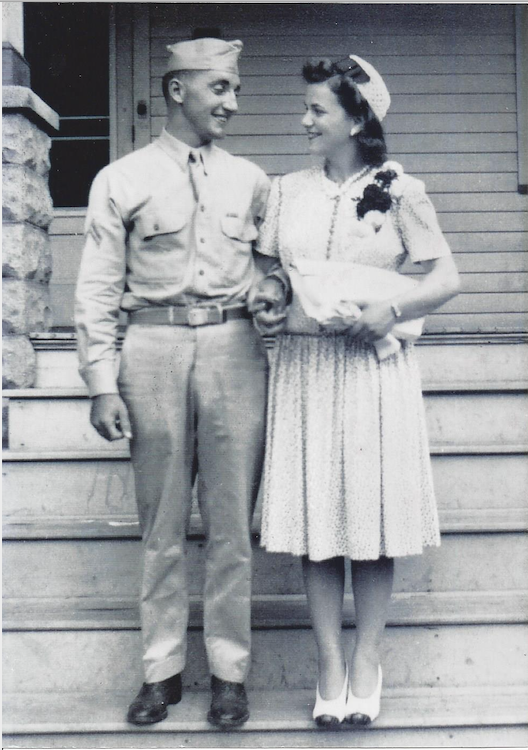
Some of you know my family story/history of my Mother and Father. Without going into a ton of details here are some of the highlights. My father came to America as George Panagiotopouls*, on a boat by himself at age 14 from his home country of Greece. My dad arrived at Ellis Island, met by his aunt and uncle and eventually was adopted by them. On his first day, he met my mother Sophie Prodromos, whose parents were born in Greece. My parents were friends through successful years in public school and through their involvement with the Greek Orthodox Church. The church supported and provided opportunities for the young people in the community. My parents married on July 4, 1942 without my grandfather’s* approval, and one week later my Dad left to fight in WWII for 3 years.
July 4, 1942, Dad and Mom on their wedding day
My parents were completely dedicated to the war effort. My Dad was part of the First Division, the Big Red One, and fought in Africa, Sicily, landing on the beach in Normandy, north through France, the Battle of the Bulge and into Germany where he was wounded. He was a Forward Observer. My Mother was a ‘Gray Lady’* during this time. My Father returned home, a hero of the Greek community, decorated with many medals. He was accepted by family and he and my mother went on to serve both the Greek and greater community in multiple ways. Throughout their lives they had an incredible work ethic, a zest and appreciation for life, and what I describe as ‘ideal citizens’. They were committed to the USA, proud and appreciative Greek Americans, part of the Greatest Generation.
Sophie in her Gray Lady uniform holding a photo of George and his Silver Star
My 3 siblings and I grew up in a loving environment encouraged to be our best selves. I am the youngest of four. My Mother wanted me to have my own special day and shared the story that she waited until five minutes after minute to give birth. I was born on July 5th. Every 4th of July we’d celebrate by having a big gathering in the backyard of an amazing home. The cake always read: “Happy Anniversary George and Sophie, Happy Birthday Argy”. I remember feeling very special to share the day, year after year, with my parents and all the friends and family who had gathered.
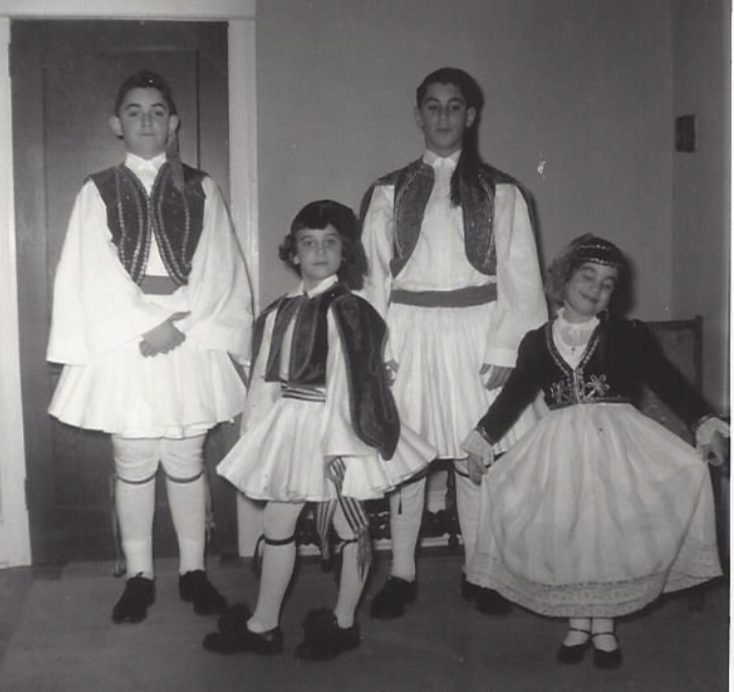
Nestor children, Peter, Niki, Bill, Argy in their Greek costumes getting ready to dance. Sophie taught three generations of children Greek dancing.
While I was in college musician Melissa Manchester came to my campus (Glassboro State College, now Rowan University) to perform. Over the next several years I fell in love with her music and went to several of her concerts. A few years back she performed at the Chocolate Church in Bath. I realized that her status and music had changed. It was very special to hear her again in concert. When I was considering what to include in today’s blog post I did a google search and what did I find, but a YouTube video that captures some of my thoughts. In the music video below Melissa Manchester sings an earlier hit “Just you and I” in a Labor Day tribute (2020) to the essential workers and first responders who helped us through the coronavirus. Accompanying her is singer/songwriter saxophonist Gerald Albright and singers from Citrus College. I especially love the images in the video and the involvement of the Citrus College singers. Beautiful!
I am reminded of where we were three years ago, how far we’ve come past the pandemic. I am saddened by the political turmoil in our country. My parents story reminds me of the importance of taking action and not sitting back and just talking about it. Wherever you are today, whatever your beliefs, I hope it is a day filled with love and hope for the future of our country and that you are taking positive action.
Never doubt that a small group of thoughtful, committed, citizens can change the world. Indeed, it is the only thing that ever has. ~Margaret Mead
Just You and I Melissa Manchester
*After my father was adopted by his aunt Mary and uncle Charles his name was changed to George Nestor. Charles had changed his years earlier. Nestor is a Greek first name (King of Pylos).
*So the story as I understand it… my mother’s father felt that since my father was an emigrant that he wasn’t good enough for my mother. So interesting since Prodromou Prodromos was an emigrant himself.
*For many years ‘Gray Ladies’ provided services of a non-medial nature to sick, injured and disabled patients.
“I teach because it is so much fun and extremely fulfilling. I absolutely love it. With constant encouragement, a lot of elbow grease on everybody’s part, and many pep talks, I witness, every year, young adults become excited and enthusiastic about their future, full of dreams and big ideas.” ~Maryam Emami, 2023 Franklin County Teacher of the Year
Maryam being recognized as Franklin County Teacher of the Year, Hall of Flags, State House, May 2023
Nothing compares to attending events where teachers are recognized for their contributions to outstanding teaching and learning. The light shines brightly for the individuals and also for the most important profession in the world, education. This spring I had the chance to connect with teachers I’ve known for years and met other teachers for the first time. In March I wrote a blog post on Sharon Gallant who not too long afterwards was named the 2023 Penobscot County Teacher of the Year. In May I met Maryam Emami for the first time, even though she has been following this blog for many years. Maryam was named the 2023 Franklin County Teachers of the Year. After an initial conversation I felt like I knew Maryam for many years. This is her story….
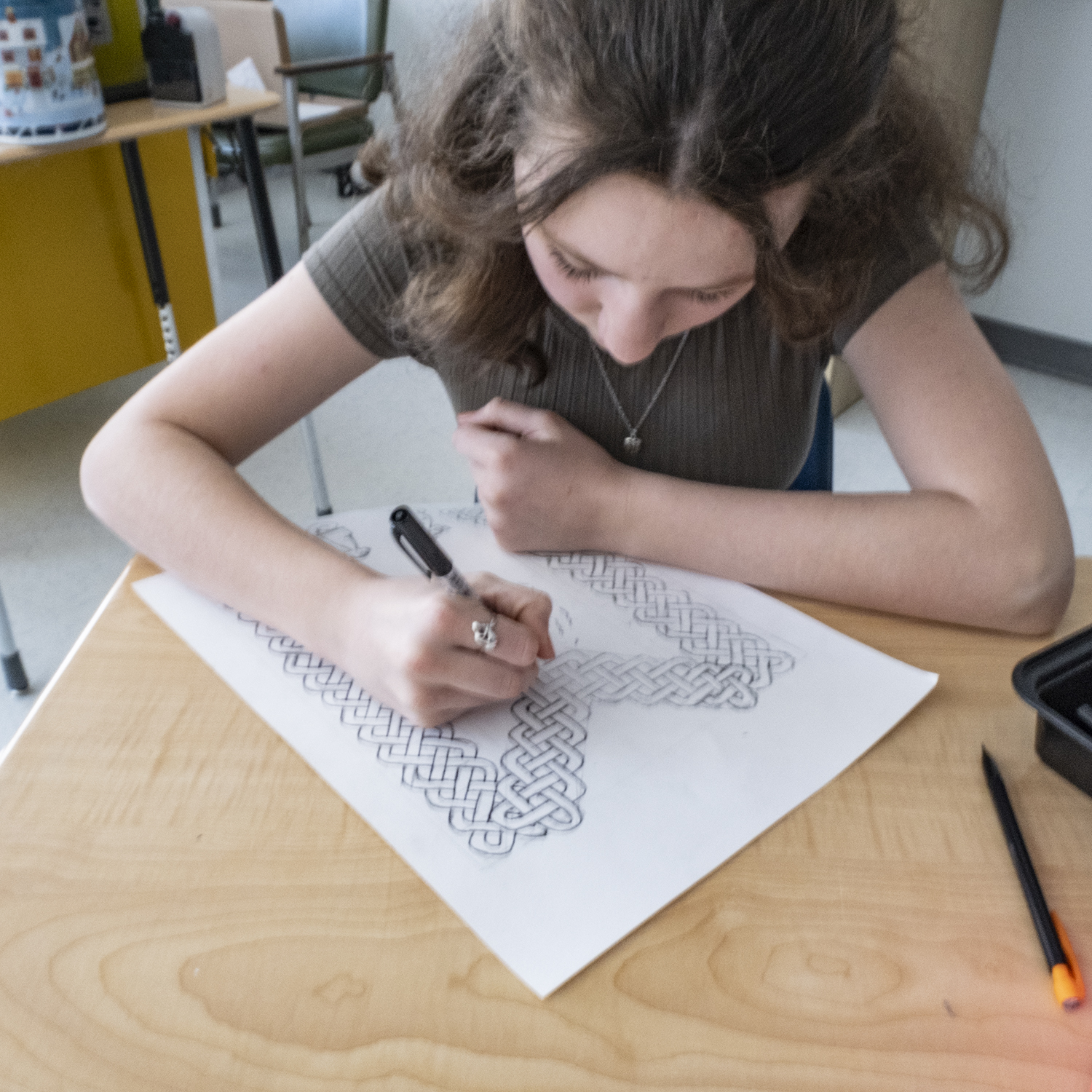
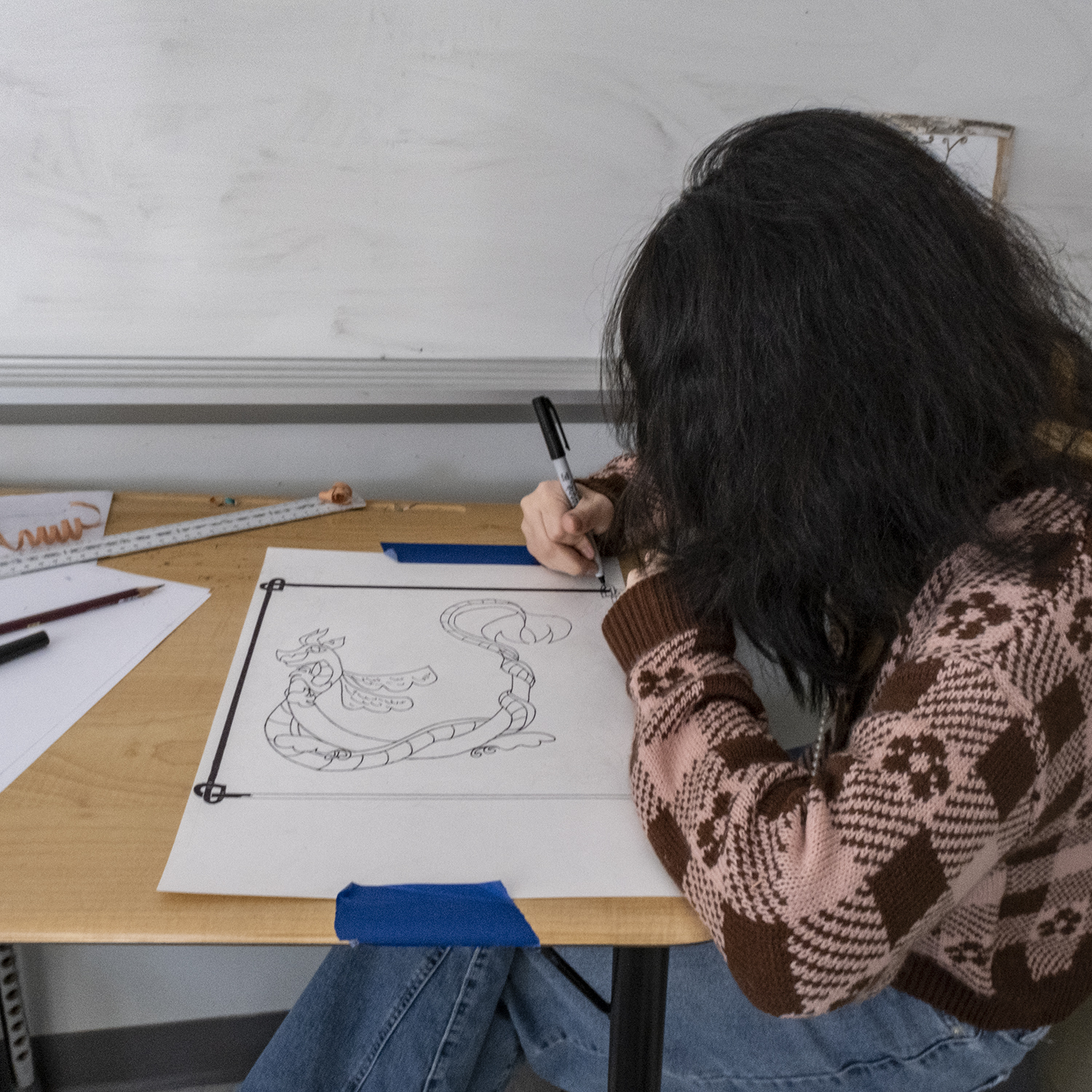
Maryam has been a high school Social Studies and Graphics teacher for 28 years at Rangeley Lakes Regional School, grades K through grade 12. The district, RSU 78, with just under 200 students is located in western Maine and includes the towns of Dallas Plantation, Magalloway Plantation, Rangeley, Rangeley Plantation and Sandy River Plantation. Maryam’s classes include Humanities I, II, U.S. History, AP European History, AP U.S. History, AP Seminar, and Graphics. She teaches 40-60 students each year. In addition to teaching her responsibilities include Student Council Advisor, Garden Club Advisor, Leadership Team member, and Class advisor.
Maryam’s colleague Timothy Straub, in his nomination for her as teacher of the year, captures the essence of Maryam:
“Maryam Emami is the whole package: Master teacher, advisor/mentor, Leadership Team, Quiz Bowl coach, and a sundry of other responsibilities and roles she assumes without expectation of recognition. She embodies the teacher’s mission of always keeping the best interests of the student first. Maryam lives the highest ideasl of what makes a historian a historian. Her mastery of content knowledge is unsurpassed. I have sat in her classroom, freshmen-senior, AP, honors, and Humanities, and witnessed an educator dedicated to the future of her students. Her primary aim is to instill a sense of connectedness and civic mindedness within her students. Semester after semester, year after year, for over 25 years, Maryam Emami’s dedication to the sanctity of providing an equitable education to all is the driving force behind her purpose.”
Tim and Maryam
What were your feelings after you learned that you were named Franklin County Teacher of the Year? What was the response from colleagues, learners, and community members?
There was great excitement among my students. When I returned from the announcement, which took place at the Hall of Flags in the State House in Augusta, they flooded my room with flowers, hugs, congratulatory messages, and cards, and many were disappointed that I had not informed them since they wanted to take a bus to the ceremony. They complained that I had told a former graduate who attended instead of them. Tim brought me flowers, another colleague gave me a Kata in a ceremonial act of blessing and gratitude, I received amazing cards and letters from colleagues, and I received so many wonderful comments on social media from colleagues, parents, and former superintendents (it was wonderful that multiple former superintendents I served under commented), and former graduates expressing how my teachings are still being utilized.
The following email was sent by a former student who is now the media manager at Hood College. “Sending a quick message to say congratulations on your recent honor! Even though it was only now recognized, the impact you have made and continue to make on your students cannot be understated. Personally, I’m still reminding myself of your advice to use the Zoom tool instead of pushing my nose up against the screen whilst designing. Maybe it’ll stick one day. Thank you for the wisdom you imbued on my young mind (I was listening, I swear). We, as students, never make it easy… but it means the world to us! Congrats!!” There was so much love. I am so blessed and thankful.
What have been the benefits of becoming involved in the CTOY (County Teacher of the Year) program?
I am receiving so much support from my CTOY family. There is a larger CTOY family as well as a homeroom family. Both have contributed so much to the conversation about their experiences and achievements. I am amazed by the exceptional talents and service of those in my CTOY community. It is reassuring to know that we all face similar challenges, and it brings me joy to celebrate each other’s accomplishments. Although I feel like I have not given back as much as I have received, I am determined to prove myself worthy of being part of this distinguished group. During our recent meeting with Sanjay, who represented Senator King, I was thrilled to learn that the Senator is committed to supporting education. I am eager to contribute to an effective strategy to further Senator King’s initiatives.
What do you like best about being a teacher?
Forming a trusting relationship with my students is a moment I cherish. Recently, a student who felt targeted came to me and expressed gratitude for seeing them for who they are and not judging them based on hearsay. They credited me for helping them through a tough time. The local newspaper, the Highlander, interviewed the class of 2023 and a student who had previously struggled in a traditional classroom named me as one of the people they are most grateful for. If I can help a student learn about and accept themselves, even in a small way, it can make a significant difference in their ability to be healthy, and happy, and make positive contributions to their communities.
Tell me what you think are the three keys to being a successful teacher?
To be an effective teacher, there are three important things to keep in mind: first, treat your students as equals and avoid creating a power dynamic. Second, don’t just tell them what to do – instead, coach them in your area of expertise and encourage them to become constructors of their own knowledge. Lastly, incorporate fun and reflection into your teaching to help students overcome challenges and develop thinking and design skills. Remember, it’s important to put your ego aside and not get in the way of student discovery.
What specific way(s) do your assessment practices tie into the success of your program?
To achieve success, assessment is crucial. However, I place more importance on students’ products than their scores. All of the tasks I assign are performance-based, requiring students to use the sources we have studied to make interpretations. These tasks include metacognitive exercises that ask them to reflect on their development as thinkers and designers, as well as more specific performance tasks, such as creating a graphic novel based on a myth or story from a belief system or utilizing their skills to tell stories about themselves and their communities.
What are you most proud of in your career?
Getting to know so many wonderful people and forming relationships with them. So many of my former graduates continue to share their stories with me. A former student who just got their master’s wrote after I received the CTOY honor “Thank you so much! Congratulations to you as well! No one deserves that award more than you. You have been an inspiration to me since the day I met you and will continue to be one for eternity. I love and miss you!! I hope to see you sometime soon. I will be back up for a couple of weeks at the end of July. Maybe we can finally get together then!”
What gets in the way of being a better teacher or doing a better job as a teacher?
At our small school, we are expected to take on multiple roles, which can be overwhelming. Unfortunately, I often find myself taking on too much and feeling stretched thin. This makes it difficult for me to do my best and be fully prepared for my responsibilities in serving the school and community.
What have you accomplished through hard work and determination that might otherwise appear at first glance to be due to “luck” or circumstances?
I have built all of my relationships through persistence, determination, and kindness, as well as a lot of hard work. Collaborating with my colleagues on various projects like the Humanities, interdisciplinary project, garden club, and curating the history of the Rangeley Region through multiple lenses has been incredible. These projects have allowed us to utilize our unique assets and context as a k-12 school in rural western Maine. Despite attempts to make us similar to larger schools, our teachers, staff, and administration have worked tirelessly to preserve our community and the school’s unique qualities. We take pride in our interdisciplinary work, such as the food project where the entire high school and specials teams worked with the 9-10th graders, or the ability to teach humanities with three discipline teachers; art, ELA, and history. We also created a video on the history of skiing in the Rangeley Region, which involved collaboration between the high school and elementary students. And of course, intersession which in the past has provided the opportunity for 3 days for k-12 to work on projects in mixed grade groups. Our accomplishments are the result of hard work and determination to preserve our special brand.
Look into your crystal ball: what advice would you give to teachers?
It’s important to be true to yourself and maintain strong connections with those around you. Your dedication to teaching is vital to children, so approach it with love and kindness. Be prepared to put in hard work, but it will be fulfilling in the end.
If you were given $500,000.00 to do with whatever you please, what would it be?
Let the world be our classroom and experience the joys of traveling. Explore the United States and the world together, to actually see and experience the culture and history that we are studying. Eat street food, join a tai chi group while they practice, pick up a calligraphy brush, and write Chinese characters on the pavements of Asia. See the works of Michaelangelo at the Vatican and so on. I still have a postcard a student sent me from the National Gallery in London, he wrote “ms. emami. I saw the painting! (he is referring to Holbien’s the Ambassadors) Thank you for – years ago – pointing me in its general direction.”
I’m looking forward to spending time with Maryam and Sonya in their classes during the next school and learn more about their collaborations. As Maryam’s teacher of the year journey continues I wish Maryam the other Maine county teachers of the year the best of luck.
While putting this blog post together I am reminded that the Maine Teacher of the Year program is not about finding the BEST teacher. All of the teachers nominated and those selected as county teachers of the year represent what is ‘right’ and ‘best’ for learners and our education system, PK-12.
Educate Maine manages and administers the Maine Teacher of the Year program as a collaboration between Educate Maine and the Maine Department of Education. To learn more about the Maine Teacher of the year program visit their teacher of the year webpage.
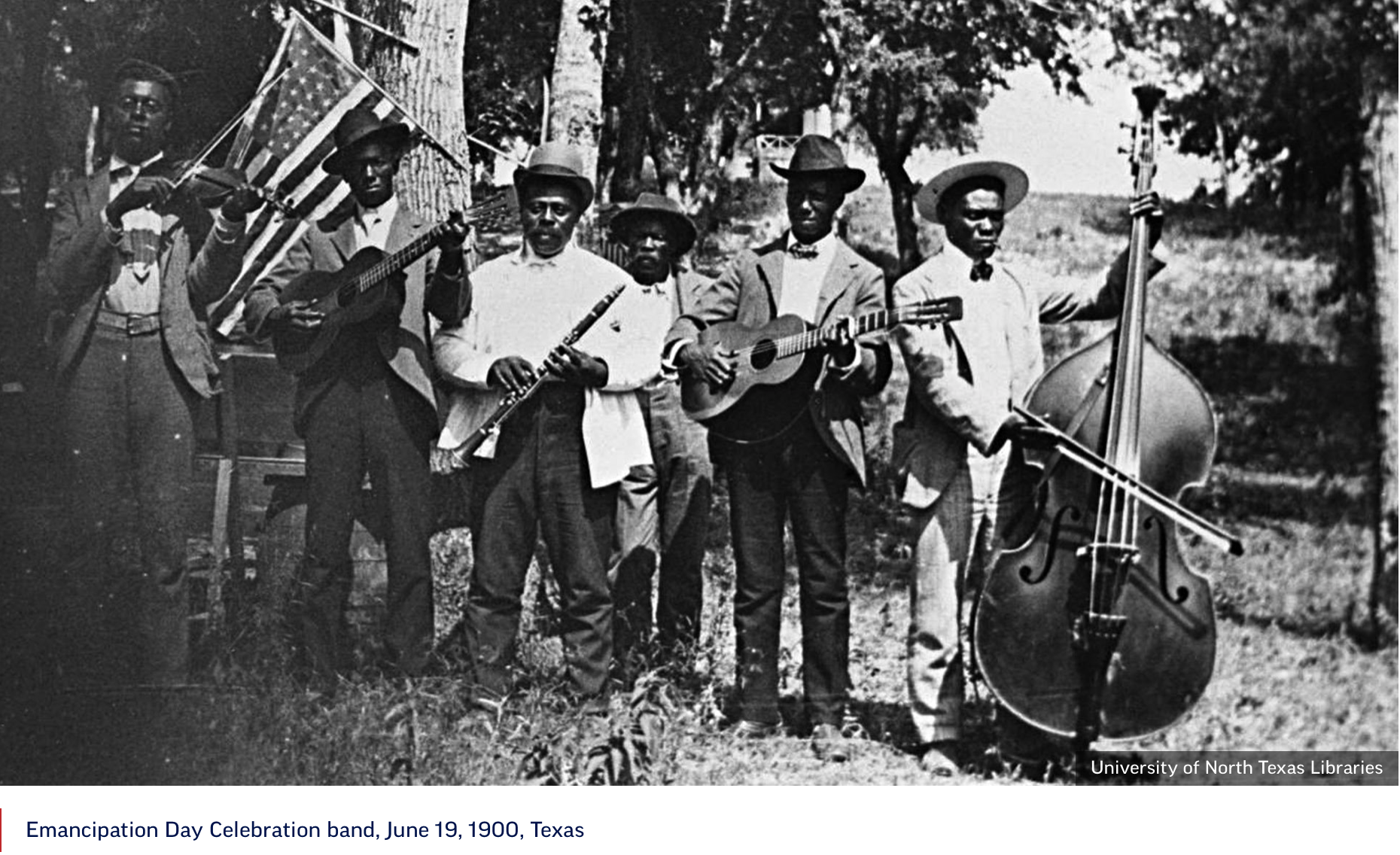
I’m happy to see that there are so many teaching resources available on Juneteenth. I realize that with many schools across the country that the most meaningful teaching on the important topic needs to take place during other times in the school year or perhaps in communities. Educators know that ‘teachable moments’ happen anytime and in many places.
Finally our country, in 2021, made June 19th a federal holiday known as Juneteenth, Juneteenth Independence Day, Emancipation Day, Jubilee Day or Freedom Day. It commemorates the day in 1865 when over 250,000 enslaved Black people in Texas were informed that the Civil War was won months earlier and they were finally free.
Below are some of the plethora of teaching resources available. I took them from two resources, both have put them together from a variety of sources. Of course, I suggest that you take a close look at them to be sure they fit your needs as a teacher and the students you serve.
Juneteenth: How and Why It Should Be Taught in K-12 Schools Sonya Douglass, a professor of education leadership at Teachers College, Columbia University, spoke to Education Week on how and why educators teach about Juneteenth and the broader value for all students in expanding how Black history is taught.
Teaching Juneteenth (Learning for Justice) The history of Juneteenth acknowledges hard history while also empowering students to be advocates for change.
Juneteenth: Black History for White People Black History for White People’s podcast series dedicates an episode to the history of Juneteenth, sharing some stories from the past, and tying the throughline to why and how people celebrate Juneteenth.
Celebrating Juneteenth (for young students) National Geographic for Kids presents an overview of the history of Juneteenth
VIDEOS
Juneteenth BrainPOP presents a short video on the history of Juneteenth, along with classroom activities and discussion questions for elementary students.
Juneteenth Explained Video-creation software company Vyond created this short, animated video for younger audiences that concisely presents the history of Juneteeth.
Why Juneteenth is Important for America The Root released this video about the importance of Juneteenth in 2018. It includes information on the violent backlashBlack Americans faced from white Americans opposing their freedom.
Meet the Grandmother of Juneteenth Opal Lee fought for decades to have Juneteenth recognized as a national holiday. Watch her interview on Good Morning America in 2021, after attending the ceremony where President Biden made June 19 a federal holiday.
History of Juneteenth and Why it’s Now a National Holiday (grades 6-12) In this this lesson from PBS, students will explore and discuss the history and context around the Juneteenth holiday in the United States. Topics explored include the history of racial injustice in the U.S., the Civil War and the limitations of the Emancipation Proclamation. Additionally, students are encouraged to explore the modern significance of Juneteenth and its long-term impact.
Teaching Hard Hard History: American Slavery No discussion or lesson on Juneteenth is complete without an understanding of slavery in the United States. Learning for Justice offers a framework and the ability to build a learning plan around the history of slavery in the United States.
Celebrate Juneteenth! The National Council of Teachers of English’s Read, Write, Think website offers a classroom activity designed around having students compare Juneteenth and the 4th of July using Venn diagramming.
RECOMMENDED BOOKS
Books for Students About Juneteenth Honor the day that Black Americans gained their freedom with these Read Across America recommended titles to help students learn more about the history and traditions of Juneteenth.
The National Museum of African American History and CultureThe Historical Legacy of Juneteenthis an article with photographs from the Smithsonian that provides context for Juneteenth. It covers the Emancipation Proclamation, the Thirteenth Amendment and Reconstruction.
PBS Learning MediaJuneteenth: All About the Holidays is a short video that offers an introduction for younger students. ThisPDFoffers grades 3-5 vocabulary words and photographs.
Juneteenth.com ThisWorld Wide Celebration websiteoffers historical information and archives of Juneteenth celebrations in the news and connects those celebrating the holiday.
The Morningside Center “Juneteenth. Why is it Important to America?” is an article that includes a lesson plan with a short video and discussion questions about the holiday.
Read Write Think.This classroom activityasks students to make a Venn diagram comparing Juneteenth and July 4. Several resources are linked here, including theEmancipation Proclamation housed at the National Archives and Records Administration’s site.
The New York TimesSo You Want to Learn About Juneteenth?is an article that puts the celebration in the context of the 2020 protests sparked by the murder of George Floyd at the hands of police.
Learning for JusticeTeaching Juneteenth. This article from Learning for Justice, formerly Teaching Tolerance, uses the holiday to empower students to advocate for societal change.
The History ChannelWhat is Juneteenth? This overview of the holiday offers facts and a short video with links to many other related topics.
TED-Ed What is Juneteenth, and Why is it Important?Karlos K. Hill and Soraya Field Fiorio tells the story of a young slave in Texas who learns the slavery has ended and her enslaver is keeping it a secret.
Teach for AmericaCelebrate Juneteenth offers articles, lesson plans, and ideas for books and movies to celebrate Juneteenth.
As another school year comes to an end I think of all the students and teachers who respect each other for who they are. I love this performance by Unity. They are articulate, dynamic and ‘spot on’ with their message. In addition, their performance is outstanding!
Our abilities aren’t hindered because of our differences.
Our talents aren’t any less because we are unique
Our worth isn’t defined by our diversity
It’s not our differences that divide us, it’s our inability to recognize, accept, embrace and celebrate our differences.
Monson Arts is offering Maine art educators a 25% discount on its 2023 summer workshops. Monson Arts, established by the Libra Foundation in 2018, offers residencies for artists and writers, community based programs, and summer workshops. This year’s workshops include offerings in audio, mixed-media, painting, weaving, and writing. There is also 24 hour studio access. For more information: https://monsonarts.org/workshops/.
Besides ample studio spaces and newly renovated accommodations, participants eat all their meals at The Quarry Restaurant. It’s the only restaurant in Maine to be a finalist for a James Beard Foundation award this year.
Monson is the last town before the 100 Mile Wilderness of the Appalachian Trail. A beautiful natural setting, great workshop leaders, studios, and food! Questions? Email information@monsonarts.org or call 207 997 2070.
Recently I joined a book group. I’ve never been part of a formal ‘book group’ (secret is out). I’ve never been interested and truth be told its only recently that I’ve been reading books at a very fast rate, now that my schedule allows. I like this book group for several reasons. It’s pretty non-traditional, no one book is read and discussed like in traditional book groups. Actually, its one of the reasons I decided to join the group. We gather over lunch monthly and each participant shares books, films, podcasts and other forms of stories and ideas. The participants are retired educators who have a keen interest in education and other interesting and sometimes challenging topics. At our April gathering we each shared a poem in recognition of National Poetry Month.
At more than one gathering the conversation has included AI – Artificial Intelligence. I’m certain as we learn more that the conversation will continue. I’m reading and learning about what AI is, where it is, and the potential impact on the world. A 60 Minutes episode from a couple of weeks ago provides foundational information that I suggest you take the time to VIEW. It’s very informative and important as educators that we inform ourselves.
You can google AI and come up with the definition but until you begin to ‘see’ and experiment with the online tools I’m not sure it will provide you with the understanding to consider the impact on education. For example, think about this: The sum of all human knowledge is online. AI is replicating the brain. What are the implications on education? What is the impact on art making? AI can solve problems in very little time compared to the brain. Is humanity diminished because of the enormous capability of AI?
Visual artist Jonas Peterson is creating art work using AI. His collection of art called Youth is wasted on the young is an amazing collection that is his way of celebrating the ‘old’ and a comment on ageism. He used fashion to highlight the personalities of older people. Jonas is a photographer but in this collection he uses AI to create scenes, the people and what they’re wearing. In his own words:
I give specific direction using words only to a program, lenses, angles, camera choice, color theme, colors, styling, backgrounds, attitude and overall look and the AI goes to work, it sends back suggestions and more often than not it’s completely wrong, so I try other ways to describe what I’m after, change wording, move phrases around and try to get the AI to understand the mood. It’s frustrating mostly, the AI is still learning, but getting any collaborator to understand you can be difficult no matter if it’s a human or a machine. After a long stretch of trial and error I get closer to a style and look I want and after that it comes down to curation, picking the renders I believe go well together, I start making it a series. To me the process is similar to that of a film director’s, I direct the AI the same way they would talk to an actor or set designer, it’s a process, we try over and over again until we get it right. Should I get all the credit? God, no, the AI creates with my help and direction, it’s a collaboration between a real brain and an artificial one.
You might be thinking or asking, is this really art? Do I want my students to use this in their art making? Here are some of my thoughts and questions. AI exists in the world. Microsoft introduced ChatGPT, an artificial intelligence chatbot, in November 2022. Bard is a conversational generative artificial intelligence and was released in March 2023. How should educators learn about AI? Should we leave it up to students to teach us? I’m sure that this will be the next wave of education professional development offerings, in person and online.
Jonas Peterson said:
I’m not here to debate the process, I’m a professional photographer, writer and artist myself, I understand the implications, how this will affect many creative fields in the future. I’m simply using a tool available to me to tell stories, the same way I’ve always told stories – to move people. To me that is the point of this, not how I did it. Dissecting something will almost always kill it.
You can learn more about Jonas’s work by googling him and also at this LINK.
I’m sure I’ll circle back to this topic in future blog posts. If you have questions or comments that we can all learn from please don’t hesitate to comment at the bottom of this blog post. Thanks!
Four times a year the Union of Maine Visual Artists (UMVA) publishes a journal. The UMVA is a non-profit organization that promotes and advocates for the visual arts, artists, and all arts supporters. Included in each publication is a column that focuses on education called Insight/Incite. The recently released spring issue theme is Truths and Lies. The Insight/Incite column includes a piece authored by Lynda Leonas. Congratulations to Lynda who teaches K-6 visual art in Auburn Public Schools. She presently serves as the president of the Maine Art Education Association (MAEA). The title of Lynda’s piece is Re-envisioning Art Enrichment Assessments: The Policy of Gifted and Talented Programs.
You can read the piece at THIS LINK. Access the entire journal at THIS LINK. Information about becoming a member is at THIS LINK. If you’re interested in writing for the journal please email Argy Nestor at meartsed@gmail.com.
As I said in my first blog post in April every morning I receive an email from Poem-a-Day put out by the Academy of American Poets. It’s a way to stretch my thinking in a different direction, reading poetry written by artists from varying backgrounds. I can read them or listen to them. I prefer listening since they’re often recited by the poet. On some days listening helps me center myself for the day ahead. Some poems are calming, others sad and some challenge my thinking.
I found this one fascinating and I learned what Klangfarbenmelodie means.
Klangfarbenmelodie
clock that measures the opposite of time ancient pixel built from half a breath the seed of a perfect moon
numbers don’t lie because they can’t tell the truth the kindling space between a choice & its airless shadow
a polite noumenon guides my dismay with the grace of email for doves originating in silence like all eternal things
joystruck demon of rain the welas at the bus stop look like potatoes in cellophane the milk of their laughter
Anaisa’s mirror is her palm a plangent yellow, bones of song tracing lines of flight
Almost always at the end of the poem is About this Poem. Some days it takes me listening to this section to get a sense of what the poem is about and/or what the poet is conveying. This is one of those times but I’m sure music educators reading this are familiar with Klangfarbenmelodie.
“Klangfarbenmelodie (German for ‘sound-color melody’) is a musical technique that involves splitting a musical line or melody between several instruments, rather than assigning it to just one instrument (or set of instruments), thereby adding color (timbre) and texture to the melodic line. Serialists such as [Arnold] Schoenberg and [Anton] Webern are known for this approach to tone color. The technique is sometimes compared to ‘pointillism,’ a Neo-Impressionist painting technique. In this poem, I explore linguistic applications of this concept with reference to non-linear time, placemaking, and what Wilson Harris calls the ‘predatory coherence’ of quantized or Cartesian time (as opposed to Bergsonian ‘pure time’ or ‘duration’).” —manuel arturo abreu
To learn more about the poem and are curious about a person who would write a poem about Klangfarbenmelodie go to THIS LINK. Enjoy and consider subscribing to Poem-a-Day.
My word for this Spring is flexibility. I am fortunate to have the flexibility to make a schedule that is all but perfect for me. (And, I am reminded periodically, nothing is ‘perfect’). The trip I recently returned from was amazing and part of it is due to the flexibility I presently have in my life. This blog post contains my ‘story’ accompanied by photos which is about my learning adventure in Hawaii on the islands of Kauai and the Big Island – Hawaii. It’s quite lengthy but I’ve learned no sense in telling only part of a story. I learned something every day on our adventure and realized how much I didn’t know. WOW! I figure when I’m really old that someone can read my travel journals to me and I can relive the sweet moments. I LOVE TO TRAVEL!!! Fortunately, I had wonderful travel partners; my husband Don and during part of our trip one of our sons, Nicholas joined us.
My recent travel story starts with this Walt Disney saying:
Around here, we don’t look backwards for very long. We keep moving forward, opening up new doors and doing new things, because we’re curious — and curiosity keeps leading us down new paths.
Day 1 travel to Hawaii…
We traveled on the 4:45 am bus from Portland to Boston, Logan airport. Our flight was direct to Honolulu on Hawaiian Air, just over 10 hours, 5,109 miles. We took a second plane to the island of Kaua’i in time to check in to the Kaua’i Inn, have supper and crawl into bed. Five hours behind Maine time, it was a 21 hour day.
First sightings, surprises, wowzer moments:
*hot (80 degrees) and humid but not so bad because the wind is very very strong. (quite different than the near 0 degrees we left at home), (my hair has gone from curly to tightly curly)
*color of water is indescribable
*first sighting stepping out of the airport: Suburban w surfboards on the roof rack
*there really is a wiki-wiki bus here
*the economy is based totally on tourism (people in service jobs are sooo friendly)
*sky is always changing, very dramatic
*can’t tell where people are from, by their cars, because everyone who is visiting that’s driving, has a rental car (it’s an island)
*many travelers, mostly older people
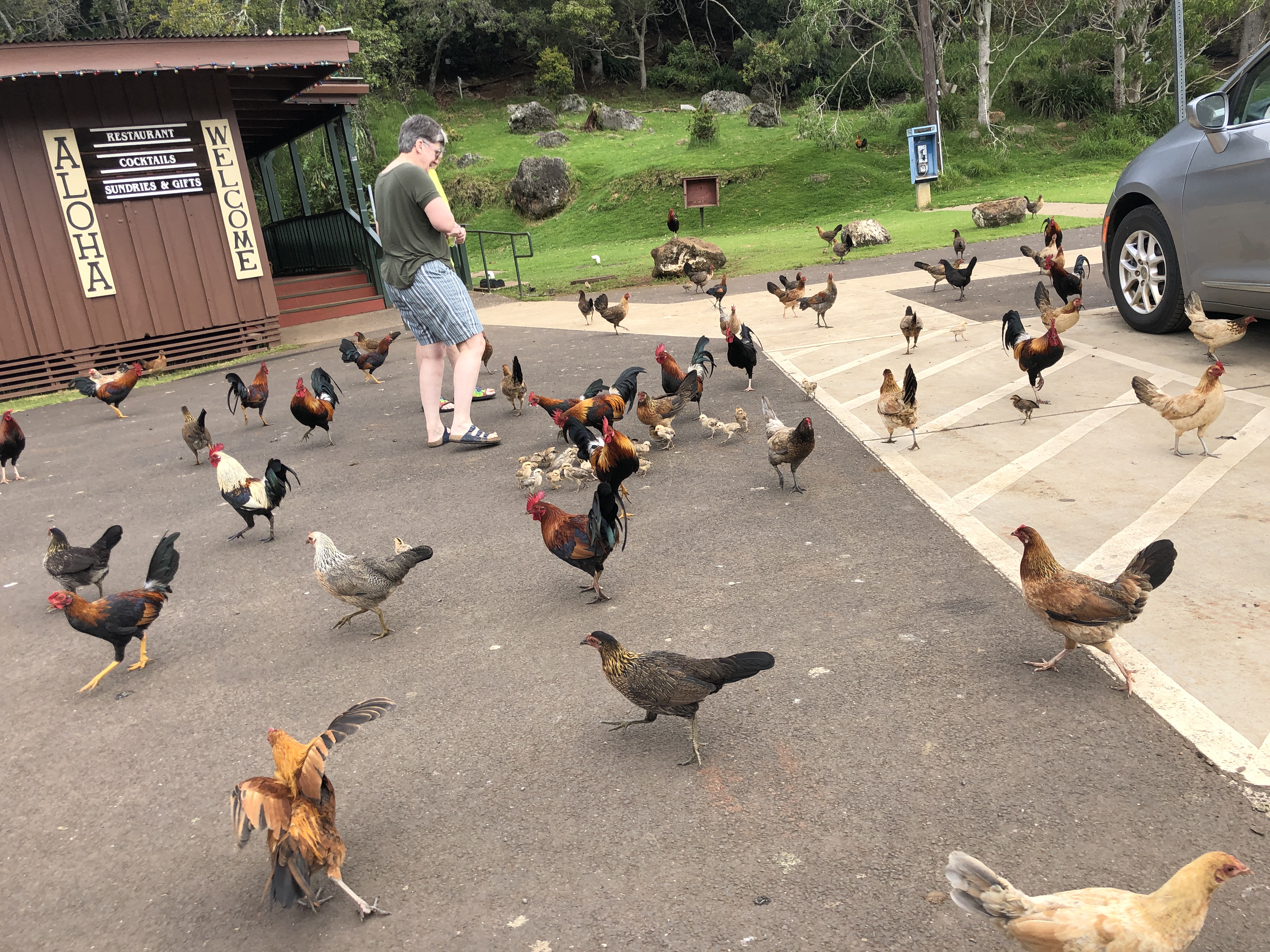
*there are chickens EVERYWHERE!! (more on that later)
Kaua’i Inn
Day 2, the adventure really begins…
I can’t stop smiling w bugged out eyes. Soooo many different sights to take in. The biggies for today:
*moved into our Airbnb in Kapa’a on the island of Kauai, where we’ll be for 6 days. Rows of small attached homes.
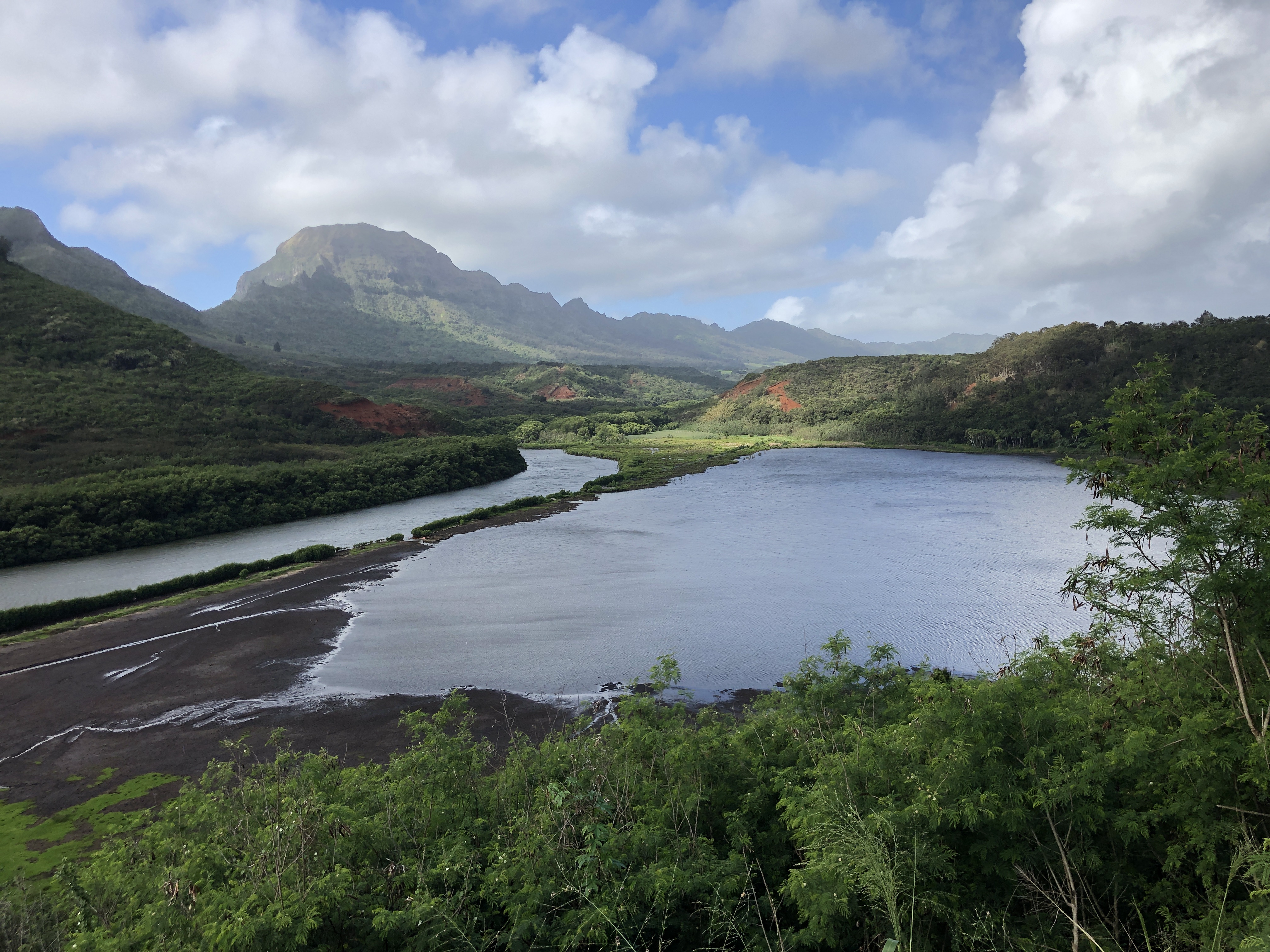
*visited Alekoko Fish Pond at Menehune Pond Lookout. The river below was fast moving water, thanks to the tide and wind. Six double kayaks spotted. Restoration area run by volunteers and a non-profit. Site is listed on US National Historic Register. They’re working to remove 26 acres of mangrove which is an invasive species. This will help restore the native vegetation, wildlife habits and traditional forms of food production. Next to the river we could see children with shovels and wheelbarrows hard at work. The funniest thing was looking down at a post at the edge of the pullout and seeing a sticker: North Haven Oyster. So far from home, yet so close!
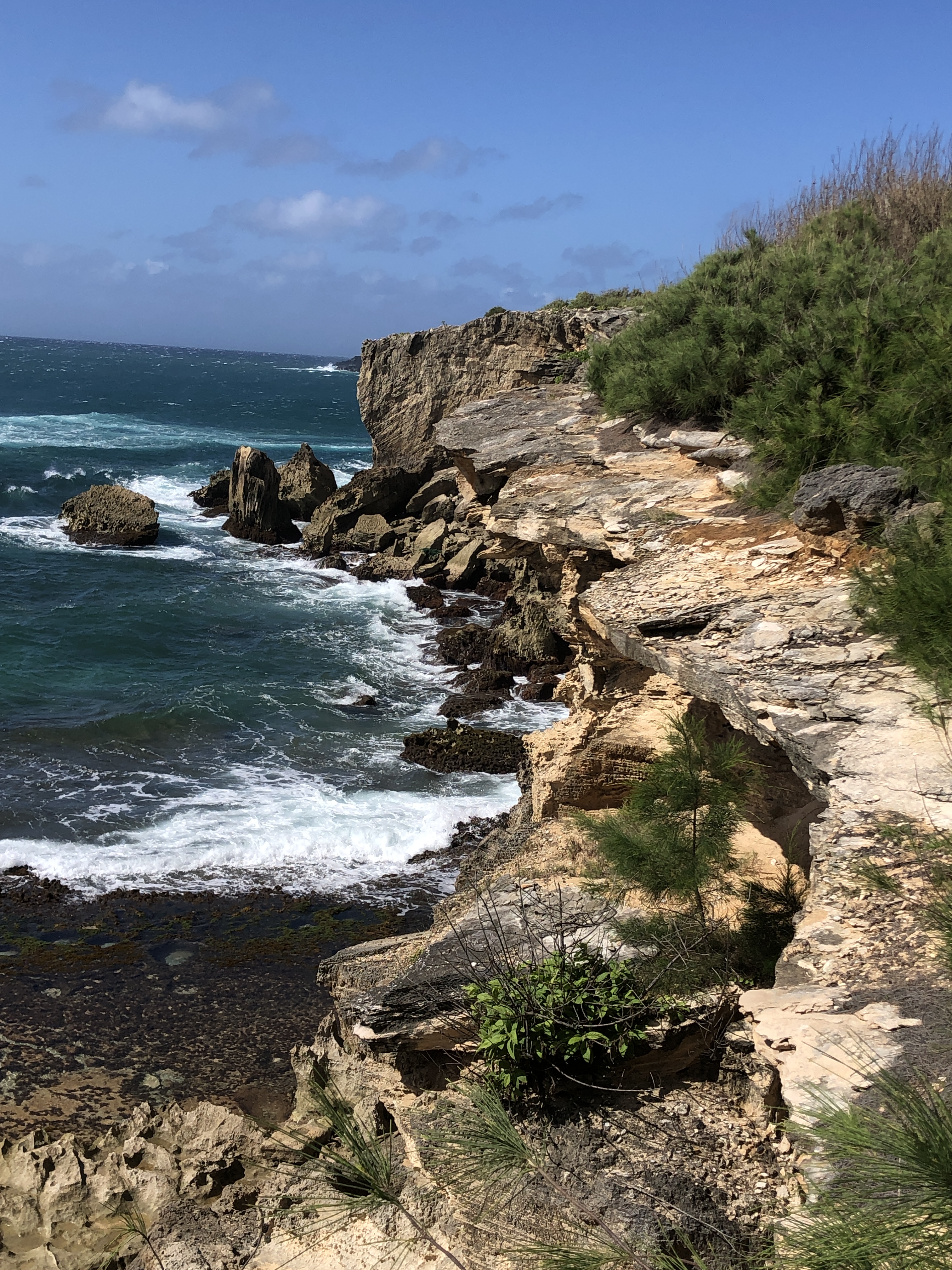
*headed west along the coast to Shipwreck Beach to see BIG waves, surfers, sun, beautiful sand, amazing color water, some beach goers and wind (30 knots). We took a trail that meandered up and along the waters edge. What a gift to my eyes-stopping to breathe deeply and exchange greetings w others out for a hike.
*amazing lunch at a tiki looking spot, waitress was delightful. Kale salad w beets, fruit, goat cheese, macadamia nuts and the most delicious figs!
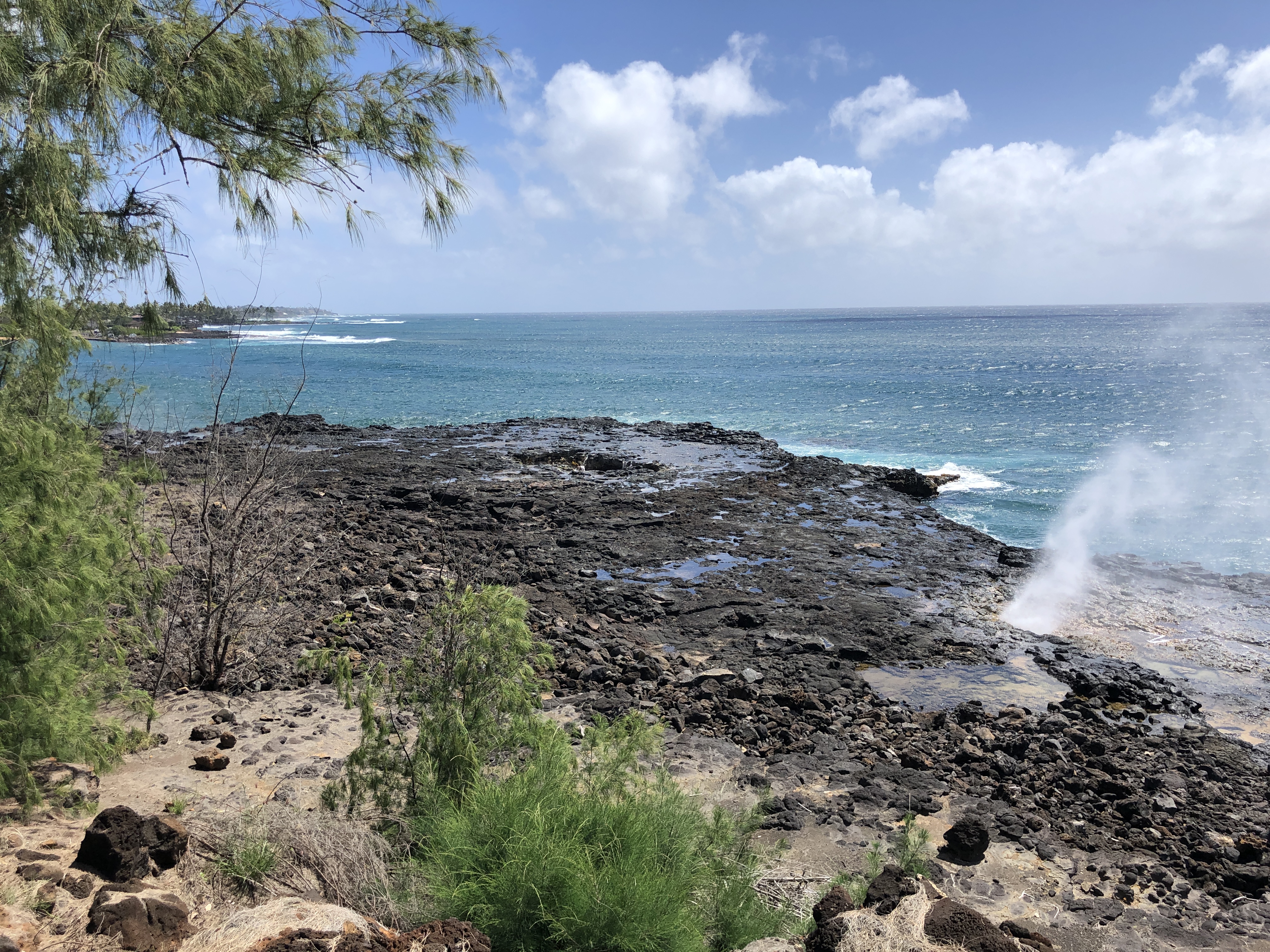
*Spouting Hole was similar to Acadia’s Thunder Hole. The lava rock along the coast is so different.
Grateful for another day in this US state, the farthest from our home!
Alekoko Fish Pond
Shipwreck Beach
Spouting Hole
Day 3, based in Kapa’a on the island of Kauai
The weather is unusually windy, the water temperature always between 70ish and 85ish, and at any time of the day suddenly it rains for 3-10 minutes.
Today we each did something we love.
*Don went fly fishing for Bone fish w a guide. They wear these water shoes that look like light weight plastic hiking boots. They’re pretty rugged to protect feet from being cut on the rough surface covered w various sizes of coral. They waded about 75 yards out in the water close to the coral reefs. Water is fairly shallow, up to his waist. When Don looked over his shoulder there were 20 foot waves not far off. The work of the reef. He had three fish but didn’t catch any. He saw about 20 giant turtles swim close by.
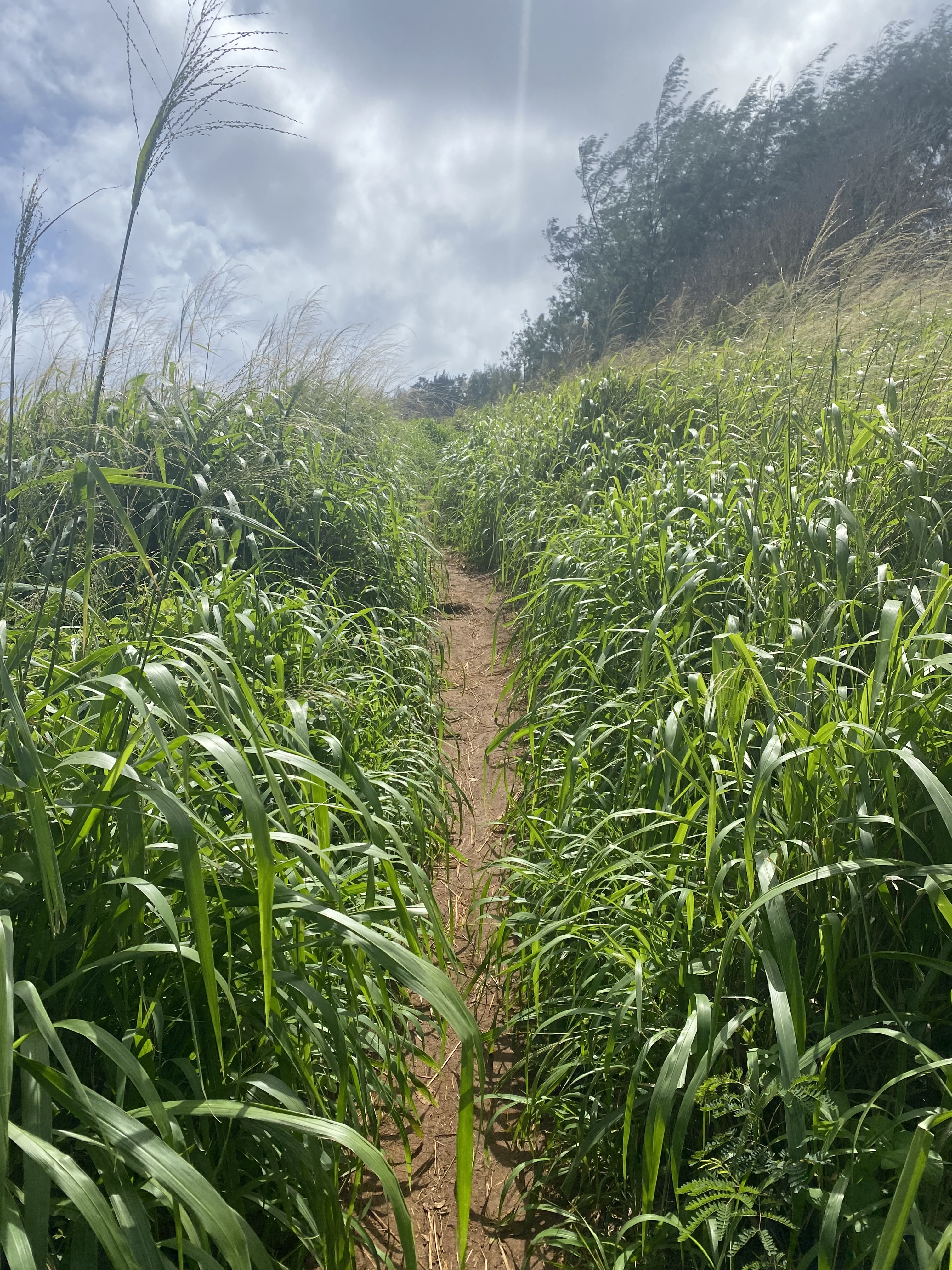
*Nicholas went for a hike on the northern part of the island. Part of the trail was through lush green grasses and it went down to a beach.
*I spent time at the beach, breathing deeply, walking, soaking up the sun, reading and taking in the amazing beauty of the water colors changing, and watching the waves breaking at the reef.
*We stopped at a juice stand where I drank coconut milk direct from the coconut and fresh coconut.
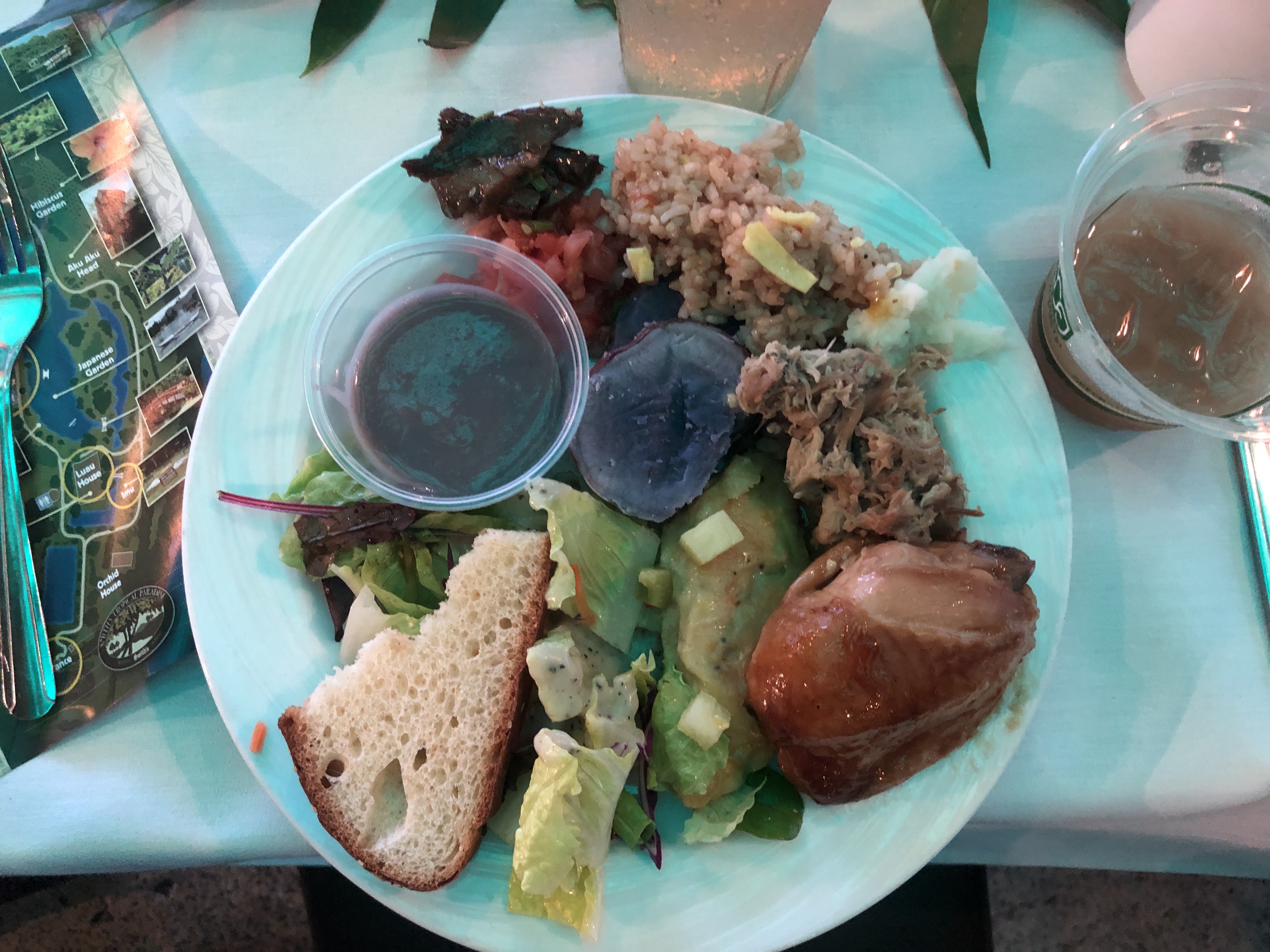
*Our evening was spent at the Smith family Luau. A unique experience! The business has been in the family going on 5 generations. Our experience started w a tour of the gardens, on to the Imu Ceremony – digging up the pig that had been cooking for 5 hours. On to a delicious supper including Mahi Mahi, tomato salmon salad, mashed potatoes, cucumber salad, Chinese fried rice, Adobo chicken, purple sweet potatoes, teriyaki beef, poi (root of taro), green salad w traditional Hawaiian dressings, and of course pork. Drinks: mai tai, pina colada, Longboard beer (local).
Desserts: coconut cake, variety of jello’s and delicious Hawaiian rice pudding
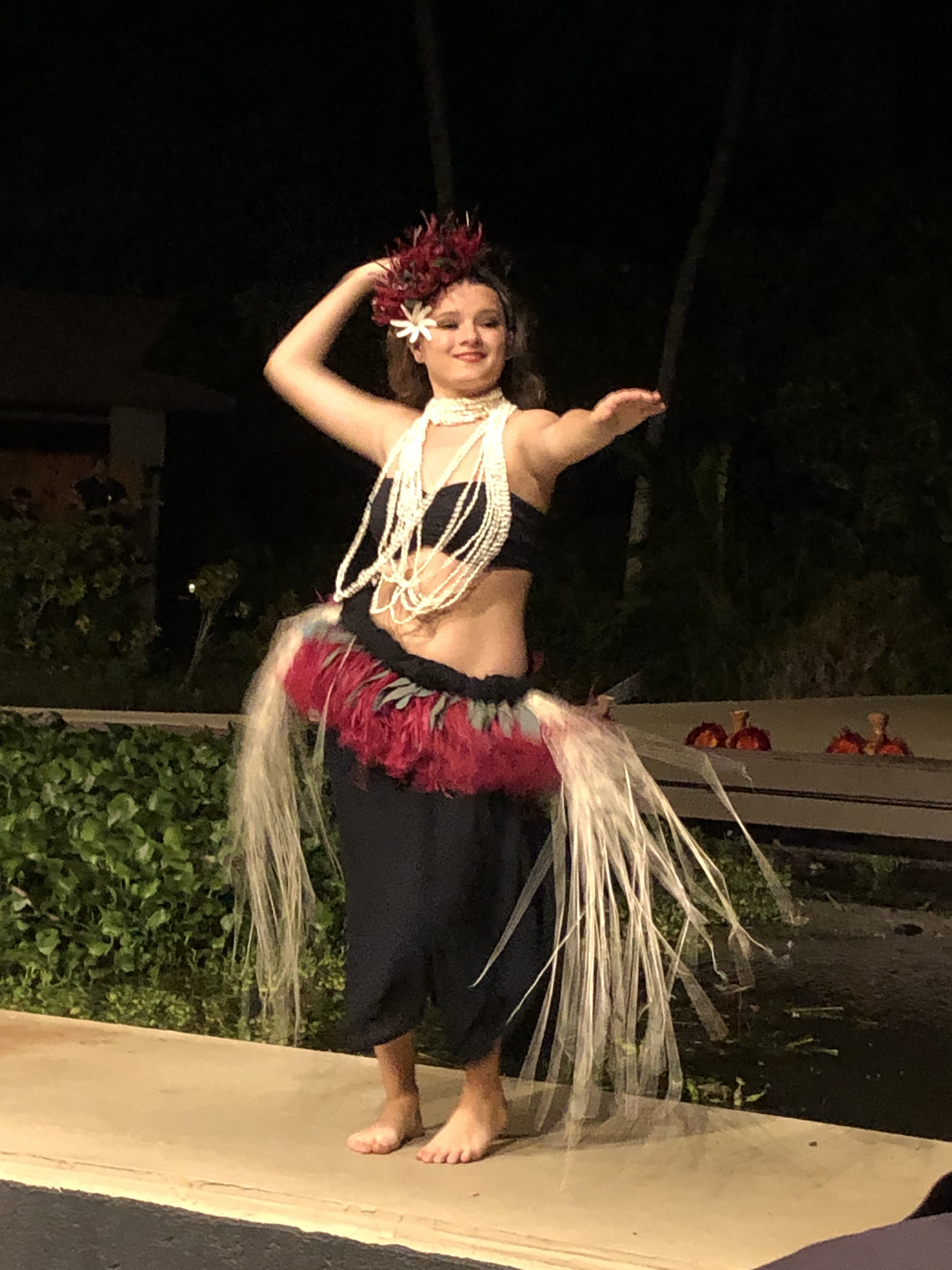
Afterwards we had instructions on how to do a traditional hula dance. From there on to the Lagoon Theater for the Luau show which included history and traditional culture explaining the contributions that blend together in Hawaii. About 12 different performances from Philippines, New Zealand, Tahiti, and Japan. Fire and drumming included. Overall it was a good introduction to Hawaiian culture. Part of the US, yet so different.
pathway to the beach
Coral reefs not far from the beach
The meal at Smith Family Luau
Hula dancer at the Luau
Day 4, based in Kapa’a, island of Kauai
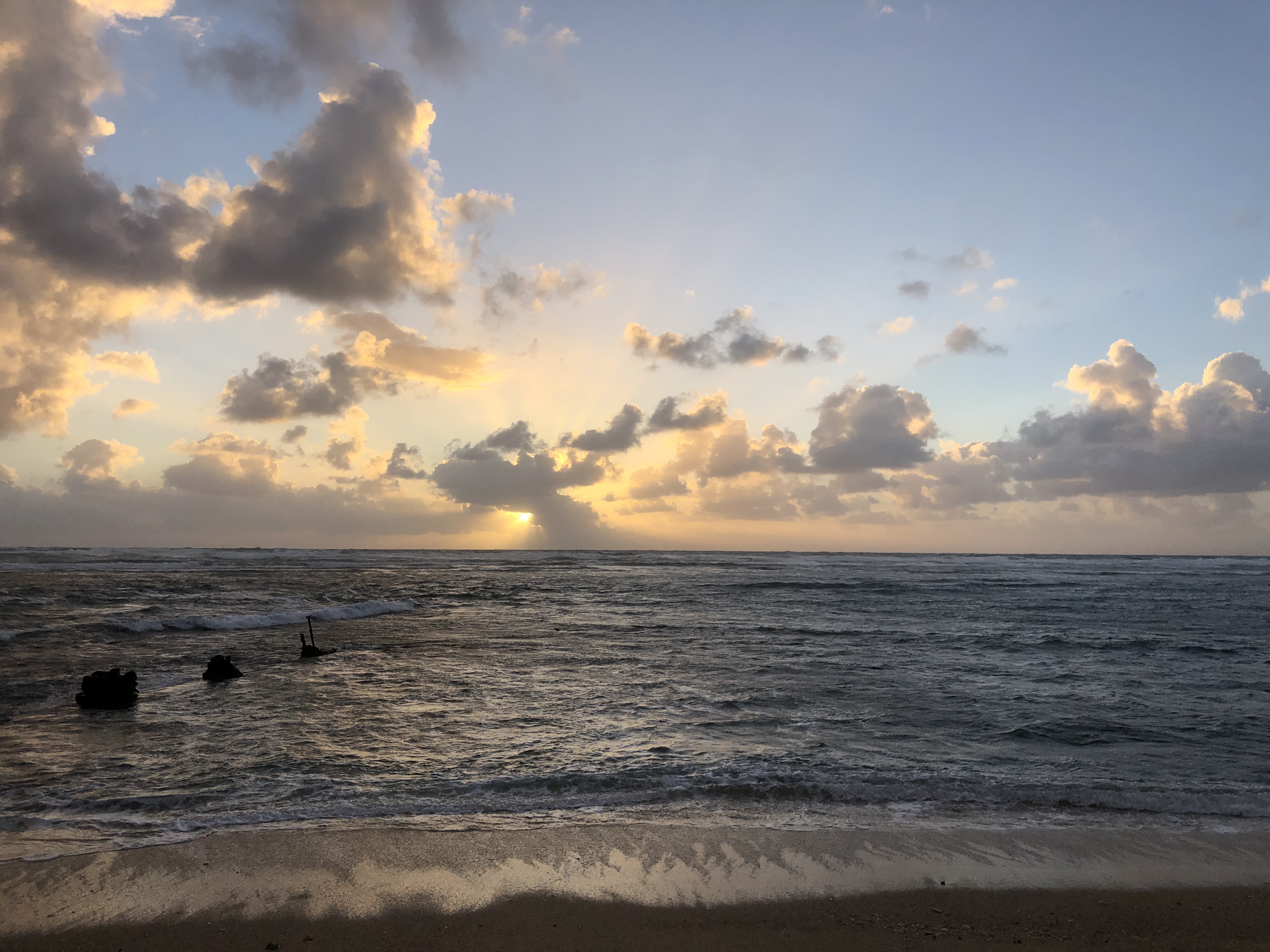
We’re a 3 minute walk to the beach so we headed out the door for the 6:50 sunrise. Even w clouds the sunrise was a beautiful sight and only got more amazing as the sun ascended from the horizon.
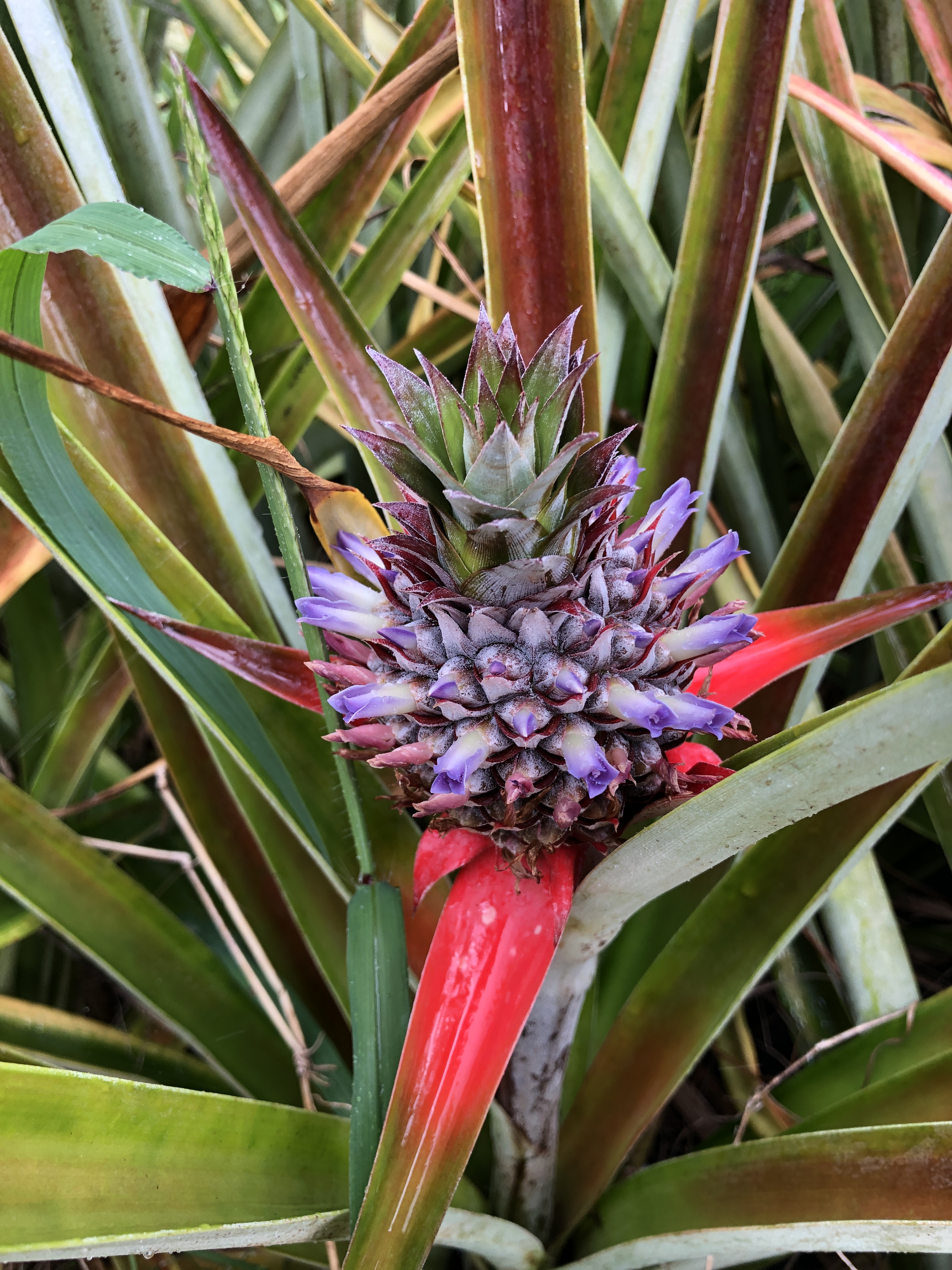
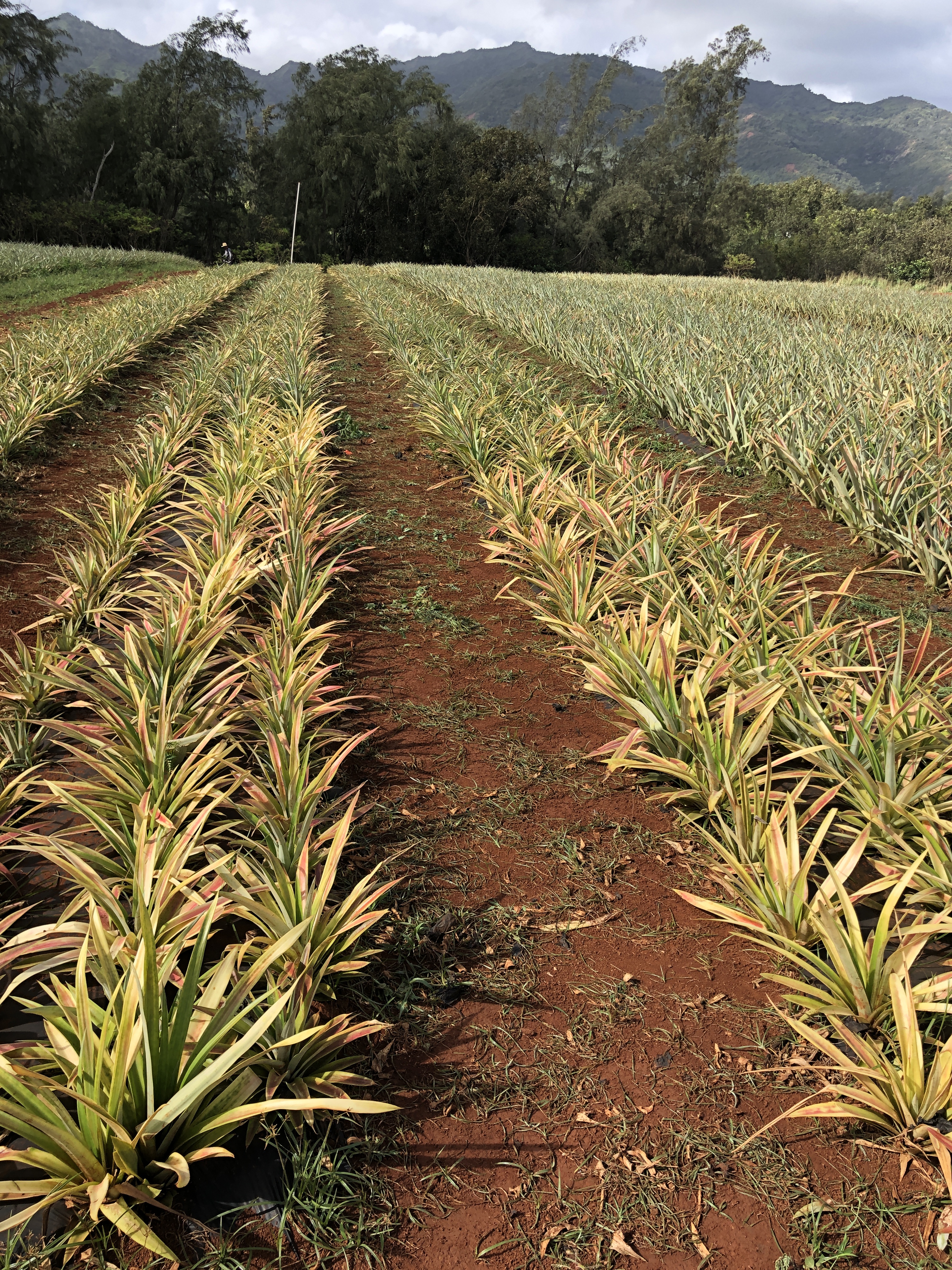
We spent the morning at the Hole in the Mountain Farm where they grow Sugarloaf pineapples. They’re white and it will be impossible to ever eat a pineapple bought locally again. Sugarloaf pineapples don’t, in any way, resemble the taste of any pineapple I’ve ever eaten!!! The farm, owned by Jude and Paul Huber, is 38 acres of well drained soil, ideal for growing Sugarloafs, where they’ve work extremely hard to get to the point of harvesting 250,000 pineapples a year.
We learned:
*there are 4 ways to grow pineapples-from seed, planting the crowns, slips and suckers
*takes 18-24 months to grow a pineapple
*Jude and Paul are science nerds and instead of watching TV at night they read research papers
*reading and learning and experimenting has led them to being able to get 39 plants from 1
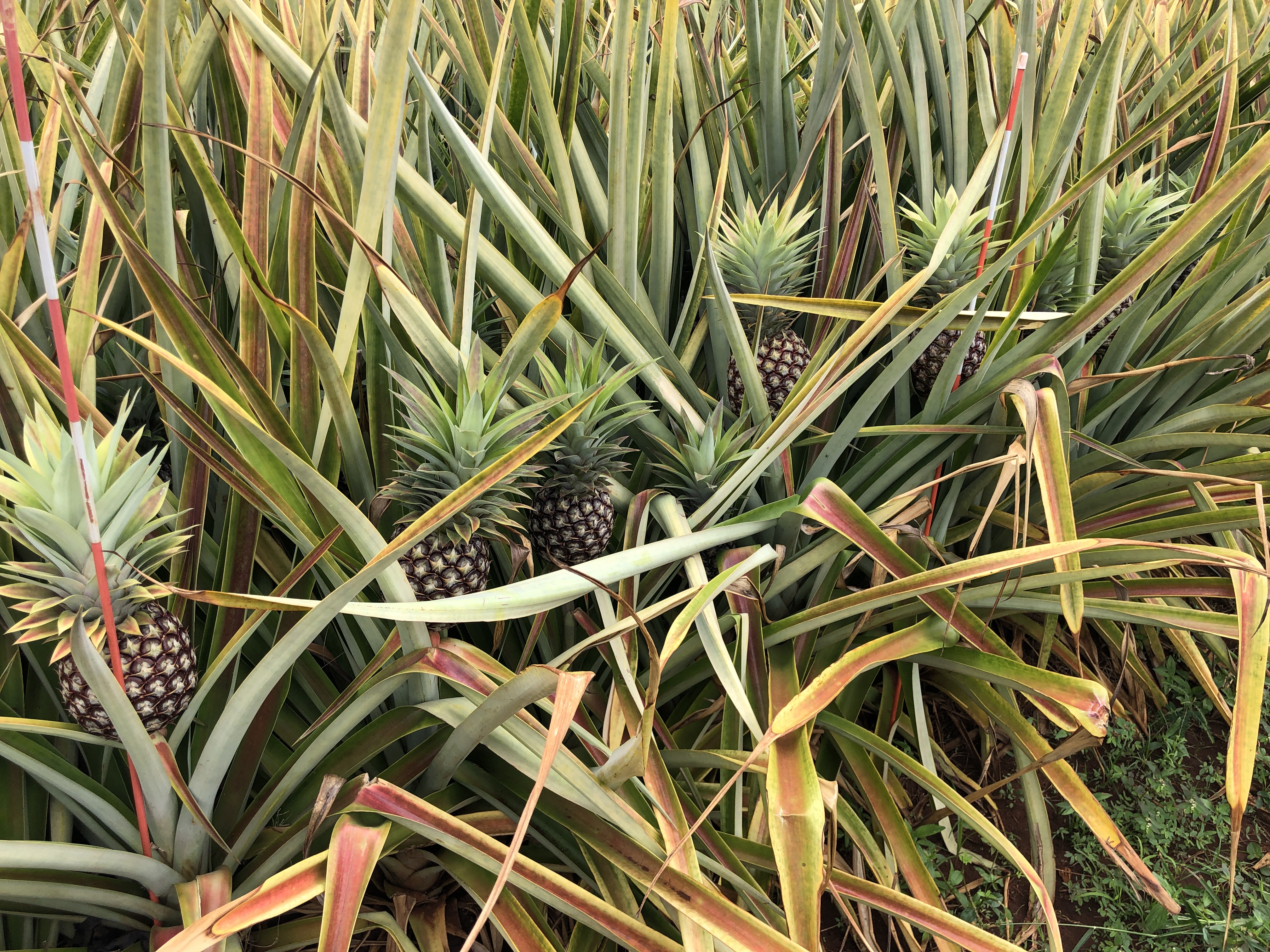
*each plant grows only 1 pineapple at a time, planted 3 across in each row/bed
*plant a field every 2 weeks in order to have ripe pineapples year-round
*sell them at 2 farmers markets on the island and ship them anywhere
*we saw the pineapples in all the stages, my favorite was the red heart stage
*learned how to plant a crown, harvest a pineapple, cut it for eating
*machines do not plant or harvest pineapples, both are done by hand
*pineapples don’t ripen on the kitchen counter. Pineapples should be harvested when ripe. On the counter they only get softer, more colorful, more aromatic.
*4lb pineapple is ideal for Jude and Paul to grow which they sell for $4 lb
*they’re grateful for their 2 full-time, 2 part-time employees who they pay $33 an hour
*left the farm w 5 small pineapples that we picked, and w the taste of pineapple ice cream that was soooooo yummy!!
Paul and Jude are 70 and 68 years old. For fun (and for years) they go to Alaska, jump out of helicopters on snowboards.
During our adventure at the farm we were rained on twice. These rain showers come on quickly and last 2-10 minutes. The wind continues to blow throughout the day and night keeping it cool and comfortable.
In the afternoon we walked part of the 4 mile path to the lot w a bunch of food trucks and had Mahi Mahi fish and chips. Yum!
Sunrise in Kapa’a
Beginning stages of pineapple
3 pineapple plants across each row
1 pineapple plant grows on each plant
We planted and picked pineapples and took 5 to our home away from home – delicious!
Day 5, based in Kapa’a, Island of Kaua’i
Our Airbnb comes w toys, one of which is bikes. We’re a 1 minute ride to the 4 mile bike/walk path that goes along the ocean. We started our day w a ride stopping along the way to read the signs and learn some of the history of the area. Like the first railroad in Hawaii was built on Kauai which moved some of the harvested sugar to the wharf for shipping.
Today’s highlights:
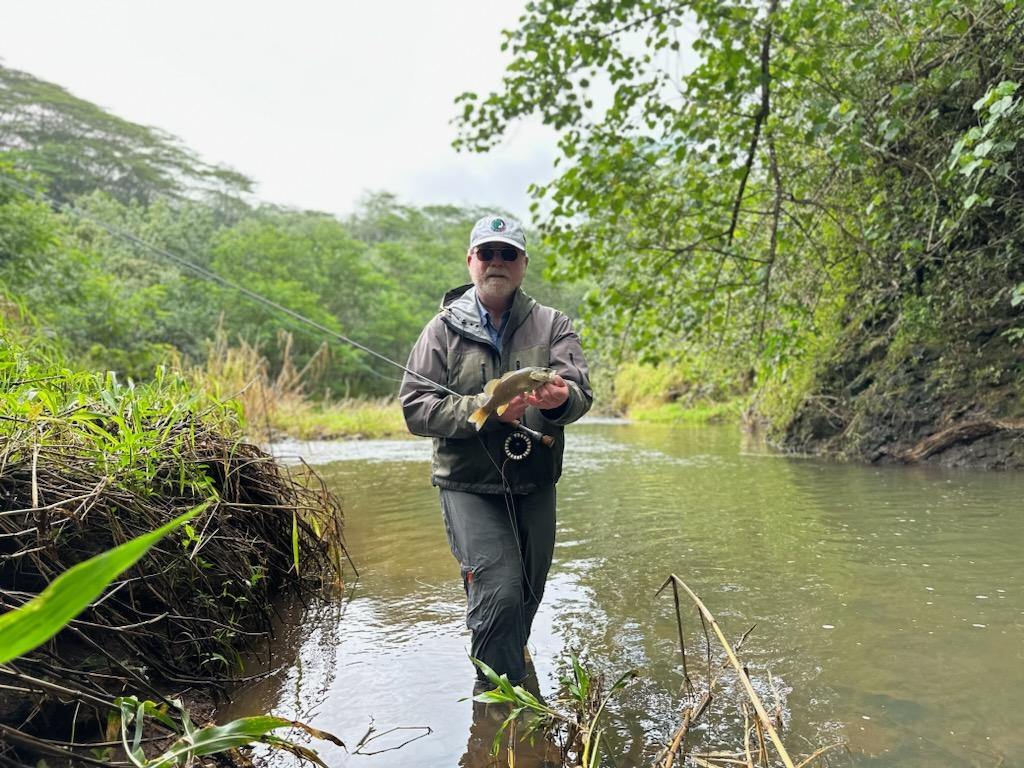
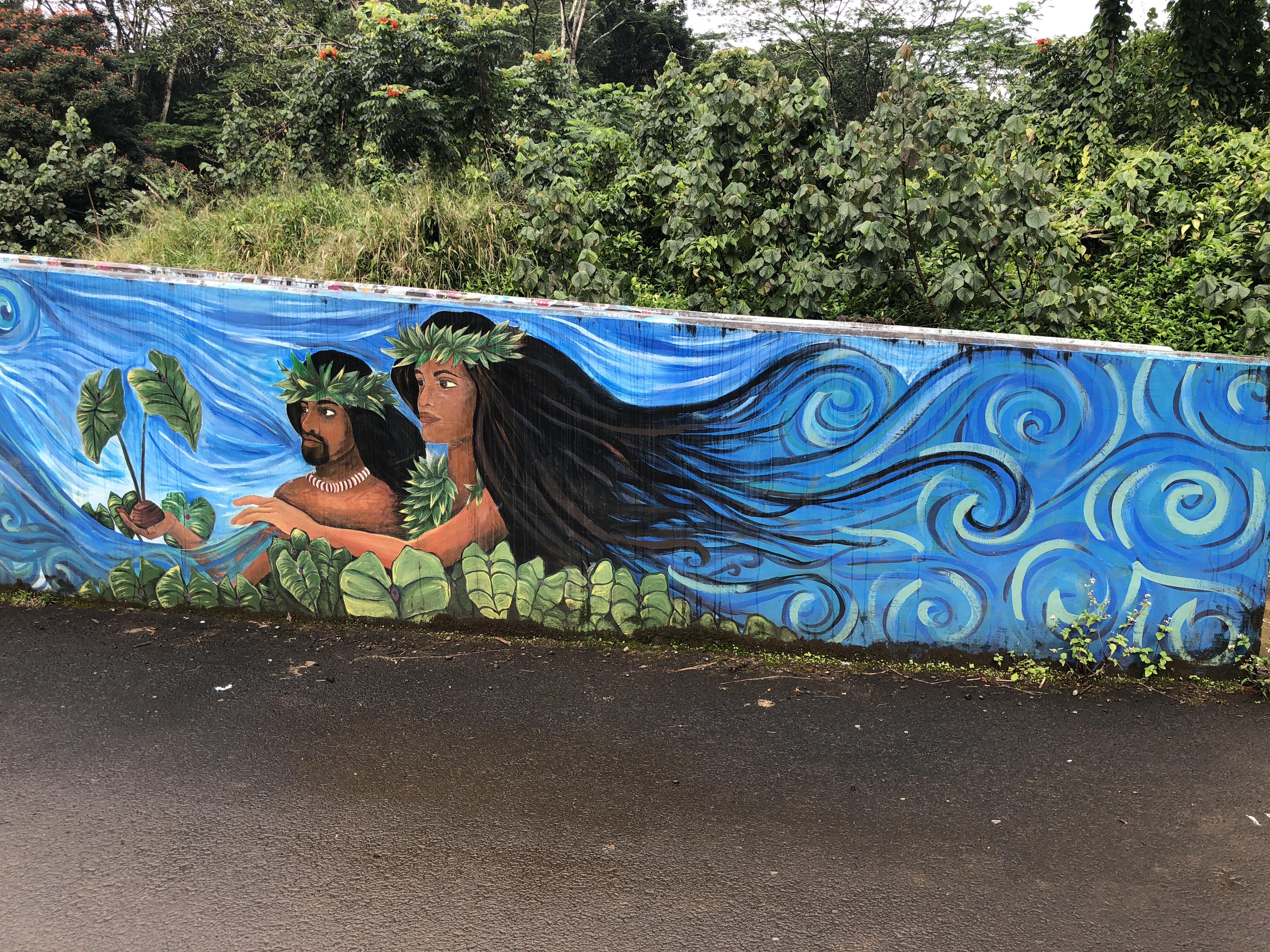
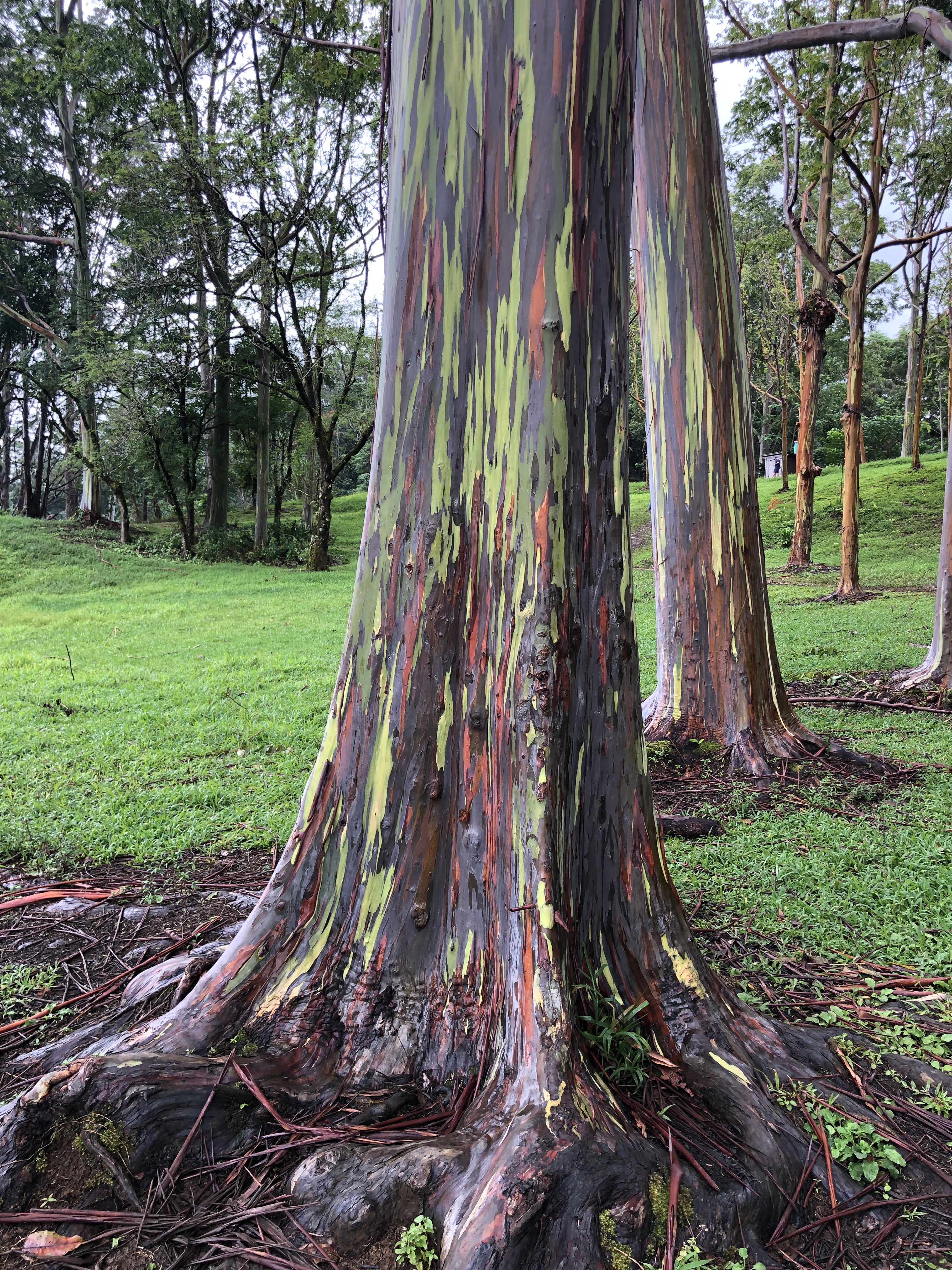
*we drove 20 minutes up the mountain to where Don met his local guide Jordan for some small mouth bass fishing in the river. He had so much fun and caught a few fish. As Don says “it’s always fun to fish somewhere different than Maine to compare. And fun to see how a different outfitter does business.” The Eucalyptus trees were AMAZING!! They looked like someone had a giant paint brush and a variety of colors and painted long stripes. Sooooo tall-maybe 100-200ft. It was wet at this higher elevation and our shoes were covered w the reddish-brown dirt. There were murals on the bridge that were painted by the local high school students.
*while Don fished Nicholas and I meandered down the mountain stopping at Opaekaa Waterfalls and a view of the highest part of the island, 5,243ft where 400-600 inches of rain falls each year. The wettest spot in the world. The Hindu Monastery was immaculate. The bamboo walkway was serene and the statue of Lord Hanuman was brilliant.
*we explored around downtown Kapa’a. Local thrift store, fabric store, potter’s studio and shop, trinket shops and food truck stop for Thai food for lunch.
*our day ended w delightful Hawaiian music and hula dancing. The most interesting dance called Poi is done w balls suspended on a flexible cord. They are swung around in different patterns. Children use them to increase their flexibility, concentration, and eye hand coordination. I wonder if anyone has researched the Poi dance to learning?!
*today is Girls Day in Hawaii. We were delighted to see Girl Scouts selling cookies outside the grocery store!
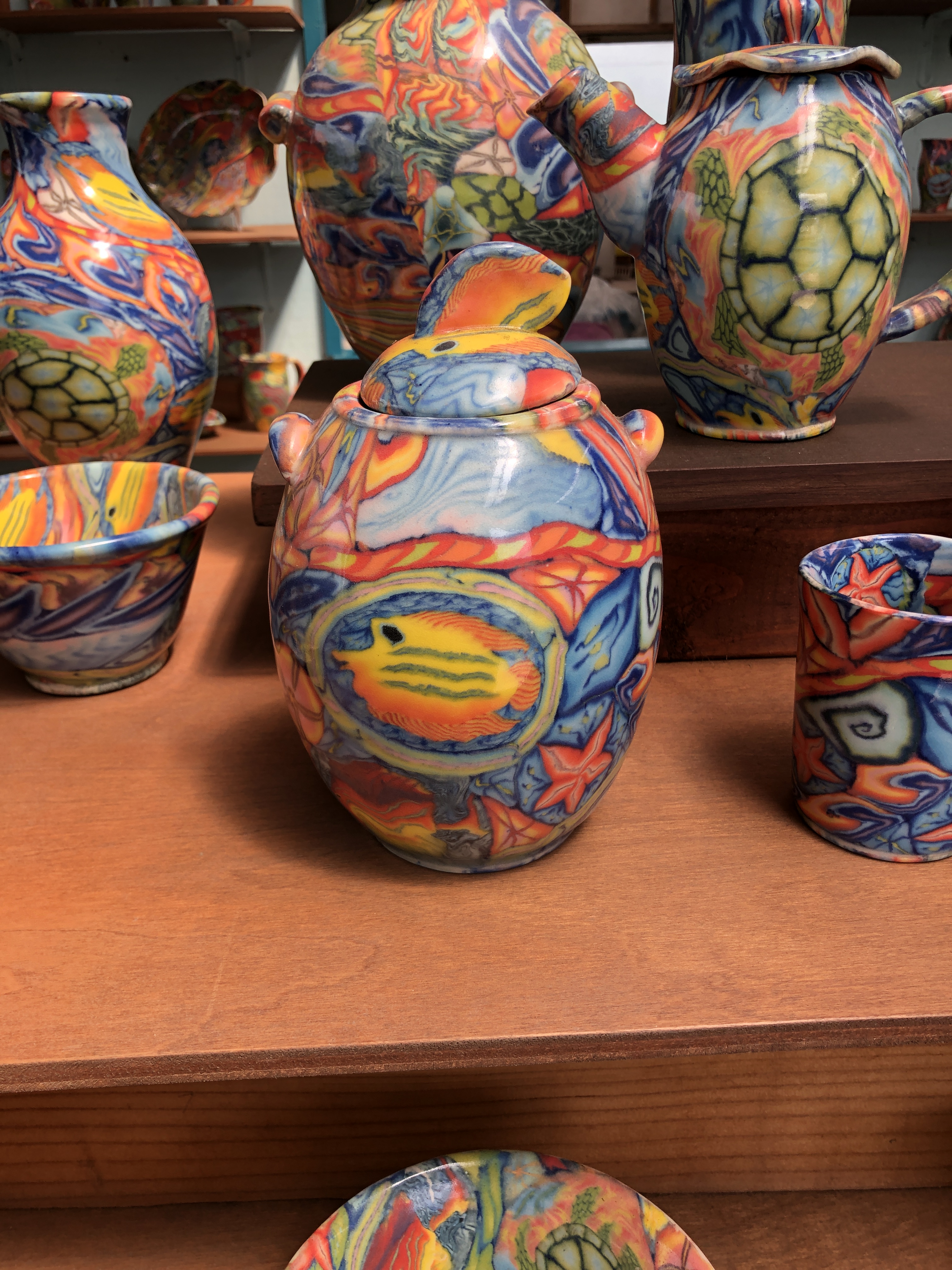
*todays highlight for me was visiting the potter. Dean K McRaine of LightWave Pottery. He uses a process similar to jewelry made out of Sculpey. He uses color clays to create intricate designs in 12”x12”x16” blocks. He takes slices off of the block and makes mugs, cups, plates, and other items. He started doing this a few years ago after being a production potter for 30 years.
Don fishing in the river
Mural painted by local high school students
Eucalyptus tree
Pottery of Dean K McRaine of Lightwave Pottery
Day 6, in Kapa’a on the island of Kauai
Today was the first day without crazy winds, it was definitely warmer and the sun felt stronger.
We headed north to Hanalei (yes, the Puff the Magic Dragon Hanalei) for a farmers market.
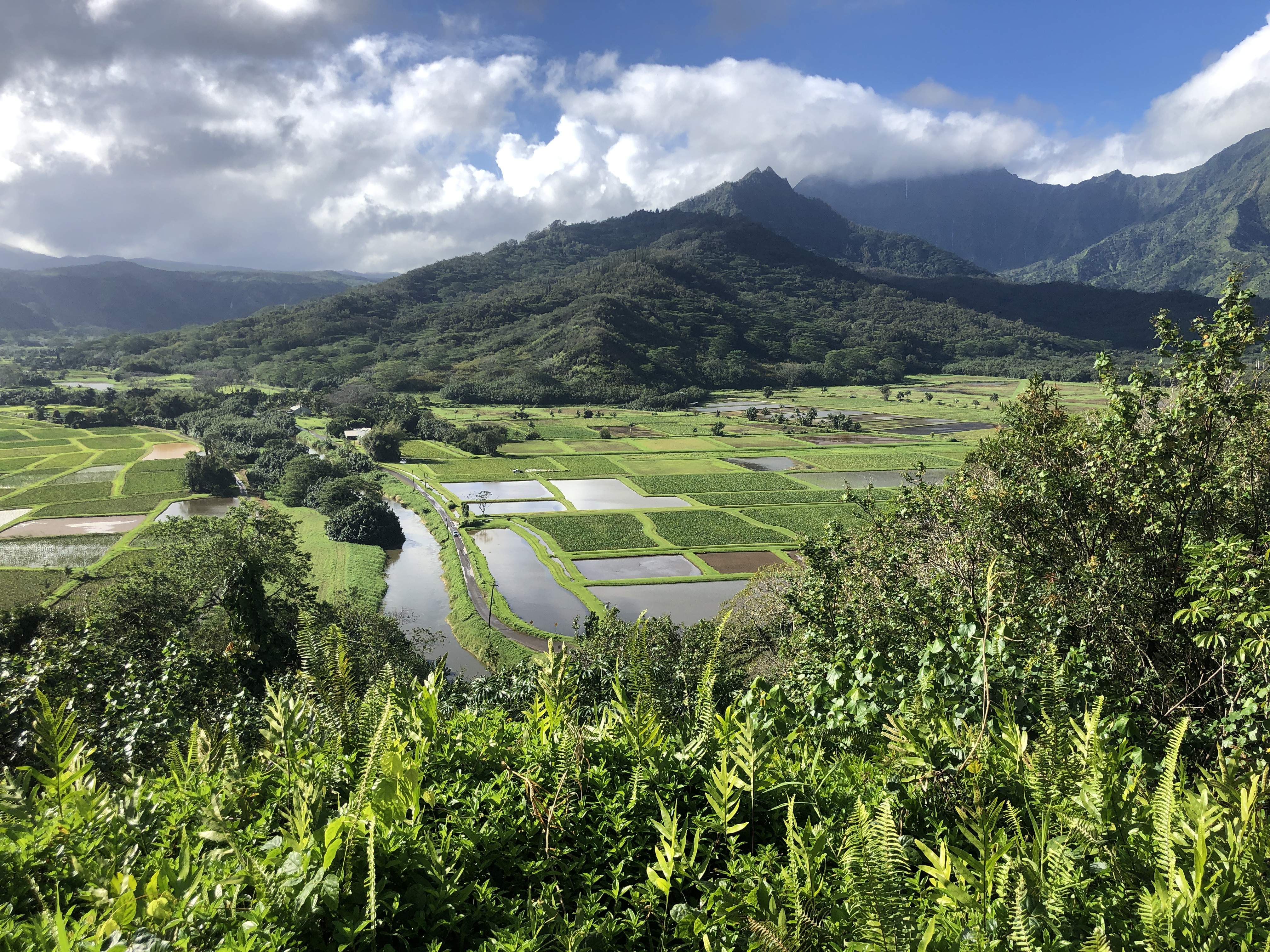
Stopped at a lookout with a view of Hanalei National Wildlife Refuge. Sectioned plots of land where we could see different stages of Taro (or Kalo) growing. They are having success working to reverse the decline of wetlands and taro to support water birds. The view was beautiful!
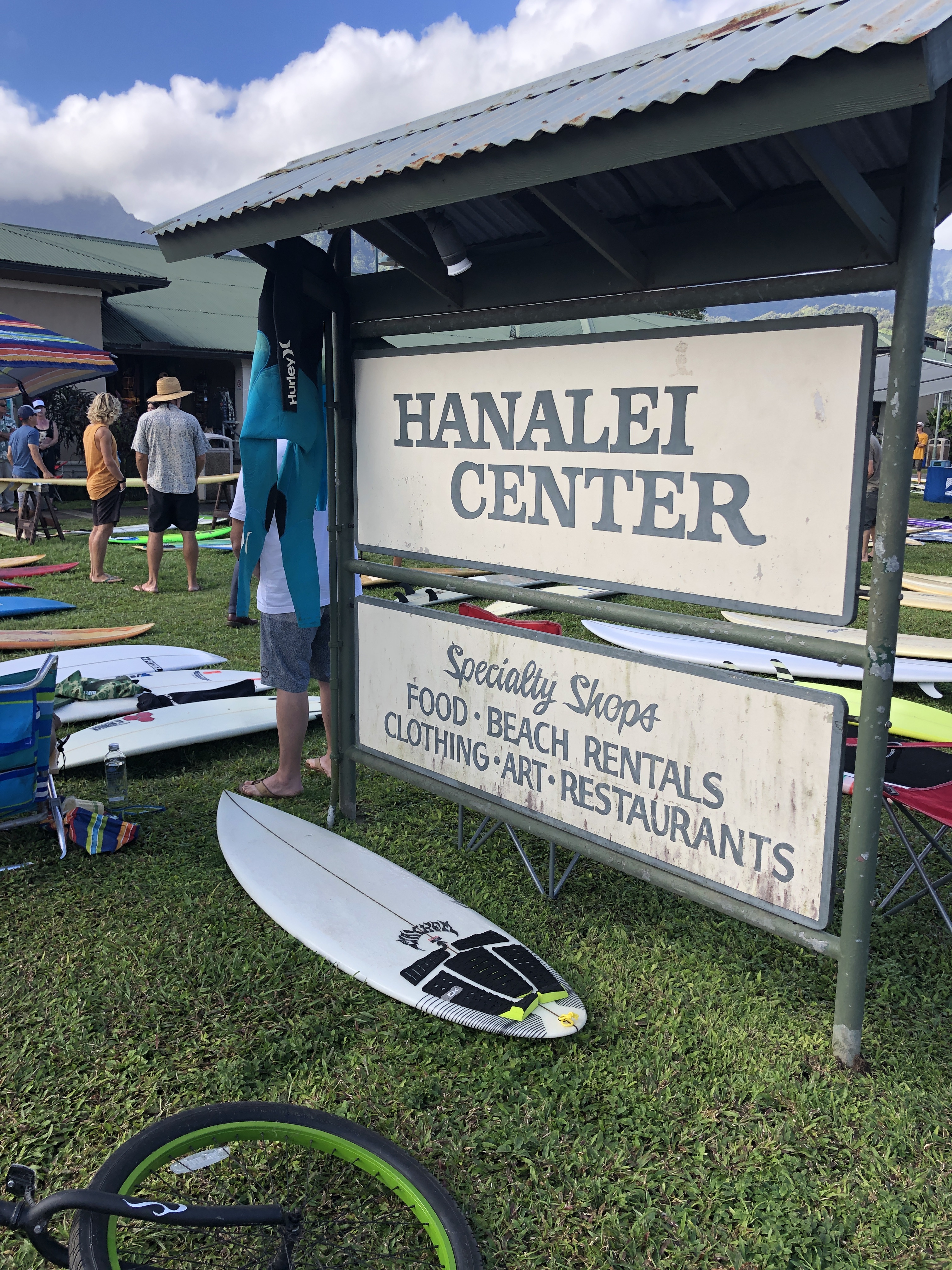
We walked down to the Hanalei Beach passing by a surfboard exchange. Just like our ski and snowboard exchanges in Maine!
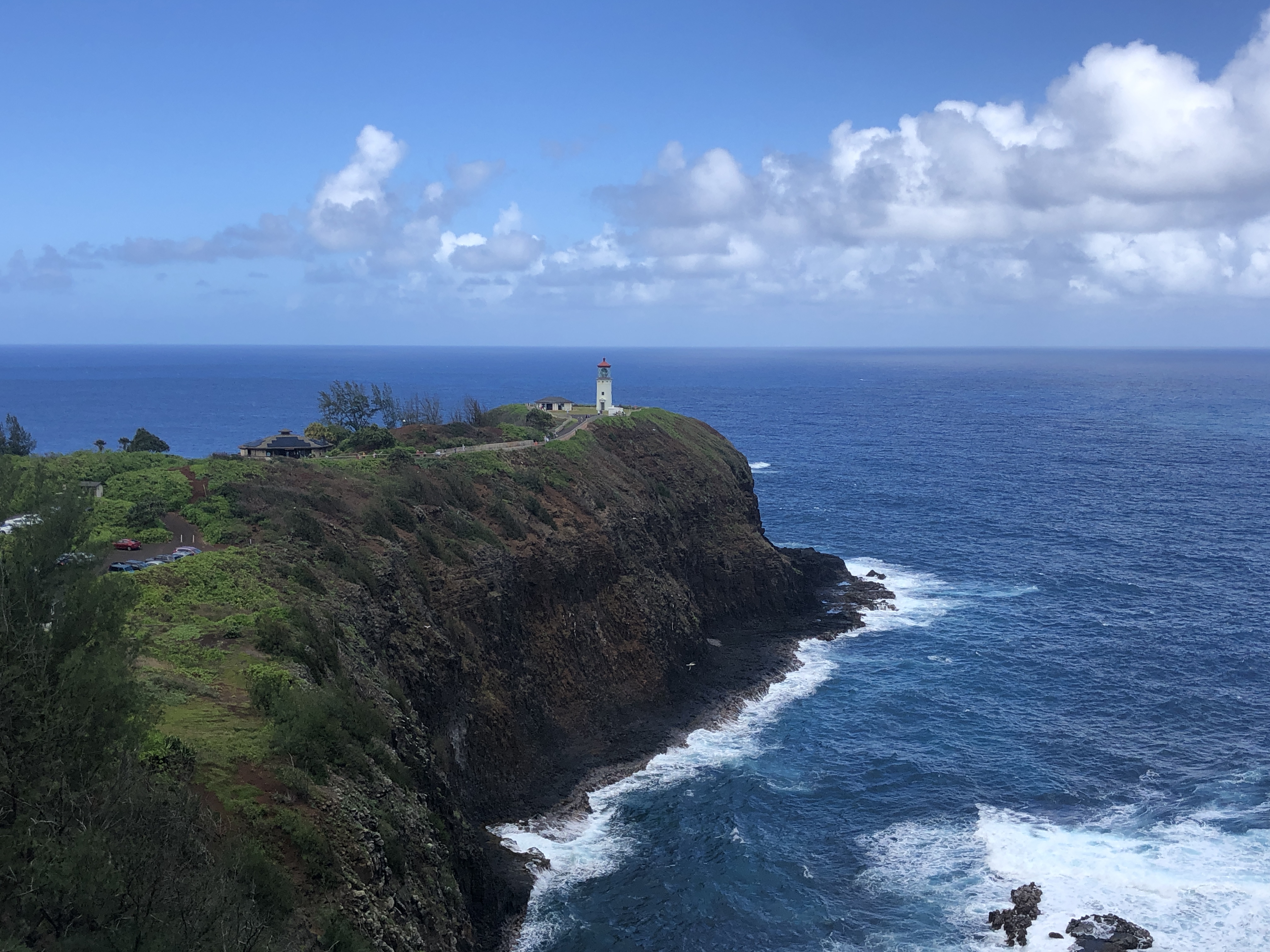
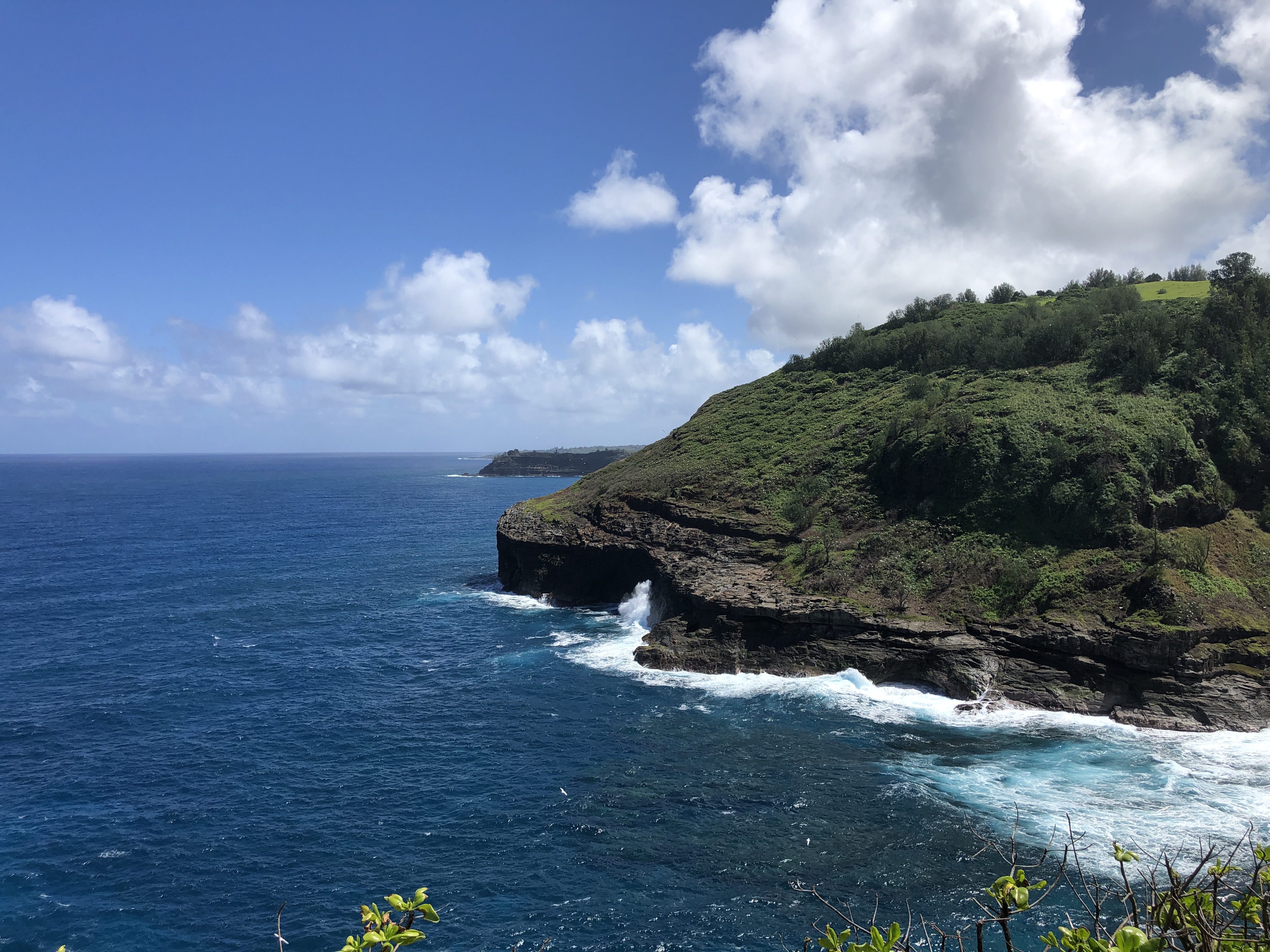
Next stop was the Kilauea Point National Wildlife Refuge. (If you go be sure to make a reservation). We were in awe-the sounds, the colors, birds in flight, the stunning view in every direction and the lighthouse. Some facts:
*US government realized in 1909 that a lighthouse was needed in this location when shipping increased between Asia and the west coast. They purchased 31 acres from the Kilauea Sugar Company for $1. There were no roads or motorized vehicles at the time so they had to bring supplies by boat to the leeward side. Everything was loaded onto smaller boats and brought around to the 568ft bluff, taken by derrick crane to a narrow gauge inclined railway and moved up the cliff. Even w all this effort needed they completed building the lighthouse in less than a year.
*Light keepers lit the lamps everyday at sunset and kept them burning all night (just like Abbie in Maine). In 1976 the original light was replaced by an automated one. In 2014 LED solar power replaced the rotating beacon which is visible 11 miles out to sea. The lighthouse has 4 floors plus an 11 foot basement, unique to this lighthouse. 10 years ago a full restoration of the lighthouse was completed. The lighthouse is located on the northern most tip of Kauai.
*the point protects and supports native bird populations including: the nene (Hawaiian goose) which is a new bird for Don’s bird list, Red and White-tailed Tropicbird (they are the coolest w 2 long skinny tail feathers), Layson Albatross (huge w 6.5 foot wingspan), Great Frigatebird (the name comes from their quick maneuverability w a 7ft wingspan), and my favorite, the Red-footed Booby (amazing beak, face and feet colors). It was so fun to see and hear and watch these birds swoop, feed, collect for nest building. It was a thrill to see a Humpback Whale-surface about 8 times!
Soooo grateful for the opportunity to visit the refuge. What an amazing and beautiful day!
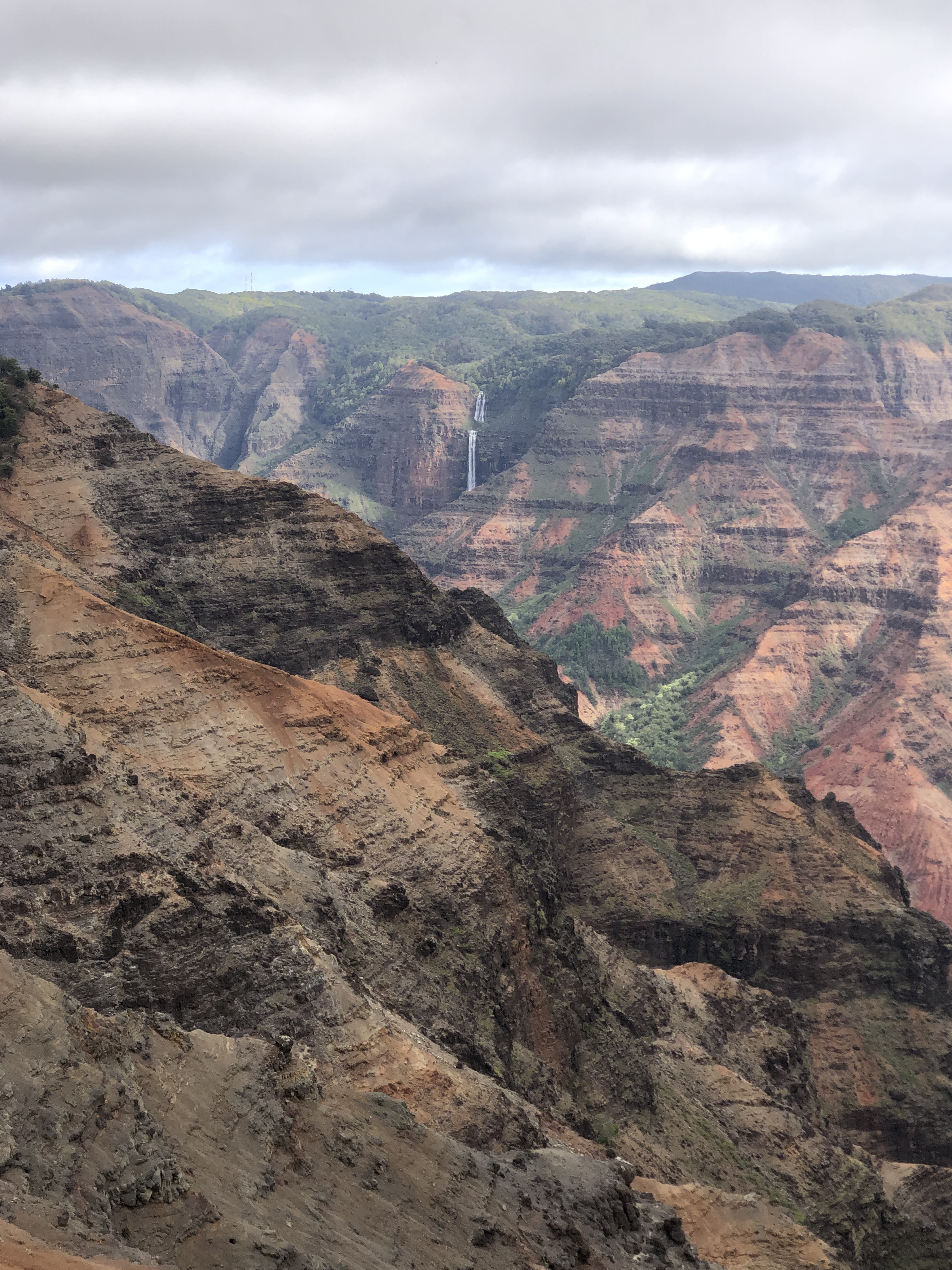
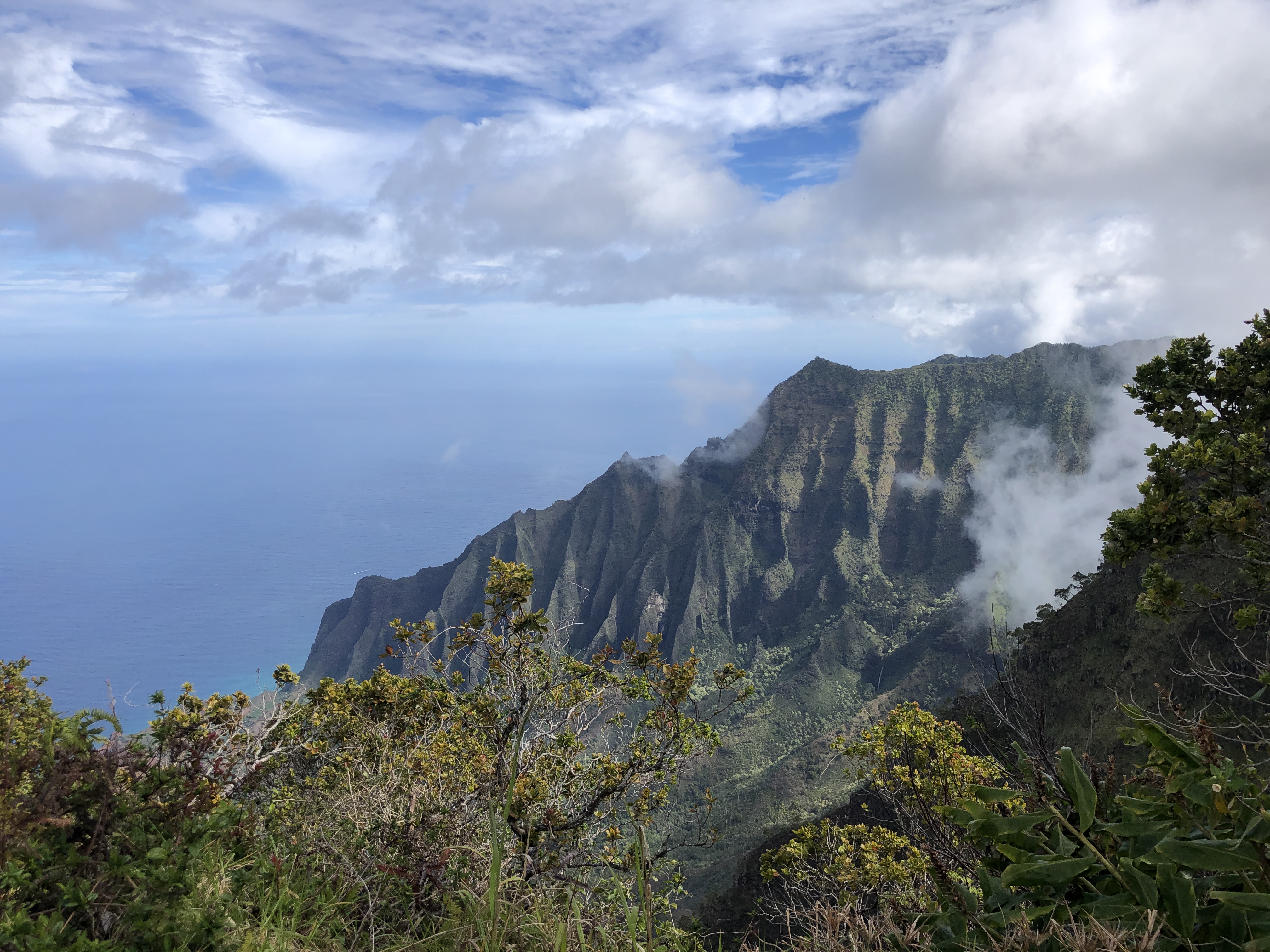
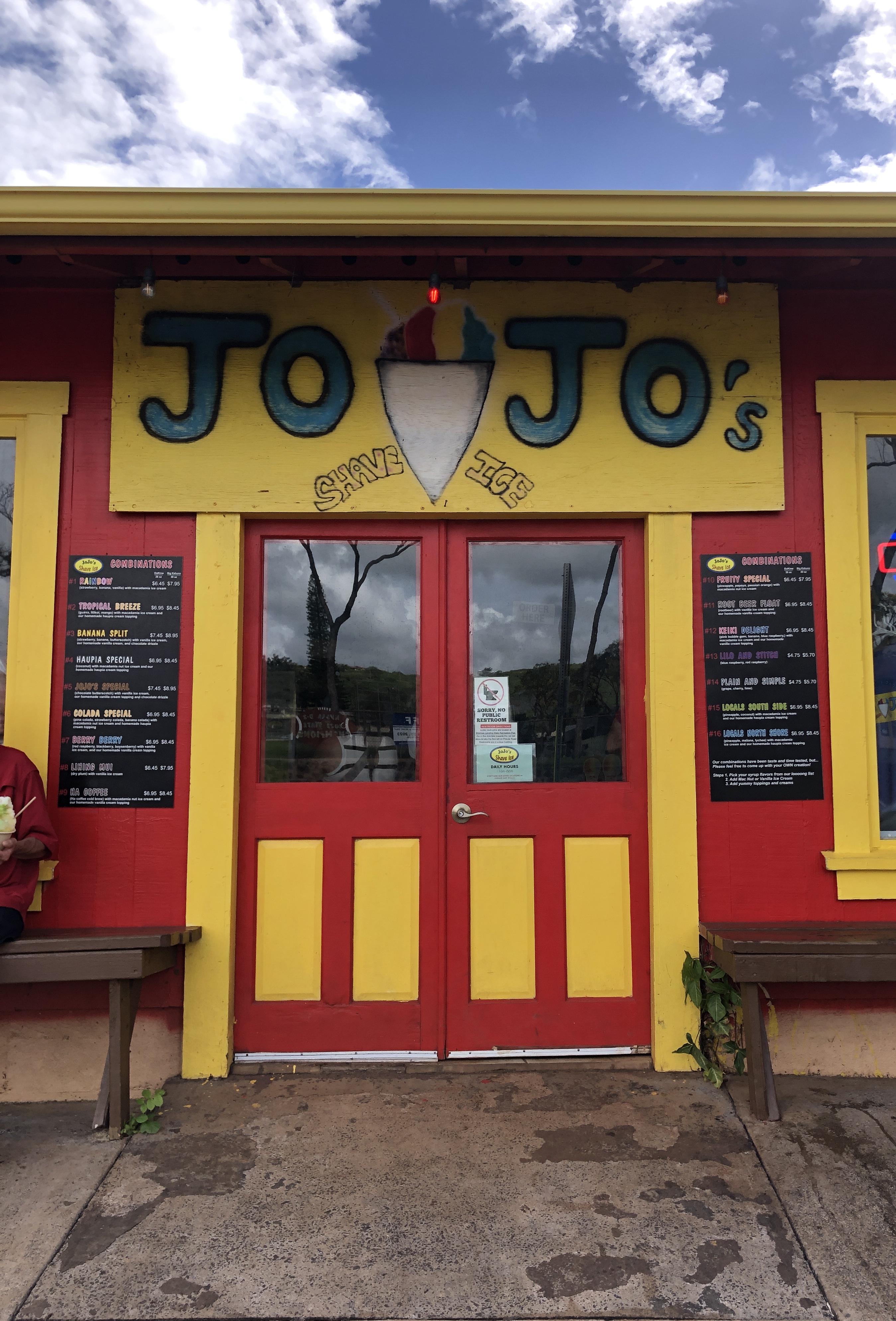
We had a magical day in Waimea Canyon State Park. Some call it the Grand Canyon of Hawai’i. We left Kapa’a early to make the over hour drive to the western side of Kauai. Up we went to over 4,000 feet. The terra cotta color soil was hard and muddy in some places. The sky was blue in spots and the clouds moved in as the day progressed. Soooo many trails to pick from. The views were spectacular! The history and environment explained in many ways along our day. The pictures tell the story best although they don’t capture the enormousness of the canyon. It was a long and exhilarating day in the park that ended back in the town of Waimea for the famous JoJo’s Shaved Ice.
Waimea Canyon State Park – every sight was spectacular
Waimea State Park just before the fog moved in
Jo Jo’s Shaved Ice is very popular in Hawaii – we found it similar to snow cones
Kaua’i, some of the highlights not included above:
*Some of the foods we enjoyed on Kauai’i: Mahi Mahi, Poke Bowls, sushi
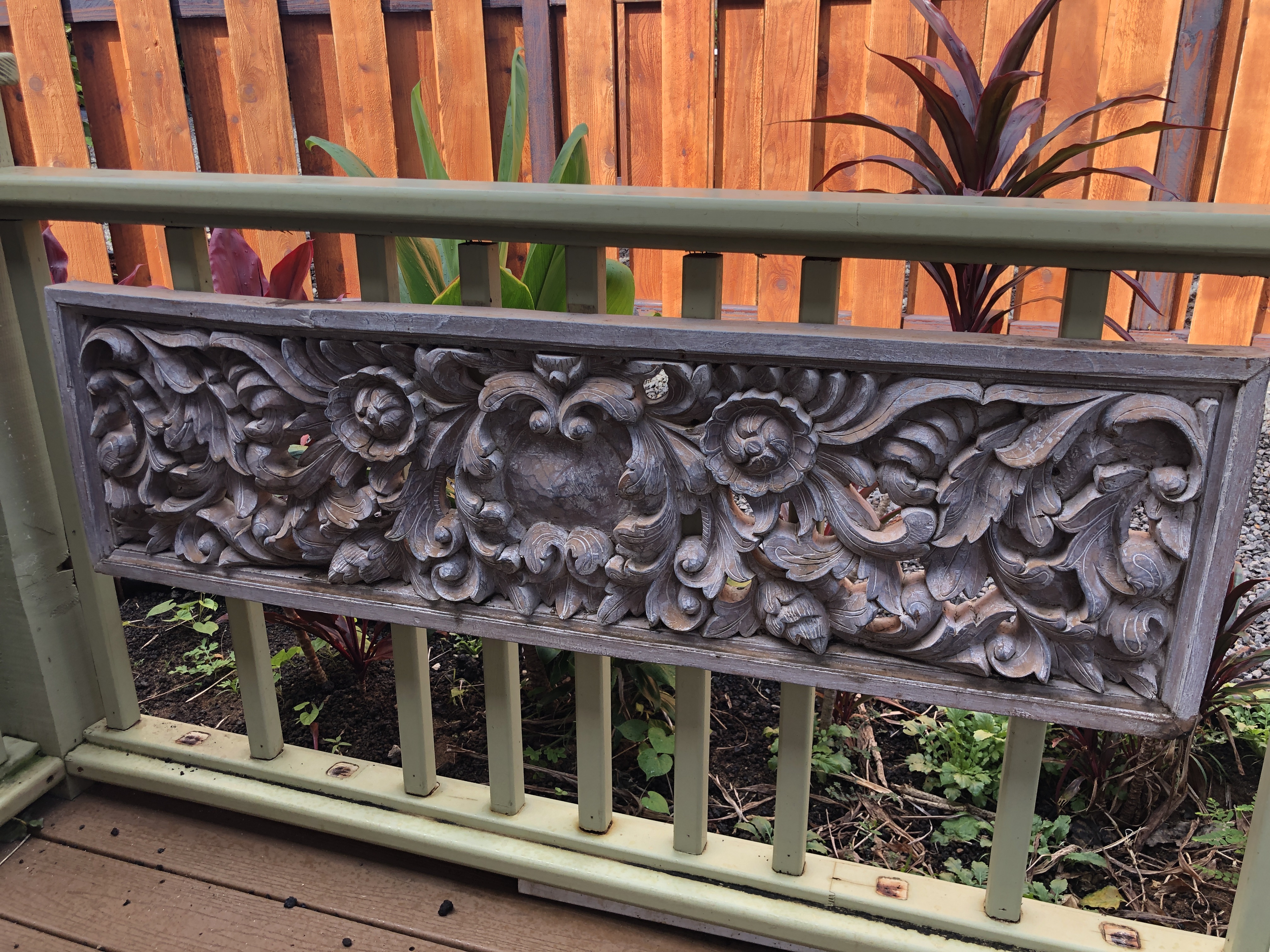
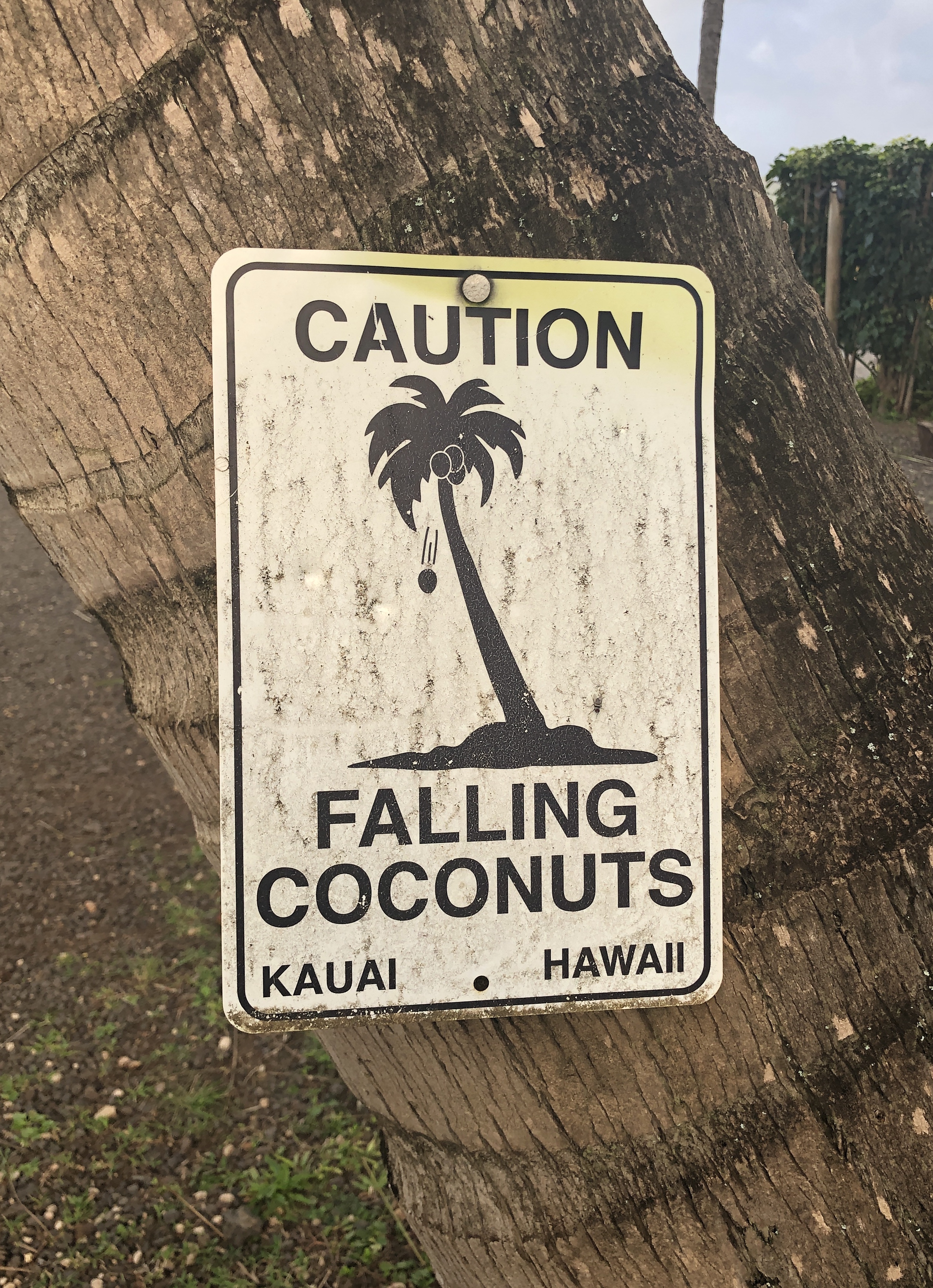
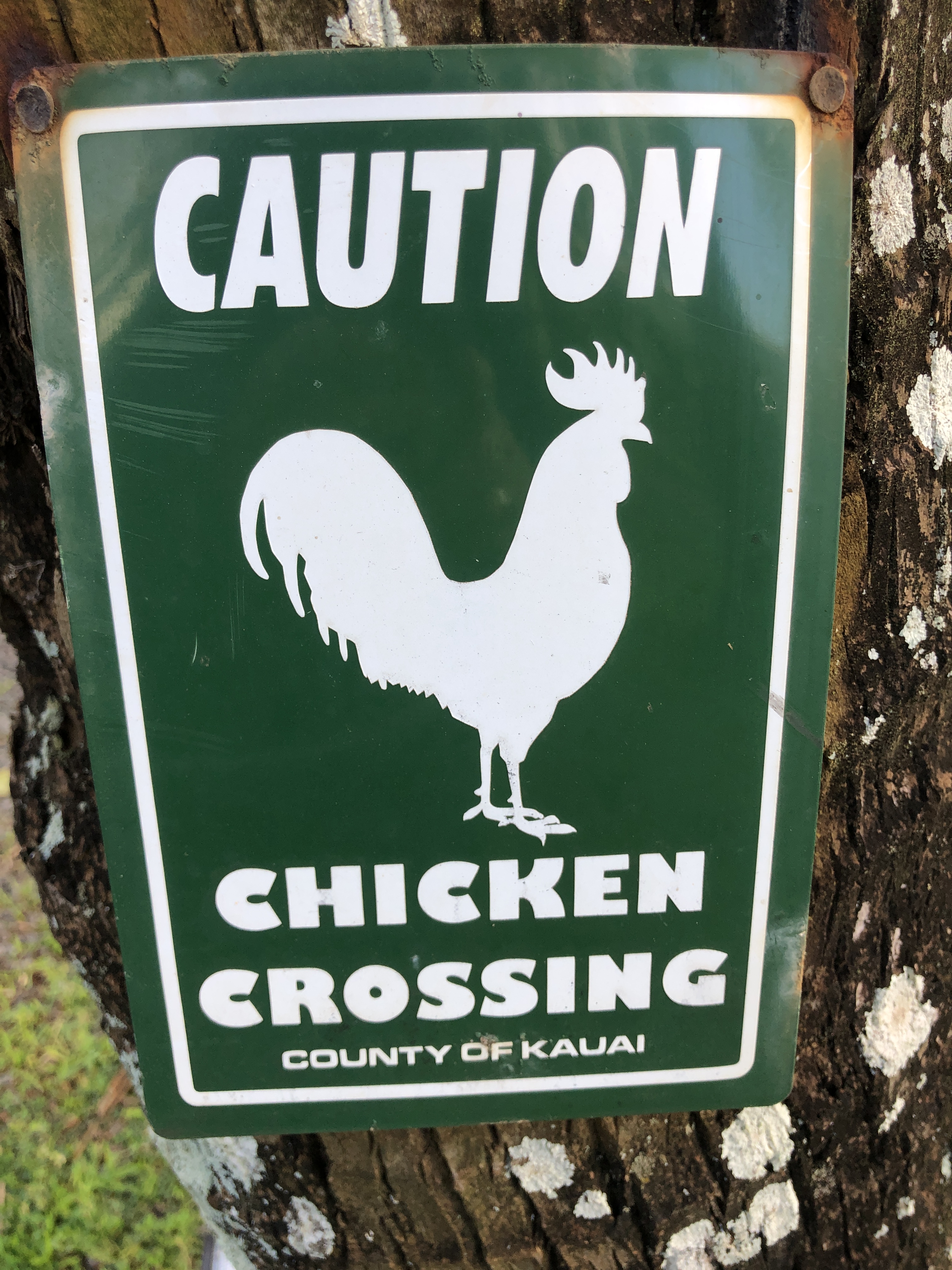
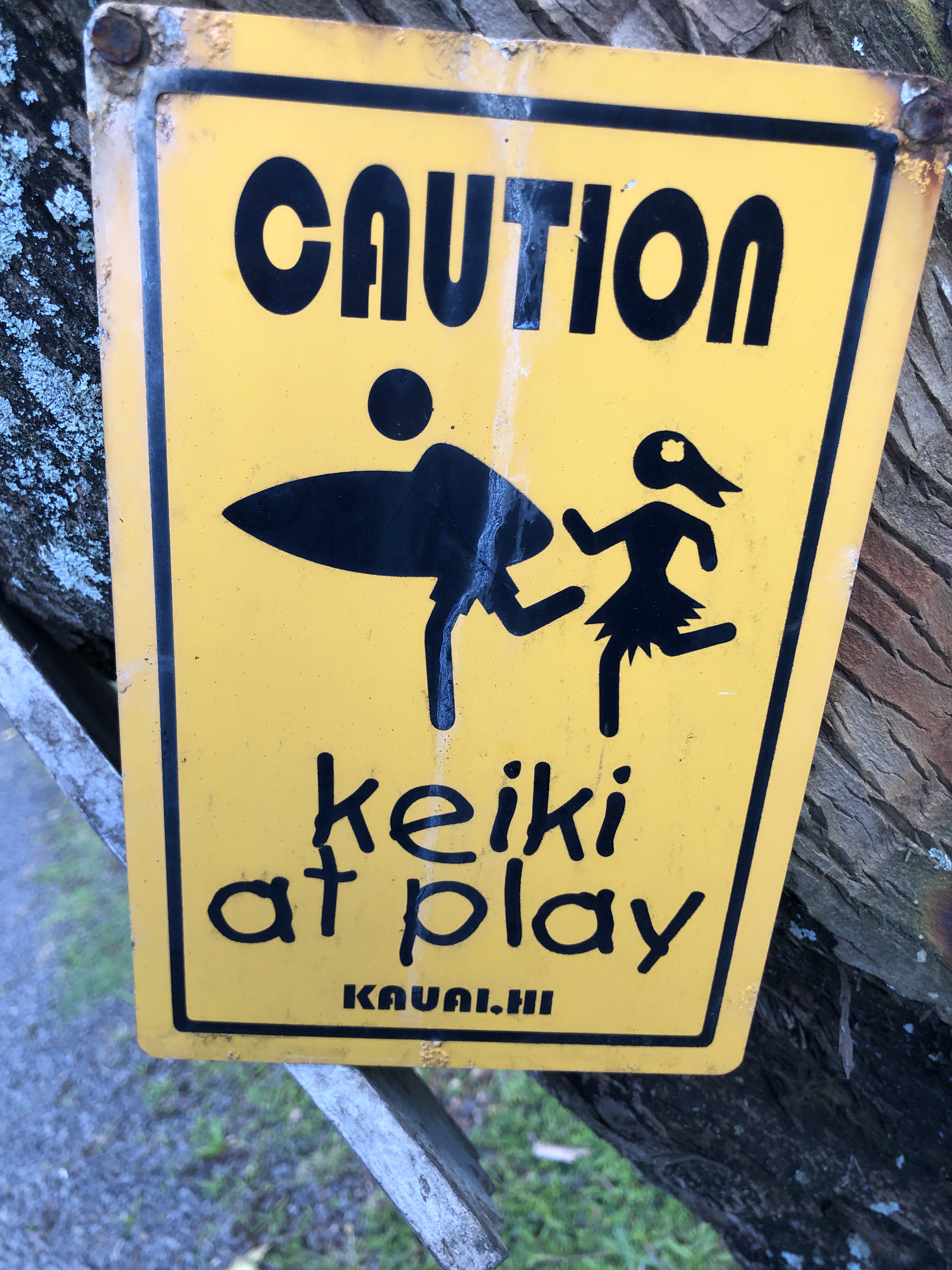
*the local signage
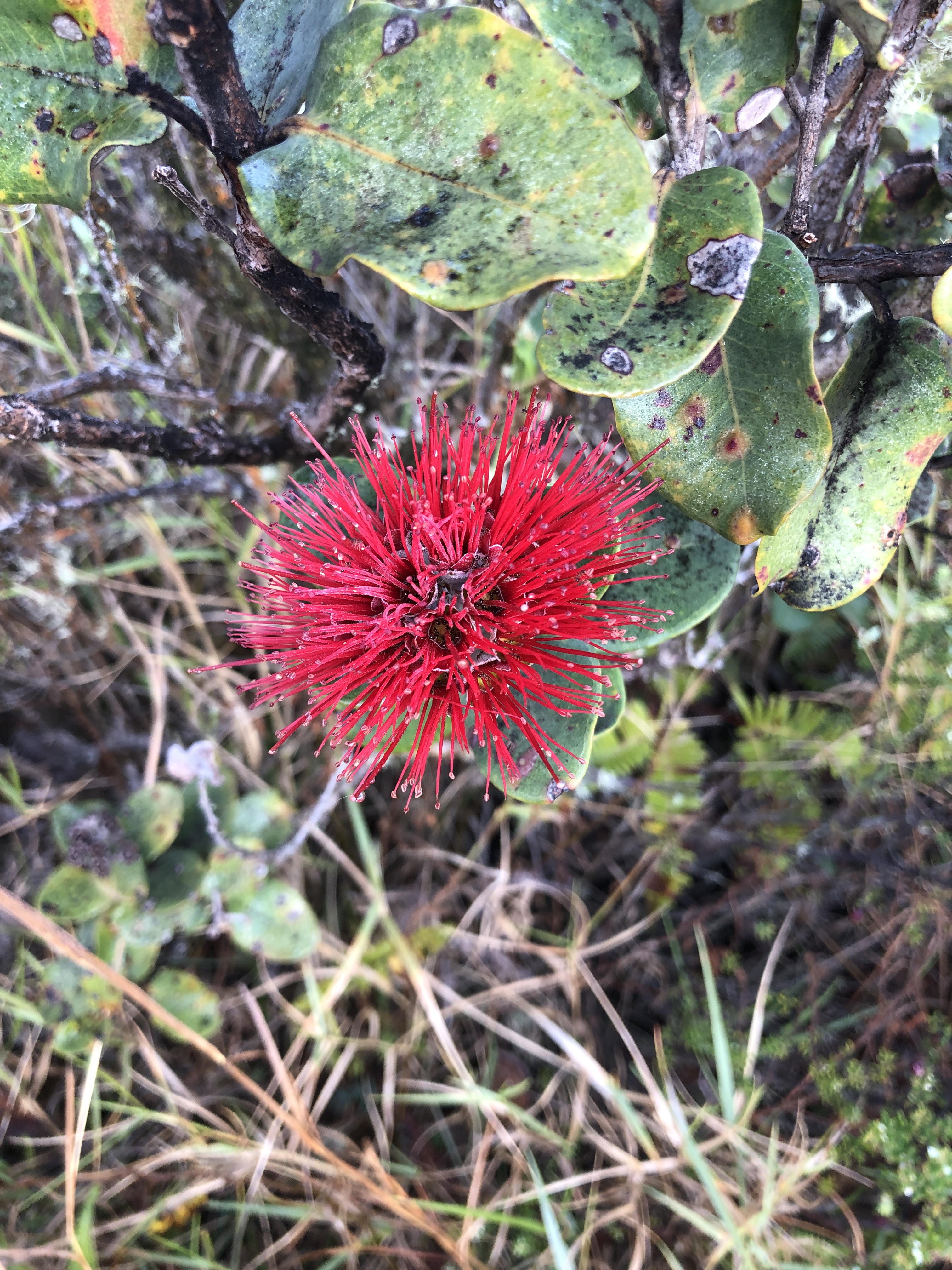
*flowers and plants everywhere – so beautiful
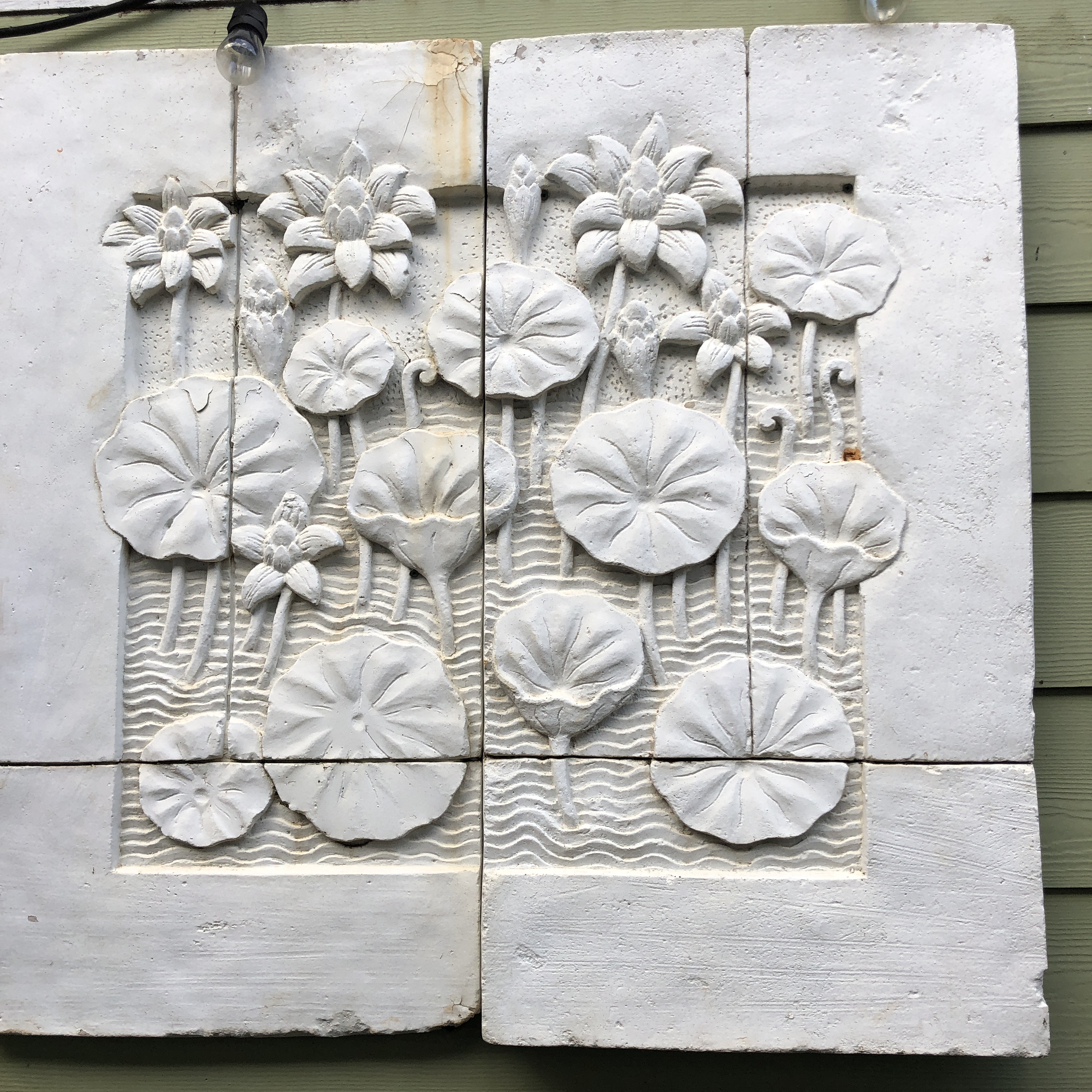
relief made of plaster on the outside of our airbnb
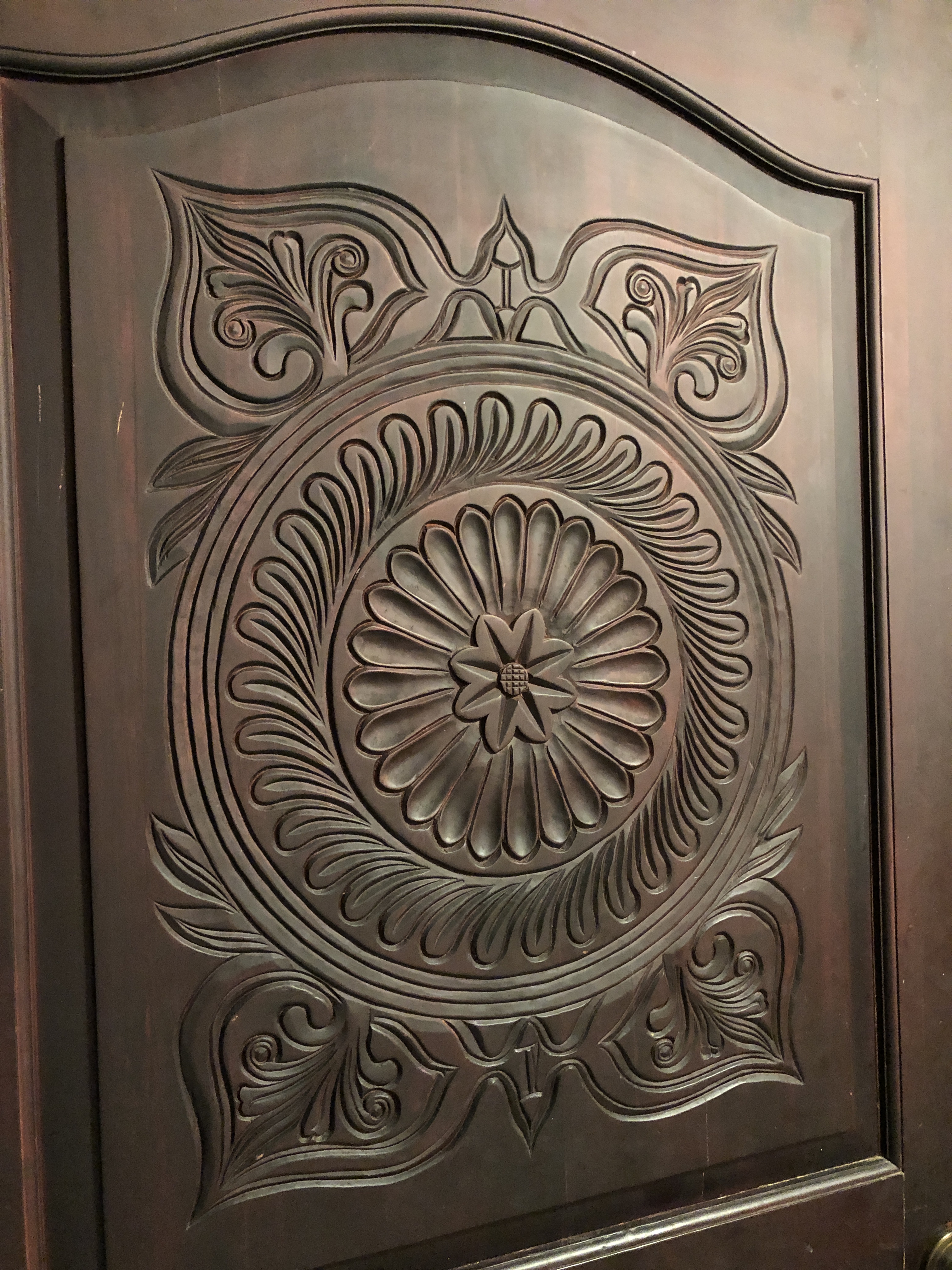
a door on the inside of our airbnb
on the porch of our airbnb
one of several signs
this is an understatement
One of the many yummy meals we got at food trucks
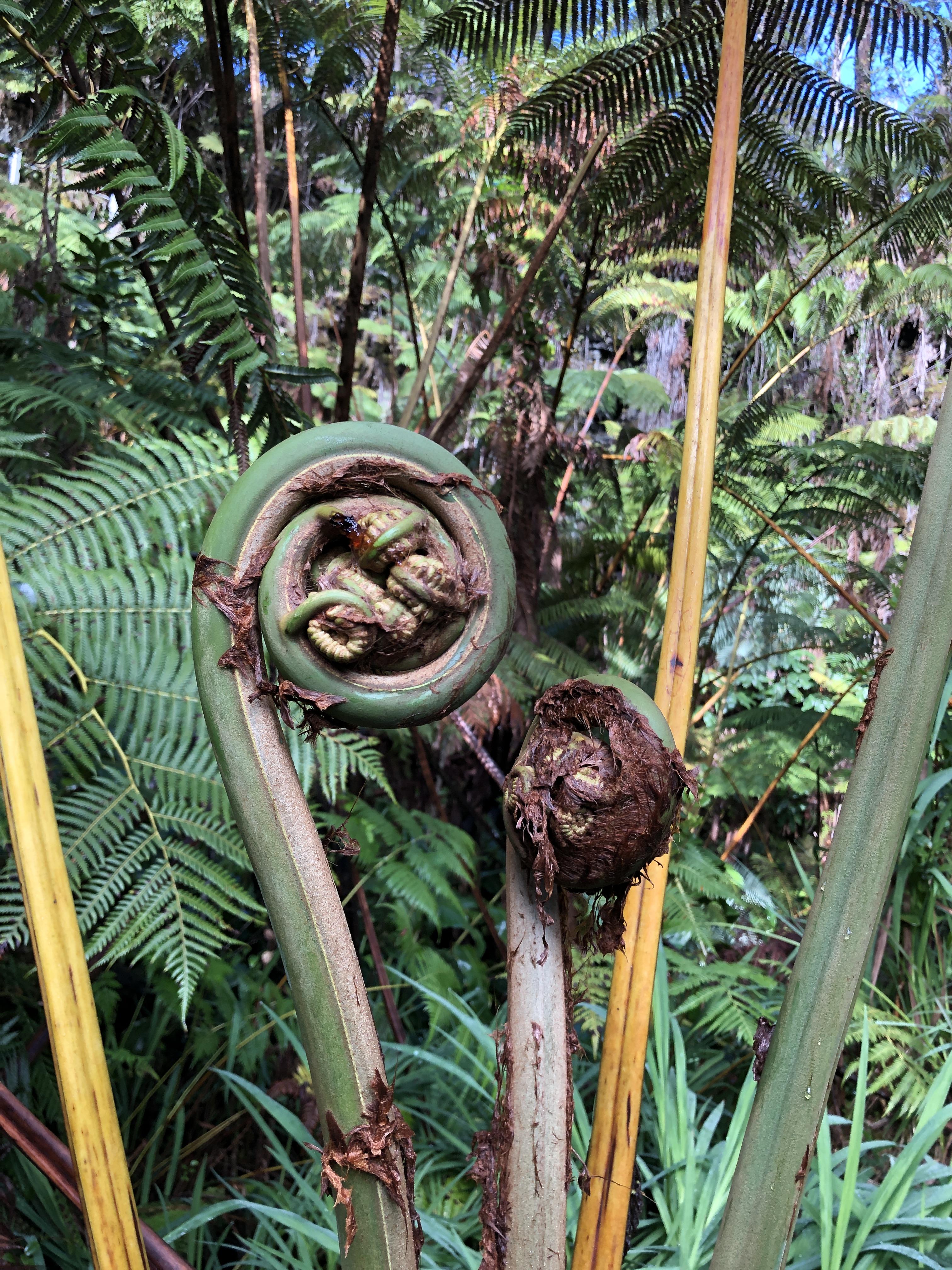
ferns not open yet but looked like giant fiddleheads – about the size of a hubcap
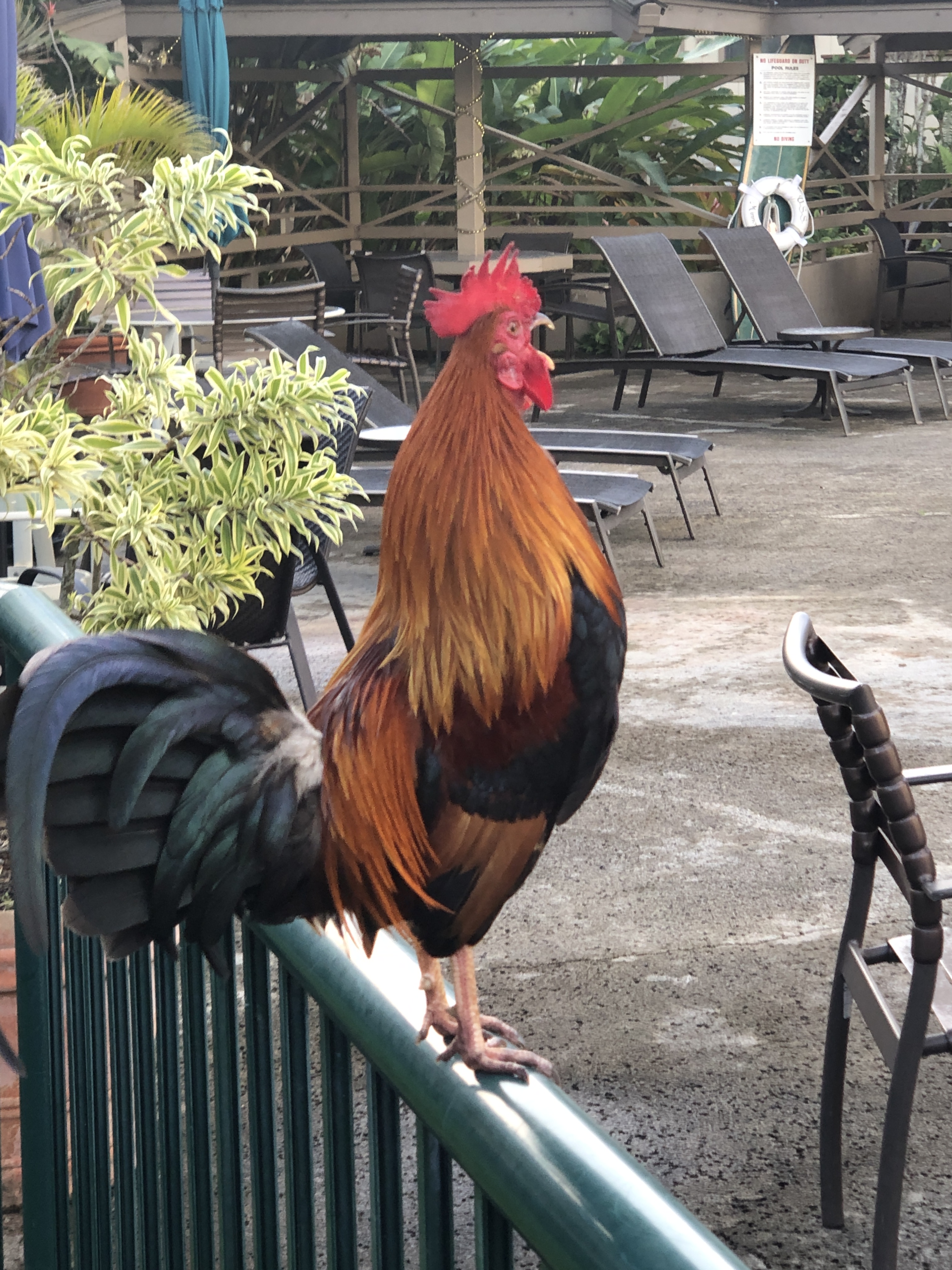
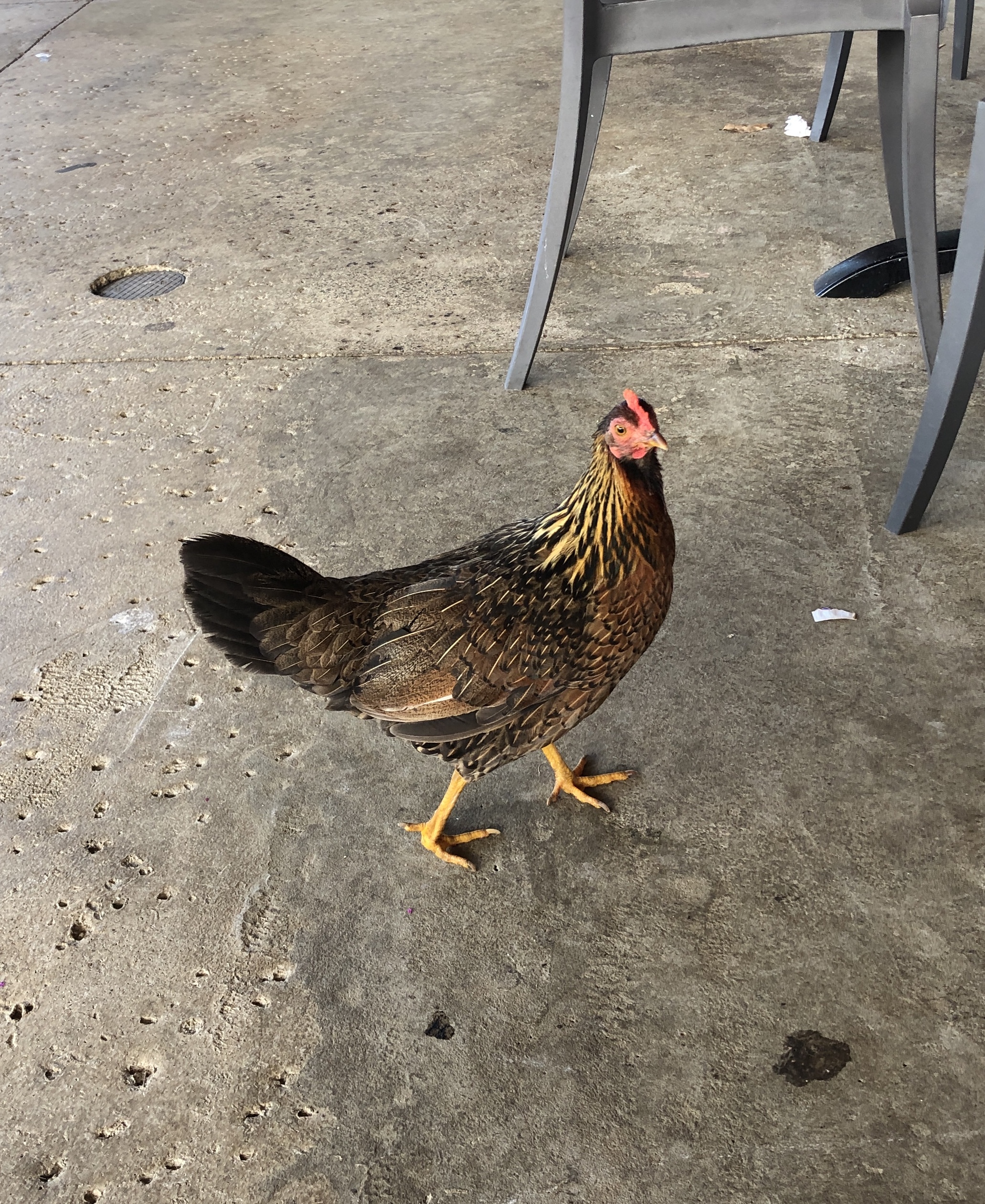
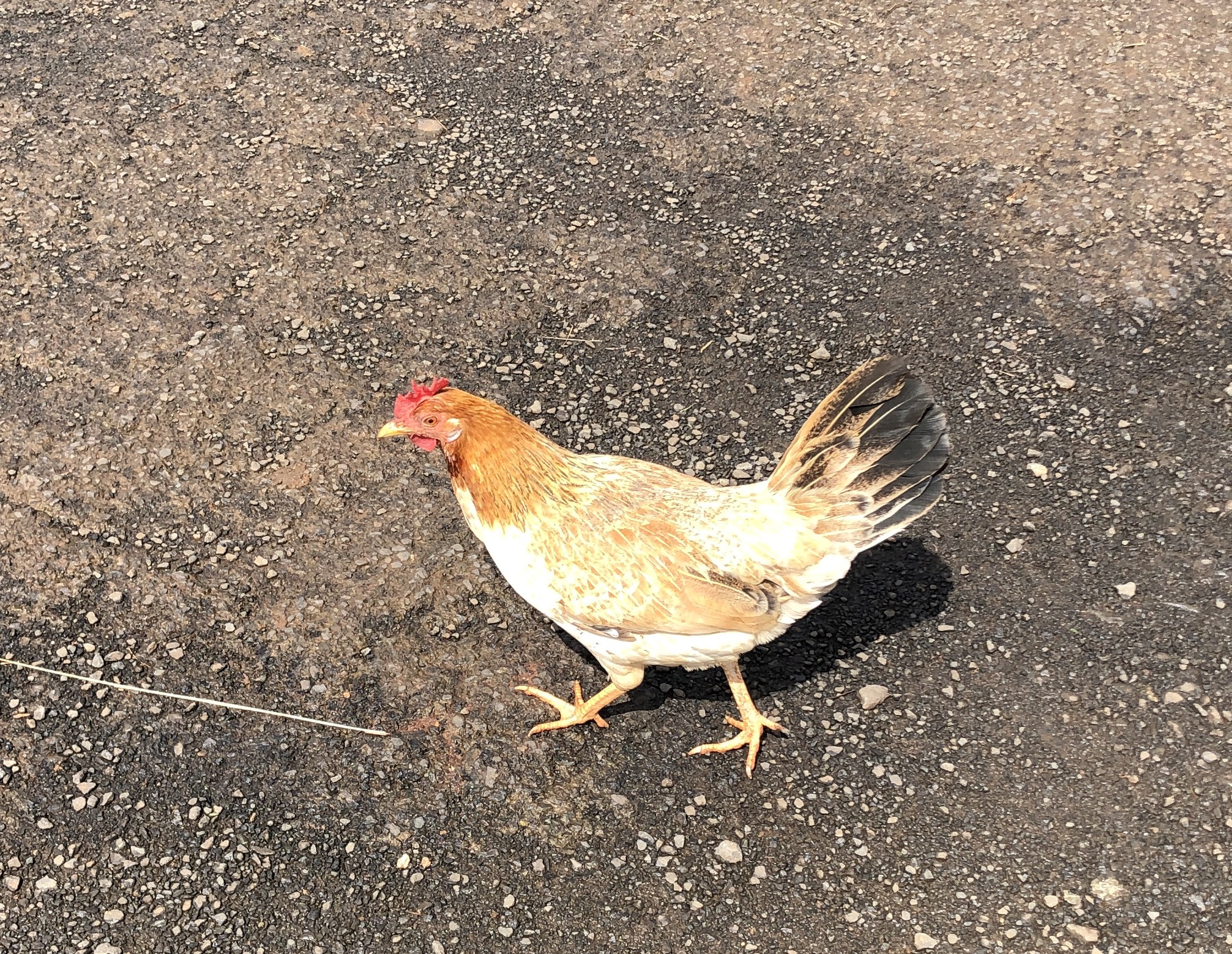
*CHICKENS CHICKENS CHICKENS everywhere on Kauai. What’s up w all the chickens here? Wellllll… one of the story goes like this…
There were two major hurricanes that damaged the island of Kauai and scattered the chickens. One in 1982, Hurricane Iwa and 10 years later, Hurricane Iniki. No one could identify which ones belonged to whom. It was declared that they would be left to roam freely. They estimate that there are 450,000 chickens running amok on Kauai. The population of Kauai is 73,000. Yup, for every local resident there are 6 chickens. No hunting season on them (unlike wild goats and pigs), the only predator – people (cars). the locals are used to their constant clucking and cock-a-doodling. Most of the day and night! In fact, we’re used to the sounds now as well, sleeping through the clucking!
chickens everywhere
all colors
chickens in Waimea Canyon
Day 8 travel from Kauai to the Big Island
We flew from Lihue Airport to Honolulu. Picked up the rental car and drove across the middle of the island on Route 2000. If you look at a map of the island there are mostly only roads along the perimeter where most of the residents live.
Our eyes feasted on a very different environment than what we had experienced on Kauai. Black lava rock, flat w high jagged mountains in the distance, big big sky (reminded us of Wyoming). We heard that the high peaks had unusual snowfall and sure enough, there it was! Both mountains Mauna Kea and Mauna Loa.
We landed in Kea’au for the few days, not far from Hilo.
Day 9, island of Hawai’i, Kea’au
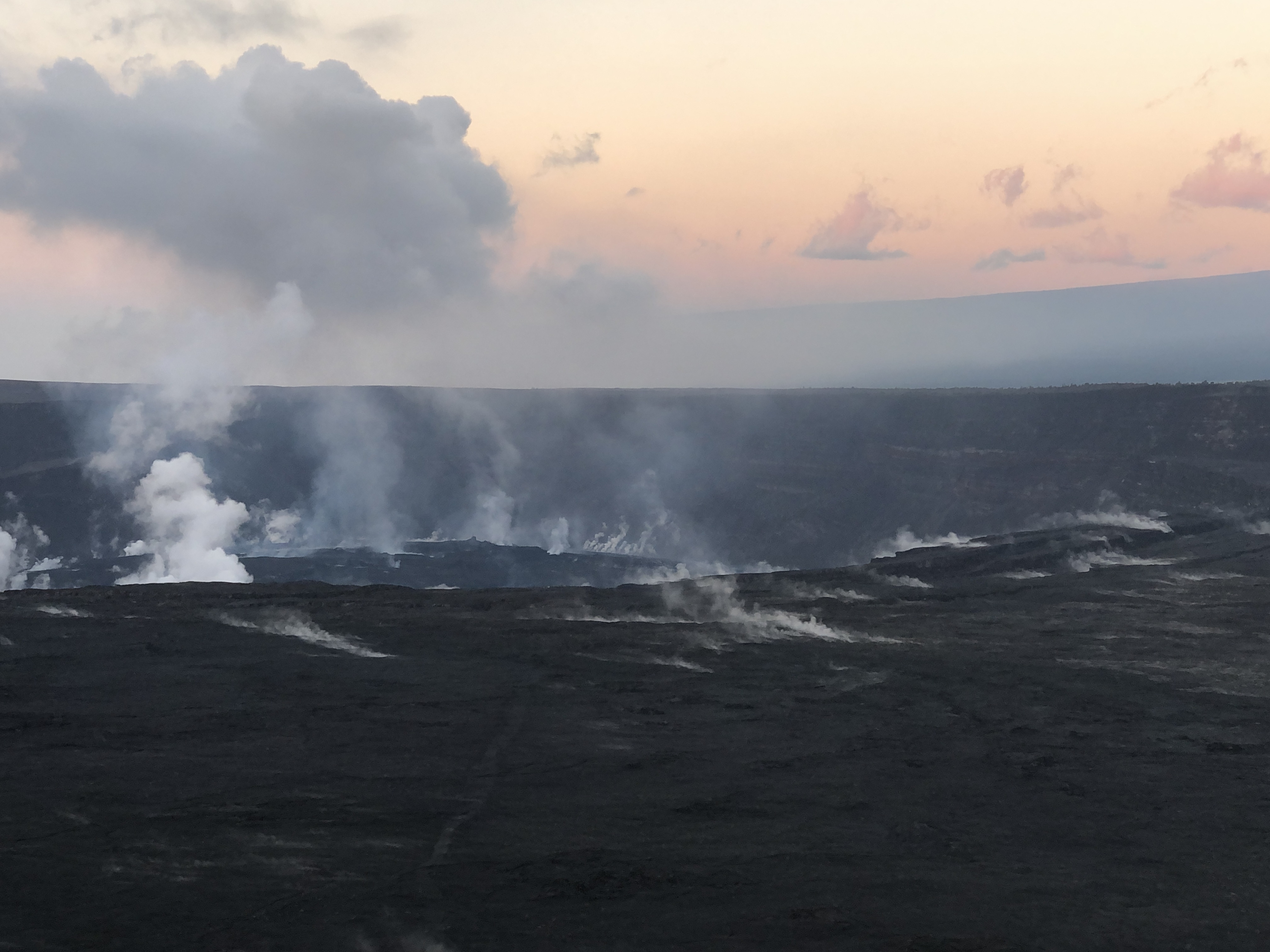
We left our Airbnb at 5:30am forVolcanoes National Park, a 40 minute drive. We walked about 1/2 mile following the signs saying ‘eruption viewing’. We viewed no eruption however the site of the crater of Kilauea and everything we set our eyes upon in the park, was magical! The photos don’t match what we observed. Hopefully you can get a sense of this unique place!
Here’s some of what we experienced and learned:
*Hawaiians believe that the Goddess Pelehonuamea-Pele of the Red Earth, home is the caldera of the volcano Kilauea. They’ve observed and learned from the deity Pelehonuamea.
Ika nana no aike – By observing one learns
For centuries Hawaiians have come to the caldera to pay homage to the ever-present life force that embodies all things volcanic. They believe in ‘mana’ – a supernatural or divine power.
*Today’s scientists are able to use what they learn from the frequency of the eruptions. This info sheds light on how our planet works and lead to better predictions for the future eruptions, ultimately saving human lives.
*The first volcano observatory in the US was established at Volcanoes National Park in 1912.
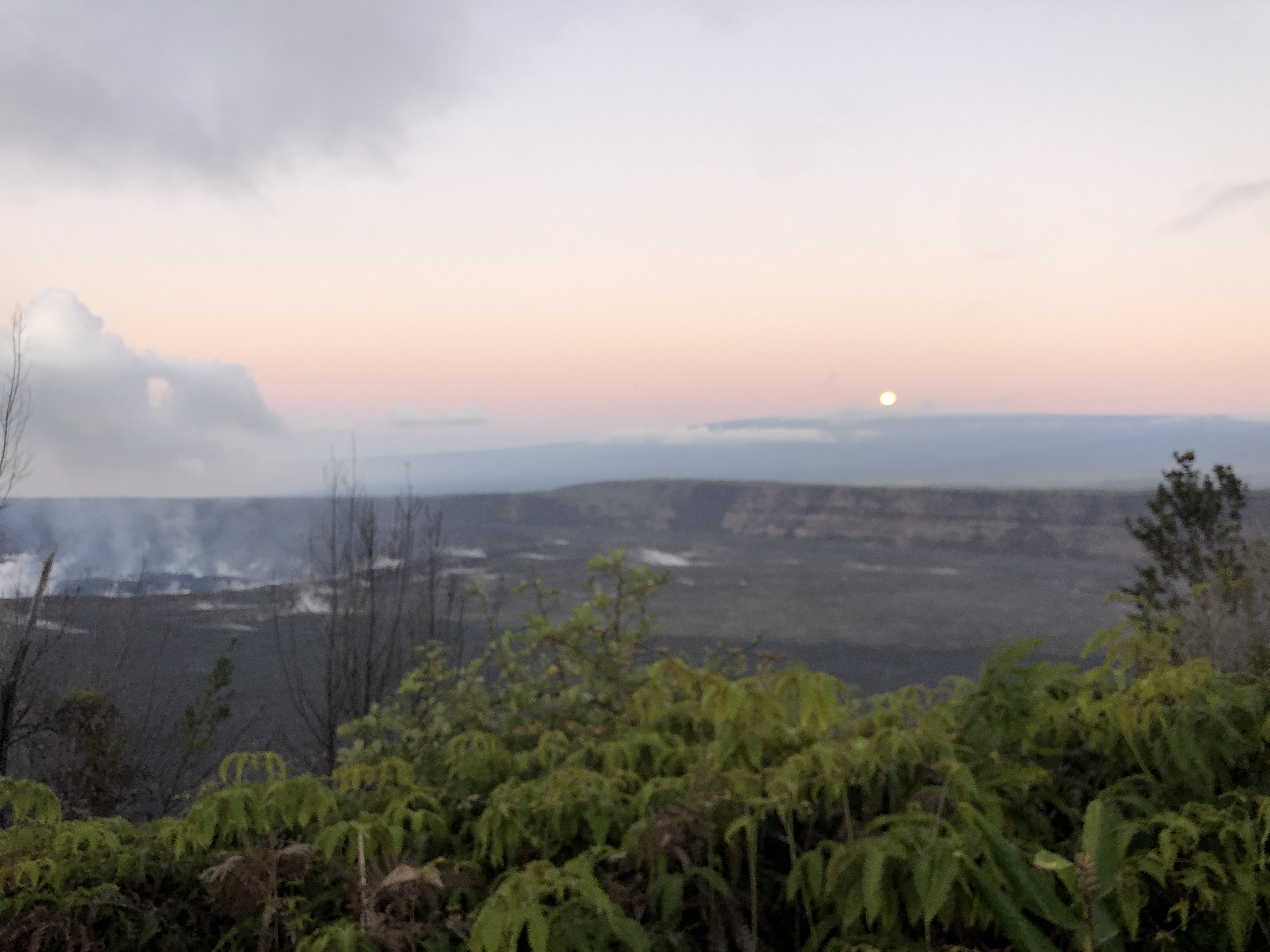
*We could see the steam rising from the caldera as we watched the moon set over Mauna Kea. And we were surprised to be watching w only two other visitors.
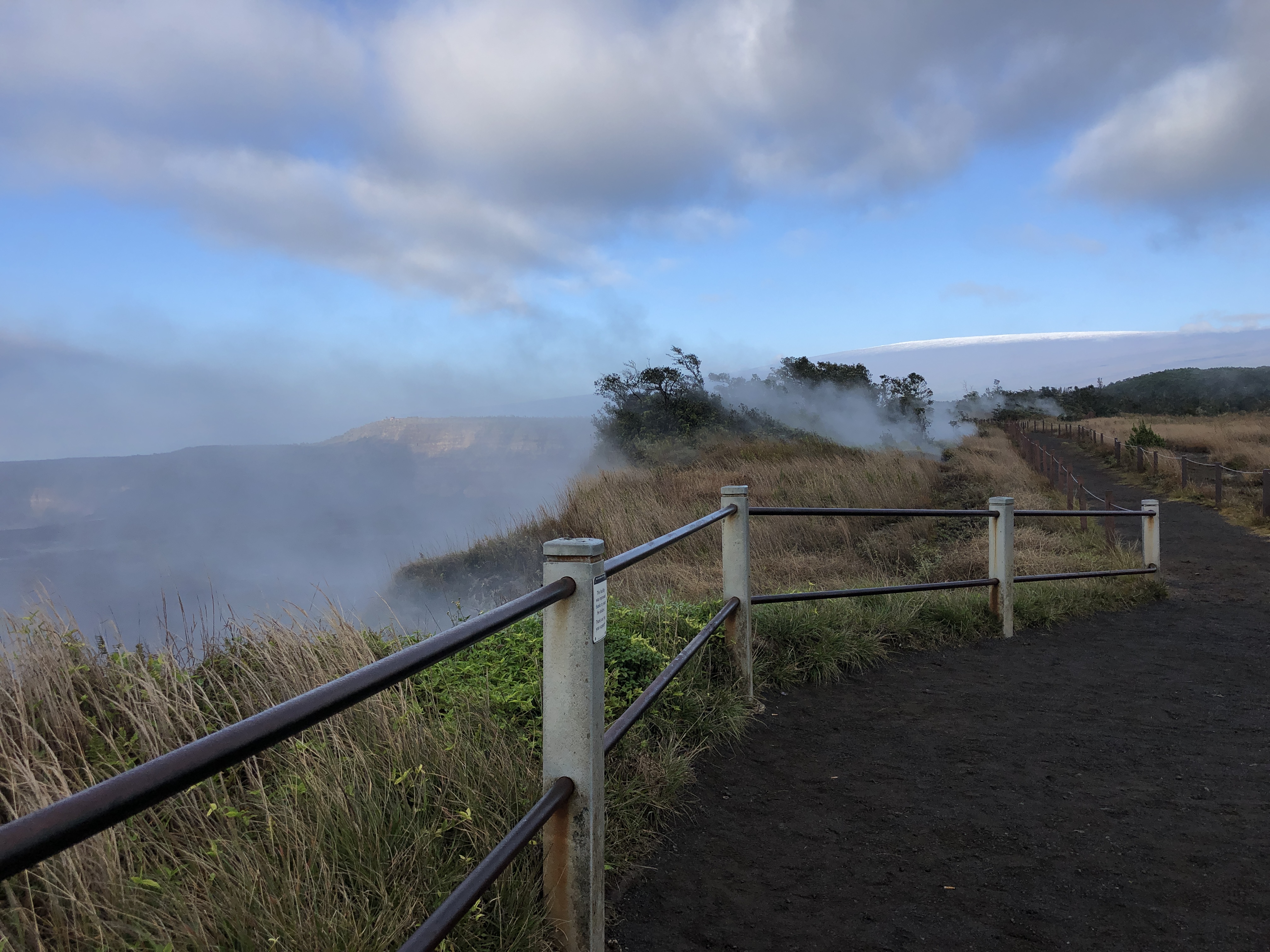
*We traveled along the rim and the view of Mauna Loa covered w snow was along our trail. The Hawaiian’s have been very surprised about the snowfall.
*We walked on trails among the steam vents that are formed due to cracks in the earth. Rainwater soaks into the ground, finds hot rock and vaporizes to form steam.
*The visitor center opened at 10 and many cars started arriving. Again we only see Hawai’i license plates (on an island) so we don’t know where people are visiting from like we do in Maine.
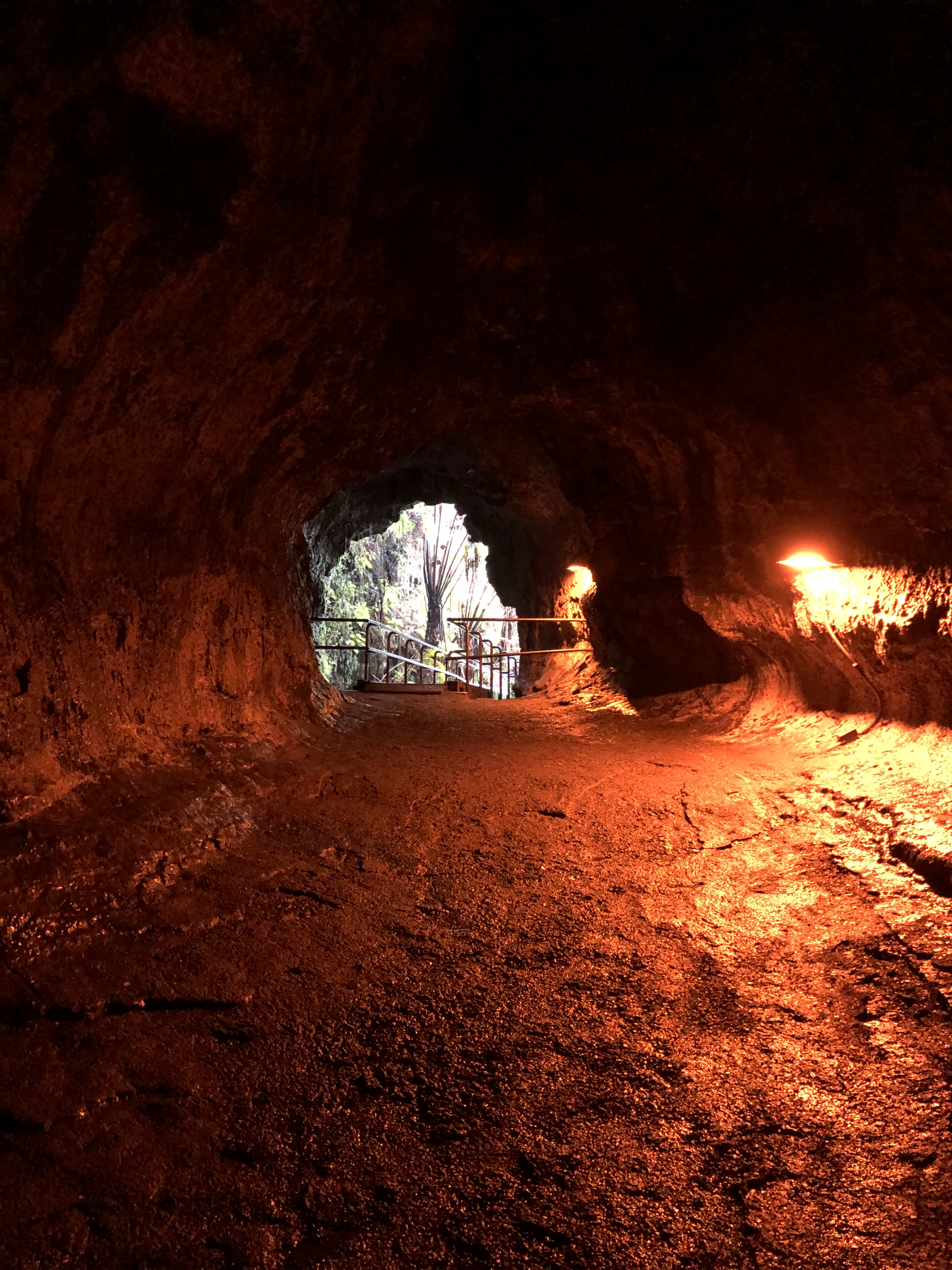
*Next stop-the 500 hundred year old lava tubes where 2000 degree lava once flowed. They were discovered in 1913. It was like walking down into a cave. Luckily they are lit w torches during the day. On a side trail I saw a wild pig. There are tall fences to keep wild animals in certain areas so they don’t destroy the habitat.
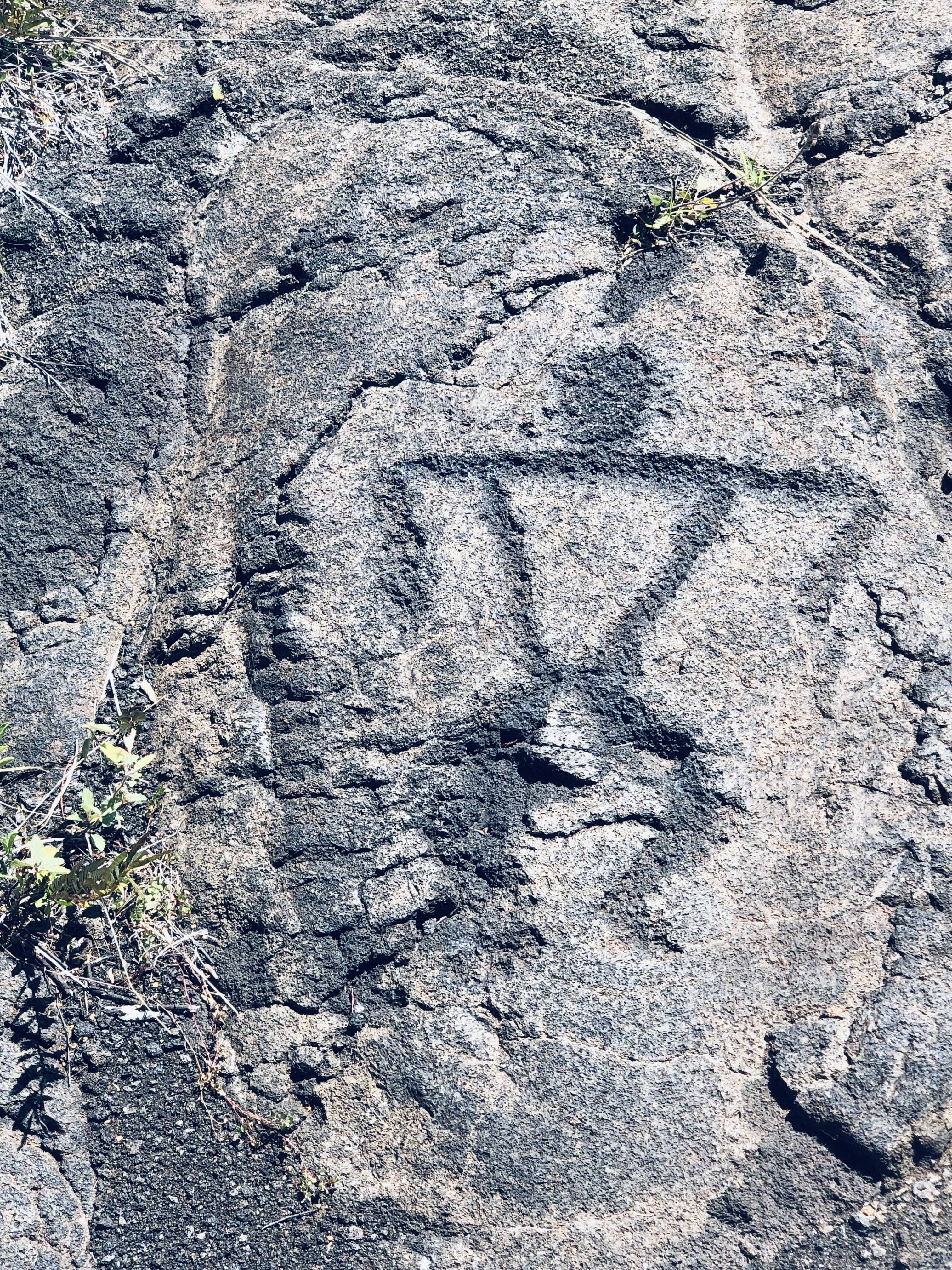
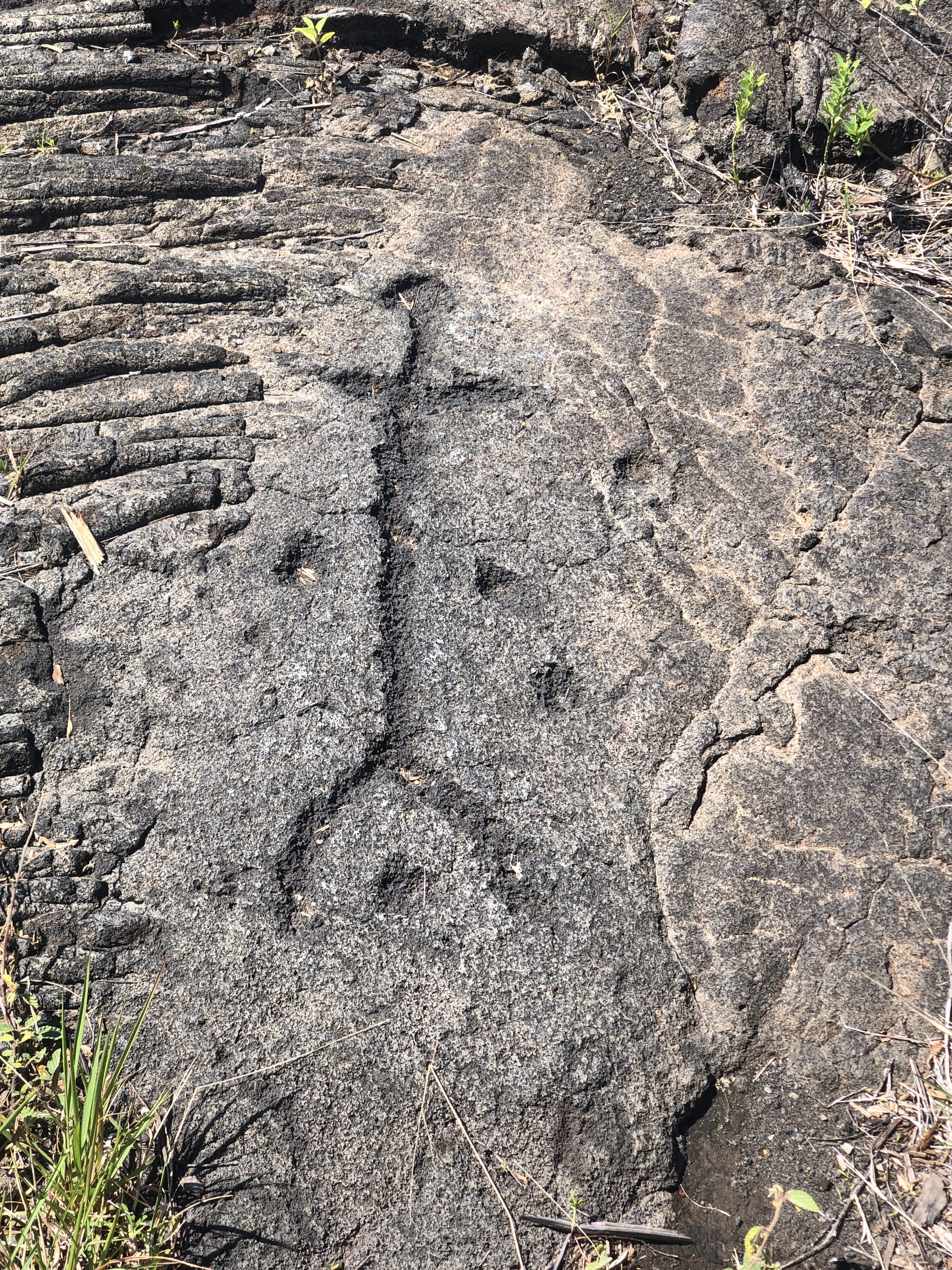
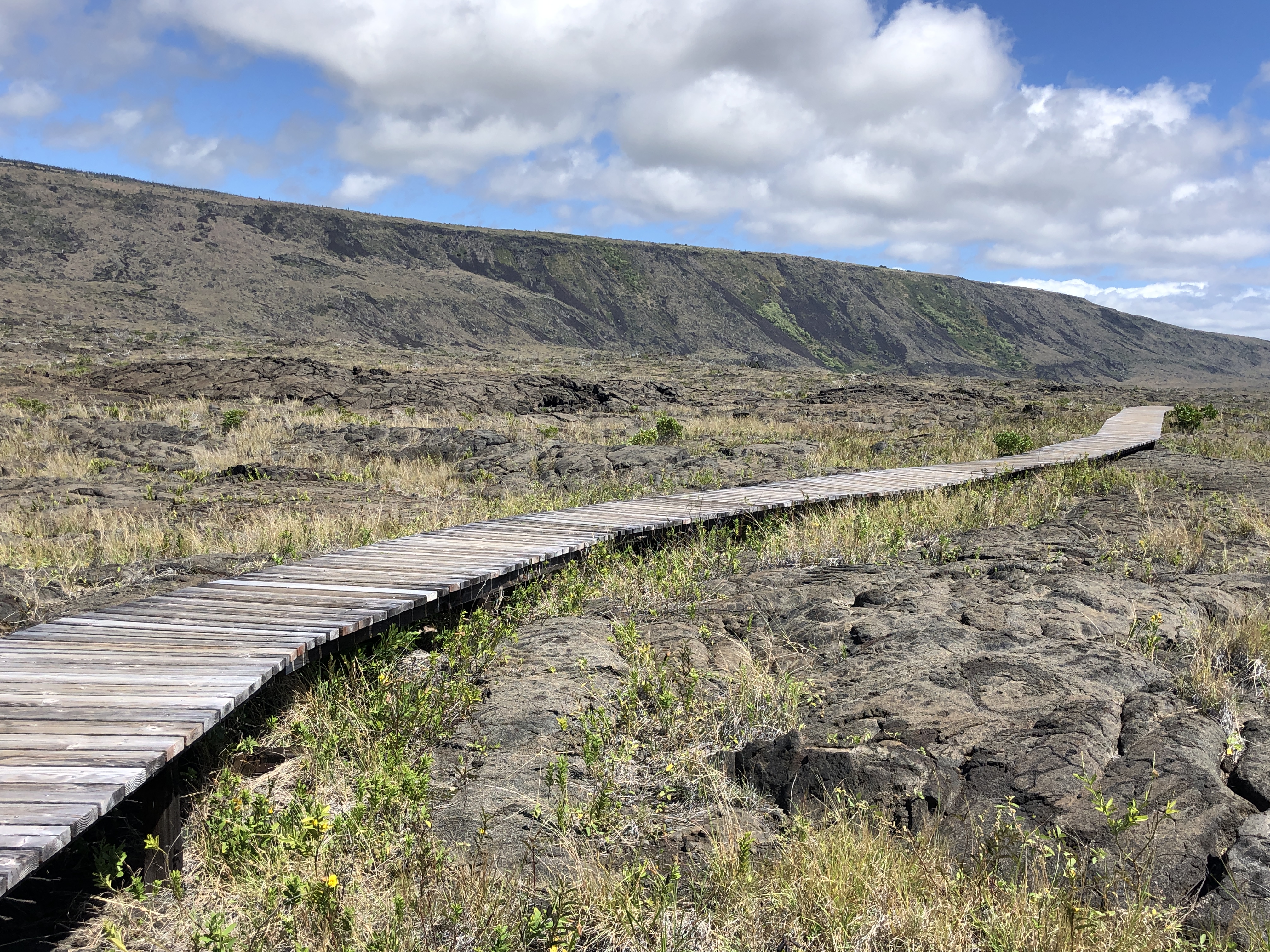
*I was blown away by the Petroglyphs. They know of 23,000 in the park. Their purpose was to record travel around the island, express consideration for human longevity and well being, communicate current and past events, and mark boundaries and trails. Not to mention many are beautiful creations. We saw a large mound with shallow holes of various sizes. The umbilical cord of newborns were placed in a hole w a rock on top. In the morning the cord is gone which insures long life for the child.
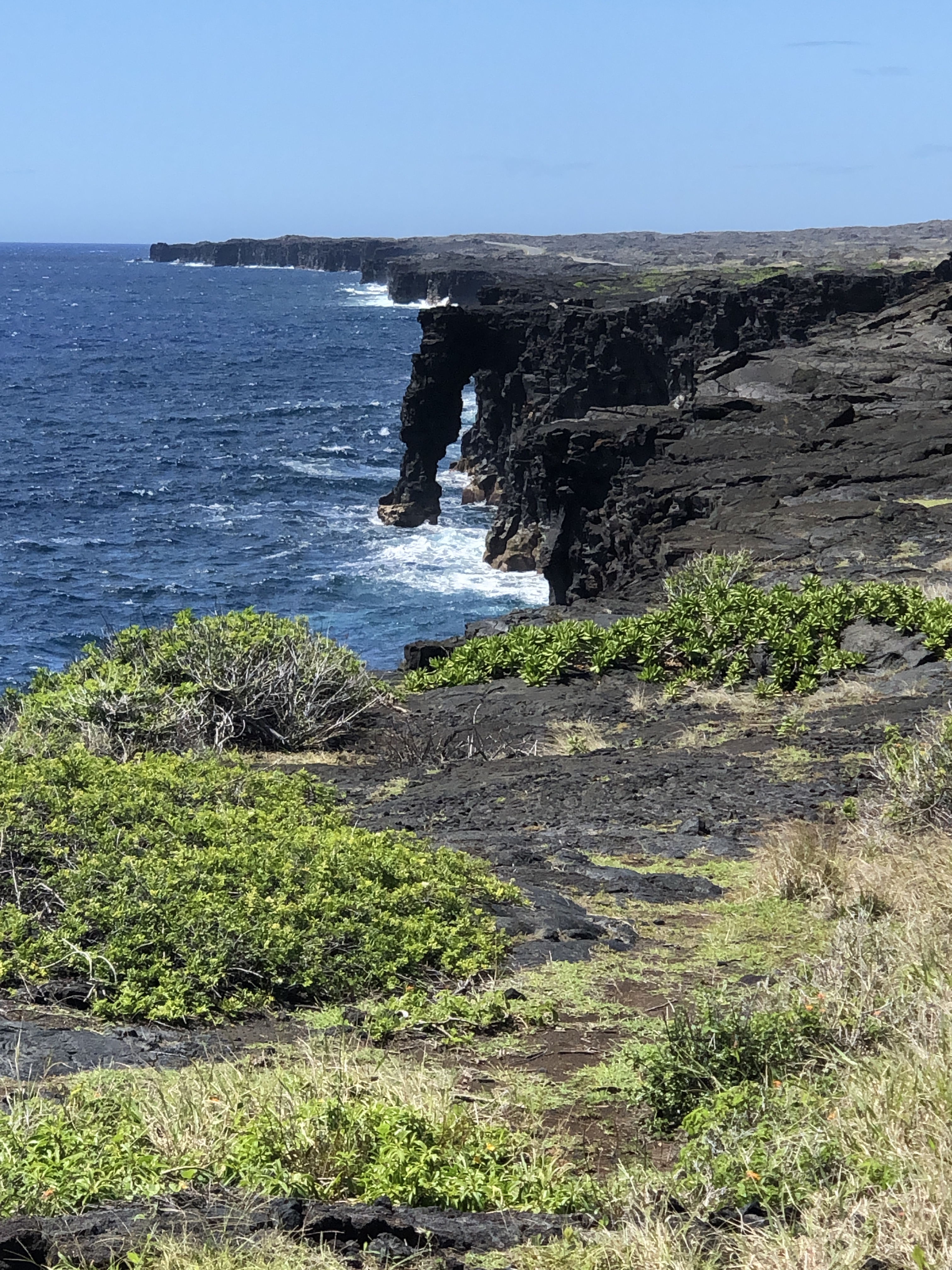
*The Sea Arch is an example of the force of water. Over time the arch has shifted and eventually will no longer be recognizable as an arch.
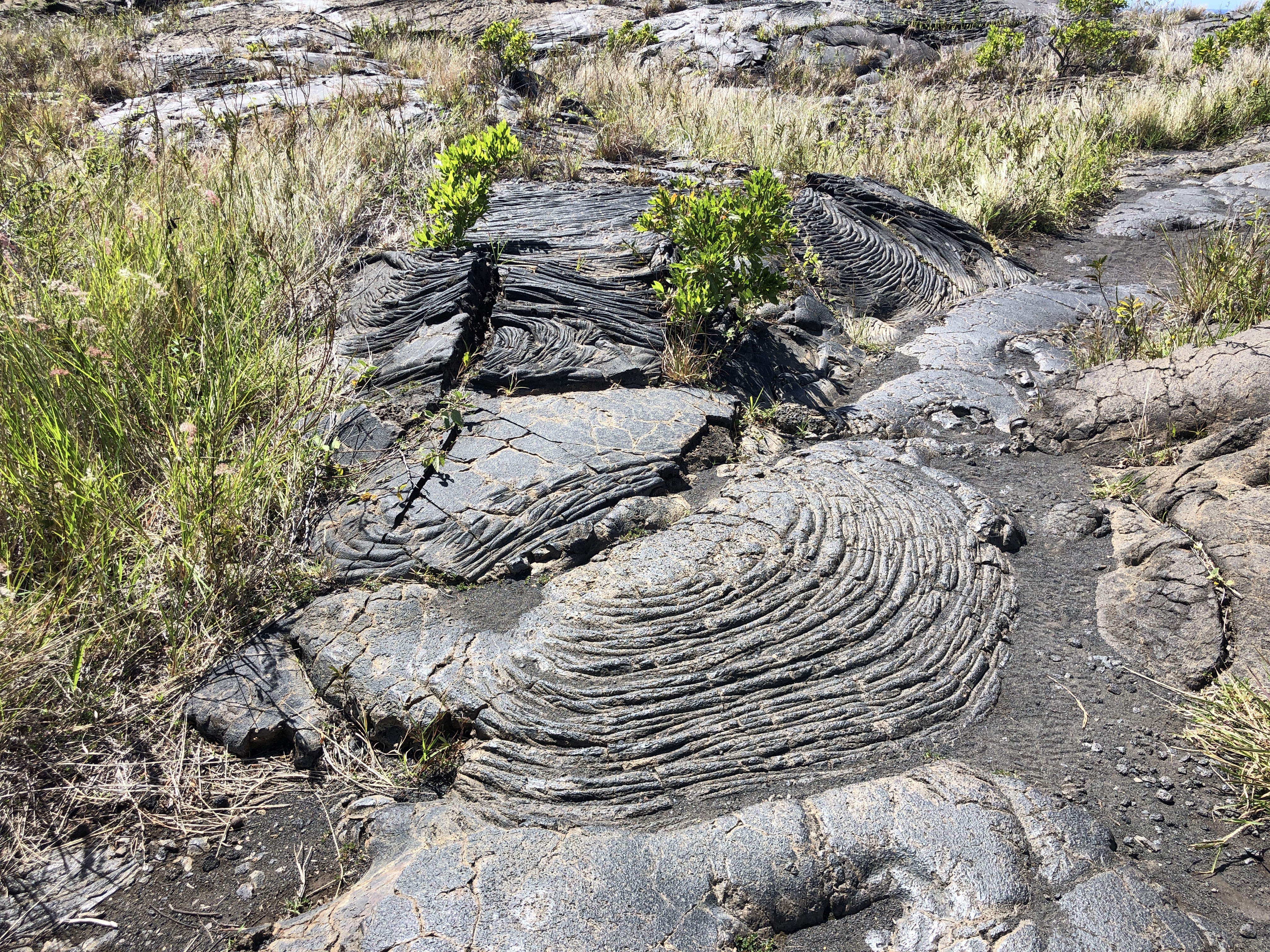
*Driving through the park is almost indescribable. The hills covered w hardened lava are like large fields, some grey, some black. The newer lava appears blacker and almost looks like a map showing rivers. Close up the lava rock looks like cow pattys or brownies just spread in a pan or black mulch. So very different than what I’m used to seeing in farm type fields in Maine!
Daybreak at Volcanoes National Park
Watched the moonset at day break at the edge of the caldera
steam vents
lava tube
petroglyphs, one of 23,000
walkway around the petroglyphs to help protect them
hardened lava resembled cow patties
Sea Arch will eventually collapse with the fierce wind and tides
Day 10, based in Kea’au, Hawai’i
Visited waterfalls not far from downtown Hilo on the western side of Hawaii.
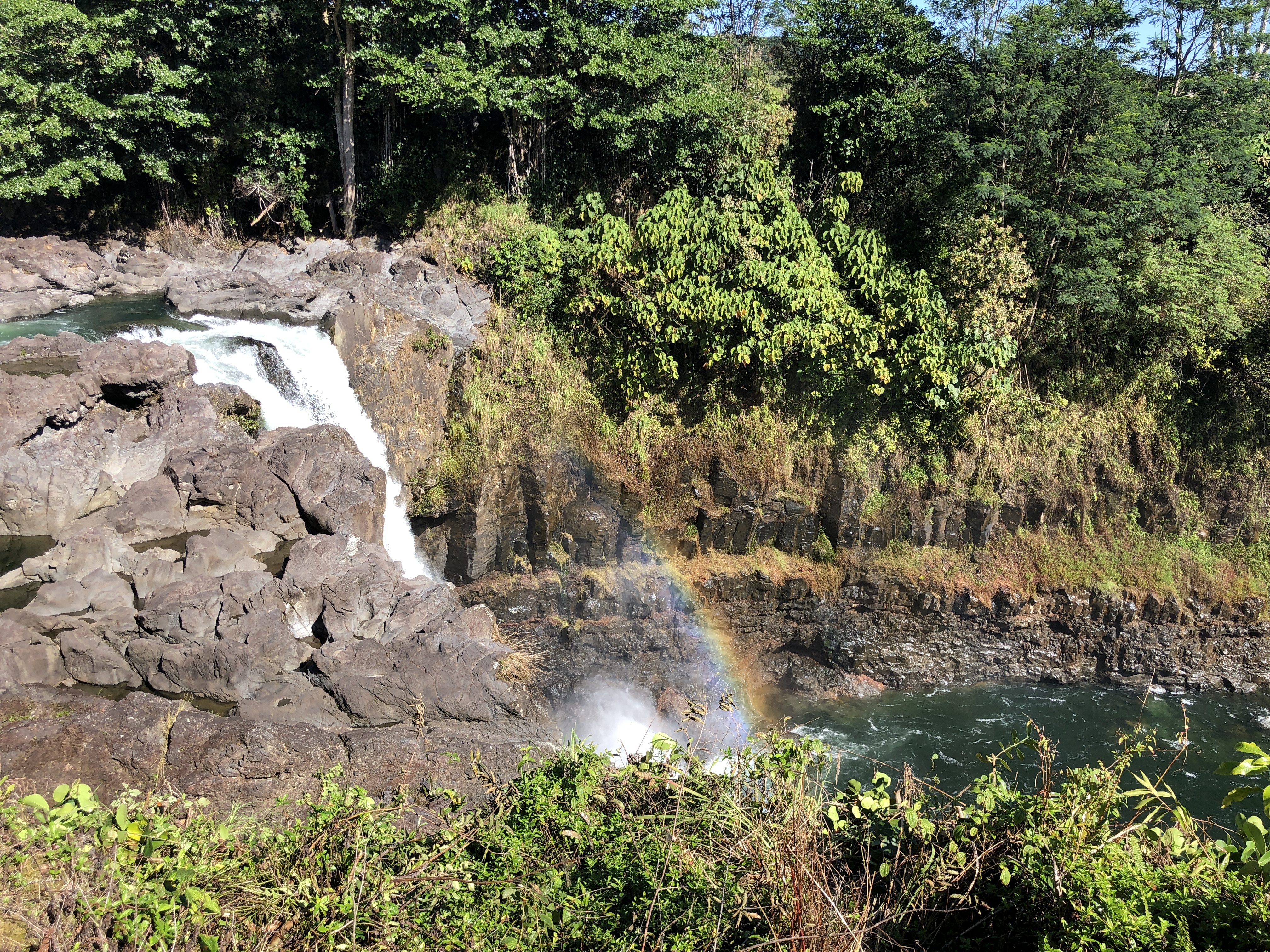
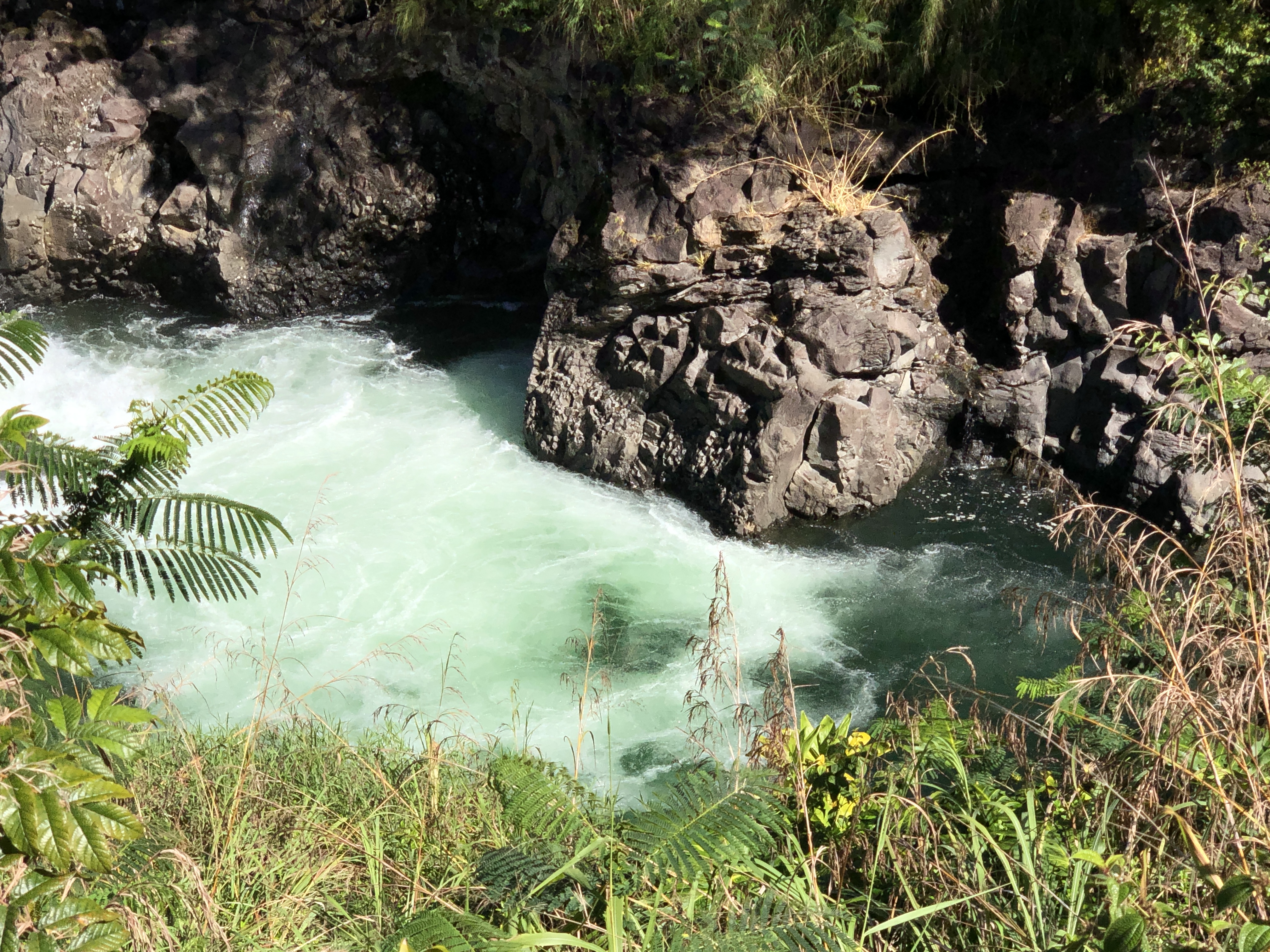
First stop was at the 80ft Rainbow Waterfalls and the Boiling Pots above the falls. We were impressed by the sound of the water.
The story of Rainbow Falls…
Hina was the mother of Maui.
She lived in the cave under the waterfall with her ‘women’ making kapa, a cloth created by beating the bark from the mulberry bush.
A mo’o or giant lizard named Kuna lived along the Wailuku River and frequently tormented Hina by sending volumes of water, logs and other debris over the falls. One night there was a huge storm and rain filled the gorge. Kuna decided to put a large rock over the opening of the cave and trap Hina inside.
She called out to Maui who woke from his dream of his mother calling:
O Maui, fisher of islands,
O Maui, slower of sun,
Listen! It is Hina who calls.
Come quickly, oh Maui my son.
Come in your swift canoe.
Come with your mightly war club.
Save us from Kuna Mo’o.
Maui came quickly and saw no water in the river and knew something was wrong. He went above the falls and struck on the bank to make a waterway around the rock.
Then he went after Kuna who was hiding in the ‘boiling pots’ (located above the waterfall). He started throwing giant rocks at the boiling pots but Kuna stayed in hiding. Maui asked Pele, Goddess of volcanoes, to help by making the rocks hot which in turn he threw them into the river to make it boiling hot. Kuna was forced to leave the water and was struck by Maui’s club. Over the falls he went and still lies as a giant rock at the bottom of the falls as a reminder.
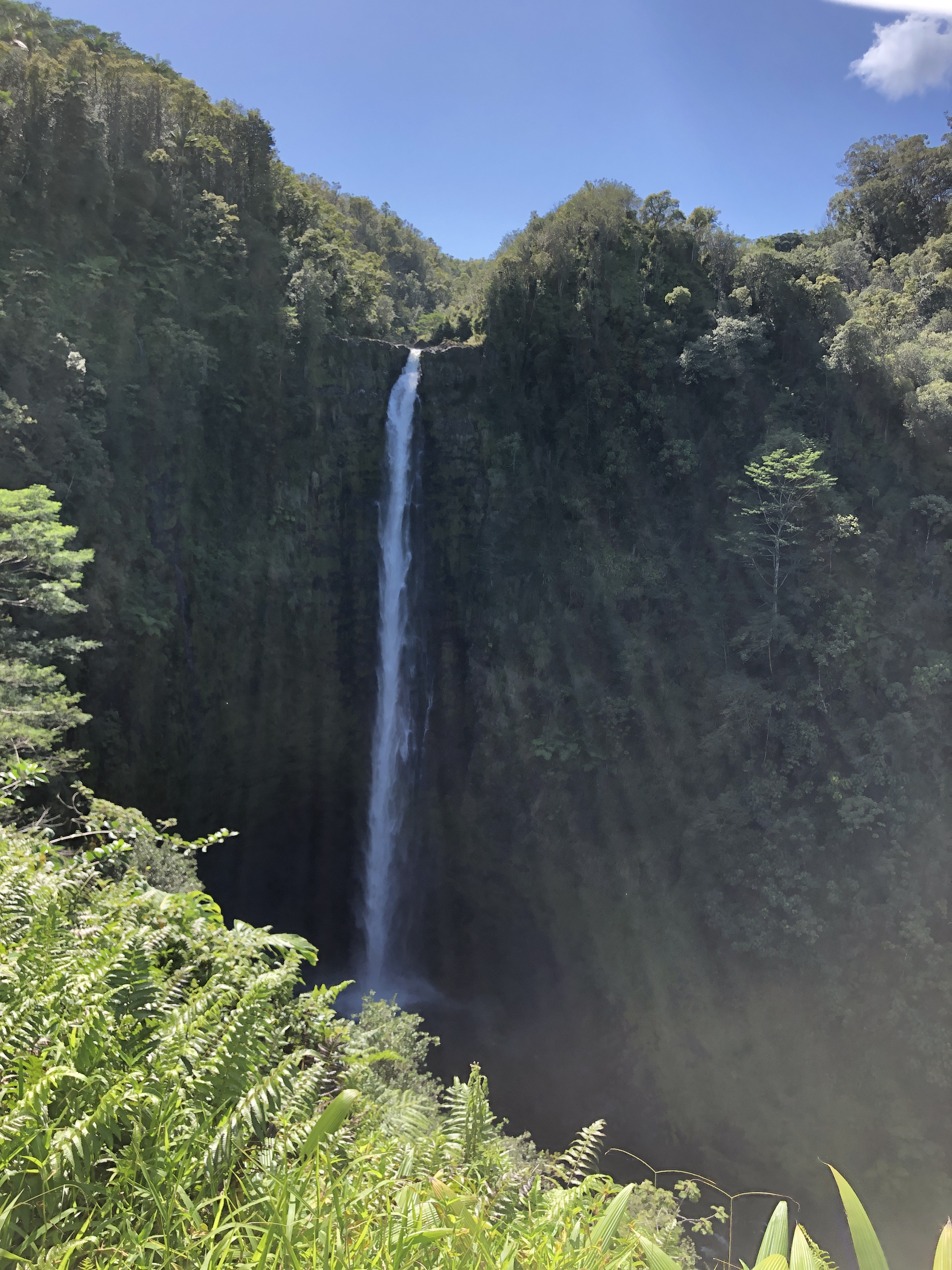
From there we traveled north to Akaka Falls State Park. A 1/2 mile loop trail winds down into a rain forest w some leaves as large as a small car. Along the way there are 4 waterfalls, all different from each other, the largest one, 442ft.
We also visited the Tsunami Museum in Hilo. It was a fascinating place w stories, history, facts and warnings. People here are very aware of the Tsunami since most live close to the coast. They have a warning system in place in the event.
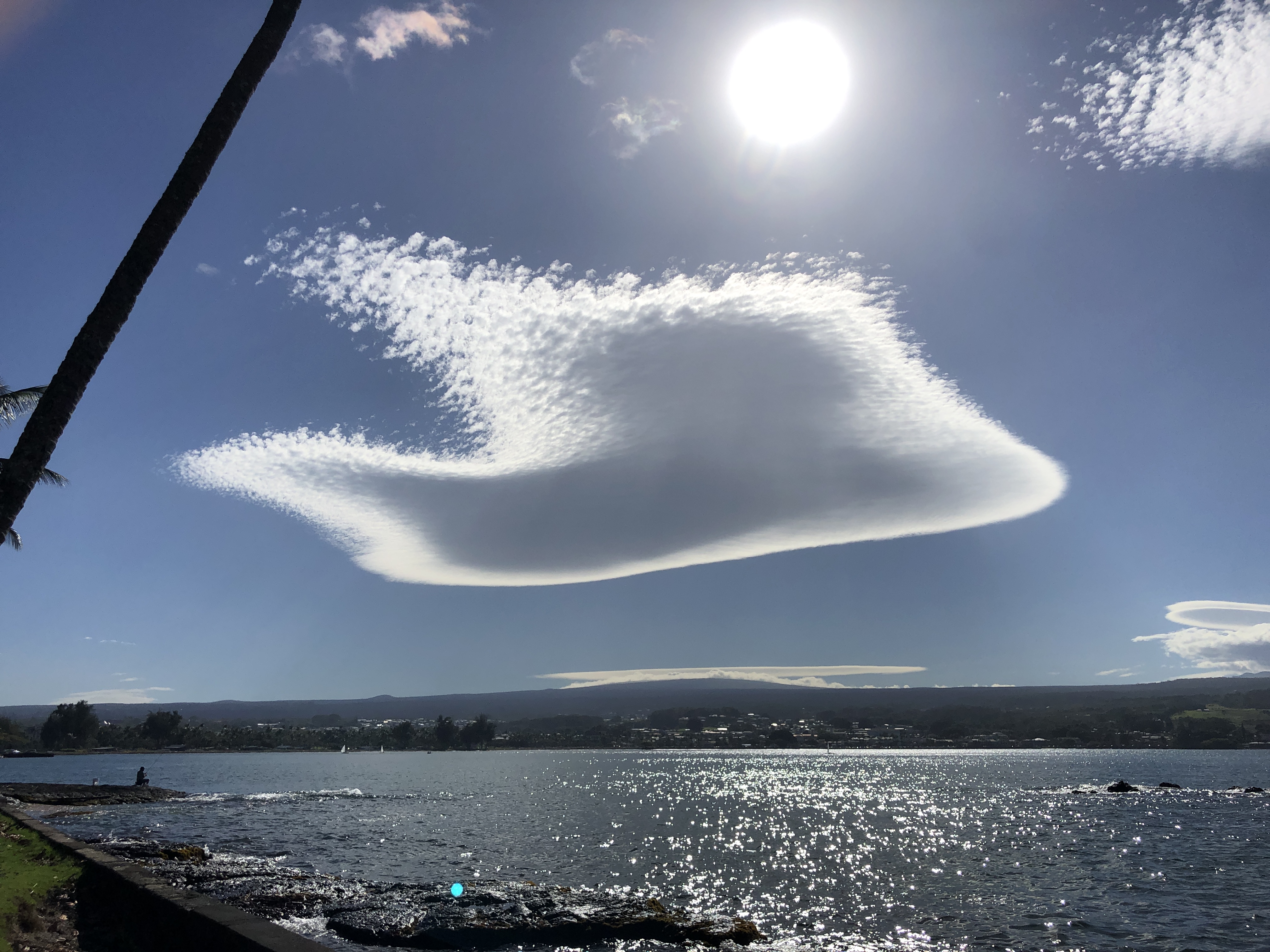
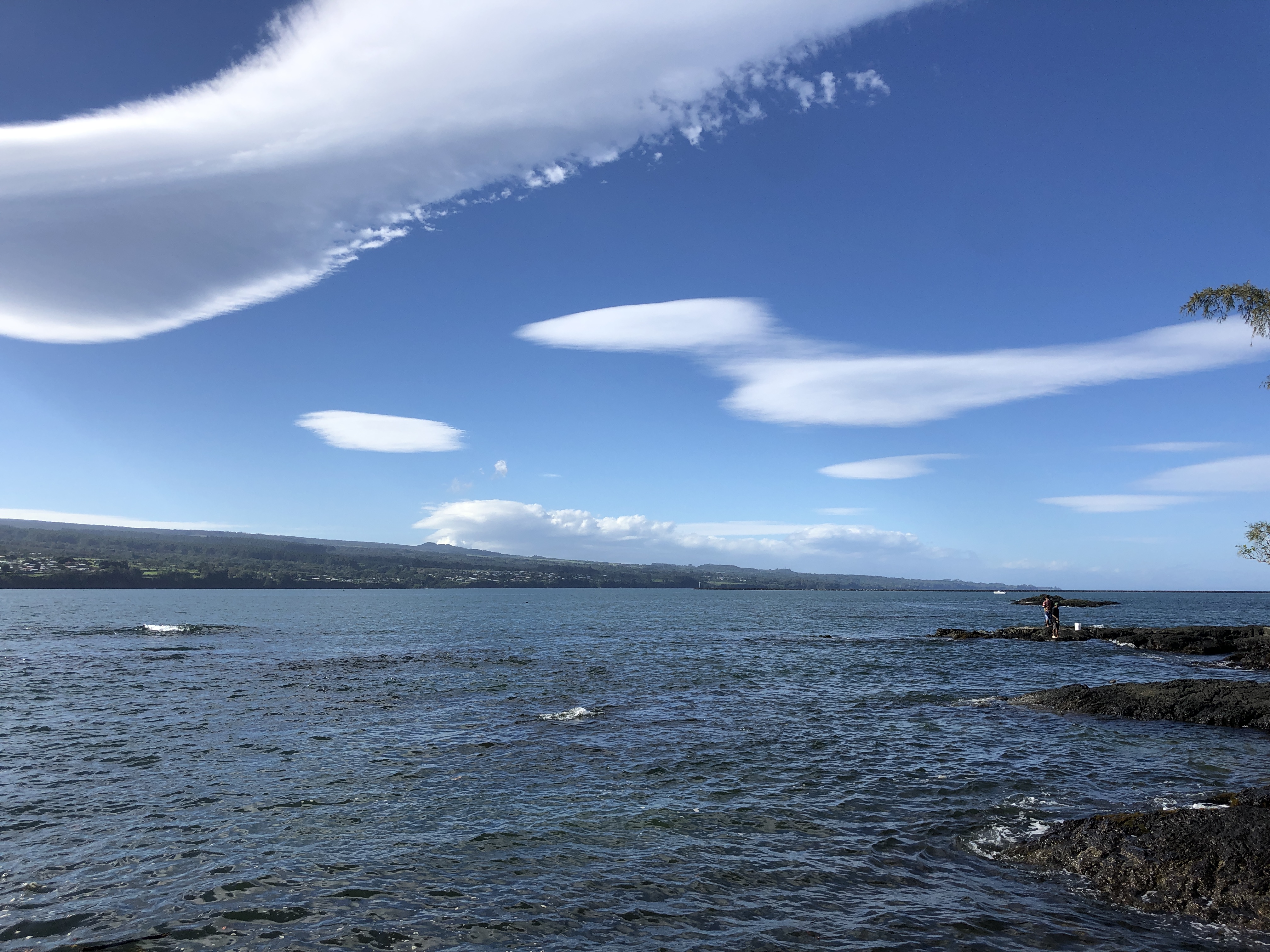
Besides the beauty of the waterfalls we saw our first mongoose and very rare cloud formation-linticular clouds. They hung, barely moving all day long, resembling UFOs. They continued through the sunset. The locals were surprised about them as well.
Rainbow Falls
Boiling pots just above Rainbow Falls
Akaka State Falls State Park – one of 4 waterfalls and the largest at 442 feet
Akaka State Park – one of 4 waterfalls
Very rare cloud formation-linticular clouds – resembled UFO’s
Very rare cloud formation-linticular clouds – resembled UFO’s
Day 11, left Kea’au and headed to the eastern side of the Big Iskand, Hawai’i
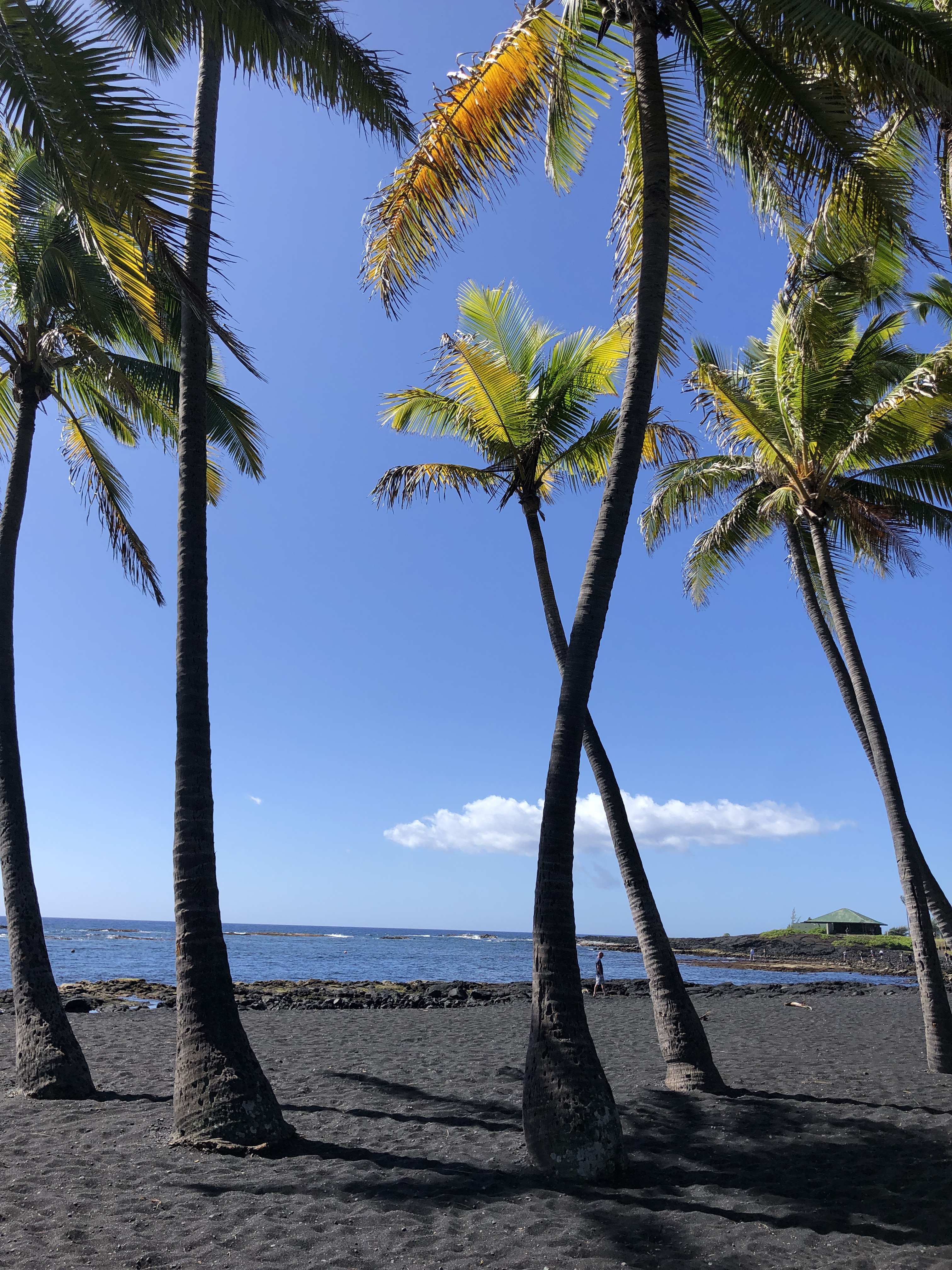
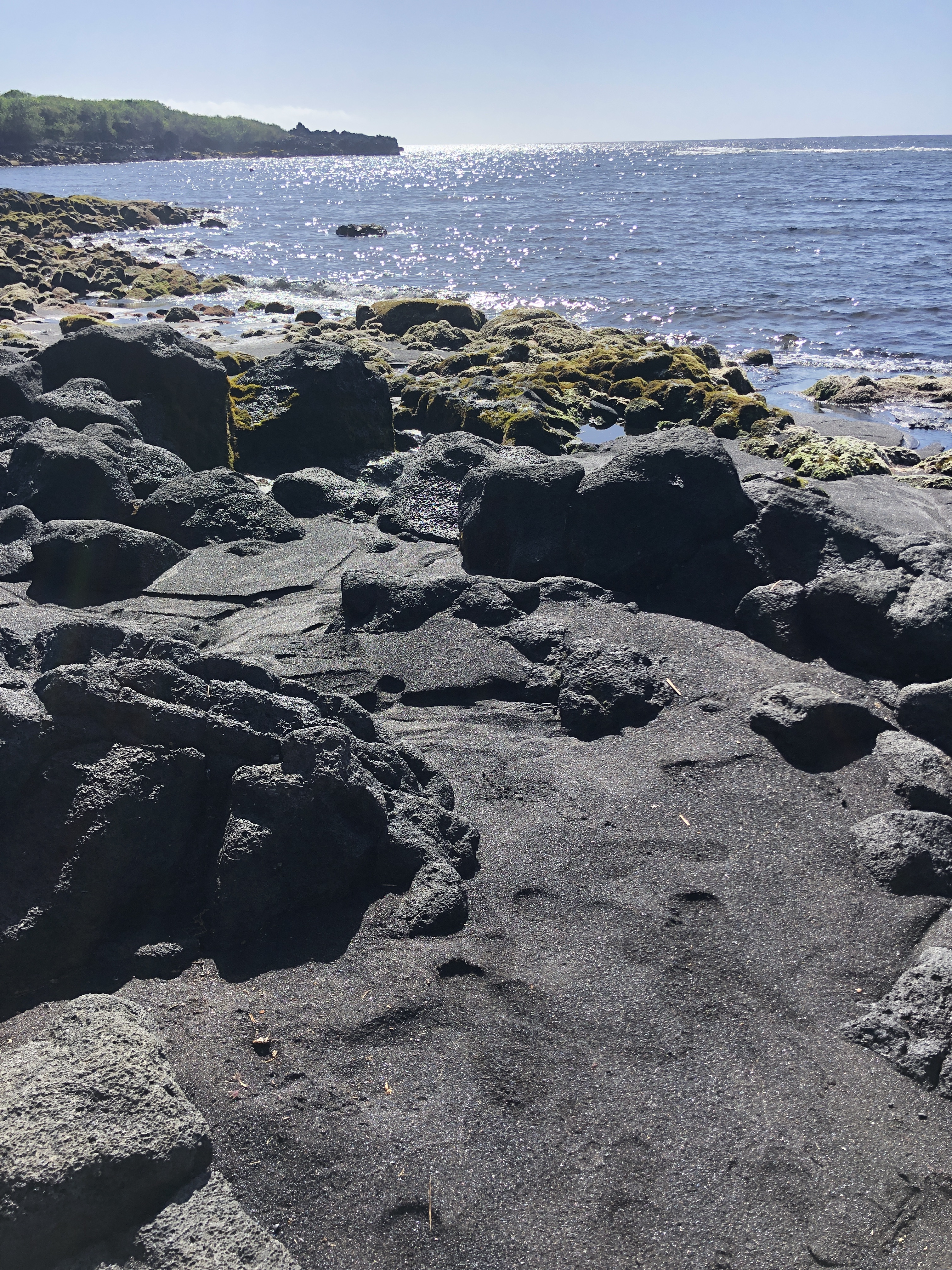
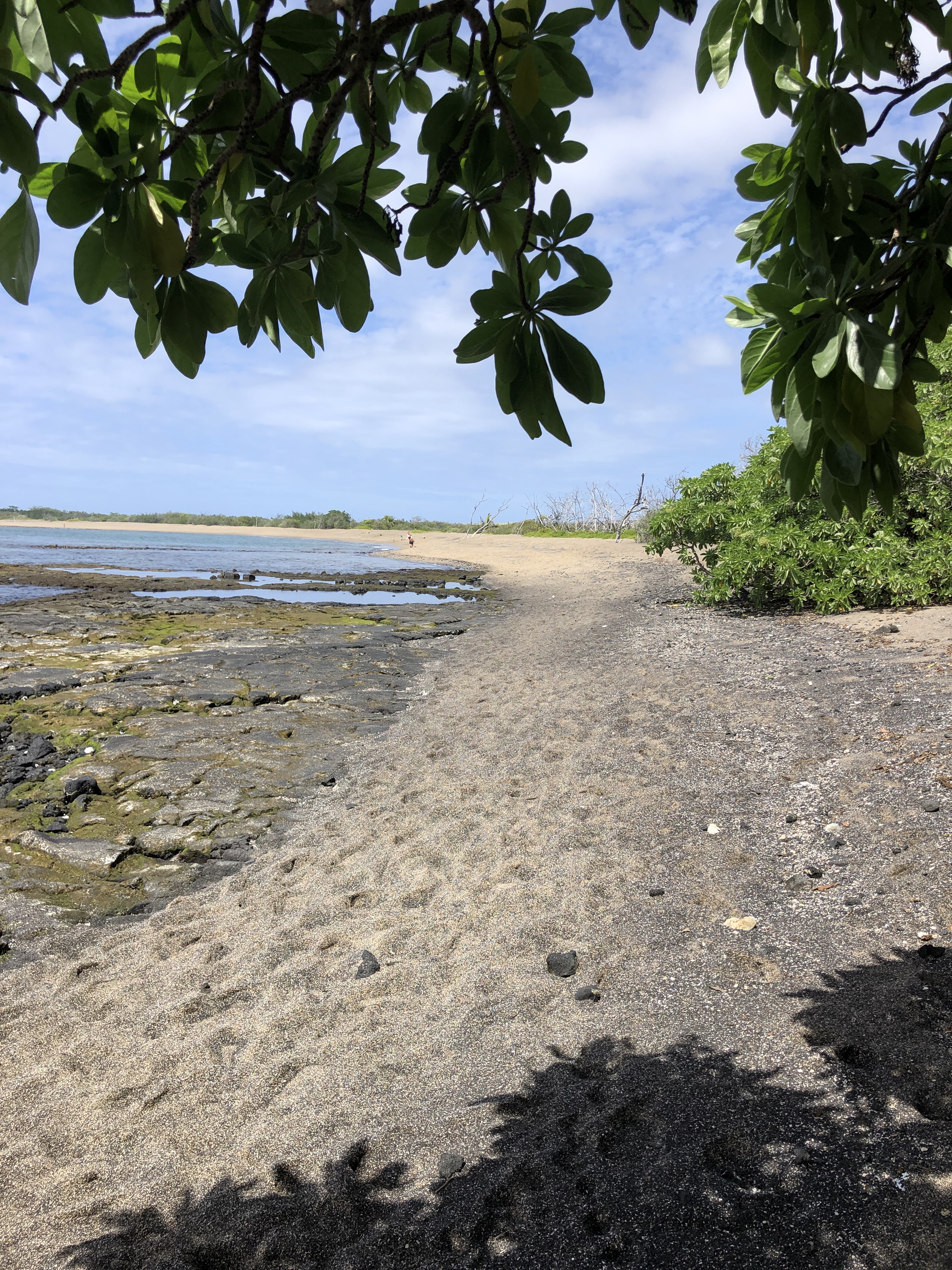
Another sunny and 80 degree day. We stopped at Black Sand Beach Park. Yes, the sand was black and I was glad it was early morning because it hadn’t reached a point that would be too hot to walk on. The life guard was out surfing, one woman was snorkeling, a few people were laying on the beach and others like us wandering around enjoying the colors of the water, watching turtles popping up heads. We took off our shoes and waded in to see how warm the water felt at 82 degrees. Very different from our salt water in Maine.
I was reminded about the importance of wondering as we meandered down a road. I’m so grateful to Nicholas for finding this spot.
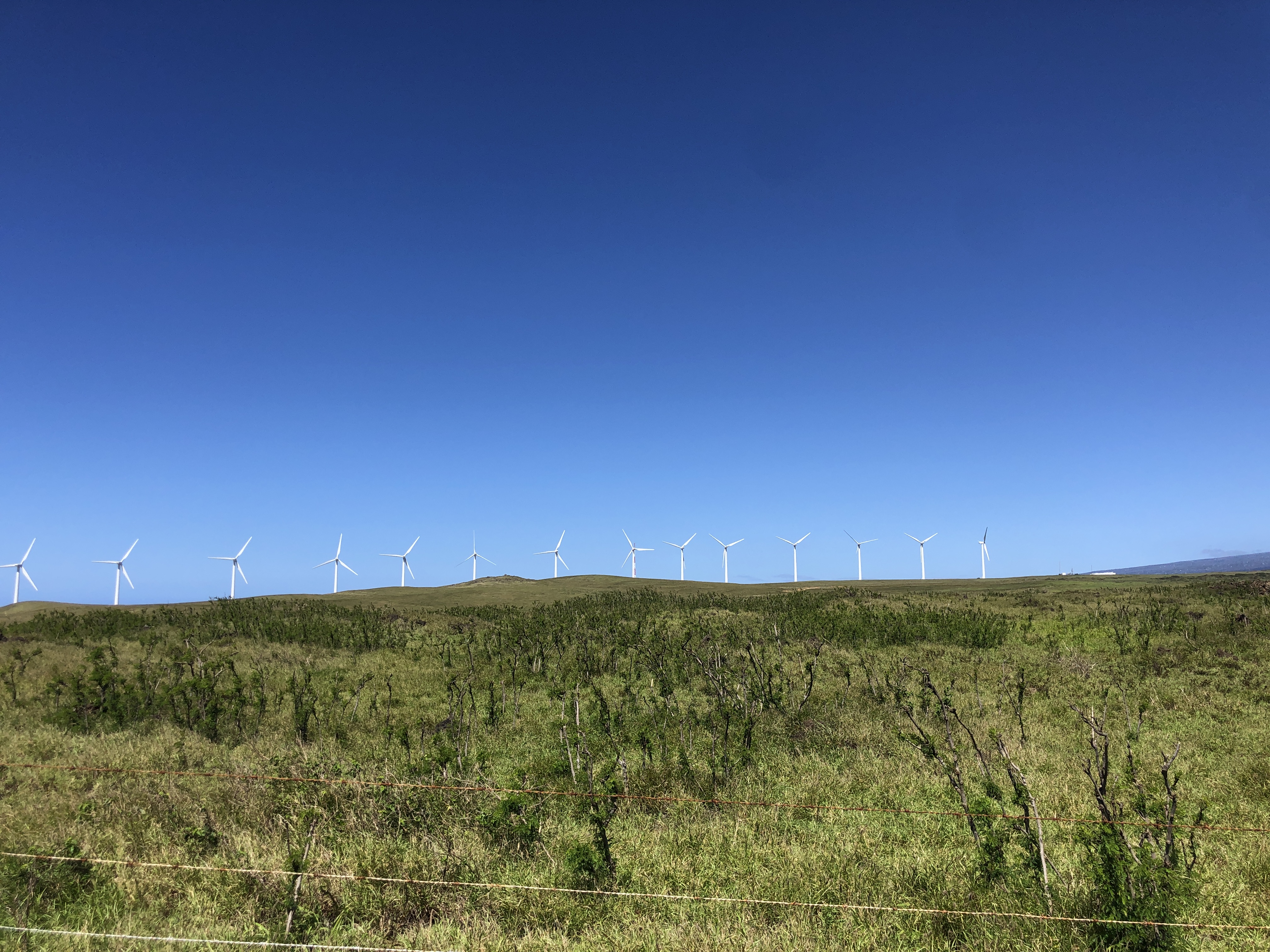
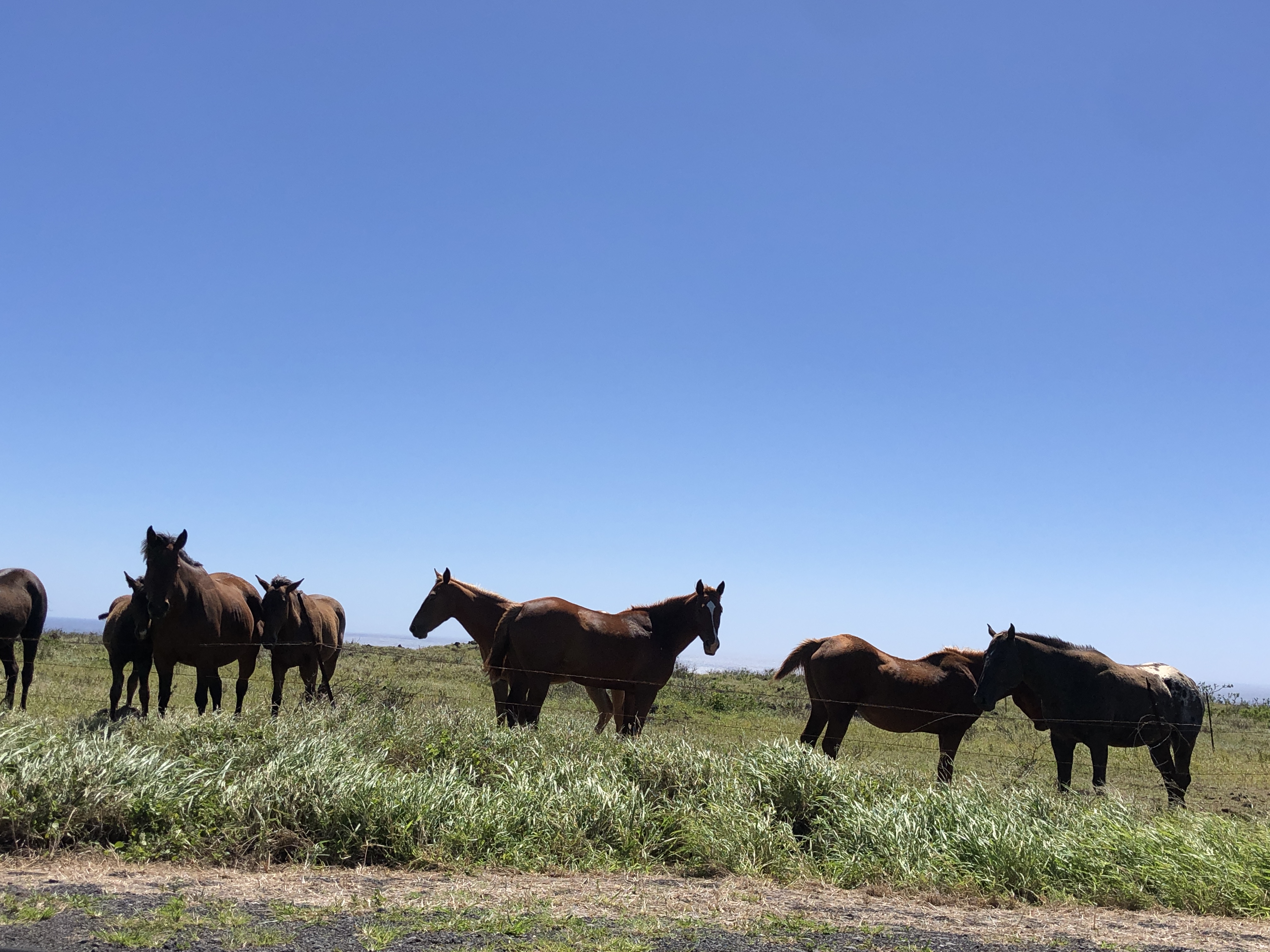
It turned out that we were not far from the most southern spot of the US called South Point. The 11 mile long road was in good shape at the beginning. The road condition failed some, got narrower the closer we got to South Point. The farms seemed huge. We saw cattle in some and horses in others. Fewer houses the further we went. Up from the horizon rose 12 wind turbines. It reminded us a little of Ireland. The sky felt huge like Wyoming big.
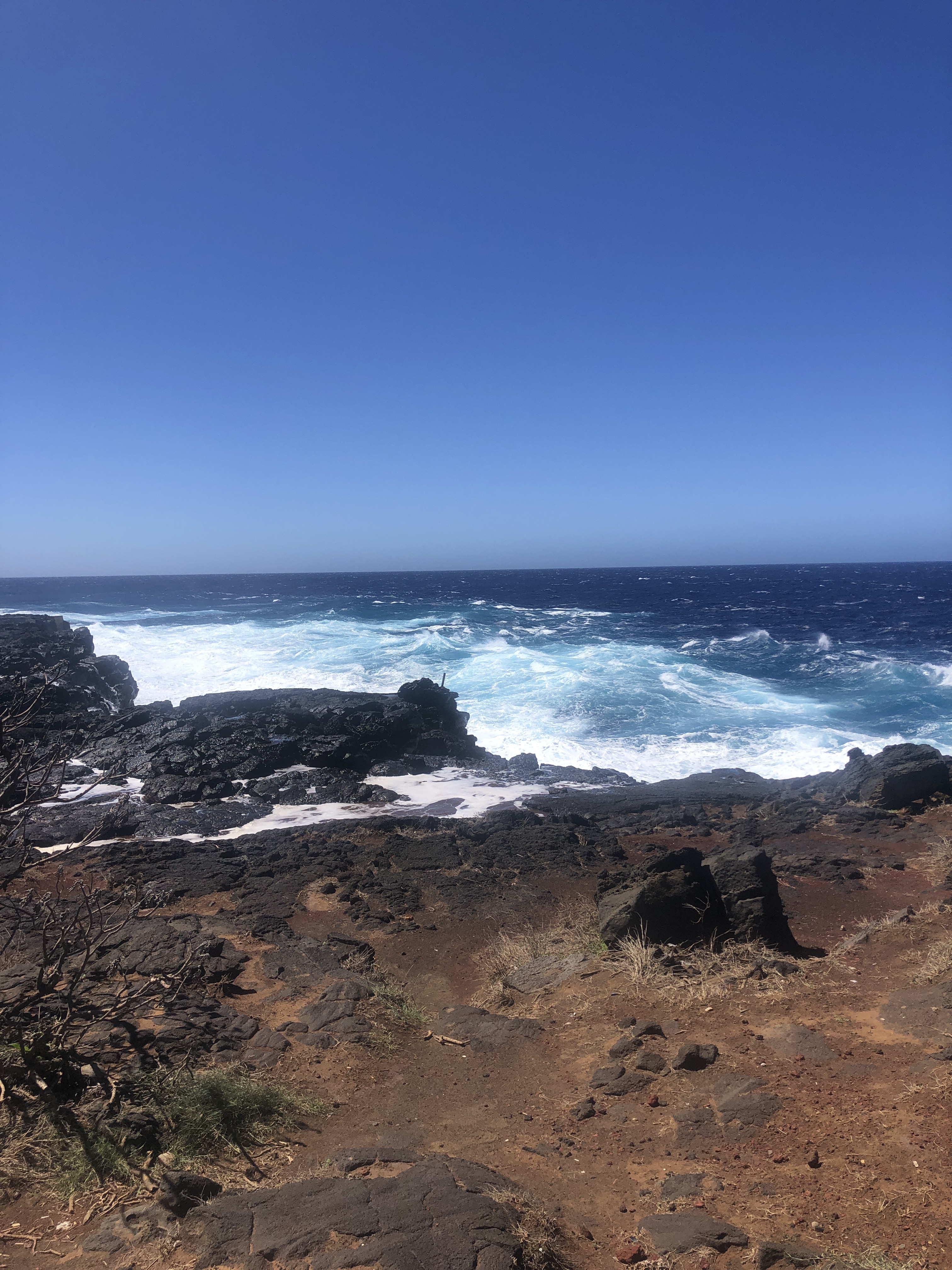
We got to the end of the road and the point and the wind was wild which of course made the seas more wild. A bit surreal like we were at the end of the earth. Felt really special being there, a gift. especially being from Maine, the farthest state from Hawai’i.
We traveled on towards our next Airbnb and stumbled onto The Coffee Shack, another gem w the most amazing view of the coastline. It felt like we were in a tree house. We had lime pie to go w Don’s afternoon coffee.
On to the best of our 4 overnight accommodations. If you’re coming to Captain Cook area of Hawaii, it’s the perfect place to stay.
Supper on the water in Kona and a short drive to the airport where we said so long to Nicholas. Sad to see him go but very grateful to be traveling w him during the last 11 days. Nicholas has traveled to over 50 countries to date. He is knowledgeable and clever and swift in his traveling habits. Not to mention, sooooo fun!
Black Sand Beach
Black Sand Beach – we could see turtles from these rocks
Driving down to South Point these wind turbines loomed up
Driving to South Point – more than one field of horses
South Point – the most southern point of the US
Day 12, Captain Cook, Hawaii
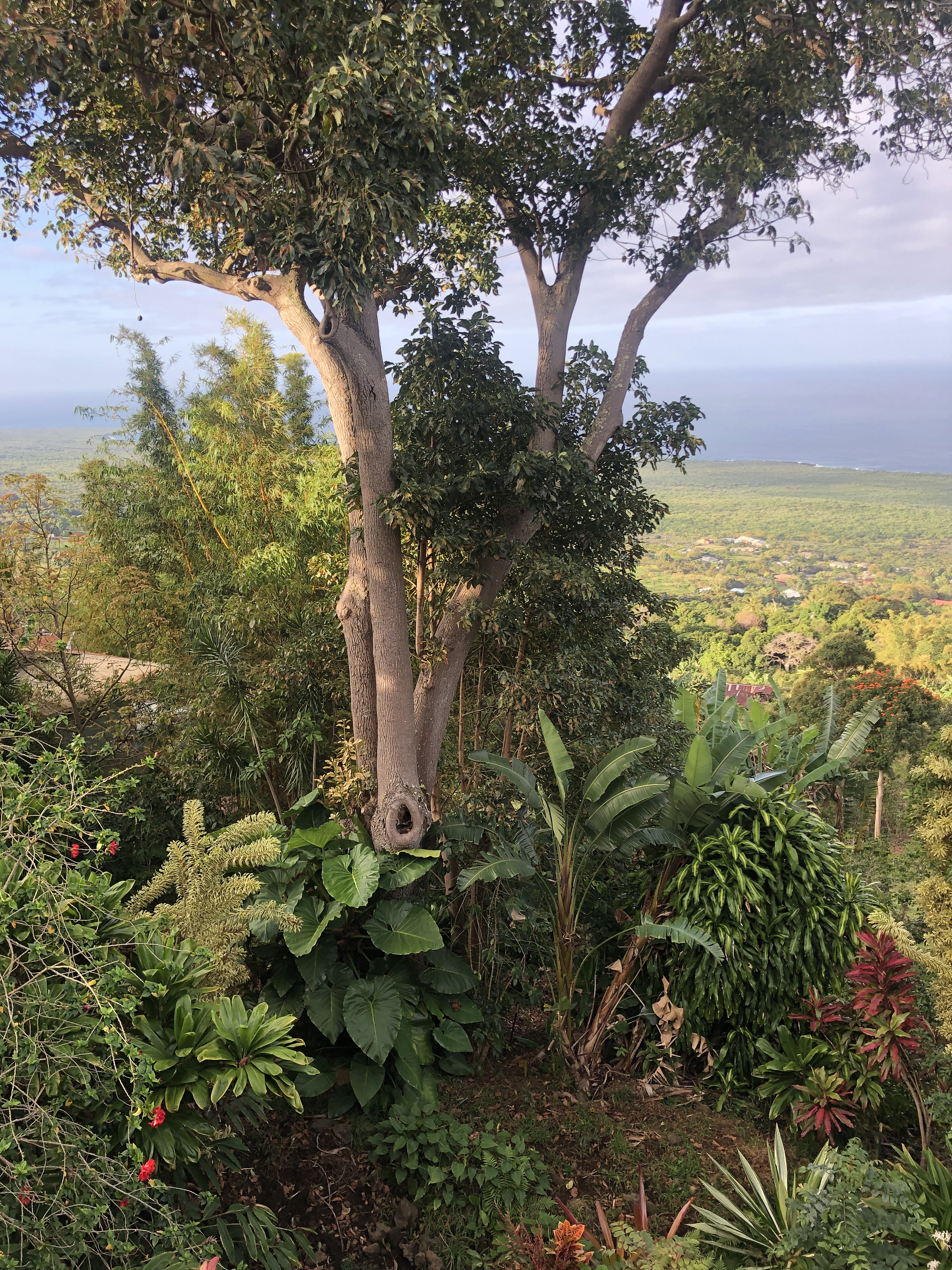
We felt like we were sitting in a treehouse while eating a delicious breakfast at The Coffee Shack. Our long view was the Pacific Ocean. Not 20 yards away from where we sat was an avocado tree. According to our waiter the tree is 100 years old and 100 feet tall. If you look closely at photo you can see the avocados.
We toured Greenwell Farms where they grow and process coffee. Our Airbnb is right in the middle of Kona coffee country. Here’s what we learned from the knowledgeable guide who grew up new by, native Hawaiian, and oh by the way, some of the info goes way beyond coffee facts…
*Greenwell family has been running the coffee business for five generations
*Henry Greenwell came from Australia in 1820 and started acquiring land. 500 acres and he started growing coffee. He also was a rancher, the postmaster, superintendent of schools.
*coffee trees bloom for months and months. The key is to pick them when they’re ready. They produce year round but more than half the crop produce in September, October and November.
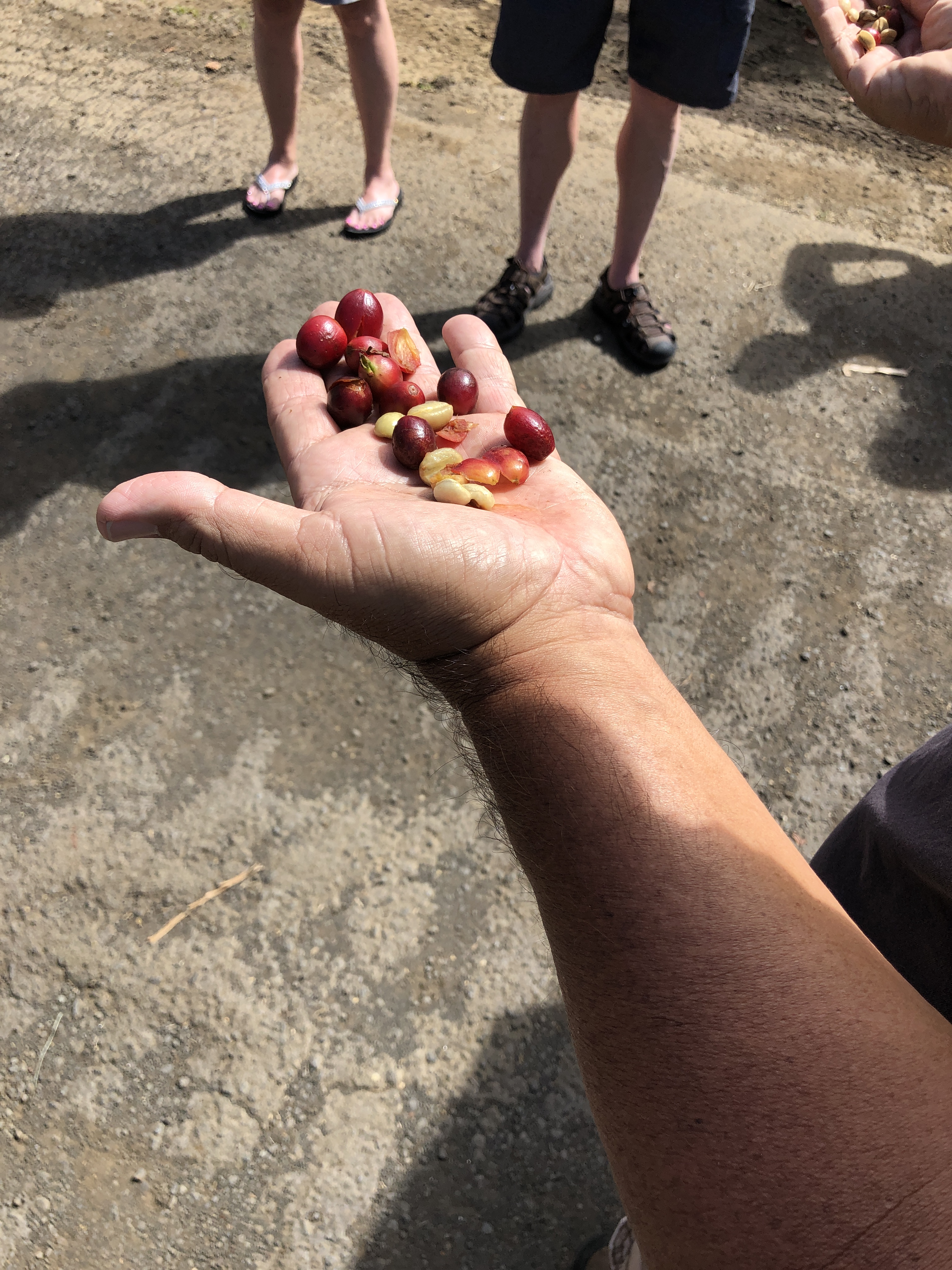
*coffee beans are commonly called cherries
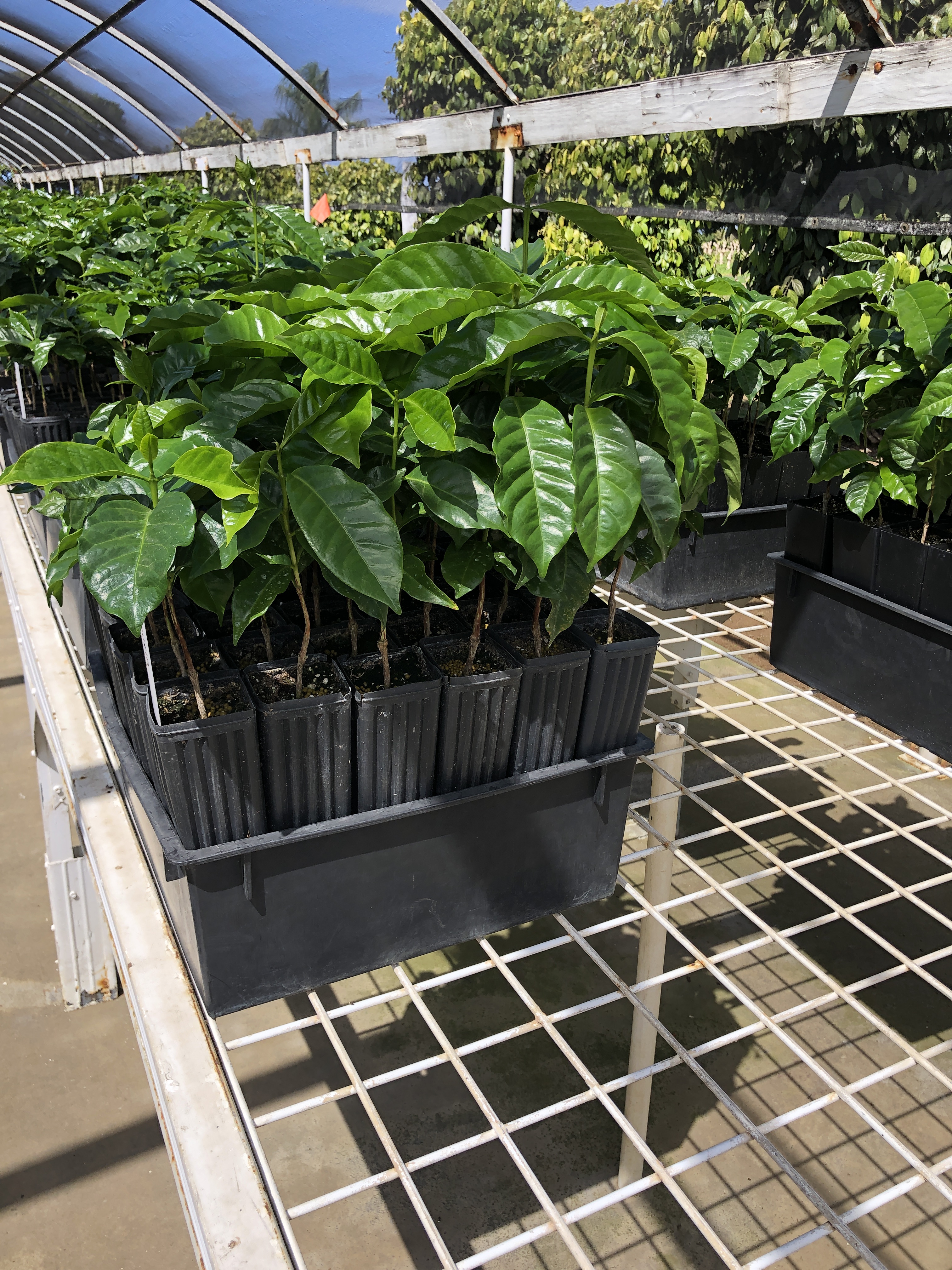
*Greenwell’s original trees are in a field they lovingly call Great Grandma, root stock is over 200 years old. They graft from these trees and plant within a year. It takes about 20 years from graft to production. They are planting them in straight rows and on level ground which impacts the production by growing a healthier tree. They’re grafting 25,000-35,000 trees a year w a 99% success rate.
*self pollinating
*16.8 inches of rain falls in this particular area
*youngest trees are 2 ft tall, in a year they will be 7 ft tall.
*there are 900 growers in the Kona coffee belt
*several farms deliver their crop to Greenwell Farms where they are processed by sorting out the good ones, taking out the seed, soaking and drying them. They pick them when they’re red. They remove 80% of the water. Takes 4 days to dry, then they’re roasted.
*Greenwell Farm also has avocado trees, pineapple plants, pepper vines, coconut trees, banana trees, and vanilla vines
*200 varieties of avocados grow in Hawaii. The lace mites have impacted the production this year.
*don’t spend time under a coconut tree because not only do the coconuts fall out at odd times but so do the fronds and they might hurt a lot more
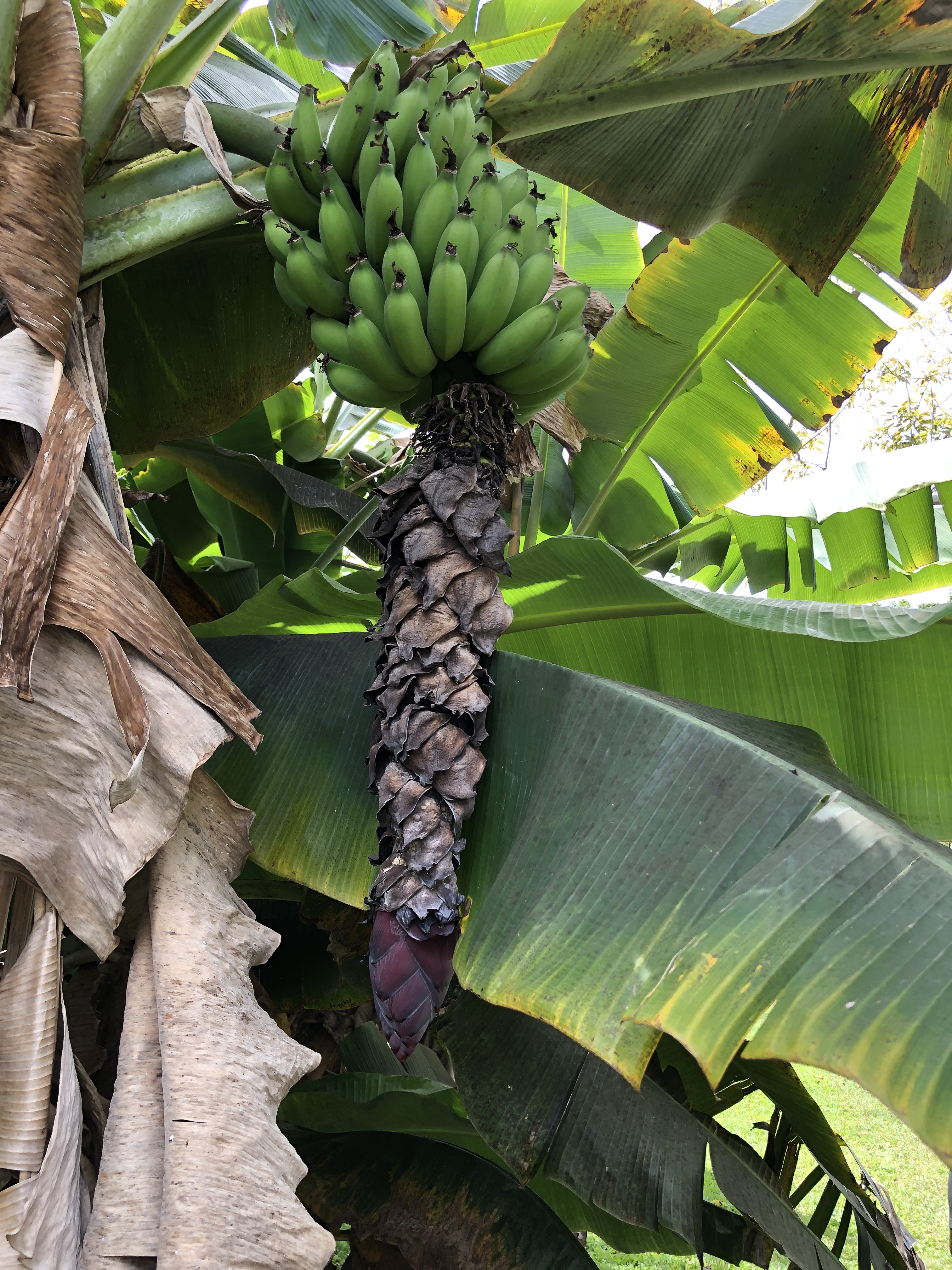
*banana trees are actually a grass
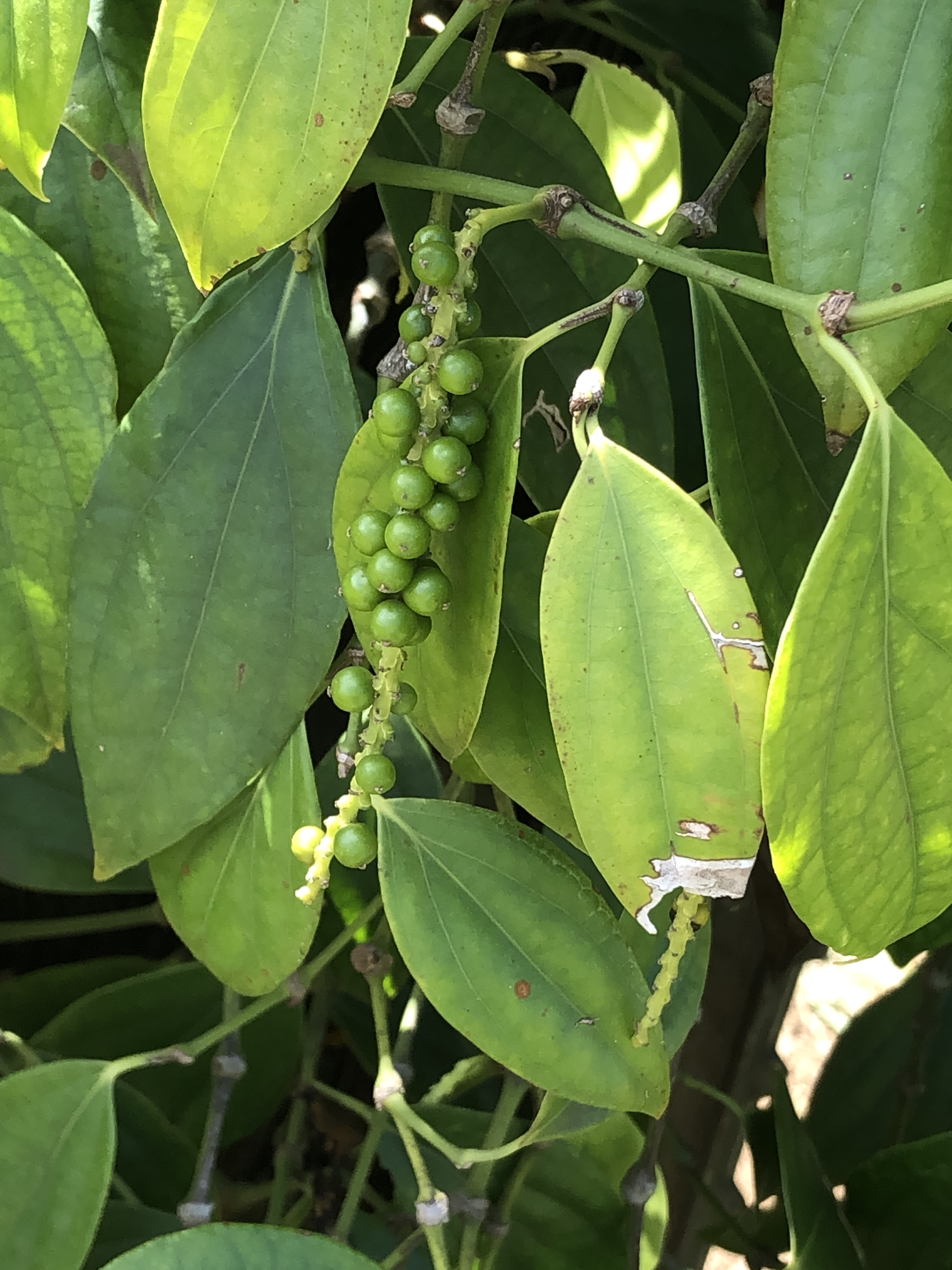
*picked pepper, green and tried it. Very hot!
*saw a chameleon in a cherry tree
*takes 3000-4000 beans for 1lb of coffee
Yes, Don bought a lb of coffee after the opportunity to try their many flavors.
Food is expensive here, we saw eggs for $7 a dozen BUT the avocados are not so, $1, bananas 4 for $1.
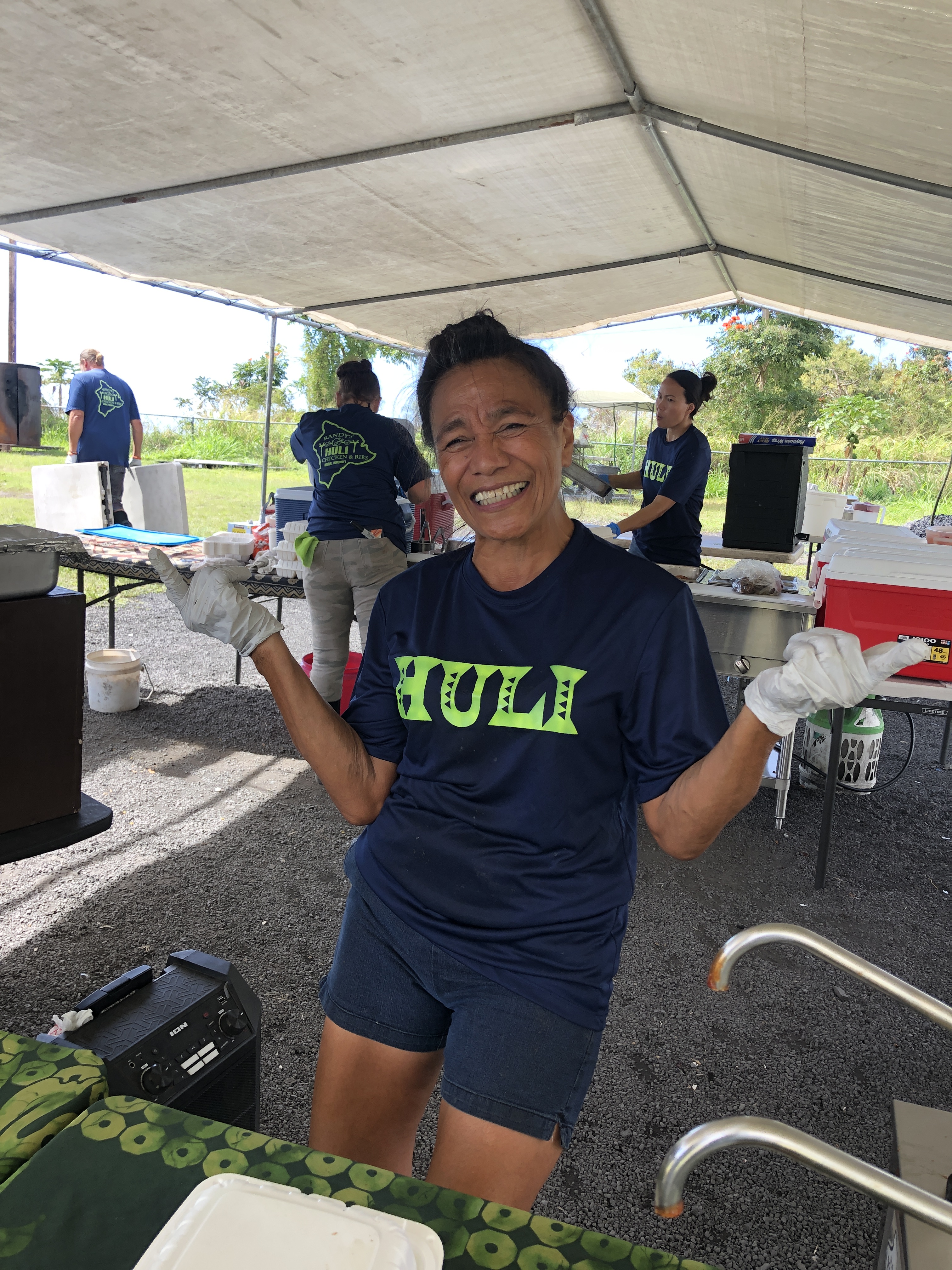
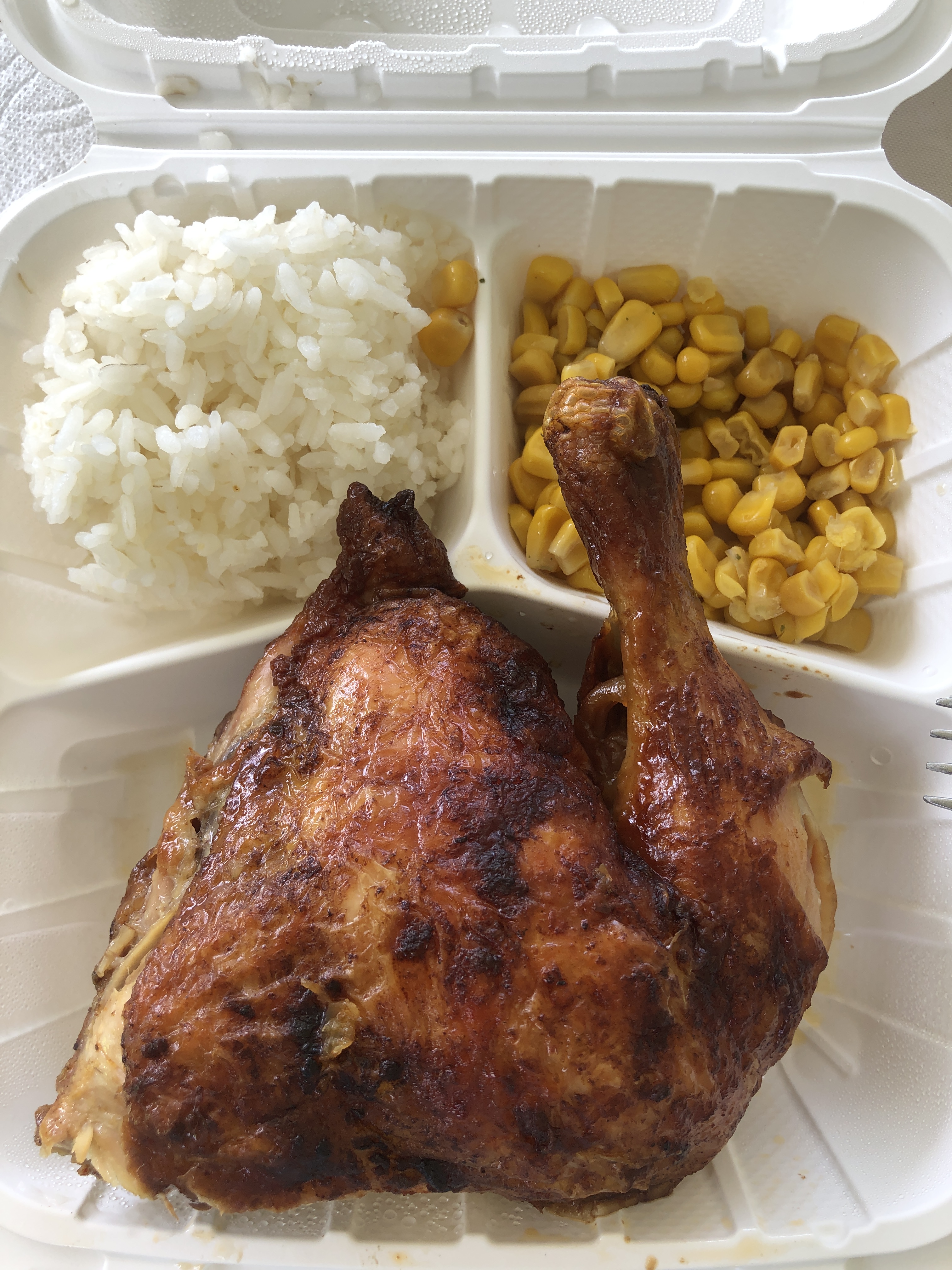
We bought some Huli Huli (means ‘turn turn’ in Polynesian) chicken on the side of the road. BEST chicken ever!!
The Coffee Shack – giant avocado tree
Breakfast at The Coffee Shack
Coffee beans are picked when they are red and called cherries. In this photo are the red beans and the beans removed from the fruit.
Pepper growing at Greenwell Farms
Grafted coffee plants ready to be planted
Chameleon in a cherry tree
Went to the beach after the coffee farm tour
All the Huli Huli chicken workers were so happy!
Huli Huli chicken was best chicken I’ve ever tasted
Day 13, Captain Cook on Big Island, Hawai’i
We explored along the western side of the Big Island. We headed up the coast early before the day got very hot.
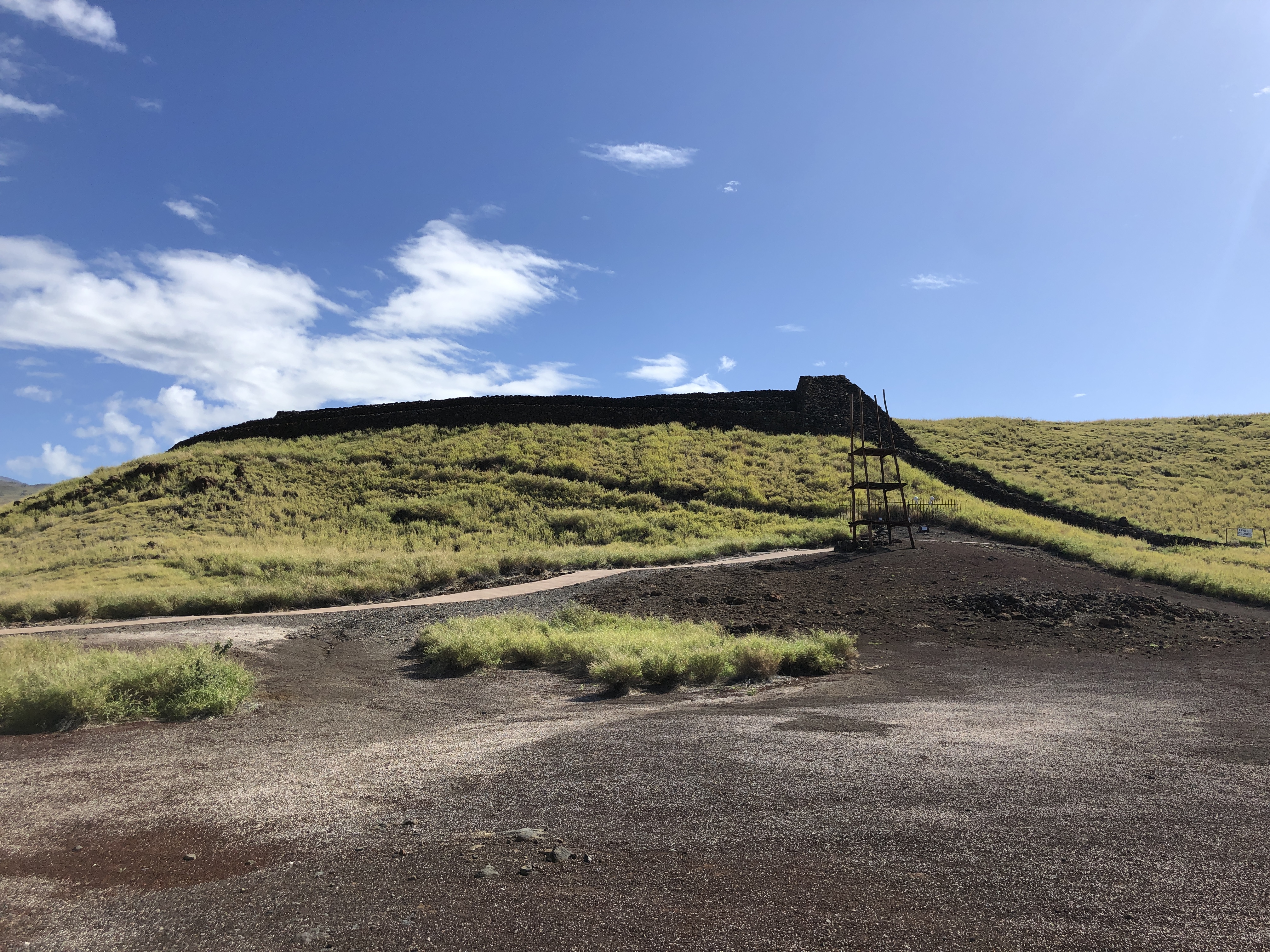
Pu’ukohola Heiau is a large structure which took almost a year to complete in 1791 ordered by the ruler Kamehameha I. It’s completion enabled him to be ruler of all the Hawaiian islands and it turned out to be the last major sacred structure built before outside influences changed traditional life permanently. It has been undergoing restoration and is now a National Historic Site. Thousands of men were assembled to build the original war temple. Because the temple had to be created using water-worn lava rocks they lined up for 20 miles forming a human chain to pass the stones one by one. Once completed the Heiau was used for many reasons ranging from state and war to ensuring rainfall, successful harvests, and abundant fisheries. Heiau’s were often associated w human sacrifices. This one includes a large platform for displaying wooden carvings. Pu’ukohola was only accessed by priests and chiefs. Today the Hawaiians honor the past by continuing to hold ceremonies in this Heiau, allowing only natives to attend. We couldn’t enter the Heiau but looking at the massive structure it was easy to imagine the seriousness of the ceremony’s that take place on the hill that looks down and out at the sea. This plaque is at the site:
Eon wale no ‘oukou i ku’u pono ‘a’ ole e pau – Endless is the good I have given you to enjoy
We traveled up the coast to a State Historical Park called Lapakahi. The restoration of the village provided the sense of a complete community from the late 1700’s right up to the early 1900’s. The trail winds through the area where the people planted and used the sea to access food.
This site included:
*a house built w a bamboo frame and grass thatching for the roof
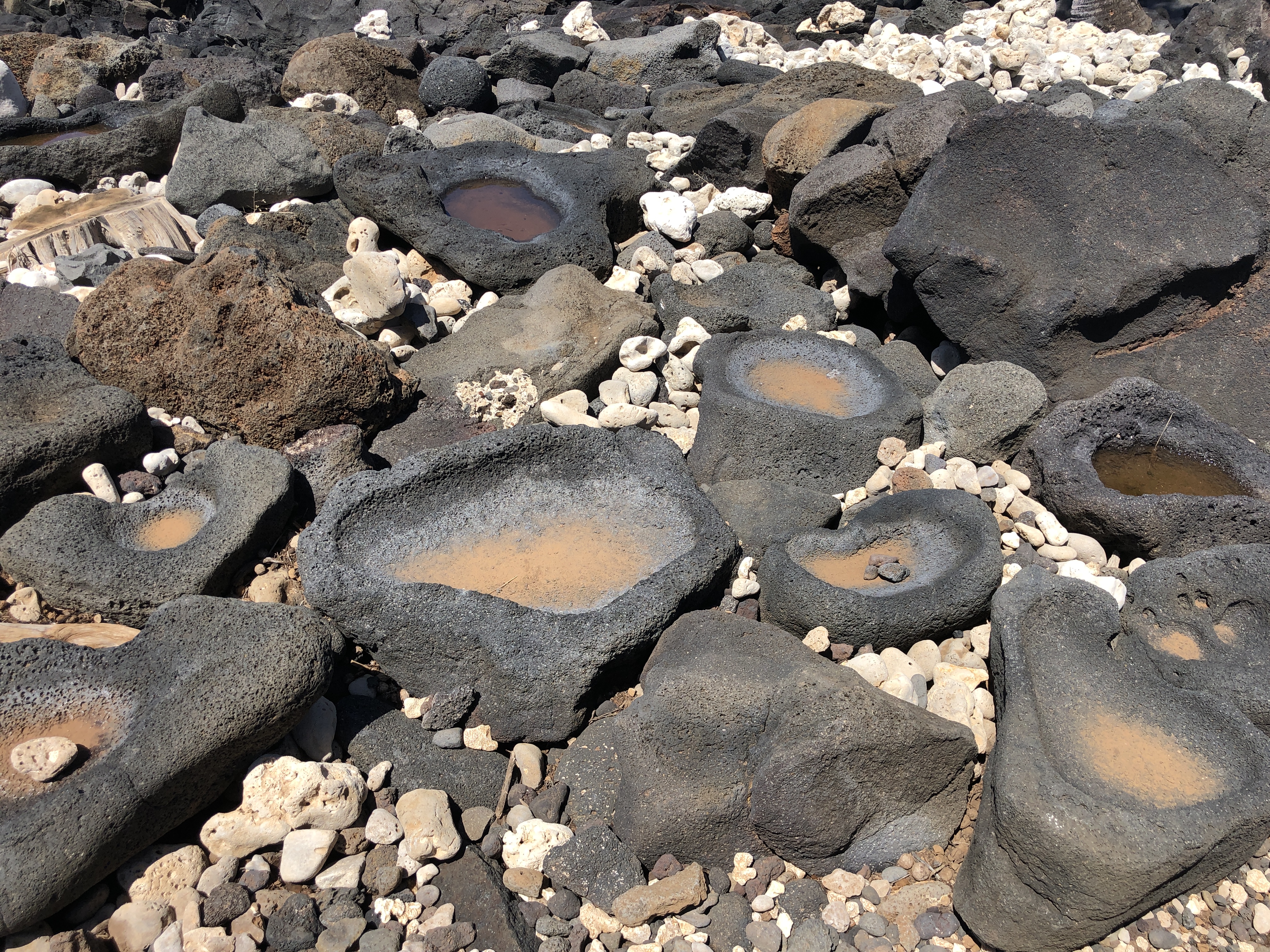
*hollowed out stones which they filled w salt water. The sun evaporated the water and the remaining salt was used for cooking and used to preserve the fish they caught.
*stone game board similar to checkers called Konane w black and white pebbles
*protected cove where they stored their canoes and fished from, we watched dozens of beautiful Yellow Tang fish and a sea turtle
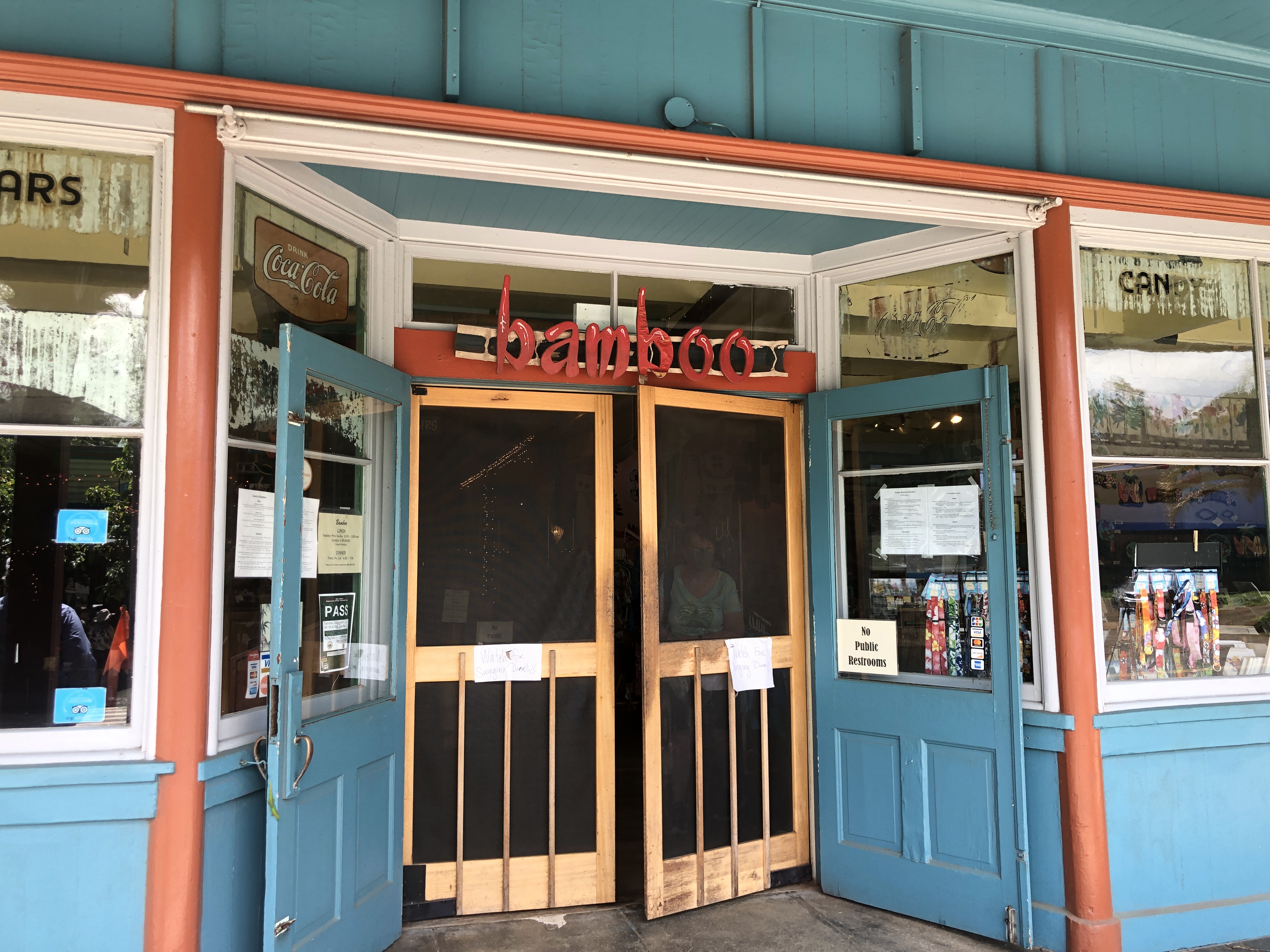
Ready for lunch after a morning in the sun we headed up the coast again and rounded the northern tip to the small town of Hawi and found the delightful restaurant called Bamboo Restaurant.
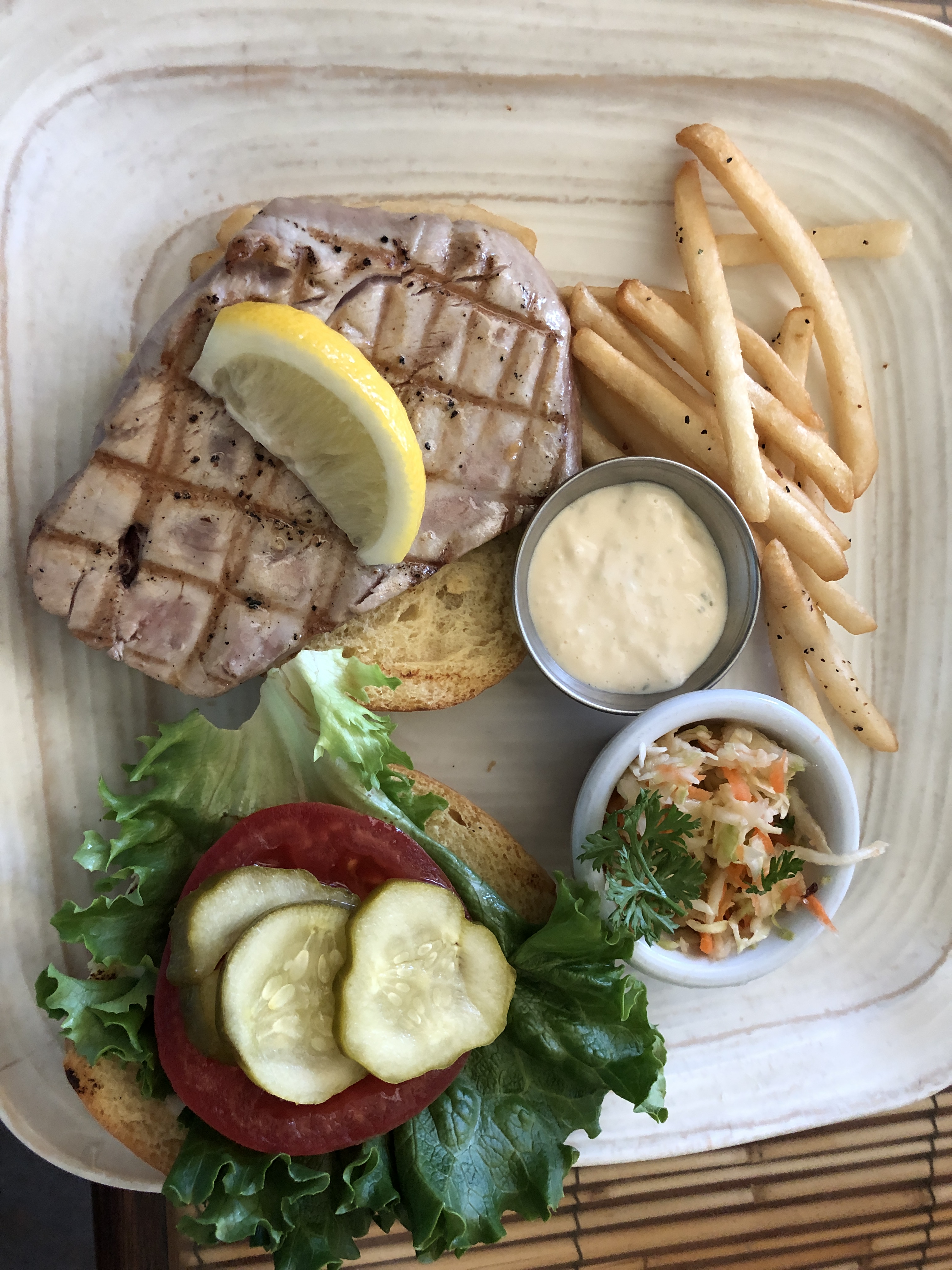
Don had a Cuban and I had grilled tuna served on a homemade bun – both Mr. Delish! The menu cover was sewn, almost looked like a quilt square. I had been considering a Pina Colada since I haven’t had one for about 35 years. The owner of Bamboo was a delightful woman who visited our table several times during the meal. When asked about the drink she said: “we use dark rum and a secret.” I thought no better time then the present, Pina Kohala. Yummy! I highly recommend Bamboo Restaurant – go for the food, art, ambience, signage, and the Pina Kohala!
We headed back to Captain Cook and our Airbnb after a delightful day.
Spot were the native Hawaiians launched their fishing boats.
They would fill these rocks with salt water. Once the water evaporated they’d scoop out the salt and use it for preserving fish and in cooking.
Fun and interesting place for lunch.
Tuna on home made bun – delicious!
Day 14, our last in Hawaii
We arrived at our favorite breakfast place on the Big Island, The Coffee Shack, when they opened at 7. They filled up fast. Nice to know that others rise early, even on Sunday. We had another yummy meal as we gazed out at the 100 ft tall avocado tree.
Back to our delightful Airbnb to pack for our long day of traveling.
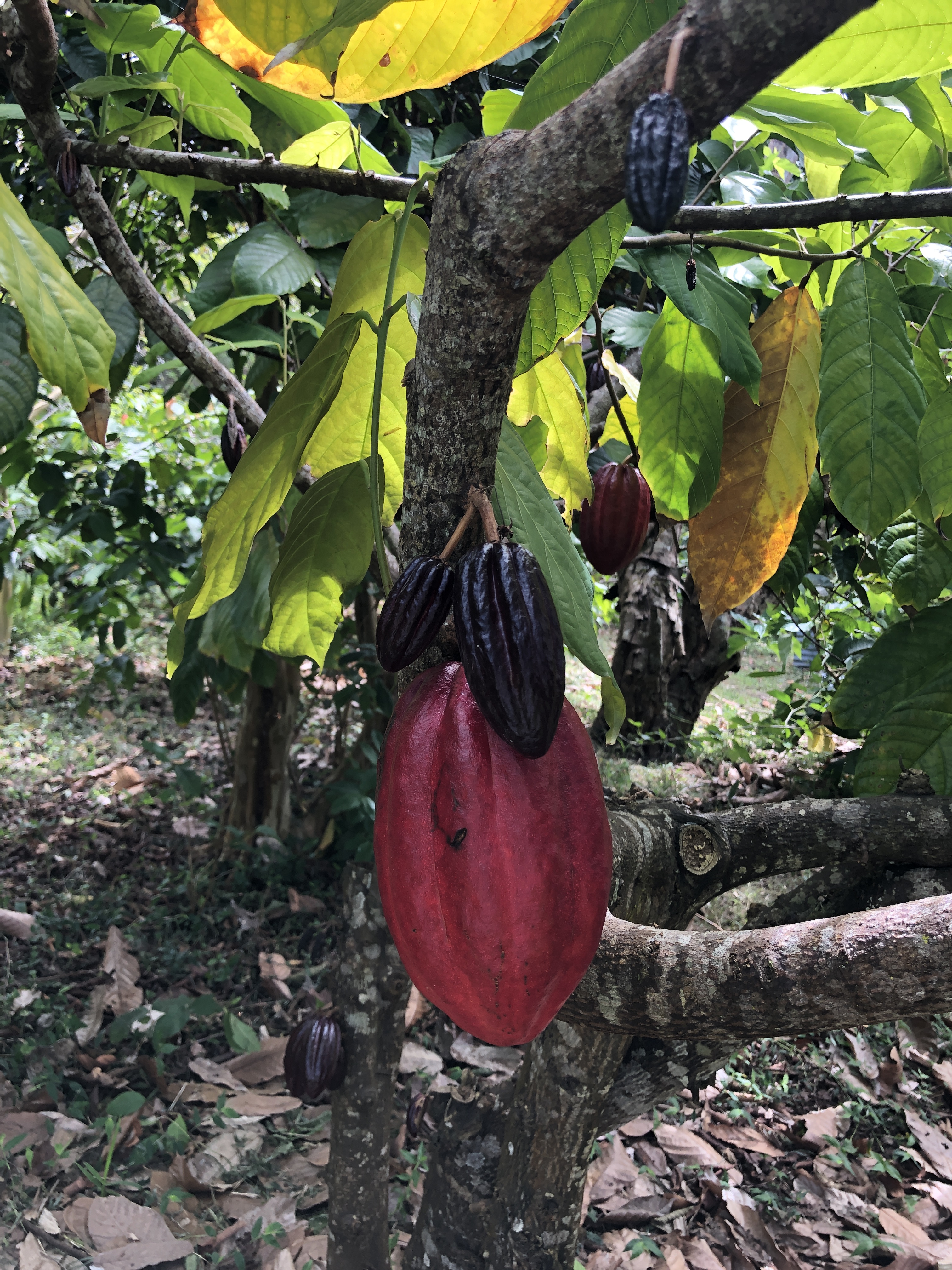
We had one big last visit to an organic farm called Kuaiwi Farm to learn about growing chocolate. The name kuaiwi means ‘backbone’ and refers to the long low stone walls/mounds that stretch from the mountains to the sea.
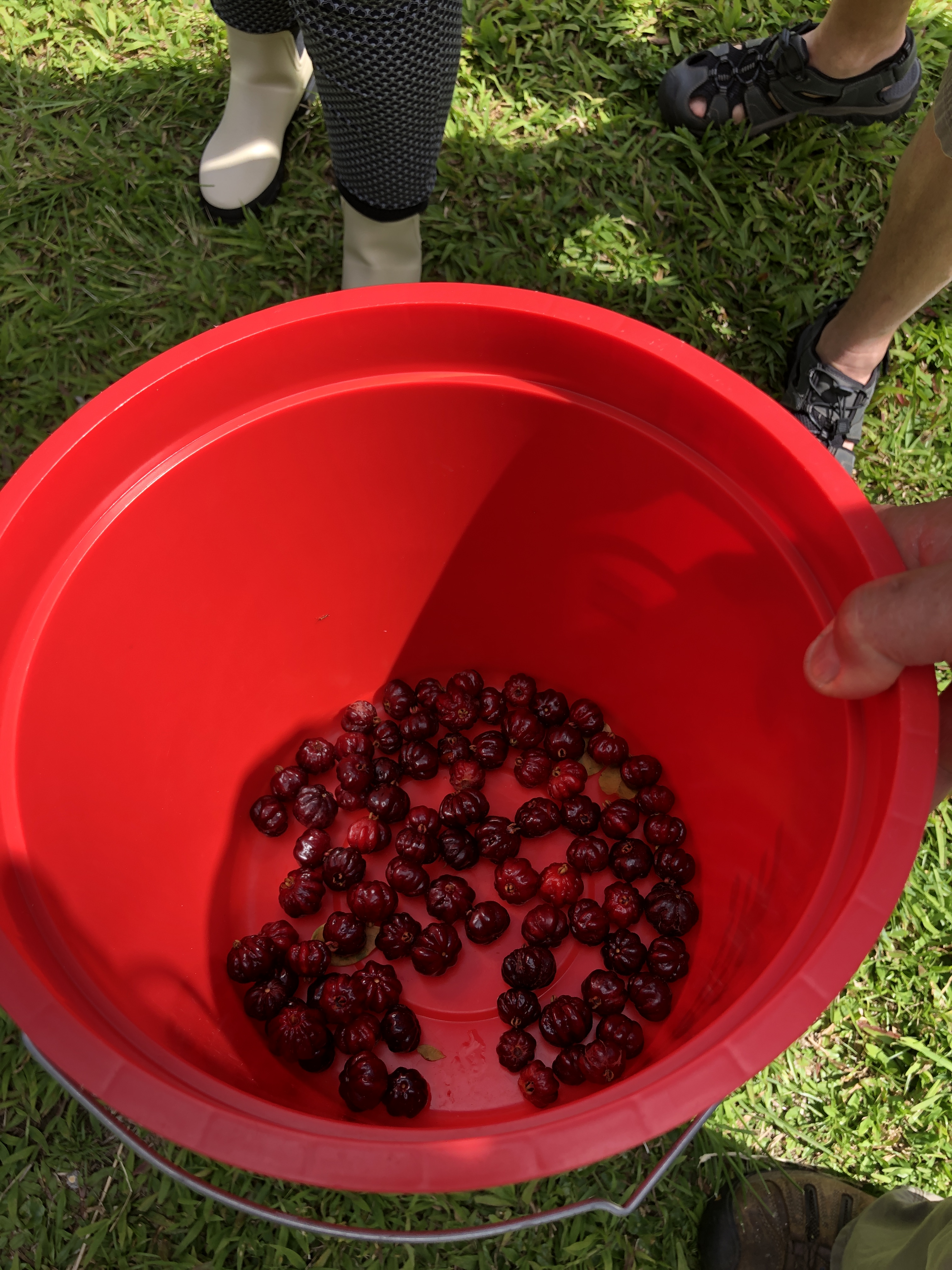
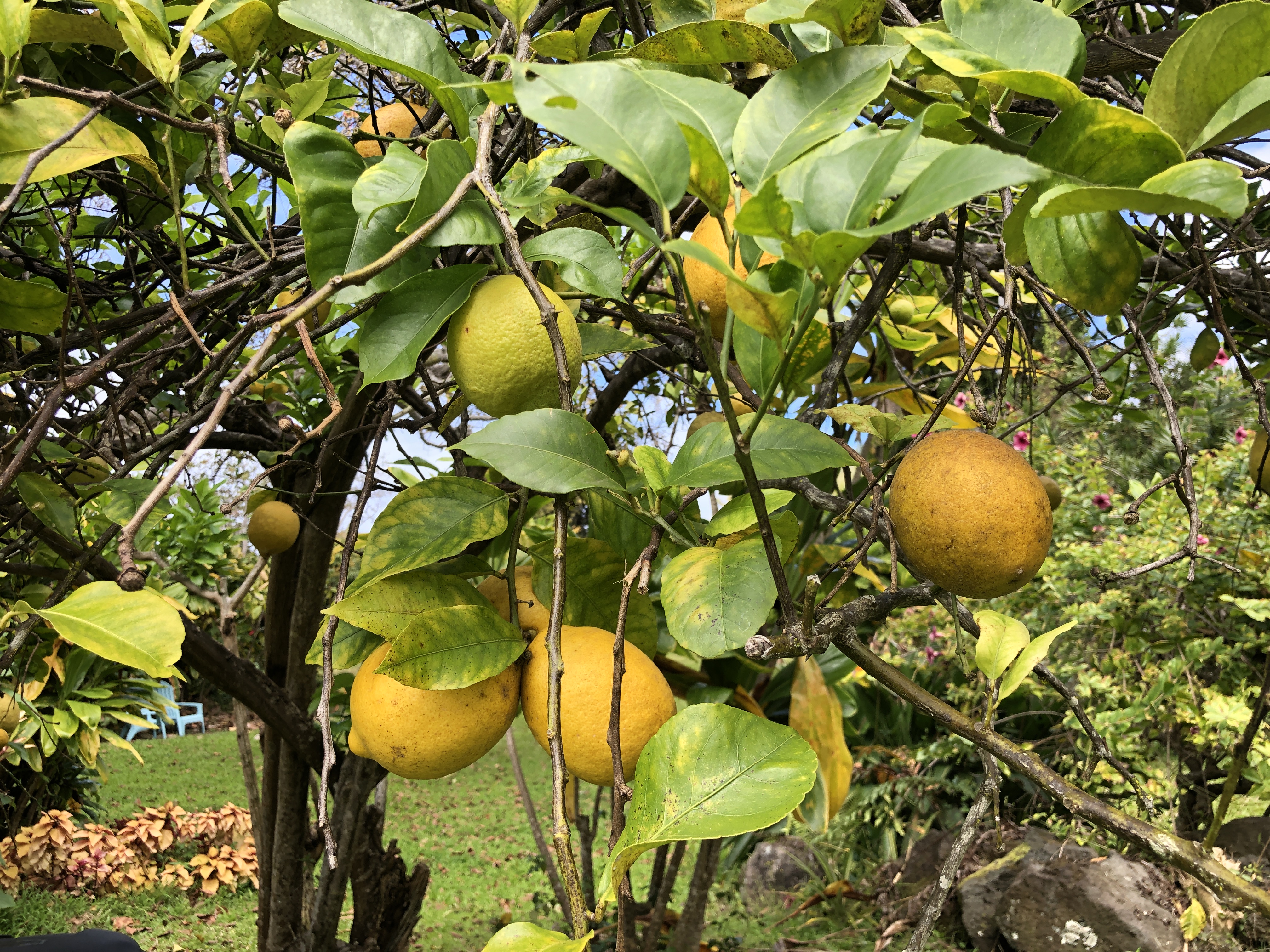
In addition to cacao (chocolate beans) we learned about growing macadamia nuts, tea, cinnamon, allspice, mango, Surinam cherries. They also grow tangerines, navel oranges, big lemons, Meyer lemons, bananas, coconuts, coffee, avocados, pineapple, and their vegetable garden was filled w much of what we grow in our gardens in Maine.
We tasted oranges, sugar cane, tomarillo tomatoes (don’t eat skin), coffee bean, the outside of the chocolate bean (slimy fruit), Suriname cherry, stem of cinnamon leaf (tasted like tea berry), and chocolate.
To get to the Kuaiwi Farm we drove on a winding one lane rutted dirt road that rose in elevation for about 5 miles. Fun to be off the main roads.
After the drive it was fascinating to learn that Una’s nephew teaches in the Hatchery program at Camden Hills Regional High School and he designed and helped finish their two geodesic domes in their home on the Kuaiwi Farm. Small world indeed!
We headed down to the waterfront for our last afternoon meandering along watching people enjoy themselves swimming, parasailing, playing cornhole, windsurfing, fishing and gazing out at the blue green water of Hawai’i one last time. We were feeling so grateful and appreciative for this adventure.
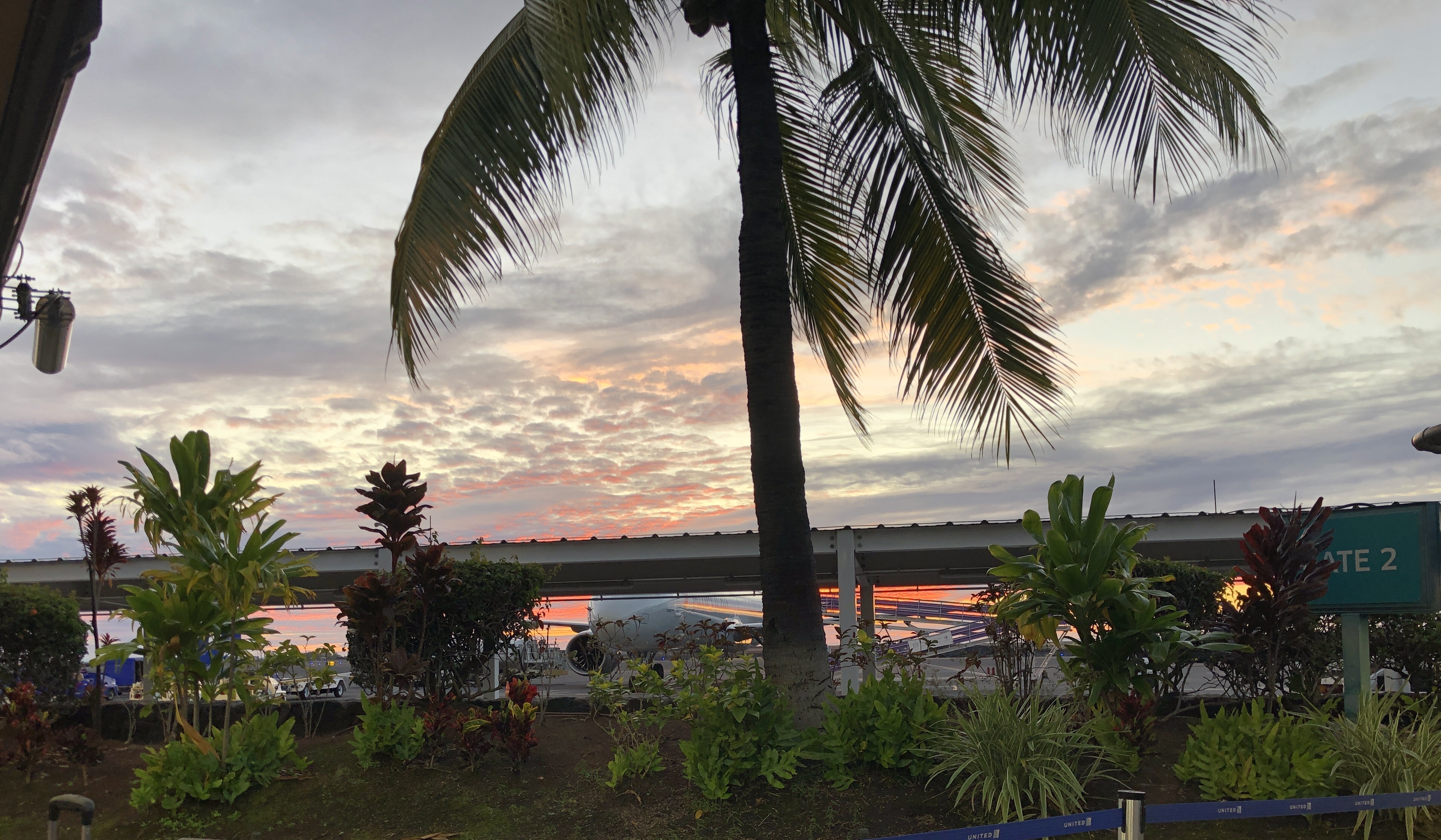
We headed to the Kona International Airport to begin our 25 hour trip home. The sun was setting as we boarded the plane at 6:45. We flew to Denver, to Boston, bus to Portland, drove home to Union. We went from 85 degrees to 40 degrees.
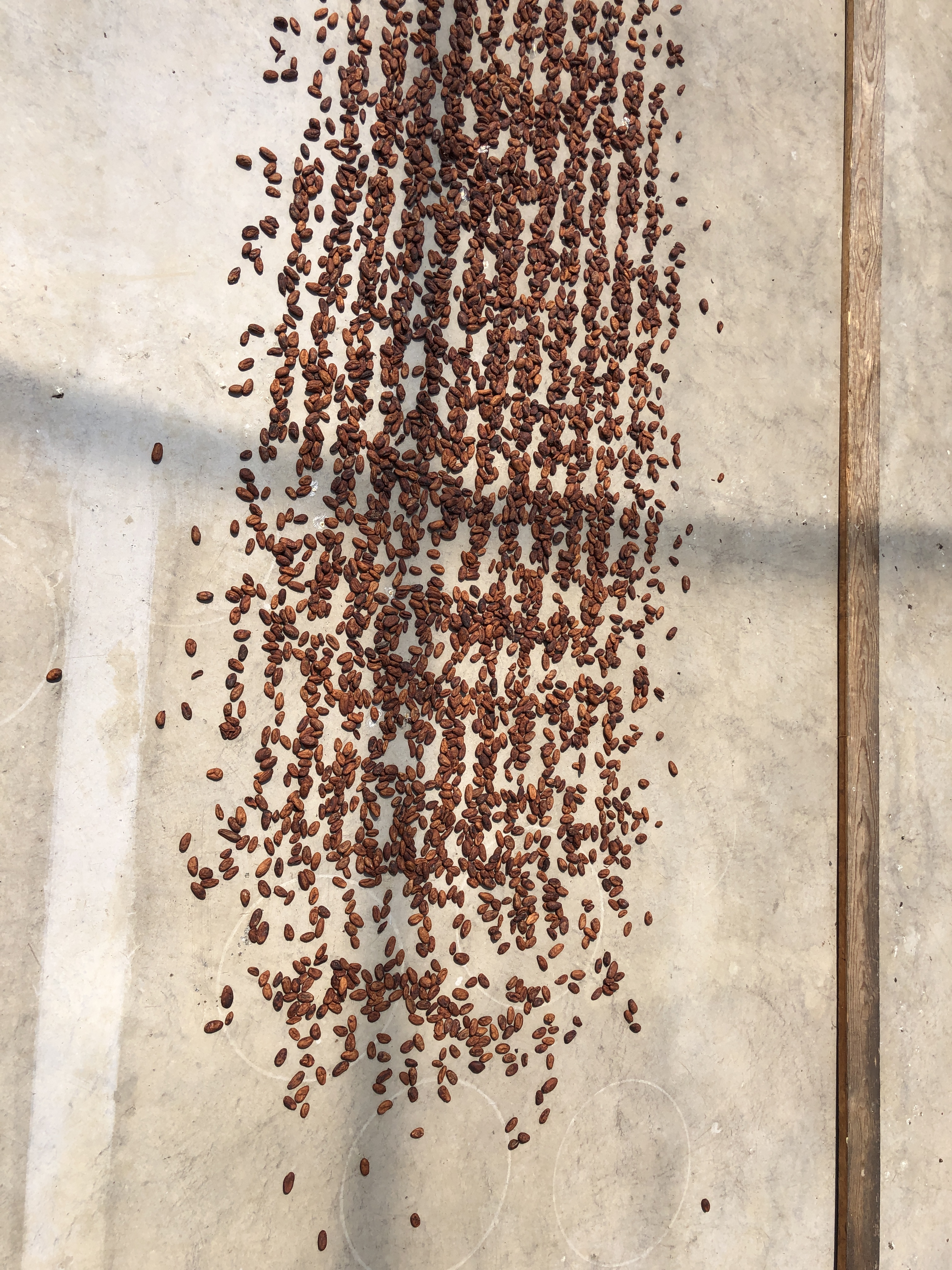
Coffee beans drying out – takes about 4 days.
Suriname cherries
Banana trees were very tall.
Chocolate growing
Meyer lemon tree
One fact that we found fascinating was that when the Polynesians (the first people on the Hawaiian Islands) traveled to Hawaii there were no native things to eat. They brought bananas, coconuts, pigs, and taro root in their boats. Just imagining them traveling with these items is interesting.
Our last sunset in Kona just before we boarded the plane to start our trek home.
Traveling can be costly but there are ways to make it less expensive. As I said at the beginning of this post I love to travel so I save to be able to do so. We had conversations beforehand to consider what each of us wanted out of the trip. I did research beforehand to find places that met our interests as well as stretch our thinking. It’s important to me to have a list of possibilities and at the same time meander to find ‘stuff’ to do. Many things and places were unplanned and probably the most fun to visit. I’m really grateful to have had the opportunity! I took about 100 photos and have included some of my favorites in this blog post. Feel free to contact me at meartsed@gmail.com or leave a message below if you have questions or wonderings. Read about my trip to Ireland from last spring at THIS LINK.
Last week the final story on the nightly news was about two 81 year old woman who just completed a trip around the world, visiting all 7 continents, 18 countries, in 80 days. Their message was: “step out of your comfort zone, makes some plans, and live. Don’t be afraid to dream.” I agree!
Argy Nestor
Arts Educator, Blogger, Artist, Connector meartsed@gmail.com
https://sites.google.com/view/anestor/
Argy’s Blog
The purpose of this blog is to share stories about people and places; and to celebrate the amazing work (and play) that students, educators, and organizations are doing in and for arts education. In addition, the blog has a plethora of resources and innovative ideas. This forum gives blog readers the opportunity to learn from each other. It is essential that we listen, learn, and collaborate in order to build on teaching practices for the benefit of every learner in Maine and beyond.





























 me arts ed