Archive for the ‘funding source’ Category

h1

NEA Funding

September 1, 2018

Student Achievement Grants

Fact: Sometimes educators need outside funding for classroom resources. The National Education Association (NEA) has Student Achievement grants available for NEA members. This grant program has provided funding to thousands of educators to enable them to take the lead on a wide range of projects to improve student learning. LEARN MORE.

Two levels of funding are available: $2,000 and $5,000. Grants fund activities for 12 months from the date of the award.

Grant application instructions.

h1

Ticket to Ride Funds Available

August 21, 2018

Online application

Unveiling of the Rob Shetterly portrait of Kelsey Juliana at the Samantha Smith Challenge called The Synergy of Change: Children and Adults Inspiring Each Other, participation by Leonard Middle School students. Ticket to Ride funds provided.

The Ticket to Ride program provides funding to defray the cost of travel for Maine schools wishing to visit Maine arts based venues and events as part of a well-rounded curriculum. The goals of the trip should support student learning and be aligned with the Maine Learning Results Visual and/or Performing Arts standards.

Any PK-12 school in Maine with a documented free and reduced lunch student population between 30 and 49 percent is eligible to receive support of up to $300 each school year. Any PK-12 school in Maine with a documented free and reduced lunch student population of 50 percent or greater is eligible to receive support of up to $500 each school year.

Follow up work from trip by Laura E. Richards Elementary School Kindergarteners to Public Theater in Lewiston to see Everybody Loves Pirates. Ticket to Ride funds provided.

Applications are accepted throughout the year and funding will be made available approximately one month after they are submitted. Schools may apply more than once a year as long as they are applying to attend a different event, bringing a different student population or have not expended their eligible amount.

This program is currently funded thanks to the generosity of the Betterment Fund and proceeds from The Art of Giving Gala sponsored by DownEast Magazine.

Submission Instructions

NOTE: The Ticket to Ride application is now located in the Grants Management System (GMS).

Please apply for the funds at least 3 weeks before the trip you are planning to take.

  1. Download the Ticket to Ride Application Help Sheet for helpful instructions on completing your application.
  2. To access the Ticket to Ride Application Form log into our Grants Management System. If you do not have an account click “New User?” to create one. The account is free and you can browse application requirements without applying.
  3. When you have logged in, locate the Ticket to Ride grant description.
  4. Read the guidelines, complete and submit the application. After your application has been submitted you will receive a confirmation email.
  5. Completed applications must be submitted at least 3 weeks before the scheduled trip in order for the application to be processed in time.

Parties interested in funding or partnering on the Ticket to Ride program are asked to contact Argy Nestor at argy.nestor@maine.gov or 207/287-2713.

h1

Arts Learning Grant Recipient

July 18, 2018

Union Elementary

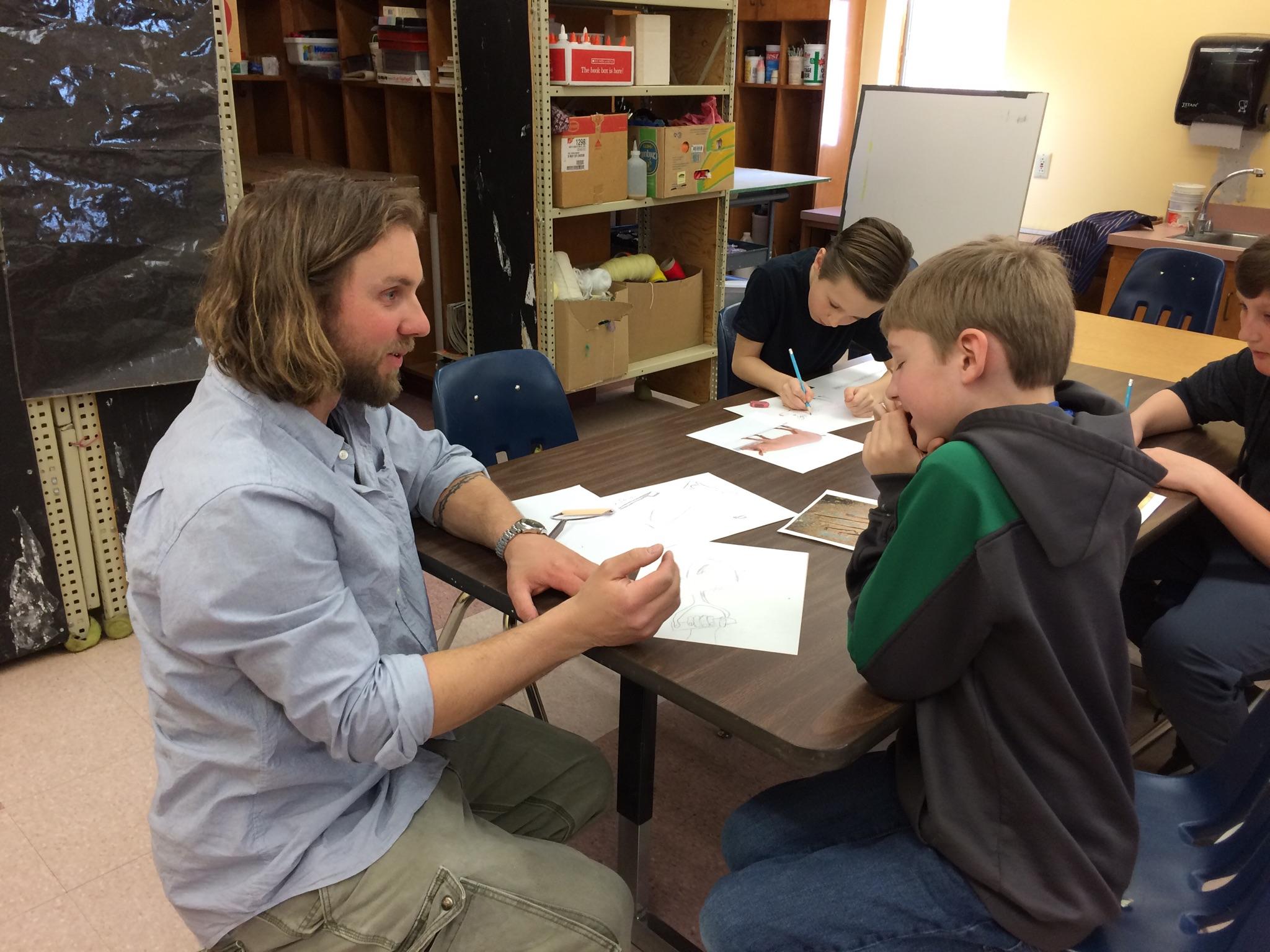
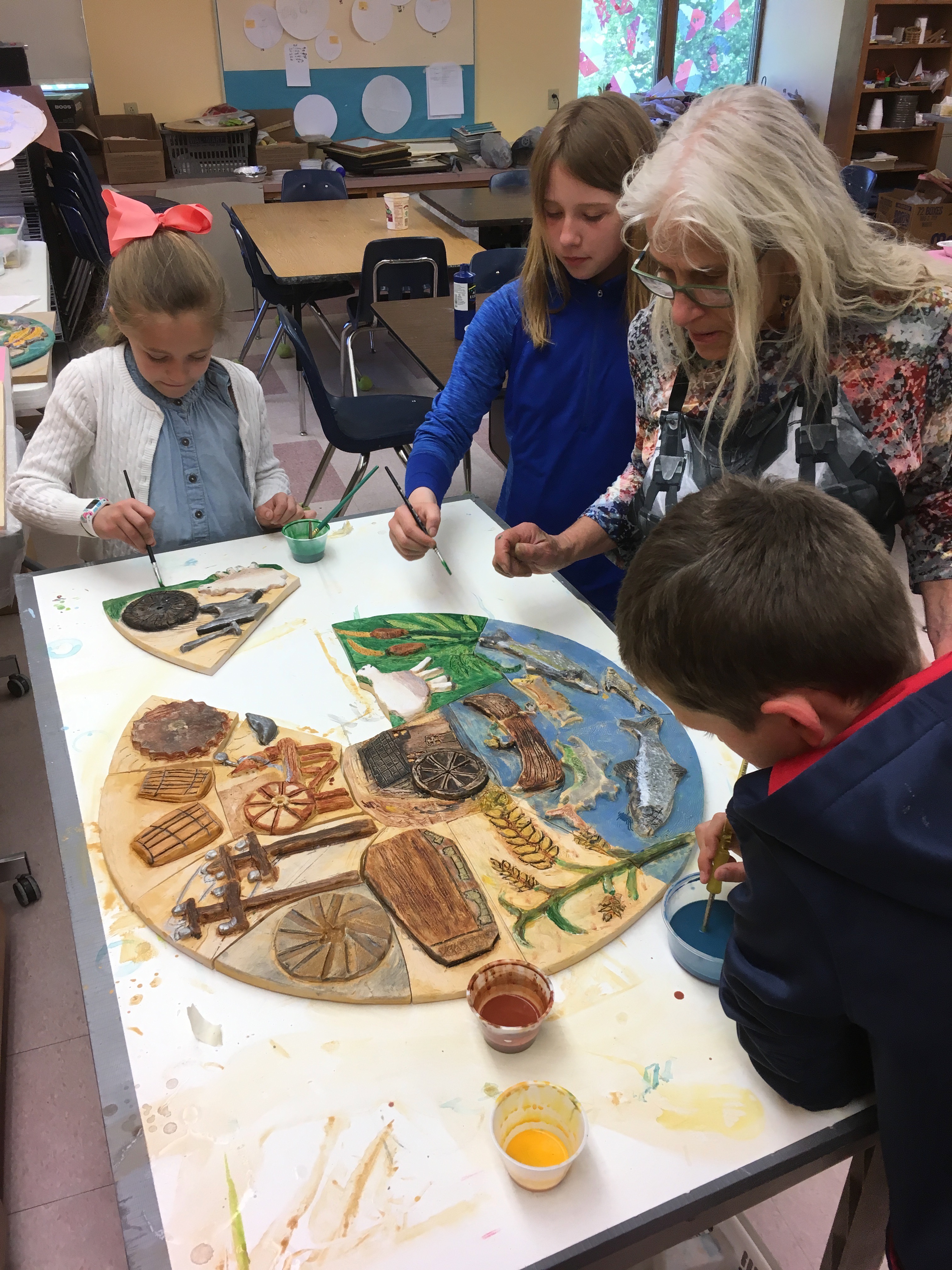
Over a two month period this spring art teacher Anthony Lufkin and teaching artist Randy Fein collaborated to provide an outstanding learning opportunity for all the preK-6  students at Union Elementary School. The residency was funded by an Arts Learning grant funded by the Maine Arts Commission.

Union School has a long history of providing learning opportunities in visual art that go above and beyond the curriculum. When the school was built in 1987 George Mason provided two relief murals as part of the Percent for Art program. He followed that work with a month long residency with middle school students and created a relief tile mural based on Greek Mythology, an interdisciplinary unit. Over the years there have been several residencies with artists and large scale integrated projects that involved all of the elementary students and when the D.R. Gaul Middle School was housed upstairs, grade 7 and 8 students participated.

It was a pleasure to watch this project unfold and develop, the steps involved are too many to count, the commitment from all staff to help with the success, the student learning observed and so much more. It is easy to forget during the day to day details of “school” that these type of large projects hold meaning and learning way beyond the actual project. I suggest you consider taking on something like this, if you haven’t done so in the past.

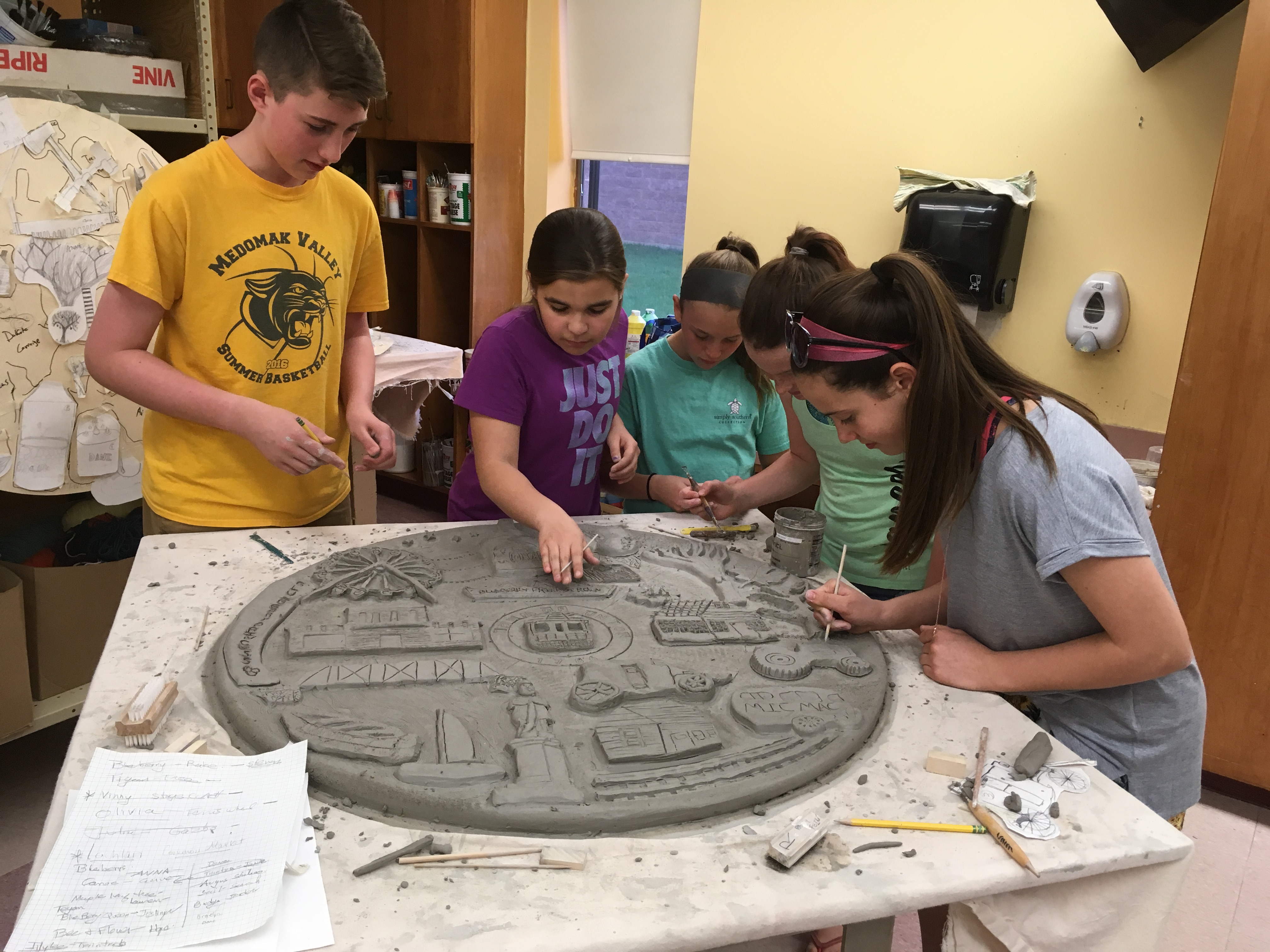
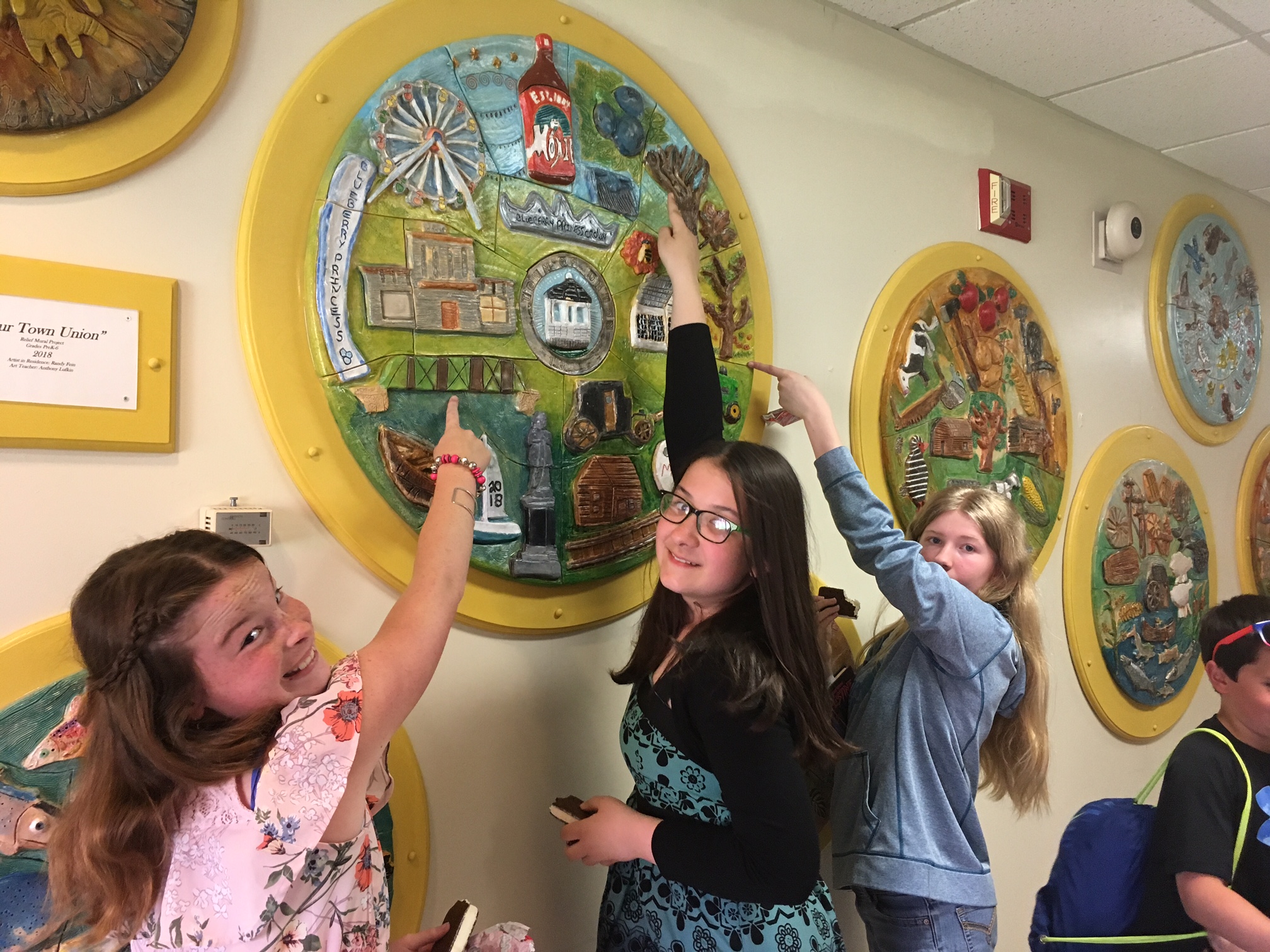
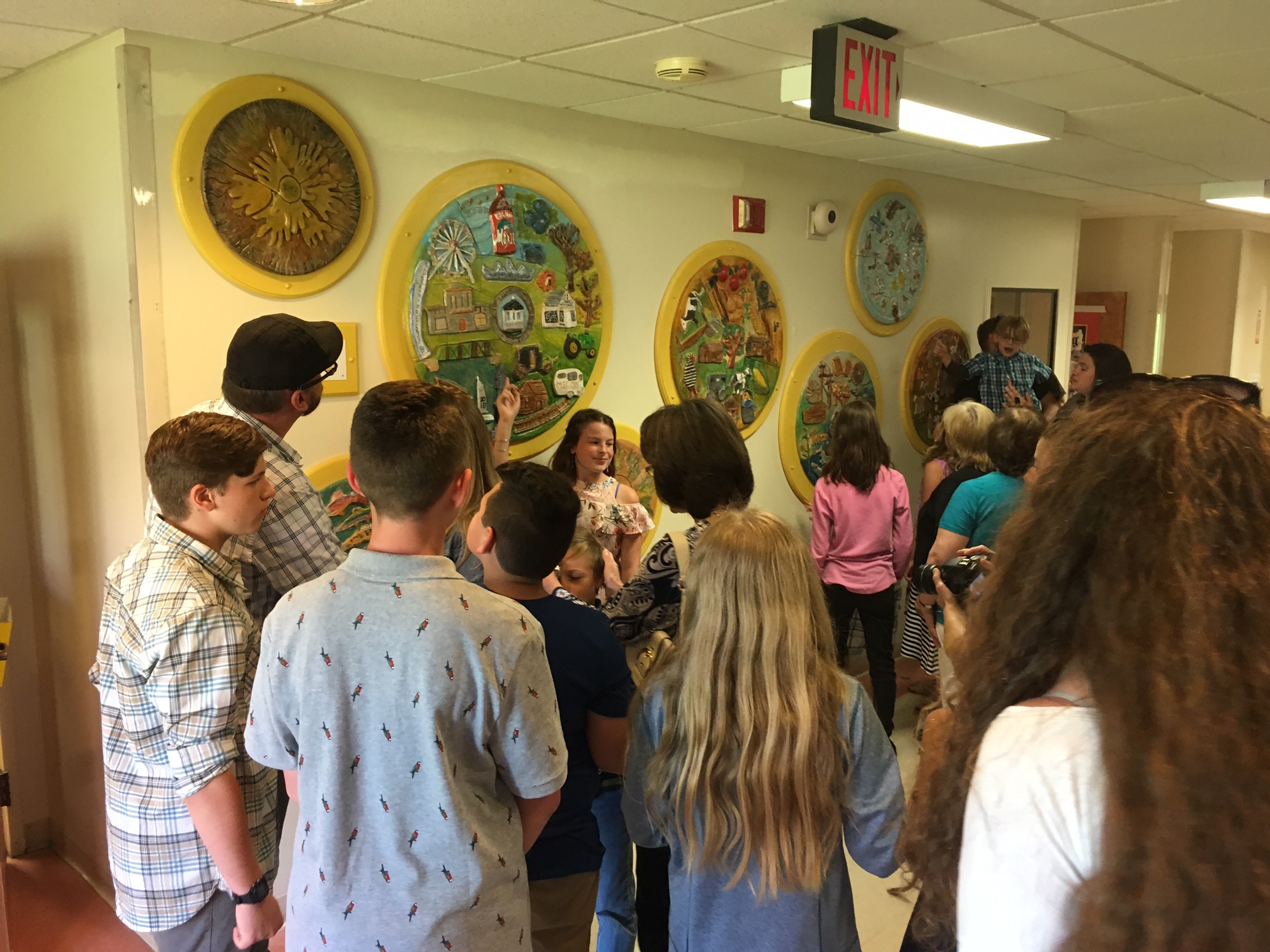
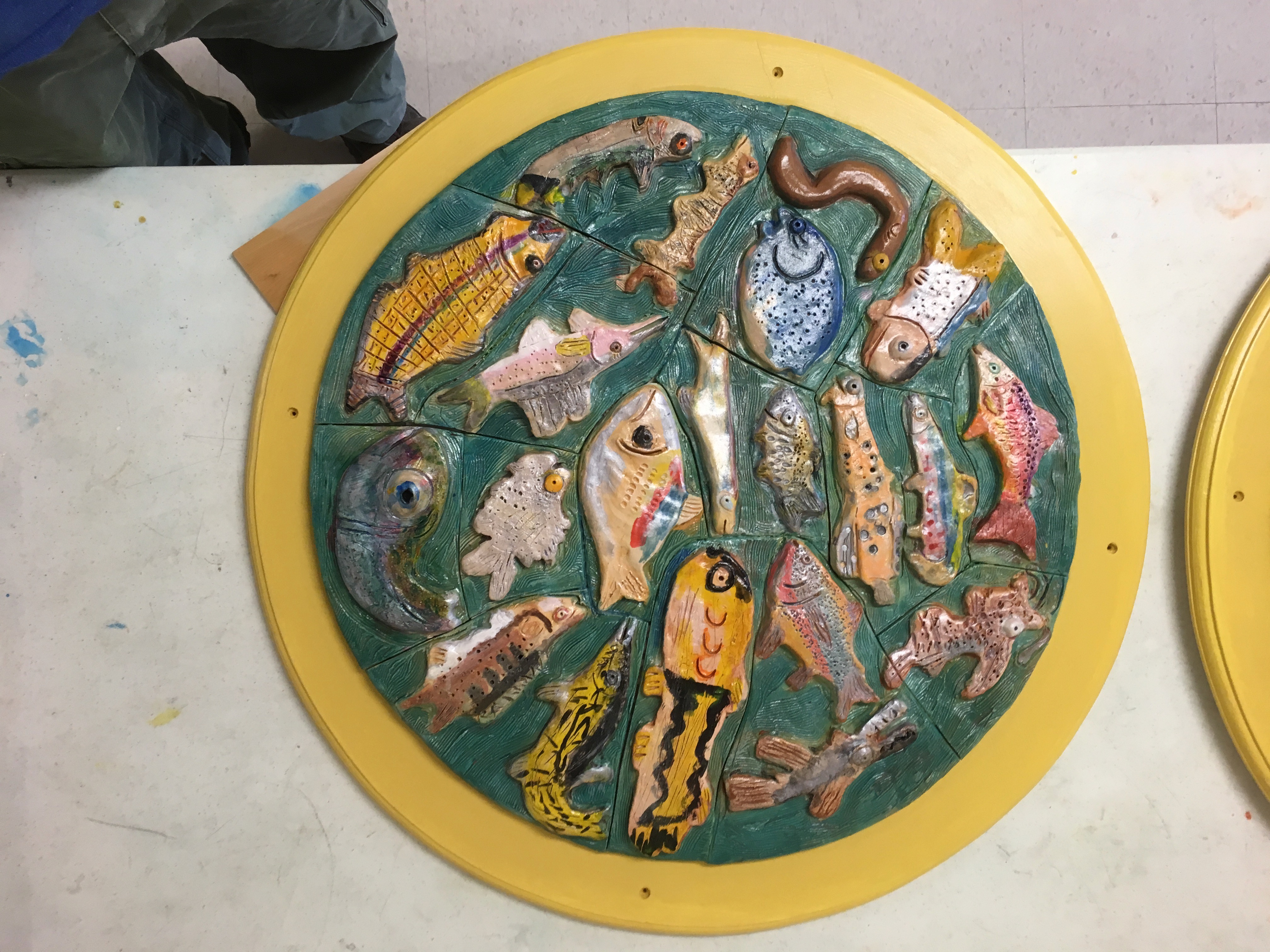
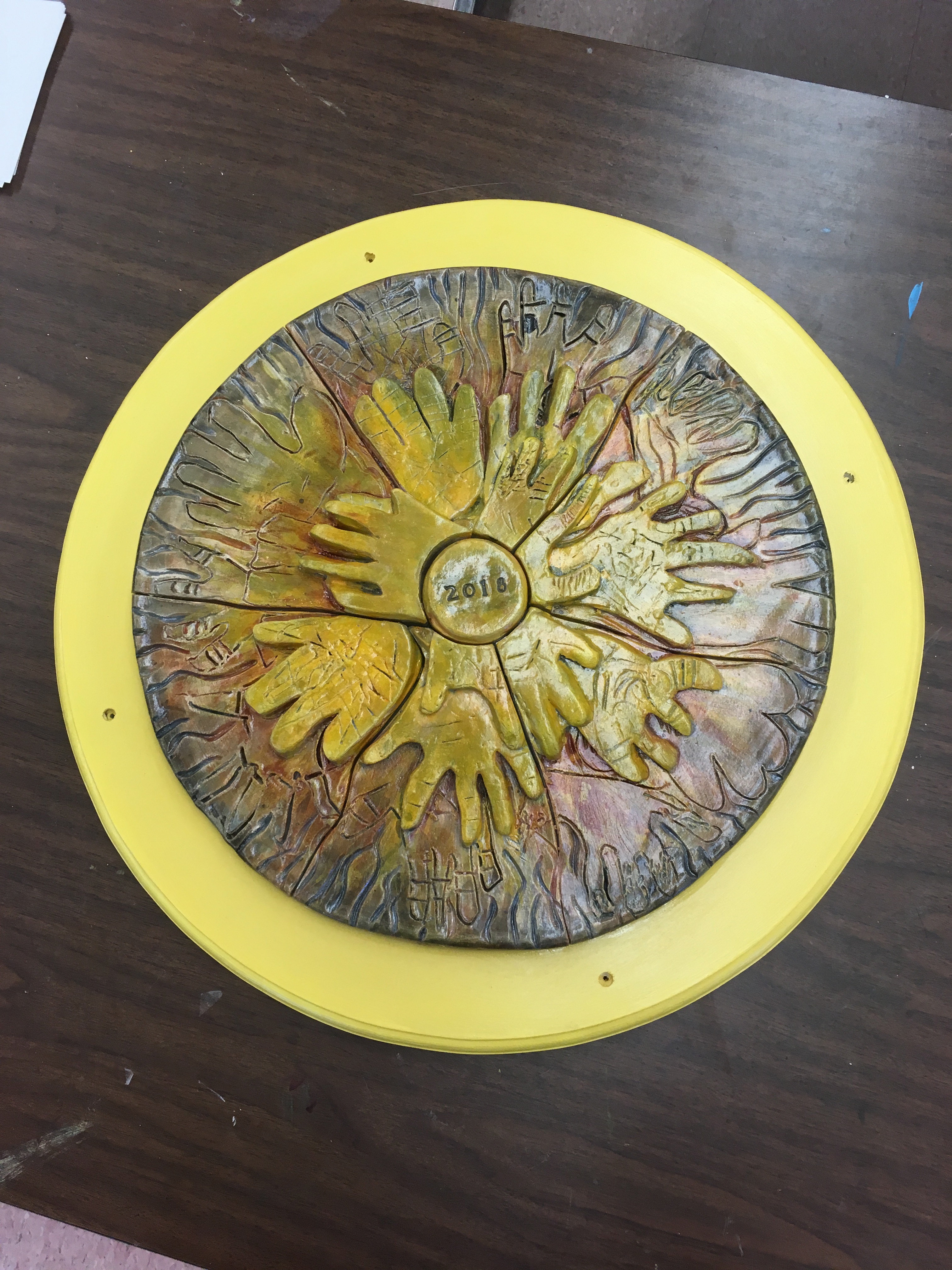
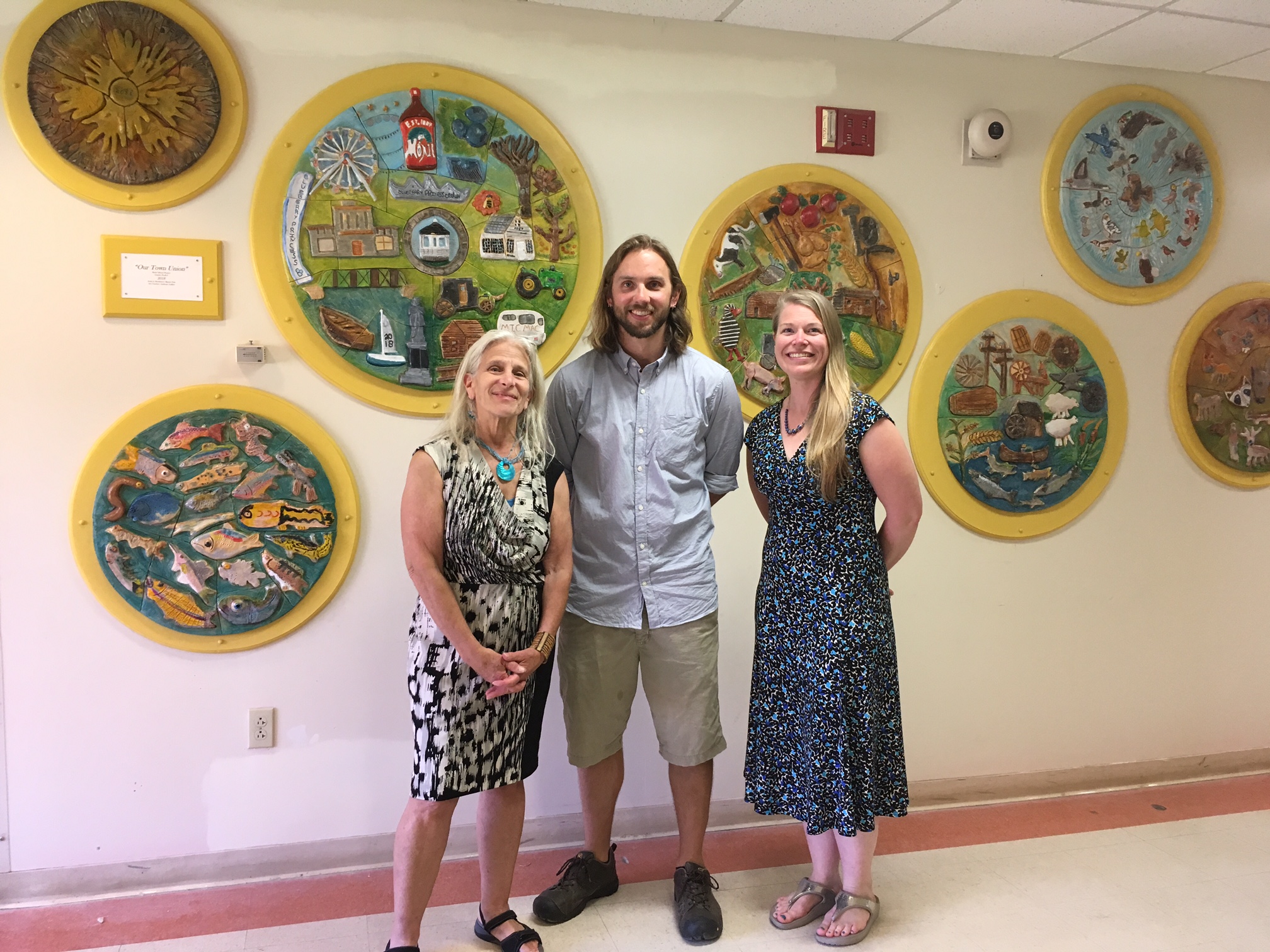
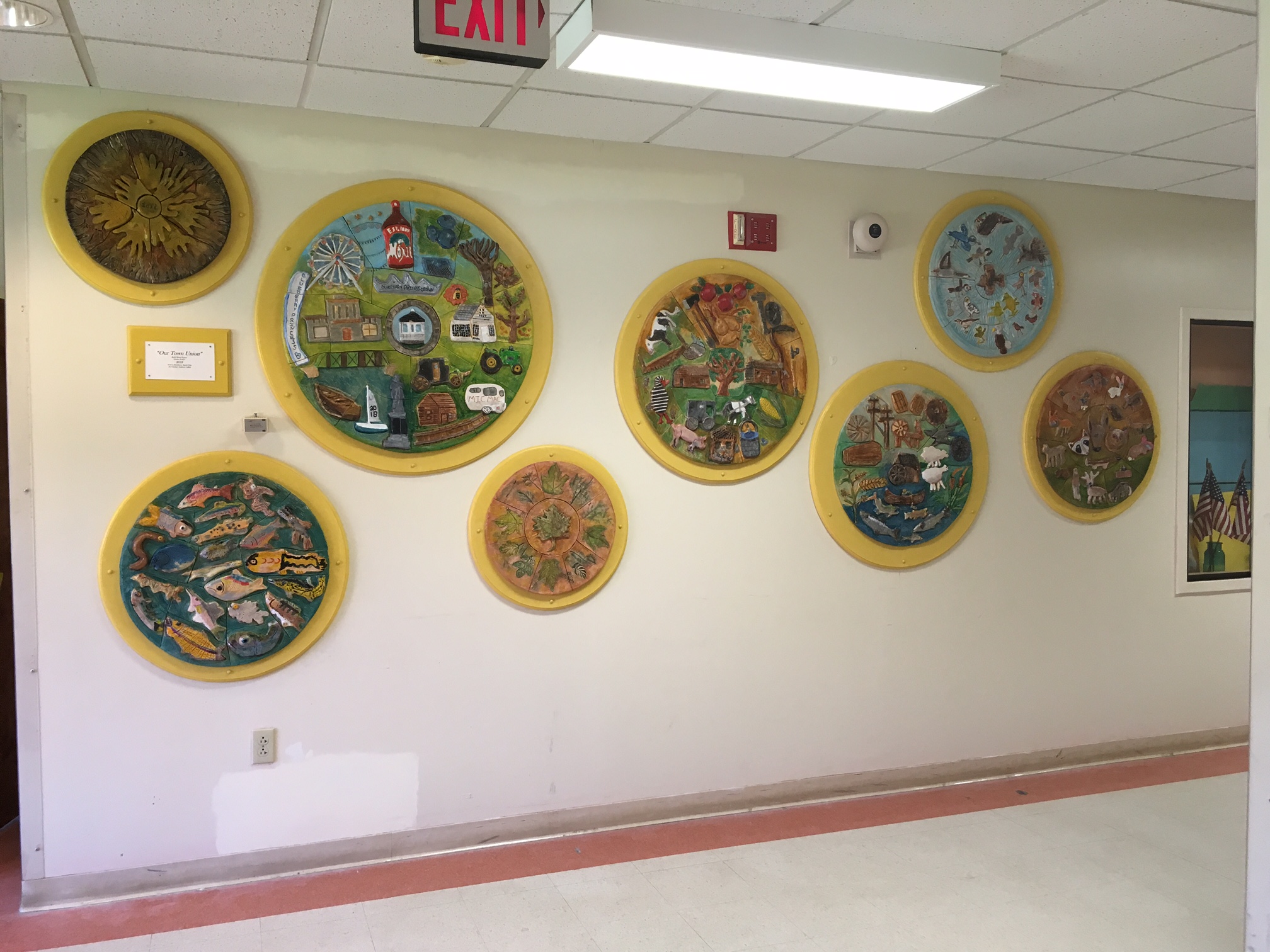
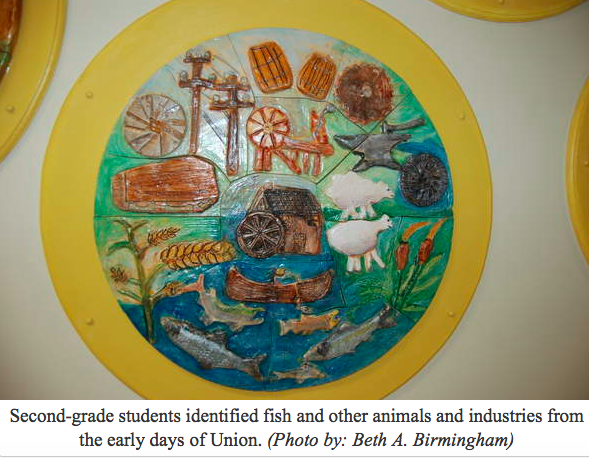
The theme of the ceramic relief mural is “Our Town Union” and had been planned for almost 2 years before its completion in June. The mural celebrates the community of Union, including the history, environment and architecture and how students interact and connect with these components. The completed work will continue to educate future learners, young and older, about their community.

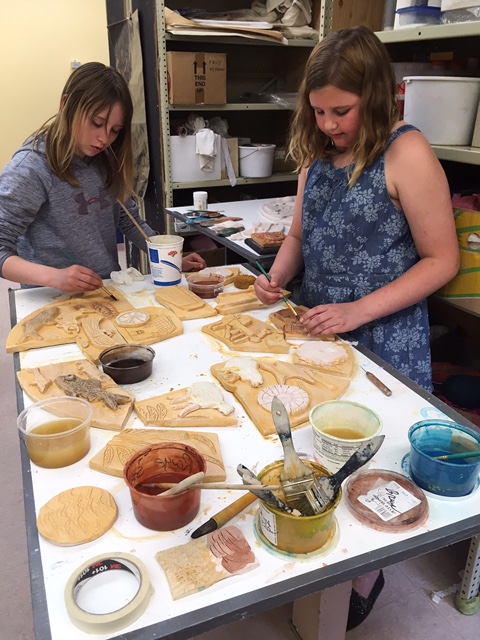
Hopefully you can get a sense of what it involved from the description and the photos embedded in the blog post. Please don’t hesitate to contact me (argy.nestor@maine.gov) about the MAC Arts Learning grants. Or contact teaching artist Randy Fein, her information is on the MAC teaching artist roster. Or contact art teacher Anthony Lufkin, who is the 2018 Knox County Teacher of the Year.

This project was funded by an Arts Learning grant from the Maine Arts Commission ($2,300), the Perloff Foundation Fund ($2,000), and from the Maine Space Grant Consortium ($1,000).

Thank you to Anthony, Randy, and the school principal, Christina Wotton for the information in this blog and for working together with other staff to make this project so successful!

Describe the overall goals/plans that you’ve carried out with this learning opportunity for Union School students.

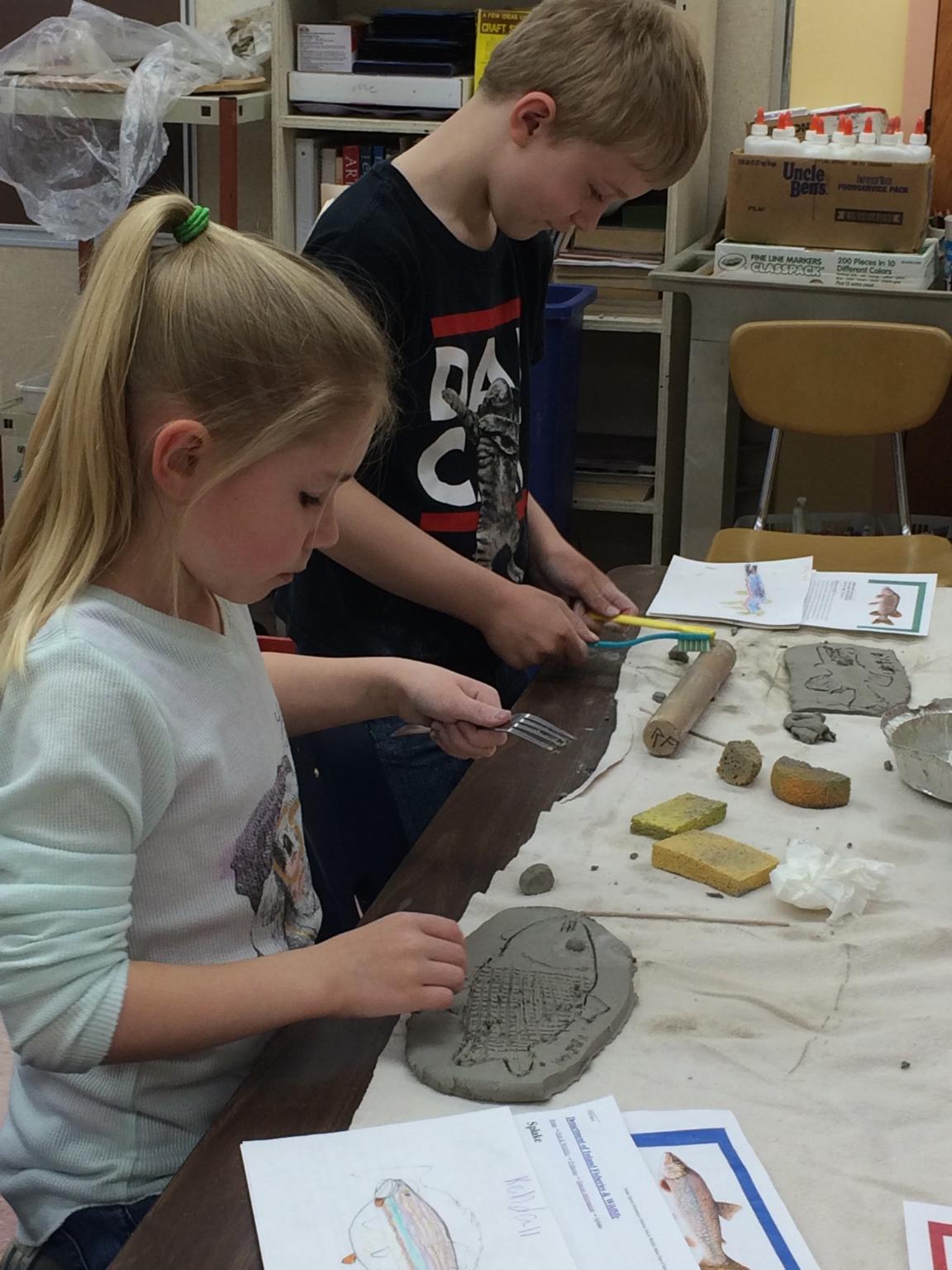
The overall goals for this project were two-fold. First and foremost, it is an art project with instruction and experience focusing on the medium of clay, but also with emphasis on communication through the medium. Throughout the process students have had to quantify their image development, making sure they are utilizing the medium to make their message clear, whether it’s a specific icon of Union historical significance, or the recognition the unique and identifiable features of native species. As a collaborative installation, it has become an experience that will be solidified in time and place.  

The second component, was to help foster connections with other subject areas and connect students with the local ecosystems and history of the community. Classroom teachers have been very helpful introducing the topics through multiple lenses.  Students have had to research their subjects, and then use that research to educate their image development. Members from the Union Historical Society came in and presented to students in grades 4-6, giving them first-hand information about some of the past events that helped shape the town into what it is today. As students images developed through sketching and then sculpting, their understanding of the subject grew.  They also learned much more about working with clay as a medium, and some of the logistics of putting together an installation like this. 

What do you see/know are the greatest benefits to students in having an artist in residency? What does Randy bring that supports/enhances your curriculum Anthony? 

Having an artist come in through a residency like this does several important things.  First, it is a “new” experience for students, having someone different offering new perspective and something of a “revitalizing” of the art concepts being taught. It also tends to change the structure of instruction giving students a chance for more in depth work and a closer look at some of the components of creating artwork in professional practice. Students have been able to really analyze the subject of their imagery and were committed to making a clear representation. It creates more instructional opportunity as well. With two art instructors working in relatively small groups, students receive more individualized instruction.  

What do you hope that students will remember or will be saying in the near or far off future about the opportunity to learn this way?

We hope that students have created a connection to this project whether through working with Randy, working on something of this scale, or with the subject matter they helped to generate. The emphasis of the project, both to make it happen, and to create the cross-curricular connections have transformed the normal schedule and so that alone may also have had an effect on student perception. Hopefully, students will recall the information learned through this process by being a part of it and by seeing it regularly throughout their elementary experience. With the nature of being an installation piece, it will hopefully remind students of the experience, give them a sense of pride in the work they were able to accomplish, and help scaffold future learning and understanding about art and the connections to community and environment. I think that students will become more aware of the opportunity this project has been as we get back into a more routine schedule again. I think that they will begin to recognize the hard work and time it takes to create something like this. I anticipate them to say in the next few years, “I did that,…its represents…”.   

Hopefully, they will appreciate the opportunities they have had to work on something for extended periods of time with direct instruction from both Randy and myself.  Hopefully, they will appreciate and help advocate for these opportunities in the future. 

Stories

There were many interesting conversations early on with students especially around the topics of community and local development. Many students related to the community components based on where they live and how the natural and man-made resources have structured community as it is now.  hey were able to identify features in the landscape or structures and were able to contribute to the conversation based on their experiences. Some were able to describe the lasting imprints on the landscape from Native Americans, the railroad, and several of the many mills. One student described the arrow heads his family had found along the St. George River. Another talked about the dam at Morgan’s Mills. Many younger students also connected with their organisms whether from personal experience or from experiences by family members. I was surprised at how many had seen a bear! They definitely like to elaborate but there are clearly past events that could be the basis for some good folk lore.

ARTICLE from Village Soup about the residency.


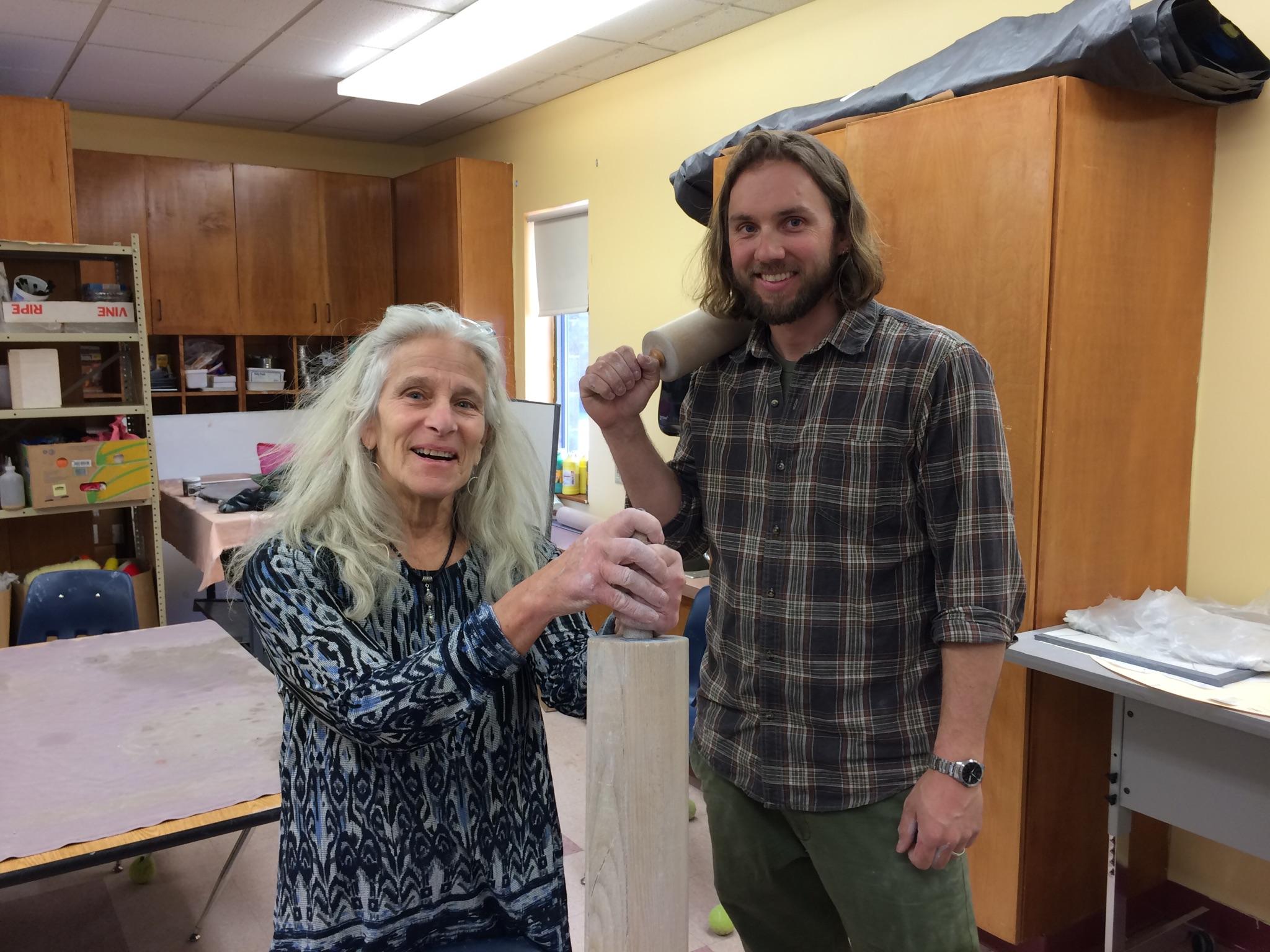
Randy, Anthony, and Christina

h1

In Today’s News

June 18, 2018

Union Elementary School

For the past several weeks artist Randy Fein has been working side by side with art educator Anthony Lufkin and the students at Union Elementary School to create a community themed clay mural. The project was partially funded by the Maine Arts Commission. Check out the article and photographs from the Village Soup at THIS LINK.

h1

Arts Learning Grant Recipient

April 18, 2018

Learning Works

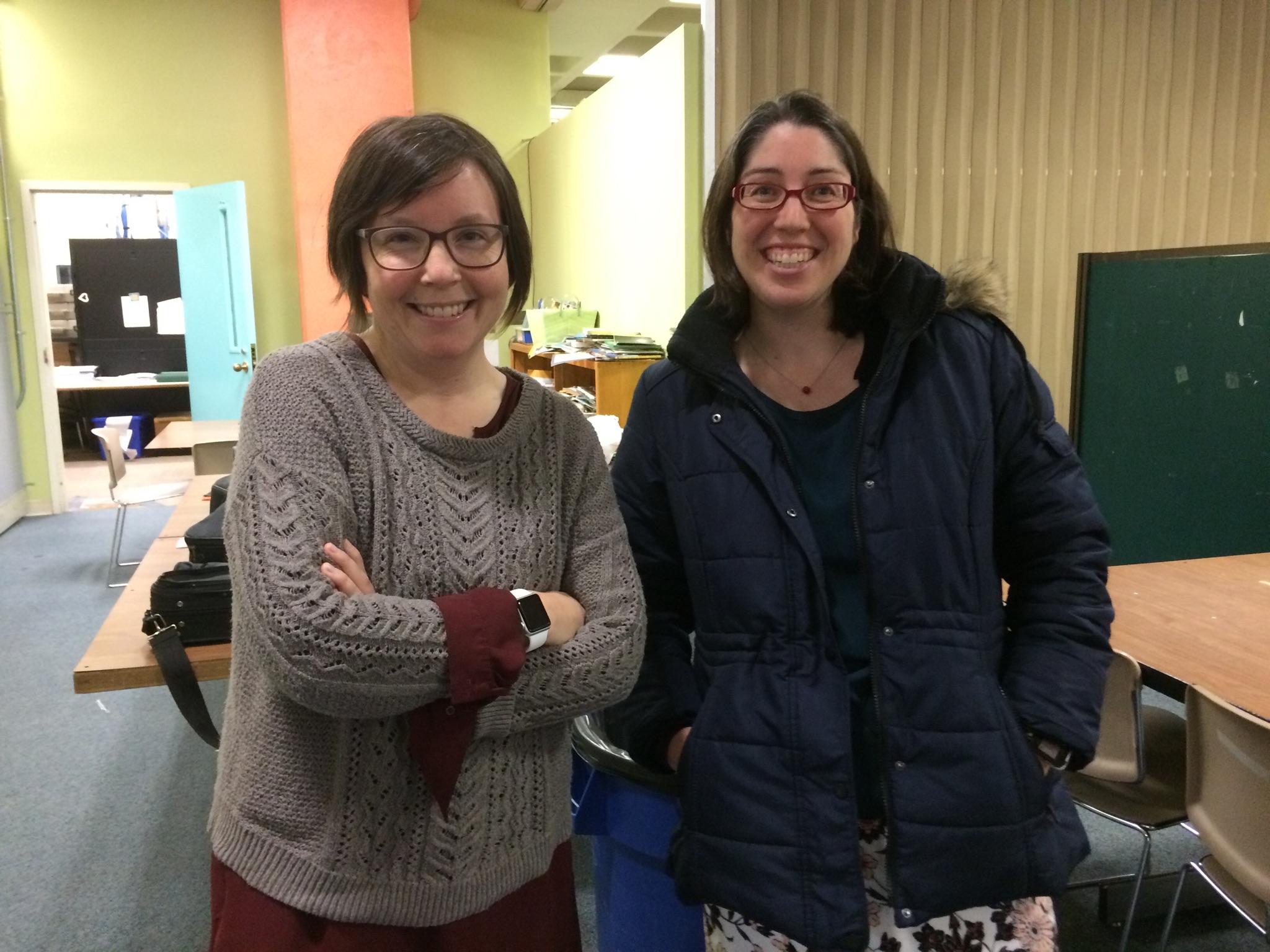
Heather Davis and Amy Pichette

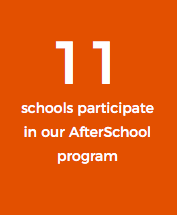
I had the chance to meet with Heather Davis, Executive Director of LearningWorks and Amy Pichette Learning Works After School (LWAS) Team Program Director recently. I learned about their comprehensive after school programs, had a tour of the Portland facility and to visit one of their after school programs at Reiche School. LearningWorks received Maine Arts Commission Arts Learning grant funds for the 2017-18 school year.

LearningWorks Mission

LearningWorks reimagines learning through innovative programs that help children, adults, and families realize their potential and build thriving communities. 

I asked Heather to answer some questions so the Maine Arts Education blog audience could learn more about the LWAS program.

What do you see/know are the greatest benefit(s) to students at Reiche and the other schools you are working with to offer the afterschool program?

The greatest benefits to students in the LearningWorks LWAS program are the opportunities to continue building skills, background knowledge, and confidence in a supportive environment.We love afterschool because it is flexible and student centered. We are able to provide students with structured learning activities, but the students can help guide the direction of the ship based on their inherent interests.

What do you hope that students will remember or will be saying in the near or far off future about the opportunity to learn in this manner?

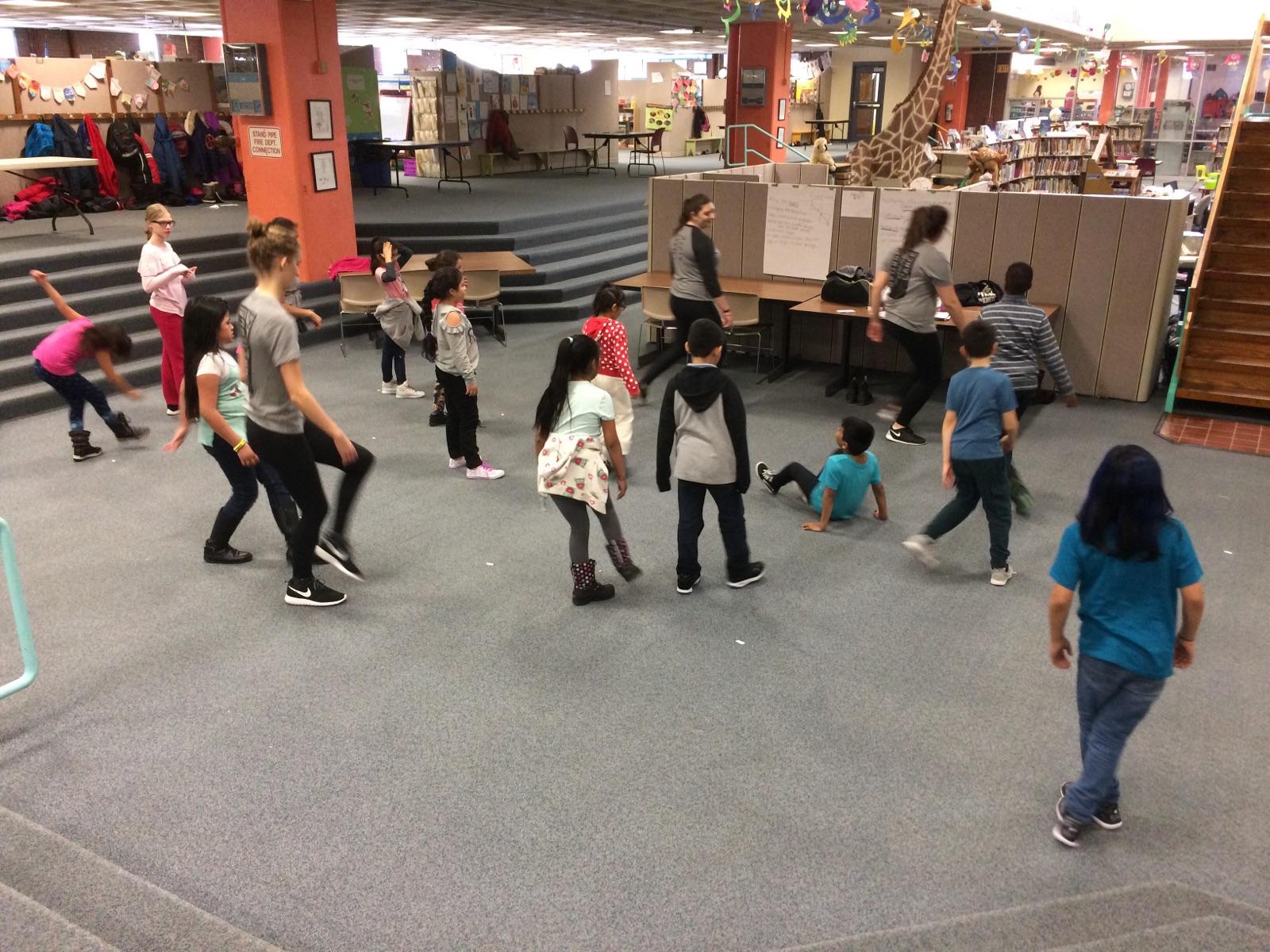
We hope students will remember the experiences they had while participating in LearningWorks Afterschool and how it helped them perform better in school. We also hope that the students develop new interests and skills through participation in activities they may not have had the opportunity to participate in if they weren’t a part of LearningWorks Afterschool. For example, those students who participated in the Portland Youth Dance Club are developing new dance skills and it is our hope that some of the students will be able to take advantage of participating in Portland Youth Dance beyond their time in LWAS and it can becomes a lifelong engaging activity for them.

Success story

A LearningWorks Afterschool/Portland Youth Dance success story comes from our performance yesterday afternoon (Wednesday, April 4th, 2018) during our LearningWorks Afterschool/Portland Youth Dance Final Showcase. All six groups (Reiche, East End, Ocean Avenue, Presumpscot, Hall and Riverton Schools) of LWAS/PYD dancers traveled to the Casco Bay Movers Studios to show off their dances to their peers, parents, and the community. The energy in the room is like no other…students are full of excitement and nerves. Some dancers are so nervous when they walk into the studio, they don’t want to dance. But, when the music starts, every dancer is ready to use their dance energy. There are constant cheers of support from the audience and the other dancers throughout each and every performance. The room was packed and this year’s performance had the most dance participants and the most parent/community audience members than any of our showcases in the past. One dancer from Hall School had 14 family members attend the performance! This is the best day of the year!

This video is on the Learning Works After School Portland Facebook

Check out the energy of the dancers and the crowd – Ocean Avenue’s dance team.

LearningWorks Commitment

LearningWorks is committed to strengthening the communities we serve by providing free community-based education programs for children, adults, and families throughout Southern Maine. Our primary goal is to support academic and personal success for our neighbors who lack resources and/or fall outside traditional educational structures. Our unique blend of academics, youth development, and social and emotional expertise makes it possible for us to transition our students from a place of struggle and hopelessness to a place of possibility and opportunity.

LearningWorks History

In the mid-1960s, residents of Portland’s West End neighborhood banded together to advocate for change on behalf of families who were struggling to maintain affordable housing. This coalition became known as Portland West in 1967. Through its housing rights work, Portland West came to appreciate that education is the best pathway out of poverty. Thus, the group reoriented its mission to focus on education.

LearningWorks’ journey from a grassroots neighborhood advocacy group to a unique and innovative education nonprofit has been long and remarkable. In late 2016, our staff and board joined forces to rewrite our organizational mission statement to focus on the concept of “reimagining learning” to help Mainers of all ages realize their potential and build thriving communities.

As we celebrate 50 years of service, we look to the future with a focus on what we do best: reaching students that no one else can reach; breaking down barriers to create educational opportunities for all; and helping people of all ages and backgrounds achieve academic and personal success.

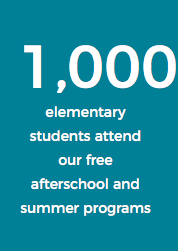
LearningWorks AfterSchool (LWAS) provides free, high-quality afterschool and summer programs for students in grades 2-5 who are below grade level and come from families that cannot afford a paid afterschool enrichment or tutoring program. The curriculum utilizes an innovative blend of STEAM (Science, Technology, Engineering, Arts, and Math) and literacy to help improve each child’s academic standing, all in a safe and supportive environment. The primary focus of the afterschool program is academic enrichment through project-based, hands-on, and engaging curriculum. Transportation and a snack are provided.

h1

Arts Learning Grant Recipient

April 12, 2018

Portland Stage

Portland Stage received a Maine Arts Commission Arts Learning Grant for the 2017-18 school year. Recently I had the pleasure of visiting Lincoln Middle School in Portland where teaching artists from Portland Stage were on site working with grade 8 students. When I walked in I remembered instantly of how much I love teaching middle school. I’m so fortunate to have had this opportunity to see Portland Stage and middle schoolers ‘in action’.

Students shouted out at one another in their best Shakespeare voices: “I do not like your faults.” They attempted to beat their partner with words, to manipulate and convince them. The only rules in one of the word games: 1) be safe 2) gotta win as they learned about understanding Shakespeare. I was impressed with the engagement of the students and wowed by the teaching artists techniques. What a great way to learn about persuasive language.

Portland Stage Teaching Artists: Khalil LeSaldo, Hannah Cordes, Chris Holt, Ella Mock

Portland Stage provides excellent and age appropriate learning opportunities for these young adolescents. Thanks for your good work Hannah Cordes, Portland Stage Education Manager and the other teaching artists working at the school (and in the theatre): Chris Holt, Ella Mock, Khalil LeSaldo, and Megan Tripaldi.

The following information was provided by Hannah Cordes.

Describe the work you’ve been doing with Lincoln Middle School students. 

Every year, we bring the Directors Lab Shakespeare School Tour program to the 7thand 8th grade students at Lincoln Middle School. Students watch a shortened adaptation of a Shakespeare play performed by professional actors and then are invited to explore the story and language of the play themselves in interactive workshops in their classrooms. In these workshops, students practice effective communication, creative collaboration, rhetoric, and critical analysis. Directors Lab puts Shakespeare’s language into the hands and mouths of the students, empowering them to be the artists, directors, and ensemble with the power to interpret the text and produce meaning. We also work with the 6th grade students at Lincoln Middle school through our winter show. This year, 6th grade students came to Portland Stage to see our mainstage production of It’s a Wonderful Life: A Live Radio Play, adapted by Joe Landry. Prior to the performance, we did pre-show workshops in their classrooms with a focus on the play’s story arc and character development, particularly exploring the theme of how an individual can impact an entire community. We find that these workshops enhance student ownership over the language and story of the play. Additionally, many Lincoln students also participate in our In-Theater programming, through camps, after school classes, and other programming.

What language do you hope impacts these students and what language do you want them to walk away with? 

Chris Holt, teaching artist

I hope that our work helps students realize how brilliant they are at understanding and bringing Shakespearean language (and any complicated or dense language, for that matter) alive. The workshops are designed to empower students to feel a connection to the language by using their bodies, voices, and ideas to explore the text.

In terms of specific language, I would love for each student to come away knowing at least one line of text from Julius Caesar. In her feedback, Language Arts teacher Antona Bailey remarked that students were quoting the lines from the play that we used in contrapuntal arguments on the bus! So I would call that a success!

What do you want the learners to remember in the near and/or far future?

The goal of our programming is to enhance literacy and to empower students to be brave with their creativity, so that is always my number one hope of any given program. More simply than that, I hope that Portland Public School students look back on their Portland Stage experiences from K-12th grade and feel connected to art in a meaningful way. I hope that our programming inspires them to seek out theatre and other art forms, as both audience members and artists themselves. I hope that the access to art provided by Portland Stage programming will help shape future generations into people who appreciate and value artistic expression as a means of understanding and investigating the world.

What are the greatest benefits of the work with Lincoln Middle School students/staff?

Hannah Cordes

What I love most about our work with Lincoln Middle School students/staff is that we are able to continue to build relationships and build upon the work that we do both with teachers and students. We interact with students all three years of their Middle School experience, with the intent to build upon the work we have done the previous year. In 6thgrade, we focus on the elements of storytelling (characters, theme, plot, etc.) and how to bring that alive using your voice, body, and imagination. In 7th grade, we engage students with Shakespeare (often their first experience of Shakespeare’s work) through the lens of creative collaboration, exploring how to tell stories as an ensemble. Then in 8th grade, we explore Shakespeare again, this time with a focus on rhetoric and critical analysis, investigating how to make an argument, how theatre engages with its audience, and how the audience/actor interpretation impacts the content of a play. With teachers, I am grateful for the relationships we have created with Lincoln teachers. This allows us to find more and more ways in which Portland Stage can continue to support classroom teachers and how we can make our work even more impactful to teachers and students alike.

STUDENT FEEDBACK

  • “This was the best day ever”!
  • “It was so cool being Brutus, I might seriously be an actor one day”.

TEACHER FEEDBACK 

  • “We used a lot of the resource guide. The comic and synopsis were essential. The historical facts gave good background knowledge and helped kids have an in-road for the plot of the play.”
  • “The actors are so talented and committed. They are clearly present in the work and it’s so fun to see them experimenting to convey the meaning of the text, and connecting with the audience. I loved that the staging was including the audience and surprising them—reinventing how they think “the theater” should be. Their reactions to the drumming, to “Citizen 3,” were just awesome.”
  • “The multiple modalities that are included—the resource packet, the performance, the Directors Lab become a kind of perfect storm for a memorable experience. I think Shakespeare can be seen as an elitist text and this program brings equity, and equal access, to it.
    The fact that all of my students, because of this experience in a public school, will be able some day to be saying, “Oh, well, yeah,
    Julius Caesar, that was all about power and betrayal.” That is really empowering. They might shatter a stereotype of their culture or economic background because they can summarize or allude to Shakespeare. So many of them already see the relevance now, and my hope is that all of them can reach back to this experience and use it, build on it, surprise or delight someone with their knowledge about it. Also, the teaching actors are seemingly endless fonts of energy for this work. It was lovely to see them being energized by students”.

NOTE: In the fall I posted a series of blog posts on Portland Stage. You can access the series by typing in Portland Stage in the “search archives” box located on the right side of the blog.

h1

Dance Ed Grant Opportunity

April 11, 2018

Dance Education Grant Deadline May 2

FOR IMMEDIATE RELEASE: April 10, 2018

CONTACT: Ryan J. Leighton

Marketing Director

207-287-2726

Don’t miss this great opportunity for Maine schools and teaching artists

AUGUSTA-April 10, 2018—The May 2 deadline for the Maine Arts Commission’s dance education grants for PK-12 schools and teaching artists is quickly approaching. Applications must be filed by 5 p.m. that Wednesday in the Commission’s online grants management system at www.MaineArts.com.

Launched in 2015, the dance education grant provides high quality learning opportunities for students and educators in schools where dance education is not being offered. Dance education changes lives, yet only 5 percent of all schools in Maine offer opportunities in this artistic discipline, according to the Arts Education Census study conducted in 2016 by the Maine Arts Commission.

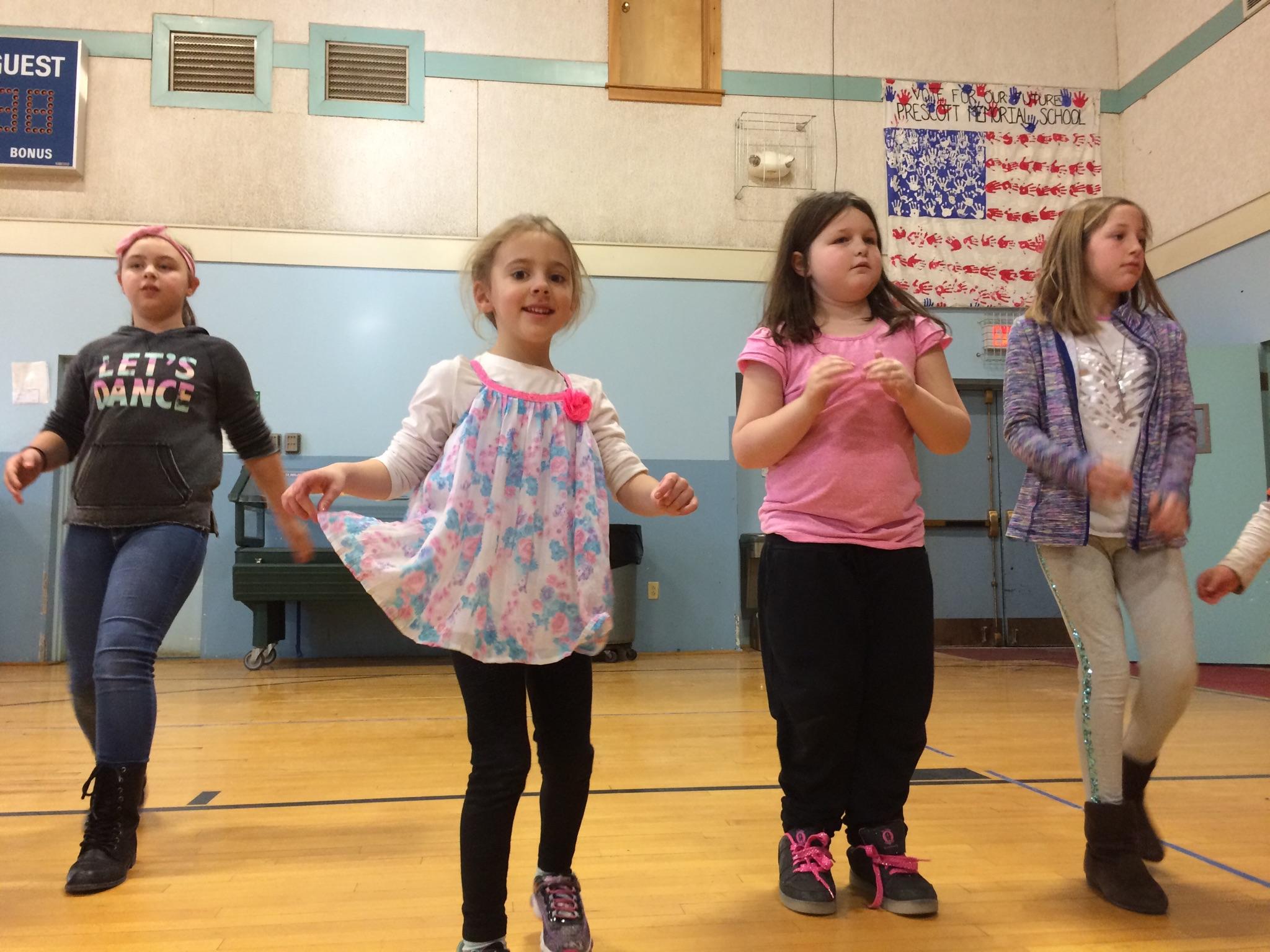
This past year, the program funded residencies at Hebron Academy in Hebron; Prescott Memorial School in Washington; and East End Community School in Portland.

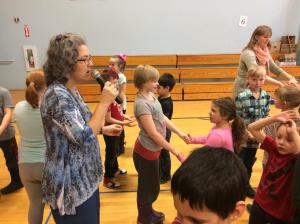
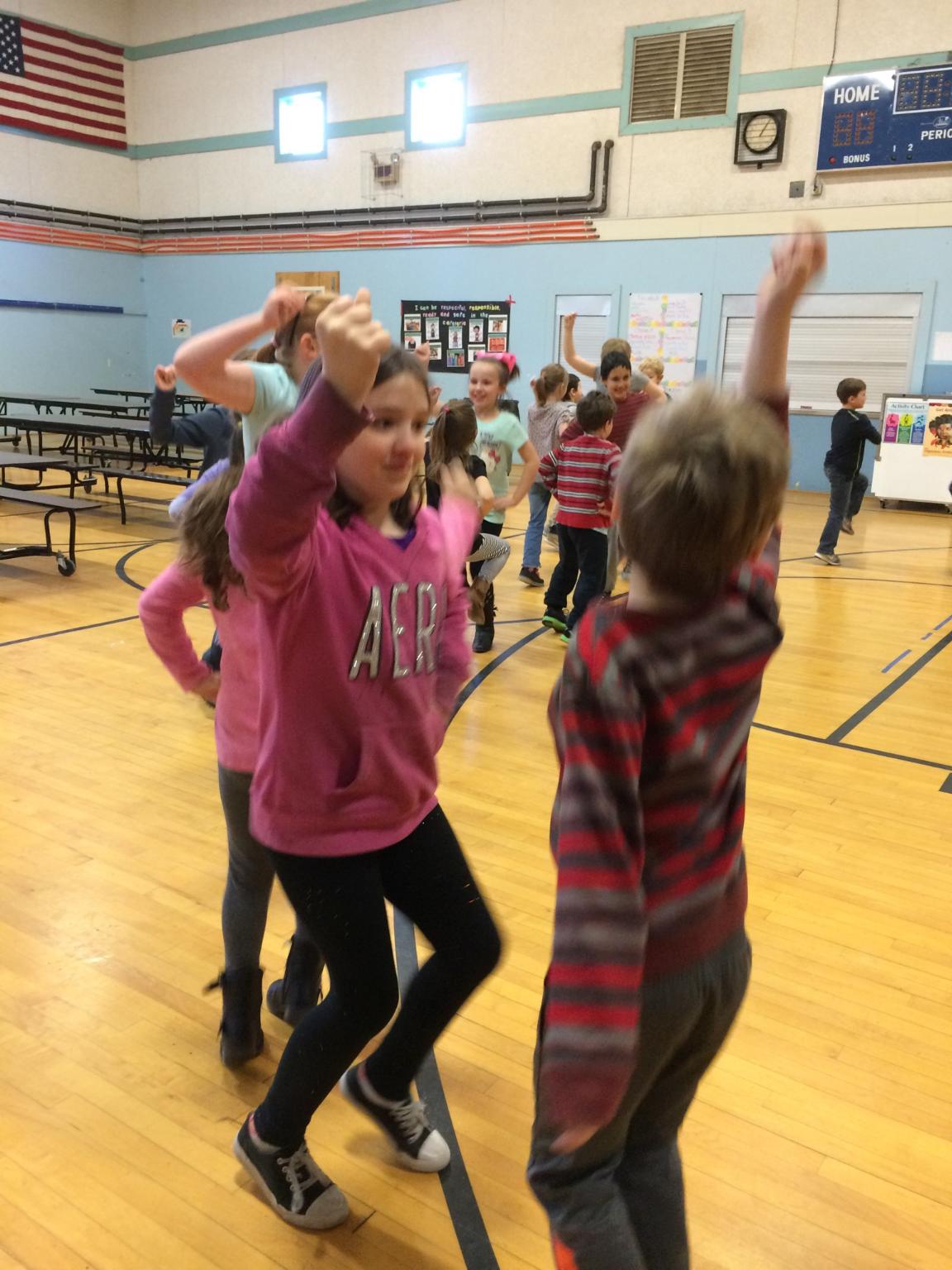
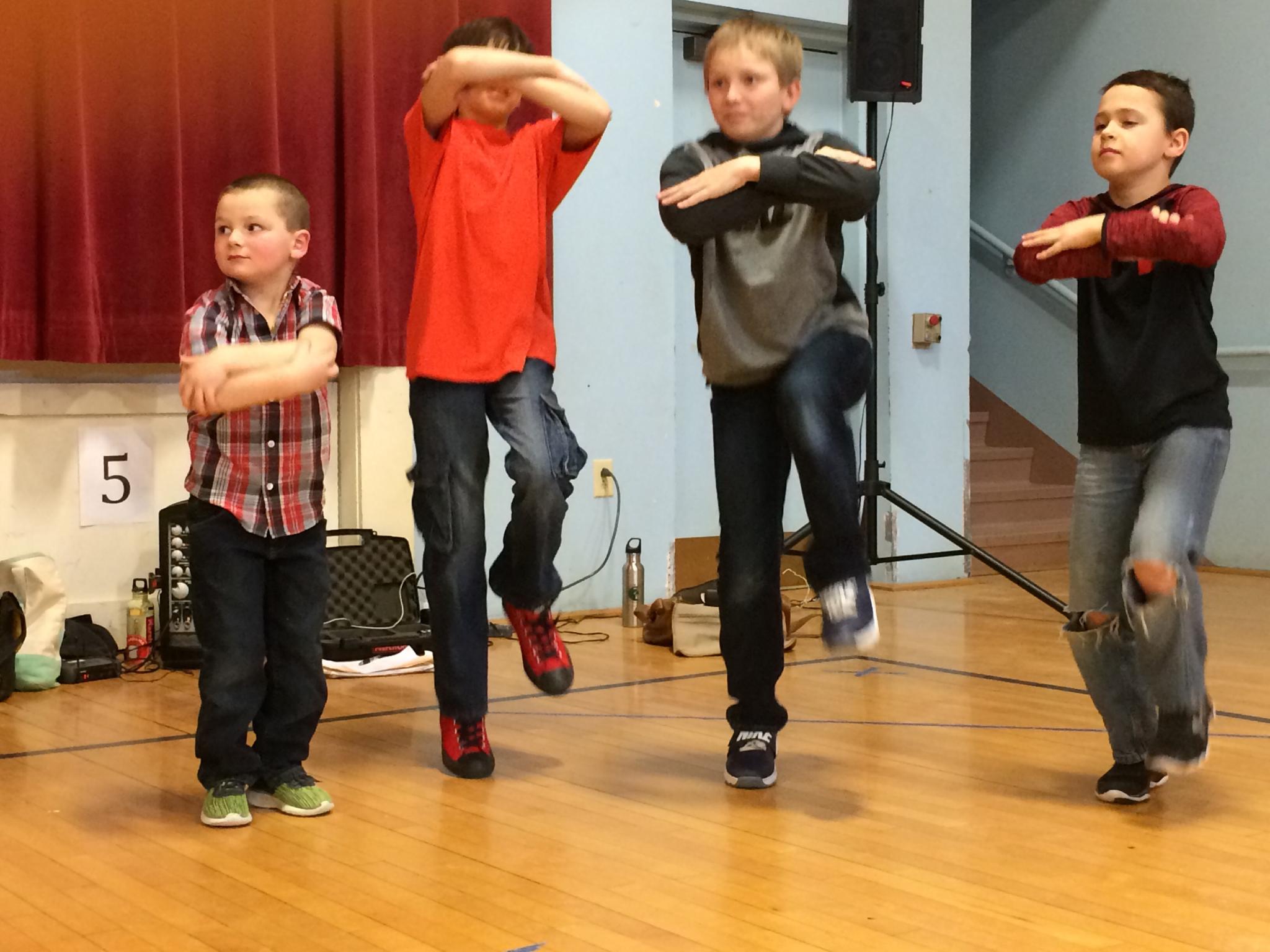
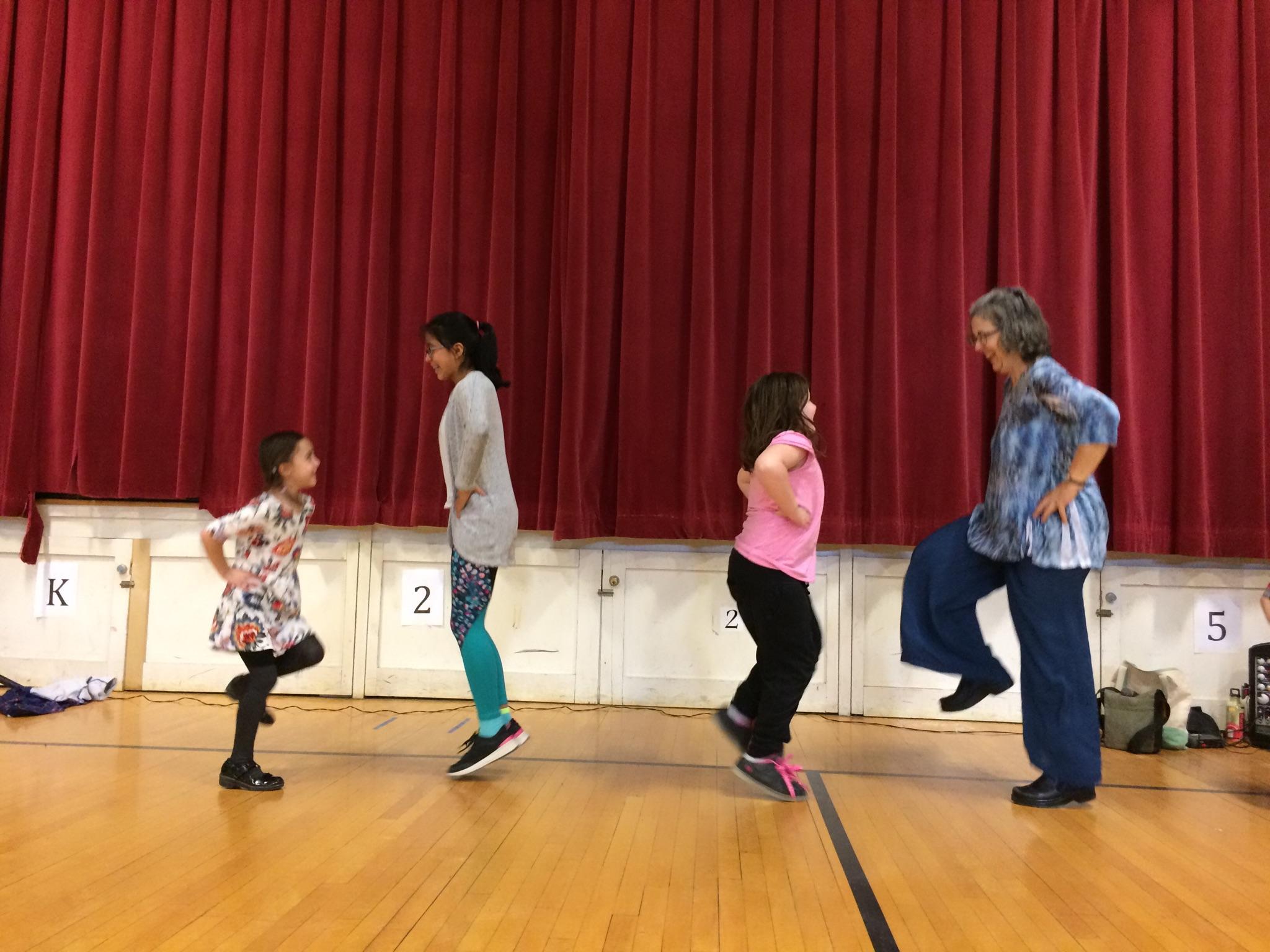
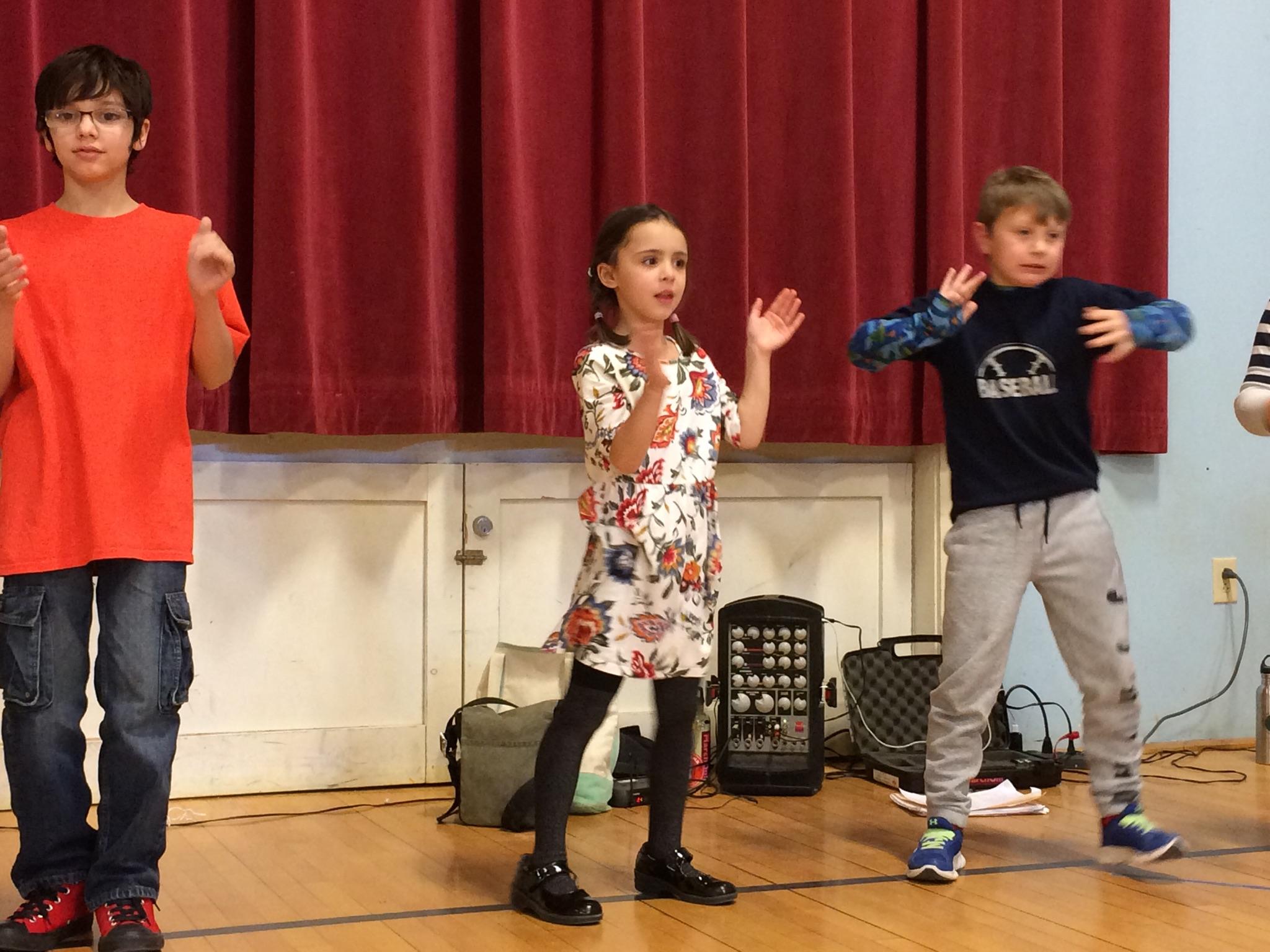
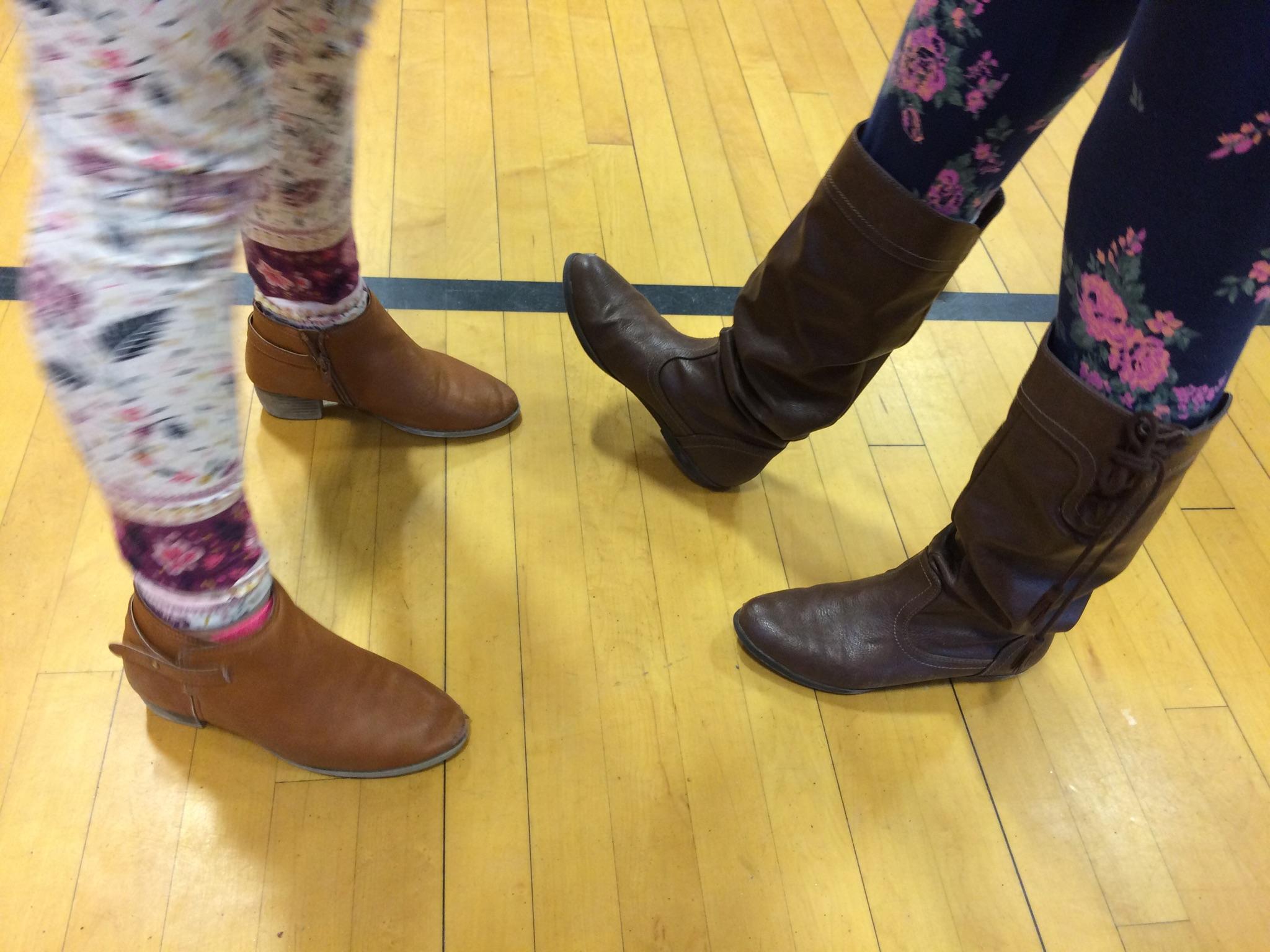
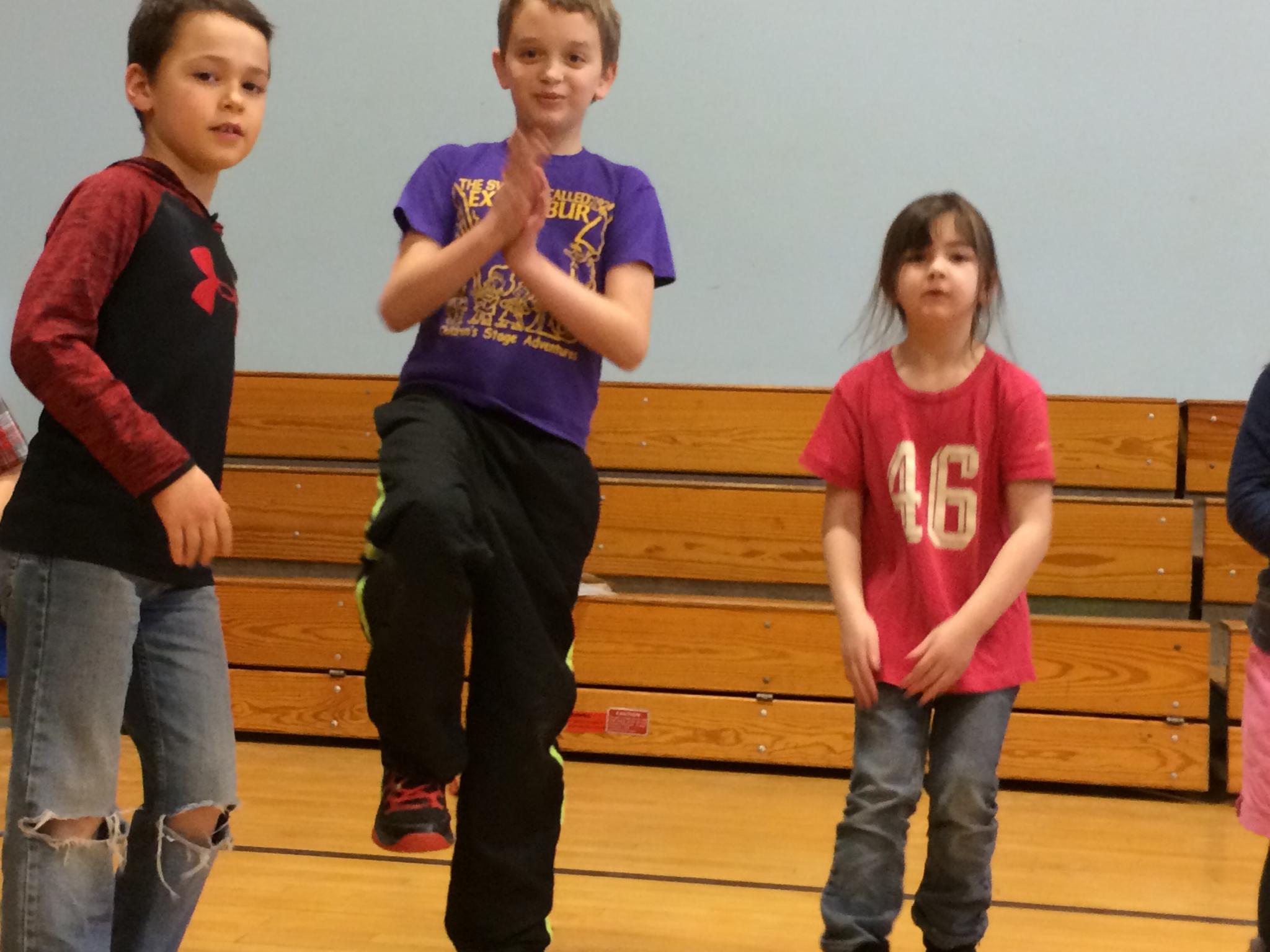
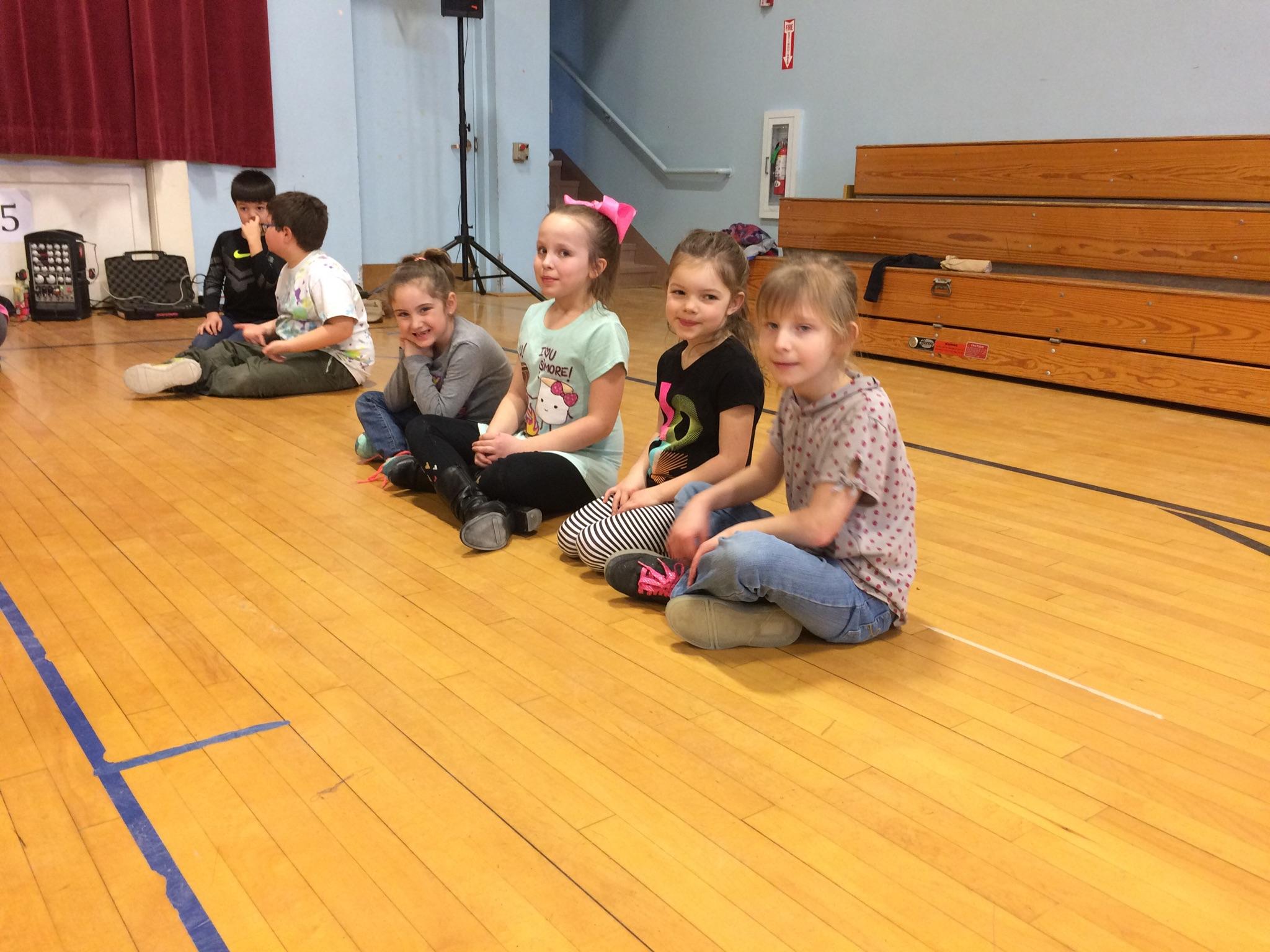
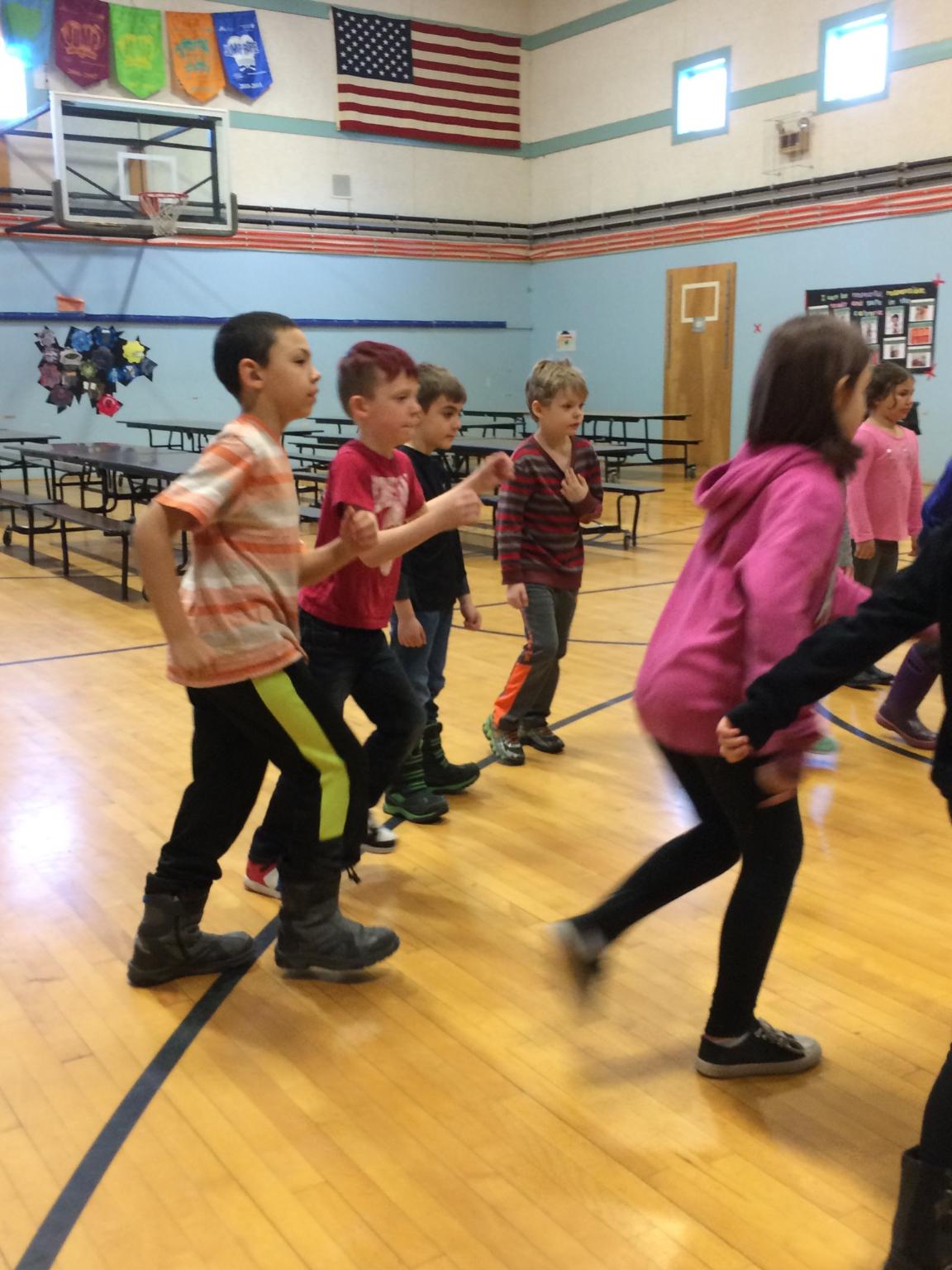
Chrissy Fowler was one of three recipients chosen from the Maine Arts Commission’s Teaching Artist Roster for one of the previous dance education grants. Chrissy’s dance residency included four weekly visits to Prescott Memorial School, culminating with a community dance.

“I think students, staff and families value the chance to connect in a fun and active way,” Chrissy said. “All of my residencies have common goals: everyone participates in the dancing, exhibits pro-social behaviors, and makes connections across grade levels.”

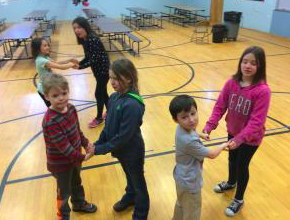
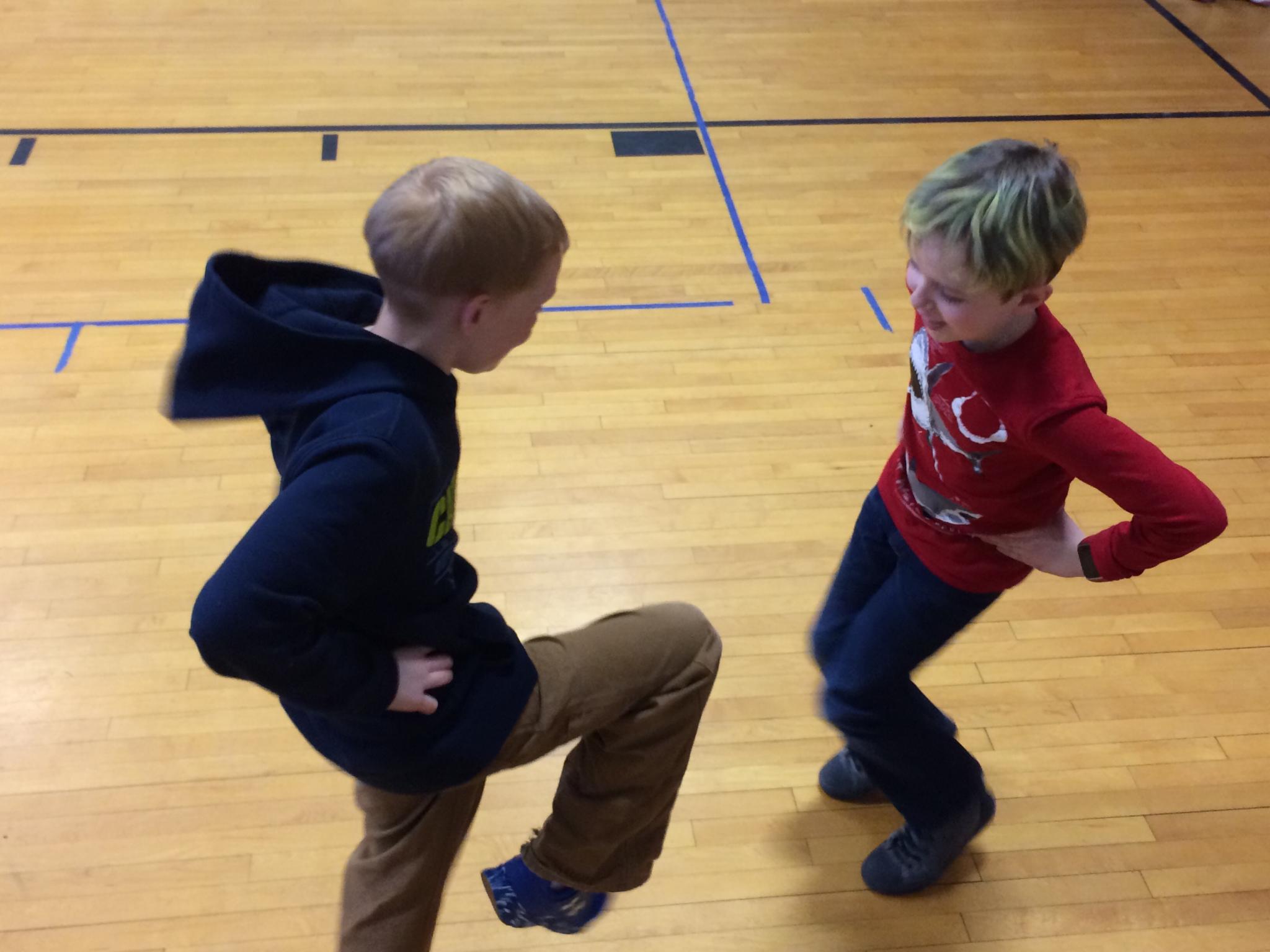
Chrissy’s residency specifically focused on K-6 students learning contra dance, or social dancing that consists of lines of partners pairing off and performing sequences led by a caller.

When asked about the dance residency, sixth grade students said it was a welcoming new experience. “I have been amazed at how quickly the students picked up the rhythm and the steps,” said Jim Freyenhagen, a sixth-grade teacher at Prescott Memorial School. “Not only are they learning to dance, they are practicing their social skills with their peers and younger students.”

See the full story of this and other dance residencies at the ME Arts Ed Blog.

Funding for this program is made possible through the generosity of a collaboration facilitated by Thornton Academy dance educator Emma Arenstam Campbell, Dancers Making a Difference non-profit organization, and several community dance studios committed to raising funds for dance education.

“We are extremely appreciative of these contributions and the impact they will have on dance education in Maine,” said Julie Richard, Executive Director of the Maine Arts Commission. “There are so few dance education programs in our state and this is one important way we can make a difference for the students that we serve.”

Grant guidelines and application criteria are at www.MaineArts.com and the Commission encourages PK-12 educators or teaching artists to review them prior to applying. The funding cycle for these grants is for projects from September 1, 2018 through March 30, 2019.

For more information visit the grants and the teaching artist roster webpages at www.MaineArts.com.

For questions regarding the grants or current teaching roster, contact Argy Nestor, Director of Arts Education at 207-287-2713 or email at argy.nestor@maine.gov.

_____________________________________________________

The Maine Arts Commission supports artists, arts organizations, educators, policy makers, and community developers in advancing the arts in Maine. For more than 50 years the Commission has encouraged and stimulated public interest and participation in the cultural heritage and cultural programs of our state; has worked to expand the state’s cultural resources; and encouraged and assisted freedom of artistic expression for the well-being of the arts, to meet the needs and aspirations of persons in all parts of the state. Additional information is available at MaineArts.com.


h1

Dance Grant Recipient: Prescott School

April 4, 2018

MAC Dance Education Grant – Chrissy Fowler

The Maine Arts Commission (MAC) established the Dance Education grant in 2015 to provide funding for schools to provide a learning opportunity for students in grades PK-12. Four schools, hundreds of learners, and four dance teaching artists from the MAC teaching artist roster have benefited from the funding. This funding is made possible through a dance performance sponsored by several community dance studios and school dance education programs in Maine.

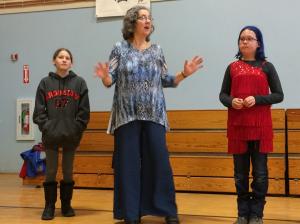
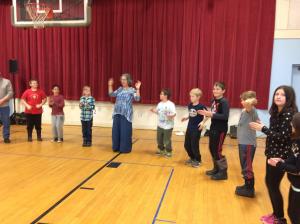
Traditional social dance artist, Chrissy Fowler has been working in Prescott School, Washington this year providing instruction for the school’s K-6 students and staff. This dance residency is made possible from the Dance Education grant.

You can find Chrissy’s teaching artist profile on the Maine Arts Commission roster. The dance education grant is available right now for those interested in obtaining funds for the 2018-19 school year. For more information please go to the blog post called DANCE EDUCATION FUNDING. The deadline is Wednesday, May 2. 

Here’s the story from this year’s grant recipient… Thank you Chrissy for providing it.

Chrissy earned her M.Ed. in 1996 and started calling both community and contra dances in 1999. She has led school residencies for about a decade, and has been an educator for aeons. Leading contra dance residencies lets her combine PK-12 teaching and traditional New England social dance, the dance form which lets her identify as a “dancer” even though she doesn’t feel physically graceful. In this tradition, you work with a partner as well as everyone else in your set. Although there are sometimes roles which can be danced by anyone (e.g. “lady” or “gent”), there is no designated leader or follower. All dancers have equal agency in making the dance work—and we’re all in it together. Chrissy loves that! She’s also on the board of a local non-profit, Belfast Flying Shoes, which has a comprehensive outreach program including support for school dance residencies, such as the one at Prescott School.

RESIDENCY DESCRIPTION
All of my residencies have common goals: everyone participates in the dancing, exhibits pro-social behaviors, and makes connections across grade levels, and the residency culminates with a community dance for students, staff, and families.

At Prescott, we’re trying a few new things. First, my visits are structured in three mini-residencies, each comprised of four weekly visits and a culminating dance. Spreading it out over three seasons (fall, late winter, and late spring) has allowed me to integrate a bit more into the school community.
The residency also specifically connects to local history. Charlie Overlock, who fiddled and called for dances for 66 years, was born in Washington. He led dances all over his hometown and nearby. I’ve shared some of Charlie’s story with the students and I’ve taught dances I don’t usually use in schools – such as the foxtrot, which featured prominently in his program for the Washington High School Class of 1921’s graduation dance.

Finally, I was privileged to meet with the staff before the start of school, to find out what they wanted from the residency. Based on their input, I have made a special effort to articulate ways they can use the dances in their own classrooms (e.g. adapting them for movement breaks) and I’m putting together an annotated bibliography of children’s literature related to dance, especially various forms of traditional social dance. (When complete, the bibliography will be available to others via chrissyfowler.com and belfastflyingshoes.org)

GREATEST BENEFITS 
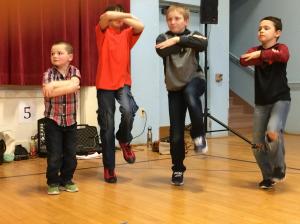
I lead dance residencies in many schools; some have me back every year. I think students, staff, and families value the chance to connect in a fun and active way… with eye contact, broad smiles, cooperation for all ages, and a lot of moving to music. And I think that’s the same at Prescott. We’ve witnessed a lot of joy and delight, and the best part is that contra dancing is something that they can do in their community for the rest of their lives. Maybe even with their own children.

LANGUAGE
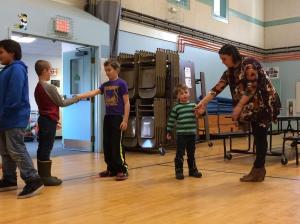
Rather than any specific vocabulary words, I hope the learners take with them the kinesthetic language of moving their bodies through space in particular patterns. Contra dance figures such as “do-si-do” or “allemande left” are very positional, and there is also a tremendously strong left:right, clockwise:counter-clockwise dimension. We know that movement builds cognitive pathways, and contra dance can be a great way to learn, concretely, about equal and opposite forces, patterns, or directionality. The various figures also can support strong proprioceptive and vestibular systems, although that’s certainly not something I’d expect learners to articulate!
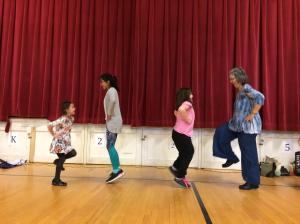
I also hope that they experience some social-emotional learning, such as the thrill of positively connecting with someone by dancing with them. Or doing the hard work of getting through a dance that’s challenging—either because the figures are complex or because you have to muster the inner strength to be kind and respectful to someone who’s not your favorite dance partner.

FUTURE REMEMBRANCE
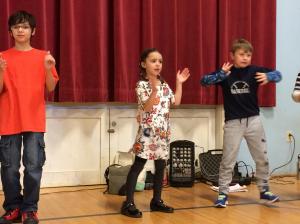
It would be a thrill if anyone remembered the ways that contra dance is part of their own local history in Washington. Beyond that, I hope they internalize that moving – together – to songs and fiddle tunes can be both social and fun for all ages… and at any level of gracefulness!

WHAT PARTICIPANTS ARE SAYING
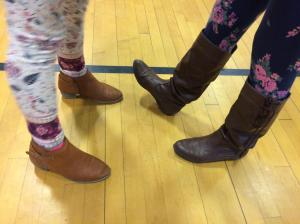
When students were asked for their response to the opportunity to learn with and from Chrissy, 6th graders said:

  • It is fun to learn to social dance.
  • It’s really different than I thought it would be.
  • I think it kind of feels like country but also feels a little like Scottish dancing.

Grade 6 teacher, Jim Freyenhagen:
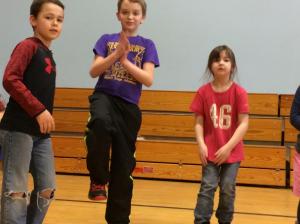
I have been amazed at how quickly the students picked up the rhythm and the steps. The dancing makes them interact (in a positive way) with kids they don’t normally interact with.

Not only are they learning to dance but they are practicing their social skills with their peers and younger students.

Principal, Nancy Stover:
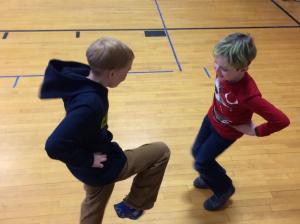
I think one of the highlights of this residency has been watching (through Chrissy’s magical techniques) how the students and staff have been able to abandon their inhibitions and try something out of their comfort zone. It has been amazing to observe students who struggle with peer relationships walk up to someone from another grade and ask if they could be their partner. It’s also heartwarming to see how well the older and younger students work together. They help each other learn the dance steps with patience and kindness, laughing and smiling all the way.
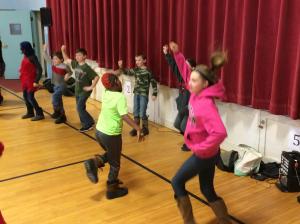
The community dance was a huge success! Parents and community members participated and those that initially observed from the audience, joined in and before the evening had ended, everyone was on the dance floor. The word spread throughout the community and we’ve had many people ask when the next community dance is scheduled. This residency has been one of the most rewarding I’ve experienced. It gives everyone a sense of belonging and inclusion while having fun! 

COMMUNITY MEMBER, HAZEL KOPISHKE, HISTORY
Charles E. Overlock was born in Washington in 1870.  His father Samuel played fiddle for kitchen dances. At the age of 6 or 7 Charles was sneaking his father’s fiddle and learning to play.  He played for his first kitchen dance at the age of 11 and continued playing for dances for 66 years. For the first years, most of the fiddle playing was for dances in homes in the neighborhood that could be  walked to. Later he would travel by horse and buggy, and in 1916 in his first automobile, to play at the many grange halls and dance halls in the area often traveling from 5 to 20 miles. Through the years the Overlock Orchestra included his wife Clara and daughter Josephine playing organ and piano and his son E. Burnell  on drums along with local cornet players. His orchestra usually consisted of 2 or 3 people but did grow to 4, 5 and once 6 members. He played for more than 300 dances at Light’s Pavillion located within sight of his home on Rt 220 between Washington village and So. Liberty.

Charles Overlock was a country fiddler that could not read music but kept people dancing for many, many years.

This information was taken from the book Sixty-Six Years A Country Fiddler, Charles E. Overlock  by E. Burnell Overlock, published 1984.
h1

Dance Education Funding

March 19, 2018

Grant deadline: Wednesday, May 2

AUGUSTA-April 12, 2017—Dance education changes lives, yet only 5 percent of all schools in Maine offer it. The Maine Arts Commission is offering a grant program for schools and teaching artists that seek to bridge this gap and bring the power of dance to more schools. Applicants may apply for awards up to $2,250. The deadline for this new program is Wednesday, May 2, 2018.
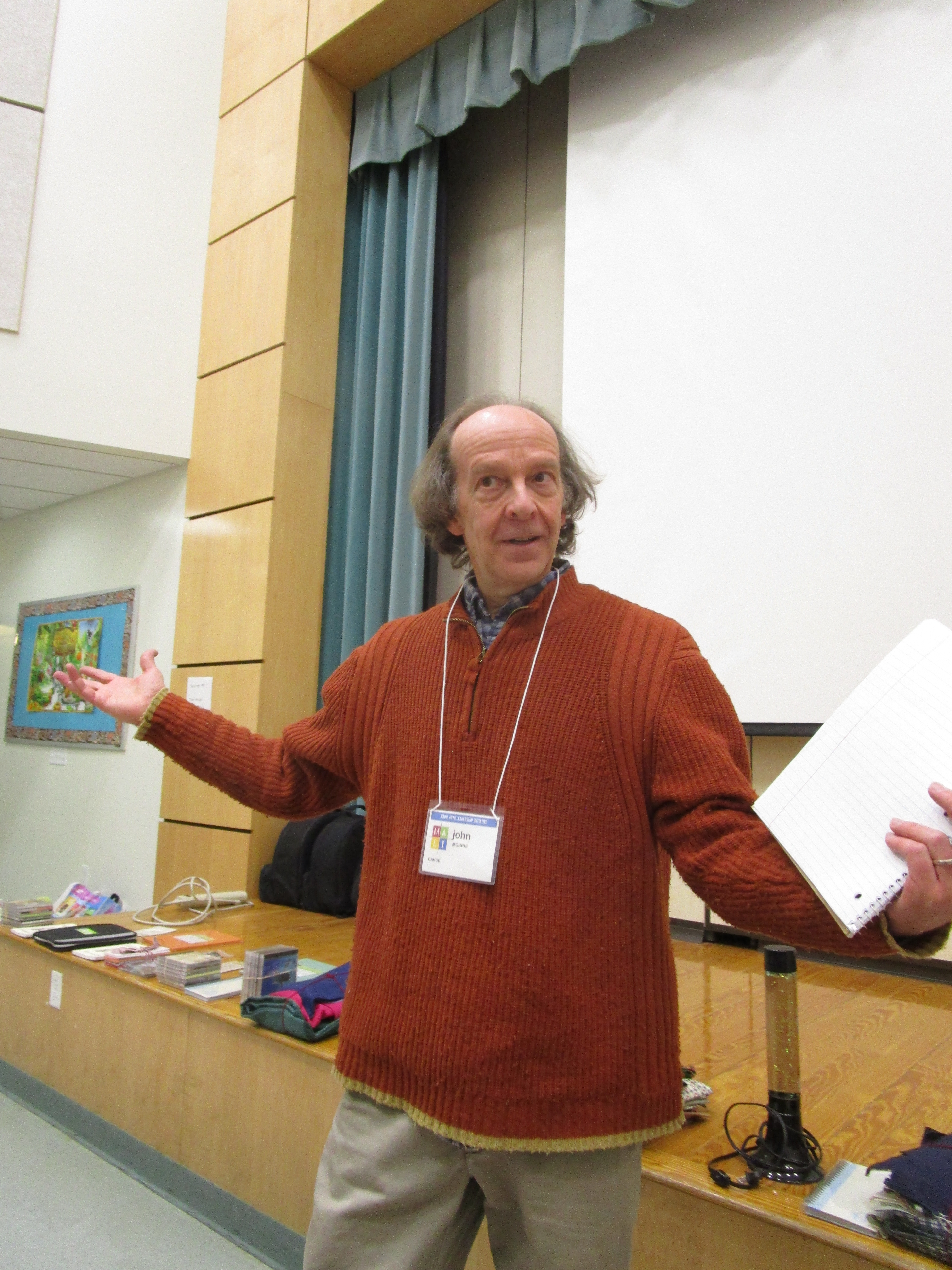
John Morris leading a session at the MALI Mega conference, spring 2017

This program was launched in 2016 and has successfully funded 4 dance education residency’s. Each will have a story included on this blog during this school year.

The first teaching artist to provide the residency with the assistance of these funds was veteran dance educator John Morris. “Creative movement is meant to allow students the ownership of their own uniqueness,” Morris said. “I give students the foundational movement to invent and explore their own movement, and I guide them through the process of making their own dances.”

John is also a member of the Maine Arts Leadership Initiative (MALI) Design Team and works with the teaching artist leaders.

Funding for the dance education grant was made possible this year by several dance studios and two high schools who came together for a benefit performance in November, 2017.

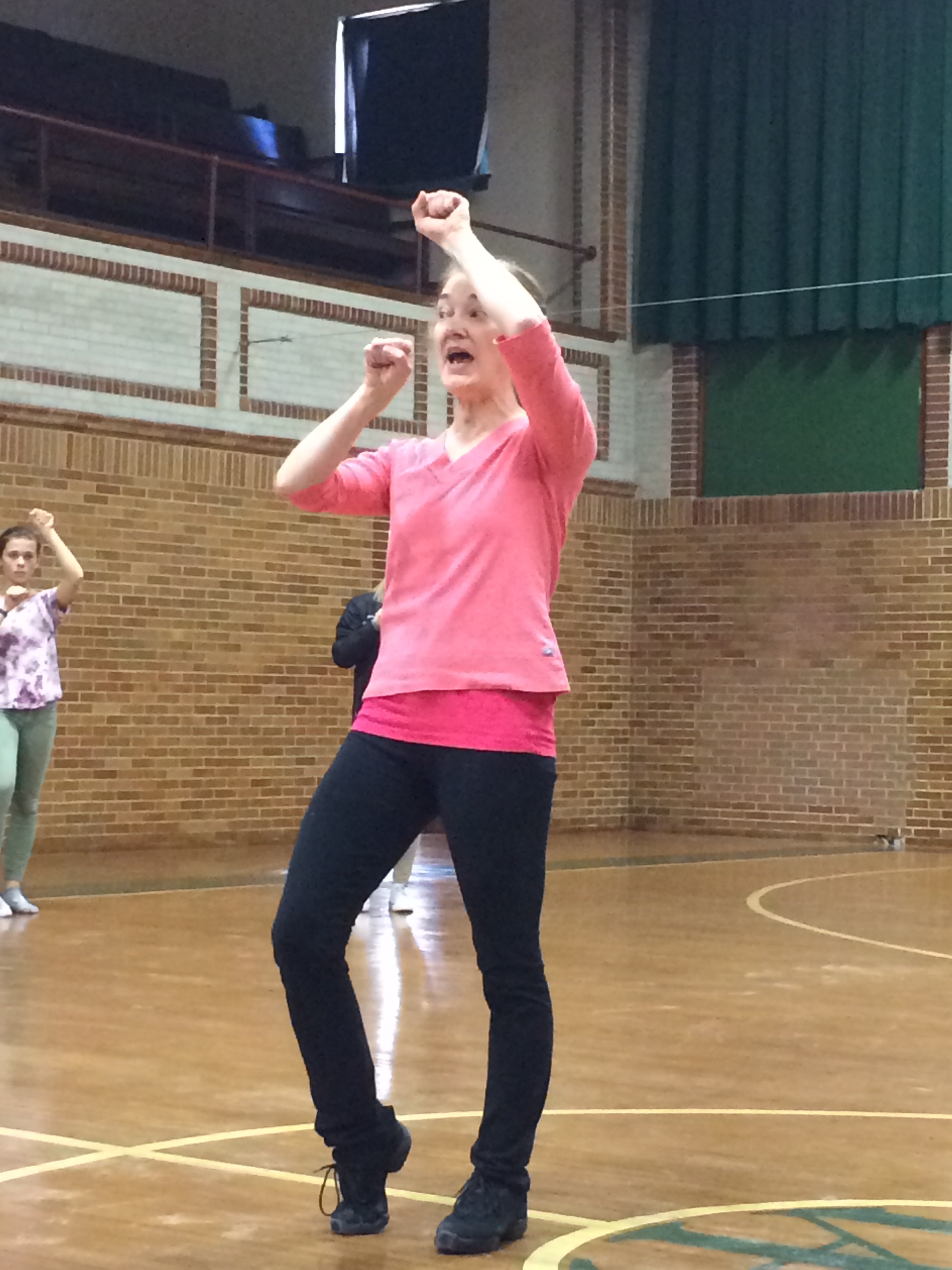
Karen Montanaro leading a session at Hampden Academy, December 2017

The Maine Arts Commission is pairing eligible PK-12 school districts with teaching artists from the Arts Commission roster. The roster includes 16 dancers.

“We are extremely appreciative of these contributions and the impact they will have on dance education in Maine,” said Julie Richard the Executive Director of the Maine Arts Commission. “There are so few dance education programs in our state and this is one important way we can make a difference to the students that we serve.”

If you’re a PK-12 educator or teaching artist looking to introduce students to the power of dance education, the Arts Commission encourages reviewing the grant guidelines and application criteria before applying for the May 2 deadline. The top qualifying schools selected will be eligible for the next funding cycle from September 1, 2018 through March 30, 2019.

For information visit the the grants and the teaching artist roster webpages at www.MaineArts.com

For questions regarding the grants or current teaching roster, contact Argy Nestor, Director of Arts Education, argy.nestor@maine.gov.


h1

In Today’s News

March 13, 2018

$50,000

A Morse High School graduate donated $50,000 to the music program to support musical opportunities for students.

Read the article from the Portland Press Herald.