Archive for the ‘funding source’ Category

h1

National Endowment for the Arts Funding

September 27, 2013

Immediate Release: September 24, 2013

Contact for media queries: Victoria Hutter, hutterv@arts.gov, 202-682-5692
Contact for application inquiries: Design staff, OT@arts.gov

National Endowment for the Arts releases funding guidelines for Our Town
Grants ranging from $25,000 to $200,000 available to support creative placemaking projects

Now available on the NEA website are guidelines and application materials for Our Town, the agency’s primary creative placemaking grants program. Pending availability of funding, grants will range from $25,000 to $200,000.

Our Town will invest in creative and innovative projects in which communities, together with arts and/or design organizations and artists, seek to:
•        Improve their quality of life;
•        Encourage greater creative activity;
•        Foster stronger community identity and a sense of place; and
•        Revitalize economic development.

Projects may focus on, arts engagement activities including:

  • innovative arts programming
  • festivals/performances
  • public art that improves public spaces

Cultural planning activities including:

  • creative asset mapping
  • cultural district planning
  • master plans or community-wide strategies for public art.
  • creative entrepreneurship.
  • creative industry cluster/hub development

Design activities including:


  • design of rehearsal, studio, or live/work spaces for artists
  • design of cultural spaces
  • design of public spaces
  • design charrettes, design competitions, and community design workshops

Other key information:

  • Complete Our Town application guidelines are available in the Apply for a Grant section  on arts.gov
  • Application deadline is January 13, 2014 at 11:59 pm. ET
  • Our Town FAQs provide answers to many questions about the program.
  • A webinar to learn more about this funding opportunity will be held on November 4, 2013 at 2:00 PM ET
  • For program inquiries, please email OT@arts.gov with specific questions and a design specialist will respond.
  • Sample application narratives for these types of projects can be found at arts.gov.

Now in its fourth year, Our Town has provided $16 million to support 190 projects in all 50 states and the District of Columbia.  These projects are diverse in geographic distribution, number and types of partnerships, artistic discipline, and type of project. In FY 2013 alone, 35 of the 59 grants supported projects in communities with populations under 100,000.

To view a map of all the Our Town projects along with project descriptions and images, visit the Our Town section of arts.gov.

h1

Grant Opportunity

August 23, 2013

National Endowment for the Arts

Dear Friends of NEA Research:

The National Endowment for the Arts’ Office of Research & Analysis announces that grant application guidelines are available for Research: Art Works. This program supports research that investigates the value of the U.S. arts ecosystem and the impact of the arts, either as individual components within the U.S. arts ecology or as they interact with each other and/or with other domains of American life.

The NEA encourages applications from diverse research fields (e.g., sociology, economics, anthropology, psychology, medicine and health, education, communications, and urban and regional planning) in addition to projects that address a diverse array of topics concerning the value and/or impact of the arts. Nonprofit, tax-exempt 501(c)(3), U.S. organizations; units of state or local government; or federally recognized tribal communities or tribes may apply. This may include, but is not limited to, colleges and universities.

The NEA anticipates awarding up to 25 grants in the range of $10,000 to $30,000. The deadline for application submission is Nov. 5, 2013 and projects can begin as early as May 1, 2014.

This year, there have been several major changes to the Research: Art Works grant program:

•     Priority is given to applications that present theory-driven research questions and methodologies that will yield important information about the value and/or impact of the arts.
•     The 2012 Survey of Public Participation in the Arts and the 2012 General Social Survey’s Arts Supplement are cited as secondary data sources of special interest to the NEA.
•     Primary data collection is now an eligible activity type. Those projects may be of three years in duration. Other projects now may be of two years in duration.
•     New sections of the guidelines address the responsible conduct of research, and data management and sharing. There is a corresponding review criterion about applicants’ data management plans.
•     Grants require a match and indirect costs are allowed.

The NEA will hold an informational webinar for potential applicants on Sept. 18, 2013.  More information is forthcoming.

For grant application information and guidelines, please go to http://arts.gov/grants/apply/Research.html

To see project descriptions of the grants awarded in previous years of Research: Art Works, click here.

To see examples of previously successful applications, please click here, and choose “Sample Application Narratives – Research.”

If you have any questions or concerns, please email nearesearchgrants@arts.gov.

Thank you, and good luck.

National Endowment for the Arts
Office of Research & Analysis

h1

Funding Opportunities

July 25, 2013

Check these out

GRANTS AND FUNDING OPPORTUNITIES

Mockingbird Foundation: Grants for Music Education
The Mockingbird Foundation awards grants to schools and nonprofit organizations to effect improvements in music education for children. Mockingbird is particularly interested in projects that encourage and foster creative expression in any musical form (including composition, instrumentation, vocalization, or improvisation), but also recognizes broader and more basic needs within conventional instruction. Mockingbird encourages applications associated with diverse or unusual musical styles, genres, forms, and philosophies. Projects may include the provision of instruments, texts, and office materials, and the support of learning space, practice space, performance space, and instructors/instruction. Mockingbird is interested in targeting children 18 years or younger, but will consider projects that benefit college students, teachers, instructors, or adult students. Maximum award: $5,000. Eligibility: public schools K-12, 501(c)3 organizations. Deadline for letter of inquiry: August 1, 2013.

National Endowment for the Arts: Art Works
NEA Art Works grants support projects that have learning as their primary outcome, in any artistic discipline, that are standards-based and align with either national or state arts education standards. Innovative projects are strongly encouraged. Maximum award: $100,000. Eligibility: 501(c)3 organizations. Deadline: August 8, 2013.

h1

Title I Funds for Arts Education

June 20, 2013

Letter from USDOE – Clarifying Districts/Schools Can Spend Title I Funds on Arts Education

During times when funding is tight, it is particularly heartening to read the letter below from the head of Title I at the U.S. Department of Education. Dr. Chism sent this letter to all state Title I coordinators specifically to remind them that the arts, as core subject areas, are eligible for funding through Title I.

Title I funding is the largest category of federal funding that goes to schools. It is often incorrectly believed to be solely for supporting tested subject areas, but – as you will read in this letter – the arts are, in fact, eligible. There are certain other priorities and conditions associated with Title I that must be met, several of which are articulated in the letter.

Those of you who work in Title I schools will want to read this letter carefully and consider whether you have arts-related ideas that quality for such funding.

June 6, 2013

Dear Title I State Coordinators:

Student Achievement and School Accountability Programs (SASA), within the U.S. Department of Education, have recently received inquiries about the role of arts education within the Title I, Part A (Title I) program. In response to those inquiries, I would like to take this opportunity to address how the arts can be used to achieve educational achievement of children served under Title I. As a general observation, I note that the Elementary and Secondary Education Act of 1965, as amended (ESEA), defines the arts as a core subject, and, as such, the arts play a significant role in the development of children and their learning process.

As local educational agencies (LEAs) in your State work with you and your team to plan their Title I programs for the 2013-14 school year, I believe that this is an appropriate time to note that activities that support the arts, in conjunction with other activities, can form an important part of an LEA’s Title I program. In maintaining consistency with Title I requirements, an LEA may use Title I funds to support standards. Please keep in mind that whether Title I funds may be used for a particular activity depends on how that activity fits within the context of Title I. In particular, the activity must help facilitate Title I’s overall purpose of improving the achievement of students who are failing, or most at risk of failing, to meet the academic content and achievement standards developed by the State.

In addition to advancing the overall purpose of Title I, using funds for arts education also must be consistent with other applicable requirements. Title I funds in a schoolwide program school must address the specific educational needs of students, particularly the lowest-achieving students in the school identified by the needs assessment and articulated in the comprehensive plan. Title I funds in a targeted-assistance school must address supplemental educational needs of students who are failing, or most at risk of failing, in order to meet the State’s academic achievement standards. The use of Title I funds must also be reasonable and necessary for the proper and efficient performance under the Title I program (Office of Management and Budget Circular A-87, Attachment A, C.1.a, codified at 2 C.F.R. Part 225).

To determine the eligibility of Title I funds being used in support of arts education, an LEA must analyze such use in the context of its Title I program and the needs of its students. Depending on those needs, an LEA may use Title I funds to support activities related to the arts, provided those activities are part of an instructional strategy that is designed to improve the academic achievement of at-risk students so they can meet the State’s academic standards. As the use of Title I funds is tied to each school’s needs it would be expected that those funds would generally support different activities from school to school.

Thank you for your efforts to provide a high-quality education to students, particularly the low-achieving students served by Title I. I hope that as you continue this excellent work in the 2013-2014 school year and beyond, LEAs and schools will successfully identify those activities, including activities that support arts education, that are tailored to improving the academic achievement of low-achieving students.

Sincerely,

Monique M. Chism, Ph.D. Director, Student Achievement and School Accountability Programs  

h1

$45,000 in Grants to Elementary Art Programs

April 21, 2013

Americans for the Arts and American Girl team up to support art ed programs

Americans for the Arts, the nation’s leading organization for advancing the arts and arts education, is partnering with American Girl to help promote the arts in U.S. schools. This effort builds upon American Girl’s introduction of its 2013 Girl of the Year, Saige Copeland. To support Saige’s message of preserving the arts in schools, American Girl, with support from Americans for the Arts, is sponsoring the Elevate the Arts School Grant Contest, where schools can enter to win one of 13 grants totaling $45,000. In addition, the two organizations have teamed up to create a Saige Learning Guide, a free, downloadable arts-based curriculum designed for teachers to inspire their students to explore their creative side.

“Ensuring children have access to a quality arts education— music, drama, dance, writing, visual arts—is critical to teaching the next generation creativity and innovation: skills vital to succeeding in the workforce of the future,” said Robert L. Lynch, president and CEO of Americans for the Arts. “This partnership and the grant program come at a challenged time for our nation’s schools, as budget constraints are leading districts across the country to continue to cut arts programs. We are grateful to have a partner such as American Girl that recognizes the important role the arts play in educating America’s children. Not only are we thrilled to be working with them to help provide much-needed resources to U.S. schools nationwide, but we also are grateful for their financial support of our Arts Education Program, which provides arts education professionals with the information, materials, and resources they need to enrich student experiences with the arts.”

Elementary schools throughout the United States with students in grades 3-6 can submit entries to support their art program through the Elevate the Arts School Grant Contest. Each entry must contain two components: a digital image of artwork and a written essay. Entries should be submitted between January 1 and May 31, 2013. They will be evaluated on originality, creativity and how effectively it demonstrates the school’s enthusiasm for art and its positive effect on its students.

Grants will be awarded to 13 schools. The first-place winning school will receive $10,000, schools placing second and third will win a $5,000 each, and ten runner-up schools will each receive $2,500. Grant recipients will be announced in October 2013 to coincide with National Arts and Humanities Month.

In addition, Americans for the Arts and American Girl have partnered to create a Saige Learning Guide. The free, downloadable resource outlines seven specific activities teachers can use to infuse the arts into their classroom and inspire their students to explore the arts, share their artistic passions and promote the arts in their schools and communities. To complement this resource, Americans for the Arts is offering additional tools that parents can use to ignite their child’s creative spirit and imagination and to ensure their school districts and education leaders are committed to the arts. These supplementary tools can be found on Americans for the Arts’ website.

Further details regarding the Elevate the Arts School Grant Program, including specific contest rules and regulations, and the Saige Learning Guide can be found at www.americangirl.com/girloftheyear.

For more information please contact:
Catherine Brandt Vacovsky, Americans for the Arts , 202-712-2054, cvacovsky@artsusa.org
@AFTAPress or Susan Jevens, American Girl, 608-830-4214, susan.jevens@americangirl.com

h1

Another Arts Teacher’s Story: Mari-Jo Hedman

April 9, 2013

This is the 26th in a series of blog posts telling arts teacher’s stories. The first 19 were told last year by the phase I Maine Arts Assessment Initiative teacher leaders. The  series continues with the stories from the phase II teacher leaders. These posts contain a set of questions to provide the opportunity for you to read educators stories and to learn from others.

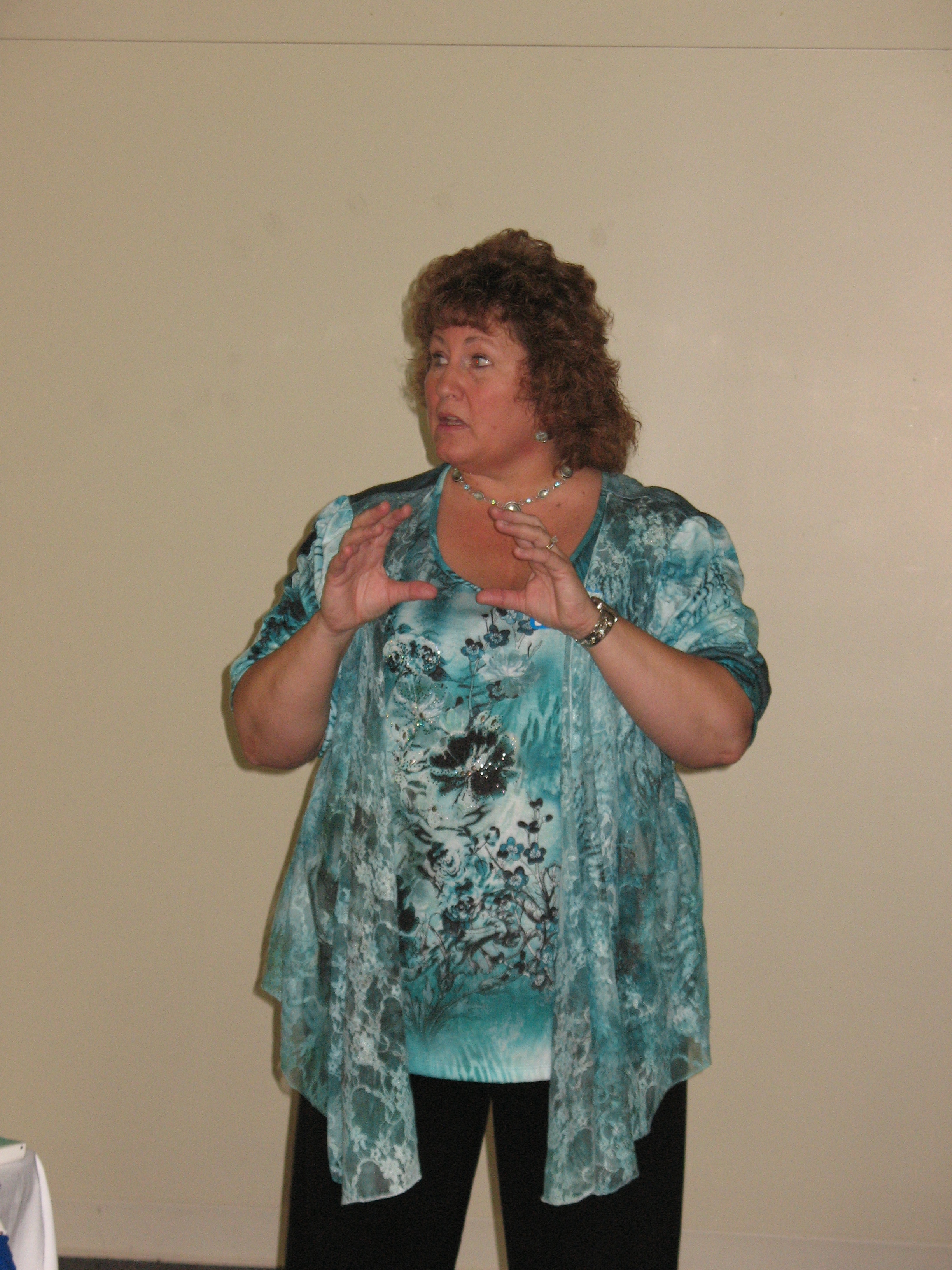
IMG_0096Mari-Jo Hedman has been teaching music since the fall of 1982 after graduating from the University of Southern Maine with a B.S Degree in K-12 Music Education. Mari-Jo is currently teaching K-12 music in the Fort Fairfield School District, MSAD #20.  She has taught in this district for a total of 17 years. She has also taught in Mars Hill, Caribou, and Union #122, which was at the time comprised of Stockholm, New Sweden, Westmanland, and “the other Woodland”.  In MSAD #20, she is responsible for about 300 students K-12 and teaches everything from classroom K-5, beginning 5th grade instrumental and band, 5th grade chorus, 6-8 chorus and 9-12 chorus. Mari-Jo also teaches a piano/percussion class at the high school.

What do you like best about being a music/art/drama/dance educator?

I love the fact that I work with grades K-12 because I can really see the growth from the first day of kindergarten right up until the day they graduate from high school, providing they continue with the vocal music program throughout their middle/high careers. I also love seeing kids come in that are struggling with many other classes in school, but they thrive in the music classroom.  That makes my day!

What do you believe are three keys to ANY successful visual and performing arts education?

  1. There needs to be a well-rounded curriculum that allows for as many musical experiences as possible. For most students, except for the music they hear on the radio or TV, their only musical experiences will take place as part of what I offer in the music classroom, and extend to the musicians that I bring into the school, or the local field trips that we go on.
  2. You need to LOVE what you do so that you can get your students to pick up on that excitement and want to keep coming back for more. You need to get the students turned on to music as soon as you have them in your classroom for the very first time.
  3. You really need keep up with what your students are listening to and try to incorporate some of their musical choices into the curriculum. It helps me to stay excited about what I am doing when I see a student come to me and they can’t wait to show me their newest favorite song that they just can’t live without. They especially love it when I like it enough to buy it and add it to one of my playlists.

How have you found assessment to be helpful to you in your classroom?

I am the only “special” in our system that truly does assessments and gives grades like the “regular” classroom teachers. I find that it gives me an opportunity to get to know each and every student’s needs and accomplishments and be able to communicate that to the parents. I think that this has benefited me in regard to justifying that music is essential, especially in these days of budget and job cuts. I also feel that students have a better understanding of what and how they are doing. It also helps students know on what they need to continue working.

What have been the benefits in becoming involved in the arts assessment initiative?

MAAI has been such a breath of fresh air for me in regard to assessment. Being with so many creative and hard working minds, sharing and receiving great ideas as to how assessment is done, what works and what doesn’t, has been true incentive for me. It has really made me look at what I am doing in my own classroom. I have so many new ideas and have tried some new things in not only elementary classrooms, but up through the middle/high levels as well. I have made strides in the right directions, but still have a long way to go.

What are you most proud of in your career?

I am most proud of students who have continued on in some aspect of music after they leave the halls of Fort Fairfield Middle High School. It is so humbling to realize that you have had enough of an impact on a student that they want to pursue a music career or maybe sing/play in some local music groups. The other thing that I am most proud of is the student that struggles and just keeps at it and at it until he/she finally gets it! I love to see the pride in children’s faces when they overcome that musical “hurdle”.

What gets in the way of being a better teacher or doing a better job as a teacher?

The massive amounts of paper work or details that are constantly added to our plate. It would be great to be able to just focus on teaching!

What have you accomplished through hard work and determination that might otherwise appear at first glance to be due to “luck” or circumstances?

I have been fortunate to get some grant money that helped to enhance the elementary program by offering new opportunities that otherwise our school district would not have been able to afford. I have a wide variety of percussion equipment for 5th percussion ensembles, ukuleles which I also teach at grade 5 along with enough piano keyboards to use in a group of 30 students if I ever had that many. I still do recorders in grade 3. It doesn’t magically happen. This also requires a solid underlying curriculum in grades K-2 in order to prepare students for being successful in developing the skills and knowledge needed in order to perform on these instruments.

Look into your crystal ball: what advice would you give to teachers?

As an arts teacher, you always have to have a clear vision of what you want your students to accomplish.  Be creative and think outside of the box when building your curriculum and the musical experiences that you want to offer your students. Be diligent and don’t take “no” for an answer. If you want/need something badly enough, fight the fight to get it and don’t give up.  You will be majorly reward in the end.

If you were given a $500,000.00 to do with whatever you please, what would it be?

I would use this as a start up fund for a new performance facility. Currently there is not a place at the elementary school where all grades that I teach, K-5, can be at the same time while including friends and families. This means I have to hold concerts in the high school gymnasium OR split the concerts over a two-night span of K-2 then 3-5. This performance also takes place in the gymnasium. Right now we split the concert into two nights. There is only room for one performing group and the audience. The other groups must wait in their classrooms until it is their turn to perform and we do not have a set-up that allows them to watch ongoing performances. A performance venue such as an auditorium would be a dream!

Imagine you are 94 years old. You’re looking back. Do you have any regrets?

I wish that once I had started teaching in Fort Fairfield I had stayed in that one location. Moving around and coming back to Fort Fairfield 3 times during my teaching career put me at a disadvantage and more importantly, the students were at a big disadvantage. We used to have large performing groups, competitive show choirs and jazz choirs, as well as an active music boosters organization that allowed us to travel as a group every 2-4 years. We went to Boston and Halifax, Nova Scotia for competitions in which we did well. By not staying put in one school system it allowed other teachers to come in that were not competent in the same areas. It truly hurt our extra-curricular groups to the point that we have none of the things listed previously. Consequently it has also hurt our regular concert choir and concert band; we are a fraction of the size that we had in the past. Our school enrollment is so small that I know we will never have the opportunity to get that quality of program to return. Very sad!



h1

NEA Grants

January 20, 2013

National Endowment for the Arts grant guidelines

Screen shot 2013-01-18 at 11.17.26 AMApplication guidelines for the next round of Grants for Arts Projects are now available on the NEA’s website. To view the guidelines, go to www.arts.gov/grants/apply, select the field or discipline most relevant to your project, and choose Grants for Arts Projects from the list of funding opportunities.

Organizations may apply under the following categories:
Art Works: To support the creation of art that meets the highest standards of excellence, public engagement with diverse and excellent art, lifelong learning in the arts, and the strengthening of communities through the arts. Within these areas, innovative projects are strongly encouraged. Grants generally range from $10,000 to $100,000. (Two application deadlines: March 7 and August 8, 2013)
Challenge America Fast-Track: To support projects that extend the reach of the arts to underserved populations. Grants are for $10,000. (Application deadline: May 23, 2013)
Highlights of the changes to the guidelines for this year and what they mean to you

The Presenting discipline has been renamed Presenting & Multidisciplinary Works. Why the change? We wanted the Presenting discipline to be as open and welcoming to all multidisciplinary applications and felt a need to have the title and description properly reflect it. Additionally, some changes to the types of projects that will be accepted at each Art Works deadline have been switched between March and August. Click here to see a one-page description with all the information.
Review criteria to address innovation and inclusion have been added for the Art Works category.
Also in the Art Works category, applicants in all disciplines will upload their work samples electronically to NEA-GO over the same two-week period of time. Last year you had only one week to upload your samples and did so on a schedule according to your discipline.
References to the Central Contractor Registration (CCR) have been updated to reflect the migration to the System for Award Management (SAM). SAM is the same as the old CCR, just with a different web address.

h1

Funding Sources

January 14, 2013

Got any money?

imagesPeriodically I am asked for sources of funding, grants, and/or scholarships. The bottom line question is “Got any money?” If only I did, I’d love to facilitate a grant program to provide money to arts educators across the state who do amazing work with students every day. Since I don’t have any money but I do receive informative emails that tell of funding I can pass the information on to you.

This came across my email recently and is a source that I am unfamiliar with. A piece on GetEdFunding found on EDTECH Focus on K-12. GetEdFunding is a free, curated database of more than 750 active grants and awards that are available to schools and educators.

I post funding opportunities on the “Prof Dev Opps” page that you can get to from the front page of the meartsed blog, bottom right hand side. Not only are their funding opportunities but an ongoing list of professional development. Funding sources are towards the bottom of the long list of information provided for you!

h1

Shared Delivery of Arts Education

December 20, 2012

Createquity blog

In a December 3rd blog writer Talia Gibas describes the model called “shared delivery” that provides students with an excellent arts education. This involves three parties:

  1. generalist elementary school teacher
  2. arts specialists, and
  3. teaching artists and/or community arts organizations.

In this model the three entities collaborate to provide a visual and performing arts education. It is a great read that provides an in-depth explanation of the model and the benefit to all students.

Once you read the post at http://createquity.com/2012/12/unpacking-shared-delivery-of-arts-education.html#comment-17302 be sure and read Ayanna N. Hudson, Director of Arts Education at the National Endowment for the Arts (NEA) comment at the bottom of the post. I recently posted (on the “Prof Dev Opps” page) the grants being offered from the NEA.

h1

What a Week!

October 9, 2012

Some weeks are crazy

Last week was filled with adventures! I started the week in Washington D.C. at the Arts Education Advisory Group (AEAG) meeting. They are part of the National Assembly of State Arts Agencies (NASSA) which is made up of the state arts commissions including the Maine Arts Commission. Every year the AEAG plans a professional development institute (PDI) for the arts in education associates at the state arts commissions which includes Meagan Mattingly. I am the representative to AEAG for my national professional organization called State Education Agency Directors of Arts Education (SEADAE) which is comprised of the arts education specialists from the Departments of Education. I had a chance to be with AEAG at the opening of their PDI. It was wonderful to meet people who are committed to arts education in each state. Not to mention they are interesting, knowledgeable, creative, and FUN! The National Endowment for the Arts (NEA) are affiliated with the AEAG and NASSA since funding is provided by the NEA. Consequently, there were a handful of staff from the NEA who are responsible for arts education who attended as well. In attendance was Ayanna N. Hudson, the NEA Director of Arts Education. She agreed to write a blog post for meartsed that will explain the programs/funding that is available for teachers, schools and communities. This will provide an overview to help you learn what is available. One of the evening highlights was the opportunity to see the performance of the DC Youth Slam Team. They were INCREDIBLE!

Next my travels took me to Reston, VA where SEADAE met with the chairs of the National Arts Standards writing teams and the National Coalition for Core Arts Standards leadership team. The writing teams are moving along with their work in spite of the little funding that has been provided. The most recent draft of the framework was shared by Co-Chairs, Marcia McCaffrey and NH DOE arts specialist and Lynn Tuttle, AZ arts specialist and president of SEADAE. The writing teams have taken the first draft with the components including Disciplines, Essential Questions, Enduring Understandings, Artistic Processes, Cornerstone Assessments, and re-arranged the direction of the document to make it  more user friendly. The work was shown to us on the website where the document will be housed so we could also see the work that has been done on the site. It will include a “quick view” button for finding stuff in a hurry, the use of tagging and keywords, and links to other works. All of this will be important aspects since it will be a web based document. You can view some of the ideas that are being considered at this link.

We had a discussion on what to call the final document so if you have any suggestions please email them and I can pass them along. The document will be arranged by grade level, PreK-8 but the high school format is still under discussion. You can read more about the format by clicking here.

At this point the expected date for the release of the “framework” will be in December. The first draft of the standards document which includes Dance, Media Arts, Music, Theatre, and Visual Arts will be within a few months after that, perhaps in March. Most likely the cornerstone assessments will be included when the standards draft comes out at grades 2, 5, and 8. The format will require feedback on the standards and the “userness” of the website.

Nancy Rubino from the College Board reported on recent research that looks at the Common Core State Standards for ELA and Math (CCSS) and the National Standards for the Arts. The research looks at the overlapping components of the CCSS and the arts frameworks and where the arts references are present in the CCSS. For example the research includes tells us that there are 26 ELA standards that have references to reading a work of drama. Looking closely at “college level learning” in the arts has been included in the research. The research will be released as soon as the final framework is determined and I am sure you will find it helpful. The College Board has done other research which I have mentioned in past blog posts and you can find links to this valuable information on the right side of the National Coalition for Core Arts Standards wiki.

The end of the day included the live stream from the meeting to provide an overview of the event. If you weren’t available or couldn’t get on since the system was full I understand that it will be archived on the site in the near future.

I flew back to Maine early on Thursday morning and headed to Point Lookout in Northport where the Maine Arts Assessment Initiative (MAAI) teacher leaders and leadership team met that night and all day Friday. We worked on the Depository for arts education resources in Maine located at MaineLearning.net and continued plans for the Mega-regional workshops to be held throughout the 2012-13 school year. On Friday the teacher leaders from phase 2 presented their workshops so they could gather feedback on their sessions to determine if they’d like to tweak anything before taking their session on the road for the regional workshops. The regional workshop sessions will be posted on the Department arts assessment page in the next two weeks so you can see what is available. The energy and expertise of their topics was inspirational and truly amazing. I was reminded of how fortunate we are in Maine to have such outstanding arts educators who are willing to share information and expand their horizons to become teacher leaders in the arts. I am sure when the Cornerstone Assessments are released from the national standards work that Maine will be ready to take on the task of reviewing them to provide feedback that will inform the nation.

Needless to say when the week ended on Friday evening I was exhausted! However, I am extremely proud of the work that arts educators are doing throughout the state and urge you to continue to read and stay abreast of the opportunities that are offered. If you have questions or comments on any of this please feel free to email me at argy.nestor@maine.gov or post a comment at the bottom of this post.

MAAI arts educators fall workshop