Archive for the ‘Integration’ Category

h1

MAAI and MLTI Partner

December 25, 2012

Mega-regional workshops offered

The Maine Arts Assessment Initiative (MAAI) is partnering with the Maine Learning Technology Initiative (MLTI) to offer all-day Mega-Regional workshops. Over 36 sessions will be offered at the four locations; Farmington, Portland, Ellsworth, and Presque Isle. These are FREE all day arts education workshops for elementary, middle, high school, and higher ed educators.

The workshops are provided FREE and contact hours are available. Workshop facilitators are the MAAI teacher leaders (phase 1 and 2) and MLTI technology integrators. At least one workshop included at each location will have an integrated co-facilitated session that connects at least one arts discipline and technology. In addition MLTI staff will be offering sessions. All participants must pre-register. Join us for this unique opportunity! Each participant can select two 1-hour morning workshops and one 2-hour afternoon MLTI session. You will need to bring a computer that has the MLTI image.

These workshops are in response to the feedback from arts educators requesting more professional development opportunities. Also happening all over the state are Regional workshops being presented by the arts education teacher leaders from the second phase of MAAI.

The Mega-Regional Workshops

  • Monday, January 14, 8:00 to 3:30, University of Maine at Farmington
  • Friday, March 1, 8:00 to 3:30, University of Southern Maine, Portland
  • Friday, March 22, 8:00 to 3:30, Presque Isle High School, Presque Isle
  • Friday, March 29, 8:00 to 3:30, Ellsworth High School, Ellsworth

Workshop descriptions are located here. Please click here to learn more and to REGISTER for one or more of the workshop sessions.

h1

Shared Delivery of Arts Education

December 20, 2012

Createquity blog

In a December 3rd blog writer Talia Gibas describes the model called “shared delivery” that provides students with an excellent arts education. This involves three parties:

  1. generalist elementary school teacher
  2. arts specialists, and
  3. teaching artists and/or community arts organizations.

In this model the three entities collaborate to provide a visual and performing arts education. It is a great read that provides an in-depth explanation of the model and the benefit to all students.

Once you read the post at http://createquity.com/2012/12/unpacking-shared-delivery-of-arts-education.html#comment-17302 be sure and read Ayanna N. Hudson, Director of Arts Education at the National Endowment for the Arts (NEA) comment at the bottom of the post. I recently posted (on the “Prof Dev Opps” page) the grants being offered from the NEA.

h1

The Arts and Common Core

December 17, 2012

Connections!

Not only are we in Maine looking at the connection points of the Arts and the Common Core for ELA and Math but that is the case in other parts of the country as well. The Gardner Museum in Boston has long championed Visual Thinking Skills and viewing and discussing art for the cultural experience.  Now they also view the “powerful opportunity to tap into some of the same skills asked of students under the Common Core State Standards”.

In a Maryland county they are working across content areas to implement the new standards and see the “great platform for the arts to really rise and share their importance in the educational fabric of a school.” and in New York City they are working with arts educators to engage in a conversation to insure that the artmaking is not sacrificed while they “focus on developing and documenting interdisciplinary units of study and formative-assessment practices.”

The new president of the College Board, David Coleman, responded to a series of blog posts that were posted this fall on arts education and the Common Core. He said: “the great news is that the standards call on so many things the arts do well. The tradition of careful observation, attention to evidence and artists’ choices, the love of taking an artist’s work seriously lies at the heart of these standards.”

As the new national standards for arts education are developed and the documents are released in the near future you will see the alignment information that has been done with the Common Core. This will be useful information to the field of arts education and the work you may be doing in your local districts.

I know that many Maine arts educators are working with their colleagues to integrate the Common Core ELA and Math standards into the VPA curricula. Please do share the work you are doing by commenting on this blog post.

Let us not forget what Elliot Eisner said:

“To neglect the contribution of Art in education is to deny children access to one of the most stunning aspects of their culture and one of the most potent means for developing their minds.”

I recommend that you read the entire article that I am referencing found in Education Week, December 16, 2013, written by Erik W. Robelen by clicking here.

h1

Community Supporting Agriculture/Arts

October 28, 2012

Harlow Gallery, Hallowell

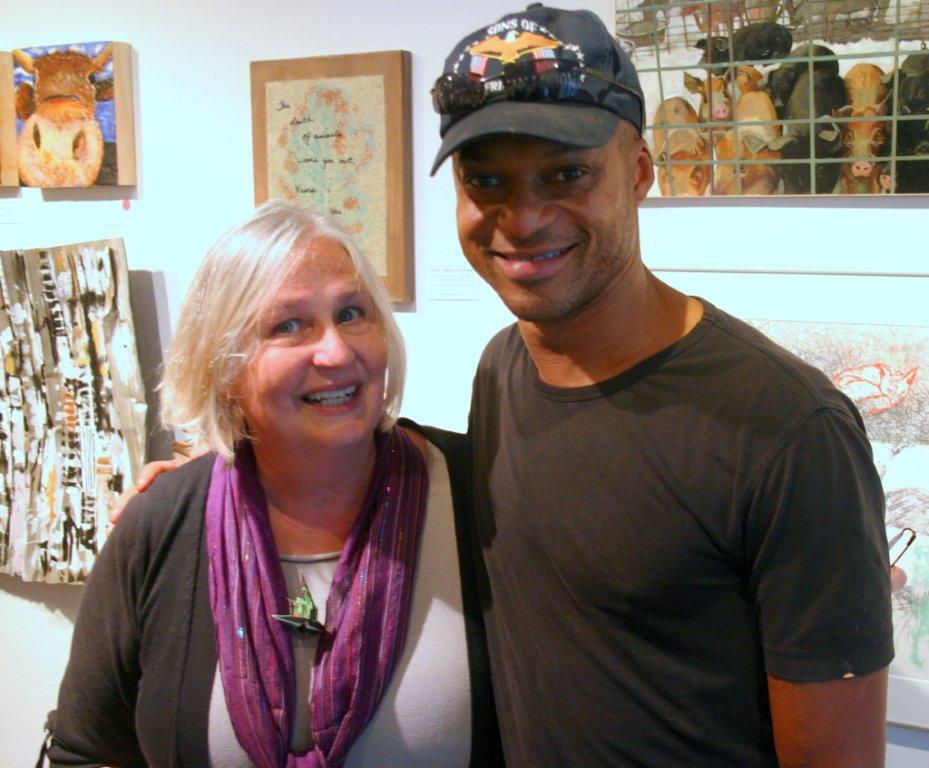
This past week I was invited to the Harlow Gallery to join a focus group they were having on Education and Programming that will provide information for their upcoming strategic planning meeting. I was glad to be part of a conversation with several community people who have varying connections with the Harlow Gallery. In many ways the Harlow is a model gallery for playing an important role in the Hallowell community.

I was especially happy to be meeting in the gallery with art all around and more so because of the unique exhibit they were having called Community Supporting Agriculture/Arts or CSA. Some of you might be familiar with CSAs. When my sons were younger we belonged to a CSA near our home. We paid in the spring for a share of food and each week during the summer we’d stop at the farm and pick up a surprise box filled with vegetables. The focus of the Arts connection is very exciting. It is easy for me to think of potential ideas on how to create something similar with students.

Retired Cony High School art teacher Christine Higgins is one of the artists who participated in the project along with one of my former students Erskine Academy art teacher Scott Minzy. Last weeks Maine Sunday Telegram had an outstanding article written by Bob Keyes on the project. I emailed Christine and she agreed to provide a description on the project and include her experience at Annabesacook Farm located in Winthrop.

In March of 2012, I was one of 14 artists chosen to participate in a CSA – Community Supporting Agriculture/Arts project sponsored through the Harlow Art Gallery in Hallowell, Maine. Each artist was paired with a CSA farm. We visited our farms throughout the next 8 months with the goal of creating art from those experiences. Our discoveries and stories about the farms are reflected in the various Maine exhibits at different venues through February.
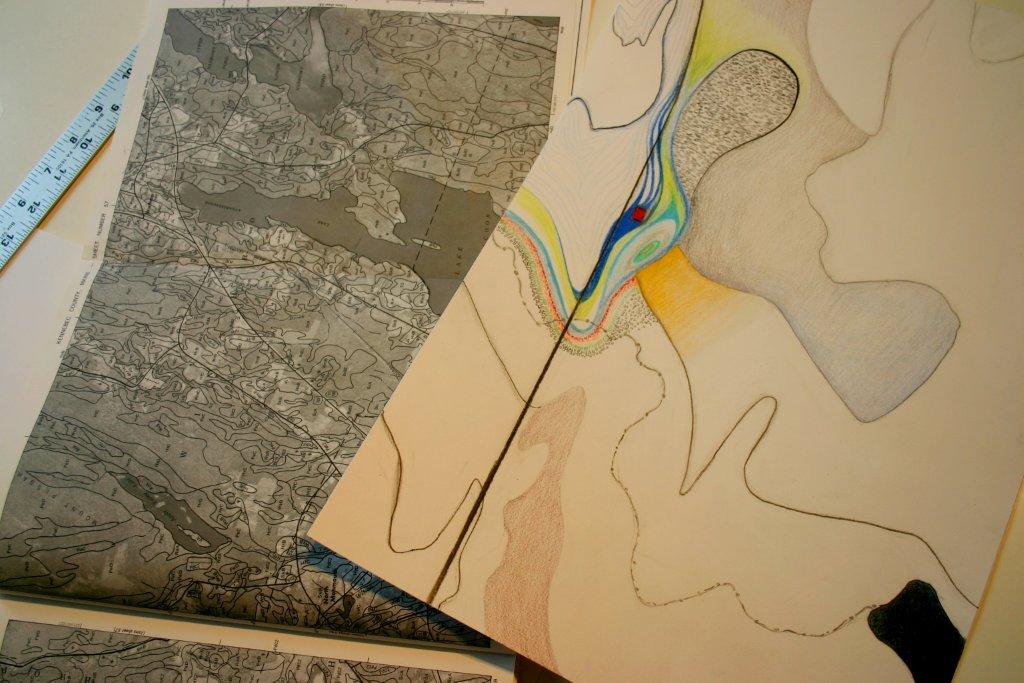
sketch of soil map

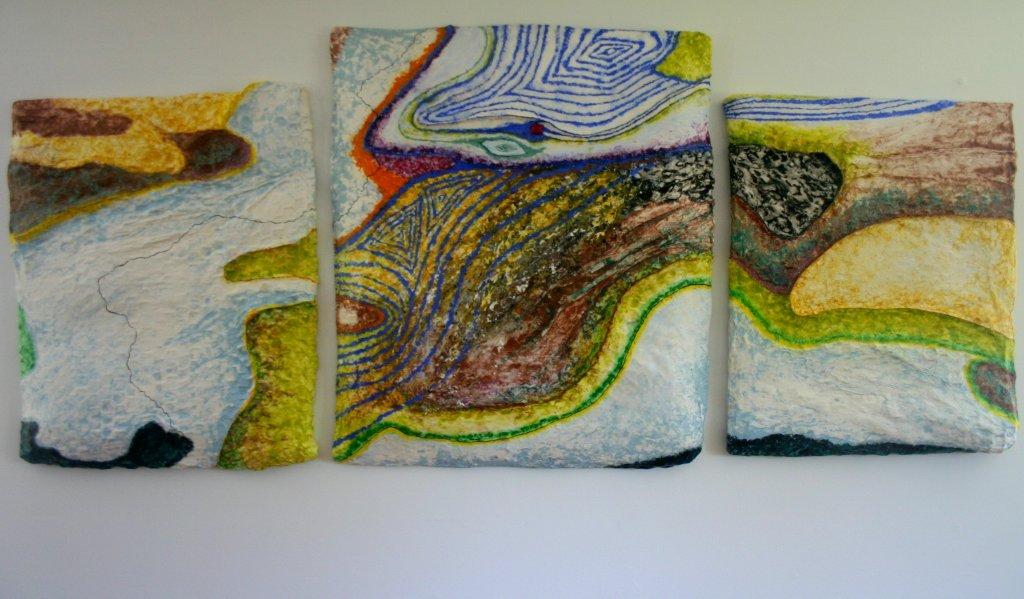
My focus was on fibers, papermaking, and prints. My initial proposal was to abstractly ‘map’ the land. Through conversation with Craig Hickman, one of the farm owners, I learned specifics about raising animals, crop cultivation, and an attitude about farming that integrates responsibility of the land with the community. I soon discovered that my ‘farm’ was also a bed and breakfast, catering service, site for weddings, and other events. My ‘farmer’ was an author, poet, performing artist, philanthropist, Rotarian, and is currently running for the legislature to represent Winthrop and Readfield.
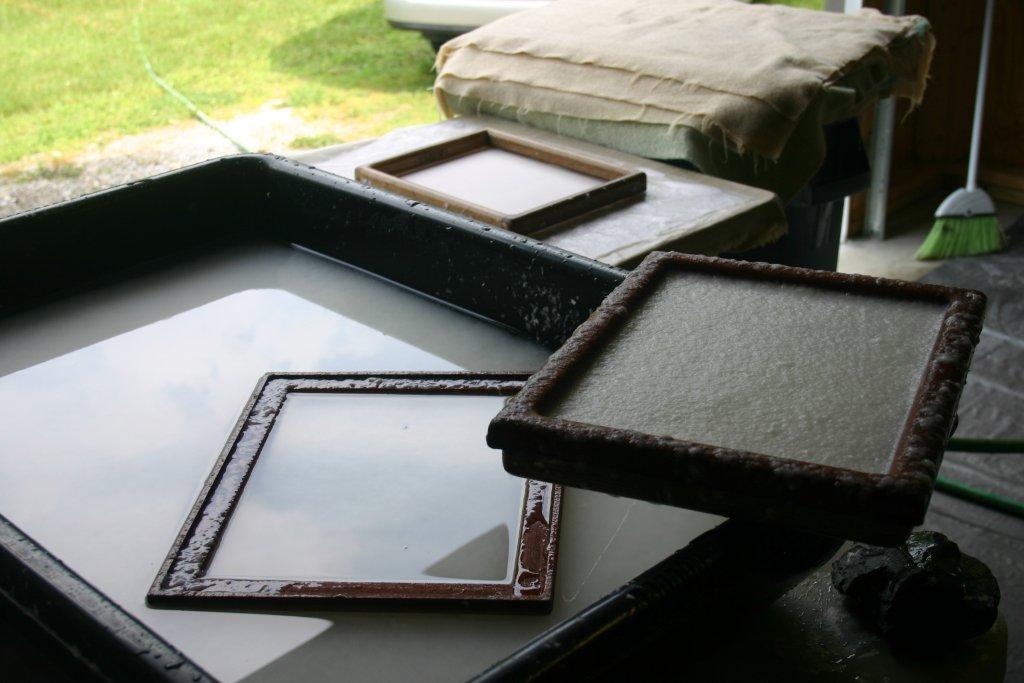
making paper in the vat

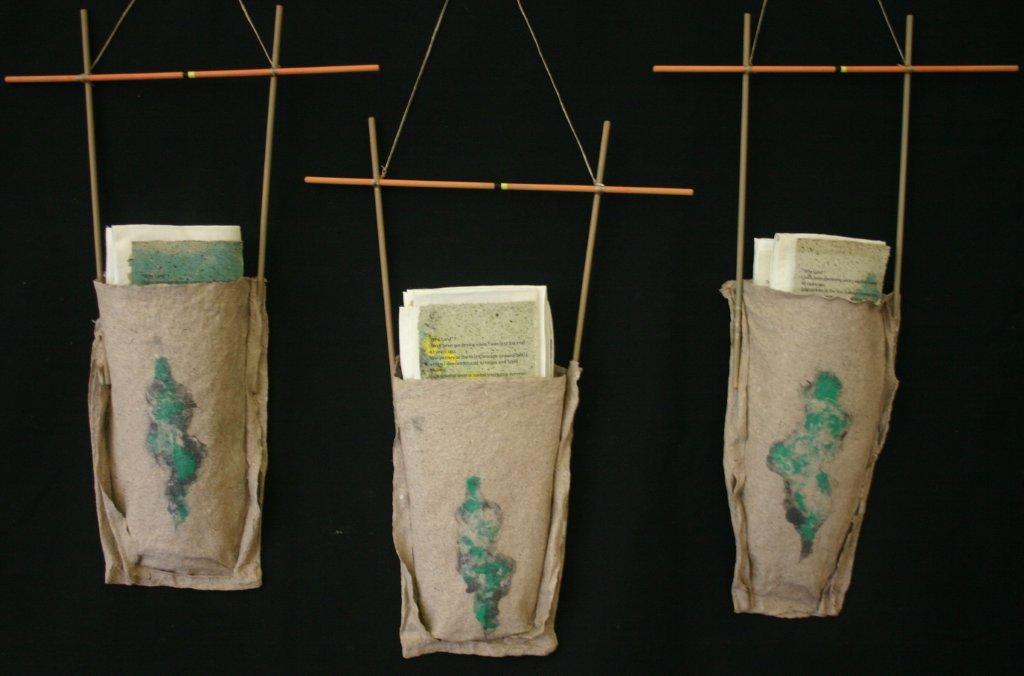
Gathering fibers from the farm, I made paper with cattails, cornstalks, garlic stems, meadow grasses, collard greens, and clay as pigment. Land and our attitudes about the earth was my primary subject.  I collected essays in response to my question, “What do you think of when you hear the word, land?”, and incorporated these on handmade paper maps, which were inserted into cattail baskets, that the audience may take out, touch, read, and reflect on their own relationship to the earth.
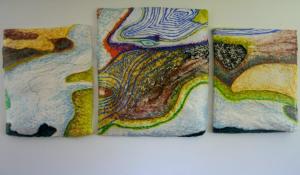
paper relief map with pulp painting

As I became more familiar with Annabesacook Farm, the geography, dwellings and residents influenced other themes in my work.  These farm ‘stories’ were printed on my handmade paper. 

I found that the parallels between artist and farmer are considerable: we both work many hours in satisfying, timeless, and seasonal work. Both artist and farmer are self-directed individuals, who, when not actually present in the studio or field, are thinking about their work. The endeavor becomes the fiber of the being.  

A CSA is collaboration with an audience, much as an artist’s exhibit depends on the support of its viewers. Both thrive on the excitement and satisfaction of successful production that involves a life-long, heart and soul commitment. Artist and farmer pursue a balanced life of seclusion, reflection, and production that welcomes an audience of community partnership. We both have a driving desire to care for, transform, mold, process, and shape through drudgery, sweat, stress, problem-solving, and creative, independent thinking. Both activities are risky with an unpredictable element. Craig once said to me, “Farming is not romantic – it will make you sore.”
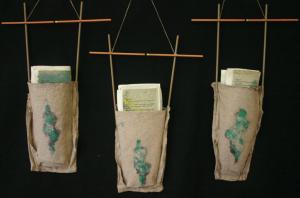
Cattail maps

I hope that the art created because of this project increases awareness of the vital importance of the resources provided by the earth and appreciation for those who cultivate that delicate balance of farming and giving back to the land.

The concept for this project originated with Deb Fahy, Director of Harlow Gallery, and was supported by a tireless team of staff and volunteers. A manual for communities interested in a similar idea of pairing farms and artists will soon be available through the Harlow.  More information can be found at www.harlowgallery.org, including photos and blogs of the activities.
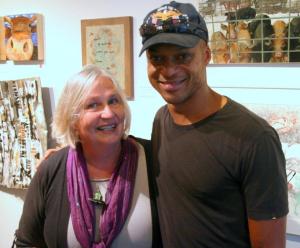
Chris and Craig at the Harlow opening

The Harlow Gallery exhibit closed yesterday, October 27th but there are many other locations that you can see the exhibit during the next 4 months.

  • Common Street Arts, Waterville  Nov. 3 – 30th 
  • Sheepscot General Store, Whitefield  Nov. 9 – Dec. 1st
  • Savory Maine Dining, Damariscotta  Nov. 13 – Feb. 5
  • Maine Farmland Trust Gallery, Belfast  Jan. 4th – Feb. 27
  • Art Gallery at Frontier, Brunswick  Jan. 11 – Feb. 24th

Thank you to Chris for providing this description and her part in the project.!

h1

Sesame Street – STEM+A

October 24, 2012

STEM to STEAM

So, even Sesame Street is including the A in STEM to make STEAM. During Season 43 Sesame Street continues its focus on Science, Technology, Engineering, and Math. According to information on Sesame Street’s curriculum webpage they have added the “A” to “help make learning STEM concepts relevant and enticing to young children by highlighting how artists use STEM knowledge to enhance their art or solve problems. It also provides context for the importance of STEM knowledge in careers in the arts (e.g. musician, painter, sculptor and dancer).”

Elmo the Musical is a new segment of the show that is interactive and a “musical adventure”. Can’t wait to see it. I will have to tune in so I can learn for myself. I wonder, is this “frosting on the cake” or outstanding examples of how the arts and the STEM subjects support each other while students are learning all 5 subjects?!

Anyone seen the show? If so, please let us know what you’ve learned on Sesame Street!

h1

Arts Integration

October 23, 2012

In the best interest of students

Some of you are aware that the discussion at the Maine Department of Education (MDOE) is on LD 1422, the high school proficiency legislation. We are discussing the role of the Department in assisting school districts in implementation of this bill. We are looking at defining proficiency and what this looks like in standards-based systems in student-centered classrooms. Our conversations include how to deliver instruction in an integrated fashion.

In a September ASCD article independent consultant Christa Treichel reviews a project that brings educators together and breaks down the “silos” of content, classroom, and traditional teaching methods. The collaborative culture is used to improve student learning.

The school and teachers are located in west-central Minnesota and the arts educators are from the Perpich Center for Arts Education. The arts integration program uses “collaborative culture” to improve student learning. The teachers from different disciplines work side-by-side looking at the standards, plan and deliver, and assess arts-integrated lessons.

You can read the article to learn more about this Minnesota program by clicking here.


h1

Arts Integration Transforming Schools

October 7, 2012

Edutopia recent focus on arts integration

Edutopia focused on integration and as they do so well covered many areas within the topic. The article Schools Transformation Through Art Integration written by Mariko Nobori for Edutopia explains what is going on at the Wiley H. Bates Middle School, a public school in Annapolis, Maryland after they became fully arts integrated in 2009. The transformation has positively impacted student behavior and learning.

The Edutopia staff wrote a piece called A Research-Based Approach to Arts Integration that includes the NAEP research along with other background information. Also included is the Bates Middle School information on the student growth in math and reading that was reported to the Maryland State Department of Education.

You can see the program in action in this YouTube and hear from students as well as school educators. I suggest that when you click on one of the links above that you read the other articles including How the Arts Unlock the Door to Learning.

h1

Articles (lots of them!)

October 6, 2012

Food for thought

I am forever finding interesting thought-provoking articles to read and share with the meartsed readers. Below are a list that have accumulated during the last month or so to share with you.

  • Luminaries in Convention City Advocate for Arts Education written by  Andrew Ujifusa, Education Week, September 6, 2012. The former U.S. Secretary of State Madeleine Albright, based on her drumming chops, got the nickname “Sticks” and she was one of several who joined a discussion called Arts Speak.
  • Rule Making in the Classroom written by Nancy Flanagan Education Week, August 14, 2012. How do we shift to students making the rules for a better classroom environment.
  • Expanding the impact of Excellent Teachers written by Bryan C. Hassel and Celine Coggins Education Week, August 16, 2012. At this time in education with so many changes occurring how do we look to excellent teachers and expand on their impact?
  • Graduating all Students Innovation-Ready written by Tony Wagner Education Week, September 23, 2012. “What matters today is not how much our students know, but what they can do with what they know.”
  • Travels in Education written by Deborah Meier, Education Week, September 23, 2012. How one educator travel experiences have and continue to impact her teaching.
  • Teacher PD Needs More on Emotions written by Anthony Rebora, Education Week, June 8, 2012. Perhaps teachers need more training in order to provide emotional support for students.
  • Tools for Teaching: The Amazing Sticky Note written by Ben Johnson, Edutopia, September 10, 2012. I just had to end this list of readings on a topic that I find very fun – the use of sticky notes. Those of you that know me are aware of how sticky notes on my computer are a lifesaver. Thanks to Chris Milliken for sending me this link!
h1

STEM/STEAM in Action

September 22, 2012

Ann Thompson is walking the walk

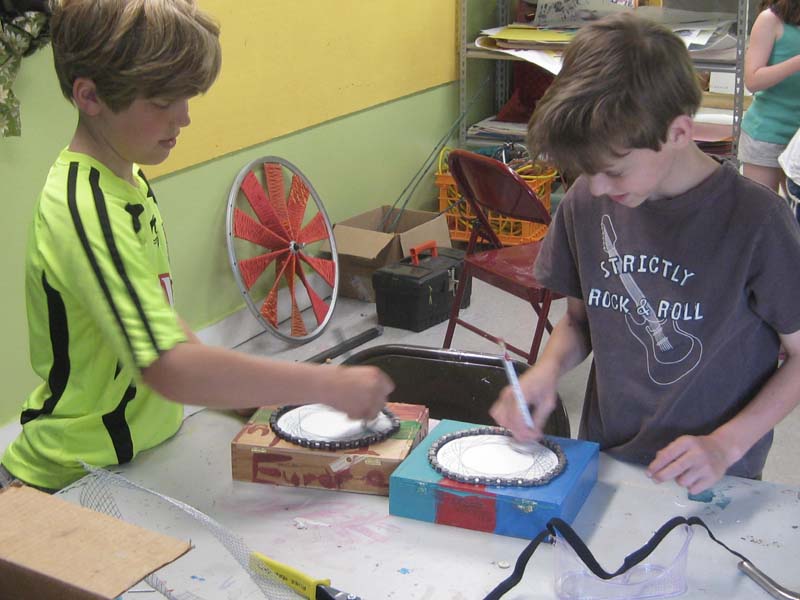
When I see an email from Ann Thompson in my in box I know that there will be something interesting in the message. Recently Ann emailed to let me know that she is teaching art through the Biddeford High School Alternative Education Program one day a week. Her students are mostly Juniors & Seniors who are completing diploma requirements. She has created a course with a “lab” component to introduce STEM related projects to the students.

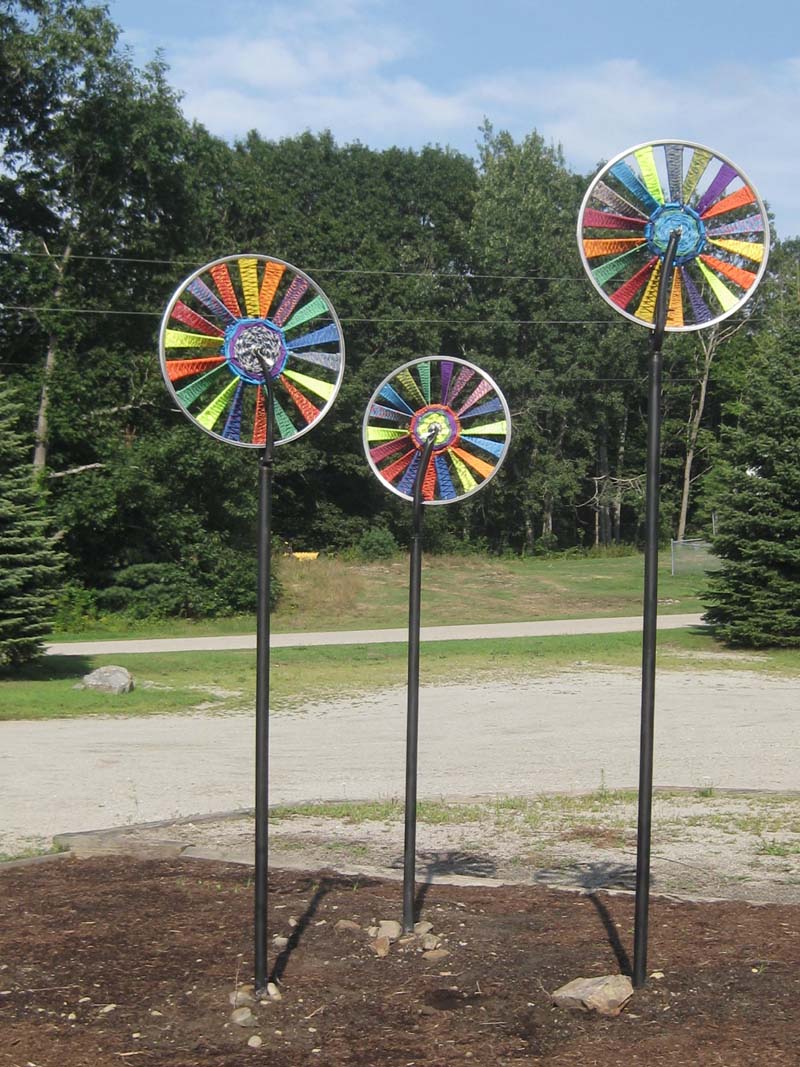
She will begin by creating Galimotos with the students. For those who are not familiar with Galimotos they are an African kinetic folk toy. I remember reading a children’s story to my sons many moons ago about the village of young people who made Gaimotos.

Ann works with the local bike shop during the summer. This summer it was the bike shop plus 13 milddle schoolers along with three bikes and a climbing rope!

Ann keeps herself busy making the connection between science, technology, engineering, math and is sure to add the “A” for the arts to make it STEAM. In fact she’s heading off to NH for the STEM related professional development that is taking place there during the end of October. (Info posted under Prof Dev Opps). She plans to learn more about a national craft initiative called “Craft Think Tank”. It is a forum for people to discuss the new nature of “making”. http://craftthinktank.ning.com.

Ann is continuously working on the Maine Reef Project which will be culminating with the installation at the Fryeburg Fair http://the mainereef.blogspot.com. This community art initiative ended up being very inclusive. The youngest contributor was 9—the oldest 94 with a runner up at 89. The Spindleworks artists sent donations as well as many out of state folks from as far away as Oregon, Florida, California,  & St.Croix.
Some had ties to Maine and some just found us on-line. At the Brunswick Family Art/Science Festival which Ann took part in after “Maker Faire” in Lewiston not to long ago there was a lot of excitement about hyperbolic crochet, especially from the Coastal Studies for Girls. Daina Tamina’s book on hyperbolic crochet recently won a Math prize and she is featured in a TEDX talk. Lewiston Sun is doing a feature on the project soon.

Needless to say you can imagine why I enjoy hearing from Ann and the work that she is involved with – Great job Ann and thanks for sharing this information and resources!

h1

Haystack

September 18, 2012

A trip to Haystack for professional development

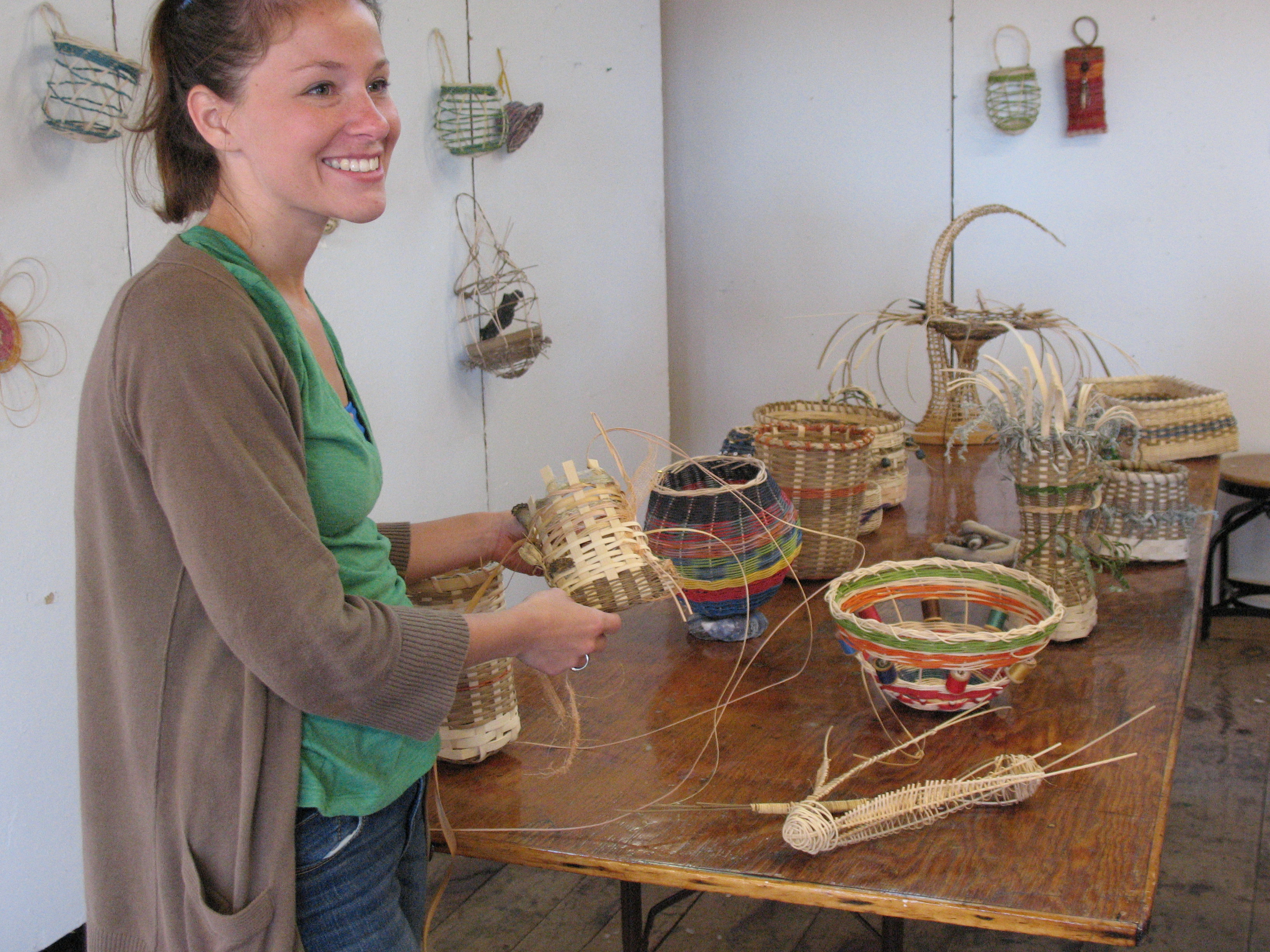
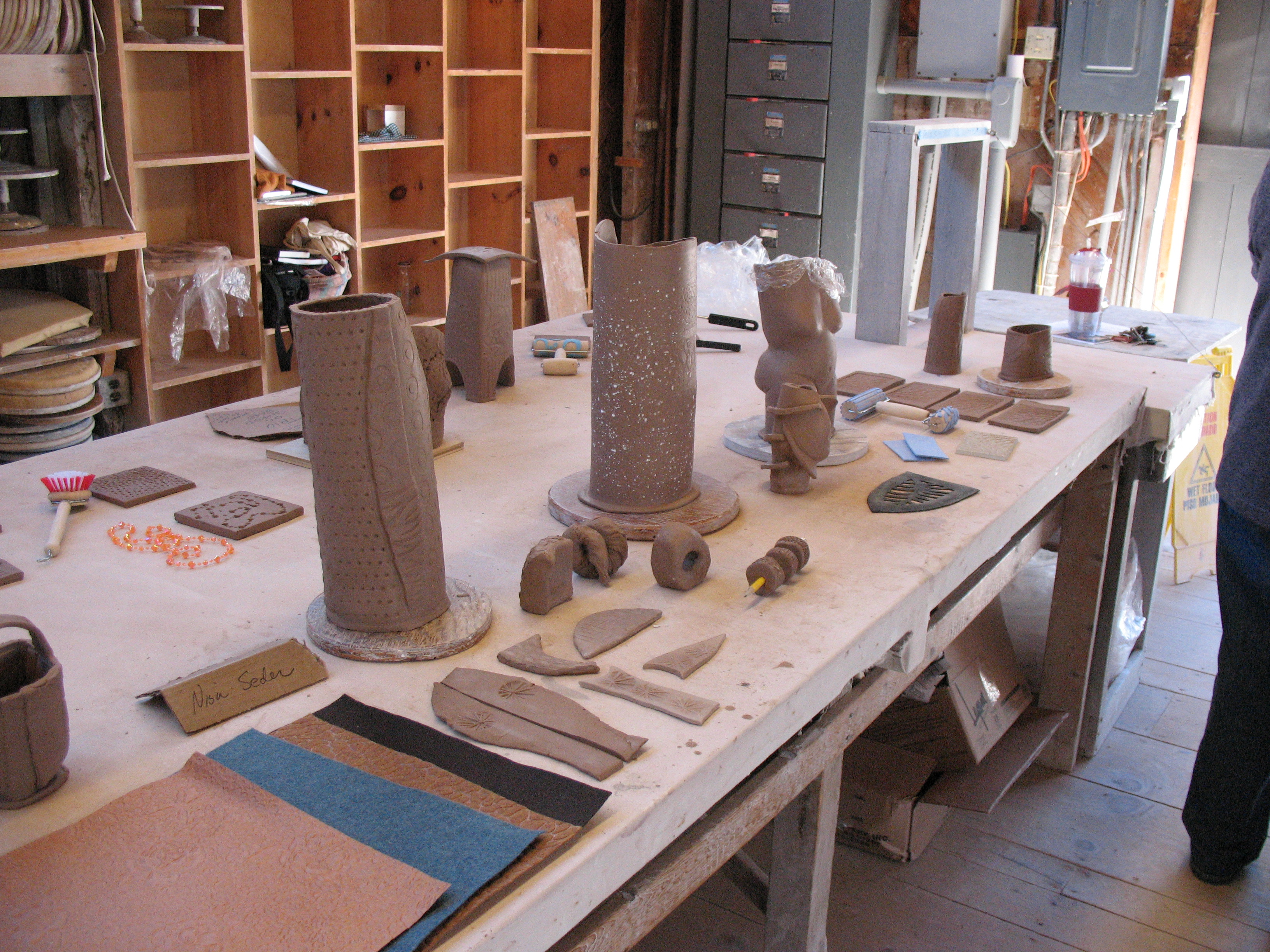
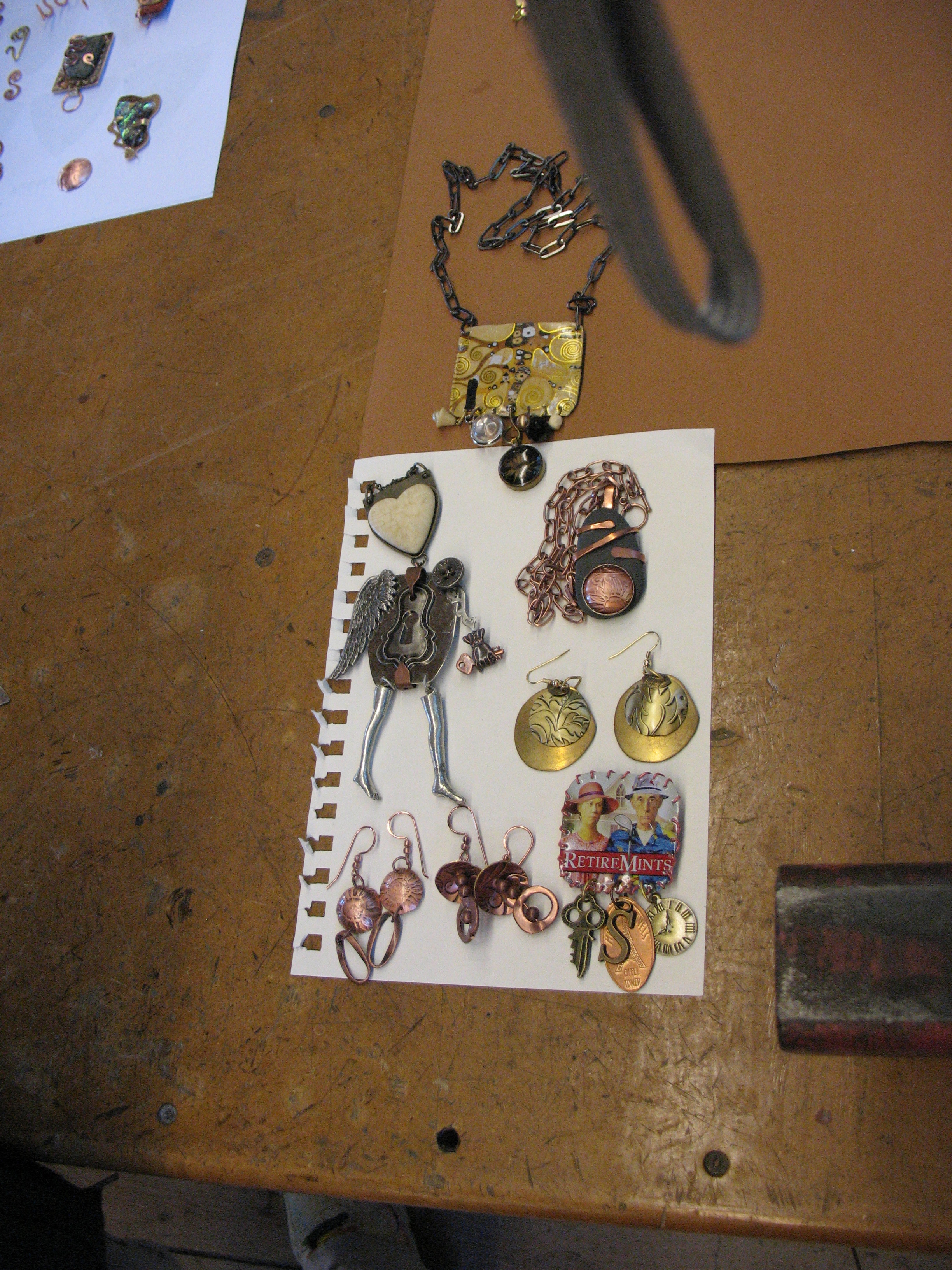
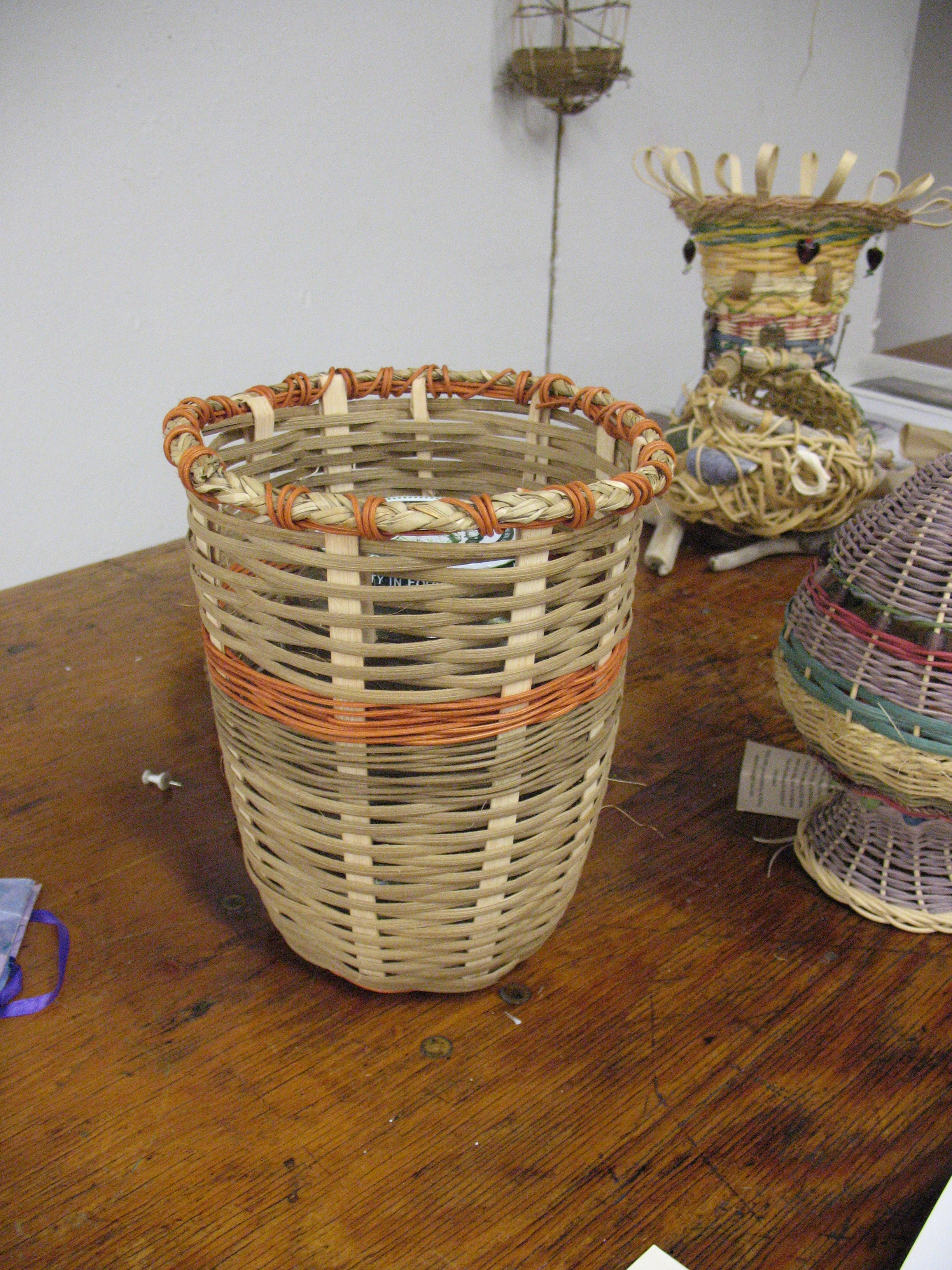
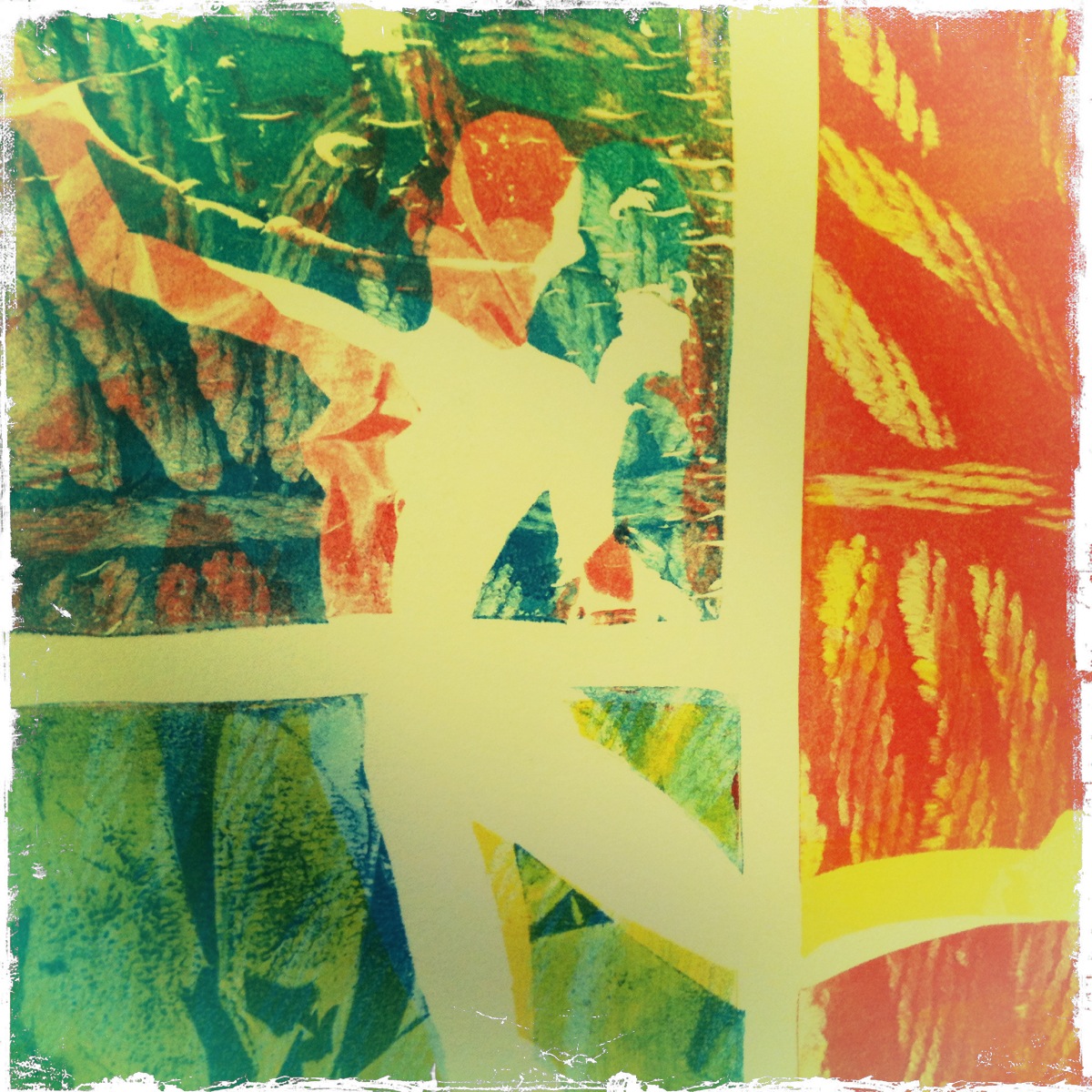
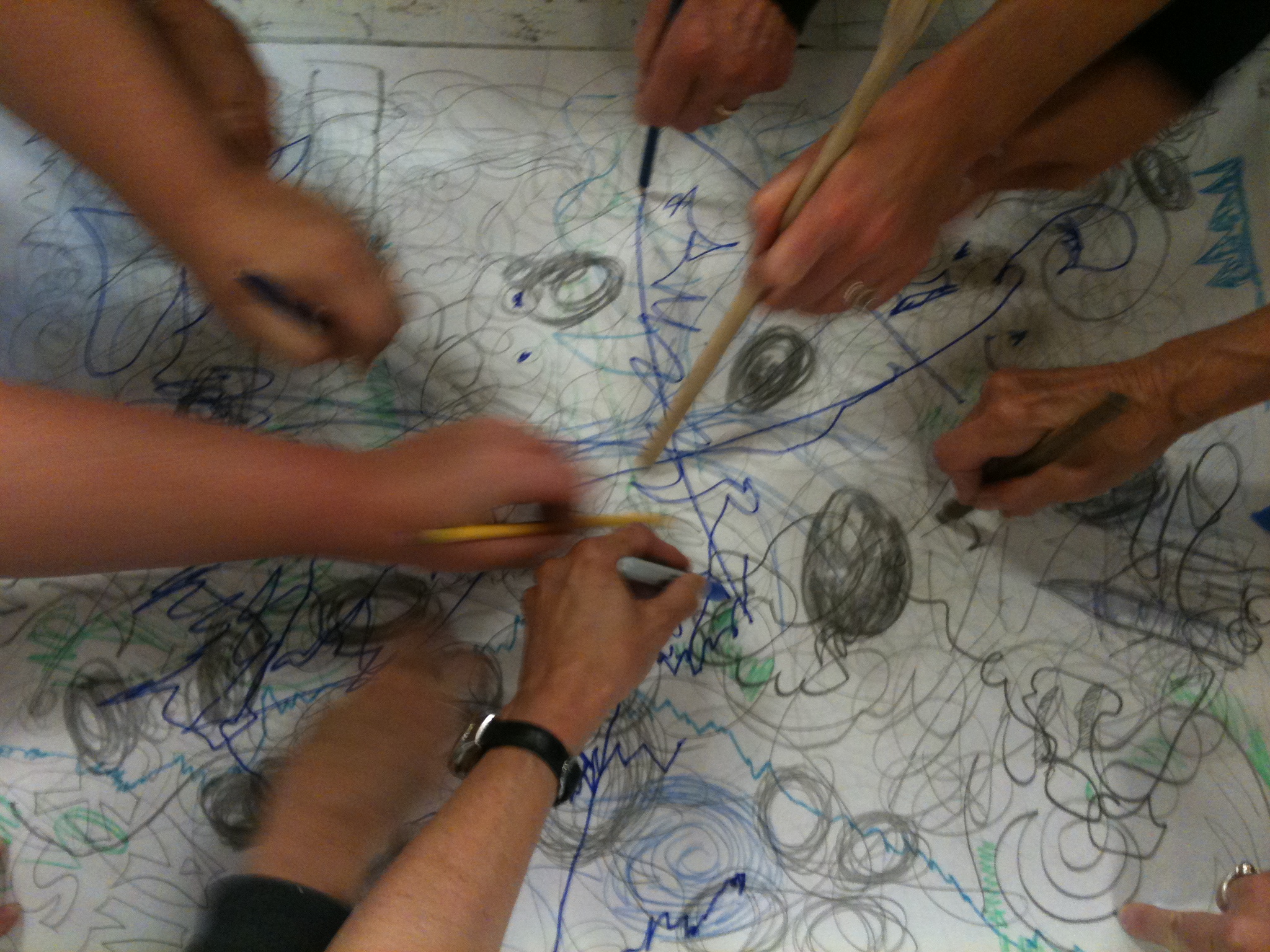
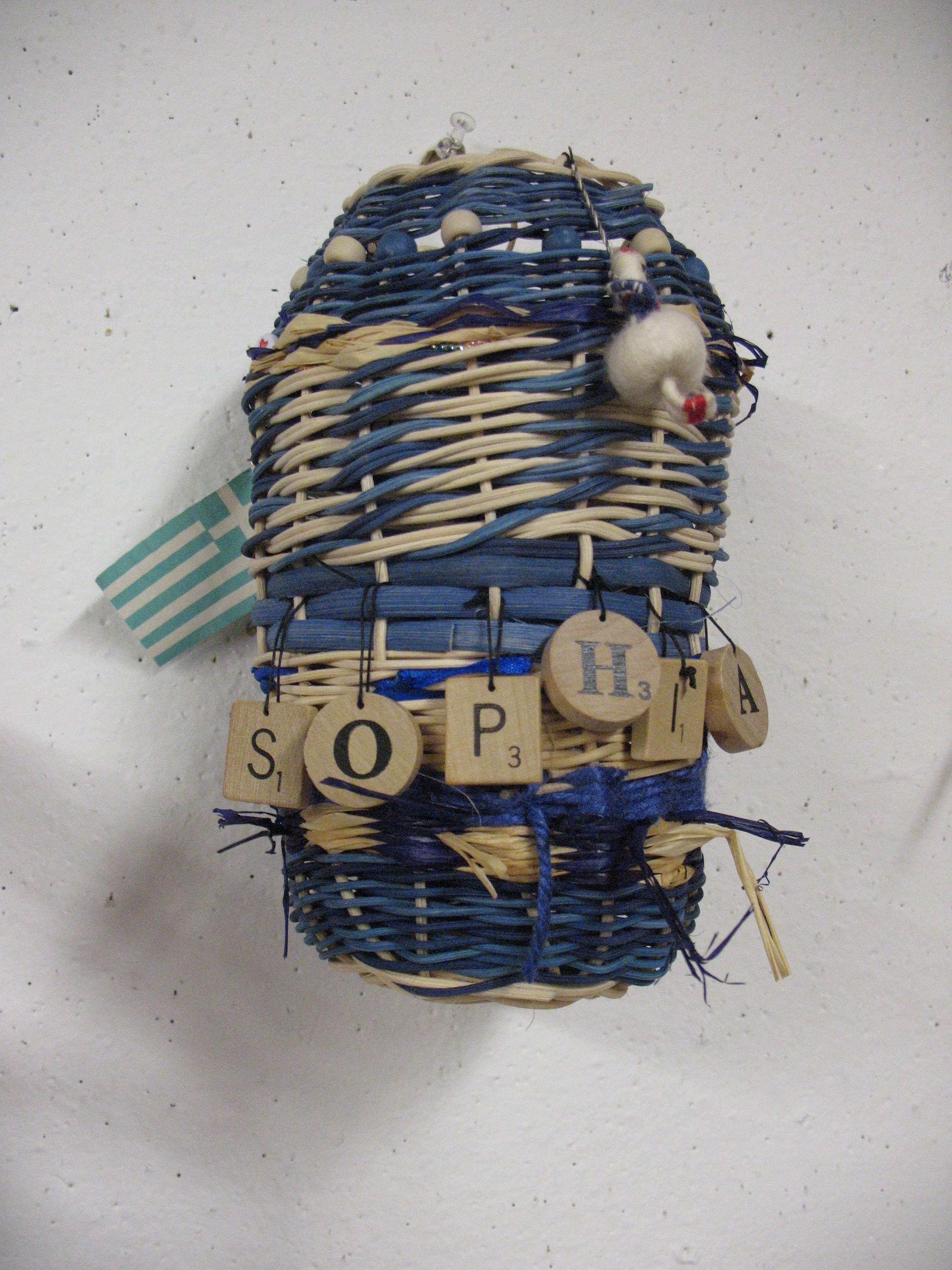
I had the privilege and time to attend the Maine Art Education Association annual fall conference at Haystack Mountain School of Crafts this past Friday, Saturday, and Sunday. I participated in the Basket Making session with 9 visual art teachers from different parts of the state. It was FABULOUS! Most importantly for art educators who attend, other than during the time teachers take to sleep, it is a continuously opportunity for professional development.

The weather was beautiful for most of the weekend and extra special on Sunday morning. I was up until long past midnight on Saturday night completely engaged in creating my 3rd basket. I woke up Sunday morning at 6AM and popped out of bed anxious to get back to the studio to start a 4th basket. I was distracted by the light on the ocean and had to make my way down to the rocks for a few minutes to reflect on my good fortune. To be able to spend time creating in such a beautiful place is a special gift. And to be with a large group of art educators committed to learning is unique!

When I attended Haystack as a teacher and would return to my classroom my students would be so excited to see what I had made and I was equally excited to share. I would attempt to explain to my colleagues about Haystack. Anyone who has been there understands the Haystack experience. What is Haystack to art teachers? What does the experience provide? Why is it important? What is essential to communicate with students, colleagues, and perhaps parents about the experience? Do art teachers have a responsibility to communicate about the experience?

Here is what the opportunity offers me, still, after all these years (I think I’ve attended the fall conference 28 times out of the last 32 years)…

  • I am put in the position of “learner” and understand  how students feel
  • Sometimes I am pushed to the edge and it is uncomfortable, I am stretched and sometimes stressed
  • I experience the creative process and I am engaged creatively and use my creativity
  • My time is limited – I want to do more and tell myself that I can sleep when I am dead
  • Being in an environment I love motivates me and engages all my senses
  • I have the chance to ask art teachers questions about their work as educators and listen to their ideas, questions, excitement, disappointments, and concerns
  • When they get excited about the work they are doing with students it tells me how fortunate Maine is to have such great teachers who not only care about students but are willing to go deeper to become better teachers. Their passion comes through loud and clear!
  • I connect with others and their work when I visit the various studios and see what they are doing. I learn from each of them as they explain their process, their challenges, their ideas and on and on.
  • My soul is nourished in every way and all my senses are awakened and reaching their potential
  • I forget about what I have to do (my lists of work tasks back home) and do what I want to do (create)!
  • I reflect on my work, articulate my learning verbally, put it in writing, share in the critique process, problem solve, integrate my thinking, depend and build on my past learning, and go to the next level.
  • I feel a great deal of pride!
  • I know that this learning opportunity mirrors the work of teachers and is an essential part of professional development opportunities that I have.

As I traveled towards home on Sunday afternoon I tried to imagine what my life as an art educator would be like if there was no Haystack in my world?! I wonder what I will tell my colleagues about the experience? Will I describe the three days and will they understand? Will I be fortunate enough to attend next year?! I sure hope so.

Thank you to Maine Art Ed Association for organizing the conference and especially to the co-chairs Holly Houston and Lynn Wildnauer and the registrar Deb Bickford for their time and commitment to the planning.

Thank you to MDI art educator Charlie Johnson for supplying many of the photos for this blog post.