Archive for the ‘Integration’ Category

h1

Central Elementary School – South Berwick

July 19, 2012

A real happening!

Thank you to music educator Kate Smith for providing this blog post. It is a wonderful example of a powerful service learning project directed by the arts!

Summertime means comfortable sandals, marinated steak tips on the grill, a cold margarita in hand and time to reflect on the school year. In the process of reflecting, I realized I am long overdue on a blog post I promised Argy. 

In early 2010, Bill Page, a community member, approached me with a problem, “Hey Kate, do you think the students could help me convince the town that Powderhouse Hill is a really important part of our community?” (I should pause and explain: Powderhouse Hill is a town-owned ski area with a total of three trails and 175 feet of vertical elevation and is completely volunteer run. Visitors pay $5 to ski and snowboard and are pulled up the hill on a tow rope powered by a 5 cylinder engine. It’s a super place for beginners, but the town was getting concerned about rising insurance costs and was considering shutting down the hill).  I was touched that he would turn to the music teacher for help, and I was determined to follow through. I brought the concern to my arts team and a service project was born.

What we did
Week 1: We began with  a discussion about Powderhouse Hill to activate students’ prior knowledge and inform new students. In the music room, we wrote poems or lyrics to express our love for Powderhouse Hill, some students added notation. Then we asked the overarching question, “How can we convince the town that Powderhouse Hill is an important part of our community?” Students chose the art form they would prefer when answering this question, indicating their first and second choices. They could chose: music, art, movement (physical education) or writing (library).

Week 2: The students were now divided into groups according to their preferred art form. Instead of a regular special week, in which they would see each specialist for one day and have a no special day, the student went to their assigned art form group each day (music for four days, for instance). On the fifth day, we had a museum walk. Two students stayed as presenters, while the rest of the students rotated to hear how each group answered the same question. We presented our ideas/final projects to Bill and the audience at the third grade concert. It was met with a standing ovation for both Bill and the students.

The final products
The music group wrote and recorded a song with local songwriter, Sammie Haynes, using the poems and lyrics they had written as their inspiration. We then taught the song to the rest of the third grade and sang it at our third grade concert. The art group painted 7 foot high wooden skiis to be displayed at Powderhouse Hill. The movement group took photos and made posters to show safe ways to ski, snowboard and sled. They had hoped to walk to the hill and make videos, but the weather was not conducive. The library group researched the history of Powderhouse Hill and created a display for the town hall and brochures for the town businesses.

What we found
The students took ownership of the project (as a true service learning project should). Each final product was unique and reflected the students’ learning styles. Students were engaged, for many it was their favorite special all week long! The teachers were thrilled for a multitude of reasons including one we hadn’t foreseen. In a typical week, the third grade classes see us in two different time blocks. For this project, we arranged for them to all come during the same block, which meant some of our groups were pretty big (the music group had over 40 students) but it also meant the third grade team had common planning time all week (yay for them!) and we had extra planning time due to the combined classes (yay for us!). The most important part- the parents and community LOVED it and the students LOVED sharing it. What a wonderful model for sharing the amazing power of the Arts!

Kate Smith is a music teacher at Central Elementary School, a preK-3 school in South Berwick. 

h1

ACTEM

June 22, 2012

Great opportunity

The Association of Computer Technology Educators of Maine (ACTEM) is a well-established organization that crosses over all content areas with a focus on helping its’ members achieve their goals utilizing technology effectively.

The benefits are enormous and all for a $20.00 individual membership. They have several professional development opportunities during the year and are continuously improving what they offer. Every time I read their newsletter I learn something valuable.

The ACTEM conference is scheduled for October 11 and 12 this year and is held at the Augusta Civic Center. Some districts make the day a PD day so all of their teachers can hop on school buses and attend the conference together. There are three national top-notch speakers scheduled David Warlick, Steven W. Anderson, and Christopher Tully.

Member benefits include:

  • Eligible to apply in advance for up to $400 in professional development reimbursement you pay for personally
  • $20 discount on MAINEducation Conference registration for October 12
  • Eligible to participate in ACTEM-sponsored trainings
  • Quarterly newsletter and luncheon at ACTEM Business Meetings
  • Eligible to purchase some software titles where applicable
  • $50 for lifetime membership for retired ACTEM members (does not include $400 Professional Development reimbursement rights)

Call 1-866-99-ACTEM to renew with a credit card. Form and additional info at JOIN ACTEM at actem.org

The Maine Arts Assessment Initiative appreciates the support from ACTEM.

h1

Summer Reading, Watching, Listening, and Learning

June 17, 2012

Points of interest wrapped up in one blog post

The information in this blog has come across my desk from a variety of sources and people. I have rolled it into one post to make reference easier for you… I am guessing there is at least one story here that will peak your interest.

  • A 5 minute+ film about John Baldessari created by Tom Waits. He is recognized for his height 6′ 7″ and his white beard and hair.  He is been called the Godfather of conceptual artist, surrealistic for the digital age. He has had over 200 solo shows, and 1000 group shows and has received many awards. You can learn more about him and watch the entertaining 5 minutes and 55 second video by clicking here. John has a great website as well – http://www.baldessari.org/.
  • While looking at the Baldessari film I discovered the website called Short of the Week which contains links to short videos. The topics are varied. This might come in useful as a resource for you and/or your students.
  • Thanks to MAAI teacher leader, music teacher at Aetna-Dixmont Jen Nash who sent me this info. I talked to Kern Kelley, who is the technology integrator for us. He shared this blogspot link with me and in her words: “The students picked a piece of art and had to put a video together. They had to talk about the different aspects of the piece of artwork and incorporate music. I thought that this would be neat to share.”
  • Will Richardson is one of those people who I find very interesting. He encourages me to think differently about school. This is a TEDx where he talks about young people and learning and starts out by referencing his daughter playing the piano.     
  • Eight schools across the country were selected to receive over $14.7 over a three year period to integrate dance, music, theater, and visual arts into the curricula. The President’s Committee on Arts and Humanities working with the US Department of Education hopes to prove that failing schools can be impacted by encouraging the expansion of creative expression. Public Radio has an interview that you can listen to by clicking here. And you can read more about the Turnaround Arts Initiative.
  • Not to long after I posted Eagles Have Landed about Suzanne Goulet’s art classroom at Waterville High School being the center of the viewing stage for the new born eagles someone sent me this video of young robins.
  • Mystery of a Masterpiece was aired on Public Television in January 2012 and tells the story of a painting that was sold for $20,000 in October of 2007 and now is thought to be a Leonardo da Vinci worth more than $100 million. Cutting-edge imaging analysis solves the mystery. You can watch the 52 min. program by clicking here. Thanks to Wiscasset Middle School art teacher Molly Carlson for sharing this information.
  • Playing for Change Day – changing the world through music. All over the world on September 22nd there will be people collaborating to inspire people to support music education. Portland is one of the locations, planned by the Maine Academy for Modern Music, and it will happen at 8:00-11:30 PM.
  • The photographs are amazing! Starstruck: The Fine Art of Astrophotography at the Bates College Museum of Art provides local teachers a FREE resource to explore a meeting point of art and science. 36 photographers from around the world are included in one of the very first exhibitions to examine astrophotography as a fine art genre. Starstruck opened June 8 and will be on view through December 15, offering ample opportunity for science and art teachers to plug in. Companion shows at the Bates planetarium are an option. To learn more or to schedule a tour, contact ashostak@bates.edu or cjones5@bates.edu. A full color catalogue with essays by the jurors is available.

ARTICLES

h1

Sharing Wisdom

April 30, 2012

Teacher ArtExchange 11 jan

If you belong to list-servs or participate in chat rooms or any other online communications you are aware of the benefits. I am on an list-serv from the Getty Foundation called Teacher ArtExchange. In the many years I have belonged I have only posted a couple of times but I am always reading what others post and learn a great deal.

Over a year ago a conversation was started on a situation that many arts teachers are familiar with involving choices that high school students often have to make around course selections and decisions on their future. The wisdom provided by a veteran teacher stuck with me. Marvin Bartel responded from his wisdom of many years of teaching experiences. He had what I call the helicopter view. Sometimes when I am stumped I go up into my helicopter and take the big or long view to help me solve the problem before me.

Thank you to Marvin for sharing his wisdom and giving me permission to include his message in this blog post. Marvin is a writer, artist, and retired art teacher. You can learn more about Marvin at www.bartelart.com or www.goshen.edu/art/ed/art-ed-links.html (Art and Learning to Think and Feel).

The original email from an art teacher to provide the context:

This student is an easy shoo-in for any art school with regard to her seamless technical abilities.  It is her creativity that I want to spark.  She has been ‘won-over’ by the science department, but clearly would be wasting a God-given gift. While I know there are integrated art/science opportunities, I steadily and perhaps not-so-subtly, I hope to offer her some ‘wow’ art challenges and experiences.

Marvin’s response:

As an art teacher, it is certainly appropriate to be an advocate for our own discipline and choice in life. Few others can argue the case for art in the world better than we can.

It feels disappointing, but I try to ask them questions to find out their motivations. If they feel they have ability, they may need to see if they find a passion in science. I affirm their art ability, but encourage them to try the other field. When we are young we owe it to ourselves to explore enough to find our strongest passions and purposes. While I want to help them understand the pros and cons of being an artist, I am also believe it is crucial to have real passion for what they decide to do.

Creative art experimentation and discovery learning in art does offer a lot of mind building advantages needed in science. While you can be a good lab assistant in science by being a smart and careful technician, real scientists have to have strong divergent thinking abilities. Without creativity and innovation, they are doomed to be technicians who wash the test tubes and clean up behind the actual scientists. In many labs, the actual scientists are doing the thinking while the assistants are doing all the work.

A scientist at MIT tells me that his grad students are very smart and technically capable, but when they get an unexpected result, they are slow in their ability of figure out what they have discovered. He says their greatest need is to become more creative. A scientist at Rice U. tells me that when her grad students get unexpected results they mistakenly assume that they have made a mistake, so they repeat the lab work only to get the same unexpected result (wasting years of work). She says their science classes in high school and college have not given them practice in making discoveries. They have learned to be careful to avoid mistakes, but not how to learn from mistakes. They lack the imagination and creativity to see their own discoveries when they happen. She says they waste time and energy because they have not learned to actually experiment. Their science classes assigned them lab work where they already knew the answers before they did the lab work.

It is easy to be critical of science education, but did these science students have enough art teachers that challenged them to be creative, or did their art teachers also show them the examples before they did the project? Did their art teachers require them to learn to observe and express their own experiences, observations, and imaginations; or did their art teachers allow them to copy?

And thank you to San D Hasselman, Retired art teacher, Artist, and Puppeteer with links at www.rtlvr.wordpress.com and http://www.flickr.com/photos/31239756@N04/. San’s response to Marvin’s point:

A good percentage of my puppetry students, and my gifted and talented students (when I taught that many moons ago) were planning on going into the sciences. My classes were the first class they had that didn’t have definitive “look ’em up” answers, but required that they be creative in their problem solving. Not only did they succeed in the classes, but there was a certain amount of joy in the “tackling” of the work we did. I would tell them constantly that the one thing that scientists and artists have in common is the search for the “truth”. I would also let them know that my husband who was a research scientist and I would draw circles, he using a compass, and I, using just my hand. We would cut them out and lay one atop the other. They would be the same. The circles were the “truth”. (of course then they would make me prove I could draw a circle freehand, which then became like a parlor trick).

This conversation points to the importance of having the conversation with colleagues about what each content provides all students. Not just individually but collectively, integratively, and thoughtfully!

h1

Famous People Painting

April 27, 2012

Discussing the Divine Comedy with Dante

In 2006, three Chinese/Taiwanese artists, Dai Dudu, Li Tiezi, and Zhang An created an oil painting with 103 figures from world history. If you hold your cursor over a figure you see his or her name. If you click on the figure it will take you to Wikipedia where you can access the historical information.

I can imagine building an interdisciplinary unit with the arts and social studies. The painting contains artists and musicians.

Click here for the painting.

h1

Maine Art Education Association Spring Conference

April 26, 2012

Creative Literacy Conference – May 5th

MAEAs spring conference at USMs Wishcamper Center, Portland campus on Saturday, May 5th, 9:00 AM – 4:00 PM. Registration is $50 for members and $75 for non-members. Contact hours and CEUs are available upon request. For more information, details, and registration please go to http://www.mainearted.org/MAEA/Spring_Conference.html or read about it on the Upcoming Events page found on the right side of the blog.

h1

ARTS Articles, Articles, Articles

April 21, 2012

The news is peppered lately with articles about the Arts

This post provides you with links to articles that I found interesting and think you will as well! Some of the articles below are on the newly released, April 2012, report: Arts Education in Public Elementary and Secondary Schools: 1999-2000 and 2009-10 from a congressionally mandated study on arts education in public K–12 schools. You might wonder why I would include all of the articles on the same topic?! It provides you with the perspectives of different writers. Of course, I urge you to go to the report itself which is linked above.

Article written by Erik Robelen, April 2, 2012, Education Week. Thank you to colleague Paula Hutton for sharing it.

March 30, 2012, Art Works, National Endowment for the Arts

ASCD Capital Connection, April 10, 2012.

Written by Erik Robelen April 3, 2012, for Curriculum Matters blog, published in Education Week, April 16, 2012. Thank you to my Washington state colleague AnnRené Joseph for sharing this link.

Written by Roberta Smith, April 11, 2012, Art & Design from the New York Times. Thank you to colleague World Language Specialist Don Reutershan for sharing it.

Article by staff and wire services reports, February 15, 2012 from eSchool News Thank you visual art teacher Lisa Marin for sharing it.

Written by Erik W. Robelen, Education Week, April 16, 2012.

Written by Andrew Miller, Edutopia, March 5, 2012. 

Featured Company from the Directory of Teacher PD Sourcebook.

This isn’t exactly an article however, it is from National Art Education Association from Linkedin. The question was asked by an art teacher from New York and many teachers answered the question. It provides many ideas and resources that you might find useful. Thank you to Leah Olson, art teacher from Hampden Academy, for sharing this link.

The Portland Press Herald, by Mark Schwartz, April 11, 2012. Thank you to Maine Arts Assessment Leadership Team member, Bates College teacher, Bronwyn Sale for providing this link.

Written by Leslie Postal for the Orlando Sentinel, April 7, 2012. Thank you to colleague Mike Muir for sending me this information.

Written by Sarah Clune, American Graduate Education Health, March 22, 2012, PBS News Hour.

h1

Kennedy Center on Arts Integration

April 8, 2012

Kennedy Center

Some of you may be aware of the work that the Kennedy Center has done on Arts Integration. If not, please click here to learn about it and to access their arts education information. They have a very clear definition which they use in their education programs. Recently they’ve added a just over 6 minute video on their site that I recommend to you found on the Kennedy Center ArtsEdge site. It is called Public Education in the United States, Setting a Context for Arts Integration, and includes ideas from many educators (Dewey, Vygotsky, Piaget) through time and people from today (Robinson, Pink) who are promoting and supporting what the arts have to offer in the development for our 21st century learners. Please take 10 minutes to take a look!

h1

Creating on an iPad

March 11, 2012

Boothbay High School iPad story

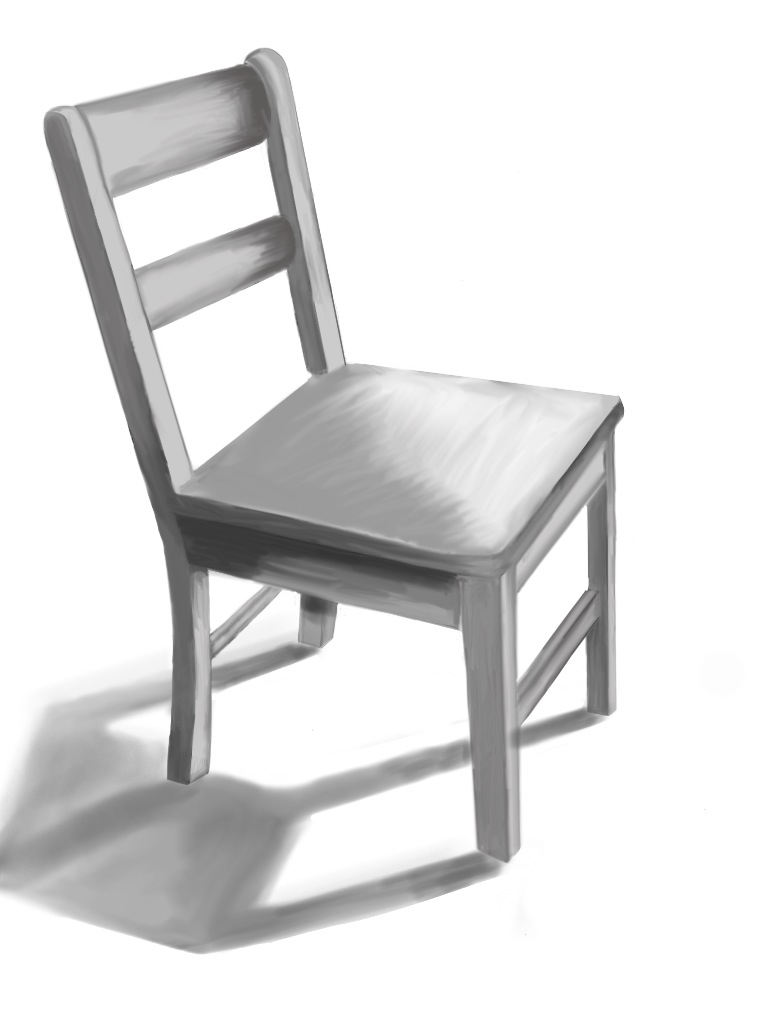
Not too long ago, while at a meeting in Washington county, I had a conversation with Tara Maker from Apple who works with Maine’s Learning Technology Initiative (MLTI). Tara was demonstrating the iPad and mentioning some of the tools on the devise. She showed a student example of a drawing from Boothbay High School. She explained that the student had created her own stylus to be able to create what she wanted in the drawing. Afterwards Tara and I chatted and she emailed me the drawing.

Emilie's drawing, Tara shared that inspired me to contact Emilie

As a follow-up I emailed the student, named Emilie, who kindly answered some questions and sent me drawings. I also emailed Emilie’s art teacher, Manon Lewis to learn more.

Periodically I find myself wondering how my teaching would be different if I were in the classroom today. There are so many wonderful tools and, students thinking is changing rapidly in their world of technology. I understand that this is challenging but also a wonderful gift! (I have to admit I am a bit jealous.) How do you change knowing students are in a very different place and still provide them with the opportunities to learn and grow using the traditional methods?

Below is what I learned through emailing with Manon and Emilie…

Manon:

I introduced Emile to the app “Art Studio” (for her ipad) in Intermediate/Advanced Art class. All of our juniors, seniors (and soon sophomores) have ipads…. (I had been playing around with the drawing program myself, showed her, and she seemed really interested!) Since I give observational drawing homework assignments, I encouraged Emilie to use this program to do her homework. (She loves technology.) We experimented together (first with our fingers–which work quite well) and then with a stylus she created from a very, very fine steel wool (which doesn’t scratch the surface of the the ipad) inserted in a straw or pen casing. The “Art Studio” app is fabulous–so much fun and very versatile–The artist can change colors, textures, value–You can also draw over photos that are imported/or taken directly with the ipad itself…text can also be added…drawn over…lots of rich layering is possible!  Emile really fine tuned (example: use of shadow and light to depict form..) her drawing–asking for input from me as she went along, just as she would on a drawing done directly on a paper surface with graphite…

Emilie:

How did you get started using the ipad to create/draw/make art?
I am on the tech team at school. We got our iPads early to help find uses in classes and help other students when they all got handed out. The chair was a drawing homework that I asked if I could do it on the iPad.

What app are you using on the ipad? Tell me a little about it.
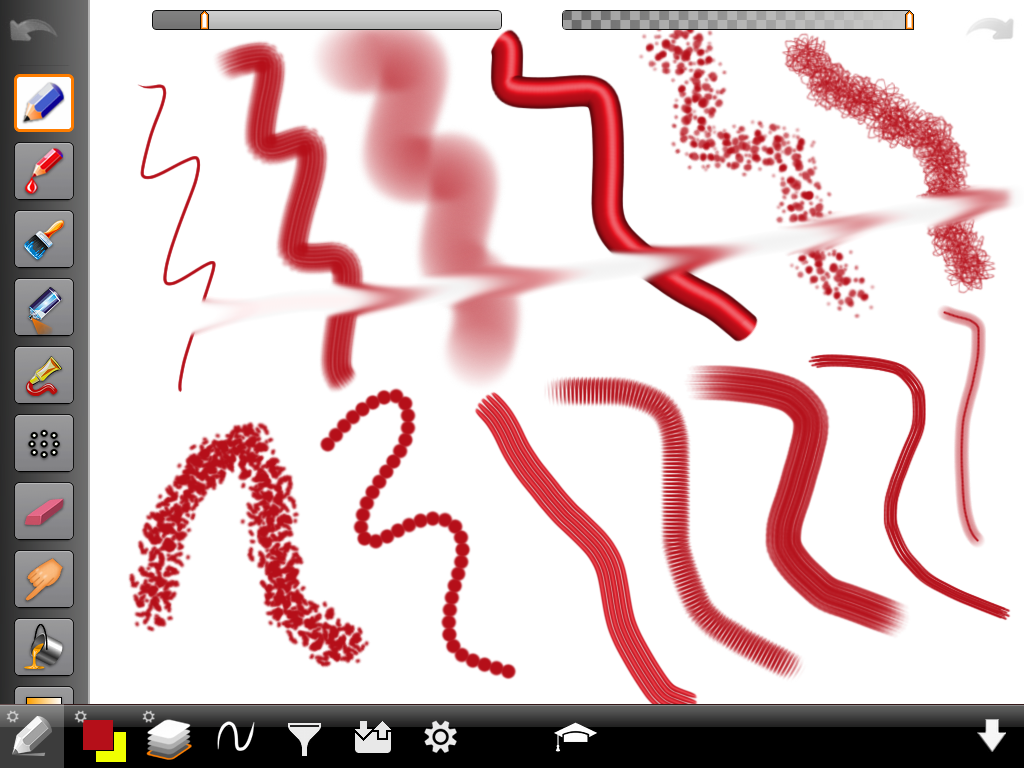
I use art studio. It’s a pretty nice app. It cost about 1.99 you can draw with a pencil, paint, spray paint and my favorite is smudging. You can zoom in and out to do details. You can also change the brush size.

Do you see the ipad as another medium to make art or completely separate?
I think the iPad could become a new medium.

What did you learn in your art courses with Mrs. Lewis that influence what you are creating now on the ipad?
She teaches us about different styles and artists. Most of my drawings are based off artists she has shown me. The first types of drawing I did on the iPad was her drawing homework. Just drawing simple items from different views.

I understand you made your own stylus, can you tell me about how that came about?
My teacher, Mr. Wolotsky showed me a video on YouTube. It had a stylus but it was bulky and looked ugly. So I changed it during engineering class. It works better, looks cooler, and is more durable then the other.

Are you using the ipad only at this point to make art or other tools as well? is what else do you use your ipad for besides drawing? What other learning is taking place with your ipad?
In school I use my iPad for everything. Taking notes, looking up grades, keeping assignments, writing essays and teachers share papers instead of printing them off and handing them out. The iPad is used in every class in some way. Out of school I like to draw, take photographs with it and use the maps app to find we’re I’m going.

You mentioned your engineering class with Mr. Wolotsky. Please tell me about this course.                  I have an engineering class with Mrs. Higgins and an independent study with Mr. Wolotsky. In engineering we learn about all the different kinds of engineers and build stuff. We’ve made solar powered iPod – iPad chargers, an under water robot and are going to make wind turbin blades next. I also have an independent study with Mr. Wolotsky who is the tech teacher. Him and Mr. Calson are in charge of the iPad program. During that period I edit video, help with the green screen, and help with iPads. When creating something for engineering class you have to be creative about how to do this. It takes skill and time to do just like any painting would. And the final piece usually is a piece of art.

Do you have plans for after high school?
I am a junior and plan on going to college for engineering.

What advice would you give to someone starting out with the ipad as an artist tool?
Just play around with all the features. I’ve been using the same app for months and I just found a useful tool last night that I never noticed before. It takes a little while it get used to, but worth it when you get the hang of it.

I look forward to seeing what Emilie (and others) creates on her iPads and with other medium!

Thank you to Tara, Manon, and especially to Emilie for contributing to the meartsed blog!

If you have questions, please post them in the comments section and perhaps Emilie will answer them!

h1

Professional Development Opportunities in the Arts

February 7, 2012

Join in live or listen to archived webinars

Regional Workshops:                                                                                                                 The Arts Assessment Iniative continues to offer opportunities around the state. The list of Regional Workshops being provided by the initiatives 18 Teachers Leaders are listed at http://www.maine.gov/education/lres/vpa/assessment.html.

Maine Assessment Webinars:                                                                                                The Leadership and the Arts webinar, facilitated by Rob Westerberg and Catherine Ring, was held on February 1, 2012 and explored:

  • The Role of Teachers
  • The Role of Administrators
  • The Role of the greater Community

If you were not one of the 35 participants, or if you wish to hear it again, you can go to the archive at http://stateofmaine.adobeconnect.com/p3yj73w4iaf/. Along with the archive there is a meeting plan located at http://www.maine.gov/education/lres/vpa/assessment.html. I suggest that you use the meeting plan on a school workshop day with your colleagues. Please take the time to read the plan to help you decide how to use this  valuable document. And by all means invite your administrators to participate.

There was a glitch in taping the January elementary assessment webinar that took place so it has been re-scheduled for March 14th, 3:30-4:30. You can access the link to join in at http://www.maine.gov/education/lres/vpa/assessment.html.

The Arts, Common Core, and 21st Century Connections:                                              On January 17, 2012 Joyce Huser, Kansas Department of Education, Fine Arts Consultant facilitated a webinar for my colleagues from throughout the country. Joyce created documents that I am certain you will find helpful in your work at the local level. You can access the recording at http://www.maine.gov/education/lres/vpa/eor.html. Joyce includes the direct correlation between dance, music, theatre, and visual art to the Common Core State Standards, and the 21st Century Arts Skills Map. At the above page you will find the presentation Power Point, the P21 Arts Skills Map, and an ELA Strand Organizer (Joyce and her ELA partners created). Most interesting to me is a graph in the Power Point that exhibits the skill demands for arts related careers for 2008 – 2018 which shows the skills taught in arts education classes. There is a link on the webpage is the sources for the work force data in the graph.

President’s Committee on the Arts and Humanities Report:                                Last week while I attended the Maine Art Education Association board meeting Rob Westerberg attended a webinar that provided information on the recently released report by the President’s Committee on the Arts and Humanities. Rob was kind enough send his “take-aways” from the webinar “Reinvesting in Arts Education: Winning America’s Future Through Creative Schools.” The report is posted at http://www.pcah.gov/. The culmination of 18 months of research, meetings with stakeholders, and site visits all over the country, this report represents an in-depth review of the current condition of arts education, including an update of the current research base about arts education outcomes, and an analysis of the challenges and opportunities in the field that have emerged over the past decade. It also includes a set of recommendations to federal, state and local policymakers.

In Rob’s words: A good webinar today… it hit on key components of an effective integrative strategy at the elementary and middle school levels.

  • A few quotes: “Arts Education is a flower AND a wrench” (a tool for development of creativity in the curriculum… I LOVE the analogy!)
  • “Having a good music program isn’t enough”.
  •  “Wow, schools are the ones where Arts teachers were given liscence to craft the vision for their school; were the chief creative officers for their schools.”

Rob was able to ask this question of the moderator: “How do the findings of this report tie into standards based assessment in the arts? Do they?”

Rachel Goslins response: “The report does not get into either standards or assessment… too big and messy.”

She then went on to mention the development of the national standards as the primary focal point of that discussion. In other words, it was not within the scope and sequence of this report to dive into the realm of standards or assessment.

For her final thoughts, she mentioned that “for the arts moving forward, (and I’m paraphrasing here), they must be integrated in a meaningful way, led by valued and empowered arts specialists.”

A GREAT BIG THANK YOU to Rob for sharing your notes with the blog. If you’d like to listen to the webinar please go to the archived at http://advocacy.nafme.org/page/webinars-2.