YEEHA at Sweetland School
 What happens when a collaboration takes place with an arts integrated school and two teaching artists? MAGIC! I had the amazing opportunity to be present while young learners were engaged in connecting their learning through pottery and poetry.
Lindsay Pinchbeck, founder and director of the SweetLand School in Hope invited poet Brian Evans-Jones and potter Tim Christensen to create connected curriculum and learning for the school’s students.
Both Brian and Tim are on the Maine Arts Commission (MAC) Teaching Artists roster and are Maine Arts Leadership Initiative (MALI) Teaching Artist Leaders. Lindsay is a member of the MALI Design Team and started her school three years ago.
This blog post combines the background information with the participants responses, observations, learnings, and feelings.
 FROM THE COLLECTIVE VOICES OF THOSE WHO PARTICIPATED
LINDSAY
The Sweetland School recently had the good fortune of a residency with ceramist Tim and poet Brian. Both artists wove together a program sharing passion and skill in poetry and clay with the children. They created work that knocked all our socks off. Magic was the word tumbling off our tongues this week. For the teachers of Sweetland it was a wonderful opportunity to see the children with fresh eyes.
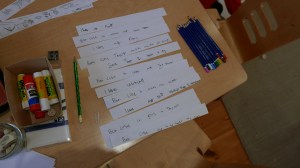
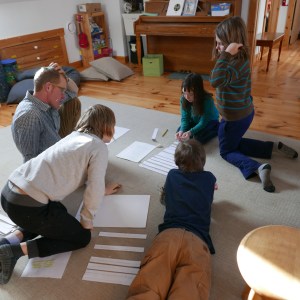
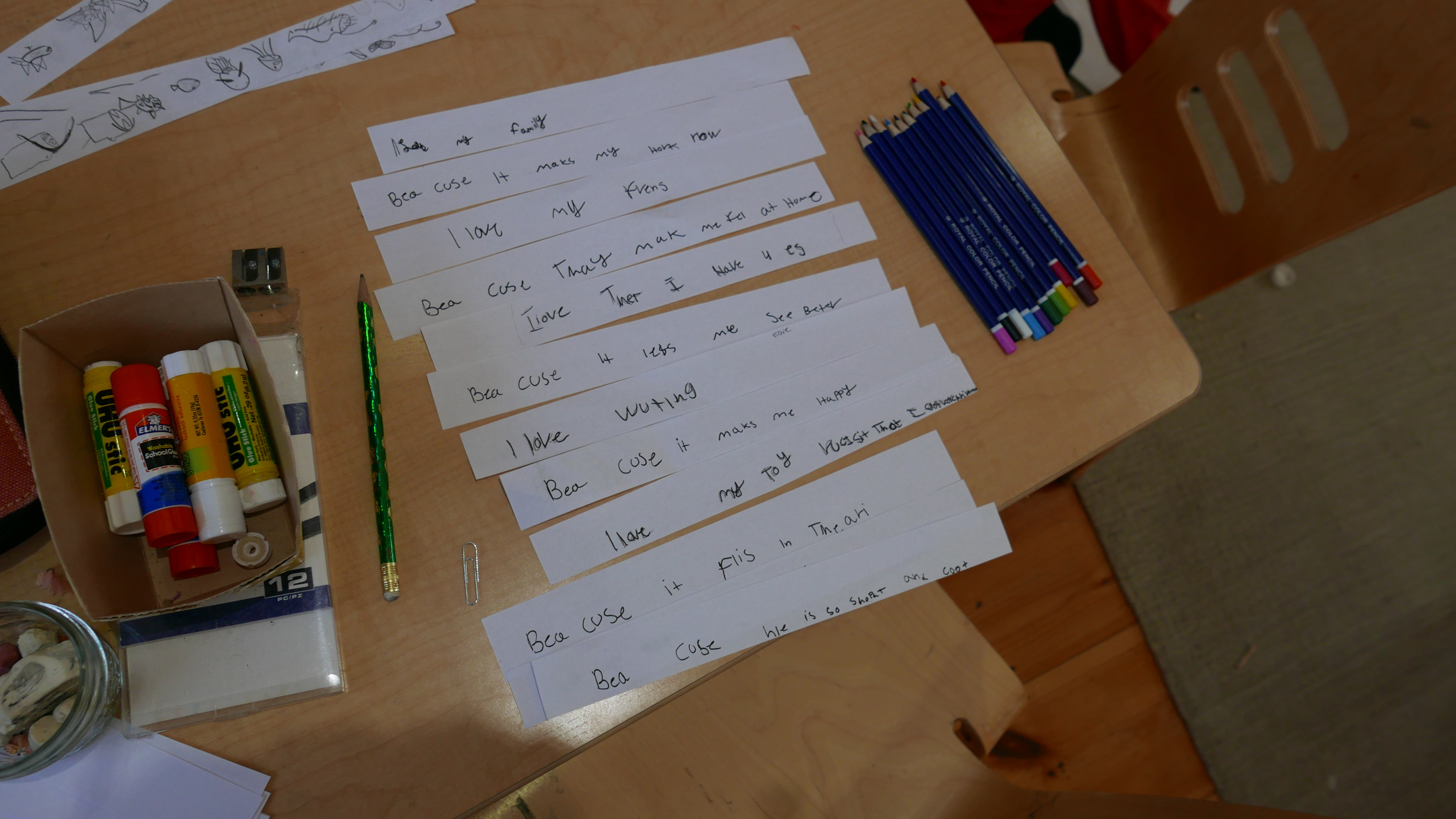
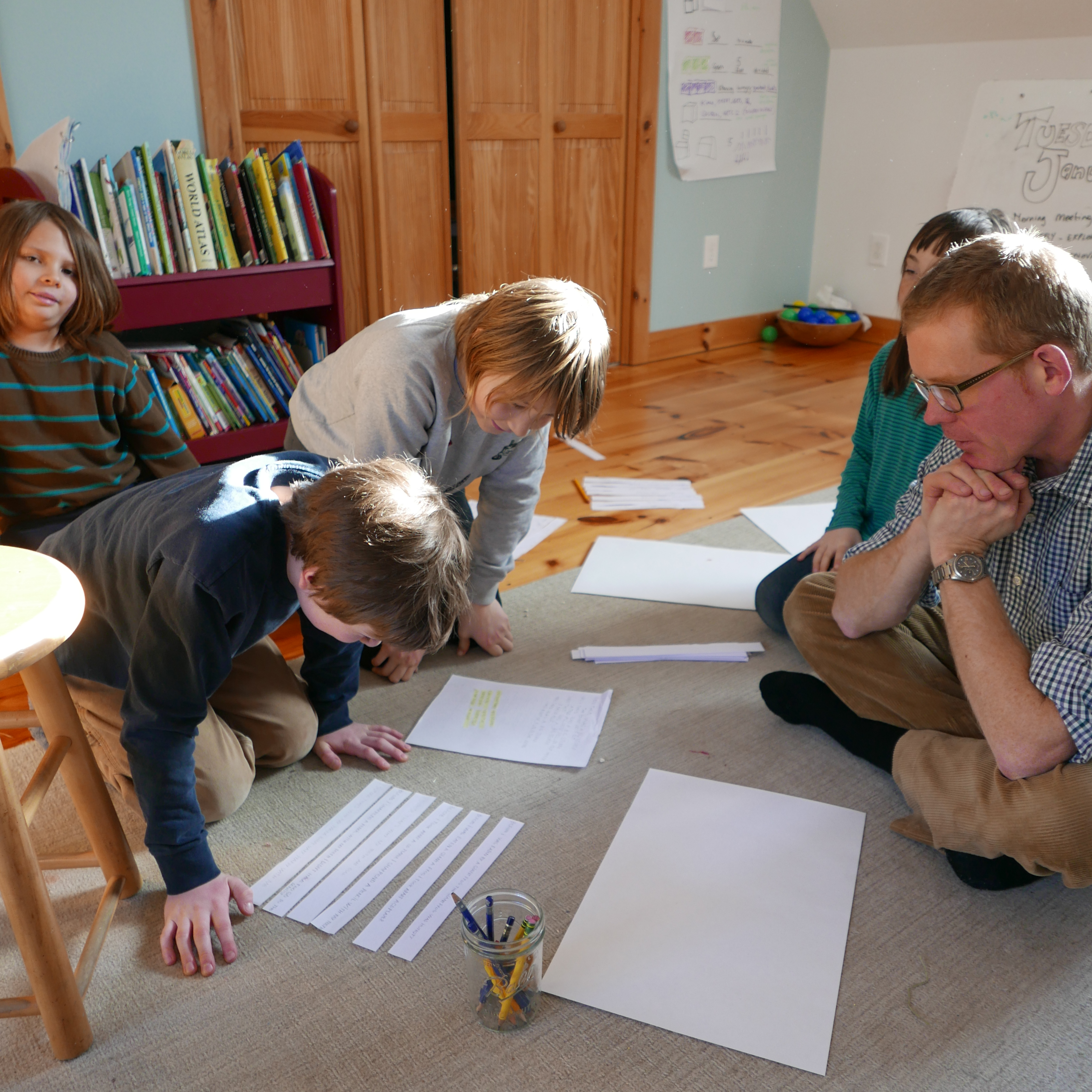
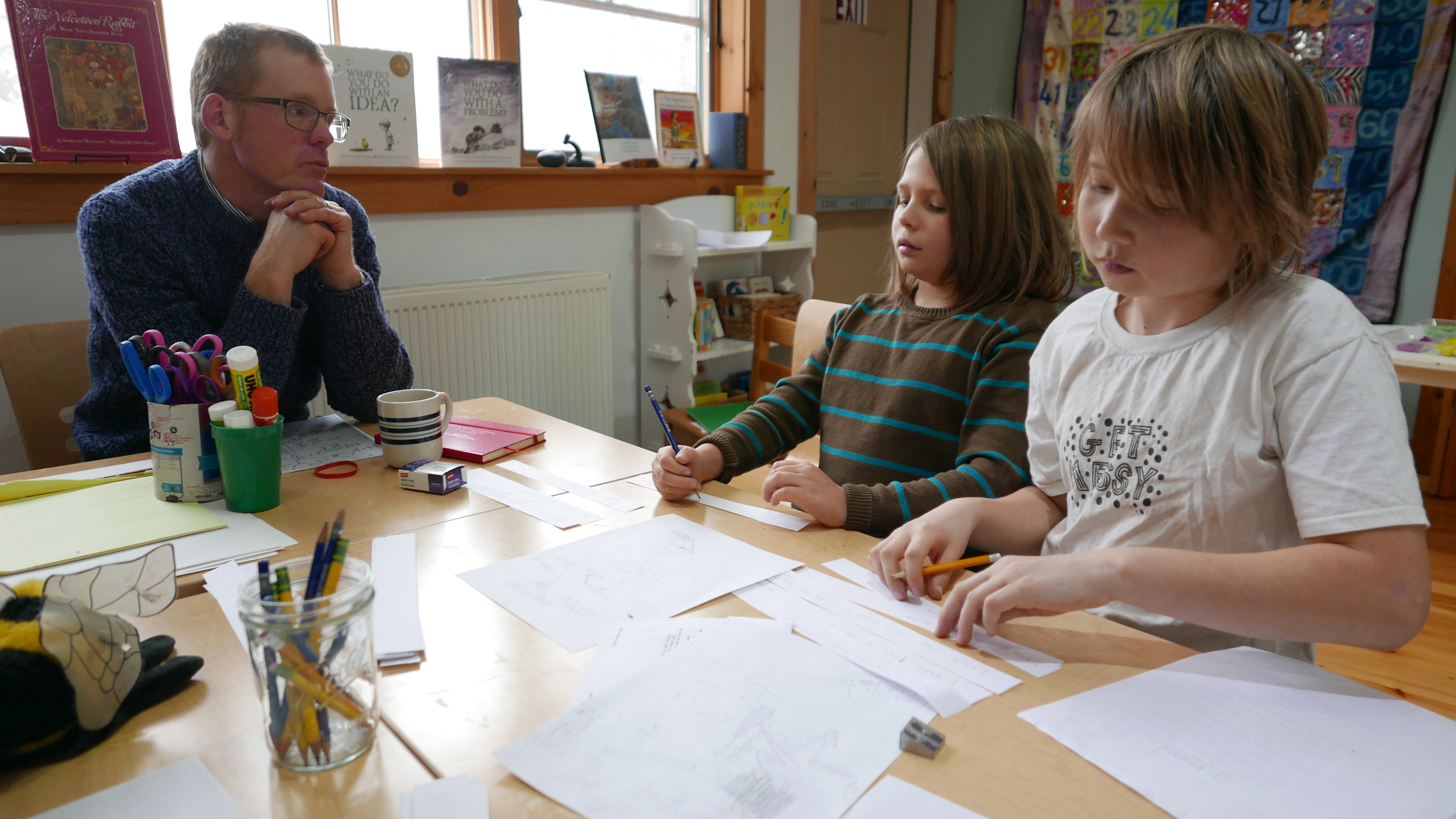
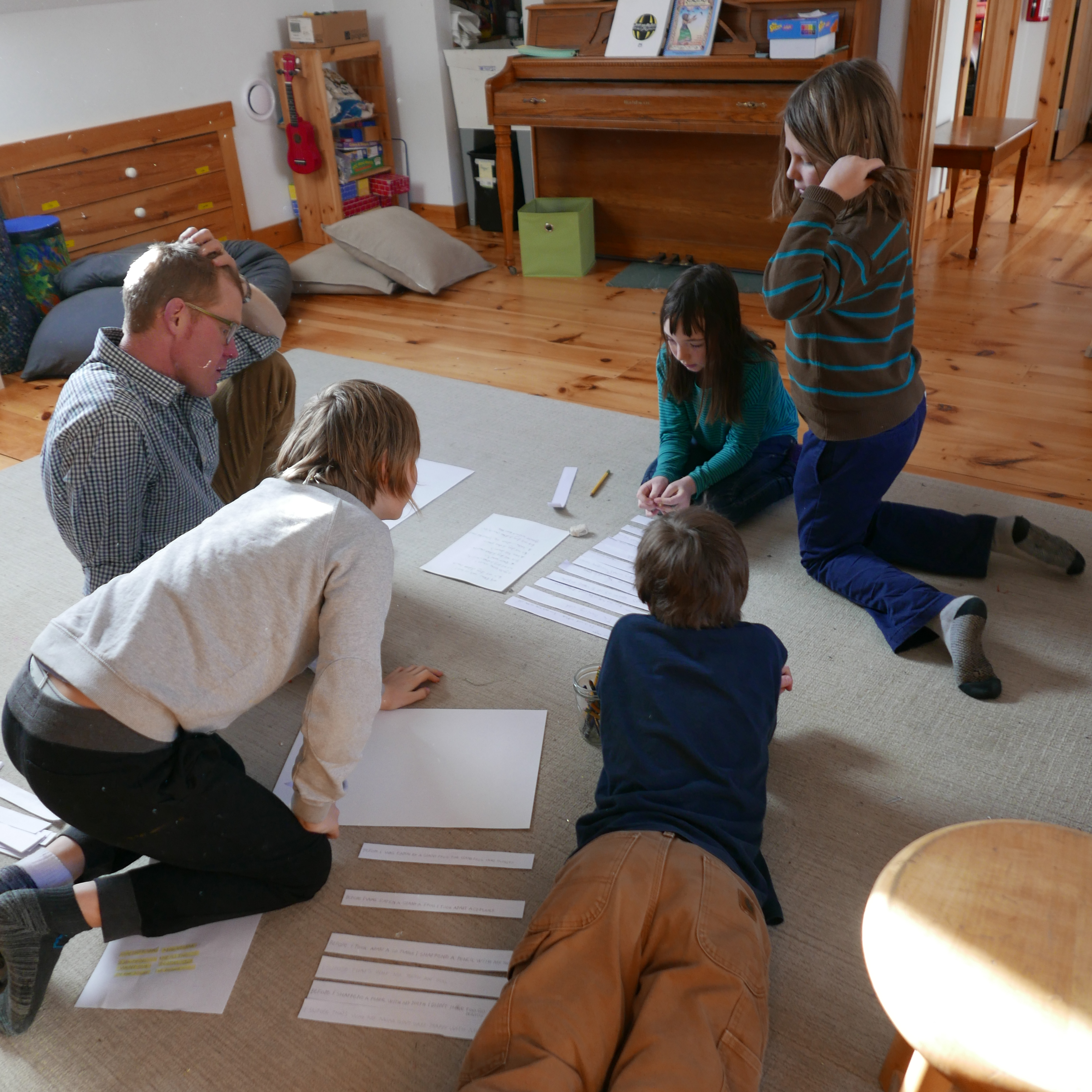
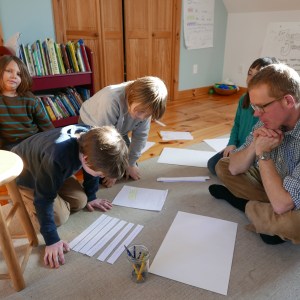 Brian shared a style of poetry called the Anaphora, with repeated lines. He pushed the children to apply real and imaginary content into their poems. He helped the children generate ideas and then edit and refine their poetry. His goal was to support each child to make a 5 line poem, they all generated much more work. I observed writing, reading, sharing, helping one another, public speaking, laughter and pure joy as the children created and shared their work.
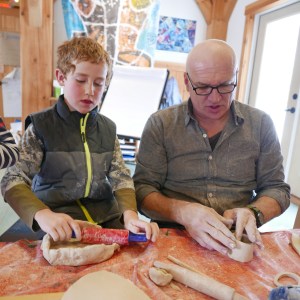
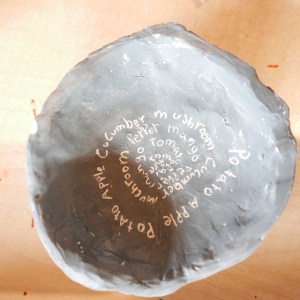
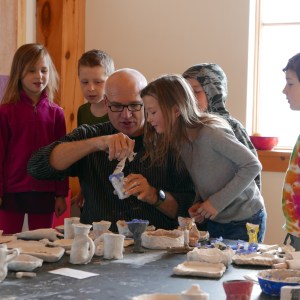
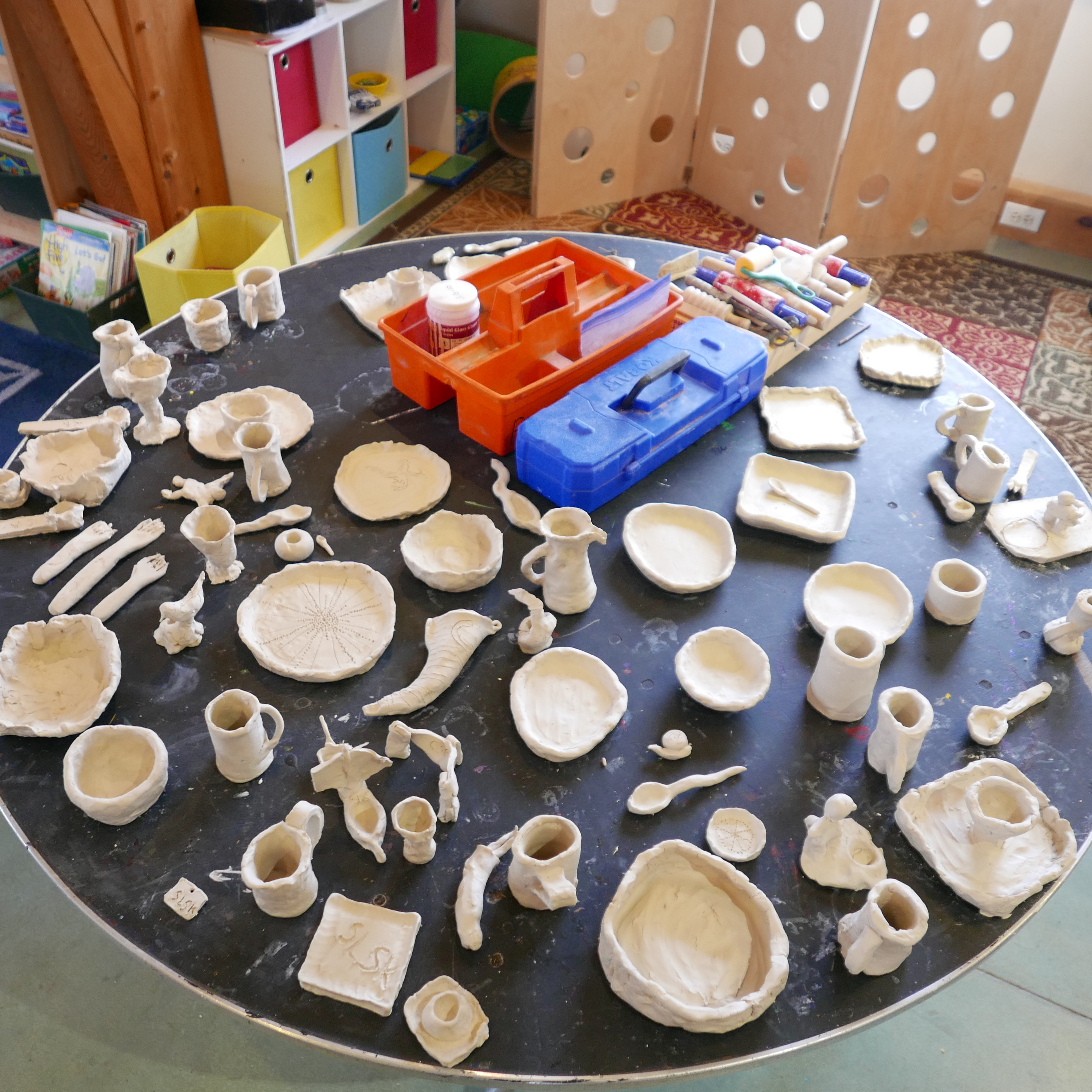
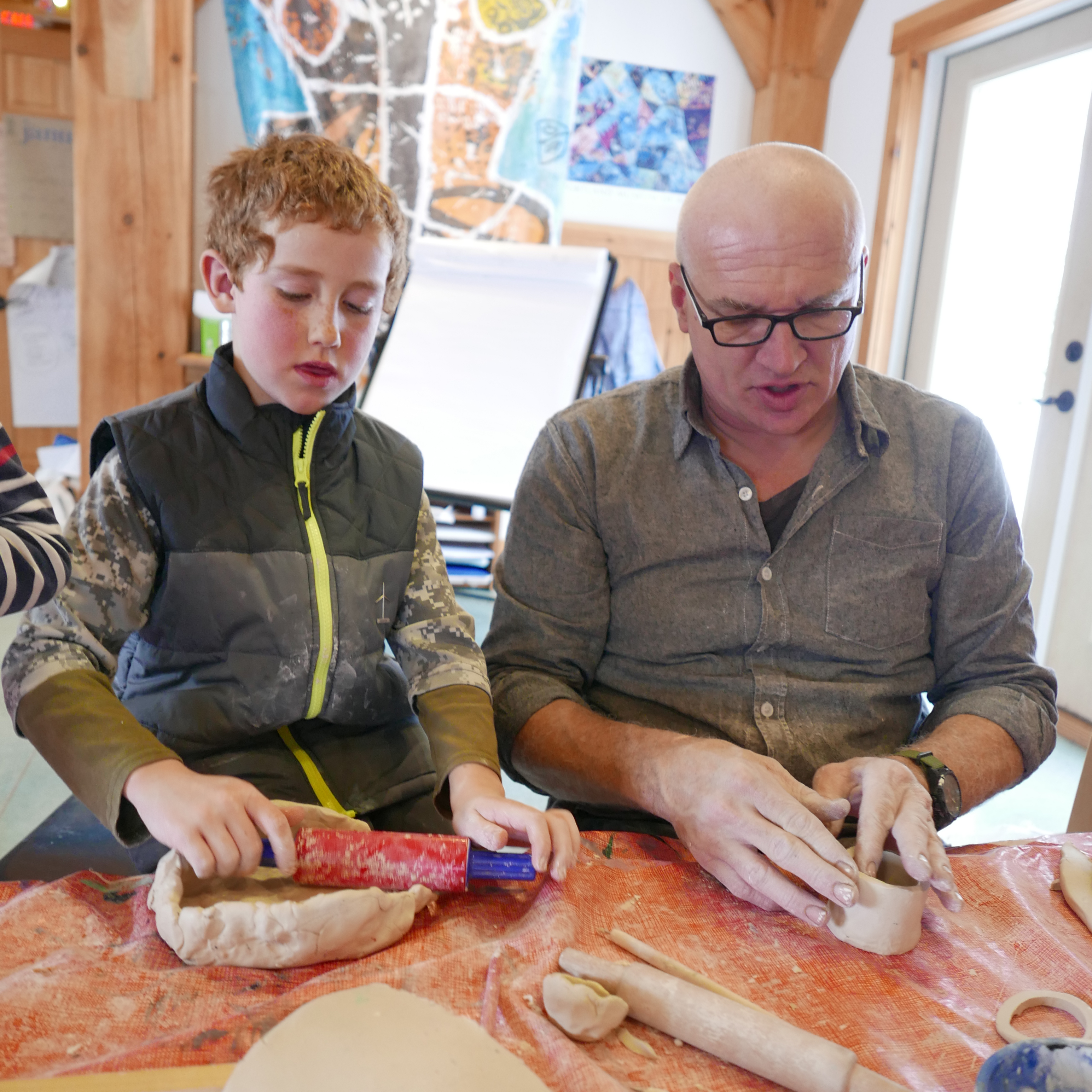
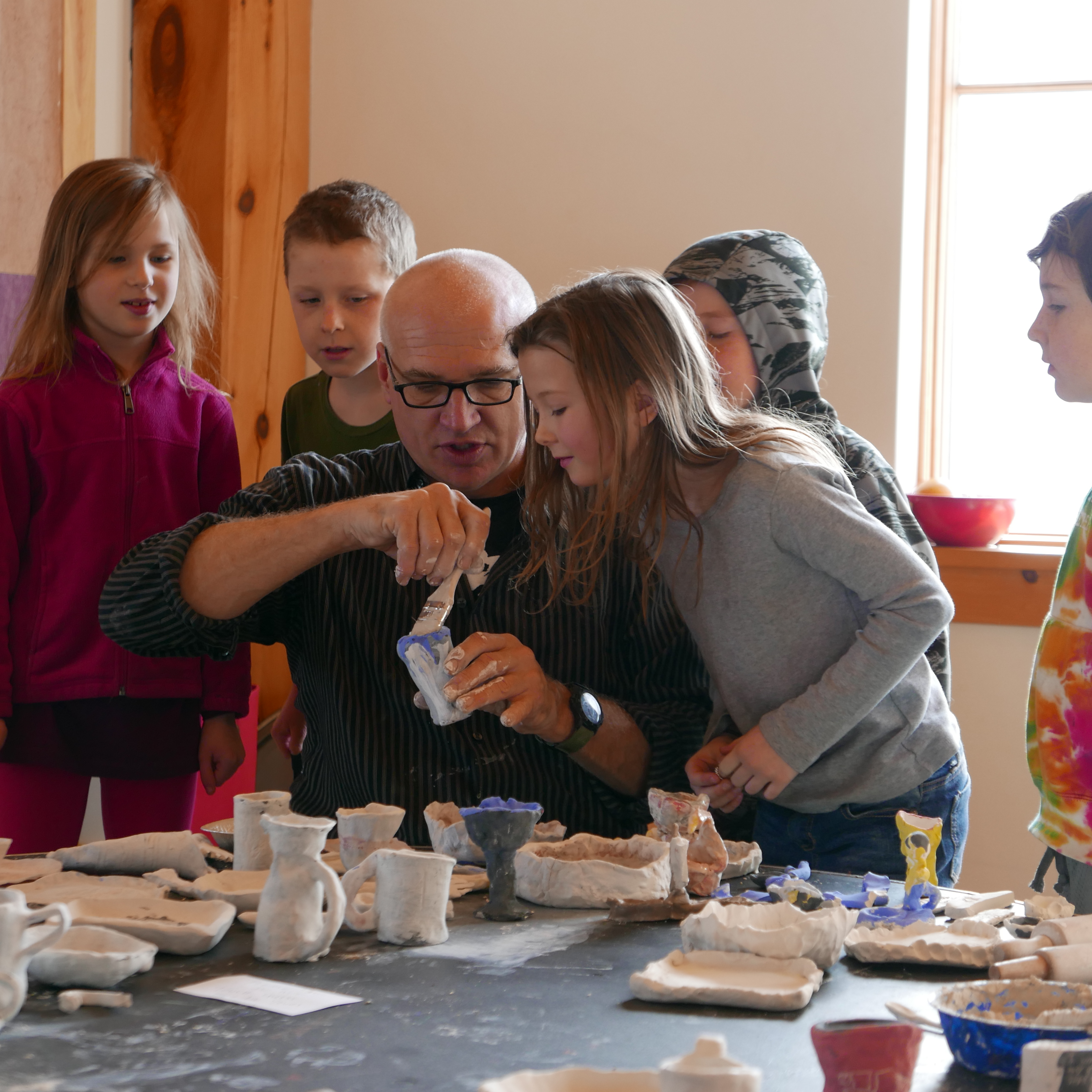
Tim worked in the studio over 4 days with the children to create 5 or so place settings – cups, plates, bowls, even forks and spoons were created. The children took their lines of poetry and added the words from the poetry workshop along with images to each piece. Stories of travel and adventure, wove through their clay making experiences as Tim led the children forward in their pottery explorations.
 Children’s conversations:
- “I know what you find in the magical misty woods!” “A smiling carrot.”
- “What do you do when you don’t know what to draw?” Tim “I make a mark and see where it takes me.”
- “You know what I have to say about this – It’s really hard but incredibly fun.”
This week I observed a community of learners drive their learning forward. They advocated for what they needed, supported one another, weren’t afraid to ask questions and were giving and thoughtful hosts with our visiting artists. We saw the children at their best, staying focused for long 2 hours sessions in detailed work and generating work they were proud of. The power of visiting artists to inspire cannot be underestimated. In this safe 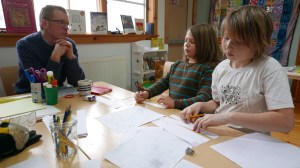 environment where the children have learned to be themselves and own their ideas they were able to fly with the support of professionals who are passionate about sharing the magic of the process and their craft. We as a staff learned alongside the children and were a community of learners together.
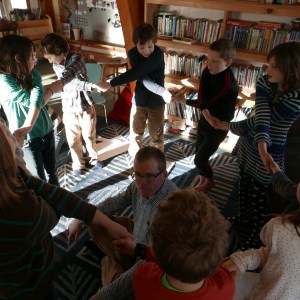
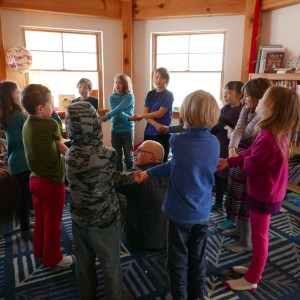
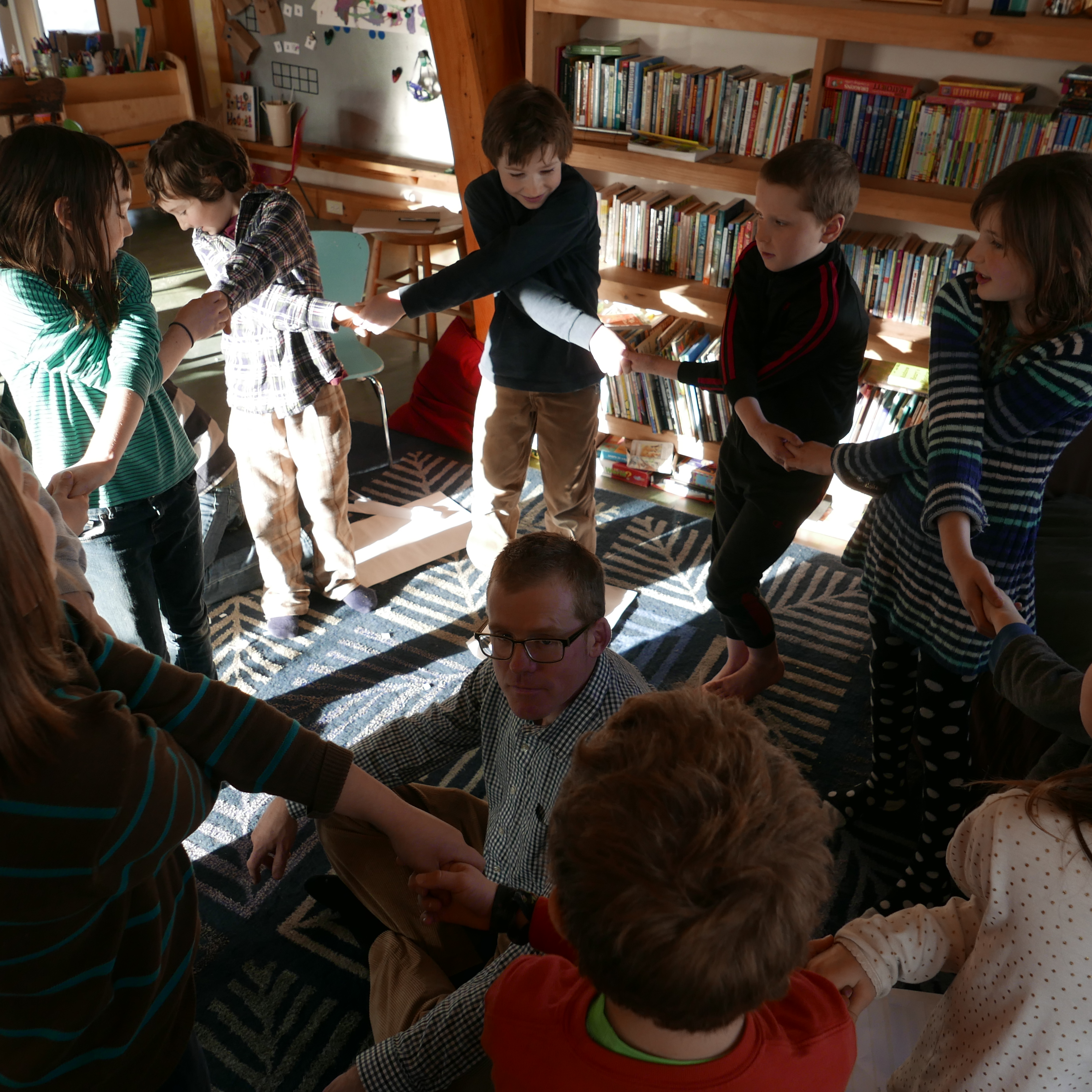
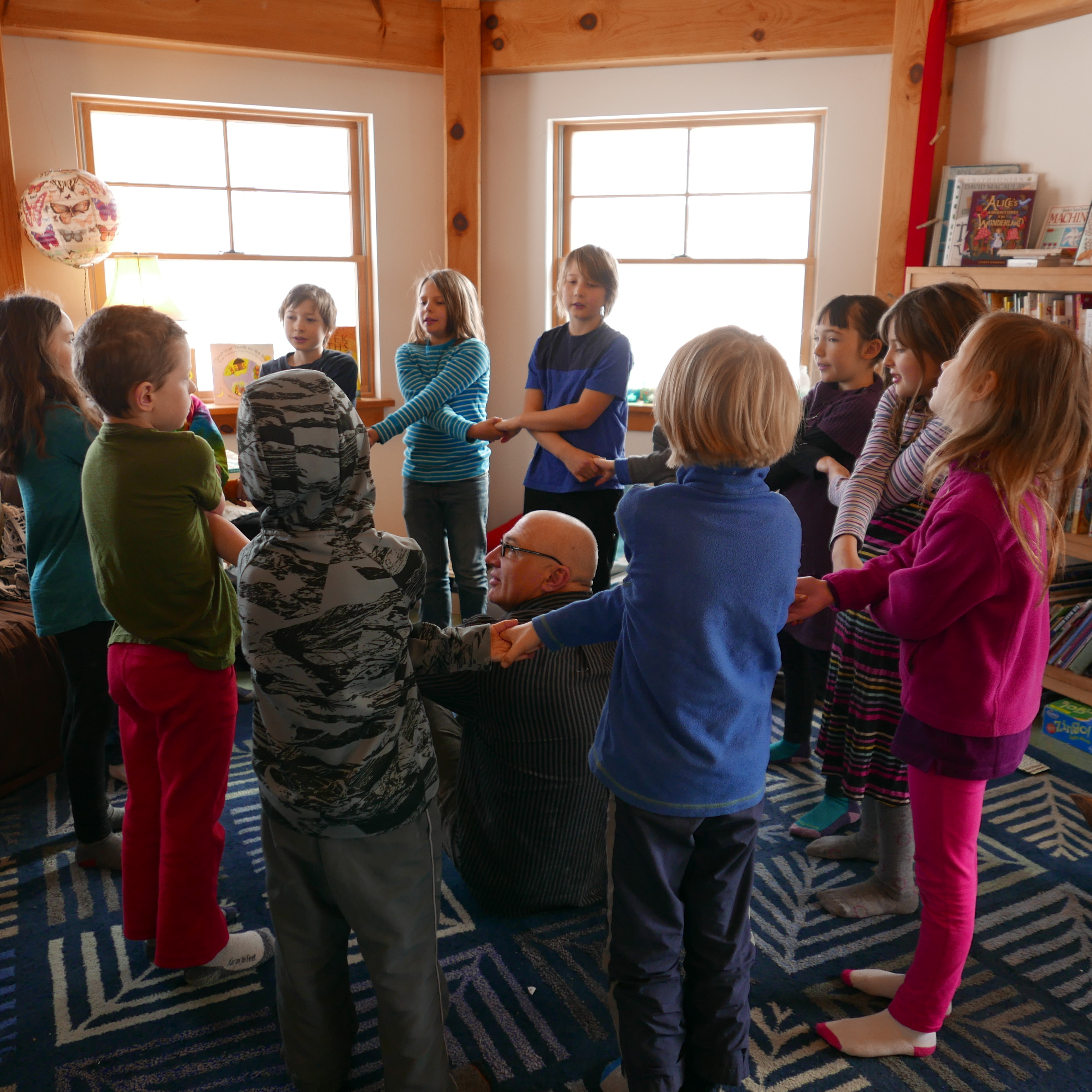
To say thank you at the end of their visit the children encircled Brian on Tuesday and Tim on Thursday and sang to both visiting artists. This has officially been termed “Sweetlanded,” by Tim and it’s a pretty magical experience. When all the pieces have been fired we plan to have a special celebration of the work at the Hope Library. Thank you Brian and Tim! and a note of thanks to Argy Nestor and the Maine Arts Leadership Initiative where this collaborative residency was hatched. It was a magical experience.
 BRIAN
BRIAN
At the close of my two days teaching at Sweetland Arts School, the 12 children with whom I’d been working asked me to sit in the center of a rug. Standing around me, they joined hands and began to sing. The song was new to them, so there were a few stops and starts, but they got there in the end. This is what they sang to me, twice:
In this circle deep peace
In this circle no fear
In this circle Great Happiness
In this circle safety.
This moment felt completely, beautifully appropriate for my experience on the residency. It wasn’t just that the song used anaphora (repeated phrases) to create its structure, which was the technique I had helped them learn for the poems they wrote with me. It was that, through their song and their spontaneous desire to give it to me, they were teaching me something, as they and their school had done all residency.
 During the previous two days, I had sometimes felt the opposite of deep peace, great happiness, and safety: I had feared that my whole work at the school was going awry. I am not now sure why I felt this way, except that panic and a feeling of ineluctable disaster are often a part of a creative process. But by the students’ continued steady efforts, and I suppose mine too, things had turned out right in the end. Their poems collectively were funny, tender, deeply personal, wildly inventive, and above all wonderful to hear all read out one after another, as they had just done.
When I sat in the middle of their voices, I knew that they had given me this moment to teach me that I need not have feared: if you keep working, wisely and with good heart, your projects will succeed.
 So what I will take away from this residency is a feeling of gratitude, not for what I taught, but for what I learned. I learned that a vision, to create a school where the arts are not peripheral but central, can be made to happen, by Lindsay and her husband Chris. I learned that children who are skillfully supported to trust their own decision-making and imaginations can invent the most marvelous things, such as the spontaneous class play involving sheep and blades of grass that was scripted and performed by the grade 1-3 group, to illustrate concepts of division and remainders, based on a poem they’d made about the number 17. I learned that there is more scope in my own teaching to allow students to make their own choices about how they grow their writing. And I learned a little, just a little, about what can be achieved if we step back, let go of control, and trust the kids, the process, and the art.
 NINA
NINA
Watching the children with these visiting artists has been both inspiring and illuminating. They brought their best selves to the work each day, and churned out pieces that are jaw-drop-worthy. One word comes to mind in particular when thinking about their manner throughout this residency: absorbed. Their attention never seemed to wander, their focus remained strong, and their process was steady. The visiting artists were strong guides that brought their wealth of experience effortlessly to the children, openly sharing and encouraging progress and process along the way. The response from the children was eager and positive; the energy of creativity filled the room and excitement and pride about their work bubbled up. It was tangible.
Watching the children thank the artists at the end, was perhaps, my favorite part. They circled around each artist, holding hands and sang them a song we sing here at Sweet Tree to celebrate birthdays. A song about creating safety, deep peace and great happiness. This was both instigated and carried out by the students as an offering of gratitude, creating moments that were as beautiful as the work they made this week.
TIM
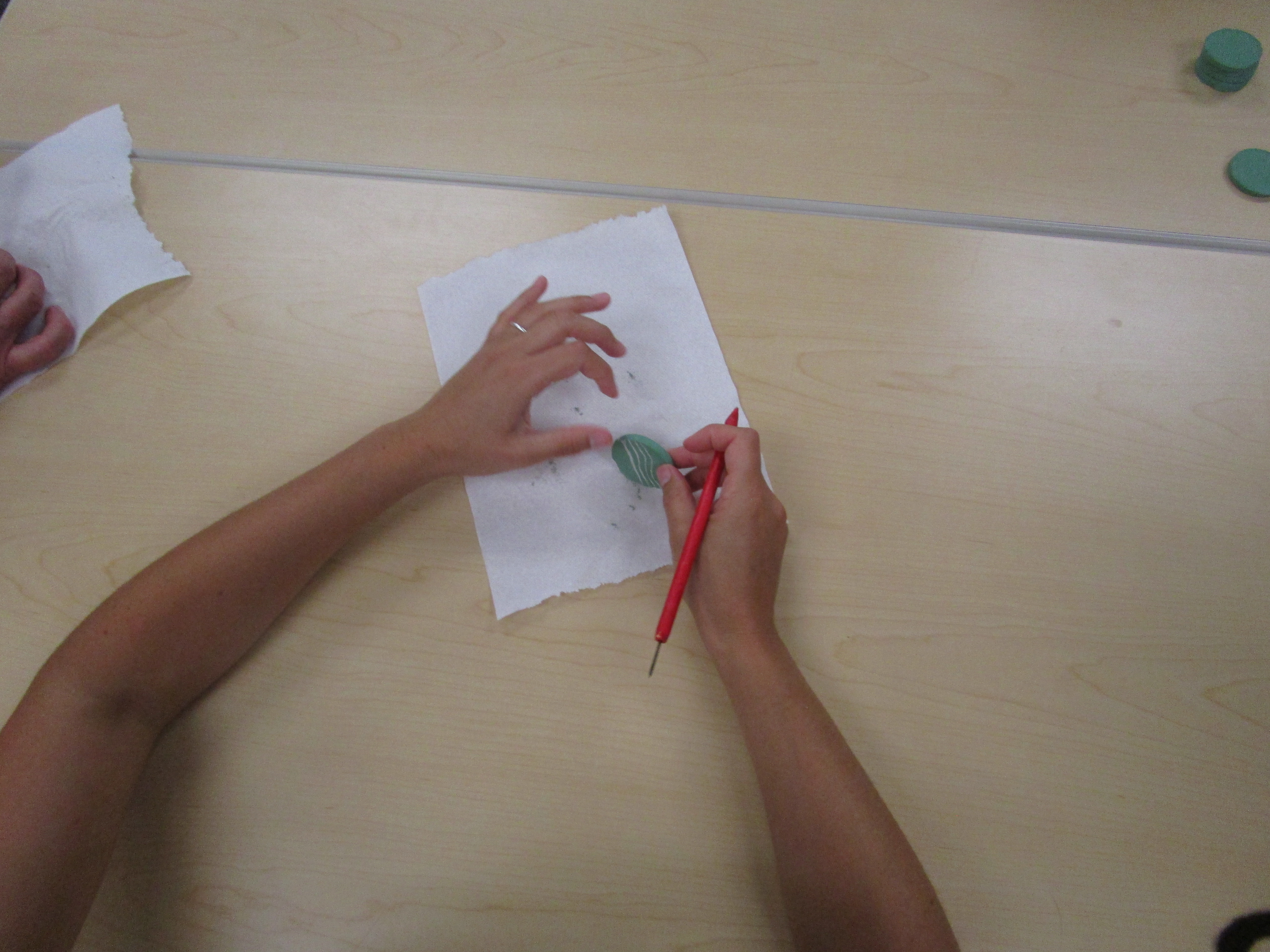
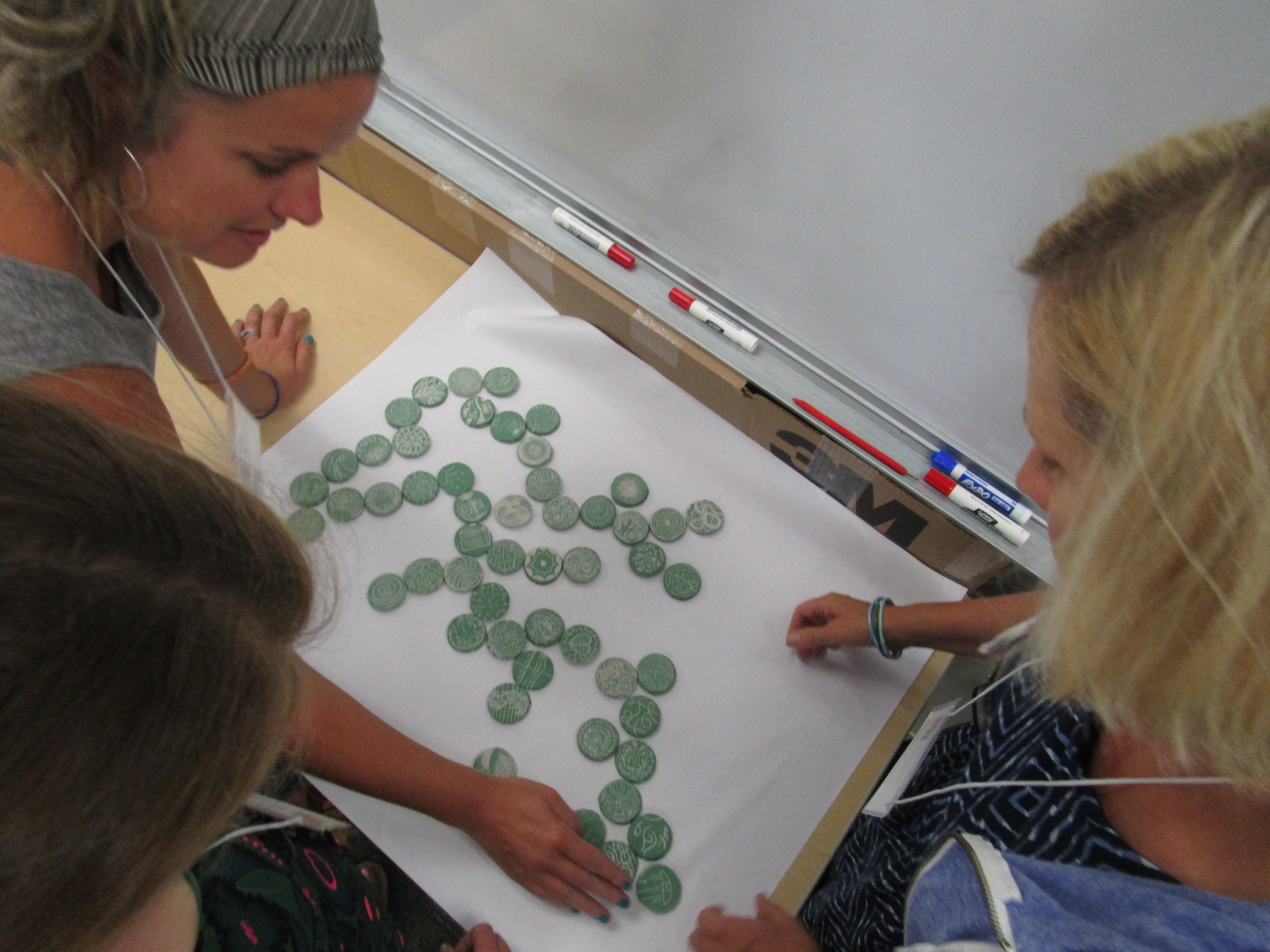
 For four days, I had the great pleasure to work at Sweetland School. The students wrote poems, working for two days with Brian, an award winning poet from South Berwick. They then created 5 functional pieces of pottery, on which they etched, using the sgraffito technique. Starting with individual lines of their poems, the young artists translated verbal language into visual language, creating a place setting which could be rearranged in different settings, making mix and match pottery poems. This exercise challenged the artists to formulate imagery that was as specific as their words: no mean feat!
For the younger artists, some in the 7 year old range, making the leap from verbal to visual was a struggle, though they were able to write their poems on the pieces, and had a ton of fun creating useful, functional pieces. For the older artists, in the 10-12 year old range, the concept came easily, and their illustrations highlighted specific points in their 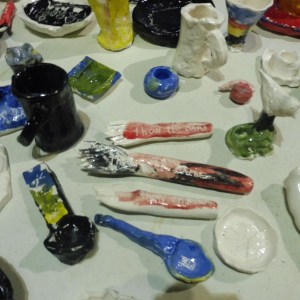 poetry lines, illuminating their intent, adding focus and emphasis. All of the poems, read aloud during a sharing period at the end of Brian’s time at Sweetland, were insightful and important, the young poets finding their voice easily, conveying thought and emotion beautifully.
I was struck by the powerful way that the younger students looked up to the older cohort, striving to match them in the quality of their products. I was also struck by the kindness of the students, the emphasis on community, collaboration, sharing, and creative expression at Sweetland. Real learning and growing was evident at every step!
OLIVIA
I could see the children’s minds work as they sat molding the clay and thinking about how to visually describe the words of their poems. It was incredibly inspiring and exciting to watch how naturally art meshed with all learning.
 LINDSAY LAST WORDS
Thanks for sharing your very open and wonderful impressions. They are feelings I feel often and hope that others can experience too. That piece about being in the creative process and not know the road ahead or how we’ll get there is something that is so much a part of creative thinking and so scary for adults. It can be explored safely with the help of the children and I believe at the very heart of deep learning.
When we don’t know where we are going I think we are on the right track because doesn’t that mean we are learning something new?
Thank you all for trusting the process, believing in the arts and being able to stand back and see the magic the children have to offer, I think standing out of the way is sometimes the hardest thing to do.
Not only did this residency exemplify why bringing outstanding teaching artists into the environment is so important but that every one processed the learning so the value of it became clear. A great big THANK YOU to Lindsay, Brian, Nina, Tim, Olivia, and the YOUNG LEARNERS for contributing to this blog post and for the great work they do every day as educators!


 You can join Lindsay Pinchbeck, MALI Design Team member, in her very own school, Sweetland School in Hope, and learn some wonderful strategies to incorporate into your classroom right away. Sweetland School is s a project based elementary program inspired by the Reggio Emilia approach. Drama, Movement, Music, Poetry, Storytelling, and Visual Arts will be integrated across content areas: Math, Science, Social Studies, Reading and Writing.
 This online course taught by music educator and MALI Design Team member Jake Sturtevant provides looking closely at assessment practices through a collaborative and fine-tuned lens. It can provide unique opportunities for growth. Connecting new assessment practices to instruction can bring exciting changes to how we approach our students and their learning.
 This introductory course provides foundational information relating to the field of gifted and talented education (i.e. history, laws, etc.), details characteristics of gifted students from various populations, describes how such students are identified and assessed, and presents up-to-date, research-based pedagogy relating to curriculum design and instruction.





 Develop a creative book making project to assess your students’ authentic learning. Perfect for the end of a grading term, this idea can be tailored to suit the needs of you and your students. Impress your administrators with your ability to keep every student fully engaged in the assessment of their own work. Grades 7-12
 Rhythm!! Is this one of the elements of music that you spend a lot of time on in rehearsal? How are your kids at sight-reading? Have you ever fallen into the trap of singing the part for your students? Are you clapping rhythms in class and finding that it sounds more like applause? Intended for ensemble directors, this workshop will provide a new approach to many based upon a tried and true method of counting and verbalizing rhythmic patterns. Grades 7-12
 Looking at ideas on emotional intelligence and leadership collected by Daniel Goleman we will identify the core elements of emotional intelligence and compare them with habits and skills practiced in the creative process. Be ready to create, journal and discuss ideas together on creativity, the arts and emotional intelligence. All grade levels and all content
 It is the age of customized education and differentiated instruction. Chances are, your building administrators are looking for observable evidence of this in your teaching practice. Time constraints and scheduling difficulties can make customized learning a challenge to implement in the general music setting. In this workshop, we will discuss the benefits of flexible grouping strategies, and how to use them to your advantage. Grades PK-12 General Music
  Ovations Offstage Director Catherine Anderson will introduce workshop participants to Ovations Dynamic School-Time Performance Series for 2018-19, and model for teachers how to help students engage with any story, or content (fictional or not) through the use of “tableau”. Tableau is a wordless theater activity for small groups of students that can be adapted for any age group. Participants will leave with a leasson plan with clear learning targets, and assessment criteria. All grade levels
 Stars and Stairs, Where am I now and Where am I going? How can the use of Stars and Stairs in your classroom help to inform you and your students of their learning progression and actively engage them in the learning process? This will be a round table discussion. Looking at your standards and your curriculum how can you use the Stars and Stairs model in your classroom. All grade levels and all content
 Everyone seems to agree that we need more creativity in education, but just what is creativity, and how can we possibly teach it? This workshop will answer both those questions (gasp…) With one foot planted in neuroscience, and the other dangling in the depths of the subconscious, we will conduct transformative activities (visual arts based) designed to enhance the “brainsets” that contribute to creative states of mind. Grades 7-12
 Improvisation is commonly viewed as a specialty skill, and one that you either have or don’t. This presentation makes the case for improvisation as an essential skill, a naturally growth-minded learning tool, and an additional resource to address any number of Maine Learning Results, and to engage students and give them more ownership over their musical voice. This will be heavily participatory, exploring simple methods to more advanced, and using multiple musical languages/genres. All grade levels
 Art can propel the next generation of leaders to make a personal connection to real world issues. In this workshop participants will explore strategies for helping young people forge a deep and personal connection between the environment and themselves. If our students are to have the courage to address the environmental challenges we face today, they must believe in the power of their ideas and know that they can create something tangible from them. Participants will make art that crosses subject matter boundaries and explore ways to design original curriculum that leads to action. Elementary and Middle Levels and Visual Arts
 Come join a conversation, share thoughts, and cultivate ideas regarding the challenge of integrated curriculum work at the highschool level. How can finding commonalities between subject areas motivate student learning, provide hands on experience with cross curricular connections, as well as benefit the educator as they become more proficient in the language of other disciplines? High School
 Self-reflection is a crucial part in the cycle of learning for both student and teacher. With regular self-reflection integrated in your classroom, students will become more aware, dig deeper, and take ownership of their learning. This applies to us as teachers. We will also discuss the importance of documentation and strategies of reflection upon our own teaching. Information gathered about student growth, understanding, and feedback on units/lessons will not only be beneficial for the development of a curriculum, but also in providing evidence for teacher evaluations. All grade levels and all content
 This workshop documents the progression of a year-long chorus project in which 7th and 8th grade students composed lyrics and music for an original performance piece. The project developed a model of integrated arts programming, including extensive literacy integration through working with a guest poet-in-residence for several weeks. The project also tied in hands-on classwork, a field experience, a connection with a wider community project, video diaries, peer critique, and of course music composition and performance skills. The workshop will give participants a hand-on experience of our project, as well as tools to create their own. All grade levels
 Interested in transforming your school into a STEAM based model? This workshop will include the benefits of STEAM for students, some sample STEAM lessons, and a suggested action plan for incorporating a STEAM approach into your school. Upper Elementary
 How do we teach aesthetics and criticism in our Visual and Performing Arts classes? How do teachers design learning experiences for Maine Learning Results standard D? In this interactive workshop teachers will experience methods for teaching aesthetics and criticism in the 7-12 arts classroom. Sample lessons that teach forms of artistic interpretation to students will be shared as well as methods for critique. The workshop is geared toward supporting the teaching and assessment of Maine Learning Results standard D. During the second part of the workshop participants will be encouraged to share their own approaches. Participants will leave with tools that they can immediately use in their classes. Grades 7-12, adaptable for all grade levels
 This will be a fun and informative program with practical involvement by all. All participants will have ideas to take back to the classroom and hopefully a reinvigorated perspective on their teaching with a theater focus. All grade levels


 me arts ed