Archive for the ‘Media Arts’ Category

h1

Surreal Self-Portraits

July 22, 2013

Media arts

When we talk about Media Arts, the new and 5th discipline being included in the National Core Arts Standards there are multiple ideas. What is media arts and what does it look like, who is teaching it, and which students are taking the courses? Is it being integrated into course work, grade level content, or is it standing alone? When I search the images on Zev’s site, demilked, a 14-year old from MA I think it is an example of Media Arts. This isn’t all it is but it is included in the term Media Arts. See for yourself and consider what and how you’re teaching.

h1

Another Successful MAAI Summer Institute

June 28, 2013

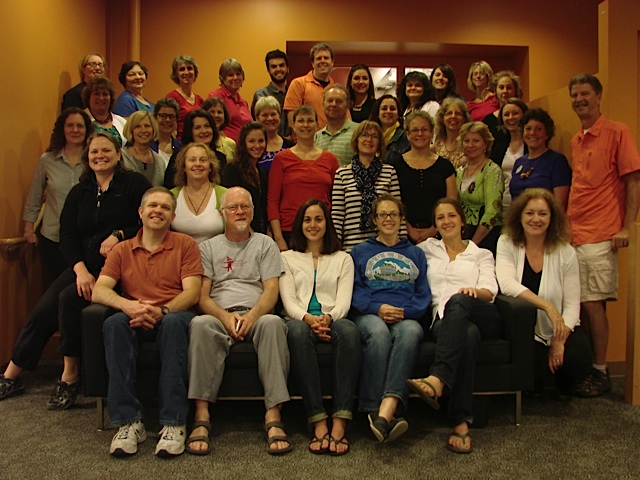
I am totally exhausted from another summer Maine Arts Assessment Initiative summer institute. THANK YOU to the INCREDIBLE TEACHER LEADERS, LEADERSHIP TEAM, MECA and to the administrators who support your arts teachers who have committed to taking on the leadership role. It was an amazing three days – the discussion around “what does proficiency look like in the arts education classroom” was so worthwhile I thought: wouldn’t it be great if every visual and performing arts teacher could have the opportunity to participate in a similar discussion?!

More details will be included in other blog posts in the near future but for now you can see the group photo of phase 3 teacher leaders and leadership team.

DSC02227

h1

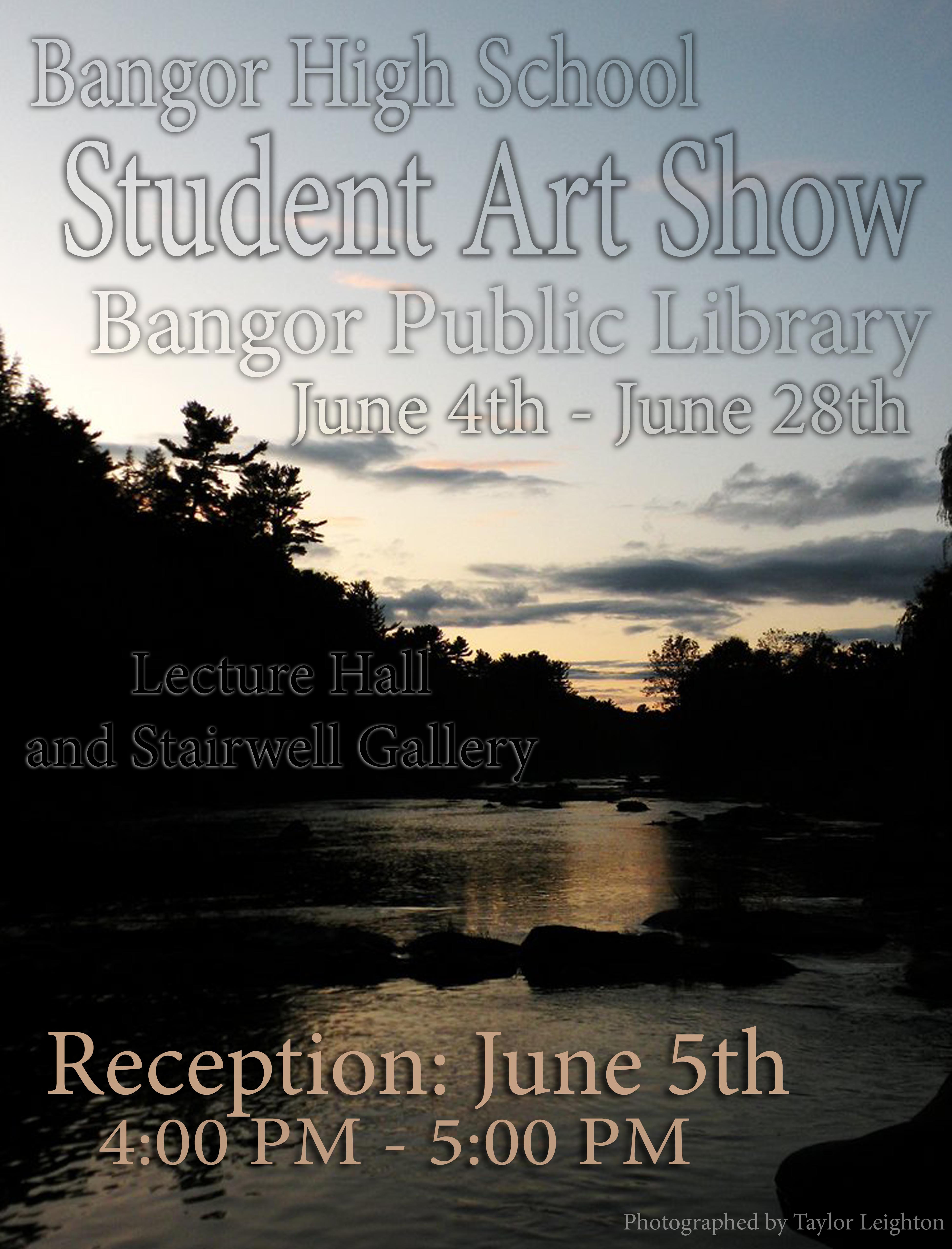
Bangor High School

June 3, 2013

libraryartshow2013

h1

Rijksmuseum in Amsterdam

May 23, 2013

The Night Watch by Rembrandt

The Rijksmuseum in Amsterdam has reopened its doors to the public after a 10 year closure for rebuilding. It’s most famous exhibit is “Nachten Watchen”  or “The Night Watch” by Rembrandt. The first youtube short clip (below) Onze helden zijn terug! celebrates the rejuvenation of The Museum.

However a second short clip (at the bottom) follows the making of Onze helden zijn terug! which not only rejoices that The Rijksmuseum has reopened:  but it serves as a reminder to economists about the importance of specialization, the division of labor and clusters of support services in a modern economy.Try to consider how many different specialists are involved in this project and why the division of labor is important.

The project team wanted to make an impact, inform the Dutch and the rest of the world that the Museum was reopen for business – with implications for invisible and visible exports for The Netherlands. The advert should stimulate curiosity, and demand for tickets. Next time you are in a museum and art gallery, remember the principles of complementary goods and services which have derived demand – t shirts, coasters, mugs, guidebooks, DVDs – inspired by the great paintings on display. The museum may also have a monopoly over the supply or use of images, which may allow it to charge premium prices for guidebooks and other souvenirs.  It also highlights the significance of the use of economic resources, land, labor, capital and entrepreneurship: the roles of government and private enterprise in a mixed economy, culture as a merit good, and source of economic activity.

Of course, many of us have gotten used to viewing “flash mobs” on the internet but this one has a twist and certainly provides some educational value. So many learning lessons! Perhaps you’d like to share this with your students?! Even though they are speaking Dutch in the second one some meaning is possible. And, maybe you have a language, history and/or economic program in your school that you could connect with to provide a more meaningful lesson.

h1

In Today’s News

April 11, 2013

Art student goes to SkillsUSA

The Oxford Hills Sun Journal included an article about student Carly Sauro who will be traveling to Kansas City in June to compete at the SkillsUSA National Championship. Carly attends the Oxford Hills Technical Center and received a Gold Medal at the state-level competition which qualifies her for the national competition. Carly’s graphic design teacher is Virginia Valdes. Carly’s winning informational graphic design centered around a cluster of 16 Maine lighthouses. You can read the entire article by clicking here.

h1

Another Arts Teacher’s Story: Susan Beaulier

March 5, 2013

This is the 21st in a series of blog posts telling arts teacher’s stories. The first 19 were told last year by the phase I Maine Arts Assessment Initiative teacher leaders. The  series continues with the stories from the phase II teacher leaders. These posts contain a set of questions to provide the opportunity for you to read educators stories and to learn from others.

sue beaulier2Susan Beaulier is in her 23rd year of teaching and is presently teaching PreK-12 Visual Arts Teacher in MSAD #32 in Ashland. Additionally, she has been the Coordinator of G/T Education for that same amount of time. In addition to Visual Arts classes, Sue offers a Digital Photography elective, and an Independent Study Seminar for High School students. Ashland Schools are a small school district in Aroostook County. Our district serves 6 communities. She is responsible for providing services for the 338 students in the district. Susan is a phase 2 Teacher Leader with the Maine Arts Assessment Initiative!

What do you like best about being an art educator? 

I like the fact that the students (for the most part) want to be in my classroom.  I think that the arts provide a platform for teachers to be more than lecturers. I like the honest interactions that occur within the realm of an art classroom.  The kids are comfortable sharing their thoughts, and usually appreciate my input as well. I like walking into my room in the morning and finding it already full of kids who feel comfortable there and who are actively engaged without being reminded to get started. I like that kids who don’t have art class sometimes drop in during a study hall and ask if they can draw or paint or sculpt. I like that kids choose to stay after school to work on art projects or just be where they are comfortable. I like the energy of the art room and I like providing a place where kids feel happy and successful. I like working across all age levels.  My job is never boring.

What do you believe are three keys to ANY successful visual and performing arts education?

  1. Creating an environment where kids know that there’s no such thing as getting a “100” in art.  I think it’s important to let kids know that it is through mistakes that they learn. Taking risks is more valued in art class than “getting it right” They need to know that they always have the chance for improvement and growth…no grade is final.  Giving students the time and permission to plan, experiment, play, reflect and re-do is really important.
  2. Creating a place where learners feel productive and successful, and where they feel supported by their peers and instructor.  Allowing for flexibility in pace, practice, and product is also valuable.  Making learning fun doesn’t hurt either.
  3. Highlighting for the students, the problem-solving skills that they are learning and exhibiting, and how these skills can be applied to other areas of their lives. Sometimes they don’t recognize these qualities until we point them out. This connection adds validity to what they’re doing everywhere

 How have you found assessment to be helpful to you in your classroom?

 Refining my approach to assessment has influenced my instructional practices .I used to think that adherence to a set of pre-established criteria might lead to “cookie-cutter” art products. Now, I am working to include the students as much as possible in developing assessment tools for their work. Creating the rubric  together  is now part of our introduction to the process. Assessment has proven to be a very valuable conversation starter in our classroom.  When students are involved in the assessment process, they begin to “talk the talk” of art and art education. I think that kids inherently know what a “successful” project looks like, but sometimes they lack the descriptors to communicate that. When they have the criteria and vocabulary to express them selves, they are empowered to create, analyze, improve their own work, and justify their artistic choices. When students know what is expected of them, and they have the chance to define levels of achievement in language that means something to them, their work improves. Assessment opens up dialogue about art. 

What have been the benefits in becoming involved in the arts assessment initiative?

 My involvement with the Arts Assessment Initiative has provided many benefits. It has invited me to step out from my isolated domain, and share my thoughts with other colleagues in the art education field. It has allowed me to gain feedback about things that I do well, as well as those areas that need revision and improvement. I have met an entirely new group of people who share the same passions, worries, tasks, as I, and it feels good to be part of a group. My involvement has reinforced me in what I am doing, but has also offered suggestions for improvement. I have made new friendships and bonds over a short period of time. I feel like we are a family.

What are you most proud of in your career?

I am at the point in my career where I am teaching the children of my former students. Additionally, I am teaching the grandchildren of some of my former classmates. I am heartened by the positive response I have received from all involved. It delights me when high school students or even parents tell me that they still remember and/or have an art project that they made in one of my classes. That makes me feel like I made an impression on their lives. One of my former students recently joined our staff as an Ed. Tech. She is also a dance instructor in our town. She told me that the opportunity I gave her in high school to participate in dance class changed her life. I recently received  e-mail from a student who I had during one of my first years of teaching. She was very kind in her remembrances of art class. She made me feel proud that I had an impact on her life. The accomplishments of my kids make me proud.

What gets in the way of being a better teacher or doing a better job as a teacher? 

TIME gets in the way of being a better teacher or doing a better job as a teacher.  I do relish time away from the responsibilities of school, but those responsibilities never really go away. I always feel like I’m behind the eight ball! We live in a fast-paced world. There are many demands upon every person today, and achieving a balance is difficult. I think that, despite our efforts, there is never enough time to accomplish what we want.

What have you accomplished through hard work and determination that might otherwise appear at first glance to be due to “luck” or circumstances?

I’m not sure that I’ve made much of an impact  on many of my colleagues through my hard work and determination. My fellow teachers often comment on how “creative” I am, and that I “do things so easily.” I have even had teachers tell me that I am “wasting my creativity” here at school. I truly think that they are speaking from a naive view of what creativity truly is. I feel that they think I am accomplished at my job because I possess artistic skills, and can demonstrate those to the students. They often comment that I “make things look so easy…”  Though they recognize my artistic abilities, many of my colleagues fail to see me as an equal in terms of being an educator. I think that they still see the arts as a “special”  (A term I detest!). They don’t recognize that my artistic skills are really just an extension of who I am as an educator. What they fail to see is that I face all of the same difficulties with educating kids as they do. Visual Arts is a language.  So, when I am introducing the tenets of the visual arts, I am essentially teaching students a new language. That does not just happen because I can draw well. The skills that are developed and fostered in the art room may not be practiced anywhere else in the curriculum. I don’t think that regular ed. teachers know this or appreciate its impact on all other learning. Much of what I teach is really taught “through” art, not” because” of it. The critical/creative problem solving skills, life skills (working collaboratively, taking risks, working through a process, observation, reflection, revision, perseverance, etc.) aren’t really the by-products of an arts education. They are at the core of arts education. I often think that my students understand the benefits of a quality education in the arts better than my adult colleagues do.

Look into your crystal ball: what advice would you give to teachers? 

Don’t let technology replace human interaction…kids crave it.  If all else fails, Play Power Ball!

If you were given a $500,000.00 to do with whatever you please, what would it be?

I would add it to my Maine State Retirement Account because Teacher Retirement is abysmal.

Imagine you are 94 years old. You’re looking back. Do you have any regrets?

Of Course!  I should have sung louder, danced more, and afforded myself more time for my own art.

Thank you Susan for telling your story!


h1

Wreaths Across America

December 9, 2012

Leaving Today

Screen shot 2012-12-07 at 12.51.56 PM

Under the direction of teacher Benjamin Speed, six students from the Media Communications program at the Hancock County Technical Center will collect video, audio and photographs for the non-profit group Wreaths Across America from Columbia Falls. They leave today, Sunday, on their one-week trip to Arlington National Cemetery to lay wreaths on headstones and visit other locations along the way. Students will join veterans, gold star families, volunteers and organizers in the police-escorted caravan that will be delivering the wreaths. The group will stop at schools, monuments and veterans facilities along the way.

Each day students will be posting interviews, daily recaps and helmet-cam video clips to their program You Tube channel, “Media Island” at https://www.youtube.com/user/HCTCMediaIsland. Students will also be posting photographs to their program Flickr page, “Media Island” at http://www.flickr.com/photos/mediaisland/. Posts will also be available via the program’s Facebook page at http://www.facebook.com/pages/HCTC-Media-Communications/162794347066088.

Media Communications students shared their plans with 3rd, 5th and 7th graders from the Ellsworth Elementary-Middle School. Those students will engage in curriculum provided by Wreaths Across America, facilitated by their classroom teachers, while also following the Media students progress in real time via the various social media sites and the Wreaths Across America live radio stream. Following the trip, students will recap their trip with the elementary and middle school students.

At the end of the trip Wreaths Across America will have a library of media to use for their organization, which will help them meet their mission of servicing veterans and veterans families. The students will gain professional training in the media field, while also learning more about the history of their nation and those that have served in the United States Armed Services and the families that honor them. The trip will provide a valid resume piece for students portfolios, but will also leave a mark on their lives on a personal and emotional level. The group’s travel costs are sponsored by Wreaths of America. The equipment necessary to embark on the trip is supported by the generosity of Dave and Sandy Perloff through their Fidelity Charitable Gift Fund.

Maine’s First Lady Ann M. LePage will be among the dozens of volunteers in the caravan of eight wreath-filled tractor trailer trucks, Patriot Guard Riders motorcycles and Maine State Police cruisers when it departs Maine on Monday bound for Arlington National Cemetery.

The Hancock County Technical Center and the Media Communications program would like to thank all those involved in helping this project happen, especially to Wreaths Across America. It is an honor to be involved with such a great cause and service to veterans and their families.

Wreaths Across America, based out of Columbia Falls, Maine has a mission to Remember, Honor, and Teach, which is carried out in part by the wreath laying ceremony in December at Arlington, as well as veterans’ cemeteries and other locations in all 50 states and beyond. This week of events is made possible by thousands of volunteers who organize local ceremonies, raise funds to sponsor wreaths, and participate in the events. Wreaths Across America receives no government funding. The cost of their programs is paid by individual wreaths sponsors, corporate donors and volunteer truckers. The group also coordinates veteran services and recognition through a variety of programs, and provide schools with teaching aides for projects throughout the year.

Hancock County Technical Center (HCTC) is a Career and Technical High School for various high schools that has a mission of engaging students with rigorous and relevant career and technical education for success in the post- secondary and industrial world. Besides Media Communications, HCTC offers a variety of hands-on educational opportunities in such fields as Automotive Technology, Carpentry, Culinary Arts, Diesel/Heavy Equipment, Early Childhood Education, Health Sciences, Law Enforcement, and Welding.

h1

Maine Media Workshops + College

November 8, 2012

President Meg Weston

Meg Weston, President Maine Media Workshops + College

Maine Media Workshops + College is located in Rockport and tucked away in a charming area. Since I live fairly close by I sometimes see the students who travel from all over the world to learn from the expertise that Maine Media has to offer. Students range in age and abilities when they arrive but at the end of their learning opportunity they leave wiser and more confident! If you can not visit in person I highly recommend a visit to their website – it is quite a treat! Recently I had the opportunity to sit down with Meg Weston, President of Maine Media Workshops + College and Elizabeth Greenberg, Vice President of Academic Affairs. I am so impressed with what they have to offer students and excited about possibilities for the future. Thank you to Meg who kindly answered some questions for the meartsed blog to provide you with the opportunity to learn more about Maine Media Workshops + College.

  • Please tell the meartsed readers about your background before arriving at the Maine Media Workshops + College.

My career has been in the consumer photography business, media, and education. I was president of Konica’s U.S. photofinishing operations for seven years; president/CEO of PrintLife, an Israeli digital imaging company that introduced photobooks to the market in the U.S. and Japan in 2000; and president of the Portland Press Herald/Maine Sunday Telegram.

In the field of education I served on the Board of Trustees for the University of Maine System including two years as chair of the board, and later held the positions of VP of Advancement and President/CEO of the University of Southern Maine Foundation. I have an undergraduate degree in communications from USM, and earned an MFA in Creative Writing from Lesley University in 2008.

  • How long have you been at Maine Media and what made you choose to take on your role as President there?

I’ve been at Maine Media for just over six months now. It was a perfect fit for me, bringing together my experience in business, marketing, fundraising, and education with my passion for the art and craft of image-making. I’m excited about the future of imaging, media arts and visual storytelling.

  • Tell us a little about the programs you offer through the workshops and the college.

We offer over 250 different workshops in photography, filmmaking and design in the course of a year and have longer term programs ranging from 4-6 week intensive workshops, and 12 week residency programs, to 30 week professional certificate program, and a 3 year low-residency MFA program. There is an experience at the heart of all of our programs that encourages discovery, playfulness, creativity, and excellence.

  • This is a big year for Maine Media with the celebration of your 40th anniversary, what is included in your plans to commemorate the years?

When we began as Maine Photographic Workshops in 1973, we were the first organization of our kind offering experiential, hands-on education from leading photographers and that expanded a couple of years later to include master filmmakers. Today, our reputation as the original workshops remains strong, and our legacy as leaders in the field of imaging informs our present and our decisions about the future. For that reason, we have several plans to commemorate this milestone in our history and communicate our excitement about the future of Maine Maine Media Workshops + College. To start, we just launched our 40th Anniversary “Spirit of Place” photo and video contest. It has categories for both youth and adults, and encourages entrants to visualize the meaning of place whether it is on the coast of Maine or in other locations around the world. We have an outstanding cadre of jurors and over $25,000 in prizes to award to winners next spring. Next on our 2013 calendar is a 40th Anniversary Celebration in the newly renovated Union Hall in Rockport Village in June. In August, in collaboration with the Center for Maine Contemporary Art (CMCA), we will host the exhibition:  MENTOR – 40 Photographers , 40 Years – honoring our 40 year dedication to the spirit of mentorship. The exhibit will consist of work created by world-renowned photographers who have studied and taught at MMW over the past 40 years and the work of their students who have become starts in their own right. The MENTOR series will also showcase some major filmmakers who are associated with MMW with a film screening and presentation in August. In the Fall, we plan to bring together a panel of prominent speakers to discuss the future of visual storytelling and the convergence of visual media. It’s an incredible line-up of events that span the entire year.

  • I know that Maine Media is committed to education, please tell us about the philosophy or perhaps the opportunities that are afforded Maine arts educators, PK-12.

Many arts educators come from around the country to MMW to learn new skills, and to be inspired, refreshed, and renewed. Teachers can learn darkroom techniques, historic photographic processes, and the latest cutting edge technologies in digital imaging and video. In addition to offering workshops tailored to educators, we host educational class trips and collaborate with schools and other partners on a variety of different projects. We are currently discussing how we might employ some of the new tools for multi-place collaborations in multi-media to reach out to art educators and schools across the state.

  • What are your hopes and goals for Maine Media for the next 40 years?

We want to establish our leadership internationally as the place to learn visual storytelling.  It’s all about helping people find their voice and communicate their message using a variety of visual media, whether their message is personal, documentary, or fictional. The depth and breadth of courses we offer, the knowledge and expertise of our faculty and staff, position us well to be leaders in this era of media convergence. We are re-envisioning our long-term certificate and degree programs and integrating them more fully with our workshop offerings; working to extend our reach and enhance our programs through partnerships and collaborations; focusing on expansion of our Young Artists programs with new offerings and outreach; and investing in online technologies that will bring our unique transformative experiential learning to more students around the world.  

  • Tell us about your connection with the local community.

Our local community here in the midcoast of Maine is rich in creativity, culture and intellectual contributions.  Maine Media Workshops + College is an economic driver for the region bringing students and teachers here from over 40 countries around the world.  We are committed to partnering with other local organizations to foster and build the creative economy for Maine.

  • If you were given $500,000 how would you use it at Maine Media?

There are so many ways we can and would use additional resources such as a grant of $500,000. Maine Media Workshops + College does not have an endowment and our students do not have access to financial aid, so that would be one of my first priorities. I’d like to make it possible for more young people, who don’t have financial resources, to experience the “magic” of this place. Next on my list would be an upgrade to some of our facilities. Being a non-profit institution we’ve often boot-strapped solutions to maintain classrooms and other facilities that are adapted to the leading edge technologies that we offer. We enjoy the “rustic” Maine feel of the place, and want to maintain its character, while offering the most up-to-date technologies, classroom experiences and hospitality for the thousands of students who benefit from the Maine Media educational offerings each year.

h1

What a Week!

October 9, 2012

Some weeks are crazy

Last week was filled with adventures! I started the week in Washington D.C. at the Arts Education Advisory Group (AEAG) meeting. They are part of the National Assembly of State Arts Agencies (NASSA) which is made up of the state arts commissions including the Maine Arts Commission. Every year the AEAG plans a professional development institute (PDI) for the arts in education associates at the state arts commissions which includes Meagan Mattingly. I am the representative to AEAG for my national professional organization called State Education Agency Directors of Arts Education (SEADAE) which is comprised of the arts education specialists from the Departments of Education. I had a chance to be with AEAG at the opening of their PDI. It was wonderful to meet people who are committed to arts education in each state. Not to mention they are interesting, knowledgeable, creative, and FUN! The National Endowment for the Arts (NEA) are affiliated with the AEAG and NASSA since funding is provided by the NEA. Consequently, there were a handful of staff from the NEA who are responsible for arts education who attended as well. In attendance was Ayanna N. Hudson, the NEA Director of Arts Education. She agreed to write a blog post for meartsed that will explain the programs/funding that is available for teachers, schools and communities. This will provide an overview to help you learn what is available. One of the evening highlights was the opportunity to see the performance of the DC Youth Slam Team. They were INCREDIBLE!

Next my travels took me to Reston, VA where SEADAE met with the chairs of the National Arts Standards writing teams and the National Coalition for Core Arts Standards leadership team. The writing teams are moving along with their work in spite of the little funding that has been provided. The most recent draft of the framework was shared by Co-Chairs, Marcia McCaffrey and NH DOE arts specialist and Lynn Tuttle, AZ arts specialist and president of SEADAE. The writing teams have taken the first draft with the components including Disciplines, Essential Questions, Enduring Understandings, Artistic Processes, Cornerstone Assessments, and re-arranged the direction of the document to make it  more user friendly. The work was shown to us on the website where the document will be housed so we could also see the work that has been done on the site. It will include a “quick view” button for finding stuff in a hurry, the use of tagging and keywords, and links to other works. All of this will be important aspects since it will be a web based document. You can view some of the ideas that are being considered at this link.

We had a discussion on what to call the final document so if you have any suggestions please email them and I can pass them along. The document will be arranged by grade level, PreK-8 but the high school format is still under discussion. You can read more about the format by clicking here.

At this point the expected date for the release of the “framework” will be in December. The first draft of the standards document which includes Dance, Media Arts, Music, Theatre, and Visual Arts will be within a few months after that, perhaps in March. Most likely the cornerstone assessments will be included when the standards draft comes out at grades 2, 5, and 8. The format will require feedback on the standards and the “userness” of the website.

Nancy Rubino from the College Board reported on recent research that looks at the Common Core State Standards for ELA and Math (CCSS) and the National Standards for the Arts. The research looks at the overlapping components of the CCSS and the arts frameworks and where the arts references are present in the CCSS. For example the research includes tells us that there are 26 ELA standards that have references to reading a work of drama. Looking closely at “college level learning” in the arts has been included in the research. The research will be released as soon as the final framework is determined and I am sure you will find it helpful. The College Board has done other research which I have mentioned in past blog posts and you can find links to this valuable information on the right side of the National Coalition for Core Arts Standards wiki.

The end of the day included the live stream from the meeting to provide an overview of the event. If you weren’t available or couldn’t get on since the system was full I understand that it will be archived on the site in the near future.

I flew back to Maine early on Thursday morning and headed to Point Lookout in Northport where the Maine Arts Assessment Initiative (MAAI) teacher leaders and leadership team met that night and all day Friday. We worked on the Depository for arts education resources in Maine located at MaineLearning.net and continued plans for the Mega-regional workshops to be held throughout the 2012-13 school year. On Friday the teacher leaders from phase 2 presented their workshops so they could gather feedback on their sessions to determine if they’d like to tweak anything before taking their session on the road for the regional workshops. The regional workshop sessions will be posted on the Department arts assessment page in the next two weeks so you can see what is available. The energy and expertise of their topics was inspirational and truly amazing. I was reminded of how fortunate we are in Maine to have such outstanding arts educators who are willing to share information and expand their horizons to become teacher leaders in the arts. I am sure when the Cornerstone Assessments are released from the national standards work that Maine will be ready to take on the task of reviewing them to provide feedback that will inform the nation.

Needless to say when the week ended on Friday evening I was exhausted! However, I am extremely proud of the work that arts educators are doing throughout the state and urge you to continue to read and stay abreast of the opportunities that are offered. If you have questions or comments on any of this please feel free to email me at argy.nestor@maine.gov or post a comment at the bottom of this post.

MAAI arts educators fall workshop

h1

Another Arts Teachers’ Story: Charlie Johnson

July 24, 2012

This is the 18th in a series of blog posts telling arts teachers’ stories. This series contains a set of questions to provide the opportunity for you to read educators stories and to learn from others.

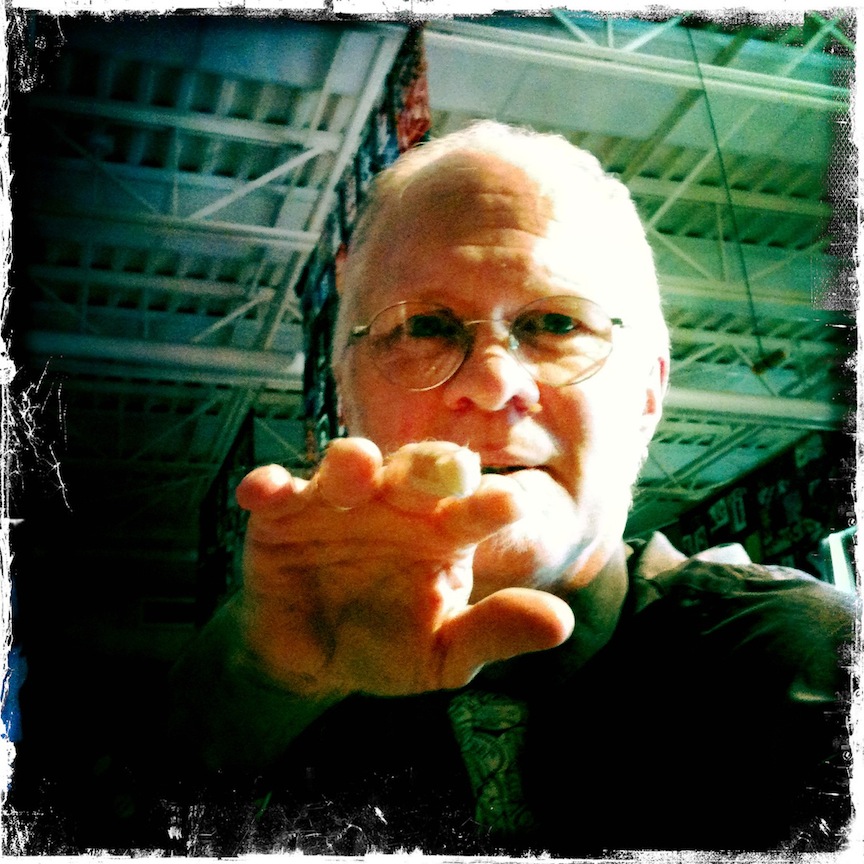
Charlie Johnson started teaching at Mount Desert Island High School in 2004. He started his career as the first visual art teacher at the Jay School Department in 1973. He is the National Honor Society advisor for 20 students. His courses include Photography, Video, and New Media Arts. Charlie is a teacher leader with the first phase of the Maine Arts Assessment Initiative.

What do you like best about being a art educator?

I discovered my love for art at an early age, while my love for teaching did not develop until I was in college, so there is one interest overlapping another, and they make each day different and exciting for me. Teaching something I love and that I can “do” as well as teach makes my connections with students real and meaningful, not only to them, but to me as well. The “best” part is that I can learn from them and their solutions to problems in art every day, and it’s something I love to experience.

Tell me what you think are three keys to ANY successful arts ed program?

  1. Teachers with passion for teaching and the ability to transfer that passion to students.
  2. Teachers with a strong knowledge of pedagogy and the content they teach and who can share this effectively with students.
  3. Teachers who constantly make the value of ARTS education obvious to everyone in their school from students all the way down to administrators.

Express yourself in many forms and let others see you do that!

What specific way(s) do your assessment practices tie into the success of your program?

Students who are given the opportunities to be successful at many levels through understanding completely how they will be assessed and have had input into that assessment are usually on one hand very satisfied with their work and the processes involved in achievement or, on the other hand, understand why their work was not proficient and understand what they need to do to alter their processes to accomplish proficient work.

The vast majority of my students enjoy the task of making their work mean something and seeing purpose and content applied in their work as expression of their own ideals and thoughts and feelings. It is through the process of discussion, critique and revision that draws them into their work and lends to it an enhanced sense of accomplishment and satisfaction.

The “Learning Results” are an excellent structure to have students work within, and as soon as they begin to understand what the structures of the ARTS discipline are, their work begins to improve.

What have been the benefits in becoming involved in the arts assessment initiative?

For me personally, it has been similar to earning my Master’s Degree; as intense, but a shorter period of time. Being involved in the ARTS assessment initiative has really helped me to open my mind around education in general and to understand the need for a shift in the way education works. I think ARTS teachers have had it all together as a package for a while, but need to be more reflective and accountable for the important work they do with young people. It has caused me to “read” more concerning the specifics of my profession in general and myself as a teaching artist through books, professional papers, literature and articles/online content concerning the “how to” of methods and software around what I teach. I have “grown” connections to a small, but dedicated group of teachers within my geographical area of Maine, and feel a closer collaboration to teachers from other schools.

What are you most proud of in your career?

Making a difference to my students and what they accomplish in their lives, by far.

What gets in the way of being a better teacher or doing a better job as a teacher?

Nothing, any other answer to that question would simply be an excuse for not being the best you can be. If we are to expect the best from our students, then we need to be able to overcome all kinds of obstacles in our classrooms, from money to obnoxious administrators.

Apple or PC?

There’s a difference? Really, I own an iPhone, iPad and several PCs. The important understanding is around software, not platform. Apple seems to still be a bit more user friendly overall, but more controlling as well.

What have you accomplished through hard work and determination that might otherwise appear at first glance to be due to “luck” or circumstances?

I am fortunate to be working in one of the best ARTS supported schools in Maine, but the pathway to this school required a lot of dedication, hard work, love of craft, and yes, luck!

Look into your crystal ball: what advice would you give to teachers?

Stand up for yourselves, promote our profession as a profession by acting professionally and setting good examples for students at all times.

Do things for your students/school without expecting extra pay, it is much louder than words and will more often be appreciated rather than expected. This also ties into the concept of being professional and of teaching being respected as a profession. Encourage or help colleagues to step up every chance you get.

Technology is about to change the face of education, get on board or get ready for a long cold swim. Don’t succumb to technology, but embrace it, always leaving time for a walk in the woods or along a beach!

If you were given a $500,000.00 to do with whatever you please, what would it be?

I would fund a subsidized living complex for people with mental illness, making it as comfortable and spacious as the money would allow.

Charlie invites you to visit his blog at http://chartliej.blogspot.com.

Thanks Charlie for telling your story!