Archive for the ‘Professional Development’ Category

h1

Burnt Island Summer Workshops

March 16, 2019

Summer workshops

Two professional development opportunities are being offered this summer on Burnt Island. Learning on an island in Maine – waahooooooo!

  • Burnt Island Workshops including Innovative Learning through Nature, Inquiry, and Mindfulness – June 25-27
  • Lighthouses across the Curriculum – July 16-18, and Visual Literacy through Gouache – July 30-August 1. LEARN MORE!


h1

New England Institute for Teacher Education

March 9, 2019

Professional Development Opportunities

Sign Up Now for Spring/Summer 2019 Courses!
Get a jumpstart on your recertification requirements, work with a team on an online course, get a new endorsement or just get some great refreshers on best teaching practices, pre-K – 12. All courses are approved by the Maine Department of Education for 4.5 CEUs.
Want to learn new Technology skills with Barb, about Maine Writers with Stephen, or how to work with Children of Poverty with Tracie? Our instructors are fabulous and our new website makes finding a course and registering easy. Online Spring courses begin April 8th.
Now is the time to get your paperwork in to your central office for approval, and to sign up for courses!
For more information, visit our website.
h1

MALI Winter Retreat

March 6, 2019

Amazing day

The Maine Arts Leadership Initiative (MALI) held the annual Winter Retreat on Saturday at Waterville Senior High School. Thank you to music educator and teacher leader Sue Barre who provided and arranged for a space for us to meet, exchange and share ideas, and most importantly to learn from each other. This is the foundation of the MALI community.

2019 MALI Winter Retreat

I was curious about words that are related to community. On a recent google search I found the following: amity, benevolence, cordiality, friendliness, friendship, goodwill, kindliness. civility, comity, concord, harmony, rapport, charity, generosity. affinity, compassion, empathy, sympathy. chumminess, familiarity, inseparability, intimacy, nearness. affection, devotion, fondness, love. In Japanese the word is コミュニティ pronounced Komyuniti. In Greek the word is κοινότητα and pronounced koinótita. The Greek community is directly related to the culture and emerged and rose to great heights in 525 BC to 350 BC. The traditions that exist today are built on the original ideas.

When MALI educators come together the opportunity is about connecting with people, their idea, and all of those words in the previous paragraph that I found online. In addition, new learning is offered and depending on individual experiences educators enter the conversation from their own place. Everyone is a learner no matter how much experience they have with teaching, learning and/or living. MALI teacher leaders and teaching artist leaders range in teaching experience from 2 years to 49 years.

On Saturday we revisited the work that teacher leaders and teaching artist leaders have underway in this phase (8) of MALI. During this session we looked at the MALI “This We Believe” statements that are each defined. The titles include Arts Integration, Advocacy, Assessment Literacy, Creativity, Effective Educators: Teaching and Learning, Student-Centered Learning, Teacher Leadership and Social Responsibility. The revised definitions will be posted soon for each topic. I’m sure you’ll all agree that these are critical topics to the success of teaching and learning in arts education.

We were fortunate to have Brittany Ray, Director of TREE (Transforming Rural Experience in Education) speak with us about ACEs (Adverse Childhood Experiences) and how trauma interrupts the brains capacity to learn. Heavy stuff but so worthwhile to learn more. I will write more about this in later blog posts.

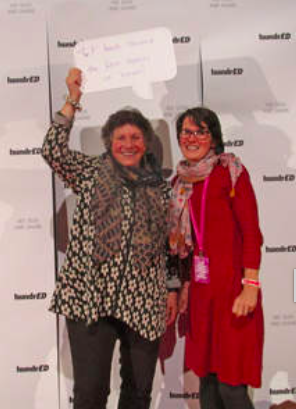
We had a chance to paint using Process Painting as a jumping off place. Listening to music and painting provided an opportunity to think about where we were as educators. And, the day finished out with information on HundrED and the resources and opportunities the organization provides. It’s difficult not to get excited about an organization that believes that the purpose of education is to help every child flourish, no matter what happens in life. HundrED is looking for Youth Ambassadors so if you have students who are interested in leading check out their Youth Ambassadors webpage.

The last of the Phase 8 MALI Teacher Leaders and Teaching Artist Leaders stories will be posted this next Tuesday on the blog. I hope you’ve had a chance to read about their journey’s.

h1

Maine EdTA

March 3, 2019

Theatre Professional Development Day

On April 24 at UMaine, Orono, the Department of Theatre will host the third annual professional development conference. The cost is $25 per person, which includes lunch in the UMaine Cafeteria.
 
This year’s workshops will focus on technical issues for high school directors and teachers, with a high-level group of professionals presenting workshops.
  • “Costuming for High Schools”, presented by Shirlee Idzakovich, a professional costumer working in NYC.
  • “From Script to Opening Curtain”, set design for high schools, presented by Brave Williams, Husson University
  • “Lighting Design for High Schools”, presented by Quentin Stockwell, Port Lighting, Portsmouth NH
Information is available on the Maine EdTA website.  
Registration is now open.
 
Please contact Rick Osann, rosann@bonnyeagle.org, for more information.
h1

Once Upon a Time

February 17, 2019

Folk Art Studio course for kids

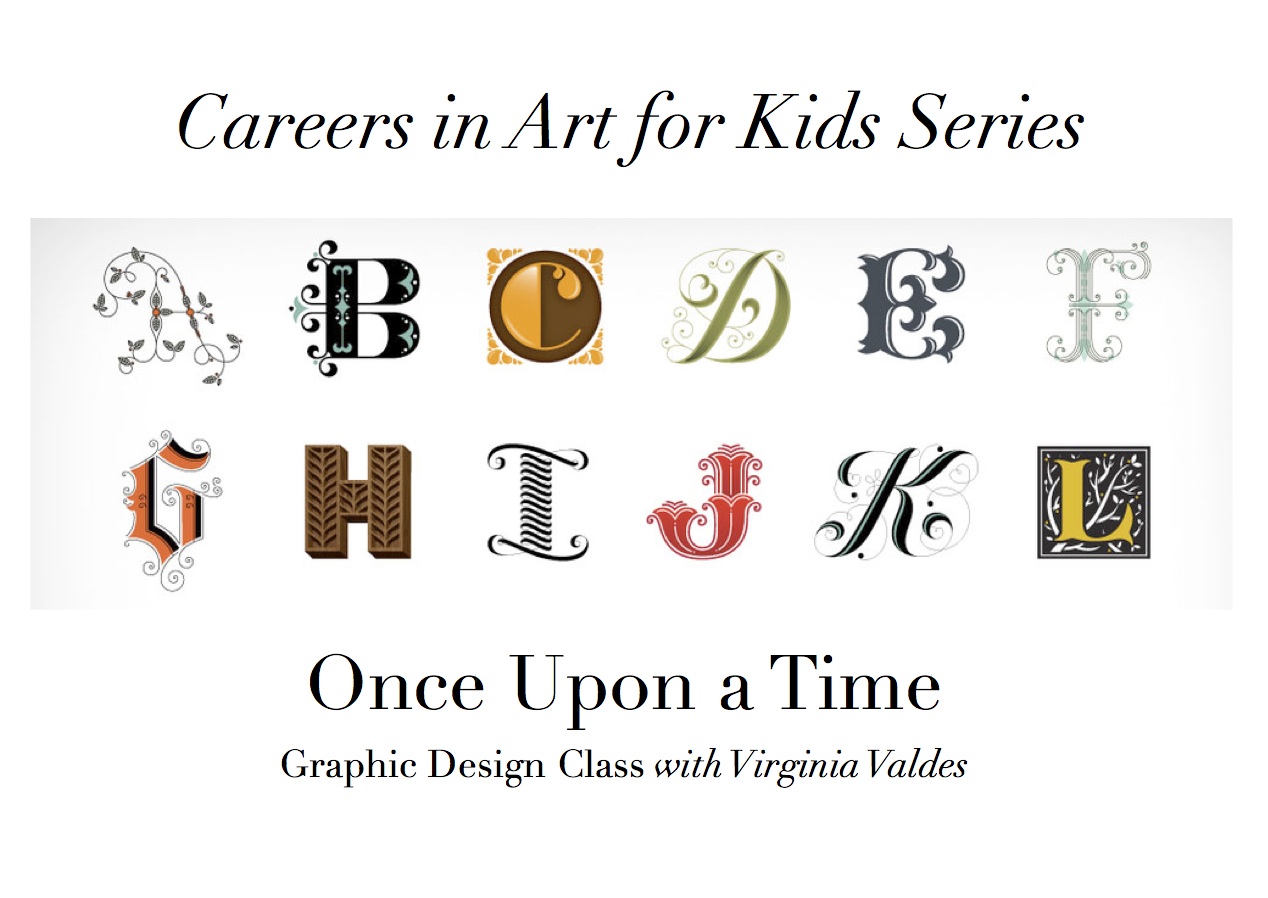
Once upon a time… the beginning of a fairy tale starts with a big beautiful initial letter. Today we will work with the first letter of your name to create a beautiful ornamental letter/monogram in celebration of hand made typography. We will create our own decorative initial cap font using colored pencils and markers. We’ll start out with a brief history of letters, look at a few examples from past to present and then take off on our own journey exploring myriad ways to embellish, flourish and design our own abstract or floral initial letter. If you have a favorite pen or marker you use, bring it with you.

Design work by Jessica Hische

Folk Art Studio at Fiber & Vine, 402 Main Street, Norway is offering Once Upon a Time class on March 16. The course is being taught by Virginia Valdes who is the Graphic Design and Digital Imaging instructor at the Oxford Hills Comprehensive High School in South Paris.

March 16 – Session 1 | Ages 6-8 | 10am-12pm Session 2 | Ages 9-12 | 1pm-3pm Tuition $35 | Scholarships available

Register before March 9 at Fiberandvine.com.

h1

2019 MALI Mega Conference

January 30, 2019

Friday, March 15

The Maine Arts Leadership Initiative (MALI) will provide a Mega-regional conference at Oxford Hills Comprehensive High School in South Paris, Maine on Friday, March 15, 8:30 a.m. – 3:15 p.m. All educators, PK-higher education are invited to participate in this professional development opportunity in arts education. Workshop facilitators are Maine Arts Leadership Initiative (MALI) teacher leaders and teaching artist leaders from all eight phases of MALI. These educators are providing dynamic work that they’ve been engaged with themselves, some for many years.

Below are the descriptions for the workshops being offered. You will have the opportunity to register for three of these workshops.

  Register for the 2018 Mega-Regional Workshop

Date and Location

Friday, March 15, 2019, Oxford Hills Comprehensive High School, South Paris
Schedule

  • 8:30 a.m. Registration begins
  • 9:00 a.m. Opening
  • 9:15 a.m. – 10:30 a.m. Breakout Session I
  • 10:30 a.m. – 10:40 a.m. Break
  • 10:45 a.m. – 12:00 p.m. Breakout Session II
  • 12:00 p.m. – 12:45 p.m. Lunch, participants on their own
  • 12:45 p.m. – 1:45 p.m. Artist Showcase
  • 1:50 p.m. – 3:00 p.m. Breakout Session III
  • 3:00 p.m. – 3:15 p.m. Closing

Contact hours

5.5 contact hours will be provided to those participating in the full day of the MALI Mega-regional conference at Oxford Hills Comprehensive High School.

REGISTRATION

What does “arts accessibility” mean? Presented by Shawna Barnes

PreK-12 All content

Description

Shawna will share the five key definitions of arts accessibility and what they may look like in the classroom/studio. Participants will learn how to break through these barriers to access, with a few creative solutions.

Sandbox Composing Presented by Joe Cough

Grade 6-Adult Music

Joe will demonstrate how easy it can be to compose music. With participation from the group, we will create a new piece of music with numbers (and talk about other ways to write music too). Risk taking and mistakes will be the driving force of this workshop.

Arts and Community Outreach: “The Stories We’ve Been Told – Preserving the Histories of our Elders” Presented by Kris Bisson

Middle School Chorus, applicable to multi-disciplines and all levels

Reaching beyond the walls of the classroom to explore learning provides many valuable opportunities for both the students and those they collaborate with. Kris will share her students’ current project, monthly visits to a retirement home where the students interview residents to capture their stories, games, pastimes, and events that shaped their lives. Students take these stories and create a multi-movement choral composition to be performed in our Spring 2019 concert.

Students will experience cross-curricular collaboration that moves the arts to the heart of curriculum. Interconnected learning provides students of all learning styles an opportunity to demonstrate and share understanding and knowledge learning using the creative process.

We will compose in the workshop and share ideas that can be used directly in your area of study.

The Possibilities of Full Choice Presented by Shalimar Poulin Chassé

Grade 6-12 Visual Art

A story of a developing full choice approach to art making, hard copy and link-based resources (including student project proposal form, course expectation student guide, self direction management aid, rubrics, do’s and don’t’s, examples of student works, and access to slide presentation) to assist the wild-spirited, brave, and trusting (or crazy) to dive in feet first or the perhaps wiser ginny-pig with an appetite for a savory taste. All wild-spirits and ginny-pigs welcome!

Music & Math Presented by Lindsay Pinchbeck & Tom Luther

Grades 1-12 Music

Lindsay and Tom will share their experiences teaching music and math as a single domain. Using simple, open ended tasks, they will show how to help students make connections between these two normally specialized subjects, and how other “rabbit holes” can be discovered along the way.

Adding Choice to Art History Presented by Cindi Kugell

Middle/High School Visual Art (ele welcome)

Choice-Based Art classrooms are working studios where students learn through authentic art making. Control shifts from teacher to learner as students explore ideas and interests in art media of their choice. This concept supports multiple modes of learning to meet the diverse needs of our students. We’ll chat about how to add choice to a studio art history course (without offering centers) and through the hands-on creation of artist trading cards.

Zines Presented by Samantha Armstrong

Elementary Visual Art

Informational Zines or mini magazines are a great way to bring writing into the art room. In this workshop we will look at combining informational writing with drawing techniques and tools to create unique zines. We will look at student examples, strategies and tools for teaching an arts/literacy integrated unit and have time to create a zine. Once complete zines are easy to photocopy and are always fun to share with classmates and the school community.

Theater as a Life Skill Presented by Nicole Cardano

PreK-12 All content

Play lets us shake off anything unwanted and connect with those that we are with.  Foundational practices of improvisational theater: Listening, Eye Contact, Respect, Support, YesAnd as well as Embracing Mistakes will be discussed and exercised.  Sharing observations and experiences as a student, teacher and general human.

Students Reflective Response & the Digital Process-Folio Presented by Melanie Crowe

Grade 6-High School Visual Art – applicable to all beyond art room

The use of reflective practice allows students the opportunities to gauge their understanding along the process of creating. As students regularly document their experiences throughout process of art making it provides opportunities for discussion and conversation between student & self, student & peers, and student & teacher. These conversations provide checkpoints for reflective practice and growth.

Pre-Assessment: Misconceptions & Building Stronger Student Achievement Presented by Iva Damon

PreK-12 All content

Let’s dive into the misconceptions surrounding pre-assessment and look at easy ways to implement strategies into the classroom that work for both teacher and student.

Practical Self-Care for Teachers – Beyond Bubble Baths and Barre Class Presented by Elise Row

PreK-12 All content

This workshop was born out of necessity. Elise will share her personal experience of confronting the topic of self-care as an elementary visual arts teacher. This ever evolving workshop will provide teachers, artists, and busy people in general tools, resources, insight, and reminders to support their growth and practice of self-care.

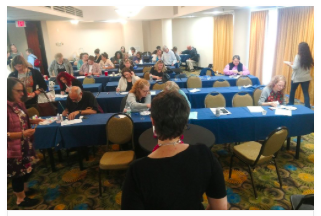
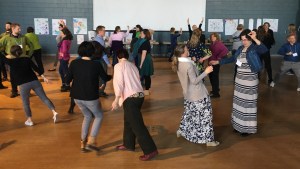
Photos from the 2018 MALI Mega at Oxford Hills Comprehensive High School.

h1

In Today’s News

January 19, 2019

Art in Education Triangle – Maine, Malawi, Helsinki

Article written by Dagney C. Ernest, for Village Soup, January 16, 2019. “We teach because the future belongs to learners.” CLICK HERE to read Dagney’s article about Lindsay Pinchbeck and Argy Nestor’s trip to Helsinki and the connection between Maine, Malawi, and Helsinki.

h1

Arts Accessibility

January 14, 2019

What does it mean?

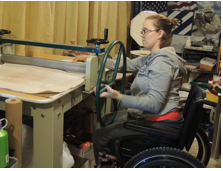
This post is reprinted with permission from Shawna Barnes’ blog located at THIS LINKShawna is a Teaching Artist Leader with the Maine Arts Leadership Initiative (MALi). She is a ceramic sculptor and mixed media artist who loves sharing her passion with others. Shawna is a strong advocate for the arts being accessible to all. She is an Army veteran who served in Operation Iraqi Freedom (OIF 7) from 2009-2010. Shawna lives with several disabilities including myasthenia gravis, cervical dystonia, seizures, hypermobility joint syndrome, peripheral neuropathy, and PTSD. 

Shawna created a survey on arts accessibility which you are invited to complete; access it at THIS LINK

One of the things I talk about a lot is the phrase “arts accessibility” and the fact that I am an advocate for it. In discussions with colleagues and friends, I realized that it isn’t really a clear term. This point was driven home even further when I included the question “What does arts accessibility mean to you” in a survey I shared asking for feedback regarding educators’ struggles with arts accessibility in the classroom/studio. So I figured I’d take some time and provide an overview on all the different possible definitions of arts accessibility and what it means to me.

Arts Accessibility – Definition #1

For me, it started when I was exploring different opportunities for artist residencies, workshops,  and seminars. As someone with mobility impairments, I always had to ask if the facility was accessible. No…….handicap accessible, not accessible from the highway. One of the things I discovered was that most of the facilities are not friendly or easy to navigate for those of us who have any type of mobility impairment/disability. This was a discovery made long before I became a teaching artist leader with the Maine Arts Leadership Initiative; it was then, however, that arts accessibility became my pet project. I was disappointed and downright bummed out about missing out on some amazing learning opportunities because the studio spaces were on the second floor of an old barn with no elevator access… or down several flights of outside stairs down the side of a cliff…or lacking any sort of climate control (air conditioning or heat source). And those barriers were from just a few of the locations I looked at locally. The facilities themselves are spectacular and amazing; drawing high caliber artists and professionals from around the world… This is just one example of what arts accessibility could look like – the most literal definition of the phrase – physical accessibility to a facility.

My disabilities are acquired; I was not born with them.  As a result, I am acutely aware on all the amazing things I am missing out on as a result. That FOMO (fear of missing out) is real ladies and gentleman, and the sting is one that is ever present. I quietly made it my mission to let the administrators of these facilities know that I was deeply saddened to be missing out because the facilities were not accessible. Some enlightening and hopeful conversations have been had as a result of this dialogue.

Arts Accessibility – Definition #2

Another quite literal definition of the term is actually having access to the arts. This includes students having access to art classes at their school, having nearby museums or art studios to attend, local theaters and dance halls, et al. There was a big focus on STEM curriculum, and as a result the creative arts saw a lot of cuts in Prek-12 curriculum. Recently however, administrators, educators, and clinicians are acknowledging the importance art has in youth development. This re-discovery has transitioned STEM curriculum to STEAM with the A standing for the arts. There are still many students who do not have the opportunity to take an art class – either one offered as part of their daily curriculum OR after school activities. This access barrier extends well beyond academic and includes all people who have interest in learning more about a topic in art.

Arts Accessibility – Definition #3

A third definition of “arts accessibility” is one of economic hardship. Learners of all ages who live in impoverished communities lack the financial means to be able to explore the creative arts. In areas where art and band are still offered as part of the middle/high school curriculum it’s less of an issue; at least they have the exposure to a creative outlet. However for others where these classes are not available, lacking the financial ability to enroll in after school classes at studios or arts organizations is a barrier. Economic barriers prevent access… which leads me to my next definition…

Arts Accessibility – Definition #4

Accessibility to the arts could have nothing to do with infrastructure and everything to do with the abilities of the staff. For adults and children with a wide range of developmental disabilities, the physical access definition is less important than having access to teachers who are able to meet them where they’re at. What I mean by that, is that for many in this demographic, teaching/leading them through an art class takes considerable patience and an understanding of how their brain functions. When families find artists/educators who ARE qualified and adept at working with these populations, the financial barrier is then factored in. Finding and hiring experienced artists can be expensive.  Investing in custom equipment and tools to allow the student the highest level of engagement in activities can be cost prohibitive.

Arts Accessibility – Definition #5

My fifth and final definition for arts accessibility, is one of the psychological variety. It has everything to do with the possible/potential student. The commonly accepted definition/understanding of creativity is that it’s something artists have. If the student feels and truly believes that they just don’t have the skill to create anything worthwhile and thus are defeated before they even try, that is a barrier to access. If it’s one thing I LOVE doing…it’s breaking down this particular barrier to arts access. It is a barrier that anyone can break down and help the student over if the teacher has the right tools in their toolbox.

And there ya have it. Those are MY five definitions of what  arts accessibility barriers could look like. There’s likely more that I haven’t thought of or come across yet. In future posts, I will break down each definition and explain how I personally work towards overcoming the barrier to access. It’s just as much about breaking down the stigma that only artists can appreciate art and reap benefits from a creative outlet as it is about providing opportunities for people to explore activities they’d never considered.

What does “arts accessibility” mean to you? How do you overcome the barriers?

You can follow Shawna at the following: 

www.shawnabarnes.com
www.facebook.com/shawn.n.m.barnes
www.instagram.com/shawna.n.m.barnes

h1

Fulbright Teacher Opportunity

January 5, 2019

Teaching Semester Program – Deadline: January 15, 2019

The Fulbright Distinguished Awards in Teaching Semester Program for U.S. Teachers (Fulbright DA) provides an opportunity for K–12 educators from the United States to take part in a three- to six-month professional development experience abroad. Participants will pursue individual inquiry projects, take courses at a host university, and collaborate with colleagues on best educational practices.

The Fulbright DA Program is sponsored by the U.S. Department of State with funding provided by the U.S. Government and administered by IREX. It is governed by policies established by the Fulbright Foreign Scholarship Board.

FOR MORE INFORMATION

Eligibility

  • Full-time K–12 teaching position, including classroom teachers, guidance counselors, curriculum coordinators, special education coordinators, media specialists, librarians, and gifted and talented coordinators and others who spend at least half of their time interacting with students
  • Five years of full-time teaching experience in the U.S., a U.S. territory or school associated with DODEA is preferred
  • Be a U.S. citizen, and reside in a U.S. state, territory or campus associated with DODEA
  • Master’s degree or enrolled in a master’s degree program
  • Demonstrated record of professional development activities and leadership

APPLY NOW

h1

Teacher and Educator Open House

January 4, 2019

Digging into Winslow Homer

You’re invited: Wednesday, January 16, 2019, 3:30 p.m. to 6 p.m., Portland Museum of Art, open house for educators!

Winslow Homer (United States, 1836–1910), Weatherbeaten, 1894, oil on canvas, 28 1/2 x 48 3/8 inches. Bequest of Charles Shipman Payson, 1988.55.1

Come explore Winslow Homer and ways to dynamically bring this iconic Maine artist’s work into your classroom! Discover ways to infuse lessons with Maine’s rich artistic history through the lens of Winslow Homer’s artwork, and through explorations of contemporary artists’ depictions of the Maine landscape. Featuring a talk with Frank Goodyear, Winslow Homer Scholar and Bowdoin College Museum of Art Co-Director, and in-gallery activities facilitated by museum educators and docents.

Click here for more information

Complimentary refreshments and classroom resources will be shared with attendees. Limited Free Parking is Available: Attendees will be able to park in the Holiday Inn By the Bay lot for this event.
Just mention you are a teacher attending an event at the PMA.

Click here to RSVP electronically today  or RSVP call Emily Junker at (207) 775-6148 ext. 3228.