Archive for the ‘Research’ Category

h1

Learning, Always!

March 24, 2024

Stretching and thinking back

Maine Arts Assessment Institute, summer 2011, phase 2, Maine College of Art + Design

Over the past few months I’ve been working on a talk that I am giving called The ARTS at the Center at the New England League of Middle Schools conference in Springfield, MA. I have 60 minutes to speak about arts education to a room full of about 400 middle school educators. Perhaps half will be arts educators. To prepare I’ve looked at current and past research, I’ve scanned files, I’ve read papers and documents, I’ve found photos, and I’ve spoken to several educators. Every time something seems important to be sure and include I’ve made a note. The content kept growing and when i started to practice I realized that I had about two and a half times more content then I need. I’ve been cutting during the last week. It is filled with stories and I disliked cutting stories but I had no choice. We all have stories, especially educators.

Maine Arts Assessment Initiative, summer 2012, phase 2, Maine College of Art + Design

As I pulled out of the driveway to leave for the conference today my husband assured me that it would go well. As I headed down the road I thought about how important it is, especially as teachers, to challenge ourselves, step out of our comfort zones and really stretch. For one thing it reminds us of how our students feel. For some students, teachers ask them to do hard stuff every day. Stretching ourselves is important and helping our students stretch is equally important. Most adults can put supports in place as we’re stretching. For kids that’s not always the case. It’s important that we are mindful of supporting our students as they grow and learn.

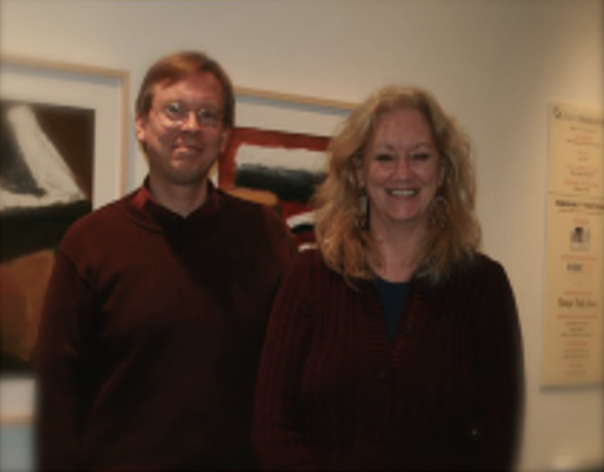
Rob Westerberg and Catherine Ring, Maine Arts Assessment Initiative, winter retreat, Zillman Art Museum

Lately I’ve thought about many of the professional development and learning opportunities I’ve been part of planning and attending. The photos that I’ve looked through have brought back many memorable moments. I especially love the photos I’ve included in this blog post and the sweet memories that accompany them.

Mpamila Village, Malawi, 2016, 10 day Arts Integration workshop
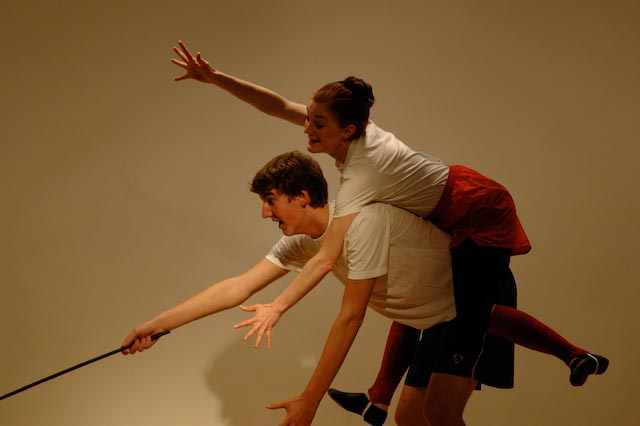
Karen Montanaro, Nick Kleiner perform The Soccer mime, Farnsworth Art Museum, statewide arts education conference, 2008

h1

HundrED

February 6, 2024

Amazing ideas reaching hundreds of thousands

If you are one of the blog followers you’ve read about HundrED in the past. HundrED is an organization based in Helsinki, Finland who specializes in K-12 education innovation. Each year they put a call out for innovative ideas to be submitted for review. Some are selected and become part of the HundrED collection that serve as resources for educators around the world.

DEDICATION

“We at HundrED are dedicated to helping every child flourish by giving them access to quality education. We believe that with education innovations we can transform school systems and equip students with the skills to thrive as global citizens.”

MISSION

“The world is full of hardworking educators who are driving innovative, impactful, and scalable approaches in education. Our mission at HundrED is to give them the recognition and visibility they deserve.”

IMPACT

“At Hundred we believe that through identifying, amplifying, and facilitating the implementation of education innovations we can transform education systems and equip students with the skills to thrive as global citizens.”

In fact Hundred has identified 694 Innovations which have impacted 4.77 billion students. To land on the 694 innovations a team of reviewers have read through 24732 innovations. I’ve been fortunate to be part of the review process as a member of Hundred’s Academy. Each July for the past four years I’ve been invited to review the new innovation applications. It is an amazing opportunity. Below are just three that I find interesting.

  • Global Schools Program – The mission of Global Schools is to create a world where every primary and secondary student is equipped with the knowledge, skills, and values to tackle the problems of the 21st century.
  • Play Africa – Disrupting the idea of a “museum,” Play Africa developed a flexible museum model to bring transformative learning experiences promoting creativity, innovation and connection to a divided society
  • Story Arts – Story Arts inspire creativity, critical thinking, communication, and empathy.

The HundrED Innovators represent countries from around the world. Along with the collections of innovations they have several different research reports and resources that are easily accessible on their website. All of the resources are available to the global community at no cost. I invite you to check them out.

h1

Visit to Rangeley

October 31, 2023

Soooo amazing!

The leaves had just started to turn their brilliant colors as I followed the windy road west to Rangeley from my home in the mid-coast. It was a warmish and beautiful day. I haven’t traveled to western Maine in a few years and surprisingly during my 13 years working for the state (Maine Department of Education, 7 years and Maine Arts Commission, 6 years), I didn’t visit the Rangeley Lakes School. (I say surprisingly because during those 13 years I visited about 450 schools.)

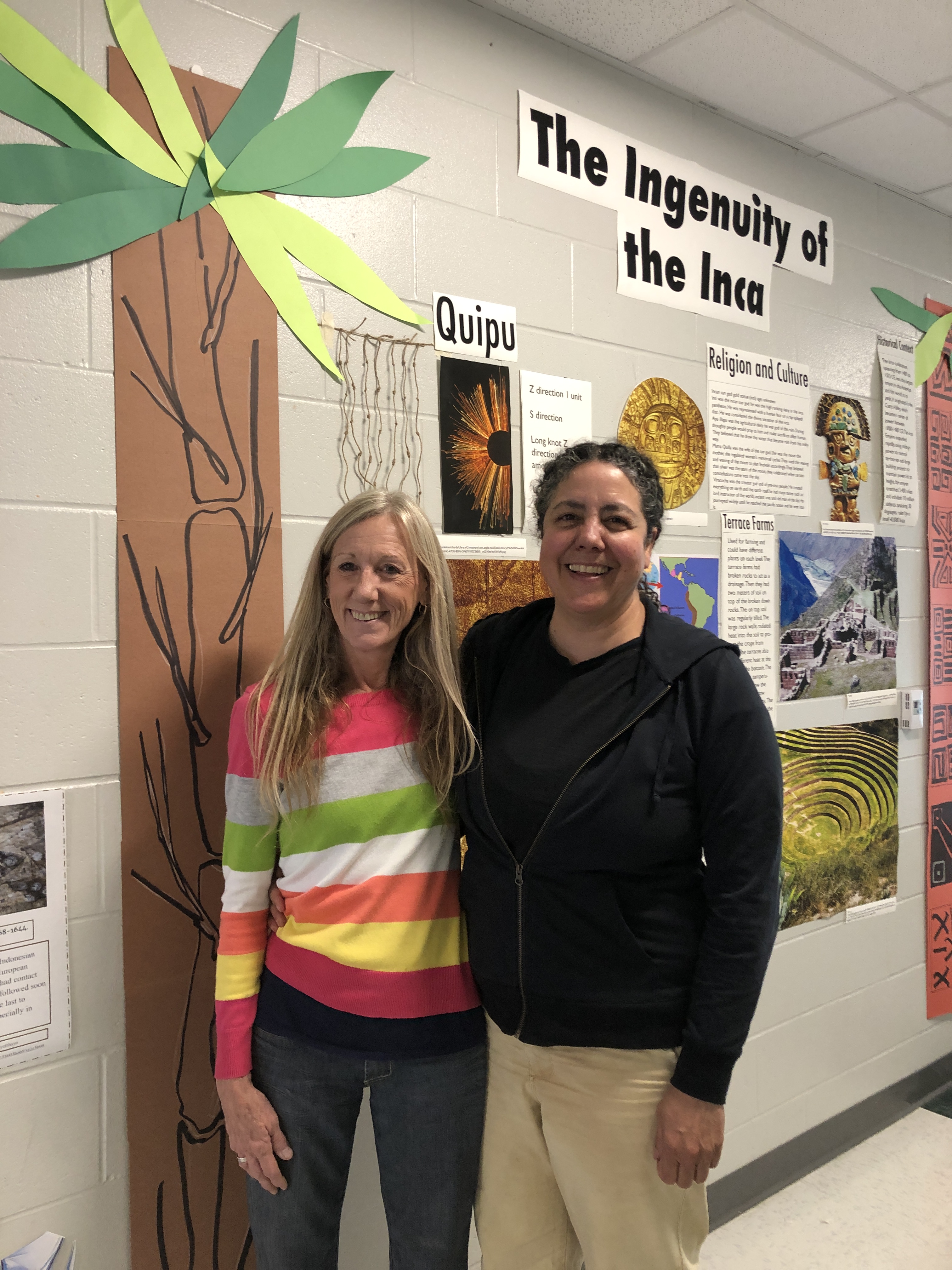
Sonja Johnson and Maryam Emami

I’ve know Rangeley art teacher Sonja Johnson and English teacher Timothy Straub for many years. More recently, I met Maryam Emami, graphic arts and history teacher and the 2023 Franklin County Teacher of the Year. I was excited to visit the Rangeley Lakes School and to learn more about Maryam and Sonja’s collaborative project. I shared my recently published book, Catching Fireflies, that I’ve co-authored with poet Jean Feldeisen. I learned about the community project that Sonja and Maryam have had underway for almost 10 years called Words of Wisdom. Students have made beautiful black and white photographs and collected stories from almost 100 community members. We discussed ideas on how they can move forward to complete this comprehensive historical and artistic project this school year. The lessons learned in creating Catching Fireflies have been many and I was happy to share them.

Along with the collaborative project I had a chance to learn about some of the recent engaging curriculum work Maryam had underway with students. You’ll find descriptions below of two units plus Words of Wisdom. It was fun for me to talk with students as they worked in the classroom space and the hall gallery they were creating with the completed work.

Graphics Arts

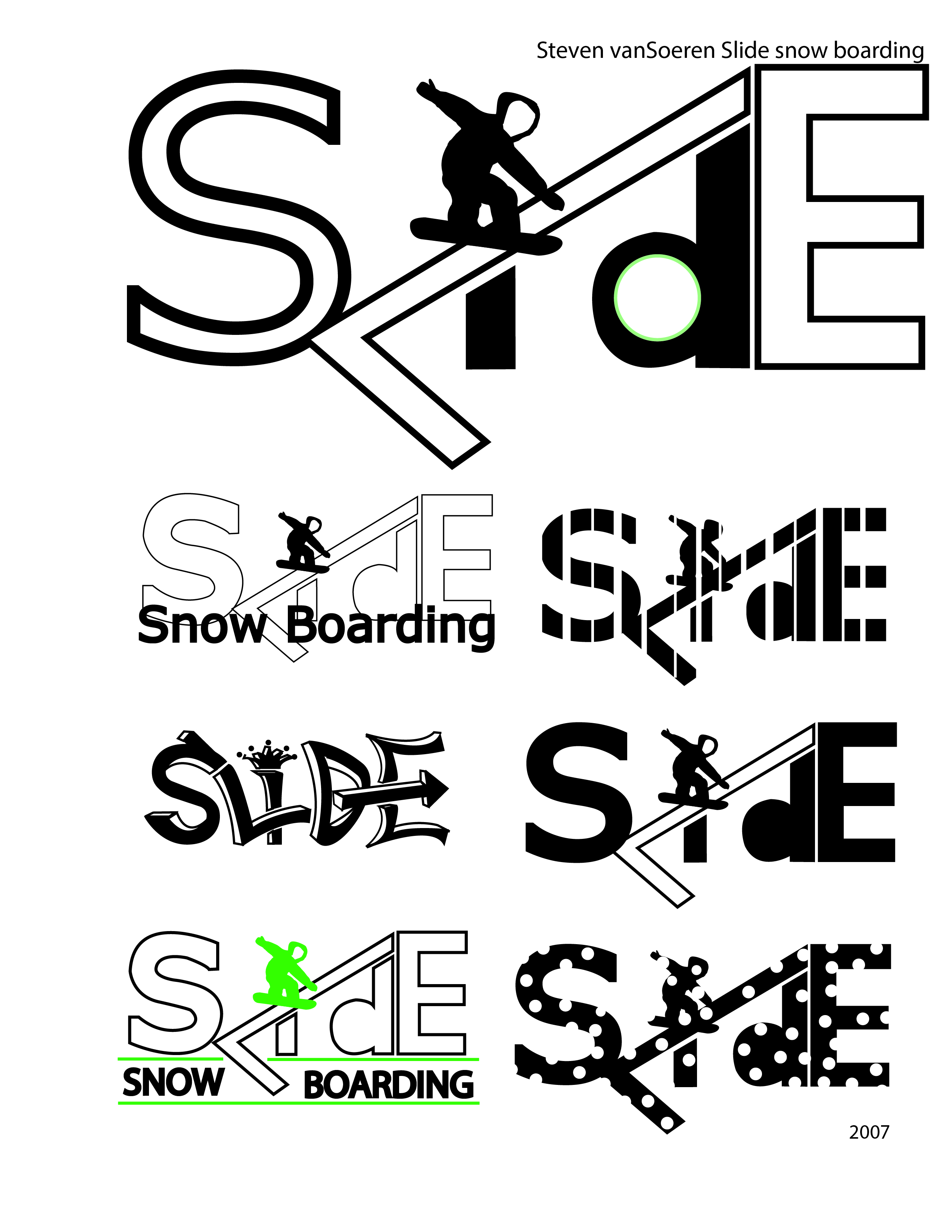
Retail Design: Part 1. The Logo-Create a fictitious company. Begin by naming it. Once the name has been selected everything else falls into place. Think of who your audience is and the company’s personality. The logo design will be most effective when the spirit of the store is clearly thought through. Keep in mind that you will be using the logo for a broad range of applications. The typographic symbol is usually, but not always, the expression of a unified design for advertising and manufacture.  It must be original and simple in form, have a very high degree of memorability, and be easily recognized and noticeable. A symbol either brings letters together to make a new form, or illustrates the product or does both. A symbol is something completely different and of higher importance than a monogram (a sign of identity usually formed by the combined initials of a name). A faulty symbol is far worse than none at all, and a bad symbol can be disastrous to a product.

Humanities II

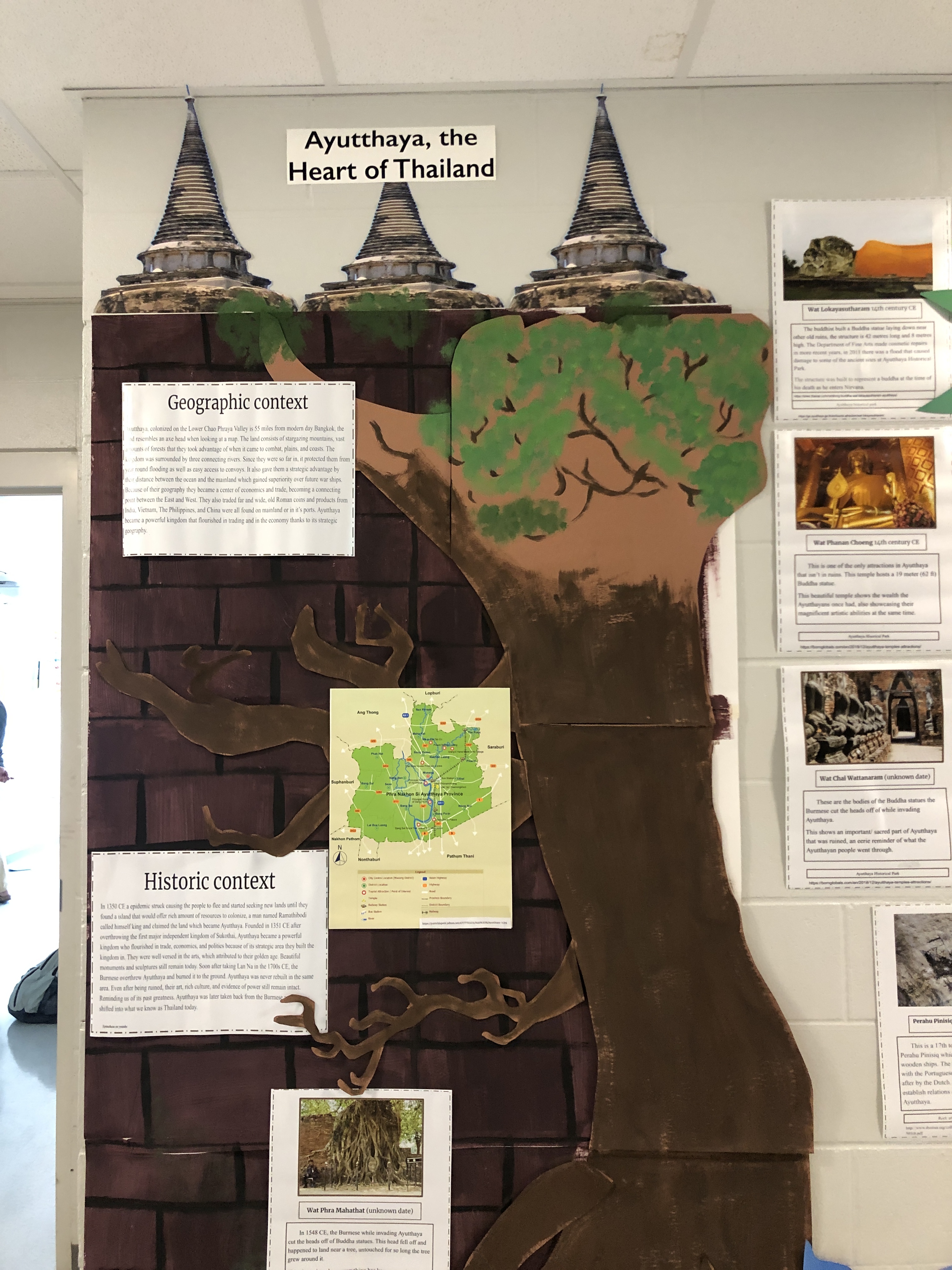
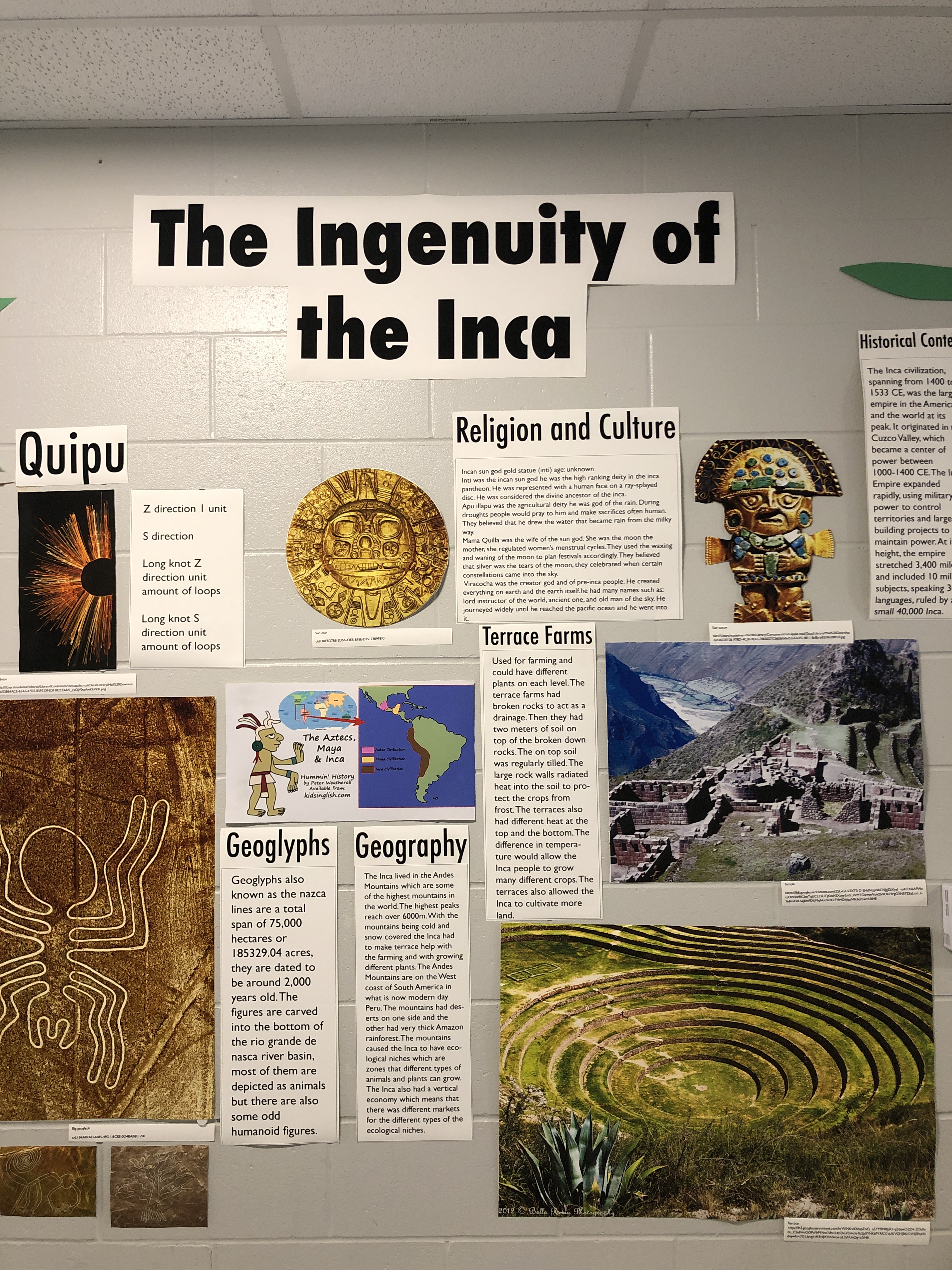
Historical Exhibit: Students curate artifacts which can include music, visual art, videos, digital media, information about important individuals from the time/culture, and cultural/historical items in their exhibit. Artifacts should be cataloged and given museum tags. And, students should be able to act as a docent to visitors to the classroom exhibit. When designing your exhibit, consider incorporating a mix of artifacts, documents, interactive displays, and multimedia presentations to engage visitors and provide a comprehensive view of your Empire’s history and cultural heritage. The Empires are the Inca, Songhai, Ayuttyha, and the Ottomans. 

Words of Wisdom

Sonja and Maryam plan to publish a book with the information below that students have collected from almost 10 years of community members. The information supports the beautiful black and white photos students took and developed. These are older community members, at this point some of them have passed away. One student is the child of a student from 10 years ago when the project first got underway.

  • what is your full name including nickname
  • how old or young are you
  • where do you live in rangeley
  • what is your connection to rangeley how did you get here how long have you lived here
  • what was/is your occupation
  • what do you enjoy doing now
  • describe your family background
  • what are some of your interests/hobbies

Last piece: please share with us any additional details about your life or anything else you would like to share with future generations.

There is nothing more wonderful than learning about teachers collaborating in an impactful way. The information is of course, authentic and somewhat raw. I spent a few minutes reading through the answers, looking into the eyes of the portraits. I couldn’t help but wish this project could be carried out in every school in the state. This is a gift to the students who participated in so many ways. They’ve had a chance to learn about the individuals (in some cases relatives), to learn the history through the lives of community members, and to reflect on who they are as young people because of the people who live in their own community. Very, very powerful work! I look forward to holding the book in my hands in the future.

I’ll let you know when the project is complete. Good luck to Maryam and Sonja and to the students as they move to complete this gift to the community!

If you’d like to purchase my book Catching Fireflies it is available at THIS LINK.

h1

AI – Save Humanity?

May 2, 2023

Beginning conversations

Recently I joined a book group. I’ve never been part of a formal ‘book group’ (secret is out). I’ve never been interested and truth be told its only recently that I’ve been reading books at a very fast rate, now that my schedule allows. I like this book group for several reasons. It’s pretty non-traditional, no one book is read and discussed like in traditional book groups. Actually, its one of the reasons I decided to join the group. We gather over lunch monthly and each participant shares books, films, podcasts and other forms of stories and ideas. The participants are retired educators who have a keen interest in education and other interesting and sometimes challenging topics. At our April gathering we each shared a poem in recognition of National Poetry Month.

At more than one gathering the conversation has included AI – Artificial Intelligence. I’m certain as we learn more that the conversation will continue. I’m reading and learning about what AI is, where it is, and the potential impact on the world. A 60 Minutes episode from a couple of weeks ago provides foundational information that I suggest you take the time to VIEW. It’s very informative and important as educators that we inform ourselves.

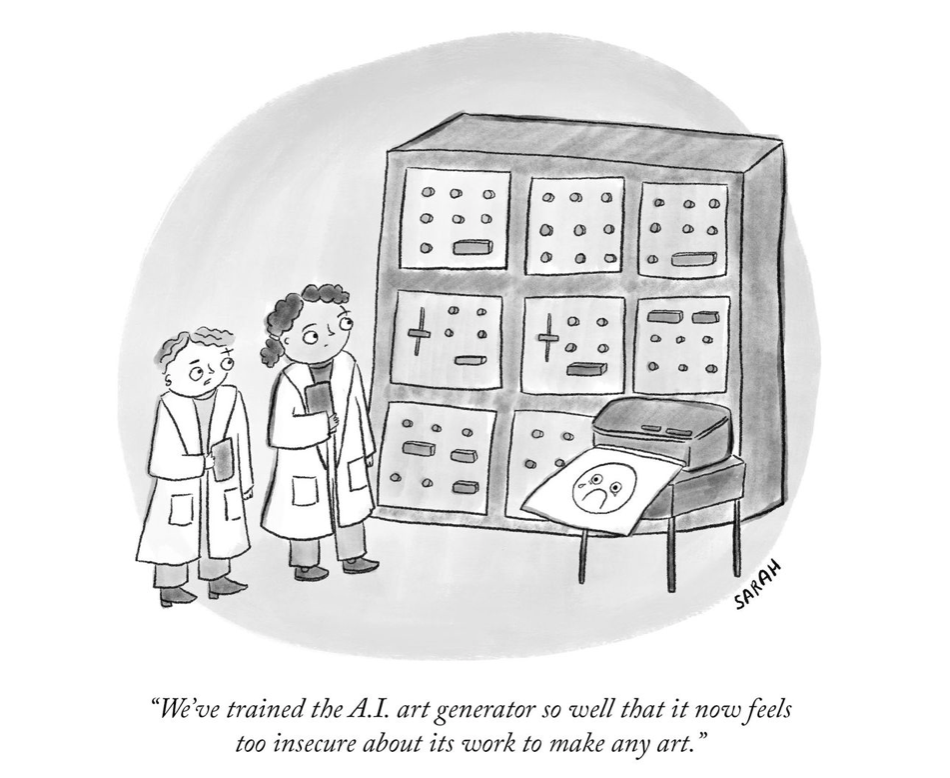
You can google AI and come up with the definition but until you begin to ‘see’ and experiment with the online tools I’m not sure it will provide you with the understanding to consider the impact on education. For example, think about this: The sum of all human knowledge is online. AI is replicating the brain. What are the implications on education? What is the impact on art making? AI can solve problems in very little time compared to the brain. Is humanity diminished because of the enormous capability of AI?

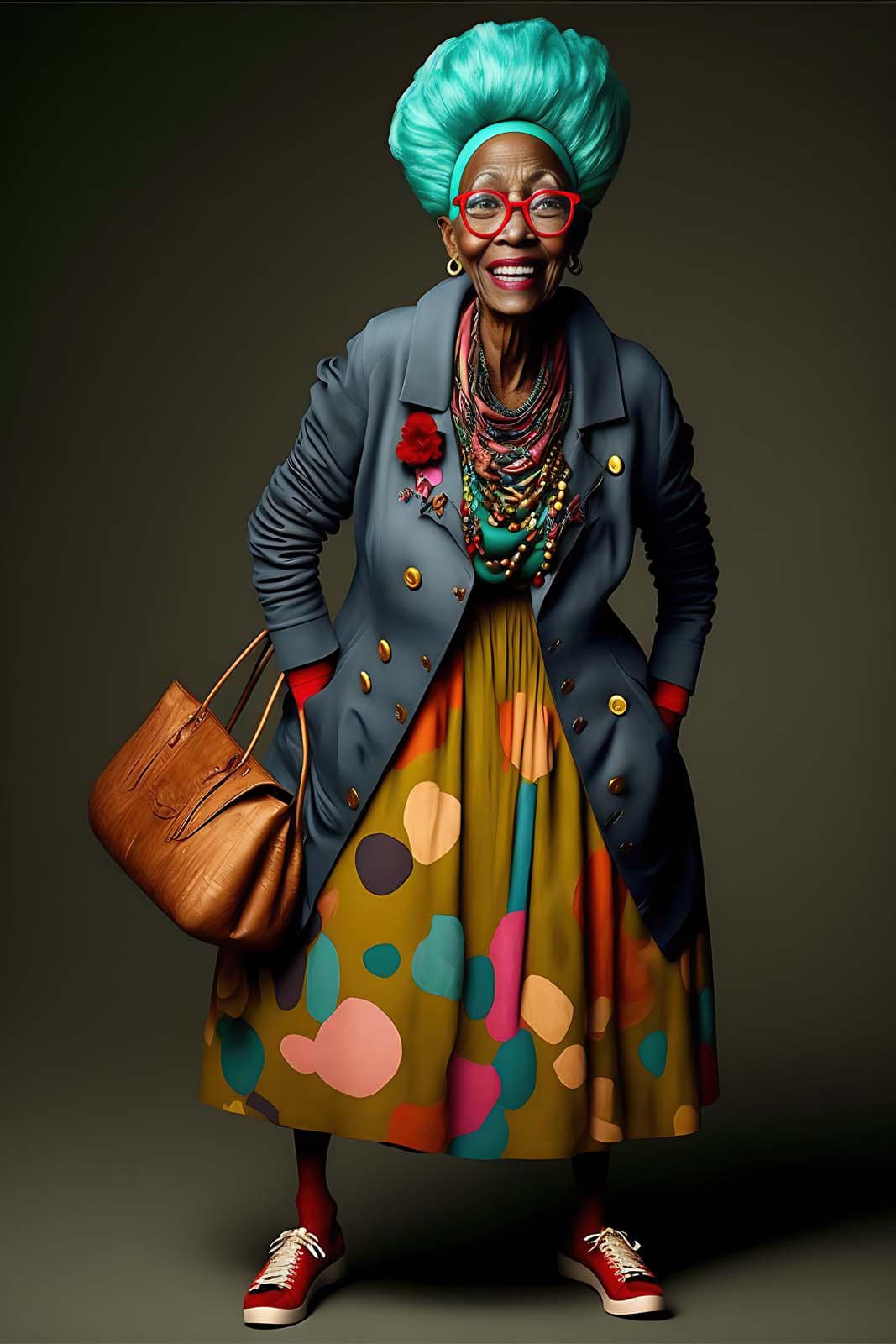
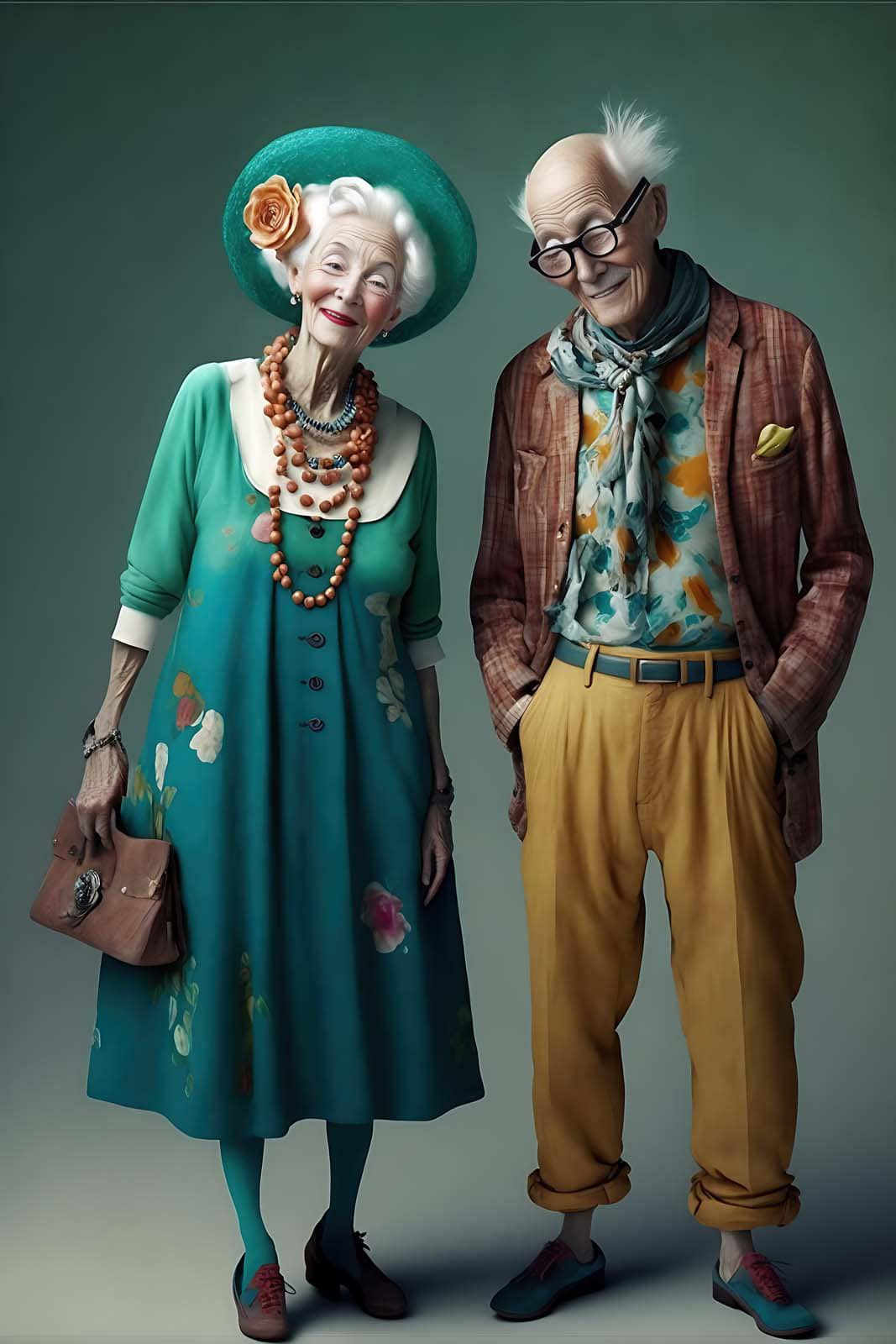
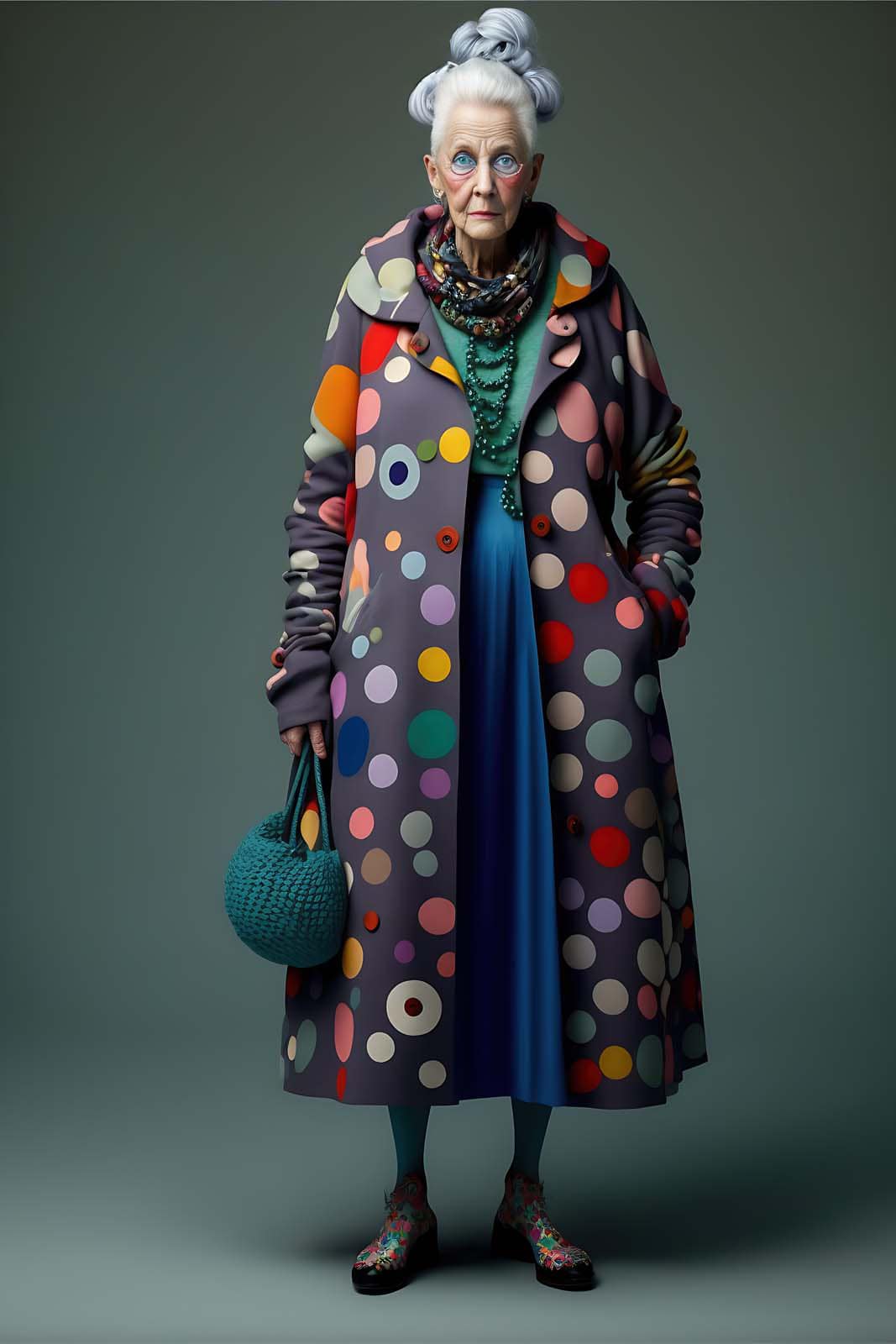
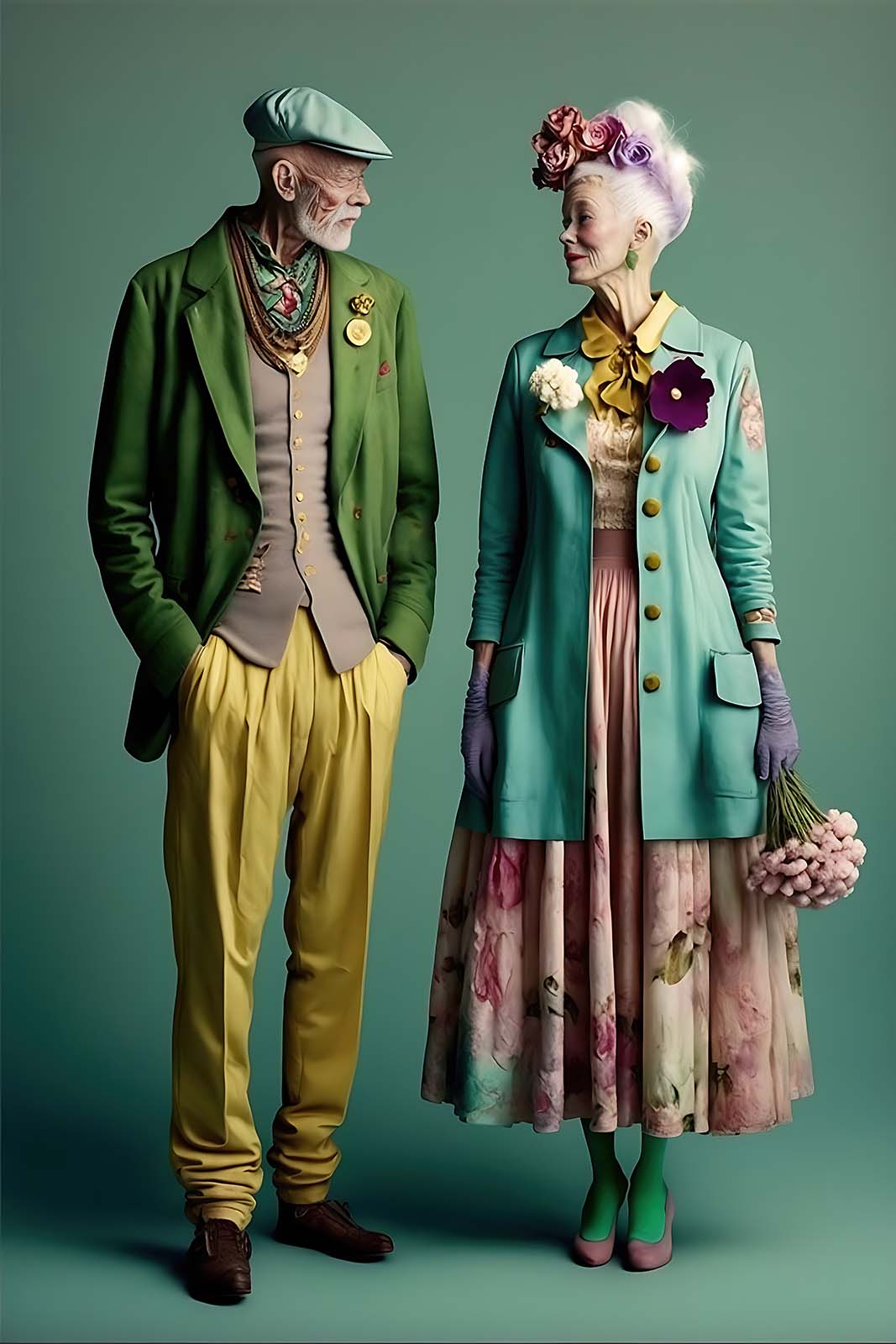
Visual artist Jonas Peterson is creating art work using AI. His collection of art called Youth is wasted on the young is an amazing collection that is his way of celebrating the ‘old’ and a comment on ageism. He used fashion to highlight the personalities of older people. Jonas is a photographer but in this collection he uses AI to create scenes, the people and what they’re wearing. In his own words:

I give specific direction using words only to a program, lenses, angles, camera choice, color theme, colors, styling, backgrounds, attitude and overall look and the AI goes to work, it sends back suggestions and more often than not it’s completely wrong, so I try other ways to describe what I’m after, change wording, move phrases around and try to get the AI to understand the mood. It’s frustrating mostly, the AI is still learning, but getting any collaborator to understand you can be difficult no matter if it’s a human or a machine. After a long stretch of trial and error I get closer to a style and look I want and after that it comes down to curation, picking the renders I believe go well together, I start making it a series. To me the process is similar to that of a film director’s, I direct the AI the same way they would talk to an actor or set designer, it’s a process, we try over and over again until we get it right. Should I get all the credit? God, no, the AI creates with my help and direction, it’s a collaboration between a real brain and an artificial one.

You might be thinking or asking, is this really art? Do I want my students to use this in their art making? Here are some of my thoughts and questions. AI exists in the world. Microsoft introduced ChatGPT, an artificial intelligence chatbot, in November 2022. Bard is a conversational generative artificial intelligence and was released in March 2023. How should educators learn about AI? Should we leave it up to students to teach us? I’m sure that this will be the next wave of education professional development offerings, in person and online.

Jonas Peterson said:

I’m not here to debate the process, I’m a professional photographer, writer and artist myself, I understand the implications, how this will affect many creative fields in the future. I’m simply using a tool available to me to tell stories, the same way I’ve always told stories – to move people. To me that is the point of this, not how I did it. Dissecting something will almost always kill it.

You can learn more about Jonas’s work by googling him and also at this LINK.

I’m sure I’ll circle back to this topic in future blog posts. If you have questions or comments that we can all learn from please don’t hesitate to comment at the bottom of this blog post. Thanks!

h1

Maine Arts Education Partners in Leadership

June 20, 2022

Teaching Artists and Educators Invited!

This is a great opportunity to become part of a dynamic network of arts educators across the state of Maine. This year-long experience begins with a 3-day Summer Institute, held at a beautiful outdoor setting sure to jumpstart your leadership journey.

August 1-3, 2022. APPLICATION deadline June 23. There is no cost.

If you’re selected your role begins with the 3-day institute at Pilgrim Lodge, August 1-3.

MAEPL would love to build community with educators and teaching artists who know or have someone interested in arts integration. If you have someone in your building or your community or have partnered with someone in the past please have them attend this summer with you!

MAEPL recently moved from the Maine Arts Commission and is now a program of the Maine Department of Education.

FOR MORE INFORMATION

QUESTIONS? Contact Iva Damon, Program Team Lead: MAEPLLeadership@gmail.com or ‪(802) 695-0198‬

August 1-3, 2022. APPLICATION deadline June 23. There is no cost.
SUMMER INSTITUTE LOCATION
Pilgrim Lodge is a camp run by the United Church of Christ of Maine on Lake Cobbosseecontee in West Gardiner, ME. This beautiful venue has cabins with electricity and plumbing, large indoor and outdoor meeting spaces, modern dining facilities, wifi in main buildings, good general cell reception, and recreation options including swimming, human-powered boating, and trails. 

PURPOSE 

The Maine Arts Education Partners in Leadership (MAEPL) is committed to developing and promoting high quality arts education for all. MAEPL operates on the premise of “teachers teaching teachers.” All of our design teams, institutes, and professional development opportunities offer/encourage collaboration.

This We Believe’ Statements outline our foundational beliefs and practices.  

COMMUNITY 

  • Teacher Leaders: Maine Visual or Performing Arts Educators with a professional teaching certificate who teach an Arts discipline in a public or private school.  
  • Teaching Artist Leaders:  Professional Teaching Artists in Maine with demonstrated experience collaborating within educational or civic environments to design and lead student-centered, values-driven residencies drawn from mastery of their artistic discipline.    

TRAININGS, COLLABORATION, & WORK  

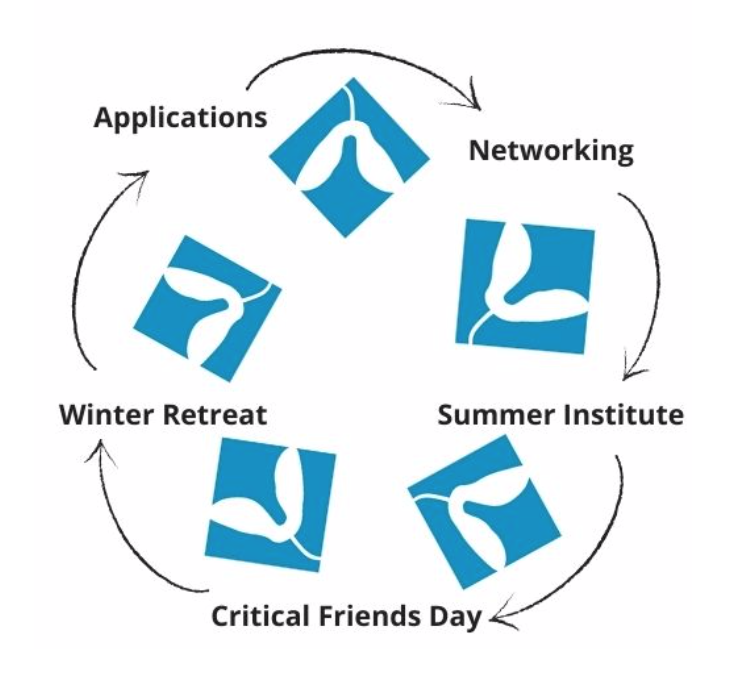
MAEPL is built on an institute model, by application. There is a Summer Institute for Teacher Leaders and Teaching Artist Leaders. Returning community members are encouraged to participate. 

At the Summer Institute new Teacher Leaders and Teaching Artist Leaders will learn foundational practices in instructional design and leadership skills. Participants will take part in a variety of workshops focused on emerging needs in Arts Education professional development.  

Collaboration, networking, and the sharing of resources are an expectation as a member of the MAEPL community. During the Institute participants will develop an individualized growth plan that will be shared with others for feedback and suggestions.  

Throughout the school year, participants will continue to share how their individualized growth plan is developed and implemented, and they will have the opportunity to share at a Critical Friends Day, and with a thought partner. At the Winter Retreat participants review and reflect on the work done, and allow for time to get feedback to plan for the next Summer Institute.  

TEACHER LEADER/TEACHING ARTIST LEADER ANNUAL EXPECTATIONS

  • Attend Summer Institute 
  • Work with a thought partner 
  • Develop a individualized growth plan 
  • Share the outcomes of your individual growth plan within the MAEPL community and beyond (i.e. workshop, resource, video, article, etc.) 
  • Share feedback and information about MAEPL through teacher leader stories and as part of your outcomes of your personal growth plan 
  • Collaborate, network, and share resources 
  • Participate in Critical Friend Day 
  • Attend Winter Retreat

August 1-3, 2022. APPLICATION deadline June 23. There is no cost.
h1

Music and Mental Health

April 5, 2021

Casco Bay High School

The Music and Mental Health website was created by Gridley Abercrombie, a student at Casco Bay High School in Portland. The Casco Bay curriculum is organized around Learning Expeditions which are long-term, in-depth studies of a single topic that explore vital guiding questions. They incorporate standards and involve fieldwork, service and research, culminating in a project, product or performance. Expeditions require strong habits of work and quality thinking that come through the daily rituals of reading, writing, research, problem solving, and discussion. Individual and group projects are designed to unify and ignite student learning by calling for concrete products or actions that address authentic problems, typically with a component of social or environmental justice.

Casco Bay High School principal Derek Pierce said that the expeditions encourage students to take on a project that is an intersection of their personal passion and a need in the world. They are an example of educators allowing students to pursue their interests to do something that will make a difference. He said that Gridley’s expedition is a great example of that.

When Gridley started the project he knew from his past musical experiences and learning over the years that the arts were good for the overall well being of individuals and for parts of the brain. His research helped him go deeper in his understanding of the science in the brain chemistry and the impact on the neurotransmitters. Music effects the mental health on the brain and body.

Along with learning the science Gridley learned how to create a website and he effectively uses it to include information that is useful for young people, parents and educators. Gridley researched the following topics in relationship to music and mental health: The Problem, Music’s Effect, Musical Opportunities, Who to Contact if You Need Help and Resources.

Some of the statistics that Gridley includes in the website are helpful to have a better understanding. For example, in 2017, “An estimated 3.2 million adolescents aged 12 to 17 in the United States had at least one major depressive episode. This number represented 13.3% of the U.S. population aged 12 to 17.” The potential of music and its impact on mental health is enormous.

Especially during the last year we know that we have students who are facing challenges that didn’t exist earlier. I suggest that you check out the website Music and Mental Health and share with your own school community. Thank you Gridley for your research and sharing it with the world through the creation of the website.

h1

The Arts and Cognitive Skills

March 29, 2021

Recent research published

Some of the latest brain research supports the notion that the arts impact the neural pathways including cognitive and social skills. T. Christina Zhao and Patricia Kuhl have been studying the impact of music on babies brains. Kuhl explains in a TED Talk that music is positively impacting Executive Functions. In a video, embedded below, which was found on the Edutopia website, the research is highlighted. For school age children a study in Texas that followed 10,000 students researchers learned that students who participated in arts programs not only scored higher on writing tests but were also more engaged in school and had more compassion for fellow students, among other points. Another study showed that drawing had a positive impact on memory among other points. These reports and other research can be found in an Edutopia article at THIS LINK

h1

Primary Source Documents

March 11, 2021

State of Maine

It’s great to find resources that are authentic instead of creating fake ones to use. Recently many of the cultural agencies in Maine worked together to create Primary Source Sets on two topics – several Bicentennial topics and a general one on Pandemics. I have scanned the resources and found them very useful. We can thank the Maine State Archives, Maine State Museum, Maine State Library, and Maine Historical Society. They are wonderful resources on specific topics to make resources easily findable for teachers.

These are wonderful resources to use collaboratively with colleagues to help plan connected authentic curricula and experiences. Currently, the educational sets live on the Maine State Museum website, but the collaborative group is working to create a separate website to house them.

The information for this post was provided by the newly elected Maine State Archivist and first woman to serve in the position, Kate McBrien. Please don’t hesitate to reach out to Kate with questions and/or ideas. She can be reached at Katherine.McBrien@maine.gov. Interestingly enough when I was online learning more I found a youtube video of a presentation that Kate did for the Southwest Harbor Library on Malaga. I am curious about Malaga and how to incorporate the history into my curriculum and found this very interesting.

Message from Kate

“The cultural organizations of Maine hold a treasure trove of important material that help to connect students to Maine’s history. These Primary Source Sets are meant to help teachers easily find and use a wide range of historical resources from a variety of institutions. Our collaborative approach allows the most relevant historical material to be available to every student and educator in one, easy place to access. We plan to continue this program and will continue to develop more primary source sets.”

h1

Relationships, Distance Learning, Reducing Stress

February 24, 2021

Edutopia Resources

I am continually impressed and influenced by the resources that are provided by Edutopia and encourage you to check out the recent articles that they’ve provided.

h1

Black History Month

February 8, 2021

Over the past two weeks I’ve been considering what to include on the blog to recognize Black History Month. I don’t want what I offer to be just for this month but something that can be for every month. Like excellent arts education should be fostered every day in every classroom, black history should be part of our everyday education. One of the questions I’ve asked myself: how do I, a white woman living in a predominantly white state, avoid common errors that white people make when attempting to provide educational resources that support and recognize black and brown people? I’ve been reading many books and articles, checking websites and listening to podcasts to help open my mind, help me better understand, and move out of my comfort zone. I’ve stopped bashing myself over the head about ‘getting it’ and moved to realizing that I need to be patient with myself because the unlearning necessary will take time and its most likely not a place I’ll reach – my learning will be ongoing.

So, what can I offer you at this time and share with you, the Maine Arts Ed blog readers? Some of the educational resources that I access regularly and some of what I’ve read recently. Places I turn to that pushes on my thinking, sometimes making me uncomfortable. I invite you to share what you’ve been learning by commenting at the bottom of this blog post or by emailing me at meartsed@gmail.com.

Credit: Black History-Shenandoah University

PODCASTS

  • Leading Equity – Sheldon L. Eakins, Ph.D. is an accomplished K-12 educator and administrator and provides the podcast. He has taught at the elementary, middle, and high school levels during his career in the states of Florida, Louisiana and in St. Croix, US Virgin Islands.  Dr. Eakins also served several years as a school principal in the states of Louisiana and Oregon. His most recent podcast was an interview with Stephanie Gates and is called How to Combat Colorism in the Classroom with Ms. Stephanie Gates. Dr. Eakins faces challenging topics head on and helps us move to a helicopter view as well as down in the weeds.
  • The Cult of Pedagogy – Jennifer Gonzalez is the Editor in Chief and works with a group of thoughtful and knowledgeable individuals to provide the podcast. Jennifer taught middle school language arts in the D.C. area and in Kentucky. She provides the podcast to support teachers through a community approach. The Cult of Pedagogy website includes an overview of podcasts by category. I suggest that you go to the category called ‘Hot Topics’. Jennifer interviewed Dr. Sheldon Eakins for one called Why White Students Need Multicultural and Social Justice Education. You’ll see a variety of ‘hot topics’ there including one called Talking about Race in School: An Interview with Jose Vilson.

RESOURCES ONLINE

  • Americans Who Tell the TruthMaine artist, Rob Shetterly’s portraits and narratives highlight citizens who courageously address issues of social, environmental, and economic fairness. Paintings of ‘truth tellers’, their stories, and what they stood and still stand for. The paintings communicate all by themselves.
  • Natasha Mayers – Activist artist from Maine and one of Rob Shetterly’s portraits. See film trailer, an Un-Still Life created by Maine film makers Anita Clearfield and Geoffrey Leighton. Website will include many resources in the near future. (blog post later this week with film premiere info)
  • Edutopia – Teaching Black History in Culturally Responsive Ways written by Rann Miller. In this article Rann discusses how Black History is American history, and it should be taught throughout the year across the curriculum—not confined to a single month.
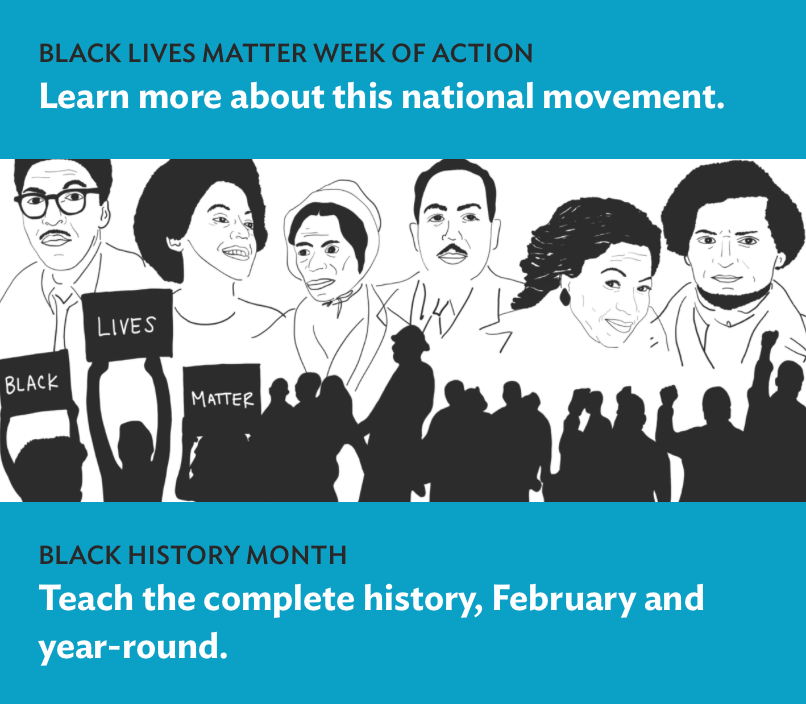
  • Learning for Justice recently changed their name from Teaching Tolerance. Learning for Justice seeks to uphold the mission of the Southern Poverty Law Center: to be a catalyst for racial justice in the South and beyond, working in partnership with communities to dismantle white supremacy, strengthen intersectional movements and advance the human rights of all people. Visit their site to sign up for their weekly emails and access many free resources for K-high school including downloadable posters that will inspire teachers and learners. They also publish a magazine, this springs edition White Supremacy in Education.
Learn more at https://www.learningforjustice.org/magazine/black-lives-matter-week-of-action.
  • The Art of Education PodcastsCelebrating Black History Month through Art, 17 Black Artists to Know, 5 Black Female Artists You (and Your Students!) Should Know, Where Does Black History Month Stand in the Art room?, 4 Artists that Show Black Lives Matter.
  • Anti-Racism Daily – Since June 3, the Anti-Racism Daily has been sending one email a day pairing current events with historical context and personal reflections on how racism persists in the U.S. (and around the world). You can subscribe and receive an email daily or the weekly archive. The daily information is provided at no cost and was created by Nicole Cardoza. You can subscribe on the website.
  • Teaching for Change – Their website helps connect to real world issues and encourage students and teachers to question and re-think the world inside and outside their classrooms, build a more equitable, multicultural society, and become active global citizens.
  • Inspired Teaching – They provide innovative professional learning programs and help teachers build their practice to engage their students as empathetic, critical thinkers. They have several programs and resources that you can access on their website.
  • Indigo Arts Alliance – Portland, ME and cultivating the artistic development of people of African descent. Mission: to build global connections by bringing together Black and Brown artists from diverse backgrounds to engage in their creative process with an opportunity to serve as both mentors and mentees. An integral aspect of the Indigo vision is to provide Maine based artists of African descent access to a broader range of practicing artists of color from around the world. Website.
  • Holocaust and Human Rights Center – Augusta, ME. One of the educational resources that they have available on their website is called Decision Making in Times of Injustice. A presentation filled with facts to help support educators in their teaching of the injustices in the world.
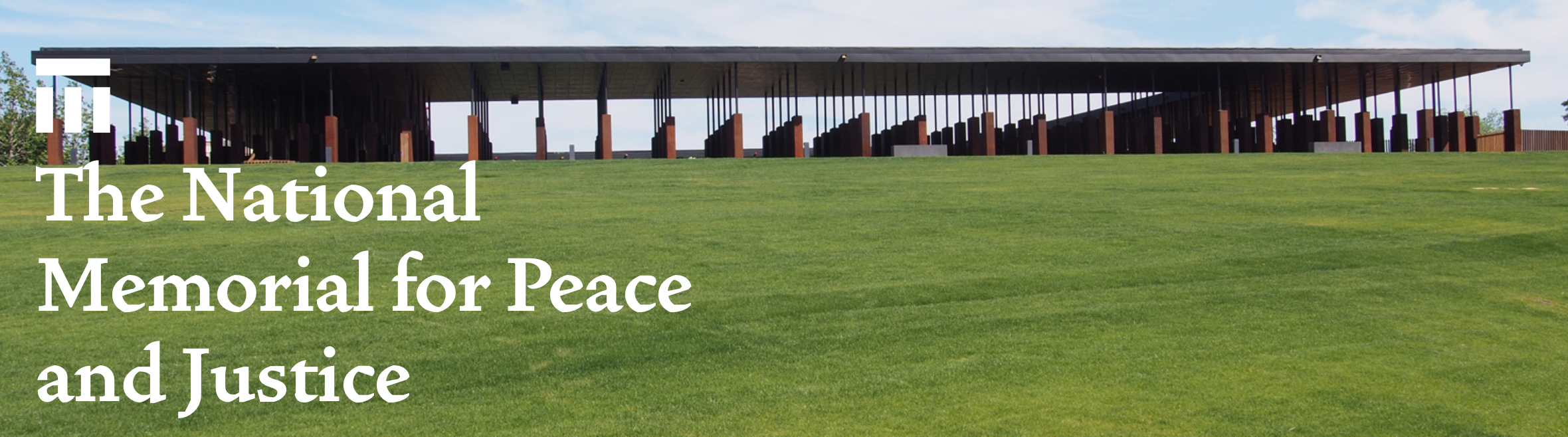
Located in Montgomery, Alabama

BOOKS

  • Black Like Me written by John Howard Griffin was written over 60 years ago. Griffin embarked on an experiment. He darkened his white skin to become black and traveled through the south, from New Orleans to Atlanta. He wrote the book to share his stories traveling as a ‘black man’ which ended up selling ten million copies and became a modern classic. I was able to purchase a used copy and I was mesmerized. “Black Like Me disabused the idea that minorities were acting out of paranoia,” says Gerald Early, a black scholar at Washington University and editor of Lure and Loathing: Essays on Race, Identity, and the Ambivalence of Assimilation. There was this idea that black people said certain things about racism, and one rather expected them to say these things. Griffin revealed that what they were saying was true. It took someone from outside coming in to do that. And what he went through gave the book a remarkable sincerity.” READ MORE about the book in a Smithsonian Magazine article from 2011.
  • Waking Up White: and Finding Myself in the Story of Race written by Debby Irving. The author tells her true story growing up in a somewhat sheltered upper middle class suburban childhood in Winchester, Massachusetts. Her career focuses on working in nearby Boston in performance art and community based non-profits where she learned that her best efforts were actually doing more harm than good. Her persistence provided lessons along the way and a racial understanding and her white privilege revealed her past.
  • Just Mercy: A Story of Justice and Redemption written by Bryan Stevenson. A true story (made into a movie) about the inequities in the justice system. Just out of law school Mr. Stevenson moved to Alabama and established the Equal Justice Initiative. He represented the poorest and most marginalized people in the country: those suffering from excessive or unfair sentences, or facing the death penalty. The stories of the people he represented provides a clear picture of the inequities. In addition to writing this book Bryan Stevenson and a small group of lawyers spent years immersing themselves in archives and county libraries to document thousands of lynchings. From their research a sculpture was created called the National Memorial for Peace and Justice and installed in Montgomery, Alabama. It is the nation’s first memorial dedicated to the legacy of enslaved Black people, people terrorized by lynching, African Americans humiliated by racial segregation and Jim Crow, and people of color burdened with contemporary presumptions of guilt and police violence.

In addition to the resources included above on June 8, 2020 I created a blog post called Social Justice Resources that includes nearly 50 links to a plethora of resources. Included are books for young children, middle school, and young adults along with many other resources.