This is a pretty interesting website that has visual and performing arts at the heart of the information. It is from Education Week, this week but it was published online in December of 2014. Information worth repeating. It is called Inspired Learning: Commentaries on Arts Education and located at the following link.
There is so much food for thought, you will not want to miss it. For example, the following is part of an interview with Jeff Dekal.
Q. Can you describe what’s happening in your illustration?
Jeff Dekal: This illustration is an interpretation of my earliest memories of drawing as a child. Instead of doing what most of the other kids were doing after school or on the weekends, my friends and I would pick themes and draw them. That’s how we got our kicks.
We often hear what participants have to say about the Maine Arts Assessment Initiative (MAAI) but we don’t share those comments quite enough. Below are some that really speak to me and hopefully they will you, as well!
You will have the opportunity to attend the Statewide Biennial Arts Education Conference: The Measure of Success, Friday, October 9, Point Lookout. The Maine Arts Assessment Initiative is proud to continually offer high quality professional development opportunities and The Measure of Success proves to continue this tradition. For more information and to register (during the early bird registration) please click here.
“(The Institute) affirmed what I already do and encouraged me to look for more ways to improve my practice”
“(I’m interested in) how to implement standards-based assessment in a school system that still uses a traditional grading system”
“I’ve changed my rubrics to better reflect what I’ve learned from the workshop and also to reflect what I’m learning about proficiency-based education”
“I’m using student input more now to create rubrics and (exemplars) as a basis for creating criteria for student work”
“I’m more aware of work other teachers are doing in this area”
“It totally changed my assessment practices”
“I’m learning with a renewed sense of purpose and a feeling that we WILL make a difference in re-inventing education.”
“I have shown video clips to students, I have started my own blog and become a lover of Twitter. I have learned more about technology and the arts this year than I ever have in my life.”
“[AEP] has created The Arts Leading the Way to Student Success: A 2020 Action Agenda for Advancing the Arts in Education as a blueprint for systemic change and collective action. This Agenda outlines a set of goals and strategies by which the arts and education community can collectively respond to and inform high priority areas of action needed to effectively address educational inequalities, and level the playing field for academic achievement and student success.”
“The State of the States 2015 summarizes state policies for arts education identified in statute or administrative code for all 50 states and the District of Columbia. Information is based on a comprehensive search of state education statute and codes on each state’s relevant websites. Complete results from this review are available in an online searchable database at www.aep-arts.org.”
The Council of Chief State School Officers (CCSSO) released a series of actions states are taking to close the skills gap and make sure more students graduate from high school prepared for successful careers.
Studio art is one of the fastest growing of the Advanced Placement disciplines. But how do you score a piece of art? The reviews are in.
Below is the beginning section of an article written by Daniel Grant for the New York Times, October 2014.
Here is an unhappy thought: “Monet wouldn’t have done well in A.P. studio art. I’m sure of that.” The reason, continued Lauren Sleat, who teaches the course at Westminster Schools in Atlanta, is that there isn’t much breadth to his work. That is, he did the same thing again and again.
But he would have done well in terms of concentration, what the College Board describes as “the thoughtful investigation of a specific visual idea … through a number of conceptually related works.”
If you want to learn more you can read the entire article by clicking here.
Pre-K-4 learning opportunity – Starting Friday 4pm, April 17, 2015 in Portland with instructor, Judy Fricke!
Are you a Pre-K – 4 teacher looking for recertification or graduate credits? Do you want some inspiring and fun strategies for incorporating the arts in early learning? EDE 526: Early Childhood Learning Through Play may be just what you are looking for!
Current research supports the understanding that children learn through play. The importance of arts-based learning is emphasized to educators of young children and participants will learn how to integrate play and each of the art forms across the curriculum. The course covers the foundations of creative thought, the creative arts, and creative teaching and assessment.
Designed for educators from pre-school through grade 4, this course will help early childhood educators to integrate children’s creativity, play, and the arts into their curriculum in a way that fosters learning and growth and meets accountability measures. Course activities will enable educators to articulate the importance of creativity and arts-based learning to families, colleagues, and administrators. The course can be taken for 3 graduate credits or for 4.5 CEUs.
The instructor, Judy S. Fricke, is a workshop facilitator and arts education consultant in both early childhood music and emergent literacy. Judy has taught music in large and small preschool settings as well as parent/child class settings over the past twenty years. She is a teacher leader in the Maine Arts Assessment Initiative and she teaches graduate level courses for the New England Institute for Teacher Education.
For more information, or to register, visit the website of the New England Institute for Teacher Education or call 207-367-5807.
The National Center for Education Statistics releases Statistics in Brief on Public Elementary and Secondary School Arts Education Instructors
In the 2009-10 school year, among schools that offered art instruction, higher percentages of elementary schools employed full-time arts specialists than part-time arts specialists or classroom teachers to teach both visual arts and music. “Public Elementary and Secondary School Arts Education Instructors,” a Statistics in Brief that uses data from two administrations of the Fast Response Survey System (FRSS), presents findings related to the different types of school staff (e.g., full-time staff, part time staff) used to provide arts instruction in public elementary and secondary schools; the extent to which public elementary schools used arts specialists (i.e., education professionals with a teaching certificate in an arts discipline who provide separate instruction in that discipline) to provide arts education to students; and the prevalence of arts instruction facilities in public elementary schools. Among public schools that offered art instruction:
From the 1998-99 to the 2008-09 school years, low-poverty secondary schools reported an increase in the use of full-time staff to teach music.
In the 2009-10 school year, compared to the Northeast, Southeast, and Central regions, higher percentages of elementary schools in the West utilized classroom teachers to teach visual arts and to teach music.
From the 1999-2000 to the 2009-10 school years, elementary schools increased their use of dedicated rooms with special equipment to teach visual arts and to teach music.
This Statistics in Brief is a product of the National Center for Education Statistics at the Institute of Education Sciences, part of the U.S. Department of Education.
In the segment of the ABC news called Person of the Week on Friday, March 7, David Muir Music Therapists as the Persons of the Week. The story was focused on Gabby Giffords whose recovery included intense work with music therapists.
It is great to know that Gabby’s recovery had to do with her work with music therapists but it is even better to know this group of “educators” is being recognized for their impact on rehabilitation of so many.
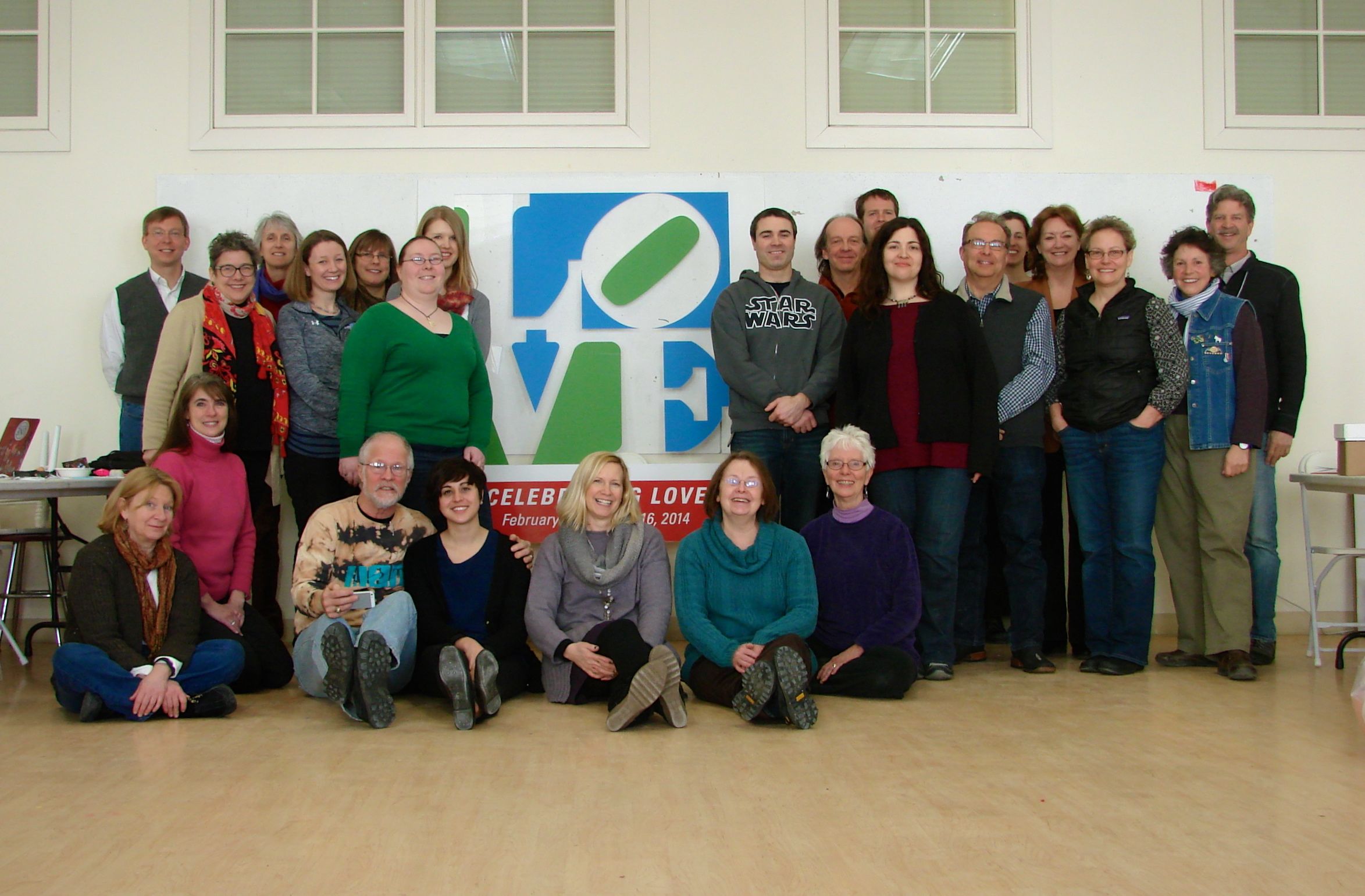
Last weekend the Maine Arts Assessment Initiative Teacher Leaders met in Rockland for a professional development opportunity and for phase 5 planning. This is a yearly event, that is not only productive – generating ideas to meet the needs of arts teachers, but it is also a great opportunity to meet with cherished colleagues.
On Friday night Sarah Swain provided a workshop that was called Advocacy Video Creation. The goal was to learn basic technical and design aspects of video-making. The essential questions were: How can video be used as an effective communication tool? and How can I create videos with the visual interest that engage and inform the viewer? Participants created videos on a variety of topics. Thank you Sarah for sharing your wisdom and expertise!
On Saturday the Teacher Leaders met all day at the Gamble Center at the Farnsworth Art Museum. We reflected on Phase 4, celebrated the many accomplishments of individuals, and were provided updates on the work underway. Among the parts to celebrate are how several Teacher Leaders are taking on leadership roles in their schools and/or districts across the state.
Participants were asked to self-reflect on their individual teacher needs on the following topics: Proficiency-Based Education, Teacher Effectiveness, Students-centered learning, Creativity, Technology, Assessment, Advocacy, Arts Integration. They each brought an artifact that is symbolic of their MAAI journey. (Where you were, where you are, and where you may be headed?)
This lead to the next part of the day sharing artifacts and noticing similarities among the Teacher Leaders. This helped in determining the goals for all regions of Maine. The goals were condensed for a carousel exercise that generated SOOOOOO MANY WONDERFUL ideas on how to address your needs.
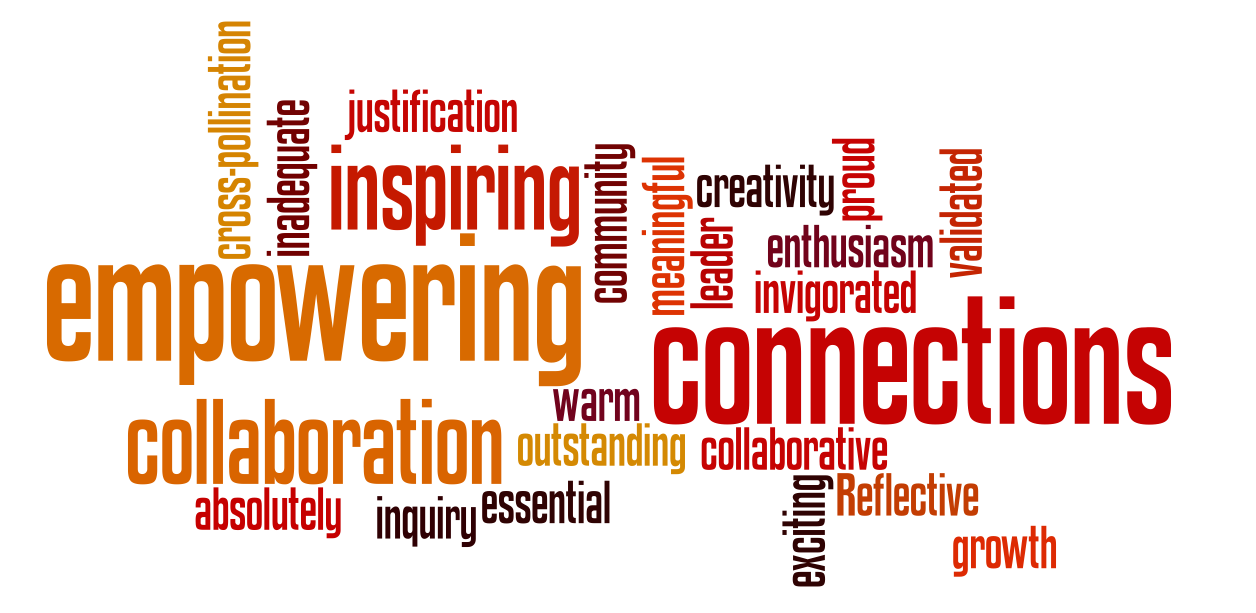
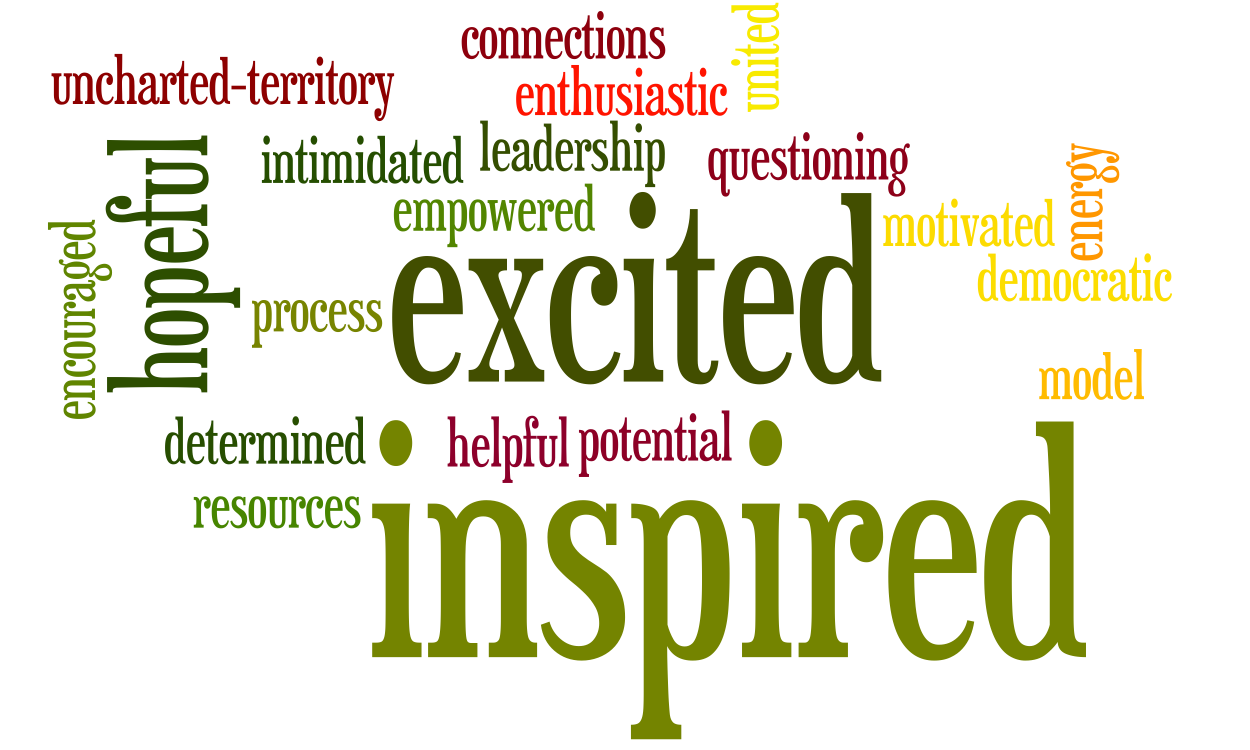
The day ended with a quick feedback that generated a Wordle. This wordle was based on the following question: Write 1-2 words that describe your feelings about MAAI based on your experiences.
And this Wordle was based on the following question: Write 1-2 words that describe your feelings about MAAI as you plan for future activities and professional development.
We are all looking forward to Phase 5 and we intend to celebrate and I can guarantee you that the many ideas have your best interest in mind to assist you in dealing with the teaching challenges of today.
In the near future I will post the “call for teacher leaders” for Phase 5 of the Maine Arts Assessment Initiative. I hope that you will consider taking on this role. Watch the blog for information.
Thank you to Mount Desert Island High School Art educator Charlie Johnson for creating this video showing the highlights of the MAAI Winter Retreat.
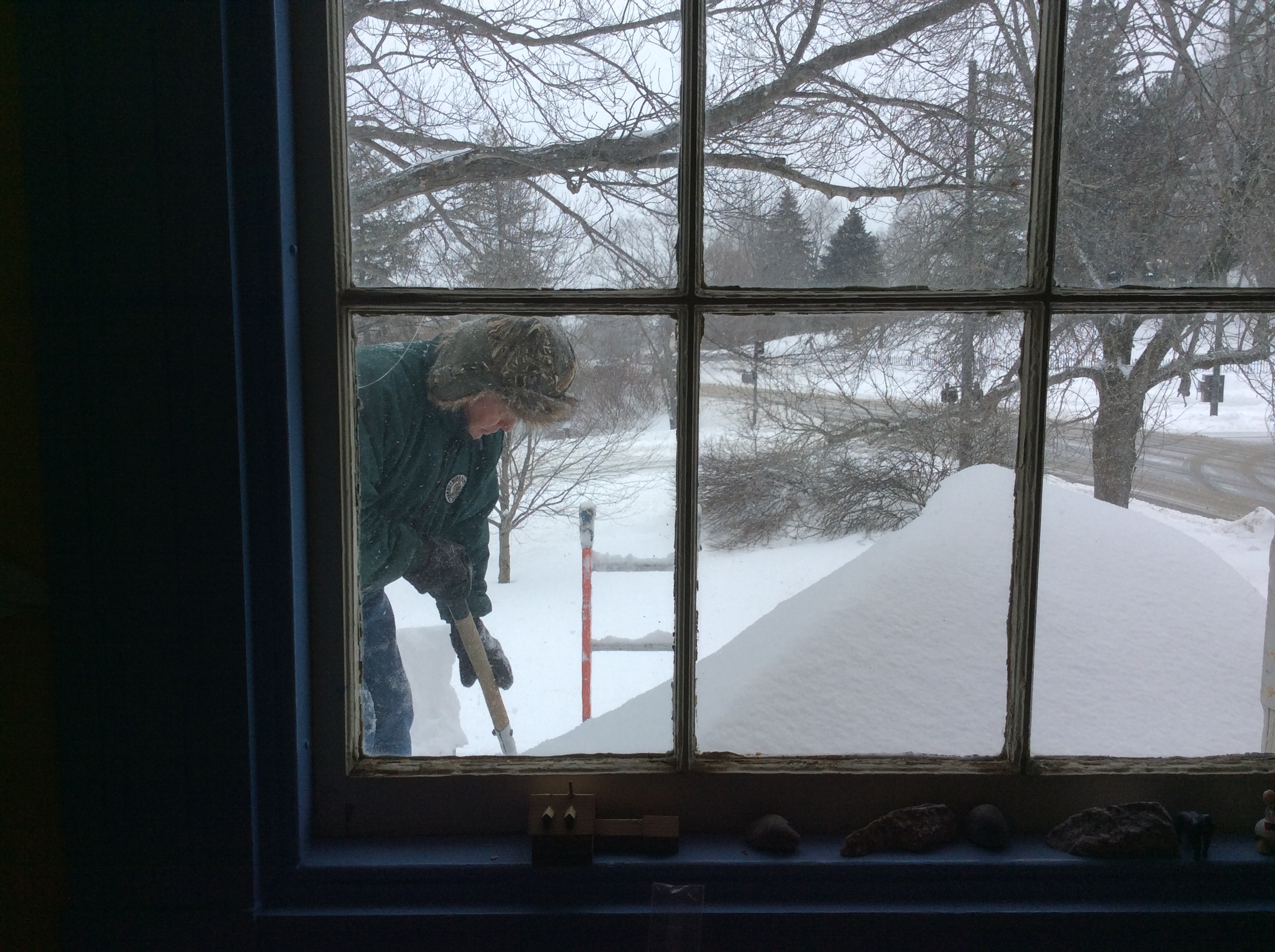
Sometimes “stuff” happens that I didn’t see coming which cause me to pause. Yesterday that happened when I noticed a man standing on the roof outside of my office window. I wondered about the angle of the roof and his safety. I thought about how much snow had accumulated on the small angled roof as he shoveled while snow continued to land on his head and shoulders. As he went about his work, my work was stopped. I couldn’t help but smile at the snow and also think ahead to the next season(s).
Also, yesterday I was forced to pause and reflect on some of the highlights of the research that the Maine Arts Commission has underway. As many of you know during the last several months the Maine Arts Commission has been surveying Maine citizen groups to create a Maine Arts and Culture plan. One of our surveys was just for visual and performing arts teachers and 284, representing PreK-12 evenly, completed it – THANK YOU VERY MUCH!
This is one of those times that I am pausing to consider the feedback from arts educators who took the time to complete the survey to help determine the direction of Maine Arts Education. I thing the following pieces of information learning from the survey might be of interest.
The majority have taught for more than 10 years with 72 teaching 10 years or less
Almost everyone has heard of the Maine Arts Assessment Initiative and over 100 have utilized the resources that MAAI provides
Almost 150 have participated in professional development opportunities that MAAI has provided
On a scale of 1-7, 117 said that they are somewhat to highly prepared to teach in the proficiency-based education system
The following are quotes from two participant answering the question: How has what you’ve learned from MAAI affected their teaching and/or assessment practices?
It’s made me narrow better what I’m teaching and want my students to learn. I’ve been more collaborative with other teaching professionals. It has also reminded me what my personal professional beliefs are valid in holding students to higher standards and working them towards that common goal.
These experiences have made my teaching even more student -centered, which is a direction all Maine schools should be headed.
As you consider participating in the MAAI please know that we have Mega-regional workshops being offered throughout the state during the next three months. Details, descriptions, and registration can be found by clicking here https://mainearts.maine.gov/Pages/Education/MAAI-Mega-Regionals-2014-2015.
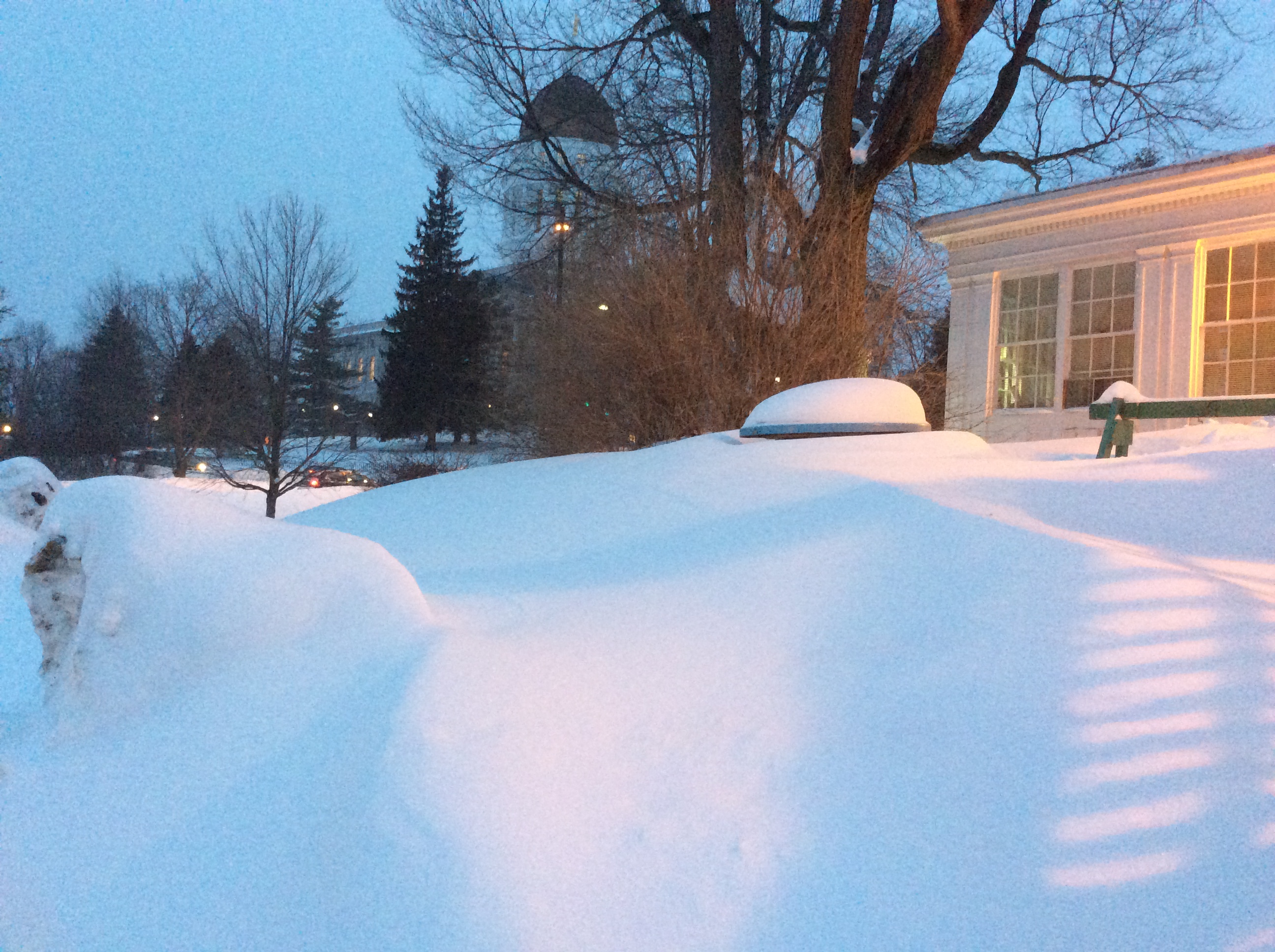
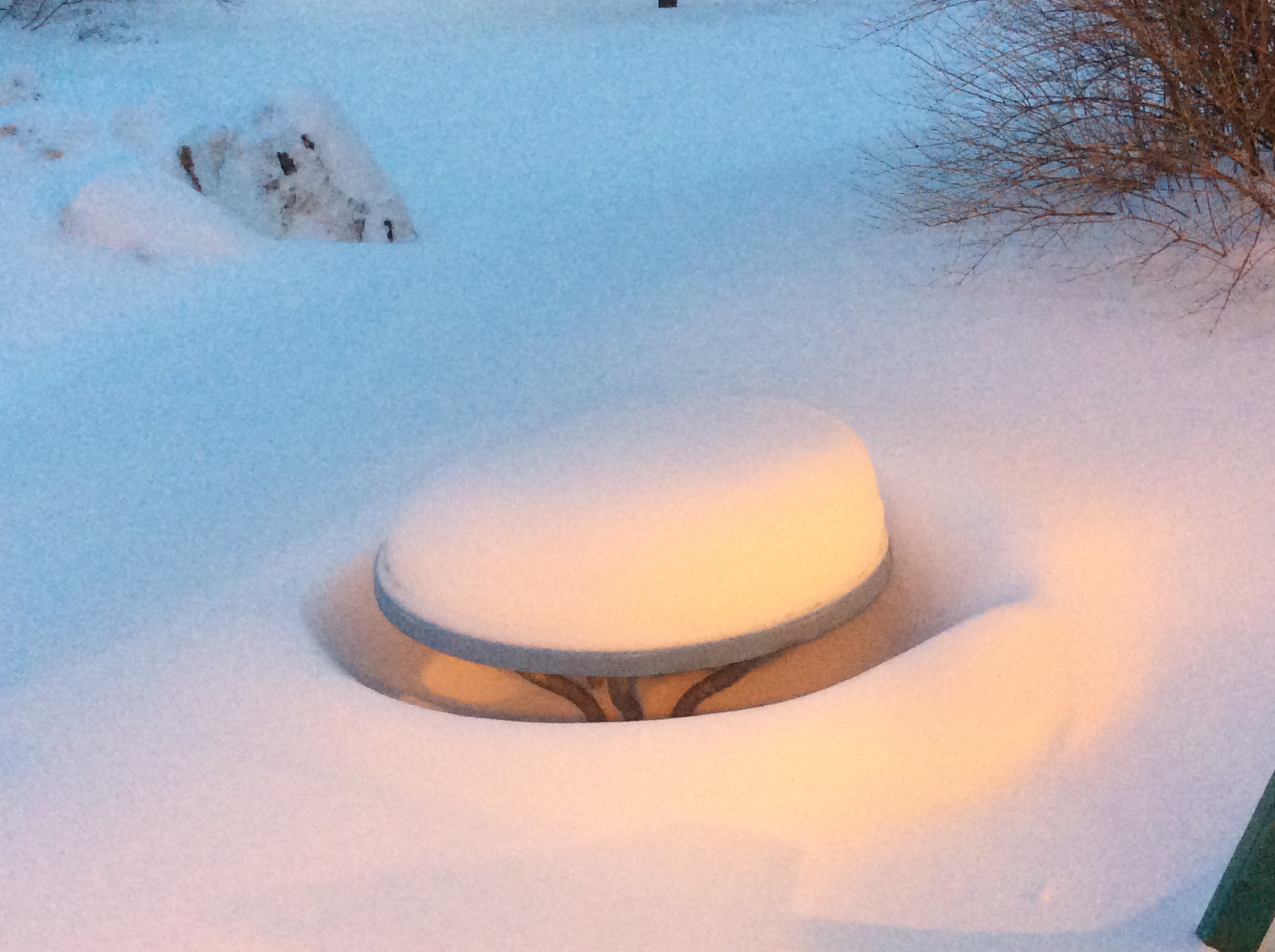
At the end of the day, as the light was dimming and I was leaving the office, I pulled out my ipad and took photos of the picnic table near the back door of the Maine Arts Commission. As my colleague said earlier in the day, it looks like a dessert. The State House loomed up in the background and I was reminded of the importance of stopping to reflect about how fortunate I am, even on challenging days!
I’ve shared several YouTubes, articles, and thoughtful items from Sir Ken Robinson. Sir Ronbinson is an educator who works with school change and cultures around the world. He has a new book being released called Revolutionizing Education from the Ground Up. In this video he provides a snippet of what the book is about. I look forward to reading the book.
Argy Nestor
Arts Educator, Blogger, Artist, Connector meartsed@gmail.com
https://sites.google.com/view/anestor/
Argy’s Blog
The purpose of this blog is to share stories about people and places; and to celebrate the amazing work (and play) that students, educators, and organizations are doing in and for arts education. In addition, the blog has a plethora of resources and innovative ideas. This forum gives blog readers the opportunity to learn from each other. It is essential that we listen, learn, and collaborate in order to build on teaching practices for the benefit of every learner in Maine and beyond.






 me arts ed