Archive for the ‘Research’ Category

h1

Creative Aging

January 7, 2015

Maine Arts Commission program

Late in 2014 the Maine Arts Commission (MAC) established a Creative Aging Teaching Artist roster located at https://mainearts.maine.gov/Pages/Traditional/Teaching-Artist-Roster. The artists on the roster have demonstrated mastery of an artistic discipline, knowledge and expertise in sequential arts instruction, good communication skills, planning and organizational ability, and an understanding of their target learners. Each artist was selected after careful consideration of their application.

You might be wondering what “creative aging” is all about. It might be a term that you’ve never heard before. The information below was provided by Kathleen Mundell, Special Programs Director for MAC. One of Kathleen’s responsibilities is for the Creative Aging program. If you have specific questions please feel free to contact Kathleen at Kathleen.Mundell@maine.gov.

CA_Rohdin_ StudentPhoto

Many people working in Creative Aging cite Dr. Gene Cohen as one of  pioneers  in this emerging field.
He spent the majority of his career at the National Institutes of Health acting as Director of the Institute of Mental Health and the Institute on Aging. There he pioneered several research studies on
the positive benefits of creativity on the aging process. In a 2006 study, co-funded by the National Endowment for the Arts and the National Institute of Mental Health, Cohen measured the impact of cultural programs on the physical and mental health and social functioning of older adults.  The results showed positive findings, helping  make the case for the importance of creative engagement in healthy aging.

Other evidence based studies are summarized in the National Endowment for the Arts’ “The Arts and Human Development: Framing a National Research Agenda for the Arts, Lifelong Learning, and Individual Well-Being” (2011).

A renowned  geriatric psychiatrist, Cohen was  author of many foundational books on Creative Aging including “The Creative Age: Exploring Potential in the Second Half of Life” and founded, in partnership with Susan Perlstein, the National Center for Creative Aging, a national organization dedicated to fostering an understanding of the vital relationship between creative expression and healthy aging www.creativeaging.org. This organization has been invaluable in helping jump start the Maine Arts Commission’s new Creative Aging Program.

Wondering about the impact of music on the Alzheimer’s patients? Please go to this link, http://www.wwltv.com/story/news/nation-now/2014/12/08/inspiration-nation-alzheimer-choir/19964747/, read the information that provides an understanding and watch the video.

I will provide more information in future blog posts. Please do share any information that you might have on related topics.

h1

Houston Fine Arts Study Released

November 8, 2014

Community-wide effort

FOR IMMEDIATE RELEASE
October 20, 2014

NEW HOUSTON FINE ARTS STUDY RELEASED
Community-wide effort reveals a need for equitable access and recommends action to increase arts education in Houston ISD

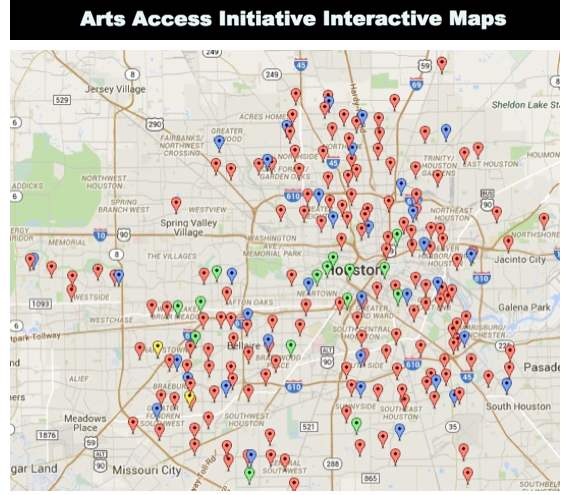
Screen Shot 2014-10-21 at 12.14.45 PMHOUSTON, TX –According to a study released this week by Young Audiences of Houston, Houston Independent School District students who take advanced fine arts courses are more likely to pass the STAAR test in all subjects than a comparison group – and less likely to receive any type of disciplinary action. However, the report states, not all of Houston’s children have the opportunity to access the benefits of the arts and arts education equally – and some are receiving no arts education at all. This information was made public this week thanks to the Arts Access Initiative, the summary of the report is available at www.ArtsAccessInitiative.org. Houstonians are invited to learn more about the initiative and to get involved by visiting the website and attending a series of community meetings hosted by Young Audiences of Houston.

ARTS ACCESS KEY FINDINGS:
30% of HISD schools serving grades K-8 report no fine arts in out-of-school time;
29% of HISD schools serving grades K-8 report employing no full-time fine arts specialists;
92% of HISD teachers surveyed agree or strongly agree that arts have an impact in enhancing learning for disengaged students;
86% of HISD K-8 principals surveyed noted funding as a barrier;
89% of all general classroom teachers surveyed said they wanted arts-based professional development.

In 2013, Young Audiences of Houston in partnership with Houston Independent School District and city leaders established a Community Arts Team (CAT) committee to assess the current landscape of arts education in Houston ISD. This initial (phase 1) planning committee consisted of business, philanthropic, civic, education, arts and higher education leaders across the city. Leaders included Dan Gohl, Chief Academic Officer for HISD, Leslie Blanton, community leader; David Ruiz, Manager, Corporate Social Responsibility, Bank of America; Glenn Bailey, Jr., Manager, Literacy Through Photography at FotoFest; Dr. Danille Taylor, Dean at Texas Southern University; Michael Cardona, Chief Middle School Officer for HISD; Mark Cueva, Manager of Education Initiatives, Department of Neighborhoods, City of Houston; and others.

By studying national data about arts education, anonymized Houston ISD data about current students engaged in at least two years of sequential fine arts instruction, surveys distributed to principals and teachers, and a campus-by-campus inventory, the CAT committee created a series of recommendations for ensuring that all students in Houston ISD have the opportunity to access the cognitive, creative, emotional, and academic benefits of the arts and arts education.

Arts Access Initiative Interactive Maps

Screen Shot 2014-10-21 at 12.19.21 PM

The result of these recommendations is the Arts Access Initiative, a community-wide blueprint that prepares every child’s support structure in Houston ISD to value and invest in arts education. On October 16, 2014, HISD’s Chief Academic Officer, Dan Gohl, reported to HISD trustees the findings of this preliminary work and that a large number of HISD school principals had requested to immediately increase arts access at their schools. http://blogs.houstonisd.org/news/2014/10/16/hisd-board-receives-update-on-fine-arts-education-in-the-district/

As part of the outreach to the community about the Arts Access Initiative, Young Audiences of Houston will host a series of meetings that are open to the public to seek feedback and discuss the data, process, and next steps for further input on the plan.
Monday, Nov. 3, at 6:00 PM
Friday, Nov. 7, at 8:30 AM
Wednesday, Nov. 12, at 12:00 PM
All meetings will be held at the Young Audiences offices, 4550 Post Oak Place Dr., Suite 230. RSVP is required to attend. Please email yahou@yahouston.org
to reserve your place.

Additional Information:
www.ArtsAccessInitiative.org

Information reported by HISD to their trustees on October 16, 2014:
http://www.houstonisd.org/Page/32539
YOUNG AUDIENCES OF HOUSTON MISSION
To educate and inspire children through the arts, to make the arts an integral part of the school curriculum, and to advance the field of arts in education through teacher professional development training and community partnerships.
MEDIA CONTACT
Mary Curry Mettenbrink
Executive Director
(713) 520-9267 ext 109
mary@yahouston.org
www.yahouston.org

h1

Impact of Music on the Brain

November 5, 2014

Below is a Youtube that provides information on how playing an instrument impacts your brain by Anita Collins


h1

Finding a Place at the Assessment Table

November 3, 2014

One-day conference, December 3, 2014

Southern Maine Partnership Presents

TEACHER EVALUATION, STUDENT GROWTH, AND TEACHER EFFECTIVENESS:

FINDING A PLACE AT THE ASSESSMENT TABLE

Screen Shot 2014-11-02 at 8.05.24 PM

Keynote by Rick Stiggins

Rick Stiggins, author of recent books Defensible Teacher Evaluation: Student Growth Through Classroom Assessment and Revolutionize Assessment: Empower Students, Inspire Learning will keynote the event. Rick founded Assessment Training Institute to provide professional development in assessment literacy for school leaders and teachers. He has authored several books and a host of papers on the subject.

Who Should Attend?

The one-day conference is designed for: School and District leaders, teachers, Effective Educator Steering Committee members, School Board members, and all interested in the implementation of Education Policy.

Price: $75 registration fee includes coffee, snacks, and lunch, USM, Portland campus

Registration Process: Complete the online registration at this link: http://bit.ly/1xhzG35.  Limited space available.

3 Concurrent Sessions

  • Various districts will present their Educator Effectiveness Plans, including the student growth component
  • DOE Effective Educator Coordinator, Mary Paine
  • Student Learning Outcome (SLO) examples and processes
  • Assessment Literacy for Leaders and Practitioners
  • Teacher leaders from the Maine Arts Assessment Initiative will taker their place at the table and share teacher evaluation work.
  • The Center for Research on STEM Education (RISE) from UMaine Orono will share their work with pre-post tests.
  • USM graduate students and professors pilot student growth models

For more information please contact Anita Stewart at anita.stewart@maine.edu.

h1

Benefits of Field Trips

October 24, 2014


Study: Culturally enriching field trips increase knowledge, tolerance, and the ability to read emotions of other

This is reprinted from EducationNext

As schools narrow their focus on improving performance on math and reading standardized tests, they have greater difficulty justifying taking students out of the classroom for experiences that are not related to improving those test scores. Culturally enriching field trips are being cut in schools without a clear understanding of what students may be learning from those experiences.

In a new study, Greene examines the impact of assigning student groups by lottery to see high-quality theater productions of Hamlet or A Christmas Carol. This is the first randomized experiment to discover what students get out of seeing live theater.

The study, “Learning from Live Theater: Students realize gains in knowledge, tolerance, and more,” will appear in the Winter 2015 issue of Education Next is available now on http://educationnext.org.

h1

Registration Open: MAAI Mega MDI

October 21, 2014

Mount Desert Island High School Mega-regional workshop, Tuesday, November 25

The Maine Arts Assessment Initiative (MAAI) is once again offering Mega-regional workshops in five locations across the state of Maine during the 2014-15 school year. The workshops are being facilitated by the MAAI Teacher Leaders with each location scheduled with different workshops.

The five Mega dates and locations for the 2014-15 school year

  • Tuesday, November 25 Mount Desert Island High School
  • Friday, March 6 Aroostook county
  • Friday, March 13 Oxford Hills Middle School South Campus
  • Thursday, April 2 UMaine, Orono
  • Friday, April 3 University of Southern Maine, Portland

The information for MDIHS Mega is located at http://mainearts.maine.gov/Pages/Education/MAAI-Mega-Regionals-2014-2015#.

Once you read through the details, you can determine which workshop you’d like to attend for Session I and Session II. Click on this link http://survey.constantcontact.com/survey/a07e9vs7ccfi0fmlna1/start to complete the registration.

You can pay the $25 registration fee using PayPal or you can pay by sending a check made out to Maine Art Education Association and mail it to Maine Arts Commission, c/o Argy Nestor, 193 State Street, 25SHS, Augusta, 04333. You will find all of the information and details that you need when you register at the link above. Please contact me if you have any questions at argy.nestor@maine.gov.

Overall Workshop Schedule

  • 8:15 a.m. Registration begins
  • 8:45 a.m. Opening Session and Morning Workshops
  • 9:10 – 10:20 a.m. Breakout Workshop Session I
  • 10:20 – 10:30 a.m. Break
  • 10:30 – 11:40 a.m. Breakout Workshop Session II
  • 11:40 a.m. – 12:30 p.m. Lunch, participants on their own
  • 12:30 – 12:45 p.m. Artist Showcase
  • 12:45 – 2:45 p.m. Session III Large group by Arts Discipline
  • 2:45 – 3:00 p.m. Closing Session

The workshop titles and descriptions for the MDIHS Mega are included below.

Session I

The Studio Habits of Mind: Using the “Hidden Curriculum” to Encourage Student Autonomy

Join us in our exploration of assessment and proficiency using the Studio Habits of Mind. This workshop will present a practical look at how we came to understand and use the constructs of Studio Thinking in our K-4 and K-8 classrooms to promote independent, self-directed learning. You will gain hands-on knowledge of these habits and leave with strategies you can use in your own classroom. Grades K-8 (Easily adapted for grades 9-12.)


Jane Snider Hancock Grammar School Visual Arts
Lisa Ingraham Madison Elementary School Visual Arts


Making Evidence of Learning from a Sequence of Artworks

This hands-on workshop will explore a simple photographic darkroom technique to produce artworks to use as examples of proficiency for several of the National Core Arts Standards along with links to Maine’s present P.E.I.’s. Student work will also be presented as examples/exemplars for levels of proficiency. Grades 6-12


Charlie Johnson Mount Desert Island High School Visual Arts

Efficient and Effective Assessment in the Elementary Music Classroom

When you see 200 or more students each week, assessing everyone is challenging.  The lack of time seems insurmountable!  At this collaborative session, we will discuss ways to make assessments efficient for both class time and your time, while still keeping them effective for teaching and learning.  The presentation is directed toward elementary classroom music, but all are welcome to attend and give input. Grades K-5


Frances Kellogg  Ellsworth Elementary Middle School Music 

Let the Maine Learning Results guide your Ensemble Curriculum

The Maine Learning Results are still the state wide Visual and Performing Arts Standards. Take a closer look at your ensemble and discover how you are using the MLRs each and every day.  Learn new ways to integrate all of the MLRs. This workshop is applicable for any age ensemble elementary through high school.  Grades 5-8


Sue Barre Waterville Junior and Senior High Schools Music

Session II

Standards-Based Grading and Assessing for Proficiency


This workshop is about how to use standards and create learning targets in the visual art classroom.  We will be focusing on using standards in every day art lessons, assessing for proficiency and showing growth through the use of portfolios.  Grades 6-12


Shannon Westphal Ellsworth High School Visual Art

It’s Elementary, My Dear!


Come find out ways you can advocate for your elementary school arts program. In this workshop, we will share ideas and strategies to get what you need for your visual art or music classroom and simultaneously take arts education to a whole new level.  Let’s put all those wonderful resources and tried and true strategies to work for us!  Grades PK-8


Catherine Ring New England Institute for Teacher Education Visual Art

Stir-Crazy: A Movement Tool Kit for the Sedentary Classroom


Kids not sitting still in class?  Unable to focus?  This session is for all teachers wanting to add some movement activities and games into the classroom without sacrificing important academic time.  All games can be adapted to fit all subject areas. Grades PK-12 All Teachers


Stephanie McGary Dance

Resources, Resources and MORE Resources for Music Educators


This session will identify helpful, meaningful resources for every need under the sun! Attendees will inform the conversation, bringing their own unique needs to the table. The take-away will be for every music teacher to leave with a bucketful of assistance towards implementing standards, proficiency and assessment practices into their own classrooms. Grades PK-12


Rob Westerberg York High School Music

Session III

The Arts and Proficiency: What, Why and How?

The afternoon session will be focused around group discussions utilizing key questions on how proficiency is being implemented across the state of Maine in our own arts classrooms. Participants will leave with concrete ideas and/or plans to facilitate their own actions. These may lead to breakout sessions to deeper discussions and common concerns. This session will be separated between visual and performing arts teachers.

h1

What is Your Spark?

October 12, 2014

Peter Benson – TED Talk

On Friday while at the Critical Friends Day that the Maine Arts Assessment Initiative held at the State House complex I was reminded when listening to the workshops presented by the Teacher Leaders that the key to success in learning is often finding, or helping students to find, their “spark”. We know as adults that life is the sweetest when we are doing what we love, whatever that might be.

I know that I’ve mentioned on the blog the research that Peter Benson is doing on finding one’s spark at the SEARCH Institute. I just had to post this link to the TED Talk again, I find the video very inspiring and hope you do as well.

h1

MAMLE Conference

October 11, 2014

Maine Association for Middle Level

Powerful Learning for Young Adolescents
October 23-24, 2014
Point Lookout Resort and Conference Center, Northport
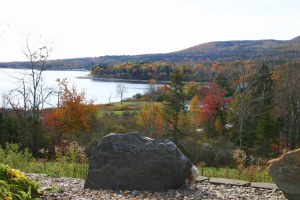
One of the many spectacular views from Point Lookout.

One of the many spectacular views from Point Lookout.

What makes an outstanding school for 10-14 year olds? The well – research position paper from the Association for Middle Level Education, This We Believe: Keys to Educating Young Adolescents lists four essential attributes:

  • Developmentally Responsive: using the nature of young adolescents as the foundation on which all decisions are made.
  • Challenging: recognizing that every student can learn and everyone is held to high expectations.
  • Empowering: providing all students with the knowledge and skills they need to take control of their lives.
  • Equitable: advocating for every student’s right to learn and providing challenging and relevant learning opportunities.

The MAMLE Annual Conference is the perfect time for staff to reflect on the vision for their school and how it is being implemented. It is the only event in Maine that explores the current issues facing schools through the lens of effective teaching and learning for 10-14 year olds as exemplified by the essential attributes outlined in This We Believe: Keys to Educating Young Adolescents.
Just look at the opportunities at the conference:

For everyone:

  1. Two outstanding keynote speakers: Matt Nelson, MPA Middle Level Principal of the Year and Nancy Doda, international expert on educating young adolescents.
  2. 35 + concurrent sessions on a wide range of topics

For folks interested in STEM:

  1. A STEM Model For Problem Solving – Sara Nason, Sanford Middle School
  2. Make ‘Space Day’ Everyday! – Sharon Eggleston, Aerospace Educator
  3. Getting Students to Beg for More Math Time! – Alison Veilleux, Lyman Moore Middle School
  4. Gaming in the Classroom – Suzanne Simmons, Bonny Eagle Middle School
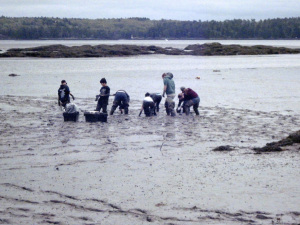
    Working to save clams from European green crab–Woolwich Central School
    Working to save clams from European green crab–Woolwich Central SchoolSoft Shelled Clam Connections – Denise Friant, Hesper Reith, Edward Striewski, Leanne Fisher Woolwich Central School
Working to save clams from European green crab--Woolwich Central School

Working to save clams from European green crab–Woolwich Central School

5. Soft Shelled Clam Connections – Denise Friant, Hesper Reith, Edward Striewski, Leanne Fisher Woolwich Central School

6. STEM Programs Roundtable – Jeff Rodman, Middle School of the Kennebunks

7. Start Developing iOS and OS X Apps Today! (Double Session D & E) – Maine-based Apple PD Specialists

8. Moon Unit – Alison England, Adam Bullard, Sonja Schmanska, & Josh McPhail, St. George School
9. K-12 Outreach – Interactive Civil Engineering – Lauren Swett
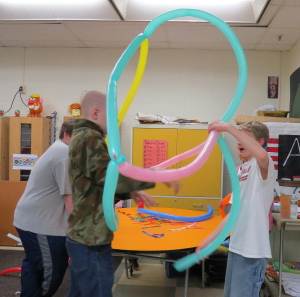
STEM projects

STEM projects

1. The Auburn Land Lab – An Opportunity To Learn Differently – Phil Brookhouse, Auburn School Department
2. FROM CURIOSITY TO CAREER: Transforming Student Engagement into Career Pathways – Jay    Collier, Educate Maine
3. An Interdisciplinary Approach to Field Marine Science – David Williams, York Middle School

For folks focusing on culture and climate:
1. Middle Level Theory into Practice – The Troy Howard Middle School Story – Kimberly Buckheit & Students, Troy Howard Middle School; Kelley Littlefield, Ecology Academy Teacher; Chris LaValle, Innovation Academy Teacher; Sarah Wyman, International Academy Teacher
2. The Power (and Struggles) of Shared Leadership Teams – Mike Muir, Auburn School District
3. Legacy: Making Education Meaningful Through Service Learning – Shianne Priest & Students, Leonard Middle School
4. Meeting the Standards in a Restorative Classroom – Celeste Libby, Travis Taylor, Lisa Hall, Ansley Newton and 6th Grade Guidance Counselor, Saco Middle School
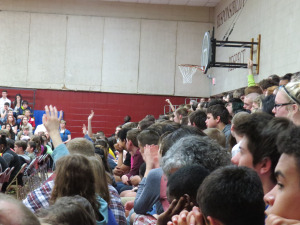
Enthusiastic and engaged students at Space Day-Auburn MS

Enthusiastic and engaged students at Space Day-Auburn MS

5. It’s All About Choice… And a Lot of Planning! – Carl Bucciantini, Auburn Middle School

6. The Fourth “R”-The Power of Relationships in Middle School – Jerry Kiesman, Hermon Middle School
7. Building Community Through Challenge – Gert Nesin & Todd McKinley, Leonard Middle School
8. Positive Adults + Positive Interventions = Positive Students – Sheila Underhill; Reuben Fowlow; & Tracy McKay, Central Middle School
9. The Anatomy of a Successful Parent Night – Ward Willis, Middle School of the Kennebunks
10. Student Reflecting and Conferencing – Melissa Fenelon, York Middle School
11. “Ignite the S.P.A.R.K!”~Students Promoting Acts of Random Kindness – Jodie Bennett & Molly Brewer, Medomak Middle School
12. Brain Breaks for Students – Susan Callahan, Auburn Middle School

For those who literacy throughout the curriculum remains an important topic:
1. Talking About the Text: Engaging Ways to Boost Comprehension and Understanding — Nancy Doda
2. Read 180: Increase Student Engagement, Ownership, and Achievement – Tammy Ranger, Skowhegan Area Middle School
3. A Culture of Collaboration in Writing – Kym Granger, Mt. Ararat Middle School
4. Allagash Tails and Tales – Tim Caverly, Allagash Tails
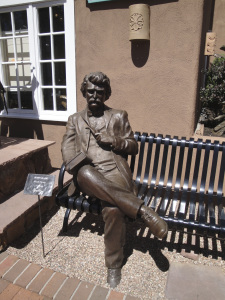
Mark Twain

Mark Twain

5. Dual Purposes that Serve the Needs of Both Curriculums… Take a Risk!! – Abby Jacobs & Mike Burke, Westbrook Middle School

6. Classroom Blogging with Google Apps for Education – Suzanne Simmons, Bonny Eagle Middle School
7. Creating Visual Notes with Apple MLTI Tools (Apple MLTI Primary Solution) (Double Session D & E) – Maine-based Apple PD Specialists
8. Writing Power: Creating Authentic Audiences for Student Voices – Joyce Bucciantini, Auburn Middle School
9. Meeting Literacy Standards in Health and the Other Allied Arts – Strategies to Help Students Excel in Your Class – Doreen Swanholm & Courtney Belolan, Mt. Ararat Middle School

For participants who believe the Arts are an integral part of any outstanding middle grades program:
1. Recreating Radio Dramas – Barbara Greenstone, Boothbay Region Schools
2. Empowering Students Through Assessment Techniques and Strategies – Jane Snider, Hancock Grammar School
3. Tricks and Tips to Help Students Take Really Good Pictures – Jill Spencer, BoomerTECH Adventures
4. Legacy: Making Education Meaningful Through Service Learning – Shianne Priest & Students, Leonard Middle School
5. Dual Purposes that Serve the Needs of Both Curriculums… Take a Risk!! – Abby Jacobs & Mike Burke, Westbrook Middle School
6. Proficiency-Based Education in an Art Class – Gloria Hewett, Mount View Middle School
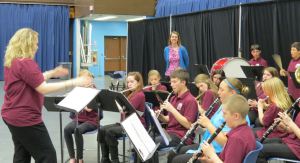
band

For attendees whose interest is personalizing learning and MCL:
1. Teaching MCL: Beyond the Theory – Erin Hoffses, Presque Isle Middle School
2. Proficiency-Based Education in an Art Class – Gloria Hewett, Mount View Middle School
3. Assessment with iPads – Barbara Greenstone, Boothbay Region Schools
4. May the Force Be With You: Planning for the Unique Needs of Young Adolescents – Lindsay Mahoney & Hope Herrick, Messalonskee Middle School
5. Metacognition and the Middle Schooler – Andrea Logan, Lake Region Middle School
6. Back to Basics: How to Create Learning Targets and “I CAN” Statements – Jennifer Etter, York Middle Schools
7. Motivating Students With Engaging Tasks – Mike Muir, Auburn School District
8. Customize the Brain – Bill Zima, Mt. Ararat Middle School
Americans who Tell the Truth

Americans who Tell the Truth

For folks who help their students develop a world view:
1. Hands-On History: The Bangor Community Heritage Project – Ron Bilancia & Pricilla Soucie, William S. Cohen School; Larissa Vigue Picard, Maine Historical Society; Bill Cook, Bangor Public Library
2. World Language Market – Tad Williams & Ellen Jardine, Middle School of the Kennebunks
3. TOP’s Turning Points and Timelines! Kids Get Chronology! – Jacqueline Littlefield, Goethe-Institute Washington -Transatlantic Outreach Program
4. From History to Action, Using the Lessons of the Holocaust and the Civil Rights Movement to Empower Students – Elizabeth Helitzer, Holocaust and Human Rights Center of Maine
5. Models of Courageous Citizenship: Connecting students to themes in social studies, language arts, science and other curriculum areas – Connie Carter

Especially for leadership teams and administrators:
Jeff Rodman, President of MAMLE and John Keane, President Elect

Jeff Rodman, President of MAMLE and John Keane, President Elect

1. Developing Teacher Expertise – Ben Harris & Mick Roy, Bonny Eagle Middle School and Stacy Penna with Learning Sciences
2. Apple’s Five Best Practices of Excellent Schools! – (Double Session A & B) – Maine-based Apple PD Specialists
3. Middle Level Theory into Practice – The Troy Howard Middle School Story – Kimberly Buckheit & Students, Troy Howard Middle School; Kelley Littlefield, Ecology Academy Teacher; Chris LaValle, Innovation Academy Teacher; Sarah Wyman, International Academy Teacher
4. The Power (and Struggles) of Shared Leadership Teams – Mike Muir, Auburn School District
5. Making Sense of Chapter 180: Implementing the New Teacher Evaluation System in Two Districts – Bill Zima, Mt. Ararat Middle School & John Keane, Leonard Middle School
6. The Anatomy of a Successful Parent Night – Ward Willis, Middle School of the Kennebunks
7. Administrators Roundtable – Jeff Rodman, Middle School of the Kennebunks
8. Meeting the Standards in a Restorative Classroom – Celeste Libby, Travis Taylor, Lisa Hall, Ansley Newton and 6th Grade Guidance Counselor, Saco Middle School

All of these sessions plus more form the backbone of our conference.  What school wouldn’t benefit from having teachers and administrators participate in such a rich experience?

Registration: http://mainemamle.org/conference/registration/

Full program: http://mainemamle.org/conference/conference-schedule/

Yapp app for mobile devices: http://my.yapp.us/MAMLE

Or contact Wally Alexander:

Phone: (207) 859-1362
Fax: (207) 859-1114
E-mail: Wallace_Alexander@umit.maine.edu

h1

Visible Learning

October 8, 2014

John Hattie’s Research

Screen Shot 2014-10-04 at 8.41.43 PMAlmost a year ago blogger Peter DeWitt wrote a post called Is Learning ‘Visible’ to Students?

In his post DeWitt references John Hattie’s research on ‘visible’ learning. Hattie is Professor of education and Director of Research at the University of Melbourne (Australia). Hattie has been criticized for his research which dives into what is and is not working in schools. Certainly a topic that, depending on your beliefs, most likely quickly puts you in favor or against the research.

Hattie’s research has over 1,000 meta-analysis which involved over a quarter billion students. That is certainly a lot of students but more importantly what is done with the information matters even more. I hear over and over what a challenge teaching has become because of the shifts in education. I look at proficiency-based education and know that in theory most educators believe that all students should graduate from our schools being proficient. Yes, challenging times but that is the nature of change as we transition in Maine to a proficiency-based high school graduation requirement.

I can’t help but think about Hattie’s research and how it supports the proficiency based requirement. Hattie defines visible learning as, “Making student learning visible to teachers, ensuring clear identification of the attributes that make a visible difference to student learning, and all in the school visibly knowing the impact that they have on the learning in the school.” There are many ways to know if students are learning but if it is visible to educators, won’t it also be recognizable to other stakeholders?

And, the shift comes when the students is in the center of their learning. Learning becomes active and not passive. And, this hits the nail on the head…

Hattie goes on to say that the visible aspect,

“Also refers to making teaching visible to the student, such that they learn to become their own teachers, which is the core attribute of lifelong learning or self-regulation, and of the love of learning that we so want students to value.” This doesn’t mean that students do not need their teachers. Quite the contrary…the relationship between student and teacher is highly important.

Reading the article through the proficiency based lens and student centered learning, might just give you some insight on the shift and how to adapt.

h1

Art Makes You Smart

September 9, 2014

Crystal Bridges Museum of American Art

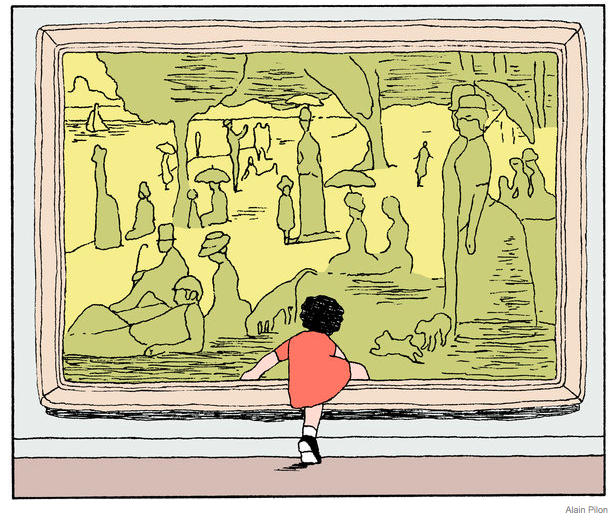
In November 2013 an article titled Art Makes You Smart written by Brian Kisida, Jay P. Greene and Daniel H. Bowen appeared in the New York Times Sunday Review. Research was conducted at the newly opening Crystal Bridges Museum of American Art located in Bentonville, Arkansas on the impact that the museum learning opportunities had on students. The researchers had a unique chance for the researchers since it is not everyday that a new art museum opens. Take a look at the entire article by clicking here. The illustration below was published along with the article and created by Alain Pilon.

Screen Shot 2014-08-23 at 2.40.08 PM