Archive for the ‘Research’ Category

h1

We Did It!

February 29, 2012

My brain is swirling with ideas

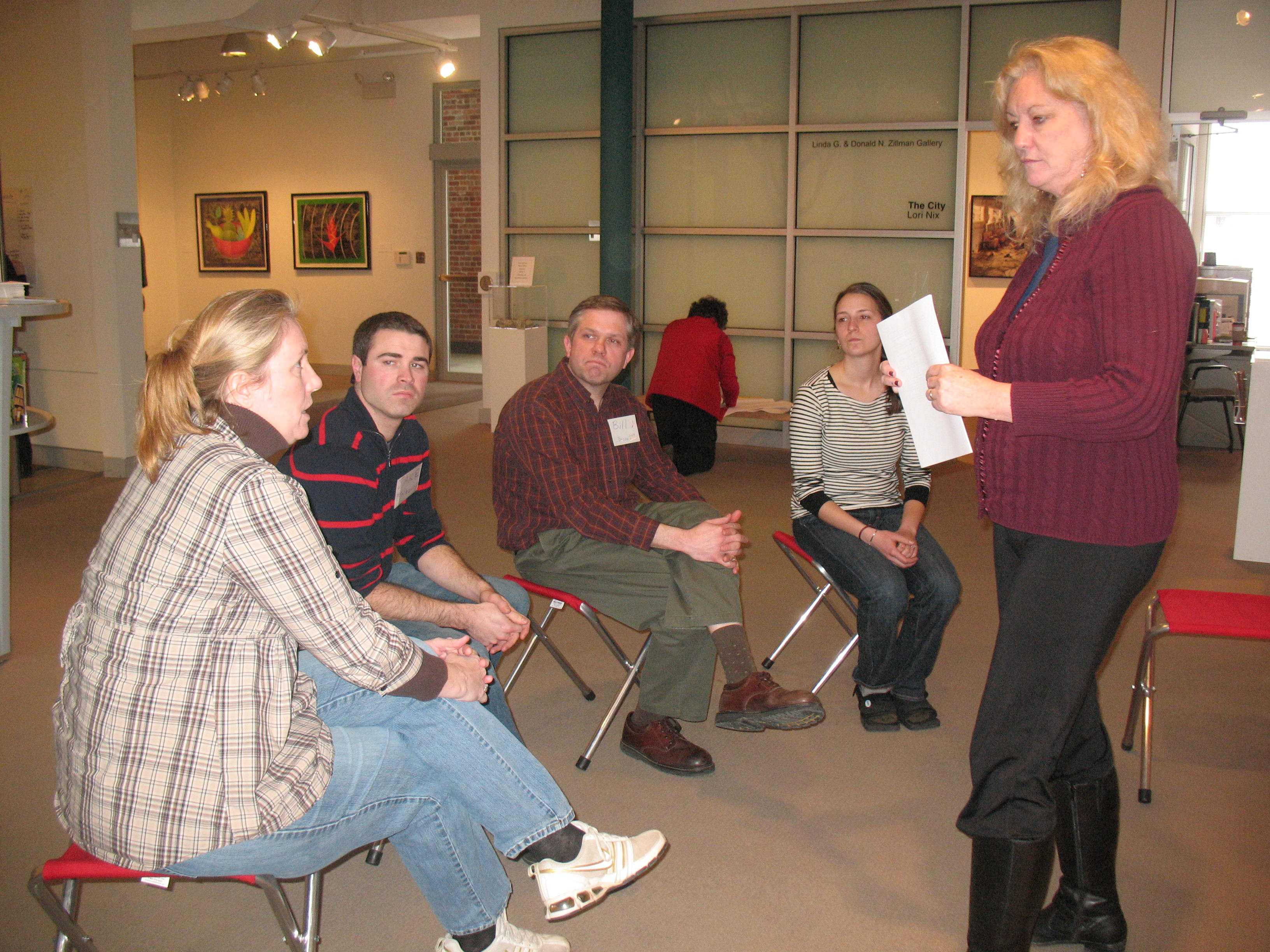
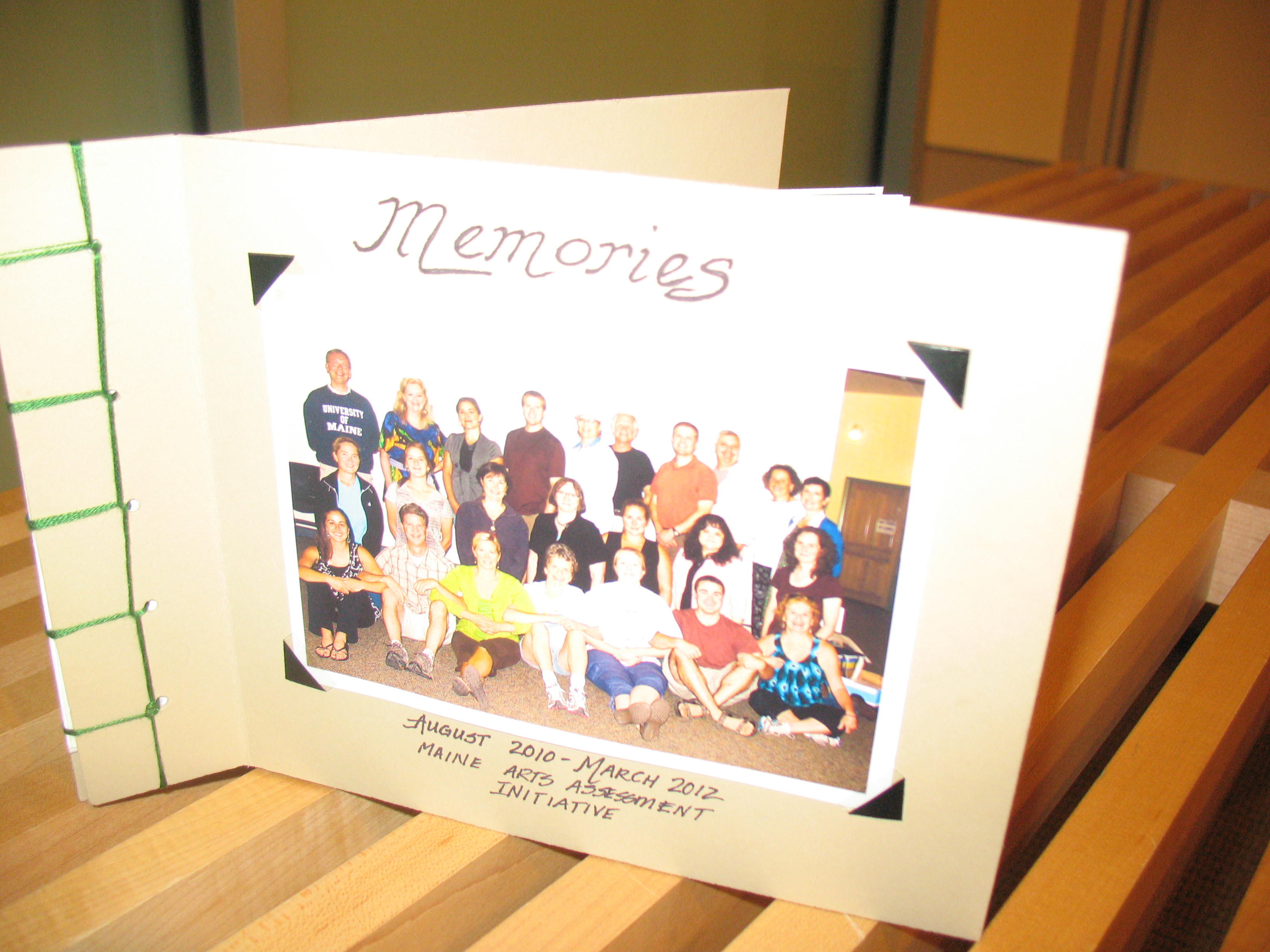
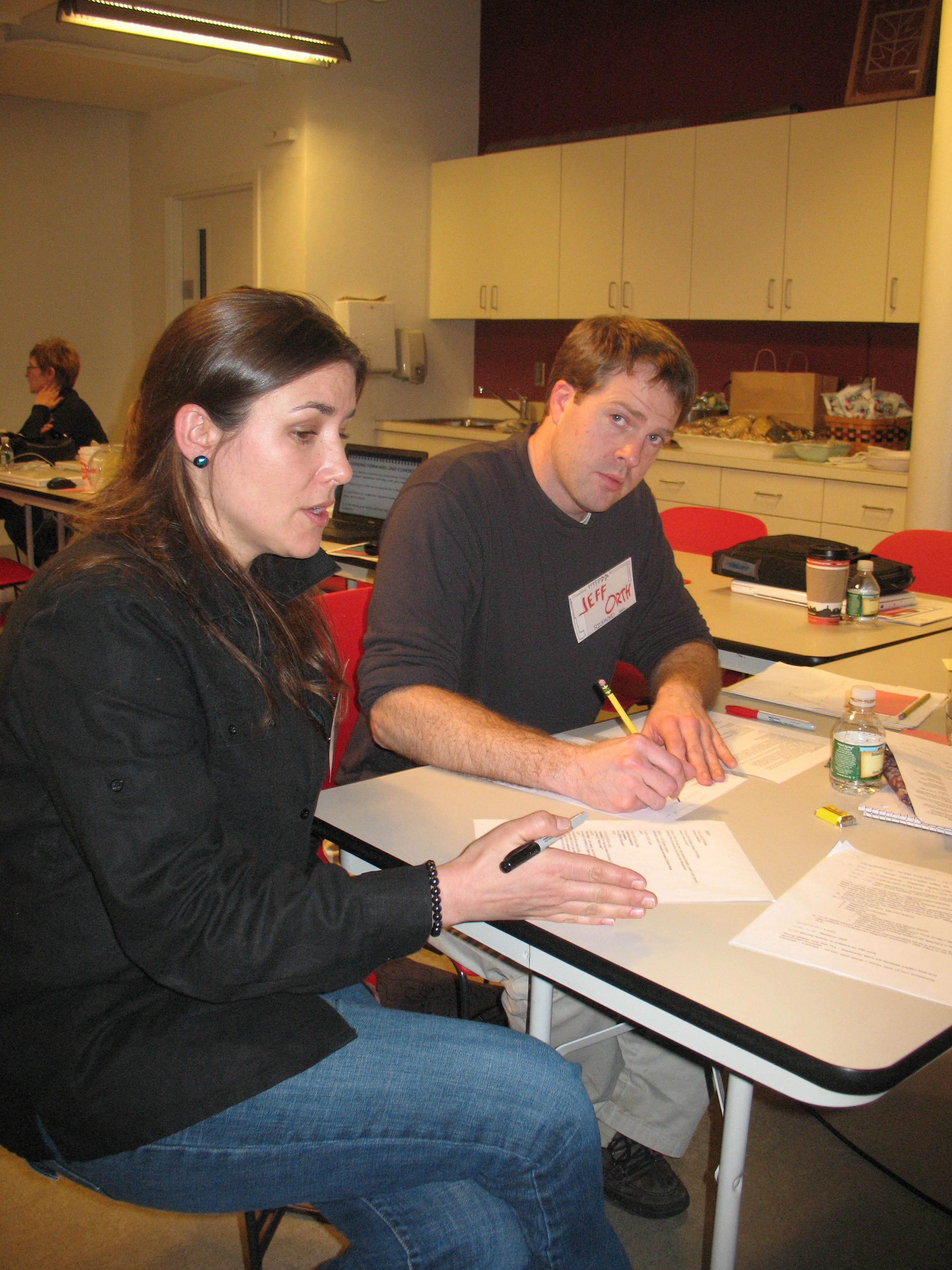
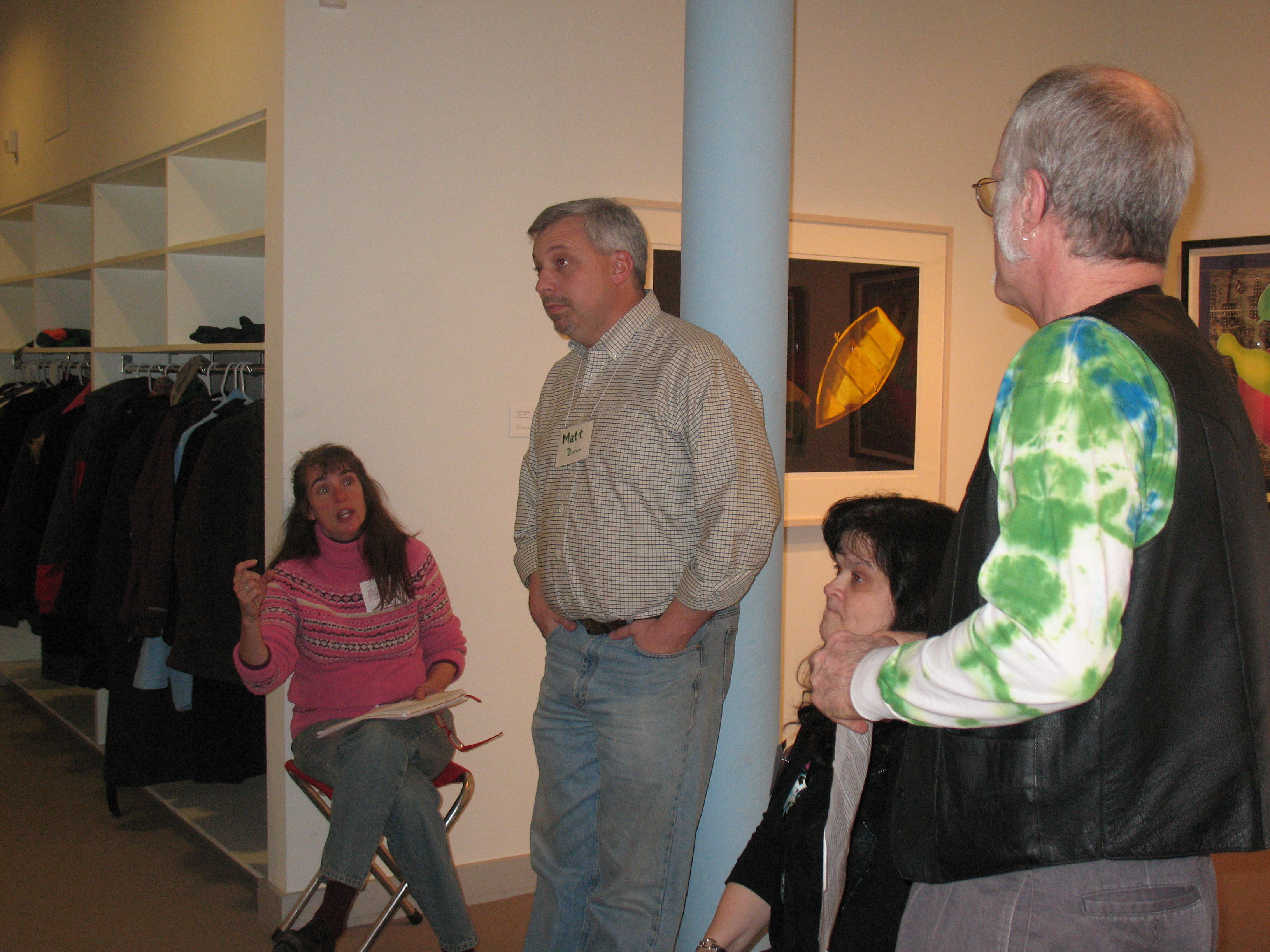
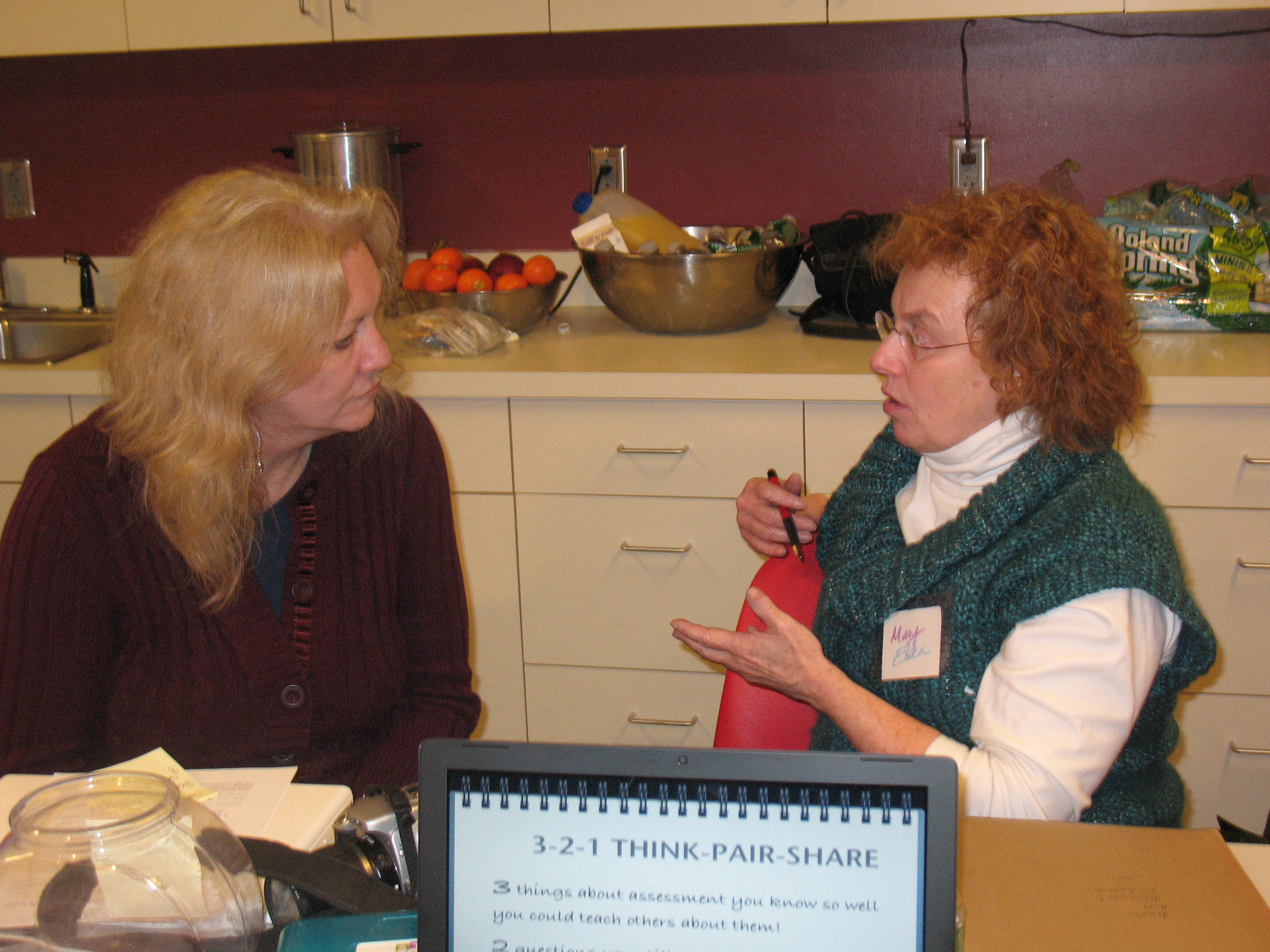
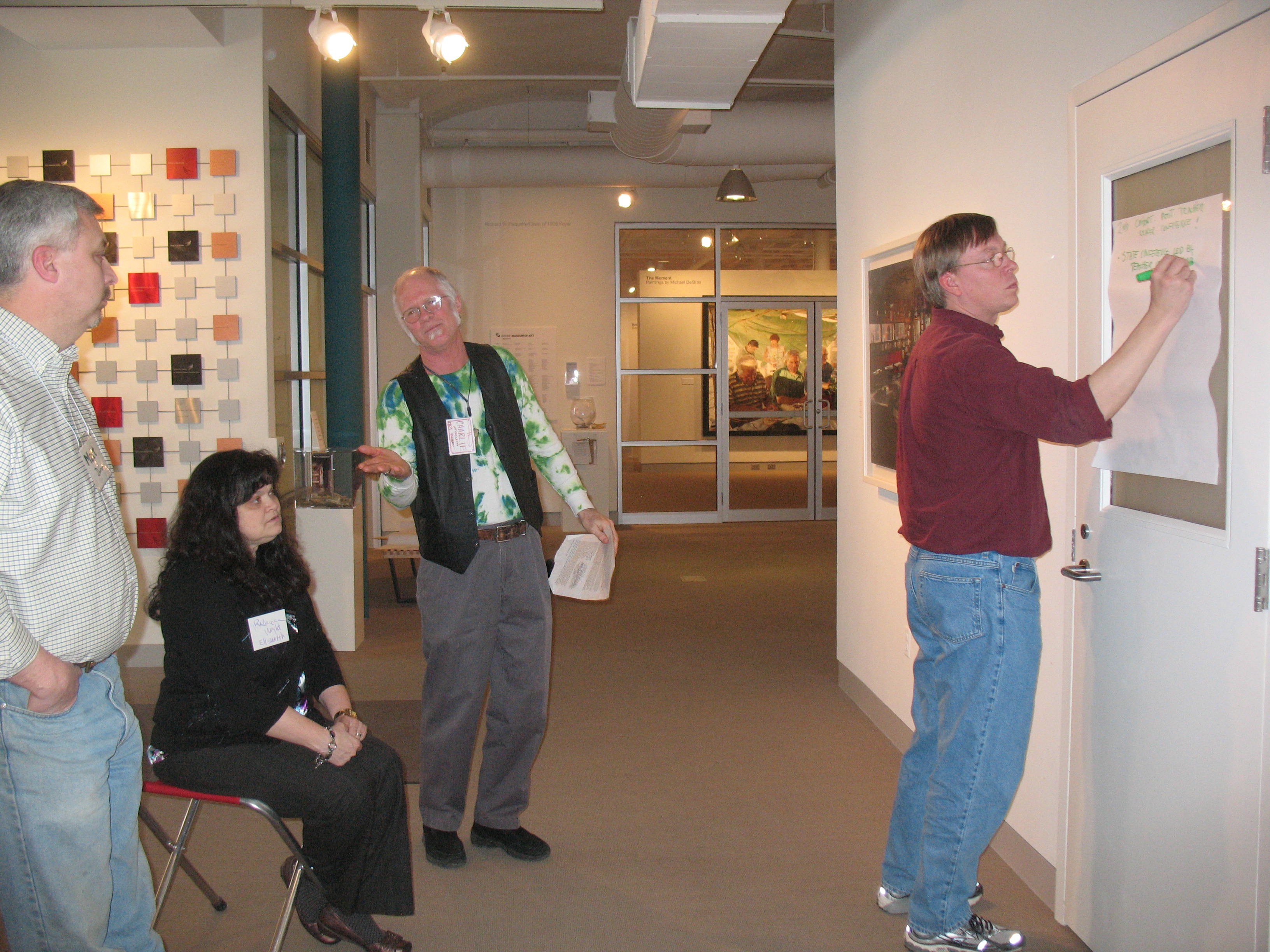
Yesterday’s post was about the Maine Arts Assessment Initiative (MAAI) work we tackled while together at the UMaine Museum of Art in Bangor. We took a look back to evaluate how the first phase of the work has gone and, we looked to the future to help plan phase II of the MAAI. The results of the work are being summarized and when we have a phase II plan in place we will, of course, share it with all of you in the field!

The day was filled with energy, a chance to renew connections, processing, creativity, and a passionate commitment from the Teacher Leaders and the Leadership Team. The take away comments were revealing and included how important yesterday was, and the value of the past several months to everyone. The enormous growth since the work began 9 months ago is incredible! Maine is so fortunate to have arts educators who are so focused on the importance of educating young people!

Thank you to Eva Wagner, Education Coordinator from UMaine Museum of Art and the staff there who made it possible for us to meet in such a wonderful space. I highly recommend that you stop by and see the exhibit. A great big thank you to facilitator Jill Spencer who did a fabulous job. Jill is an active blogger, she writes about exemplary and innovative teaming practices at Teaming Rocks! Collaborate in Powerful Ways and is a contributor to the Bright Futures blog. You can check her out at http://jillspencer.net.

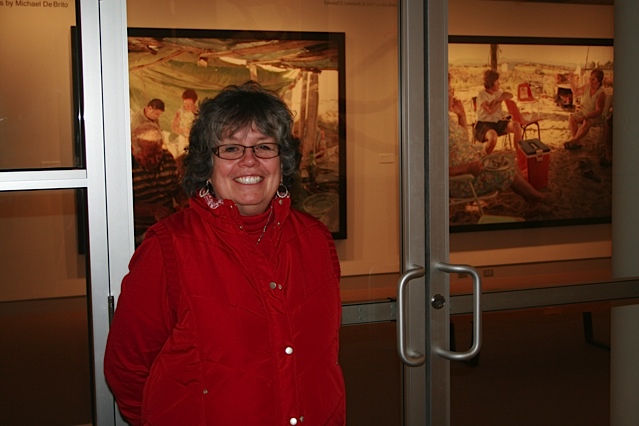
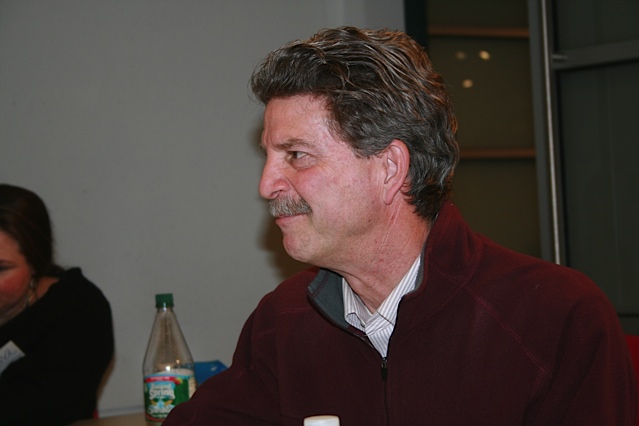
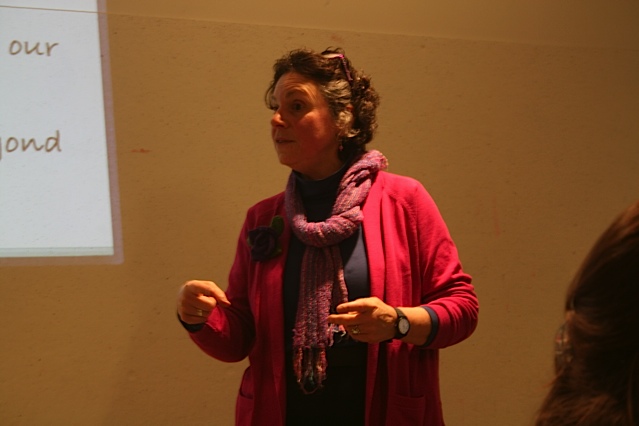
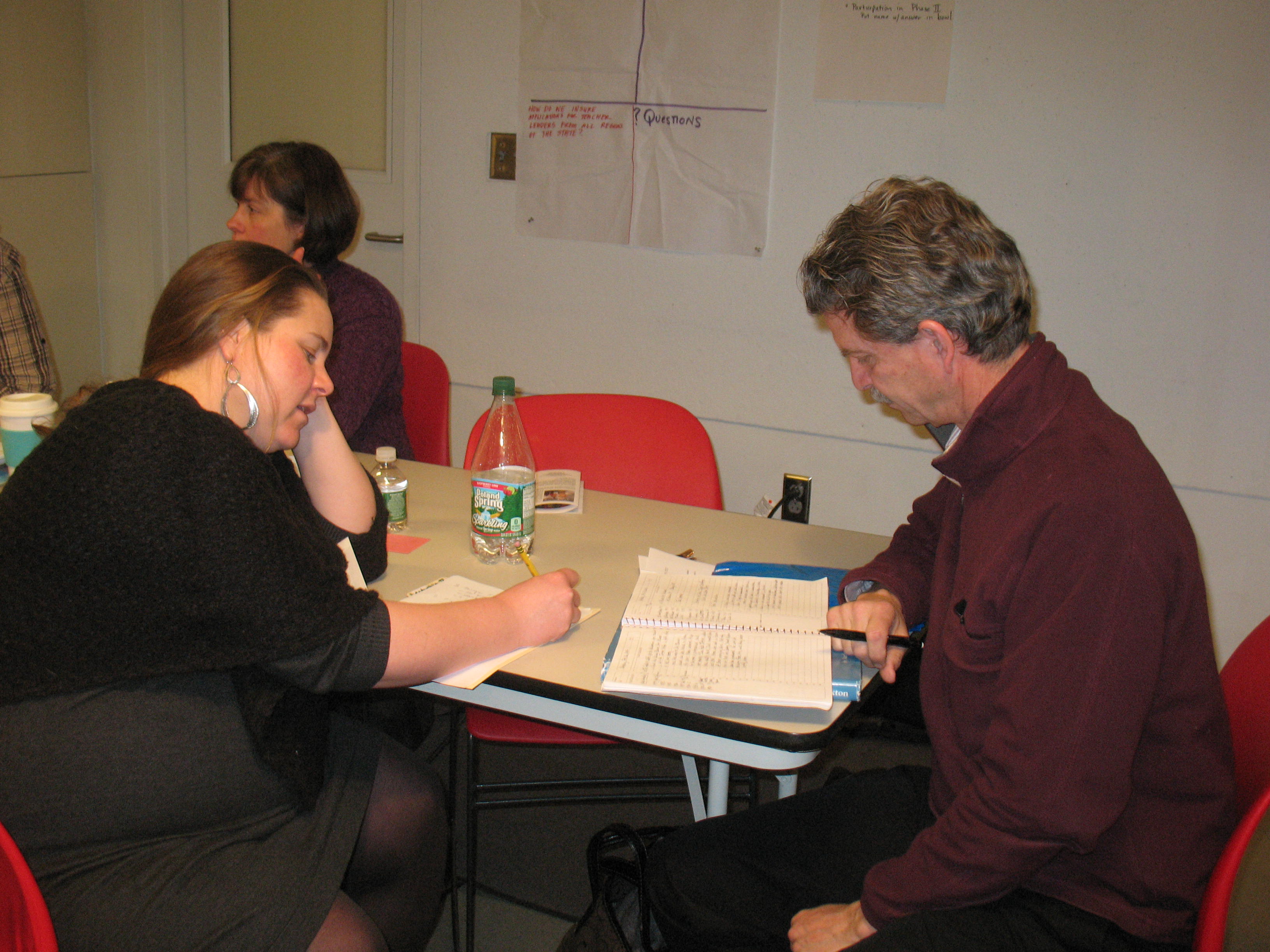
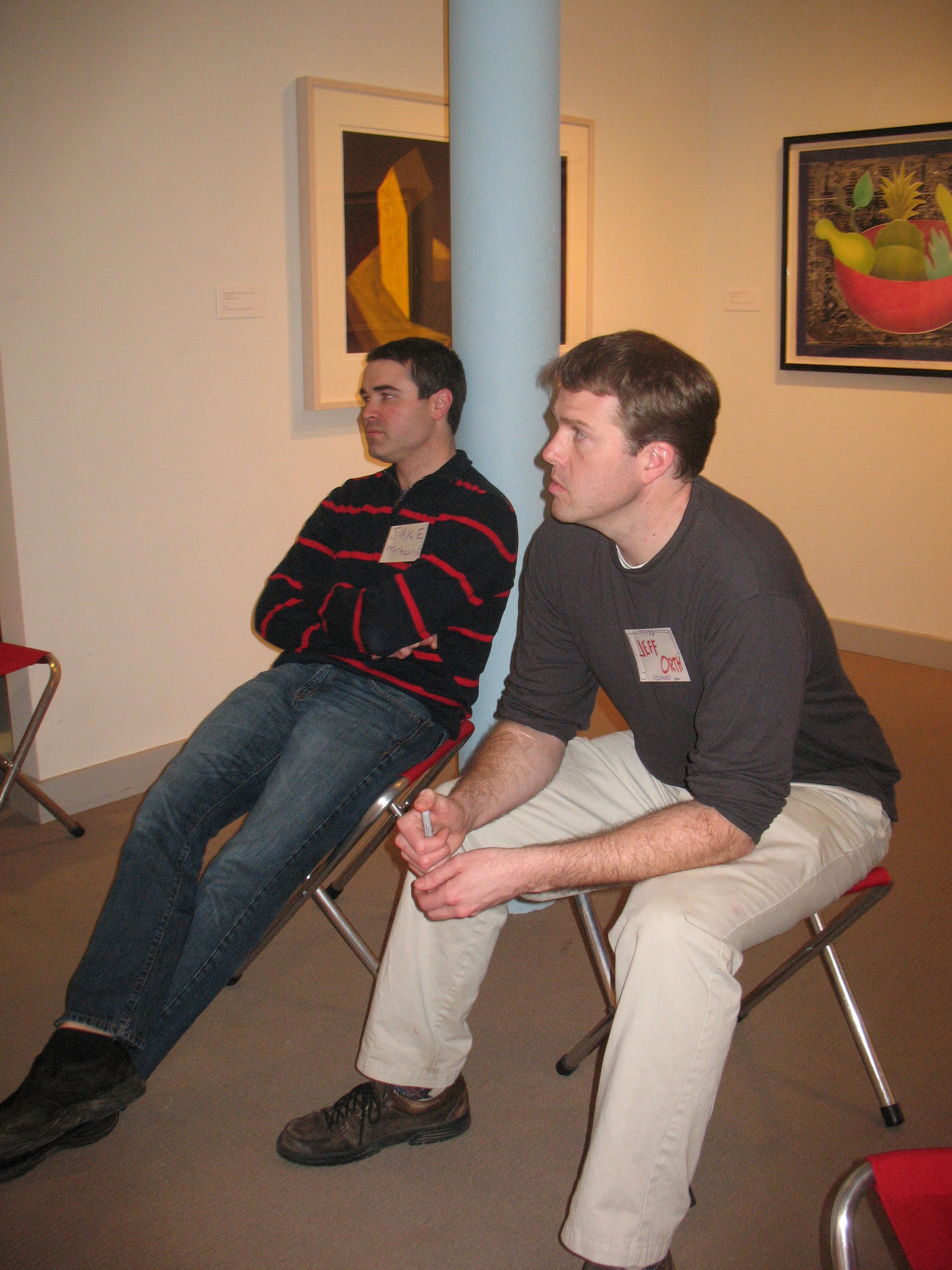
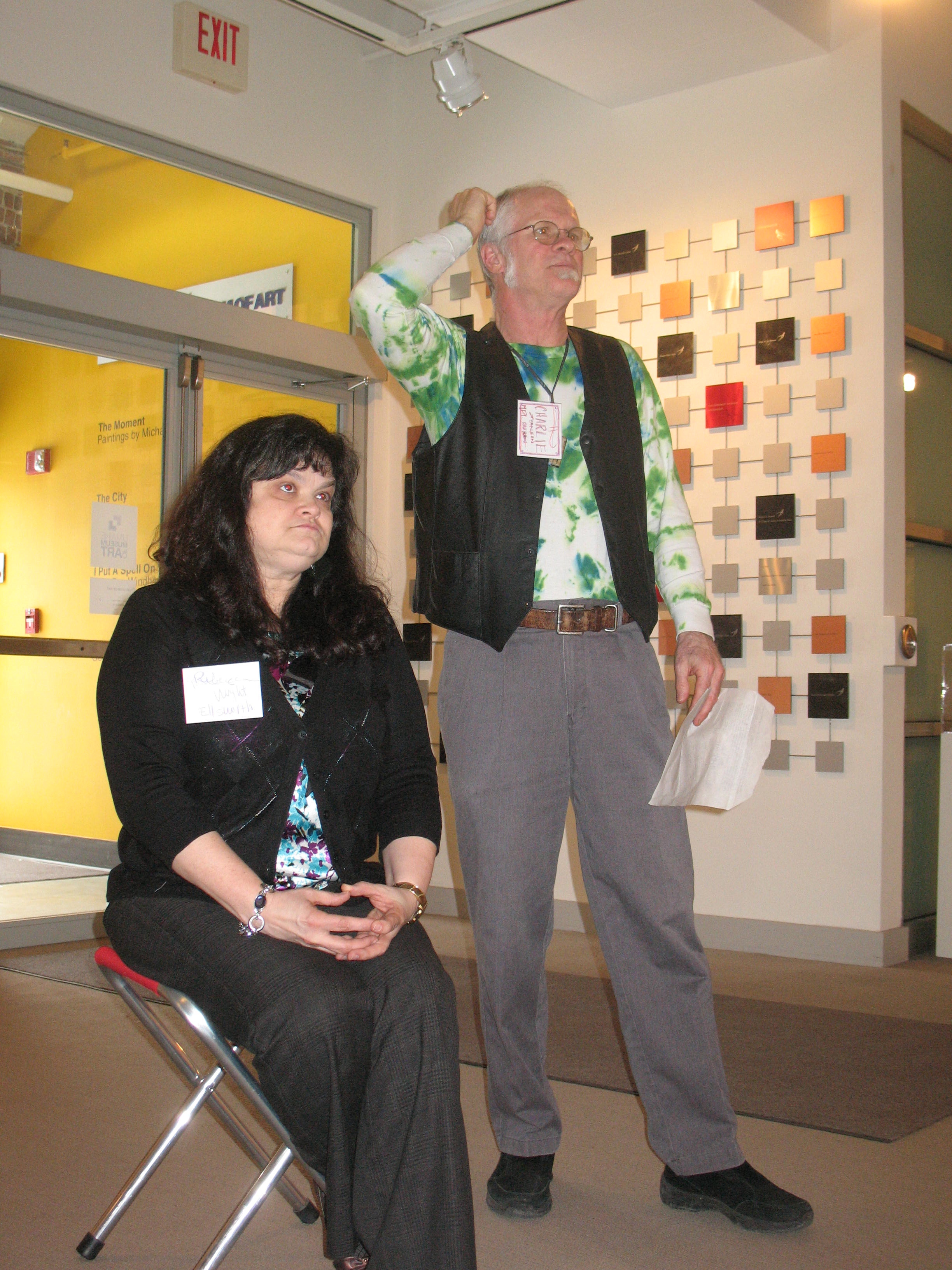
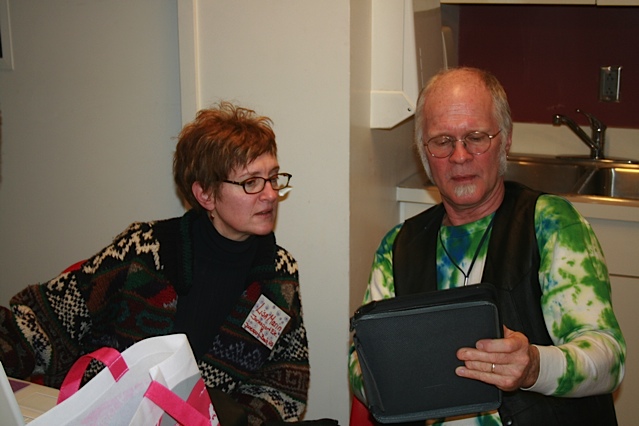
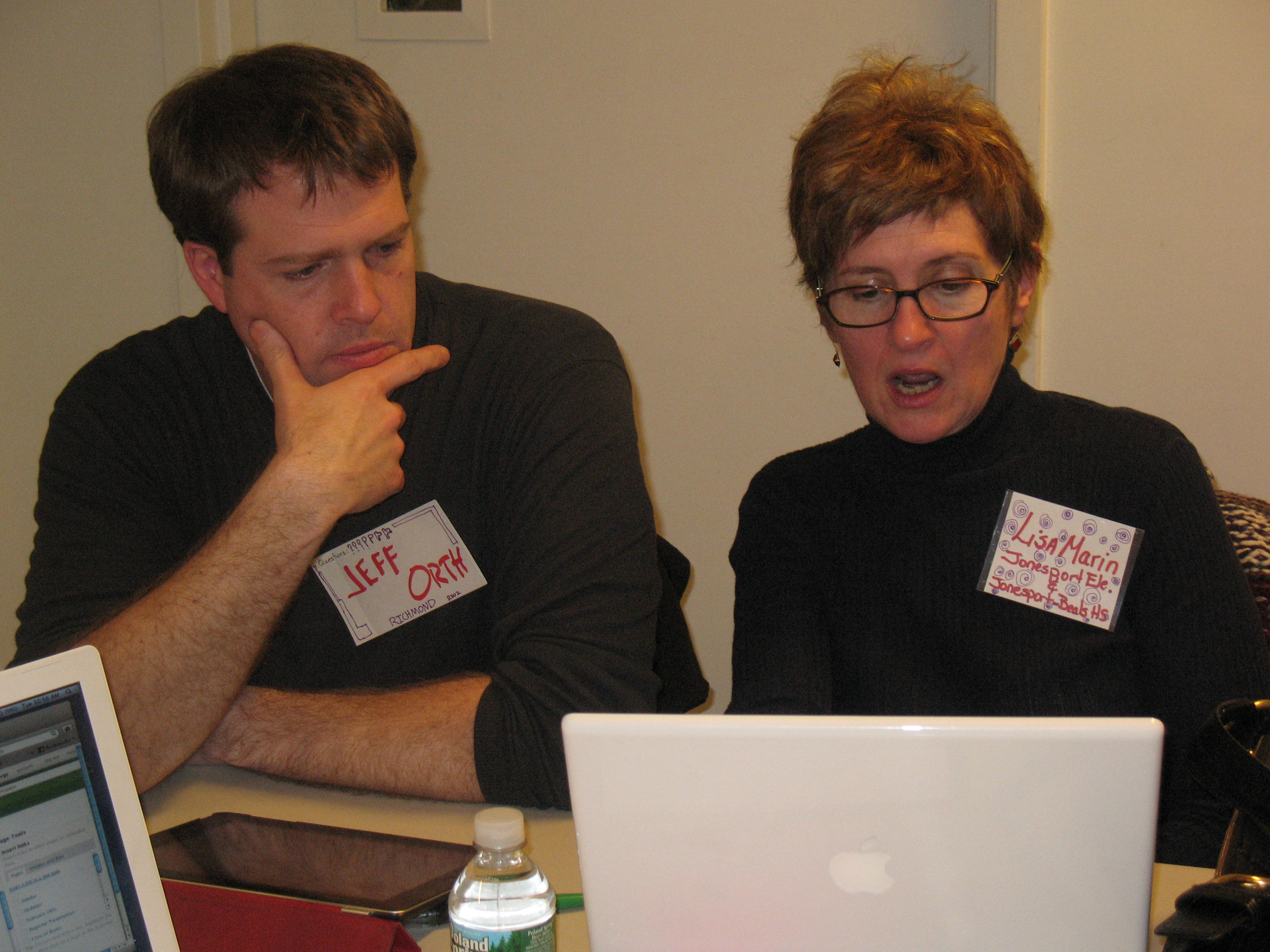
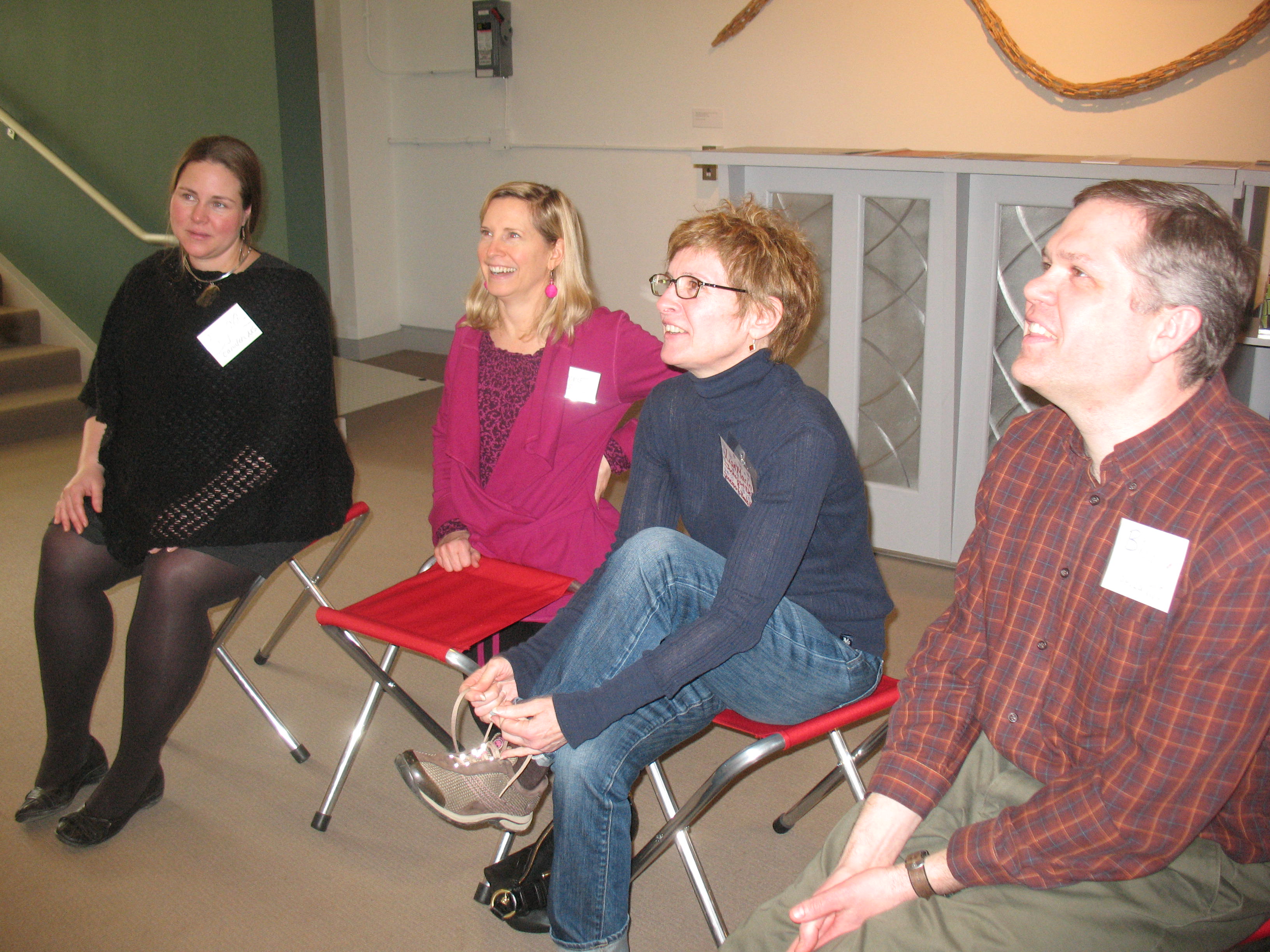
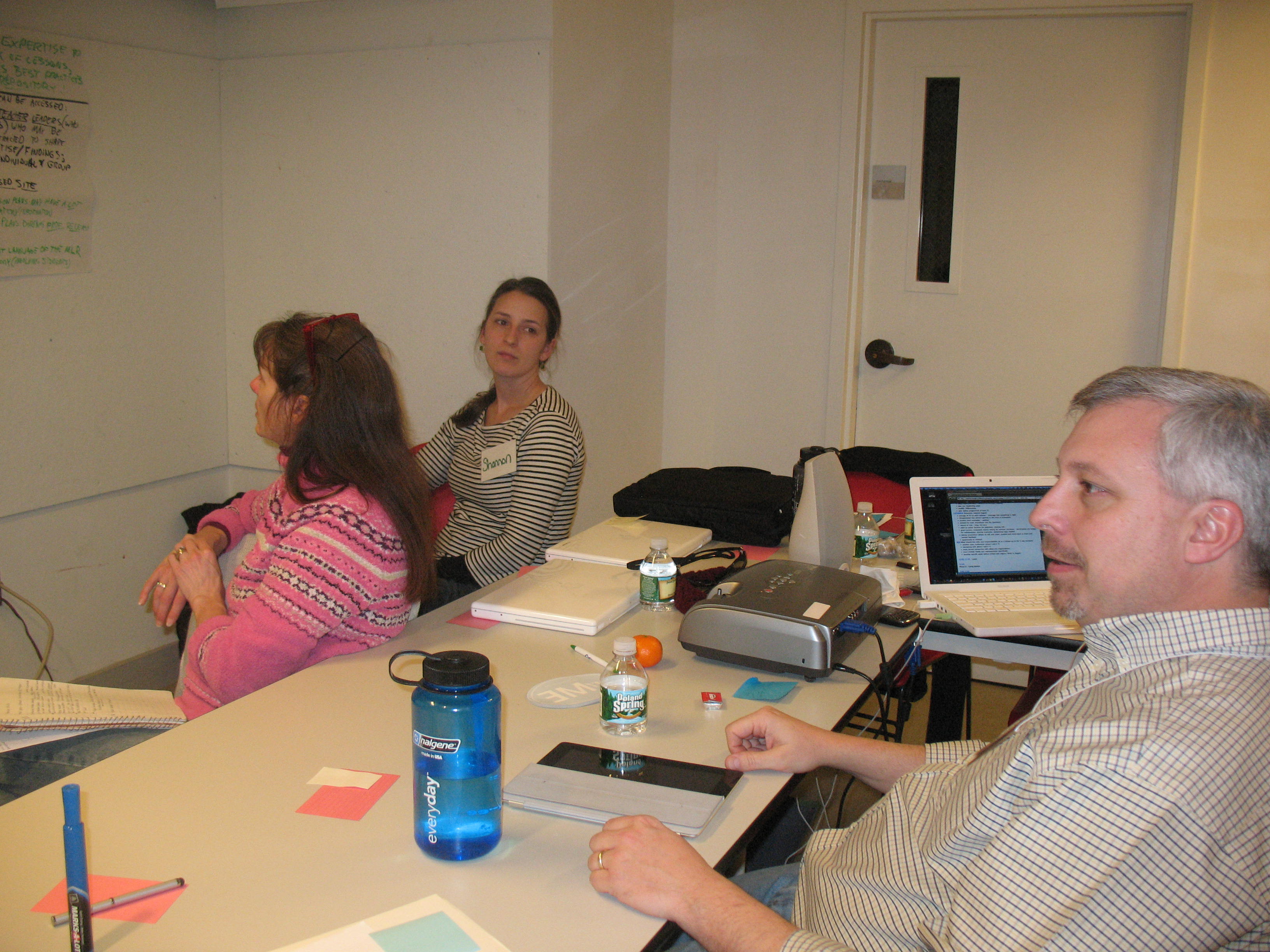
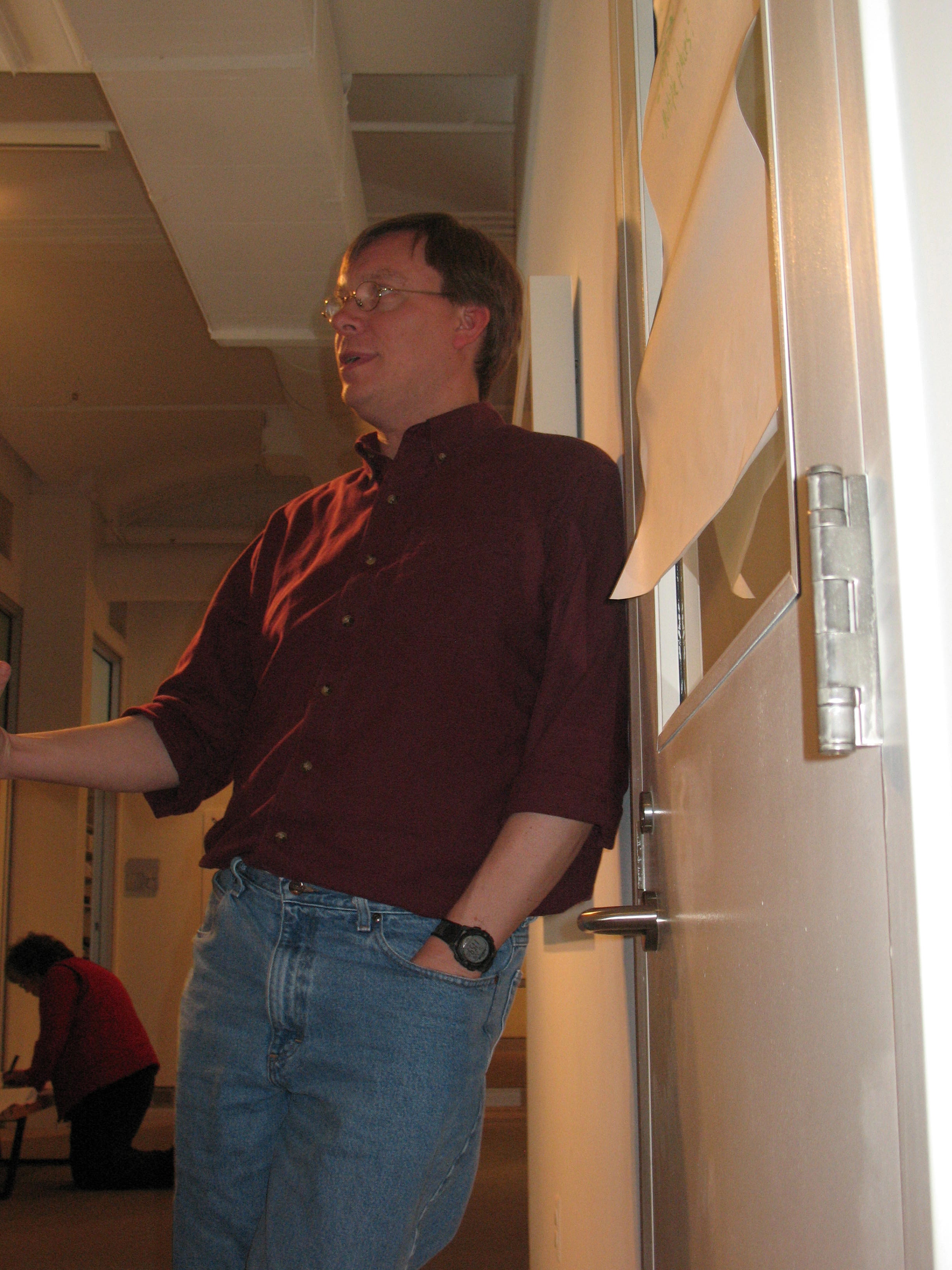
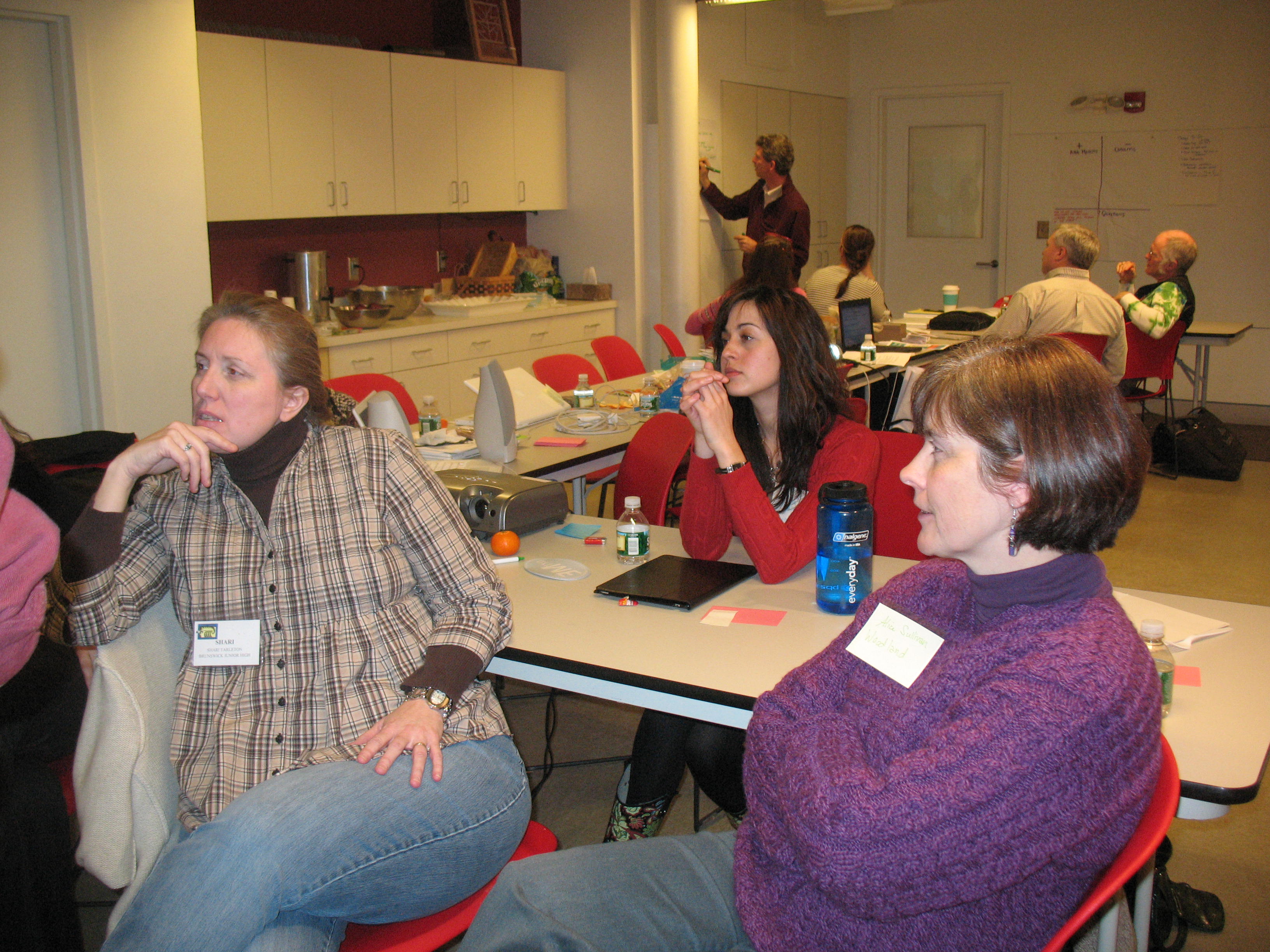
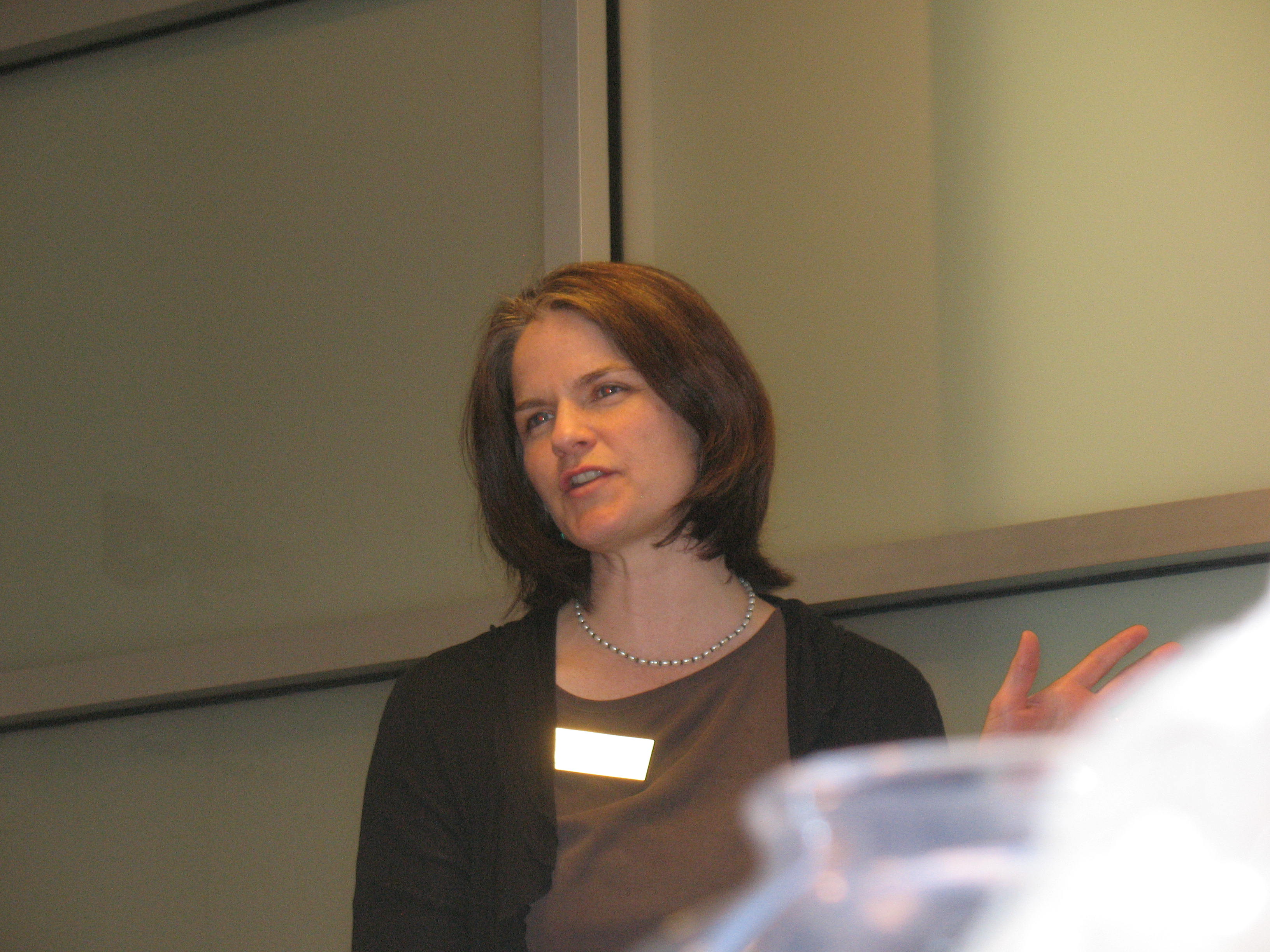
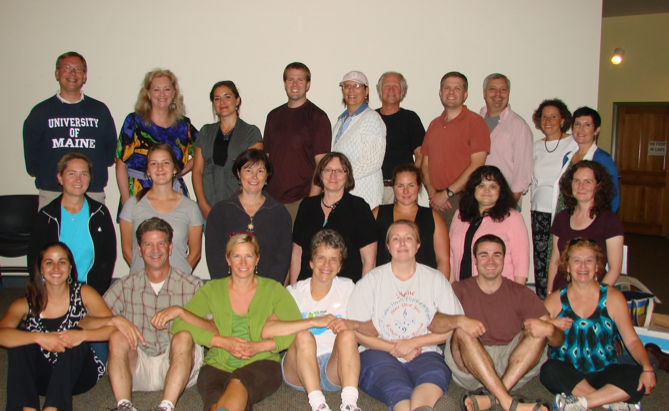
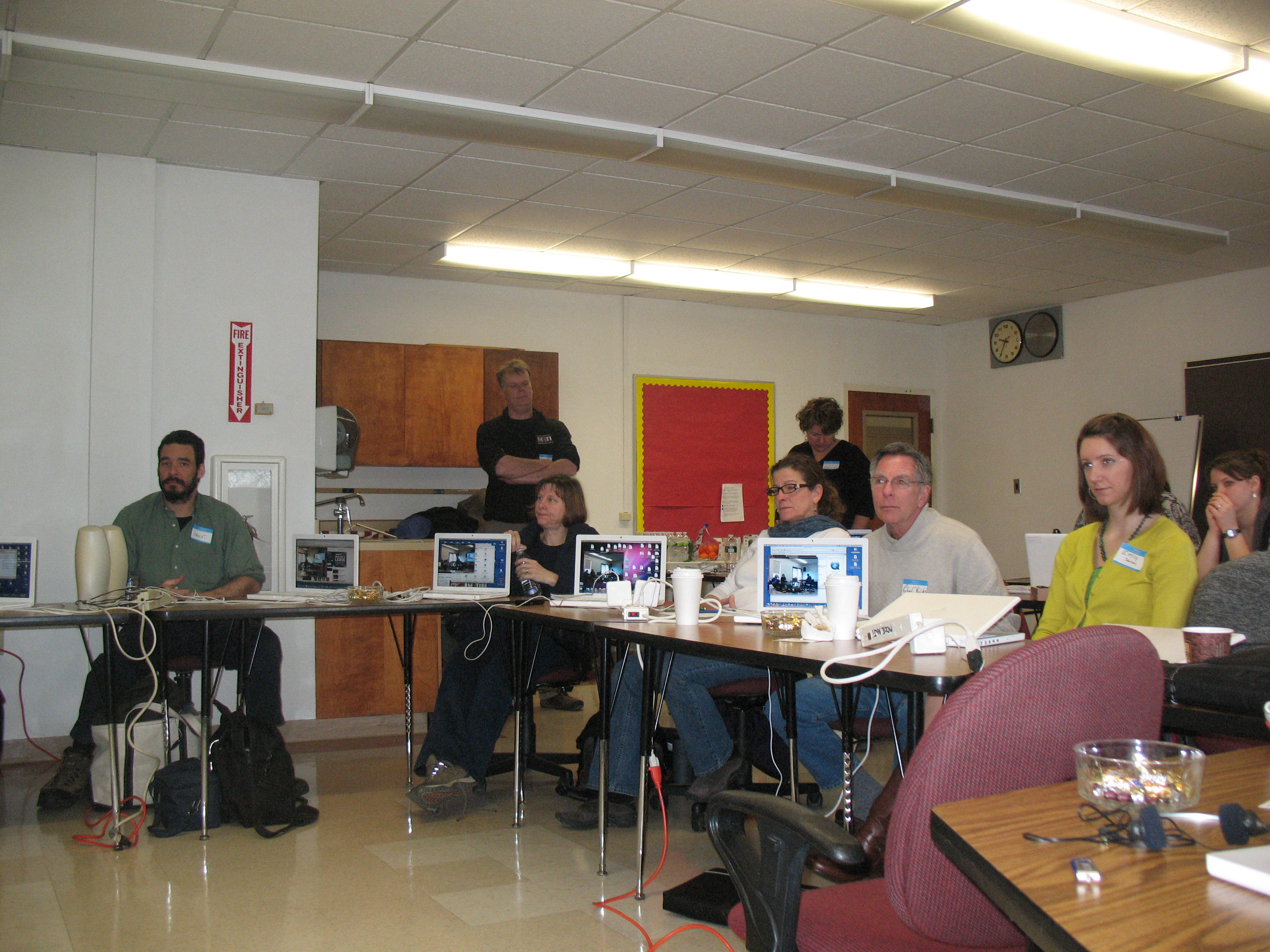
Most of the pictures below were taken by Catherine Ring yesterday.

h1

Looking Back and Ahead

February 28, 2012

Teacher Leaders and Leadership Team meet

Maine Arts Assessment Institute - August 2011

Today is another big day for the Maine Arts Assessment Initiative (MAAI). The Initiative’s Teacher Leaders (TL) and the Leadership Team (LT) are meeting in Bangor at the UMaine Museum of Art. We are fortunate to be working with Education Coordinator, Eva Wagner. And are very grateful to Jill Spencer who is facilitating our work today. Jill is an active blogger, she writes about exemplary and innovative teaming practices at Teaming Rocks! Collaborate in Powerful Ways and is a contributor to the Bright Futures blog. You can check her out at http://jillspencer.net.

Today is a chance for us to reflect on the first nine months of the initiative. We will evaluate and look closely at the components of the process, the work, and the accomplishments of the initiative. And we will collectively look at the proposals for phase II of the initiative, brainstorm ideas, and determine the next steps. So, it is a chance to look back and to look ahead!

So what has been accomplished during the first phase of the MAAI? And have we accomplished what we set out to do? The overall goal is to create an environment in Maine where assessment in arts education is an integral part of the work all arts educators do to deepen student learning in the arts.

  • Music educator, Rob Westerberg and Visual Art educator Catherine Ring provided leadership in creating the plan for the MAAI.
  • In addition to Catherine and Rob, a leadership team was formed that brought together a remarkable group of Maine educational leaders including University of Southern Maine (USM) professor Jeff Beaudry, Bates College professor Bronwyn Sale, Wiscasset High School art teacher Shalimar Poulin, Maine Alliance for Arts Education (then) Executive Director Carol Trimble. Added since is Eastport music teacher Pamela Kinsey.
  • In May of 2011, 18 Teacher Leaders in arts education were selected to help lead the initiative. A wiki was established where the TL started to communicate about leadership, assessment, and technology. Since that time the wiki has been visited by the TL and LT (about 25 people) 1308 times.
  • Those three topics were the overarching segments during a 4-day professional development institute that the TL attended in August at Maine College of Art (MECA).
  • The statewide arts education conference Arts Teachers Lead the Way, Back to the Future: Arts Assessment for Learning was held at USM on October 7, 2011 with 225 educators attending. The TL were the workshop facilitators and shared their knowledge as classroom teachers. Conference feedback was very positive!
  • A video summarizing the conference is being created by a Massebesic High School freshman and will be released shortly.
  • A timeline documents what is happening in arts education in Maine.
  • An MAAI wiki provides information for those wishing to learn more.
  • The Department of Education arts assessment web page provides information on the MAAI.
  • Five webinars faciliated monthly by Rob and Catherine. They were attended by between 30 and 52 participations each month. Each of the webinars has been archived and a meeting plan designed to accompany the archives. These are available for teachers and/or administrators to access and be used at the local level. They are available by clicking here.
  • The TL are presenting workshops in different regions throughout the state during the 2011-12 school year. The schedule is available so educators can attend workshops in their regions.
  • There have been 12 workshops with at least 12 more that will take place before the end of the school year. A total of 130 educators have participated so far plus the 225 that attended their workshops at the statewide conference.
  • Arts assessment graduate courses are being taught by The New England Institute for Teacher Education.
  • A repository is being created for arts education resources that will be available for all educators.
  • Professional organizations who have collaborated with the MAAI on a variety of levels. They include: MLTI, ACTEM, MECA, District 3 Music Educators, MAAE, MAEA, MMEA, USM, and The New England Institute for Teacher Education.

At the meeting in Bangor today we will focus on going deeper into the work and also going wider. We want to provide more opportunities to involve more arts educators to expand on the thinking about assessment, teaching and learning in arts education. If you have feedback on phase I of the MAAI please email me so the TL can take your comments into consideration as we plan phase II. If you’d like to get involved and take on a leadership role please be sure and contact me.

We have sooooooo much to be proud of and are soooooooooo grateful for the contributions and involvement of sooooooooo many in this initiative. If you haven’t joined this journey with us, please do!

h1

Music Workshop with Steve Garton

February 18, 2012

Maine Learning Technology Initiative (MLTI) free workshop

Steve presenting in Union

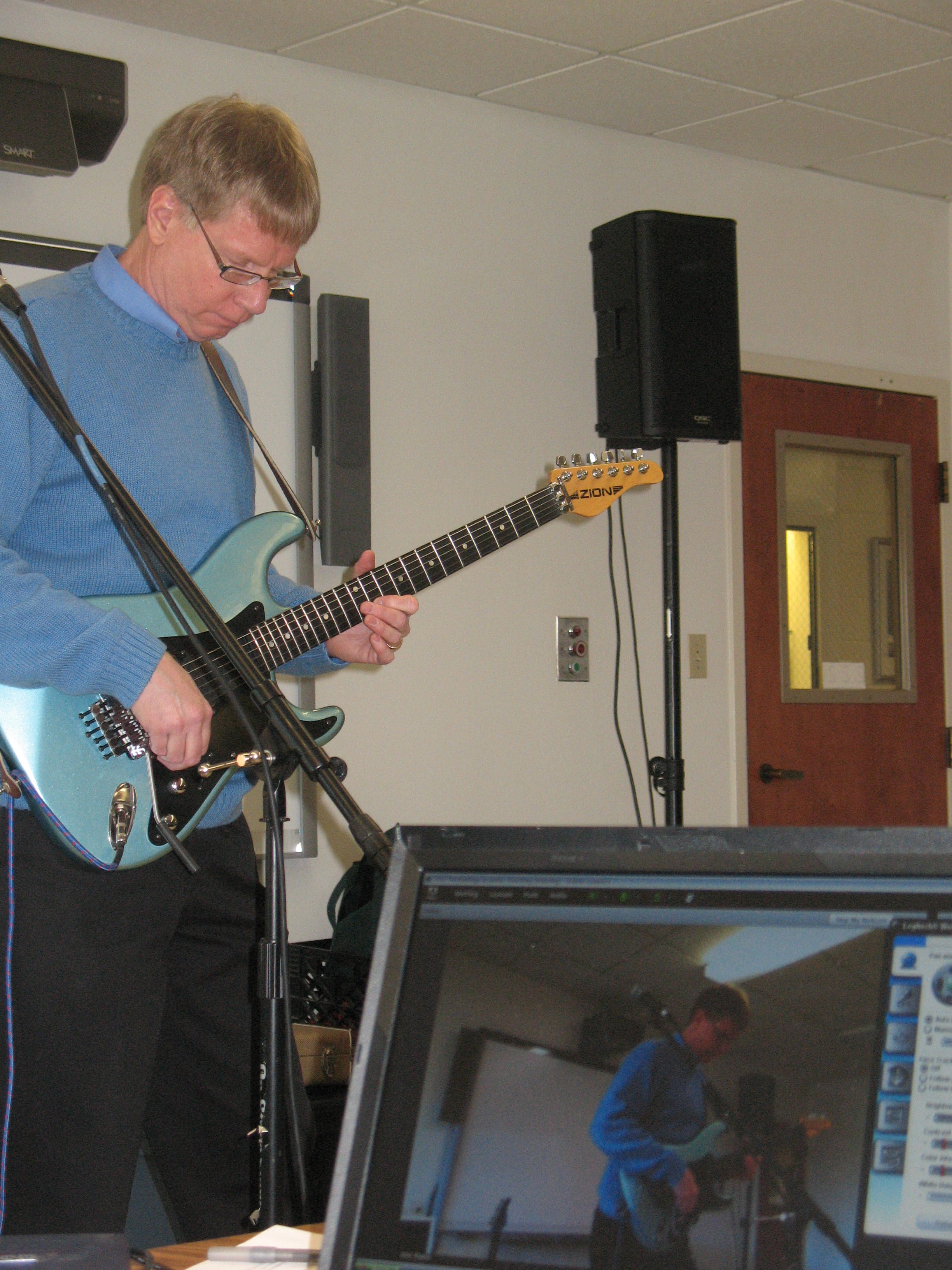
I had the opportunity to attend Steve Garton’s music education workshop in Union not to long ago with 21 music teachers from around the state. Steve has a lot to offer arts educators, as many of you learned in his presentation Rock ‘n Roll Assessment at the October 2011 statewide arts education conference Arts Teachers Lead the Way… Back to the Future: Arts Assessment For Learning. Maine is fortunate to have Steve working at the Maine Department of Education as the Coordinator of Educational Technology. His roles and responsibilities MLTI are numerous so I am thrilled that he is offering a free workshop for music teachers who are interested in integrating more technology in their teaching practice. The workshop has occurred in 4 locations in Maine and one more is scheduled at this time. The information is below. The workshop is designed primarily for middle and high school music teachers, but all are welcome.

Date/Location:
March 21st – Penobscot Valley High School

Agenda:
8:00 – 9:00: Keynote – Steve Garton: The Art of Technology in Music
9:00 – 11:30: Hands-on workshop: Pushing the Limits of Garage Band
11:30 – 11:45: Jim Wells – A Remote Musical Tribute Using Garage Band (A very cool global interactive musical project)
11:45 – 12:45: Lunch (on your own)
12:45 – 1:15: A Different Look at Musical Assessment Using Technology
1:15 – 2:00: Music Notation on the Computer (A comparison and appropriate use of MuseScore, Garageband, Sibelius, and Finale for different scoring needs.)
2:00 – 2:45: Music Educator Round Table: Teaching with Technology (discussion and sharing of current practices, ideas, challenges, needs for PD, etc.)
2:45 – 3:00: Wrap-up and Evaluation

Please bring your MLTI device, head phones. Participants will receive a certificate for 6 contact hours.
Each session is limited to 25 participants.

A link to online registration can be found at http://www.maine.gov/mlti/events

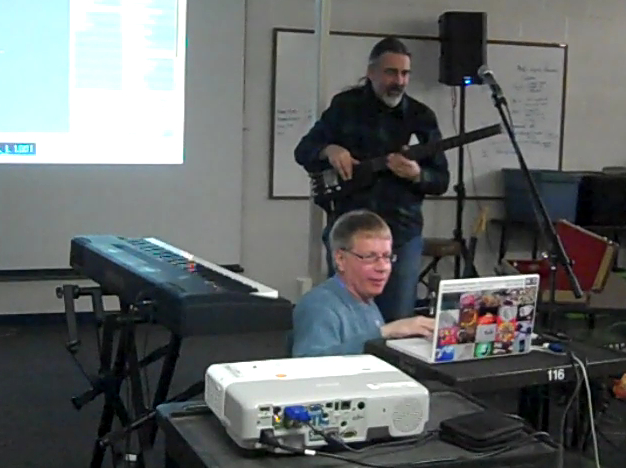
Mike Burd, Technology Instructor/Integrator RSU 9, played for a demo with Steve at Mt. Ararat

Bio: Steve Garton is the Coordinator of Educational Technology for the Maine Department of Education. He provides oversight and logistical support for Maine’s education technology programs with a primary focus on the Maine Learning Technology Initiative providing 1-to-1 computing for the students in Maine.

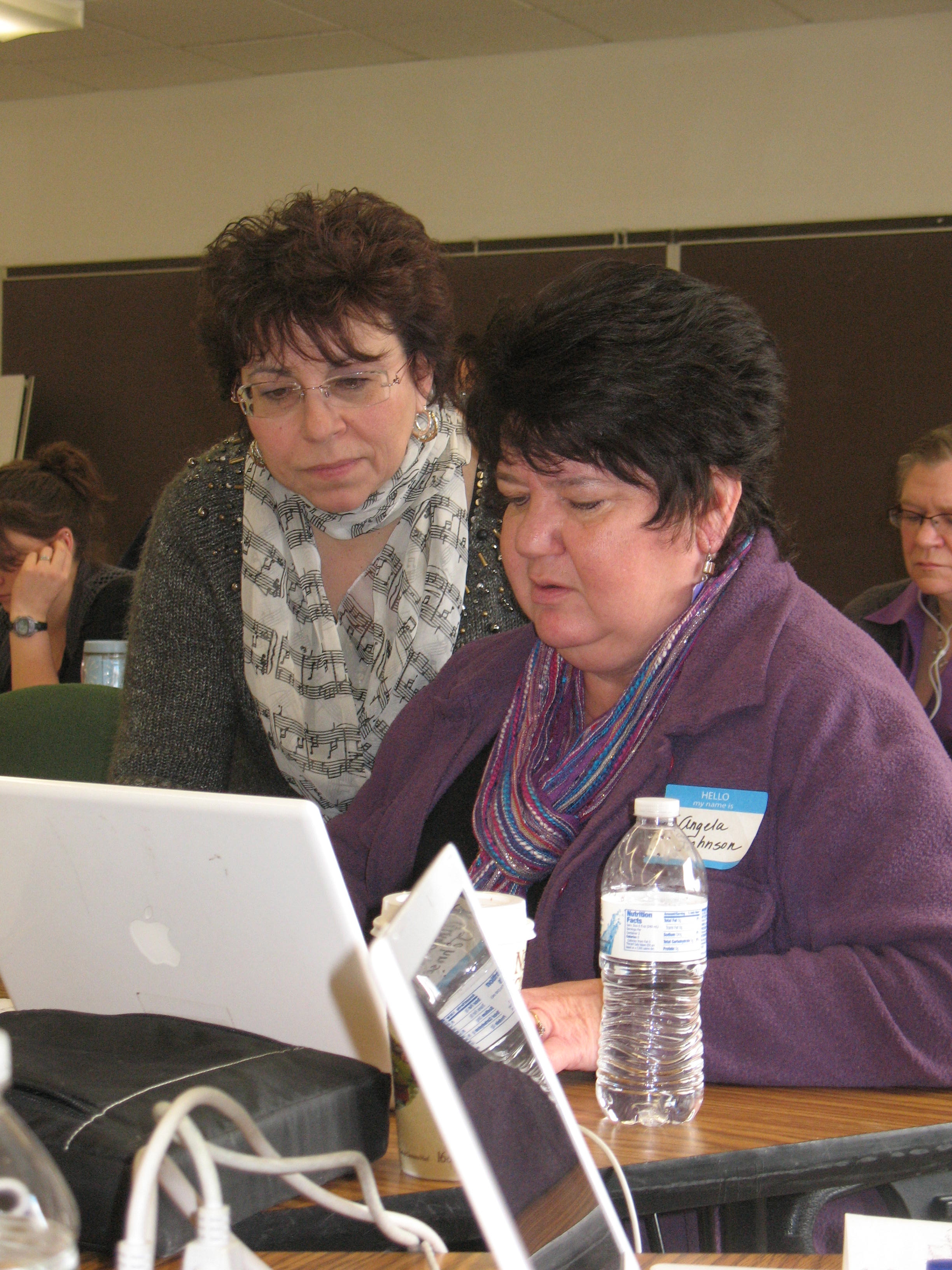
Music teachers Beverly Pacheco and Angela Johnson, RSU13

He received his bachelor’s degrees in Piano Performance from Eastern Illinois University and Math from Slippery Rock University. His Masters is in Educational Technology from Youngstown State University.

Steve was able to navigate the dual life of a serious musician paying his way through school as a keyboard player in local bands. He was fortunate to be involved in the evolution of music technology as the keyboard players were always pushing the envelope of integration and acceptance. From the humble 16 channels of MIDI that were difficult to synch up, Steve’s studio now runs 512 MIDI channels controlling ten physical keyboards and countless virtual instruments as well as 96 channels of digital audio.

Steve believes that all musicians need to have an understanding of where the technology is today. He also believes that music is in the heart, the soul, and the practice studio. Technology does not make music, it allows us more options and easier ways to create, capture, and share what we do. It would be difficult today to have a career in music that did not involve technology in some way.

Steve has been involved in music in about as wide a range as you can get. From playing the Brahms first piano concerto with an orchestra to having no address for two years as he traveled the country playing top forty tunes five hours a night, six nights a week. He sold pianos and organs in Florida and can play “Somewhere My Love” and juggle at the same time. He was an assistant band director for five years and even assumed the head role for a playoff season that went to the state championship. He even received a few technical fouls with the pep band. He was musical director for 13 plays at Sharon High School and did a lot of arranging for the Warren Philharmonic Orchestra. He likes to sit around the house and play the acoustic guitar while watching amazing musical videos on YouTube.

Come spend a day and share with a like-minded group of people as we talk about the state and proper use of technology in music today.

h1

Professional Development Opportunities in the Arts

February 7, 2012

Join in live or listen to archived webinars

Regional Workshops:                                                                                                                 The Arts Assessment Iniative continues to offer opportunities around the state. The list of Regional Workshops being provided by the initiatives 18 Teachers Leaders are listed at http://www.maine.gov/education/lres/vpa/assessment.html.

Maine Assessment Webinars:                                                                                                The Leadership and the Arts webinar, facilitated by Rob Westerberg and Catherine Ring, was held on February 1, 2012 and explored:

  • The Role of Teachers
  • The Role of Administrators
  • The Role of the greater Community

If you were not one of the 35 participants, or if you wish to hear it again, you can go to the archive at http://stateofmaine.adobeconnect.com/p3yj73w4iaf/. Along with the archive there is a meeting plan located at http://www.maine.gov/education/lres/vpa/assessment.html. I suggest that you use the meeting plan on a school workshop day with your colleagues. Please take the time to read the plan to help you decide how to use this  valuable document. And by all means invite your administrators to participate.

There was a glitch in taping the January elementary assessment webinar that took place so it has been re-scheduled for March 14th, 3:30-4:30. You can access the link to join in at http://www.maine.gov/education/lres/vpa/assessment.html.

The Arts, Common Core, and 21st Century Connections:                                              On January 17, 2012 Joyce Huser, Kansas Department of Education, Fine Arts Consultant facilitated a webinar for my colleagues from throughout the country. Joyce created documents that I am certain you will find helpful in your work at the local level. You can access the recording at http://www.maine.gov/education/lres/vpa/eor.html. Joyce includes the direct correlation between dance, music, theatre, and visual art to the Common Core State Standards, and the 21st Century Arts Skills Map. At the above page you will find the presentation Power Point, the P21 Arts Skills Map, and an ELA Strand Organizer (Joyce and her ELA partners created). Most interesting to me is a graph in the Power Point that exhibits the skill demands for arts related careers for 2008 – 2018 which shows the skills taught in arts education classes. There is a link on the webpage is the sources for the work force data in the graph.

President’s Committee on the Arts and Humanities Report:                                Last week while I attended the Maine Art Education Association board meeting Rob Westerberg attended a webinar that provided information on the recently released report by the President’s Committee on the Arts and Humanities. Rob was kind enough send his “take-aways” from the webinar “Reinvesting in Arts Education: Winning America’s Future Through Creative Schools.” The report is posted at http://www.pcah.gov/. The culmination of 18 months of research, meetings with stakeholders, and site visits all over the country, this report represents an in-depth review of the current condition of arts education, including an update of the current research base about arts education outcomes, and an analysis of the challenges and opportunities in the field that have emerged over the past decade. It also includes a set of recommendations to federal, state and local policymakers.

In Rob’s words: A good webinar today… it hit on key components of an effective integrative strategy at the elementary and middle school levels.

  • A few quotes: “Arts Education is a flower AND a wrench” (a tool for development of creativity in the curriculum… I LOVE the analogy!)
  • “Having a good music program isn’t enough”.
  •  “Wow, schools are the ones where Arts teachers were given liscence to craft the vision for their school; were the chief creative officers for their schools.”

Rob was able to ask this question of the moderator: “How do the findings of this report tie into standards based assessment in the arts? Do they?”

Rachel Goslins response: “The report does not get into either standards or assessment… too big and messy.”

She then went on to mention the development of the national standards as the primary focal point of that discussion. In other words, it was not within the scope and sequence of this report to dive into the realm of standards or assessment.

For her final thoughts, she mentioned that “for the arts moving forward, (and I’m paraphrasing here), they must be integrated in a meaningful way, led by valued and empowered arts specialists.”

A GREAT BIG THANK YOU to Rob for sharing your notes with the blog. If you’d like to listen to the webinar please go to the archived at http://advocacy.nafme.org/page/webinars-2.

h1

President’s Committee on the Arts and Humanities

February 1, 2012

Webinar tomorrow on report: Reinvesting in Arts Education: Winning America’s Future Through Creative Schools

On Thursday, February 2, at 5 PM ET, please join us for an insider’s look at Reinvesting in Arts Education: Winning America’s Future Through Creative Schools, the recent report released by the President’s Committee on the Arts and the Humanities (www.pcah.gov).  The research clearly shows the effect of arts education on student academic achievement and creativity.  Additionally, among its specific recommendations, the report suggests the following…
•             Build robust collaborations among different approaches to arts education
•             Develop the field of arts integration
•             Expand in school opportunities for teaching artists
•             Utilize federal and state policies to reinforce the place of arts in K – 12 education
•             Widen the focus of evidence gathering about arts education

Of particular concern to our members, of course, is the issue of teaching artists and their role in the classroom.  Rachel Goslins, Executive Director of PCAH (http://www.pcah.gov/staff), will share more about the study, and answer questions in what will be a unique learning and discussion opportunity.  We encourage all officers and members to take advantage of this chance to engage Rachel, and to plan detailed questions about the subject matter in advance.

For more information about the study, please visit: http://www.pcah.gov/sites/default/files/PCAH%20Arts%20ED%20%20Report%20Summary%20&%20Recommendations_0.pdf.

Webinar registration is free.  https://www1.gotomeeting.com/register/703925017

We look forward to having you with us on February 2 at 5 PM ET.

h1

New and Old

January 9, 2012

Recent report and an older video

This is a recent report put out by the Wallace Foundation. It includes leadership, arts particpation, and after school programs. “The arts belong to everyone.” That was the conviction of our co-founder Lila Wallace. It has guided our efforts for more than two decades to support arts organizations as they develop and test innovative ideas to reach new audiences so that many more people might enjoy the benefits of the arts. Please click here for the report.

Thank you to my Department colleague, Laurel Sterling, for sending it.

This item is not recent interview but how interesting that it connects with the recent work in Maine in many school districts. On learning, computers, population growth, the universe. A 1988interview conducted by Bill Moyers on World of Ideas with Isaac Asimov
Please click here.

Thank you for art educators from Hampden Academy, Leah Olson, for sending it.

h1

Virtual Field Trips

December 28, 2011

Can’t get there from here

Some of you might be familiar with these but just in case you’re not… here is a list of opportunities for students of places that you can visit virtually:

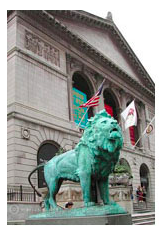
The Art Institute of Chicago

The museum’s extensive online resources include superb lesson plans, related book titles, maps, and glossaries related to exhibitions and items in the permanent collection. Extensive resource sections, such as the museum’s “Cleopatra: A Multimedia Guide to Ancient Art,” are also accessible from this page and include fully bilingual English and Spanish text, video clips, time lines, and lesson plans for grades 4–12 in five subject areas.

Designed for students in grades 2–5, the Wacky Kids site focuses on world art and culture. It offers a range of hands-on craft projects based on items in the museum’s collection. The site also includes links to other museum artifacts and related book titles.

The Los Angeles museum’s site includes extensive image banks and excellent, interdisciplinary lesson plans, including the fascinating resource section entitled “Art & Science: A Curriculum for K–12 Teachers.”

New York’s biggest treasure house provides online teacher resources that cover subjects such as ancient Egypt, Indian carpets, and Byzantine life and art, with ideas for art, math, science, language-arts, and social-studies curricular links. The site also includes an online archive with thousands of highlights from the collection.

ArtsConnectEd, a joint project organized by Minneapolis’ two world-class art museums, offers a wealth of ideas on integrating art into the curriculum. There’s a searchable art gallery and a playground of activities just for kids. The “For Your Classroom” section contains the Teacher’s Guide to ArtsConnectEd, a useful document that maps out the site and explains how to fully take advantage of its offerings. At the bottom of each page of the guide are “Instant Inspirations,” one- or two-sentence ideas for activities, such as imagining what two works of art would say to each other at a party.

The museum’s online teacher resources include a wealth of art-focused lessons packed with interactive student activities, printable worksheets,  glossaries, biographies, and other related resources.

h1

Articles

December 27, 2011

Recent articles that have come across my desk that you might find interesting:

  • Teaching the Teacher by Anthony Jackson, Dec. 21, 2011 from Education Week blog Global Learning. Programs across the country are offering learning opportunities for teachers to learn how to provide deeper learning in areas such as “global vision, integrating international content into all subject areas, and emphasizing world language learning”. To read the article please click here http://blogs.edweek.org/edweek/global_learning/2011/12/teaching_the_teacher.html
h1

Autism and the Arts

November 17, 2011

MPBN TV broadcast on Autism

Over the weekend MPBN TV had a program on Autism which features Temple Grandin who is a prominent speaker on Autism in the US. Temple is an animal scientist along with being an expert on Autism. A movie was created that tells her story. I am sure you will find the information that Temple shares in the broadcast very informative! Along with Temple there are stories of Mainer’s with Autism.

You can access the show at http://surrymusictherapy.us4.list-manage1.com/track/click?u=9ca76b1b18d01ce4aab3f8f5b&id=ebd8d88f7c&e=c20fc394a3. Also available at the link is information and resources that you might find helpful.

This information was shared by Surry music therapist, Alan Wittenberg. To learn more about what Alan has to offer please go to his website The Surry International Music Therapy Center at http://www.surrymusictherapy.com/.


h1

National Core Standards and Vacation

November 15, 2011

Beautiful Arizona

The first three days in Arizona were very warm but the weather was dry so it didn’t feel like 92 degrees was terribly hot. The hotel was about 5 blocks from Arizona State University so I had a chance to walk before moving to the air conditioned room where the meetings on the National Core Standards were held. We ate lunch outside and met in small group work outside as well so it made the work even more pleasant.

Thirty one of my colleagues from othe states part of the State Education Agency Directors of Arts Education (SEADAE) organization attended the three day meeting in Phoenix the first week in November. We met with our partners from the National Coalition for Core Arts Standards who are:

  • Lynne Kingsley, Executive Director, American Alliance for Theatre and Education
  • Amy Jensen, Advocacy Director, American Alliance for Theatre and Education
  • Sandra Ruppert, Director, Arts Education Partnership
  • Michael Sikes, Senior Associate for Research and Policy, Arts Education Partnership
  • Nancy Rubino, Director, Office of Academic Initiatives, College Board
  • James Palmarini, Director of Educational Policy, Educational Theatre Association
  • Michael Peitz, Executive Director, Educational Theatre Association
  • Michael Blakeslee, Senior Deputy Executive Director and Chief Operating Officer, The National Association for Music Education
  • Scott Shuler, President, The National Association for Music Education
  • Deborah Reeve, Executive Director, National Art Education Association
  • Robert Sabol, President, National Art Education Association
  • Barry Shauck, Past President, National Art Education Association
  • Jane Bonbright, Executive Director, National Dance Education Organization
  • Susan McGreevy-Nichols, President, National Dance Education Organization
  • Deb Hansen, President, SEADAE, Delaware Department of Education
  • Linda Lovins, National Expectations for Learning in Arts Education Tri-Chair, SEADAE, Florida Department of Education
  • Marcia McCaffrey, National Expectations for Learning in Arts Education Tri-Chair, SEADAE, New Hampshire Department of Education
  • Lynn Tuttle, National Expectations for Learning in Arts Education Tri-Chair, SEADAE, Arizona Department of Education
  • Cory Wilkerson, National Coalition for Core Arts Standards, Communications Co-Chair, SEADAE

One of our tasks was to help determine who the writing teams would be for dance, music, theatre, and visual arts. Ten teachers for each team will be selected. I was proud that 9 Maine arts teachers applied. Thank you to those who took the time and made a commitment to help with this important work.  The chairs of these groups are listed at https://nccas.wikispaces.com/Writing+Team+Chairs

We had an extensive discussion around “media arts” as a 5th discipline in the national core arts standards document. Thank you to those who contributed their opinion on two meartsed blog posts. You can read what your Maine colleagues think about the idea on the two posts. And you can learn more from what the “media arts” investigation committee learned at https://nccas.wikispaces.com/Media+Arts+Investigation+Committee

Much of the discussion in Phoenix was streamed live for those who were available and for those who weren’t the videotapes can be accessed at https://nccas.wikispaces.com/NCCAS+Phoenix+Meeting+11-1-2011

College Board is a full partner on the leadership team and they have done some interesting research for our national core arts standards work. You can read their findings that is already helping to inform the work at https://nccas.wikispaces.com/International+Standards

As the work progresses you can continue to check the latest development by going to the wiki that has been created to house all of the links above and other information and resources at https://nccas.wikispaces.com/.

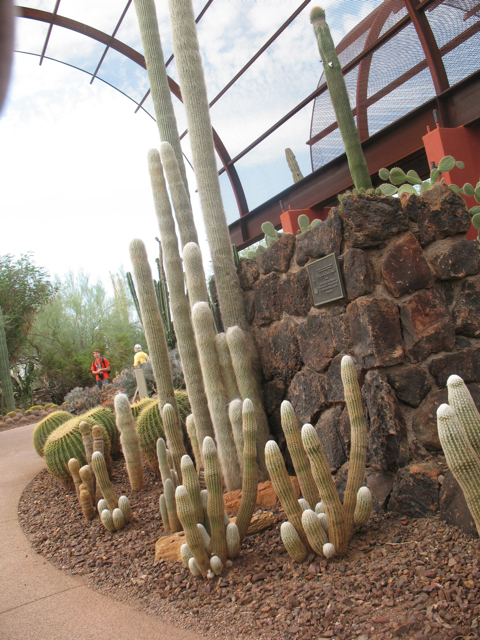
Botanical Gardens

At the conclusion of my three day meeting I had a chance to vacation for a few days in Arizona. For a state that only has on average 7 inchCaes of rainfall each year I was surprised that it rained twice while we were there. Phoenix has a population of 1,445,632 as compared to our entire state of Maine with 1,318,301 people. For a city with such a large population it didn’t feel crowded like other large cities. The city is laid out on a grid with nearly every street straight. Numbered streets go north & south, named streets go east-west. There are “washes” where there are low spots and when it rains (not much even) the water rises in the wash and you guessed it floods the roadways. We ran into one of them and also freezing rain, sleet, and snow. In spite of the weather we hiked in some beautiful places where the saguaro cactus grow perhaps as tall as 50 feet and may live to be older than 200 years.

Joani and Mark

We spent time with old friends and met interesting people. I met Joani, who teaches art at Arcadia High School in 2000, while we were on the Fulbright program in Japan. Joanie’s husband Mark is a Director of Technology in the Kyrene Elementary School District. We traveled north from Phoenix and saw about 8 inches of snow in the Flagstaff where people ski the area mountains, the tallest about 12,000 feet. We traveled northeast from there to Canyon de Chelly National Monument arriving in time to drive the rim as the moon rose. The rich orange rock was beautiful at dusk and the next morning with sunshine, brilliant blue sky and 18 degrees. We traveled by jeep down into the canyon to view and explore the history, culture, artifacts, that are sustained today by a community of Navajo people. It was one of those moments in time when I realize how tiny I am in this great big universe.

Canyon de Chelly

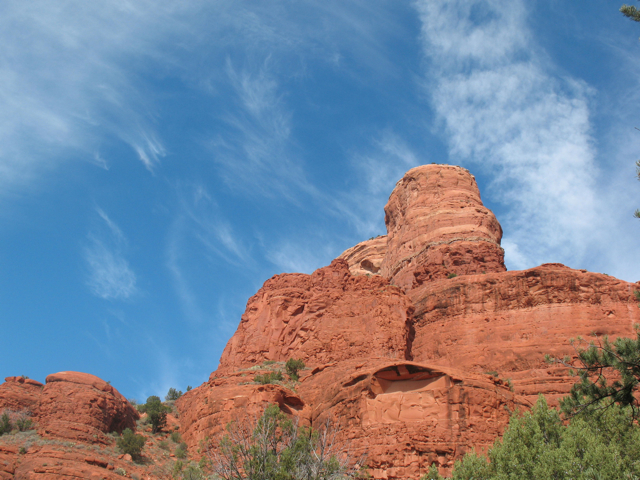
We stopped while traveling back to Phoenix at the Painted Desert, another amazing site at dusk. The next day we hiked in Sedona and were treated to another beautiful blue sky and sunshine day. If you haven’t visited Arizona I recommend it. The landscape is so interesting and provides plenty of inspiration for artists.

Young Navajo artist whose grandparents live in the canyon during the summer

Young Navajo artist whose grandparents live in the canyon during the summer

Sedona