Archive for the ‘Research’ Category

h1

Facts on Arts Participation

August 31, 2016

New Research

New Research Reveals National, State, and Regional Facts about Arts Participation
Screen Shot 2016-08-30 at 5.46.09 PMWashington, DC—The National Endowment for the Arts is releasing new research that for the first time offers a complete state-by-state perspective on how Americans participate in the arts. In addition, the data reveal that despite decades of declining arts attendance by U.S. adults in the performing and visual arts, more recent rates are holding steady. The new research comes in the form of two “arts data profiles,” NEA collections of statistics, graphics, and summary results from data-mining about the arts. The latest additions are Results from the Annual Arts Basic Survey (2013-2015) and State‐Level Estimates of Arts Participation Patterns.

“The information in these two research profiles adds significantly to our understanding of how adults in this country engage with the arts,” said NEA Chairman Jane Chu. “It is encouraging that participation rates for the performing and visual arts are holding steady while a deeper dive into state participation highlights interesting regional variations that speak to the diversity of our nation.”

Since 1982, the NEA has periodically issued results from the Survey of Public Participation in the Arts (SPPA), a comprehensive survey that has shown significant declines in attendance at performing arts events and at art museums/galleries over long timeframes, particularly between 2002 and 2012.
In addition to referencing the SPPA, the two new profiles include data from the newer Annual Arts Basic Survey (AABS), only in its third year. Although the AABS affords a less detailed perspective than the SPPA, its results are issued more frequently, allowing for more accurate trend-tracking. Trend analysis is useful not only for researchers and the general public to enhance their understanding of how Americans engage with the arts, but also for arts workers who can use the findings to inform their presentation of art to the public.

Arts Data Profile 10: Results from the Annual Arts Basic Survey (2013-2015) includes five research briefs or summary findings from the dataset:
·         Visual and Performing Arts Attendance; Movie-Going; Literary Reading; and Learning through Arts Classes or Lessons
·         Personal Performance or Creation of Artworks
·         Urban/Rural Patterns of Arts Participation
·         Gender, Race and Ethnicity, and Age of Arts Participants
·         Job Analysis of Arts Participants

Among the key findings from these research briefs are:

Overall Numbers
·         In 2015, nearly 32 percent of U.S. adults totaling 76 million people attended a live music, theater, or dance performance over a 12-month period, while 19 percent of adults or 45 million attended an art exhibit. Both of these rates are similar to the share of adults who attended in 2013.
·         Despite the rates given above, the AABS shows a drop in the share of adults reading literature. From 47 percent in 2012, literary-reading rates fell to 45 percent in 2013, and to 43.1 percent in 2015.
·         Movie-going is the most popular arts activity, with 141 million adults or 58 percent of adults going out to see at least one movie in a year.
·         Young adults, ages 18 to 24, tend to participate in the arts at higher rates than adults in general, with 37 percent of young adults attending live performing arts events versus 32 percent of all adults. Relative to their share of the US population, young adults were overrepresented among performing arts attendees by 17 percent.

Personal Creation
·         The share of adults who personally perform or create artworks (e.g., play a musical instrument, create visual art, or do creative writing) has remained stable—45 percent in recent years.
·         In 2015, just under 3 percent of adults took visual arts classes (e.g., classes in drawing, painting, pottery, or design) while 2.4 percent took classes in music or music appreciation.
·         Differences in arts participation rates between adults in urban and in rural communities vary considerably given the concentration of arts venues in cities. However, differences between urban and rural participation rates were negligible when it came to art-making.

Metro Area Analysis
·         In an analysis of 11 large metros, Greater Detroit residents were found to attend art exhibitions at a rate of 27 percent, far exceeding the national rate of 19 percent.
·         Above-average movie-going is reported in both Chicago and Dallas, while adults performing or practicing dance is popular in the San Francisco and New York metro areas.
·         Creative writing is a popular arts pastime in the Greater Boston area. The share of adults writing was 10 percent—about 4 percentage points greater than the national rate.

Occupation
·         Visual and performing arts attendees are highly represented by workers in management and professional occupations.
·         Among adults who personally perform or create artworks, job categories are distributed in the same pattern as they appear in the U.S. workforce in general.

Arts Data Profile 11: State‐Level Estimates of Arts Participation Patterns features two issue briefs: “Highlights of Arts Participation by State (2012‐2015)” and “Why Some States Exhibit Higher (or Lower) Rates of Arts Participation.”
Among the key findings from the research briefs are:
·         Although adults’ state-level rates of arts participation are close to the national average, there are some broad differences.
o   Western states tend to have participation rates above average
o   Eastern states such as Maryland and Vermont also have above-average rates
o   Rates are below average in southern states such as Mississippi, West Virginia and Florida.
o   Kansas is one of the few states in the country with an above-average share of adults who use TV, radio, and/or the Internet to consume art or arts programming. In 2012, 71.5 percent of the state’s adults engaged in the arts through media.
·         This data profile examines the strength of the relationships among arts participation, education, poverty, and access to arts orgs.
o   For the performing arts, the greatest correlations are with education (positive) and poverty (negative). Access to the arts is less of a factor when examining state-level participation.
o   The correlation of participation with individuals’ education levels is stronger for visiting art exhibits than for attending the performing arts.
h1

MALI Summer Conference – Success!

June 29, 2016

Opportunity!

IMG_2303

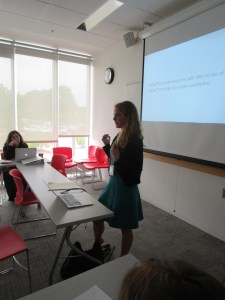
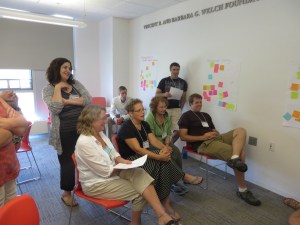
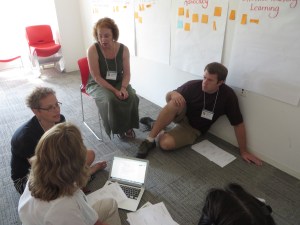
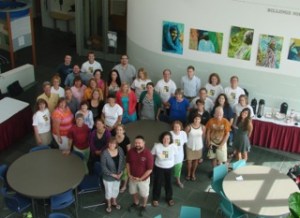
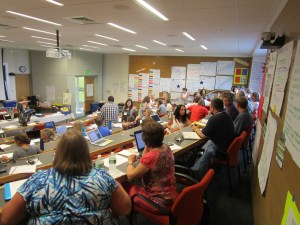
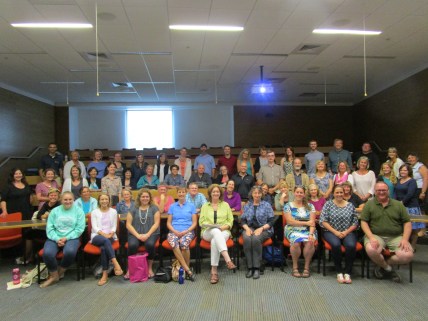
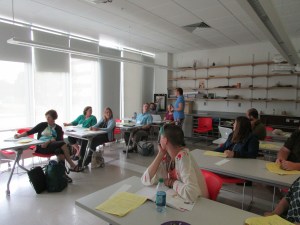
Yesterday at Wishcamper, USM in Portland, 68 arts educators convened for the Maine Arts Commission Maine Arts Leadership Initiative (MALI) Summer Conference. The day was filled with listening, speaking, demonstrating, networking, and learning, learning, learning. The feedback provided by participants shows an appreciation for the opportunity and all 14 workshops scored very high!

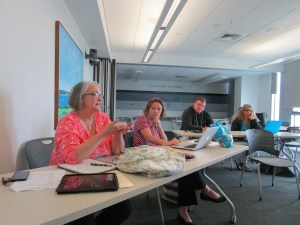
IMG_2291One educator said: “It is so nice to be able to talk with other arts educators about their views”. Yes, these were all arts educators conversing with other arts educators – the same tribe, our peeps, educators who share a basic understanding about what we contribute in the world. Another participate was grateful to know that “Others are going through the same frustrations as I am”. 
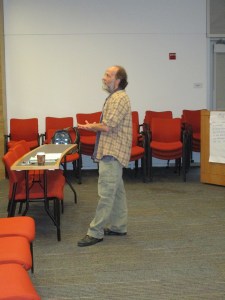
The Maine Arts Assessment website is filled with a variety of resources. One person said: “The MALI website is FULL of resources to help me with all I do in my music classroom and also with communication with colleagues and administrators”.

In the Creativity workshop participants learned about one of the resources in the MALI Resource Bank. It is a good one to use with your colleagues (arts and non-arts). One participant in the session’s feedback was: “Great conversations about creativity. This is something I normally don’t get to do.”

IMG_2293One of my favorite feedback comments of the day is not about assessment or standards or arts skills but about a broader critical piece of what we do: “I learned about helping children to become fearless about making a mistake – mistakes are okay.”
WHO ATTENDED?

  • PK-12 Arts educators
  • Higher ed instructors
  • Maine and NH arts educators
  • Dance, Music, and Visual Arts educators
  • Teaching Artists
  • Science, Media Arts, and Technology teachers
  • Pre-service teachers, new to teaching teachers, and  veteran teachers

WHAT ELSE DID THEY LEARN?

  • Students can create an ensemble at all levels that are student led.
  • Allowing students to take ownership in their concerts.
  • Starting students transposing is not impossible.
  • That engaging students in ownership of curriculum and content design can help teach competencies and keep them engaged in other curriculum goals.
  • More evidence for choice and student advocacy – yahoo!
  • Practical applications of the Studio Habits…tying them to the Guiding Principles.
  • Crating crosswalks between MLR, NCAS and HOM is a great advocacy tool.
  • To focus on speaking about the arts using academic language

IMG_2290WHAT QUESTIONS DID PARTICIPANTS HAVE AT THE END OF EACH WORKSHOP?
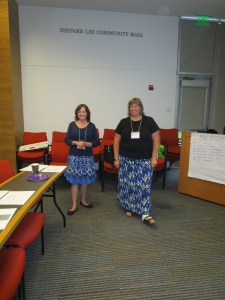
  • Why does it seem like great initiatives already being used by art educators are consistently overlooked by admin even when the information is shared by teachers?
  • How does this work when students use these techniques on their own artwork?
  • How do I ensure that every student has access to technology and able to access the assignments this way?
  • Can we eliminate grade levels in proficiency based education?
  • Why can’t administrators answer questions about applying competency grading to ensembles?
  • How can using Google Classroom be used in advocacy for the arts efforts?
  • What more creative ways are there to meet with classes?- I have 750+ students in my 3rd-5th school with block scheduling for math and reading – very little flexible time.

GREAT BIG THANKS TO THE WORKSHOP PRESENTERS – MALI TEACHER LEADERS, LEADERSHIP TEAM MEMBERS plus 1!

  • IMG_2284Theresa Cerceo
  • Jake Sturtevant
  • Jan Gill
  • Danette Kerrigan
  • Sue Beaulier
  • Jen Etter
  • Rob Westerberg
  • Iva Damon
  • Elise Bothel
  • Patti Gordan
  • Holly Leighton
  • Nancy Kinkade
  • Mandi Mitchell
  • Samantha Armstrong
  • John Morris

HEARTFELT APPRECIATION TO THE MALI LEADERSHIP TEAM FOR HELP IN PLANNING

  • Catherine Ring
  • Rob Westerberg
  • Kate Smith
  • Theresa Cerceo
  • John Morris
  • Barb Vinal
  • Pamela Kinsey
  • Beth Lambert
  • Jeff Beaudry

IMG_2287If you couldn’t join us yesterday some of the workshop leaders provided their resources and they are posted online on the Maine Arts Assessment site. You can access them by CLICKING HERE.

MALI has another opportunity for Teaching Artists coming up in August – watch for the blog post that will provide details and registration information. During the 2016-17 school year there will be multiple professional development opportunities as well.

If you have any questions about MALI or any other Maine Arts Commission program please contact me at argy.nestor@maine.gov.

h1

Data Symposium

June 26, 2016

Summer opportunity

USM

School of Education and Human Development

School of Education and and Development

Data Symposium
Southern Maine Partnership in collaboration with Northwest Evaluation Association

Dates: August 4th and 5th, 2016, 8:30 a.m. – 3:30 p.m.

Location: University Events Room – Glickman Library 314 Forest Avenue
Portland, Maine 04104

Goals and Objectives

Goal of the data symposium to improve curriculum and instruction decisions through the use of data.

Know your data, understand the value of multiple data sources:

  • Identify the connections of multiple data sources to goal setting and growth measures
  • Know thy measures – evaluate the measures used (examples below, we will pre-survey participants to understand what you use)
    •  SAT, PSAT, AP
    • NWEA (MAP, MPG, CPAA)
    • Teacher’s College
    • STAR
    • AimsWeb
    • Fountas and Pinnell
    • Classroom-based
    • Curriculum-embedded
  • Develop systems thinking for multiple data sources and decisions
    • Understand the uses of universal screeners and progress monitors (SMART goals)
    • Dine to Discuss: Managing data resources for school district leaders – a critical evaluation of the purpose, application, and added value of our instruments
  • Represent data interpretation and displays of data
    • Identify and practice protocols and processes for data interpretation
  • Plan next steps
    • Plot your path for performance checking and summative performance reports
    • Leave with a plan for the next year or two of data monitoring

AGENDA

Thursday, August 4th, 8:30 a.m. – 3:30 p.m.

Coffee and light breakfast snacks

Opening Plenary/Introductions

  • Establishing a common language, understanding, & purpose
  • Engaging our collective capacity
  • Understanding expectations in RTI/Understanding the role of State Assessment – Maine DOETeam (or job alike) Goal SettingBreakout Session I
    LUNCH
    Breakout Session I (continued)

    Team (or job alike) Reflection

    Data Protocols

    Team (or job alike) Self Assess & Revisit Goals
    Evening: Dine 2 Discuss: Managing data sources/resources for school district leaders – Understanding the critical

    conversations for evaluation of the purpose, application, and added value of our instruments

    Friday, August 5th, 8:30 a.m. – 3:30 p.m.

    Coffee and light breakfast snacks

    Opening Plenary
    Breakout 1
    Breakout 2
    Team (or job alike) huddles

    Processing, designing, action planning LUNCH

    GIFTS – Data Gallery/High Impact Strategies
    Plan for remote check progress checks, next steps, establish networks

BIOS

Jeffrey S. Beaudry, Ph.D., Associate Professor, Educational Leadership, Co-director, Southern Maine Partnership

Dr. Beaudry proudly serves the Southern Maine Partnership is a regional collaborative as co- director. With over twenty publications many on visual literacy, concept mapping, technology, and science and mathematics achievement in professional journals and program evaluation publications, Dr. Beaudry aims to explore issues relating to the visual learning, assessment literacy, formative assessment, arts and assessment, STEM, and action research. In March, 2016, Jeff’s book, Research Literacy, co-authored with Dr. Lynne Miller, was published, and will be a textbook for research methods and data analysis in education. He co-edited a book with Lenny Shedletsky, Cases on Teaching Critical Thinking with Visual Representations.

Tim Neville, Senior Consultant, Professional Development, Northwest Evaluation Association

Since joining NWEA in 2013, Tim has served partner districts as a Professional Development Consultant on NWEA’s Professional Development Team. In this role, Tim works directly with district and school administrators, teachers, and parents to deliver coaching services and job-embedded professional learning. He draws on almost thirty years in the educational world to connect the dots between assessment and instruction, and to bring assessment literacy to NWEA partner districts. Tim takes great pride in collaborating with districts to develop custom Professional Development that will meet a school or district’s specific needs. Prior to joining NWEA, Mr. Neville worked as a principal, assistant principal, educational consultant, coach, and teacher. He holds a bachelor’s of science degree in Elementary Education from Keene State College and a master’s of arts degree in K-12 Education Administration and Supervision from the University of New Hampshire. In addition, Tim received a certificate from Harvard University’s Change Leadership Group, a research initiative at the Harvard Graduate School of Education for meeting the changing needs of public education.
Tim Neville M.Ed.

Sr. Consultant Professional Development Cell Phone: 603-496-7091
Email: tim.neville@nwea.org

Kellie Smith, Founder of Logos LLC, Literacy Consulting Group

Ms. Smith’s more than 10 years as a classroom teacher led to a 10 year position as a K-8 literacy coach within MSAD #51. In 2011, in response to statewide inquiry, she founded the consulting group Logos Literacy and began offering literacy coaching services specializing in reading and writing workshops to districts across the state. Logos offers one-day workshops, multiple day institutes, lab-site demonstration, and literacy coaching. Ms. Smith and her team support teachers in instructional methodology, content and the strategies requisite to ensure success for all learners. In addition to her work in Maine, Kellie was also fortunate enough to have been chosen to support the implementation of writing workshops at the Kaohsiung American School in Taiwan. Kellie has also presented at multiple conferences including NERA, ILA, and The East Asia Regional Council of Schools (“EARCOS”).
Education from the University of Southern Maine. Ms. Smith is also a former National Board Certified Teacher. Logos LLC, Literacy Consulting Group. Ksmith@logosliteracy.com. Kellie earned her B.S. in Child Development Family Relations from the University of Maine and a M.S. in Literacy.

Registration information

Cost: $300 per participant – this includes materials, breakfast, lunch and snacks throughout the two days. * We encourage school teams to attend. The fourth person is free.

Registration link

https://docs.google.com/forms/d/1L1Jktu9Vt88A7lafdHIjoiRwYvI0YEhcLT4XGkucmMA/viewform

For more information, please contact Susan Inman, Program Manager for the Professional Development Center (PDC) at USM, susan.inman@maine.edu, phone: 207-780-5055.

h1

Brain Research

May 27, 2016

June 29 workshop

“Multiple Pathways to the Student Brain”

Workshop designed for PK-12 Educators of All Subjects

  • “She doesn’t understand it because she doesn’t try hard enough.”
  • “Most people are right-brained or left-brained.”
  • “He will never be able to learn.”
Screen Shot 2016-05-26 at 9.52.43 PM

Dr. Janet Zadina

If you’ve ever heard yourself utter these ideas, you will not want to miss the upcoming workshop by neuroscientist and educator, Janet Zadina, PhD. For the first time in Maine, Dr. Zadina will be presenting “Multiple Pathways to the Student Brain” on June 29th for PK-5 or June 30th for 6-12 at Cony High School.  In this engaging workshop, Dr. Zadina will explain how the brain learns and dispel the neuro-myths that are common. She will address how to raise achievement in low performing students, the invisible brain process that may account for much of math and reading difficulty, the pathways to creativity and how to tap into the pathway affecting motivation. Participants will leave with concrete, actionable advice and strategies that can make a difference in day-to-day instruction. Teachers will find the information that Dr. Zadina presents to be truly transformational.

Registration for these workshops is open until June 15th. The workshops are available by pre-registration only and the $75 fee includes a light breakfast, catered lunch and snacks.  This workshop is sponsored by the Maine Science Teachers Association, Maine Arts Leadership Initiative, Maine Sprouts and the Maine Department of Education.

For a registration form or for more information contact Maine Sprouts at www.mainesprouts.com, mainesprouts@gmail.com or by calling 446-8444.  School superintendents and curriculum coordinators should also have received information and a registration form via email.

h1

Summer Arts Conference

May 23, 2016

MALI provides PD on June 28

Summer Conference – June 28th, 9:00 – 3:30

University of Southern Maine – Portland

MALI_V3_Color_100ppi


The Maine Arts Leadership Initiative is offering a one-day summer conference with a variety of outstanding workshops. We’ve listened to the field requesting more professional development opportunities! This is a great way to kick off your summer that will provide you with ideas and materials on developing standards and assessment tools as well as other relevant hot topics. Join your colleagues from across the state and around New England in a collaborative learning environment.

CONFERENCE INFORMATION AND MATERIALS:

https://docs.google.com/document/d/1AQ7v3kosh7ReRijqyQtPvYlukURtxzjRXW_1X5NfxqM/edit#


REGISTRATION LINK:

http://goo.gl/forms/8EpYejbZeFLZxjm73

OTHER CONFERENCE INFORMATION:

http://www.maineartsassessment.com/#!mali-summer-conference-2016/qxjo8

CONFERENCE DETAILS:

  • The conference is being held at USM in Portland, Wishcamper Center
  • $50 registration – teams of 3 or more, $40 per person – check or paypal – no POs
  • Lunch is on your own – coffee/tea and snacks will be provided
  • 6 contact hours or .6 CEUs provided
  • Select from 14 workshops – (descriptions below)
  • Wishcamper Center, 34 Bedford Street, Portland (link to directions here)
  • Free parking is located in the garage attached to the Abromson Center located right next to Wishcamper on this map

  • Overnight lodging in the vicinity of USM* In addition, 10 minute drive away:

    • Fireside Inn 81 Riverside St, Portland

    • Portland Travelodge 1200 Brighton Ave, Portland

    • Super 8 208 Larrabee Rd, Westbrook

            *Please note: These are not endorsements, simply suggestions.

WORKSHOP OFFERINGS

IMG_1942Theresa Cerceo

Studio Habits of Mind, Planting Seeds toward Growth and Proficiency in the Arts K-12 Visual Art

This workshop will offer give a brief overview of the work done by Lois Hetland as outlined in her book, Studio Thinking.  It will offer various strategies one can implement in the arts classroom in order to track and guide students through proficiency toward MLR standards for the Arts  and Guiding Principles.


Jake Sturtevant and Jan Gill

Student’s Choice: Engaging Students in Task Design Make the Concert Theirs

K-12 Music

Jan and Jake are mother and son, both music teachers; Jan in RSU 73 (elementary) and Jake (high school) in MSAD 6. Examples of strategies that allow students to choose, arrange, and perform songs. From a 3rd grade class choosing a name for their band and songs to perform on guitar, bass, keys, drums and vocals to a high school band of 60 students transcribing and arranging Uptown Funk, this session will include strategies for how to negotiate and empower student choice to promote positive interdependence, in a variety of ensembles and general music settings.


Danette Kerrigan

National Board Certification

K-12 All Educators

This session will focus on the benefits, process and incentives available to educators in the state of Maine interested in National Board certification. National Board Certification is the most respected professional certification available in education and provides numerous benefits to teachers, students and schools. It was designed to develop, retain and recognize accomplished teachers and to generate ongoing improvement in schools nationwide. Standards for each content area and developmental level are created by teachers, for teachers.

IMG_1878

Susan Beaulier

Critical Thinking in the Art Room; It’s the Thought that Counts

K-12 Art

Expand your existing art lessons by incorporating critical thinking strategies that drive your students to think more deeply about their own art and that of others. We’ll discuss how to pose questions, frame class critiques, lead thoughtful discussions about the  aesthetic qualities of visual art,  incorporate writing into the studio art lesson, and provide avenues for student reflection on their art making process.


Jen Etter & Rob Westerberg

Developing Your Music Standards and Assessment Strategies

K-12 Music

This extended workshop will allow participants either on their own or in teams to look at desired curricular outcomes for their program, develop standards and indicators that are customized to their specific courses and school, and set up assessment strategies to bring authentic proficiency to life.


Iva Damon

Google Classroom

PK-12 All Educators

Who has time to orchestrate all of the current technologies of Google Drive, digital portfolios, videos, digital imagery, and getting 21 Century skills into the classroom? YOU do with Google Classroom. Make your life easier and find the Holy Grail to simple, easy to use technology that can be utilized in all classrooms.


Summer 2015 2nd groupElise Bothel

Death to the Cookie Cutter Project

K-5 Visual Art

Do you cringe when you walk by visual art displays featuring identical pieces of art done by a classroom of diverse students? Would you like to offer more choice, but are worried that the academic content will be lost in the chaos? Are you looking for a balance of creativity and content in your visual arts classroom? This workshop is designed to offer insight and solutions about how to foster creativity while still providing a rigorous and educational art curriculum. Along with group discussion, participants will have the opportunity to work on improving their own lessons through the use of backwards design, student interest, and choice.


Patti Gordan

Hatching a Songbird: Teaching and Assessing Singing Skills at the Primary Level K-4 Music

When the wee folk walk through our door how do we make sure we’re helping them develop singing skills, not just singing songs with them? This workshop will help you plan methodical, proficiency based lessons and assessments, including formative self assessments, that are easily delivered during our limited general music class time. Help your smallest singers reach their highest singing potential and develop a love of singing!


Holly Leighton & Nancy Kinkade

Next Steps Rubrics Makes Learning More Progressive

PK-12 Art and Music

How do you motivate students to move beyond a score of 3 or 4? How do we get students to look at learning as sequential as opposed to”end result” learning?  What tool can I use to make assessment more accessible to teacher and students with greater impact? Educators will leave with strategies to put students on a continuum of learning that is teacher and student friendly.


IMG_0019Rob Westerberg

Advocacy

PK-12 All Educators

This session will present strategies for continued implementation of PBL in your own classroom, and highlight the powerful corollary advocacy points that go along with each. If our advocacy efforts have been so useful for the past 20 years, why are we still so much in need of more? Come find out how our most recent PBL work has the potential to finally push arts education to the forefront of our school’s academic agenda while providing the richest, most relevant curriculum possible for our students.


Mandi Mitchell

Strategies to Deepen Student Engagement and Learning in the Arts Classroom, 7-12 VIsual Art

Are you struggling to demonstrate techniques, assess student learning, and still find time within your class to teach criticism and aesthetics? Get the most out of your class, every time that you meet.  Learn how to develop a successful, fully implemented classroom model that offers more “bang for your buck.” You will deepen student learning and motivation, increase student engagement and interest, and encourage self-regulation and reflection while integrating three simple daily steps that structure your classroom without limiting creativity. Adaptable for all levels and all arts disciplines!


Samantha Armstrong

What are the Benefits of Student Self-reflection? (What do I still need to do? What have I learned?)

K-6 Visual Art

In this workshop we will explore the benefits of student self reflection as a means of achieving greater understanding and academic success. We will look at evidence that shows the impact self assessment has on student success and a sampling of self assessment and reflection tools and methods. You will also have an opportunity to discuss and brainstorm how you see these concepts working in your classroom.


Jen Etter & Rob Westerberg

Further Developing Your Music Standards

K-12 Music

Continue to develop your work from the Second Session or join us for the first time to dive into your own work!


IMG_1897John Morris

Creativity: A Group Inquiry

PK-12 All Educators

This discussion group model will help participants make connections with creativity research, while promoting inquiry and dialogue about the nature of creativity, as well as the role of creativity in K-12 teaching, learning and assessment.

If you have questions about the conference please email Argy Nestor, Maine Arts Commission Director of Arts Education at argy.nestor@maine.gov.

h1

Last Few Days

April 26, 2016

Statewide Arts ed census – time is running out!

imagesAfter four months the deadline for the arts education data collection is coming to a close this Saturday, April 30. The response from schools across the state has been phenomenal. THANK YOU to all those who have helped with the completion of the surveys. With 5 days to go we are closing in on 90%. We’re going to have a ton of data on Maine arts education. YAHOOOO!
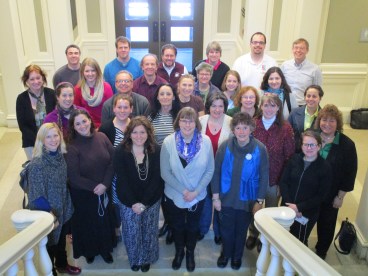
In addition during the next month the census consultant will be collecting anecdotal information from educators across the state. The next step will be for the consultant to work with the data and provide information that will give us a clear picture of what is happening at this time. It will also help inform the future work of visual and performing arts education in Maine. We should have a draft of the report by mid-summer.

NOT QUITE THERE

If you are not sure if your school has submitted a survey please go to https://mainearts.maine.gov/Pages/Education/Arts-Education-Census-Status# and view the completed survey’s list.

If your school is not listed, please download the .pdf of the questions at https://mainearts.maine.gov/CMSContent/arts_in_education/2016_0106_Arts_Ed_Survey.pdf. Complete as many questions as you are able and provide the information to the school principal asking them to complete the survey online at https://www.surveymonkey.com/r/MAINE_ARTS_ED.

The following links are available to assist, if needed:

I hope that your school has contributed to this information so your community interests can be taken into account for the future of Arts Education!

The Maine Arts Commission (MAC) is conducting this statewide census in arts education in partnership with the Maine DOE, Maine Art Educators Association, Maine Music Education Association, Maine Principals’ Association, and The New England Institute for Teacher Education.

h1

Calling All Teacher Leaders

April 14, 2016

Regional VPA Teacher Leader Search

Maine Arts Leadership Initiative (MALI) – Phase VI

IMG_1835

MALI winter retreat, March 2016, Bowdoin College

Join us for a GREAT opportunity! The Maine Arts Leadership Initiative invites YOU to be part of Phase VI. We are looking for teachers interested in leading and in taking a close look at assessment in the arts. If you are selected, you will be required to attend the summer institute, August 10, 11, and 12, 2016. We will provide professional development and ask that you take what you’ve learned and share it with other educators in your region and beyond.

IMG_1813If interested, please send a completed application by the Friday, May 6, 2016, 11:59PM deadline to Argy Nestor at argy.nestor@maine.gov ASAP. Details are below. TEACHER LEADER APPLICATIONS ARE AVAILABLE AT http://mainearts.maine.gov/Pages/Education/MAAI#
Selected teacher leader responsibilities for the 2016-17 school year include:

  • Communicate by wiki
  • Attend the three-day Summer Institute, August 10-12, 2016, USM, Portland
  • Present workshop to critical friends, all-day, date and location to be determined
  • Present a workshop in your region, planned by you
  • Present a workshop at the mega-regional workshop site that will be coordinated by the MALI leadership team
  • Attend a retreat to reflect on the work of phase VI with teacher leaders and the leadership team to be held winter/spring 2017

Maine Arts Leadership Initiative Background Information

OVERALL DESCRIPTION

IMG_1814Committed to the development of Teacher Leaders to ensure deep understanding and meaningful implementation of high quality teaching, learning and assessment in the Arts for all students.

Since 2011 the initiative has been building capacity by training arts educators on the “what” and “how” of arts assessment so they can provide the leadership in Maine through professional development opportunities. The details of the initiative are at http://mainearts.maine.gov/Pages/Education/MAAI#.

MALI’s OVERALL OBJECTIVES

IMG_1808Create and implement a statewide plan for teacher leadership in arts education. This includes professional development opportunities, regionally and statewide, which will expand on the knowledge and skills of teachers to better prepare them to teach in a proficiency-based learning environment.
  • Develop and implement standards-based high quality teaching and learning statewide for Visual and Performing Arts
  • Continue to build an expanding team of arts educators and teaching artists representing all regions of Maine
  • Provide workshops and other professional development opportunities for educators

HISTORY – Phase I, II, III, IV, V – Summer 2011 to present

  • IMG_1818Seventy – three teacher leaders attended summer institutes on assessment,
    leadership, technology, creativity, proficiency-based standards-based and student-centered teaching and learning
  • Teacher leaders presented workshops at two statewide arts education conference, USM, Portland, UMaine, Orono, and Point Lookout Conference Center with over 600 educators attending
  • Teacher leaders facilitated regional workshops across Maine
  • Teacher leaders facilitated workshops at 12 mega-regional sites across Maine
  • Another Arts Teacher’s Story series (72) on the Maine Arts Ed blog
  • Arts assessment graduate courses offered by New England Institute for
    Teacher Education
  • Nine arts education assessment webinars for Maine educators facilitated by Rob Westerberg and Catherine Ring – archived
  • Video stories of seven teacher leaders that demonstrate a standards-based arts education classroom
  • Teacher Leader Resource Team ongoing development of items for resource bank
  • Maine Arts Assessment Resources website that contains a plethora of information

Phase VI components

  • IMG_1811August 3,4,5, 2015: Summer Institute, Portland
  • Regional and mega-regional workshops throughout Maine
  • Continuation of Another Teachers Stories on the Maine Arts Ed blog
  • Continuation of the Resource Bank
  • Professional development for teaching artists

For More Information

The Initiative is a partnership with MAC, MDOE, USM, MAEA, MMEA, MLTI, University of Maine Performing Arts, and New England Institute for Teacher Education

h1

NSF Funded Research

December 13, 2015

Arts Based Learning of STEM Works

Wondering about the impact on STEM that the Arts are making? If so, I suggest that you check out the following information.

Article: http://m.huffpost.com/us/entry/8724148

Research Project Summary: http://www.artofsciencelearning.org/3rd-year-project-update-report/
 
Related STEAM Resource Website: http://www.artsciencematchup.org/

• The high school students who had arts-based learning showed large and statistically significant pre/post improvements in such creative thinking skills as idea range (13%), problem analysis (50%) and number of solutions generated (37%). In many cases, students who had traditional STEM learning actually declined in these aspects of creative thinking — so the overall differentials between arts-based and traditional learning was even more dramatic (idea range = 22%, problem analysis = 121%, solutions generated = 43%). Thus, it appears as though arts-based learning may be an effective way to “inoculate” learners against the collapse of creativity that may sometimes accompany traditional forms of high school learning.

• Arts-based learning had a far more powerful impact on the collaborative behaviors of adults than traditional learning, based on actual observed behaviors. Examples from the final week of the study: arts-based teams exhibited 56% more instances of empathic listening, 33% more instances of mutual respect being shown, 119% more instances of trust being demonstrated and 24% more sharing of leadership. All differences cited here are statistically significant.

• The innovation outputs of high school student teams who had arts-based learning showed 111% greater insight into the challenge, a 74% greater ability to clearly identify a relevant problem, a 43% improvement in problem solving, and their innovations had 68% more impact. All are statistically significant.

• 120 days after the study, high school students who had arts-based learning were 24% more likely to have been able to apply the learning to school, extracurricular, work or volunteer activities, than students who had traditional learning. They were also 44% more optimistic in their belief that the training would prove helpful in those realms in the future.

h1

This We Believe!

October 20, 2015

MALI makes it clear

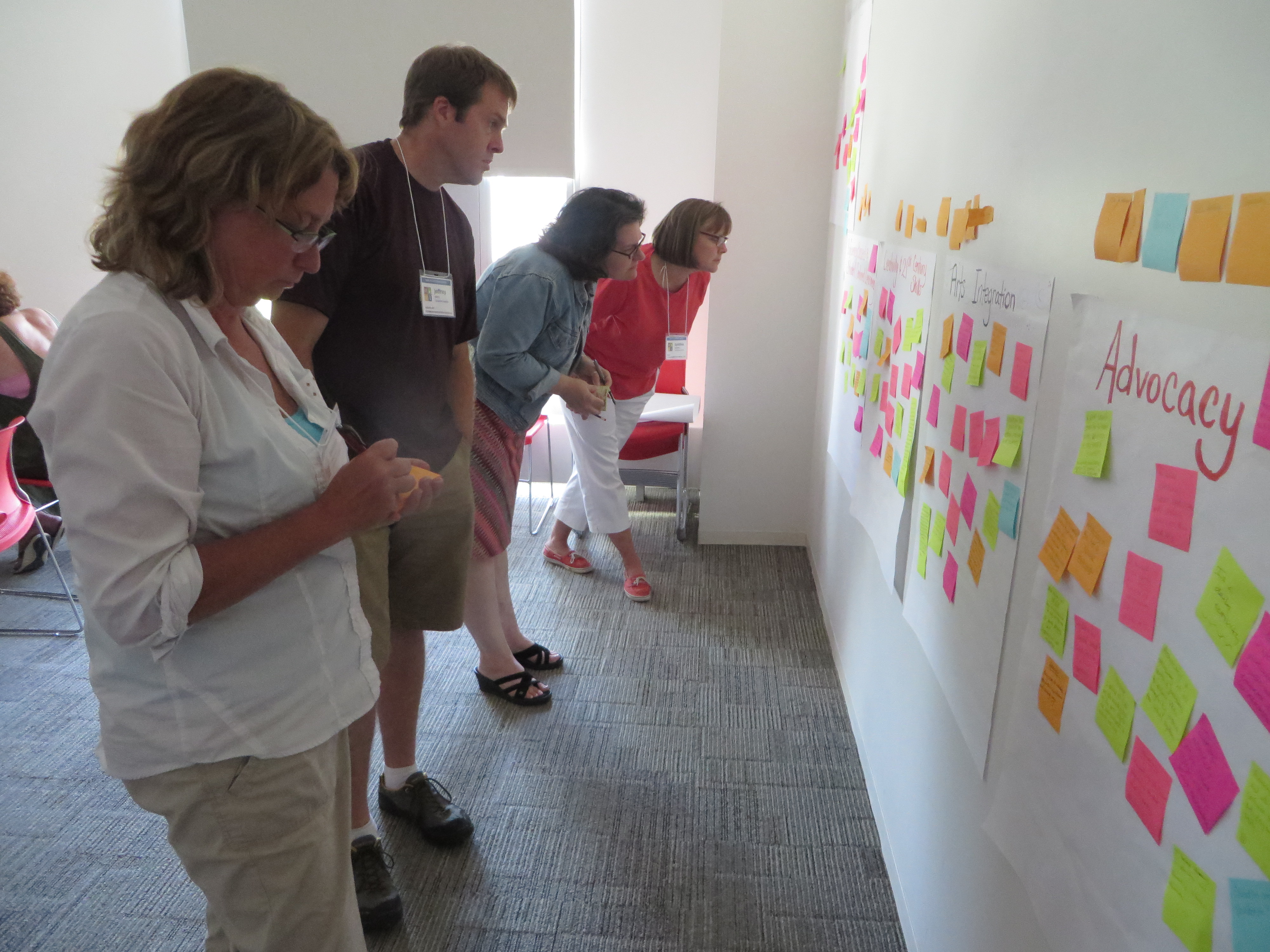
This summer while attending the Teach to Lead Summit in Washington D.C. the team representing the Maine Arts Leadership Initiative decided to take action on the MALI Teacher Leaders idea of creating Belief Statements. The topics were selected based on the past 4 years of MALI and ones that MALI Teacher Leaders are engaged with, individually and/or collectively: Arts Integration, Advocacy, Assessment Literacy, Creativity and 21st Century Skills, Educator Effectiveness, Effective Teaching and Learning, Proficiency Based Learning and Student Centered Learning, and Teacher Leadership.

IMG_1901At the Summer Institute that MALI had August 3-5 participants worked in groups to draft the statements of which everyone provided feedback on during the institute culmination activity. As a follow-up to the institute they were updated with the suggestions and went back to the teams who collaborated on the writing of them. One last look by the Leadership Team and what you can read below is the result of the several months process. The collaborative effort is another example of the grass-roots work of MALI.

These statements were created to help guide MALI as we continue to move forward with our work. Will these This We Believe statements change? Perhaps, as is most things with MALI, changes are made to move the initiative forward to meet the needs of Arts education in Maine which should positively impact every Maine student.

These statements now live on the Maine Arts Assessment website at http://www.maineartsassessment.com/#!this-we-believe-statements/cmni and were unveiled recently at the Biennial Statewide Arts Education conference on Friday, October 9.

  • ARTS INTEGRATION… allows for cross-curricular collaboration within the creative process. Interconnected learning provides students an opportunity to demonstrate understanding and knowledge using multiple avenues.

  • ADVOCACY… educates communities that arts education is essential. Arts advocacy should involve the presentation of solid, factual information that challenges misconceptions about the role of the arts in our society. Arts advocacy should also highlight the various benefits of the arts through the creation and viewing process; involving the larger community in purposeful and meaningful ways.

  • ASSESSMENT LITERACY… is an ongoing dialogue between stakeholders that informs instruction, supports learning, clarifies understanding and validates what we do as educators.

  • CREATIVITY AND 21ST CENTURY SKILLS… quality arts education is critical to fostering Creativity and developing 21st Century Skills. The arts provide authentic, real life opportunities that nurture:

    * Collaboration

    * Communication

    * Critical Thinking

    * Creative Problem Solving

    Creativity is the ability to connect ideas, information and issues, through exploration, and in novel ways in order to develop personal and relevant solutions.

  • EDUCATOR EFFECTIVENESS… effective teachers are passionate, and love what they do. They are problem solvers, able to reach all learners. They are informed about current pedagogy. They are flexible and can adapt their perspective. They are positive, with a focus on developing student growth.

  • EFFECTIVE TEACHING AND LEARNING… effective teaching leads to effective learning when students are actively engaged, the learning is individualized and relevant, and feedback leads to informed teaching practice and improved student progress.

  • PROFICIENCY BASED LEARNING AND STUDENT CENTERED LEARNING… students are encouraged and empowered to become independent learners, ultimately taking charge of their own education. Experiences within the learning environment are active, collaborative, and engaging; supporting students to explore their artistic processes in meaningful and purposeful ways.

  • TEACHER LEADERSHIP… is collaboration, the ability to foster change, challenging and supportive of others, advocating for the needs of all, and inspiring others to become leaders. Teacher Leadership is an intentional, collaborative strategy which supports and inspires: a) students and their learning through effective teaching practices and  b) the teaching profession through shared expertise, resources, and high quality and ongoing professional development.

Please note: On August 3, 2015, MAAI, the Maine Arts Assessment Initiative, announced its new name, MALI, the Maine Arts Leadership Initiative. MALI is a program of the Maine Arts Commission. You can read about it at https://meartsed.wordpress.com/2015/08/09/maai-goes-to-mali/. Please email Argy Nestor if you have any questions at argy.nestor@maine.gov.

h1

NEW Resource Bank Unveiled

October 18, 2015

Awesome resources for you!

MALI_V1_Color_100ppiNEWS FLASH

Last week at the Statewide Biennial conference at the Point Lookout Conference Center one of the exciting announcements that took place was the unveiling of the MALI (Maine Arts Leadership Initiative) Resource Bank. This is the second year in a row that funds have been provided by the Maine Arts Commission to create resources that are useful to all arts educators.

The resources are located at http://www.maineartsedresources.org/

WHAT YOU’LL FIND on the RESOURCE BANK

  • During the 2013-14 school year the MALI Resource Team created a template that was used for the team to create resources. You can download it from the site and use them yourself.
  • A searchable data base that includes resources for the following categories: Dance, Media Arts, Music, Theater Arts, Visual Art, Creativity, and Student Voices.
  • The Maine Learning Results Standards document
  • Pictures and links to the contributors so you can communicate with them if you’d like to
  • A bit of the history

All of us at MALI are very excited about the Resource Bank and hope that you find it useful. We encourage you to take some time on the webpage to search topics. Certainly they can be used ‘as is’, or you can adapt or adopt them, as is.

Screen Shot 2015-10-12 at 12.07.50 AM

A great big thank you to Catherine Ring and Barbara Vinal for working closely with the Teacher Leaders who were part of the Resource Bank team and to create the searchable website!

Thank you to the Maine Department of Education for the funding to create the website!

Please note: On August 3, 2015, MAAI, the Maine Arts Assessment Initiative, announced its new name, MALI, the Maine Arts Leadership Initiative. MALI is a program of the Maine Arts Commission. You can read about it at https://meartsed.wordpress.com/2015/08/09/maai-goes-to-mali/. Please email Argy Nestor if you have any questions at argy.nestor@maine.gov.